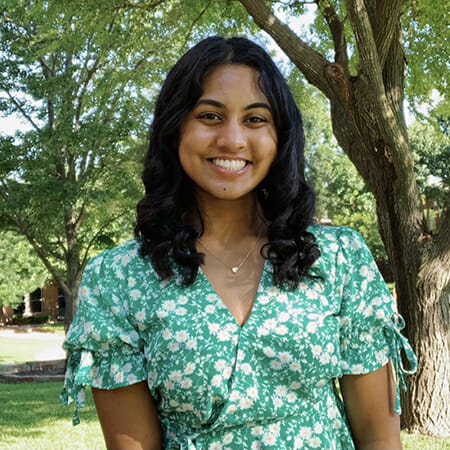
Amid COVID-19 Pandemic, Teen’s “CareGood Foundation” Serves Most Vulnerable, from Young to Old
Meet Daily Point of Light Award honoree Anvitha Kollipara. Read her story and nominate an outstanding volunteer or family as a Daily Point of Light.
During Anvitha Kollipara’s frequent trips to visit family in India, it was tradition to perform service work. On those trips, Anvitha says she witnessed levels of poverty she’d never before seen.
“Driving around, even at stop lights, you’d see so many beggars,” says Anvitha, “a lot of unprivileged children didn’t have access to the same education that is provided at other schools in India and worldwide.”
The situation worsened, says the 15-year-old Tampa, Florida student, who occasionally makes extended trips to India for her volunteerism, when the COVID-19 pandemic deepened the hardship many vulnerable populations face.
“I went out for basic necessities, and saw a lot of seniors around the rail stations, not being able to make ends meet. Many had lost their jobs, or were homeless, and would say they weren’t doing well, they didn’t have medicine, PPE or food.”
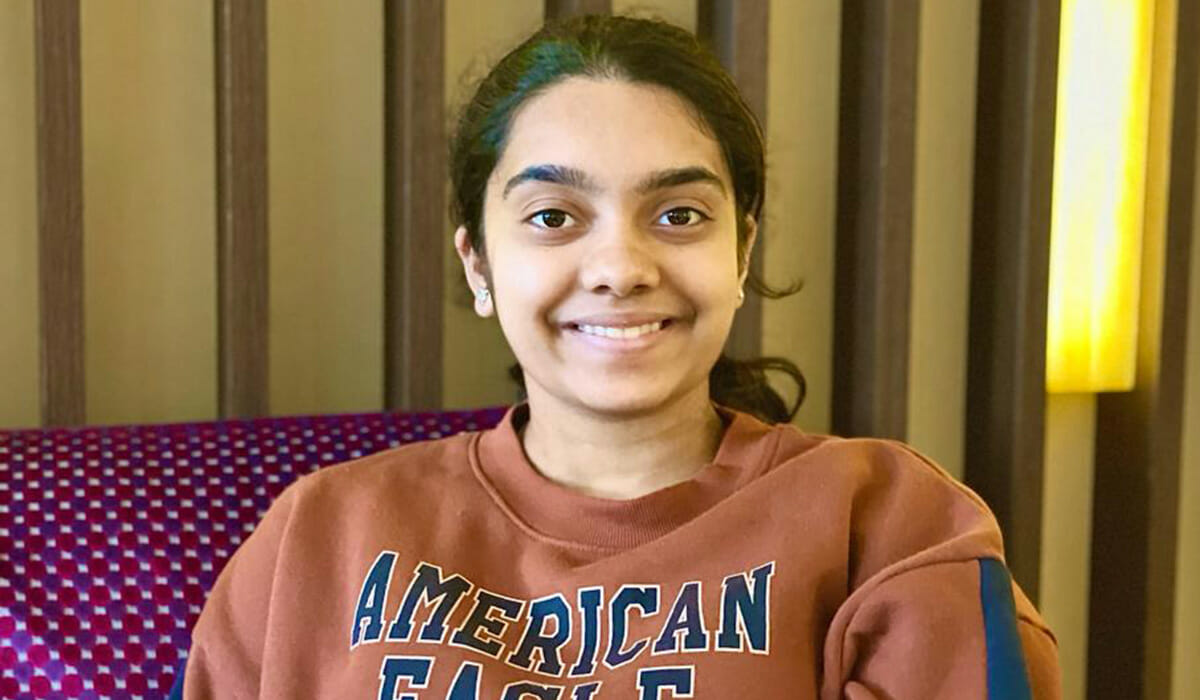
As the founder of CareGood Foundation, Anvitha Kollipara is volunteering to help the most vulnerable by providing sustainability to sustenance./Courtesy Anvitha Kollipara
Launching CareGood Foundation in the spring of 2020, the rising high school sophomore is volunteering to provide underserved individuals with more opportunities through sustainability and greater access to resources. Hosting solar power workshops and providing devices like lamps and stoves for children who lack continuous access to power, to delivering food, medicine and PPE to senior citizens, Anvitha is creating a better world, person by person.
“I want all rural children in India to be able to have access to solar powered lamps so they no longer have to study at night using unreliable and dangerous alternatives such as candlelight. It seems like a simple problem but I’ve seen children struggle with this widespread problem in so many villages. While in India, I was delivering monthly medicines to an old age home, and when an older man was told I’d been delivering lifesaving medicines the entire year, he started crying. His whole family had left him behind and he was so thankful because he wasn’t able to afford medicine.”
Raised by her parents and grandparents to think of volunteerism as a personal responsibility, service is almost second nature to Anvitha, particularly giving back to others who don’t have as much.
“If someone has enough to survive then they have the responsibility to give back and be a part of the community. (My family’s) values were set so that before helping themselves, they’d always want to help at least one other person. Whenever you do good, good things come back to you.”
Just in the past year, Anvitha has connected with more than 700 students through workshops and delivers medicine, PPE and other essentials to a couple hundred senior citizens monthly. Her commitment to service, says Meeraa Ramakrishnan, co-founder and managing director of Avaagat, an organization which has collaborated with CareGood, is changing the lives of people in need and offering a better future for generations to come.
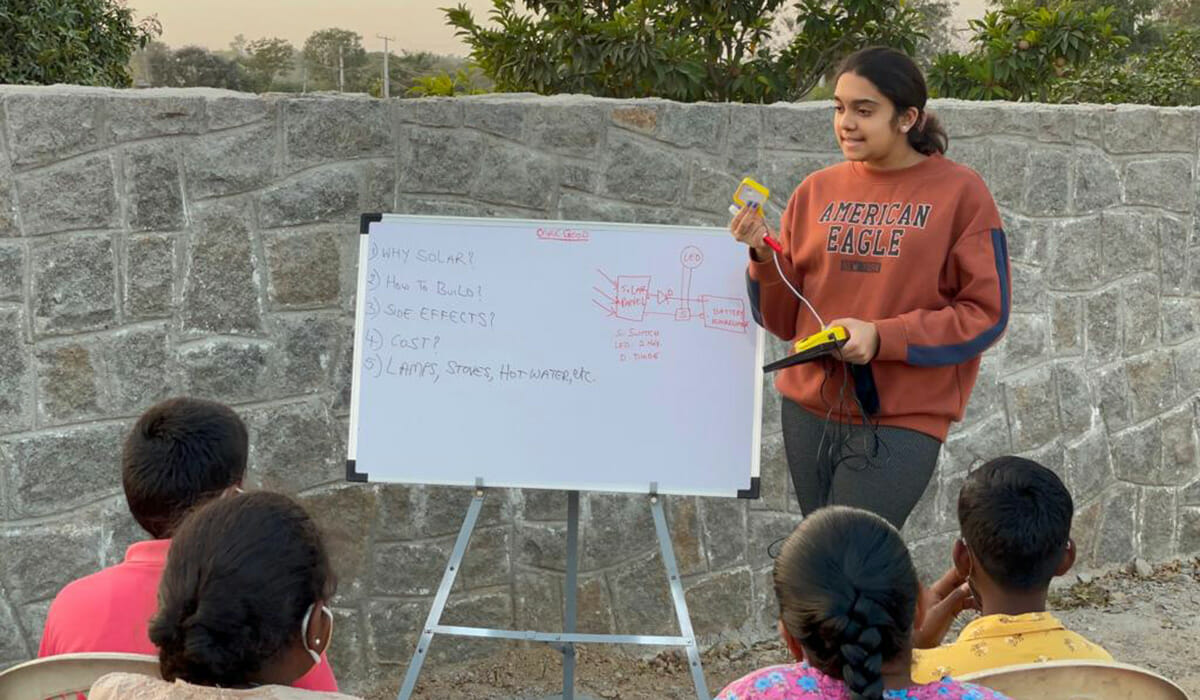
Anvitha pictured hosting a solar power workshop in a rural village in Hyderabad, India./Courtesy Anvitha Kollipara
“Anvitha is one of the bubbliest people I know, with a bright personality and dedicated work ethic,” says Meeraa. “CareGood has offered educational sessions to several old-age homes across the city of Hyderabad and beyond, with hundreds of individuals receiving the chance to learn how to better sustain the world around us and to make solar powered components. She has been able to help our target audience, the future generations, learn about sustainable living and solar power.”
Digging in to offer help during the pandemic as cases and death tolls continue to increase, Anvitha says she plans to launch new initiatives to address the greater need that developed during the worldwide crisis. Fundraising for programs like GoodCare’s monthly medicine deliveries, Anvitha is on a mission to share her personal message of responsible volunteerism.
“Anyone, no matter what age, can make a change. Even if they don’t have any funding, they can do something as simple as teaching rural children a skill or hobby they know. Anyone is capable of being a part of social service and making an impact.”
Teen Volunteer Puts Books Into Hands of Underserved Students Through “San Antonio Book Pool”
Meet Daily Point of Light Award honoree Louis Geer. Read his story and nominate an outstanding volunteer or family as a Daily Point of Light.
When 16-year-old Louis Geer read an essay about a phenomenon called “summer reading loss,” which describes the decline in children’s reading development during summer vacation, the San Antonio, Texas rising high school junior knew he wanted to help.
Launching San Antonio Book Pool, Louis is increasing access to books for underserved students and their families in his greater community. First supporting literacy skills during the summer, Book Pool offered continued support throughout the school year amid hybrid classroom schedules due to the COVID-19 pandemic. By putting unused books in the hands of children in need, Louis is volunteering to build a more literate community.
What inspires you to volunteer?
You can’t choose where you’re born. There are many underprivileged families, and it feels good to help out when you can if you’re lucky enough to be privileged.
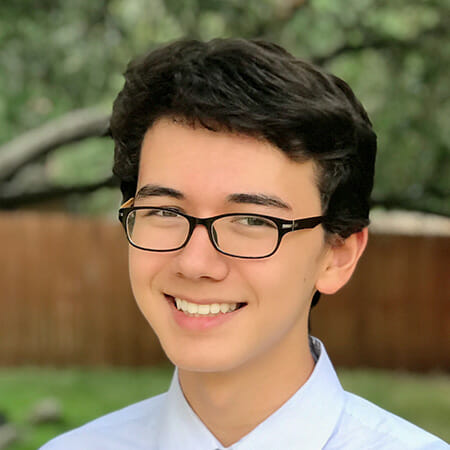
As the founder of San Antonio Book Pool Louis Geer is increasing access to books for underserved children./Courtesy Louis Geer
Describe your volunteerism with San Antonio Book Pool.
As founder, I manage our volunteers, who are mostly students. I organize local book pools for collection and redistribution, and we’ve also held a read-a-thon to fundraise. We’ve formed community partnerships with organizations including Boys and Girls Club of San Antonio, San Antonio Family Service, Scooby Van of San Antonio and the United Way of San Antonio and Bexar County. Book Pool has collected and redistributed thousands of books thus far.
Share one personal story with me from your volunteerism.
When we hosted our first book pool, we didn’t expect to receive many books, but we ended up with a few hundred. That’s when I realized people had a lot of books they could donate. It was refreshing because I knew I was going to be able to help so many people that previously hadn’t had access to books and reading material.
Why do you think it’s important for others to give back?
Volunteering is very beneficial for communities because then everyone does well and is happy.
What’s been the most rewarding part of your service?
It’s rewarding to be thanked when we donate books to an organization. That is the best feeling.
How have you continued to volunteer throughout the pandemic?
Summer reading loss became more of a severe issue during the pandemic, and it was even more important to volunteer and help others. We kept our book pools and other activities socially distanced.
In one word, what does volunteering mean to you?
Mutualism.
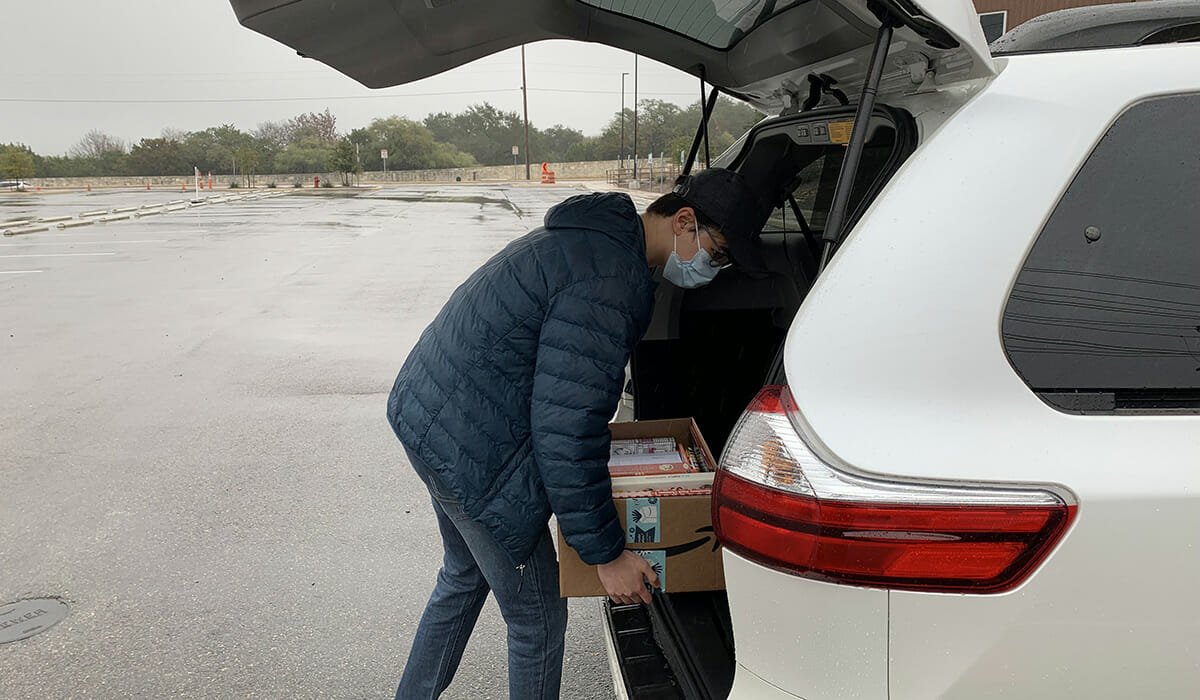
San Antonio Book Pool has collected and redistributed thousands of books./Courtesy Louis Geer
When you’re not busy with school or volunteering, what do you do for fun?
I like to play the piano and compose music. I’m also a Boy Scout which is pretty fun.
How can readers help?
We rely on donations and requests for books to continue our Book Pool. Please visit our website for more information about how you can help.
Teen Volunteer Provides Period Products for a More Equitable World
Meet Daily Point of Light Award honoree Kavita Kar. Read her story and nominate an outstanding volunteer or family as a Daily Point of Light.
“Period poverty” is what stops 1 in 5 girls around the world from attending school, says Kavita Kar. Increasing access to period products in her greater community, the 17-year-old Marietta, Georgia student is creating a more equitable world through volunteerism.
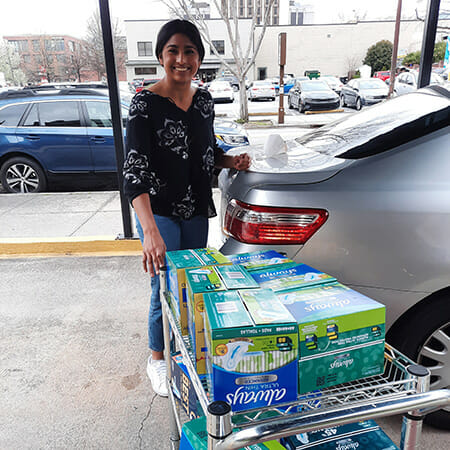
Launching Red to Green in 2020, Kavita has connected with a couple hundred women and girls in nearby Clarkston, Georgia, an Atlanta suburb home to thousands of refugees. Providing period products to women in need, Kavita, a rising high school senior, is volunteering to help more women participate in daily life and society.
What inspires you to volunteer?
For the past year, I’ve worked at the International Rescue Committee (IRC) as an English as a Second Language teacher, and many program participants are refugee women. They manage so much, between jobs, children and being new to America. Their everyday resilience is what inspires me to volunteer.
Describe your volunteerism with Red to Green.
As founder, I fundraise, organize distribution and logistics, and work with community partners including IRC, Global Village Project and the Clarkston Food Pantry. We offer refugee girls and women a free month’s supply of pads. Most recently, I’ve worked with IRC to develop educational classes and resources for the populations we serve. Access to period products is a human right, and we are working to sustain that right.
Kavita Kar: “It’s really easy to start small. If there’s a specific problem someone has identified, pursuing that problem and working to make a difference can be really meaningful.”/Kavita Kar
Share one personal story with me from your volunteerism.
Our population faces many challenges, and people manage to make do with what they have, even using toilet paper. We serve girls at Global Village who are first-time global refugee learners, and these are a set of challenges they should not be faced with. They deserve to be able to seek an education without a barrier like period products stopping them. Through volunteerism, I feel like I am a part of seeking justice for these girls and women.
Why do you think it’s important for others to give back?
Giving back meets a lot of people who have challenges halfway. Volunteering is the least we can do to create a welcoming and safe environment for everyone.
What’s in the future for your volunteerism?
This need existed long before the pandemic, but the pandemic has made many things more difficult, including access to period products. I will continue this volunteerism for as long as it’s needed, until the 1 in 5 girls who don’t attend school due to lack of access to period products statistic is eliminated.
What do you want people to learn from your story?
It’s really easy to start small. If there’s a specific problem someone has identified, pursuing that problem and working to make a difference can be really meaningful.
In one word, what does volunteering mean to you?
Being thoughtful.
When you’re not busy with school or volunteering, what do you do for fun?
I love to read books and stories by immigrant communities throughout the world.
How can readers help?
We rely on donations to support Red to Green’s direct pad distribution service. Please visit our website for more information about how you can help.
College Grad Volunteers to Empower Minority “Agents of Change”
Meet Daily Point of Light Award honoree Mukund Desibhatla. Read his story and nominate an outstanding volunteer or family as a Daily Point of Light.
Growing up, Mukund Desibhatla says he struggled to find diverse role models. When the recent college graduate arrived as a student at the University of Connecticut, he suddenly felt as though there were other minority students just like him on the vibrant campus. “I observed a deficit which I attributed to ‘imposter syndrome,’” said 21-year-old Mukund. “This wasn’t just unique to me, but a wave of other minority students also felt this way.”
Seeking a way to serve and empower those around him, Mukund launched a podcast series called “Agents of Change”. Hosting a diverse group of interviewees to provide their unique stories from on and off-campus, Mukund is helping to amplify the voices of student leaders. Offering a platform to share inspiration, adversity and change, Mukund’s volunteerism is changing his community and helping to empower minority leaders.
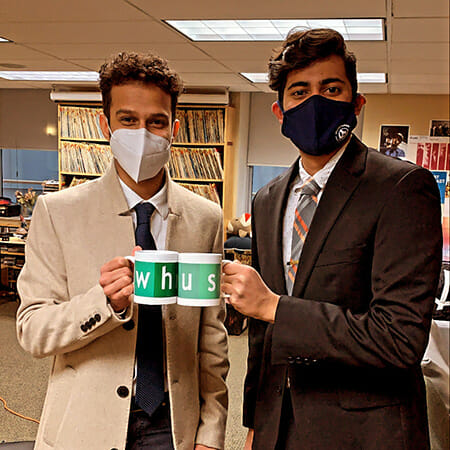
Mukund and Vinayak pictured recording at WHUS 91.7 FM. Mukund Desibhatla: “What motivates me to continue volunteering is that I’m fostering a sense of community for generations to come.”/Courtesy Mukund Desibhtla
What inspires you to volunteer?
When I entered college, I felt there was a gap in the community. What motivates me to continue volunteering is that I’m fostering a sense of community for generations to come. My brother is entering UConn as a freshman this year, and I want him to be able to access more resources than I was able to.
Describe your volunteerism with “Agents of Change.”
As founder and host of the podcast, I find people to interview, produce the interviews and coordinate our volunteers. I started the UConn Podcast Symposium during the COVID-19 pandemic as a way to mobilize the community and bring people together, and that will now be an annual event. By interviewing diverse change-makers, we are hoping to bridge gaps in mentorship and help minorities find a voice in leadership.
Share one personal story with me from your volunteerism.
Even though I’m the host of the podcast, I’m a listener just like anyone else. It feels like I’m a part of the effort to induce change across the university. The stories we are amplifying are historically underheard, and I am doing my part to help my generation work toward betterment of our local communities.
Why do you think it’s important for others to give back?
I grew up in a household which fostered my inner sense of care for the destitute. My family volunteered at a local soup kitchen and nursing homes when I was young. I’ve found that it is important to volunteer because there is inequitable access to resources in many places. The best way to mitigate that is to foster a sense of community and bring people together.
What do you want people to learn from your story?
Any action, no matter how small, has the power to induce change. When we see headlines and huge milestones, it may seem like they required a task force or a huge group, but really, change starts with the question, ‘What is my part, what is within my toolkit to create better community or better society?”
“Agents of Change” co-hosts Mukund and Vinayak Mishra pictured with former UConn president Thomas Katsouleas./Courtesy Mukund Desibhatla
In one word, what does volunteering mean to you?
Love.
When you’re not busy with school or volunteering, what do you do for fun?
I love to sing a capella and Indian classical music. I also love to golf and play basketball.
College Senior Brings Awareness and Support for the Food Insecure
Meet Daily Point of Light Award honoree Humza Zaidi. Read his story and nominate an outstanding volunteer or family as a Daily Point of Light.
Humza Zaidi is no ordinary college student. The University of Connecticut senior works to end food insecurity with his team of college volunteers and creates relationships with restaurants to make a difference in his community. Experiencing food insecurity firsthand, he understands the systems of inequity that many people are unable to get out of and, as a result, struggle with securing consistent and healthy food sources.
Zaidi’s eyes were reopened during his freshman year on campus when he learned how common it was for his peers to go to bed hungry or resort to fast food because of its cost. Through a partnership with an existing organization on campus, SOS Food Recovery, Zaidi began recycling unused dining passes to students in need. He eventually expanded his efforts off campus and now works with restaurants to decrease their food waste through food donations to local community centers.
Describe how you first discovered the issue of food insecurity and your volunteer activities:
Going back to when I was younger, I grew up in a relatively food insecure household with my parents being in school at all. And having that kind of background, I was always kind of aware of how serious of a concern food insecurity can be. Then, as I grew up and as my family’s income rose, I kind of grew out of that. However, while attending the University of Connecticut I befriended a bunch of students and I found out that a lot of my peers were actually food insecure. For example, they weren’t able to purchase something like a dining hall meal plan. As a result, they would usually end up just having cheap meals at the end of the day.
How our dining hall system works is that you have to purchase the meal plan and you get a lot of these things called flex passes, which you can basically use to swipe other people into the dining hall or to take food out of the dining hall. What happens every single year is that a lot of these passes end up getting wasted. Recycling these swipes was kind of when I first went into overseeing a food insecurity project. I ended up reaching out and talking with another organization on Campus that already works on food insecurity called SOS Food Recovery and through interaction with them, I’ve worked a lot more on campus.
I really wanted to bring that same service into the local community as a whole, so I just ended up getting together a bunch of friends and we went to restaurants and local business owners in this community and set up partnerships with them. Now, we basically will collect all of their unused food and then donate that to the Mansfield Community Center.
How can people get involved in reducing food insecurity?
I think the most straightforward way is really just getting involved with the community centers in your area. A lot of people end up wasting a lot of food at home, which could be used for other things, and you can donate that food pretty easily to people in need. Another important point is educating yourself on how serious of an issue food insecurity is. I feel like a lot of people kind of have the impression, especially if you’re in the middle class, that food insecurity isn’t a huge issue here or that it’s more of an issue when you go to poorer countries. In reality, food insecurity is a really huge issue in the United States. There are tons of people that are just unable to get an adequate food supply. Many people don’t qualify for food stamps and turn to unhealthy fast food and stuff as a daily meals, so that’s another aspect of the food insecurity issue.
Was food insecurity in your community affected by the COVID-19 pandemic?
Yeah, for sure. With the pandemic a lot of people were trying to stay at home, which is obviously something that was necessary to happen, but as a result of that a lot of people weren’t going out and trying to donate their food. On the flip side from the restaurant perspective, one benefit of it was that a lot of restaurants weren’t producing as much waste as before. It’s hard to judge whether it’s benefited or detracted more from food insecurity, but it definitely did have a pretty large effect in my opinion.
What inspires you to volunteer?
I think what really kind of molded me to continue with this project, and volunteering in general, is just having been in a similar situation to a lot of other food insecure individuals. Coming from that background, I understand what it feels like and I really want to give and help these people out as much as possible. I also feel really fulfilled and gratified seeing how much of a difference I can make just from giving a few good meals to people. It just makes a huge difference in our lives, and motivates me to really want to continue this work.
Why is it important for others to give back, especially college students?
So it’s really important to give back in my opinion because of how just how unequal the world is and how unfair it can be because a lot of people find themselves in positions today with no choice. There are a lot of structural issues of being born in a more wealthy household versus being poor born into poverty. We are kind of in this whole challenge together as a whole and humanity as a whole has to work together. We can’t really be leaving people behind. So if you have the ability to do this, what’s stopping you from giving? This is the kind of philosophy that I like to live by.
What would you want others to learn from your service story?
So one important lesson that I learned from this experience is understanding that it’s very easy to think that the systems that we live in, or the infrastructure that already exists, is already good enough without recognizing that there is a lot of room for improvement in existing systems. The big lesson is to just be critical about all of the systems and places that you find yourselves in because I strongly believe that there’s always room for improvement.
Are there any partnerships, programs, or events that you are excited about?
What I’m really excited about is that we’re actually merging our food insecurity efforts to become an official university certified organization. That will help things so much more because it will really be funded by the university and have a lot more opportunities for growth. I’m really excited for that and looking forward to expanding into more restaurants in the Connecticut area, and maybe other branches of the University of Connecticut campus.
Growing up as a child of immigrants in Gwinnett County, Ga., JT Wu had a strong support system from his parents, who he said spoke English in the home and were always able to help him with his homework. After returning to his hometown in 2018, JT was greeted by a much more diverse community than the one he had been raised in, with many different languages being spoken by its residents. Through his work in the community, JT learned that 57 percent of kids in Gwinnett County weren’t reading English proficiently by the time they reached third grade.
Shocked by that statistic and wanting to provide kids with the same support he had while growing up, JT reached out to teachers to see what he could do to help and learned they desired some extra peer-to-peer resources. From there, he founded Preface, a nonprofit that promotes childhood literacy by pairing high schoolers with elementary school students to mentor and read to them. As the executive director, JT has helped oversee mentors facilitate over 700 additional reading hours for students at schools in 11 states across the country.
What inspired you to start Preface?
When I came back home to Gwinnett in 2018, I was fortunate to be able to plug back into the community and serve on the library board. One of the statistics that hit me over the head was that here in Gwinnett County alone, 57 percent of our kids aren’t reading English proficiently by the time they get to the third grade. Believe it or not, that’s actually better than the national average. The Department of Education says between 63 and 65 percent of our students nationwide aren’t reading English proficiently by the time they get to the third grade. Those statistics were taken in 2019, so that was before COVID really did a number on everything.
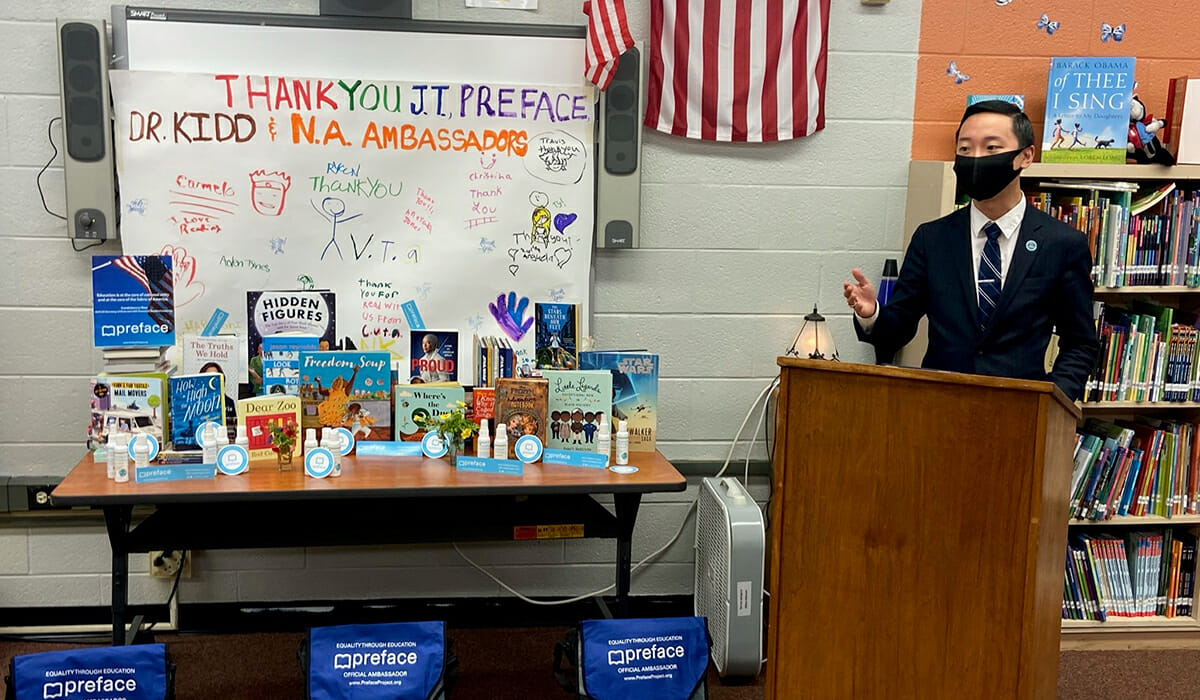
JT Wu presents a legacy gift of donated books to a Preface-partnered school in Norfolk, Va./Courtesy JT Wu
As a child is growing up in a home where English isn’t spoken or mom and dad might have to be working multiple jobs to make ends meet, it can be difficult to find the kind of educational supports that might be necessary for a kid to learn both a new language and a curriculum in the classroom at the same time. What we wanted to do was talk to as many educators as possible and ask what can we do to help. That’s how the idea of Preface was born. Teachers said we could really just use a couple more resources, especially peer-to-peer resources, and especially resources that are multilingual and might be able to meet these students where they are, whether that’s in Spanish or Vietnamese or Korean or otherwise. We said, OK, what if we worked to train and empower high school students in every community — starting here in Gwinnett but now operating in 11 states and growing across America — to learn and understand educational best practices of how to read to young children, how to foster literacy, and really be complementary to what a lot of teachers are already doing in the classroom. We tested that out, had a good pilot program, and we had every kid in this program back in 2019 go from functionally literate to reading on or above grade level in as a little as ten weeks. We were super encouraged by that.
What exactly does Preface do?
For us, it’s not that we’re reinventing mentorship. We’re just trying to get these tools and trainings and these students, who want to serve and give back and are present in every community, into as many hands of educators as possible. We work for the company completely pro bono. We offer our services to the school completely free of charge, and we’re doing that both in person now and virtually. When COVID hit, we innovated. We invested in a digital platform, built out a Preface portal, partnered with technology companies like Epic, which is a book platform with over 40,000 books in multiple languages and multiple reading levels, and like Google, who is helping us with video communications technology and setting up our sessions in safe and secure virtual meeting rooms. We’ve been able to rapidly scale and get these services into the hands of more teachers and more students across the country. Since October 2020, our ambassadors — which is what we call our high school students — nationwide have facilitated over 700 hours of additional reading sessions for kids across the country, and through a pandemic and through all the challenges of distance learning.
Can you describe how Preface’s mentoring works?
Everything we do we want to make sure is tailored and is meeting the needs at the request of the educators and the folks who are actually on the ground and working with these students day in and day out, and know what the needs of these students are. … Because these students are interfacing with their mentees during the school day, we’re often able to find those 30 minute windows where maybe there’s a break on the high school side, and the elementary school is doing some sort of intervention and could use a little bit of additional personalized assistance from one of our highly trained mentors and ambassadors. We can make that happen, now that we’re in a virtual world, basically instantaneously, for free and at the click of a button. Our ambassadors go through a training course designed by expert educators. We have an educational advisory board of folks with over 70 combined years of educational experience both at the high school and elementary school sides, as well as special education and literacy instruction. We’ve distilled best practice concepts into video formats and interactive formats that our ambassadors are able to easily digest and put into practice immediately.
Why does the issue of childhood literacy especially resonate with you?
I think it is so fundamental to lifelong success. Taking a step back, there are studies that have been done that say if you are able to read English proficiently by the third grade, you’re four times less likely to drop out of high school. You’re 60 times less likely to spend any time in prison. Correlation is not causation, but for us, these are things we can do to help invest really early on in the fundamental development of a young child. Young students’ brains are so malleable. They’re absorbing so much information. Their brains are building over 700 connections a second. Being read to aloud as a child is recognized as really one of the most important activities leading to literary acquisition. If we can invest and continue to expose the next generation to as much reading and as much language as possible and give them those foundations for lifelong literary success, that’s something where we feel we can make a tremendous impact early on, and communities can come together to make that happen.
Are there any future partnerships, programs, or events that you are excited about?
We’re constantly launching new partnerships. If [readers] go onto our website, they can see our newsroom with press releases where we keep folks updated as new partner schools and partner communities come and join the Preface family. We also are constantly innovating. We’re making investments in technology. We have a fundraiser coming up in October here in our headquarters of Gwinnett County, Ga., that we’re excited about because again we offer these services at no cost to the schools. We don’t take a salary from the organization, so every single dollar given to us we’re able to invest right back into our programming, right back into growth, right back into communities.
With every school we partner with, we also love to give what we call legacy gifts, which is a donation of about 150 to 200 brand new children’s books, specifically chosen by the teachers in that community and tailored for the demographics of that particular school and particular area. For example, if there’s a heavily Spanish-speaking portion of a community, that legacy gift would be multilingual Spanish and English books and books that really emphasize the importance of representation. We’ve been really excited to be able to see kids embrace being able to see themselves in the books they’re reading that are available in their local libraries. Also during the pandemic, we partnered with generous sponsors like EarthBaby and others who have donated tens of thousands of dollars in pharmaceutical products and healthcare resources like hand sanitizers and gels that we bundle up and give to each of our partner schools across the country.
What has it meant for you to be able to start this in the community where you grew up?
It’s meant the world. It is such a blessing to have been able to come back to my hometown and really be embraced by folks here, and be able to make a difference, and give and ensure that other students and young kids in this community have access to the same type of opportunities and resources and supports I was blessed to have had growing up. It’s been incredibly gratifying. Georgia is changing. Gwinnett Country is becoming incredibly diverse. I think it’s such a microcosm of what’s happening in the rest of the country. We’re able to say here in Gwinnett, or here in Georgia, or here in the south, this is how we’re harnessing that diversity and that incredible multilingualism to be a competitive advantage in an increasingly interconnected global economy. This is a model that has worked for us here. It can work in states across the country.
JT Wu presents a primary school in North Charleston, S.C., with their legacy gift of donated books for partnering with his nonprofit Preface./Courtesy JT Wu
What’s been the most rewarding part of your work?
I think the most rewarding part has been seeing these kids light up. We transitioned to a virtual model right at the onset of COVID-19 so we were able to continue keeping those mentoring relationships with our ambassadors and the young kids alive, even through the heart of the pandemic, through safe and secure virtual reading sessions. For us, to see kiddos put the biggest smile on their face and say, “This is what I want to read today,” and being able to go from not knowing what the words are in a sentence to being able to read and sound out those words pretty expertly — that has been incredibly encouraging to us.
What do you want people to learn from your story?
I think service is so important. Everybody can do it. Everybody can serve. The more we are giving back and investing in our own communities, and empowering especially the next generation to be those beacons of light for the kids that could be their little siblings, the kids who are looking up to them, that for us is such an incredibly valuable thing. Our values here at Preface are literacy, community and opportunity, and that is what I think is so exciting about this model of national service. We are getting into the heads of high school students and educators across the country that you can make a difference in you own backyard and you can do it around your own schedule. You can do it during the school day. You can do it in these short bursts. Our national core of ambassadors are giving 30 minutes to two hours every single week across a couple of semesters, but that adds up to 700 plus hours. That’s over 29 full 24-hour days of full incremental reading sessions that have been facilitated that wouldn’t have been there otherwise for these students.
Despite the COVID-19 pandemic, Manogna Dumpala has volunteered with gusto for the American Red Cross Northern New England region in the past year, connecting with hundreds as the rising college sophomore helps to support the organization.
Through her service, Manogna, an 18-year-old Dover, New Hampshire resident, promotes volunteer opportunities and supports volunteer recruitment programs. Lending a hand wherever it is needed and infusing her volunteerism with positivity, Manogna is building a stronger Red Cross through service.
What inspires you to volunteer?
I’m inspired to help others and give back to the community. Everyone around me has always shown me kindness and love, and by volunteering I can make the world a better place, even if it’s something little.
Describe your volunteerism with the Red Cross.
As a volunteer recruiter for the Northern New England Red Cross, I virtually recruit volunteers, host orientations for new volunteer recruits, and also assist with training materials for our volunteers. From ensuring the Red Cross blood drives have a volunteer workforce, to local and national disaster volunteer response, I am helping to expand the organization’s reach across rural communities in our region.
Manogna Dumpala is promoting volunteer opportunities and supporting volunteer recruitment for the American Red Cross Northern New England region./Courtesy Manogna Dumpala
Share one personal story with me from your volunteerism.
During one virtual presentation to volunteers, one attendee unmuted herself and spoke about how she was moved by my presentation and was inspired to do more because of how we all worked together. Even though we’re volunteering behind the scenes, we’re still helping others through our compassionate efforts.
Why do you think it’s important for others to give back?
Once you begin to support a cause, you won’t regret volunteering. Through service, you’ll remember how you impacted others and you’ll grow as a person.
What do you want people to learn from your story?
It’s the little things that can go a long way. We haven’t been going out in person because of the pandemic, but I could still impact others virtually through volunteerism.
In one word, what does volunteering mean to you?
Fulfillment.
When you’re not busy volunteering or in school, what do you do for fun?
I love reading or going to the beach and the lake.
How can readers help?Please visit the Red Cross website for more information about how you can help.
College Students Volunteer to Bring Laughter to Lives of Senior Citizens
Meet Daily Point of Light Award honoree Gracelyn Metts and Tania Yacu. Read their story and nominate an outstanding volunteer or family as a Daily Point of Light.
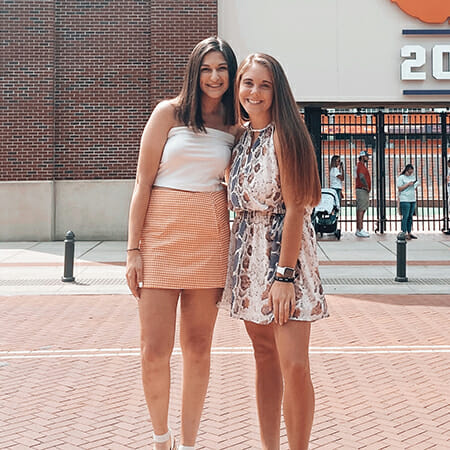
Gracelyn Metts and Tania Yacu met their freshman year at Clemson University, and the now best friends are often inseparable. The two have extended their friendship into service to spread joy to senior citizens in their community.
As volunteers with Providence Care, the 20-year-old students are making an impact on the lives of seniors who are at times isolated or lonely. Offering companionship, laughter and love to elderly at home and in assisted living, Tania and Gracelyn’s volunteerism serves as a reminder that during the most difficult times, there is hope and healing for all.
What inspires you to volunteer?
Tania: I’m inspired to volunteer because of how people’s faces light up. My grandpa passed away in hospice. I got to see the volunteers and how it impacted him. In that sense, that experience showed how just one person can change another person’s life for the better.
Gracelyn Metts and Tania Yacu are volunteering to spread joy to senior citizens in their community with Providence Care./Courtesy Gracelyn Metts & Tania Yacu
Describe your volunteerism with Providence Care.
Tania:As volunteers, we make at-home visits to hospice patients receiving treatment and also visit with seniors living in assisted living. We reminisce with the patients to try to get them away from thoughts of being in hospice. We do activities like coloring and also assist with other bigger activities.
Share one personal story with me from your volunteerism.
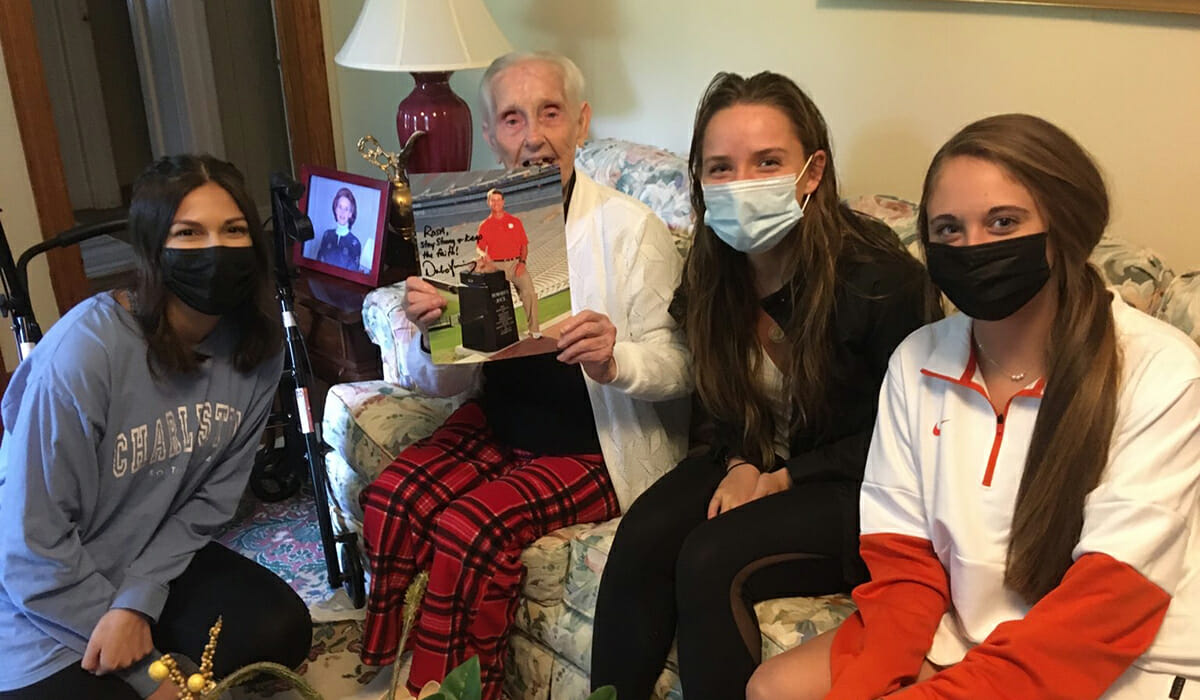
Gracelyn: We visit one 93-year-old lady who knows we’re Clemson students, and she’s the biggest Clemson fan. I was able to get an autograph from the school’s head football coach for her. She was ecstatic. She now has the autograph framed in her room, and she talks about it all the time. It makes you appreciate the smaller things. To be able to present her with something signed from the coach helped to bring her joy during a hard time and it brings joy to her family’s life as well.
Why do you think it’s important for others to give back?
Gracelyn: There’s going to be a time in everybody’s life when you need to depend on others. It’s important to volunteer because there are people now that need help, and later on in your life that may be you too.
What’s been the most rewarding part of your service?
Tania: Getting to see the impact we’re making on seniors is rewarding, but also, for our hospice patients, our volunteer coordinator tells us how our service helps to make their lifespan longer at the end of the day. Knowing that is very rewarding.
What do you want people to learn from your story?
Gracelyn: Although we’re just spending a couple hours talking to patients or playing simple games, the impact really is so big for them. Doing just one small little thing can really… Tania: (Interrupts) …it can really change someone’s life at the end of the day. Make the effort to do one nice thing for one person a day, because it can change them for the better.
In one word, what does volunteering mean to you?
Gracelyn: Transformative. Tania: Heartwarming.
Gracelyn and Tania offer companionship, laughter and love to elderly at home and in assisted living./Courtesy Gracelyn Metts & Tania Yacu
When you’re not busy with school or volunteering, what do you do for fun?
Tania: If I’m not bothering Gracelyn (laughs) I like to go hiking around Clemson, or driving around, or watching the sunset. I enjoy the little things around the Clemson area. Gracelyn: We do most of it together (laughs). I like to go kayaking on our lake up here, or listening to music, jamming out in the car and having fun.
How can readers help?
Please visit the Providence Care website for more information about how you can help.
Meet Daily Point of Light Award honoree Ronia Brown. Read her story and nominate an outstanding volunteer or family as a Daily Point of Light.
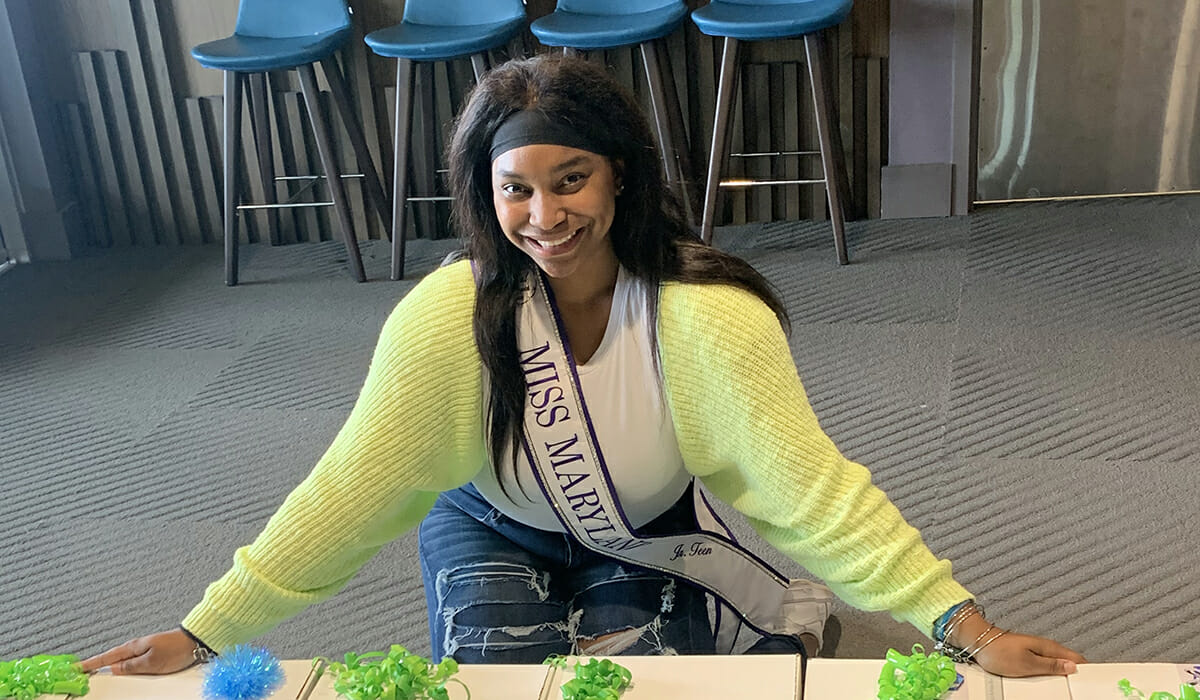
Ronia Brown says the last few years of her grandmother’s life were marked by long periods of medical isolation. That isolation, says the 16-year-old Waldorf, Maryland student, made a lasting impression on the family. Wanting to comfort others who experience similar loneliness, Ronia knew she could make a difference through volunteering.
Launching Nia’s Birthday Box in 2018, Ronia set out to gift the elderly and children in need with her Birthday Boxes. Realizing that widespread isolation was affecting people daily during the COVID-19 pandemic, the rising high school junior expanded her efforts by sending Kindness Boxes around the United States. From Maryland to Texas and Nevada, Ronia is reminding people they are not alone by providing them comfort and celebration through service.
What inspires you to volunteer?
My parents have always emphasized the importance of service, and I firmly believe that nobody has to do everything, but everybody has to do something. I’m inspired to volunteer because I know I am making an impact and I know my service makes the people I serve feel loved.
Describe your volunteerism with Nia’s Birthday Box.
As founder and CEO, I manage our social media, hold monthly packing parties for our Birthday and Kindness Boxes, and manage fundraising and donations. When it comes to the seniors and also, children that are hospitalized, sheltered or in foster care environments, they are often lacking time with family and friends. We try to personalize the boxes, which are either full of party favors, gifts, comfort items like blankets or essentials like socks, shirts and hygiene products. We’ve donated more than 500 Birthday Boxes and thousands of items since 2018, and we’re reminding people they are not alone, whether it’s their birthday or just an ordinary day.
Ronia has sent more than 500 Birthday Boxes across the country since 2018, and started distributing Kindness Boxes at the start of the pandemic to combat social isolation. /Courtesy Ronia Brown
Share one personal story with me from your volunteerism.
I recently gave a box to my grandfather because he was unfortunately hospitalized. He’s since been released from the hospital, but we were experiencing that isolation again, after I’d experienced it so many years ago with my grandma. It was scary for me because only one person could visit him at a time, but seeing that smile on his face was uplifting for my spirit and his spirit. The relief I experienced made me realize if my family felt this way, families I don’t even know are feeling that way because of our boxes. I truly think volunteering is my life’s purpose.
Why do you think it’s important for others to give back?
There are so many problems around our world and so many ways to give back. You can make cards for somebody, be a penpal, or go to a food pantry and help someone facing food insecurity. We want to grow up in a world where we all care about each other and it’s a good place to be.
How have you continued to volunteer throughout the pandemic?
At the beginning, it was really rough because I realized everything was closing down and lots of places stopped taking donations. We expanded across the nation to combat isolation and exclusion and found anywhere and everywhere that would take donations, including women’s and family shelters. I knew as an advocate of inclusion that isolation wasn’t just happening on someone’s birthday, I wanted to find a way to do my service every day, which is how our Kindness Boxes were created.
What do you want people to learn from your story?
Don’t be afraid to try something new. When I first started, I kept my service very local. I realized that once I started reaching out to more people that I didn’t know, I made a greater impact. Don’t be afraid to branch out and go on a leap of faith.
In one word, what does volunteering mean to you?
Impactful.
I love to do everything. I am a six-year competitive swimmer, I am a varsity softball player, I run cross-country, I do pageants, and I am heavily involved in STEM. I studied cybersecurity in high school.
How can readers help?
We rely on donations to continue to provide birthday and kindness boxes. Please visit our website for more information about how you can help.
Teen’s Literacy Volunteerism Builds Young Readers Worldwide
Meet Daily Point of Light Award honoree Sneha Nadella. Read her story and nominate an outstanding volunteer or family as a Daily Point of Light.
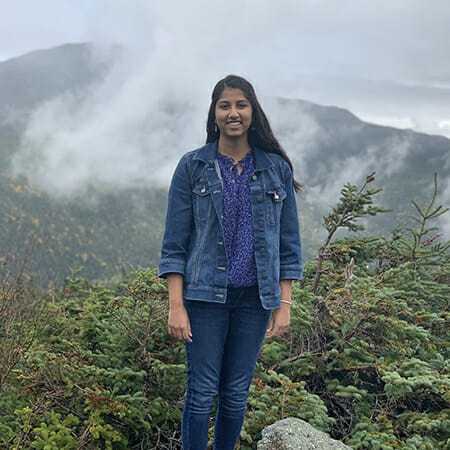
Sneha Nadella’s parents have always championed education for children in their home country of India, the 17-year-old says. On a visit to a rural area of India accompanying her parents, Sneha discovered how many young students face barriers to literacy, and she knew she wanted to help.
Through the World Literacy Foundation, Sneha, a rising high school senior from Plano, Texas, serves children around the globe to support their education and promote literacy. From Ethiopia to India, Sneha is volunteering to lift young people out of poverty through the power of literacy.
What inspires you to volunteer?
Regardless of where we live, we should all have a fair shot at resources and especially education. I’m inspired by the enjoyment in the eyes of the children and parents that we serve. As part of my volunteerism with World Literacy Foundation, I narrate audiobooks. I don’t get to speak to the kids directly, but I receive videos of them learning and that makes me really happy. Some of the children we are volunteering with have never even owned a book before.
Sneha Nadella is volunteering to lift young people out of poverty through the power of literacy. /Courtesy Sneha Nadella
Describe your volunteerism.
As a volunteer with World Literacy Foundation, I record about two audiobooks each week for their literacy app. In addition, I help WLF with grants, and participate in various initiatives including their Christmas 2020 campaign. In addition to my service with WLF, I’ve tutored underprivileged Ethiopian children, taught English to students from rural areas in India, and volunteered with a variety of other organizations, including It’s Going To Be Ok!, ACEing Autism, Special Needs Gymnastics, Special Olympics and Intellichoice.
Share one personal story with me from your volunteerism.
I met one girl while visiting a school in India. This little girl had big dreams, she wanted to be an aeronautical engineer. It was obvious she felt she wasn’t able to pursue those dreams given the resources she had. Simply learning to read and figuring out sight words made her really happy. Witnessing her joy and seeing the struggles these children face made me passionate about literacy and making an impact. We literally watch them grow and prosper through literacy.
Why do you think it’s important for others to give back?
None of us starts and pursues our lives on our own. We are all a community, and volunteering is a good thing to do.
What do you want people to learn from your story?
It’s up to us to look after younger generations and shape them into good people. Through volunteerism, I like to think that I’m not just focusing on education, but I’m also talking to kids about their lives, and imparting a sense of service to them.
In one word, what does volunteering mean to you?
Rewarding.
What’s your favorite children’s book? Adult book?
I love Dr. Seuss books. I have so many favorite adult books. “To Kill a Mockingbird” is one.