Teen Leads Peers in Promoting Mental Health Awareness Around the World
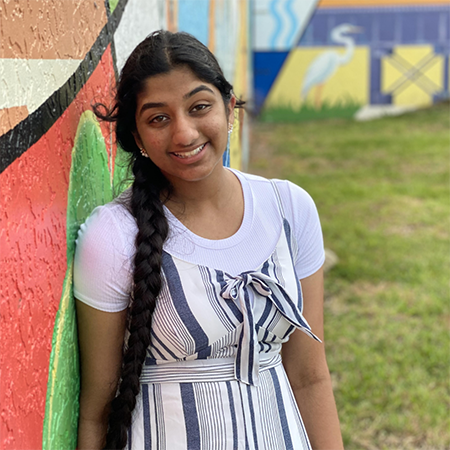
Meet Daily Point of Light Award honoree Aparna Ramakrishnan. Read her story and nominate an outstanding volunteer or family as a Point of Light.
Seventeen-year-old Aparna Ramakrishnan has struggled with her mental health for many years. She first exhibited symptoms of anxiety and depression while she was in seventh grade, and went a long time before she was able to get the help she needed. After finally getting help, she realized that if she had better mental health awareness, she would have recognized her symptoms and been able to reach out for help earlier.
Deciding she didn’t want anyone to struggle like she did due to inadequate education, last year the Lisle, Illinois resident started Beyond Charity — a nonprofit that provides free, peer-led mental health education presentations to kids. In the last ten months, they have delivered presentations to over 10,000 students not only in the United States, but also in India, Kenya and Rwanda.
“Mental health has always been such a repressed topic that’s never spoken about in families or schools,” Aparna said. “Now that it’s starting to come out of its shell, I really want Beyond Charity to propel that growth so kids and adolescents know that it’s OK to not be OK.”
What makes the presentations unique is that Beyond Charity tailors them to whatever mental health topic the teachers, clinics or counselors they’re working with would like their students to hear. The presentations, which are mainly online due to the COVID-19 pandemic, emphasize how common mental illness is in teens and adolescents, and also delves into common mental illnesses such as anxiety, depression, bipolar disorder, ADHD, OCD and PTSD. All of the information they share has been looked over by their board of directors, which consists of licensed counselors, a physician assistant who specializes in psychiatry, and a community organizer.
All the presentations are delivered by Beyond Charity’s teen volunteers, who share stories about their own experiences with mental illness. They also discuss over 20 different coping strategies for different mental illnesses. The presentations currently have a 97% peer-to-peer recommendation rate.
Aparna said because not everyone is comfortable sharing their mental health stories publicly, it’s important for extroverts like her to speak out and try to help others feel more at ease discussing the topic, so it “becomes an open conversation instead of one held behind closed doors.” Along with the coping strategies, the personal stories are frequently students’ favorite parts of the presentations.
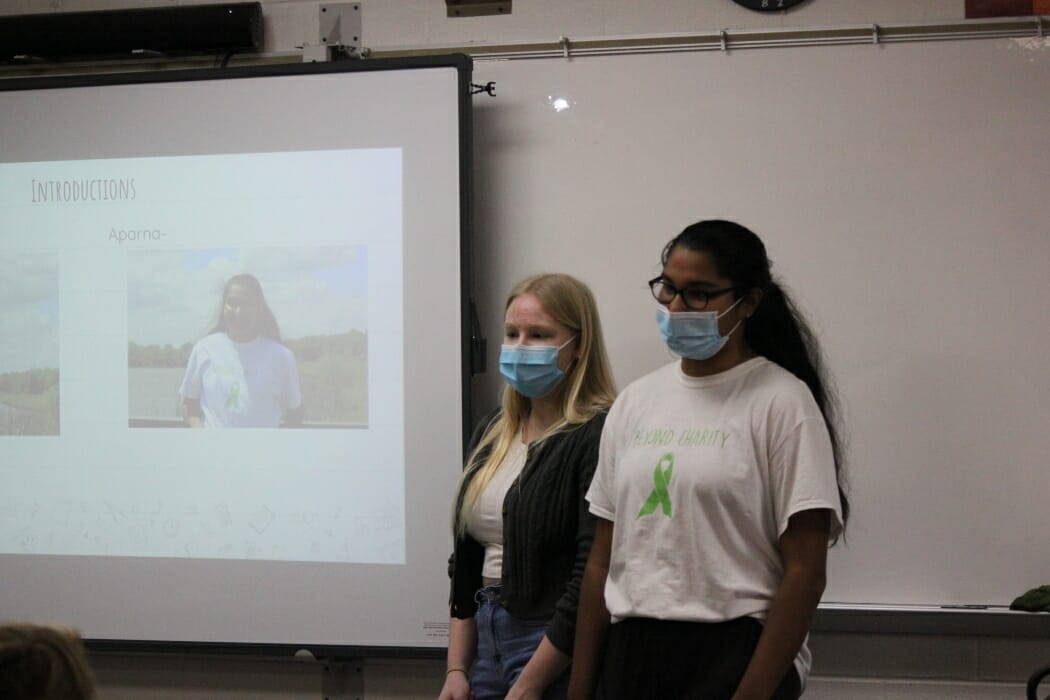
Aparna Ramakrishnan, right, gives a presentation on mental health with her nonprofit Beyond Charity. /Courtesy Aparna Ramakrishnan
“They understand that we were just in their shoes a couple years ago,” Aparna said. “If they are going through anything similar to this, they see there is something better on the other side, and they’re able to either reach out to us or reach out to a counselor or a parent so they are also able to get the help they need.”
In addition to Beyond Charity’s educational work, they are also lobbying for a bill in the Illinois Senate that would mandate that schools provide student identification cards to include suicide prevention lines on them.
Aparna was inspired to advocate for the bill after seeing help lines listed on the back of her older sister’s college ID card. After an enthusiastic response to providing help lines from her own high school — which will be implementing their new ID cards this upcoming school year — Aparna decided to try to make the change statewide. Beyond Charity worked with a legislative team to draft the bill, HB1778, named the Beyond Charity Law. Last month, it passed the Senate.
Luka Sereci, Beyond Charity’s Vice President, wanted to become involved with the nonprofit after dealing with his own mental health issues. However, he said he worried at first that all of Aparna’s ideas would be a lot for them to take on — only to be proven wrong by his friend’s maturity and driven work ethic.
“To be honest, I kind of underestimated Aparna’s power and the level she is self-disciplined,” Luka said. “She works really hard to get what she wants and she knows what she wants, which is great.”
Aparna’s hope is to one day become a psychologist, a goal inspired by her own struggles with finding a child psychologist in her area. Her work with Beyond Charity has only reinforced her desire to work in the mental health field.
“It’s not about the number of students you reach, but just that one person who takes that extra step because of your presentation and says, ‘OK, it’s time for me to reach out for help,’ and gets better after and is able to utilize the coping strategies and truly understand what mental health is,” Aparna said.
Volunteer Leads Others to Do Good in North Carolina Community
Meet Daily Point of Light Award honoree Bill Halvorsen. Read his story and nominate an outstanding volunteer or family as a Point of Light.
A chance encounter at a disaster recovery program with a nonprofit executive director led Bill Halvorsen on a path to becoming an incredibly dedicated volunteer in his Raleigh-Durham area community. For the past three years, Bill has served on the board of directors for Activate Good, a Points of Light Global Network affiliate that connects people to volunteer opportunities.
He also serves as a volunteer leader and volunteer for Activate Good, which has led him to frequently volunteer for the Food Bank of Central & Eastern North Carolina. He has been very involved with their Middle Mile Food Rescue, a program where volunteers transport food from donors to food banks that is in its inaugural year. Bill is also on the board for A Place at the Table, a pay-what-you-can cafe that he helped to partner with Activate Good.
Describe your volunteer role with Activate Good.
Activate Good is a Points of Light Global Network affiliate here in the Research Triangle of the Raleigh-Durham area. Like any connection center, our mission is to connect people to purposeful activities with our nonprofit partners. I am a board member as well as a volunteer leader and a volunteer. One of the great attributes of Activate Good and having an organization like that in the nonprofit volunteer community is a lot of times volunteers want to show up and disengage ownership and thought process. As a volunteer leader, it’s program management, logistics. What we do is first communicate with the partner we’re going to be having an activity with, whether that be a one-off or a regularly-attended volunteer activity. The food bank is probably one of our most popular and longest-established programs. We understand what the requirements are of the nonprofit and we guide and shepherd our volunteers through whatever the logistics of the nonprofit are and the activities of that day.
Bill Halvorsen leads volunteers in painting chairs on his farm for the pay-what-you-can community cafe A Place at the Table./Courtesy Bill Halvorsen
What made you want to become more involved in Activate Good?
The impact that Activate Good has in the community. I find for myself, and the other volunteers I talk to and interact with, they like the diversity. Most nonprofits would prefer [volunteers] come to the food bank every time. Realistically, people will want to diversify and change programs through the season or through their ability to volunteer. Activate Good at the foundational level enables peoples’ ability to do good through finding projects and having projects suited for diverse communities.
What do you do with the Food Bank of Central & Eastern North Carolina?
There’s two major activities we do with the food bank. The food bank itself is constantly needing to sort and prepare bulk foods for distribution to some of their 900 pantries and partners. On a regular basis, two to three times a week, we have teams of Activate Good volunteers at the food bank sorting several thousand pounds of produce or different food stock to prepare to be distributed out to the food bank’s 900 partners.
The other aspect I do with the food bank is called the Middle Mile program. It’s connecting producers to the needs. Obviously the food bank gets truck loads of food in from all sorts of sources, mainly grocery distribution-type stuff, but they also have and want to connect with the local producers. It could be a farm that’s producing excess amount of lettuce or sweet potatoes or any number of produce and that producer wants to donate their excess to the food bank, or it could be an individual grower who may have grown 200 pounds of asparagus or lettuce or sweet potatoes. Instead of sending out a semi-truck to that location to pick up that, the Middle Mile is volunteers willing to connect the producer with the donation center. Sometimes we bring the donation back to the food bank and it gets absorbed in their common stock that they distribute, or the food bank connects with their 900 nonprofits and lets them know of a certain donation. … We deliver it directly to pantries or a soup kitchen or an entity that’s a partner of the food banks so they can get that produce in hand and out the door to the community who needs it.
What is your volunteer role with A Place at the Table?
A Place at the Table is a pay-what-you-can-afford cafe. It’s in its fourth year. It’s been around in concept almost nine. A Place at the Table from the outside looks like any coffee shop, deli or cafe, but their mission is anybody eats. That means someone can give you a token for a pay-it-forward meal, you can pay with just three dollars for a five star meal or you can volunteer for that meal. Great concept. … In April of 2017, we started every Sunday having an Activate Good day. We took over the entire shift, which is about 12 to 18 volunteers. The way the model of the restaurant works is the front of the house, the people who run the food, who bus the tables and who wash the dishes are all volunteers. The only paid staff are the cooks and management and they earn a living wage. It was a great marriage. We had a lot of volunteers who wanted to connect with the community.
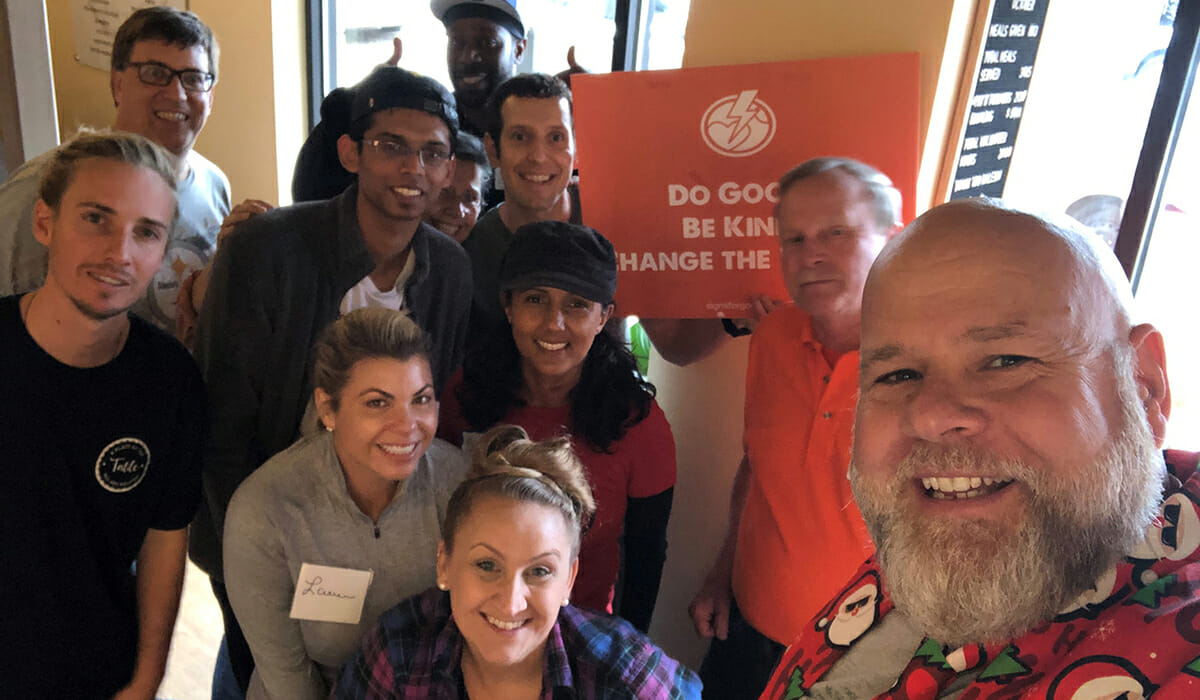
Bill Halvorsen, far right, celebrates Christmas with fellow A Place at the Table workers and volunteers./Courtesy Bill Halvorsen
Do you have any memories from your time volunteering that really stick out to you?
At A Place at the Table, we have a lot of community volunteers who volunteer for their meals, but the meal is not the most important thing. One of the things I’ve said to people I talk to in the community about the impact we have, is you could be hungry, you could be homeless, you could be an addict — what finally breaks them is the invisibility. People look through them. On more than one occasion, I had a young man who came to the cafe, and we don’t know their story. We don’t really care about their story, we just care about them. He stayed there for almost a whole day. He volunteered for his meal and he interacted. At the end of the day, he said to me and a couple others, “You saved my life. If one more thing bad happened to me, I was just going to end my life. I was preparing to end my life, but you guys showed me people do care and there is a place I can feel redeemed and worthy and acknowledged. Not fed, not catered to, but just acknowledged.” There was a major impact that resonates with me as why you might serve coffee 100 times to people and then the 101st time is the person you make a connection with and an impact.
Another time was this young lady didn’t seem like she had anything going on, but she was very quiet and she volunteered for her meal. I knew she needed more than being sat at a table or on a countertop and fed. She needed community. We have what we call a ‘community table.’ It seats six or eight, and we tell people we might have other people sit with them. I had just placed a family of four at this table. They were just regular diners, nothing special, and I asked them if this girl could sit with them because she needed community and they said fine. Well that family sat there for two hours and there were some tears shed on that table. She told them her stories. She told them how bad off she was. She was living on the streets. She came back several times. Part of our mission and what we do is we connect people with information about where to go in the Raleigh community to get assistance. About two and a half months later, she has a place to stay, she has a job, she was getting off the drugs and her whole life had been changed. I can’t say that event is what caused it, but I would like to say it was one of the connections that helped her find the path forward.
Why do you think it’s important for others to give back?
I think it’s in our DNA. I have never had a volunteer have a bad experience when they’re doing good. Some people think volunteering needs to be a martyrdom. ‘Oh, I sacrificed’ or ‘I witnessed your pain.’ You can have fun. When volunteers are with me at the food bank or wherever we’re at, doing whatever menial task, my goal is we’re having fun. It’s all about community and experiencing that together, and knowing not only that you’re having an impact, but knowing you’re having an impact with fellow humans. It’s important that doing good doesn’t mean you have to be a martyr or you can’t have fun doing it. Some of the funnest experiences I had was cleaning up after protests because the people I was with celebrated the fact we could help out.
What do you want people to learn from your story?
We all can make a change. We all can make an impact. The smallest act can have the greatest rewards in someone’s life.
Meet Daily Point of Light Award honoree Mary Miller. Read her story and nominate an outstanding volunteer or family as a Point of Light.
When the COVID-19 pandemic hit the United States last March, Mary Miller knew she wanted to help out in some way. The microbiologist had recently retired from the military, where she worked on outbreak and pandemic response in Asia and East Africa. After searching for volunteer opportunities online, she was drawn to the Harris County Medical Reserve Corps, a national network of volunteers, many of whom are medical and public health professionals, who help their communities respond to emergencies such as natural disasters or disease outbreaks.
Throughout the past year, Mary volunteered to help with COVID-19 testing, antibody testing and vaccine distribution in Harris County, Texas. She frequently worked full-time, pulling 12 hour days sometimes seven days a week. While the need for COVID-19 response volunteers in her area has dwindled as more people have been vaccinated, Mary looks forward to being able to assist Harris County Medical Reserve Corps with their natural disaster response in the future.
Describe what Harris County Medical Reserve Corps does and how you became involved with them.
Medical Reserve Corps falls under Health and Human Services, so it’s under a government agency. In times of pandemic response, disaster relief or anything like that, Medical Reserve Corps augments the local community. Harris County Public Health had a need and Medical Reserve Corps recruited volunteers to fill that need. I actually was looking for opportunities to support COVID response, and I stumbled across Medical Reserve Corps through Volunteer Houston, which is an organization whose website advertises all sorts of ways you can help as a volunteer. I had recently retired from the military and I was looking for an opportunity to help because I have such a long history of public health in the military. I was really, really grateful that Medical Reserve Corps gave me that opportunity to help.
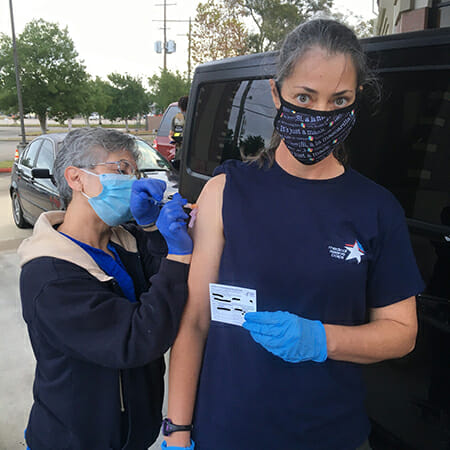
Mary Miller, right, is vaccinated by a fellow Harris County Medical Reserve Corps volunteer./Courtesy Mary Miller
What did you do in your volunteer role?
March 23 was my first day in 2020. I took a month off in May 2020 because I got really burnt out fast, because we were doing 12 hours a day, seven days a week, and you’re outside the whole time in full PPE, so it’s a lot. I took a month to gauge how long I can do this, and I had to learn how to pace myself. I came back in early June and went back into the testing role from June 2020 all the way through the end of October 2020. I was doing full-time then. Still working for Harris County Medical Reserve Corps, there was an opportunity to do COVID antibody testing. Basically, we were given random addresses to ask people if they would volunteer a blood sample to be tested to see if they had been exposed to COVID or not. We go there with a Harris County Public Health employee, a volunteer like myself who would do the screening questions and get the consent forms all filled out, and then have a phlebotomist there to draw blood at their house, standing outside. Once that was complete in November, the vaccinations started, and I assisted with the vaccinations from December through late March.
When you were looking for volunteer work, what about Harris County Medical Reserve Corps stood out to you?
It was so perfect for what I had been doing. When I was in the military, I did outbreak response and pandemic response. We worked with the CDC and Global Health. I had been working in Asia and East Africa and other places, basically teaching other people like myself better ways to prevent disease spread, how to identify a potential outbreak and how to isolate people who were potentially sick with the disease who could be highly contagious and infectious. We were teaching them how to wear their PPE, how to wash their hands properly and teaching outbreak response. When a big pandemic happens, as a microbiologist who used to train on that, it seemed a bit wrong not to get involved. … When I found out about Medical Reserve Corps, I thought, this is perfect. Not only is it good for pandemic response, it’s also great for disaster response so in the future, knock on wood, if there’s a hurricane or flooding or anything like that, I’m already tied into the system so I can also be contacted for that.
Why is it important for your community to have this resource?
I think Medical Reserve Corps is great for the Harris County community in supporting public health and augmenting it, because there was nothing to compare to what we did there. We all talked about it as far as pandemic response planners, but when it really happens and the manpower that is needed, and the amount of coordination and sustained effort is needed, it’s a lot. … Throughout the whole evolution of the process — shifting from trying to detect it to trying to vaccinate against it — there was a lot of public fear and public anxiety. [The community] didn’t know what to trust and who to trust, so I really appreciate being able to be a part of that.
Also, having that privilege of being able to interact with people who have lost someone or have dealt with COVID at a very personal level. I remember one day, we were screening people for vaccinations. This woman came through, she’s probably in her 50s and she had two adult children in the car. When you see hundreds of people, sometimes up to 1,000 people a day, and you’re interacting with all of them, you really start to be aware of when someone’s mood is not right. We could see this woman and these two adult children were sad — just absolutely, completely deflated. We have to educate them and tell them about the vaccine, and the nurses helped teach me how to be a little more perceptive and reach out to these people. This woman confessed to us that very morning, she had held her husband as he died from COVID. She was in full PPE and she couldn’t even touch her own husband because he was sick with the disease. From what I understand, she had already gotten her first dose of vaccine, so I assume he already possibly had been vaccinated, and all he needed was one more dose and it could have protected him. To see the pain in her eyes and see the pain in her children’s eyes, to know they lost their dad, and it was that close. If they had maybe been a month earlier with the vaccine, maybe they still would have their dad. It’s stuff like that and seeing so many people going through and being so grateful to be a part of this community effort, where if they get vaccinated, they can help protect other people.
What have you learned through your experiences as a volunteer?
When we would do the antibody testing and listen to people who had a really bad case of COVID and somehow fought through it or had lost a loved one, it reminds you that we should always be thankful for what we have and not take it for granted. Another thing I learned a lot from watching the nurses and the other people I worked with is just the level of patient care. … Some of the patients we had to vaccinate, it was a little difficult because we were dealing with patients who had special needs, dementia, autism. Some of these patients were not fully aware of what was going on. Despite having 1,000 cars lined up and the need to get through these people quickly, whenever I watched the nurses handle the patients with the utmost compassion, like that patient was the only patient they had to deal with that day even though there were thousands of others behind them —the compassion that each one of those nurses gave those patients in that moment, to me, was overwhelming. To treat each patient as a human being and look them in the eye and give them that attention for that few minutes they had with them, that is one of the biggest things I take away from it — the humanity and the compassion I saw when there was so much darkness in the media and other places. There was so much compassion and humanity in that moment of volunteering.
What do you want people to learn from your story?
Through the volunteering and through the people I interact with and through the community, it gave me so much hope, because it sort of renewed my faith in humanity and all the good people who are out there. A lot of times you get tied up with all the bad stuff that is out there and people get very fearful, especially when you’re isolated and you’re sitting at home either with your immediate family or you’re by yourself. Everything seems so grim and dark and bad and nothing good is going to come of this, but I would go out there everyday. Sometimes I admit, it was very hot and very uncomfortable. Sometimes people were waiting out there for three or four hours in the heat to get tested, or sitting out in the cold to get vaccinated. You see the number of people who would come through and be so grateful and so happy we were doing this for them, and I said, we couldn’t do this if you weren’t here. The point is the community has to want to get vaccinated and get tested. To see the very bare roots of humanity of people wanting to come together and protect each other and do the right thing — it was kind of overwhelming sometimes. In all this negativity, people were so happy and so grateful and that’s what kept us going, the positive energy we were getting from them. …Through volunteering, it introduces you to opportunities and people you wouldn’t normally get to interact with. It shows the good side of humanity you don’t always see sometimes.
Is there anything else you would want to share with readers?
I encourage people to volunteer and step outside their comfort zone and try something they haven’t tried before. It leads to something better that you wouldn’t expect. You’re doing something that in all other aspects seems wrong, to be going around people who are sick with a disease that nobody fully understands and all that. It was challenging, but it challenged me in a good way. The people I met along the way, whether they were the people we were serving or the people I was working alongside, it changes you in a very positive way.
Teen Volunteer Helps Other Girls Reach their Goals Through Virtual Coding Classes
Meet Daily Point of Light Award honoree Sirihaasa Nallamothu. Read her story and nominate an outstanding volunteer or family as a Daily Point of Light.
In 2019, Sirihaasa Nallamothu founded a Girls Who Code club chapter at the Normal, Illinois public library, then quickly started another club in the community and inspired similar clubs elsewhere. The 15-year-old’s volunteerism took on even greater significance during the COVID-19 pandemic while she was stuck at home, seeking engaging activities for herself and other youth.
Launching “The Dream Code Project” in June of 2020, a program founded in partnership with the Girls Scouts of Central Illinois, the now rising high school junior is teaching girls across the country how to code. Helping kids to think outside of the box, Sirihaasa has taught more than 250 students thus far as she shares her passion for coding and empowers girls to code towards a better tomorrow.
What inspires you to volunteer?
My passion for computer science inspires me to volunteer. Before I started coding, I never had a creative outlet. The coding environment supports mistakes and the drive to find new things. I like seeing the faces of girls when their code works. That inspires me to keep going.
As the founder of The Dream Code Project, Sirihaasa Nallamothu has taught more than 250 students how to code. /courtesy Sirihaasa
Describe your volunteerism with The Dream Code Project.
As founder of the program, I teach our online sessions, manage logistics, create the curriculum and assignments, answer participant questions, and recruit program participants. The program is open to any girl across the country, grades 5-9. I wanted to make sure we were empowering the girls to have input on the curriculum, so we give them the opportunity to suggest topics, and then we’ll review those concepts together. I’m not only teaching, but I’m learning as well through this volunteerism.
Share one personal story with me from your volunteerism.
Since starting this program, I realized it wasn’t just the girl logging on, but whole families would join the class. This one family told me they were all learning through my classes. Hearing that was super cool because the family spent time going over the curriculum and assignments together, so through service, I was educating the family and also helping to create a family bond. Me and my dad code together a lot, so giving that to another family is really cool to see.
Why do you think it’s important for others to give back?
Share with the world what you know and gain the knowledge from the people you teach. That’s why I think everybody should volunteer.
What’s in the future for your volunteerism?
We currently teach all programs virtually and will continue this format, as it’s such a great way to connect with people all over the country. We’re adding in more specialized workshops for participants, and I plan to continue this volunteerism even when I head off to college.
What do you want people to learn from your story?
Everybody has something to share and everybody has something to learn. Why not connect those lines and give back to your community? People are willing to learn at any age, and volunteering is a great way to teach people.
In one word, what does volunteering mean to you?
Impact.
When you’re not busy with school or volunteering, what do you do for fun?
I like coding, but it can get tiring to stare at a screen. It’s pretty fun for me to go on bike rides around the neighborhood.
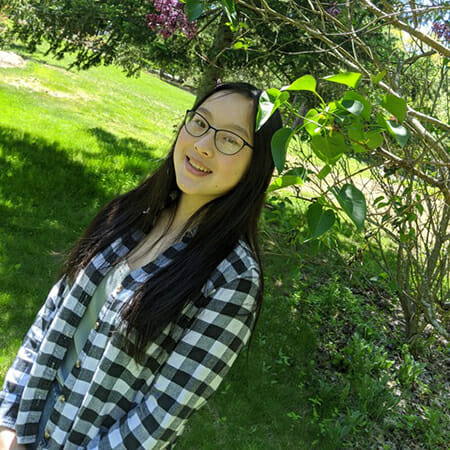
In Response to Pandemic Lockdowns, Teen Creates Educational Support for Kids, By Kids
Meet Daily Point of Light Award honoree Gracie Sheng. Read her story and nominate an outstanding volunteer or family as a Daily Point of Light.
15-year-old Gracie Sheng says when her district closed in-person learning because of the COVID-19 pandemic, she at times received less than one hour of classroom learning during a typical school day. Recognizing that other students were also impacted by disruptions, the Northborough, Massachusetts rising high school junior decided to fill the educational gaps through volunteerism.
Co-launching Iridium Tutoring in the summer of 2020 with a classmate, the organization is dedicated to addressing the educational inequities that surfaced during the pandemic. Connecting with more than 300 students K-12 in the United States, Mexico, Canada and China thus far, Iridium Tutoring’s 100 student volunteers have logged more than 4,000 hours of tutoring in topics ranging from core classes to performing arts, as Gracie helps to support education and inspire today’s youth to make an impact in their own communities.
What inspires you to volunteer?
I’m inspired to volunteer because there is a need. My service makes it easier for students to get resources they may have trouble getting otherwise. It’s unexpected that a group of kids could impact people to such a degree, because most of the time we expect teachers will teach all that needs to be taught, but given the situation (during the pandemic), that simply wasn’t true.
Describe your volunteerism with Iridium Tutoring.
As co-founder and director of operations, I organize curriculum, match students with tutors, and assist with our webinar projects, including our college prep resources. I am also helping to start a scholarship program for the students we tutor. Our volunteer tutors are high school and college students, which strengthens our by kids, for kids service.
As the co-founder of Iridium Tutoring, Gracie Sheng is volunteering to address the educational inequities that surfaced during the COVID-19 pandemic./Courtesy Gracie Sheng
Share one personal story with me from your volunteerism.
When I was tutoring students, I worked with a 5th grader who was very shy. We were working on English, and after a couple weeks of tutoring, it seemed like the student was asking more questions and opening up about the reading material. At first, I was very surprised to see this growth, and it was exciting to know the student was being fulfilled through this education. Since most students we work with are high school age or younger, by connecting them with subjects like STEM and arts, we may be able to help them develop a greater interest in those subjects, and based upon what they learn, it’ll be easier for them to choose a future career.
Why do you think it’s important for others to give back?
Beyond providing people in the community with more engagement and resources, volunteers can act as leaders and role models, and that will inspire other people to get involved and improve the community.
What’s been the most rewarding part of your service?
It’s rewarding to work with other volunteers and the students themselves, because I feel like I’ve created new bonds and a lot of those bonds will last for quite a long time.
What’s in the future for your volunteerism?
We will continue our volunteerism. We plan to continue offering virtual tutoring, but if the tutor and student live nearby, we might try to organize in-person activities. We hope to continue to expand tutoring across the U.S. and internationally.
What do you want people to learn from your story?
It might sound cheesy, but with effort, some things that may seem out of reach will come a little bit closer.
In one word, what does volunteering mean to you?
Appreciation.
When you’re not busy with school or volunteering, what do you do for fun?
I play the oboe and the piano. I also enjoy reading and watching old-timey classic movies.
How can readers help?
Please visit our website for more information about how you can help.
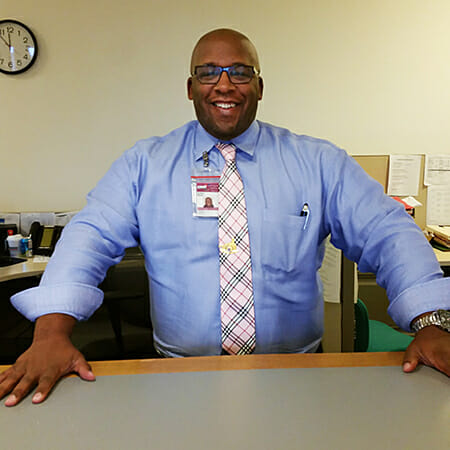
Red Cross Volunteer Makes “Priceless” Connections Serving as Bridge for Diverse Communities
Meet Daily Point of Light Award honoree Sidney Murray. Read his story and nominate an outstanding volunteer or family as a Daily Point of Light.
As a volunteer with the American Red Cross for more than a decade, Sidney Murray serves as a bridge for underserved populations.
Helping individuals through the Southeastern Massachusetts Chapter of the Red Cross, Sidney is dedicated to reaching across diverse communities. Wearing many hats throughout his time with the Red Cross, Sidney is a leader whose volunteerism is effecting change through connection and inspiring others through hope, empowering members of his community for a better tomorrow.
What inspires you to volunteer?
My mother was very involved in volunteering, and taught me from a young age to be involved. Through service, I’ve witnessed the love of being the voice of the voiceless.
Describe your volunteerism with the Red Cross.
I’m a member of the Board of Directors for the Southeastern Massachusetts Red Cross chapter and the chairman of the Diversity and Inclusion Committee, where I work with local leaders and elected officials and advocate for issues our communities face. I also volunteer with Red Cross initiatives including Service to The Armed Forces and as a Blood Donor Ambassador. I also serve as a Disaster Action Team responder, where I help local people in their worst moment after experiencing a crisis like a residential home fire.
As a volunteer with the American Red Cross, Sidney Murray is effecting change through connection and inspiring others through hope, empowering members of his community for a better tomorrow./Courtesy Sidney Murray
Share one personal story with me from your volunteerism.
When it comes to my volunteerism, I go places other people aren’t comfortable going. For example, the LatinX community in our area told me they had concerns and issues that weren’t being met, and that nobody had reached out to them in 20 years. That touched me, and ever since then, I’ve been going even harder because that’s just one group, imagine how many other groups can I reach. By getting their voices heard, we are making a difference through action.
Why do you think it’s important for others to give back?
Volunteering says a lot about your character. It gives you real perspective and you learn about people. I work just as hard volunteering, like I’m getting paid. Service is about the people, and making a real difference.
What’s been the most rewarding part of your service?
It’s been rewarding hearing people’s stories. I always ask people to tell me the things that really happen to them, not the happy stories, but tell me the most challenging thing that’s happened to you. It’s an education you won’t get from anywhere else. You won’t get that from a podcast, the news or social media. The connection you make with others through volunteering is priceless.
How have you continued to volunteer throughout the COVID-19 pandemic?
The pandemic has allowed me freedom to do a lot of things virtually. We are currently doing some volunteer activities in-person, and some virtually.
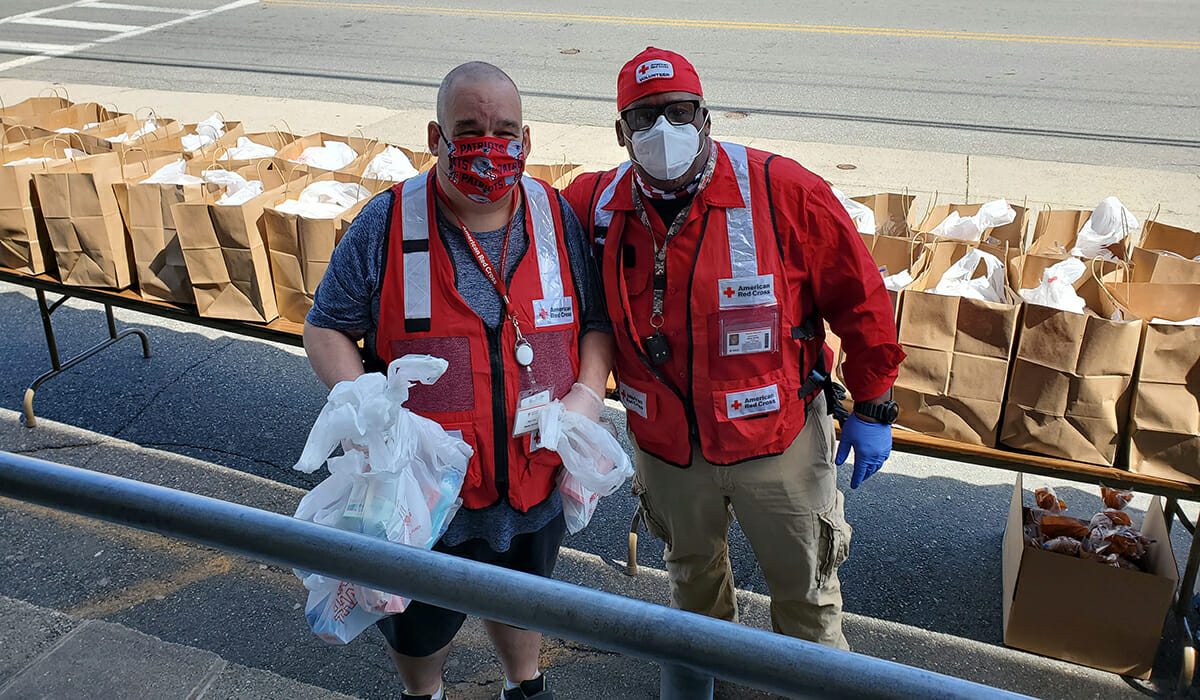
Sidney pictured with bags of food which were delivered to families impacted by COVID-19./Courtesy Sidney Murray
What do you want people to learn from your story?
Reach out to people that you would never reach out to. You will learn everything that you don’t know.
In one word, what does volunteering mean to you?
Everything.
How can readers help?
We rely on volunteers from different backgrounds to reflect the communities that we serve. Please visit the Red Cross website for more information about how you can help.
Fourth-Generation Firefighter Volunteer Carries on Legacy Through Service
Meet Daily Point of Light Award honoree Nick Hursh. Read his story and nominate an outstanding volunteer or family as a Daily Point of Light.
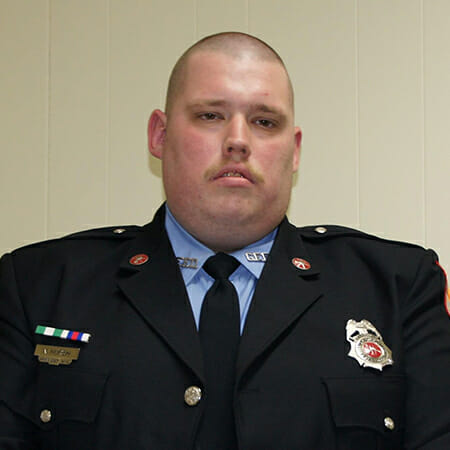
Nick Hursh is a proud, fourth-generation firefighter whose desire to serve is driven by helping his community and fellow neighbors. Receiving the call for his first fire at age 14, the Burlison, Tennessee resident has dedicated thousands of hours of service since then.
As a volunteer firefighter for the Gilt Edge Volunteer Fire Department, Nick leads the department in training drill attendance, total call response and station staffing hours. Responding to fires, rescue and hazmat situations across Tipton County, Nick has served thousands of hours to help his community and fellow neighbors, inspiring others in the process.
What inspires you to volunteer?
I’ve been working as a firefighter since I was 14, I’m fourth-generation. I love helping people in the area I live in. I love getting up early in the morning, and whenever that pager starts beeping, we instantly just get up and go.
As a volunteer firefighter for the Gilt Edge Volunteer Fire Department, Nick leads the department in training drill attendance, total call response and station staffing hours./Courtesy Nick Hursh
Describe your volunteerism with the Gilt Edge Volunteer Fire Department.
I respond to fire and EMS calls alongside other department members, I also assist with our training. Most of the time, I drive the trucks to our calls. Our calls range from a house door being accidentally locked by an infant child, to some of the hardest calls we have, like extricating individuals out of cars.
You’re recognized as the “go-to” volunteer. How does that make you feel?
It makes me feel trusted, and makes me feel happy that people, whether from the community or members of the fire department, can come to me when they need help.
Share one personal story with me from your volunteerism.
Last August, we got called to a vehicle accident with entrapment. Two vehicles were involved and two people were trapped in each car. I drove one of the trucks there, put gear on, and started extricating the 18-year-old out of one car. (The scene) was hectic and there was a lot of yelling going on. A couple months later we had a holiday dinner, and the girl we rescued showed up in a wheelchair, she’d survived her injuries. She’s now out of the wheelchair, up and enjoying life. It means a lot to me to know she is ok. I fell in love when I went to my first fire as a 14-year-old kid, after I started responding to calls, getting my hands down and dirty. I received a Unit Citation for this rescue.
Why do you think it’s important for others to give back?
That’s always the hardest question. Right now, it’s really hard to get people to volunteer. Giving back helps your community but it also makes you feel good. It’s important to give back, from the food bank to feeding the homeless to volunteer firefighting and volunteer paramedic and EMT service.
What’s been the most rewarding part of your service?
It’s rewarding to know we can make a difference in somebody’s worst day by showing up with a fire truck and people ready to help.
How have you continued to volunteer throughout the COVID-19 pandemic?
In 2020, I responded to 336 of the department’s 538 calls, attended 50 out of 50 training drills, and logged nearly 2,000 hours of volunteer time with the department. I also received my 3rd and 4th Unit Citations and my 2nd life-saving award since joining the department in late 2017. Because of the pandemic, if we were responding to a COVID positive patient, there’d be a medical person gowned and ready to go to treat the patient. We were equipped with extra equipment and PPE and also increased decontamination efforts.
What do you want people to learn from your story?
I want people to learn to try to make a difference and help out in any way possible.
In one word, what does volunteering mean to you?
Good. Feeling good.
How can readers help?
Please visit the Gilt Edge Fire Department Facebook page and website for more information about how you can help.
High School Volunteer Gives Thousands of Kids Around the World Chance to “Strive2Thrive”
Meet Daily Point of Light Award honoree Miran Bhima. Read his story and nominate an outstanding volunteer or family as a Daily Point of Light.
Traveling internationally with his parents, Miran Bhima says he noticed educational divides that made it difficult for underprivileged students to access critical learning resources. The Charlotte, North Carolina student says when he discovered the same inequities in his own community, he knew he needed to take action.
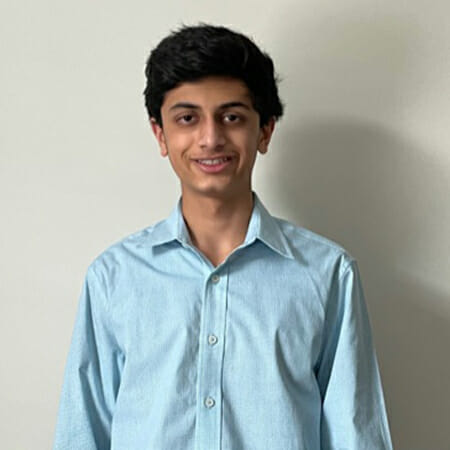
Launching Strive2Thive Edu in 2016, the now 17-year-old is volunteering to improve educational systems and infrastructure in underserved communities through access to free educational resources and opportunities. Connecting with more than 5,000 students in more than 35 countries around the world, including the United States, Ghana and India, Miran’s volunteerism is empowering communities to create a better tomorrow.
What inspires you to volunteer?
My parents and I traveled a lot when I was in middle school. While we traveled, we went to various countries and seeing divides through education hit me hard. Within my own community and even my own school, that divide is just as apparent. Kids from certain communities weren’t equipped with resources they needed to excel in school as kids received in other communities. I wanted to take action through volunteerism to bridge that divide within developed and developing countries.
Explain how your volunteerism is changing the future for students.
Our academic training is designed to improve capacity for developing and underfunded schools. Our volunteer educational professionals train teachers in various communities to better equip youth and adolescents with 21st century skills like financial and digital literacy. Through volunteerism, we’re offering kids extra support and other opportunities to bring them up to the level of other kids.
Launching Strive2Thive Edu in 2016, Miran Bhima is volunteering to improve educational systems and infrastructure in underserved communities through access to free educational resources and opportunities./Courtesy Miran Bhima
Describe your volunteerism with Strive2Thrive Edu.
As founder and president, I wear multiple different hats. We have more than 550 volunteers that work to offer tutoring, academic and technical support to students including refugees, orphans and students and adults living in underserved rural and urban areas. Sometimes I even teach our classes. We hold various events throughout the year to fundraise, which supports improvement of educational infrastructure in communities around the world. We’ve helped support projects including building libraries, producing educational materials and more.
Share one personal story with me from your volunteerism.
We were teaching in Ghana, and we saw increased school retention rate for youth. It was extraordinary. We saw a lot of girls start to stay in school much longer, because they had our support and were no longer being discouraged by their parents to drop out of school. Before our training, the students had never turned on a computer, let alone used email. They emailed us a thank you letter using the computer literacy skills we’d taught them. It was impactful to not only see progress on paper, but we saw it in action. Through service, we are changing their life for the better by teaching students life-long skills.
Why do you think it’s important for others to give back?
When you give back, not only do you feel better yourself, but you also gain a better appreciation for community, national or global issues.
How have you continued to volunteer throughout the COVID-19 pandemic?
Before the pandemic, we had local volunteers in a lot of countries we worked in, so a lot of our activities were in-person. We switched to online activities due to the pandemic, and sponsored tablets and computers for students so they could access programs and platforms. We had to stay on top of the evolving situation in many countries we support, it was challenging.
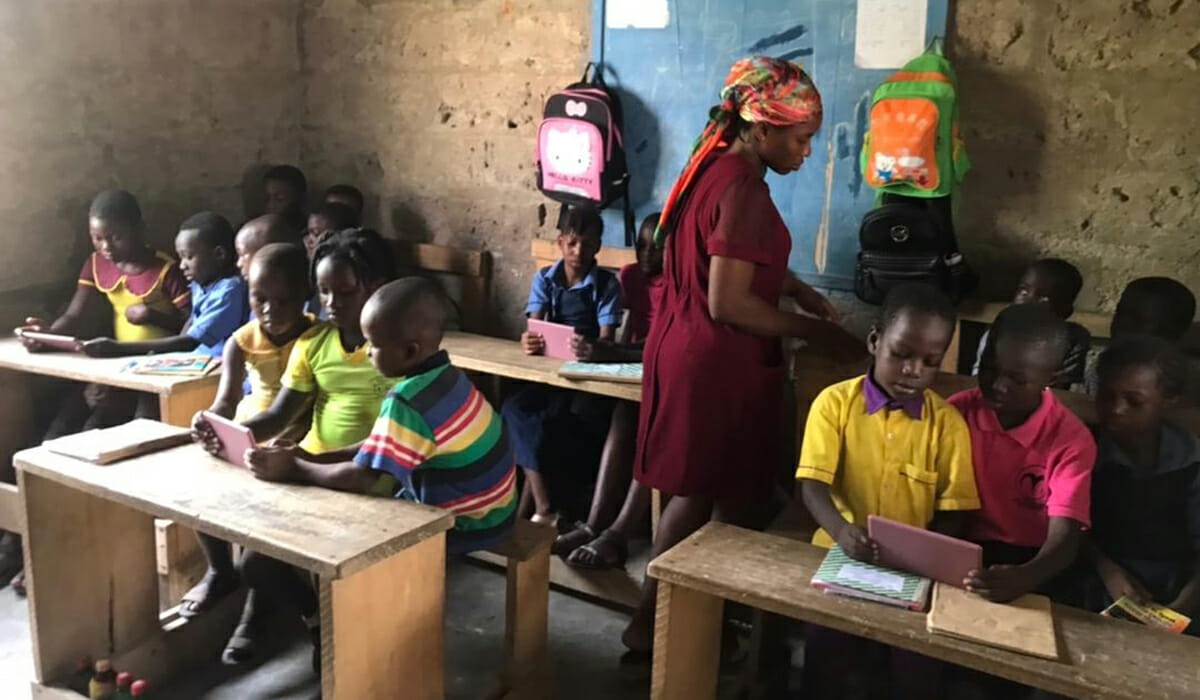
A classroom in rural Ghana which Strive2Thrive Edu helped to fund, including desks, backpacks and sponsored tablets for online classes./Courtesy Miran Bhima
What do you want people to learn from your story?
Service is about taking risks. Don’t be afraid to think about whether you will have enough time or skills. I was hesitant in the beginning about whether I should start this organization, but I just did it. I started small and then it just got bigger.
When you’re not busy with school or volunteering, what do you do for fun?
I find golfing really relaxing, and I like being outdoors. I feel like golf really combines my appreciation for the beautiful landscape and also just being with myself and relaxing. My two favorite golfers are Tiger Woods and Jason Day.
In one word, what does volunteering mean to you?
Humility.
How can readers help?
Please visit our website for more information about how you can help.
Teen Brings Young People Together to Commit Acts of Kindness in Maryland Community
Meet Daily Point of Light Award honoree Lana Anderson. Read her story and nominate an outstanding volunteer or family as a Point of Light.
Lana Anderson has spent almost her entire life volunteering, starting with serving the Thoughtful Treasures program at the National Institute of Heath where her parents work when she was just four years old. In the over a decade since the spirit of service was first instilled in her, Lana has started her own nonprofit to promote volunteerism in her fellow youth.
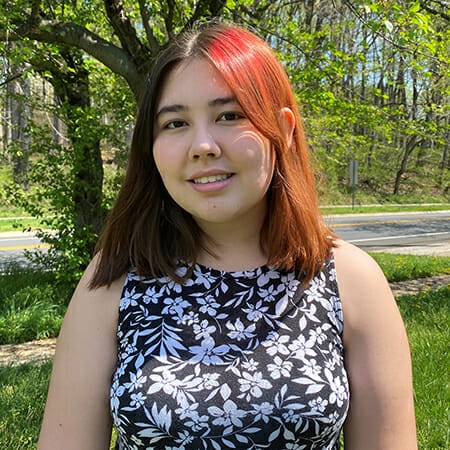
Small Things Matter, which Lana started in 2017, focuses on encouraging youth volunteers in her Rockville, Md. community to help others through acts of kindness. The 16-year-old leads 20 to 30 teenaged volunteers in running a literacy program that reads to children at community events and distributes books; a charity crafting program that brings together children to make handcrafted items for various causes, including making cloth masks during the pandemic; and a food distribution program that currently serves over 1,000 families.
Lana Anderson, right, distributes food through Small Things Matter’s Kokua Foods program./Courtesy Lana Anderson
Describe your volunteer role with Small Things Matter.
Small Things Matter at it’s core is a youth-focused nonprofit, so a lot of the work we do serves youth and we also try to involve people of all ages, from very small children up through adults, in doing this service for others. I am the founder of Small Things Matter. We have three different programs. Firstly, we have our Books for Bedtime program which is a focus on literacy. Pre-pandemic, we did a lot of reading to children at various community events like PTA meetings, and then also distributing books at food distributions and Title I elementary schools. Right now, we’re running an online reading program and doing low-contact distributions. I coordinate that and run the literacy program. Program number two is our Crafting for Charity. Our crafting program is mostly run by teens and then we involve younger children in making handcrafted items for various causes. We’ve done things like making mugs with notes for seniors and baking goods for the homeless. We also do a lot of stuff for children’s hospitals. It’s very, very kid-focused in that it’s teenagers running this program that involves kids doing service that benefits the other children. I lead this as well. Finally we have our biggest program, food distribution, which really blew up over the past year. It’s called Kokua Foods. Kokua is a Hawaiian word. It means to give selflessly and that’s what the program is about, sharing with other people. That’s a big distribution of produce and dairy products. We’ve expanded to nonperishable goods and even pre-made meals. Right now we’re doing over 1,000 families. Some of them we serve twice a month, some of them are up to twice a week.
What inspired you to start this?
My parents work at the NIH [National Institutes of Health] and at the NIH, there’s a program called Thoughtful Treasures. It’s for the Children’s Inn, which houses kids with rare diseases who are being studied or they’re in clinical trials and things like that. It’s a specialized hospital. Everyday those kids get an item, something small — a toy, a kind note, or something to cheer them up and make them feel more at home since they’re from all over the world. Since my parents worked at the NIH which is where this program is, I was involved in making items and donating them from a really young age, like four or five. As much as I liked having the art and other silly things I made, I really enjoyed being able to give them to someone else and have fun making someone else feel better. I continued with that for awhile, and then got involved with service once I hit middle school. It was nice to serve and volunteer with other kids my age. I think it’s really valuable for children of all ages to be involved in service and to really promote that. That inspired me to start [Small Things Matter.]
Why is it important for your community to have access to your literacy and charity crafts programs?
I think education is really important, and literacy and learning how to read and learning information is very important. I think education is really useful later in life for getting jobs, but it’s also very enjoyable and fun. It’s a good habit to get into from a young age, especially for our lower income families. Books are remarkably expensive and it can be difficult to get into it if your family doesn’t have enough resources, so we want to share those opportunities and encourage reading. For our crafting program, helping other people is a good habit to get into. It’s a nice thing to do. I think lots of different cultures and religions prioritize helping people and it’s universally agreed upon that it’s a good and important thing to do.
Do you have any goals you would like to see Small Things Matter achieve?
It sounds odd, but our goal is to keep serving the people who we’ve been helping right now and stop the expansion of our program, because that would mean more people need help. Ideally, in a perfect world, no one would need assistance at all. They would just be fine on their own.
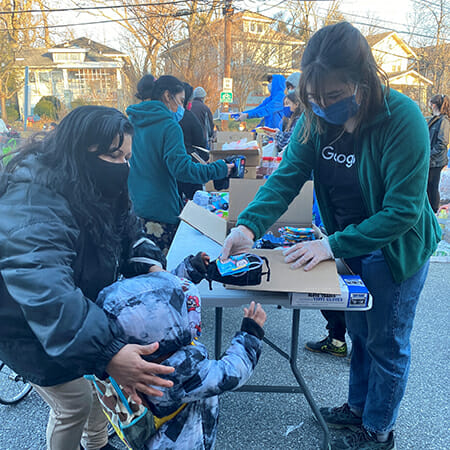
During a Kokua Foods distribution, Lana Anderson, right, hands out masks that were handcrafted by youth through Small Things Matter’s Crafting for Charity program./Courtesy Lana Anderson
What’s been the most rewarding part of your work?
There are definitely lots of tiny experiences that have been very meaningful. Children being super excited to pick out a book and grinning at the chance to have something to read and take home. People showing up in masks to our crafting events and being excited to give back. Especially with our food distribution, the community response has been really heartwarming. There is a lot of need but there’s also a lot of support, both from individual volunteers and other groups and businesses. It’s nice to see everybody come together to try to help.
What have you learned through your experiences as a volunteer?
I learned a lot of practical knowledge about hunger and things like that with our food distribution, which was kind of shocking but very interesting and good to know. … [I learned] a lot about the breadth of hunger. People think of America as a very developed country but there’s still a lot of people who are barely scraping by. Even things like SNAP benefits or other governmental assistance aren’t necessarily enough to actually support your family, which is why our food distribution and other groups that serve this need exist. There is still a need and it’s very unfortunate. We’re trying to do as much to help as we can, but there’s a lot of need.
What do you want people to learn from your story?
The name of Small Things Matter is important. I think that tiny gestures can be very meaningful. Even if you help someone a little bit and you think your contribution might not be important, it really is. It really snowballs. I would encourage everyone to try to give back where they can. It does really add up.