Volunteer Helps Make Rural Schools Across the Country More Inclusive for LGBTQ Youth
Meet Daily Point of Light Award honoree Joe English. Read his story and nominate an outstanding volunteer or family as a Point of Light.
Growing up in a small town in upstate New York, Joe English never watched any media or read any book that he felt spoke to him as a gay person — something he felt would have made him feel acknowledged, especially while attending a high school where no one he knew was out of the closet.
“It would have meant the absolute world to have read even one book or had even one unit in school that acknowledged LGBTQ people and communities,” he said, “and showed me this was something I could embrace rather than something that was a real source of anxiety.”
Years later, he is now bringing the positive representation he sought out in his youth to students around the country through his nonprofit Hope in a Box, which aspires to help educators create more diverse and LGBTQ-inclusive classrooms, particularly in rural and low-income communities.
“We have a very simple vision which is that every single student deserves to feel safe and welcome and included at school, full stop,” Joe said. “We really see literature as a key piece of that puzzle. In the hands of a very caring educator, books and stories have this incredible power to open students’ hearts and minds and really cultivate empathy.”
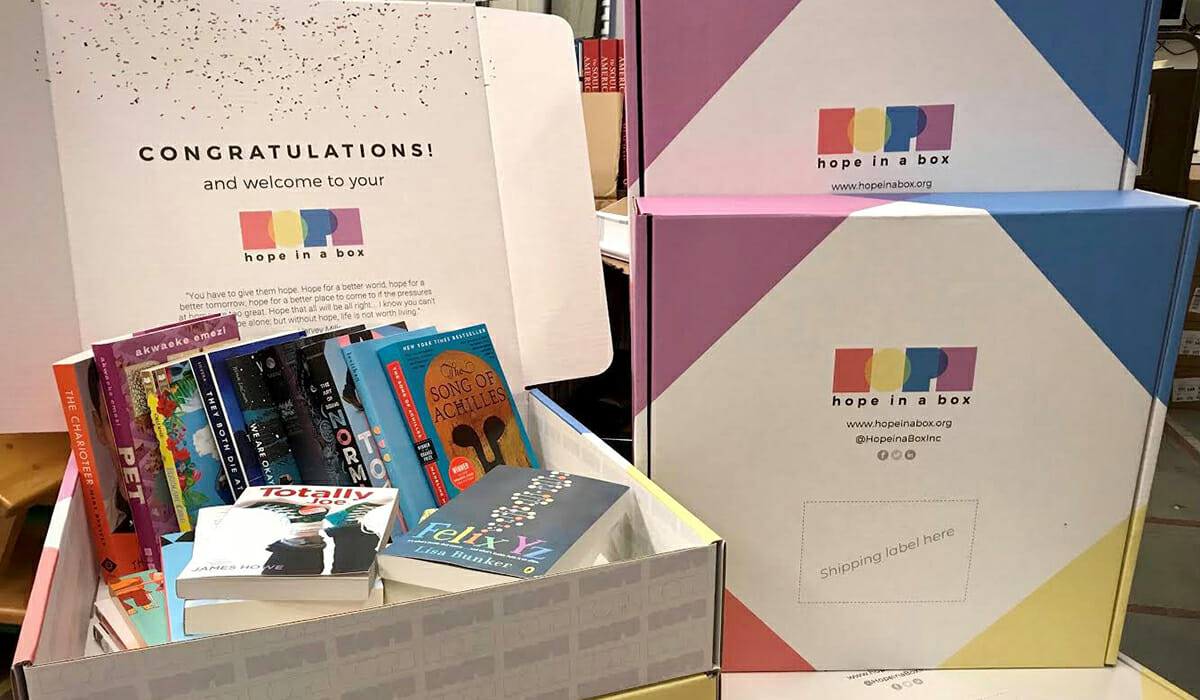
Hope in a Box, which English founded in 2018, provides educators a curated set of books with LGBTQ characters for either middle school or high school students, along with a detailed curriculum for the books written by experienced English educators and adapted to Common Core State Standards. Thanks to a partnership with Microsoft, this curriculum has been adapted for both virtual and in-person learning. In addition, educators are provided access to Hope in a Box’s online educator hub, which offers peer-to-peer mentorship, professional development, training, and community building opportunities.
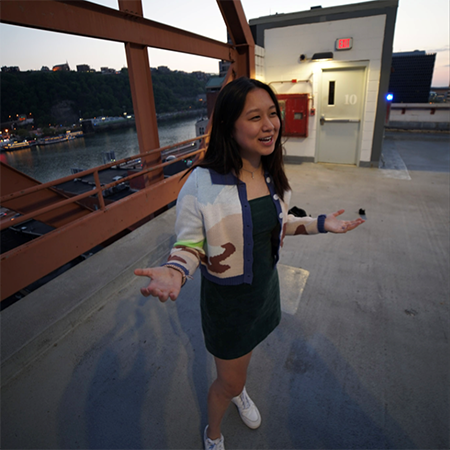
Joe English serves as the founder and executive director of Hope in a Box, a nonprofit that helps educators across the country make their classrooms more diverse and LGBTQ-inclusive./Courtesy Joe English
Hope in a Box currently supports 300 schools in all 50 states, and has reached about 75,000 students. The nonprofit will support an additional 200 schools by the end of May, and is aiming to support another 1,000 schools during the 2021-22 academic year. Educators must apply to be a part of the program, and there are currently hundreds of schools on the nonprofit’s waitlist. While anyone can apply to Hope in a Box, the nonprofit focuses particularly on rural and low-income schools because those communities generally face even more obstacles, along with a lot less engagement or exposure to diverse experiences.
The nonprofit worked with 50 professors and teachers around the United States to curate the boxes of books, which range from classics such as “Mrs. Dalloway” by Virginia Wolfe and “The Picture of Dorian Gray” by Oscar Wilde, to contemporary books released within the last two years such as “Red at the Bone” by Jacqueline Woodson and “Hazel’s Theory of Evolution” by Lisa Jenn Bigelow. Aside from time period, the content is also diverse in terms of the race and ethnicity of the characters, the geographic locations of the stories, and the stories’ format, which including scripts, anthologies, poetry, novels, and nonfiction.
“Our hope is that any given classroom or any given teacher will find something in that box that speaks to them,” Joe said.
English said there’s a need everywhere to cultivate more empathy toward LGBTQ people, as indicated in statistics showing upwards of 85 percent of students hear homophobic slurs in school, and one in three LGBTQ students skip at least one day of school a month due to bullying. Rates of depression, anxiety, and suicide are also higher in the LGBTQ community than in any other minority group.
A close friend and Hope in a Box colleague described Joe as an “inspiring and charismatic leader” who has been able to make the nonprofit so successful not just due to his personal mission, but also because of the entrepreneurial spirit he’s brought to the project.
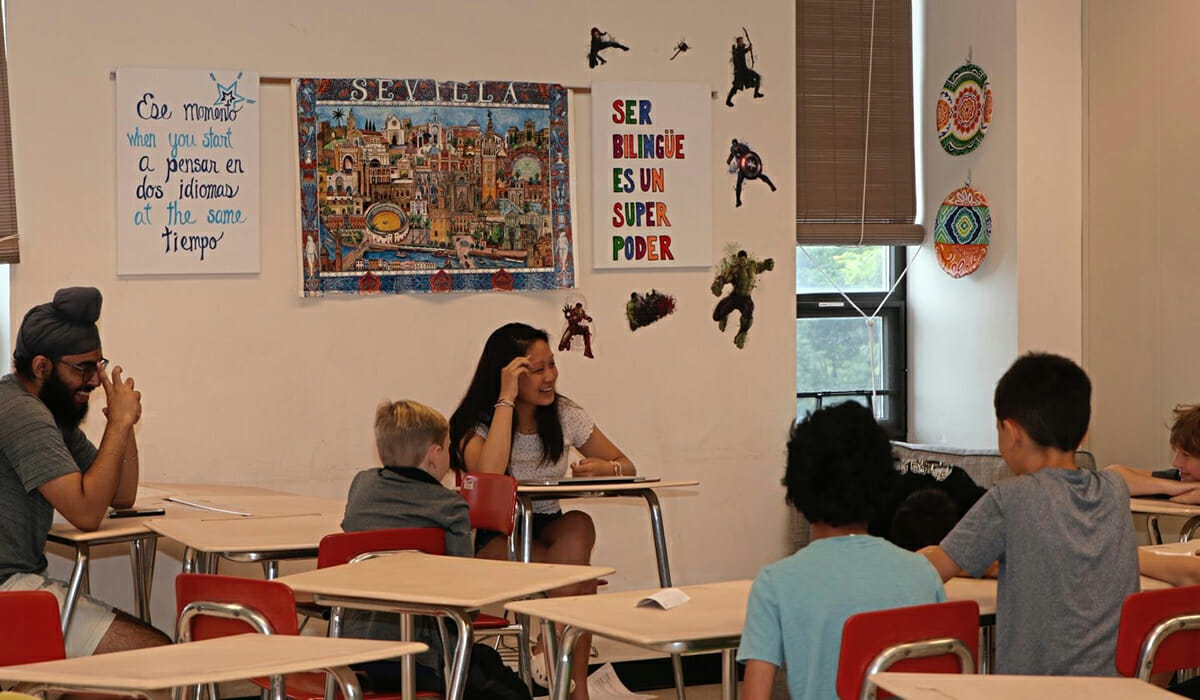
Hope in a Box sends 20-25 curated books, all of which include LGBTQ characters, to educators around the country./Courtesy Joe English
“I think he’s a really kind person and has really brought people together in this,” the friend and colleague added. “I think that’s a hallmark of a good leader — someone who is interested in doing things themselves but also pushing people to be better and to welcome them into the fold.”
For Joe, the most rewarding part of serving as Hope in a Box’s founder and executive director is being able to hear from the teachers the organization has reached. This has been especially true throughout the past year as teachers have had to adapt to new challenges posed by the COVID-19 pandemic.
“To hear from them actual stories of how those materials, the books and the curriculum, have made a difference to individual students in their classrooms — it’s just incredible to play some small roll in making their lives easier this past year, and giving that sort of ray of hope to students who are struggling a lot right now,” Joe said.
Teen Helps Run Lacrosse Program for Kids with Developmental Disabilities
Meet Daily Point of Light Award honoree Anthony DeMarco. Read his story and nominate an outstanding volunteer or family as a Point of Light.
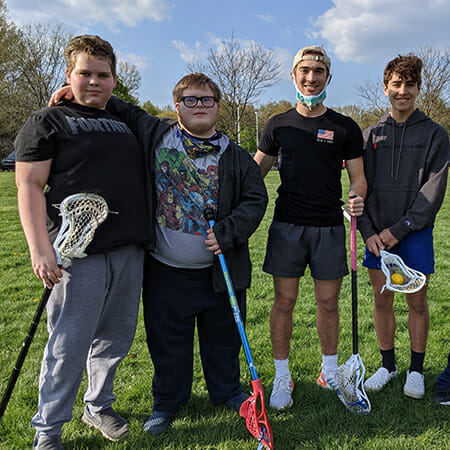
Seventeen-year-old Anthony DeMarco, an avid lacrosse player for the past decade, is bringing his passion for lacrosse to members of his community who may not have had the opportunity to play the sport otherwise. For the past four years, he has helped coach kids with developmental disabilities in his Olmsted Falls, Ohio neighborhood through the Olmsted Falls Adaptive Lacrosse program.
The program was started by Anthony’s mother, who was inspired by a family friend’s disabled son who loved watching games at the local schools. There are currently nine kids who attend the weekly clinic, which is coached by Anthony along with his family, friends, and fellow members of his lacrosse team. The program provides all equipment for their clinic, which is open to anyone who is interested in playing.
Describe your volunteer role with the Olmsted Falls Adaptive Lacrosse program.
I like to say we give kids a chance to learn something new that they may not have gotten the chance to learn had we not started the program. I have played for a long time and the sport has been really good to me, so I want to give back to them. I think going out and helping and coaching these kids to learn the basic skills of lacrosse gives back to them. … We had a lot of the high school players and the middle school players come in, and we get people to come in from around who know the sport [to help out]. That’s what my role is, being that expert on the sport and helping them to learn how you pass, how you scoop, practicing with them, being patient, and being that sort of coach figure in that scenario.
Anthony DeMarco, right, coaches a player through the Olmsted Falls Adaptive Lacrosse program./Courtesy Anthony DeMarco
What inspired you to start this program?
It was really my mom’s idea. We had a friend of ours whose son was disabled and he always loved coming out and watching our middle school games and some of our high school games. My mom said, what if we could find a way to get him to play, get him a stick, get him gloves, and have him play with you guys and learn the sport? We said, that’s a fantastic idea, let’s make it work. After having a couple of sessions with the one friend, we started reaching out to other families in Olmsted Falls. We put it out there and said we’re doing this, contact us if you think your child would be interested or you’re interested in having your child try something new. We started getting families coming in and asking us if we would help them out and we said of course, absolutely.
What kind of feedback have you received from the kids in the program?
We’ve gotten a lot of positive feedback, because we’re teaching these kids something new and we are giving them opportunities they might not have had. I think both the parents and the kids appreciate the fact that we’re making an effort and that effort translates into giving these kids an hour out of their day to go have some fun on the lacrosse field.
How did you adapt the program during the COVID-19 pandemic?
Before the pandemic hit, we were doing hour sessions around once or twice a week, regularly scheduled. After the pandemic hit, we took a hit in terms of being able to do the sessions because people are nervous and are unsure of what the regulations are and wearing masks and all that. We at one point weren’t doing any sessions because we really couldn’t go up to the field to have the kids out there. Some of their parents didn’t want them to go, and that’s OK. We made it known that we were very willing to do the sessions if everybody was comfortable with it and some weren’t, so we had to adapt in that sense. We had one family that contacted us and said, we have a goal in our backyard, would you be willing to come play lacrosse with our child in the backyard? I said, absolutely, we’ll make the time. Or, there’s a field at the school near our house, would you be willing to go play lacrosse with our child over there? So we said of course. Instead of setting it at the school, we made it more of mobile-type practices.
What’s been the most rewarding part of your work?
The most rewarding part is seeing how much joy it brings these kids to play lacrosse. I can’t even name the amount of times I’ve watched a kid score a goal and he comes up and gives me a big fist bump. You really can’t put a price on that. It’s incredible. It’s so special to see these kids doing something that maybe they wouldn’t have gotten to do. That’s really the best part.
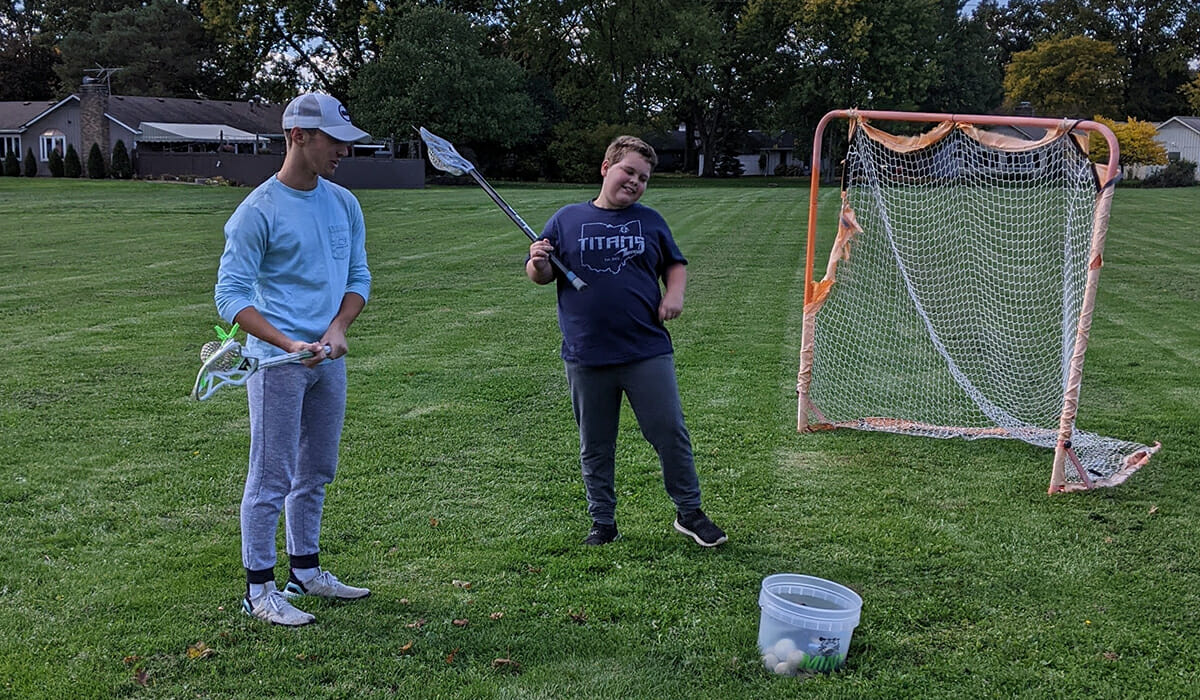
Anthony DeMarco works with one of the kids in the Olmsted Falls Adaptive Lacrosse program, which hosts lacrosse clinics for kids with developmental disabilities./Courtesy Anthony DeMarco
Why do you think it’s important for others to give back?
I feel like not only is it rewarding to the community and not only does it help everyone in the community, but it makes a huge difference in the lives of others, and even your own life. Helping these kids makes me feel good. Every session we do, I walk away from it feeling fantastic because I know that I let another person experience that feeling of joy they might not have felt otherwise if I hadn’t been there. Giving back is a rewarding experience for everyone involved.
What do you want people to learn from your story?
We wanted to do this. We wanted to say let’s give these kids a chance to play lacrosse, and we went for it. We went full go, really just put 100 percent into it to make it happen. If you’re on the fence about doing something, if you’re looking for future goals or anything like that, just give 100 percent, because you can do it. You just have to give 100 percent to everything you’re doing.
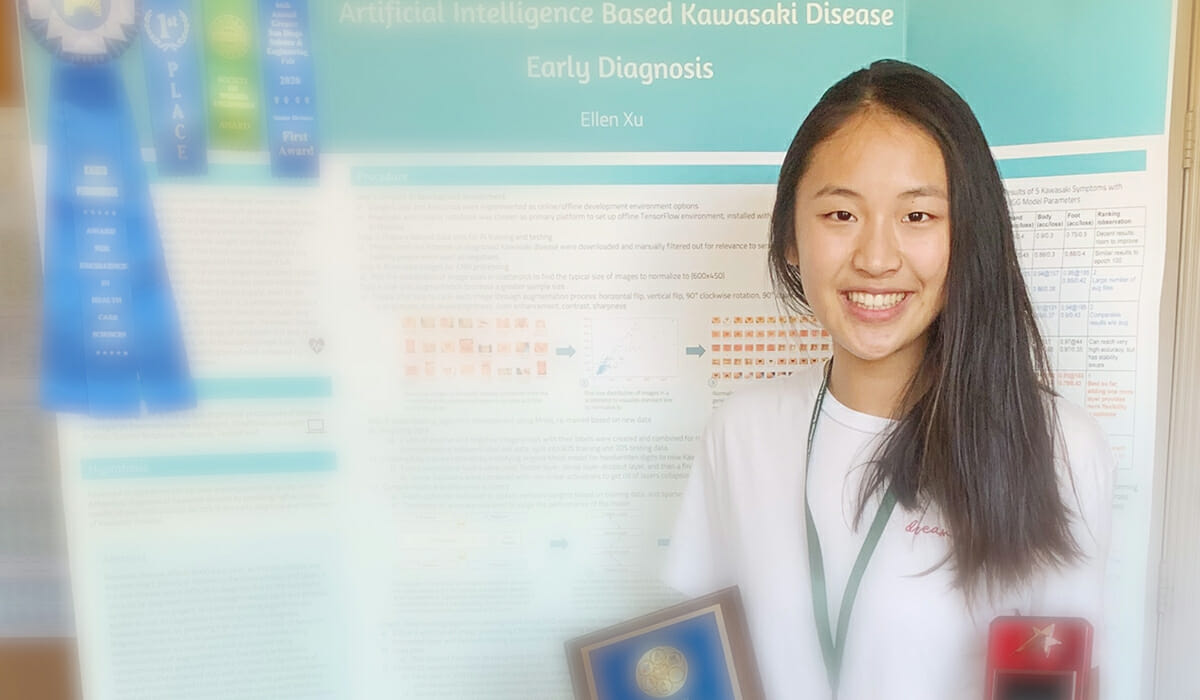
Ellen Xu was just a child when her little sister became sick with Kawasaki disease, a rare disease which causes inflammation in blood vessels and can sometimes be fatal, but she says that time made her realize the struggles children affected and their families face. After her sister’s recovery and receiving support from the Kawasaki Disease Foundation (KDF), the San Diego, California teen is now paying that assistance forward to other children and families in need.
Starting as a volunteer in the summer of 2020, 15-year-old Ellen serves as the youth team lead for KDF as she helps to support the foundation’s mission to raise awareness, facilitate support for the thousands of Kawasaki disease families affected each year and increase funding for research to improve care and find a cause. Connecting with 2,000 students around the world thus far through online videos and participating in other key initiatives, Ellen is helping other families just like hers through service.
What inspires you to volunteer
I’m inspired to use my skill set to help others. I am able to go to public school with a good education and live in a place with good healthcare, so that makes me want to use my standing to try to lift others up as well. Everyone is going through their own journeys.
Describe your volunteerism with the Kawasaki Disease Foundation.
As the youth team lead at KDF, I produce YouTube videos, raise awareness about the disease using social media including Instagram and write blog posts. Our youth volunteer team members are from all around the world including India and Lebanon. We also seek partnerships with other organizations and do other activities.
Share one personal story with me from your volunteerism.
I spearheaded the Kawasaki Disease AI project, which gathered 400 images to be used for Kawasaki disease research and education. These extra images can help further medical research and also help doctors as they work to discover the cause of the disease. Kawasaki disease is often misdiagnosed, so as I collected images, parents would sometimes share heartbreaking stories about their child’s treatment journey. One parent shared the last picture they had of their child. They wanted to provide images to help prevent future misdiagnosis. That made me hopeful. I have a lot of hope that one group, even one person, can really work towards making a difference, especially because this cause is so personal to me.
After her sister’s recovery and receiving support from the Kawasaki Disease Foundation (KDF), Ellen Xu is now paying that assistance forward to other children and families in need.
Why do you think it’s important for others to give back?
Volunteering is one of the best ways to make a difference. Society moves forward on a whole if people give up some of their time and effort for the betterment of the common good.
How have you continued to volunteer throughout the COVID-19 pandemic?
Everyone has a voice, whether it’s through social media or online platforms or talking to one another. Take your unique experience and help others through education. It makes me wonder what would have happened to my sister if we weren’t living close to some of the best medical centers. Through service, I hope to continue sharing information so other people know the warning signs of the disease, and we prevent deaths.
In one word, what does volunteering mean to you?
Empowerment.
When you’re not busy in school or volunteering, what do you do for fun?
I like to fence. I fence sabre. That’s on pause during the pandemic.
How can readers help?
Donations are critical to raising awareness and supporting KDF’s programs. Please visit KDF’s website for more information about how you can help.
Victoria Ren’s third grade teacher had an irrevocable impact on her by bringing the once extremely shy eight-year-old out of her shell, a positive life change she still remembers fondly almost a decade later. That influence inspired her interest in education, and ultimately led Victoria on a mission to bring more inclusivity and accessibility into the STEM world for students everywhere.
Now 16, Victoria is the co-founder and executive director of STEM & Buds, a youth-run nonprofit that pairs elementary and middle school students with high schoolers to translate science into civics projects and initiatives tailored to the students’ own community. Since the nonprofit’s inception in Victoria’s hometown of Sewickley, Pa. in 2018, over 3,500 students and mentors have been engaged across three countries and 14 states. STEM & Buds has 60 cost-free programs, including summer camps and outreach initiatives. The nonprofit hopes to create a collegiate program as well, and is also looking into how to merge science and religion to work with youth groups.
Describe your volunteer role with STEM & Buds.
STEM & Buds is a for-youth, by-youth 501(c)3. Our mission is to redefine what inclusivity and accessibility look like in STEM by bridging students and mentors, shaping ideas into initiatives, and translating science to civics through after school chapters, summer camps, outreach programs, and partnerships for students. I’m the cofounder and now serve as the executive director.
Victoria Ren, center, leads a class session of STEM & Buds, a youth-led nonprofit that encourages inclusively in STEM by mentoring students in translating science to civics./Courtesy Victoria Ren
What inspired you to start this?
Ever since third grade when I was eight, I’ve been really interested in education. I saw the potential it had to change people’s lives because for me, before meeting my third grade teacher, I was extremely shy and was very self conscious and terrified of judgment, which stopped me from doing lots of things. I don’t know how to describe it, but that year my third grade teacher really changed me, and to me, she’s the testament to the best parts of education. Since then, I started working on many education things, like creating a lunch reading program for lower proficiency kindergarteners. But in the summer of eighth grade, that’s when I found this avenue to use education as a tool for good. It happened when I went into a Speech & Debate summer camp. During that summer camp, we were able to advocate for anything we wanted, which was super exciting because often in school, you have restraints on what you can do. We were paired up with mentors during the process. That’s where I met Ashna, who was my mentor and is now the cofounder of STEM & Buds. Through that, we both recognized the need to replicate the idea of unconventional friendship and unconstrained discussion within the scientific community, and to give kids an opportunity in that space to have a similar environment and similar opportunities.
What exactly is STEM & Buds doing to replicate that kind of environment?
For us, the problem we identified is STEM education is often very metric driven and one dimensional, which ends up excluding people from different socioeconomic statuses and also students who have different narratives. It also excludes interdisciplinary change-making. How we addressed this was by building educational environments that are centered around peer mentorship to amplify all voices, and also individualized project creation to encourage intersectional impact. We do this through chapters, camps, and outreach programs where they follow a similar structure of peer mentorship and project creation, where we pair younger students in elementary and middle school with high schoolers from different backgrounds to learn from each other throughout the process. We cover local issues that are related to STEM and talk about their solutions. Our curriculum is all centered around the community students are in, so we adjust it by region. Throughout the program, once students learn about different STEM issues and different ways to tackle it, they go on their own mini journey of creating their own project — whatever they’re passionate about that reflects their interest and identity. That can look like anything from sustainable makeup from two girls who really enjoy dancing and use makeup all the time, or it can look like a water filtration device for a pair of boys who really thought the idea of creating a locally-sourced water filtration device was something they were interested in.
Why did you want to focus on the STEM field specifically?
I wanted to focus a lot on STEM because I think in other arenas, whether it’s art or public speaking or other spaces, there’s often more of an environment of collaboration and it’s sometimes more accessible to students. I think with STEM, based on how we’re taught and what we’re measured off of — which a lot of the times is grades or competition — there’s really little room for students to feel welcome in those spaces, especially if you don’t do super well on standardized tests or grade points. STEM seemed like a good opportunity to try to shift the perception and mindset around it, and what it looks like and what you can do with it and how you can apply STEM to do good. You can apply STEM with areas that might seem diametrically opposed to it, whether that’s storytelling or whether that’s art or whether it’s music, or anything that’s in the humanities range that is often pitted against STEM.
Are there any future partnerships, programs, or events that you are excited about?
Upcoming, we have our summer camps which are open to anybody in the United States, but also anybody who is overseas in any other country. That’s a week-long experience for students to work with mentors and create their own projects, find community, and be able to present it at our fair where we bring everyone together and they can show off their work. To sign up for the camps students can be in elementary or middle school. Elementary school, we usually recommend fourth to fifth grade, so a little bit older, then middle school can be any grade level.
We’re always open to having people join the team, whether that looks like leading a chapter or managing a region or serving an executive board position. We’re always looking to invest in other people who care about the same issues and give them the autonomy and agency to create their own regions, create their own programs, and work with STEM & Buds.
What’s been the most rewarding part of your work?
I would say the most rewarding part is either teaching students or mentoring them. I think there’s something really special to see yourself directly impact another person and be able to know whatever effect you have on them — whether it’s building their confidence, whether it’s just being there for them — the student will pass it on to someone else, who will pass it on to someone else. I think that ripple effect is super special. Another part I find super rewarding is the planning and the long-term strategy of things. I think being a youth venture gives space to try different things out, and test out new ideas and see whether they work or not, whether they solve the problem you’re trying to solve, whether they’re a viable solution.
Victoria Ren serves as the cofounder and executive director of STEM & Buds, a by-youth, for-youth nonprofit that aims to redefine what inclusivity and accessibility look like in STEM./Courtesy Victoria Ren
Why do you think it’s important for others to give back?
It’s important to volunteer and give back because it allows you to see beyond yourself and think of things beyond yourself. It allows you to consider other people’s lives and experiences and bring empathy and understanding into the world. I think volunteering allows you to see this greater purpose. Whenever things can feel lonely and isolating, you know you’re working with other people to do good. That’s comforting and it’s exciting and I think it’s purposeful.
What do you want people to learn from your story?
I would say with any sort of volunteering, if you’re considering it, you should 100 percent go for it. No matter where you start, or how you feel about your skills and abilities, I think the important part is to recognize you will grow. Any part of volunteering is a constant process of learning and growing. As you evolve, your programs and your way of giving back will also change. It can often feel super overwhelming, because whatever you’re trying to solve or whatever you’re trying to help out, there’s going to be a lot of things you can’t control. A lot of issues are very systemic and very hard to combat and it feels like you might not be making progress everyday. What I will say to that is that’s normal, and have faith in whatever challenges you’re thrown. Whatever times you feel there’s no way out, have faith that you and your team can do it, and all the work you’re doing will amount to something that will be worth it.
For Two Decades, Retired EMT Brings Medical Aid and Support to Haiti
Meet Daily Point of Light Award honoree Gregory Winslow. Read his story and nominate an outstanding volunteer or family as a Point of Light.
Two decades ago, Gregory Winslow’s brother invited him to come on a trip to Haiti to provide medical aid for the people of Petit Bourg de Borgne. Since his initial invitation in 2001, Gregory has made 25 trips from his native Colorado to Haiti with aid organization I.C. Haiti, bringing much needed help to the Haitian people.
Gregory, who is a retired EMT, and his team helped establish a seven day-a-week medical clinic in Petit Bourg de Borgne where there was once no medical help at all. After the 2010 earthquake that brought devastation to the country, Gregory made six trips in that year alone to provide emergency medical care with Team Matthew 25 House, a group of medical personnel from Children’s Hospital Colorado. While the COVID-19 pandemic has put a temporary halt on his trips, Gregory looks forward to resuming them once it is safe to do so.
Describe your volunteer role with I.C. Haiti.
[I.C. Haiti] serviced about 80,000 people there [in the village Petit Bourg de Borgne]. It was medical services, school services. Medical services is what we originally started. It was through the Catholic Church, because they wanted to help the people of the village, so what they did was grab a medical team to go down and start helping people. We’ve got scabies. We’ve got AIDS. We’ve got this and that. We’ve got a goiters the size of footballs because they hadn’t been seen by a medical doctor in 30 years. They had no salt. Iodine is in your Morton salt. Iodine was the cure for goiters in the United States. They just didn’t have access to salt. These people — I will tell you, this is probably my biggest takeaway from my first trip in Haiti — as much trauma as pain they go through everyday, they were happier than most people I know who lived in the suburban USA.
I’ve done 25 trips in 20 plus years. Last year, obviously COVID shut us down, and this year we are still very hesitant. We are still funneling money to our village and we are still paying for all the doctors and nurses. When we first got there, they hadn’t had a medical clinic ever. We were the once-a-year medical clinic when we started this. We now have a seven days-a-week medical facility down there in that small village of 80,000.
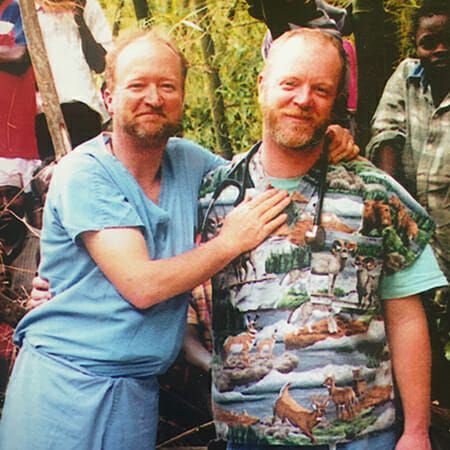
Gregory Winslow, left, poses with his brother, who originally brought Gregory to Haiti to provide medical aid, setting off his two decades of volunteer work there./Courtesy Gregory Winslow
What kind of aid do you provide to the people of Haiti?
Originally, Petit Bourg de Borgne was about medical, but I helped turn it into medical and let’s help educate these kids. Let’s actually teach them. Let’s get a school much stronger and better than what they’ve got right now. At the time when I first went, there was a broken-down school in that small village that housed about 60 students. The back half of that building got crushed two years later, so it was now down to room for 30 kids. I really pushed for our team to raise money for education and I’m very, very thankful and fortunate. … Dr. Tom Grabenstein and his wife have led this team since day one, way back probably 25 years ago. They were the first ones to take a trip to our village. What they saw and what they felt was that they needed a medical team down here to help physical ailments, try to help cleanliness. … When they made their first trip, they thought medical, and realistically that’s what they needed. That’s what they did for the first three or four years, ongoing ‘let’s get the people looked at, let’s find some answers to these problems.’ After about the third year, I talked to [them] one night when we were all in our little group and I said all the medical care we’re doing is wonderful, but what we need to do is teach prevention of medical issues. We need to educate our children here. We need to get them in school. We need to teach them basic right and wrong.
How did you become involved with Team Matthew 25 House?
Matthew 25 House is the name of the place where we stayed when we went for the earthquake in 2010. On January 6, I watched the destruction that was happening in Haiti. We had already planned our original I.C. Haiti trip in March for our small village way up north of Port-au-Prince. … When I saw the destruction of Port-au-Prince on January 6, I called my brother, and said “Look, I know we’re not prepared to go, but we need to go.” He said there’s no way, and I said we have to. We have a responsibility. After about 30 minutes of conversation, he hung up the phone and said I will call you back shortly. Then within about 45 minutes, we had put a team together from the children’s hospital in Denver. We had flight surgeons, we had flight medics, we had nurses, we had EMTs, and we could find the gear. Within hours, I drove from Gunnison to Denver and came down. We spent two days loading all of our equipment, making sure we had everything we needed for surgical, for lighting, to be safe, to do what we needed to do. … Hendrick Motorsports was the private jet that flew us down. They donated two of their planes for six to eight weeks. They were essential. There were so many teams wanting and needing to go. We were one of the first American teams on the ground on day six after the quake.
If you think about Matthew 25 — do unto others as I would do unto you. Plain and simple. This was what this was based on. These people are in tragic terror and we need to go help. When we showed up to Sister Mary’s Matthew 25 House, Sister Mary had been there for 30 years at this point. She had a soccer field right beside her place because that’s how the church made good community effort. It was full with tents and people who were hurting and bleeding. We did amputations in the middle of the night. I also saw a lot of joy. After all of that, we got done doing surgery our first night at 4 a.m. That was an amputation and two shoulder dislocations we had to open and relocate. The surgeries were ridiculous. Stitching people’s children’s heads together. Concrete fell on them. I heard so many bad stories. … We made four trips in six months in 2010. My first trip to Haiti changed my life. In 2010, it made me really realize just how important life is.
What’s been the most rewarding part of your work?
Seeing someone smile. Seeing someone having a better day than they were. I look at all the stuff going on [in the world] and I just think, if we could just love one another and smile at one another. So my greatest reward in my volunteer work is if I can make someone’s life just a little bit better.
What do you want people to learn from your story?
What I would wish most people to learn from my story is take the time, and it only takes a few moments, to share a smile. Take care of someone who you might not even know. Be there for someone else. Please take the time to care.
Why do you think it’s important for others to give back?
I believe it’s most important for people to volunteer. [President Jimmy Carter’s] biggest statement, I remember so well — if every adult individual in this country would volunteer two or three hours a week, we could solve 95 percent of our social ills in no time at all. Two to three hours a week for every individual here. Volunteerism makes a difference. Again, you don’t have to go to Haiti. … Yeah, I happened to go to Haiti and I spent a lot of time there. It was crazy times. I went through a lot, but what I learned is I can do the same thing here. I don’t have to go to Haiti. I do because I happen to have family there. These people are my friends. If I get the opportunity to go again, I’m going, plain and simple. COVID obviously shut it off. Why volunteer? Can you make somebody else smile today? Volunteering, quote unquote, if you give to somebody, it makes you feel better about yourself. There is some truth to that, there is, but that’s not the reason to do it. The reason to give is to care for another. Not for any reward. … Why volunteer? Bottom line, because it matters.
Doctor’s Healing Volunteerism Helps Improve Eye Health for Hundreds of Thousands Globally
Meet Daily Point of Light Award honoree Dr. Soroosh Behshad. Read his story and nominate an outstanding volunteer or family as a Daily Point of Light.
A cataract and corneal surgeon, Soroosh Behshad, MD, MPH restores sight for his patients. The Emory University School of Medicine ophthalmologist says his mission to create sustainable eye care for underserved areas was born out of his experience growing up as a refugee.
“My mother was pregnant with me when my family escaped persecution for being members of the Baháʼí faith in Iran,” says Soroosh. “As a refugee in the United States, my family moved around a lot. Whether it was Alaska or Wisconsin, Chicago or Arizona, there were always so many people that helped our family. It was a part of our daily (life), accepting we received so much, and (knowing) that we had to give back and more to the community, country and world.”
Describing how his father, who was a physician in Iran, was helped by fellow American doctors, neighbors, and friends in the U.S. as he repeated training to be able to practice in his new country, Soroosh says as he grew, his family home had an open-door policy for anyone who needed help. Soroosh is now extending that practice on a global scale, his vision to help others informed by the community care and assistance he witnessed as a child.
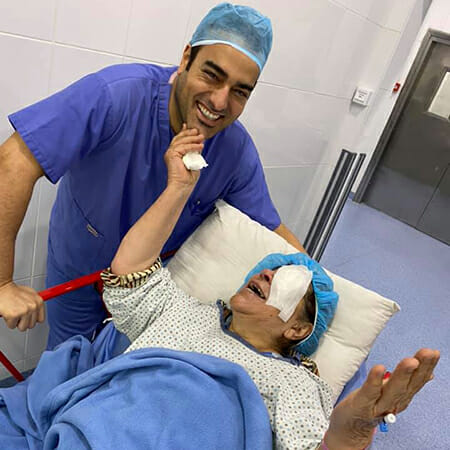
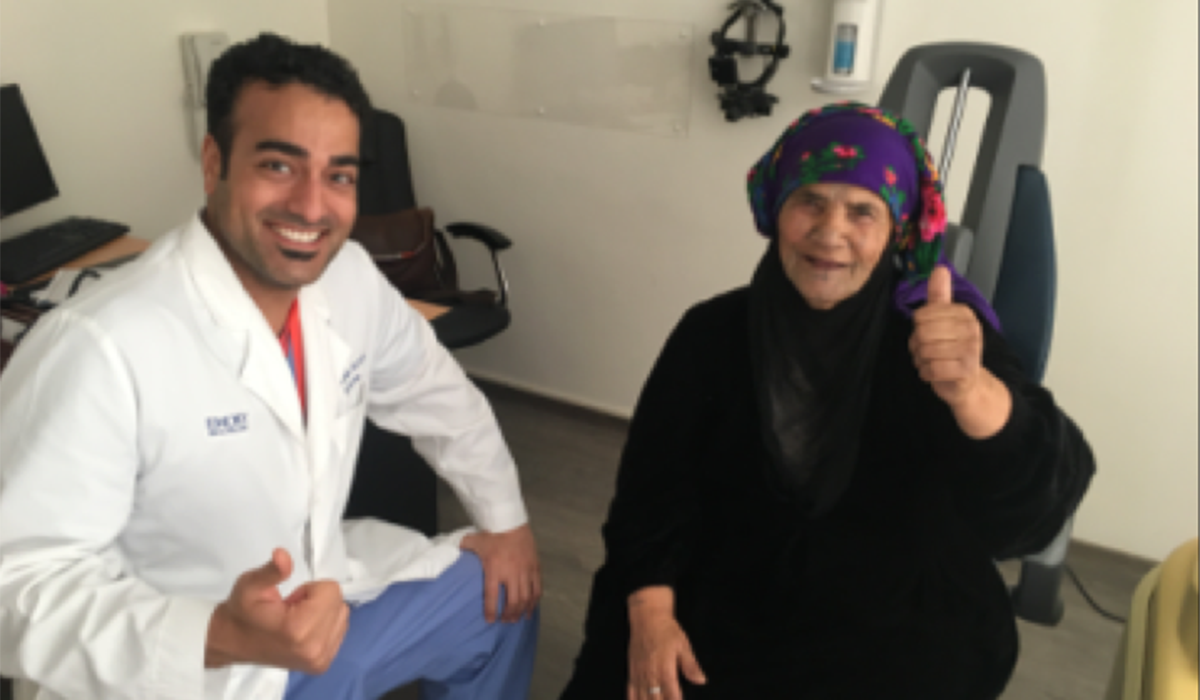
Soroosh Behshad, MD, MPH pictured with a thankful Syrian refugee patient right after having cataract surgery. Through volunteerism, Soroosh is helping to improve eye health for hundreds of thousands globally. /Courtesy Soroosh Behshad
“We are all citizens of the world. Yes, we come from different countries, but when it comes down to it, no matter your country, race, ethnic background, we’re ultimately all humans and when we can get to the point where we’re able to put those things aside, I think the world is going to be a much better place.”
As a citizen of the world, by day, Soroosh serves as chief of the Emory Eye Center at Emory Saint Joseph’s Hospital in Atlanta, Georgia, and in his spare time, the 36-year-old commits to what he calls his “service to humanity” as the volunteer director of the eye clinic at Clarkston Community Health Center (CCHC), a free health clinic which provides care to thousands of immigrant, refugee and uninsured patients across the state of Georgia. It was following an international mission trip to Latin America while still in training that Soroosh discovered how he could multiply his service impact across the Southeast U.S. and internationally.
“During residency, I went on an international mission trip to Latin America that was life changing. We were able to help a lot of people, but it (also) changed my perspective. I realized it wasn’t a sustainable thing for surgeons to travel to countries, (because of) patient follow up and also, are we taking away potential increase in volume for local doctors? That became my primary goal getting involved in global ophthalmology, making a sustainable model and bringing in local healthcare workers and doctors to continue that work.”
Giving back to underserved areas by facilitating cataract and eye disease screening for hundreds of thousands of children and adults around the world, Soroosh also started to build the framework for a sustainable healthcare network, offering medical education and resident training for local medical providers. His clear-eyed service has touched thousands of lives in countries like Ethiopia, where Soroosh has been able to train local surgeons, and for Syrian refugees, where the situation on the ground in a Jordan refugee camp in 2017 was so bad, Soroosh says many children were affected by treatable causes of blindness due to a lack of vision screening and follow up care.
“We initially did work with Syrians on the ground but doctors and their hospitals got bombed, (we had to) look for other options. The Zaatari camp in Jordan is the world’s largest camp for Syrian refugees, and we started to provide care. There was a need for cataract surgeries for refugees because of a huge burden of blindness, but one thing that really stuck out (to us) was the lack of eye care for children. We were seeing children who had eye conditions who were not screened for, (and they) ended up with amblyopia (also known as lazy eye). There are studies that show this vision problem affects not only depth perception but more significantly, quality of life. That became our focus.”
As a former child refugee, Soroosh is bringing his volunteerism full circle by providing long-term care for refugee children who are struggling to survive alongside their families.
“We offered eye surgery to one child whose mother had told us he was being made fun of by children because of his health conditions. After surgery, he was able to go to school and play with his friends. Parents of patients tell us they thought the world had forgotten about them. They’ve been through so much, they’ve lost family members, their home, their lifestyle. They’ve really just lost hope in everything, but the fact that someone came from another country to offer them help was just a huge impact to really help them with depression and their feelings of loss. It’s given me this kind of shock of energy. You just want to throw yourself in and do more for these people.”
That energy is translating to changed lives across the globe, says Natalie Weil, MD, a pediatric ophthalmologist at Emory University, who has traveled with Soroosh and witnessed his hands-on volunteerism.
Soroosh pictured with a Syrian refugee patient after cataract surgery./Courtesy Soroosh Behshad
“He’s made a really large impact on the quality of patients’ lives and their visions, both locally and globally,” says Natalie. “His enthusiasm is contagious. He gets inspired by helping people and he gets excited about it, and he’s able to get others to do the same. He treats each patient like his Persian grandmother. It’s really personal (for Soroosh), whether it’s in the office or in his free time.”
Soroosh says that it’s the promise of a better life that continues to charge his service spirit.
“Making a positive impact in my neighborhood, in my community and the world. Getting to hear about these kids that we’ve been providing eye care to, what they’re going to get to accomplish in life, then that will be the reward and that is when my work will be done. We stay in touch and follow these patients and hear about these stories. Hopefully that will give me more energy to keep work going and not stop.”
Texas Volunteer Empowers Young Women to Embrace Individuality to Build Better Tomorrow
Meet Daily Point of Light Award honoree Rani Puranik. Read her story and nominate an outstanding volunteer or family as a Daily Point of Light.
It was a simple question, ‘How are you?’ that kicked off what has become a quarter-century of global advocacy and service for Rani Puranik. While welcoming students at her young daughter’s school, the Houston, Texas resident says the choral response she received from the children stopped her in her tracks, and made her realize more needed to be done to encourage children to embrace individuality and build towards a better tomorrow.
As the Executive Director of the Puranik Foundation, the CSR of Worldwide Oilfield Machine (WOM), of which she is co-owner and global CFO, Rani is dedicated to supporting education, sustainable living and wellness for underserved children. Connecting with thousands in the greater Houston area and in India over the last two decades, Rani is creating stronger communities and global opportunity for young adults and children by encouraging them to embrace culture, kindness and individuality.
What inspires you to volunteer?
I’m inspired by the need for people to be able to express themselves. I started my first company, Integral Search for Harmony Through Art (ISHA) in 1996, which became a platform for many including girls, young adults, corporates. If people can transit their thoughts into creative action and expression, it empowers them. I am volunteering to encourage people to have the freedom to express themselves, and empower them to stand as they are in a very holistic way.
Describe your volunteerism with Puranik Foundation.
As Executive Director and lead life coach, I develop curriculum, which includes holistic and experiential living. Our programs teach the next generation to really connect with and embrace other cultures, which is widely important in this day and age. The children we serve don’t have anything. We don’t call them underprivileged, we call them under resourced. We provide resources to help these students find possibilities in even the most limited platforms, and rely on donations in part to offer these programs. In addition to my service with Puranik, I serve as a mentor for different organizations around Houston including Resilient Outstanding Sisters Exemplifying Success (ROSES), Bauer College of Business at the University of Houston, and as an adviser for Naad Roop’s school of Kathak dance.
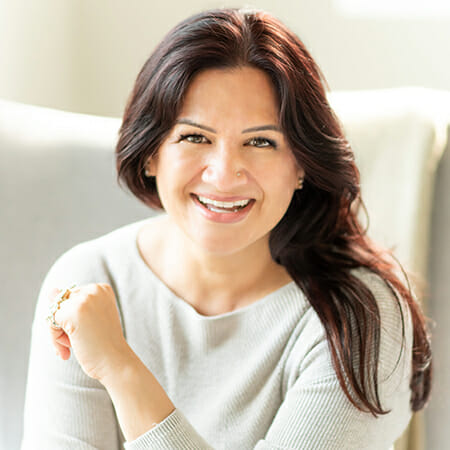
Through her service with Puranik Foundation, Rani Puranik is creating stronger communities and global opportunity for young adults and children by encouraging them to embrace culture, kindness and individuality. /Courtesy Morris Malakoff Photography
Share one personal story with me from your volunteerism.
In 2015, Puranik launched a study abroad program which gives high school students in the United States the opportunity to visit India. One student who traveled with us had never left Houston, and she was about to take a 17-hour trip to the mountains of India. She was so shy, the entire plane trip she did not eat or speak. When we arrived, she didn’t want to try Indian food. One morning I asked if I could give her a hug, and she started to warm up. By day three, we were visiting elementary school children and she started teaching them how to play basketball and hopscotch. You won’t believe this, on the final day of the trip, this girl spoke for the first time. I was bawling. The girl couldn’t stop smiling. My mom, who is the founder of Puranik, was there, and she told this girl she was so proud of her, and asked if she’d like anything to eat. The girl told us she enjoyed the mangoes. Today, this young woman is one of our greatest ambassadors, she looks you in the eye with sunshine coming out. I gave her that possibility through volunteerism and a sense of unconditional love.
Why do you think it’s important for others to give back?
When we give back, we’re sharing experiences to make the next life better. We’re not immortals, at some point we’re all going to pass this earth, but if we can give back as human beings and make that next life just a little better, there’s definitely hope for the next generation.
What’s been the most rewarding part of your service?
When we serve with no expectations of getting anything back but you’re giving wholeheartedly love, forgiveness, grace and acceptance, and you’re creating a safe place and possibility for children, that’s just so rewarding for me.
How have you continued to volunteer throughout the COVID-19 pandemic?
We launched virtual programs including a very cohesive interactive workshop called Global Connect which is run by my 27-year-old daughter, Bhakti. We have open conversations about issues of the world like the pandemic, isolation and how to connect with people of other cultures who face similar challenges. Puranik also launched our Devices4Dreams campaign, as we realized during the pandemic that not everyone had devices to stay connected with others. Our service reminds people they are not alone.
What do you want people to learn from your story?
Find something you feel deeply within you and an organization that aligns with your goals.
In one word, what does volunteering mean to you?
Legacy. We are building this service as a model for generational leadership and legacy.
How can readers help?
I’m about to launch a book titled “7 Letters to My Daughters”. The book explains the ways that giving back to the community got me through the hardest times of my life, and taught me precious lessons about personhood. Please visit my website for more information.
“Brainiac” College Student Volunteers to Teach Kids About Neuroscience and Create Equitable Future in Science
Meet Daily Point of Light Award honoree Siddhant Kumarapuram. Read his story and nominate an outstanding volunteer or family as a Daily Point of Light.
After joining his high school’s neuroscience club, Siddhant Kumarapuram discovered a passion for the brain, and was inspired to get more involved in science. The now 19-year-old college sophomore from Basking Ridge, New Jersey is sharing his passion with other students from New Jersey to Nigeria through volunteerism.
Founding Brain Bunch in 2019, Siddhant is connecting with students in grades 2-8 to increase interest in STEM and set under resourced children up for future success. Through a hands on approach, Brain Bunch helps engage younger kids to explore the brain, hosting more than 60 free programs to date. Promoting a more equitable future in science and instilling scientific curiosity amongst more than 1,500 students thus far, Siddhant is supporting the educational growth of younger “brainiacs” just like him across the United States and internationally.
What inspires you to volunteer?
My family really values community service, and my initial experiences volunteering were with disadvantaged populations. Being able to do simple tasks for these individuals was really empowering, and it makes me really grateful I can make a difference in my community and use my skills for a good purpose.
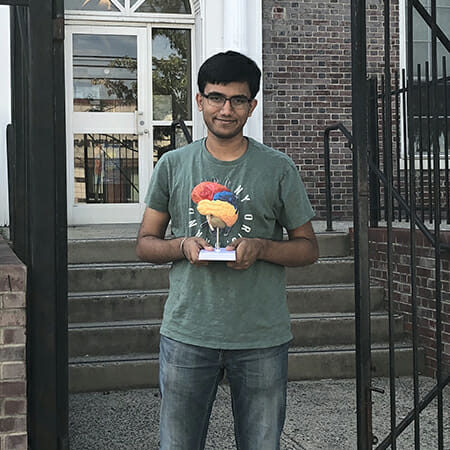
As the founder of Brain Bunch, Siddhant Kumarapuram connects with young students to increase interest in STEM education. /Courtesy Siddhant Kumarapuram
Describe your volunteerism with Brain Bunch.
As founder and president, I am working with our volunteers, who are high school students located around the U.S., and international partners to reach students from disadvantaged backgrounds. We are currently working with partners in Guyana and Afghanistan to bring our neuroscience program to those regions. We receive donations and also rely on grants to power our programs. I’m also in charge of curriculum development for our programs. We offer different modules based around vision, sound, taste and other activities.
Share one personal story with me from your volunteerism.
We held an event at a library in Newark, New Jersey. Inner city kids often lack resources around science education, and the students were initially hesitant to participate in our program, but one student was very interested. This student kept raising his hand and asking questions. When he came up to the microscope station to look at slides, a lot of other students followed him. By involving students in STEM education through activity-based curriculum, we are helping students to really get involved in their own education. It means a lot to me to empower kids through volunteerism and show them what science is all about. There’s a huge discrepancy in diversity in different fields of science, and if we could provide opportunities to these kids in inner cities, it could really help to shape the future of the field and create a more equitable future.
Why do you think it’s important for others to give back?
Volunteerism allows individuals to really understand the needs of other people. We become overwhelmed with our own work in our daily activities, and we don’t realize people out there may have more needs that are more exhaustive than our own. Taking a step back to identify needs that are greater than our own can be a really gratifying and humbling experience.
What’s been the most rewarding part of your service?
It’s rewarding connecting with these kids and empowering them through mentorship and education. I aspire to be a medical professional and creating a future environment with a diverse set of faces is something I aspire to.
How have you continued to volunteer throughout the COVID-19 pandemic?
We shifted to virtual events. Brain Awareness Week is in March, so we hosted different online events through libraries and schools. We also expanded content to offer reasoning and awareness to address increasing mental health concerns during the pandemic.
What do you want people to learn from your story?
People should follow their passions to make a difference in the world. Even though it might seem daunting or starting an initiative might require a lot of work, changing even one person’s life is very meaningful and impactful.
In one word, what does volunteering mean to you?
Empowerment.
When you’re not busy in school or volunteering, what do you do for fun?
I like Formula 1 racing, so I follow that sport. If I was a racecar driver, I’d be driving a Ferrari.
Meet Daily Point of Light Award honoree Jayne Cravens. Read her story and nominate an outstanding volunteer or family as a Daily Point of Light.
A virtual volunteering trailblazer, Jayne Cravens has conducted and promoted online service work for decades. When traditional volunteerism shuddered to a stop in 2020 as the COVID-19 pandemic exploded, Jayne rolled up her sleeves and got to work, extending her skillset to help keep organizations near and far afloat.
Perhaps as a result of her online prowess, the 55-year-old Portland, Oregon resident is seemingly everywhere, doing everything, in the name of service. From promoting culture and arts for Washington County, Oregon, to mentoring former colleagues and people living in Afghanistan and Ukraine, Jayne is making a difference whenever and whenever she can, from the comfort of her own home. The self-described curious volunteer is changing the world, one keystroke at a time.
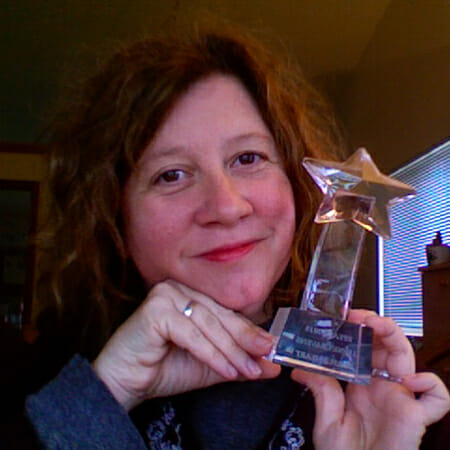
When traditional volunteerism shuddered to a stop in 2020 as the COVID-19 pandemic exploded, Jayne used her skills to help keep organizations near and far afloat. Jayne pictured an award from Bpeace honoring her service tenacity. /Courtesy Jayne Cravens
What inspires you to volunteer?
I’ve volunteered my whole life. I’m curious and want to see things first hand. Volunteerism lets you have first hand experience without a filter, that helps me connect more personally with causes I believe in.
Share one personal story with me from your volunteerism.
As a volunteer with Bpeace, I worked on a project for months that ended up not working out. The organization gave me an award for that work honoring my tenacity. I realized in that moment that it’s not about the number of hours or the end destination, it’s really the journey. I felt more valued with that recognition than I ever felt volunteering on other projects where I was supposedly successful.
Why do you think it’s important for others to give back?
We have to actively connect with each other and have shared experiences. There’s no better way to build our society than through volunteer engagement.
What’s been the most rewarding part of your service?
It’s most rewarding when I’ve learned something and I have a lot of fun doing it.
How have you continued to volunteer throughout the COVID-19 pandemic?
I have had the luxury that volunteering online wasn’t unfamiliar to me. I’ve helped organizations get used to a new way of working with volunteers. I’ve served as an ambassador to help other organizations conduct online volunteerism – some didn’t even know how to have online meetings!
Jayne pictured with an Afghanistan woman she mentors. Jayne Cravens: “I’ve volunteered my whole life. I’m curious and want to see things first hand. Volunteerism lets you have first hand experience without a filter, that helps me connect more personally with causes I believe in.”/Courtesy Jayne Cravens
What do you want people to learn from your story?
Try to remember that the priority is the organization and its mission is not what you might want to do.
In two words, what does volunteering mean to you?
Healthy society.
How can readers help?
The TechSoup online community welcomes your questions, advice and participation. Please visit their website for more information about how you can connect.
Teen Volunteer Creates a Healthier World for Children by Encouraging Kindness and Personal Growth
Meet Daily Point of Light Award honoree Anh Ngo. Read her story and nominate an outstanding volunteer or family as a Daily Point of Light.
16-year-old Anh Ngo says when her shyness began to affect her academics and resulted in missed opportunities, she shifted her mindset to focus on personal growth. Feeling static while at home when the COVID-19 pandemic first began, the high school junior decided she probably wasn’t alone, and dedicated her service to planting the seeds of growth for others.
Founding MindsetSeed in May 2020, Anh is promoting a growth mindset for middle school and high school students to enrich mental health. Globally, about half of all mental health conditions start by age 14, but most remain undetected and untreated, a statistic Anh is working to change as she empowers adolescents and teens to build self-confidence. Offering free art and yoga sessions and resources relating to mental health and productivity, the Rancho Palos Verdes, California teen has connected with more than 10,000 youth in the United States and internationally as she fosters kindness and the power of growth across the globe.
What inspires you to volunteer?
I grew up in Saigon, Vietnam, and my circumstances were somewhat more fortunate in a country not as fortunate. I always knew I had to reach out to help others, and not remain sheltered. I faced my weaknesses in my personal journey, and through service, wanted to help others to have a growth mindset, and not inhibit themselves for so long like I did.
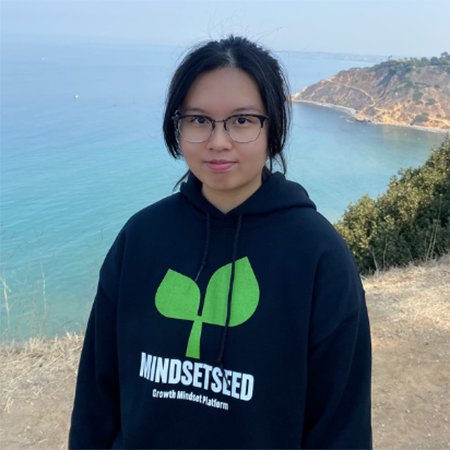
As the founder of MindsetSeed, Anh Ngo is promoting a growth mindset for youth around the world to enrich mental health./Courtesy Anh Ngo
Describe your volunteerism with MindsetSeed.
As founder and CEO of MindsetSeed, which is student-run, I oversee the more than 100 volunteers we have around the world, including our Neuroplasticity Research team that is examining the scientific background of a growth mindset to develop curriculum and better promote awareness. Empowering students to be more positive and facilitate growth, MindsetSeed produces free resources like weekly blogs, our magazine, “Effort,” and we also fundraise to support the American Diabetes Association (ADA) as it’s been shown that individuals with diabetes thrive using a growth mindset. We’ve connected with individuals from more than 50 countries around the world including Switzerland, Korea and Vietnam.
Share one personal story with me from your volunteerism.
We offer free art and yoga sessions to enrich mental health, and through one of our art mindfulness sessions, I met with a girl who was having difficulty adapting to new environments in her high school. I saw myself in her, because I also had a difficult time adapting to a bigger school. We connected over drawing our thoughts, and that is when I saw how small adjustments can make a huge impact on how you feel. I felt really happy to be able to make that connection, because in a way, I was going back to my past self and saying it was ok, that I would make it through the tough times.
Why do you think it’s important for others to give back?
Through connecting with others and giving back, you develop a better understanding of who you are. Volunteering is a way to grow because service is not all about giving back, but also giving to yourself. You get a sense of joy helping others.
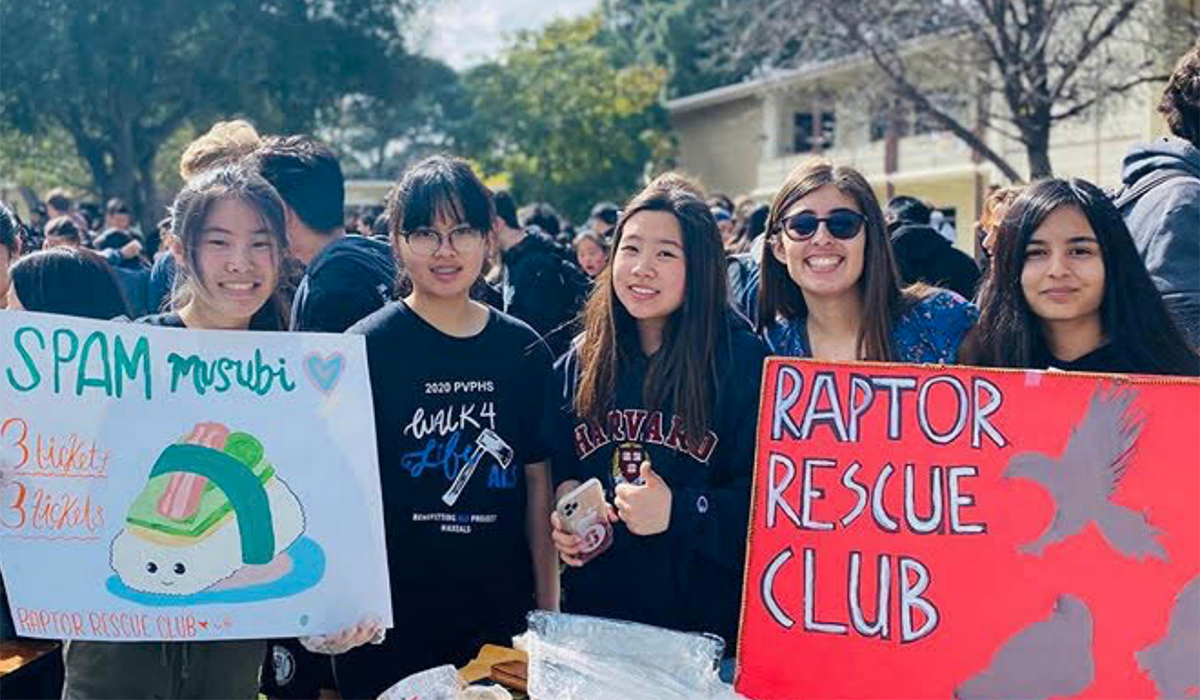
Anh (second from left) pictured alongside MindsetSeed volunteers fundraising for a local cause. /Courtesy Anh Ngo
What do you want people to learn from your story?
Put yourself out there and get started helping others. It’s always really scary to start something new and step out of your comfort zone, but once you get started, those fears will fade.