Volunteering in Her Baby’s Memory, Minnesota Mom Raises Awareness to Reduce Perinatal Death
Meet Daily Point of Light Award honoree Lindsey Wimmer, who was a 2020 L’Oréal Paris Women of Worth recipient. Each year L’Oréal Paris and Points of Light recognize and celebrate Women of Worth who make a beautiful difference in their communities. Ten honorees each receive a $20,000 grant to support their most cherished cause and an online vote determines one honoree who will receive an additional $25,000 grant. Nominations for 2021 are now open! If you know a woman who works to create lasting and significant change in her community, nominate her to be one of the 2021 Women of Worth.
At 38 weeks pregnant, Lindsey Wimmer says she and her husband were sitting on the sofa laughing at how busy their to-be firstborn’s movements were one night, the future new mom and pediatric nurse practitioner relishing what had been a “really uneventful” pregnancy. After going to bed, Lindsey says she woke up in the middle of the night with a horrible sense of doom.
“After laying there for about an hour, I realized I hadn’t felt the baby move (in that time),” Lindsey said. “We tried some of the things the books said to do — pushing on the tummy, drinking a cold beverage — things I now know don’t work. I didn’t have any bleeding or a fever, and when I looked at books, not one mentioned any sign that there could be something wrong. I was afraid I was being paranoid and didn’t want to bother anyone at that hour.”
Lindsey went to her doctor’s office that morning, and learned she’d lost her baby, a son she and her husband had named Garrett, one of the 24,000 babies lost to perinatal death each year in the United States. Realizing what little she knew about stillbirths, Lindsey launched The Star Legacy Foundation in 2007 as a way to raise awareness and prevent pregnancy loss and neonatal deaths. Serving as executive director and founder, Lindsey volunteers alongside her husband and family in Eden Prairie, Minnesota, in addition to hundreds of volunteers across the country as they connect with tens of thousands of Americans to improve care for families who have suffered similar tragedies.
“I was almost embarrassed as a health professional that I wasn’t better prepared. It was devastating for me, even having the education and resources I did have. I couldn’t help but think about how it has to be an even more daunting and scary experience for those who might not have as much awareness of how the health system works or how to connect. Most families we work with say the same thing. They didn’t even know (losing a baby like this) was a possibility.”
Fighting against the stigma concerning stillbirths, Star Legacy is a community of families, health professionals, researchers, policy makers and individuals working to help every pregnancy have a happy ending. According to Marian Sokol, former president of First Candle and a former Star Legacy board member, Lindsey is moving stillbirths from a private tragedy into a public health matter through her willingness to share her experience with others.
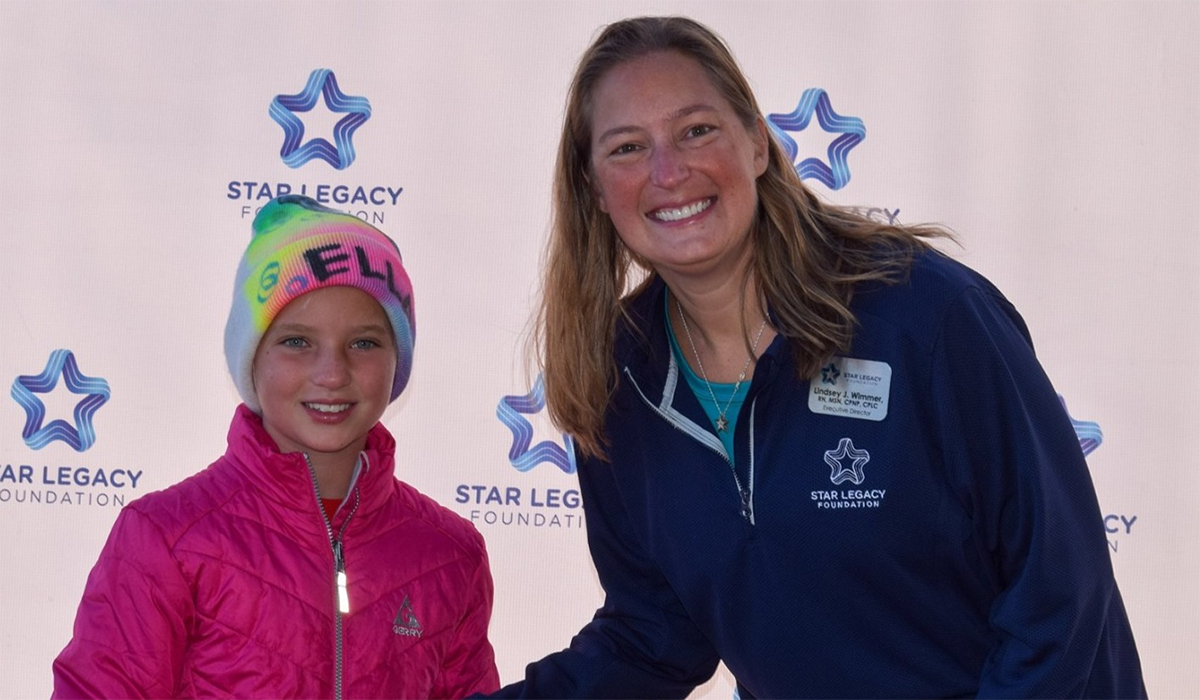
Lindsey pictured at a Star Legacy run with Ella, whose sister was stillborn. Star Legacy advocates on behalf of the 24,000 babies lost to perinatal death each year and their families. / Courtesy Lindsey Wimmer
“First and foremost, she was a mother like any mother who experienced the pain of stillbirth. But beyond that, she became an advocate and in particular, a knowledgeable spokesperson who could draw attention to the issue,” says Marian. “When you meet Lindsey and you learn how she’s given of herself with her courage to come forward from her pain and to help others, it makes so many other individuals who knew nothing about the issue prior want to get involved and want to make a difference. Her genuine service brings strength to the entire movement for preventing stillbirths.”
Addressing related issues concerning bereavement, prevention and early intervention, Star Legacy first started hosting golf tournaments to raise money for stillborn research and now hosts other events like 5ks and walks, as well as offering education and virtual peer support groups to help save lives. Star Legacy conducts some of their own research and extends their work through partnerships with organizations International Stillbirth Alliance and Still Aware. Demand for Star Foundation’s virtual support has increased by 300% since the start of the COVID-19 pandemic, an indication of the great need across the U.S., says Lindsey.
“As a health professional it’s my job to do better and extend the care we provide in the health system to families. This is how I parent my son. (Volunteering) doesn’t feel like extra work because it comes from the love and energy I have for him. I am grateful I have a positive place to channel that.”
Lindsey and her husband share four children, three living children in addition to Garrett. In channeling her tremendous loss into service and offering expanded access to resources, Lindsey says she is seeing real change happen, one baby or one person at a time, offering desperately needed hope to others.
“People we have worked with during grief will often come back to us later and say they didn’t think they could have gotten through without us. While we know they could have and would have, we’re grateful we gave them an ounce of hope. A mom once told me she watched me talking, knowing I’d gone through the exact same situation she had, and I looked ’normal.’ She told me there was happiness in my life, and that gave her hope that maybe she too could survive. Our hope is that we get preventable stillbirth under control. We know that we’ll never get it to zero without major genetic advances, but if we can get to where unexplained and unexpected stillbirths and neonatal deaths are gone, that is ultimately our goal. It’s a continuum. When prevention isn’t possible, we want families to have the absolute best care in the healthcare system and in our society.”
Growing up with two older sisters, Rebecca Stern knew how important having female mentorship was for her life. Wanting to share that with other young women, she and her friend Jillian Coccia founded Girls TogetHER, a mentoring and leadership program for girls in grades four through six. Girls TogetHER hosts a summer camp and workshops at local libraries and recreation centers around Rebecca’s hometown of Malvern, Penn., although they have since gone virtual due to the COVID-19 pandemic. Since the program’s inception in 2018, 48 mentors have worked to support and empower 66 young girls.
In addition to Girls TogetHER, Rebecca also serves as the president for her high school’s chapter of Girl Up, the United Nations Foundation’s international leadership development program, as well as the president of the program’s Pennsylvania coalition. Through Girl Up, Rebecca worked with her school’s administration to get free menstrual product dispensers placed in every female bathroom in the high school and middle school. The 18-year-old will be graduating high school this year and plans on continuing her work empowering women by attending college to study social entrepreneurship and gender studies.
Describe your volunteer role with Girls TogetHER.
Girls TogetHER is a girls’ mentoring and leadership program. We do workshops and camps with girls, or anyone who identifies as a girl or nonbinary, in fourth through sixth grade. We started in the summer of 2018. I cofounded it with one of my good friends Jillian Coccia. We work with libraries and recreation centers to host these programs. We prioritized four different key [aspects] of leadership and mentorship. We do activities around teamwork, community service, creativity, and trustworthiness. We’ve been able to do those both online and in person. Of course because of the coronavirus, our last in-person meeting was in January so everything since has been virtual.
What inspired you to start this?
I think it was a lot of things. One of them is I come from a house with two older sisters so I feel that female mentorship has been so important in my life and made me into the person I am today, as well as we were really inspired by seeing the power of teenagers working with communities. I love younger kids and so does Jillian, and I think we realized there was a real need for peer-to-peer mentoring within this age group. We have high schoolers mentoring younger girls and it’s been really powerful. We’d seen it work with coding and we thought this would be a really cool opportunity, too. At first when we started, we tried to make it more around business, but now it’s more about social impact — whether that’s creating a product that solves problems, or some of the activities we do are around community service and helping them become leaders who will change the world one day.
Rebecca Stern serves as the founder of Girls TogetHER, a female mentoring and leadership program, as well as the president of both her high school’s chapter and the Pennsylvania coalition of Girl Up, an international leadership development program./Courtesy Rebecca Stern
Discuss your work with Girl Up.
I am the president of the chapter at the high school and I am also the president of the PA Coalition. In the PA Coalition, my job is basically to unite the different clubs across Pennsylvania and provide any resources to them, plan our yearly summit, have monthly meetings to share what we’re all doing and share those resources, and hold different events. We had an International Menstrual Equity Day. Something that I work on with Great Valley Girl Up is menstrual equity advocacy, so meeting with the representatives and sharing our experiences and what were doing with our school. I basically lead all the officers and our club members in discussions in different events and things like that.
How were you able to place free menstrual product dispensers in your high school?
That’s something that Girl Up has been working on for the past year and a half. Basically we were working with our school administrators to get free menstrual products in bathrooms because a lot of girls or menstruators will miss class, or will struggle with infection if they leave something in too long, or just can’t afford products because they aren’t covered by these different programs like SNAP or WIC. We wanted to provide them in the bathrooms to also help with the stigma around it and the embarrassment around it, so people aren’t shoving things up their sleeves and they will know that they are there and they will have access to it at any point they need it. While we were waiting for the administration to get it through, we created our own baskets. We used some of our money that was fundraised last year to purchase some products and we put those in all the of high school bathrooms. Recently our administration finally [passed it] through and they agreed to get the menstrual products in all of the high school and middle school female bathrooms. That will be in the budget for forever hopefully. They switched over all the dispensers to dispense them for free. Then I applied for a Hershey Heartwarming Project Action Grant with Great Valley Middle School Girl Up officers and we actually just received that. It was a $250 micro grant to hopefully work on elementary schools and to cover any bathrooms that aren’t currently being covered, such as the student service bathroom that’s usually used by students who are part of the LGBT+ community, just to make sure all menstruators in the Great Valley School District can attend school and they aren’t missing class and they aren’t struggling with mental health because of their period.
What’s been the most rewarding part of your work?
I would say the most rewarding part is seeing conversations start and become less stigmatized, and building these communities. I feel like a lot of the work I do is building these communities where people can talk about these issues. In Girl Up, we have so many interesting conversations that don’t really happen in classrooms regularly. I feel the freedom that comes from that, and a lot of change. I’ve seen a lot of growth and talking about menstruation at my school. I’m talking in front of every single teacher in faculty meetings about what we’re doing and I think I’ve kind of lost a lot of that uncomfortableness about it because I’m used to it, but I know a lot of people haven’t. I hope starting that conversation is having a lot of impact, as well as with Girls TogetHER, as I’m seeing people become more confident and seeing these young girls start to speak up more and transform from the beginning of one workshop to the end. It’s really exciting to see that and know you’re creating that longterm impact. When the program is over and you’re gone, your mark will still be there on the school and the communities and the people you’ve met.
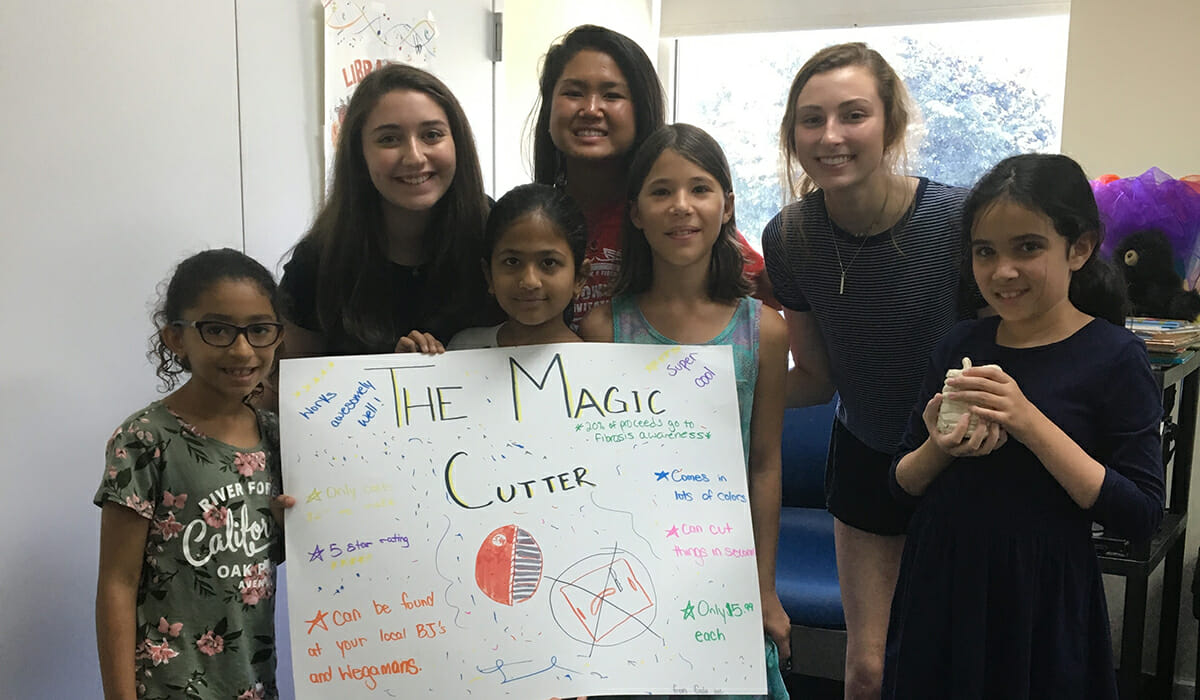
Rebecca Stern, second from left, works with some of Girls TogetHER’s mentors and mentees.
Why do you think it’s important for others to give back?
I think it’s the most rewarding thing you can possibly do for anyone and also for yourself. I think it gives you such a good mindset that you can apply to anything you work on. In all my fields of study and in all my efforts — in any kind of thing, I also do a lot of theater — in all of these things I’m still thinking in that same mindset where I can do community service. You form such a great bond with your community and create all these connections that are so rewarding in your life. Lots of joy, and lots of impact. I’m so happy I’m involved with these organizations. Girl Up and Girls TogetHER definitely changed my life and I’m really grateful for it.
What do you want people to learn from your story?
If you work hard enough at it and you have the passion and drive to keep pushing forward on it everyday, you can create that impact. Although it may seem that at some point it’s not moving forward, there is still that potential and spark. With the menstrual products, we had a lot of delays especially because of COVID. I really didn’t know if it was going to get through this year while I was still in high school, and it was a huge passion project of mine. We end up getting it through, finding different strategies to convince people, and it’s really rewarding when it does. I would say keep on trying, as cliche as that is, and never give up on your passions.
Volunteer Uses Late Grandmother’s Sewing Machine to Protect Health of Community Amid COVID-19 Pandemic
Meet Daily Point of Light Award honoree Meha Gaba. Read her story and nominate an outstanding volunteer or family as a Daily Point of Light.
16-year-old Meha Gaba had never used a sewing machine before the COVID-19 pandemic, but as cases of the virus spiked and PPE was in short supply for frontline workers, the high school sophomore pulled her late grandmother’s sewing machine out and got to work. Through determination and dedication and after watching a few how-to YouTube videos on sewing, the San Jose, California teen has now donated thousands of masks to protect the health of her community and beyond.
Inspiring volunteers of all ages to join her efforts, Meha launched Ayuda Foundation to offer help to those who need it the most. Donating more than 1,500 handmade, reusable masks and thousands more disposable masks across the United States including to California, Texas and New York, Meha is even offering help globally with a recent donation of 10,000 disposable masks to 15 cities in northern India. Positively contributing to her community, Meha is helping to safeguard the health of frontline heroes and is inspiring acts of kindness through her volunteerism.
What inspires you to volunteer?
I’ve always had a desire to help people, and when I was really young, I started volunteering at senior centers. When the pandemic hit, I wasn’t sure what I could do to help my community, but I realized I could give back when I saw the lack of PPE in hospitals and other areas.
As the founder of Ayuda Foundation, Meha Gaba offers help to those who need it the most. Meha has donated more than 1,500 handmade, reusable masks and thousands more disposable masks across the United States and in India./Courtesy Meha Gaba
You’re using your late grandmother’s sewing machine to help your community. Explain.
I got my grandma’s sewing machine out, and used YouTube to learn how to sew on the machine. I started making handmade cloth masks, and have made hundreds thus far. A picture of me at the sewing machine surrounded in masks inspired other volunteers to help. Learning how to use a sewing machine could be frustrating at times, but whenever I saw the finished product, it was easy for me to forget about that hard work. The handmade aspect of volunteering adds a lot to the experience.
Describe your volunteerism with Ayuda Foundation.
As founder and president, I coordinate our volunteers, manage online communication and also our fundraising. Our volunteers raise money through fundraising and then use those funds to buy disposable masks and to buy materials for handmade masks. We’ve donated about 18,000 reusable and disposable masks thus far to locations locally in the San Jose area and also in India.
Share one personal story with me from your volunteerism.
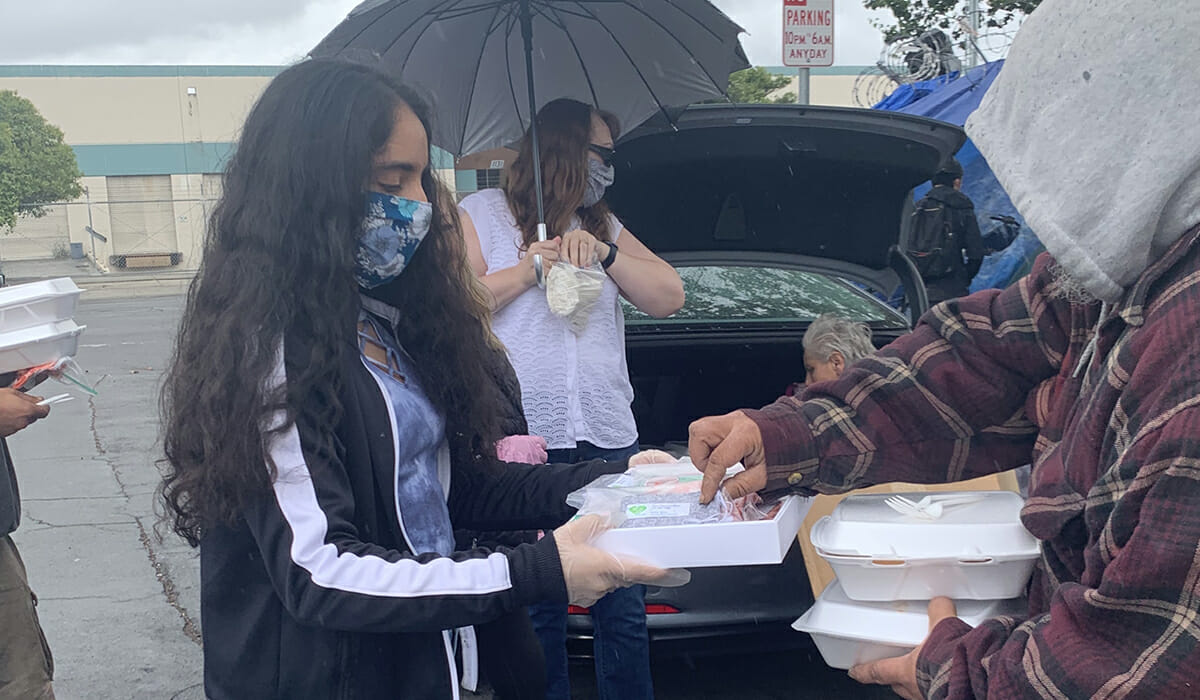
This past summer we visited a homeless encampment in California to distribute masks. It was raining and we saw people really struggling. It is heartwarming to see that I can bring such joy and vibrant smiles to the faces of all of these people and I am grateful to have the opportunity to help people stay safe during this large struggle we’re all facing.
Why do you think it’s important for others to give back?
Giving back to your community is extremely important because it helps shape who you are as a person.
What’s been the most rewarding part of your service?
The reactions of the people we’ve helped out has been most rewarding. We partnered with The Robin Hood Army to distribute masks in India, and they shared a video of children playing and dancing around, screaming, ‘thank you Ayuda!’ That brought tears to my eyes, it was so amazing to see their reactions to the masks we provided.
What’s in the future for your volunteerism?
Post-pandemic, we want to offer educational initiatives and continue to help impoverished people. ‘Ayuda’ means ‘help’ in Spanish, and that name encapsulates everything we are doing, not limited to the pandemic but also extending to other social causes and natural disasters. In addition to providing masks, we also recently supported CalFire as the state of California has been hit hard by wildfires. We sent staff cards, posters and food baskets thanking them for their efforts.
Meha Gaba: “It is heartwarming to see that I can bring such joy and vibrant smiles to the faces of all of these people and I am grateful to have the opportunity to help people stay safe during this large struggle we’re all facing.”/Courtesy Mega Gaba
In one word, what does volunteering mean to you?
Gratitude. Most of our circumstances mean we can afford a lot of things other people can’t. When you’re constantly giving back to your community, you realize not everyone has the same opportunity you do. Gratitude also improves overall happiness as well.
What’s your personal motto?
The world needs some time to heal from COVID-19, but we can begin with a small act of kindness.
When you’re not busy with school or volunteering, what do you do for fun?
I’m a singer. I like to write songs. I write mostly sad songs, but I like to sing anything. I’m also a gymnast.
How can readers help?
Please visit our website for more information about how you can help.
Science Champion Democratizes Public Health & Advocates for Healthier World Amid Pandemic
Meet Daily Point of Light Award honoree Stephanie Wang. Read her story and nominate an outstanding volunteer or family as a Daily Point of Light.
A science tournament champion passionate about epidemiology and public health, 17-year-old Stephanie Wang wanted to make public health accessible to others in response to the COVID-19 pandemic to combat rampant misinformation. Authoring a textbook on the topic, the Katy, Texas high school junior is now helping to improve the health of her community.
Through her volunteerism, Stephanie is creating public health curriculum for schools and advocating for legislative action to increase public health literacy, connecting with thousands of youth and adults in the United States and internationally thus far. Leveraging virtual connections to extend her service reach, Stephanie is democratizing public and personal health as she advocates for a healthier world.
What inspires you to volunteer?
I am privileged to have so many educational resources, but not every student has the ability to pursue their passions with support from their communities. I am using my education to give back to other students who haven’t been exposed to this field of studies, because education is key to social mobility and leading a decent life in the future.
Describe your public health volunteerism.
I am building the groundwork to establish a better future for many. Drawing upon the book I wrote, Epidemiology Unmasked for inspiration, I created a public health curriculum which I taught virtually during a summer program to over 1,000 students across the U.S. I also spread awareness about public health publicly including speaking on podcasts. The curriculum I’ve built is being implemented in schools locally in Texas, in addition to other states and internationally. Lastly, I’m working with local county leaders and the Texas state board of education to implement public health resources for our community.
Stephanie used the revenue earned from her textbook, Epidemiology Unmasked, to donate masks to Christ Clinic in Katy, Texas during the COVID-19 pandemic. /Courtesy Stephanie Wang
What do you want people to learn from your volunteerism?
At the onset of the pandemic, we saw a lot of misinformation and oftentimes a lack of public health or personal health responsibility among people in the community and elsewhere. Through volunteerism, we are keeping people more informed and emphasizing the importance of public health.
Share one personal story with me from your volunteerism.
I received lots of attention and revenue when Epidemiology Unmasked published. Using profits from the book, I donated 1,000 masks to a local hospital, Christ Clinic, that I’d volunteered at since I was in 8th grade. The hospital serves low-income populations in the Houston area, and it was an extremely rewarding experience to give back, because donating the masks showed I could help patients on a daily basis.
Why do you think it’s important for others to give back?
We should be very grateful for the privilege we have in our lives. Volunteering means you can extend that privilege, happiness and opportunity to as many people as possible. Through volunteerism you have an impact on people in a very positive way.
What’s been the most rewarding part of your service?
Public health education has been disregarded for too long, and we are now seeing the impact amid this health crisis. It’s rewarding to me to step up and do what needs to be done to avoid mistakes in the future. To me, that’s the essence of volunteerism. It’s only natural to give back and do whatever I can to ensure as many people have opportunities in the future.
What’s in the future for your volunteerism?
It’s never too late to spread public health literacy to students whether it’s across my community or beyond. Our goal is to implement public health education in as many schools as possible.
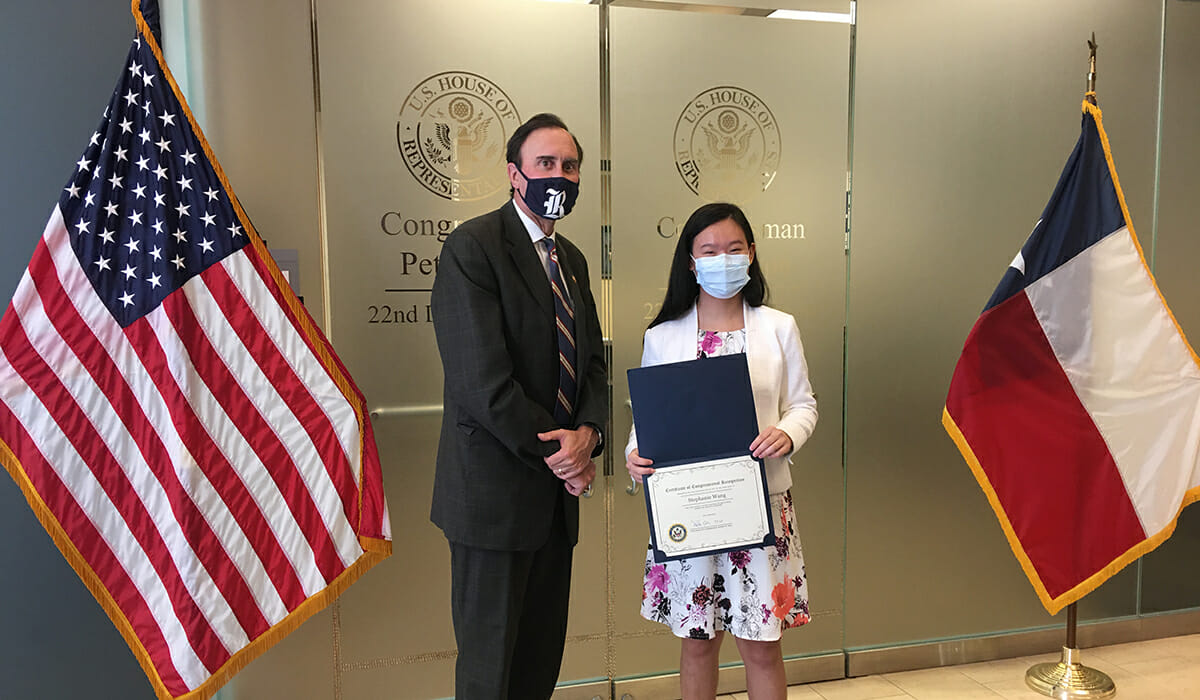
Stephanie pictured receiving the Certificate of Congressional Recognition from former Representative Pete Olson./Courtesy Stephanie Wang
In one word, what does volunteering mean to you?
Passion.
When you’re not busy volunteering or in school, what do you do for fun?
I love reading biographies about important and influential people in our past. It’s super inspiring to learn about their studies and service. I recently read ‘An American Life’ by Robert Lindsey and former President Ronald Reagan.
How can readers help?
Please visit my website for more information about my volunteerism and how you can help.
Changemaker Volunteer Makes Socially Distanced Giving Easier Amid COVID-19 Pandemic
Meet Daily Point of Light Award honoree Shazia Peeran. Read her story and nominate an outstanding volunteer or family as a Daily Point of Light.
As a longtime volunteer, Shazia Peeran says she knew the COVID-19 pandemic would have a devastating impact on nonprofit organizations, and wanted to find a way to virtually connect her community to give directly.
Jump starting critical socially-distanced donations by founding Giving Digitized, Shazia built a platform which allows nonprofits to request and receive in-kind resources, directly matching donors online with community organizations. By changing the way donors can give, Shazia is virtually powering giving back in nine states including New Jersey, California and Illinois, alongside hundreds of Giving Digitized volunteers across the United States. Facilitating the direct donation of tens of thousands of dollars of resources thus far, Shazia is providing much needed aid to those suffering amid the pandemic and is empowering community members to support one another.
What inspires you to volunteer?
I have been volunteering for a minute, service is just something that’s part of my DNA. Volunteering is the mission of my life.
How are you changing giving through your service?
While everyone was trying to work from home, there were many challenges for charities to quickly and easily disseminate needs to the community and know when those things were being sent over, and it was challenging for the community to know what was needed. I am helping charities thrive in a virtual environment with their donors.
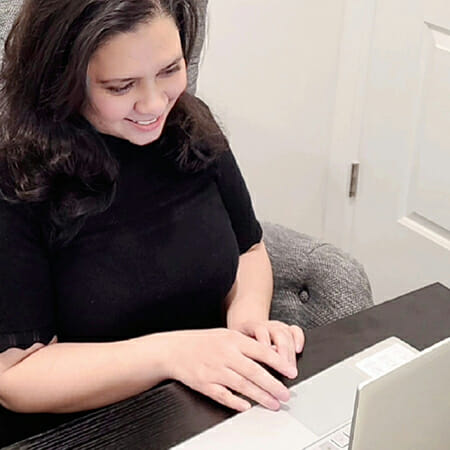
Shazia Peeran: “I knew the charities I’d worked with would be affected (by the pandemic) because people would be confined at home, but also donations would start drying up, so I needed to connect the community directly.”/Courtesy Shazia Peeran
Describe your volunteerism with Giving Digitized.
As founder, I connect with charities and volunteers. I first went through the rolodex of organizations I’d worked with to see what their needs were, and then started getting them matched with resources, from food and coat drives to basic items like bedspreads and kitchen utensils, health and hygiene baskets. We’ve worked with organizations like ADAPT Community Network, York Street Project, Hudson Pride, Salvation Army and Family Promise. Volunteers from around the U.S. log in and directly send aid to any nonprofit that has joined our community. The nonprofits can detail what they need, and our platform allows them to plan for donations and resources they will receive. Giving Digitized is one-stop shopping for people who want to safely contribute across various populations and people in need.
Share one personal story with me from your volunteerism.
We participated in this year’s MLK National Day of Service, and it was really heartwarming to see how we empowered donors from around the country to help charities. We’ve helped to get resources for a newborn whose family was in a fire, got a coat to an unemployed Californian, matched disabled children in New York with educational services, and in the last year, donated more than 24,000 meals. The list goes on, but this is a small drop in the bucket. Our goal is to reach out to 1 million folks who need help.
What’s been the most rewarding part of your service?
It’s rewarding to see and hear stories of how our service has made an impact on the community. One organization in New Jersey serves an at-risk community, and we got coats out to the entire group. In an absolutely brutal winter, being able to deliver donated coats while safely socially distancing amid the pandemic meant the world.
What’s the future for your volunteerism?
It’s absolutely the plan to continue our service and find new ways to help charities work in a socially distant way. This volunteerism addresses issues worsened by the pandemic not limited to homelessness, hunger and people lacking basic access to resources. In the future, I want to further our assistance into case working and career opportunities. It’s a natural progression for the populations we are currently serving, as there are wonderful people out there who have lost certain opportunities. Through upscaling and career placement, we will continue to uplift the community.
In one word, what does volunteering mean to you?
Good community member. That’s three words (laughs). The reason for living is literally giving.
How can readers help?
To continue giving, we rely on volunteers, nonprofit engagement and our partners. We host quarterly drives to address specific needs. Please visit our website for more information about how nonprofits can join and how donors can help.
Paralympic Athlete Helps Young Amputees Live Active Lifestyles by Providing Specialized Prostheses
Meet Daily Point of Light Award honoree Noelle Lambert, who was a 2020 L’Oréal Paris Women of Worth Award. Each year L’Oréal Paris and Points of Light recognize and celebrate Women of Worth who make a beautiful difference in their communities. Ten honorees each receive a $20,000 grant to support their most cherished cause, and an online vote determines one honoree who will receive an additional $25,000 grant. Nominations for 2021 are now open! If you know a woman who works to create lasting and significant change in her community, nominate her to be one of the 2021 Women of Worth.
When her left leg was amputated after a moped accident, Noelle Lambert received a donation of two specialized prostheses that gave the then-Division I Women’s Lacrosse player the ability to run. Those prostheses were so life-changing for Noelle that she decided to start her own foundation to help bring increased mobility to other young amputees.
While still a college junior, Noelle became the founder and president of The Born to Run Foundation, which provides specialized prostheses to children and young adults. Because many insurance policies do not cover athletic prostheses, which can range from $10,000 to $50,000 dollars, the foundation helps to ease the financial burden that would come with being able to continue an active lifestyle as an amputee.
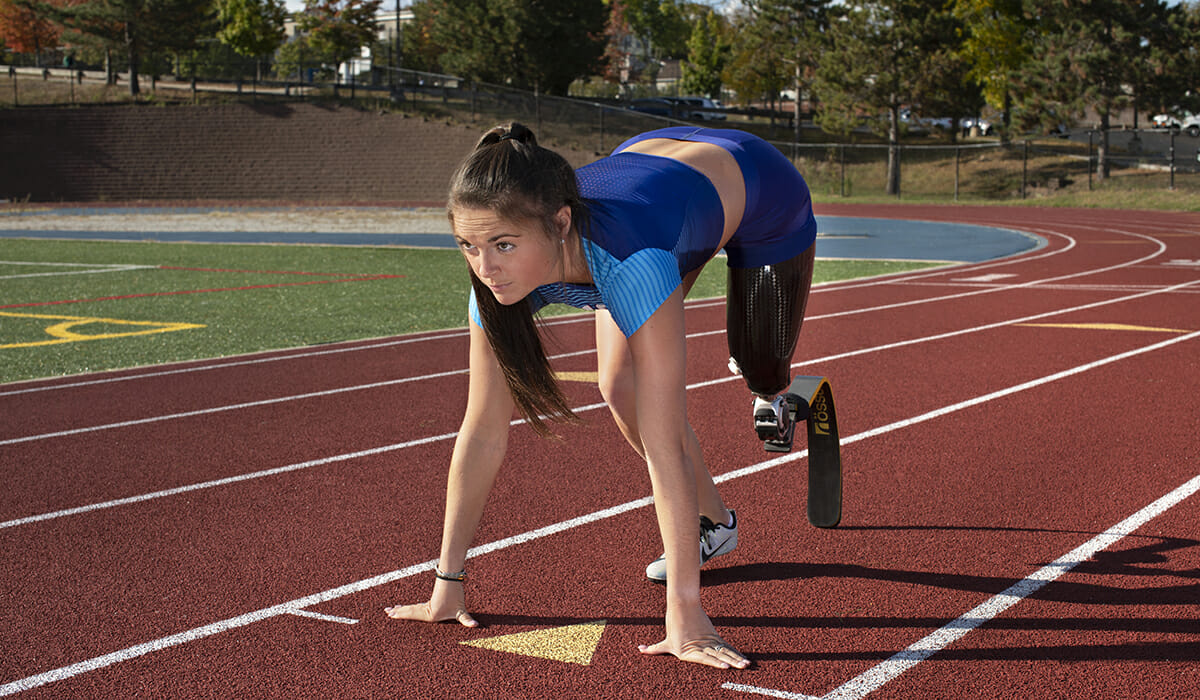
Noelle Lambert founded The Born to Run Foundation in 2017 in order to help fellow amputees to live active lifestyles without limitations./Courtesy Ronnie Orlando
Noelle was inspired to start her own foundation in 2017 as a way to pay forward the help she received from the Challenged Athletes Foundation, which donated her running blade, and The Heather Abbott Foundation, which donated her waterproof prosthesis. Aside from the donations allowing her to achieve her dream of being the first amputee to play Division I Lacrosse, they also help the active young adult do simple activities such as go on vacation or swim in a pool without any limitations.
“Support systems like this are really what makes people think their life is worth living,” Noelle said. “Everyone wants to live the lives they want without any limitations, so I think it’s very important to have foundations like this so we can help other people.”
Since 2018, The Born to Run Foundation has donated 12 prostheses — including running blades, waterproof prostheses, and artificial arms — to amputees ranging from toddlers to adults in their mid-30s. While the focus is currently on young people, Noelle hopes to be able to broaden the age range as the foundation continues to grow.
Noelle, who is a member of the U.S. Paralympic Track and Field Team in addition to working with the foundation, makes it a priority to involve herself in the gifting of each donation. Pre-COVID-19, she would hold a big fundraising event and invite prior donation recipients. For now, the donation gifting is done through Zoom, but regardless of that limitation, Noelle continues to make it clear to each recipient that they can always rely on her.
“It’s kind of like joining a family and a community and a support system,” Noelle said. “If anybody ever needs help, they can reach out to someone who is going through very similar things.”
She said seeing the recipients’ and their families’ reactions to receiving their donation never gets old, and she looks forward to receiving photos and videos of the recipients using their prostheses to snowboard, kayak, go to the beach, or other activities they had dreamed of being able to do.
Noelle’s mother, Judy Lambert, described her daughter as a go-getter who is very involved with both the foundation and the people she is helping.
“She really engages with the recipients. That’s what she loves doing the most — connecting to the people we donate to and helping them navigate the process,” said Judy, who also serves as a board member for the foundation.
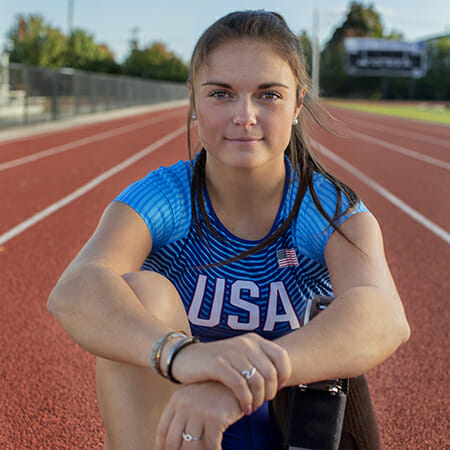
Noelle Lambert serves as the founder and president of The Born to Run Foundation, which provides specialized prostheses to children and young adults./Courtesy Ronnie Orlando
The Born to Run Foundation is currently funded entirely through donations and fundraising events, although they hope to receive sponsorships soon. Next month, they will be holding a virtual fundraiser for a nine-year-old girl who will be receiving a waterproof prosthesis from the foundation. Anyone interested in donating can look out for the fundraiser information on The Born to Run Foundation’s social media.
Noelle is trying to grow the foundation as much as possible, and hopes to get to a point where they are able to donate 20 to 30 prostheses a year as opposed to just four or five. She said she thinks that will be an achievable goal in part because The Born to Run Foundation is what she wants to do with her life and career.
“I’m living proof that anything is possible if you put your mind and body into it,” Noelle said. “Just because you go through a difficult experience with your life, it doesn’t mean your life is over. It’s honestly just how you capitalize on it and how you work to make your life the way you want.”
Teen Volunteers Join Forces to Enhance Lives of Sick Children for “KiDS NEED MoRE”
Meet Daily Point of Light Award honorees Emily Sullivan and Gianna Tantillo. Read their story and nominate an outstanding volunteer or family as a Daily Point of Light.
Emily Sullivan and Gianna Tantillo first met in preschool and have been friends ever since. Emily loves sports and Gianna is a dancer, but the two New York teenagers have joined volunteer forces to pursue their shared passion for health as they serve sick kids in need.
As volunteers with KiDS NEED MoRE, an organization dedicated to enhancing the lives of children, families and young adults coping with cancer and life-threatening illness, Gianna and Emily are giving back to children on Long Island and beyond. Leading initiatives including Fit For A Cause and Toys For A Cause, the two are doubling their impact through service to better the lives of children in need.
What inspires you to volunteer?
Emily: We saw a social media post from KiDS NEED MoRE in 2017 about a child who had cancer and we decided we wanted to get involved. Both of us intend to go into the medical field, so this was a perfect way to get involved and to help people. Volunteerism has always been a big part of who we are.
Gianna: Honestly, these kids have really tough lives at such a relatively young age. Spending so much time with them and seeing what they go through, it’s an indescribable feeling to brighten their day with such little gestures.
Describe your volunteerism with KiDS NEED MoRE.
We volunteer with KiDS NEED MoRE at various events and also attend their annual summer camp as volunteer counselors. We also host annual events that benefit the organization, including:
Fit For A Cause: We serve as co-presidents of this initiative. We’ve raised more than $10,000 from this annual fitness event since 2018, those funds going to the summer camp experience for over 180 children.
Toys For A Cause: We lead this toy drive during Childhood Cancer Awareness Month in September to benefit the Kids Need More Holiday Cheer Bus. We put donation boxes around schools in our district and have collected more than 1,500 toys to donate to children across Long Island thus far. We’ve received significant support from our school district to be able to achieve our goals.
Share one personal story with me from your volunteerism.
Gianna: Our first year volunteering at summer camp, I met one of the youngest campers, a little girl around 3. She wouldn’t do any activities with the group, she just clung to me all day. We eventually got this little girl to interact with other kids her age, and seeing her grow up over the now three summers I’ve volunteered has been a really cool experience. She is doing great now and attended virtual camp this summer. Many kids like us get to live these lives where we don’t have a lot of responsibility and we take things for granted. Being able to give this girl a carefree childhood experience rather than the everyday struggles she and her family were going through really put things into perspective for me.
Co-presidents and founders of the annual “Fit For A Cause” fundraiser which benefits KiDS NEED MoRE, Emily Sullivan and Gianna Tantillo encourage teens to participate in a fitness event and workout for a good cause./Courtesy Emily Sullivan & Gianna Tantillo
Why do you think it’s important for others to give back?
Emily:It’s important to volunteer because of the feeling you get from serving others. Everyone always says at the holidays, ‘the gift of giving is better than receiving.’ That’s true in all walks of life. That feeling you get from knowing you’re making a difference in someone else’s life is such a great reward.
What have you learned through your experiences as a volunteer?
Gianna: Little gestures mean more than you could ever possibly imagine. Doing something small can make someone’s whole week, especially because of what these kids are experiencing on a daily basis. The butterfly effect is a very real thing and little gestures can end up having a major impact on someone’s life.
How have you continued to volunteer throughout the pandemic?
Emily:Because these children have compromised immune systems, we had to transform summer camp into online summer camp, which we called Camp with Space. Even though it wasn’t in person, we were able to still connect with kids, and include even more camp attendees than usual. We plan to host a socially distanced Fit For A Cause this spring.
What’s been the most rewarding part of your volunteerism?
Gianna: Service has always been a part of my family and growing up. It’s important to give back to the community, and It’s rewarding for us to take initiative and make that difference. I hope to continue volunteering for as long as I can.
In one word, what does volunteering mean to you?
Gianna: Impact. Emily:Compassion.
When you’re not busy with school or volunteering, what do you do for fun?
Gianna: I hang out with my friends. I also am very big into dance. I dance on my school and out of school teams. Emily: I love hanging out with friends. I am also super big into sports like volleyball, snowboarding and surfing.
How can readers help?
Please visit the KiDS NEED MoRE website for more information on how you can help.
Sarah Cheung remembers going to the polls with her father as a child, a memory that informed her thoughts on civic engagement and community responsibility. Discovering at a young age that ordinary people could have a voice in shaping public policy, the San Francisco, California teenager has dedicated her time to empowering other youth in the Bay Area.
An active volunteer who wears many hats, 17-year-old Sarah is a volunteer with San Francisco’s Youth Commission, a group charged with offering legislative input and recommendations and identifying unmet needs of youth in the city, in addition to the president of TeenTechSF (TTSF), an organization which provides free technology resources to teens. Leveraging her powerful service to brighten the future for children across San Francisco, Sarah’s deep love for her community is transforming quality of life for her neighbors and inspiring others to volunteer.
What inspires you to volunteer?
Living in San Francisco my whole life, attending public schools and participating in community-based programs, I was able to interact with a lot of different people with various backgrounds and lived experiences. I’m inspired to volunteer because of a deep love for my community and interacting with others.
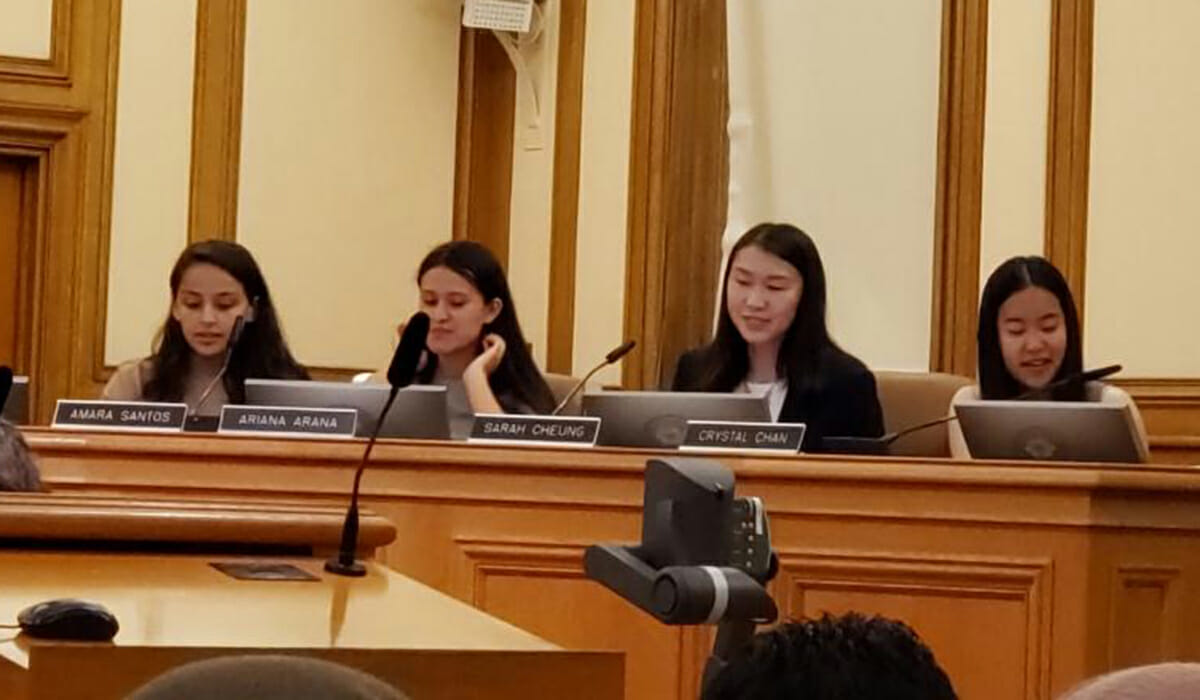
Sarah is a volunteer with San Francisco’s Youth Commission, and is charged with offering legislative input and recommendations and identifying unmet needs of youth in the city./Courtesy Sarah Cheung
Describe your volunteerism to support youth.
Through my volunteerism with the Youth Commission, I advocate for legislation that supports children and youth, especially for those who are marginalized. I joined the organization in 2019 as a volunteer, and am currently a mayoral appointee and the chair of the civic engagement committee. I was the main youth lead for the Vote16 campaign, a measure we got on the ballot and which would have extended voting rights to 16 and 17-year-olds in San Francisco. In addition, I have worked with and advised the following campaigns and initiatives:
CAREN Act to make racially-based 911 calls illegal
Legislation which closed a local juvenile hall and an unsafe county jail
#30RightNow to make permanent supportive housing rents no more than 30% of income
Free public transportation for youth in San Francisco
In addition to my work with the Youth Commission, I am the president for TTSF, and help to organize hackathon conferences and STEM workshops for Bay Area teens. I also work on statewide education bills as the director of strategic partnerships for GENup, an organization dedicated to education equity, and lastly, I recently co-founded When YOUth Vote, our mission to amplify youth voices and increase voter turnout.
Share one personal story with me from your volunteerism.
Through my volunteerism for TTSF, I taught a STEM workshop at an alternative school, and used Play-Doh for an activity with the students. Breaking down technology, which can be quite intimidating, and making it accessible and fun for students brought me a lot of joy. They quickly became very immersed in their projects, and seeing their excitement and how they proudly showed me their work reminded me of my own experience as a student. As a young woman of color in middle school, I didn’t see a lot of other young girls who were interested in STEM or actively seeking out STEM activities. Hopefully, through my volunteerism, I inspired other young girls in that classroom to take initiative, build confidence and pursue more workshops.
Why do you think it’s important for others to give back?
My community has given so much to me including resources, support and encouragement. It only makes sense to dedicate time back to people who have dedicated time to you in any space you’re in, to make sure you’re not just a consumer, but also to be a creator and to help create a positive impact just like others have created on you.
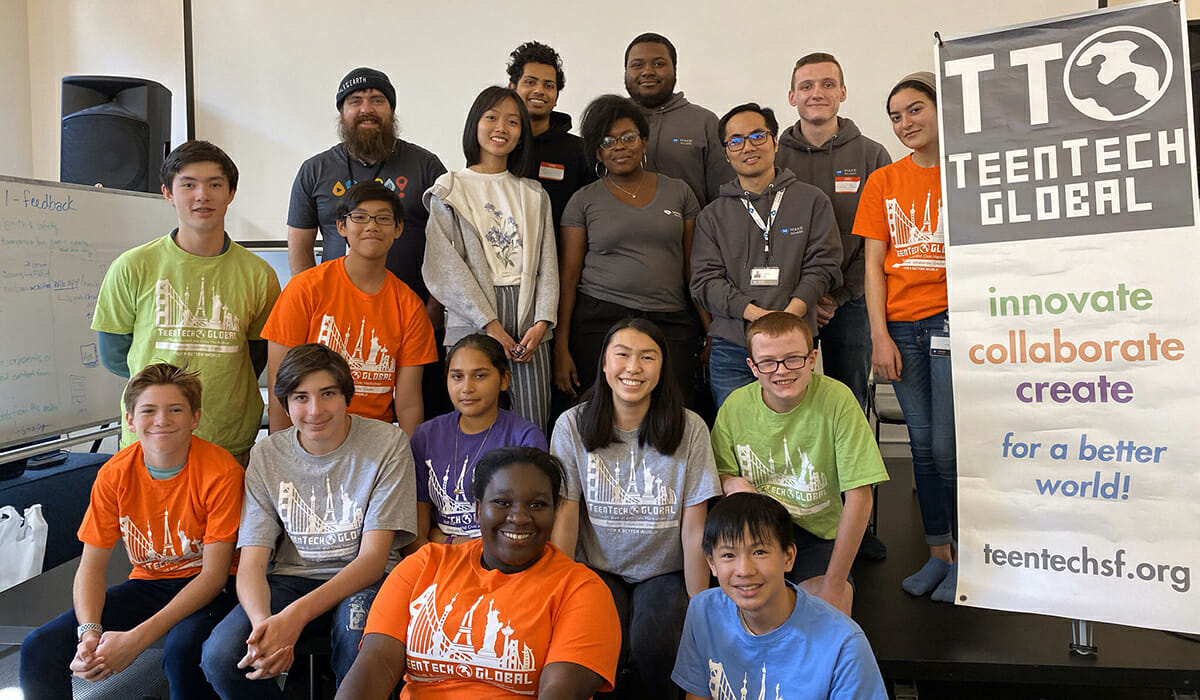
As president of TeenTechSF, Sarah provides free technology resources to teenagers. Pictured at TeenTechSF’s 2019 Civic Hackathon alongside TTSF’s leadership team and computer science mentors from Make School in San Francisco. /Courtesy Sarah Cheung
How have you continued to volunteer throughout the COVID-19 pandemic?
We’ve found ways to interact with people online as a result of the pandemic. For TTSF, we’ve made several adjustments, including holding our annual STEM inclusivity summit online. In addition, we partnered with the San Francisco Human Rights Commission to use grant money we received from the YMCA’s Youth Empowerment Fund to provide free PPE to vulnerable community members. With that funding, TTSF volunteers have sewn around 500 face masks thus far, and are working on 3D printing face shields. I am continuing my volunteerism with the Youth Commission, including advocating for no budget cuts for youth services and I recently co-sponsored a resolution with recommendations on how San Francisco can address anti-Asian hate crimes. This resolution was prompted by the rise of recent violence against community members in the Bay Area.
In two words, what does volunteering mean to you?
Empathy or compassion.
When you’re not busy with school or volunteering, what do you do for fun?
TTSF is accepting donations so our volunteers can produce more PPE including face shields and masks. Also, to learn more about When YOUth Vote and find out how you can help, please visit our website.
Powered by “Destiny and Purpose” Michigan Volunteer Connects with Thousands in Need
Meet Daily Point of Light Award honoree Towana Parker. Read her story and nominate an outstanding volunteer or family as a Daily Point of Light.
Towana D. Parker will tell you she is a constant multi-tasker. The mother to four adult children, six grandchildren and married for more than three decades has retired from her career as an entrepreneur, but is now organizing and operating a different kind of business: one of service to her neighbors.
As the founder and executive director of Destiny and Purpose Community Outreach (DAPCO), Towana is helping to improve the quality of life for families in Wayne and Washtenaw County, Michigan through innovative programs and services including entrepreneurial coaching for women, youth programs and family initiatives like an annual free baby shower. Connecting with thousands since 1998, DAPCO has stepped up services since the start of the COVID-19 pandemic to address the great need in the community.
What inspires you to volunteer?
I’m inspired to volunteer through a born attribute to want to help people. To volunteer, you see a need and want to help. You have to come out of your comfort zone where you’re not being paid, but because you care and you have compassion.
Describe your volunteerism with DAPCO.
As founder and executive director, I cultivate and maintain approximately 20 partnerships throughout the community, in addition to our corporate sponsor relationships. Leading this organization, I’m multitasking all the time. I’ve been a janitor, receptionist, mentor, grant writer, anything or everything I ever asked someone to do, I made sure I could do it first. We have a handful of volunteers, the majority are student volunteers, that help to facilitate our events and programs along with our board of directors. We mainly fundraise around events. What first started as a group of community members and peers who were women entrepreneurs looking to help promote each other’s business resulted in a service arm, what became DAPCO.
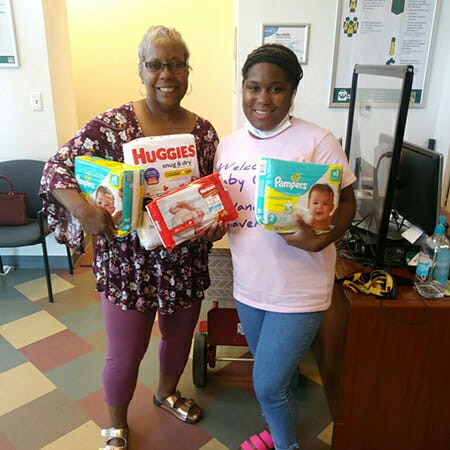
Towana (left) pictured at the 12th Annual Community Baby Shower, which was held as a drive-thru due to the COVID-19 pandemic/ Courtesy Towana Parker
Share one personal story with me from your volunteerism.
The parent and baby in need program is our strongest. We work with mainly single mothers who find themselves expecting another child that they barely have resources to care for. One young lady visited our annual community baby shower event four years ago, and she was able to get resources for her baby. This woman went through our training program, and from there, went on to volunteer with us in the office, became a board member and is still instrumental in helping us in various areas today. Sometimes, you feel unappreciated for the work we put in, but to actually have a mom have enough tenacity to be self-motivated and go through the program, it showed the value of our services. And that gives me enough strength to go on and continue.
Why do you think it’s important for others to give back?
Volunteering helps you mentally and socially. I see that all the time. Service helps to bring a person away from being selfish and out of their comfort zone, hopefully, one day gaining a sense of compassion and care that will take them through the rest of their lives.
What’s been the most rewarding part of your service?
We get hugs, smiles and thank yous, but it’s been most rewarding seeing how DAPCO has evolved from where we started to where we are today.
How have you continued to volunteer throughout the pandemic?
As a result of the pandemic, we held our 12th annual community baby shower for new and expectant moms drive-thru style, and called it “Mommies on the Move.” We distributed items including 60 donated bags from our partner, T.J. Maxx, filled with handmade blankets, diapers, wipes, formula, layette sets, stuffed animals and some car seats and pack and plays. We are also making emergency deliveries to families at home, which can include essential baby items, food or gift cards for transportation or grocery shopping. Lastly, we’ve been hosting board meetings virtually and staying in contact with our partners.
In onE word, what does volunteering mean to you?
Impact.
How can readers help?
We maintain a wishlist for families in need. Please visit our website for more information about how you can help to support our efforts.
Volunteering has always been an integral part of Jeanna Gaines’ life. Growing up, she watched her parents be heavily involved in civic community events, and after starting her career at Bank of America in 1982, she has been an active part of their volunteer network. She even met her husband while they were mentoring first graders. Jeanna raised her children to be volunteers as well, bringing them along to trash cleanups and fundraising walks. After a life entwined with giving back to others, it’s no surprise that Jeanna is now the chair of two major volunteer programs.
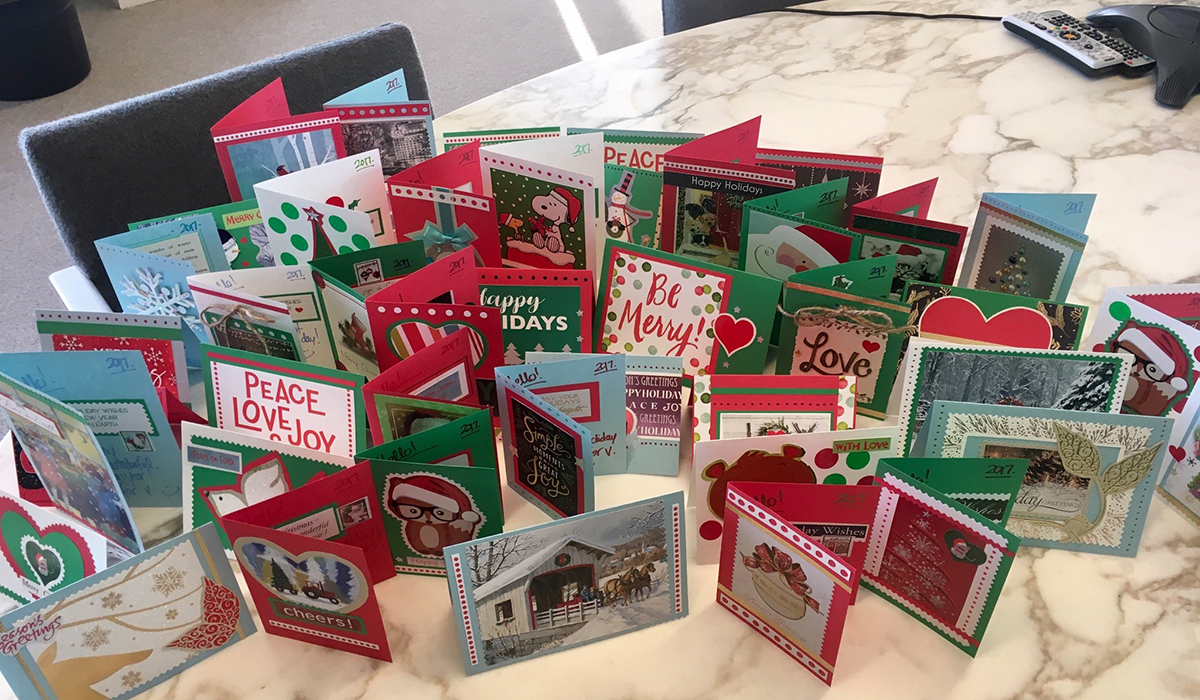
Since 2010, Jeanna has served as the committee chair for the Bank of America Community Volunteers Hearts for the Holidays Campaign, which leads employees in creating holiday cards for those in need of cheer. Over the years, over 900,000 cards have been donated to hospitalized children, the elderly, first responders, overseas military members, veterans, and others. Jeanna serves as the self-described “cheerleader” and support system for the program’s team leads in about 100 cities. Additionally, Jeanna is the board chair for Transplants for Children, a nonprofit that supports transplant patients and their families that she has been involved with since 2003.
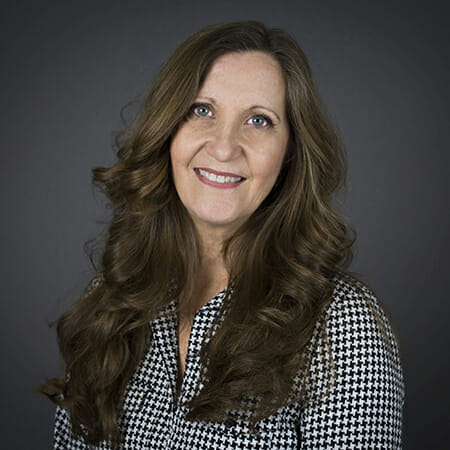
Jeanna Gaines is a lifelong volunteer who currently chairs two volunteer programs — the Bank of America Community Volunteers Hearts for the Holidays Campaign, and the nonprofit Transplants for Children./Courtesy Jeanna Gaines
Describe your volunteer role with Hearts for the Holidays.
Hearts for the Holidays is a Bank of America community volunteer program that stared back in 2004 as a grassroots program in North Carolina. It was to make holiday cards for children in the hospital. They loved it, and the next year my manager who was in Charlotte asked me if I would like to do this and expand it to my city of San Antonio. The associates loved it. They love making cards. They can be creative. A lot of associates have families and they can’t go do walks or these other [volunteer activities], but this is something they can do with their children for the holidays. Within a couple years, I was selected to chair the national Hearts for the Holidays campaign and grow it so it would be a franchise-wide program. What I’ve been doing for the last ten or so years is expanding this campaign to reach all of our locations throughout the United States and overseas.
My role as a chairman is to work with team leads in each of the cities to get the word out, and work with the associates within their cities and their communities. They can get together and make the cards, gather the cards, and distribute them. It started out with just children in the hospital, but it has long since expanded. Now we’re including the elderly, first responders, the military, nonprofits like children’s shelters and women’s shelters, those sort of programs. Since 2004, the associates have made almost one million cards. It has really grown. My job is truly to work with others and build enthusiasm, and work with corporate leadership and market leaders, and talk about that programs so they can expand it and let people know it’s out there so associates can participate with their families.
How did the COVID-19 pandemic affect the program?
All of us were home, so it really changed this year, but our focus didn’t change. Recruiting was a little different and doing Christmas parties was a little different. We used our new technology, our Webex’s and Zoom calls, and we got together as teams so we could make cards in our homes with our families. We were able to do it that way and then gather it, mail or [bring it to] drop off points, and our team leaders gathered those cards and had them delivered. Even with the coronavirus and all of our medical restrictions and work-from-home situations, this year we were still able to make 29,000 cards. They were delivered to children’s hospitals, the elderly, homeless shelters, the United Way, the military. We even reached out to veterans. We did a special emphasis on the elderly who were shut in.
What kind of an impact do the cards have on the people receiving them?
Over the years, I have received so many letters of appreciation from hospitals, elderly care facilities, and even troops overseas, telling me how much the cards meant to them and how encouraged they were that we took the time to tell them they were thought of and they were cared for. It’s been a huge impact over the years. That’s what motivates me every year, that they are appreciated. We don’t know who’s going to get the cards — if it’s a child or a military person or an elderly person or a first responder — but no matter where they go, they always appreciate it.
How is Hearts for the Holidays expanding?
All this time, it has been something that I work on beginning in August to start recruiting and checking on my team leads, and having conversations with management and leadership teams across the franchise to let them know what’s going on and build enthusiasm. It’s really been a Christmas holiday activity. This year because of the impact it has had and the acknowledgment it’s getting, we are expanding it throughout the year. Associates now can make cards for Valentine’s Day. They can reach out to their elderly community any time of the year, and same with the troops. We’re going to do a Veterans Day event. We are reaching out to the homeless throughout the year. We are working with the food banks and providing cards in the boxes of food that are going out to people this year. It has completely expanded from where it was before and I’m excited about it.
Describe your volunteer role with Transplants for Children.
I’m a board chair for Transplants for Children, … a wonderful nonprofit organization that I’ve been a part of since 2003. Transplants for Children supports transplant patients and their families as they go through the transplant process. We support them every step of the way, from infancy to adulthood, and we provide their families with crisis funding and family support. We have support for their peers with our peer network. We support siblings with different activities. A transplant is a lifelong change. It’s not just, they get a transplant and they’re better. For the rest of their life, they are totally different. They feel different and they’re different from their peers, so we build support systems for them. We work with the hospitals for the youth coming in, we reach out to families, and we support them in so many different ways. We’ve been around since 1986, and I’ve been involved since 2003. Even with the COVID-19 pandemic, our program has gone virtual but they’ve expanded. We’ve been able to meet more patients and families who couldn’t get out and couldn’t come to events and couldn’t participate. We’ve been able to reach out to them so we’ve really expanded our program this year, and we’ve done really well even though we are a nonprofit during the pandemic.
Since its inception in 2004, the Bank of America Community Volunteers Hearts for the Holidays Campaign has donated over 900,000 cards to people around the world./Courtesy Jeanna Gaines
What’s been the most rewarding part of your work?
I’ve really made lifelong friends with my volunteer activities. My parents were huge volunteers. They’re involved in lots of civic community events and have always been involved in that. Then as I’ve grown up and my children have grown up, they’ve gone to all the events and all the walks and all the trash cleanups and everything with us, and I see them carry that on in their adult lives now they’ve got children. That’s very encouraging for me. I met my husband 20 years ago while we were mentoring first graders at an elementary school. That’s probably one of the most amazing things to me, is that we’ve met during volunteering and our whole family has circulated around giving back to others.
Why do you think it’s important for others to give back?
It’s knowing that the time you spent doing something for others can mean so much more than the time that was spent. Whether it’s walking to raise money, whether it’s creating a blanket for a homeless person, whether it’s just making a card for a child in the hospital who is alone and scared, it’s time spent. Now in our virtual environment, there’s so many ways to find things to do at home with your family to encourage volunteerism throughout the generations. You show your kindness and love and include your family, and they’ll pass it on.