Once Homeless, Former Navy Vet Advocates for Tailored Assistance for At-Risk Vets, First Responders
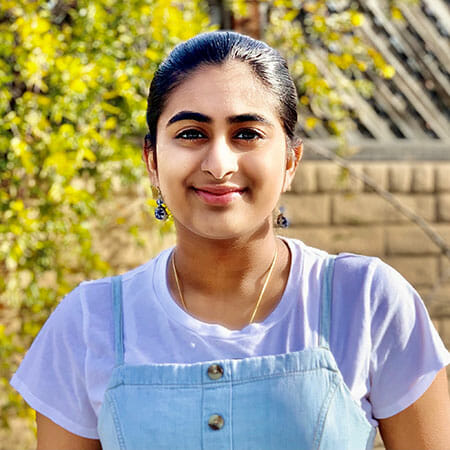
Meet Daily Point of Light Award honoree Stephanie Gattas, who was a 2020 L’Oréal Paris Women of Worth Award. Each year L’Oréal Paris and Points of Light recognize and celebrate Women of Worth who make a beautiful difference in their communities. Ten honorees each receive a $20,000 grant to support their most cherished cause, and an online vote determines one honoree who will receive an additional $25,000 grant. Nominations for 2021 will open on March 1! If you know a woman who works to create lasting and significant change in her community, nominate her to be one of the 2021 Women of Worth.
In a downward spiral after returning to life as a civilian, Stephanie Gattas says it was her mother who first sounded the alarm about Stephanie’s deteriorating mental health.
“I don’t think I recognized I needed the help myself,” says Stephanie. “My mom told me that the military didn’t send back her daughter. That was a really tough pill to swallow. I was walking through life trying to establish normalcy, but people on the outside were saying I was not the same.”
Joining the Navy straight out of high school, Stephanie Gattas served for years as a seaman, then hospital corpsman, providing medical care alongside health care providers, a job the now 45-year-old San Antonio, Texas mother of three says was very challenging. Compounding the stress of her high stakes job were other service-related issues relating to the continued integration of women into the United States Armed Forces that have only recently been spotlighted, says Stephanie.
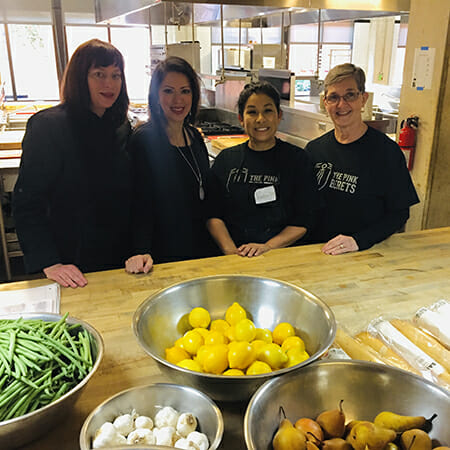
Through The Pink Berets, Stephanie is giving women across America a support system to reignite their own resilience./Courtesy Stephanie Gattas
“At that time there wasn’t a lot of discussion around post-traumatic stress disorder (PTSD) or military sexual trauma, both of which I was dealing with. When I returned to the U.S., it was shellshock. All of a sudden you are living this fast-paced life again. I went through a period of homelessness. There were times I was ok. And then I would plummet. I got a house and then lost it. I got a car and then I lost it.”
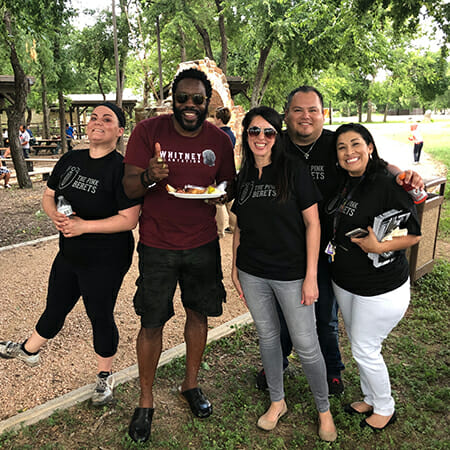
Putting in the work to piece her life back together, Stephanie found there was a gap in resources tailored to specific issues female veterans face, and realized she couldn’t be alone in needing help. Founding The Pink Berets in 2015, Stephanie provides aid and relief to active duty servicewomen, veterans and first responders who are seeking assistance with ‘invisible injuries’ like PTSD, military sexual trauma and combat trauma stress. Citing increasing suicide rates for women who have served in the military, Stephanie is using peer-to-peer support as a pathway to healing to address female mental health in an environment that understands their military experience, connecting with more than 1,000 women throughout the United States thus far.
“Every resource I encountered was centered around assisting men. It was very difficult to make you feel like you could put yourself in an environment where you felt understood and not compared. When you talk about these things, there is still a lot of stigma and there hasn’t been a lot of research associated with servicewomen. We suppressed things a lot while serving. At least I did.”
Stephanie credits the military with teaching her to be of service to country and others, and says she knew her contributions to society weren’t over once she disconnected from the Navy. Building back her mental health reignited her passion to help others and the courage she’d once felt entering the military as a teen. Using that same courage to help others confront life-threatening issues is the kind of selfless service Stephanie has become known for, says Alanah Lavinier, program director at Endeavors, an organization that partners with Pink Berets for client care.
“Stephanie goes above and beyond to seek out women in need and find the assistance they need to get better,” says Alanah. “She’ll burn the midnight oil finding a resource for our women vets, if it’s a shelter they need to go to, she’ll stay up finding somewhere for them to lay their head at night. She sees the good in everybody and is committed to our female veterans.”
The only organization of its kind to offer free therapeutic services through a clinical team, Pink Berets is now providing virtual programs like trauma support, family therapy and experiential therapies including art, equine and culinary, in addition to programs that provide free business attire to veterans transitioning to the workforce post military and self-defense, giving women across America a support system to reignite their own resilience. By raising awareness of military trauma, Stephanie says her volunteerism is almost like looking in a mirror. She is the individual she is helping today.
The Pink Berets is now providing virtual programs to women across the United States like trauma support, family therapy and experiential therapies including art, equine and culinary./Courtesy Stephanie Gattas
“It’s my hope that I inspire other women and possibly men to volunteer. What these (Pink Beret) women don’t know is that they have been a continual part of that healing journey for me as well. They want to be a better wife, daughter, sister. Watching them on this journey and seeing the positive aspects of that journey flourish has been a huge part of my healing journey. People believed in the mission enough to get the help they deserve.”
Helping to educate and address symptoms for women before they progress to homelessness, unemployment and suicide, Stephanie isn’t just helping the individual who put country before self through their service, but their families as well.
“We helped a woman early on who was adamant that our services wouldn’t be able to help her. This woman was having suicidal ideations, she’d lost her job, her son was spending the majority of his time with her family. She became very active in therapy including equine therapy, and she showed up. Fast forward a little over one year later, she was preparing to get her first home, and she’d been in a secure job for the last six months, looking at a promotion. She said she was a better mother to her son, and that she was building back that confidence, not allowing the trauma to define her. There’s no greater reward to know you’ve impacted somebody’s life in some way because ultimately we’re changing her life and her son’s life in the process, because now he’s got a mom who’s healthier for him and those around them.”
Meet Daily Point of Light Award honoree Bob Allmond. Read his story and nominate an outstanding volunteer or family as a Daily Point of Light.
Hope Gardens is aptly named. This eight unit apartment community in Ambler north of Philadelphia is run and owned by Inter-Faith Housing Alliance, a non-profit that provides transitional housing – and hope – for low-income families with children. Since 2009, the year after he retired, Bob Allmond has been a volunteer maintenance worker for IHA, logging more than 1000 hours in the past five years alone keeping the apartments looking good and all systems go. Trained as an engineer, Bob was always handy, skills he learned from his dad, who was an industrial equipment mechanic. Besides doing fix-it projects, Bob has modernized IFH’s maintenance request process and serves on the property committee. Turns out retirement just wasn’t for him. Helping folks get back on their feet by providing them safe and comfortable housing is what makes this low-key septuagenarian feel very blessed.
What inspires you to volunteer?
I knew about the apartments because when they first opened them in the 80s, our church sponsored one of the units. So in between tenants we’d go in and refurbish for the next move in. When their regular maintenance guy left, they asked me if I’d be interested in the job. I said I’d do whatever I could, but I didn’t want to be paid. I guess I didn’t know how much time I’d be spending, but the work is very rewarding. I grew up mission minded because of church – so I’ve always looked for opportunities to serve people less fortunate. It feels good to give back.
Describe your volunteer role with Inter-Faith housing?
I do painting, some carpentry, tile, plumbing – whatever they need. There are three of us who do the work, we’re a good team. I like to take the time to talk to the tenants, who can be a little hesitant until they feel comfortable. I never ask personal questions, but over time people get to trust me. There have been tenants who’ve become friends – and I’d have never met them if I wasn’t volunteering. I don’t know who gets the bigger blessing, them or me.
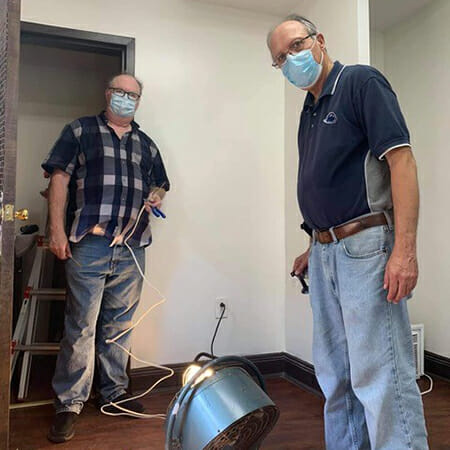
Steve Batschelet and Bob Allmond doing bathroom work at Inter Fair Housing Alliance Butler Pike location. /Courtesy Robert Allmond
What’s been the most rewarding part of your work?
I think being able to help these people with their housing problems. Whether there’s water pouring in from a sink or a door that doesn’t work right, being able to help folks who are struggling in life is the best. It takes one worry off their mind.
What have you learned through your experiences as a volunteer?
I’ve learned some about repairs, new things that I had never done before so that’s good. But really, I’ve found that I’m happier when I’m helping.
Are there any future partnerships, programs, or events that you are excited about?
Every year IFH holds a golf fundraiser and that will be coming up. My wife and I are fortunate to have a vacation place in north Myrtle Beach and we donate a week’s stay. That’s become the biggest moneymaker for the fundraiser, so we are thrilled about that.
Why do you think it’s important for others to give back?
I believe in the golden rule and I’ve come up in a family that did the same. Our church – Grace Baptist Church of Bluebell, does a lot to help people when they’re in need. It’s really our responsibility to use our resources, what we’ve been blessed with, to make a difference in other people’s lives.
What do you want people to learn from your story?
You can use any kind of skill that you have to give back. You’ll learn a lot as a volunteer. And when you meet folks that may be very different from yourself, it’s an eye opener. You never know what a person has been through, how they ended up in a certain situation. All you can do is help.
Ethan Wilk was shocked and confused after witnessing the 2010 Deepwater Horizon oil spill that occurred in the Gulf of Mexico while the then-eight-year-old was living in Texas. Witnessing the disaster inspired Ethan to volunteer for local marine sustainability initiatives. After moving to Scottsdale, Ariz., he started questioning how he could help their marine ecosystems as well. Pairing that passion with his interest in technology and computer science, Ethan started working with nearby university professors to develop blockchain technology to make aquatic tracking chips for fish.
About ten years after witnessing the disaster that sparked his interest in marine sustainability, Ethan is now the founder and director of operations for the nonprofit The Xenia Project, which uses blockchain technology to conserve marine ecosystems through the tracking chips he developed. With the help of over 500 volunteers, The Xenia Project has tagged 1,100 fish and saved three species since its inception in 2017. Ethan was primarily working in the White Mountains of Arizona, but recently partnered with the World Wildlife Fund to help conserve species in Australia as well. While the pandemic has slowed that partnership, Ethan hopes to start tagging fish in Australia this summer.
Describe what The Xenia Project is.
The Xenia Project started back in 2017, but my interest in marine sustainability has been with me since I was pretty young. I originally lived over in Texas for awhile near the Galveston Bay, and when I was around eight years old, I ended up witnessing the Deepwater Horizon oil spill while I as down there. It took a toll on me as a young person, so I began volunteering at marine sustainability initiatives. I eventually came here to Arizona where we don’t have a beach or a whole lot of bodies of water, but having that experience from Texas where the marine community was a big deal, it really stuck with me and pushed me to question how I could spark my own efforts here to turn attention toward these marine ecosystems we have. Specifically as I got older, I began really researching blockchain technology, because technology and computer science always fascinated me. I began noticing some of the characteristics of blockchain seemed to be able to meet some of the needs of the marine sustainability movement. I ended up working with some professors at nearby universities to materialize these aquatic tracking chips that I envisioned which used blockchain to track fish. Obviously we’re a bit thwarted by the pandemic, but essentially we try to manufacture tracking chips which can be attached to endangered fish in a noninvasive way, and then we can track their migration patterns so we can determine where they’re going extinct and why they’re going extinct.
What is your role with The Xenia Project?
I’m currently the director of operations for the project. With that role, in a normal year I would organize volunteer outings and fundraisers to not only fund the project but also to actually get helping hands to come to the lakes and help us tag these fish. Specifically this year, due to everything that’s going on, I’ve taken something more of a CFO role. With the pandemic happening, I had to cancel all our volunteer outings and fundraisers because there’s no way we could do it, so we’re losing a lot of funds we needed. As a result of that, I began to look toward grants and endowments and other methods of funding the project to keep it viable through the pandemic. My role as the director of operations is really concerned with keeping the organization afloat but also expanding it and extending its reach into areas we’ve never been able to before.
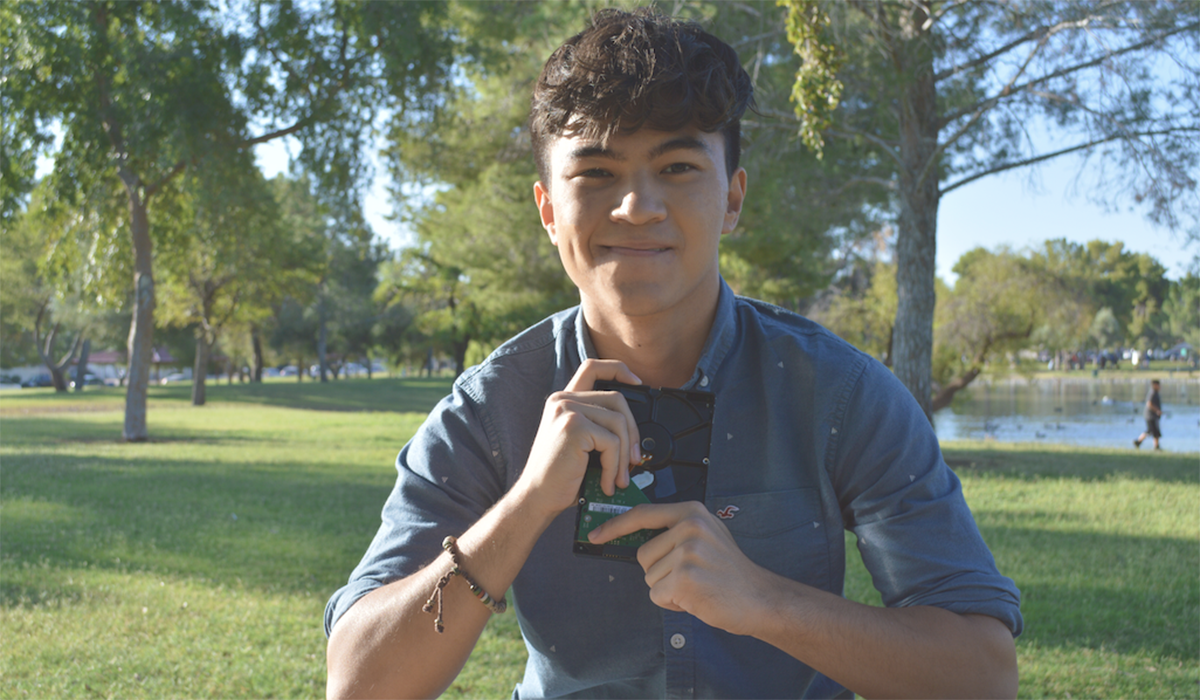
While just a teenager, Ethan Wilk utilized blockchain technology in order to develop tracking chips for fish conservation./Courtesy Ethan Wilk
Why is it important for these fish to be tagged to promote marine sustainability?
One of the main issues when it comes to marine sustainability is transparency, because with terrestrial animals, it’s a lot easier to track them visibly or with a normal tracker. When things are under the water, sometimes you’re dealing with oceanic animals that are miles below the water so it’s not very easy to keep a tab on them. The best you can do is use a chip, but in most standard procedures, that process is very difficult. First of all, tagging fish is a challenge. Secondly, not fully understanding what’s going on below the water could also pose some threats and could meddle with the data you collect. By using blockchain, we’re able to track these fish and say at point A, we had 100 fish, and point B, we only had 50 fish, so then we can determine the segment of their migrational pattern at which the majority of these fish seem to be disappearing, and we can situate funds and efforts to better investigate what’s going on to drive their extinction.
Where have you expanded outside of Arizona?
We haven’t been able to tag any fish there yet, but earlier last year we have expanded over to Australia. Due to a lot of constraints, we haven’t actually tagged fish down there, but we are targeting the southern bluefin tuna. We were able to secure a partnership with the World Wildlife Fund because they already have a similar blockchain-based project they’re operating down there. We’re able to work with them to try to jointly tag and conserve the southern bluefin tuna both from an environmental perspective given that it’s critically endangered, but also from a social perspective because a lot of the coastal communities around there rely almost entirely on aquaculture. The bluefin tuna is one of the major sources of protein for a lot of underdeveloped coastal communities, so by working with the World Wildlife Fund, we hope we’ll have the infrastructure and the resources necessary to actually not only tag the fish, but also conserve them.
Are there any other areas where you would like to expand?
I think one of the ways we’re currently expanding is going beyond just an environmental edge and into a social edge. Here in Arizona, it’s not like people are consuming the Apache trout regularly and it’s also not like there’s any malicious intent when people are overfishing them, so there’s really no social side to it. You could argue there’s more of an indirect one. For the most part here in Arizona, it all comes from an environmental perspective, so a desire to conserve these species is really what drives us here. But through expanding over to Australia, that adds the social perspective because the people do rely on these fish to stay alive and keep their communities afloat. I think expanding in that way has been something that’s really challenging but also really enriching for me. Beyond that, I think that way down the line, I would really love to test the value of this technology in tracking other marine species like crustaceans or anything like that which also would be very difficult to track, but we don’t have the proper tech to do it yet. If I were to go all the way down the timeline, I would also like to see blockchain as a potential to track terrestrial species that are harder to track, like in a jungle or a tropical environment, for example, or even though a lot of meat processing facilities there’s a lot of issues with tracking animals, so agriculture. Both expanding in the marine ecosystems but also to a terrestrial perspective is something I think would be incredible, but I’m not sure it will be able to happen in my lifetime.
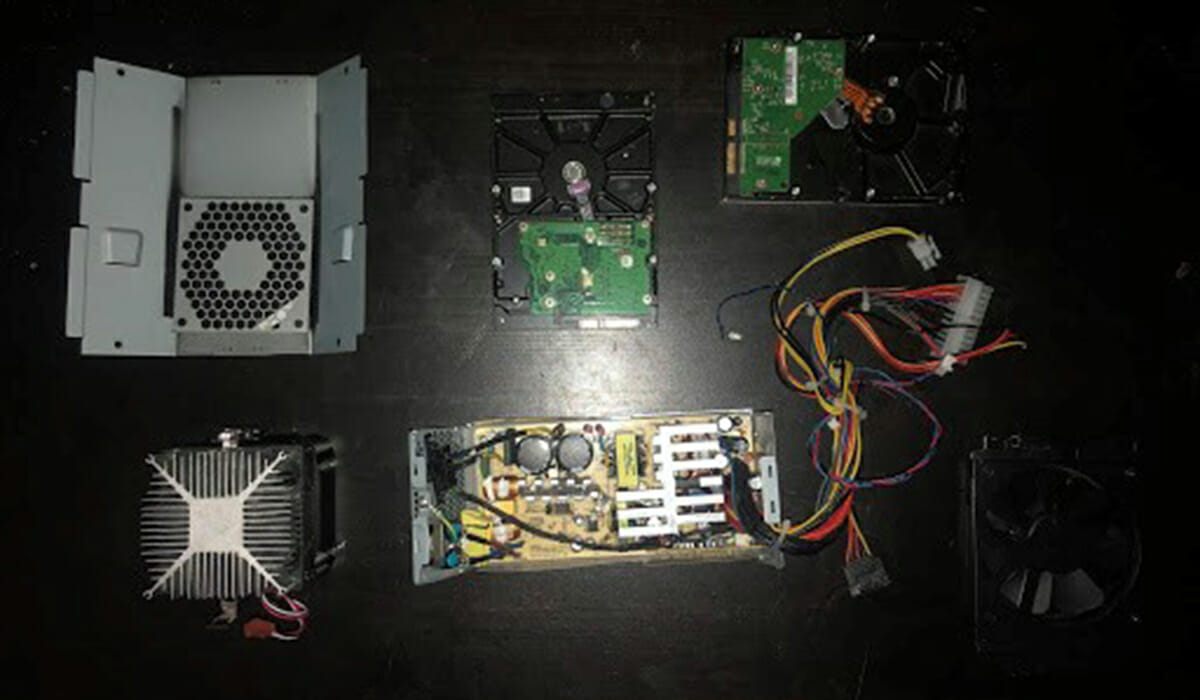
Ethan Wilk, founder of the nonprofit The Xenia Project, poses with the aquatic tracking chips he helped develop in order to tag and track fish./Courtesy Ethan Wilk
What’s been the most rewarding part of your work?
I think the most rewarding part would probably be seeing the volunteers be able to accomplish things. It’s kind of ironic because the organization is really concerned with the environmental edge to things and conserving species, but I think one thing a lot of people don’t tend to realize when it comes to environmentalism is that with conserving the environment, we’re not just doing it for the species. We’re also doing it for ourselves. If you want to take a bit of a more selfish look toward the movement, it’s something that benefits humans. Being able to convey that idea to people, especially having had over 30 volunteers from my own high school come out to help me tag these fish, is something that’s really inspiring to me. It demonstrates that people like when you can communicate that idea. It’s more than just helping the fish. It’s also helping you and your kids in the future generations. I think that’s something that really inspires me to continue to do what I do.
What have you learned through your experiences as a volunteer?
As a young person, it’s pretty common that you’ll assume you can’t do much and can’t really make much of an impact. It’s something that I believed originally. When I was younger, back in eighth grade, I first started sending out proposals of using blockchain for marine sustainability to nearby professors and people like that. I basically got confronted with a lot of rejections, essentially professors saying, “I’m not telling you it won’t work, but I don’t know that it will work.” I think especially when you’re younger, one of the issues is that you don’t hold a lot of credibility for fair reason. It still happens. I think through doing this project and actually seeing it unfold over the years and always looking for a solution — or even more recently with the pandemic when costs and funds drew short and I had to adapt to find a new way to deal with it — I think situations like that sort of reminded me that even as a younger person, you can still make an impact. You just have to have the will to go out and actually find a solution.
Student’s Volunteerism Inspires Global Youth Activism and Supports Underserved Amid Pandemic
Meet Daily Point of Light Award honoree Maneesh Vallurupalli. Read his story and nominate an outstanding volunteer or family as a Daily Point of Light.
18-year-old Maneesh Vallurupalli lives in Aldie, Virginia, a quiet suburb about an hour’s drive from the nation’s capital, but his volunteerism is powering youth-led global service to contribute towards a better, healthier future for the world.
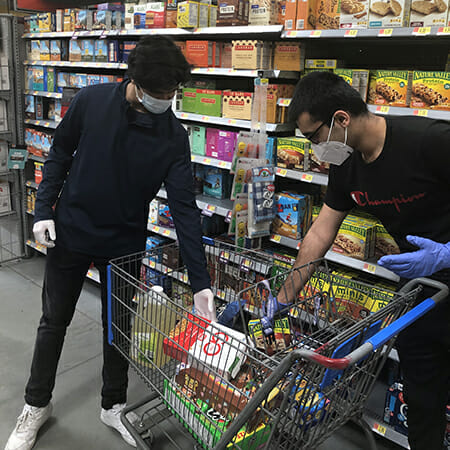
What started as an idea and an Instagram account when Maneesh was in middle school, Combine Together and Create Action Foundation (CTCA) officially launched in 2018, its mission to solve global problems through youth-led service. Supporting issues like the environment, healthcare and education, Maneesh has connected with hundreds through service and is helping student volunteers in the United States, Italy, India, Kenya and more strengthen their communities and invest in the future. In addition, Maneesh is helping the elderly and immunocompromised stay healthy during the COVID-19 pandemic through Project Support Initiative, a project that has delivered groceries and essentials to more than 1,300 people thus far around the U.S. and internationally.
What inspires you to volunteer?
My family is from India, and during a trip there, I noticed crops dying on a local farm. When I spoke to the farmer, he told me that the crops were dying because of climate change. I did more research into the issue and discovered the work others had done in the field. I’m inspired by the people who have volunteered before me, their work pushes me to volunteer and expand into other initiatives.
Describe your volunteerism with CTCA.
As founder and president, I work to expand the organization and its support, coordinate the service being done with our leaders across 18 global chapters, and manage the partnerships we have to facilitate service. We fundraise through donations and events, those profits go directly to organizations we work with for specific causes, including climate change and healthcare activism and developing education for underdeveloped countries.
Maneesh (left) helped the elderly and immunocompromised during the COVID-19 pandemic by founding Project Support Initiative, delivering groceries and essentials to those at risk. /Courtesy Maneesh Vallurupalli
You’re supporting many causes, but some of your service is personal. Explain.
Several months ago, we worked with politicians in India to help farmers with plans to develop a web tool that supports crop management and sales. There’s currently a huge protest going on right now over farmer’s rights, so I thought our help was important. I come from a farming background in India, so this service was personal for me.
Share one personal story with me from your volunteerism.
During the pandemic, we were delivering groceries through Project Support Initiative, and we delivered to an elderly woman’s home. Because of social distancing, she was not interacting with many people and was so thankful to receive our visit, even from a distance. Every time we delivered, she’d wave to us from inside the house. We started sending different volunteers for each delivery so she could see different faces. It’s not everyday where you get to help someone. During times of crisis you get to help people and also meet new people.
Why do you think it’s important for others to give back?
We do a lot of things in society, but there’s always someone who maybe needs help or doesn’t ask for help. If we can identify a problem and act on it, even a small difference helps.
What’s been the most rewarding part of your service?
The satisfaction we get from helping others has been the most rewarding.
How have you continued to volunteer throughout the pandemic?
Though Project Support Initiative, which I co-founded with a friend in response to the pandemic, we’ve delivered groceries worth more than $100,000. We first started delivering to at-risk people in Northern Virginia, and have since expanded to 22 chapters around the world. We plan to continue Project Support even after the pandemic is over as there will still be elderly people that need help.
We’ve continued CTCA projects since the pandemic, and will continue to do so.
In one word, what does volunteering mean to you?
Generosity.
When you’re not busy with school or volunteering, what do you do for fun?
I do research. I also like to read about business and motivational books.
Lawyer Volunteers to Unite Community Amidst 2020 Struggles
Meet Daily Point of Light Award honoree LaToya Bell. Read her story and nominate an outstanding volunteer or family as a Daily Point of Light.
Growing up in a single-parent household, LaToya Bell says she recognized at a young age how people stepped in to help her mother. Now paying it forward, the 33-year-old Macon, Georgia resident is volunteering to help those in need during what has been a devastating time for many.
As the president of the Houston County Bar Association, LaToya knew she had to figure out how to give back when the COVID-19 pandemic struck, a catastrophic emergency for many underserved. While members of the professional association had previously conducted service including offering free will clinics for community members, LaToya led increased efforts to fill whatever gaps existed in Houston County, Georgia, including clearing nearly $5,000 of school lunch debt for students across the county, donating free meals to hospital staff and holding appreciation days for first responders. Giving back for the greater good, LaToya has helped thousands of adults, children, first responders and essential frontline workers in her community.
What inspires you to volunteer?
I grew up in a single-parent household. We weren’t at poverty level, but we definitely didn’t have a lot. I knew how important it was for people to help me, my mother and my sister in our situation. I’m inspired to volunteer because I wanted to give back.
LaToya Bell: “Volunteerism is important because it restores our faith in humanity…Community service offers a way to bring humanity back to society and connect with one another.”/ Courtesy LaToya Bell
Describe your volunteerism with Houston County Bar Association.
As president of the association, I facilitate partnerships with various community organizations to conduct service across the county. I develop and offer programming for the year, including:
Free Meals for Hospital Heroes: Partnered with local business to donate free casseroles to hospital staff.
First Responder Appreciation Days: Hosted two appreciation days for police, firefighters and EMTs offering free food.
Mask Drive for Medical Workers
Toy Drive for Christmas
Eliminated School Lunch Debt: We paid student lunch debt for 17 schools in Houston County, totaling nearly $5,000.
Shared Meal Project: Held a Thanksgiving meal giveaway
Free Flu Shots: Program held in partnership with CVS
Free Diaper Giveaway: Donated free diapers to expecting and new mothers
Share one personal story with me from your volunteerism.
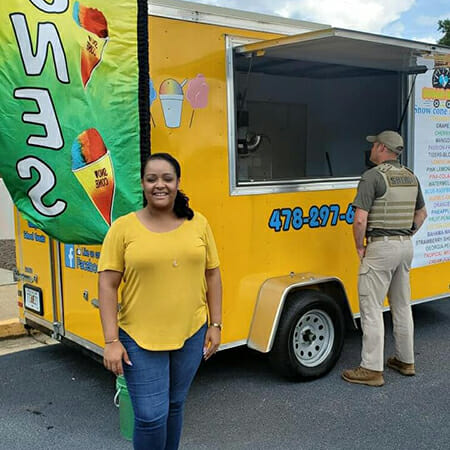
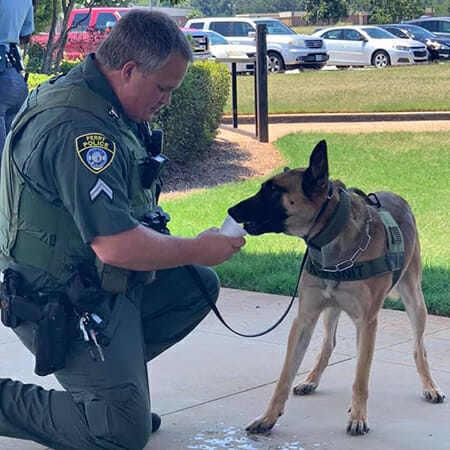
We held a First Responders Appreciation Day in the summer to give police officers, firefighters and EMT workers a break from the job stressors they’d been experiencing for months. In particular, our community was dealing with the pandemic but also racial tensions and tension in general with police officers that ignited after George Floyd’s death. We had a mobile treat truck that offered cotton candy, popcorn, snow cones. One officer from the Perry police department arrived with his K9 unit, and on a hot day, to see even the K9 getting the unflavored snow cone, drinking and licking up the ice, it was just a moment of relief. For me, that moment showed that we can all be on the same team and we can all be kind and human to one another. During the pandemic, we’ve witnessed business closures, people have lost their jobs, but these emergency responders were still on the front line responding to calls and risking their lives. We’ve held two appreciation days thus far, and it’s a way for us to tell these people we appreciate them, and unite the community.
Why do you think it’s important for others to give back?
Volunteerism is important because it restores our faith in humanity. We have grown so accustomed to being connected through technology and being disconnected in so many other ways, like being behind a computer screen. Community service offers a way to bring humanity back to society and connect with one another.
What’s been the most rewarding part of your service?
Personally, lawyers get a bad rap sometimes. The most rewarding part of this service has been shining a positive light on lawyers, and showing the community how we could come together for the greater good.
LaToya united her community through service during a period of increased strife and struggles amid the pandemic and in the wake of George Floyd’s death. A light moment captured during a First Responder Appreciation Day hosted by the association, as a police officer helped his K9 unit to his snow cone. /Courtesy LaToya Bell
How will you continue to volunteer in the future?
I really hope we can continue community projects. The very first initiative we did at the beginning of the pandemic was to form a partnership with a local business to provide free casseroles for hospital workers. That encouraged more people to donate money and members of the association wanted to give more. I will remain a part of the association’s executive board next year once I am no longer president, and will always push to do community service.
In one word, what does volunteering mean to you?
Commitment.
How can readers help?
We accept donations which help to fund programming including the Houston County Bar Association’s college scholarship. Please visit our website for more information about how you can help.
Volunteer Champions Sisterhood and Success for Minority Girls Through ‘Evoluer House’
Meet Daily Point of Light Award honoree Cheryl Ann Wadlington, who was a 2020 L’Oréal Paris Women of Worth Award. Each year L’Oréal Paris and Points of Light recognize and celebrate Women of Worth who make a beautiful difference in their communities. Ten honorees each receive a $20,000 grant to support their most cherished cause, and an online vote determines one honoree who will receive an additional $25,000 grant. Nominations for 2021 will open on March 1! If you know a woman who works to create lasting and significant change in her community, nominate her to be one of the 2021 Women of Worth.
Cheryl Ann Wadlington had the career girls dream of. After attending the Fashion Institute of Technology in New York City, Cheryl worked as a fashion and beauty editor, her glamorous life the result of hard work and smarts. But the road to success was a windy one for Cheryl, who struggled after the death of her beloved father.
“Like most little girls I was devastated (about his death),” says Cheryl. “As a child I didn’t know how to handle his death, and it wasn’t popular in the African-American community to take children to therapy. I started misbehaving, I started fighting out of anger. I got sent to reform school.”
About to graduate from high school, a counselor told Cheryl her grades were so abysmal that no college would want her. That was a turning point in Cheryl’s life, as the teenager decided she was going to turn her life around. “A lot of women in the community reached out and wrapped their arms around me to make sure I succeeded,” she says. Cheryl is now replicating that care and mentorship for thousands of girls across Pennsylvania, Delaware, New Jersey, and more recently nationwide through the Evoluer House, an organization she founded in 2004 to guide girls of color to bold and bright futures.
“I am giving back and empowering that little girl because I know who she is, I was once her. Research shows existing barriers stifle success for colored girls. Even in the way educators looked upon (girls of color) the minute they entered the classroom, they were excluded from excelling at an elevated level, and were given limited opportunities. We’re helping girls of color, who are being discriminated against across the board, to thrive. The Evoluer Girl is the best version of herself. She loves herself and knows who she is. She knows she is going to evolve.”
Six times more likely than their white counterparts to be suspended from school, Black girls have had their identities stripped from them, says Cheryl. Offering evidence-based empowerment programs for girls aged 13 to 18 like personal development and youth workforce on topics ranging from financial literacy to resume writing, professional etiquette, sexual health and healthy relationships, Cheryl is bracing her students against the tremendous adversity they face and equipping them with essential tools to become college-bound and career ready.
“By the time one young lady came to us, her mother had taken her out of the public school system because she was beat up and bullied for being dark-skinned, and for being what her mother described as ‘thick’. Her self-esteem was absolutely stripped away to the core. After the program, her mother wrote me a letter saying, ‘You did what I could never have done, you gave her her life back.’ I cry hearing that story. We shed so many tears here.”
That student eventually began teaching seminars on bullying after she graduated from the program, just one example of the sisterhood being developed at Evoluer, where girls can break boundaries, share experiences and become agents of change in a safe environment, says board chairwoman Suktika Mukhopadhyay. Through gender responsive, culturally relevant and trauma informed programs, the 8-week Evoluer program includes wellness and confidence building for students, many of whom have experienced some form of trauma, 95% of students coming from low-income homes. Designed to help break the cycle of intergenerational poverty for teens impacted by chronic adversity, violence and oppression, Evoluer is setting students up for success where they can see beyond the realities they come from, sometimes even beyond their wildest dreams, says Suktika.
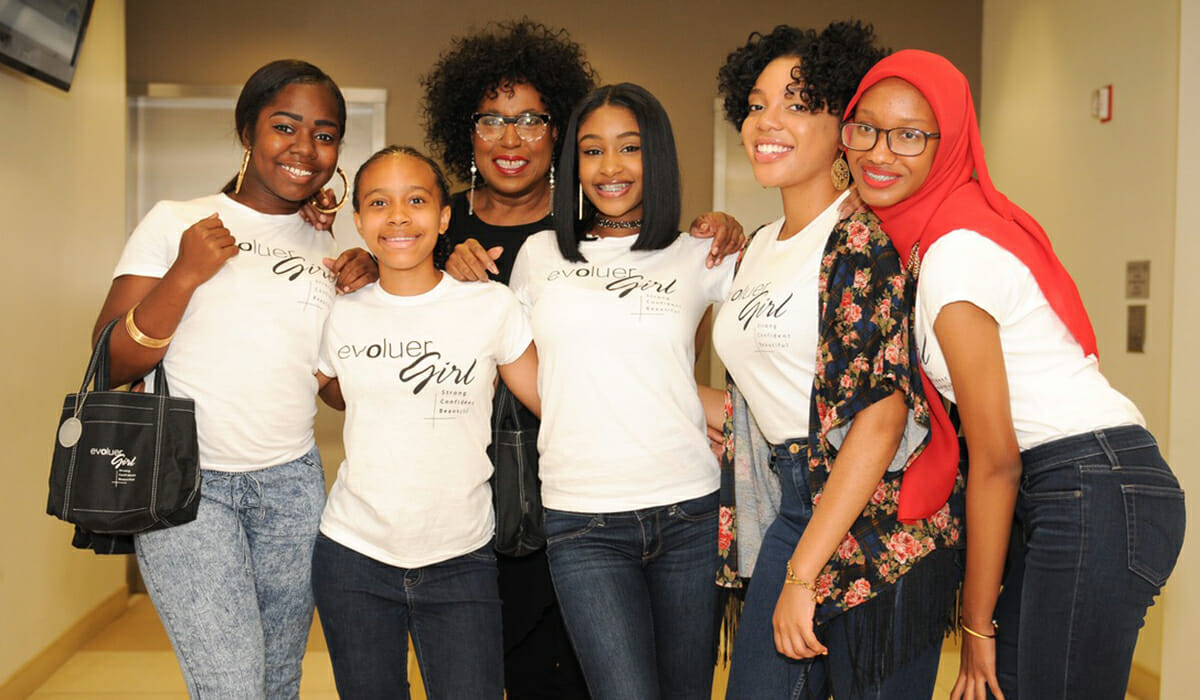
Through Evoluer, Cheryl is equipping students with essential tools to become college-bound and career ready. Cheryl pictured with Evoluer summer program mentees at Peirce College in Philadelphia, Pennsylvania./Courtesy Cheryl Ann WAdlington
“We really pride ourselves on 100% of (Evoluer) girls finishing high school and in addition, we see them flourish and go on to prestigious universities and ivy-league schools. Some girls may be the first in their family to go to college. Through confidence building and modeling how they can achieve these goals, we are giving (girls) a community and sisterhood, so they’re not part of ‘other’ but giving them something of their own.”
That emphasis on personal well-being and growth has been critical in the last year, as students grappled with the devastating personal and economic impact of the pandemic in addition to widespread racial unrest. Evoluer has transitioned programs online, now offering virtual education to teen girls of color nationwide. Helping to give girls a strong voice during such socially isolating times through resources including their ‘Girls Truth’ podcast, Cheryl says her unrelenting drive to succeed in life is reflected in her service helping to bolster future success for girls.
“I will not settle for anything less than excellence. I have a list for our teen girls called the “Diva Girls” list. It separates out the Diva Girl from the ordinary girl. The ordinary girl will accept whatever someone gives her. A Diva Girl won’t. An ordinary girl will stand in the corner where a Diva Girl will work the room. These girls graduate (from our program) and come out gold. It’s really incredible.”
Reflecting upon her path from childhood to present day, Cheryl says her service is a continuation of her family’s legacy, her mother marched alongside Martin Luther King Jr., her brother served as an activist during the HIV/AIDS epidemic in the 1980s. For Cheryl, the path forward is perhaps the brightest.
“I want to advance all girl kind and I want all girls to be free. We are on a mission to help produce strong female leadership in the workforce and in society, by investing in young women and girls and their collective well-being and power. I’m hoping that the next female president will come out of the Evoluer House. It’s about time.”
Teen Starts Youth-Led Nonprofit to Teach Neuroscience to Kids Around the World
Meet Daily Point of Light Award honoree Nethra Srinivasan. Read her story and nominate an outstanding volunteer or family as a Point of Light.
After seeing drugs and vaping negatively affecting students at her high school, Nethra Srinivasan decided she wanted to do something to help diminish the stress that causes many young people to turn to addictive substances. In 2018, the 16-year-old founded The NeuroKidz, a youth-led nonprofit that teaches neuroscience to children as a way to help implement healthy habits at an early age. The NeuroKidz works with about 40 schools across eight states, as well as four countries internationally, and has about 50 volunteers teaching over 650 students. Nethra is also currently working to partner with schools in three additional countries.
In addition to her nonprofit, Nethra started a Make-A-Mask Challenge last spring in order to donate homemade masks to hospitals during the peak of the COVID-19 pandemic when the country was facing a personal protective equipment shortage. She implemented the challenge in both her hometown of San Jose, Calif., as well as multiple other states. Nethra ultimately collected over 4,700 masks that were then delivered to seven California facilities, including hospitals, clinics, and homeless shelters. Due to the recent spike in COVID-19 cases, Nethra is planning on organizing another challenge soon.
Describe your volunteer role with The NeuroKidz.
I am the founder and president of The NeuroKidz, which is a youth-led 501(c)(3) nonprofit organization dedicated to enriching the lives of children from diverse backgrounds by providing exposure to neuroscience. We established our organization in 2018 and we partner with schools in our community to spread a greater understanding of neuroscience through interactive lessons and hands-on activities. We operate in eight states and internationally in India, Greece, Kyrgyzstan, and Oman. I specifically create curriculum as well as coordinate volunteer teachers across the globe. I also teach students in my own community. I work with parents and schools, and I conduct workshops at libraries.
Nethra Srinivasan teaches students about neuroscience through her nonprofit The NeuroKidz./Courtesy Nethra Srinivasan
What inspired you to start this?
Founding a nonprofit was not exactly what I had in my plans, but once I found a cause I was passionate about, it was hard not to. I just went all in. I founded The NeuroKidz in 2018 after a disturbing incident. I saw police officers sprint toward a boy at school, thrust him to the ground, place a hood on his head, and handcuff him. A closer look revealed he was from my P.E. class and had been caught selling drugs. At many schools, including mine, vaping and drugs have become the norm due to pressures not only to teenagers but to adults as well. One of my close friends even contemplated ending her life. Children in lower socioeconomic status are even more susceptible to the stress. After some research, I found many teenagers use these substances due to daily stress, so I was driven to discover how to reduce stress from an early age. I realized if kids knew how their brains worked, they would know how to cope with pressure, and would not resort to drugs. This is why I became a mental health and early neuroscience education advocate. I started my nonprofit to teach neuroscience to underprivileged elementary and middle school students to challenge their curiosity, help them implement healthy habits, and develop into mindful and emotionally-strong individuals. On a larger scale, I wanted to combat the societal problem I saw around me.
Are there any stories from your time volunteering that stick out to you?
When I first started the program, the students were uninterested and apprehensive about neuroscience, but within a few classes, they began to see that the program was the highlight of their week. They themselves would give me ideas for activities for the next week, would bring puzzles, and would prepare brain teasers to share with the class as part of their warmups. I remember a third-grader, Danielle, came from a hard background and she always sat in the back of the class, but this one day she ran up to me with her neuron model, thanking me profusely during our workshop after school. She said it was the first time she had ever done something this fun in science. It fills me with emotion since I was able to open a new avenue for her to get involved. There was also this other time that I cancelled class because I was sick, and the next week when I met them, they were so worried about me and were sad we did not have class that day. They asked if I was alright and brought me flowers and things like that, which was just so heartwarming.
Can you tell me about the Make-A-Mask Challenge?
I started the Make-A-Mask Challenge in the spring of 2020 when I heard about the major mask shortages in hospitals due to the spike in infections. In the fight against the coronavirus, healthcare professionals are most susceptible to infection and they’re in need of personal protection equipment to serve their patients. Due to a major mask shortage of N95 masks at the local hospitals, professionals were wearing the same masks repeatedly for several days. I started the Make-A-Mask Challenge during the peak of COVID to collect and donate homemade masks to local hospitals to wear over their N95 masks, which extends the life of the N95 masks and helps medical professionals to save more lives. It’s the least we can do while staying at home.
What did you do to collect the masks and mobilize people?
I launched the Make-A-Mask Challenge through Facebook as a multi-state effort to collect and donate homemade masks to the local hospitals. My mentor in the Silicon Valley Monterey Bay Council Boy Scouts helped promote the challenge and in just a few weeks, I collected more than 4,772 pieces of PPE, valued at over $35,000. This was through going to individual houses and picking up the masks, and masks that were made out of state were shipped to California. We took those masks and we delivered them to over seven California facilities.
What’s been the most rewarding part of your work?
Working with the kids and making a meaningful difference in their lives is the most rewarding part of my service with The NeuroKidz, because it’s so humbling to hear your students run up to you saying that this program is their favorite part of the day. They love learning about the human brain, solving lateral thinking puzzles, and doing hands-on activities. They are happier and their grades have risen after this program. One student now aspires to become a doctor and teach neuroscience. It’s so amazing to see children breaking boundaries and looking beyond. I vividly recall a conversation with one of my students. One day a couple of months after I started a program at a school, a fifth-grade boy came up to me after class and he was so excited, with a huge smile. When I asked what the matter was, he said he was very proud of himself. He said, “I visited my 18-year-old cousin and he offered me a cigarette to try, and guess what? I said no and I even lectured him on all the harmful effects of cigarettes on the brain.” After hearing this, I was so proud of him too, that these lessons are actually having an effect on the students. These gratifying results really fortified my commitment to community and volunteerism.
Nethra Srinivasan, right, delivers masks she collected by starting a multi-state Make-A-Mask Challenge last spring./Courtesy Nethra Srinivasan
What have you learned through your experiences as a volunteer?
With the NeuroKidz, I learned as much from the kids as they learned from me. I acquired valuable skills such as curiosity, patience, and perseverance, which I demonstrate when reaching out to new volunteers, students, and schools, while juggling school work and other extracurricular activities. I used to be a shy person but teaching neuroscience has built my confidence in public speaking, communication, and patience. In addition, starting a nonprofit and volunteering for a cause is not easy. It requires careful planning, organizing, and smart execution to be successful. To jumpstart my program, I sent out emails to many schools to which only a few responded, which taught me resilience and perseverance. In addition, reaching out to volunteers throughout the world to spread the message of early neuroscience education was challenging as well, but through reaching out on various social media platforms, we were able to get the number of volunteers that we have today. Most importantly, I developed gratitude for all the opportunities I have to not only better my life, but also the lives of others around me.
Why do you think it’s important for others to give back?
I think that it’s important for people to volunteer and to give back to the community because volunteering allows us to meet and learn from a diverse set of people. It builds life skills such as confidence, patience, and communication, and it helps you mature as a person as well as succeed in life. Besides that anyone can make a difference in the world, it’s our duty as citizens of our society to give back to our community. Most of us are fortunate to have the lives we have, so we should do our parts to brighten the lives of others. It’s our moral obligation especially during these difficult times. I truly believe when you give to others, you add to their lives and the kindness multiplies. By adding to theirs, you add to yours, too.
Denise Cusack has made her volunteer work into full-time job of sorts, spending at minimum 40 hours a week volunteering for the multiple health and wellness-based nonprofits she is passionate about. In times of great need, she even puts in up to 70 hours of volunteer work, all while also working on her Deerfield, Wis. farm and raising teenagers. Many of those hours are put into Herbalists Without Borders, a nonprofit that brings holistic care to communities in need around the world, and for which Denise serves as the volunteer executive director.
Additionally, Denise volunteers as a clinical herbalist with one of Herbalists Without Border’s clinics, the Veterans Resiliency Holistic Clinic, which serves veterans suffering from PTSD. She also volunteers for Integrative Medicine for the Underserved, a nonprofit that promotes accessible healthcare in underserved communities, as well as the American Herbalists Guild, an educational nonprofit organization that represents herbalists specializing in the medicinal use of plants.
Describe what Herbalists Without Borders does.
Herbalists Without Borders is a membership-based international network of herbalists and complimentary alternative medicine providers — activists, medicine makers, traditional healers, herb farmers, ecologists, people like that. Our focus is on the role of plants and holistic wellness in primary health and wellness, sustainable agriculture, and the preservation and restoration of traditional healing. What we like to do is often blend Western science with traditional healing and traditional practices, so that we can support herbalists around the world. The World Health Organization says 80% of the world still relies on herbalism as primary medicine, so that’s part of our mission in education, resources, and support for people around the planet. For us, we know the focus is on people who have a lack of access to health and wellness due to poverty, or being refugees, or displaced from their homes, war, drought, all of that. We feel that healthcare is a human right and not just a privilege, so that’s what all our work is focused on — access to holistic health and wellness solutions through education, empowerment, and advocacy. We have members and coordinators that are all around the globe. A lot of what we do is that education and advocacy within our own network. We connect people in Australia, the U.S., Mexico, Central America, and Europe. Not only do we work on knowledge sharing and resource sharing, but we also support each other when we’re responding to natural disasters or catastrophic events.
What is your role within the organization?
I started as the volunteer executive director in 2017. In the beginning, our focus was on continuing the existing programs, so I worked a lot with free clinics, community apothecaries, education, community gardening, trauma trainings, and medicinal seed preservation. Over the past three years, I’ve created a few new programs. … I welcome new members, I do all of the nonprofit management, grant applications, grant writing, working with all of our donors, working to manage all of our programs, and then also working with members and coordinators around the world to help them implement programs in their own communities. What that might look like is one of our programs might be on accessible community gardens. I also run the U.S. community seed grants program which is where we intake donated seeds from around the U.S. and we distribute them back out to programs so people can get gardens growing in their communities. We know that food is medicine as well. You can tell someone to eat healthy, but if they don’t have access to healthy food, all of the holistic wellness and herbs in the world aren’t really going to make as big of an impact as if they’re also having a healthy lifestyle. So being able to share with people how to start community gardens, how do you grow certain plants that you maybe have no experience growing, how do you work with your community to get a community garden space and make community events and get support. As nonprofit volunteers, we can’t all do this alone, so finding ways to get local community involved to support the work we’re doing is going to make the most impact. We also work on medicinal seed saving.
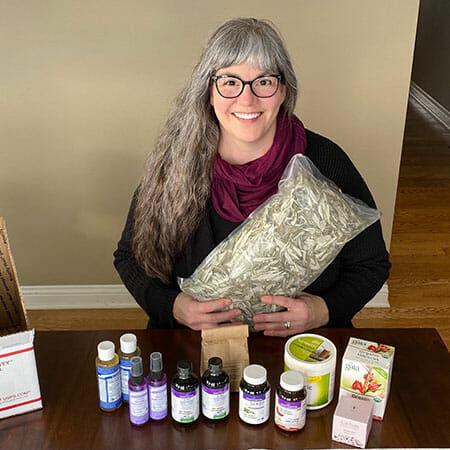
Here at my farm, I also grow herbs to donate to Herbalists Without Borders free clinics throughout the U.S., and I save seeds that are redistributed to our inner-city seed grant programs to help people get medicinal plants growing that are native to their areas. I also have the U.S. Community Apothecary donation distribution here at my farm. I intake donations from around the U.S. from larger companies who don’t necessary want to send one box to this free clinic and one box to that free clinic. … We have people create wishlists of what they need from our inventory of donations and then I share boxes back out. It could be supplements, like whole foods vitamins can be really helpful and important to people especially if you’re homeless, maybe elderberry syrup, maybe herbal teas, maybe chest rubs to support people battling with upper respiratory issues. A lot of times, if people don’t have homes, they’re dealing with a lot of health risks being out, especially right now during COVID. We ship donations all around the entire U.S. A lot of that stock is here so that we can mobilize quickly if there’s a disaster.
Denise Cusack poses with some of the many donations she organizes to send to free clinics across the country as part of her role with Herbalists Without Borders./Courtesy Denise Cusack
What first drew you to this organization?
I am an herbalist and I also have always been someone who grows food. We’ve always as a family grown food and had extra where we would take it to the local food pantry. That was something that was really important, to show that we can give back and that we can do something in our own communities that is pretty powerful. Being able to grow food and share it, where people can have fresh and healthy food, I think is really an amazing and important thing for kids to do. That’s kind of where we started. When I found Herbalists Without Borders, I thought it really aligned with a lot of what we’re already doing, and I thought that the work that they did was really important. … Because I practice as an herbalist in the community, I see there are people that can’t afford general holistic support or wellness. It’s kind of an elitist modality in the U.S. just because of accessibility. So when we’re working to make free clinics accessible to all, we’re talking about the people who may be living along the border in tents at this time. They deserve to be able to have access to health and wellness support, healthy food, and be able to feel that they’re empowered and can take control of their own health and wellness. We also a lot of times partner with Western medicine as well, and integrative health, because it is so important to have access to healthy food and good habits with our food and our recipes and things like that. Food is medicine and a lot of the herbs and spices we use in our kitchens are also used medicinally in many cultures.
With that also, it addresses culture, which is a big part of healing multigenerational trauma and trauma that’s happened to people not only for natural disasters or issues, but also that type of trauma based on racism and different types of -isms that exclude and marginalize people around the world. Being able to include culturally relevant practices by having someone who is a healer in Puerto Rico with traditional knowledge and experience working with their own people, that’s going to be so powerful compared to people descending into communities that’s not theirs to help. It’s always important for people to help wherever they can, but when we can empower people in their own communities to work with the people who they’re imbedded with, it makes more longterm change and more systemic and longterm impact. It’s also culturally relevant because people are using plants, recipes, and traditional knowledge that is important to them and their culture and their language, which can make people feel more connected and I think have more impact on being healthy and well overtime.
What other volunteer work do you do?
I volunteer with Integrative Medicine for the Underserved because I think it’s really important for herbal health and holistic wellness to be partnered with Western medicine so we can make a greater impact on communities. I also volunteer with the American Herbalist Guild, because I think again it’s really important we bring the idea of free clinics, community service, and community outreach into our practice as herbalists. I also volunteer as a clinical herbalist with one of our Herbalist Without Borders clinics, which is the Veterans Resiliency Holistic Clinic, which serves veterans who have experienced and are suffering from PTSD. We combine a bunch of different holistic modalities — like somatic practice and mindfulness meditation, yoga, herbalism, aromatherapy — that help give people tools so they can feel they have more control over their own wellness.
Are there any future partnerships, programs, or events that you are excited about?
One of the projects we’re working on for 2021 is online training programs for coordinators around the world so they can get additional herbal education that is science-based but supports traditional knowledge as well. That will help them be more effective and more knowledgeable in their communities. Whether it’s Kenya or Uganda or Zimbabwe or Australia or the U.S., we want people to have access to education. Those of us in first world countries, we’re pretty lucky that we can go online and take a class whenever we want and there’s free webinars and we all have Zoom and streaming access, but a lot of places in the world don’t. So that’s what we’re working on, too — finding ways to get educational programs to other countries where they really are in need of additional education and really interested in it. We are working on street medic training. We’re working on webinars that do additional training in herbalism, trauma, supporting communities, and all of that. That’s really exciting because it’s something we wanted to do already, but COVID made us really focus on that more now because we aren’t able to go out and host big events with 120 people showing up in person.
What’s been the most rewarding part of your work?
A lot of people who are on the ground, they see people they’re working with and feel that connection with community, and it’s been a little different with COVID for me working in my bubble here at my farm. The most rewarding thing for me is working with the folks who I work with when I volunteer for the Veterans Resiliency Holistic Clinic. I’ve developed longterm relationships with some of our veterans. It’s been over three years now of working with people, and knowing and seeing first hand the benefits and support that people feel. A lot of times, it’s not just our health and wellness through fruits and herbs we need, but it’s also often our connection to other people. That connection to other people is really where you start seeing the most reward as a person that makes you proud of the type of work you’re doing. I can say, “Oh, well I shipped $120,000 worth of supplies from my family room last year,” but it’s not the same as working with someone one-on-one and making an impact on somebody’s life.
What do you want people to learn from your story?
A lot of people look for ways to volunteer. I’ve seen particularly during COVID people are unsure how they can help or work in their communities. Often people think they need to go travel somewhere and help people somewhere else, and that maybe everything is fine where they are. I think one of the most important things to realize is that there are people in need in all of our communities. There are people who are homeless. There are people who are living in their cars. There are people who are struggling in getting healthy food to their families. By every single person focusing on where they are and what they have, it actually can make a bigger impact than trying to spread our efforts out everywhere else. I know it feels good sometimes when you’re like, I’m going to go over there and help those people, but really what we should be doing is helping our people. That can be as simple as growing an extra row of vegetables and donating it to your local food pantry every single week all summer long. It can be as simple as working with a nonprofit where you can put in a few hours and make such a big difference. Our nonprofit is all volunteer. We don’t have any paid staff, so even just a few hours a month makes such a big impact on nonprofits that really need help and support to keep their work going. We can all work from where we are and still make a big difference around the whole world that way.
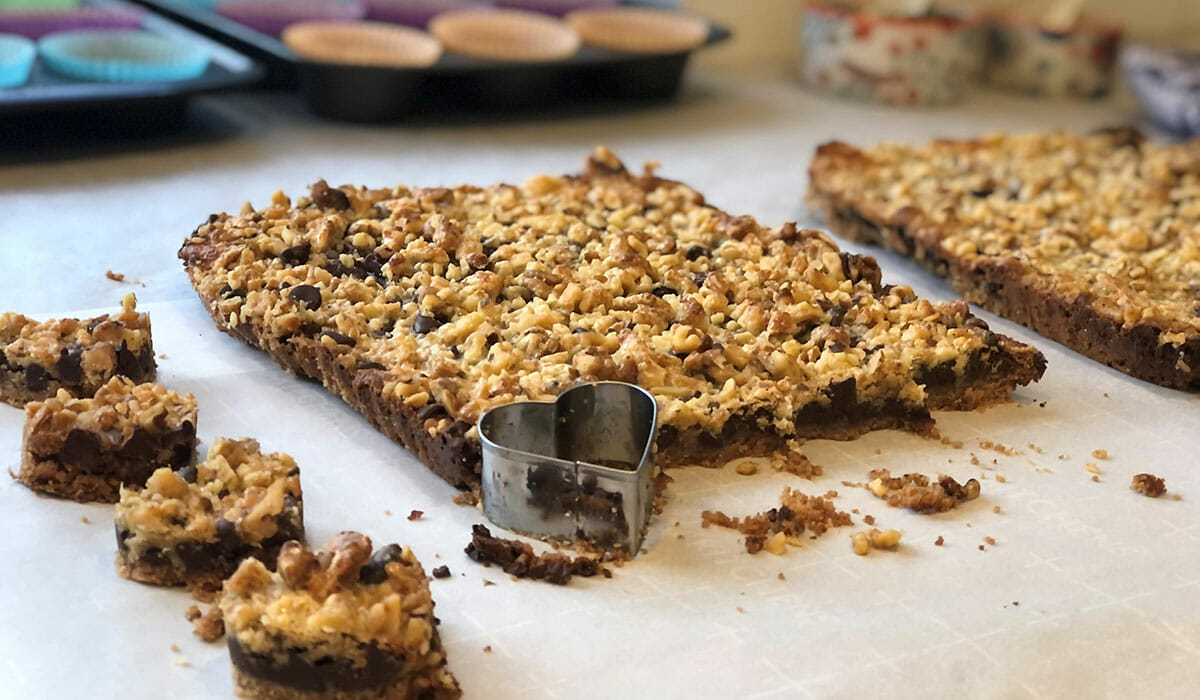
Last summer, Sara Molina planned on taking a trip to her native Colombia with her friends in order to volunteer at Casa San Jose, a foundation that offers food, health care, education, and other support to vulnerable citizens in the city of Cali. Due to the COVID-19 pandemic, the trip was cancelled, but Sara still wanted to help the foundation in some way. The 16-year-old decided to raise money for Casa San Jose by baking and selling homemade cookies — a concoction of chocolate, nuts, and graham cracker, made from a favorite family recipe.
Since June, her organization HumanKIND Cookies has baked over 5,000 cookies and raised over $8,000, which multiplies almost by four in Colombian pesos. The donations go directly to Casa San Jose, which uses the money to help buy groceries for low-income families who have been struggling to work due to the pandemic. Sara and her brother bake all the cookies and then deliver them to customers in their surrounding area of Pleasanton, Calif., and occasionally in the Bay Area. HumanKIND Cookies has received donations from across the United States and Colombia, and Sara is also looking into partnering with a bakery in Colombia to expand the reach of their cookies.
HumanKIND Cookies sells cookies from a Molina family recipe consisting of chocolate, nuts, and graham cracker./Courtesy Sara Molina
Describe your volunteer role with HumanKINDCookies.
We work with this organization in Cali, Colombia, that’s called Casa San Jose. They’re a separate organization. With the pandemic, they started giving out groceries to the families they worked with. They work with hardworking people who work as recyclers and other jobs where they make what they need to survive everyday, so for the slow times and the times they couldn’t work because of sheltering in place during the pandemic, it really hurt them and their income and their way of living. Here, we bake and sell cookies and we deliver them. All the proceeds we collect, we send over and help the families over there that work with Casa San Jose to get weekly groceries.
What inspired you to start this?
Originally, this past summer I was going to go with a group of friends to work with the kids of Casa San Jose and do activities, because part of their program is also after-school care for these families. Because of the pandemic, we weren’t able to go, so I started thinking of ways I could help from a distance. In June when I heard about the shelter-in-place order, and how these families we were originally going to help no longer had a source of income, I was inspired to start helping in the little ways that I could over here.
What drew you to Casa San Jose in the first place?
I’m from Colombia and so are my parents, so I have seen first-hand the poverty in some of these areas and how difficult it can be for the people over there. When I learned about Casa San Jose and their initiative, how it’s helping families that work really hard everyday, I was really inspired because they are people who have done the best they can to have a stable home and support their families. I saw that their work was really helping the people who needed it.
Can you talk about how your project has spread to other volunteers?
An amazing outcome of this is a lot of people have done different things to help contribute. An example of this are two young girls, Valentina and Daniela, who stared baking and selling cookies in Florida. They also helped us in December and they decorated the bags super cute. It was a really nice experience. In Colombia, a company saw what we were doing and decided to donate presents to the kids of Casa San Jose for Christmas, which was also super inspiring. A lot of my friends locally have seen the initiative and started doing their own things. I have a friend named Tasha who started tutoring for the local kids here. People are also helping in Colombia, who obviously can’t buy cookies from us but are still donating. People from all over who have seen the initiative and felt inspired by it and donated, even if we can’t get them cookies because they don’t live in the area.
Do you have any future goals for HumanKIND Cookies?
Honestly, no. When this originally started in the summer, we were planning on helping like 20 families. We were not expecting the response from the community that we got, that’s just been overwhelming and so moving, because the people over here have no connection to my heritage over there in Colombia. We weren’t expecting this amazing response and how many people were touched by the project. Already the expectations have been so exceeded. We’re just planning on keeping on baking.
Sara Molina is the founder of HumanKIND Cookies, an organization that bakes and sells cookies to raise money for low-income families in Cali, Colombia./Courtesy Sara Molina
What’s been the most rewarding part of your work?
The most rewarding part is seeing the impact. Part of what Casa San Jose does that is really cool, they send videos and clips of the kids and the older people thanking us for the groceries and how they’ve been impacted. It’s on our website and Instagram. Being able to see people’s responses and how grateful these people are was very impactful to me. It’s been a rewarding experience overall, and I feel blessed to have my small contribution here, which doesn’t take my entire life, but it does make such an impact over there.
Why do you think it’s important for others to give back?
I think it’s important because it’s working to help those in need. It’s very rewarding to focus your energies on something greater than yourself. In the end, it’s just helping people that’s the most important thing.
What do you want people to learn from your story?
I think that small changes really do make a great impact. For this, it was a super small idea and initiative to sell cookies and give over the profits, an idea that seemed like it could make a small difference. This wasn’t any big plan to fix something or a huge goal. It was just to help in the ways we could, and it ended up being so impactful with the community over there and how many people were touched by it. Whatever the goal is, even if it’s super tiny, it can make a really big impact.
After Father’s Cancer Journey, Daughter Connects Others to Patient Services and Resources
Meet Daily Point of Light Award honoree Kathleen Moneghan. Read her story and nominate an outstanding volunteer or family as a Daily Point of Light.
When her dad received his cancer diagnosis, Kathleen Moneghan remembers wanting to learn more. “I remember obviously being scared, but I wanted to know what this was,” says the 32-year-old Dover-Foxcroft, Maine resident. “I wanted to learn all about diagnosis and treatment and options.” Kathleen says it was then that she also realized the importance of advocating for personal health.
Becoming a volunteer for the Leukemia & Lymphoma Society (LLS), Kathleen is just one of tens of thousands of LLS volunteers that support and advocate for those impacted by cancer, whether it’s a cancer patient, survivor, family member or friend. Kathleen is making a difference through fundraising, raising awareness, sharing resources, serving as a patient advocate and inspiring the youngest in her community to contribute to the cause and serve others in need. Paying it forward and extending her hand to help other cancer patients along the journey, Kathleen has established herself as a service leader, spreading the mission of LLS throughout the state of Maine.
What inspires you to volunteer?
Growing up, my parents instilled in me a very persistent notion that you need to give back to your community and put people first. I was always very involved in service work throughout college, and volunteering with LLS was a way to continue serving others when I moved to Maine because of my personal connection to the impact of cancer. My dad was diagnosed with stage 4 lymphoma when I was a teenager, and after going through multiple, multiple treatments, he’s doing great, all things considered.
Describe your volunteerism with LLS.
LLS offers services for patients and caregivers, which include everything from financial assistance to resources and support systems. Through service, I raise awareness and help to connect patients with a network of support. As a patient advocate, I help patients along their cancer journey. In addition, I’ve volunteered for many important events and initiatives that support LLS, including their Light The Night walk and:
– Big Climb: As a committee member, I also most recently led the LLSMaine Big Climb team as their team captain. The annual national event encourages people to get active, fundraise and raise awareness. In years past we’ve climbed the Prudential Center in Boston, but this year, the climb is virtual.
– Hero Squad: As the campaign leader in my state, I visit elementary and middle school students in Maine, teach them about blood cancers and encourage them to help fundraise. This is an opportunity for students to learn about STEM and science research and LLS service.
– Subaru Loves to Care: Initiative in which LLS partners with Subaru to provide blankets to cancer patients in hospitals.
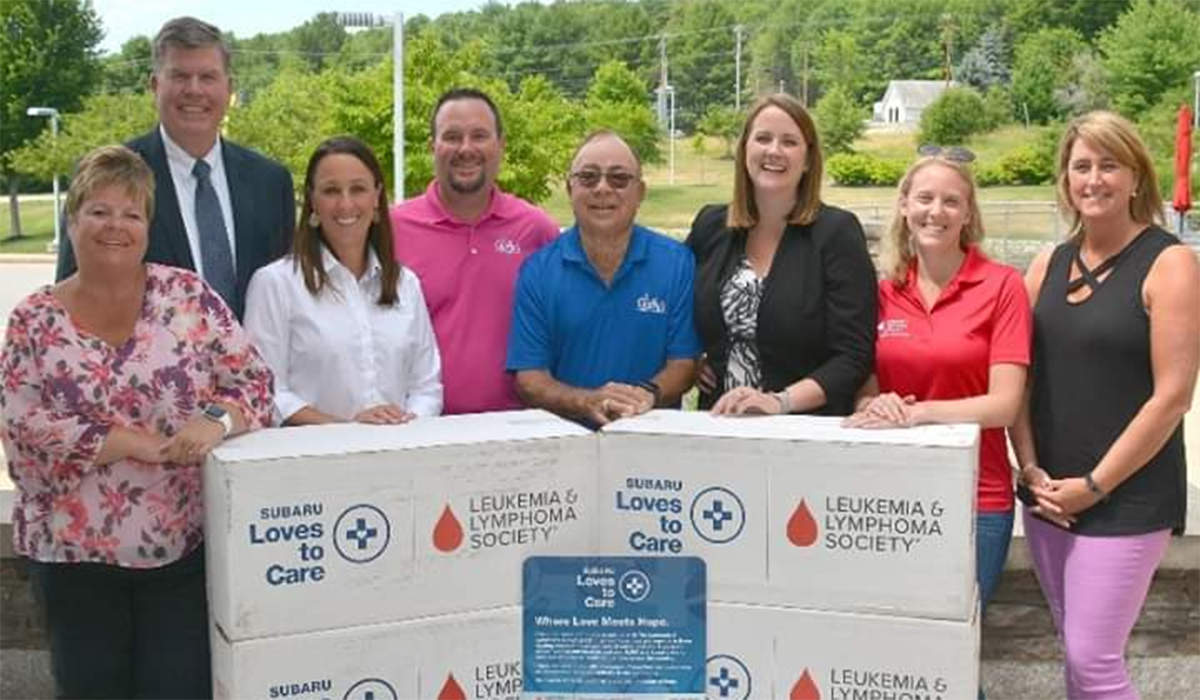
Kathleen pictured at the Subaru Loves to Care LLS event in Augusta, Maine./Courtesy Kathleen Moneghan
Share one personal story with me from your volunteerism.
Hero Squad service is really fulfilling because I’m visiting these schools, attending their assemblies and celebrations, and helping students who fundraised for LLS to understand the adults and children with leukemia they are impacting directly in their state. It’s almost like a lightbulb goes off with the kids, they get excited to know what a significant difference they’re making in the community, and they realize they can make a difference for someone else, including for children their own age. We are inspiring kids to give back and hopefully to continue with service.
Why do you think it’s important for others to give back?
Giving back to people directly in your community because you want to, and not because you have to, fulfills a different part of you. There are a lot of people in service giving types of jobs and that’s a great thing to be a part of, but to be able to choose to do this service on your own, and want to do it, provides a different kind of impact.
What’s been the most rewarding part of your service?
I always feel more rewarded by directly helping a patient through our service. One service we offer is a children’s initiative that helps patients to survive and thrive after treatment. If I’m helping a young kid, I know I’m impacting their family for a lifetime, because the cancer diagnosis doesn’t just go away after they’re cured, it’s something that changes them and everybody around them forever. When my dad was diagnosed, I became a lot more appreciative of time. You really start to put basic needs ahead of everything else. Through service, I am helping to provide support so that a patient’s outlook can be more positive.
How have you continued to volunteer throughout the COVID-19 pandemic?
We’ve paused or postponed in-person events as a result of the pandemic, and other events have shifted to virtual, like the Big Climb. I continue to visit with students through Hero Squad virtually, and in a lot of ways, this shift has almost been a reward in disguise. Offering opportunities to participate online has meant that we can expand who is able to take part, and we’re reaching more people as a result.
In one word, what does volunteering mean to you?
Others. I’ve always been taught that service is putting yourself last and others first.
How can readers help?
This year’s Big Climb is happening virtually on May 15, and anyone can participate. Please visit the LLS website for more information and ways you can help.