Inspired by Teacher’s Transplant Story, Michigan Teen Becomes an Organ Donation Advocate
Meet Daily Point of Light Award honoree Srishti Gowda. Read her story and nominate an outstanding volunteer or family as a Point of Light.
In eighth grade, Srishti Gowda learned her English teacher had been waiting for a kidney transplant for years. After hearing what her teacher went through while waiting for a transplant, Srishti was moved to do some research of her own. She discovered approximately 120,000 people in the United States are waiting for a life-saving transplant and 22 people die each day while waiting for one. Srishti wanted to do something to help address the problem, which led to her becoming an organ donation advocate.
Srishti first started volunteering with Gift of Life Michigan, the state’s organ procurement organization, in 2017. The following year, she founded Gift8Lives, a school club the educates children and teens on organ donation. As part of her Girl Scout Gold Award project, she helped Gift of Life Michigan develop a toolkit for drivers education instructors to use while teaching students about organ donation. Also for her project, Srishti spoke to drivers education classes and held one-on-one conversations with her peers at various events with the goal of educating them and dispelling the myths surrounding organ donation. Now 17, Srishti has so far recruited over 200 new organ donors in her Troy, Mich.-community through her advocacy.
Describe what inspired you to become an organ donation advocate.
It started in eight grade. My English teacher Ms. Costello had actually been waiting for a kidney transplant for a few years and she talked about the struggles that people go through while waiting for a transplant, whether that be a kidney or liver transplant. She told us about how it’s very difficult for people who are waiting for a transplant for a long period of time. That was the first time I realized that I didn’t really know much about organ donation. I didn’t really understand it, and this made me realize that it’s not really something that’s talked about. I wanted to know more and I did a little bit of research on it, and I found out that approximately 120,000 people in the United States are currently waiting for a life-saving transplant. According to Gift of Life Michigan, which is the organ procurement organization for our state, 22 people die each day because an organ does not become available to them. I realized this is a really big problem and I wanted to address it. When I was thinking about how I could do that, I realized that I wanted to target teens and children because when you go get your driver’s license for the first time, or to the Secretary of State in general, they ask you if want your name added to the Michigan organ donor registry, [as well as] at the DMV in any other state. I realized that I wanted to talk to my peers about it and make sure more people were aware of organ donation.
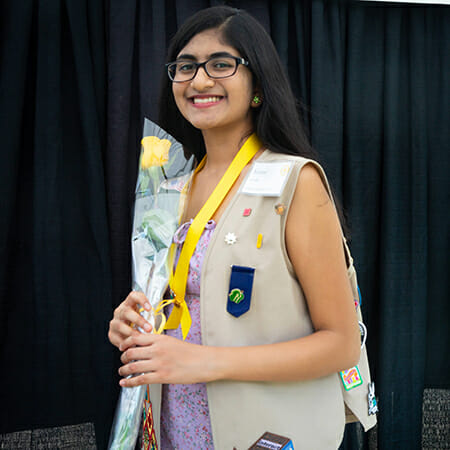
Srishti Gowda receives the Girl Scout Gold Award for her organ donation awareness project in July 2020.
Describe your volunteer roles as an organ donation advocate.
I started my own club at my high school called Gift8Lives, which raises awareness of organ donation in our student body. We have been pretty successful because we’ve had meetings every month about organ donation, brought in speakers who were in the organ donation community, and made our students and members of our club more aware of what organ donation is. I knew that while starting the club was really valuable and a lot more people were more knowledgeable about organ donation, I wanted to make sure I was making a really permanent impact on organ donation and I wanted to expand my horizons.
When I took Segment 2 drivers ed classes, I felt what was being presented about organ donation there could be changed in a way to be a little bit more effective. To do this, I worked in partnership with Gift of Life Michigan to create and improve organ donation education toolkits. This toolkit, which we distributed to the 84,000 students that take drivers ed yearly in Michigan, provided them with an increased knowledge on organ donation. In this specific toolkit, I included a lot of new things that hadn’t been in the toolkit before, like a student letter, a parent letter, a teacher flyer, a Kahoot quiz that’s more interactive — things I felt people my age specifically would really appreciate. It was very successful. Part of making the toolkit was actually what I did for my Gold Award project.
The other part of my Gold Award project was having one-on-one conversations with my peers at my high school. There were two events called the Gift of Life Michigan HOSA Challenge and the Libraries for Life event, that were ways I felt I could make a difference even more. For the Libraries for Life event, we set up a donor registry table in our library at our high school where we would talk to students who came into the media center about organ donation. We were able to sign up around 20-40 people in that specific event. We also had a Gift of Life HOSA Challenge which was even more successful, because there we were able to sign up in total around 150 new donors. With both of these events combined, throughout what I’ve done with Gift8Lives and my Gold Award project and all of my advocacy in general, has resulted in over 200 new organ donors in our Troy community.
What was it about your teacher’s experience with organ donation that resonated with you?
I think I realized that with regards to organ donation, it’s just the fact that people don’t really know the truth of organ donation. There’s a lot of myths and misconceptions surrounding organ donation. It was really sad to me, hearing that story, that the reason why there’s such a shortage of organ donors is because there’s all these myths and there’s not enough education about it. All it takes is for someone like an organ donation advocate, like what I’ve done, going out into the community. Talking about it is what can save many people’s lives. Also, I think what really inspired me to take action about this and why it felt very personal to me is not only because my teacher was effected by it, but also because organ donation is something where signing up and making the decision if you want to be an organ donor or not is the harder part. When you actually sign up, it’s something that doesn’t require a lot of effort, but it can make a world of difference in somebody’s life. I think when I have presented the truth of organ donation and people realized ‘Oh, I’m not too old to sign up’ or ‘I’m not too young to sign up,’ they really jump on the opportunity. I think making sure all people in the organ donation community, people who know the truth of what organ donation is really about and how it can save many lives, is very important — for us to go out into communities and talk to people about it because more than likely, that story will really resonate with them as well.
What myths and misconceptions about organ donation do you want to clear up for people?
The first thing is that definitely no matter your medical condition or your age or anything like that, you can still sign up as an organ donor because the decision to donate is made by physicians at the time of death. So no matter what, you can sign up on the organ donor registry and make an important decision. Also, another myth is that — this is more of a really sensitive one — if you’re at the hospital, medical professionals won’t try to save your life if they know you’re an organ donor. That’s not true at all. They’ve sworn an oath to protect you and they will do that. Those are the three main myths I’ve seen.
What’s been the most rewarding part of your work?
I definitely think the most rewarding part is having one-on-one conversations with people and seeing their opinions and viewpoints change. For example, at one of our Libraries for Life events a year or so ago, I met a fellow student who didn’t really know they could sign up to be an organ donor at their age. They were a high schooler like me. I think being able to talk to them about organ donation and dispel the myths was a really great experience for me — seeing their perspective change on organ donation [after telling them] they could still sign up on the organ donor registry, which is something I think a lot of teenagers don’t know. They don’t know they can talk to their parents at 14 years old and make a decision to be on the organ donor registry, but if something were to happen to them before the age of 18, then their parents would make the final call.
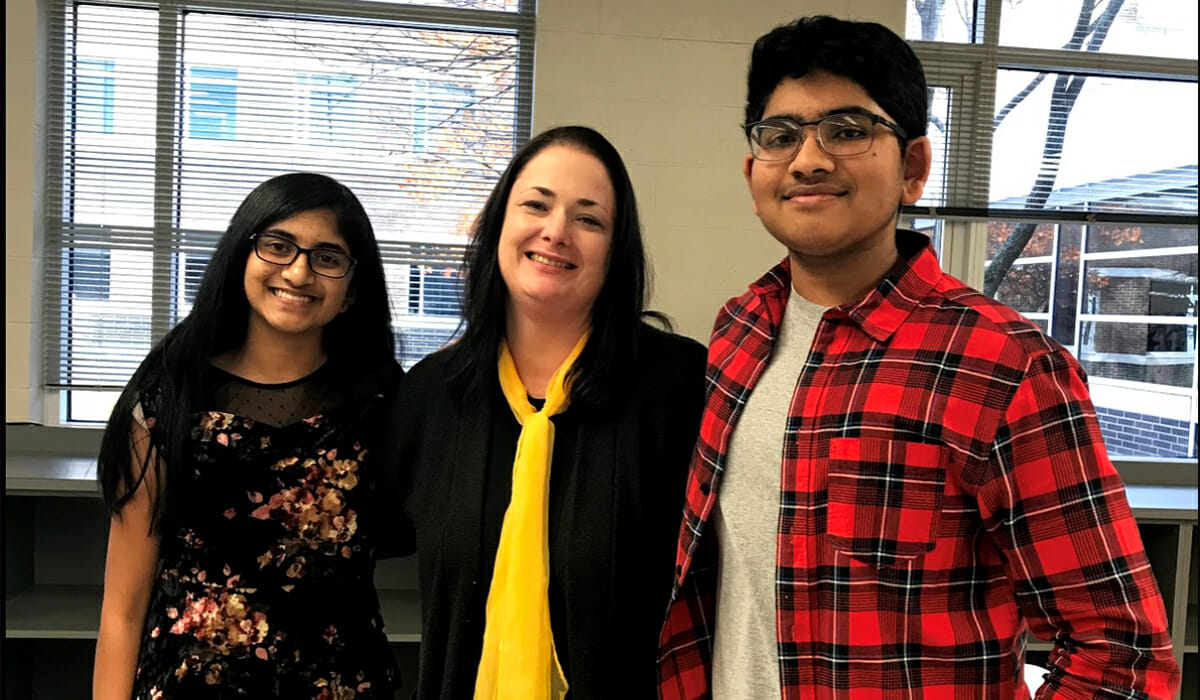
Srishti Gowda, left, and her brother pose with her eighth grade English teacher Ms. Costello, who inspired Srishti’s advocacy with her own story of waiting for a kidney transplant for years.
What have you learned through your experiences as a volunteer?
I really learned the power of a conversation and how education is so important in so many conversations and topics that aren’t really talked about. Through my experiences, I’ve learned that talking about organ donation is not something that’s super easy. It’s a very sensitive topic. It requires proper discretion, but once you [discuss it], you realize that you’ve made a decision that’s good for you and you understand the importance of having that conversation. With the work that I’ve done, yeah, I like to advocate for organ donation and make sure that people know the truth, and they are hopefully going to sign up on the organ donation registry. But I think where my job really comes in is educating people about what organ donation is. They then have to make the decision for themselves. I am just as satisfied if I have provided the truth on organ donation and someone decides not to sign up. I still take that with pride, because I have done my job and I’ve talked to them about the truth and they understand what organ donation is. I think that’s the most important part of it.
Why do you think it’s important for others to give back?
I think it’s a way to make a positive impact on your community and on your society. I’ve learned through my experiences as an organ donation advocate that it doesn’t take a whole lot of numbers or a big audience to really make an impact and give back. You can do little things like saying something kind or being a nice person everyday. I’ve learned that having simple conversations with people can make a really big impact on giving back to the community. I would really encourage people to understand that giving back doesn’t need to be something big or crazy that you do, it can just be simple actions in your day-to-day life.
High School Freshman Serves Students Worldwide Through Volunteerism
Meet Daily Point of Light Award honoree Charles Tang. Read his story and nominate an outstanding volunteer or family as a Daily Point of Light.
As a high school freshman, Charles Tang says he believes education is the most important aspect of growing up. When the COVID-19 pandemic disrupted the school year for the 14-year-old Southborough, Massachusetts student along with many other students worldwide, Charles decided to take action to offer educational support for kids, K-12.
Co-launching Iridium Tutoring with his friend and classmate, Charles is making supplemental education accessible for students who have lost access to critical resources put on pause as a result of the coronavirus. Through free tutoring open to students in the United States and internationally, Charles has helped Iridium Tutoring reach more than 150 youth thus far, offering students the opportunity to give back to their communities and helping to address educational inequities exacerbated by the pandemic.
What inspires you to volunteer?
I’m inspired to volunteer because the need for giving back is really important, especially now, during the pandemic. It’s beneficial for our group of high school and college volunteers to provide supplemental education to students.
Why name your organization “Iridium”?
We were learning about chemistry in class, and we thought it would be interesting to name our organization after an element.
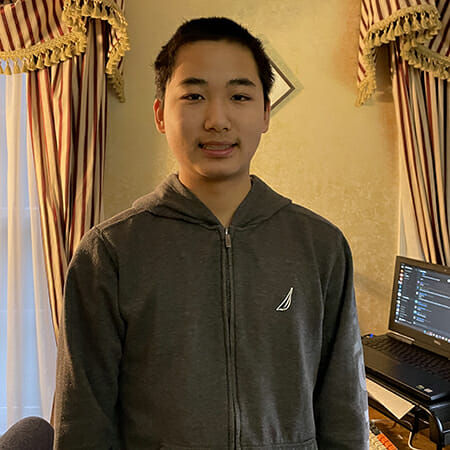
As co-founder of Iridium Tutoring, Charles Tang is making supplemental education accessible for students who have lost access to critical resources because of COVID-19./Courtesy Charles Tang
Describe your volunteerism with Iridium Tutoring.
As co-founder, I manage new projects including our course content project and scholarship program, and pair students and volunteers for our free tutoring sessions. I also manage our financials and help to manage current volunteers and recruit new volunteers. To support our programs, we rely on donations and also have corporate funding. I tutor students myself through our virtual tutoring and homework help, which covers many subjects including some AP courses. I prefer to tutor students in math.
Share one personal story with me from your volunteerism.
I spoke with one of our volunteers who was hosting weekly sessions with a student, and the tutor told me how much the student was improving and how much growth they’d experienced since they started sessions. That’s when I realized the impact our organization was making. Honestly, it’s surprising that we’ve done so much in helping to support education.
Why do you think it’s important for others to give back?
Our volunteerism is inspiring other youth to get involved. It’s important for high school students to experience serving, they should feel happy when giving back to the community. A lot of our success is based on our community of volunteers working together.
What’s been the most rewarding part of your service?
The feeling of volunteering and realizing you’re impacting students is rewarding. It might sound a little bit corny, but it really feels good to know you’re doing so much.
What does the future of your service look like?
I hope we can continue our tutoring in the future. I’m hoping to continue this volunteerism through high school and college, and all the other volunteers want to continue as well.
In one word, what does volunteering mean to you?
Connection. Making a connection with others.
When you’re not busy in school or volunteering, what do you do for fun?
I enjoy running on the school cross country team. I also enjoy learning new things such as concepts and topics in math and programming. I also like gaming.
How can readers help?
Please visit Iridium Tutoring’s website for more information about how you can help.
New Jersey Volunteer Inspires Youth Service Through Community Food Bank
Meet Daily Point of Light Award honoree Debby Cheng. Read her story and nominate an outstanding volunteer or family as a Daily Point of Light.
Debby Cheng will be attending medical school in the fall, to one day join the countless courageous front line workers who care for the sickest and neediest in our communities. In the spirit of her dedication to caring for others, while a college student, the Edison, New Jersey resident started shadowing physicians at Raritan Bay Medical Center’s early intervention and prevention clinic, hoping to gain more experience before her formal medical education began.
At the clinic, the now 23-year-old Debby began to notice the overwhelming issue of food insecurity amongst patients and within her community. Launching a food bank at the clinic, Debby’s initiative has taken on even greater importance as she volunteers during the COVID-19 pandemic, addressing the increased need for food assistance among patients through Foods and Funds. Partnering with students from local high schools to collect donations for the food bank, Debby is offering an opportunity for youth to contribute to her cause, making a positive and sustainable change in her community during an unprecedented time of stress and difficulty for many.
What inspires you to volunteer?
I’m inspired to do something for these patients through service. As a pre-medical student, you’re not really allowed to do much besides small tasks in the clinic and shadowing physicians. This food bank was a way for me to contribute.
Food has played an important role in your life, which you are now serving through service. Explain.
When I grew up, my parents ran a food stall. Selling fast food and being around food all my life sparked my interest in the connection between access to food and economic status. Our organization focuses on donating healthy and fresh food, as many patients are dealing with chronic illnesses and because of limitations, traditional soup kitchens and food pantries aren’t always able to serve as healthy or fresh food.
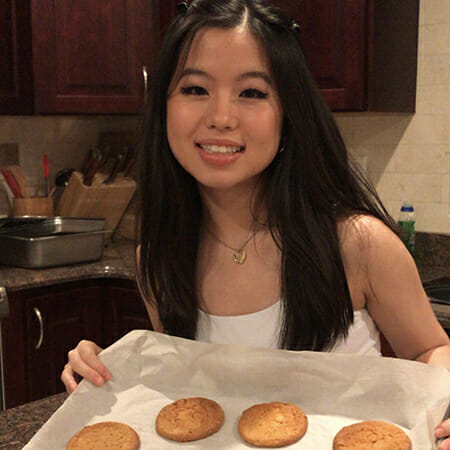
As founder of Foods and Funds, Debby Cheng is helping food insecure community members, making a positive and sustainable change during an unprecedented time of stress and difficulty for many. /Courtesy Debby Cheng
Describe your volunteerism with Foods and Funds.
As founder of Foods and Funds, I work with volunteers and coordinate our donations with the clinic, which are then distributed to patients by doctors and nurses. We accept community donations, both monetary and non-perishable items, fundraise to buy fresh groceries, including hosting bake sales, and we also have food donation bins around the community.
Share one personal story with me from your volunteerism.
One patient who had recently undergone surgery visited the clinic. He looked like a walking skeleton. One of the health care professionals asked him if he was getting enough food, and if someone at home was taking care of him. The patient was lying about what he was able to do to take care of himself because he was embarrassed about his situation. Sometimes people don’t want to accept help, or they feel embarrassed asking health care professionals for help. Stories like that man’s have inspired me to continue to do more for the community.
Why do you think it’s important for others to give back?
As this pandemic has shown, we don’t just live in our own bubbles. Everything we do impacts others, and what other people do impacts us. It’s important to think of ourselves as living in a larger community where everyone matters.
What’s been the most rewarding part of your service?
It’s been rewarding to find a social issue that I’m very passionate about that can actually provide immediate aid to people who need it.
How have you continued to volunteer throughout the pandemic?
People need the support more so than ever before because of the pandemic. Organizations may not be able to get funding and individuals may not be able to get resources for whatever reason. Our organization ensures the sustainability of the clinic food bank through ongoing donations.
In a few words, what does volunteering mean to you?
Giving and learning.
How can readers help?
Please visit our Instagram page for more information about how you can help.
Octogenarian Dedicates Life’s Service to Feeding Others Through Decades of Volunteerism
Meet Daily Point of Light Award honoree Mary Danilson. Read her story and nominate an outstanding volunteer or family as a Daily Point of Light.
86-year-old Mary Danilson has spent a lifetime feeding hungry mouths, first through her career as a high school cook, then cafeteria supervisor, and now, as a volunteer through her church, Blessed Sacrament Catholic Church in Ontario, Oregon.
Volunteering for at least 30 years through Blessed Sacrament, Mary is filling in the gaps of missed meals, both at her church’s food bank and also at the senior citizens food bank in nearby Parma, Idaho. Recognized as a friend to many, Mary’s devotion to volunteering is helping to change lives within her greater community.
What inspires you to volunteer?
I started volunteering at the church and it progressed to other food banks in the area. Volunteering is something I enjoy doing because I’ve met a lot of people and I enjoy knowing I am helping them out. Also, getting out to volunteer means I don’t become a couch potato (laughs).
Why have you decided to focus your volunteerism on helping the hungry?
Over the years, I’ve met a lot of people that desperately needed help because they had families they couldn’t feed. Also, some of the older people in our community didn’t have enough money for food.
Describe your volunteerism.
I volunteer a couple days each week at the food bank, and also pick up food seven days a week. Even after church, I’ll go over and pick up food because otherwise they have to throw it out. We receive food donations from the Red Apple Marketplace and Franz Bakery including bread, onions, potatoes and sweets. Since the church food bank is only open twice a week, I’m able to give extra food to additional families in need. Parma’s senior citizen food bank uses the cakes I bring to them for their birthday of the month celebration.
Share one personal story with me from your volunteerism.
I used to work in the food bank every month, and a grandfather came in and told me he was raising his grandkids on his own. He explained he needed food for the kids, and that he’d love to have a cake because his grandson’s birthday was the next day and he had no money to buy one. I told him we had plenty of food, and could help him out with a cake. The poor man was so tickled to get it, he cried. That really, really made me stop and think about how worthwhile my service was.
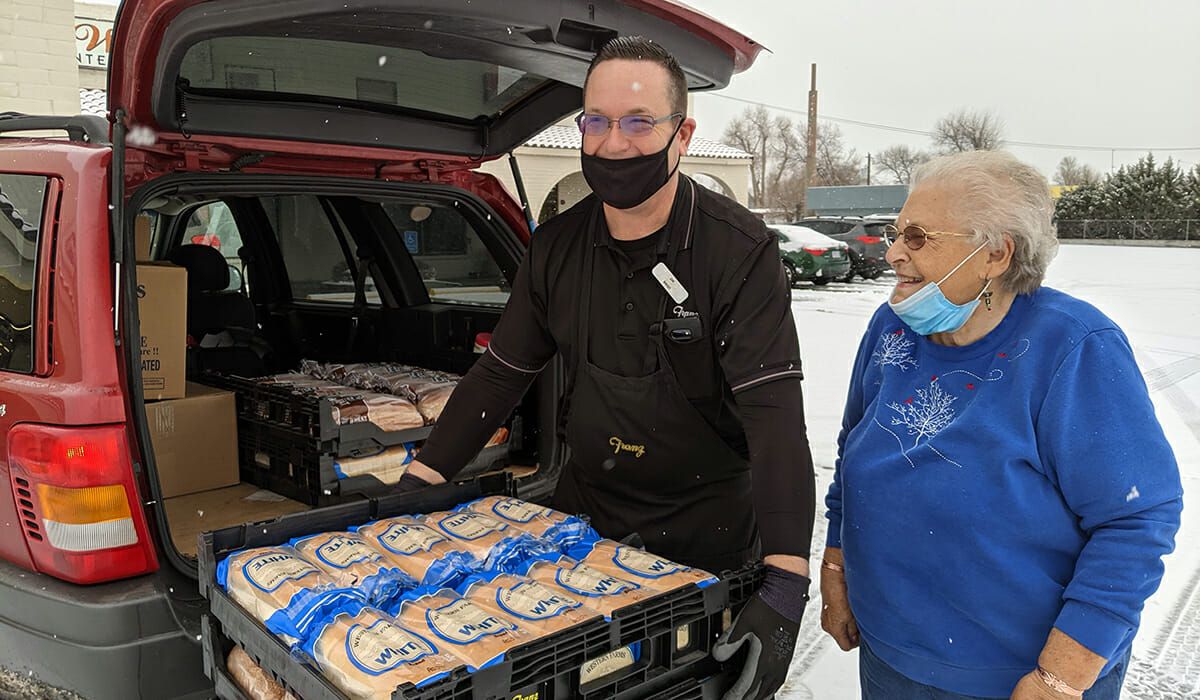
The 86-year-old says she will volunteer as long as she can drive. Even snow doesn’t stop Mary from helping her hungry neighbors, as she picks up donated food from Red Apple Marketplace and Franz Bakery. /Courtesy Terry Schuebert
Why do you think it’s important for others to give back?
There’s an awful lot of people who are afraid to volunteer. The world is just a little bit different than when I was a kid. I tell people that are scared that most of the people we help are very, very nice when you get to meet them.
You’re 86 now. What’s in the future for your volunteerism?
As long as I can volunteer, and I drive my car, I will volunteer (laughs).
How have you continued to volunteer throughout the COVID-19 pandemic?
We’re not able to have contact with people like we used to in the food bank. I pick up food and drop it off at the food banks, this is all contactless. People are also making up boxes of food and each person or family we donate to receives a box of food.
In one word, what does volunteering mean to you?
Satisfaction. The satisfaction of knowing I helped somebody.
While watching scenes of New York hospitals struggling to fight the COVID-19 pandemic last March, Evan Osgood knew he wanted to help out in some way. The sixteen-year-old Loveland, Ohio-native began making masks to send to healthcare workers and others in need. Realizing he would need more hands on deck in order to really make a difference, Evan decided to try to enlist as many people as possible to help out.
This led to the creation of SOS for PPE, a nonprofit organization that sends supplies necessary to make face masks and shields to anyone in the country interested in assembling them, and then distributes the assembled PPE to those in need. In less than a year, Evan has built a network of 4,000 volunteers nationwide who have made and distributed over 125,000 pieces of PPE. Along with partner organizations, SOS for PPE distributes the face masks and shields to those who need help the most, including hospitals, senior facilities, and schools.
Describe your volunteer role with SOS for PPE.
As president of the organization, I oversee the whole process — from fundraising, to managing the supply chain, to working with our partners to distribute the PPE. I also work to grow our volunteer network and partnerships. We’re a nonprofit organization that sends people free PPE assembly kits to assemble safely in the comfort of their own homes. Then we take those assembled PPE to hospitals and facilities that need them the most.
What inspired you to start this?
Back in March when COVID was just beginning to hit New York, I was turning on the news every night and seeing surreal scenes of New York hospitals, and I wanted to help. I did some research and came up with a few options to help and I decided this would be the most impactful to save lives. Initially I started by sewing masks myself. I can make eight or so masks an hour, but I realized if I really wanted to make a difference, I needed to enlist a whole bunch of people to help, and the idea of SOS for PPE was born.
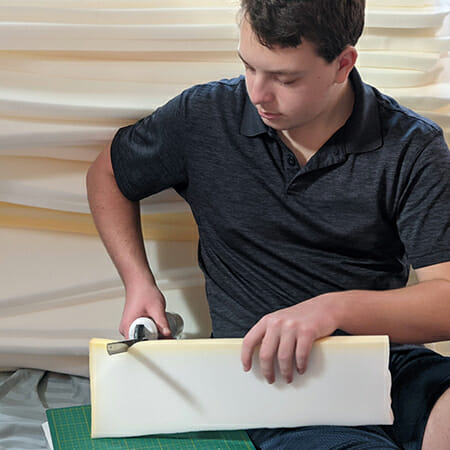
Evan Osgood cuts foam that will be used to build PPE for those vulnerable and in need during the COVID-19 pandemic./Courtesy Evan Osgood
Who exactly is the PPE being delivered to?
We work with our partner organizations all across the country to identify where the need is and then we send PPE to help, so whether that be hospitals, companies, senior facilities, schools, or individuals.
How does it feel for you that so many people wanted to get involved in this?
It’s been awesome. For me, the best part of volunteering is the feeling of helping someone. For example, on one of our deliveries recently, we were delivering masks to an elderly couple. I left the masks on the doormat and rang the bell. On the way back to the car, the couple answered the door, looked down, and burst into tears. They were so appreciative. They waved at me and said bless you and bless what you are doing for this community. That really hit home that every mask that’s being made has an impact on someone’s life.
What have you learned through your experiences as a volunteer?
The biggest one for me was just how effective you can be when you rally the community behind something. As one person, I could produce maybe a few masks an hour, but with the help of a volunteer network of 4,000 people, the amount of PPE we can make is insane.
What do you want people to learn from your story?
I think the fact that anyone can make a difference. I was selling masks at home and I had an idea to reach people and it worked. I think the biggest lesson there is if you have an idea, go for it.
Why do you think it’s important for others to give back?
I think that the feeling of gratification for volunteering is the most rewarding part. Knowing that you’re given back to the community and you’re making a difference is the best part of volunteering.
Dedicated Volunteer Serves Toledo Zoo for Over Four Decades
Meet Daily Point of Light Award honoree Joanne Vick. Read her story and nominate an outstanding volunteer or family as a Point of Light.
Joanne Vick has been a lifelong patron of the Toledo Zoo, attending with her parents as a child and then later with her own children. When she saw a newspaper ad for the zoo asking for help, she figured it could be something enjoyable to do, and joined the volunteer staff in October 1980. Over four decades later, Joanne is still there, happily roaming the grounds to answer guests’ questions about the zoo and its animals.
“You might say it’s a place that has been forever in my life,” she said.
During those four decades, Joanne has donated over 12,500 hours of service to the zoo. For 16 of those years, her service included assisting the keeper of the gorilla area with cleaning and prepping food, which the lifelong Toledo resident said is still her favorite memory from her time volunteering.
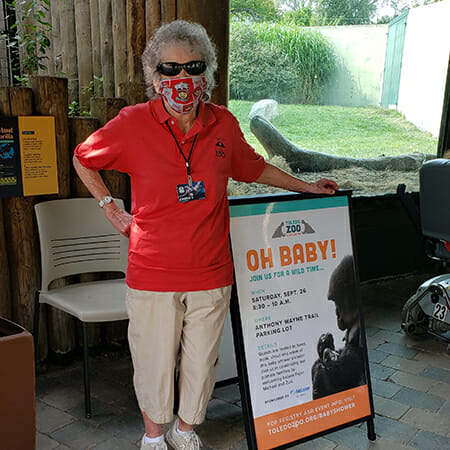
Joanne Vick has served as a dedicated volunteer for the Toledo Zoo since October 1980.//Courtesy The Toledo Zoo Volunteer Department
Describe your volunteer role with the Toledo Zoo.
Right now, I make myself available on the grounds. I tell everyone about the wonderful zoo and about the animals, and answer any questions that they have about the animals — if it’s male or female, if it was born at the zoo, how they act and how they adapt, and so forth. I give a lot of people directions, too. Some maps are very confusing and they want to know how to get to such and such area, and I do help with that.
What inspired you to start volunteering at the zoo?
I had an incident that happened in my life and I needed something new. I saw in the paper where they were asking for volunteers at the Toledo Zoo, and I thought that would be a good way to make me happy again.
What about the zoo has made you want to continue volunteering all these decades later?
I just enjoy it. I enjoy talking to the visitors. I enjoy being around the animals. I enjoy the other volunteers who have come in over the years. I have made many, many good friendships with other volunteers.
What is your favorite part of the Toledo Zoo?
I used to volunteer with the keeper of the gorillas once a week. People ask me what I did with the gorillas, and I would say, “It’s P&P, I prep their food and pick up their poop.” I did that for 16 years and I did it until the keeper retired. … [The gorillas] were just so human-like that you could almost see their little wheels turning around in their heads.
Why do you think the zoo is an important resource for Toledo?
I think it teaches people that animals have a place on this earth just as much as we do.
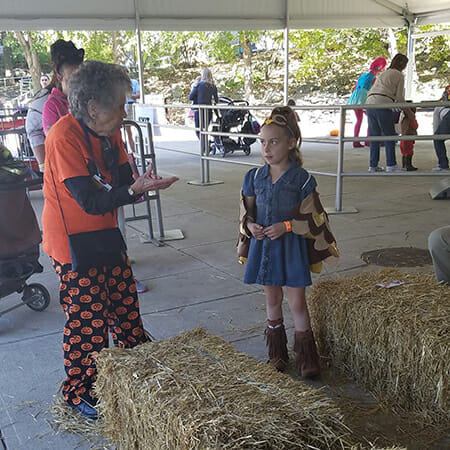
Joanne Vick, left, interacts with a Toledo Zoo visitor while volunteering for the Zoo.//Courtesy The Toledo Zoo Volunteer Department
What have you learned through your experiences as a volunteer?
I learned how to be kind to people and how to deal with all different types of people.
Why do you think it’s important for others to give back?
So many organizations depend on volunteers. Because they have volunteers, they are saving money for their organizations that they don’t have to have paid employees. That goes for any nonprofit organization — for animal shelters, the zoo, metro parks, any place like that.
What do you want people to learn from your story?
One thing I would want people to learn is what a wonderful zoo we have. From the time I was a child going to the zoo and up to my 40 years of volunteering, I have seen nothing but good happenings and improvement to the zoo.
Teen Offers Service with “Sole Purpose” to Outfit Homeless with Sneakers and Socks
Meet Daily Point of Light Award honoree Ross Brodsky. Read his story and nominate an outstanding volunteer or family as a Daily Point of Light.
When 17-year-old Ross Brodsky watched an online video of a jogger who gave a homeless man with no shoes the sneakers off his own feet, the New York City student knew he could make a similar difference within his own community.
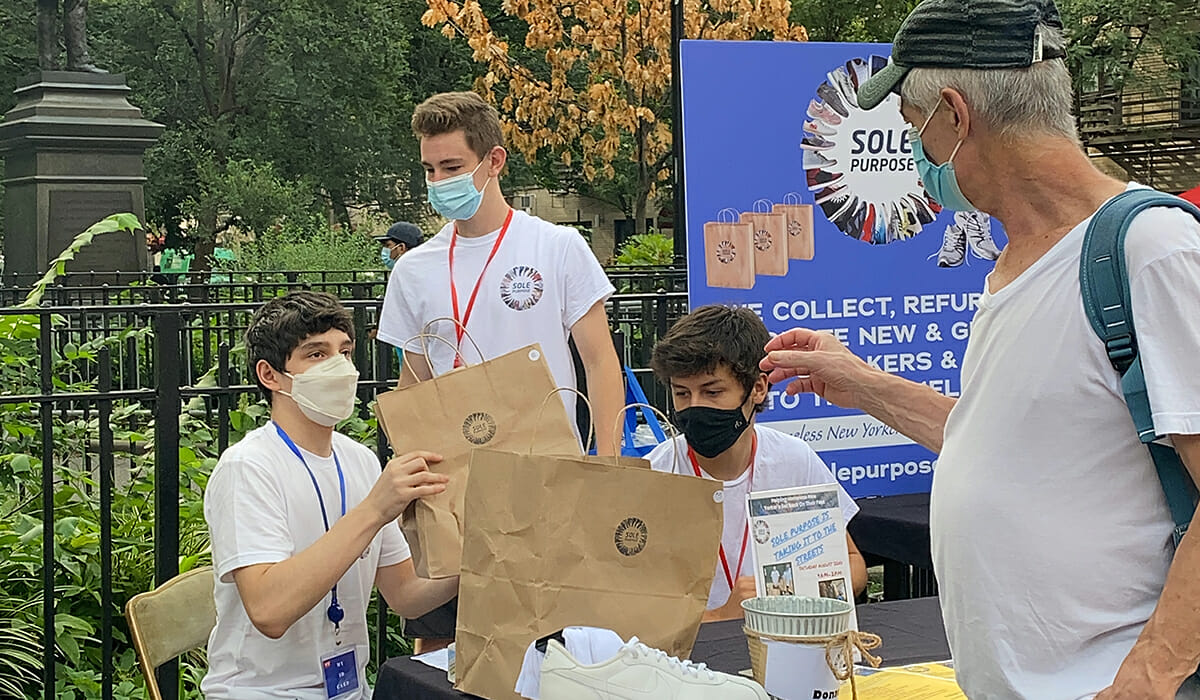
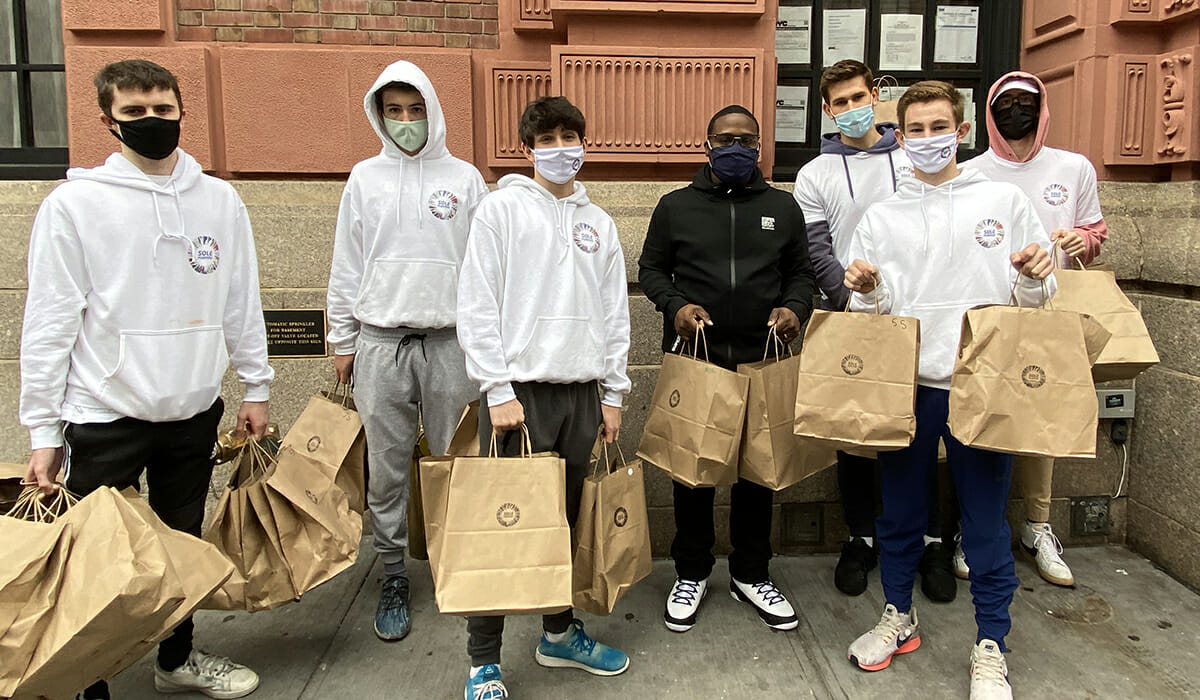
Co-launching Sole Purpose with a classmate, Ross, a high school senior and self-admitted sneakerhead, is volunteering to collect new and gently used sneakers, refurbishing and donating the sneakers alongside new socks to homeless shelters across greater New York City. Donating more than 2,100 pairs of sneakers and 7,800 pairs of socks thus far, Ross is making it his mission to help get people back on their feet through ‘soleful’ service.
What inspires you to volunteer?
I’m inspired to volunteer because there are people in this world who are a lot less fortunate than the average guy. A small act of kindness can really make someone’s year.
Describe your volunteerism with Sole Purpose.
As co-founder, we use my home to sanitize and then organize the sneakers. These sneakers we donate are cleaned so they are in like-new condition when we give them to homeless individuals. Alongside our approximately 15 youth volunteers, we drop our “Purpose Packs,” which include a pair of sneakers and two pairs of socks, off at homeless shelters and homeless hotels through contactless deliveries around greater New York City. We also hold events in high homeless population areas where we hand out Purpose Packs in-person. In addition to coordinating with shelters to make sure they can receive our donations, I am also in charge of a partnership we have with Bombas, which donates socks to us.
Sole Purpose has donated 2,100 pairs of sneakers and 7,800 pairs of socks just in the past year, including within the organization’s “Purpose Packs” which are distributed across greater New York City./Courtesy Ross Brodsky
Share one personal story with me from your volunteerism.
We held a local “Take it to the Streets” event to distribute sneakers to homeless individuals, and I handed one guy a pair of all white, inexpensive Nikes. The man kind of freaked out over them. He was smiling and yelling, saying, “Oh baby, these are the ones!” Witnessing that reaction and excitement, and seeing the smile on his face, pushes me to do more. I also hope that my volunteerism and reactions like those inspire other people to serve. I want everyone else to see what a new pair of sneakers and socks does to a person.
Why do you think it’s important for others to give back?
If everyone did a little bit of volunteering, it would make a huge impact. Volunteerism shows what something little can do for someone who doesn’t have that much.
What’s been the most rewarding part of your service?
It’s been rewarding to see how our service impacts the people we interact with. Some people will put the sneakers on right in front of us and walk off. Sole Purpose has also become a movement across kids my age in our greater community to get involved.
What’s in the future for your volunteerism?
We envision a future in which every homeless person in New York City has a good pair of sneakers and socks to help them take the next step forward in their lives.
In one word, what does volunteering mean to you?
Essential. All my life, since I was little, I volunteered at my local synagogue for the homeless.
Through his volunteerism with Sole Purpose, Ross is also inspiring other youth to serve. /Courtesy Ross Brodsky
On a lighter note, you have a large collection of sneakers. What’s your favorite sneaker?
I got these new Nike Killshots. They are white and navy blue.
When you’re not busy with school or volunteering, what do you do for fun?
I spend time with friends and play sports.
How can readers help?
Please visit our website for more information about how you can help.
Chicago volunteer inspires ‘BLAQ GIRL MAGIC ’ by serving as role model and helping others
Meet Daily Point of Light Award honorees Toy Ann McCray. Read her story and nominate an outstanding volunteer or family as a Daily Point of Light.
As acknowledgement for her hard work at the United Parcel Service (UPS), Toy Ann McCray received news of a promotion. But that great news came along with a piece of information that shocked the Chicago mother.
“I was told that I was the first Black female in operations to get promoted to a manager,” Toy Ann recalled. “They said, ‘You’re the rabbit. You’re the poster child.’”
Realizing the lack of Black women in leadership roles, not only at UPS, but society in general, Toy Ann put it on herself from that moment 20 years ago to serve as a role model for Black women, both young and old, and mentor them to help them reach their full potential.
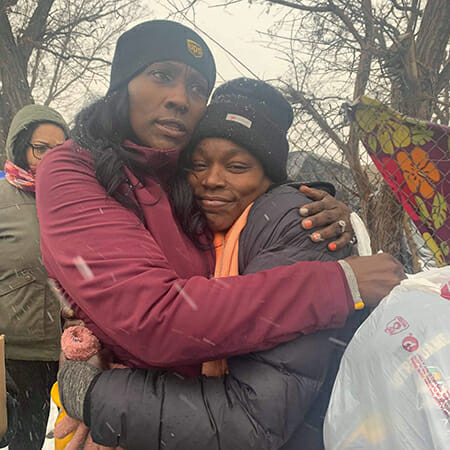
Toy Ann’s passion for helping others started at a young age. She would volunteer at church, her local food pantry and nursing home with her mother. She continued serving others in her adult life as she went around Chicago’s tent cities, providing hot meals, clothing, toiletries and more to those struggling with homelessness.
Toy Ann’s passion for volunteerism spans across various causes, including helping those who are homeless in Chicago./ Courtesy Toy Ann McCray
But her volunteerism hit full force after she was introduced to the organization POET (People of Extraordinary Talent) and its president, De’Andre Hawthorne, who is now her husband.
Through POET, Toy Ann and her volunteers have been meeting with young Black girls within the Chicago Public School system, teaching them about self esteem and helping them find their talents to be successful.
“For so many years, they haven’t been able to see people that look like them in manager positions, in leadership roles,” Toy Ann said. “So, I felt it was very important to have them see someone that looked like them to say, ‘You can do this too.’”
Toy Ann didn’t stop there. She’s also mentoring women of all ages, with her oldest mentee being 79 years old. But what many of these women have in common is that they come from difficult backgrounds and situations.
Tierra Clark, a mentee, was at rock bottom when she first met Toy Ann 10 years ago.
“I was detached from my family. I was depressed and suicidal” she said. “But Toy Ann not only supported me financially, but she always encouraged me and made me feel like I was not alone.”
Tierra said Toy Ann would always tell her these words: “Your life is what you make it. If you want it to be great, you have to put the work in.” So Tierra took those words to heart and now she owns her own business and even helps her own mentees.
In addition to helping Black girls and women to achieve success, Toy Ann also encourages them to volunteer and help serve others in their own ways.
“I was able to feed 500 people out of my own pocket and I’ve also started my own scholarship,” Teri Green, another mentee of Toy Ann said. “And it was all inspired by the work ethic and passion I saw in Toy Ann.”
For future plans, Toy Ann hopes to create her own nonprofit organization called Blaq Girl Magic, through which she hopes to hold sleepovers with young Black girls, ages 11-18, to help them make career plans and goals.
Mentoring dozens of young women and leading various volunteer events throughout the week on top of her demanding job as a manager at UPS seems impossible, but Toy Ann says it’s worth it because while it may be hard work, it’s “heart” work.
“What I get back every time is so much greater than what I give,” she said. “It’s hard work and it’s heart work to give love and show people that somebody does care about you.”
Volunteer H-”Appily” Shares Health Info with Global Communities During COVID-19 Pandemic
Meet Daily Point of Light Award honoree Haipei Chen. Read her story and nominate an outstanding volunteer or family as a Daily Point of Light.
As a first-generation American, Haipei Chen is familiar with the struggles non-native English speakers face in accessing critical information about public health and personal wellbeing. When the COVID-19 pandemic began to spiral out of control, the 18-year-old Redmond, Washington high school senior, whose parents are both frontline workers, decided she needed to take action to safeguard the health of as many as possible.
Launching AppilyDay in March 2020, Haipei started her service by collecting donated face masks and face shields from neighbors, and has since grown her efforts to support health issues through fundraising and translating COVID-19 information into dozens of languages. Partnering with other youth initiatives, Haipei has connected with thousands of people around the world as she addresses the health information gap among non-native English speakers, raises public health awareness and inspires service amongst other young people like herself.
What inspires you to volunteer?
I’m a first-generation American, but I lived in China for a time growing up, where there’s not much of a volunteer culture. The idea of helping other people and making a change through my own hands is what inspires me to volunteer. Because of my own experiences as first-generation, I recognized that people in my community didn’t have access to information because of language barriers, so I decided to help others in this way.
What does ‘AppilyDay’ mean to you?
The name of the organization comes from the old English proverb, ‘An apple a day keeps the doctor away.’ It summarizes our mission to spread health information and debunk false information. Also, if you add an ‘h’ to the beginning of our organization’s name, it reads ‘Happily,’ which describes how we are happily helping others.
For AppilyDay’s “COVID-19 in 19 Minutes” project, Haipei partnered with the Students4COVID translation team to edit COVID-19 translation materials in over 30 languages./Courtesy Haipei Chen
Describe your volunteerism with AppilyDay.
As founder and executive director, I’m assisted by several dozen youth volunteers we have in the U.S. and internationally that produce health educational videos and online content. We’ve partnered with other organizations to connect youth volunteers in the U.S. and internationally across 30 countries to translate COVID-19 information, including with Students4COVID, Dear Asian Youth and 2am. Our first major project was called ‘COVID-19 in 19 Minutes,’ which created informational videos to provide to non-native English speakers in underrepresented populations. We’ve distributed videos in dozens of languages including Mandarin and Kazakh to some Indian and Chinese dialects.
Share one personal story with me from your volunteerism.
We partnered with the Chinese American Civic Association to connect with non-native English speakers in greater Seattle. We visited Chinatown to meet with Chinese seniors and others living in the area, and showed them our information health videos. That’s when I felt like, as youths, we were actually making a difference in society. We were sharing information, some of which they’d never heard before. After that, more people came to watch our videos.
Why do you think it’s important for others to give back?
A community is built through service. You have to give back to the community because it’s based on relationships, and others help us when we go through hard times. Also, volunteering gives us the chance to meet new people and listen to different stories so that you can learn how to empathise with others and make change.
What have you learned through your experiences as a volunteer?
As younger people, we are always told to follow what adults do, but my volunteerism has taught me that if you’re fighting for the same cause, age doesn’t matter. You can make a change when everyone comes together.
What does the future of your volunteerism look like?
Our mission is to improve health education and increase health literacy by connecting with more people through technology. In the future, we plan to create health educational workshops and visit underserved areas to distribute health information and educate more people.
In one word, what does volunteering mean to you?
Change.
When you’re not busy in school or volunteering, what do you do for fun?
I do music, I’m a huge music buff. I’ve been looking into songwriting and music production.
How can readers help?
We continually fundraising to support health causes. Please visit our website for more information on how you can help.
Adopted as a Baby, Georgia Teen Volunteers to Support Other Nontraditional “Forever Families”
Meet Daily Point of Light Award honoree Kaitlyn Tanner. Read her story and nominate an outstanding volunteer or family as a Daily Point of Light.
Kaitlyn Tanner and her brother are two of the few million adoptees in the United States today, but according to the Douglas, Georgia 15-year-old, her adoptive parents almost weren’t able to bring her home as a baby, as they faced many hurdles on the road to adoption. For many families, Kaitlyn says, there are barriers including cost that make it that much harder to give children the loving home they deserve.
Deciding to advocate for other children and families just like hers, Kaitlyn, a high school freshman, volunteers to build adoption and foster families. Raising awareness of adoption, starting a dialogue of inclusivity and fundraising for families hoping to adopt, Kaitlyn is helping to create forever families in her community and beyond.
What inspires you to volunteer?
Starting in middle school, I began to face bullying because I was adopted. One girl called me a ‘mistake’ and told me that my parents didn’t want me. That comment tore me apart. I spoke with my mom, and she encouraged me to turn the adversity into something good. Sometimes, as an adopted child, you can feel like you’re not loved or nobody cares about challenges we face. I am volunteering to financially support families who are adopting kids and adoption organizations because I know the process is really hard.
Building adoption families through awareness, promoting a dialogue of inclusivity and fundraising, Kaitlyn supports nontraditional “forever families” through her service. /Courtesy Kaitlyn Tanner
Describe your volunteerism as an adoption advocate.
Through my adoption advocacy platform, we hold an annual White Ribbon Campaign each November, as that is National Adoption month. Through this campaign, partnering with other organizations at the local, state and national level, and other initiatives like Covenant Care Adoptions’ annual Trail of Hope 5k which I help to plan, I am raising awareness about adoption and fundraising to support families adopting.
Share one personal story with me from your volunteerism.
I was once being interviewed and the interviewer started crying after she heard my story, and told me she was adopted. Before my service, I wasn’t sure if I could personally make a difference, but knowing that sharing my story could even make a difference in one person’s life truly lit a fire in me.
Why do you think it’s important for others to give back?
You don’t have to totally dedicate your life to serving others to make a difference. When I was bullied, some small act of kindness that someone did for me meant so much. Something small like a random act of kindness or showing someone you care can make a huge difference.
What have you learned through your service?
Giving back not only helps the cause or whoever you’re helping, but it helps you. When I started my advocacy, it gave me so much joy whenever I put a smile on someone’s face and inspired me to continue my service. Service helps you grow as a person and inspires others to volunteer as well.
What’s been the most rewarding part of your service?
After I raised money through my White Ribbon Campaign and Bottles for Babies fundraiser, the donations went to a family adopting a child. When I brought the check to the father, he started crying. It might not have been the most money, but it meant everything to know I was helping them to bring their baby home.
How have you continued to volunteer throughout the pandemic?
Covenant Care Adoptions held a virtual 5k this year for Trail of Hope, and I have reworked other initiatives I am involved in as we cannot do as much in-person. I also volunteer with the foster care system in my community, and we have been doing virtual events.
In one word, what does volunteering mean to you?
Everything. Volunteering is what my life is based around, and everything I do, I do it to help others.
When you’re not busy volunteering or in school, what do you do for fun?
I play basketball and I run track, I am a piano player and I love animals. I want to be a small animal veterinarian. We live on a farm so I’m busy taking care of animals all the time.
How can readers help?
Please visit my website for more information about my adoption advocacy and how you can help.