Nine-Year-Old Volunteer Teaches Kids How to Enact Change in Their Communities
Meet Daily Point of Light Award honoree Lucia Bella Testolini Jordan. Read her story and nominate an outstanding volunteer or family as a Point of Light.
When she was just five years old, Lucia Bella Testolini Jordan began making a change in her community. After learning not every kid was able to afford a backpack for school, Lucia Bella started a Backpack Drive through In a Perfect World, a nonprofit started by her mother, Manuela Testolini, in 2005. The Backpack Drive is now an annual event that has raised more than $50,000 and helped thousands of children in Los Angeles, Oakland, and Washington, DC.
The Backpack Drive was just the first step in Lucia Bella’s dedicated service career. Now nine, she helps co-create and co-host workshops to educate children on topics ranging from homelessness to climate change. She raises funds annually to build sensory rooms for neurodiverse children, so far helping over 1,100 kids in 17 different states. Lucia Bella also looks forward to the nonprofit’s The Future is Bright campaign, as well as one day traveling to Guatemala to help her mother build a school. And of course, every year she holds the Backpack Drive that started it all — only now, she does it alongside her younger sister Luna, helping to pass on the volunteer spirit.
Describe your volunteer role with In a Perfect World Foundation.
I am a junior ambassador. I show kids how to be changemakers in their community and I lead by example. I help the community in different ways.
What ways have you helped your community?
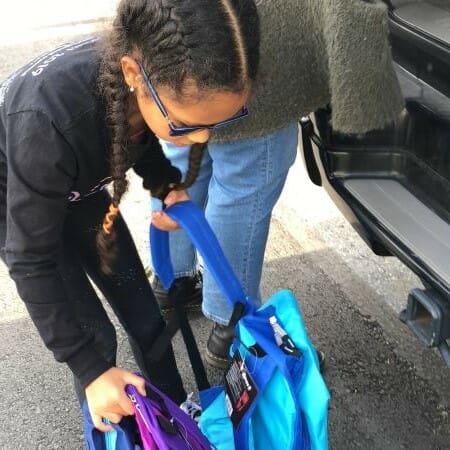
Lucia Bella Testolini Jordan gathers backpacks for her annual Backpack Drive, which provides much-needed school supplies for children in Los Angeles, Oakland, and Washington, D.C./Courtesy Lucia Bella Testolini Jordan
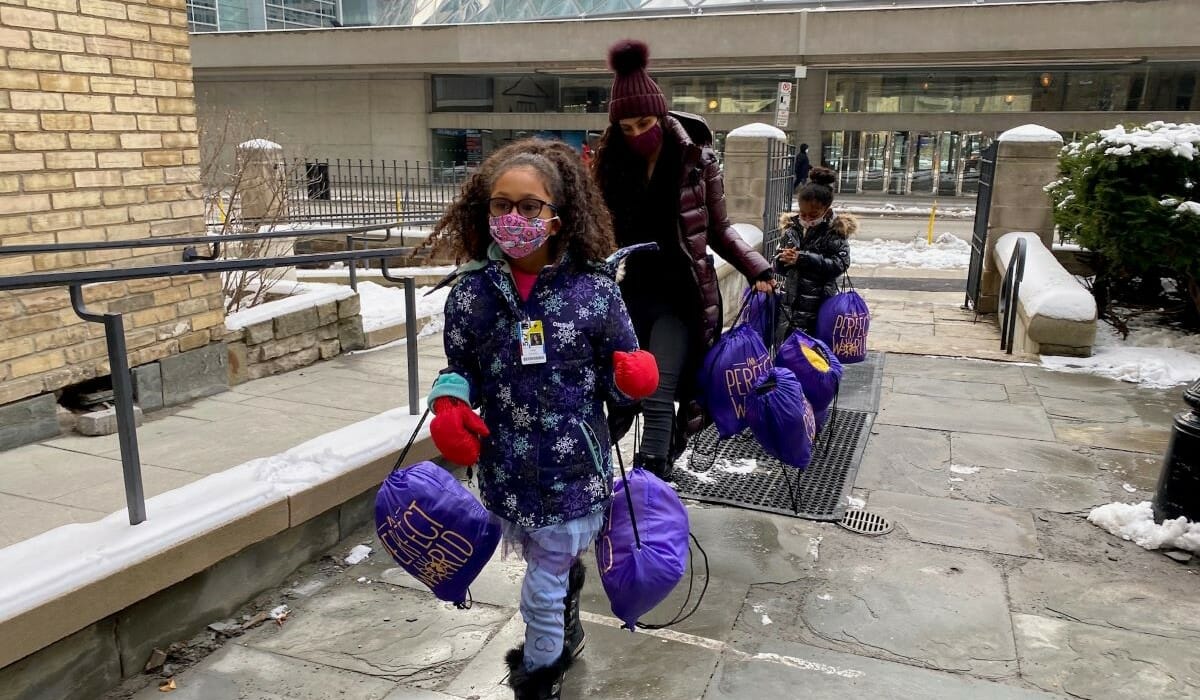
I helped homeless people in Toronto. We gave [care packages] to a church and they spread them out to a lot of different people. We gave them care packages of blankets, some snacks, toothbrushes, and toothpaste. I was almost crying when I first figured out there’s a lot of people in the world who can’t survive and need help.
My friend Wilson is autistic. He wanted to have a sensory room in his school with other kids with autism. My sister, my mom, and I wanted to help him. We ended up reaching our [fundraising] goal and helping even more.
What inspired you to start volunteering?
I was going into kindergarten. I was getting a new backpack. I couldn’t decide between these two and I wanted to get both of them. My mom said you can’t get both of them because there’s a lot of children in the world who don’t have backpacks, and they don’t have the stuff they need to go to school. I was very shocked because I never knew that. It inspired me to start my Backpack Drive. I started the first one in 2017. We do it every year. We raised more than $50,000. We helped thousands of kids. Each kid gets a backpack of their own and school supplies they need.
Can you tell me about your workshops?
I teach kids about big issues and how they can help. We use stories and art to help them get them inspired. We talk about childhood hunger, homelessness, and kids who are disabled and have autism or neurodiversity.
Do you have any favorite memories from volunteering?
When we do the Backpack Drive, we have a big event for all the kids to come get their school supplies. I love meeting all of them.
Lucia Bella Testolini Jordan, front, gathers winter care packages for people experiencing homelessness for In a Perfect World’s Out of the Cold project./Courtesy Lucia Bella Testolini Jordan
Are there any future partnerships, programs, or events that you are excited about?
I’m looking forward to making this Dreamcatchers workshop. My mom did the presentation and I’m looking forward to sharing and creating the presentation. We’re doing climate change. It really effects our world and it can create floods that destroy schools. If we take care of the earth, the earth will take care of us.
Why do you think it’s important for others to give back?
They can really make a big impact in the world and in people’s lives.
What do you want people to learn from your story?
Even little kids can do big things. Everybody has a chance to make a difference in the world. Our motto is a little by little, a little becomes a lot.
Service Above Self: Virginian’s Hands-on Volunteerism Creates Positive Change for Community
Meet Daily Point of Light Award honoree Victoria Le. Read her story and nominate an outstanding volunteer or family as a Daily Point of Light.
Fredericksburg, Virginia resident Victoria Le’s devotion to community service and helping others is represented in the little efforts she is making each day to make a big difference in her community.
As a volunteer with the Rappahannock-Fredericksburg Rotary Satellite Club, a branch of the Rotary Club of Rappahannock-Fredericksburg, Victoria is practicing service above self, and setting a positive example for others to follow. From helping at food banks to the local animal shelter to yard work for those in need, Victoria is lightening the load for her community members and brightening days for hundreds in the Rappahannock-Fredericksburg area.
What inspires you to volunteer?
I’m inspired to volunteer by seeing people’s appreciation. That brightens my day.
Describe your volunteerism with Rappahannock-Fredericksburg Rotary Satellite Club.
As co-founder of the satellite club, I’m helping others to practice service above self. I help to manage and put together our monthly service events and organize our monthly volunteer meetings. I volunteer with organizations including: Fredericksburg Regional Food Bank, Micah Ecumenical Ministries and the Fredericksburg SPCA.
Share one personal story with me from your volunteerism.
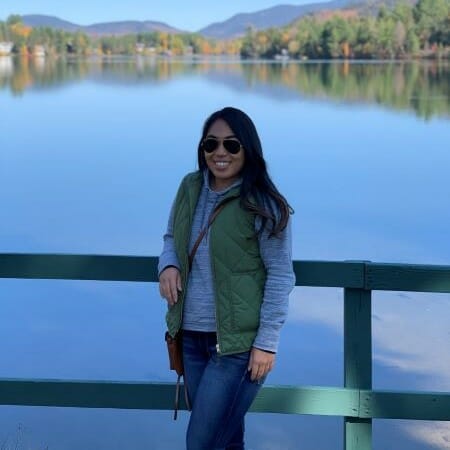
Putting service above self, Victoria Le is making little efforts each day to make a big difference in her community through volunteerism./Courtesy Victoria Le
I really like to do hands-on volunteer work. Volunteering through Micah Ecumenical Ministries, we did yard work for people in need and this one man was so, so grateful. That’s what I love about service. Seeing how much people appreciate your work, because it takes the load off of their burden. Volunteering is the little things people do that you don’t realize is so impactful to someone else.
Why do you think it’s important for others to give back?
We as a community can’t do it by ourselves. For the community to prosper, we all need to pitch in. When you help someone else, you’re also helping the community around you.
What have you learned through your experiences as a volunteer?
Even a little bit goes a long way. You truly don’t know what someone else is going through. By helping a little bit, you can truly change someone’s day, week or month.
What do you want people to learn from your story?
You don’t need to be a part of a group to give back or volunteer. Service includes picking up trash in your neighborhood, even seeing if your neighbor needs their grass mowed. By taking the burden off someone else, you give that person more time for themselves, and create a trickle effect. If you do something good, someone else will do something good as well.
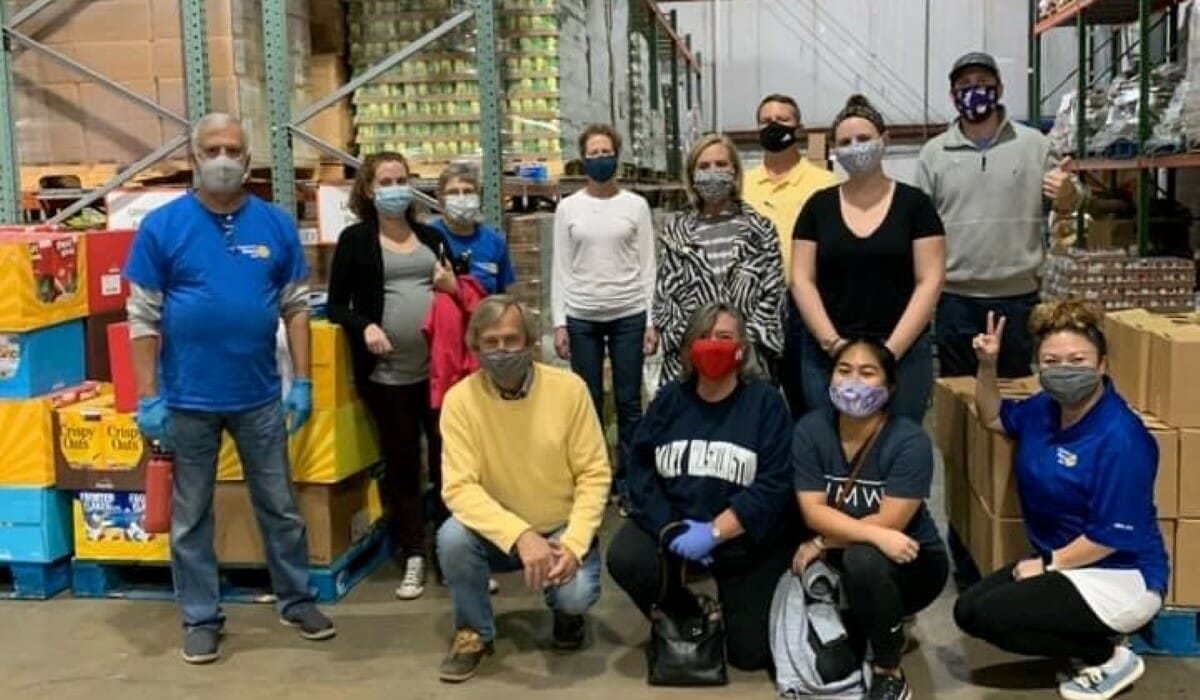
Victoria pictured after packing more than 250 boxes for Thanksgiving meals with fellow volunteers at the Fredericksburg Regional Food Bank./Courtesy Victoria Le
Washington Brothers Serve Better Future to Students Worldwide through STEM
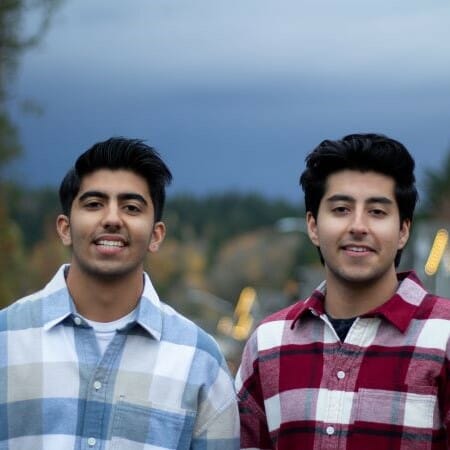
Meet Daily Point of Light Award honorees Sayan and Sohil Bhatia. Read their story and nominate an outstanding volunteer or family as a Daily Point of Light.
Involved in STEM competitions as students, brothers Sayan and Sohil Bhatia have enjoyed developing their education and skills in unique ways through science, technology, engineering and math, but felt there weren’t enough STEM educational opportunities in school for young students.
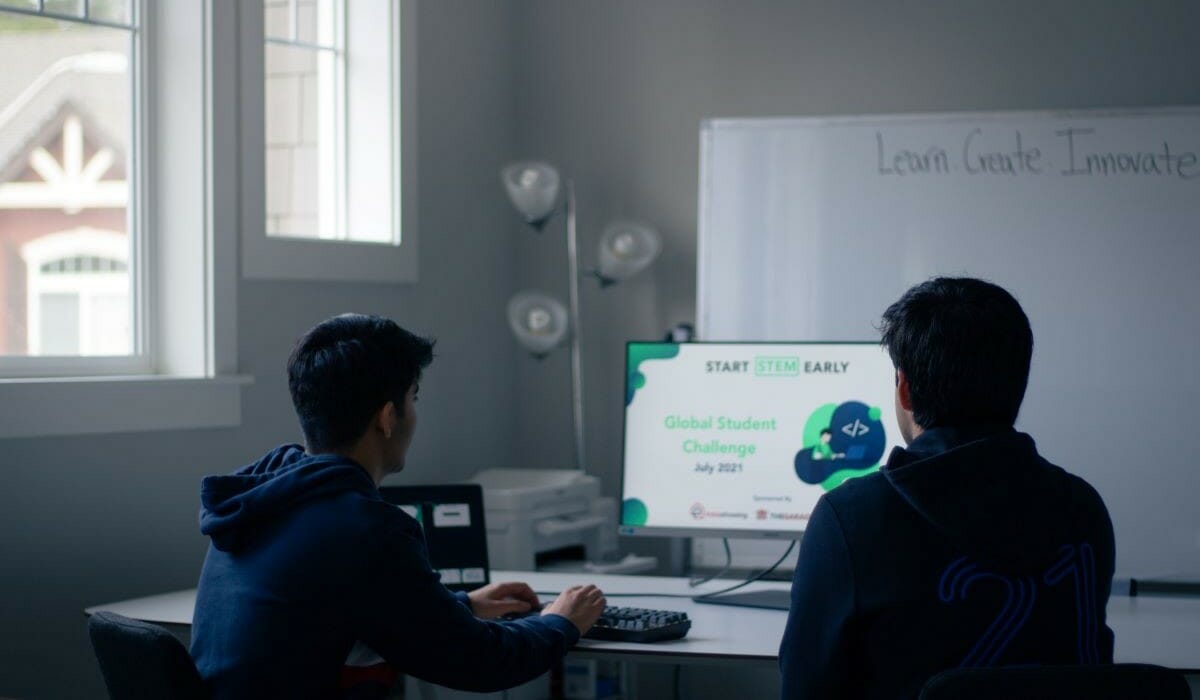
Launching Start STEM Early (SSE) in 2018, the Redmond, Washington brothers are volunteering to support elementary and early middle school students around the world through free science and technology learning programs. 18-year-old Sayan and 16-year-old Sohil have since connected with more than 7,000 students through their educational sessions, preparing the future generation of science and technology innovators.
What inspires you to volunteer?
Sohil: I see myself in the younger students we teach, struggling and learning all new STEM topics. I’m inspired to constantly keep growing to continue our impact and apply some of my learnings to improve the future for students.
Describe your volunteerism with SSE.
Sayan: As co-founders, we volunteer to foster interactive learning amongst our students and encourage students to start STEM early. We plan out STEM curriculum and courses and connect with school districts across the United States to offer our education. We also manage marketing and online communication. We have sponsors that help to support our activities. All of our programs and STEM sessions are free to students worldwide, but we also allow donations.
Share one personal story with me from your volunteerism.
The Redmond, Washington brothers have connected with more than 7,000 students in the U.S. and around the world through their educational STEM sessions./Courtesy Sayan and Sohil Bhatia
Sohil: We see 1st and 2nd grade students walking into our class not having any programming experience, but by the end of the 6 week program, they build things like a fully functional calculator and Ariana Grande trivia apps. Witnessing that growth has been a really big moment for me. That’s when I realized the impact I was making.
Why do you think it’s important for others to give back?
Sayan: People have their own unique set of skills and knowledge specific to some area of their life. It’s important to give back that set of skills to do some good and help others.
How have you continued to volunteer throughout the COVID-19 pandemic?
Sohil: Our programs went virtual because of the pandemic, and that has accelerated the growth of our organization. We’ve been able to reach new school districts across the U.S., and promote our sessions worldwide. We also started virtual hackathons for students worldwide to create apps for tech projects. It is a great way for students to learn about projects and apply their knowledge to create something.
What do you want people to learn from your story?
Sayan: Volunteering always has to start small. We started with a room of 10 students, but that grew because we took action and made an effort to grow our organization. Focus on your mission and don’t be afraid to take a step up and get working.
In one word, what does volunteering mean to you?
Sohil: Empowering.
Sayan: Empathy.
Sayan and Sohil are volunteering to support elementary and early middle school students through free science and technology learning programs./Courtesy Sayan and Sohil Bhatia
When you’re not busy with volunteering or school, what do you do for fun?
Sayan: Mainly photography. Hanging out with friends. Playing rec football.
Sohil: I’m passionate about dancing, and I like choreography. Occasionally, I like to make films. Of course, listen to music.
How can readers help?
Please visit our website for more information about how you can help.
Veteran’s Volunteerism Offers Hope to Wounded Warriors
Meet Daily Point of Light Award honoree Sergio Alfaro. Read his story and nominate an outstanding volunteer or family as a Daily Point of Light.
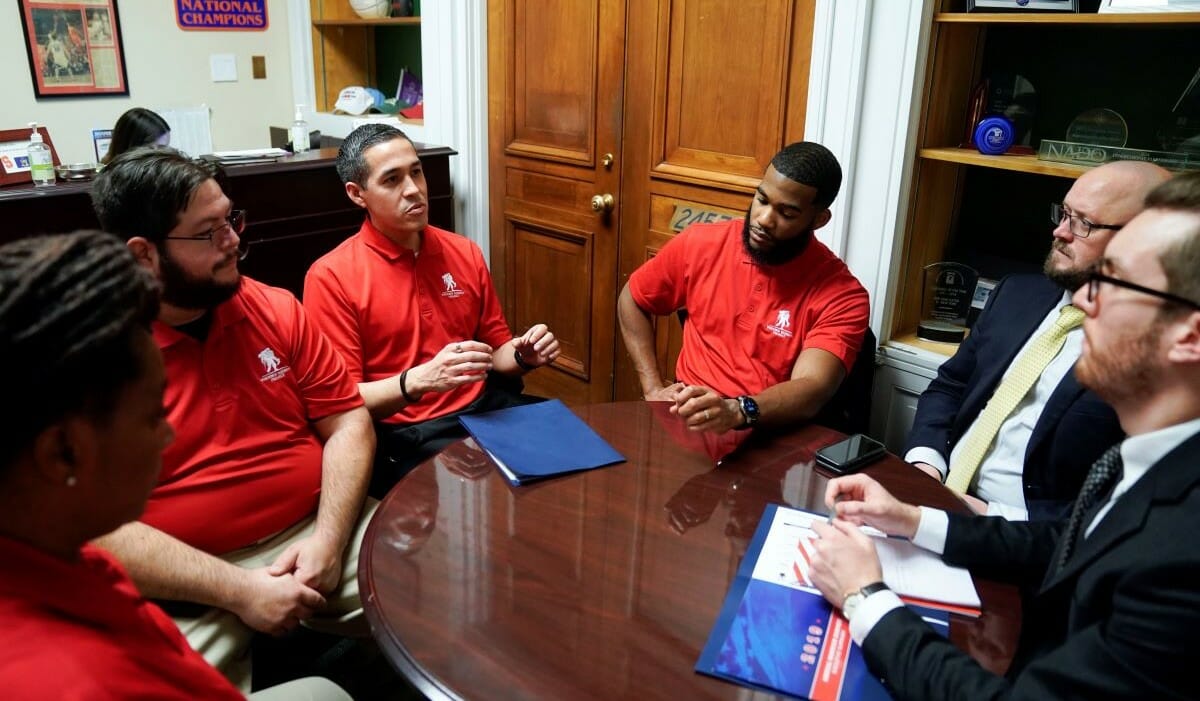
Sergio Alfaro describes memories of fear, anger and guilt from his deployment to Iraq that can sometimes be so overwhelming, the thoughts make him forget who he is at his core. Sergio, a U.S. Army and Air Force National Guard veteran, says he faced post-traumatic stress disorder (PTSD) and depression after leaving the military, but after receiving support from the Wounded Warrior Project (WWP), he decided to serve other veterans in need of help.
As a volunteer with WWP, the New Rochelle, New York resident is breaking down the stigma around mental health and reminding veterans they are not alone in their suffering. Normalizing conversations about healthy minds and paying back critical support to other vets, Sergio is building a stronger community through service.
What inspires you to volunteer?
I experienced the traumas of war during my deployment to Iraq, and afterwards, suffered from PTSD. I’m inspired to volunteer to get back to being who I am, versus that injured part of me that wants to lead me astray from who I am.
Why this cause?
As a volunteer with the Wounded Warrior Project, Sergio Alfaro is breaking down the stigma around mental health and reminding veterans they are not alone in their suffering./Courtesy Sergio Alfaro
We’re not just helping individuals, we’re learning how interconnected society is, and the importance of getting people to better places to decrease the suicide rate. If I’m able to feel pride or happiness about the things I do, it’s seeing that hope that comes alive in someone’s face when they recognize my story within themselves, and realize they are being presented with an opportunity. That’s what moves me the most.
Describe your volunteerism with WWP.
As a volunteer with the Wounded Warrior Project, I advocate for veterans, raise awareness about mental health and share education, all in service to help vets break down barriers to care for their mental health. Through our peer support groups, I work with other veterans to guide them to resources and programs. In addition, I’ve worked with lawmakers, and helped to pass the Commander John Scott Hannon Veterans Mental Health Care Improvement Act S.785.
Share one personal story with me from your volunteerism.
One veteran thanked me for sharing my story, and told me they felt not so alone. By hearing our similarities, this vet felt heard. Civilians also thank us for sharing our stories, and tell me they want to reach out to veterans they know and hear them out too. When someone tells me I’m doing good, it makes me feel guilty. When I approach it more rationally, I realize my service is helping people realize they can make change in their lives, and be the person they want to be, instead of the emotions and trauma that drives them.
Why do you think it’s important for others to give back?
People learn so much through experiences and hardships. When I was in medical school, we learned “see one, do one, teach one.” Through the process of sharing experiences, you give of yourself, and help lead others on a path to create change.
Sergio’s service includes advocacy with lawmakers. Sergio Alfaro: “Through the process of sharing experiences, you give of yourself, and help lead others on a path to create change.”/Courtesy Sergio Alfaro
In one word, what does volunteering mean to you?
Sacrifice, but I don’t want volunteerism to seem like that’s all it is. I get so much back from all of the volunteerism I do, but just as it’s important to volunteer to help others, it’s important to practice self-care, and volunteer time for yourself too.
Disabled Veteran Has a Mission of Ending Food Insecurity
Meet Daily Point of Light Award honoree Dionisio Cucuta. Read his story and nominate an outstanding volunteer or family as a Daily Point of Light.
Dionisio Cucuta has helped families and individuals get food on their tables for over 30 years. A chef by trade, the veteran grew up in New York City and moved to New Jersey after serving in the U.S. Marines as food service specialist, which left him permanently disabled and unemployable in 2010. The list of Cucuta’s service and compassion is endless, but his volunteerism and food distribution efforts have met serious food insecurity needs caused by the COVID-19 pandemic.
The 62-year-old is a hometown hero and even makes it his mission to ensure that other veterans don’t go hungry with his newest Table to Table Tuesdays program.
“When you come from military service, your service continues for years and there’s a certain discipline that you take away from it,” Cucuta said. “Communities come first, and when you’re in the military you are moralistically held accountable — that’s still with me today,” he added.
When the pandemic hit, Cucuta immediately thought about people in his community who didn’t have access to food. He asked local NGOs, pastors, and food pantries for their support to expand the Disabled Combat Veterans Youth Program to Table to Table Tuesdays, which featured curbside food pick ups and walk ups for food. Soon after, lines of cars and people stretched across 15 blocks of his distribution site and more than 3,000 families were given organic food each week. To date, Cucuta has helped provide more than 250,000 meals to people in need during the pandemic Englewood, New Jersey.
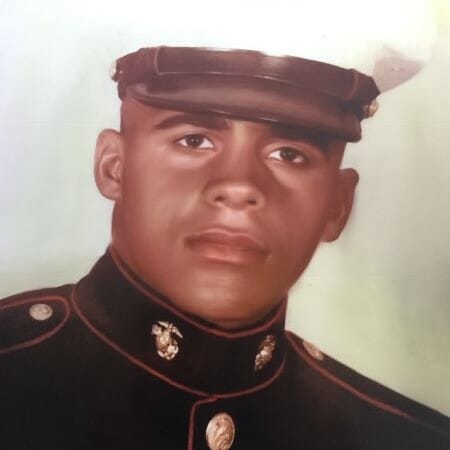
Dionisio Cucuta served in the U.S. Marines as a food service specialist, which left him permanently disabled, before creating Table to Table Tuesdays during the COVID-19 pandemic./Courtesy Dionisio Cucuta
“I reached out to everyone I knew that had their hearts in the right place. When it came to the community, I knew that everyone would be there to help,” Cucuta said.
Volunteers help pack and sort food into bags that are usually ready for distribution around 11 a.m. or 12 p.m. and each family receives enough food at Table to Table Tuesdays to feed them for four or five days. Because of the program’s success, Cucuta started allowing COVID-19 testing and vaccinations at his distribution sites beginning in the summer of 2020. He also helped with census outreach and surveys.
Cucuta has always had a passion for the culinary arts. After attending Johnson & Wales University and serving in the Marines as a food service specialist aboard the aircraft carrier USS John F. Kennedy, he worked at a variety of top restaurants in New Jersey and New York.
Soon after the Marines, Cucuta also became involved in his son’s high school and football team. He checked on the players to make sure they were doing well in school and eventually got involved at the nearby elementary school. Moments of genuine care and check-ins quickly turned into a new after school mentoring and culinary program led by Cucuta. He remembers around 10 students starting out in the program, but by the end of the second week, there were over 40.
Cucuta was teaching them how to feed themselves and make everything from scratch. The students began making food for the high school basketball, soccer, and volleyball teams. This led to the creation of the Man Up Program, which gave students good mentor examples to look up to. His wife started the same program for girls in the community.
“It doesn’t matter where you’re from, what color you are, I don’t care — you’re my brother or my sister,” Cucuta said.
Dionisio Cucuta and Table to Table Tuesday volunteers have provided more than 250,000 meals to people in need during the pandemic Englewood, New Jersey./Courtesy Dionisio Cucuta
At the same time, Cucuta was a volunteer professor in Bergen Community College’s culinary arts program. He’s known as “Chef Dion” by his students, who he calls his “Culinary Cadets.”
He taught culinary skills to his cadets twice a week for more than six years. His presence at the college didn’t stop there. Cucuta continued to go the extra mile and create another after school program where students could gather and review material they didn’t understand.
Cucuta was also among the 10 outstanding spotlights of the George H.W. Bush Points of Light Awards Celebration in 2021, which recognizes the efforts of everyday citizens from frontline to essential workers to those who are working in their neighborhoods and communities on social and economic justice and equity.
“That’s what we’re here for, you know, just helping people,” Cucuta said. “I want to help and I need to help, and I thank God for putting me in a position where so many people have joined me.”
Veteran Leads Peer Support Group For Wounded Warriors
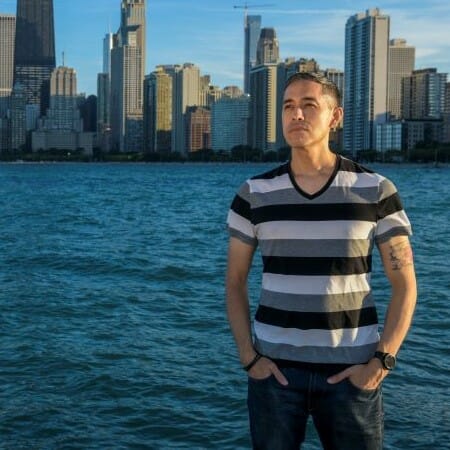
Meet Daily Point of Light Award honoree Kevin Bowden. Read his story and nominate an outstanding volunteer or family as a Point of Light.
Every single day, Kevin Bowden spends hours reaching out to veterans in need — checking in on them, lending a listening ear, and serving as a pillar of support. As a peer support group leader for Wounded Warrior Project, Kevin facilitates a monthly group meeting for wounded and disabled veterans. However, he has created such a strong bond with them since he began leading groups in 2018, that just checking in during a monthly meeting won’t suffice.
Kevin himself understands what it’s like for the veterans he’s mentoring; he retired from the Army in 2010 after an over decade-long career. After spending seven years in a very dark place mentally as he transitioned into civilian life, he wanted to serve as a bridge connecting veterans with the help and resources they need. Kevin, who is based in Forney, Texas, was recognized by the Wounded Warrior Project as the 2021 Peer Support Group Leader of the Year for the South Central region in honor of his dedicated service.
Describe your volunteer role with Wounded Warrior Project.
I am a peer support group leader. Officially, I am supposed to facilitate a group where veterans get together and can have a safe space to discuss how they’re feeling, help each other transition from military to civilian life, and make sure their social, emotional, and mental health needs are taken care of, along with any emergency financial aid which gets taken care of by putting in referrals to the many, many wonderful programs the Wounded Warrior Project has. However, it ends up being a lot more in depth than that. I tend to be the one who has the relationship with all these wounded and disabled veterans and become more of a mentor to them, and teach them how I have transitioned and things I have gone through. A lot of times, I give them a sense of hope and light that they can make it through.
What made you want to start volunteering in this way?
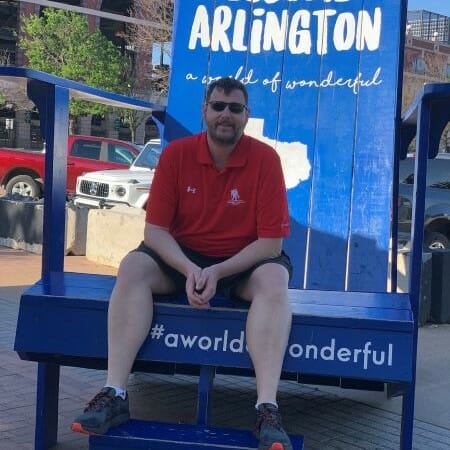
Kevin Bowden attends a Texas Rangers baseball game to recruit veterans for his Wounded Warrior Project peer support group./Courtesy Kevin Bowden
It was my own personal experience that made me want to do it. After I transitioned out of the military, it took me seven years to find the help I needed. I was a very tortured soul. When I found the help I needed, I wanted to be the bridge to help people who could not find and get the help they needed; to be there and say “Hey, these are the resources, this is how you get this,” and help them. I wanted to be that middle person, because no one should go through what I did in those seven years. It was pretty bad. When you’re in a really dark place and you’ve got mental health issues, you’ve potentially got drug and alcohol addictions, your whole entire world is turned upside down, and you’re in a really super dark place — one person reaching out to you and being that person who helps you up, and helps you get in the right direction, that’s what was done for me. I knew how impactful it was for me and I wanted to continue to give back to my brothers and sisters.
What does it mean for you to have such a close relationship with the veterans you’re supporting?
One, it helps me reinforce the things I’ve learned in my own recovery. Secondly, for them to understand that they’re not alone, and to talk to somebody when they think they are and reach out to them and pull them back into the group — it’s magnificent. Having that relationship, it’s not like being a parent, it’s more like being a brother to these people. To say, “Hey, I know you’re hurting, but let’s come back over here” — it’s like talking to them and they’re getting something they didn’t even know they needed.
Why is it so important for veterans to have a resource like Wounded Warrior Project?
In my opinion, if you look through history when other generations did not have things of this nature, they turned to the wrong things. Former generations turned to alcohol, or they turned to drugs, or they turned to isolating themselves. My generation was the proponent for mental health, and reaching out and actually talking about our experiences. The Wounded Warrior Project as an organization is the backbone that gives us the ability to have that. Without them sponsoring me and having these groups, there would be hundreds if not thousands of people who I would not have been able to touch the lives of. In all honesty, I don’t know how many of those people would not be alive because they would have taken their own life.
Are there any Wounded Warrior Project programs that are particularly special to you?
The peer support program is the most important program to me. I lead the program that has facilitated my growth to where I am now. That is of the utmost importance to me. It’s the one that has the most impact on people, at least in my eyes. You’re sitting there in a group, and somebody finally has enough faith in you as the leader and enough trust in the people around them to actually open up and say what’s going on in their life. Then either myself or someone else in the group says, “Yes, I’ve been through that.” They talk through what they went through, how they fixed it, and they help change the perspective of the person with the problem. Watching the weight of the world fall off of them is huge. Watching them walk out of that group meeting lighter and a much better person is huge. That’s what drives me to continue every month and every time I take a phone call from one of these warriors.
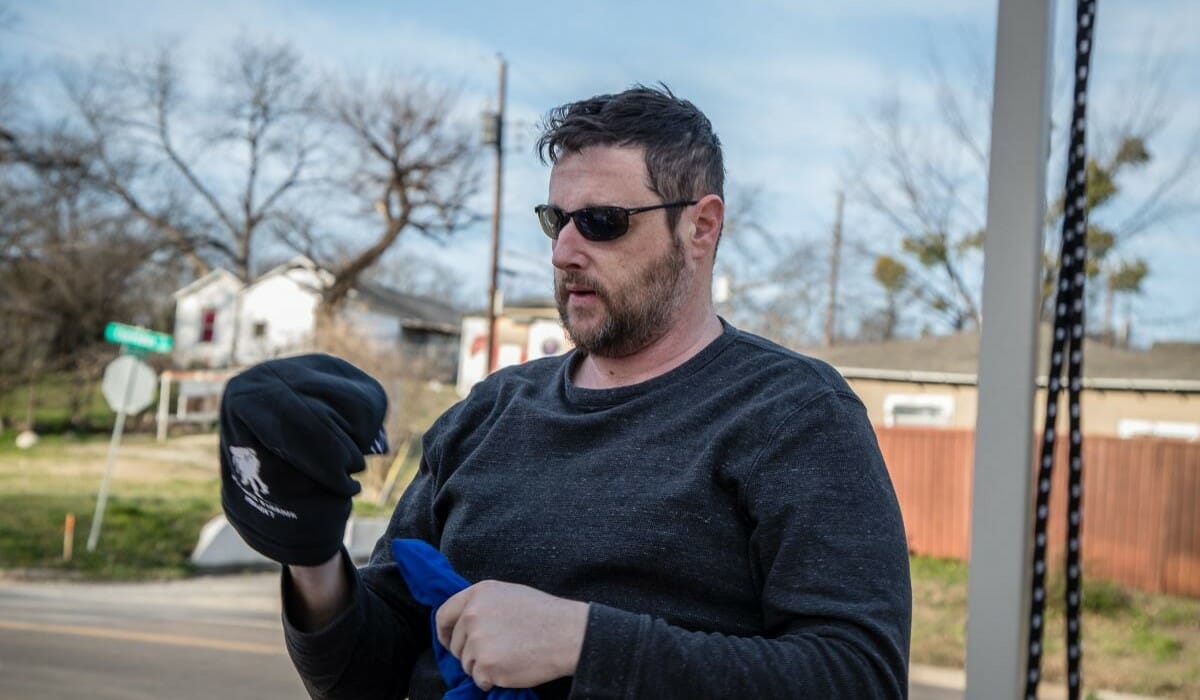
Kevin Bowden helps Wounded Warrior Project build a community garden in a Dallas food desert./Courtesy Kevin Bowden
Why do you think it’s important for others to give back?
For me, it helps me create balance in my life. With that balance, it helps me to live a good life. When I’m feeling down or I’m having some bad days, going out and helping other people brings me out of that. Watching the weight of the world fall off other people makes me say, “OK, there’s problems other than my own.” You see that everyone else around you has the same issues. It gets you out of your house, out of your head, and you actually start moving society and making progress toward problems that are bigger than you or what you know.
What do you want people to learn from your story?
As long as you commit to yourself that you can do it, and you hold yourself accountable to that commitment, and hold yourself accountable to the changes you need to make, you can become such a better person than what you think. Not just in recovering from PTSD or traumas that were endured from combat or military service, but any trauma you’ve endured. If you can stomach the personal accountability, you can push yourself farther than what you ever thought. Then the next thing you know, you’re like wow, I’ve actually achieved more than what I thought I could.
Volunteer’s Lifelong Commitment to Serving Others Continues by Paying it Forward to U.S. Vets
Meet Daily Point of Light Award honoree Kennery Foster. Read his story and nominate an outstanding volunteer or family as a Daily Point of Light.
A veteran who served in the United States Marine Corps and the Louisiana National Guard, Kennery Foster has spent his life committed to protecting the safety of others. The 55-year-old Lafayette, Louisiana resident is now continuing that service by volunteering to help other vets.
As a Warrior Leader with the Wounded Warrior Project (WWP), Kennery is paying back the support he received from WWP in the wake of his best friend’s suicide. Calling volunteerism his purpose on earth, Kennery has gone above and beyond to advocate for veterans, offering critical resources and connections that make it possible for the organization to serve many in need veterans.
What inspires you to volunteer?
Veterans paved the way for me to serve in this capacity. I’m inspired to volunteer because it’s important to help as many veterans, whether elderly, disabled or spouses of vets, as we can.
What does WWP’s mission mean to you?
If it wasn’t for WWP, you wouldn’t be talking to me today. Joining WWP saved my life. I watched my best friend shoot himself on military recruiting duty. I couldn’t talk him down and after, I was kind of lost. I considered committing suicide myself lots of times. The WWP logo is a wounded veteran carrying a veteran, and I was that veteran being carried. I served my community, state and country my whole life. I decided to volunteer because I wanted to serve other vets.
Describe your volunteerism with WWP.
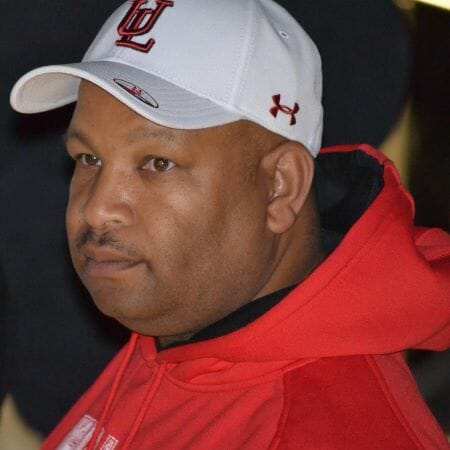
As a volunteer Warrior Leader with the Wounded Warrior Project, Kennery Foster advocates for veterans, offering critical resources and connections./Courtesy Kennery Foster
As a recipient of WWP services, I spent time with other veterans, utilized their programs to better myself and realized I had a purpose on this earth by helping others. My volunteerism includes assisting at events, offering resources and education, including:
One-on-one veteran support
Community service to assist vets or spouses of vets that can’t help themselves
Intro to Scuba Diving class: I helped to implement this class, serving 100+ Warriors thus far
Project Odyssey: I assisted at a weekend-long alumni fishing tournament held through Project Odyssey
Share one personal story with me from your volunteerism.
An elderly vet lived nearby, he couldn’t take care of himself and his kids lived far away. I would take him to the doctor, take him fishing, be his ear. He introduced me to everyone as his son. That’s how happy he was that someone would sit down and listen to his stories. When he passed, that really hurt, because he was almost like another father to me. I do hurt a lot, but to see a smile on someone’s face because of the little things I did for them, it’s like I can live through them. (That smile,) that’s a feeling I want to have everyday.
Why do you think it’s important for others to give back?
Volunteering is what this country was built on. We all came together to form this country. If we can’t sit together and help our brothers and sisters, I don’t know where the country is going to go.
What’s been the most rewarding part of your service?
I never want somebody to feel like they have to thank me. I volunteer because it’s in my heart, and the way I was raised by my parents and the way the military taught me. As long as I breathe, I’ll help others. I’m glad I can touch someone and help them better themselves.
How have you continued to volunteer throughout the COVID-19 pandemic?
The pandemic affected a lot of people, especially veterans, especially me. A lot of our volunteer activities were done through the phone and virtually. That was really hard on me because I’m a people person. We have been able to resume some in-person activities.
Kennery pictured assisting a blind veteran on a fishing charter at WWP Project Odyssey./Courtesy Kennery Foster
What do you want people to learn from your story?
If you’re trying to find yourself, volunteering can help you achieve that goal. Even if you don’t think you can do the things you used to do, or live the way you used to live, you can always live through the people you’re helping.
In one word, what does volunteering mean to you?
Fulfillment.
What’s your message to other veterans who are thinking about volunteering?
The mission continues. A lot of times, we can’t find ourselves. For me, volunteering helps me continue my mission.
How can readers help?
Please visit the Wounded Warrior Project website for more information about how you can help.
Volunteer Helps Promote Therapy and Support For Fellow Women Veterans
Meet Daily Point of Light Award honoree Amber Wood Davila. Read her story and nominate an outstanding volunteer or family as a Point of Light.
After leaving the Army in 2015, Amber Wood Davila struggled to find where she fit in the civilian world. She found the sense of belonging she was seeking in The Pink Berets, a nonprofit based in the San Antonio, Texas area that supports women military veterans and first responders experiencing PTSD, military sexual trauma, and combat trauma stress. Wanting to share the healing she found from the Berets with others, Amber began volunteering with the organization in 2016.
Amber currently serves as The Pink Berets’ Chief Communications Officer, handling public relations, marketing, event coordination, and the nonprofit’s website and social media. Amber serves The Pink Berets on a daily basis, helping to share and promote the nonprofit’s therapy opportunities. Along with clinical therapy, The Pink Berets offers holistic therapeutic options such as equine therapy, culinary programs, yoga, and a wide variety of art classes.
Describe your volunteer role with The Pink Berets.
The Pink Berets is a 501(c)(3) nonprofit organization that aids and supports women military veterans and first responders with invisible injuries like PTSD, military sexual trauma, and combat trauma stress. Through our programs, we offer clinical therapy and holistic therapeutic options, so we’re healing the whole woman in an effort to return her back to the authentic life she was meant to lead. My role with the Pink Berets is Chief Communications Officer. Aside from PR, marketing, and social media management, I do a lot of event coordination, as well as assisting with a lot of the behind-the-scenes stuff, so the website and graphic design. Anything you see the Pink Berets put out in the Internet or the world has my hands in it.
What made you interested in volunteering in this way?
I am a woman veteran myself and I am a survivor of military sexual trauma. When I got out of the military, I struggled finding my footing and finding where I fit in. We spend our whole military career trying to assimilate into a man’s world, and then we get out and we don’t really fit in with our civilian women counterparts anymore either. You feel out of place wherever you go. Finding The Pink Berets, a tribe of women who had walked in my boots, allowed me to find a place to belong. It helped me with my healing. Once I found that healing, I wanted to share it with my sisters in arms, so I jumped on board to volunteer and help spread the message.
Why is it important for women veterans to have access to the types of support The Pink Berets offers?
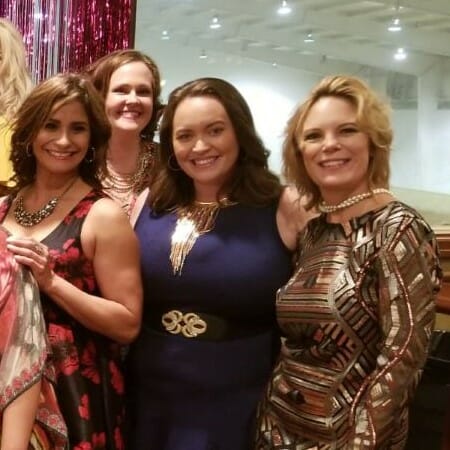
Amber Wood Davila, second from right, attends Foxhole to Fashion, an all-women veterans fashion show organized by The Pink Berets’ transition support program./Courtesy Amber Wood Davila
The VA [United States Department of Veterans Affairs] offers mental health options. The difference in what The Pink Berets offers and what the VA offers is one, the VA is overburdened. It continues to be an issue and they’ve continued to work toward fixing it, but it is overburdened. Every time I tried to make an appointment with the VA, if I wasn’t in danger of harming myself, my appointment got bumped. I ended up never seeing anyone, so I was seeking additional care. That’s one reason that it’s important. They may not be receiving the care they need from the VA, so having that additional care outside the VA is helpful. The other thing is we offer holistic options, so our equine therapy, our art programs, our culinary programs. It’s those opportunities that traditional, clinical therapy doesn’t offer that helps strengthen what you’re doing in clinical therapy.
Do you have any goals or future plans you would like to see The Pink Berets achieve?
The most important thing is that when we have a woman come to our door and they have something they’re passionate about, or something that’s helping them on their journey, we’re always willing to be flexible and add new programs. We had someone who recently came to us and one of the things she found therapeutic for herself was making bracelets. She’s gone on to create a class within our art program and help others. We’re here to help you find your journey, so as far as that goes, we never know what the next program is going to come about.
As for long-term goals, I do know that we are working toward having our own space. We want to create not only a space for our programs to happen internally, but also a home to house homeless women, or women who are transitioning out of the service and don’t have anywhere to go. Homeless veterans are a huge issue in the U.S. population. What most people don’t know is more than 50 percent of homeless veterans are women veterans and many of them have children. It continues to be a rising problem. We’re working to counter that homelessness. The transitional programs we offer are focusing on helping them network, get jobs, helping them readjust to society. But also, we would like to have a space for them so we can give them a place to call home while they transition and help them heal.
Are there any future partnerships, programs, or events that you are excited about?
In February, we’re having our Beauty and Wellness event, and in March we are having our Foxhole to Fashion brunch. It’s part of our transition support program and it’s a fashion show featuring all women veterans. Our regular programs — our art, our virtual yoga, our support groups — are virtual still and in person. We have monthly photography courses, art therapy, and culinary therapy.
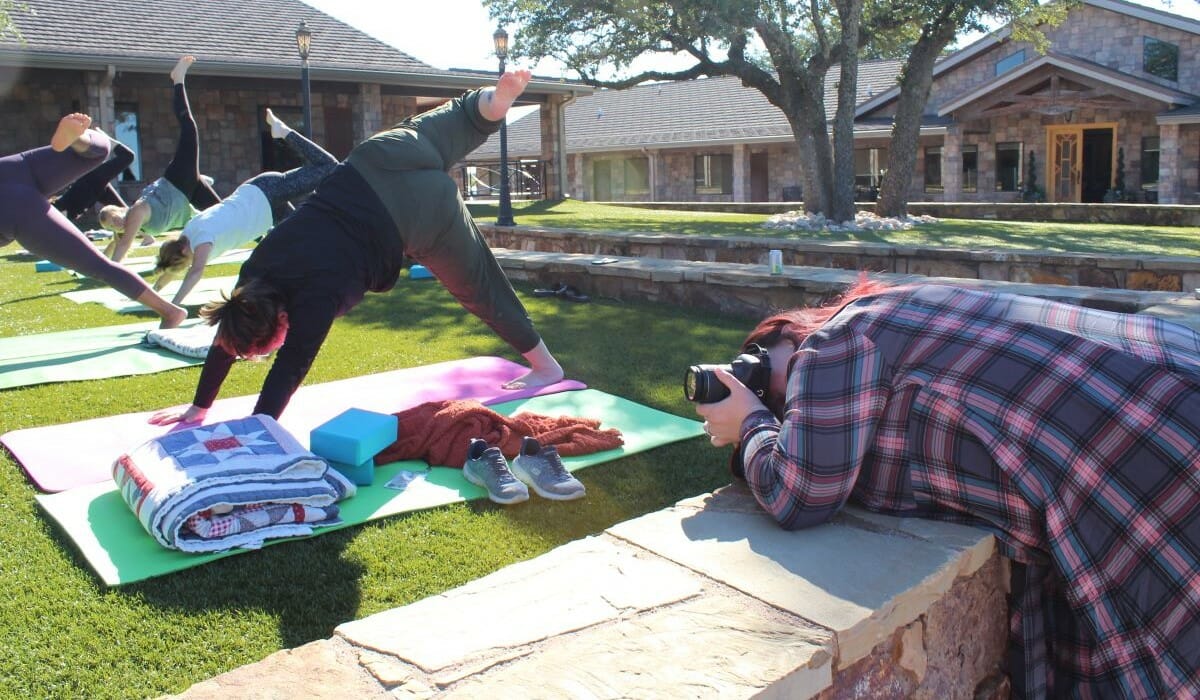
Amber Wood Davila, Chief Communications Officer for The Pink Berets, captures a yoga class the nonprofit offered for women veterans and first responders./Courtesy Amber Wood Davila
What’s been the most rewarding part of your work?
Every event we have, at least one woman comes up to us and says, “This was everything I needed to find somewhere I belong.” Every event, we can see at least one person realize they can find peace and they can find healing. That is everything for me. All the work, all the stress, all the long nights, early mornings, and long events, all of it is worth it if one woman finds peace and knows she can find healing.
Why do you think it’s important for others to give back?
I’m a long believer that we get back from the world what we put into it. We are blessed. It’s also our job to give back what we’ve been given. It’s a two-way street. I continue to be blessed and I continue to be given opportunities, so I try to give those back as well and put it out into the world. The Pink Berets brought me healing and brought me peace, and if I can give that to my sisters in arms, why wouldn’t I give back?
What do you want people to learn from your story?
That they’re not alone. PTSD and trauma can make you feel very alone and isolated. Even if you can’t make it to us, we have the virtual option so we can meet you where you are.
Volunteer Offers Compassion and Company to Elderly Patients
Meet Daily Point of Light Award honoree Rita Musser. Read her story and nominate an outstanding volunteer or family as a Point of Light.
After growing up in the same house as her grandmother, Rita Musser developed a lifelong love for spending time with older individuals. When a representative from Freudenthal Home-Based Healthcare visited her church looking for hospice volunteers, Rita knew right away she wanted to help out.
Freudenthal provides both hospice and in-home care to elderly in need in the St. Joseph, Missouri area. Twice a week, Rita visits with two different Freudenthal clients — listening to their stories, going through their photo albums, making sure they’re feeling well, singing hymns with them, and generally providing comfort. When the Covid-19 pandemic prevented in-person visits, she continued to call them and send cards.
“Their families can’t be there all the time, so I’m kind of a stand-in for their family, which is a great privilege,” Rita said.
Describe your volunteer role with Freudenthal Home-Based Healthcare.
They assign me people to visit and I try to visit them twice a week. I go wherever they are. I have one lady who lives at home and I have one gentleman who is at a nursing home. … I go in and first thing I always ask is if you’re hurting anywhere. If that answer is “No, I’m fine,” then I let that go. If not, I will call the nurse’s line and let them know they’re in pain. … If they have hobbies, we’ll do that. A normal visit is pretty much just listening, getting mail, and sometimes if they leave out lunch, I’ll fix her lunch for her so she’ll eat.
What made you want to volunteer in this way?
The young lady that’s in charge of Freudenthal in St. Joseph’s volunteers came to our church and spoke. I love older people, I really do. I was raised with my grandmother living with us, so I just really like them. I said I would love to do that, so that’s how I got into it. I’m very comfortable with older people.
Why is it important for elderly patients like those you work with to have regular visitors?
Rita Musser serves as a dedicated volunteer for Freudenthal Home-Based Healthcare, providing companionship to two elderly patients twice a week./Courtesy Rita Musser
They both look forward to it so much. They know what day I’m coming. If I happen to go a different day, they always wonder where I’ve been. They need the companionship. I have learned so much from them. They need to be able to tell their stories. They need to be able to feel important to someone.
Is there anything you would want people interested in volunteering in this way to know?
They’re just such a blessing. They’re such a joy to be around and listen to. They share their hearts, and you don’t get that just with a quick visit in and out. They tell you their fears. They’re at the time where they’re beginning to face eternity, and they are just such a blessing. You get more than you give, always.
Why is it necessary for volunteers to support Freudenthal and other hospices?
When a nurse goes, they have a purpose. They have a reason to be there. They check them over. Freudenthal is wonderful. They truly care about their patients, but they can’t just go and sit and listen and be there for them, and a volunteer can. I have my lady in St. Joseph to see, and she says, “You came just to see me?” And I say, “Yes, I’m not doing anything else, I just came to see you.” That’s important to her.
What’s been the most rewarding part of your work?
Getting to know them as individuals. I like people and getting to know their personalities and what they’re like. We laugh a lot and have a good time. It’s such a blessing to know them. You really get intimate with them. It’s not like you just go visit somebody in the hospital or something. You’re on intimate terms with them and that’s what’s truly rewarding.
Why do you think it’s important for others to give back?
I’m a Christian, so I believe the Lord has called us to love. That’s the main thing. If I can love these people, help their end times to be productive, and for them to feel like they matter and they care and somebody’s walking through it with them, that’s a ministry. Anybody can give back. You don’t have to be a Christian, but that’s just my motivation, to love on people.
What do you want people to learn from your story?
You’re never too old or too young. You don’t have to have special skills. You just have to have a listening heart and have some time. Sometimes it’s not convenient to go, but we go anyway because we know what it means to them.
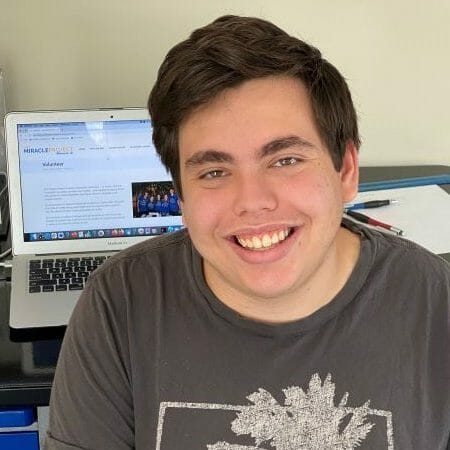
Max Cohen has managed to transform his passions for humor and mental health into two years’ worth of dedicated volunteer service, with much more to come. The 16-year-old Pacific Palisades, California resident serves The Miracle Project, which provides performance classes for neurodiverse children in order to promote social skills. Max, a professed comedy lover, helps lead three improv classes each week for kids ranging from his age to as young as five.
Max also volunteers twice a month for Teen Line, a teen-operated help line for young people. He was inspired to get involved over a year ago due to his interest in mental health, along with his own mental health experiences. After struggling during the COVID-19 pandemic, he found speaking to others was the best way for him to cope, and wanted to provide that opportunity to other teens as well.
Describe your volunteer role with The Miracle Project.
It’s an organization for kids on the autism spectrum and kids with other disabilities. They use different performances and acting, singing, and improv to help with social skills. It’s a really incredible thing. I really like going to the classes with improv because it’s fun to be around the kids and make people laugh. It’s a great experience. I do three different age group classes. With the younger kids, we’re mostly doing little improv games. With kids my age, we’re doing real improv games. We also check in every week to see how we’re doing, what’s new with all of us. We start scenes. We play with different characters and we do film dubs on funny animal videos. … I help lead the classes and participate and make sure they’re going well.
What inspired you to volunteer in this way?
I thought it was such a cool organization. I love comedy and I love laughing. It’s really fun to do improv with people. I consider myself a beginner improver, but it’s still super fun to do it and to be with the kids. I was really drawn to the idea of having performance and improv to help people who are going through things that are hard.
How does something like an improv class help neurodiverse individuals?
Max Cohen serves as a dedicated volunteer for both The Miracle Project and Teen Line./Courtesy Max Cohen
I think it gets people to open up a little bit and let loose, and form a community with other people that they might not have a chance to form in their normal lives. It’s a really tight-knit group in every class and we really get to know each other.
What do you do as a volunteer for Teen Line?
Teen Line is a teen-for-teen help line. It’s a crisis line that teens, when they’re in need, can call the phone number or text or email in, and can get in contact with other teens who are trained to help them in situations of mental health issues or really anything that’s going on. I’m one of the teen volunteers who takes texts and answers emails.
Why did you want to volunteer for Teen Line?
I’m interested in mental health and I wanted to help people. It’s the best opportunity for people my age. It’s such a thorough and incredible training. The stories you get to hear while you’re on shift are amazing. It really feels, more than anything else I’ve ever done in my life, that I’m having a real impact on other people and their lives.
Why is it important for teens to have access to something like this?
It’s important to be able to talk to someone about what’s going on in their lives. I know being a teen that it’s sometimes hard to trust other adults even if they’re professionals. You feel like sometimes maybe they’re on your parents’ side or whatever it is. You really are only able to open up and talk to a teen. Opening up and talking to someone is the best way to start figuring out how to get better.
What’s been the most rewarding part of your work?
The most rewarding part for Miracle Project is every single class I go in, no matter how my day is going, it instantly brightens up. I always know I’m going to laugh and that’s the greatest feeling in the world. Seeing everyone happy and having a good time is amazing. One Sunday I was in a really big fight with my mom about something. I went to the class and it completely took me out of that. Seeing how that also helps them get to be themselves and be funny in the class is great. Then for Teen Line, I’ve gotten some really incredible thank you emails which are just the kindest things ever. They make me feel so good.
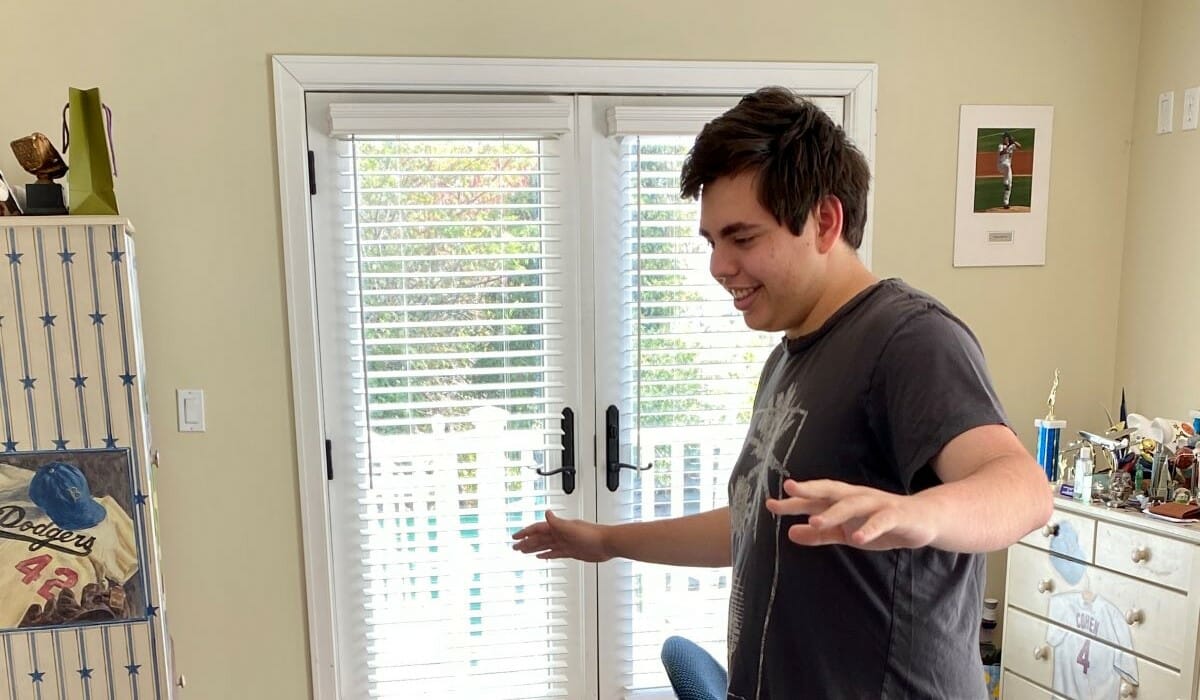
Max Cohen leads a virtual dance party for students in one of the Miracle Project improv classes he helps lead./Courtesy Max Cohen
Why do you think it’s important for others to give back?
I think it’s important for people to volunteer in some way so they can make a difference with something they care about. Volunteering can be really cool and you can tangibly see that you’re helping someone. Especially with Teen Line and Miracle Project, I’m interacting with people so I’m seeing how what I’m doing is helping — or even not helping, and then I can change and come at it with a different angle until what I’m doing is helping. I think helping people in an area you’re interested about is a really great thing.
What do you want people to learn from your story?
It’s always good to treat people with kindness and respect, because you never know what someone is going through. Also, the power of performing and getting in front of people and going outside your comfort zone can help sometimes.