Volunteer Grows One Million Pounds of Veggies to Feed Hungry Around Iowa
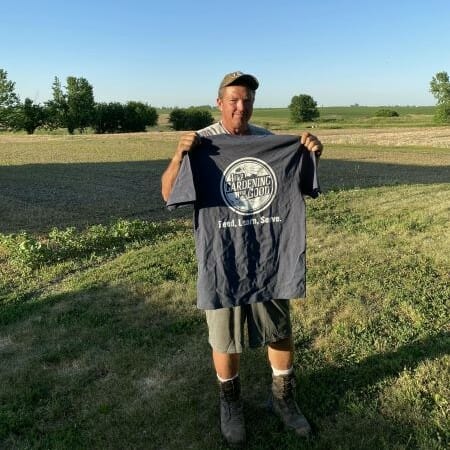
Meet Daily Point of Light Award honoree Tracy Blackmer. Read his story and nominate an outstanding volunteer or family as a Daily Point of Light.
His father an agriculture professor and his grandfather a farmer, Tracy Blackmer, a Madrid, Iowa resident, says his life has been agriculturally connected for as long as he can remember.
“We lived on the food from my grandfather’s farm,” says Tracy. “I saw how easy it was to grow the food we eat. We had land and we knew how to grow, that’s two things the average person may not know how to do. (It) seemed like an easy thing to step into.”
It was when Tracy’s mother described the great need at the food pantry she ran and difficulty in sourcing fresh produce for the underprivileged that the lightbulb went off for Tracy, who has a PhD in agriculture.
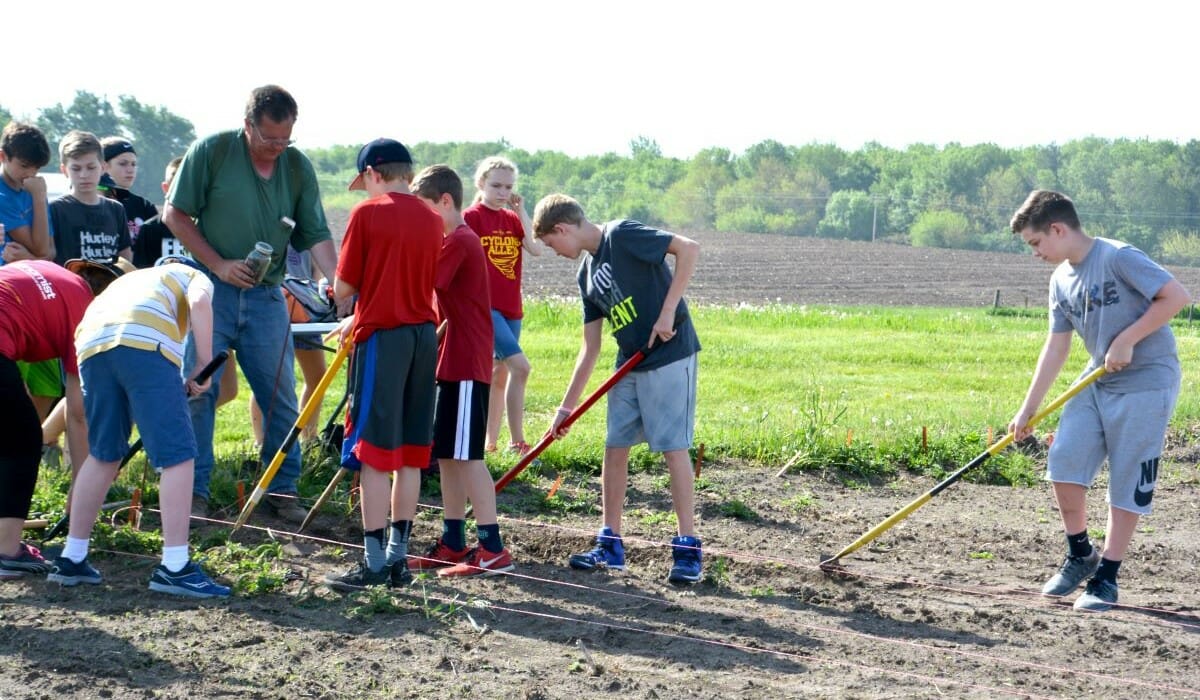
First starting small, Tracy’s volunteerism providing food to the hungry has spanned nearly a decade. As the founder of Iowa Gardening for Good, Tracy grows produce from peppers to onions and melons alongside dedicated volunteers of all ages, the organization donating all of its vegetables and fruit to more than 20 food pantries around central and northeast Iowa and other partner hunger relief organizations. Tracy’s tremendous dedication has yielded more than 1 million pounds of produce thus far and is educating families across the state about health and the food they eat, all in service of the organization’s mantra, “feed, learn, serve” says Tracy.
“One, we’re getting fresh produce for food pantries, healthier options than rice, beans or pasta. Two, we’re teaching people where food comes from. More and more people don’t know how to grow or how things are grown. Three, we’re connecting the dots. We’re providing the infrastructure for people to do community service. A lot of people are willing to help, they just need to help coordinating.”
Tracy’s volunteerism is making high quality produce more accessible to those in need, something he wants to see happen around the United States./Courtesy Tracy Blackmer
Giving workplaces, students and families opportunities to volunteer, Tracy’s gardening is resulting in bountiful benefits for numerous communities, as the organization inspires others to serve. According to Tracy, volunteers don’t need expertise, they just need to show up, their service producing tangible results in the rows of produce planted and pounds picked. Those volunteer efforts were a lifeline for the organization during the COVID-19 pandemic, says Tracy, as community members united towards a common good.
“COVID has been eye opening to me. There are few activities, and we saw a big increase in families coming out, largely because they knew there was a need. They were stepping up and trying to instill good values (for their children). As a family, youth show the priority to (volunteer,) that’s pretty cool. Our production went down because we had less total labor. Without families, we would not have been able to do hardly anything the last few years.”
One of those families visited the farm after their daughter first volunteered, says Ankeny, Iowa resident Jason Ford, who also recruited four other families to serve alongside his own family amid the pandemic.
“I described it once,” says Jason “you could take a $1,000 vacation and take your kids to someplace far away, but you get more joy in seeing them out here serving and all the kids are out here picking peppers, onion.”
Tracy’s commitment, says Jason, is helping to feed hungry mouths and also grow giving children.
“Tracy, he’s got a heart of gold. He’s just got a heart for helping others. He’s not trying to get as much done each time he’s out there, he’s about providing opportunity for people to serve and learn where food comes from, my kids are learning that. They planted watermelon seeds and then picked the watermelon later.”
Tracy’s dedication has yielded more than 1 million pounds of produce, with the organization educating families across the state about health and the food they eat./Courtesy Tracy Blackmer
Tracy’s volunteerism is making high quality produce more accessible, something he wants to see happen around the United States. His favorite vegetable to grow, the bell pepper, is a symbol of Iowa Gardening for Good’s greater mission, as the organization sustains people in need and teaches communities how to eat healthier, says Tracy.
“[Bell peppers aren’t] something the food pantries really would get if we weren’t growing them. Potatoes and onions can be brought in from other states but peppers are a big economic value because they are expensive, and we’re helping a lot of food pantries as they’ve moved to not just getting calories to people, but trying to improve eating habits. Especially for families that may not cook much for their kids, you can just slice and eat them. We’re not just preventing someone from going hungry, we’re instilling better eating habits.”
Just like the plants he grows, Tracy’s service roots are deep, helping others a lifelong pursuit that he’ll continue to prioritize as he gardens for good.
“My core mission is trying to make the world a better place. There’s many ways to do it. If you can spend your frankly, leisure time, working to get food to people in need, that is to me a much better thing than wanting to go out on a golf course or bass boat. Volunteering, you have fun, do constructive things to help others and instill a sense of service in younger people. When I was younger, when someone needed help, I was willing to go out of my way, the help was just there. Seeing (service) instilled in people is really rewarding, but it’s even more rewarding to me when people thank us for the opportunity to serve. Once people come out they tend to come back and bring others.”
Cancer Patient Brings Hope and Advocacy to Treatment Community
Meet Daily Point of Light Award honoree Robin McCallister. Read her story and nominate an outstanding volunteer or family as a Daily Point of Light.
In 2017, Robin McCallister was diagnosed with a disease she had never heard of before. The word cholangiocarcinoma became inseparable from the Tallahassee, Florida, native’s world, but instead of being stuck in the unknown, she decided to give back to other cancer patients.
Robin is a mentor and patient research advocate with CholangioConnect, where she represents patients’ interests in the cancer treatment field and motivates others to be active in their own care. She has worked on numerous projects, including reviewing grant proposals, patient surveys, attending educational seminars, summarizing scientific posters, and moderating annual cholangiocarcinoma conferences — all while still undergoing treatment herself.
Describe how you first discovered the CholangioConnect research advocate program and mentorship opportunities:
I was diagnosed with cholangiocarcinoma in 2017, which is a cancer in your liver. Someone put me in touch with the only employee at CholangioConnect at the time who was a patient advocate. She was really helpful and inspiring; it was just such a hopeful experience. She told me to go to the 2018 Cholangiocarcinoma Foundation’s Annual Conference to meet other people going through what I was experiencing. At that conference, I was just walking down a hallway and someone pulled me aside to ask if I ever wanted to volunteer. I was just finishing chemotherapy at the time so I was unsure, but I just said sure. Volunteering wasn’t on my radar, but the fact that people reached out to me and asked meant a lot. It was also a good thing to take my mind off things.
Can you explain your volunteer activities and how they’ve grown?
I started out volunteering at CholangioConnect’s mentor program where they match you with other patients going through treatment against cholangiocarcinoma. But the work that takes up most of my time now is being a patient research advocate. I have different tasks everyday, but I help with anything within the space between patients and the treatment industry.
I try to help represent and facilitate patient interests throughout the treatment research process. The Foundation raises money to further its research in cancer and how to treat it, and I basically come in and raise the patient’s voice in all areas of research and trials that I can. It’s a lot of information gathering and giving. If we’re going to a treatment trial and need to give out information about it, I want the trial leaders to think about what the patient would want or how they would feel with certain decisions.
I also watch a lot of training and participate in disseminating information to the patient community, kind of like social media to patients. This helps me be an even better mentor because I’m keeping people up to date. I can help people understand the treatment process and ensure that people take their medicine right because it’s complex and these people are vulnerable to navigating a new disease they’ve never heard of.
What inspires you to volunteer?
When I first had contact with other patients, it was just devastating because it’s a deadly disease and you feel so alone because you’ve never even heard of it since it’s not one of the common cancers. It was so hopeful to talk to Melinda who was also a patient herself and to see the researchers, what they’re doing, and how hard they’re working on treatments. I felt so connected and hopeful. Even if you know you may not make it out of it, you’re doing your small part and moving the science right along. It’s been a great experience. This advocacy role is out there for any disease. You get a sense of purpose volunteering and I enjoy being a part of the community and seeing people excited about the trial they get to try.
What have you learned through your experience as a volunteer?
A lot, too much, really. I’ve learned a lot about the whole field of cancer, that’s for sure, and the different ways that people look at it and cope with it. I love this organization and the Cholangiocarcinoma Foundation. They take on [so] much…and still do it well, and it’s inspiring.
What would you want someone to learn from your service story?
I would like someone to learn how much you can personally gain from volunteering, how much it can enrich your life, and that it can connect you and help you see something positive in a world of conflict.
Why is it important for others to give back, especially in the medical field?
You can learn a lot about one cancer that applies to other cancers. It’s a tough field because there are just so many vulnerable people and there’s pain for the families involved, so we need sources of hope. Volunteering found me, I didn’t find it, but I’m happy with it. It’s definitely an area of need.
Are there any partnerships, programs, or events that you are excited about?
The Cholangiocarcinoma Foundation’s Annual Conference will take place again in February and people love it so much because there are both doctors and patients in attendance. That interaction is important. It’s where I laid eyes on and spoke to another patient in 2018, too. This year’s event will be hybrid; occurring both in person and online.
For the Love of the Game: Teen Volunteer Promotes Sports Psychology for Kid Athletes
Meet Daily Point of Light Award honoree Brandon Shintani. Read his story and nominate an outstanding volunteer or family as a Daily Point of Light.
He loves sports and is a big basketball fan, so when 16-year-old Brandon Shintani started thinking about the mental game of sports, he realized a key component of building young athletes was missing.
Founding Mind-Design Sports in 2019, Brandon, a Ridgewood, New Jersey high school junior, offers sports psychology resources and programming that pairs young athletes with high school and college student volunteers, all in the name of a better game. Connecting with thousands across the world through his online education, advocacy and programming, Brandon is setting kids up for success by helping athletes improve their bodies and minds.
What inspires you to volunteer?
I played competitively at a young age, and wish I had access to sports psychology. Some youth athletes don’t have money or access to a trainer, but have the desire to do well. I am inspired to volunteer to open the door to free, accessible and easy to use programs.
Describe your volunteerism with Mind-Design Sports.
As founder and CEO, I manage projects, our student volunteers, and am in the process of promoting merchandise on our website, the profits from those sales will be donated to the Concussion Legacy Foundation (CLF). Young athletes can face stress playing sports, and accompanying health issues can result. Our program is designed to prevent those issues, pairing elementary and middle school students with high school and college athletes who provide mentorship advice. Our volunteer team members are based in the United States and around the world, in places like New Zealand, China and Britain, so we are exposing young athletes to different sports and new perspectives.
Share one personal story with me from your volunteerism.
Mind-Design Sports founder Brandon Shintani is volunteering to help athletes improve their bodies and minds./Courtesy Brandon Shintani
In addition to our online resources and blogs, we offer podcasts on a variety of topics. I received an email from a person about a podcast we’d recorded on chess. He wrote that he really appreciated our podcast and to keep making them, because chess sports psychology is not a topic typically touched upon. That heartwarming message really resonated with me, because it shows that using online platforms like podcasts are powerful. I like to do the work but also it feels really good to know I am making an impact and people appreciate the work.
Why do you think it’s important for others to give back?
Volunteering is a good way to help your community and help those you really think need that help.
What motto guides your service?
Always try to make the best use of your time. I don’t want to sit on the couch and watch Netflix when I could instead do something that impacts myself and others. Make sure the top of your priority list is high-impact and can help people.
In one word, what does volunteering mean to you?
Collaboration.
When you’re not busy volunteering or in school, what do you do for fun?
I listen to music, hang out with friends and work out.
How can readers help?
Please visit the Mind-Design Sports website for more information about how you can help.
11-Year-Old Volunteer Pays Blessings Forward to Help Community Thrive
Meet Daily Point of Light Award honoree Isabella Occhipinti. Read her story and nominate an outstanding volunteer or family as a Daily Point of Light.
11-year-old Isabella Occhipinti loves gymnastics and competing in pageants, and the Rome, New York student is now paying the blessings she’s enjoyed in life forward as she serves cheer and aid to people of all ages.
As a volunteer with organizations in her community including Felicia’s Helping Hands, her local Blessing Box, Ronald McDonald House of CNY, Salvation Armyand Rome Rescue Mission, Isabella has committed her service to making her community a place where people aren’t just surviving, but thriving.
What inspires you to volunteer?
I like to give back to my community in any way that I can, because I want my community to be a place where people can thrive, not just survive. I’ve been very blessed in my life to have the things I need and I feel everyone deserves to have the things to make life comfortable.
Describe your volunteerism.
Through volunteerism, I want to help those in need get back on their feet. I visit local child care organizations and volunteer to read for story time. In addition, my volunteerism includes:
Salvation Army: I ring the bell for the Salvation Army during the holidays.
Rome Rescue Mission: I raise money through donations from family and friends to buy items that I donate to the Rescue Mission, which offers assistance to those who need shelter, food and basic life necessities.
Felicia’s Helping Hands
Blessing Box
Share one personal story with me from your volunteerism.
I was ringing the Salvation Army bell for almost two hours at a grocery store when a little girl walked up to the kettle. She had a little pink purse around her shoulder with a change purse inside, and dumped the purse full of coins into the kettle. She then said, ‘I can’t wait until I’m your age so I can ring the bell, too!’ Her mother said she’d been saving her coins to put into the kettle. Even though I’m young, I can still inspire others to volunteer just like I do. I hope I can always inspire people to help others in any way they can.
Why do you think it’s important for others to give back?
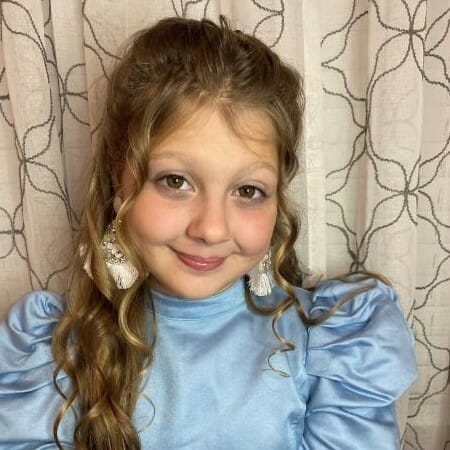
Isabella Occhipinti is paying the blessings she’s enjoyed in life forward as she serves cheer and aid to people of all ages./Courtesy Isabella Occhipinti
There are so many people in need. If everyone is able to give back just a little, more people would receive the help they need to eat, have clothes or medicine. If you have extra, it’s always good to share with those who don’t.
What’s been the most rewarding part of your service?
Knowing that I helped someone in need. I don’t always get to see the people I’m helping, but that feeling is enough to continue volunteering.
How have you continued to volunteer throughout the COVID-19 pandemic?
Since it has been difficult to volunteer in person, I continue to make donations whenever I can. This has been the most difficult time for some people, so when I drop off food to the Blessing Box, I know I’m still helping someone have a good meal, even if I’m not giving it to them in person.
What do you want people to learn from your story?
It doesn’t take a million dollars to change the world. Sometimes, it just takes a dollar to give someone a meal that might not have eaten that night if the Blessing Box was empty.
In one word, what does volunteering mean to you?
Happiness.
When you’re not busy volunteering or in school, what do you do for fun?
Teen’s “Students Against Period Poverty” Service Highlights Menstrual Hygiene Inequity
Meet Daily Point of Light Award honoree Ethan Ye. Read his story and nominate an outstanding volunteer or family as a Daily Point of Light.
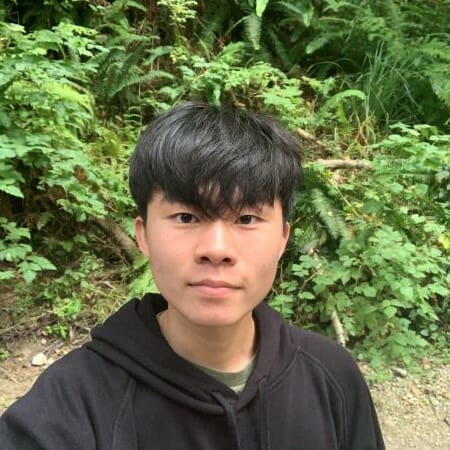
Ethan Ye says he didn’t even know what a period was before 9th grade, but when the now 17-year-old Fremont, California student learned more about how the COVID-19 pandemic was worsening menstrual inequity, he joined his classmates to make a difference through volunteerism.
In response to the closure of businesses and limited access to resources because of the pandemic, Students Against Period Povertyis making menstrual products readily available and accessible for impoverished menstruators and easing period stigma. As a co-founder, Ethan has helped the organization donate more than 40,000 menstrual products and raise more than $10,000 thus far, alleviating period poverty through education, service, and advocacy, one menstruator at a time.
What inspires you to volunteer?
In great or tough times, it’s really important to have community spirit and a tight knit community, because that’s what makes us whole. At a time where things are breaking people apart, I’m inspired and gratified to volunteer.
Your service also has a very personal inspiration. Explain.
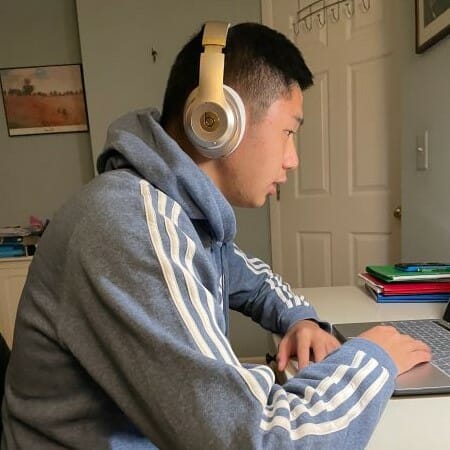
Students Against Period Poverty co-founder Ethan Ye is making menstrual products readily available and accessible for impoverished menstruators and easing period stigma. /Courtesy Ethan Ye
When COVID first hit, my mom told me her own story about how she faced period poverty growing up in Vietnam. Connecting my community’s experience with my mother’s story inspired my volunteerism. In a lot of Asian families, period poverty is taboo and stigmatized. Over time, my mom has come to understand the magnitude of this issue and why we need to create change.
Describe your volunteerism with Students Against Period Poverty.
As co-founder, I lead our executive members and chapters in California and our international chapter in Nigeria. I direct our 160+ volunteers, manage event operations and coordinate fundraisers. We accept product and monetary donations. In addition to our product care package donations, we’ve established daily Grab-N-Go menstrual item pickups at local schools, created a menstrual health blog and will host a menstrual health summer leadership summit.
Share one personal story with me from your volunteerism.
We want to incorporate menstrual health education into school health courses, as we’ve found that education is often overlooked. We created menstrual health curriculum for my school, and at the end of the lessons, asked students to write advocacy letters to our legislative assembly member. We received almost 250 letters, an unparalleled response. The assembly member told us how awesome it was that so many people were passionate about period poverty. That taught me that oftentimes, it takes just one group of motivated and passionate students to make a change.
Why do you think it’s important for others to give back?
The community is what makes who we are. In a time where people are facing difficulty caring for their families or financial difficulties, a little bit of spirit and volunteerism makes the difference and can really ease the burden people feel, especially during the pandemic.
What do you want people to learn from your story?
Change starts through one thought and one action. One internal thought of making a difference in a person’s life can create a domino effect and make a great difference for thousands and thousands of people across the world.
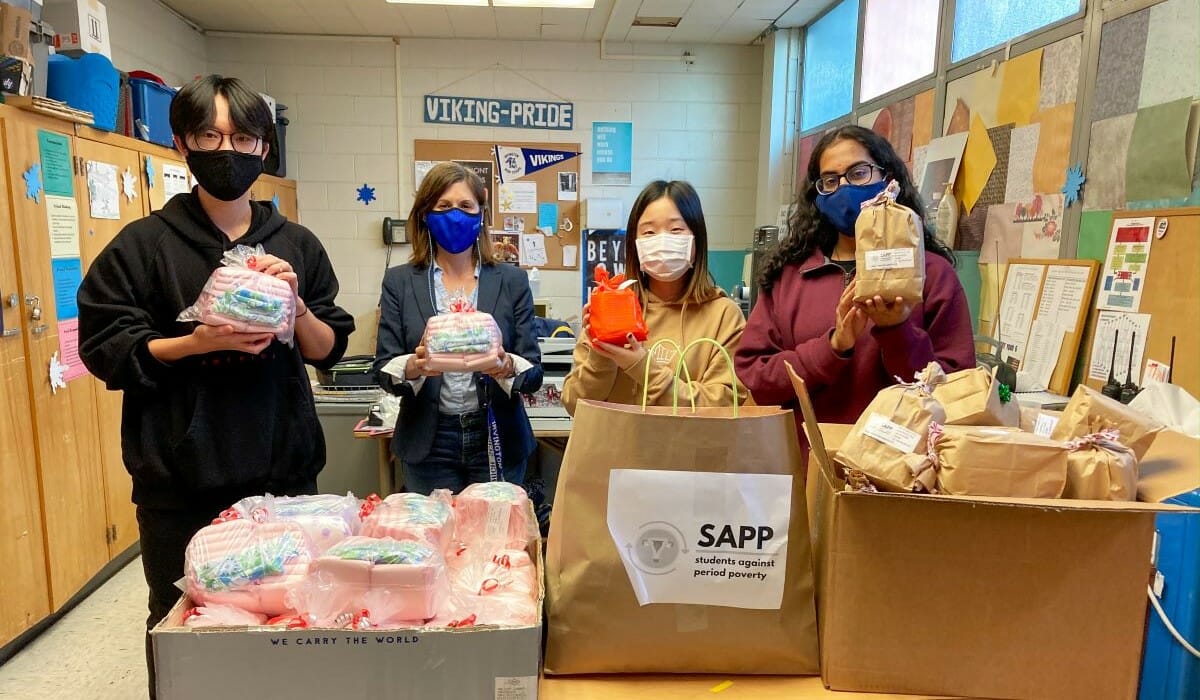
Ethan pictured with his school principal and Students Against Period Poverty executive board members. Ethan created an anonymous Grab-N-Go menstrual pickup program at his school, just one way the 17-year-old is fighting menstrual hygiene inequity./Courtesy Ethan Ye
In one word, what does volunteering mean to you?
Community.
When you’re not busy with school or volunteering, what do you do for fun?
I love walking around the neighborhood with my mom and family. I like to do hot yoga. I also like to go plane spotting.
How can readers help?
Please visit our website for more information about how you can help.
Raised in Gang Life, Los Angeles Volunteer Offers Better Future to Youngest Generation
Meet Daily Point of Light Award honoree Dynasty Taylor. Read her story and nominate an outstanding volunteer or family as a Daily Point of Light.
Growing up in a notorious area of South Los Angeles, California, around gang activity and substance abuse, Dynasty Taylor says she lacked parental guidance, and had started going down the wrong path herself before her community stepped in.
“I was raised by a single, teenage mother, both my parents were gang-affiliated and my father spent time in prison,” says Dynasty. “At one point in time, I started to go down the same path my parents went down. I was involved in a gang lifestyle, and I got kicked out of the school district. If it weren’t for my community, the teachers, the mentorship and college exposure I received, I don’t think I would have gotten out of that life.”
Founding Dynasty’s United Youth Association (DUYA) in 2014, the now 31-year-old Los Angeles resident is offering a better future to children through volunteerism and social impact.
“Because of my experiences growing up in poverty, [I wanted] to give back to my community and create something positive. I wanted to keep kids off the street and keep them from falling behind grade level and expose them to career opportunities that can help them navigate the world.”
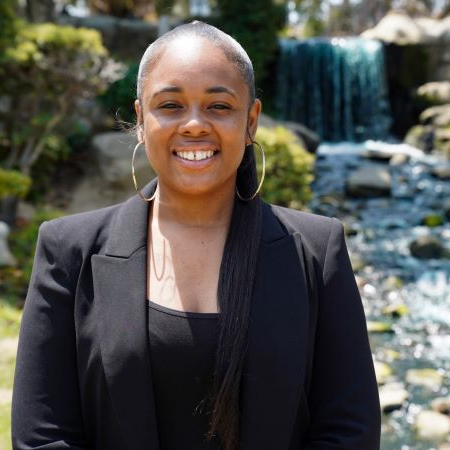
Dynasty’s United Youth Association (DUYA) founder Dynasty Taylor offers educational, career and mental health services to youth in disenfranchised communities./Courtesy Dynasty Taylor
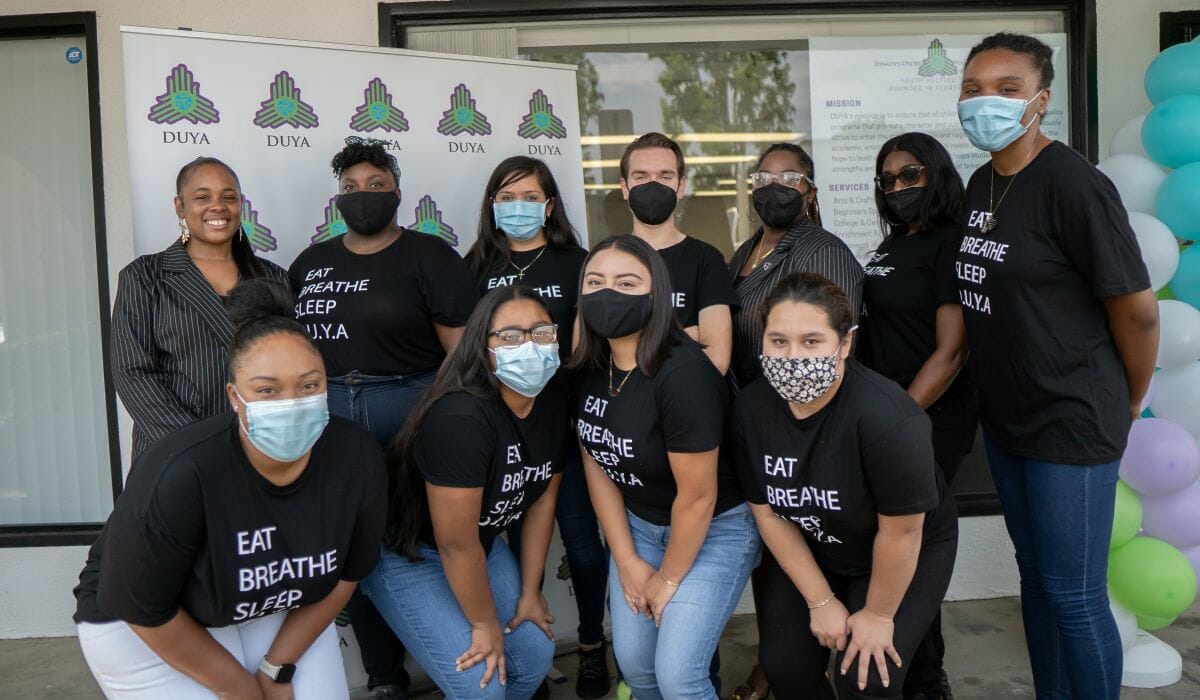
Ensuring that all children and youth have access to quality programs that promote character and cultural competence, DUYA provides free educational, career and mental healthservices to youth ages 5-18, specifically targeting disenfranchised communities. Serving more than 800 students in Los Angeles County thus far, Dynasty has established five library locations for DUYA’s after-school programs, partnering with local social services agencies and more than 100 volunteers to teach its life-changing curriculum.
Connecting with the most vulnerable youth, including students who are at risk of or falling behind grade level, Dynasty isn’t just transforming the lives of others within her community, but her own life as well, calling her service a gift.
“At a point in time, it was hard (for me) to find happiness, and I didn’t know I could find that gift of mine through giving back. The power of being an agent of change in my community and supporting families, parents and children through education, it really brings happiness to me.”
It’s hard work, says Dynasty, but leveraging her life experiences and education to volunteer means that there is support for underserved children when they need it most.
“Lift others while they climb. Finding meaning by giving back to the community doesn’t just benefit others, it benefits you. Starting at age 13, I had to navigate the world on my own because my parents and grandparents lacked education. I am taking weight off of the shoulders of the same folk I look like.”
Offering services including private tutoring, homework assistance, college and career workshops, job- readiness workshops, socio-emotional workshops, and general mental health counseling, Dynasty says DUYA’s programs are effective and return rate high. A respected member of her community, Dynasty’s service combats learning loss, particularly during the COVID-19 pandemic, says Gregory Johnson, treasurer for the United Neigborhoods Neighborhood Council, an organization that contributes to DUYA’s tutoring services.
Connecting with the most vulnerable youth, including students who are at risk of or falling behind grade level, Dynasty is changing lives across Los Angeles, California county./Courtesy Dynasty Taylor
“Dynasty and her team of tutors reach the students, the young people of our community where they’re at,” says Gregory, “bridging the educational gap that has been expanded by COVID and assuring that our students remain at grade-level proficiency. She’s dynamic, effective, efficient and very personable. No matter who she speaks with, she can relate to them. She’s seeing the need of her community and she’s working to meet those needs.”
Even launching a Virtual Learning Accelerated program during the pandemic, DUYA’s programs, which are reliant on donations, are offered at a new learning center in the heart of Inglewood in addition to the organization’s library locations. In the future, Dynasty says she hopes to offer the program in schools, juvenile detention centers, sports, parks, and libraries around the world, broadening her reach and inspiring others to give back.
“Volunteering should be a humanitarian right to give back. Every single human being has the power to change lives. The more we nourish our communities and give back, the more hope we can see in the future. The more people give back, through time, funding, words of inspiration or efforts, it can create a beautiful society and it can ignite more people to want to give back just out of generosity of heart without expecting anything in return. It is important to find your source of light and be a beacon of hope for others around you to do the same.”
Teen Helps Provide Groceries to Over 100 Food Insecure Families Each Week
Meet Daily Point of Light Award honoree Jagger Barnes. Read her story and nominate an outstanding volunteer or family as a Point of Light.
Each week, Jagger Barnes faithfully makes a call to 100 different families who are fighting food insecurity in her Highland Park and Highwood, Illinois areas to coordinate a grocery donation. The groceries are provided by the service group SaLT, which has been running the service, called Project Shop N Drop, since the beginning of the COVID-19 pandemic. Thanks to Jagger, the families she’s calling are not only receiving food they would otherwise struggle to obtain, but also a friendly ear and support system.
Jagger has been a dutiful volunteer with SaLT since she was in the eighth grade. Now 15 years old, Jagger is not only involved in Project Shop N Drop, but also helped organize both a tutoring program and a coaching program for the families’ kids. She has also been on four different service trips with SaLT, the most recent being a trip to New Orleans this past month to provide disaster relief after Hurricane Ida.
Describe your volunteer role with SaLT.
SaLT stands for Service and Learning Together. SaLT is an amazing organization which originally took students all around the United States for travel, but had to pivot due to Covid. [Then SaLT started] Project Shop N Drop, where we serve local families fighting food insecurity on a weekly basis. In the past 19 months, we have put in 4,426 hours of service. We have completed 4,664 pickups and deliveries, and 13,162 bags of groceries went to 776 people in 185 families. All these families are local and fighting food insecurity. I’m a student leader and intern for Project Shop N Drop and SaLT Serving Safely.
What do you do as a student leader and intern?
I am fluent in Spanish. We have our hundreds of families we serve on a weekly basis. I connect and make a phone call to all 100 of those families who are majority Spanish speaking. Every week I call and connect to confirm, because we have two ways our families receive the grocery items — a pick-up if they’re able they come to our site, or a delivery will be made. It will be no contact, and we’ll coordinate that. We have teams of deliverers who do that on Saturday mornings along with other volunteers. On a weekly basis we prepare, we collect donations, and we try to get as many people involved as we can, because we strongly believe in being stronger together.
Can you describe Love2Learn?
Jagger Barnes provides disaster relief in New Orleans during an October 2020 service trip with SaLT./Courtesy Jagger Barnes
Love2Learn was a student-to-student tutoring program. We had high school students who came to volunteer and tutored the students in our [Project Shop N Drop] families. This was the first teacher or school role that the students had been involved in since school shut down around March [2020.] It was really awesome to get the students back. We made learning really fun and something students could look forward to. … We are starting back up again in November which is super exciting.
What about DreamBIG?
This was another opportunity for our students. It was primarily focused on our students’ passions and what they love to do. We had soccer, we had art classes, we had dance, we had basketball — a bunch of different things that our students could come and connect with others who shared the same passion they did.
What was your most recent service trip to New Orleans like?
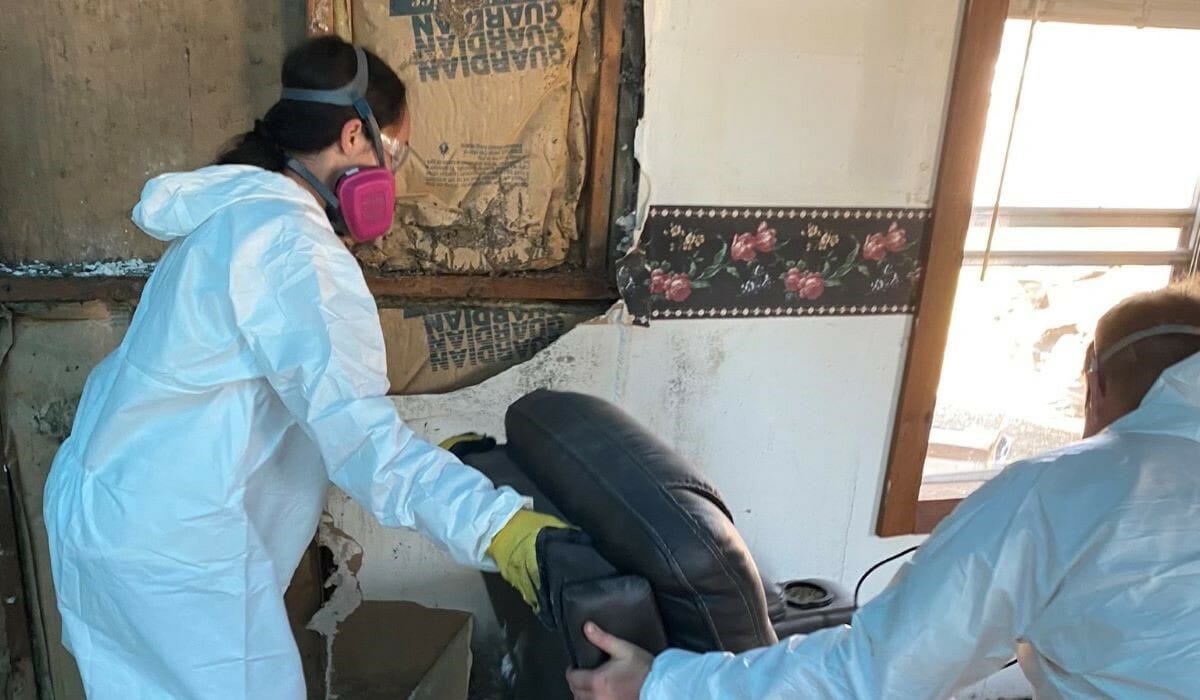
We went to New Orleans and we worked with a couple different nonprofits. We worked with SBP in relief of Hurricane Ida. We suited up in respirators, Tyvek suits, and a bunch of protective gear, and we gutted a house that had molding and wind damage from the hurricane. It was really incredible to be so hands on and help right on the front line in relief. This was less than an hour outside New Orleans. On the drive there, it was crazy to see how much this hurricane had impacted the community. We also worked with the nonprofit Youth Rebuilding New Orleans, working on a house that even 16 years after Katrina is still facing the impacts and the neighborhood is still filled with blight.
Have any of these projects been particularly special for you?
Shop N Drop is very, very special to me as I get the opportunity to connect with our families and I have a relationship with them, as I’ve kept in contact weekly with them for the past 19 months. The most important thing is realizing that going through a pandemic when you’re in need is so incredibly hard, and providing our families with a support system and someone they can call if they need help. We’ve helped our families not just with the food items. We’re helping them through difficulties paying rent, eviction, helping them put a meal on the table for a special occasion. We celebrated a virtual baby shower. The little things are so important.
What’s been the most rewarding part of your work?
Experiencing the gratitude from our families and knowing that I’m helping. What I like to think about when we’re on Zoom, the community members you’re helping are the people who you might not know sit next to you at school, your neighbors even. You never know. Even though you might not know who exactly you’re helping, that shouldn’t matter. You just need to know it’s for the greater good.
Jagger Barnes, left, helps gut a house damaged by Hurricane Ida during her most recent SaLT service trip to New Orleans in October 2021./Courtesy Jagger Barnes
What have you learned through your experiences as a volunteer?
I have developed life long skills. I never would have imagined myself here today. My perspective, my attitude, and my outlook on life have changed so much. I’ve met so many incredible people that I’m so grateful to know.
What do you want people to learn from your story?
The importance of service and learning together. It’s amazing to do good, but if you add the learning aspect, you understand why it’s so meaningful and you understand how you can educate others. It all starts with educating yourself. Educate yourself and inform others and always bring it home, because word of mouth is so important. Word of mouth how we’ve been here 19 months strong.
Through 800+ Hours of Service, Octogenarian County Fire Volunteer Keeps Community Safe
Meet Daily Point of Light Award honoree Mary Troup. Read her story and nominate an outstanding volunteer or family as a Daily Point of Light.
84-year-old Mary Troup has volunteered more than 800 hours over the past decade with the Ventura County Fire Department, keeping families in her community safe and encouraging others to get involved.
The Camarillo, California resident says she first completed her county’s Community Emergency Response Team (CERT) course, and so enjoyed the education, she decided she wanted to help prepare others through service. From distributing disaster preparedness to educating children about fire safety, Mary’s dedication is helping to protect her neighbors and community.
What inspires you to volunteer?
I’m alone and volunteering allows me to be more active in the community, and it helps me mentally too. I was once attacked, and feel safe in this environment with the firefighters. I see how good they are and how much they try to help the community, from fighting fires to preparing people for disasters.
You’re in your 80s, but actively engaging youth in your community. Explain.
I find it real refreshing to volunteer, and I get to meet a lot of people through service. We educate children in the community and encourage them to get involved. The fire department has a camp for underserved girls, where female firefighters speak with them and show them that if they set their mind to a challenge, they can do it. I’ve had to struggle in my life, and I don’t want to see them struggle like I had to, but I still want them to appreciate the work. You have to fight for it.
Describe your volunteerism with the Ventura County Fire Department.
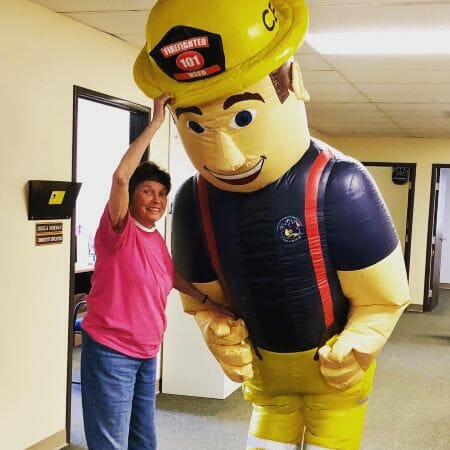
Mary pictured with the fire department mascot, Firefighter Robby./Courtesy Ventura County Fire Department
I distribute disaster preparedness and safety information at community events, escort the fire department mascot to attract children and parents to educational booths, and prepare thousands of children’s educational bags each year that contain coloring books, smoke alarm calendars and exit drills. I also act as the victim for the department’s drill search program.
Share one personal story with me from your volunteerism.
We had a storm that knocked out our electricity, and I had extra lanterns that I took upstairs to a lady. She only had candles and was grateful for my help. Volunteering is all about helping the community. I wish I could do more.
Why do you think it’s important for others to give back?
Volunteering is good for your soul. People are struggling, and contributing a little bit makes you feel good.
What’s been the most rewarding part of your service?
It’s rewarding to be able to offer help. Some people are not prepared, and they don’t think about preparing for disasters. We’ve had forest fires, earthquakes and floods right in our own community. If you can get your neighbors together, you find out they have different talents of all sorts and you can unite to make a difference.
As a volunteer with the Ventura County Fire Department, Mary Troup is keeping families in her community safe./Courtesy Ventura County Fire Department
In one word, what does volunteering mean to you?
Uplifting.
You’ve volunteered with VCFD for nearly ten years. What’s next? Another decade of volunteerism?
Another decade? (Laughs) I don’t know at my age. So far, what I’m doing at my age hasn’t complicated anything yet. It would be nice. Ask me again in ten years.
Over 10,000 Hours of Service, Conservancy Volunteer Loves the Land and Passes it Forward
Meet Daily Point of Light Award honoree Paula Dreeszen. Read her story and nominate an outstanding volunteer or family as a Daily Point of Light.
Interlochen, Michigan resident Paula Dreeszen says she’s always enjoyed working outside. The 63-year-old volunteer is now dedicating her time to loving land and passing that passion forward.
As a volunteer with the Grand Traverse Regional Land Conservancy, Paula has volunteered more than 10,000 hours over 16 years to protect and restore the natural world. Caring for a group of nature preserves near the Eastern shoreline of Lake Michigan totaling more than 10 properties and over 5,000 acres of land, Paula is volunteering for a greener future and inspiring others to follow in her journey.
What inspires you to volunteer?
I enjoy working outdoors and learning new things. I had just moved to Michigan when Grand Traverse Regional Land Conservancy purchased a nature preserve near where my family vacationed when I was a child, so I was particularly interested in volunteering with this cause.
Describe your volunteerism with the Grand Traverse Regional Land Conservancy.
As a volunteer preserve steward, I help to build trails, maintain existing trails and keep preserves enjoyable for guests. I also do some habitat restoration and research, including counting birds and leading hikes and education through our citizen science bird and plant observations.
Share one personal story with me from your volunteerism.
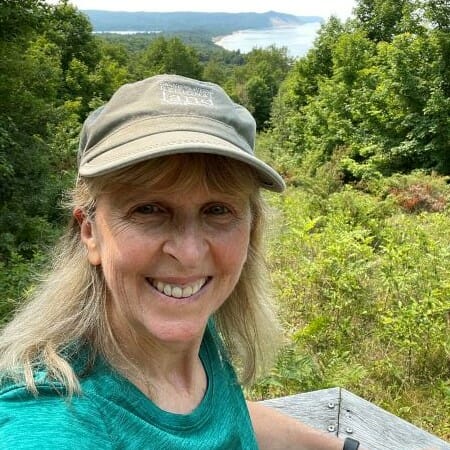
Paula Dreeszen is volunteering for a greener future and inspiring others to follow in her journey with the Grand Traverse Regional Land Conservancy./Courtesy Paula Dreeszen
Several years ago, staff was not able to keep up with removing garlic mustard in the spring. I jumped in and spent long days doing invasive species control, which removes invasive plants that can harm other plants, and pulled it all. The staff thanked me, and it was nice to receive their appreciation, as I know I filled a gap for them controlling this weed and helped to preserve native wildflowers.
Why do you think it’s important for others to give back?
I get a lot out of volunteering myself. You learn new things, you get to talk to people on the preserve and see them enjoy it. The organization I volunteer for can’t get it all done with staff alone, they give opportunities and leadership to volunteers, who are essential to maintaining preserves.
How have you continued to volunteer throughout the COVID-19 pandemic?
I led in-person wildflower hikes for more than 10 years, but in 2020, we didn’t have any in-person events. We recorded a video of me leading a hike through the woods, and posted the video online, so people could learn about the hikes and go on their own time.
What do you want people to learn from your story?
Find a volunteer opportunity that is fun. Also, respect the trust an organization gives you when you volunteer. When you promise you’ll do a task, make sure you do it. That’s how you get more responsibility.
What’s your favorite wildflower you’ve come across volunteering?
My favorite wildflower! That’s like when someone has children and you have to pick your favorite kid. Out of the spring wildflowers, the Trillium. Everybody picks it. I have a half-dozen favorites.
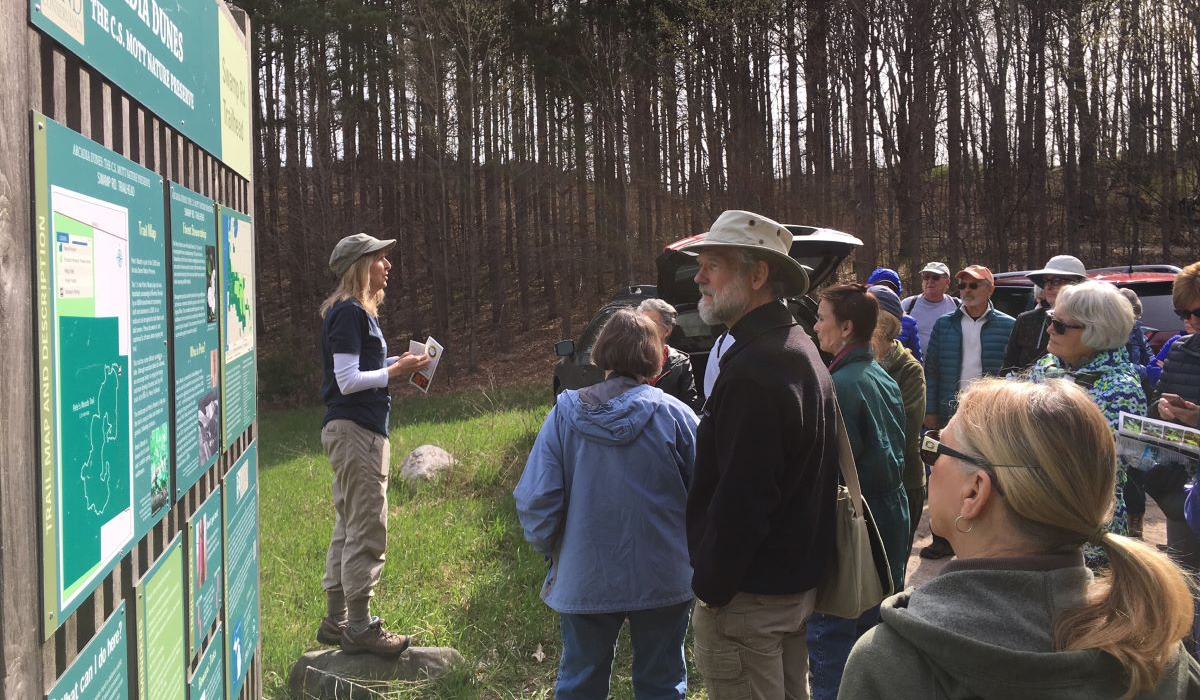
Paula pictured at Pete’s Woods, Arcadia Dunes, leading an in-person spring wildflower hike. In response to the pandemic, Paula’s hikes were recorded in a series of videos posted online so visitors could enjoy the walks on their own time./Courtesy Paula Dreeszen
In two words, what does volunteering mean to you?
Second career.
How can readers help?
Explore your own community and resources to see how you can preserve the environment. To learn more about the Grand Traverse Regional Land Conservancy, please visit their website.
Teen Serves Red Cross Through Educating Young People on Disaster Preparedness
Meet Daily Point of Light Award honoree Hamid Torabzadeh. Read his story and nominate an outstanding volunteer or family as a Point of Light.
The American Red Cross has always been a familiar name for Hamid Torabzadeh, whose family regularly donates blood, as well as to the organization after natural disasters. When Hamid learned of a Red Cross club at his high school when he was a freshman, he knew he immediately wanted to sign up.
Now a senior, Hamid remains a dedicated volunteer to the Red Cross. He currently serves as a field ambassador for the Los Angeles region, functioning as a liaison between the National Youth Council in New York and the youth program in Los Angeles. He also leads the organization’s READYteens Program, which focuses on educating young people in the Los Angeles region on disaster preparedness, response, and recovery.
Describe your volunteer role with the Red Cross.
In the past year, I’ve had the opportunity to serve as field ambassador for the Los Angeles region, which is a youth opportunity for young adults to take initiative at a regional level. I’ve been working with National Youth Council, which is a 13-person body that represents the American Red Cross youth program on a national level, and basically serving as a liaison between NYC National Youth Council and the LA region’s youth program. That means overseeing our 3,000 youth volunteers, our more than 150 clubs, and our five youth corps, which are our different territories across LA, including Long Beach, South Bay, and Southeast LA.
With that opportunity and leadership role, I had the chance to lead our READYteens program and contributed to the expansions of the program. The READYteens program is committed toward educating youth, with a focus on high school level, in disaster preparedness and response and recovery. This is one of the core lines of service for the Red Cross, training services as well as disaster cycle services, so we’re blending those two services to get more youth engaged with the Red Cross mission. The heart of the program at the beginning, before I was field ambassador, was just a summer program. Since becoming field ambassador, I’ve taken initiative to continue the summer program and expand it nationally, as well as lead year-long efforts including our READYteens preparedness workforce which is in the LA region. It enables year-long activities as well as a READYteens boot camp and club academy, which goes over the same content in disaster preparedness response and recovery.
Why did you want to get involved with the READYteens Program?
Hamid Torabzadeh serves as a dedicated volunteer to the American Red Cross, for whom he is a field ambassador for the Los Angeles region and leads the READYteens Program./Courtesy Hamid Torabzadeh
I want to pursue the medical field, and I’m very interested in public health. The READYteens project in particular was a really cool opportunity to combine medical training like CPR, first aid, basic life support, administrating emergency oxygen, stop the bleed, programs like that, with focusing on youth voice and preparing them for future disasters that could arise. In the program, we cover all sorts of content, including things like triage, communications during disasters, first aid medical, bleeding emergencies, Incident Command System, disaster mental health, and all these relevant topics that can be used at these students’ school campuses as well as in their regular daily lives. It’s been a really awesome experience to be able to impact a lot of youth in that way.
Why do you think its important for youth to get involved with the Red Cross?
Red Cross is driven 90 percent by volunteers. Youth are becoming a bigger part of that. I think as future leaders of our communities, it’s important to show youth they can be involved, that they have a voice, and they can shape better practices, more education, more preparedness, and things like that for future generations, so that our communities are healthier, safer, and more connected. Beyond that, the Red Cross youth program emphasizes leadership development and personal character development. Within READYteens, of course we have the focus on disaster preparedness content, but we also have a focus on youth leadership voice and individual character development to really form an impactful youth that is aware of the community and wants to do more for the community.
Is there any memory from your time with the Red Cross that particularly sticks with you?
In the first summer program for READYteens, we did a triage exercise which had more than 150 people — youth mostly, with a few adult volunteers. We put a whole simulation on mass casualty incident and being able to respond to, in that case I think it was a 20-car collision. We were categorizing people based on their accident, based on their medical status, and medical condition. I think it was really eye opening to see how that was managed.
Are there any future partnerships, programs, or events that you are excited about?
Youth Focus will be doing YFAST stations, so youth-first stations, January 1st during the Rose Parade here in Los Angeles. Youth are very involved to serve people in the parade through these first aid stations. We’ll be helping out those who require medical assistance. Red Cross has National Youth Involvement Month in November, so if there are any other youth out there who want to get involved with the Red Cross, November is the best time to do so.
Hamid Torabzadeh attends a CPR training during the American Red Cross’ READYteens summer 2019 program./Courtesy Hamid Torabzadeh
What’s been the most rewarding part of your work?
I think the most rewarding part of my work is being able to see the impact on people who are the same age as me. I’ve always learned from a lot of different people, so being able to impact others and for them to learn from me through the READYteens program, through my teaching of different subjects, through my training instructions, through my presentations, simulations, exercises, etc. It’s been very rewarding to be able to have these students come back and say thank you for teaching me this. Some people older than me say, now I’m going to college and pursuing this because I was really fascinated by your presentation on Incident Command System or something like that. That’s been really rewarding, being able to support youth who are the same age or even older than me and sometimes to hear back from them that I’ve been able to contribute to them in some way.
What do you want people to learn from your story?
I think the biggest thing is to get involved. I think there are a lot of different ways for people to get involved. The reason I got involved with the Red Cross is because I was passionate about healthcare work and community work, so I really wanted to use my passion and my interest and my experience and my skills to do some good work. There are lots of opportunities out there. I think when we focus on what our passions are and what skills we want to develop, and we translate that into doing community work, it’s a really good mechanism to gain some skills and explore your passions a little bit more, whether that be medicine or anything else.