“Lasagna Love” Sparks International Volunteerism to Feed Half a Million Hungry Amid Pandemic
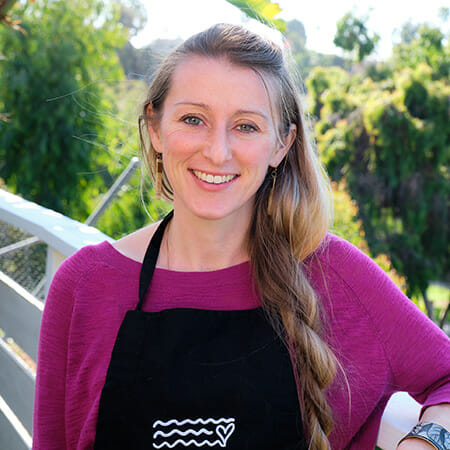
Meet Daily Point of Light Award honoree Rhiannon Menn. Read her story and nominate an outstanding volunteer or family as a Daily Point of Light.
Rhiannon Menn was at home in San Diego, California when her community started shutting down because of the COVID-19 pandemic. The mother of three says when she realized how many people were truly struggling and going hungry, she evaluated what she could offer.
“When everything shut down, I felt incredibly helpless,” says Rhiannon. “There were no volunteer opportunities because everything was closed. I love to cook and genuinely felt I needed to do something because there were so many people hit hard in the early days. Cooking to me made sense, so much to my husband’s chagrin, our kitchen was a disaster for months straight. There was sauce on the walls, cases of noodles everywhere I could store.”
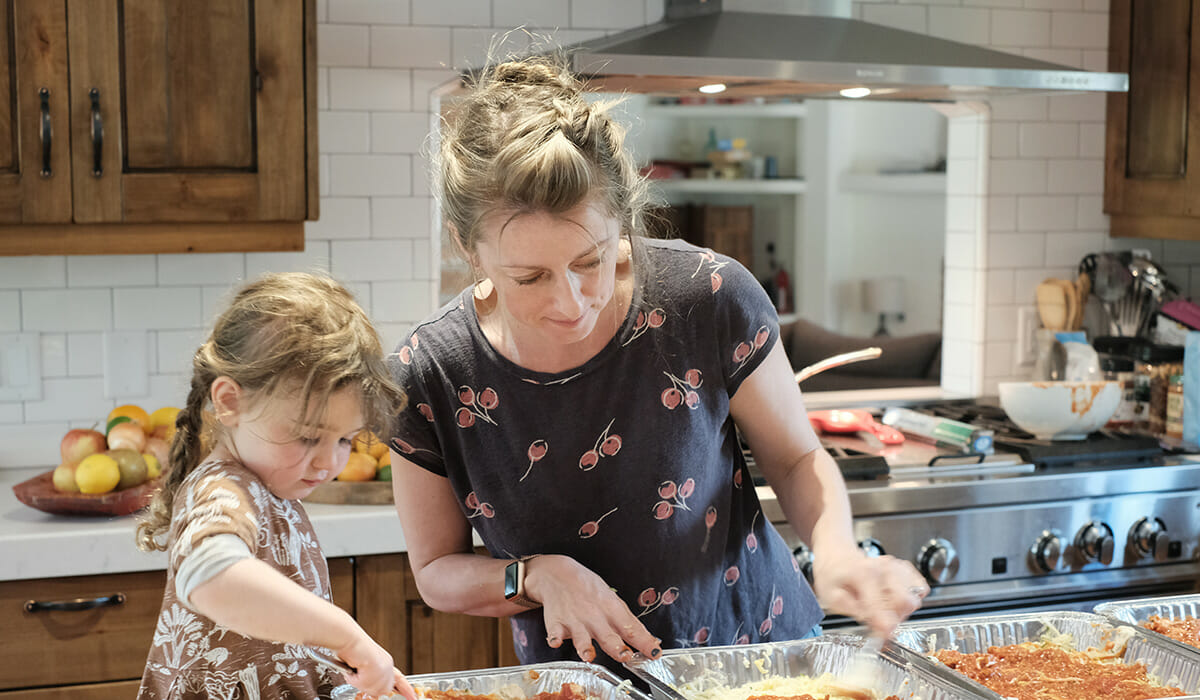
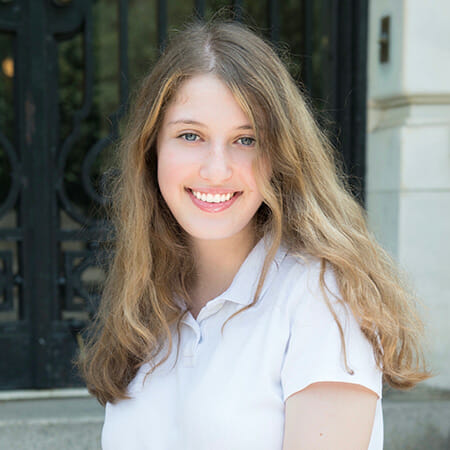
As the founder of Lasagna Love, 38-year-old Rhiannon, now of Kihei, Hawaii, is helping thousands of volunteers across the United States and internationally to positively impact their communities through homemade meal delivery. First posting about her initiative to help families in need on Facebook groups during the pandemic, the organization has since facilitated the delivery of more than 120,000 lasagnas, with 20,000 volunteer “chefs” feeding nearly half a million hungry mouths. Helping to deliver nourishment during a worldwide crisis and strengthen community bonds, Rhiannon says lasagna is really just the start of how she’s uniting communities.
The founder of Lasagna Love, Rhiannon Menn, is helping thousands of volunteers across the United States and internationally to positively impact their communities during the COVID-19 pandemic through homemade meal delivery./Courtesy Rhiannon Menn
“Lasagna to me is comfort food you bring to someone when they’re going through something, whether it’s a celebration or something hard. It shows love and comfort and I wanted to deliver that in addition to delivering a meal. Many people use their own lasagna recipe, but at this point, some people don’t even use lasagna anymore. We empower people to cook what their comfort food is. (Our volunteerism has) become about kindness and putting kindness into our communities. That’s at the core of what we’re doing.”
Connecting neighbors with neighbors, Lasagna Love matches families/volunteers to other families nearby or in their communities who are in need of a meal and kindness. As there’s no age requirement for cooking up kindness, Rhiannon says she has volunteers of all ages, including an 8-year-old chef who spotted a news segment about the organization on TV, and asked her mom to join the effort. Even getting her children, daughter Cimorene and son, Moseah involved, Rhiannon is seeking to eliminate stigmas associated with asking for help, particularly with other moms when it’s needed the most, she says.
“Early on, a mom reached out because her family’s fridge was broken. She couldn’t afford to have it fixed because she had lost her job due to the pandemic. She was taking care of her six-month-old baby, mother and sister, and told me she’d been eating ramen noodles for two weeks. My heart just broke. I remember driving up to her house and seeing the white fridge right outside her door and just wanting to do more. I tried to bring a lasagna to this family at least once a month in the beginning, and I would drop off extra baby food pouches for her daughter. That story stuck with me and stories like that are what keep me going, even when I’m exhausted and things are crazy.”
Amidst the craziness, Rhiannon says her lasagna recipe is one thing that remains consistent: a blend of turkey and brown beef, sauce from scratch, cheese and two secret ingredients: grated zucchini and yellow squash. It’s her recipe for spreading kindness, love and care during such an unpredictable time, says Lasagna Love volunteer Angela Rosenblatt, that is constantly evolving to positively address hardship around the world. Angela, a San Diego, California resident and one of the original Lasagna Love chefs, has made around 1,500 lasagnas with her 6-year-old daughter since the start of the pandemic.
Since the start of the pandemic, Lasagna Love has facilitated the delivery of more than 120,000 lasagnas, with 20,000 volunteer “chefs” feeding nearly half a million hungry mouths. /Courtesy Rhiannon Menn
“People were really struggling, and in the midst of time where people were facing food insecurity and insecurity overall, Rhiannon was able to confer hope to people,” says Angela. “The world was in absolute turmoil for many reasons, and a simple opportunity, somebody you don’t even know is able to provide a meal to you, and they care enough to buy something tangible for your family, is really impactful. (It’s a) trickle down impact, one person shows kindness, so what other ways can we show kindness in our community.”
Her heartfelt volunteerism has made a tremendous impact with families in need, and is changing the lives of recipient families and volunteer families alike. Just as rewarding, Rhiannon says, is how personally fulfilling her service is, as she helps others and shares a lasting experience with her own family about the importance of giving back.
“(My daughter,) this adorable little girl, learned how to layer noodles, and learned how to help people when they needed it most. We’d talk about it in the car, about how some kids didn’t have dinner to eat that night, and what it meant to help families that were struggling. It makes my heart feel full and it gives me hope because I know from talking with (recipients of our lasagna) that it’s not just the meal, it’s that a stranger would provide that random act of kindness, that gives them a feeling of love and hope. And I think that’s just as important as the meals we’re providing. That kindness we’re putting out into the world has a huge impact.”
Passionate Supporter of Environment and Animals Turns Rock Climbing Hobby into Service
Meet Daily Point of Light Award honoree Alexander Tsao. Read his story and nominate an outstanding volunteer or family as a Daily Point of Light.
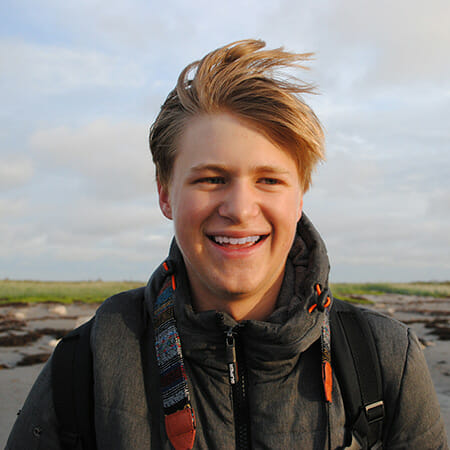
Alexander Tsao of Seattle, Washington was raised to be passionate about conservation, so when the 18-year-old began rock climbing, he discovered a way for the climbing community to support the environment.
Launching Rocks2Dogs in 2019, Alexander is upcycling used rock climbing ropes to support no-kill animal shelters and local charities. Due to safety regulations, Alexander says thousands of ropes are sent to landfills each year, but the college freshman is rescuing used ropes and turning them into dog leashes, the profits from the leashes being donated for good. Selling his leashes in 45 states and working with organizations across the country, Alexander is promoting sustainability and helping vulnerable animals through his volunteerism.
What inspires you to volunteer?
My desire to give back was fostered by my parents. They would host food drives at our house, and my mom and I would volunteer together at a local food bank. I put my best effort forward to make an impact on my community. We rescued my dog, Jinger, a labradoodle, and she served as a big inspiration for me to support animal shelters through my service.
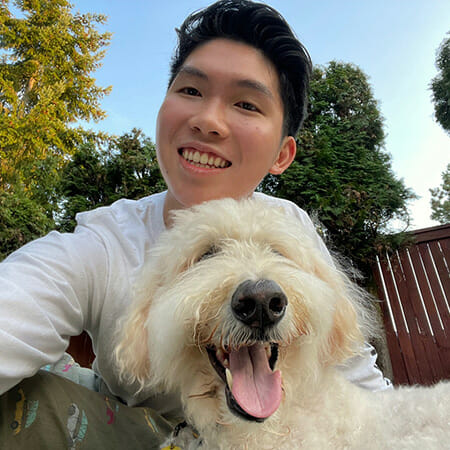
Founder of Rocks2Dogs, Alexander Tsao, pictured with his rescue dog, Jinger. Jinger inspired Alexander to support animal shelters through his service./Courtesy Alexander Tsao
Describe your volunteerism with Rocks2Dogs.
As founder, I select organizations to donate money to, manage our finances and partnerships and coordinate volunteers. I also make and market the leashes. We’ve donated more than $20,000 thus far from leash sales.
Explain how you make dog leashes.
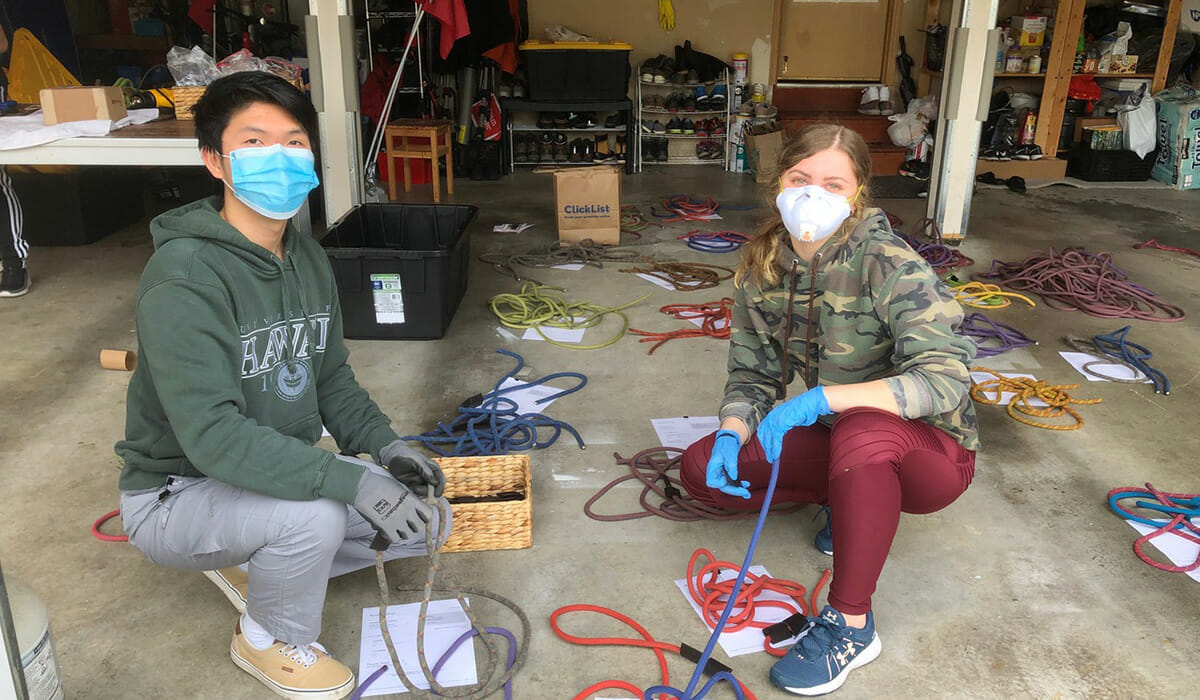
It’s a lengthy process. After washing the ropes and letting them dry, we cut them into appropriate sizes and burn the ends of each to prevent fraying. I attach metal hardware and fasten the leash before packaging it for distribution.
Share one personal story with me from your volunteerism.
Some community organizations and food banks had to limit physical donations they were able to accept during the COVID-19 pandemic, and the Redman School Break Food Box Program asked for more financial help during the pandemic. They were going to have to decrease the amount of food they give to families, but because of our monetary donation, they did not have to make those changes. Donating money sometimes feels disconnected because you don’t get the opportunity to see where it goes directly, but in this case, we saw how it was positively impacting people in our neighborhood. That really motivates me to continue giving back and helping people who are going through a difficult time.
Why do you think it’s important for others to give back?
Volunteering helps an individual feel more connected to their community. When you give back to others, that service inspires you to do more and gives you perspective on how your privilege can support other people who may need it more than you do.
Alexander pictured making dog leashes with Rocks2Dogs volunteer Jocelyn Leiter./Courtesy Alexander Tsao
What’s in the future for your volunteerism?
The organization will evolve now that I’m at college, but I feel like I started a strong community of supporters and volunteers back home who are willing to help me continue our service. I’m inspired to grow Rocks2Dogs and do as much as we can for the community and possibly beyond.
In one word, what does volunteering mean to you?
Connection. Volunteering connects you to yourself, your community and your perspective on the world.
How can readers help?
Please visit the Rocks2Dogs website for more information about how you can help.
Teen Starts Medical Nonprofit to Help Fight World’s Greatest Health Problems
Meet Daily Point of Light Award honoree Krish Wadhwani. Read his story and nominate an outstanding volunteer or family as a Point of Light.
After witnessing many of his family members and others close to him deal with medical complications and disease, Krish Wadhwani found himself in a lifelong fight against many significant health problems. This led the Alpharetta, Ga.-based teen to found HD Solvera, a multipurpose medical nonprofit, in May 2019 when he was only a freshman in high school. The nonprofit aims to enhance the quality of healthcare around the world through conducting biomedical disease research, assisting healthcare centers with direct patient care, and donating to hospitals.
Most recently, Krish is leading HD Solvera in addressing the increased mental health crisis brought on by the COVID-19 pandemic. The 17-year-old is working on an iOS app that will help provide individuals with coping skills for everyday stress, as well as providing free therapy sessions to primarily high school students. Krish encourages anyone interested in either working with HD Solvera or providing the nonprofit suggestions to contact them via their website.
Describe your volunteer role with HD Solvera.
I serve as the chairman and founder of HD Solvera, which is a multipurpose medical nonprofit. As the founder, my job is to make sure our main goal is accomplished, and that goal is to enhance the delivery of quality healthcare to all people and to lessen the damage of the world’s most significant health problems. The organization accomplishes this through three main facets, and that’s conducting biomedical disease research, assisting healthcare centers with direct patient care, and providing monetary support to hospitals. For example, I lead the research projects we conduct, and have presented them at conferences like the Missions Health Conference and America’s Young Scientist Challenge. We have around 50 interns who collectively run care groups and provide support to numerous departments and healthcare centers throughout the southeast United States. I also get our volunteers connected with fundraisers and opportunities to raise money for hospitals. We’re looking to give this money to smaller health service operations in areas where healthcare is not widely accessible, so for me, that’s areas in the southern Georgia region.
What inspired you to start HD Solvera?
I’ve always been interested in medicine because I always found myself asking the ‘why’ behind life. I’ve witnessed many family members and individuals go through medical complications and diseases, so I felt like my role in the community was best served to battle these diseases. This organization is how I lead this battle, and I guess what you can now call a lifelong fight against numerous diseases.
Krish Wadhwani serves as the founder and chairman of HD Solvera, a multipurpose medical nonprofit./Courtesy Krish Wadwani
Why did you want to focus on the recent mental health crisis?
As you can see with the pandemic, many age groups suffered with their mental health. For example, it may not be as common with high school students, but adults dealt with job loss or they were potentially hospitalized by COVID. There were so many factors that led to mental health being down. With teenagers in particular, not being able to see anyone for such a long period of time, and maybe losing so many connections because of the pandemic, definitely takes a toll mentally. I personally relate to that. There’s numerous things you can do to improve your mental health. I practiced in all of that after the pandemic, and that’s what I want to share through the iOS app I’m developing, and also working with some psychologists to provide some free therapy sessions. I know therapy is very expensive, but if we can provide some free sessions, I know that’s going to be able to make a difference.
Do you have any goals you would like to see HD Solvera accomplish?
I would like the organization to simply conduct more research and also impact healthcare centers internationally. We have started working with healthcare centers in India and Pakistan, and I want to expand this to third world countries where the doctor-to-patent ratio is not always sufficient. Obviously that is going to take a lot of time and effort, but I know if we bring on more volunteers and more directors, we can definitely have more of an international scope.
Are there any future partnerships, programs, or events that you are excited about?
One conference that we are going to present at is the International Conference on Behavioral Health. I will be presenting a research study on synthetic molecules and their impact in treating conditions of dementia such as Alzheimer’s and Parkinson’s. The research looks at potentially a new therapy that can medicate these diseases and potentially stop the progression of the disease onset.
What accomplishment are you most proud of?
What I am most proud of is winning the International Therapeutics Summit. My research project was recognized out of more than 200 college and high school students who applied. I think that was definitely one of the main highlights for my research for this organization. The project was similar to what I will be presenting at [the International Conference on Behavioral Health]. It was investigating synthetic molecule development that is used to medicate Alzheimer’s and Huntington’s disease patients.
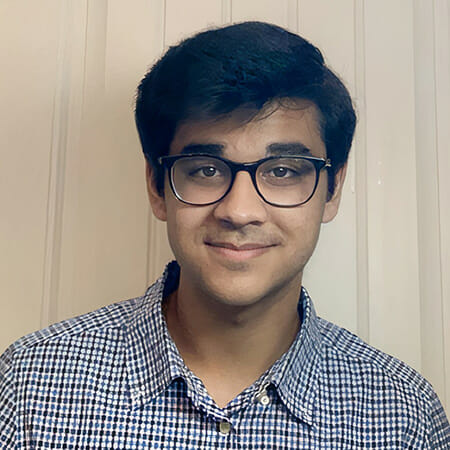
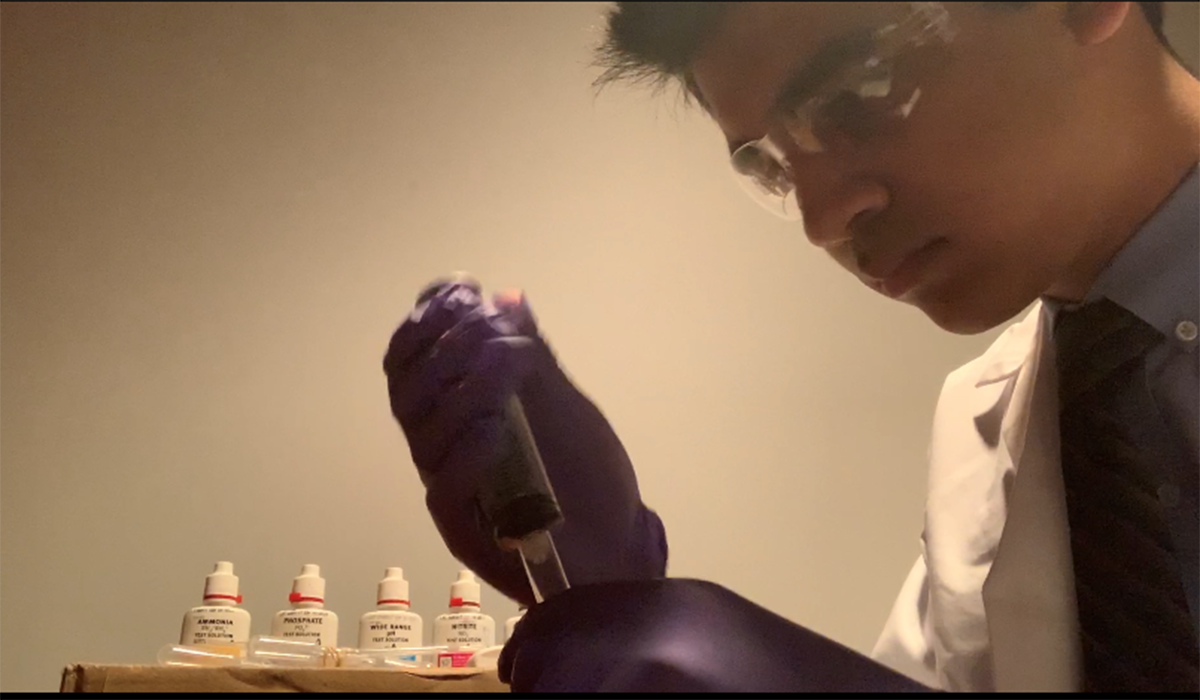
Krish Wadhwani conducts research for his nonprofit HD Solvera in his basement after COVID-19 led to laboratory closures./Courtesy Krish Wadwani
Why do you think it’s important for others to give back?
I think giving back to the community in your own way is important because when we all collaborate on different issues, then we’re progressing society. We’re leaving a better future for the generations to come. I think that’s one of the most important things we can do in our own communities.
What do you want people to learn from your story?
The number one thing I want to tell people, and I really want to emphasize this, is you shouldn’t do something just for a resume. You also don’t need to feel complied to start your own organization just because you see so many other teens starting nonprofits. I started my own organization because I felt a community need that I felt passionate about was not being addressed on a local scale. If you believe a community need is not being addressed, by all means, start your organization, but don’t feel forced. You can always be involved in existing organizations. Be passionate about the issue, and definitely don’t do anything for a resume.
Meet Daily Point of Light Award honoree Bonnie Pugh. Read her story and nominate an outstanding volunteer or family as a Daily Point of Light.
Your voice matters, you matter. These are the words that attorney and advocate Bonnie Pugh works to instill in the minds of kids and teens. Whether it’s representing a child for a few days or multiple years in court — Pugh’s extraordinary ability to listen and validate her client’s voices is changing lives. She’s been a volunteer attorney with the Montgomery Child Advocacy Project since 2012, and is relentless in her efforts to represent children as they navigate the complex legal system.
Volunteer “MCAPs” are dedicated to ending and preventing child abuse and neglect in Montgomery Country through legal services, advocacy, and education. Founded in 2004 by two former district attorneys, MCAP currently has 125 trained volunteer attorney advocates who give close to 7,400 hours each year to the children they serve. In nearly a decade MCAP volunteers have reached almost 8,000 child victims of neglect, trafficking and abuse. The organization also provides resources for children and families in need outside of legal services and accepts volunteer support in the forms of advocacy, donations and event assistance if eager volunteers aren’t legal attorneys.
At MCAP, Pugh can be found investigating her client’s cases, explaining the legal process, attending court dates and presenting findings, but most importantly, she continuously listens and validates her client’s voices. Pugh is motivated to get to the bottom of an issue and be a part of the solution by trying to resolve whatever harm is occurring. At the end of the day, she just wants to see children in safe environments.
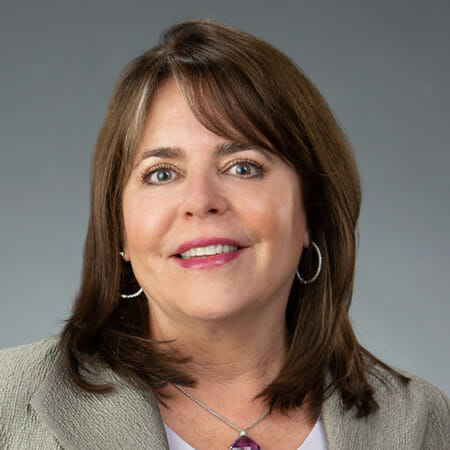
Philadelphia native Bonnie Pugh volunteers with the Montgomery Child Advocacy Project as an attorney and advocate and works to represent vulnerable children in the legal system./Courtesy Bonnie Pugh
A Philadelphia native, Pugh always saw herself as a lawyer. In the first three years of her now three decades of practicing law, she was a prosecutor in Montgomery county. After working as a prosecutor, the idea of going to court and speaking in front of judges on behalf of children as a MCAP was not intimidating.
“What continues to pique my interest in being a child advocate is giving a kid a chance and not letting them slip through the cracks in a system that can swallow anybody whole,” Pugh said. “The thought of somebody harming a child is so foreign to me, whether it’s emotional or physical, and it inspires me to offer time to children who are less fortunate.”
Pugh has volunteered with many children, but in 2017, Pugh’s instinct and tenacity helped get two children and their mother out of an extremely dangerous situation. Now, their perpetrator is spending at least 40 years in prison for the physical and emotional harm they caused the family.
Volunteering brings a sense of pride to Pugh, and she believes that if people have any inclination to volunteer, they should do it, even if it’s in the smallest capacity. Even in the midst of her busy life as a full time lawyer, volunteering is a priority to Pugh.
“Every little act of kindness or volunteer hour makes a difference in somebody’s life,” Pugh said.”It makes me think of my own children and it means a lot to me to help other children who otherwise slip through the cracks.”
Now, volunteering is a family affair as Pugh, her two attorney brothers and her sister-in-law have worked with MCAP in some capacity. Her sister-in-law, Mary Pugh, has been involved with the organization since its founding and her work inspired Pugh to complete volunteer training. Pugh’s 20 and 22-year-old daughters have also seen her volunteer as a lawyer for years and continue to value volunteer service in their lives.
Her efforts have not gone unnoticed. Each year, Pugh’s employer, Exelon Corp, hosts its Exelon Powering Communities Employee Volunteer Awards. The Excellence Award went to Pugh in June of 2021 with $20,000 granted to MCAP on her behalf.
First-Generation Student Helps Peers Navigate College Application Process
Meet Daily Point of Light Award honoree Julia Sun. Read her story and nominate an outstanding volunteer or family as a Daily Point of Light.
Julia Sun was celebrating her 18th birthday on July 28, 2020, when the Barrington, Illinois teenager decided she would gift herself with a commitment to serve other first-generation American students just like her.
Launching First Gen Support, a student-run organization that offers information around college application preparation, Julia is volunteering to support low-income, immigrant students and first generation American students. For those who lack the resources at home or school to navigate the college and financial aid application process, Julie is providing a critical service to help students achieve their dreams and apply to competitive colleges. Connecting with more than 10,000 high school students around the United States thus far, Julia is using her own life experiences to improve the future for thousands of students.
What inspires you to volunteer?
I felt alone in my high school as a first-generation, low-income immigrant student going through the college process. I’ve talked to a lot of different people from across the country who all felt that their high school didn’t support us that much. I’m inspired to help high school students with their goals, as well as the support group network we have created.
Describe your volunteerism with First Gen Support.
As founder and executive director, I arrange partnerships, manage our volunteers, both high school and college students, and recruit members for programs.
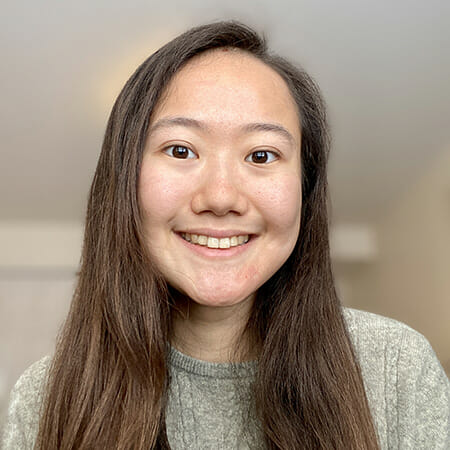
As founder of First Gen Support, Julia Sun is volunteering to support low-income, first generation American students who lack support to navigate the college application process. /Courtesy Julia Sun
Share one personal story with me from your volunteerism.
We often receive feedback from our participants that without our organization, they wouldn’t have known about certain opportunities or scholarships. We also hear from the school counselors and non-profits who we are helping students through. I feel very content and satisfied knowing my work is actually impacting people.
Why do you think it’s important for others to give back?
Throughout your life, there are many other people that help you succeed, and there were a lot of people that helped me without asking for money or requesting something in return. It’s valuable to give back, and give of your time to help others succeed in life. We’re progressing society as a whole if we dedicate our time to help others.
How have you continued to volunteer throughout the COVID-19 pandemic?
The BLM movement prompted me to launch this organization. During the pandemic, socioeconomic problems were more apparent to me and I realized I had the power to do something about it, since school wasn’t very active and I had a lot of free time.
What do you want people to learn from your story?
I was really passionate about this cause, but it started as a very tiny thing, as a spark. I never realized how many other people have similar goals as me. Whether you found an organization or join one, it’s valuable to find a group that shares your passions.
In one word, what does volunteering mean to you?
Altruism.
How can readers help?
We rely on donations to get the word out about our work, fund our programming and connect with more students. Please visit our website for more information about how you can help.
Teen Volunteer Keeps Students Safe and Healthy with “Blessings in a Backpack”
Meet Daily Point of Light Award honoree Calliope Speredakos. Read her story and nominate an outstanding volunteer or family as a Daily Point of Light.
17-year-old Calliope Speredakos has lived in New York City her entire life, but after witnessing the great need amongst kids just like her, she decided she needed to take action to keep students safe and healthy.
As a volunteer student ambassador with Blessings in a Backpack, Calliope, a high school senior, is helping to feed students every weekend. First providing meals for more than 350 underprivileged students aged 3-11, Calliope found even more ways to help during the COVID-19 pandemic, securing donations to provide kids with backpacks and masks. Helping to reduce food insecurity in her community, Calliope is making a difference through service.
What inspires you to volunteer?
There’s just such a huge disparity of wealth in New York City, and it’s so obvious regardless of where you are. I’ve lived in the city my whole life, and growing up, witnessing kids my age in need, inspired me to volunteer. That need is hard to ignore.
Describe your volunteerism with Blessings in a Backpack.
I’m a volunteer and currently one of two inaugural student ambassadors for Blessings in a Backpack. Through the Poptivisim initiative, my service partner and I designed and marketed phone pop grips, the proceeds from our sales significantly contributing to the more than $25,000 I’ve raised to feed children. As an ambassador, we’re helping to launch the national student ambassador program, and have created videos and online material which details our fundraising process and will help others to do the same in their communities. I also create social media for the program. To improve the safety of our students during the COVID-19 pandemic, we received around 500 backpack donations and 1,000 masks.
In addition to my volunteerism with Blessings in a Backpack, I’ve volunteered for Women in Need, Romero Center and Siena House.
Calliope is helping to keep underprivileged students safe and healthy through her service. /Courtesy Calliope Speredakos
Share one personal story with me from your volunteerism.
My mom cooks our Thanksgiving meal, but in 2019, she’d forgotten some dish we usually make for dinner. I went to the grocery store to buy what she needed, and a man outside the store was trying to raise money to buy his family a turkey. I didn’t have any cash but asked him if I could get him anything inside the store. I bought him a soda and chocolate, and I could tell it made his night. Thanksgiving is thought of as a time of plenty, where everyone has everything they need. It was jarring to see this man in need, and that’s when I started to think about food insecurity in the city and how to help.
Why do you think it’s important for others to give back?
If you have any form of privilege, regardless of what kind of privilege, it’s important to share that with others and realize you could be in their position in the future. (These people), they’re essentially you, but with different circumstances. Helping someone else in a bad situation is the basic idea of compassion.
What does the future of your volunteerism look like?
I hope to raise more money for Blessings in a Backpack to continue to feed the students, and I hope to continue volunteering even when I go to college. There are so many amazing causes out there that need help. I want to do everything I can.
What do you want people to learn from your story?
Nothing is too little. Regardless of what you do, it’s always going to be impactful. It could be as simple as buying someone a soda at a store, but to them, it’s so impactful.
In one word, what does volunteering mean to you?
Inspiring. You hear stories from people who have been on the brink of poverty, and can bounce back because of your help. It’s inspiring to see the impact others have had through volunteering, and also, your personal impact.
When you’re not busy in school or volunteering, what do you do for fun?
I love paleontology. I go to digs in places like New Jersey, Florida and Canada and have found a lot of cool things. I found this awesome megalodon tooth in Florida.
How can readers help?
We rely on donations to feed underprivileged students. For more information about how you can help, visit Blessings in a Backpack.
Teen’s Global Volunteerism Increases Access to Climate Movement
Meet Daily Point of Light Award honoree Joe Hobbs. Read his story and nominate an outstanding volunteer or family as a Daily Point of Light.
18-year-old Joe Hobbs is a recent high school graduate who starts college classes in the fall. He is also the face of global change as he volunteers to represent the underserved across climate issues, homelessness, political action and food security.
As a co-founder of Climate Cardinals, the Columbia, Maryland teenager is advocating for others in more than 45 countries. Joe’s service with Climate Cardinals makes information about the climate movement more accessible to those who don’t speak English, thousands of volunteers around the world translating information into an astounding 100+ languages, reaching hundreds of thousands thus far.
What inspires you to volunteer?
Misinformation. A lot of what I’ve seen of misinformation is people not understanding the issues. I’m inspired to volunteer to help educate people around the world.
Describe your volunteerism with Climate Cardinals.
As co-founder, I ensure that climate information is translated into more than 100 languages. I also manage our more than 10,000 student volunteers. In addition to my climate activism, I volunteer to reduce food insecurity, prevent homelessness and facilitate political action. People are scared to share their views. There’s not one right or wrong view. Through volunteerism, we are encouraging people to share their opinions and talking to them about how they feel.
Joe Hobbs: “It’s rewarding seeing the effect volunteering has on people. We see people’s minds change, and become so motivated by what I am doing, that they go do something on their own.”/Courtesy Joe Hobbs
Share one personal story with me from your volunteerism.
I attended a climate rally in Washington D.C., and I was speaking to people about what we do. Someone came up to me and thanked me for (my service). That was the greatest moment. It’s not often you receive thanks, people will say that we’re wrong, or they just won’t talk to you. In that one moment, the woman said I was doing a great job, and to keep it up. That was two months into my climate activism, and her support motivated me to talk to more people.
Why do you think it’s important for others to give back?
Not everything in this world means you have to give something in order to receive something. I believe people should use their time to do something that helps everyone.
What’s been the most rewarding part of your service?
It’s rewarding seeing the effect volunteering has on people. We see people’s minds change, and become so motivated by what I am doing, that they go do something on their own.
What’s in the future for your volunteerism?
I want to keep an open mind and college will be a different and new chapter in my life. My goal is to continue growing as a person and keep volunteering.
In one word, what does volunteering mean to you?
Commitment.
When you’re not busy with volunteering or school, what do you do for fun?
I love playing soccer. I play the striker or center defense positions. I root for the Chelsea Football Club.
How can readers help?
Please visit the Climate Cardinals website for more information about how you can help.
Volunteer Helps Promote Financial Literacy in Asian American Communities
Meet Daily Point of Light Award honoree Amanda Tseng Jaskiewicz. Read her story and nominate an outstanding volunteer or family as a Point of Light.
Amanda Tseng Jaskiewicz has always been passionate about promoting financial literacy and equality, particularly for disadvantaged groups. When her employer, Bank of America, started its Better Money Habits Volunteer Champions program about a decade ago, she knew she wanted to join right away. The program enlists its employees from around the country in delivering financial education, resources and and advice to their communities. Amanda, who was born and raised in Taiwan, particularly focuses on the Asian American immigrant communities in her San Jose, Calif. area.
A dedicated volunteer, Amanda additionally serves as a Goodwill Ambassador for the STUF United Fund. Through the program, she is helping to bring a free online coding education program currently utilized in Taiwan to the U.S. The program will launch in October, and Amanda hopes to encourage her Bank of America coworkers to assist with the program. She also volunteers with Dress for Success and the Girl Scouts of America.
Describe your volunteer role with Better Money Habits.
We have a weekly call and we reach out to local schools and community nonprofits to bring our Better Money Habits resources and programs to them. Our Better Money Habits resources make it so much easier because you can find a topic and use those teaching materials, whether it’s for local high schools, elementary schools, adults or immigrants. Because I speak languages other than English, I reach out to the local Asian American community and help teach those immigrants. Our credit system in the U.S. is different from some Asian countries. A lot of people immigrate here and can’t believe why they can’t get a credit card or car loan. It’s not because they don’t have money, it’s because they don’t have credit. It’s very essential to teach them how to build their credit and establish their financial life here. That’s part of my involvement. I connect the bank’s Better Money Habits to the community.
Amanda Tseng Jaskiewicz, who was born and raised in Taiwan, particularly aims to serve Asian American immigrant communities in her area./Courtesy Amanda Tseng Jaskiewicz
Why did you want to volunteer with Better Money Habits?
I had been very passionate about teaching the community and different disadvantaged groups of people about money, banking and money management. I was born and raised in Taiwan, and the Asian mentality is about savings and managing money. When I met my husband and immigrated here and began living in the U.S., I felt there was a big disconnect with people making money but not saving money. People suffer from financial insecurity or have trouble with a stable financial life. It’s not necessarily linked to their inability to make money; it’s more linked to their inability to manage money. I consider myself lucky enough that growing up, my parents and culture taught me about saving money and always tried to manage money more than make money. I have been very passionate about helping people and going out to volunteer. When the bank introduced this Better Money Habits program, I joined it right away. The bank needed a champion from different markets and different communities.
What kind of feedback do you get from Better Money Habits participants?
People are very thankful and appreciative. The feedback is all positive. Sometimes people have more questions. Sometimes they feel like it opened up their minds and gave them a different perspective. Some of the participants have probably never thought about managing money and looking at their budget and how to change their mindset about savings. You never save money if you think you’re going to spend whatever is left. You always have to save and set aside money. I think it all depends on their background, but with our Asian American communities, they definitely find it super resourceful and helpful regarding how they’re going to be able to purchase a house and establish their financial footprint here in a new country as an immigrant.
Why was it important for you to reach out to Asian American communities specifically?
I was born and raised in Taiwan. I’m Taiwanese American, so it’s part of my roots. There are so many people who are doing financial literacy training nowadays. I’m super happy to see trainings on Youtube and everything. It’s attainable, but it’s English. There are a lot of immigrants who, although they do understand and speak English, English is their second language. If somebody like me who is fluent in Mandarin and Taiwanese can reach out to the community that is Taiwanese American or Asian American, they can feel super comfortable with somebody who can actually speak their mother tongue and can help answer questions. It does touch an additional group and provides more help on that front.
Are there any future partnerships, programs, or events that you are excited about?
I am currently very involved with a nonprofit organization called World Taiwan Foundation United Fund [or STUF United Fund]. We are rolling out a program to provide a free online coding program for disadvantaged communities, adults, or kids, where coding is not available for them. Financial literacy training is something I’m passionate about, but we are living in an era where technology dominates everything. So as I am so passionate about helping minimize the inequality gap of income on the socioeconomic front, I think bringing the technology education for the low-income and disadvantaged communities will help change that. … In the disadvantaged or low-income community, that coding knowledge or interest can be unavailable or inaccessible for kids. This program is actually available in Taiwan and it’s a very good program by a group of professors in Taiwan and from MIT. The nonprofit I have been helping with is making this available in the U.S. We are launching it next month and I wanted to bring this to the low-income community in the U.S. wherever it’s needed. We can go with different nonprofits in the community as well, because the program will be provided by this nonprofit and training will be provided by this nonprofit.
What’s been the most rewarding part of your work?
It’s all totally rewarding, being able to touch so many people and share what I know. Sometimes I learn, too. Life for me is a journey of continuously improving myself everyday. Giving is really not giving. A lot of times, I am getting more than I give. It’s definitely essential. I’m very fortunate. I think I have a good life. Not everybody is as lucky, and I want to see what I can do to help the world to be a better place. This sounds like a cliche, but everyday I can wake up to do things I think are meaningful for people. I need to give so I can get.
What have you learned through your experiences as a volunteer?
I’ve learned to be humble. I’ve learned to not judge anything. I’ve learned to know so much is unknown. I really don’t know what I don’t know. I learned to always be openminded and positive. Always look at the positive and know that there’s a destination. You can’t control things. It always depends on how you look at it. If you choose to look at it positively, then there’s no negative things, really, on this planet. It will all work out.
Why do you think it’s important for others to give back?
It’s important because there are seven billion humans on this planet and there’s only one earth, and there’s so many different communities and people who need to get connected. People are social animals. To be able to volunteer and connect and feel true belonging to your community is the fundamental force to stabilize a society, so it’s really important for people to volunteer. … Connecting people through their beliefs and volunteering will make society better, and a better place for everybody.
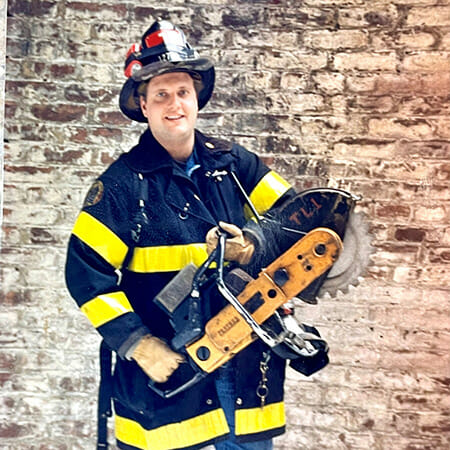
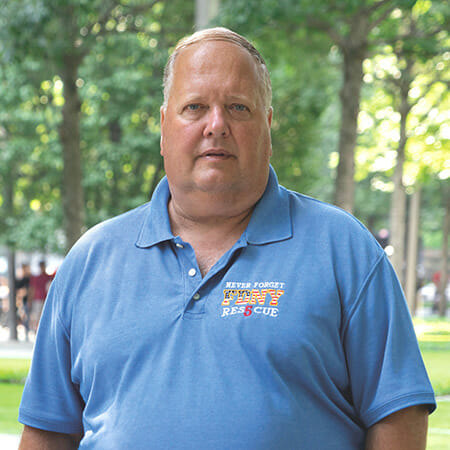
In the days following the 9/11 terrorist attacks, Bill Spade confined himself to his home with his wife and two sons, where he said he felt secure. Bill had been inside the second tower when it collapsed, certain in that moment he would never see his family again. A firefighter since 1985, he was the sole survivor of the 12 men who responded from Rescue Company 5 that day.
One of the first times he left his home following the attacks was to pick up groceries. While handing him his change, the store’s cashier told him to have a good day, a memory that would stick with him for the following two decades.
“I don’t know why it hit me, but I said ‘Have a good day? Have a great day,’” Bill said. “I’ve been saying that ever since.”
Bill has subsequently treated each day as a blessing, and has brought that sense of optimism with him to his volunteer position as a 9/11 Memorial Museum docent for the past eight years.
9/11 Memorial Museum volunteer Bill Spade served as a firefighter with the FDNY from January 1985 to March 2003./Courtesy Bill Spade
After being forced to retire from his 18-year firefighting career in 2003 due to injuries he sustained on 9/11, Bill knew he needed some way to get out his memories of that day rather than sit at home with it on his mind all the time. In 2007, he started giving walking tours around Ground Zero through the 9/11 Tribute Center, an experience he found therapeutic.
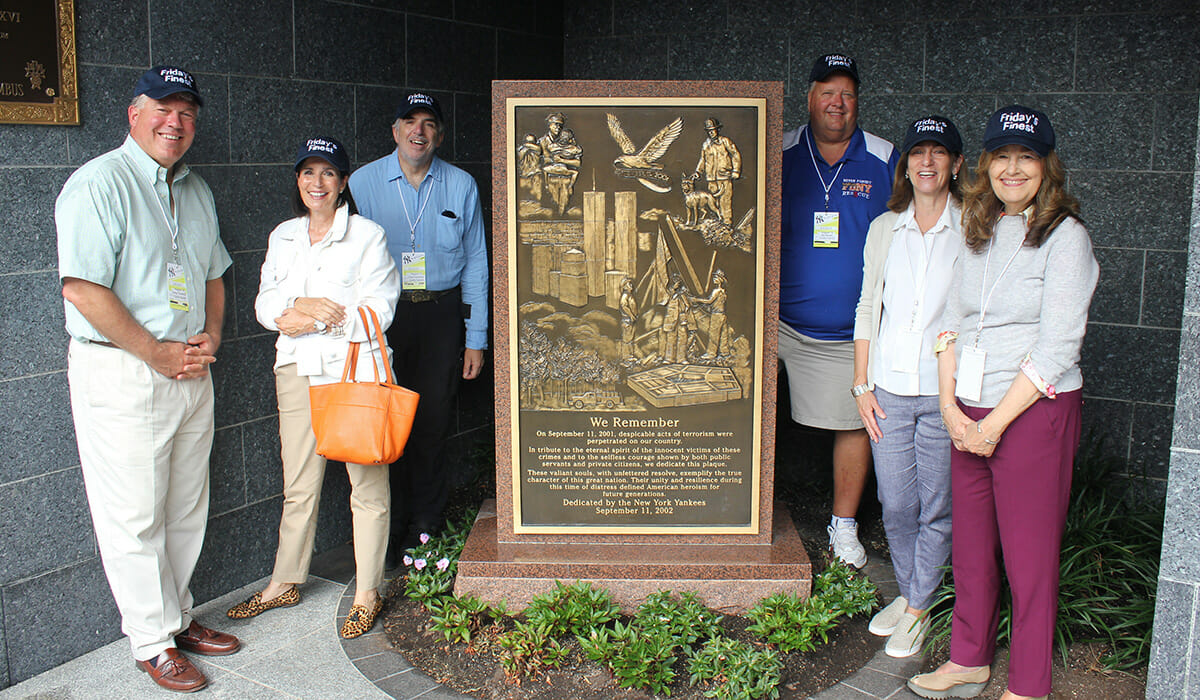
When the 9/11 Memorial & Museum opened in 2014, Bill decided to pivot to their volunteer program. He was one of their first-ever docents when the museum opened that May. Prior to the COVID-19 pandemic, Bill volunteered every Friday morning with a group of volunteers who refer to themselves as “Friday’s Finest.” On an average Friday, they see about 9,000 visitors; on their busiest days, there are up to 15,000.
As a docent, Bill shares the stories of those who lost their lives on 9/11, and will occasionally also share his own story from that day. He speaks to the museum’s professional program, which members of law enforcement, intelligence, military agencies and public safety agencies may take as part of their training. Several times a year, Bill also serves as a keynote speaker for various museum events.
“It’s an honor for me each time to be asked to speak to a group,” Bill said. “I talk about not only that day, but also about the four years of counseling I went through, how grateful I am for each day on earth, and how I try to live each day being a great day.”
Bill Spade, third from right, poses by the 9/11 Memorial at Yankee Stadium’s Monument Park with “Friday’s Finest,” his fellow docents who volunteer at the 9/11 Memorial Museum each Friday./Courtesy Bill Spade
Bill frequently makes it a priority to speak about the four years of counseling he received after the attack in the hopes of shining a light on how helpful therapy can be, especially for young people. After once speaking to a group of students, one of their teachers thanked him for reflecting on the importance of counseling, as the school had lost students to suicide that year.
Noah Rauch, the museum’s Senior Vice President of Education & Public Programs, lauded Bill’s ability to completely engage visitors in whatever he is talking about, whether that be telling his personal story to FBI agents-in-training or stating museum facts to international tourists.
“He’s just able to connect with people from around the world,” Noah said. “Some people have connections to the event and some of them don’t, and he’s able to bridge whatever gap is there.”
Bill Spade has served as a docent for the 9/11 Memorial Museum since it opened in 2014./Courtesy Bill Spade
Bill has spread his volunteer spirit to his family, with his son John Spade being the youngest docent to ever participate in the museum’s program. The duo also participated in the 9/11 Memorial & Museum’s Anniversary in the Schools Webinar. Students and teachers from around the world will be able to listen to personal stories from people like Bill and John, and partake in a live chat with museum staff, on September 10th and 11th.
“One question I always get is ‘How has 9/11 changed you?’ and one of the answers I always say is I appreciate life so much more,” Bill said. “I go to bed every single night, I put my head on the pillow, and I say thank you for this day on earth, and if I wake up tomorrow, I’m going to make tomorrow a great day.”
Whether he’s stationed in the museum with Friday’s Finest or serving as an event speaker, Bill frequently ends his talks by calling back to that moment of optimism after an unfathomable tragedy — telling everyone to “Please, have a great day.”
Teen Uses Computer Science Skills to Help Free Grocery Delivery Service for Immunocompromised
Meet Daily Point of Light Award honoree Garison Julius. Read his story and nominate an outstanding volunteer or family as a Point of Light.
When Garison Julius found himself with more time on his hands at the beginning of the COVID-19 pandemic, he decided to put that time to good use through volunteering with PDX Concierge, a free grocery delivery service throughout Oregon. The 17-year-old was one of the first to join the service last year, which was started by his friend Neel Jain as a way to help the elderly and immunocompromised in their Portland, Ore.-area community. Along with over 110 other student volunteers, Garison helps take and deliver grocery orders to those in need. Since its inception, PDX Concierge has made over 650 deliveries across seven cities.
Aside from helping with groceries, Garison has also headed marketing for PDX Concierge. Garison, who hopes to major in computer science when he attends university next year, spent a month working on an app for PDX Concierge which he premiered on the App Store this summer. He has also helped contact grocery stores for partnerships as well as distribute advertisement flyers to communities throughout Oregon.
Describe your volunteer role with PDX Concierge.
My role is the marketing aspect. I made the app for PDX Concierge on the App Store. I contacted groceries for partnerships. I sent out flyers to our other volunteers in other parts of Oregon. I put up flyers in my neighboring communities to reach out to the immunocompromised in my area. I do deliveries, too.
Why were you interested in volunteering in this way?
Quarantine really gave me a lot of time on my hands, and I really enjoy helping others and especially helping my community. I do a decent amount of food bank volunteering and public road cleaning. It gives me a sense of satisfaction, so this is a win-win. I get to use my time wisely and help others. I saw it as a great opportunity.
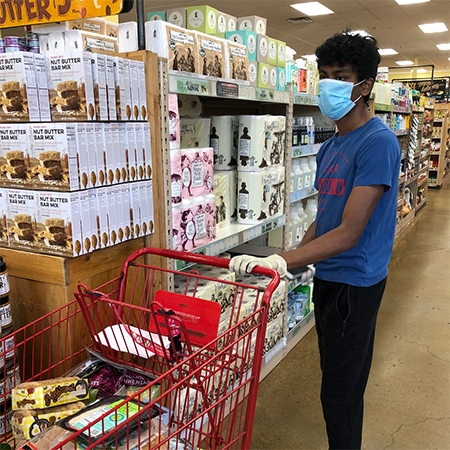
Garison Julius delivers groceries through PDX Concierge, a free, student-run delivery service for the immunocompromised in seven Oregon cities./Courtesy Garison Julius
What made you want to help out with the marketing aspect of PDX Concierge?
I’m planning on pursuing computer science in college, so I wanted to combine my unique skill set. I thought the app would be a great idea. I asked Neel [Jain, PDX Concierge’s founder] and he gave me the green light. I wanted to use my personal interest and mix it with PDX Concierge to really promote the service.
Why is it important for your community to have a service like PDX Concierge?
When I was talking to my friends and family during peak COVID times, a lot of them were struggling to get groceries because they were really scared of the COVID virus. They’re all middle-aged people and I realized if the middle-aged people were this scared, I couldn’t even imagine how scared the elderly were, because at the time they were saying the elderly were more prone to it. We realized that we should probably do a service where the young people who are a little bit more immune to it can help out the elderly and people who are struggling to get groceries.
What’s been the most rewarding part of your work?
Meeting with community members. Oftentimes when I complete a delivery, they are very joyful and always thank me for my service. That short interaction is probably my most prized achievement.
Garison Julius is one of PDX Concierge’s first volunteers, helping deliver groceries to the immunocompromised throughout Oregon./Courtesy Garison Julius
What have you learned through your experiences as a volunteer?
I learned that the joy a person gets from helping someone other than themselves is unrivaled, at least for me. I do other activities for fun, but this kind of service really lightens my day and my mood. It makes my day. I didn’t know volunteering and service could really help me out.
Why do you think it’s important for others to give back?
I feel it’s your duty if you’re a part of a community to help out as much as you can. I know some people are more free and able than others, but try to do your best to give back to the community you grew up in. I feel it’s very important to play your part in the community.
What do you want people to learn from your story?
I would say if you have time on your hands and you’re not too busy, try to find any new opportunities in your community and help out as you can, whether it be cleaning roads, food bank volunteering or something similar to PDX Concierge. Time is always valuable so try to use it wisely and try to help out as you can.