Former Teacher Co-Founds Nonprofit to Address Education, Literacy and Hunger in Nashville Community
Meet Daily Point of Light Award honoree Daniel Craig. Read his story and nominate an outstanding volunteer or family as a Daily Point of Light.
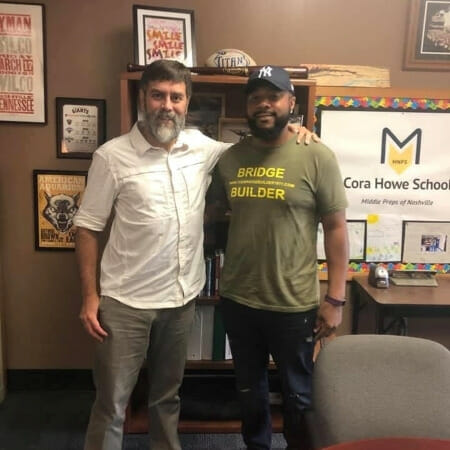
Daniel Craig, a former special education teacher and director of Bridge Builders, is a local Nashville hero. After retiring and opening his own nonprofit, Daniel focused on alleviating the financial burden of replacing school supplies for low-income students. Teachers—and students—benefit from generous donations. Bridge Builders also tackles literacy and hunger, recognizing that one struggle is often accompanied by another.
Last year, in a proud moment for the team, Bridge Builders was chosen for Hands On Nashville’s Mary Catherine Strobel Volunteer Award. Amongst all the other worthy organizations in Tennessee, Bridge Builders won the award that honors a woman remembered for her “tireless, joyful commitment to those in need.” It catapulted the group into being a household name which, for a nonprofit, often means new partnerships and increased donations.
The celebration continued through May when Daniel earned his Masters in Public Administration, solidifying his certification in nonprofit management. So, what’s the future look like for this rising community service leader? There are several new partnerships that could lead to exciting new initiatives, but for now, he’s heading for the Caribbean to enjoy a well-deserved rest in the sun.
What inspires you to volunteer?
Quinton Robinson, the VP of Bridge Builders, and I used to teach at the same school, Cora Howe. He was a substitute teacher, and I was full-time. We saw a significant need for school supplies, food, counseling, etc. and we couldn’t overlook it. We sat down to talk about it and decided to create a nonprofit to help people get going.
Kids lose their backpacks, pencils, paper and before you know it, teachers have spent $500 within three to four months of their money trying to replenish things. We’ve been able to help take the financial burden off both our teachers and students. We started stocking school supply closets, beginning with our school, and you can see the relief on their faces.
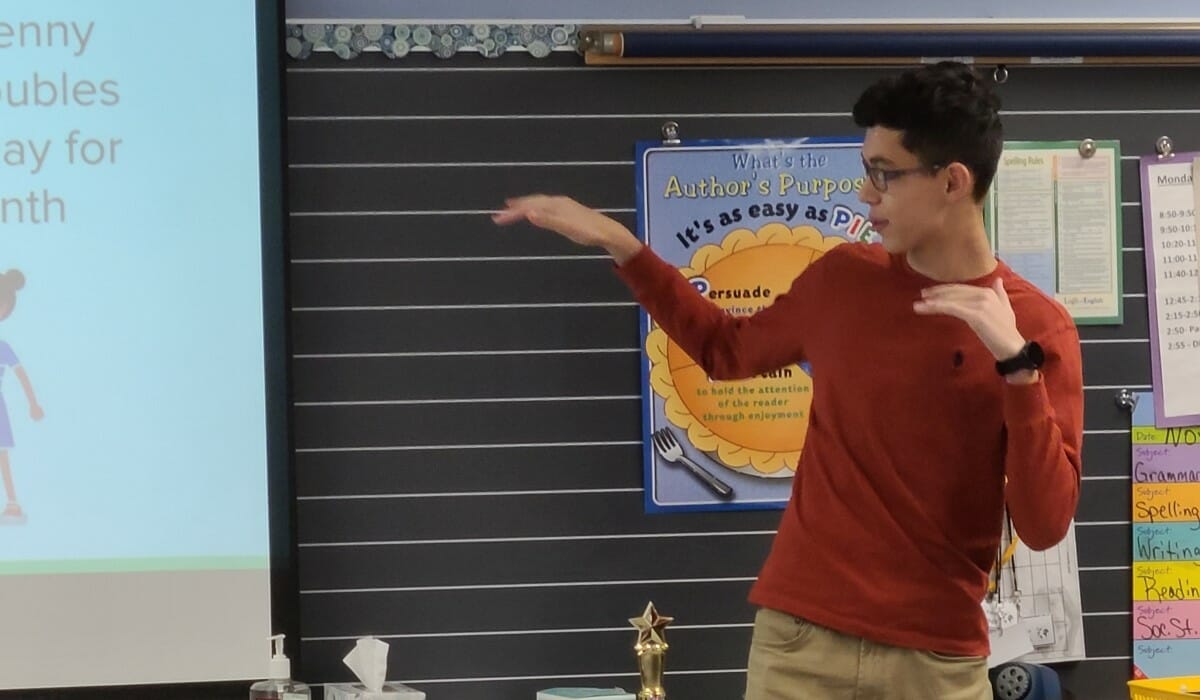
After the first Bridge Builders program at Cora Howe Special Education School./Courtesy Daniel Craig
School supplies assist with education. Can you tell me what Bridge Builders does to address literacy and hunger?
Once you tackle one problem, what people fail to recognize is, there’s another problem lurking right behind it. You might be there helping with literacy, but that kid might be going home hungry. To address hunger, we’ve partnered up with Panera Bread with Day-End Dough-Nation for the last four years. We collect the bread, pastries and sandwiches they don’t sell on Fridays and deliver it to the national rescue mission, Ronald McDonald House or Metro schools. Sometimes we get donations outside of that as well.
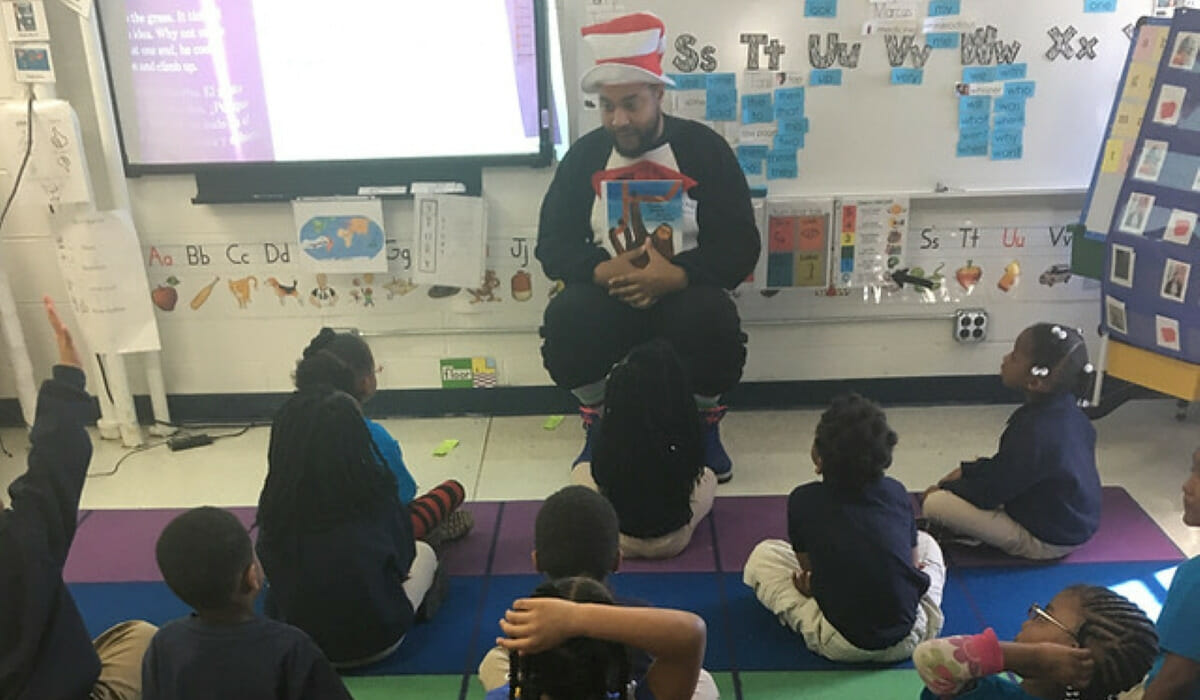
To help with literacy, we have college student mentors who read to kids in elementary school through Read Across America. It helps young kids understand the importance of reading and public speaking.
Describe your specific volunteer role with the Bridge Builder Program.
I’m the executive director, so one of the things that I do is look through around 100 grants a day, trying to find one that fits us. I check our mailbox and make sure that the mail is in order, update bank accounts, talk to our accountant, put volunteers into schools, etc.
Quinton and I try to work out a game plan for school supplies when we do drives. I stay in contact with all 13 schools to find out what their wants and needs are and how we can assist. I make phone calls pretty much day and night. I also work on partnerships, write the blog, and use social media to recruit volunteers.
What’s been the most rewarding part of your work?
It’s seeing the appreciative people on the receiving end of our work and how they’ve propelled themselves forward. Even helping the teachers with school supplies gets them into the school year knowing they have everything they need.
We’ve done this for about seven years. When we started, Quintin and I talked about helping with my school, and now we help 13 schools twice a year. People are appreciative. It helps them and gives them hope.
What have you learned through your experiences as a volunteer?
There are going to be good days and bad days, but you can’t give up. Emotions in dealing with a nonprofit come and go. Some days you may have less than what you need. You may need 150 turkeys, but you only have 25. You feel like you let people down, but it’s not the case. You just have to just stay with it. Set high goals, and never give up. Always be curious and ask questions.
Daniel encourages young kids to read out loud to build their reading and public speaking skills./Courtesy Daniel Craig
Are there any future partnerships, programs or events you are excited about?
We just got to work with Jumbo Dreams and Bomba Socks. We received about 2,500 pairs of socks, and some hygiene kits are will be donated by another company. We’re really excited about distributing those to the unhoused and students who need them next year. And everybody knows about second half of the year school supply drive. There also will be a whole lot of things with Amazon Smile.
Why do you think it’s important for others to get involved?
It’s important to let people who are struggling know that there are people willing to help. It builds the community up to the point where no one feels left out or poor. They feel equal, and they’re happy. If you want your community to thrive and do well, you want happy people in your community.
What do you want people to learn from your story?
I want people to find and support a nonprofit that suits them. Of course, we would love for them to come with us, but they can also look in their own community to see what’s needed and find a nonprofit that can assist with those needs. Then, they can assist that nonprofit. Find out what they’re doing and what suits you as a volunteer, and do what makes you happy. If it’s dealing with animals, go for that.
A Teen’s Drive for Diversity in Artificial Intelligence
Meet Daily Point of Light Award honoree Archita Khaire. Read her story and nominate an outstanding volunteer or family as a Daily Point of Light!
Archita is a founder of AIBytes4You, a nonprofit organization that has developed educational programs to provide students the resources, knowledge and opportunities in rapidly emerging technologies like artificial intelligence (AI), machine learning (ML) and deep learning (DL).
AIBytes4You focuses on educating women of color and minority groups. Archita has a global team of 25 people who have delivered AI/ML courses to 1,500+ students.
Growing up, Archita became aware of a noticeable gender gap in coding classes, engineering clubs and other tech-related opportunities. When Archita developed an interest in AI and ML, finding the right resources to expand her knowledge and find hands-on projects was a challenge. She noticed that many other students faced the same struggle; they were interested in learning but didn’t know where to start or how to continue. Part of the reason for this is that public high schools have not yet introduced AI into their curriculum.
Artificial Intelligence has revolutionized many industries, including healthcare. When the pandemic started, she was working on Machine Learning (ML) projects, and realized that Artificial Intelligence(AI) and ML are not taught as a part of the high school curriculum. After helping her friends around to learn AI and ML, she felt the need to help others in the community as well.
Therefore, in the summer of 2020, she founded the educational non-profit AIBytes4You. She led a team of high school students to organize and teach events about AI, ML and developing ethical technologies.
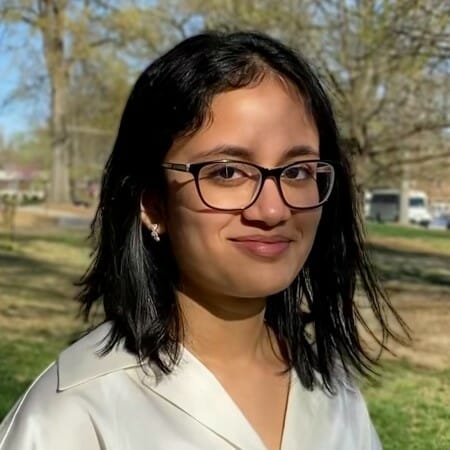
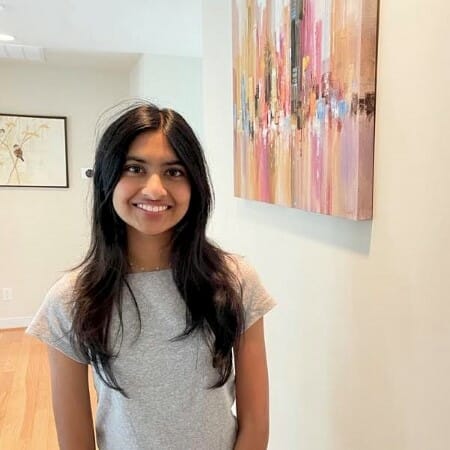
Archita Khaire, founder and executive director of AIBytes4You./Courtesy Archita Khaire
Archita started AIBytes4You to help students on their journey of learning AI, specifically with the goal of closing the gender gap in the field. The idea was born in 9th grade, but it took until August 2020, the summer before 10th grade, to really start the organization.
Along with closing the gender gap that she experienced herself, Archita’s goal is to increase diversity in AI. Every student who receives encouragement through AIBytes4You will hopefully be a part of building AI technologies and, in turn, build more socially responsible AI systems, which are inclusive and human-centered.
What inspires you to volunteer?
In middle school, I came across an article where Dr. Fei-Fei Li, a pioneer in the field of AI, had a conversation about how we’re missing a whole generation of diverse technologists. The gist of the discussion was that if we don’t get women and people of color at the table, AI technologies being developed would contain dangerous biases.
Her words resonated with me because I had witnessed the diversity gap first-hand. I began reading about AI and its biases and took courses in Python, data science and machine learning. Later on, I started working on research projects where I applied what I had learned to solve real-world problems.
After reaching out to professors whose work I was drawn to, I developed an interest in Alzheimer’s Disease and worked on building AI tools that could uncover the genes which cause Alzheimer’s. When working on these projects, I realized that the massive banks of gene data that I was working with primarily contained information from European males. This failed to account for the diverse set of people who develop Alzheimer’s. Diverse data is key in maintaining accuracy and preventing bias in medical algorithms, so these algorithms can benefit a diverse group of communities.
Describe your volunteer role with AIBytes4You
I am the founder and executive director of AIBytes4You. My primary roles include building and managing a team of 28 volunteers. I have partnered with schools and libraries, drafted operational documents and currently oversee every significant activity to ensure that AIBytes4You runs smoothly. I also make sure to constantly brainstorm and implement ideas that will expand our outreach.
I have curated an eight-course curriculum that caters to different age groups of attendees. Our materials include introductory Python, AI and ML concepts for elementary school students that are designed to be fun and engaging. We also have courses with more advanced concepts for middle school and high school students.
I have hosted in-person and virtual events and summer camps in partnership with libraries and schools. In general, AIBytes4You targets underserved schools since it is critical to increase representation in AI and correct the under-representation of women in technology.
I am a student at a highly selective STEM boarding school that has a strong research program. In my free time, I write blogs about my experiences using AI in medical research on our website. My blog currently has over 9,200 web page hits. Today, youth relies on information on social media. We have chosen Instagram strategically to inspire the youth by posting “AI Bytes” regularly. We post about core concepts as well as topics like “AI and mental health” to help the youth to navigate any mental health issues they may be facing.
At my high school, I am also co-captain of my school’s Girls Who Code chapter and an Artificial Intelligence Teaching Assistant, where I further my commitment to inclusivity in technology.
Our curriculum is free for anyone who requests it. If students cannot attend our training, they can still request the curriculum to learn at their own pace.
My work has been recognized by the National Center of Women and Information Technology, Charlotte Observer, and I am a 2022 honoree of The Dean’s list of “20 under 20”.
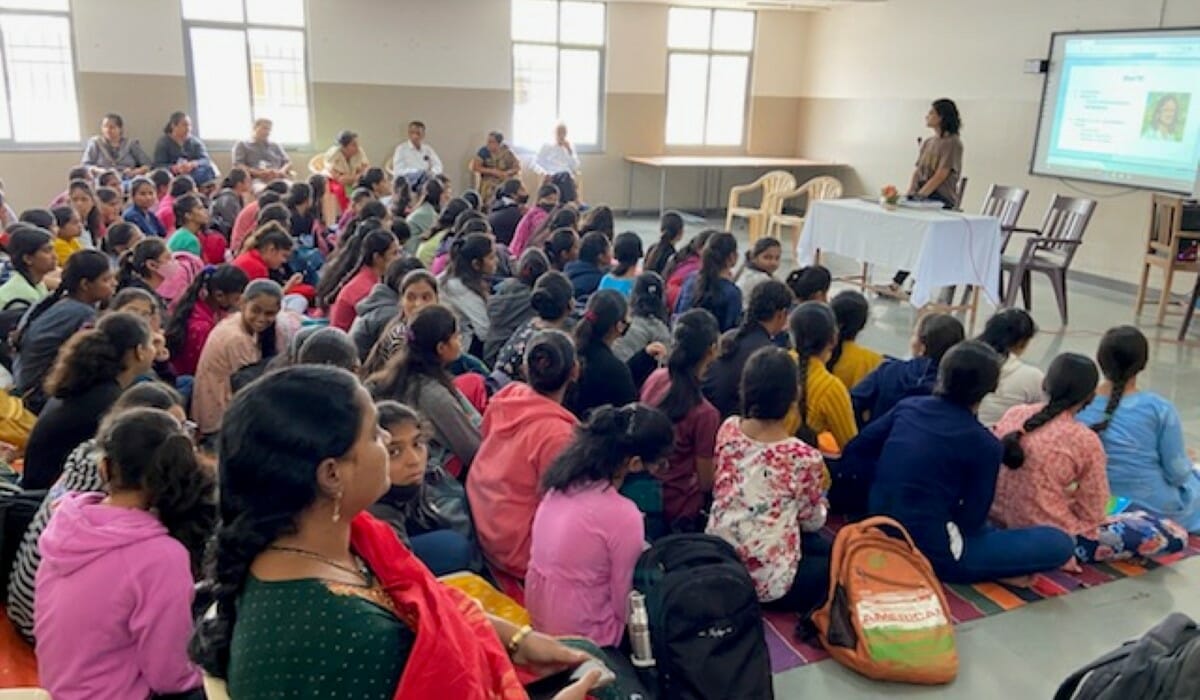
Archita presenting to a crowd of students./Courtesy Archita Khaire
What’s been the most rewarding part of your work?
At AIBytes4You, we highly value nurturing interest in AI, since every student who becomes aware of challenges in diversity will go on to build more ethical and inclusive AI technologies. Students will often contact us after our elementary “Introduction to AI” sessions, asking the question: “How can I continue learning about AI?”
That is how we define success. We cherish every new student who develops an interest in the field, whose career path begins to shift towards AI technology, and who starts their AI journey with us. Some of the students also join us as volunteers after attending our events, which is rewarding.
What have you learned through your experiences as a volunteer?
I have learned how to balance leadership with teamwork, keep up team spirit even when I am feeling low, become resourceful, prioritize tasks and so much more. Another big lesson is public speaking — I have delivered lessons to crowds of 200 students which means I had to learn to teach and communicate effectively.
Are there any future partnerships, programs or events that you are excited about?
Yes! This year we formed a virtual team, because we noticed higher attendance in our virtual workshops during the school year. So far, the team is doing an excellent job. Early next year, we also plan to launch a series of AI and machine learning workshops targeted specifically to girls.
Why do you think it’s important for others to get involved?
During AIBytes4You workshops that I conducted at schools in India, I brought up the topic of role models in technology. I asked the students a series of questions about who they looked up to. The immediate answers I received included “Steve Jobs” or “Bill Gates.”
When I framed the question differently, asking about an Indian role model, I was told, “Sundar Pichai.” Lastly, when I asked about Indian female role models, I received only silence from the audience. I think this is the reason diversity in AI is so critical. Only 22% of AI professionals globally are female. If students don’t see role models like them, it’s scary to enter the field of AI.
It’s the same in any industry. Students who want to enter a field where they don’t feel represented will have more anxiety about it. Many will not take the next steps.
AIBytes4You is our way of creating a connection between the professional and educational world and increasing diversity in AI. Sometimes it is just the fear of the unknown or detrimental stereotypes that hold students back. Through our programs, we provide students the opportunity to explore AI as early as elementary school.
If your industry is heavily male-dominated, for instance, it’s important to nurture female participation and success, as well as encourage minorities and other underrepresented groups to explore the field. Only then will an industry attract a diverse pool of talent.
What do you want people to learn from your story?
Building a nonprofit catering to a niche field like AI is challenging. AI, ML and DL are highly advanced areas, so research is always ongoing. I was able to dive deeper and explore my interest in these fields through computational research projects with professors. I often use my experiences from research to explain certain topics in AIBytes4You sessions since they serve as real-life examples. I think our work serves as a reminder to never be afraid to pursue what you are interested in and to share the knowledge you gain with others.
My time commitment has been eight hours per week since AIBytes4You was founded. While not everyone has that much time to devote to volunteering, even a modest effort of a couple of hours a month can make a huge difference.
Chicago Business Leader Inspires the Next Generation of Young Professionals to Volunteer for American Cancer Society
Meet Daily Point of Light Award honoree Adam Schlesinger. Read his story and nominate an outstanding volunteer or family as a Daily Point of Light.
In 2011, Adam Schlesinger was living in Amsterdam as he traveled around Europe without a care in the world. But with just one phone call, his reality came crashing down. It was from his father, telling Adam that he had been diagnosed with stage four throat cancer.
“When I heard my dad not only had cancer, but at stage 4, which for many people is a death sentence, it was probably the first time in my life that I really felt helpless,” Adam recalled. “I was now reliant on science and research that had been done and on organizations that never impacted me before directly.”
Fortunately, through a combination of chemotherapy and radiation, Adam’s father went into remission just a year after his diagnosis. Motivated to help other cancer patients and their families have the same outcome, Adam, now back in Chicago, started volunteering with the American Cancer Society, which provides patient care, spreads the word about prevention and conducts vital cancer research.
“The American Cancer Society is one of the biggest resources for people who just heard they have cancer. What is that journey going to look like? How do they get to and from treatment?” Adam said. “But the most meaningful is the research because once there’s a cure to cancer, we won’t need patient support anymore.”
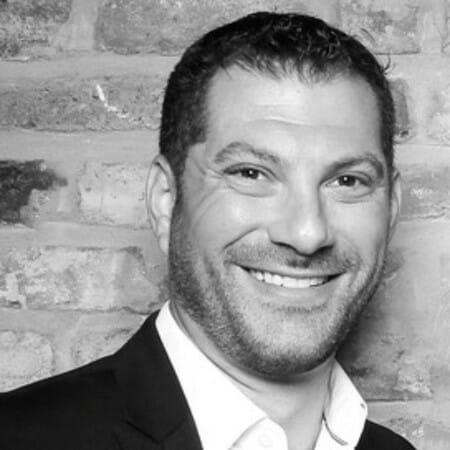
Adam Schlesinger is a longstanding volunteer with the American Cancer Society, currently serving as the national volunteer director of young professional strategy and execution./Courtesy Adam Schlesinger
He started volunteering on the Chicago Associate Board of Ambassadors (ABOA) in various roles, and by 2017, he became president. With the business acumen he gained from his career at KPMG, Adam used his leadership skills to grow the group not only in numbers, but also in its impact. In the three years he served as president, the board’s 150 members raised $1.3 million for the American Cancer Society through fundraising events such as their annual Skyline Soiree and silent auctions. During the COVID-19 pandemic, they raised money through social media campaigns and personal donation pages.
Chris Way, who served as Adam’s staff partner with the Chicago ABOA, was able to witness the difference that Adam made firsthand.
“The group only grew year after year and Adam was the face of that,” Chris said. “Adam was at the front of every meeting. He was on every call. He was very visible. I’ve just seen so many people become more ingrained into ACS because of their connection to Adam.”
In May 2021, the American Cancer Society asked Adam to bring his passion to build the next generation of young professional volunteers to the national level and so, he began serving as the national volunteer director of Young Professional Strategy and Execution and continues to do so today. In this role, he works with ABOA chapters across the country, helping them to significantly grow their engagement and impact.
“Before I stepped into the role, they were raising a little over $1 million across the country,” Adam said. “Now we have 38 markets engaged, over 600 young professionals and we’ve already raised over $3 million this year.”
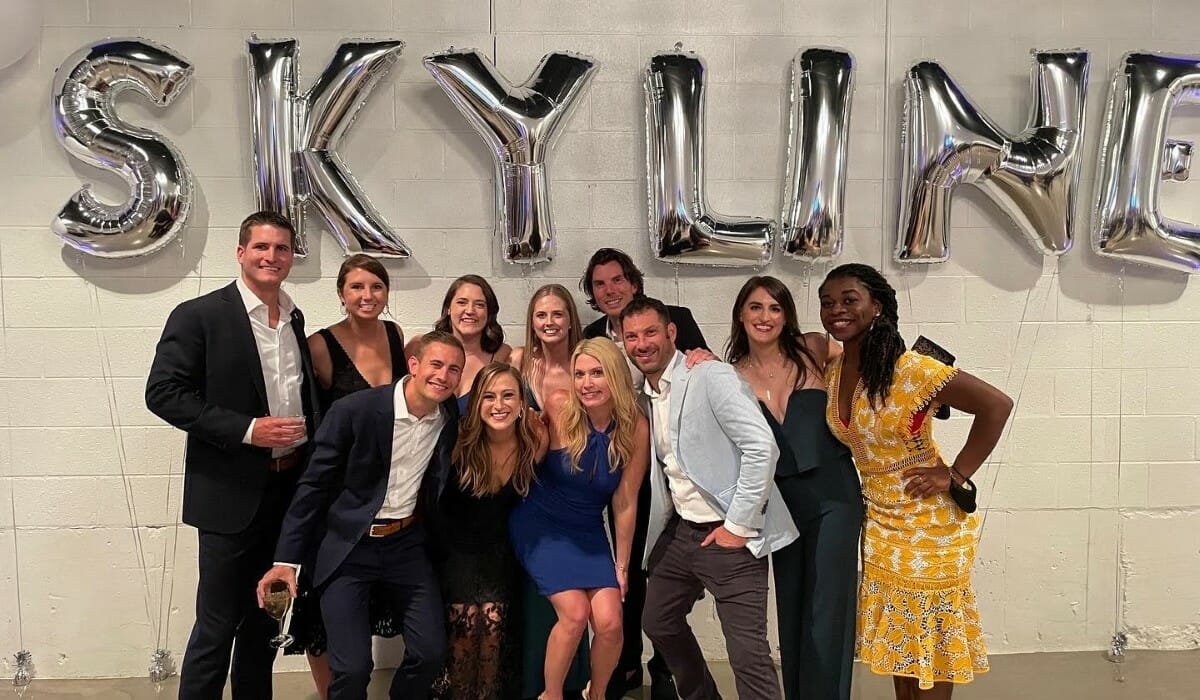
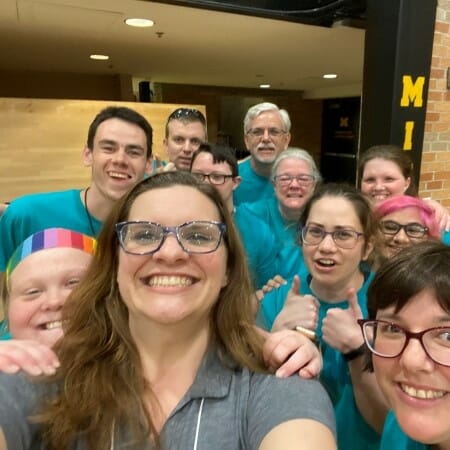
Adam Schlesinger (third from right) with members of American Cancer Society’s Chicago chapter of the Associate Board of Ambassadors at their annual Skyline Soiree./Courtesy Adam Schlesinger
Having to mentor and support ABOA chapters in Florida, Washington and even Alaska means a lot of traveling and meetings at all times of the day, but Adam said all the hard work is more than worth it.
“Sure, I might have to hop on a call at 8 p.m., 9 p.m., with the board in Alaska, but I do it knowing that the conversation is going to lead to them engaging more and more people and raising more and more money. So time stops,” Adam said.
Even if it’s not for the American Cancer Society, Adam hopes that his story will inspire others to volunteer.
“No one organization, no one government can fix everything,” he said. “But there’s a lot of people in the world and if everybody can give what they can, whether it’s time, treasure or talent, the world will be a better place.”
Siblings Create a Legacy of Giving to End Food Insecurity
Meet Daily Point of Light Award honorees Camden Alexander-James and Colton James-Edward Francis. Read their story and nominate an outstanding volunteer or family as a Daily Point of Light.
When the COVID-19 pandemic swept through their Sudbury, Massachusetts town, siblings of service Camden and Colton Francis didn’t sit still as their community grew food insecure. They knew that they couldn’t cure the virus, but they could start creating food equity by taking excess food from nearby neighborhoods and redistributing it to communities experiencing hunger — and that’s exactly what they did.
With Beyond the Crisis, the now 19-year-old and 17-year-old brothers have donated over $15,000 worth of food items to communities and homeless shelters across Massachusetts, and they named their organization intentionally: they plan to do this work years beyond the pandemic.
Describe your volunteer role with Beyond the Crisis.
Camden: It was during the pandemic in 2020 when my brother and I founded this organization, Beyond the Crisis. It was kind of at the height of the pandemic with all of the news reports. People were told to stay inside to really protect themselves, and we didn’t know what was going to happen or what would be the true impact of this virus. At the ages of 16 and 14, my brother and I knew that we weren’t going to make the cure for this virus, but we knew that we could do something. We wanted to create small initiatives to really help make a difference over time, so that’s really what my brother and I sought out to do. We started brainstorming and doing a lot of research and through that, we found that there’s actually enough food in the U.S. to go around. But there’s a lot of food deserts and a lot of food is getting away.
Nineteen-year-old Camden and seventeen-year-old Colton have donated over $15,000 worth of food items to communities and homeless shelters across Massachusetts with Beyond the Crisis./Courtesy Camden and Colton Francis
As a person of color, I was worried for my community. My brother and I came from a fortunate family and had more resources than necessary, so we thought of ideas around how we could help because this virus was going to cause a lot of economic effects and disparities for certain families. Basically, we started to take food from areas of surplus to areas where there wasn’t enough food. We wanted to create a food balance by taking food from suburban towns to families who were impoverished.
Over time, we got our community around this idea and we’ve received so much help from our mentor, YMCA Metro North CEO Cathy Walsh, and she really helped us get started. In the beginning of this process, a lot of people didn’t take it seriously. I was sitting in front of a computer for 10+ hours a day sending emails that were getting bounced back or not responded to. But as of today, we’ve done interviews with CBS, we’ve been on the Drew Barrymore show, we’ve done a podcast at Bloomberg and now we’re talking with you guys.
It kind of shows that we really want to be an inspiration for other teenagers and be role models and let them know that if you can start something now and take initiative today. You don’t have to be a certain age to really have an impact. You can turn it into a legacy of giving, and that’s what we want to dedicate a lot of our time to do with this organization even beyond the pandemic, which is why we’re called Beyond the Crisis.
Describe the different leadership roles you each carry.
Camden: I wanted to work with my brother because it’s so cool to give back with a family member. There’s a lot of overlap in our leadership roles. I was handling the startup, putting up the website, contacting different donors and kind of figuring out which areas were going to help first. That turned into helping the Catholic Charities of Boston because they’re such a big organization and have a wide network.
At this point, we’re both getting help from a lot of other kinds of organizations and it’s easier to kind of manage together.
What are the accomplishments you’ve seen with Beyond the Crisis?
Camden: We’ve been able to reach a wider audience about food insecurity and educate others about this issue. It’s a serious problem that some people don’t have enough food on the table. We’ve done conferences with the White House on hunger, nutrition and health and we’ve been involved with other high level government officials and politicians. We’ve spoken directly with Jim McGovern, who’s our largest donor, and we even have Goodwill Ambassadors like Lady Gaga with her Born This Way Foundation.
Do you have a favorite memory from distributing food and housing resources?
Colton: My favorite memory of Beyond the Crisis, still to this day, is guest speaking on the Drew Barrymore show! This memory was so special because not only was it a pivotal once-in-a-lifetime experience, but it gave me and my brother Camden a foundational platform to inspire other teenagers our age. It was also cool knowing that the impact we made with Beyond the Crisis was so profound that people such as Drew Barrymore and her audience wanted to hear our story!
What inspires you to volunteer?
Camden: I would just say the impact that you can have and how it can really benefit others’ lives. Just taking a few hours of every day to work on the organization can help relieve the stress that other families face every day. That’s really the basis of why I do it.
Colton: The main thing that inspires me to volunteer is the impact that it has on others’ lives. It is not always the most exciting thing in the world but knowing that it can provide people with food — a vital resource that many individuals don’t have enough of makes all the difference. Knowing that you can have a positive impact on another individual’s life makes you feel good and gives you gratitude. Having gratitude is such an important life lesson and I honestly feel that my life would lack perspective without it. Volunteering with my big bro “Cam” is also great! I look up to him and together we want something to come back to, to give our time and resources and hopefully establish a long-lasting legacy of giving. So that’s what Beyond the Crisis is about in a nutshell — giving our time and resources during and “Beyond” unfortunate events such as the pandemic and really working to spread optimism in our community one act of service at a time.
Why is it important for others to volunteer?
Camden: If I was ever in a different situation than I am today, I would definitely want the empathy of others. Usually when people are killing it in life, they don’t look back, and I just wanted to look back from a young age and acknowledge how far I’ve come and use some of that time to help others achieve their goals or at least help relieve some of their hardships or stress.
Is there anything coming up with Beyond the Crisis that you’re excited about?
Camden: Avariety of different things are coming up in the new year. I’m working with my mentor on speaking at a black tie event in Boston. There’s a variety of different things that are going on with our organization. We’re working on fundraising as we speak. And we’re working with big organizations, corporations and some healthcare companies that are going to help raise funds to fight this issue of food insecurity. Every day there are new things going on.
STEM-passionate Teen Paves the Way for Other Students to Learn for Free
Meet Daily Point of Light Award honoree Joel Setya. Read his story and nominate an outstanding volunteer or family as a Daily Point of Light.
Many students feel that STEM teaching in schools lacks application and engagement, making it difficult to apply the concepts. During the pandemic, Joel Setya co-founded a region of STEM & Buds, a national nonprofit organization dedicated to teaching students STEM topics for free. Joel worked to recruit 50 high school chapter heads and volunteers, leading his sessions consisting of STEM-related discussions and activities and impacting over 250 students over the past two years.
In the virtual year, Joel was creative in coordinating the timings for sessions across four Zoom accounts and developing engaging virtual activities, including popular virtual escape rooms. Joel connected students to high school mentors, forging deep relationships of mentorship. This year, he’s serving as the executive director, overseeing the impact of 3,500 students, and has partnered with a local nonprofit and recruited leaders to continue his work.
Describe your volunteer role.
I’m the executive director of STEM & Buds, a nonprofit organization dedicated to educating elementary and middle school students about STEM. It started in my sophomore year, when my cousin was volunteering for the organization as a mentor for one of the summer camps. This was during quarantine in summer of 2020. I joined as well, volunteered there and enjoyed the ability to personally work with students, developing their skills and watching them grow in these STEM camps.
Joel Setya serves as executive director of STEM & Buds, a nonprofit dedicated to educating elementary and middle school students about STEM./Courtesy Joel Setya
When I came back, I knew I wanted to do the same thing in my hometown of Naperville. When I came back, I worked to create a region of STEM & Buds here in Naperville. It took a while to get started. We had to email different principals, get into district e-folders, create curriculum and figure out Zoom. We were able to get it started for 10 chapters or so, and every day we would host, for some school or another, a meeting starting with icebreakers, shift to a science experiment or teach some kind of concept. One part of this is the STEM portion, but another is the “buds” portion, which is forming those relationships between high school mentors and students that will truly go for a while. I was mentoring students, teaching them, creating curriculum, and then junior year, I evolved into a greater role in the organization, which is national programs director. I helped out different regions across the country. Naperville, where I am, is one of our largest regions, but there were 10 regions throughout three different countries. So I’d hop on calls with people from Turkey or Canada and see how their programs were going and how I could use some of my experience to help.
Then, in senior year, I’ve taken on my biggest role yet. I still continue with Naperville and our now in-person STEM sessions, but I also serve as executive director of this nonprofit organization, handling various departments and the overall 15 to 16 regions across five countries.
What about this cause really spoke to you?
There are two parts that were important to me. As a first and second grader, I was really the science fair kid. I’m not too into engineering, but the science, technology and math portions have always been my forte. I knew I wanted to get involved with the community using my strengths.
Also, maybe other older siblings feel this way, but I kind of felt like I never really had guidance. As the oldest sibling, I was expected to guide, I’m responsible for helping my sister. I really enjoyed the opportunity to serve as a mentor for other people, lead and guide them through middle and high school. It’s amazing how some of my students would stick around after the allocated hour and a half, tell me some ridiculous stories. It’s nice serving as big brother and mentor role.
What inspires you to keep volunteering?
Sometimes it’s tough. I’m a senior, so classes are tough and there are college apps. But I will make it my priority to be there at every session, lead every session and give it 120%. There are a few students we’ve had that have made it all worth it. One student, part of our original batch in Naperville, he was so shy, he wouldn’t turn on his camera, he would sit in the corner. Now, he always has his hand raised and is excited when he sees something blow up! Seeing the growth for students, form meaningful relationships with them and have a true impact has made sure I always continue.
What are some lessons you have learned along the way?
One incredible part about this program is that it’s not confined to our region. Before I took over as executive director, there were people before me. Talking to former leaders who were from Pittsburg, or others from Turkey or Canada, I learned tons of lessons, especially about their perspectives in life, how their school systems are. I was able to learn a lot of different viewpoints.
In terms of obstacles that we faced, the COVID-19 quarantine really made everything really difficult when integrating the program into Naperville. Obviously, we couldn’t do anything in person. We wanted to make sure every student was engaged. They already attended virtual school throughout the day, and they may be getting tired from that Zoom screen. So we created extremely engaging activities and mailed out materials for different experiments for the students.
Are there any future partnerships, programs or events that you are excited about?
I’m really happy because STEM & Buds has a structure that means hopefully we won’t go away; we’re here to stay. We’re working on a partnership with Women in STEM, an organization to empower women in this field. We will have a conference with different guest speakers, use our students and theirs to talk about opportunities for women in STEM, and encourage and guide them toward different mentors and resources.
I’m also excited to keep growing. We’re at five countries now, so I’m excited to continue growing, meeting new people, learning from them and having an impact.
What advice do you have for those who want to start volunteering?
Do it! Volunteering is huge! After I started getting involved with my community, even though it seems that you’re not necessarily getting anything materialistic back, the experiences you’ll have, the people you’ll meet, the lessons you’ll learn and the connections you’ll form will outweigh everything.
Meet Daily Point of Light Award honoree Catherine Tu. Read her story and nominate an outstanding volunteer or family as a Daily Point of Light.
Ever since Catherine Tu was young, she has loved science, technology, engineering and math (STEM) subjects. From building LEGO projects to being a part of robotics since 7th grade, Catherine always approached challenges through the lens of STEM.
During a STEM summer camp organized by the Westlake High School robotics team (where she learned about 3D printing), Catherine became fascinated by the fact that the volunteers were ordinary high school students. She still remembers how knowledgeable and patient the student volunteers were, sharing their passions and helping camp participants expand their knowledge in these areas. It was a life-changing experience for Catherine and it was the point at which she knew that she wanted to follow in their footsteps someday, utilizing her passion for STEM to get more involved in the community.
What inspires you to volunteer?
When I was in elementary school, my mom often brought me to volunteer at Mobile Loaves & Fishes (MLF), where we packed peanut butter and jelly sandwiches and boiled eggs to deliver to unhoused individuals around the city. To this day, I continue working with MLF. Having these experiences at a young age sparked my awareness of underserved people in the community, creating a yearning to help them however I can.
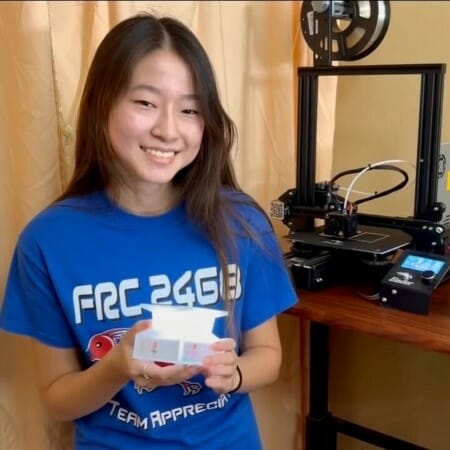
Catherine holding an Organic Light./Courtesy Catherine Tu
Describe your volunteer role with Organic Lights.
In my freshman year robotics class, my coach assigned personal projects involving 3D printing as the last class assignment before winter break. I’ve always been interested in solar panels and their utilization of renewable energy, so I chose to use computer-aided design (CAD) software to design a solar light. Already in the Christmas break mindset, I roughly designed a solar panel light in SolidWorks. I didn’t think too much of it, and promptly left for the holidays.
Shortly after coming back from winter break and starting a new semester, a catastrophic snowstorm hit Texas and shut down the state’s electric grid operator, leaving millions of families without electricity, heat, running water or propane. My family’s friends spent four days without any form of power. We drove across ice-covered roads just to deliver charged batteries and medicine to them.
The frenzy caused by the unprecedented blizzard led to the creation of my nonprofit, Organic Lights. I realized that during the power blackout, solar lights could have benefitted many families across the state who needed a reliable light source. I recognized natural catastrophes like these are rare, but I continued prototyping and tweaking the lights while pursuing the idea of helping those in need through my passion for STEM.
During the COVID-19 lockdown, I designed a 3D solar light called Organic Lights to spread renewable energy, STEM education and hope to those in need in the community. The light is rechargeable (“organic”) via a solar panel, and has slots on each side to hold customized paper inserts so I can personalize every light. The light can be used as a flashlight, reading light or candle.
I soon came to the conclusion that Organic Lights could be so much more than just an emergency light source. The initiatives of Organic Lights became to spread STEM awareness, promote renewable energy and be a source of not just light but hope to unhoused individuals, underserved communities, isolated seniors and beyond.
Describe your volunteer role with Organic Lights.
Each month, I create about ten Organic Lights. I 3D-print and assemble each component of a light, personalize the light with customized side panels and deliver each light. Each Organic Light is personalized because I want individuals to feel that each light’s meaning goes beyond just a solar light.
In the past two years, Organic Lights has delivered lights to homeless camps, underserved kids, hospitals and teachers. We have collaborated with seven organizations, created 40 custom side panels and given out 134 Organic Lights as of this writing.
In the past month, I’ve begun delivering lights internationally. My lights have made their way to Thailand, and I’m in the process of delivering Organic Lights to China.
What’s been the most rewarding part of your work?
A few months ago, I heard of a mission trip to Thailand, to a school for children whose education is lacking in STEM topics. I contacted a member of the mission trip, and they expressed interest in bringing a few Organic Lights with them.
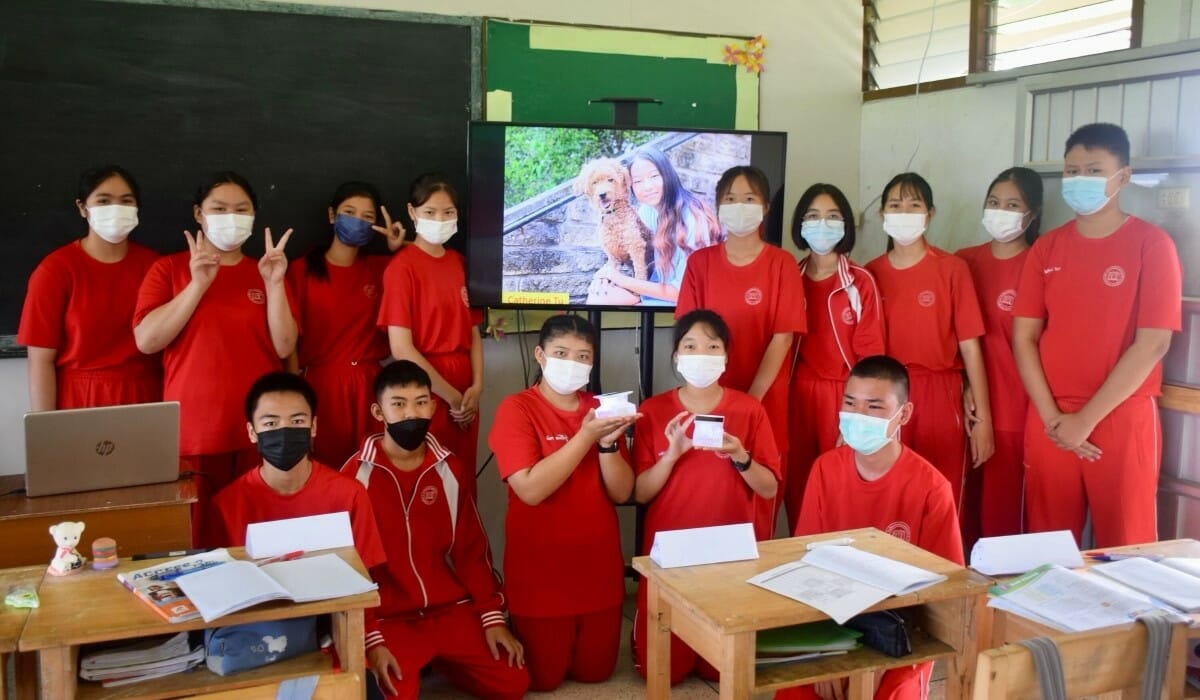
When the Organic Lights arrived in Thailand, the school director was so inspired by the lights that she introduced them to all the students, who admired them and felt the hope illuminated by the solar lights.
Stories like this are why I made Organic Lights. More than just lights, they are meant to inspire and spread hope through STEM and renewable energy. My goal is to positively impact both local and international individuals.
What have you learned through your experiences as a volunteer?
I have had the pleasure of working with various organizations and interacting with people from different walks of life and different backgrounds. These experiences have taught me how to be a better communicator and how to empathize with others, ultimately helping me become a better leader.
Thai students holding up the Organic Lights./Courtesy Catherine Tu
Are there any future partnerships, programs or events that you are excited about?
For the three years since I’ve been in high school, I’ve been a programmer on my school’s FIRST Robotics Challenge (FRC) team. I have been the Student Council Class Vice President since my freshman year. Ever since I created Organic Lights, I’ve been thinking of ways to get my robotics and Student Council community involved. In the future, I look forward to working with the clubs I take part in to give back to our community through the power of STEM.
Why do you think it’s important for others to get involved with causes they care about?
Each individual possesses a unique skillset that can benefit others in a distinctive way. Getting involved in the community through your areas of interest allows for personal growth while making a difference. Volunteering benefits both the individuals and the communities because they improve their collaboration, empathy and leadership skills while simultaneously shaping the world around them into a better place.
What do you want people to learn from your story?
Volunteering with passion is so powerful. Organic Lights is the result of incorporating my passion for helping others with my passion for robotics. It’s been such an inspiring experience to see how my love for people and STEM can impact others!
There are so many ways to help even if you have limited time! In addition to Organic Lights, which requires about seven hours of work each month, I also work with Mobile Loaves & Fishes, boiling eggs for them to deliver to unhoused individuals (1.5 hours per month).
Over the summer, I was a counselor for a Python camp where I taught students from grades 4-10 the basics of programming in Python (40 hours throughout the summer). As the Student Council Class Vice President, I have been leading and participating in various activities throughout the year (two hours per month).
I help my former ninth-grade English teacher set up her new classroom library every Thursday during my lunch period. I’ve been helping create personalized library cards and organize the bookshelf by genre (one hour per week).
This past Thanksgiving Break, I went on a volunteer trip to New Orleans with an Austin-based organization. I participated in various activities such as tiling a house to serve low-income families, helping out at a local church that consists almost entirely of elderly people and working in a food pantry then later delivering boxes of food items to the homeless. (40 hours over the course of five days).
These small time commitments add up to make a huge difference. You can do the same.
Woman Raises Thousands for Cancer Research After Dad’s Diagnosis
Meet Daily Point of Light Award honoree Caitlin Henry. Read her story and nominate an outstanding volunteer or family as a Daily Point of Light.
As a senior manager in the audit practice at KPMG, Caitlin Henry works with numbers. She enjoys auditing public real estate companies because of their unique accounting issues and she has been a loyal employee at KPMG since her college internship over a decade ago.
Caitlin is also a volunteer and fundraising coordinator for the Leukemia and Lymphoma Society’s Light the Night Walk every October. Here are a few numbers of her own: It’s been ten years since her dad was diagnosed with chronic lymphocytic leukemia and ten years since she started volunteering with the Leukemia & Lymphoma Society. She independently raised around $9,000 last year as part of the organization’s Executive Challenge. Two siblings and six nieces and nephews go to the Light the Night Walk every year to celebrate their dad and uncle for being a survivor.
Her hard work will fund cancer research as well as providing financial support for families going through treatment. As an assistant women’s high school varsity basketball coach at her alma mater in her limited spare time, Caitlin knows that progress, whether in sports, fundraising, research or a difficult period of life, is best reached with a team.
What inspires you to volunteer?
I like seeing the reactions to the volunteerism and the difference that it makes. We do one thing with KPMG Family for Literacy, where we go read at schools, and the excitement of a kid getting a new book that she maybe wouldn’t otherwise have had access to has been really making a difference for me.
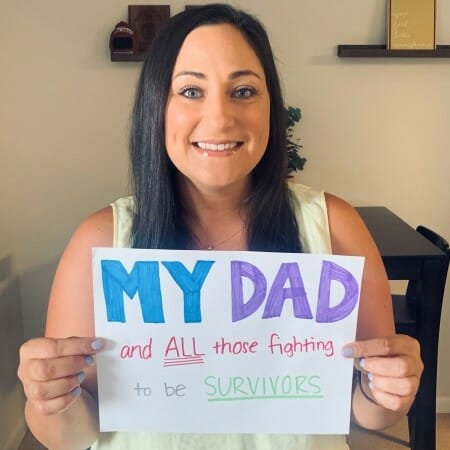
Caitlin Henry, holds a sign for the Leukemia and Lymphoma Society’s Light the Night Walk honoring her dad./Courtesy Caitlin Henry
What inspired me to get involved and stay involved with the Leukemia and Lymphoma Society is that my dad has chronic lymphocytic leukemia. I didn’t know anything about it or what the process would be like, so I started doing research when he was diagnosed. He never wanted to talk about it from an emotional perspective, so I had to really learn the science behind what was happening. When I was researching, I read a lot about the organization and the great things they do.
How has Leukemia and Lymphoma Society affected your family?
The first time my dad got treatment, he had to go through full chemotherapy. Since his diagnosis, there have been treatment advancements with his specific cancer, so there are oral options now rather than chemotherapy. I’m seeing the impact of the treatments up close, and I know the Leukemia and Lymphoma Society helps fund those.
Describe your volunteer role with the Leukemia & Lymphoma Society’s Light the Night.
In 2018, I started getting more involved. I became the co-lead for KPMG’s local DC-area team and organize the team and everything from bake sales to applying for KPMG local grants.
I also organize walk day activities for my team. I work directly with Leukemia and Lymphoma Society to brainstorm and implement different things in order to raise as much money as possible for the organization. For a couple of years, I was a junior member of the executive committee and got involved in actually planning the event. I’ve met a lot of people who are also very passionate about the cause.
What is the Executive Challenge?
It’s people who are vowing to raise over $5,000 as an individual, but we do that as a team, and every week there’s a different challenge. Last year, I helped organize the challenges and sent out information every week to get everybody to participate.
How did the COVID-19 pandemic affect your work?
I joined the Executive Committee the first year we went virtual, and that had its own challenges. They built a website with different areas that mimicked the areas usually at the in-person event. There’s a survivor circle at the event, so they made a survivor page where you could read all the survivor stories. And there’s always a tent where you can write down who you’re walking in memory or in support of, so there was a page where you could post that.
These weren’t my ideas, but this is how we, as a group, memorialized how we would change the in person into a virtual event. It was pretty well attended. Our fundraising dollars were down, but so were everyone else’s during the pandemic.
What’s been the most rewarding part of your work?
I can see how thankful my dad is that we try to take something that’s terrible and turn it into something positive to help other people. Although he’s not an emotional person, I can see it this makes him proud and excited. My dad has walked every year, and I’ve seen him grow more comfortable in the fact that he’s a cancer survivor.
The first year he wouldn’t even wear the survivor t-shirt. The second year he wore the t-shirt, but he wouldn’t hold the survivor lanterns. Then, he held the lantern the next year. This year, seeing him actually join the survivor circle and hold the lantern up and participate, I cried. Feeling like he is proud of what I do has been really motivating.
What are the survivor lanterns?
At the Light the Night Walk, there are three different colored lanterns: the yellow lanterns are in memory of someone, the red lanterns are for general supporters of the organization and the white lanterns are for the survivors. As the opening ceremonies happen, they ask all the different lanterns to be lit at different times, and then it ends with the survivors. All the supporters hold their lanterns as the survivors light theirs. And it’s a great feeling to know that all of the survivors have so many supporters.
What have you learned through your experiences as a volunteer?
Even a little bit of time–whatever you can do–it doesn’t even have to be a huge role, but it can make a huge difference. Any time or money you can spend in a charitable way makes a big impact.
Why do you think it’s important for others to get involved with causes they care about?
I think it makes you think about something that’s bigger than yourself. It also can instantly uplift your mood to be doing positive things for other people. It’s easy to get caught up in day-to-day issues, but every time I’ve volunteered, it changes my whole perspective about things.
Teenager Promotes Financial Literacy in Youth with Personal Finance Education
Meet Daily Point of Light Award honoree Isaac Hertenstein. Read his story and nominate an outstanding volunteer or family as a Daily Point of Light.
Many adults leave school and are shocked to find out how complicated taxes can be and don’t understand things like how to invest in the stock market. Thanks to Isaac Hertenstein, students in Greencastle, Indiana and beyond are graduating with a higher level of financial literacy than ever before.
You don’t see many high schoolers with a fiery passion for personal finance, but Isaac, a sixteen-year-old runner and ethics enthusiast, breaks the mold. Even in middle school, his middle school technology and entrepreneurship teacher, Brittany Labhart, remembers seeing his curiosity peaking.
“I saw in sixth and seventh [grade] that he was definitely interested in it, but in eighth grade I noticed a huge change. That’s when we discuss business and personal finance,” she recalls. “He is an amazing kid who has been driven from a very young age”
The very next year, Isaac decided to share the knowledge he found so fascinating with others. So, as a freshman in high school, he formed his 501(c)(3), Students Teaching Finance.
“A lot of inspiration for Students Teaching Finance (STF) was from seeing the economic inequality in my community and the impact of financial literacy in combatting that as well as mending a gap in education,” Isaac says. “Indiana isn’t one of the 15 states that requires financial literacy [as part of the curriculum].”
The states with the requirement typically require students to take at least one semester of personal finance in order to graduate from high school. With this is mind, Isaac took action. First, he delved into conversation with various community leaders and financial and education experts. Then, he created a 30-page curriculum for students from kindergarten through eighth grade with the mission to provide a foundation for success and to motivate kids to consider financial careers. He also hopes to start conversations between students in the classroom and at home.
How does it work? Isaac recruits volunteers amongst his peers to teach short Lighting Lessons, each focusing on an age-appropriate core concept. Since he started Students Teaching Finance, Isaac has taught over 575 students in his hometown and has around 30 volunteers teaching on a regular basis. These classes—and their teachers—leave lasting impressions.
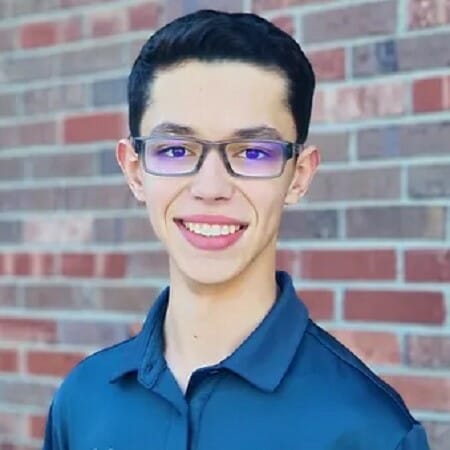
Isaac Hertenstein, founder of Students Teaching Finance./Courtesy Isaac Hertenstein
“He started off by asking them if they’d rather have so much money today versus so much in 10 years, and he explained how compound interest works,” Brittany says of a lesson Isaac taught in her classroom. “It definitely sparked conversation afterward, and students were really interested in what he had to say.”
Parents can often be heard telling volunteers that their kids have been talking about the lessons for months afterward. Teachers are also getting in line to implement his lessons themselves. After working with Isaac for on STF for the last two years, the economics teacher at his high school implemented his lessons in her curriculum for seniors.
And the enthusiasm is making its way around the country.
“I’ve worked with over 250 other volunteers around the country in 14 different states who have used this curriculum and started chapters of Students Teaching Finance in their communities,” Isaac says proudly. “ I’m trying to spread financial literacy and start chapters in other high schools. Of course, one of our main goals is advocating for financial literacy legislation.”
Aiming to have a systemic impact, Isaac and STF has been in talks with several advocacy groups promoting financial literacy legislation in Indiana.
“Here in Putnam County, we have a pretty high poverty rate, and to teach kids at all levels the importance of personal finance with basic tips that maybe they aren’t getting at home, he can help them to make wise decisions in the future,” Natalie states.
Isaac cites that developmental scientists have shown that kids start forming a financial mindset at age five.
“They notice many of the financial spending and saving habits that their parents and people surrounding have them, and they subconsciously adopt those habits,” he says.
Isaac hopes his classes and emphasizing the time value of money will help prepare those kids as they get older and face financial challenges like paying for college and retirement. Unfortunately, not everyone is so lucky.
Isaac leads a class on finance./Courtesy Isaac Hertenstein
“According to a study from UPenn Wharton, which came out about five years ago, one-thirs of economic inequality is caused by–not just linked to–differences in financial literacy,” he cites. “Financial disparities and knowledge really catalyze a huge difference in economic output and results in the very end. A lot of it has to do with financial market inclusion and building up assets over time.”
Inspired by his mom, a first-grade teacher who shapes the minds that will have positive impact on the future, Isaac is very forward-thinking. As he seeks to build a career at the point where ethics, business, and social impact combine, he often thinks of the future of his organization. He hopes to expand STF’s reach by teaming up with FinPro World, a company that creates online learning programs for middle to high school-aged students, as well as recruit more college-aged volunteers to teach.
“72% of parents don’t talk to their kids about money.” Isaac says. “Finance is sometimes a taboo topic, but it’s such an important concept that many people ignore when meeting other people, and if they were to discuss it, it would actually just catalyze more learning for everyone.“
Giving Students Their Voices and Confidence in Oral Communication
Meet Daily Point of Light Award honoree Siyona Singh. Read her story and nominate an outstanding volunteer or family as a Daily Point of Light.
Since Siyona Singh was a child, she found a passion for both written and oral communication. She enjoyed delivering speeches standing on the couch of her living room, and writing novels and short fiction. As Siyona grew older, she found communication to be an incredibly important mechanism for change. Throughout her life, Siyona has used her communication skills to facilitate meaningful discourse around difficult issues in the community.
Through Forensics, a competitive speaking league, Siyona researches, writes and delivers oratories on confronting psychological biases like generalizations, groupthink and deindividuation to improve the diversity and equity of society.
Understanding that public speaking is a major debilitating fear for many, Siyona made a goal to support youth as they navigate the world of communication and give them more confidence in their voices. Since 2021, Siyona has served as the Chief Executive Officer of Speech for Public Education, Action, and Knowledge (SPEAK).
Since its inception, SPEAK has equipped over 1,100 students internationally with the tools to overcome fears of public speaking. By providing individualized curriculums aligned with students’ needs and a network for speakers to access growth opportunities, hundreds of students now have a greater sense of pride in self-expression.
Siyona also writes a blog called Keynesis, where she explore important topics within policy and economics that raise awareness about what’s going on worldwide and how her readers can help facilitate change.
What inspires you to volunteer?
I always knew how central communication skills are to engaging with one’s community in a proactive way and succeeding in both an academic and professional realm. Communication skills allow us to form connections, influence decisions and motivate change.
But despite its many benefits, the reality is that public speaking is still one of the biggest fears across the world today. It can be extremely difficult for children to find confidence in their voices without an adequate support system in school. I actually saw this firsthand with my sister, Aanya, who had a fear of speaking in public so intense that she would become nauseated before any type of school presentation and refrain from ever asking questions in class. Aanya was so intelligent, but wasn’t able to express herself or her ideas effectively, and her performance in class suffered as a result.
Siyona Singh, volunteer with SPEAK./Courtesy Siyona Singh
Though it’s still a work in progress, I helped Aanya slowly come out of her shell and speak up, by pushing her to be uncomfortable and find power in expressing herself.
With the goal of amplifying other unheard voices in my community and beyond, as well as providing tools for youth advocacy, I lead Speech for Education, Action, and Knowledge (SPEAK).
Describe your volunteer role with SPEAK.
As the Chief Executive Officer of SPEAK, I’m responsible for overseeing the operations of all departments: outreach, education, tech and more. I plan monthly calls and direct the program of work for each department. I coordinate partnerships and workshops with schools or other organizations, and help design curricula to ensure they’re meeting the appropriate standards. I train our teachers through virtual check-ins and instruction to maintain the quality of our student-run workshops.
What’s been the most rewarding part of your work?
We’ve done so many different workshops but one that was especially meaningful for me was one that we hosted in coordination with a Virginia Department of Education nonprofit called “I’m Determined.”
I redesigned our SPEAK curriculum to cater towards nontraditional learners. I, along with other members of the SPEAK team, was able to work with more than 15 James Madison University (JMU) students impacted by disabilities to help them develop self-advocacy and self-determination.
By giving them the tools necessary to articulate speech and by actively listening to what they had to say, we created an environment where they felt immensely more comfortable speaking up for themselves and feeling heard. Knowing the immeasurable barriers they face on a day-to-day, it felt so fulfilling to be able to empower them.
What have you learned through your experiences as a volunteer?
I think more than anything else I’ve learned how to be adaptable. As a teacher of students who struggle in regular academic settings, it’s not enough to just execute on a one-size-fits-all approach. I have to be willing and able to adjust the curriculum and cater my teaching to the students and their unique needs.
Are there any future partnerships, programs or events that you are excited about?
We’ve taken a bit hiatus as we get back into the chaos of school and senior year, but we are in the works of a program in partnership with a local STEM education nonprofit. We are envisioning this to take on almost a Model UN-like format, where the students will research on a given topic from the lens of a particular country/official and report out on their claims in a debate setting.
Why do you think it’s important for others to get involved?
Volunteerism is important because it enables us to mobilize underserved communities while learning critical skills for ourselves.
I learned how to work with diverse and unique student populations, and as a result, grew in my ability to be resilient and adaptive. Not only am I helping students find their voice, I am also helping them feel empowered to succeed in the environments in which they belong — and I think that’s super valuable and fulfilling.
What do you want people to learn from your story?
Sometimes something as simple as sharing what you love with others can make all the difference in someone’s life. Little did I know that a desire to share with others my passion for communication would lead to a nonprofit that’s been able to help more than 1,000 students overcome public speaking fears and advocate for themselves. But impact comes in so many different forms, and if there’s one thing someone takes away from my story, I’d hope it’s that.
Special Olympics Volunteer Inspired by Stories of Sportsmanship, Inclusivity and Unity Among Athletes
Meet Daily Point of Light Award honoree Briana Haines. Read her story and nominate an outstanding volunteer or family as a Daily Point of Light.
Briana Haines, a manager at KPMG, had no idea that she’d one day be working closely with golf athletes in the Special Olympics. When she was approached by a KPMG partner with a volunteer opportunity, she jumped in “with both feet,” eventually serving as a Special Olympics Missouri board member, unified sport delegate for Special Olympics International and more.
Briana is always willing to volunteer her time and skills to Special Olympics and has played a significant role in KPMG’s sponsorship of the Special Olympics Inclusive Youth Leadership Summits. Whether she is acting as the KPMG keynote speaker for the Special Olympics Digital Summit or a mentor to Special Olympics youth leaders, Briana leads with passion and purpose.
Brie is an active member of KPMG Business Resource Group, Abilities in Motion (AIM) where she continues to promote an inclusive culture by being an advocate and ally for people with disabilities. She has used her voice and leadership skills to impress the importance of people-first language, to influence decisions around accommodations and to make information accessible for people of all abilities. In addition, Briana is very involved in her local office’s Community Impact initiatives and can often be found with her fellow KPMG employees giving back to their communities in meaningful ways.
Describe your volunteer roles.
I volunteer for Special Olympics North America and Special Olympics International, as well as Special Olympics Missouri. I have a few different roles. On the Special Olympics Missouri side, I serve on their board of directors and chair of the Development Committee. I do a lot to help raise funds, I’m very involved with the athletes across the state – they’re honestly my driving passion behind the volunteer work I do.
For Special Olympics North America, I’m part of a volunteer group that is the national golf tournament leadership team, and I manage the volunteers there. Since I’m a member of the leadership team, I also have input on the golf courses we select, if we’re discussing rule changes, etc. which is really neat.
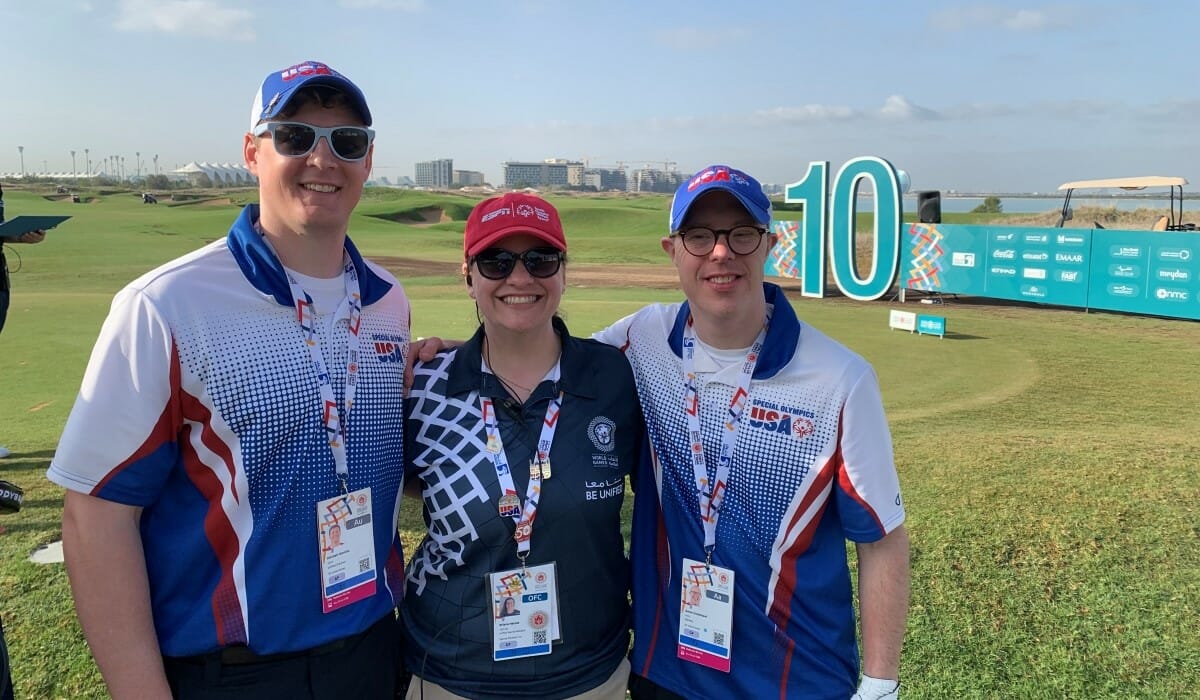
Briana Haines is a manager at KPMG and Special Olympics Missouri board member./Courtesy Briana Haines
For Special Olympics International, I’m a unified sport delegate for the sport of golf. Part of that is I get to go to the World Games every four years! I went to Abu Dhabi in 2019, I’m going to Berlin in June 2023 and I actually went to Berlin this past June for their national games as a test for the World Games next year. So that role is making sure that any unified team is playing with the principle of meaningful involvement as their main focus. How unified works in golf is you have a unified pair, so it’s one athlete – a person with an intellectual disability – and a unified partner, who is someone without an intellectual disability. They play alternate stroke golf together. They have to collaborate, plan their shots… it’s a very strategic game. I make sure they’re working together, that they’re truly playing unified, that no one is dominating the play. I really love it because it gets me out there interacting with the athletes and their unified partners and spreading the message of being inclusive.
How did you initially get involved with The Special Olympics?
I’m a terrible golfer… I blame it on my left-handedness! I got passionate about golf because of the Special Olympics. It was kind of a big start! It was through my work at KPMG, when I had a partner approach me soon after I started working there, and she had heard through my former role with the mayor of Kansas City, that I was really involved and connected with the community. She’s very involved in corporate giving, and I didn’t know this at the time but her sister is a Special Olympics athlete. So this partner was very involved and was getting a partnership going between Special Olympics and KPMG on the national level.
We were sponsoring a golf tournament and she asked if I would help her with the management of the volunteers. That sponsorship is how I met my golf team that I’m with now – we’ve been inseparable since 2013, and we have a core group that’s really close! That led into the USA Games in New Jersey in 2014. My role just grew, because I was really good with the volunteers and the athletes. My excitement about working with the athletes rubbed off on our volunteers.
The experience is not about you; it’s really about the athletes and making sure they’re having the best experience they can have. They’re competing at a high level and they need volunteers in order to succeed. We have a lot of repeat volunteers who travel all over the country to volunteer for golf! From there, people started saying my name in good ways! I got nominated to be on the board for Special Olympics Missouri. The CEO of Special Olympics Tennessee put a word to Special Olympics Missouri to recommend me as a board member, so I started volunteering locally, in my own backyard, too.
That also led to me getting connected to Special Olympics International. Someone recommended me for unified golf because of how passionate I am about inclusivity. Having all of that experience helped when I interviewed for the board seat. I may not have tons of money to donate, but I’m a great fundraiser and I don’t mess around with causes I’m passionate about, and the Special Olympics athletes make me passionate.
Briana volunteers around the country and the globe to help raise funds and interact with athletes./Courtesy Briana Haines
Any rewarding stories/experiences from your work?
I have so many stories. Overcoming language barriers on the international level, promoting unified in countries that don’t have strong unified programs, and so much locally.
The first one I want to share is from Special Olympics Missouri, locally. I was at a Special Olympics regional swim meet as an event manager. It was a long day of swimming, emotions were high. You’re competing against yourself and against everyone else! I love the athlete oath for Special Olympics, “Let me win, but if I cannot win, let me be brave in the attempt.” One of the athletes was really struggling. You could tell she kind of wanted to give up and be done, and Abby, one of the athletes, saw a fellow athlete who was struggling and she swam to the center, and just cheered her on, after having already finished her race and gotten a gold medal in her division. The important thing to her was that everyone finished. The athletes got out of the pool, and they hugged. Everyone was so emotional!
From the unified golf piece, I was in Seattle in 2018 for the U.S. games. It was a unified pair, Doug and Cade. Doug is Cade’s dad and they play unified golf together. They were divisioned with another father-son unified pair. The athlete was Jared. Cade and Doug were second, and Jared and his dad were in first. It was after everything was said and done, time for medals, on this huge stage, with so many people there. I was the person passing out the medals.
They called the third-place winners, then called the second-place winners, Cade and Doug, then called the first-place winners, Jared and his dad. Jared got stage fright, and he did not want to get up on the podium, and Cade looked over and went over to Jared and said, “Come on buddy, I’m right here, let’s do this together.” And Cade led him over and walked up the stairs together and they just hugged. Jared’s dad came over and looked at Cade’s dad, and the emotion came over him and he just started bawling. It was so special and so amazing. There wasn’t a dry in the place. In that moment, so many people in the audience who didn’t initially feel that pull had their “aha” moment.
Any advice for people who want to start volunteering?
I mean, honestly, just do it. Just jump in with both feet. Don’t be scared. Ask questions if you’re unsure. I think people who have never had an experience with a person with an intellectual disability in a setting like Special Olympics can sometimes be scared or unsure they’re going to say or do the wrong thing. I guess my advice is to put that all away. If you are unsure, just ask. You’re just volunteering with other people. Special Olympics athletes are people first. All they want is the same experience that everyone else is getting. Why wouldn’t you want to be a part of that?