Teen Girl Turns Love for Robotics into Mentorship for Underrepresented Kids
Meet Daily Point of Light Award honoree Nidhya Shivakumar. Read her story and nominate an outstanding volunteer or family as a Daily Point of Light.
“I know what it’s like to be in the position of the students I am helping,” says Nidhya Shivakumar. “I had no clue how to build a robot as a young student, and was lucky to have older mentors.” Nidhya, a 16-year-old high school junior from Cupertino, California, is now helping other students just like her through volunteerism.
As the founder of Boost Robotics, Nidhya is providing educators and students from underrepresented groups in STEM an opportunity to delve into the world ofcompetitive robotics.Since its inception, Boost Robotics has connected with more than 200 high school students in-person and virtually in California, around the United States and internationally. Nidhya is also dedicated to addressing the gender imbalance in competitive robotics, leading all-girls robotics workshops in addition to other initiatives.
What inspires you to volunteer?
When I was in 6th grade, I was new to robotics. I had no idea how to build a robot. After going through the process, I realized many beginner teams don’t have any experience getting into competitions, and how lost they must feel. Many students, especially underrepresented students, quit in their first year (of robotics) because they’re not supported. That is what inspires me to volunteer.
You started your organization during the COVID-19 pandemic. Explain.
I was trying to think of a way to inspire students to pursue robotics and STEM in general during the pandemic. I launched a pilot program to mentor robotics teams online with guided video lessons. Those videos were successful and we expanded from there.
Describe your volunteerism with Boost Robotics.
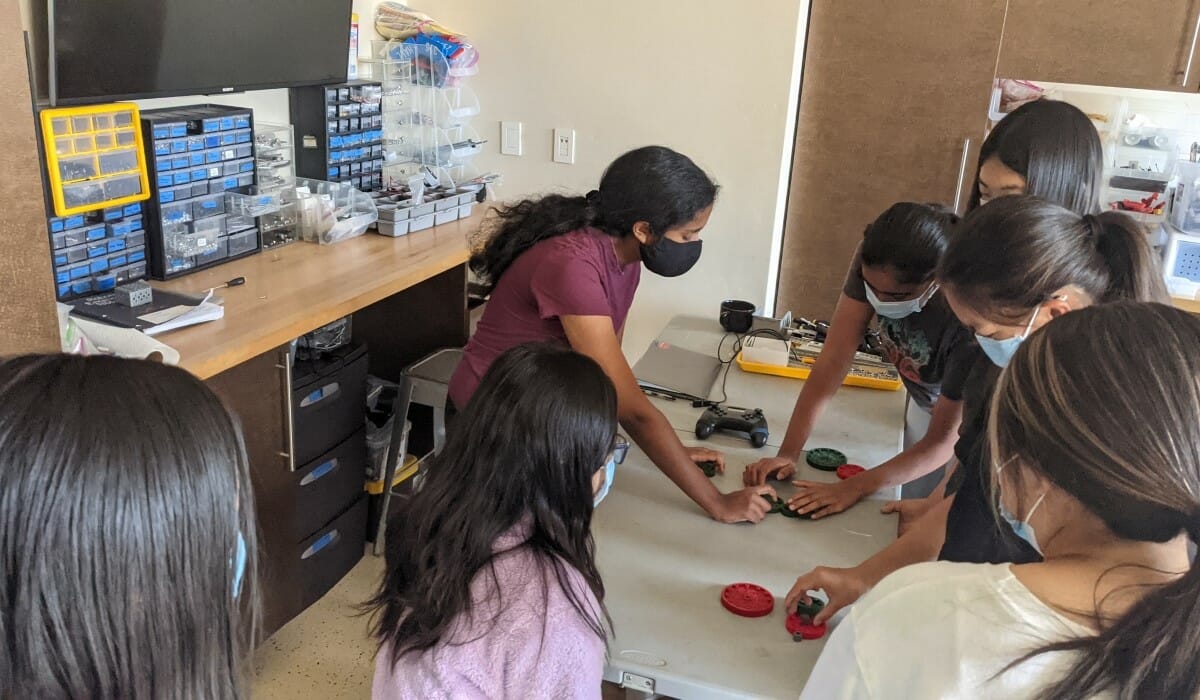
As founder, leader and instructor I lead a team of other student volunteers who are also VEX robotics competitors. We mentor underrepresented teams in STEM in their first year to build a basic competition robot and teach advanced concepts through a 12-week curriculum. I design the curriculum, and with my team of volunteers, create video lessons and presentations, then present weekly sessions to the mentees to address each year’s challenge. I’m also a lead organizer for Girl Powered workshops.
Boost Robotics has connected with more than 200 high school students in-person and virtually in California, around the United States and internationally./Courtesy Nidhya Shivakumar
Share one personal story with me from your volunteerism.
When I first started Boost, a teacher approached us because they had difficulties sustaining a school program. I designed a virtual curriculum for teams to build a robot, and after that first year, those teams built their own robots without guidance from me and reached the championships all by themselves. That feels really good, and it taught me (that) a little effort on my part can really go a long way and make a difference. Even the smallest act of service I participate in, I make the most use out of it.
Why do you think it’s important for others to get involved with causes they care about?
There are many unsolved problems in society. It’s up to people who have abilities to help others, step outside their comfort zone and teach or help people in some way.
What’s been the most rewarding part of your service?
It’s rewarding because I’m able to help these students get an introduction to STEM. They may not pursue robotics specifically, but wouldn’t have that general introduction without the guidance we provide.
In one word, what does volunteering mean to you?
Uplifting.
When you’re not busy with volunteering or school, what do you do for fun?
I spend my free time in the garage working on my robot. Every year, we’re given a new challenge to make a robot. This year, the robot’s challenge is to throw discs into a goal.
How can readers help?
Do you know students who may find our program helpful? Please visit our website for more information and to sign up.
Passions for Programming, Running and Volunteering Collide to Make a Sizable Impact
Meet Daily Point of Light Award Honoree Pulkith Paruchuri. Read his story and nominate an outstanding volunteer or family as a Daily Point of Light.
You might think that a 17-year-old researcher at MIT, Princeton and Northwestern, who is also currently interning at Lockheed Martin, has enough on his plate. But Pulkith Paruchuri has spent the last several years putting his expert programming skills to further use in a volunteer role. Pulkith, who has a voice disorder, loves to help others who live with disabilities – especially visually impaired people.
When this computer science enthusiast was tapped to build a “modest” site that kept track of basic information for visually impaired people and volunteer guides to help them run, he built a robust website instead. Things like a chat function, automatic pairing for volunteers and visually impaired people, and advertising capabilities made all the difference to the organization, which saw an increase of 5,200 new volunteers in 16 countries over two years. Pulkith also helped raise $6,000 through bootcamps and helped the organization get supplies to 250 people, saving three more from abusive situations. Read on for Pulkith’s inspiring perspective on volunteering.
What inspires you to volunteer?
The overlooked issues. Volunteering is often done for the most publicized issues, such as world hunger, poverty and disaster relief, and this undeniably deserves merit. However, there are so many voids in the community that people are often unaware of. I hope to do my part by filling one of those voids. In this case, many do not realize that the Visual Impaired Community, in many situations, needs assistance in staying healthy and getting physical exercise.
Describe your volunteer role.
For the past couple of years, I’ve been developing a website used by thousands and leading a team of developers for Guide Runners India, an organization that helps visually impaired individuals team up with local volunteers to allow the visually impaired to get the physical exercise they often need.
Pulkith Paruchuri, a computer science enthusiast, uses his skills for a great cause./Courtesy Pulkith Parachuri
This website kept track of events, information about the visually impaired, volunteer information, pairings and news. It also has visualizations to manage this information, as well as features including volunteer hour tracking, meet-up scheduling, administration contact, messaging, automatic pairing suggestions and questionnaires that allow the visually impaired to report any issues with their supplies, shelter or environment.
What have you learned through your experiences working on the website?
While the number of people that want to volunteer is vast, the number of people that do volunteer is much more minuscule.
However, those who do volunteer are passionate about their work and often go out of their way to do their service work, and I have the utmost respect for them. That’s why I encourage people to volunteer not just for the sake of volunteering, but to choose something that is important to them.
What’s been the most rewarding part of your work?
Seeing people enjoy my passion. I enjoy going on long runs in the evenings, and seeing those who have a passion for running and volunteering to help people who would otherwise not be able to get sufficient exercise is quite rewarding.
Why do you think it’s important for others to get involved with causes they care about?
I’ll simply leave you with the saying, “If not you, then who?”
What do you want people to learn from your story?
There is always something you can do that is enjoyable, rewarding and helpful for the community, regardless of your demographic, characteristics or situation. Your community needs something and you can be the one who helps! It doesn’t have to be the grandest thing – every small action you engage in can lead to a life transformed.
From Hurricanes and Earthquakes to Pandemics and Wars, California Physician Races Around the World to Save Lives
Meet Daily Point of Light Award honoree Dr. Prerna Mona Khanna. Read her story and nominate an outstanding volunteer or family as a Daily Point of Light.
To say that Dr. Prerna Mona Khanna’s resume is impressive would truly be an understatement. A triple-board-certified practicing physician, Dr. Mona is also a founding member of the Department of Homeland Security and an Emmy Award-winning medical journalist. But what makes the 57-year-old physician’s life even more admirable and outstanding is the volunteer humanitarian work to which she has dedicated more than 20 years.
From natural disasters such as Hurricane Katrina in New Orleans and the 2011 Great Tohoku earthquake in Japan to man-made ones such as the 9/11 terrorist attack… when tragedy hits somewhere in the world, Dr. Mona deploys, providing emergency medical aid to save countless lives.
“With all the responsibilities and changes thrown at us, life is hard enough as it is,” Dr. Mona said. “But when a natural or unnatural disaster happens, the effect it has on people and their suffering is devastating. I just can’t stand it and I want to do everything in my power to put a smile back on their faces.”
Her heart for helping others started to blossom ever since she was a young girl growing up in Chicago, as she saw her immigrant parents drop everything to help other immigrant families assimilate into their new lives in America.
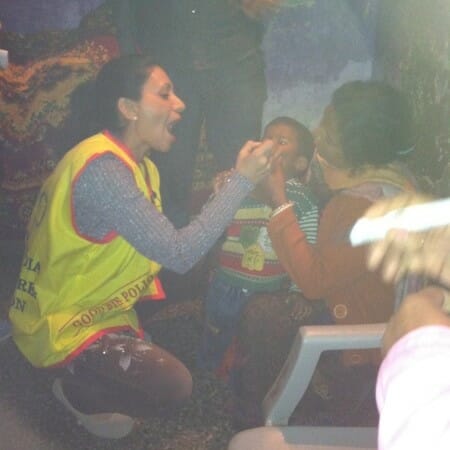
Dr. Mona administering polio vaccines to children in India in 2014./ Courtesy Prerna Mona Khanna
“When you grow up in a household that’s all about helping others and service, that becomes ingrained in you and you want to carry that forward,” she said.
With that conviction to serve others, Dr. Mona became a physician and by the late 1990s, she was the medical director for the county of San Bernardino in California, helping injured employees get back to work. But in 1999, her life was forever changed as she watched scenes of war and ethnic cleansing in Kosovo play out on the news, leading to hundreds of thousands of Albanians being expelled and taken in as refugees by the United States. Wanting to help, she reached out to several organizations and found one that needed physicians to perform medical clearance screenings for the refugees that transitioned through Fort Dix in New Jersey. She jumped at the opportunity and the rest is history.
After that first deployment helping Kosovo refugees, she has since delivered a baby in Liberia amid the Ebola outbreak, administered polio vaccines to children in India and given lifesaving inhaler treatment to a girl suffering from an asthma attack after the 2010 earthquake in Haiti. Altogether, she’s provided emergency aid in 15 countries after five hurricanes, four earthquakes, two tsunamis, two wildfires, a monsoon flood, a plane crash, the 9/11 terrorist attack, two wars and two pandemics. Most recently, she performed medical screenings on Afghan refugees so they could be cleared to resettle in the U.S., and also provided COVID-19 surge relief at an overwhelmed hospital in Wisconsin.
The stories Dr. Mona has of her deployments are far too numerous to count. But for her, the most memorable stories are the ones when the patient’s life was not only saved, but completely changed as well, such as the case of a child from Bantayan Island in the Philippines, where Dr. Mona provided medical relief following Typhoon Haiyan in 2013.
“This child had a cleft palate, and I was able to connect that family to an organization called Smile Train, which provides corrective surgery for children with cleft lips and palates,” Dr. Mona said. “These are the stories that tell us that you can actually change the trajectory of somebody’s life because that child now can eat better, talk better, and he’ll be able to have a very normal life.”
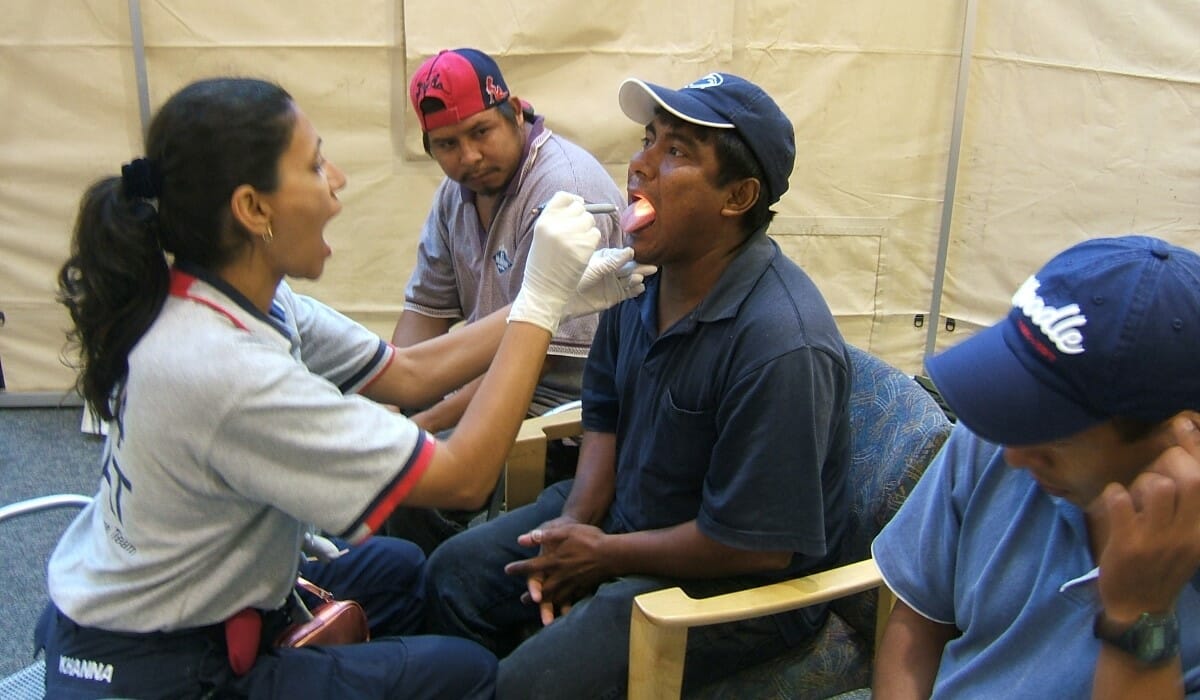
Dr. Mona assessing patients in the aftermath of Hurricane Katrina in 2005./ Courtesy Prerna Mona Khanna
Sheri Bailiff, an ER nurse from Fort Worth, Texas, was able to get a firsthand view of Dr. Mona’s unmatched level of passion for serving others when they deployed together to Puerto Rico in 2017 after Hurricane Maria barreled through the island. Sheri and Dr. Mona treated patients for lacerations, broken bones, infections and other injuries despite the obstacles of being in a completely new environment and the majority of patients only being able to speak Spanish.
“She was very professional in her attitude and work ethic. She was just at ease doing that kind of work,” Sheri said.
“Anybody can look at where she’s been and what she’s done and say she’s inspiring,” Sheri added. “I think people are sometimes intimidated by what she’s accomplished, but she’s a very caring person and she is great with patients.”
With it being impossible to know when disaster will hit and she will have to drop everything and go, it is difficult for Dr. Mona to have a full-time job, so she sacrifices this security and works day-to-day as a freelance medical consultant and worker’s compensation physician.
As a financially secure physician without children, Dr. Mona understands that it’s easier for her to bound to these deployments and volunteer during tragedies. But she hopes that people will recognize that there are volunteer opportunities everywhere, whether it’s donating blood, volunteering with a nonprofit organization or simply helping your elderly neighbors.
“If you can do what I do, more power to you because, boy, is it amazing,” she said. “But if you can’t, just look around. There are opportunities to help others everywhere you look.”
Retired Social Worker Volunteers to Ensure Families Who Emerged from Homelessness Can Achieve Long-term Success
Meet Daily Point of Light Award honoree Jan Lattuca. Read her story and nominate an outstanding volunteer or family as a Daily Point of Light.
For families experiencing homelessness in Montgomery County, Pennsylvania, Family Promise Montco PA has been a haven for decades. Not only does the organization provide transitional housing and food, but it also offers various resources for parents to find employment and learn the skills needed to become more self-sufficient.
Jan Lattuca, 73, has played a key role in making Family Promise’s impact possible. After retiring from the workforce as a counselor for a vocational rehabilitation program, Jan has been volunteering at Family Promise Montco PA as the organization’s aftercare specialist for the past six years. She has dedicated more than 1,200 hours to ensuring families maintain their housing and stay on the path to achieve long-term success.
Describe your volunteer role with Family Promise Montco PA.
My title is Volunteer Aftercare Counselor. I work with clients who have completed one of the programs at Family Promise, whether it’s a shelter program, transitional housing or a long-term supportive housing program. If they are interested, I will offer them aftercare services. What I do is check in with them regularly to see how they’re doing and help them deal with any crises that come up. I connect them to whatever services, programs and resources will meet their needs. During the pandemic, I provided a lot of emails about COVID-19 vaccines, where to get tested and how to live safely.
What types of crises have you helped resolve and how?
The two most frequently occurring crises are getting behind on rent (therefore facing eviction) or getting behind on utilities (therefore facing a shutoff of electricity.) Sometimes people will lose their vehicle and that can really cause serious problems in terms of employment, maintaining their jobs and getting their kids to and from appointments. There are a couple of ways that I generally respond to these crises. One is to refer them to government or other community programs that I know provide services to meet those needs. Another is, depending on where the client lives, to contact organizations such as nonprofits, churches or other charitable funds to help them raise money.
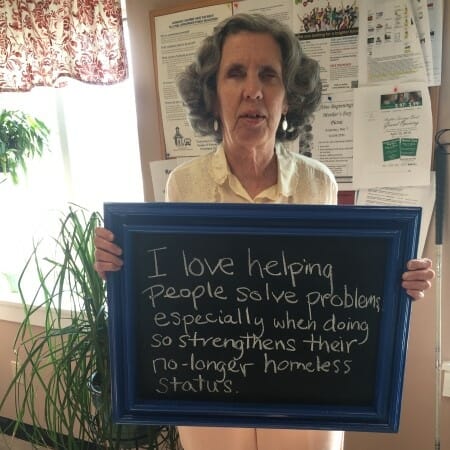
Jan Lattuca has been volunteering as an aftercare specialist with Family Promise Montco PA for more than six years, helping numerous families in Pennsylvania permanently break the cycle of homelessness./ Courtesy Family Promise Montco PA.
What has been your proudest moment while volunteering?
It would be working with a landlord who was getting ready to throw my client’s belongings out on the street. I was able to talk with the landlord and work out a compromise that would prevent the eviction from happening. Another moment that stands out in my mind was helping a client who had gotten pretty far behind on her utility bill. I helped her get that all paid up.
What’s a misconception people have about homelessness?
That part of the problem is there is just truly not a level playing field out there for lots of people. To say, “They should be able to pull themselves up” doesn’t take into account the systemic nature of poverty, discrimination and racism. So, I think for government, nonprofit and faith-based organizations to work together and provide support is the best way for unhoused people to get their needs met and get back on their feet again.
What’s been the most difficult part of your work?
The lack of adequate housing and the lack of equitable wages, which make it really hard for clients to maintain stable housing and safety for their families. Family Promise provides budgeting services and educational programs. We help them with rehousing and finding employment, but if there aren’t enough affordable rental units out there and our clients are having difficulty making a living wage, those services will sometimes stumble.
Why do you think it’s important for others to get involved?
I can’t speak for everyone, but for myself, I have been blessed and I like to share the abilities and gifts I have with others. When you support others, it takes you out of yourself and it helps you understand the broader world in which we live. Volunteering is an honor and a source of enjoyment.
What do you want people to learn from your story?
I would like people to know about programs like Family Promise and I’d like more people to understand the desperate need for more affordable shelters, permanent housing and a more equitable wage structure.
Teen’s Virtual Camps Help STEAM Education Become Accessible Around the World
Meet Daily Point of Light Award honoree Aadhav Prabu. Read his story and nominate an outstanding volunteer or family as a Daily Point of Light.
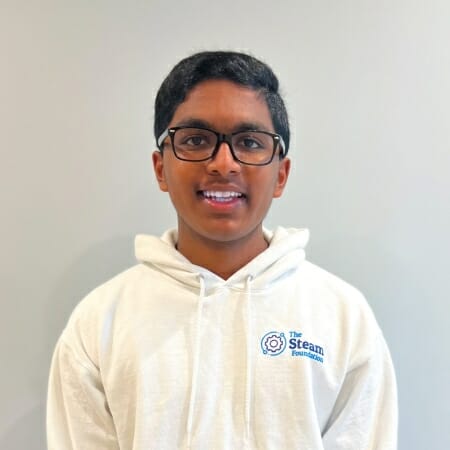
For Aadhav Prabu, having mentors and opportunities to learn about technology at a young age was life changing. It sparked a curiosity of STEAM — science, technology, engineering, arts and mathematics — that began with 3D printing.
Eventually, his interest in 3D printing grew into something bigger than a machine. The 16-year-old co-founded The STEAM Foundation in 2021 to lower the barriers to education for students. Prabu serves as the program director, and has grown his mission of accessibility to youth around the world.
Describe your volunteer role with The Steam Foundation.
We’re a nonprofit on a mission to make STEAM education accessible for all kindergarten through twelfth grade students through virtual and hands-on learning. My story really starts in fourth grade. I was first exposed to 3D printing out of all the STEAM concepts during an afterschool club as a part of a class of mine. While we were learning about 3D printing, we were also learning about the different software to make designs and print them out. I continued exploring 3D printing and graphics in fifth grade and I was fortunate enough to have access to a 3D printer in middle school to make gifts for family and friends.
One day, I wondered why we had this super cool machine, but I was really the only one in the whole school using it. I asked my librarian, who is now one of our organization’s board of directors, the same question. She told me that it wasn’t necessarily because people weren’t interested, but that not enough people knew about it or that they were scared to use it and break it.
I thought that I could be the one to provide that opportunity to other students in the same way I had the opportunity in fourth grade. I teamed up with my friend Akshar Raikanti, who is now the co-founder of The Steam Foundation, to start a 3D printing club. Around 30 students came for twelve weeks. By the end, everyone had their own models that they could take home with them. In high school, we continued the club. We wanted to have a sort of summer camp, but the COVID-19 pandemic made that impossible, so instead, we created The Steam Foundation to be a virtual space for students to meet and learn in the fall of 2021. Close to 150 students participated across five camps. We continued to grow and even had sponsors and partners. I’m happy to say that we’ve achieved our goal of reaching so many students and growing our team of 425 volunteers. To date, we’ve taught about 1,900 students.
The STEAM Foundation Program Director Aadhav Prabu leads virtual STEAM — science, technology, engineering, arts and mathematics — camps to grow education accessibility for students around the world./Courtesy Aadhav Prabu
What are the barriers to STEAM education for K-12 students?
There’s always a lot of interest in STEAM in underserved communities, but the issue is that there often isn’t accessibility to technology or someone to teach them. One of the things we wanted to achieve with The STEAM Foundation was to help underserved communities and give them access to technology that they wouldn’t have access to otherwise. We have an outreach program where we reach out to schools or communities in underprivileged areas and support them with curriculum training for equipment or anything that they’d need to start a STEAM program in their community. We recently launched our 15th outreach chapter a couple of weeks ago, one of them being international.
Describe the virtual camps within The Steam Foundation.
Now, we do virtual camps year round — three times a year. Our spring and fall camps are ten weeks long once a week throughout the year, and our summer campus are two weeks long every single day with multiple options to join from June to August. I help facilitate all of the camps, create curriculum and work with our directors. Now we have seven different areas: 3D printing, robotics, Python, Java, graphic design, iOS app development and video game development. I basically make sure each camp runs smoothly. I also sift through our feedback and make sure that we improve our campus based on that. I also help raise money through donations and sponsorships.
What inspires you to volunteer?
I’ve been thinking about that question recently. One story that I think shows why I love doing this is when we did our first 3D printing club. One of the students really loved 3D printing and would spend extra time in the library with us trying to grasp the concepts better. He really developed a passion for it. When we did our first round of camps at The STEAM Foundation, we brought him on board as a co-instructor. He went on to become a lead instructor who led full camps of 30 students and now he’s a program director for 3D printing, managing all of our city’s printing programs.
It just shows how you can go from not really knowing anything to be able to teach hundreds of students. The fact that I was able to help make that happen and spark that change was amazing. These students really can go on to do really amazing things with that knowledge. Knowing all of this continues my love of our organization.
What have you learned through your experience as a volunteer?
When we first started looking for sponsors, everyone said no because at that point we hadn’t really proved ourselves. We were just a bunch of high school students trying to teach camps with no proof that it actually worked yet. A few times I thought, why am I doing this? I kept going because we couldn’t run these camps without funds. I learned to keep persevering in the midst of a lot of initial no’s.
Another lesson would be about recruiting a team. We realized that recruiting our instructors was not just about getting the smartest people on the team. In fact, they don’t need to be the smartest in the room to be the best teachers. The best teachers are the ones who are motivated, driven and go above and beyond.
Why is it important for others to get involved, especially young people and students?
This whole thing started back in fourth grade when I had a room of parents who were willing to contribute. When you look at teaching and getting involved in the terms of knowledge that others can benefit from, we can create stories of change. When everybody starts pitching in, we can grow and reach the most students and spread STEAM to the biggest audience.
Are there any partnerships, programs or events that you are excited about?
We’re about to start our fourth term of STEAM camps this fall. I’m definitely excited about that because we have some new outreach chapters and more international growth to come. Beyond that, we’re looking forward to starting some new programs like video game development.
New Jersey Teen Makes Filmmaking Accessible for Youth Around the World
Meet Daily Point of Light Award honoree Mark Leschinsky. Read his story and nominate an outstanding volunteer or family as a Daily Point of Light.
Mark Leschinsky remembers the desire to make his first film, but he quickly realized how intimidating and expensive filmmaking can be. The 16-year-old Mahwah, New Jersey, native didn’t let barriers hinder his creativity. Mark made his film his own way without any fancy equipment and decided to help other teens do the same.
In 2020, Mark created The Lighthouse Initiative, the first student-led nonprofit focused on empowering students to get into filmmaking. With a mission of democratizing the diverse art of filmmaking for youth around the world, Mark leads a network of volunteers in film courses, runs a film festival and publishes his own educational materials.
Describe your volunteer role with The Lighthouse Initiative.
My role with The Lighthouse Initiative started a few years ago in 2016. I was on this boat to see and film the tallest lighthouse in New Jersey, and it was a really beautiful house. This was my first experience with filmmaking, but I realized pretty quickly that getting into film was only for people with expensive equipment. Sometimes you have to have a DSLR camera or a green screen. It was initially discouraging to think about needing more expensive equipment, but as I learned more about resources online, I learned that you can make a movie with just a cell phone and free editing software. I made my first documentary about an educator who inspired me on that boat, and I named it “The Lighthouse” because lighthouses shift light in the right direction against darkness. After a few months, my film actually was selected for festivals and awards across the country.
I made a couple more movies over the past few years, and in 2020, I created The Lighthouse Initiative, a nonprofit organization to empower other kids to also realize that they too can make movies to express themselves through filmmaking. And I’m really excited to report that the initiative has made a really large impact on students everywhere. I’m now the executive director of the organization and we have a large network of volunteers. We even have our very own film festival called the Student World Impact Film Festival. We also have film session podcasts on Spotify and other platforms. We also have a new program where we’re getting out students on major streaming platforms like Prime Video.
What are the barriers to filmmaking for youth?
So much film equipment is outrageously expensive. There’s also nothing on a widespread scale for film resources that’s led by students. I realized that other students shared the same feelings I had when I first started, and I wanted to dedicate my time to helping others see that they don’t need much to let their visions and ideas come to life.
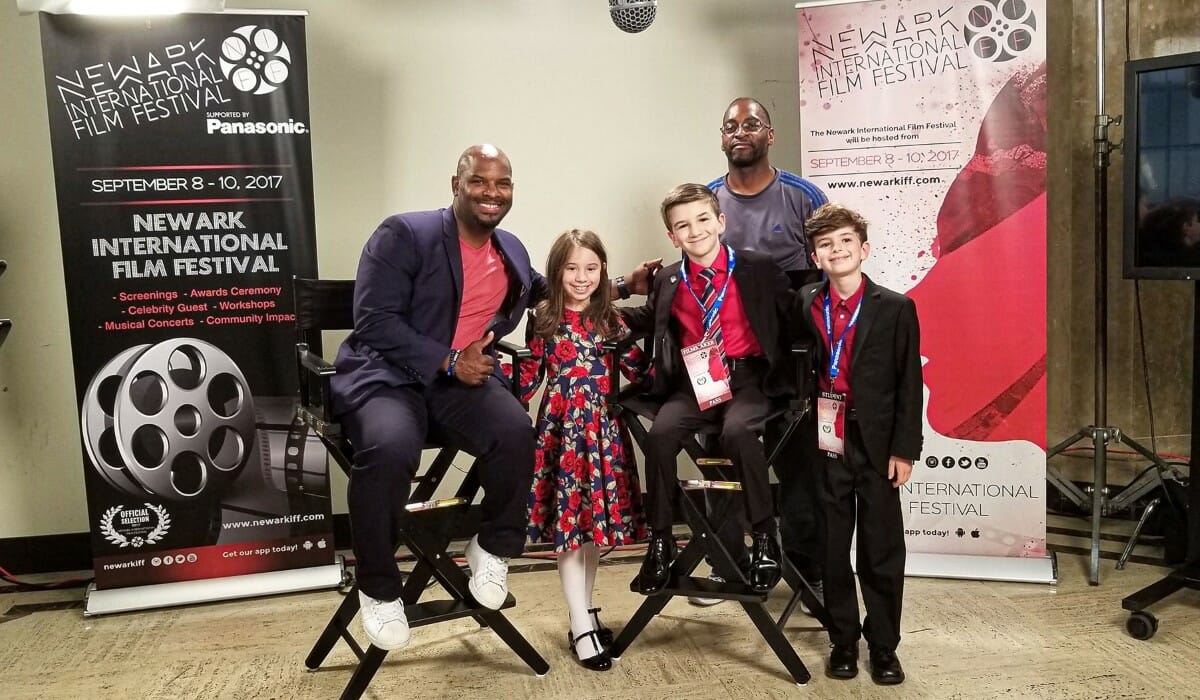
Mark Leschinsky serves as the executive director of The Lighthouse Initiative, and plans to host his annual youth film festival in November of this year. Pictured here, seated right, at the 2017 Newark International Film Festival./Courtesy Mark Leschinsky
Describe the educational publications you create.
I published an educational children’s filmmaking book, among others, that features my pet bunny and is tailored to younger kids. It’s not too heavy on the text. The bunny guides children in a fun way and creates explanations in order to understand concepts about filmmaking about how to be creative. I gave out free copies to kids and even had a book signing. It was really fun to be able to take pictures of my pet bunny and put them in the pages with creative graphics.
What inspires you to volunteer?
The main inspiration for me to volunteer is really being able to empower other filmmakers who were in my position. It’s really exciting for me to be able to help students who are in a position where they’re a little unsure of what to do and don’t have any resources to be able to get started in filmmaking. It’s really inspirational for me to see what they’ve come to accomplish at the very end of the library programs and other free filmmaking courses that I’m posting.
What have you learned through your experience as a volunteer?
I’ve learned a lot of things in addition to organizing an organization. I’ve learned that filmmaking really is an accessible art form. I’ve learned that a lot of students really do love filmmaking and once they’re able to understand that it’s accessible to do just with a cell phone, it’s inspiring and exciting to see what they create. Creating this organization has been a complicated process; I didn’t exactly know all of the ins and outs in running a nonprofit, but I’m proud of what we’ve done. We even received a grant from Google for $10,000. It’s been an amazing experience all the way through, and I’m excited for our network of volunteers around the world to grow.
Why is it important for others to get involved, especially young people and students?
It’s extremely important to get involved with causes you care about. I remember when I started as a filmmaker and how I progressed through everything; that’s why I started the program. It’s important for students to give back in any way that they can because it’s a really rewarding experience. It’s an excellent way to help others in the community and provide resources for them. It doesn’t have to be through filmmaking specifically, but giving back is just an excellent part of being a part of your community. Communities that give back to each other are the strongest ones.
On our website, we also have resources for anyone who would like to volunteer for the program. We’re always excited to see students wanting to start a TLI program at their own school.
Are there any partnerships, programs or events that you are excited about?
There’s a lot of things in November. We’re going to be having our film festival with a venue and right now we’re going through the submissions from students to be in the festival. It’s really exciting to watch everyone’s submissions. We’re going to be publishing those movies on Prime Video.
We’re also running film classes across local libraries and online so anyone can learn film anywhere around the world at any time. We’re always working on new things and I’m always trying to empower more students in the greatest way possible.
California Teen Enriches Community Through the Inspirational Power of Music
Meet Daily Point of Light Award honoree Hannah Cho. Read her story and nominate an outstanding volunteer or family as a Daily Point of Light.
Hannah Cho is an accomplished oboist, having won multiple national and international competitions. She has performed solo recitals at prestigious concert halls around the country. This summer, she participated in the Carnegie Hall-sponsored NYO2. Outside of music, Hannah is driven by the desire to impact others. She enjoys hiking, baking, learning about physics and being outdoors.
When Hannah was in seventh grade, she had the opportunity to perform at a senior center for residents with dementia. She remembers two ladies fighting for a seat closer to her. At first, she didn’t know what to make of it because she didn’t think of herself as a grand performer. She soon realized live concerts for those isolated individuals were rare, and both ladies wanted to get the best seat in the house.
This, along with other performances, sparked a chain of opportunities that Hannah knew would improve the lives of people who could benefit from the gift of music. Today, at age 15, Hannah is a driving force in bringing music to the youth and the elderly in her community.
What inspires you to volunteer?
Inspired and saddened by the actions of those two elderly ladies, I was further determined to bring the joy of music to the community and created a nonprofit organization named Empowering Arts (EA) to bring live music to senior citizens.
Empowering Arts was founded by student artists trying to positively impact our community through music and the multidisciplinary arts. One of our goals is to create a culture of community service and give back to the neighborhoods we live in. We hope to promote health, reduce isolation and enrich people’s lives, especially seniors with limited mobility or other illnesses, children with disabilities and the underserved, through our performances.
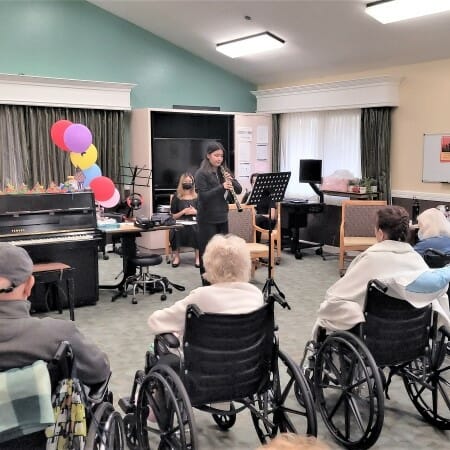
Hannah performing at Windcrest Assisted Senior Living Facility.
This was just the beginning. I performed at the Beyond Blindness‘ 35th Anniversary fundraising gala. It was a great opportunity to help the organization raise money for a charity whose cause and values align with mine. I believe children with visual impairments and other disabilities need people that are well trained to guide them and address their specific needs. They also need purpose-built programs that will give them the best chance to thrive and achieve their fullest potential. These resources cost money and it was my honor to contribute to their fundraising efforts.
This summer, EA partnered with Beyond Blindness to teach acting, art and music classes to campers with disabilities. Exposing campers to music, arts and acting programs and providing hands-on experiences were another way that empowering arts was able to give back to the community.
Campers played small percussion instruments; completed a lion’s head craft with a plastic cup, string, and paint; made animal-themed hair bands; participated in interactive storytelling and performing as book characters; and learned a ribbon dance.
Describe your volunteer role with Empowering Arts.
I am the founder and president of Empowering Arts. My role includes recruiting volunteers, playing and organizing instrumental music concerts and classes, contacting and coordinating schedules with nursing facilities and children’s learning centers, developing a music and art curriculum for disabled children, planning for future programs such as expanding our volunteer services to other states or countries by reaching out to peers outside Southern California.
What’s been the most rewarding part of your work?
Being able to move people through the power of music, especially when they are disabled or elderly, is extremely rewarding. It can open new doors for the young and provide emotional support for the elderly. Because art is a universal language, everyone is able to benefit from my work. Being able to combine my favorite thing with giving back to the community is what I love most about my work.
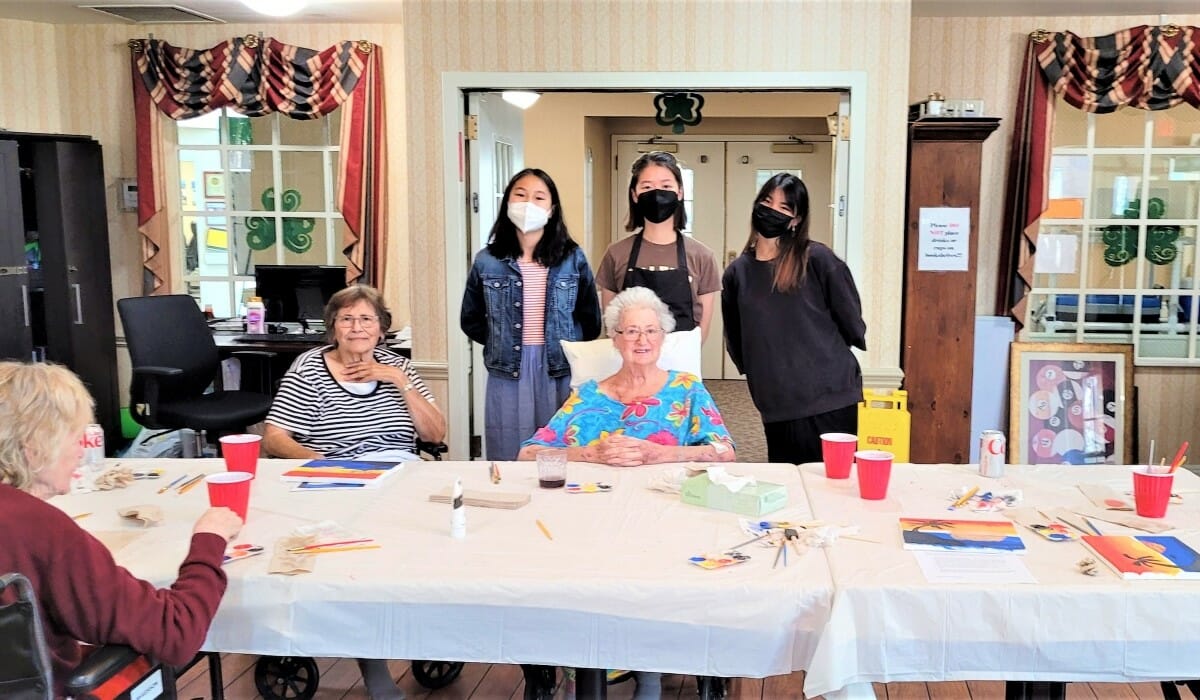
Hannah and fellow volunteers guiding an art class for seniors./Courtesy Hannah Cho
What have you learned through your experiences as a volunteer?
If we want to make the world a better place, we need to create a community. We can’t just go about our daily lives in a silo and not see what’s happening around us. Through my experience as a volunteer, I’ve come to realize how important it is to give back and how this inspires others to “pay it forward.” Not only does this build the foundation for a strong community, but it is also the greatest reward you could ever imagine. It’s also important for people to understand that even the smallest action can have a huge downstream effect and any act of volunteerism or philanthropy should be recognized.
Are there any future partnerships, programs or events you are excited about?
This fall, we are partnering with a Title 1 school, El Sol Science and Arts Academy, which is next to my high school. El Sol currently has musical theater and rock band music programs, but not piano or orchestral instruments. I would love to expose elementary school students to the world of classical music because I know it can be intimidating and hard to appreciate. We are launching a music program to provide in-person music lessons for kids who do not have the resources for this type of instruction. At the end of each semester, we will host a concert that will showcase what the students have learned. If anyone wants to pursue music further, we will provide ongoing mentorship.
Why do you think it’s important for others to get involved?
Getting involved in your community is important because it touches lives and makes the community we live in a better place.
With the Help of Her Community, Florida Woman Sends Aid to Fellow Ukrainians Devastated by War
Meet Daily Point of Light Award honoree Mariya Kemper-Reiss. Read her story and nominate an outstanding volunteer or family as a Daily Point of Light.
When Russia launched its full-scale military invasion into Ukraine on February 24, Mariya Kemper-Reiss of Boca Raton, Florida, couldn’t turn off the TV as dramatic scenes of buildings being bombed and Russian troops advancing unfolded before her eyes. While Mariya and her immediate family left the Soviet Union in 1989 as political refugees with thousands of other Jewish Ukrainians, she still had many friends and family that lived near the capital of Kyiv.
“I was just in shock,” Mariya said. “I probably slept a couple of hours because it was so nerve-wracking to see how close they were getting to Kyiv.”
But after the initial shock wore off, and Mariya saw her fellow Ukrainians holding out against all odds, she knew that she had to help. She quickly reached out to friends and contacts inside Ukraine to see what they needed. Then with the help of a longtime friend who is the head of the Ukrainian postal service, Mariya was able to figure out the logistics of how to get supplies on cargo planes and delivered from the United States to Ukraine.
She enlisted the help of her friends Summer Faerman and Brittany Suarez. Together, they created an Amazon wish list, which allowed purchased items to be delivered directly to a facility in New Jersey, where the supplies were put on pallets and loaded onto planes. With the generous donations of the Boca Raton community and beyond, they were able to send more than $30,000 in medical supplies to Ukraine.
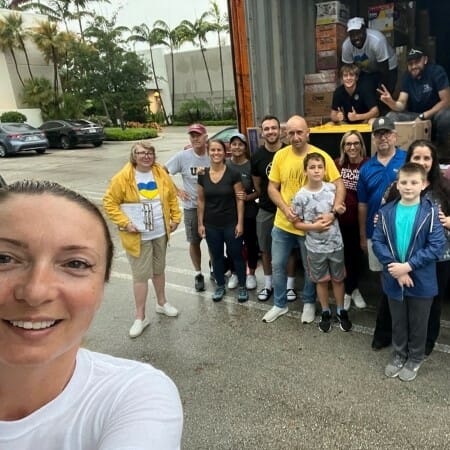
With the help of her community, Mariya (bottom left corner) was able to fill a 40-foot container with diapers, canned goods and other necessary items for Ukrainians who stayed back in their country./ Courtesy Mariya Kemper-Reiss
But their efforts didn’t stop there. Mariya started a website called Boca Helps Ukraine and secured a donation drop off site in Boca Raton so that people could donate nonperishable foods, hygiene products, diapers, baby formula and other essential items. Using her marketing skills acquired during her prior work experience in advertising, Mariya was able to get the word out successfully.
“It started on day one with one box, and then soon enough, we could barely move in this sea of boxes,” Mariya said. “A ton of volunteers came in from the community, from my synagogue, from churches, from schools. We loaded a 40-foot container in two days.”
Summer Faerman was able to see firsthand the impact that Mariya made.
“She was able to engage hundreds and thousands of people to know that they can make a difference and let them know that although we’re thousands of miles away, what they’re doing mattered,” Summer said.
The container was filled with more than $60,000 worth of humanitarian aid and it shipped out in early June. Once it clears customs, the Ukrainian postal service will distribute the donations to people living in the direst areas.
Mariya says her inspiration for helping others comes from her grandmother, who passed away ten years ago.
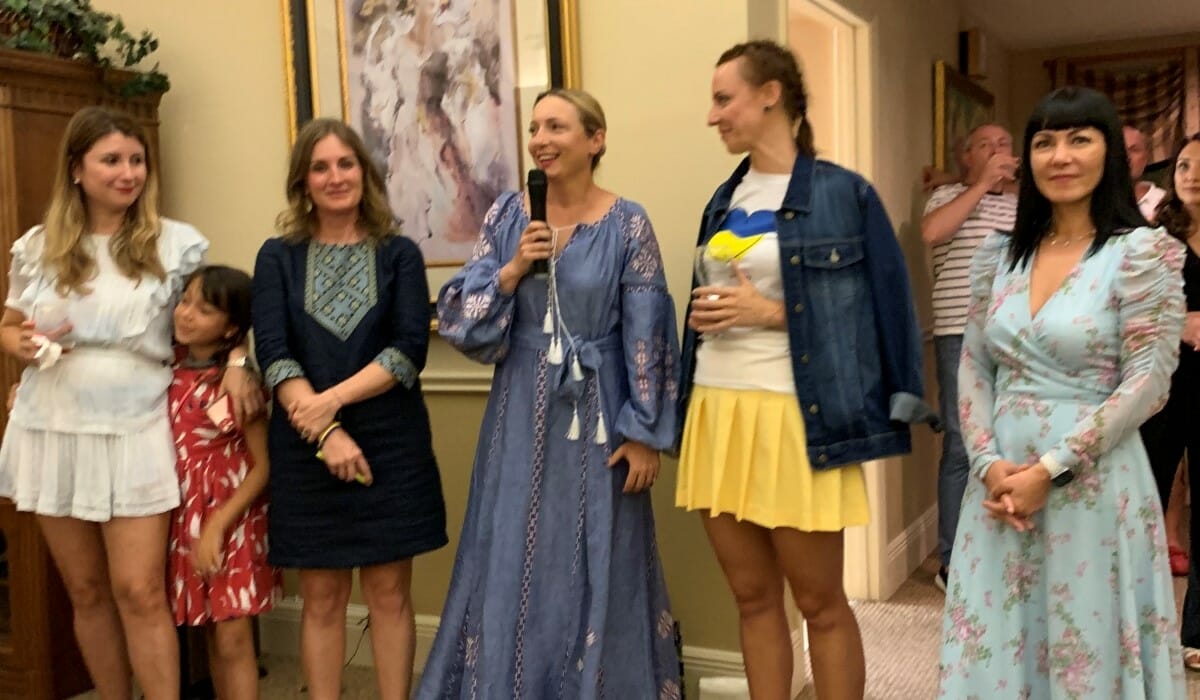
Mariya (fourth from left) hosting a fundraising event to raise money for humanitarian organizations in Ukraine./Courtesy Mariya Kemper-Reiss
“Her entire life was difficult from the day she was born. She lived through the Soviet regime and went through World War II so she barely had any time to enjoy her life until we immigrated to the U.S.,” Mariya said. “But even then, she was sending care packages back to Ukraine to her friends. She’s shaped me into who I am today.”
No longer having access to the space that hosted the drop-off donation site, Mariya’s efforts have shifted to fundraising money for organizations working on the ground in Ukraine. She hopes to soon adopt a shelter for displaced people that she can help by providing supplies and other means of support. Even after the war Is over, Mariya says she will continue to help Ukraine. Her plan is to organize a volunteer group to rebuild homes and other buildings in Ukraine or possibly build new affordable housing for those who have been displaced.
“I want to make sure Ukraine gets back on its feet and is better than ever after all of this is done,” Mariya said.
Octogenarian Volunteer Uses the Power of the Pen to Express Thanks
Meet Daily Point of Light Award honoree Joan Wilters. Read her story and nominate an outstanding volunteer or family as a Daily Point of Light.
Eighty-five-year-old Joan Wilters says growing up, she learned the Palmer method to write cursive. With a simple thank you written in her beautiful script, Joan has spent the last 12 years expressing handwritten gratitude through service.
As a volunteer with The Kind Mouse, Joan, an Appreciation Team Captain from Pinellas Park, Florida, has written thousands of thank you notes on behalf of the organization, which helps families in transition and children facing food insecurity in Pinellas County. Each note carries a personal message of thanks and reminds the recipient how special they are to the organization’s mission.
What inspires you to volunteer?
I raised four children who never had to worry about a meal in their lives. I think it’s absolutely horrible when we hear about children going into restaurant dumpsters on weekends to get food. To me, that’s unconscionable in this country.
Describe your volunteerism with The Kind Mouse.
I write thank you notes to donors and people who have helped the organization. It can be anywhere from 40 to 100 notes each week. I am left-handed but nobody would know it, and I have arthritis but I wear an arthritis glove. I grew up in the 1940s, you had to learn script in school and you did.
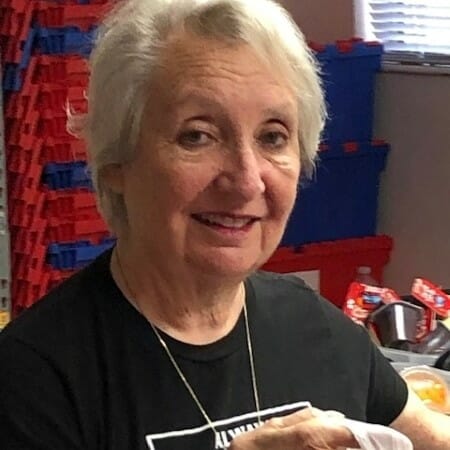
As a volunteer with The Kind Mouse, Joan Wilters has written thousands of thank you notes on behalf of the organization, which helps families in transition and children facing food insecurity in Pinellas County./Courtesy The Kind Mouse
Share one personal story with me from your volunteerism.
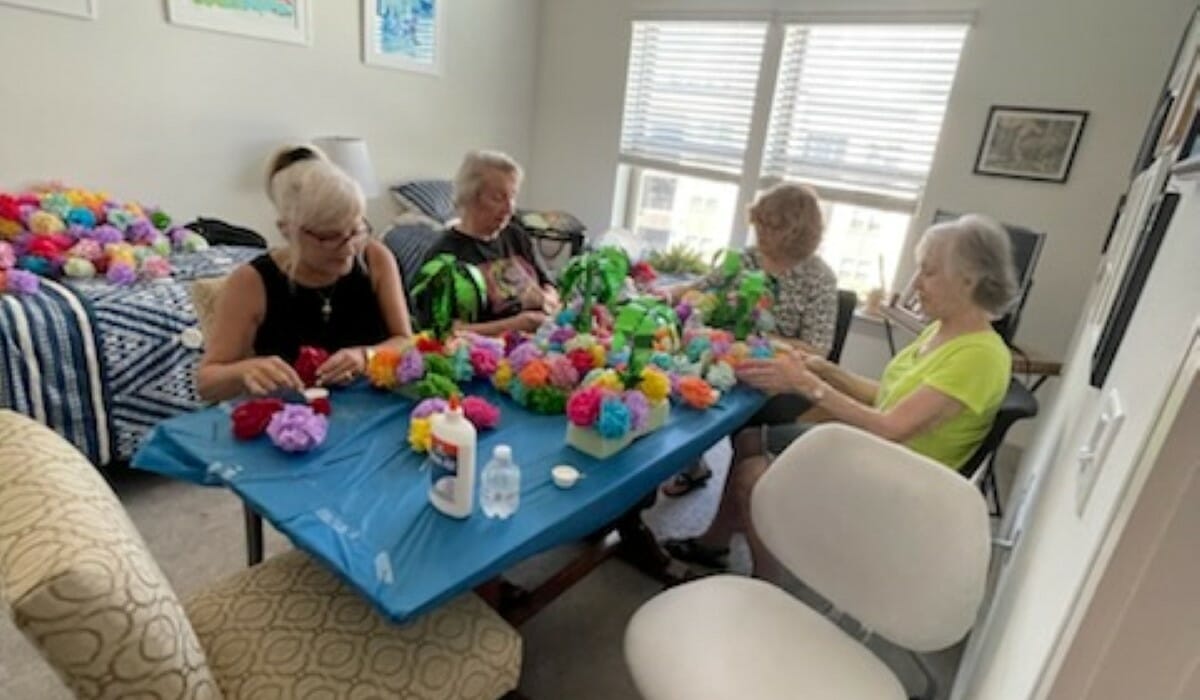
Volunteering is twofold. First, you’re doing something to help somebody else, but you’re also helping yourself and you’re making friends and expanding your own life as well. I have made wonderful friends (through volunteering.) We call the group of volunteers, a bunch of women who are over 60-years-old, the Golden Girls of The Kind Mouse. I have benefitted from service in a different way than the children that receive food from the organization. I myself feel selfish for how I’ve benefited from friendships! I can’t imagine not having these friends in my life now.
Why do you think it’s important for others to contribute to causes they care about?
A lot of my friends who don’t volunteer, they sit around and play cards all day. That’s all well and good one day a week, but if you can help somebody at the same time by volunteering and still make friends, I can’t think of any reason why you wouldn’t want to volunteer.
How have you continued to volunteer throughout the COVID-19 pandemic?
Most of the time I write thank you notes at home. I rarely write thank you notes down at the Mouse House, I’ll do other service work on computers or dating the food at the Mouse House pantry.
Joan Wilters: “Believe me, by volunteering, you’re getting much more than you’re giving.”/Courtesy Joan Wilters
What do you want people to learn from your story?
Believe me, by volunteering, you’re getting much more than you’re giving.
For interested readers, share the secret to writing a good thank you note.
Start with the first two words, “thank you.” ”Dear so and so, thank you.” If we received a grant, then I mention that. If it was for a simple donation, then I thank them for their donation and explain how they’ve helped feed so many children. Most notes are only two decent sized sentences sharing how we appreciate the help. A note is not about the amount of words you say, it’s just taking the time to write them. People like to know that they are appreciated.
In one word, what does volunteering mean to you?
Community.
How can readers help?
Cash donations help The Kind Mouse feed hungry children in the community. Please visit The Kind Mouse website for more information about how you can help.
Michigan Mom Transforms Park Once Rampant with Drug Use into a Haven for Kids and Community
Meet Daily Point of Light Award honoree Shareka Howard. Read her story and nominate an outstanding volunteer or family as a Daily Point of Light.
When Shareka Howard first took her children to their neighborhood park in Flint, Michigan, she was shocked at what she saw. Instead of a park with a nice playground, freshly cut grass and other kids running around, she saw trash and graffiti everywhere. There were couches, toilets and bathtubs that people had dumped. Most shocking of all were the needles littered around the park from the illegal drug use that happened there.
Instead of walking away from Windiate Park, however, Shareka and her family decided to bring out cleaning supplies and get to work. Others from the community quickly joined her, picking up glass, mowing the grass and painting over graffiti to transform the park into one that’s both beautiful and safe. Seeing the impact she and her community made, Shareka founded Howard’s Helping Hands. On top of continuing to maintain the park, Shareka and her volunteers organize events such as basketball training camps, sports tournaments and Family Fun Days.
Howard’s Helping Hands officially adopted the park in 2014 and became a nonprofit in 2022, allowing Shareka and her team to receive grants for renovations and even more fun events for the community.
Describe your volunteer role with Howard’s Helping Hands.
My kids are 23 and 22 now, but started cleaning up Windiate Park when they were just 6 and 7. My family, my siblings and my mom all came together and helped clean the park up. Then neighborhood residents came to help out as well. It went from us cleaning it up to maintaining it so it’s safe for the kids to play.
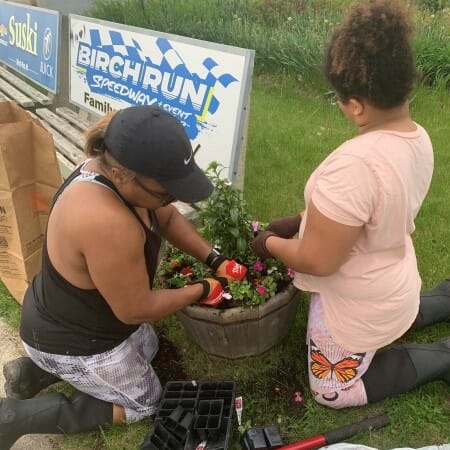
Shareka Howard (left) plants flowers to beautify Windiate Park in Flint, Michigan./Courtesy Shareka Howard
In 2014, we had our first event, which was a Father’s Day Family FunDay. There are a lot of families out there where the father isn’t involved or they don’t do things together. Our park was always full of men playing basketball, but I would never see their kids or family with them, so we decided to create a free basketball tournament for co-ed teams and kids. Various businesses around the neighborhood gave us donations, whether it was juice, ice or gifts to give away as prizes. The first event turned out great and we just celebrated our eighth annual Father’s Day Family Funday.
What are some other events that Howard’s Helping Hands holds?
The year right before COVID-19 hit, we held a winter event called “How the Grinch Stole Christmas and Brought It Back to the Hood.” With the help of Keep Genesee County Beautiful and the Community Foundation, I was able to get a grant to put solar lights into the park, so we lit up the park with Christmas lights. We gave out presents, hot chocolate and cookies. We also have free basketball training camps for the kids and flag football as well.
When you see children playing in the park that you renovated, how does it make you feel?
It puts the biggest smile on my face. Sometimes I’ll drive by the park and see somebody picking up trash. I’ll see the kids out there playing on the new playground or playing basketball on the new courts. It’s just amazing how much more people use the park now. Even at our event this year, 200-300 people showed up.
Why did you decide to make Howard’s Helping Hands an official nonprofit this year?
I figured that if I could make it a nonprofit, I could help my community and the youth a lot more by being able to receive bigger grants. There’s a vacant building near the park so our goal is to get that building and turn it into a community center so we can do this year-round.
Shareka Howard is the founder of Howard’s Helping Hands, which adopted a park in Flint, Michigan, and renovated it to make it safe for children and others in the community./Courtesy Shareka Howard
What inspires you to volunteer?
My kids. Like I said, we started this when they were 6 and 7. They saw us doing this for the community and now they’re adults in their twenties! My daughter is very involved in our organization, and she does the community photos and social media. Now, I have two other younger ones that are 10 and 13 and they’ll come up with their own ideas for the park.
For example, my 13-year-old asked if we could do a clothing giveaway at the park or a food pantry. Seeing them be so involved makes me realize that even when I’m older and unable to work, my kids and also the youth in the community will be willing to do the same thing I’m doing.
Are there any new programs or events you’re excited about?
We just started a new partnership with the Flint Fresh Market, which is a mobile market that drives to parks and farmers markets so people can have access to fresh fruits and vegetables. So they’re coming to our park on Wednesdays and Fridays. We also put in a community garden at our park that is available to everyone. We grow greens, tomatoes, everything. We also have an art program this year run by my daughter where everything is created with recycled material from the park.
What do you hope people will learn from your story?
I hope people will learn to get out and learn the people who are in your community. There’s the old saying, “It takes a village to raise a kid.” We need to work on being together in a community instead of being against. Collaboration is the number one key.