Teen Volunteer Cares for Animals In Sandy Hook Student’s Memory
Meet Daily Point of Light Award honoree Marley Dixon. Read her story and nominate an outstanding volunteer or family as a Daily Point of Light.
A resident of Sandy Hook, Connecticut, 15-year-old Marley Dixon is around the same age the children killed in the Sandy Hook School shooting would have been today. Marley has dedicated her volunteerism to creating a kinder world by supporting animals and people in her community.
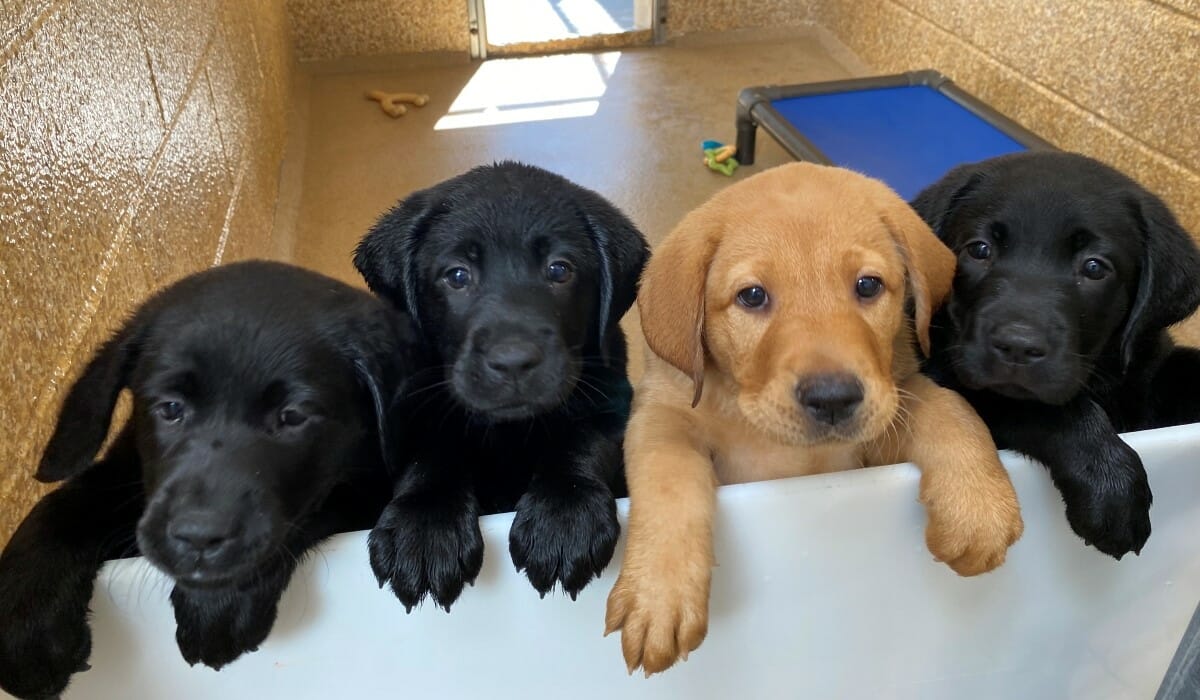
A rising high school sophomore, Marley volunteers with the Catherine Violet Hubbard Animal Sanctuary (CVHAS), which promotes compassion and healing through human-animal connection. The organization is named to honor the life of Catherine Violet Hubbard, a six-year-old victim of the school shooting. In addition to her volunteerism with CVHAS, Marley advocates against animal abuse and volunteers with a number of organizations, all focused on animal support, including Educated Canines Assisting with Disabilities (ECAD), where she helps to care for service dogs in training.
What inspires you to volunteer?
When I was little, my teachers thought I couldn’t talk. I didn’t talk much outside of my house until I was in middle school. I thought I’d never have a way to make the world better, but volunteerism makes me feel like it’s possible. I now have a bigger voice, and my voice can be the voice for people who also have trouble speaking for themselves.
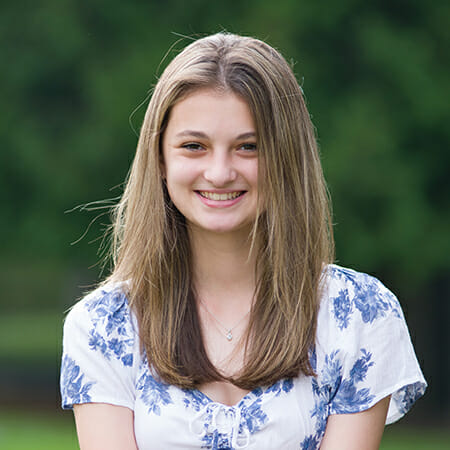
Marley Dixon is volunteering to create a kinder world by supporting animals and people in her community./Courtesy Marley Dixon
Tell us about your volunteerism.
I mostly do the Senior Paw Project for CVHAS and have also helped write grant applications and raise funds at my school for the organization. I take my responsibilities at CVHAS very seriously, and it especially hits home because I live in Sandy Hook and was around Catherine’s age when she passed away.
Animal Farm Foundation (AFF): I write letters to advocate for animal protection with AFF’s guidance.
How does your service with ECAD positively impact your community?
I am a campus assistant for ECAD, an organization that trains service dogs. I help take care of needs for the dogs in training including grooming, washing, exercising and keeping them calm. This takes a long time. Service animals open doors for people and help break down barriers. For example, service dogs help individuals with physical challenges go to places they deserve to be. They can also help someone with anxiety and PTSD go places they may not have gone alone. This is a way I can help all people feel included.
Share one personal story from your volunteerism.
At the CVHAS Butterfly Party this year I helped support adoptions for mostly dogs, some cats, horses and birds, too. There were more than 10,000 attendees, and every time we finalized an adoption, I’d ring a cowbell. I rang it so many times. That was really a kicker for me, because I felt I was doing something good by helping out at such a wonderful place. I’ve learned you don’t have to pretend to be someone you’re not in order to have an impact. I like volunteering for the cause. Since this is such a close to home organization, I don’t need money (to serve), I like raising awareness about the issue and drawing more people towards it.
Why do you think it’s important for others to give back?
Volunteering works best when everyone, including people most directly impacted, are welcomed. Volunteering is a good way to show you care about something, and it’s a good way to chip in and help to draw awareness.
What do you want people to learn from your story?
Everyone has strengths that can help [others.] No one is completely strengthless. At first, problems seem overwhelming, but everyone has a strength.
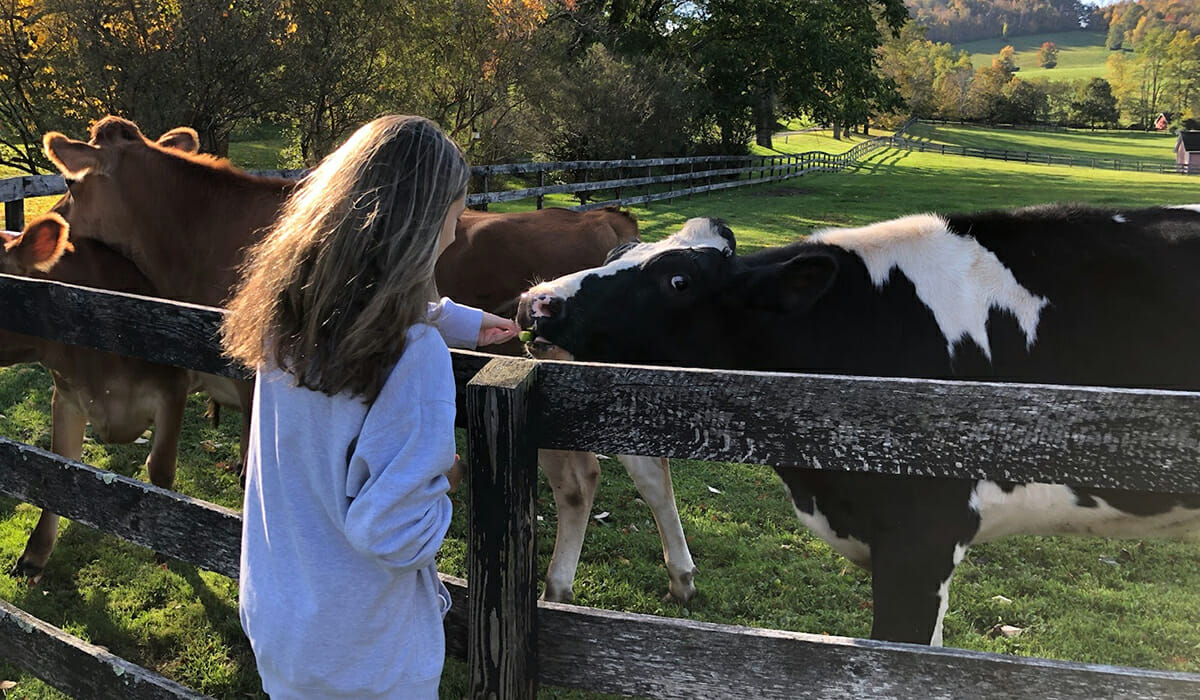
Marley advocates against animal abuse and volunteers with a number of organizations, all focused on animal support./Courtesy Marley Dixon
In one word, what does volunteering mean to you?
Heartwarming.
When you’re not busy volunteering or in school, what do you do for fun?
I consider myself an artist. I like to paint. Watercolor is my main media, but I also use oil and acrylic. I like books and movies. I play the drums, and I do a lot of theater as well.
Meet Daily Point of Light Award honoree Paul Kolze. Read his story and nominate an outstanding volunteer or family as a Daily Point of Light.
Paul Kolze, 54-year-old retired restaurant manager, has spent 40 years feeding others. Sometimes operating as many as 30 locations at a time, he knows the ins and outs of restaurants and bars in airports across the country.
Now, he’s moved from office work to kitchen work as he turns his lifelong passion for cooking into a valuable service for fellow volunteers and supporters of Warrior Canine Connection (WCC). WCC trains service dogs and connects them with veterans with issues stemming from trauma experienced during their service. Paul serves up delicious food for events, and along with his wife, has raised six dogs to serve men and women who need assistance after returning home from conflicts.
What inspires you to volunteer?
In the restaurant industry. I never had much time to give back to the community. My wife was a schoolteacher, and she retired and found this organization. She started talking to a lady with a dog at Target one day and got involved in WCC. And so, of course, it became a partnership with both of us. We got a dog. Cooking came later. I’ll use any reason as an excuse to cook.
Describe your volunteer role with Warrior Canine Connection (WCC).
A friend and I smoked a 60lb pig and fed 60 volunteers with three sides this weekend. I do all kinds of cooking for them. For all the staff, I make birthday desserts for each of their birthdays. And when they need catering, I do that, too.
I’m also a puppy parent. My wife and I raise and train dogs for veterans with mobility issues and PTSD. We go in every week for training, then reinforce it at home. Our first two dogs were released from the program. One couldn’t be trained. The other was rejected for guarding her food when other dogs got close during mealtimes.
Our third dog, JJ, was very successful. He’s now working with a veteran at the Pentagon who lost both of his legs in war. So he goes to the Pentagon every day, helping him through life. My wife’s is now a service dog for a veteran in Baltimore. I’ve spent the last two years training one of JJ’s sons, Ruck, who was recently placed with a veteran in Ohio who has PTSD. He’s doing very well. Every one of them is like a child with a different personality.
How is raising a service dog different than a regular pet?
Only about one-third of them make it through the program. They’re looking for good behavior. They don’t jump on you or bark. They only go to the bathroom where they’re supposed to go. By the time they finish, they may know 80 commands. These dogs can open doors, retrieve a bottle of water from the fridge, pick up a phone or a set of keys. They can turn on and off the lights. Some are trained for mobility. If the veteran is in a wheelchair, the dog will help pull or act as a brace to help him get out of the chair.
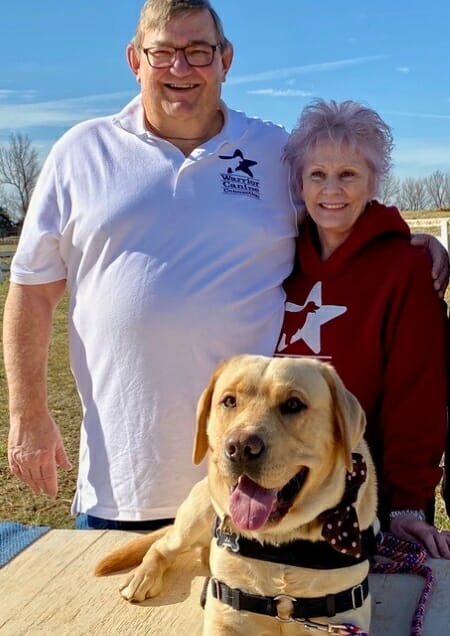
Paul and his wife, Susan, pose for a picture after training with Ruck, their latest graduate./Courtesy Paul Kolze
Veterans with PTSD or other psychological problems will often tap their foot or hand, showing signs of stress. Our dogs are trained to disturb that behavior. They’ll get in their face get them to stop. Dogs take attention away from whatever they were doing or thinking about. Some people have a hard time getting out of bed. When you have a dog, you have to get up to take them out. You’ve got to feed them. So, they focus on the dogs and not themselves. That’s where we’ve had some really great success.
What’s been the most rewarding part of your work?
There are so many people that need this, and it takes two years to train a dog. It’s always tough to give a dog away, but once you see how they can change a veteran’s life, it’s incredible. It’s worth all the effort.
What have you learned through your experiences as a volunteer?
Patience. In the restaurant, industry, everything is pretty quick-paced. With a dog, you have to slow down and repeat things. It’s kind of like raising a child. You have to be very patient, very positive. The people I work with and the other puppy parents are great, too. It’s just a wonderful organization.
Are there any future partnerships, programs or events that you are excited about?
Every September, we have a graduation program with any dog that has made it through the program is celebrated along with the veterans. In October, we have an education and agility day for the dogs. My friend—also a puppy parent—and I cook for an educational event to teach puppy parents about dog health. And in November, we sell pies as a fundraiser—apple, cherry, bourbon-pecan—for Thanksgiving. We sold over 108 pies last year. It’s quite a production.
Why do you think it’s important for others to give back?
I think most people are blessed with more than they can imagine. And I think we, as a society, owe it to other people who are less fortunate that we are, those who are struggling. I think if everybody gave a little, we could do a lot.
What do you want people to learn from your story?
I’d hope that people understand how dogs can help veterans and non-veterans, alike. And to give back in any way that you possibly can. I’m a cook. That’s what I like doing. Everybody has something they’re passionate about, and they can find places to volunteer using that passion. It doesn’t become work. It’ a joy to help others.
Retiree’s Guide Dog Volunteerism Helps Disabled Americans
Meet Daily Point of Light Award honoree Jim Kline. Read his story and nominate an outstanding volunteer or family as a Daily Point of Light.
Seventy-one-year-old Jim Kline says volunteering as a breeder caretaker has changed his life, making his four-legged friend the center of his home.
“Joseph is an exceptional dog, and the things he can do amazes me,” says Jim. “He can feel your emotions, he’s very attuned to people’s feelings. He can read situations. We go for walks, we call them death marches (laughs) — we walk about five to seven miles a day. [Joseph] is known throughout the neighborhood. He’s such a good boy. Joseph is the first male dog we’ve had. He’s devoted, he’s smart, he’s kind to everybody.”
The subject of Jim’s endless praise is five-year-old Joseph, an adult breeder dog for the Guide Dog Foundation, an organization that places guide and service dogs to provide increased independence and enhanced mobility to people who are blind, have low vision or have other disabilities. As a volunteer with the foundation since 2018, Jim’s service has opened up a world of new relationships and opportunities, something he says he never expected as a retiree.
“Volunteering gives me a purpose. I’m retired. I worked all my life. Now I have the time to keep active and be with animals, and of course, the ultimate goal is for the dogs to help the disabled. It’s a win-win situation. Not only is Joseph a breeder, he’s a goodwill ambassador for the Guide Dog Foundation. People stop me all the time and ask, ‘How’s Joseph?’ If they don’t see me with him, they’ll ask about him. I get so much comfort having him with me. He’s a service dog for me!”
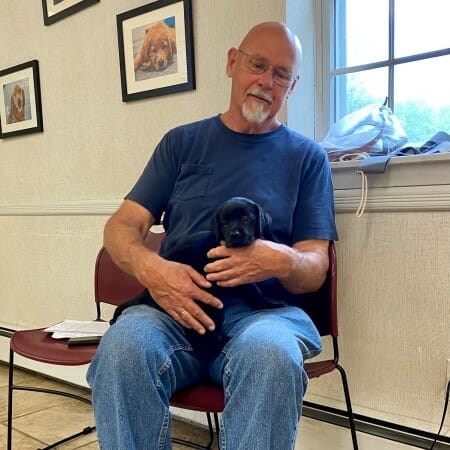
Jim Kline is a volunteer with the Guide Dog Foundation./Courtesy Jim Kline
In addition to his role as a breeder caretaker, Jim serves as a Level 1 kennel socializer, and most recently, a puppy socializer. It costs more than $50,000 for the foundation to breed, raise, train and place each assistance dog, but because of generous support from individuals, corporations, foundations and community organizations, people in need receive the dogs free of charge. Jim, a resident of Massapequa, New York, calls his volunteerism a privilege. His service is supported by his wife, Jane. The two care for Joseph, a black Labrador who has sired an astounding 74 puppies for the foundation.
“One of Joseph’s puppies has dual certification as a guide and service dog for a disabled veteran in Kentucky,” says Jim. “This dog is amazing. It’s so nice to see success stories. This vet [who served in] Afghanistan had a brain injury. When he came home his wife saw he needed [more support.] It makes such an impact on this person’s life. I went to the foundation for the animals, and my volunteerism just escalated. We’re part of a bigger picture to make a difference just by doing small things. Even as a senior, service keeps us active. We have a purpose. With Joseph, we feel responsible for another family member.”
Jim’s life and service are both guided by the Golden Rule, treating others as one wants to be treated. Jim even repairs leashes for the organization, saying if they ask him to do something and he’s able, he’ll get it done. According to Barrie Madasu, volunteer services manager for the Guide Dog Foundation, Jim’s dedication is having a growing impact on those who depend on service and guide dogs.
“When Jim is around, we know everything will get done safely and efficiently,” says Barrie. “When on campus, he’s helping, sharing and looking out for teammates, and then at home, he’s working with his breeder dog, Joseph. [Because] Joseph creates future guide and service dogs for blind people and veterans, [Jim] has an impact he doesn’t even get to see firsthand. It trickles down. He’s giving without even realizing his impact because he’s at the start of it, then the dogs go on to get raised and trained and placed. Without families like [Jim’s,] we’re not able to house the dogs in a warm, loving environment.”
The Guide Dog Foundation places guide and service dogs to provide increased independence and enhanced mobility to people who are blind, have low vision or have other disabilities./Courtesy Jim Kline
Jim and his beloved Joseph will leave a legacy far beyond when their service ends, offering healing and help to many across the country in need of support. For Jim, volunteerism has been a rewarding adventure that offers hope to many.
“It’s never too late to volunteer for something. You never know how it’s going to impact you or other people. It makes me extraordinarily happy to know there are people all over the country who are benefitting from [Joseph’s] puppies. That’s his purpose, and his puppies are fulfilling his purpose. Sometimes I get to socialize his puppies, which is grandpa socializing his little grandpups. My life has been changed by Joseph and the organization.”
Meet the Teen Supporting South Asian Communities in Georgia With Free Weekly Language Lessons
Meet Daily Point of Light Award honoree Suhaas Reddy Bonkur. Read his story and nominate an outstanding volunteer or family as a Daily Point of Light.
Suhaas Reddy Bonkur not only walks his Forsyth County, Georgia, community with pride in his South Asian heritage, but is helping others do the same. Suhaas is one of the co-founders of The Telugu and Tamil Tutors (TT Tutors), the first teen-run free language-learning nonprofit service for Telugu and Tamil students of all ages in Georgia.
TT offers live sessions every week. Within its first year, it has already gained more than 50 students. In addition to teaching language lessons, Suhaas also leads a podcast for TT, uploading weekly videos that feature accredited university professors – including some from Harvard – as well as community leaders and friends. These conversations delve into South Asian culture and representation and have garnered more than 2,000 views.
Describe your volunteer role with The Telugu and Tamil Tutors (TT Tutors).
My volunteer duties range from academic to administrative. On the academic side of TT, I am a lead Telugu Tutor for one-on-one lessons, along with weekly live sessions with all of our tutors and students. I help design our detailed curriculum alongside my other officers while also keeping close contact with parents and students to mark and discuss their progress in the program. I run our social media account on Instagram by creating all of our posts along with being responsive on our email platform.
On the administrative side of TT, I am the founder and co-editor of our podcast where we discuss with community leaders and activists about cultural representation in our community through virtual and in-person meetings. I am also the community outreach coordinator, forming relationships and acquiring opportunities for the organization, such as my speech at the Board of Education, starting the first Telugu-English Bi-Lingual Storytimes in my county, attending an Emory South-Asian Studies Lecture, along with marketing at TAMA’s (Telugu Association of Metro Atlanta) 5K Run Event.
Suhaas, on the right, at Bilingual Storytime at the Forsyth County Library./Courtesy Suhaas Reddy Bonkur
So my responsibilities range from ensuring the gears are moving within the academic side of our organization while also branching out to spread our message to fellow members of our community.
What inspires you to volunteer?
Volunteering is definitely something I’ve learned from a very young age as my parents were always very avid volunteers in our local Temple and at blood drives. Community has always been a big part of my life, and I would definitely say being around a group of like-minded people inspires me to keep volunteering and contributing to those I care about.
Being able to work with my other co-founders Krithika Kasireddy, Vinay Polaku and Ritika Vemulapalli has truly been a gratifying experience as we are able to tie our friendship with a cause that we are all passionate about. I would also like to highlight the amazing work of our group of tutors, students, community leaders and podcast guests for believing in our organization and donating countless hours of time and energy to the cause.
Being around a driven group of people while also being passionate about a certain cause that I am directly related to all are factors that inspire me to volunteer. I’ve always wanted to contribute something back to the community, so being able to do it in a way that inspires me makes me passionate about TT’s message.
What’s been the most rewarding part of your work?
The most rewarding part of my work is being able to see our community accept my heritage and embrace it through various means. For example, through hosting South-Indian cultural festivals and playing Bollywood/Tollywood music, the impact of my culture has spread throughout my community, and I couldn’t be prouder.
Being able to talk with University Cultural Organizations such as Worcester Polytechnic Institute’s SASA (South Asian Student Association) and other organizations, such as Cumming Tamil School, have broadened my perspective of cultural representation. In addition, being able to see another facet of the academic side of TT through being invited to an Emory University South Asian Studies Lecture and other institution lectures makes us unique from other language-learning organizations.
One experience I vividly remember was receiving an email from a white woman asking us to teach her Telugu because she wanted to communicate with her South Asian in-laws. This request really hit home for me because it finally made me realize the potential impact our organization had on bringing families and communities together.
Suhaas and his fellow co-founders after his speech at the Forsyth Board of Education./Courtesy Suhaas Reddy Bonkur
What have you learned through your experiences as a volunteer?
For many of the projects TT has organized, we have been the ones responsible for ensuring all factors and components are taken care of. Energy is contagious, so showing an individual or organization that you are avidly interested in working with them helps in ensuring the event is at its best quality. I have learned that, by being proactive with communication and open to accepting new ideas from others, our events can reach a much wider group of people who share a similar interest.
Are there any future partnerships, programs or events that you are excited about?
Yes! In fact, we have a future collaboration with a South Asian Studies Professor from Harvard University whom I am very excited to speak to on our podcast! These talks from scholastic experts fascinate not only our students but also us as we learn the rich background regarding where our culture and languages Telugu and Tamil are derived from. These professors essentially enhance the beauty of the languages and culture we teach, making it more engaging for the students.
What do you want people to learn from your story?
Our motto of TT is to “Learn Your Culture.” Just like in Forsyth County (in Georgia), there is a demographic shift in the nation of increasing minority ethnic populations. From my story, I want people to be able to take pride in who they are and what background they come from.
As a South Asian, I have learned to be unapologetically myself and share my beliefs and opinions with those who are interested in learning more about me. Being South-Indian is an element of me that I never want to keep hidden, so I hope to encourage anyone reading this story to be proud of what culture and background they come from, because it is a significant element of who they are and their individuality.
University Administrator Dedicates Herself to Helping Unhoused Dogs
Meet Daily Point of Light Award honoree Holly Kasperbauer.Read her story and nominate an outstanding volunteer or family as a Daily Point of Light.
Holly Kasperbauer, 42-year-old assistant director of the Public Service Leadership Program at The Bush School of Government & Public Service at Texas A&M University has always loved animals. Originally from a town of 200 people in rural Iowa she moved to Texas to get a master’s degree in agricultural leadership. She and her husband fell in love with the Texas A&M as well the area, and after a few years at Virginia Tech, they both returned for roles at the university.
Holly doesn’t just encourage her grad students in their public service goals but volunteers her time freely to two causes that are important to her, ensuring affordable housing with Habitat for Humanity and helping dogs get adopted with Make a Stand Bully Rescue (MASBR). As Points of Light celebrates International Service Dog Week, we celebrate Holly’s efforts to give everyone a place to call home.
What inspires you to volunteer?
My love for animals started at a very young age. I was also in 4-H and FFA. I think that’s probably where my service began. With both organizations, service is part of the mission.
Describe your volunteer role with Habitat for Humanity and Make A Stand Bully Rescue.
As board secretary with Habitat, I help with events and growing the organization. We have a big fundraiser breakfast and recently had a bowling tournament. And, of course, we build houses. Just before the pandemic hit, I had all of my incoming students for the Bush School volunteer to paint Habitat houses during new student orientation.
I’m also a board member with Bully Rescue. We do a lot of fundraising, education and events, because as a rescue, we rely on foster homes and donations. We take dogs from shelters and typically adopt out about 120 dogs every year. We also advocate for bully breeds and responsible dog ownership.
Holly and a former foster puppy who has been sent to his forever home in Colorado./Courtesy Holly Kasperbauer
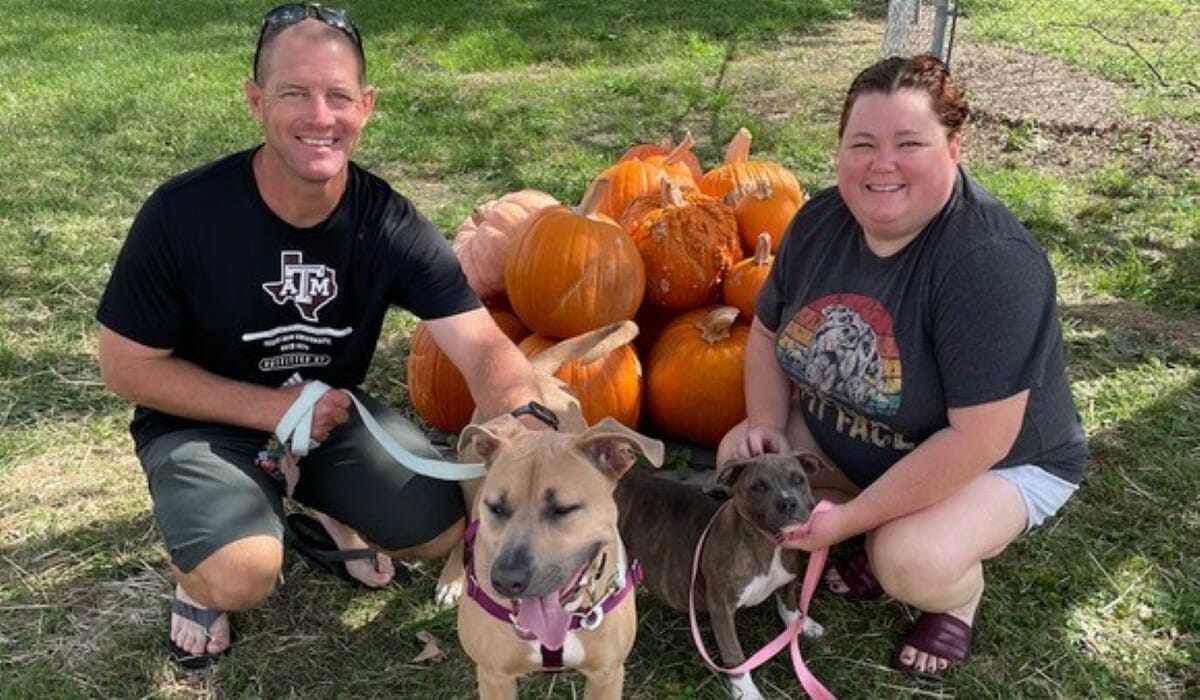
In 2018, we fostered our first pit bull. I’ve always had a soft spot for pit bulls and bully breeds. They’re really misunderstood and are the most euthanized breed of dog in shelters, strictly because of their breed. My husband was initially worried about having a houseful of dogs and about me getting attached. We’ve had over 60 dogs—mostly puppies—come through our home over the past few years, but he was right. I did get attached. We foster failed during the pandemic, so now we have three permanent dogs.
Can pit bulls be assistance dogs?
Absolutely! Regardless of age, they can go through extensive training to become a service or emotional support animal. We have several dogs that have gone through that training. Bully breeds are really eager to serve. They’re attentive to moods and emotions. Gracie, my dog, is really attuned to when I’m not feeling my best. I would love to get her certified as a therapy dog, because I think she’d be great at it.
What’s been the most rewarding part of your work?
For Habitat, it’s seeing families move into their homes and get their keys on that dedication day. To see the look on their kids’ faces when they run into the house to see their room. Being on the board, it opened my eyes to a lot of issues in our community regarding affordable housing.
With animal rescue, it’s seeing a dog go from scared and unsure to confident in their foster home. Then, it’s seeing them get adopted. There are almost always tears on adoption days.
What have you learned through your experiences as a volunteer?
We often get caught up in thinking our contribution has to be larger. That we have to write a $10,000 check. Being involved in the nonprofit world, I can say that that’s wonderful, but we forget that small things are important, too. It can be kids raising money selling lemonade in their driveway, walking shelter dogs, or delivering lunch to a Habitat builder. It doesn’t have to be big.
Nick, Holly’s husband, and Holly taking their dog Gracie (left) and a former foster, Amina, to the BCS Habitat Pumpkin Patch./Courtesy Holly Kasperbauer
Are there any future partnerships, programs or events you’re excited about?
I look forward to MASBR’s Bully Bash each fall! It’s a community event hosted by our local Harley Davidson dealership. We have music, food, a silent auction, our adoptable pitties and vendors. One of my favorite events during the holidays is “Pitmas.” We give every dog who is in the rescue during December a memorable Christmas. They write letters to Santa Paws and create a wish list of items that they get to take to their forever homes when they’re adopted. This helps restock our supplies so we can give our fosters everything they need. And this year, we have our very first MASBR calendar!
Why do you think it’s important for others to get involved with causes they care about?
I feel like it’s important to recognize that when you have talents and gifts, you should share them with the world. Volunteering helps you connect with others who share some of the passions that you have. I know that it has helped me feel grounded in this community and like I’ve found my tribe of people. Supporting others not only helps the organization you are volunteering with, but it gives you a sense of purpose.
What do you want people to learn from your story?
I hope people will understand the impact that small acts of service can have on their community. You don’t have to donate thousands of dollars—yes, we absolutely need those monetary donations, too—but it’s more than that. If you have a large social media following, sharing our posts can help get the word out about dogs that need homes. Do you have some extra space in your home but are afraid of committing long term to a dog? Give fostering a try.If you have something that you’re passionate about, find an organization that needs you. When we have an army of people doing small acts, it truly changes a community.
Eagle Scout’s Volunteerism Guides Youth to Productive Citizenship and Life Skills
Meet Daily Point of Light Award honoree Robert Conway. Read his story and nominate an outstanding volunteer or family as a Daily Point of Light.
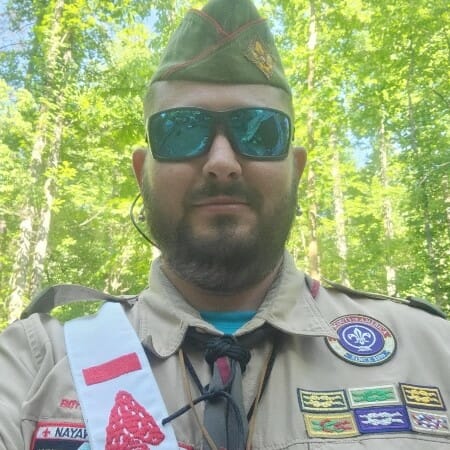
An Eagle Scout himself, Robert Conway says Boy Scouts of America helps develop youth to be better citizens for society.
A Scoutmaster with the Tuscarora Council, Robert volunteers with kids aged 10-18 to help them learn life skills and how to strengthen character through actions to prepare youth for a lifetime of leadership. Volunteering with the council since 2016, Robert has connected with hundreds through his service.
What inspires you to volunteer?
The change and development I see in the kids. Some of them come in with no respect, to be honest. To see their improvement inspires me.
Describe your volunteerism with the Boy Scouts of America.
As Scoutmaster, I advise and host meetings and advise and book activities. I also help with transporting the youth back and forth to activities where they learn skills including outdoor skills, leadership, fitness, first aid, technical and survival skills. We also do service work for the community, which introduces youth to service. In addition to my role as a Scoutmaster, I also serve as assistant district commissioner, district committee member, range safety officer and merit badge counselor.
Share one personal story with me from your volunteerism.
When the older scouts are close to Eagle, they slow down and realize their 18th birthday is coming quick. To see them look at you and say, “Wow I really needed the better time management that I learned.” To see them push through because they know achieving that goal they set when they were 10-years-old is important. When they ask me for a recommendation for college or they get into the workforce, that makes me feel better to know they look at me as a mentor.
Robert Conway: “Paying it forward continues to have a lasting effect on other people; they see it and they teach their kids to keep pushing it.”/Courtesy Robert Conway
Why do you think it’s important for others to get involved?
Volunteerism helps round out our communities; it helps everybody out. Paying it forward has been instilled in me since I was a kid, as my dad taught it to me when he was in the Air Force. Paying it forward continues to have a lasting effect on other people; they see it and they teach their kids to keep pushing it.
What’s been the most rewarding part of your service?
Graduations and Eagle ceremonies. It’s rewarding to see the kids finish school and go off to college, trade school or start working, and see the excitement on their faces and their family’s faces at the ceremonies.
How have you continued to volunteer throughout the COVID-19 pandemic?
We slowed down as a result of the pandemic. Council attendance and numbers did drop and activities were slowed down because we couldn’t gather in bigger groups, but overall, the pandemic didn’t impact (us) too much and we are back to normal now.
What do you want people to learn from your story?
Youth is our future and we need to teach our youth to be respectful and cognizant of our surroundings and others.
obert Conway at the Boy Scouts of America (BSA) National High Adventure Marina of Sea Base. A volunteer with BSA since 2016, Robert has connected with hundreds through his service./Courtesy Robert Conway
In one word, what does volunteering mean to you?
Development.
You’re an Eagle Scout. What was your project?
I completed and led a project for a 2.5 mile nature trail 23 years ago. The Eagle project isn’t just for the Eagle Scout to complete; it’s about developing and leading the project.
Lifelong Educator Supports Under-Resourced Children on Their Educational Journeys
Meet Daily Point of Light Award honoree Suzanne Bergman. Read her story and nominate an outstanding volunteer or family as a Daily Point of Light.
Suzanne Bergman, a 73-year-old volunteer former teacher, has dedicated her life to educating children. After her retirement in 2014, she found a new way to continue her mission by tutoring under-resourced children with New Horizons of Southwestern Florida. She began in 2015, and when her local chapter closed, she moved to another. Seeing a lack of help, she called 100 fellow volunteers to encourage them to join her in the new location and emphasize the impact they have on students. Her efforts are also extended to other child-centered programs she has found through her church.
What inspires you to volunteer?
I spent my career working in early childhood education. I was a public school teacher, then a preschool teacher, and then director of private preschool. When my son went to college, I took a full-time job as a director of a backup childcare center, and after that, I became the director of a corporate childcare center. I did that for about 10 years. I enjoy helping young children.
Describe your volunteer role with New Horizons.
New Horizons is an agency that tutors children from two local schools. They have a paid staff of two or three in the classroom along with the volunteers. After school, students are bused to my church and given a snack before getting started with their homework. Tutors are typically paired with the same children each time and can really help with organization and focus. New Horizons helps keep everyone on track with a checklist each day. I usually work with the youngest group, first through third grade.
Suzanne Bergman, New Horizons children’s tutoring program volunteer./Courtesy Suzanne Bergman
I’m also a member of the outreach committee at my church which is responsible for engaging the conversation around and designating donations to different programs and causes. New Horizons is one such beneficiary.
What’s been the most rewarding part of your work?
Every day, I’m just so excited to be with the children, to be a part of a learning experience. Knowing some of their background, how there’s often no one to help them with homework at home because their parents are unable to speak English or read, it’s inspiring to see how much they learn and want to succeed because of the love that we give them. That’s why I enjoy it so much. I always look forward to going and feel a comfortable joy when I leave.
There are two little girls I used to have consistently who were the best of friends, and they worked off of each other. I would always have one on my left and one on my right. They just enjoyed being with each other. And there was a little competition between them—which one was going to finish sooner—we would talk a little bit about. And they were very organized. You could tell they just loved getting to help and being there.
What have you learned through your experiences as a volunteer?
I live in Naples, Florida. I was not aware of the need for this type of work here when I moved in. Some of the families that live in this community, their lifestyle and the incredible need that they have for our help was unexpected.
Suzanne helps New Horizon 5th grade students with their computer assignments./Courtesy Suzanne Bergman
Are there any future partnerships, programs, or events that you are excited about?
I love the 5th grade graduation party they always have at the end of the school year. We have great food, and some of the parents are there. It’s wonderful just seeing all the students together and how grown up they are. The group leader reads a little affirmation about each child, and the children talk about what they are going to do during either during the summer or some activities they enjoyed. It’s the accumulation of the time realizing how much we all have given to the children who are ready to leave us.
New Horizons also has a luncheon every year with the children and volunteers. The choir comes, and they choose about four students who are graduating to give a little speech to the entire group of attendees. It’s just amazing to see that they can get up in front of everyone and talk about their experience.
Why do you think it’s important for others to get involved with causes they care about?
I think it helps us be constantly aware of how fortunate we are, of everything life and experience has given us and how we can pay it forward. For many of us, it’s not about just writing a check or showing up somewhere. It’s really about having the heart to use some of the skills that, perhaps like myself, you have been trained in and are able to lend to children and families who can benefit from your experience.
What do you want people to learn from your story?
I want them to become aware of the need to support and uplift families and children and to also realize the joy in it. So many people play tennis or golf instead, and I think they’re missing out on an incredible experience to just do something out of the goodness of their heart.
High School Junior Rewires Toy Cars So That Every Child Has the Right to Mobility
Meet Daily Point of Light Award honoree Aanand Mehta. Read his story and nominate an outstanding volunteer or family as a Daily Point of Light.
Aanand Mehta was a fan of music from an early age. He’s played the cello for six years and has sung Indian classical music for nearly 12 years. In high school, his love for music met volunteerism, and now the high school junior is changing lives for kids with developmental disorders.
Aanand was first introduced to rehabilitation therapy for children with developmental disorders at the Neurologic Music Therapy Services of Arizona in 2019. In time, his inspiration turned into an idea to start his own organization. Two years later, he co-founded Magical Motors with his cousin who was building toy cars for kids with disabilities during an Eagle Scout project.
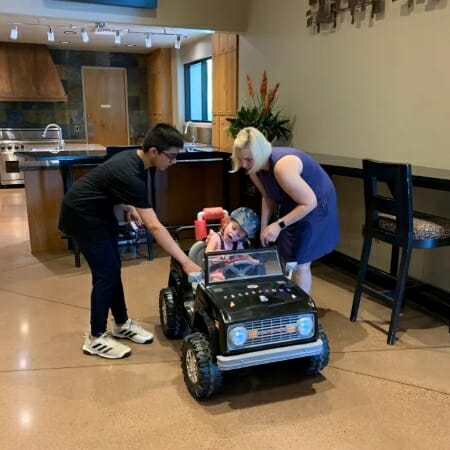
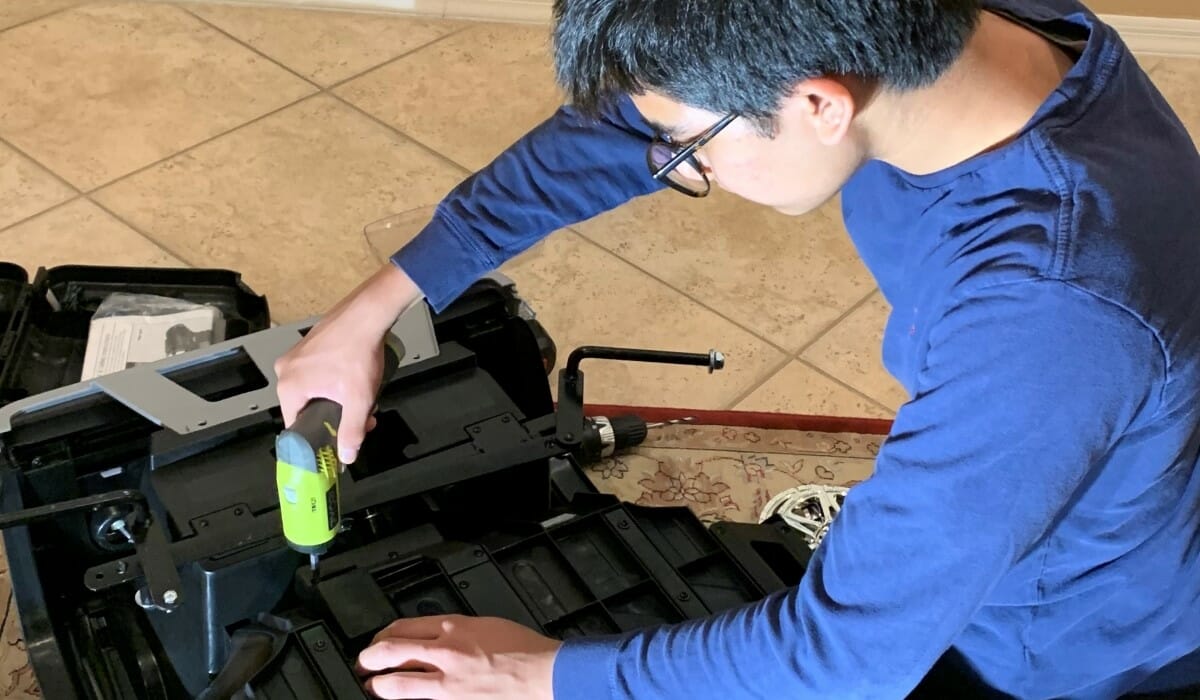
Together, the team rewires toy cars to be drivable for kids between the ages of three and eight. They make them easier to navigate with hand controls instead of foot pedals, and even install harnesses, remote controls and back support — anything and everything to make a child’s car accessible and fun.
In addition to renovating toy cars, Aanand’s Magical Motors has a mission to spread its program to high schools across the nation with the goal of supporting volunteerism and STEM education. Aanand developed curriculum and materials to help anyone become a successful car builder.
Aanand had one goal in mind when he co-founded Magical Motors: create an inclusive community where every child has the right to mobility. He asked himself two questions after researching technologies to overcome mobility barriers. First, what if he couldn’t move on his own? And secondly, how would his life be affected?
One of the first steps in remodeling toy cars for Aanand Mehta is the Magical Motors big red button — when kids press the button, it acts as a foot pedal accelerator./Courtesy Aanand Mehta
“These questions really pushed me to bring movement to kids and I decided that I’ll do whatever it takes to make that possible,” Aanand said.
“We started finding like-minded people that also create assistive technologies, so a large part of our process is collaboration,” said Aanand. “Making connections with STEM organizations just helps further our mission to spread mobility to all children.”
One of the first steps in remodeling toy cars for kids is the Magical Motors big red button. When kids press the button, it acts as a foot pedal accelerator. The car is then much easier to start and stop for kids who may not be able to use their legs.
One of Aanand’s favorite memories with Magical Motors was in December of 2021 when he met the organization’s first car recipient, 4-year-old Ollie, whose lower spine wasn’t completely developed. Aanand helped build a red McLaren car for Ollie’s Christmas. Ollie told Aanand that it was the best Christmas present ever.
“It’s rewarding moments like these that make the experience totally worth it,” Aanand said. “His mom told me that he can’t stop driving the car.”
“Magical Motors has given my son the freedom to play like a child,” said Demi Porter, Ollie’s mom. “Having the opportunity to play without restrictions is one of the greatest gifts we have ever been given and my son’s face lights up when he’s driving his car. I can truly see how happy he is.”
As Aanand enters his junior year in high school, he remains passionate about continuing this service throughout college. He plans to spread Magical Motors throughout other high schools across the country and aims to raise $25,000 to build 100 cars over the next two years. Outside of Magical Motors, Aanand is interested in going into the healthcare field to become a physician.
Aanand knows that operating and maintaining a nonprofit can be strenuous work, but believes that it’s established himself as a responsible and organized leader. He’s learned that service is invaluable to making connections and coming out of his shell.
Aanand Mehta co-founded Magical Motors to create an inclusive community where every child has the right to mobility by rewiring toy cars./Courtesy Aanand Mehta
This August, Aanand is hosting a build-event for Magical Motors with the Si Se Puede Foundation where cars will be donated to kids in need. He plays to host additional build-events in September and October. Aanand says that anyone can help build, even people without engineering experience, as long as they follow safety precautions and take the building instructions seriously. He continues to encourage other students to start a Magical Motors club at their school.
Aanand also hosted a TEDx Talk later July to talk about Magical Motors and how the act of volunteering makes a difference in people’s lives.
“It’s important for others to contribute their talents to make a tangible difference in people’s lives and to mold a more equitable and inclusive community,” Aanand said.
“Participating in a bigger cause will allow someone to make a more amplified difference in their community and if they continue to foster volunteering, they’ll be able to merge their interests with service, which is the best,” he added.
Inspired by Family Military Service, Teen Volunteers at Local VFW
Meet Daily Point of Light Award honoree Allen Magie. Read his story and nominate an outstanding volunteer or family as a Daily Point of Light.
16-year-old Allen Magie was raised by his parents to honor and respect veterans, and says his family’s military service has inspired his own volunteerism. “Both my grandfathers were U.S. veterans in the Vietnam War,” says Allen, “I think everybody should support and respect our vets as they sacrificed everything to keep us and our country safe.”
As a volunteer with the James McCartney VFW Post 6765 in Wanaque, New Jersey, Allen is giving back to all those who sacrificed for their country. Committed to helping the VFW in ways big and small, Allen is positively contributing to his community through volunteerism.
What inspires you to volunteer?
The happiness and smiles from everybody at the VFW and auxiliary are what inspire me. They’re so appreciative and happy when I help do something, it warms my heart. That just keeps me going.
Describe your volunteerism with James McCartney VFW Post 6765.
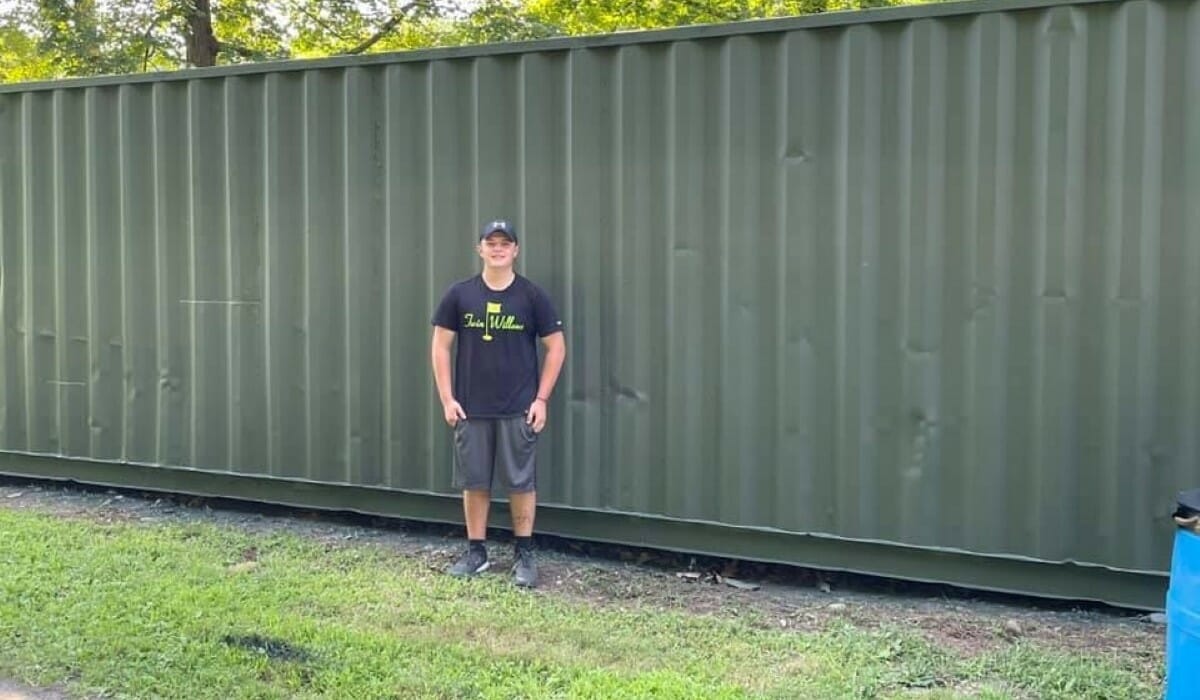
As a volunteer, I attend the monthly VFW meetings and help with any type of community service event that they host, including clothing drives and planting flowers for veterans at the cemetery. I raised more than $1,000 to restore a storage trailer owned by the VFW at the Midvale Cemetery in Wanaque which was badly destroyed by graffiti.
Allen’s volunteerism is inspired by his family’s military service, as both of his grandfathers served in the Vietnam War./Courtesy Allen Magie
In 2022, I collected more than 500 pounds of plastic to receive a Trex bench for the cemetery in honor of the VFW. In addition, I’ve partnered with the VFW on initiatives including:
Wreaths Across America: I organized my own ceremonies in 2020 and 2021, and sold more than 300 wreaths each year to lay on veterans’ graves. Chief Kronyak of the Wanaque Police Department has been a huge help assisting with our ceremonies over the last few years.
Share one personal story with me from your volunteerism.
We lay wreaths for each branch of the military for the Wreaths Across America ceremonies. A veteran or active duty member from each branch is invited to present the ceremony wreath. Afterwards, I’ll talk to each of these people and they always thank me for everything. I don’t know these people; I’ve just met them that day, but they’re always so appreciative and supportive. It makes me feel like I can make a change by not doing so, so much. Just by doing little things, everybody can make a change and that makes me feel good.
Why do you think it’s important for others to get involved with causes they’re passionate about?
It’s critical to be a good person and support your local community through volunteerism.
Allen with a storage trailer owned by the VFW which was badly destroyed by graffiti. He raised more than $1,000 to restore the trailer, priming, repainting and coating the container with anti-graffiti coating./Courtesy Allen Magie
What’s been the most rewarding part of your service?
It’s rewarding being with the veterans and forming a bond with them. I became family friends with these people just by volunteering with them. They’re great people and I can’t thank them enough for what they’ve done for us. It’s also rewarding to honor my grandfathers who served too.
In one word, what does volunteering mean to you?
Pride.
When you’re not busy in school or volunteering, what do you do for fun?
I play hockey, golf and the bagpipes. My favorite song to play on the bagpipes is called “Scotland the Brave.”
High School Senior Connects Underserved Schools Across America with Much-Needed Resources
Meet Daily Point of Light Award honoree Vivek Turakhia. Read hisstory and nominate an outstanding volunteer or family as a Daily Point of Light.
Vivek Turakhia is a 17-year-old, second-generation Indian-American passionate about technology and with his eye on a career in technology. His parents, who met in Cambay, India, came to the US in their twenties, his dad after his undergraduate years and his mom after graduate school. Education has always been a valuable part of the Turakhia family. It was on a trip to see his grandparents in Cambay three years ago that Vivek first narrowed in on the need for school supplies at underserved schools.
Upon returning to his home in New York, Vivek formed the organization For the Students By the Students to help address the issue. First, he donated to school in Cambay. Then, he turned to his own community. Many supply drives later, For the Students By the Students has teamed up with organizations stateside, amplified their voice on social media, and donated thousands of dollars in supplies to schools across the country. Through their partnership with Kids in Need Foundation, they access to distribution channels that get items to where they are most needed, regardless of state.
What inspires you to volunteer?
When I saw the lack of supplies at the school in Cambay, I knew that I had to do something to change it. The classrooms were barren. There was little to no furniture and minimal school supplies for the students and teachers to work with. And there was no technology in sight.
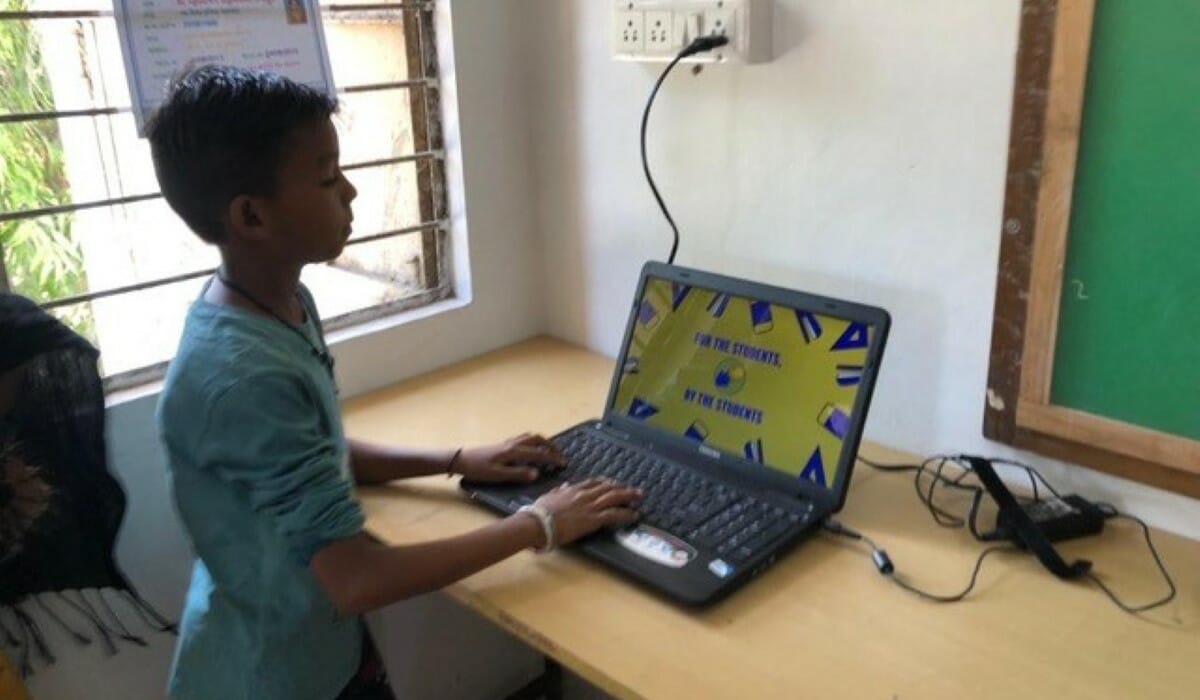
I talked to many of the students and found that they were all very ambitious, but it was clear they weren’t getting the support they needed to achieve these goals. During the same trip, I worked with a local Rotary Club to donate various school supplies to each student in the building, hoping to inspire them to continue to pursue their dreams. And we returned to school later to donate multiple computers and laptops. I started my nonprofit soon after we returned home.
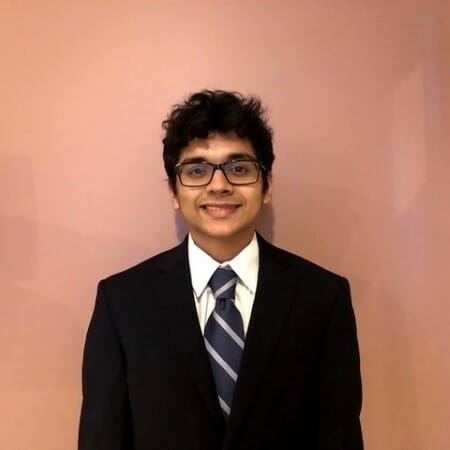
Vivek, founder and president of For the Students By the Students./Courtesy Vivek Turakhi
Describe your volunteer role with For the Students By the Students.
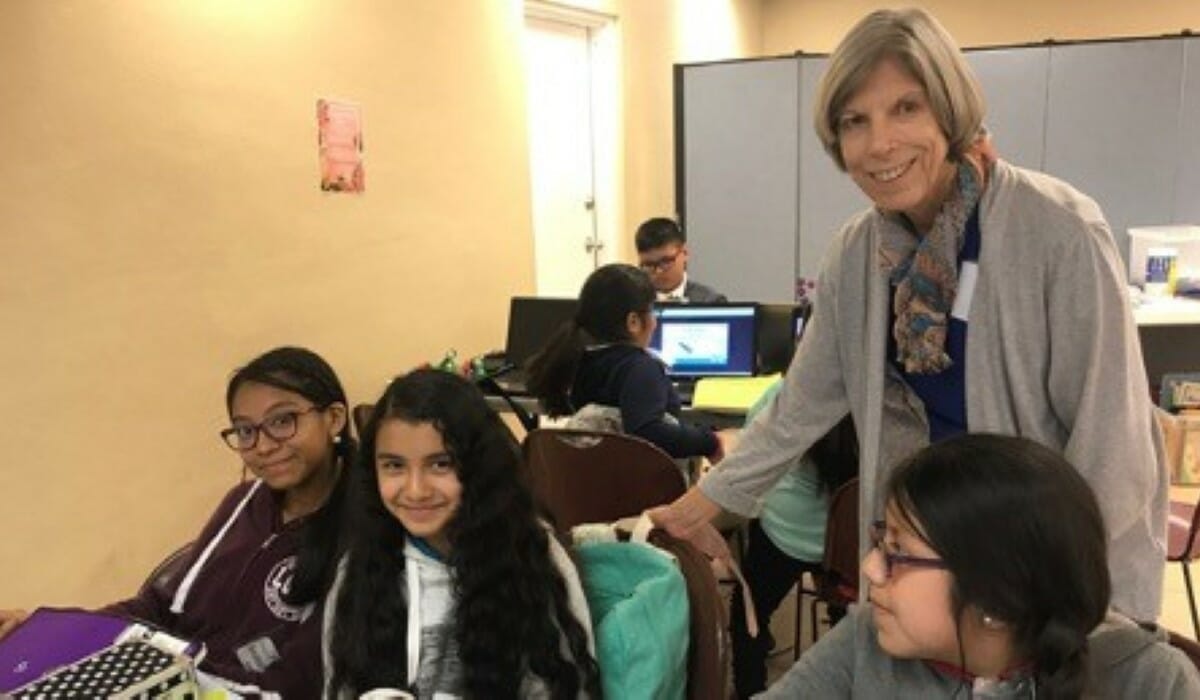
I’m the founder and president. FTSBTS is a nonprofit that provides resources and services to underserved students in order to help them further their academic aspirations. We provide weekly tutoring services to grades K-12 alongside the Learn to Be Foundation.
Additionally, we run frequent supply drives in partnership with local organizations and businesses, like libraries. And we attempt to shed light on the educational crisis as a whole through frequent informative social media posts. I oversee and manage all of these actions. I’ve always been a technology guy, so I also built our group’s website.
What have you learned through your experiences as a volunteer?
One of the greatest things I’ve learned is how something seemingly minuscule in one person’s life can mean so much to someone else. During one particular school visit, I donated three old computers from my household that we had replaced. They went to students in a school that had close to no technology that could be used for education. And when they received these devices, I could see the students’ joy. They were incredibly grateful for things that held such little value in my life when they were in my possession.
What’s been the most rewarding part of your work?
I was talking to one of the students at the school in Cambay, and he was telling me about how he wanted to be a doctor. Even though he had to frequently skip school to work and help his family financially, he still had his heart set on helping people as a doctor. This moment opened my eyes to the impact that we, as an organization, could have with our donations.
Another rewarding moment was when we received our first self-submitted supply pickup request, where someone emailed our organization saying that they had supplies they wished to donate. Up until this point, I’d engaged in social media advertising, collection drives in partnership with local organizations and door-to-door advertising, but all of the supplies we had collected had been through direct asks. This email finally showed me that all of the efforts were paying off. It was a turning point.
A 3rd grade student at a school in Cambay, India uses one of the newly donated laptops, the school’s first educational technology for student use./Courtesy Vivek Turakhia
Are there any future partnerships, programs or events that you are excited about?
We just finished a month-long drive with one of our local libraries, and it was very successful. We raised over $500 in donations. I’m still reaching out to other organizations, other libraries, and other businesses to plan our next event. I’ve found that drives with reputable organizations are the most effective because people actually know them and want to help.
The legislator of Nassau County, where I live, is also very open to partnering with organizations to help facilitate whatever they’re passionate about, including drives. I’m hoping to work with him, but there’s nothing concrete yet.
Why do you think it’s important for others to support the causes they care about?
I believe that regardless of your level of wealth or privilege, there’s always someone who could benefit from your support and who may find value in items or ideas that you may see as insignificant. I think we should help give opportunities to those in need, and in turn create a world where we don’t live as individuals but rather work together as a species to create a better planet as a whole.
What do you want people to learn from your story?
I want people to learn that there are no barriers when it comes to fighting for something that you’re passionate about. I saw an issue that I knew I wanted to take on, regardless of the scope of the problem. Real change is made not by one person but by many people moving towards a common cause. I want people to follow their ambitions and help make real change in the world.