In Both the News and Nonprofit Spheres, World-renowned Journalist Juju Chang Champions Asian American Empowerment
Meet Daily Point of Light Award honoree Juju Chang. Read her story, and nominate an outstanding volunteer or family as a Daily Point of Light.
When a gunman opened fire on three Atlanta-area spas on March 16, 2021, killing eight people — the majority of the victims being Asian American women — the news shocked the country. But there was no group more devastated and terrified than the Asian American and Pacific Islander (AAPI) community that had already seen a dramatic increase in hate crimes and violence against them amid the COVID-19 pandemic.
With the ever-changing news cycle of 2021, the story barely lasted three days on most news broadcasts, but for ABC News anchor Juju Chang, who was born in Korea, the news hit home. During a network meeting, she and anchor Eva Pilgrim, who was also born in Korea, made their case for why the story should not go ignored, according to the LA Times.
Their efforts led to a special edition of “20/20” titled, “Murder in Atlanta.” It was the only network program to devote an entire primetime hour to the story, according to the LA Times. With Juju’s emotional interviews with the victims’ families and further reporting on the history of anti-Asian rhetoric in the US, Juju and her team were not only able to spread more awareness about the racism Asian Americans are facing, but they also helped to invigorate activists fighting to stop Asian hate.
Just as she has helped empower the Asian American community through the news, Juju has been doing the same in the nonprofit world. She is one of the co-founders of the Korean American Community Foundation (KAFC), which provides grants and support to nonprofit groups serving Korean American individuals and families who are under-resourced.
The origin of the foundation goes back to 2002 when South Korean ambassador Young-mok Kim gathered a group of Korean-American professionals in New York, including Juju, for lunch. Midway through the meal, the ambassador told the group that he’d like them to start a nonprofit to help their community.
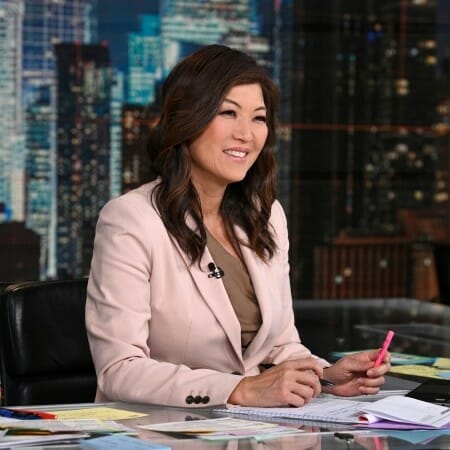
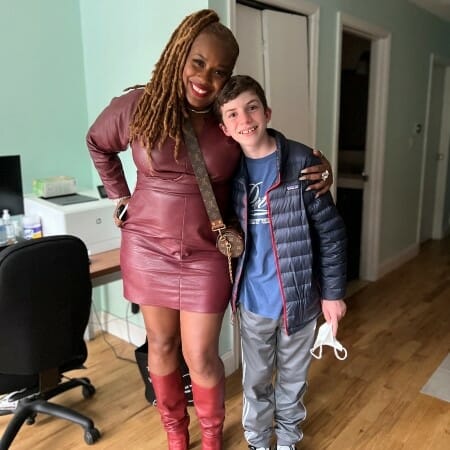
In addition to her work with KACF, Juju emcees and hosts panels for various nonprofit organizations and foundations./Courtesy Juju Chang
“I remember thinking this seemed so ambitious,” Juju said. “But soon it made the 15 or so people in the room with me say to ourselves individually and collectively, ‘If not us, who? If not now, when?’ The next thing we knew, we were crafting a mission statement and founding the Korean American Community Foundation.”
By funding more than $10 million in grants to hundreds of projects such as job training programs, bilingual and skill-building classes, public benefits counseling, academic enhancement and youth leadership initiatives, KACF has been able to strengthen the economic security of countless low-income Korean Americans in the greater New York metropolitan area.
On top of her work with KACF, Juju has emceed or hosted events for many other Asian American nonprofits such as the Asian American Legal Defense and Education Fund and the Asia Society. She credits her parents’ generosity of spirit for her own altruistic values.
“Growing up, I watched my immigrant dad give his time, energy and resources to help more recent immigrants,” Juju said. “He was always helping with translations, paying fees or helping people achieve their version of the American dream.”
Now as a mother herself, Juju is passing on that same passion for service her father instilled in her to her own three sons. In the past, she, her husband and children have built bikes together for their synagogue to give to kids in need. They’ve helped clean up city parks, pack lunch bags at food pantries and pick up trash along the Hudson River. During the pandemic, Juju and her sons delivered meals to homebound seniors through Meals on Wheels.
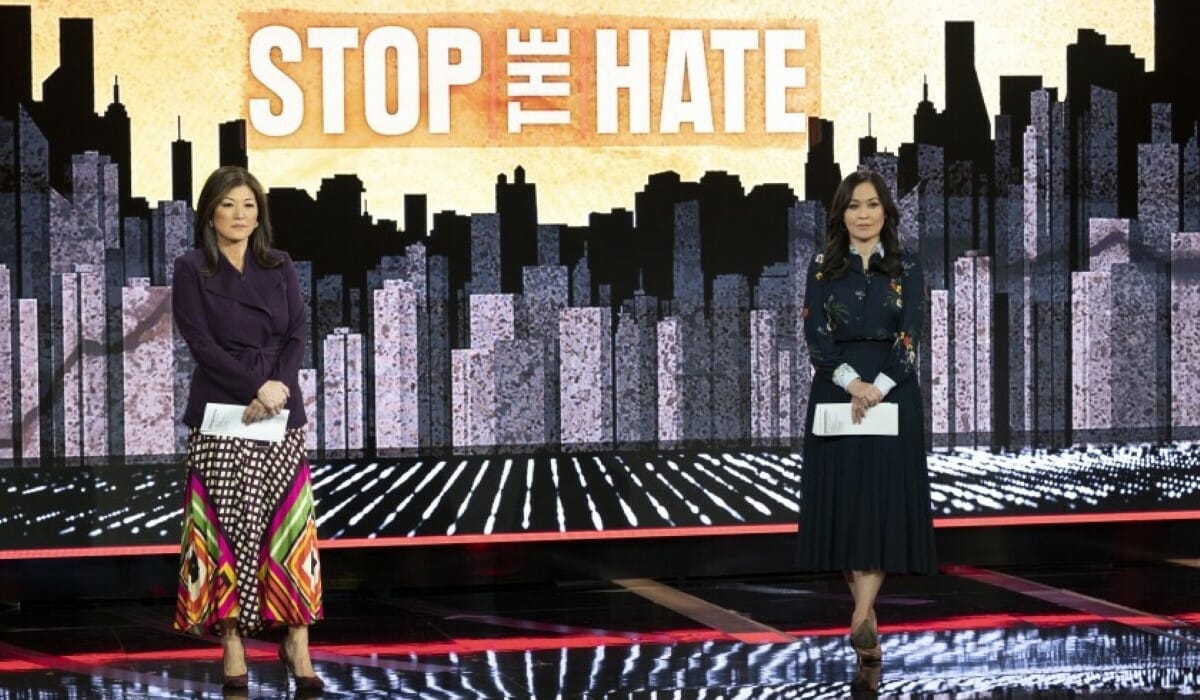
As an award-winning journalist and anchor at ABC, Juju helps bring Asian American stories to the forefront. In 2021, she anchored the ABC News special “Stop the Hate: The Rise in Violence Against Asian Americans.”/Courtesy Juju Chang
“It felt like the old proverb, ‘Better to light a candle than curse the darkness.’ The best thing to do in the midst of the darkness of the pandemic was to help people in need,” Juju said. “It fills you with gratitude and uplift.”
Byron Pitts, Juju’s co-anchor on ABC News’ “Nightline” has seen firsthand how Juju’s heart for service has inspired those around her.
“Juju never waivers in her support of the Korean American Community Foundation — a co-founder and tireless champion, throughout the years learning about Korean non-profits and the challenges facing the community, and the possible solutions,” Byron said. “A steadfast ambassador and a pillar in the Korean American community, her generous spirit and down to earth personality are infectious to all, on and off TV. Juju is grace, she is goodness. Juju is the best of us.”
With the hours it takes to work as a journalist, run a family and be involved in various organizations, Juju’s schedule is already packed to the brim. But she said taking the time to volunteer is worth it because she gets as much out of it as those she serves.
“I think we are all looking for meaning and purpose in this chaotic world, and volunteering is a beautiful way to do just that,” she said.
Growing for Good: Teen Volunteer Gardens to Support Environmental Conservation
Meet Daily Point of Light Award honoree Michelle Song. Read her story and nominate an outstanding volunteer or family as a Daily Point of Light.
Gardening is often described as a peaceful activity, but for Michelle Song, it’s the sights, smells and the small steps she takes each day that paint the bigger picture of her service learning.
“I smell the earth, I smell the grass. I smell clean air and even on a hot day, it’s satisfying to see weeds being pulled or things being watered,” says Michelle. “Service learning has an impact, because it can help people you might not really think about. Volunteering is one of the smallest efforts you can make, but it carries the greatest impact. (My gardening) could help someone, maybe from hours away.”
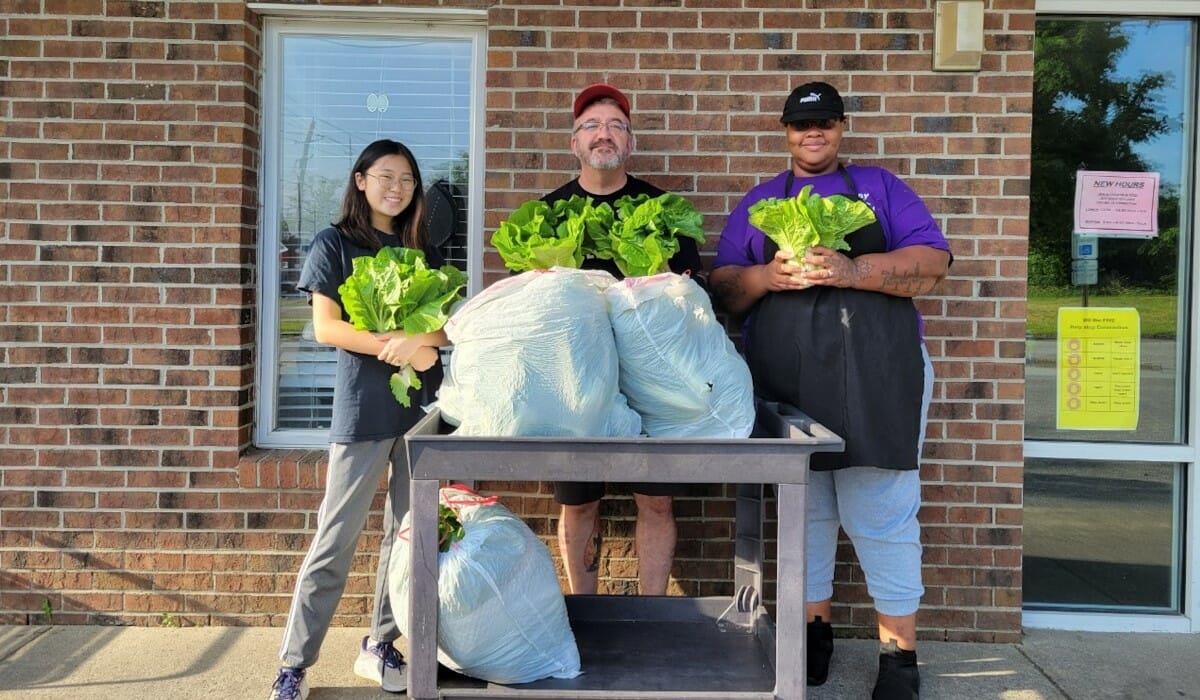
As the founder of the Community for Environmental Sustainability (CFES), the 15-year-old Greenville, North Carolina gardener and beekeeper is utilizing nutrition education to help reduce hunger, create awareness of the importance of bees and pollinators, and serve as a community collaborator. She helps to maintain East Carolina University’s Greenville Community Garden and Orchard, runs a nutrition education program and distributes fresh food from the garden and orchard to community members in need. Teaching others about climate change and ways to care for their communities are small steps Michelle says she takes each day to combat the worsening impact of climate change.
“Even in such a small city (like Greenville) there is pollution in the rivers. That affects the ecosystem for people and animals who need cleaner rivers to survive. More recently, I’ve heard about a drought in our area. That prevents bees from collecting the nectar they need, so they produce less honey, which produces less energy for (the bees) and in turn affects all of us.”
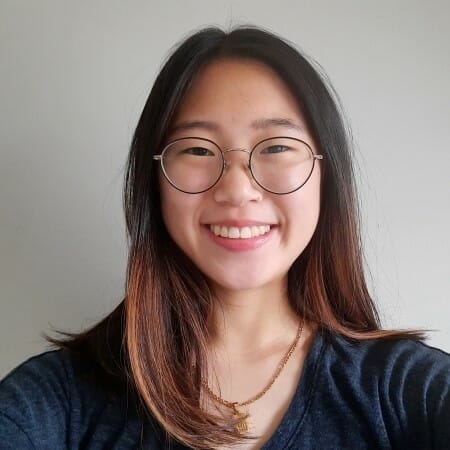
Michelle Song is the founder of the Community for Environmental Sustainability (CFES)./Courtesy Michelle Song
Founding the CFES initiative in 2021 through the environmental sustainability organization Love A Sea Turtle (LAST), Michelle first became interested in understanding the effects of climate change as a LAST volunteer. She is now leveraging CFES to share that information with her greater community, specifically targeting youth.
“I had the opportunity to volunteer at a summer camp, and I realized that a lot of kids weren’t aware about things like baking or learning about nutrition, and how much fresh foods help you. One kid told me he was really interested and he wanted to do this when he was older. Sure, he was a young kid, but it made me happy because that’s how I got involved as well. Providing opportunities to people who haven’t had the chance to learn about environmental conservation in a school setting makes me feel hopeful. (If these) kids are willing to be more mindful of the environment, it means that there are people that care and are willing to make changes for the cause, even people as young as me.”
Growing interest and seeding education across her community, Michelle has been joined by hundreds of volunteers for CFES’ biweekly garden workdays, including student volunteers from many local high schools and universities. In addition, Michelle helps to maintain the beehives in the garden and orchard, and conducts educational and interactive STEM demos for summer camps and local schools, teaching students about the importance of gardening and beekeeping to the ecosystem, and how fresh gardening affects them personally. Michelle says it’s her duty to give back to the community that has given her so much.
“There are things we often overlook, (but) through volunteering, you realize so many people out there volunteer to give things to us. We take it for granted. I’m still learning to this day that it’s a duty for community members to give back in a certain way, whether that is planting gardens or serving as a firefighter, or having important conversations with your neighbors.”
Michelle Song: “Service learning has an impact, because it can help people you might not really think about. Volunteering is one of the smallest efforts you can make, but it carries the greatest impact. (My gardening) could help someone, maybe from hours away./Courtesy Michelle Song
That sense of duty, says Daniel Sokolovic, volunteer mentor and coordinator for Love A Sea Turtle, is what makes Michelle’s service shine.
“She has been a leader, an innovator and has inspired others to join her program and other programs associated with Love A Sea Turtle. The Community for Environmental Sustainability creates a sustainable community, but also produces an open community that is welcome to all ideas. (Michelle) attacks the problem of sustainability on multiple fronts. The program isn’t just about her, and that’s the beauty of what she and some of her teammates are working on, allowing people to find their own lane and voice. The gardens and orchards provide a platform for the community for ideas, for community identity. It’s a meeting place, it’s a place to volunteer, and its importance really grew during COVID.”
Michelle’s outlook for the future is bright, as she inspires the youngest generation to drive positive change.
“I hope that as youth, we educate and will find a way to help the environment regardless of how we do it. Climate change is real and it’s affecting us in all sorts of ways. Even smaller things like beekeeping can be used to make things better, so through volunteering, we can use this as a sense of hope and change.”
Rising High School Senior Makes a Global Impact as She Leads the Charge Against Climate Change
Meet Daily Point of Light Award honoree Anjali Narayanan. Read her story and nominate an outstanding volunteer or family as a Daily Point of Light.
Anjali Narayanan, a soon-to-be senior in high school, is leading young people from around the world in making a dent in the climate crisis. As the founder of Recycle Fan, a nonprofit with 500+ members across 30 chapters globally, her goal is to empower youth to take action in their communities through service, education and advocacy.
What initially started as a school recycling club has turned into a movement. In the last three years, her group has gathered 2,500 lbs of waste and educated 15,000 people. They organize neighborhood cleanups, plastic-to-art projects, community gardening and composting, material drives and more. They have also implemented multi-stream recycling pilot programs and consulted with businesses, schools and organizations on how to become more sustainable in their day-to-day operations.
In an effort to promote environmental justice, Recycle Fan has held green town halls with city officials, promoted petitions and partnered with the Texas Environmental Campaign, all while keeping up with brand presence and media outreach to build membership.
What inspires you to volunteer?
I grew up in a green household with parents who were trying to be healthy and mindful of the environment. We would grow our own food and reduce barcode food – anything processed – as much as possible. We used eco-friendly materials in our everyday life and made our own shampoos, toothpaste, cough syrup medicine, etc. to avoid chemicals. I think this taught me the beauty of nature and how much the earth gives us.
As I got older, I really wanted to help the environment. And when Hurricane Harvey came along, I knew that was a tipping point. I wanted to make a change. Harvey devastated a lot of the city and its infrastructure. It really affected my city and the people I love. That was the first time I had experienced the climate crisis firsthand.
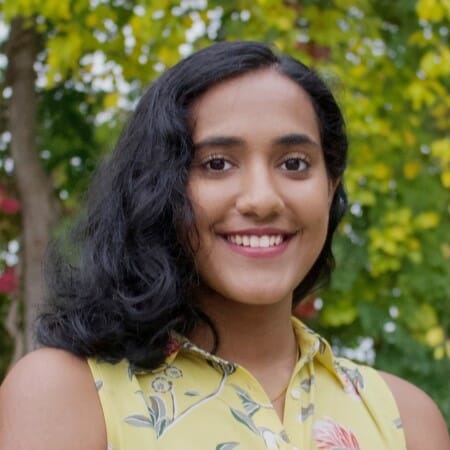
As the founder of Recycle Fan, a nonprofit with 500+ members across 30 chapters globally, Anjali’s goal is to empower youth to take action in their communities through service, education and advocacy./Courtesy Anjali Narayanan
Describe your volunteer role with Recycle Fan.
When I started this, it was just a recycling club at my school, but then we started to expand within our local area with different high schools. All of them started their own clubs, and we would do joint events and summits. When we started posting about it on social media, it got a lot of traction. People from all across the country and even from across the world were seeing what we were doing and wanted to start something similar in their area.
My role as the executive director is helping different leaders start their chapters and achieve what we did in my community. I also help them plan out events. What may work in one area may not work in another. I sit down with each of the different leaders and we brainstorm for the year what kind of events they can do. If there’s a beach nearby, maybe they can do a beach cleanup. Or if they have a bunch of local businesses and restaurants with a farm nearby, they can mobilize a composting stream for them. It really depends on the area, but I really help them plan out what they can do. Then, they take on the role of logistics and executing the actual event.
What’s been the most rewarding part of your work?
The most rewarding aspect is finally feeling like young people aren’t on the sidelines anymore, because I can assure you that almost everyone in my generation cares about the environment. Unfortunately, they feel immobile, unable to take action. Even if they do act, they feel like their work isn’t worthy or isn’t making an impact. The climate crisis isn’t just here in the US; it’s everywhere. We just have to give youth the resources to make change, because we are all ready to.
It’s rewarding to flip the narrative. The greatest thing we’re doing is creating a new generation of people that have this awareness about the environment and who are interested in being environmental scientists, policy makers, etc.
What have you learned through your experiences as a volunteer?
I’ve learned how to showcase my passion and direct it in an effective way. We did this through social media. In 2019, we started RFAN. It wasn’t successful in its first year, and I was really discouraged. I wasn’t sure how to get people to join me and how to plan events. It wasn’t organized. As we started posting things online, we immediately gained a hundred members. People are ready to take action, but you have to give them the resources to do so.
One of the major things I learned about the environment is that when we throw our food waste into landfills, it’s mixed up with all the plastic and releases a lot of methane. That’s why I really believe in composting and why we’re trying to help restaurants and schools do it. The second aspect is multi-stream recycling. Other countries have prominent multi-stream recycling programs where they ask people to sort their waste by material type, and that’s not common in the US, where everything is dumped into one recycling canister. A lot of material just gets tossed out to landfills, and it’s not very effective.
Are there any future partnerships, programs or events that you are excited about?
We recently hosted a summit at the first hydroponic farm in Texas, “Moonflower Farms,” with distinguished speakers from the UN and the Institute of Art and Technology in Berlin. We gave a tour of the facility to all the kids that came in person. The live stream received a few thousand views.
This year, we’re looking forward to doing a beach cleanup. We also really enjoy building partnerships with local coffee shops and restaurants to help them with their coffee grounds. We’re trying to increase the number of restaurants we work with, because there’s a farm really close that can benefit.
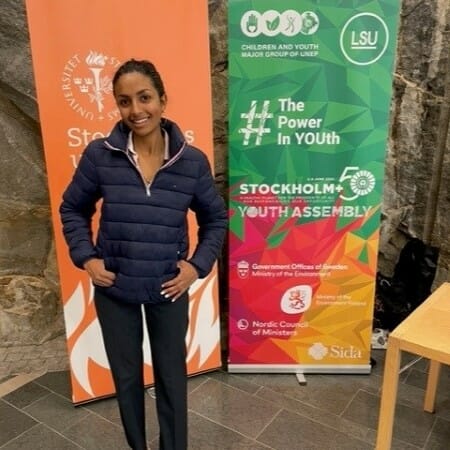
At the beginning of June, I had the opportunity to go to Stockholm +50, a UN conference celebrating 50 years since their first environmental conference. There were a lot of political leaders there, like John Kerry. I got to speak at the youth assembly about how I started Recycle Fan and made it a global movement as well as the power of individual action for climate change.
Why do you think it’s important for others to volunteer?
I think, when we’re growing up, we don’t realize how much a community or environment helps us flourish. I found out that I had dyslexia at eight or nine years old, and I feel like it’s because I have such a supportive community that I’ve been able to get to where I am today. So I think it’s only right to support others by paying it forward. It’s important people realize that civic work is a circular system. Whatever you get, you should put back in the system to make sure it’s flowing and that younger generations can benefit.
What are some surprisingly easy changes people or companies can make to be greener?
Wash out your plastic containers before you put them into the recycling bin. And make sure that whatever you’re putting in your bin is accepted by your local recycling facility. If it’s not accepted, your entire batch of materials will be thrown into landfills so it doesn’t affect others. It can make a huge impact.
What do you want people to learn from your story?
Whatever they’re passionate about, they should take part in. We need passionate individuals in every field so we’re seeing innovation and growth.
I also think it’s valuable to know that when we started off, we weren’t that successful. If you’re able to get a strong leadership team and find others that are passionate about your cause, it can really help you expand your organization. It’s not only the number of members that you have but the depth of your initiative, really making sure it’s impactful. I know a lot of people my age are trying to do something that they’re passionate about, but they struggle with getting it off the ground.
Houston-Based Teen Harnesses the “Endless Possibilities of Music” to Benefit People of All Ages
Meet Daily Point of Light Award honoree Sandhya Mahesh. Read her story, and nominate an outstanding volunteer or family as a Daily Point of Light.
Chords for a Cause is an organization with a mission to provide musical opportunities to youth while raising money for children who have been historically underserved across the world. Over the past five years, Sandhya Mahesh raised nearly $29,000 by organizing charity concerts for organizations such as SkateTherapy, a therapeutic ice skating program for children with disabilities, CRY America, a non-governmental organization that works to give children in India access to education and Save The Children, a humanitarian aid organization that serves displaced children.
Over the span of two years, Sandhya brought together over 180 musicians from across the country to play nearly 240 virtual and live concerts, including, most recently, a concert fundraiser called, “Sounds of Ukraine” that raised nearly $5,000 for Ukraine relief. Read more about how this 17-year-old girl is using music to contribute to the causes she cares about.
Describe your volunteer role with Chords for a Cause.
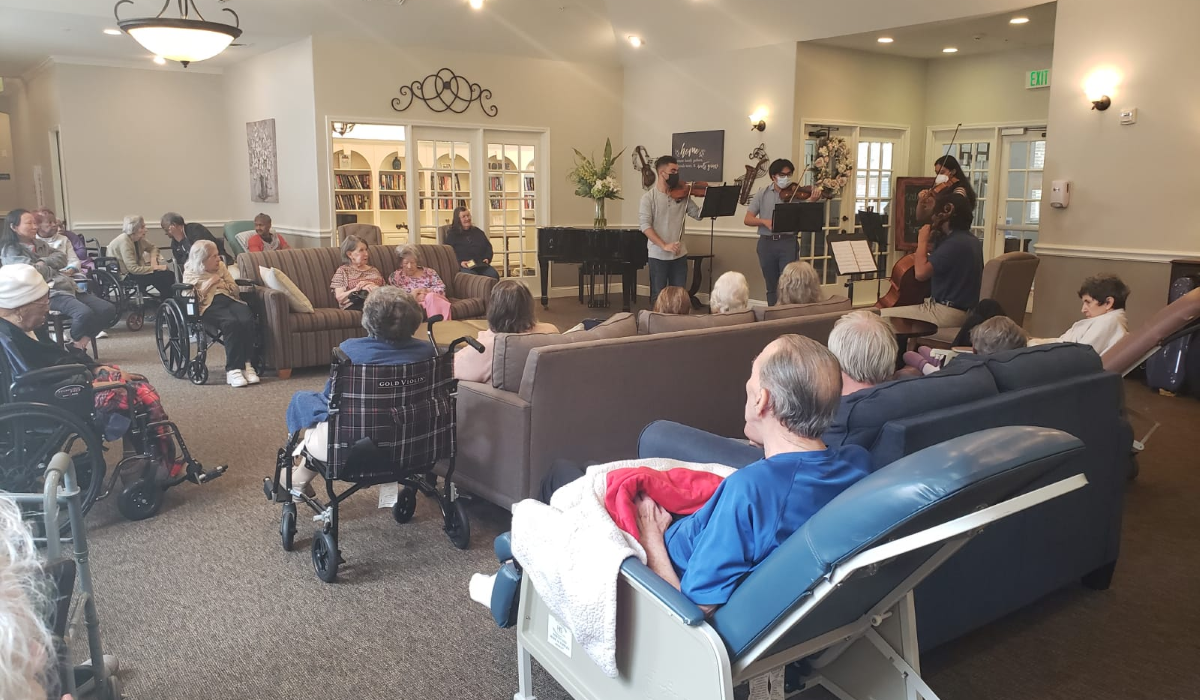
I’m the co-founder of my nonprofit organization, Chords for a Cause, created about five years ago. Initially, we started doing concerts to raise money for nonprofits, but now we’ve grown a lot and raised almost $29,000 for philanthropies across the world. We primarily do recitals at nursing homes at hospitals, and now we’re even teaching music to youth students with disabilities.
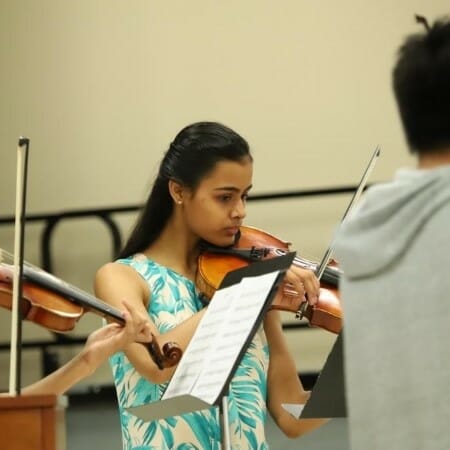
Sandhya Mahesh is the co-founder of Chords for a Cause, an organization dedicated to using the endless possibilities of music to improve lives through volunteering, fundraising and outreach./Courtesy Sandhya Mahesh
Our format is to partner with nonprofits and then work with them to bring our volunteers to them. We have around 220 volunteers. I also communicate with representatives at 35+ hospitals nationwide to coordinate regular recitals for patients to combat loneliness and depression, which I perform in and organize setlists and performers for.
We have open calls for volunteer opportunities, and we now run a loose network of volunteers from around the U.S. I’m based in Houston, we have a lot of volunteers in Phoneix, and we even have Boston and New York.
We’ve played music for nearly 1,000 patients! I’ve built an active leadership team for the organization and grown our member count to 220+ volunteers from 16+ countries. I also assist in running an active blog exploring the applications of music in science, public policy and more. Our ultimate goal is to use music for social change and betterment.
How did things go during the COVID-19 lockdown?
At that point, we’d already been playing concerts at hospitals and healthcare facilities. Since those were some of the hardest-hit organizations, we knew how important it was to provide opportunities for music, so we continued to deliver our concerts to these establishments via Zoom throughout the pandemic.
Which instruments do you play?
I’ve played piano since I was 4 or 5 and viola since I was 11.
The volunteers from Chords for a Cause have been holding live and virtual concerts for nursing homes since 2018./Courtesy Sandhya Mahesh
What’s been the most rewarding part of your volunteer work?
As a musician, I really love to teach the youth music lessons. There’s something so special about a young person with no background in music walking out the door knowing how to play “Hot Cross Buns.”
Any advice for people who want to get involved with a cause they care about?
One thing that’s really helped me is having a community of people who want to do it with me. It can be intimidating sometimes to go it alone, especially if you’re founding a group or organization. Remember that there’s strength in numbers… you can do so much more with people than you can alone.
Retired Electrical Engineer Organizes Therapy Dog Visits to Bring Smiles to Those Who Need it Most
Meet Daily Point of Light Award honoree Patricia Newman. During International Assistance Dog Week, August 7-13, 2022, Points of Light will be amplifying the work of service dogs, training and rescue organizations and other related groups that are helping individuals in their own communities and abroad. Do you know a volunteer doing good things with dogs? Nominate them as a Daily Point of Light.
Patricia Newman has led a fascinating life. She earned a degree in electrical engineering in a time when, as a woman, she was an outlier. She received a second degree in foreign languages and speaks Spanish, French, German and Russian fluently, as well as a bit of Japanese. She started her career at Sandia Labs, a national weapons laboratory. As a Russian speaker, she was chosen to discuss the safety and security of weapons with the Soviets after the fall of the Soviet Union, leading her to a career in technical translation.
While she has always led a life of service to the greater good, she started volunteering with High Desert Therapy Dogs after she retired. She is now the Outreach Coordinator and holds a seat on the Board of Directors.
What inspires you to volunteer?
About 10 or 11 years ago, I had retired and lost my husband. I was sitting around at home looking for something to do — I’ve always been a volunteer of various kinds — and I went to the hospital to get some medical records. As I walked through the waiting room, I saw three people with their therapy dogs meeting people and talking to them.
I was astonished at the behavior of the dogs. They were so focused on the people they were meeting and were creating such a stir in the waiting room! And I thought “I would love to do this.”
In 2020, when the pandemic broke, I decided to break off and form a smaller group called the High Desert Therapy Dogs.
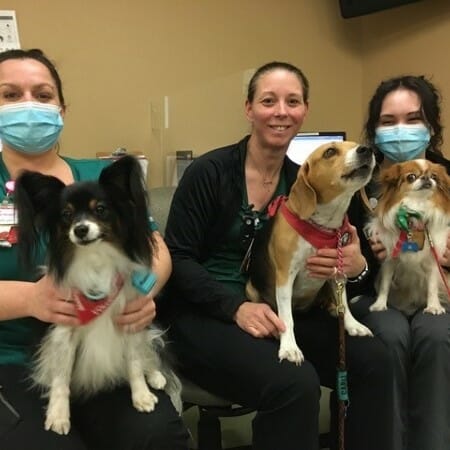
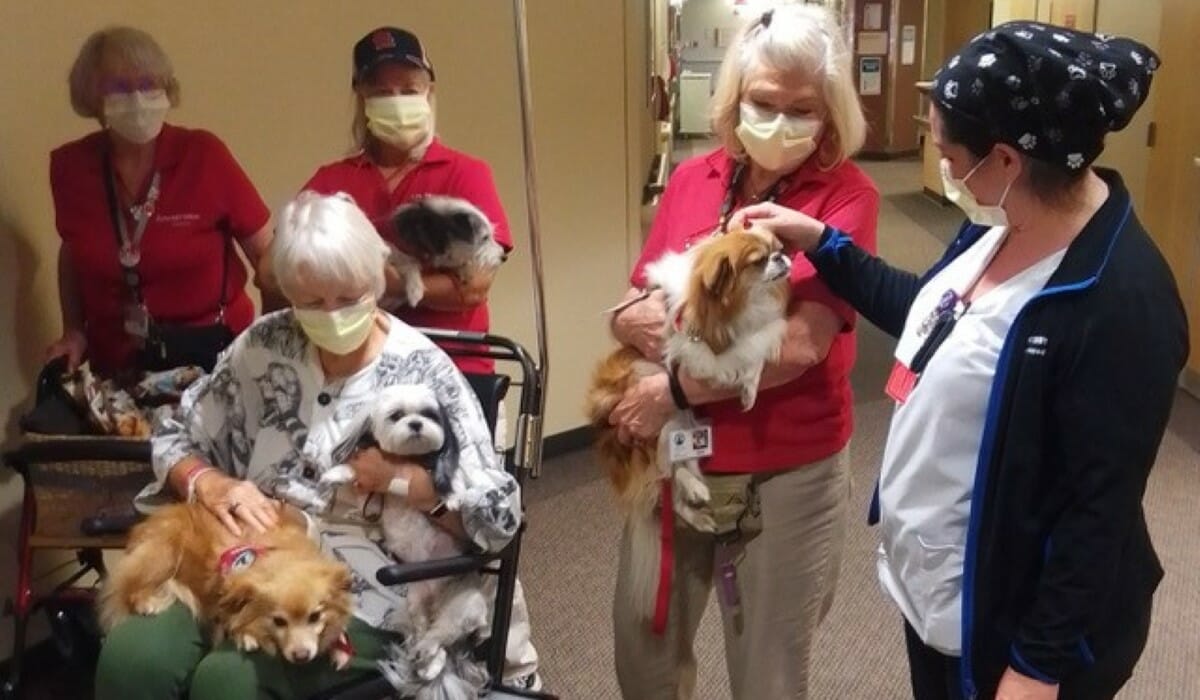
Presbyterian Main Hospital physical therapists holding therapy dogs (left to right) Radar, Carli and Suki./Courtesy Patrica Newman
Describe your volunteer role with High Desert Therapy Dogs.
I’m the secretary and database manager. I keep track of our dogs and ensure they are all certified healthy and vaccinated.
We visit hospitals, nursing homes, classrooms, libraries, private homes and anywhere else we’re needed. When the pandemic started, one of the rehabilitation hospitals I used to go to asked us to do window visits, so we would troupe around through the shrubbery and hold our dogs up to the windows. It was so touching to see people who had difficulty moving but yet they would struggle so hard to get to the window and put their hands up on the window where the dogs paws were. The smiles we got were just astonishing.
What’s been the most rewarding part of your work?
It’s the impact our dogs make on people. One woman had had a stroke and couldn’t talk, just loved to see my little Radar. He has a trick. I ask people if they want him on their lap, and if they say yes, I tell them to pat their knees, and he’ll jump up. He’s only 10-pounds, so he lands light as a feather. The smiles and the laughter I get are amazing.
One day, before she was discharged, I met her in her room instead of in the gym, and her husband was on the phone. I asked if she’d like to hold Radar, and she said “Yes.” Her husband almost dropped the phone. He said, “That’s the first word she’s spoken since she had the stroke!”
What have you learned through your experiences as a volunteer?
I’ve learned people really like dogs, and they’re eager for something to break the monotony of a hospital or nursing home or school or anything else. I’ve learned that if I walk into a room in a waiting room of a hospital, most of the people will be sitting there staring at their phones, and it will be quiet. If we walk in with dogs, before we leave, people will be talking to each other, engaging in conversation not just with us but with their neighbors sitting next to them. It’s an amazing transformation of isolated individuals to a community.
Celebrating as fellow volunteer with High Desert Therapy Dogs, Delores, is discharged after surgery with a pack of therapy dogs in tow./Courtesy Patricia Newman
Are there any future partnerships, programs or events that you are excited about?
All of them! The lady at University of New Mexico is one of our members, and she gets us into the wildest things sometimes. We really enjoy outdoor events at the duck pond at the university and the honors college during finals week; it’s a stressful time for them.
Our campus community is very diverse. They have a lot of foreign students and people from other states along with New Mexicans. It’s a marvelous place to take your dogs and meet people from everywhere.
Why do you think it’s important for others to give back?
It’s the most rewarding thing you can do when you do something for other people. Whether it’s gathering and distributing goods or tutoring or taking your dogs to visit. It doesn’t matter. When you see the difference that your efforts make, in those people’s lives, it is so rewarding, and it keeps your mind off your own troubles.
What do you want people to learn from your story?
If anyone would like to get into pet therapy, just go online and look for therapy dog organizations. I joined the Alliance of Therapy Dogs. They offer some training, insurance and identification tags while helping you register him or her as an official therapy dog. Make sure to learn the rules before you start. Vet visits, grooming, behavior control are all important, and owners have a dress code.
Washington Teen Tackles Community’s Problems With an Equity Lens
Meet Daily Point of Light Award honoree Hae-gyung Tessa Han. Read her story and nominate an outstanding volunteer or family as a Daily Point of Light.
When Hae-gyung Tessa Han started high school, she set out to find a way to make a difference in the world and connect to her community after previously getting her education from home. The now 17-year-old found the perfect bridge: volunteerism.
Tessa is a member of several equity-based organizations, like her community’s Youth Ambassador Program, Student Justice Collective and Teen Arts Alliance. She continues to tackle issues in her Woodinville, Washington, district one virtual webinar and equity-brainstorm session at a time.
Describe your various volunteer roles in your community.
I’ve always done community service, through National Honor Society and all of that, but I didn’t really start getting involved in larger organizations until last year. There are three main organizations that I’m affiliated with and they’re all very local. With the Youth Ambassador Program, I help give students a voice. For example, mental health was something that we really pushed for this year because we felt that it was really important.
The the Student Justice Collective works within racial education, the Department of Justice and our local district. In the collective, we basically try to push for equity, like taking the Black Lives Matter action into schools. We also hosted an educational panel and facilitated the organization’s Student Justice Conference. We mostly did virtual panels so more people could attend and we still had a few COVID-19 concerns. We also host events for LGBTQ+ and Asian American and Pacific Islander Heritage Month.
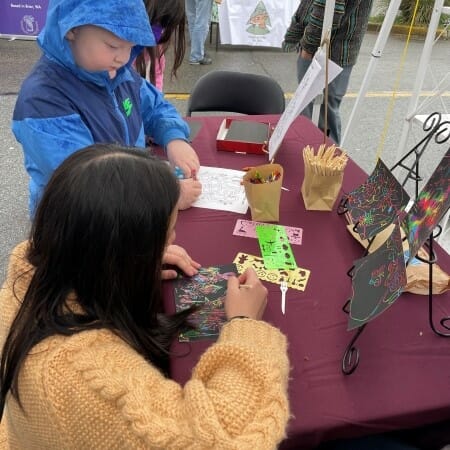
Hae-gyung Tessa Han joined the Teen Arts Alliance of Woodinville, Washington, a year ago, and works to connect with the community through art./Courtesy Hae-gyung Tessa Han
Finally, the Teen Arts Alliance is something I do outside of school. We all come together to be mentored by some professional artists and get to do projects that benefit the community through art. For example, the project that I worked on specifically was the art book — an activity book that we donated to underserved kids.
How have you brought your volunteerism and activism into schools?
It’s sometimes difficult to get involved in anything in high school because so many people only volunteer in organizations that give them credit or service hours to report.
Describe the Student Justice Collective that you sit on.
The Collective was created because the heads of the department wanted to have collective thought with more young people. They went around to different schools and asked if students who were interested. At the time, I was really interested in racial education and justice, so I joined. I didn’t really know what to expect, but it’s been a fun experience throughout the year.
We hosted a Social Justice Conference in March that was held at our local community college and around 400 students came together with local professors and we all just workshopped on societal issues and how to solve them. We also got to hear from a keynote speaker which was exciting.
What inspires you to volunteer?
I think mostly just being involved in my community. There are not a ton of people here because we’re not the biggest town in the area so it’s easy to feel a bit disconnected from the city. I also went to home school until high school so I didn’t know a lot of people. So ultimately, I just really wanted to make a small change while meeting people outside of my small circle.
Why is it important for others to get involved, especially for young people and students?
I see it as a certain duty you have to society. I contribute to get involved and give everyone an equitable and equal chance at whatever they want to do. Even if you don’t have a lot of time and have hours of homework, you should reconsider spending some time to get civically engaged. It’s something that you get a very high return on even if the activity isn’t centered on you. It can help you build empathy and other skills throughout your high school experience.
What advice do you have for people getting started in volunteerism?
Sometimes it’s good to just show up and sign up. And if you’re really struggling with finding something, especially in high school, find the people at school who are already involved and talk to them.
Do you have a favorite memory throughout your volunteerism?
The Youth Advisory Board held a retreat and invited older kids from the board that I’m on. We went on the retreat, which was basically just at one of the member’s houses, and discussed future plans. It was really cool to dream and plan for what we all wanted to accomplish. Ideas translated into actionable things in real time. On top of that, it was so cool to see how much went on behind the scenes in terms of our community and district. I didn’t even know we had a district budget plan, and there we all were, discussing it.
Are there any partnerships, programs or events that you are excited about?
We’re basically just going to continue what we’ve done this year. But with the Teen Arts Alliance, every beginning of every school year we start our new art projects. So we have about a year deadline from August. We partner with different organizations too depending on who our mentors are so it’ll be exciting to see what our creative time looks like. I think getting started will be pretty fun.
Breast Cancer Survivor Pays It Forward by Feeding Hundreds of Families in New Jersey
Meet Daily Point of Light Award honoree Karen DeMarco. Read her story and nominate an outstanding volunteer or family as a Daily Point of Light.
In her household, Karen DeMarco is the chef, whipping up delicious meals inspired by her Italian background for her husband and children. But in October 2017, a double mastectomy due to breast cancer left her unable to cook. Just as she began to worry that her children would wind up eating pizza or their dad’s special – buttered noodles – every night, her doorbell rang. At the door were friends and neighbors, dropping off meals between 5-6 p.m. daily for weeks.
Inspired by the kindness of her friends and neighbors, Karen wanted to pay it forward. At first, she created a meal train group on Facebook, coordinating volunteers to cook and deliver meals to local residents who were going through tough times. Then in 2020, during the height of the COVID-19 pandemic, Karen took it an extra step further, cooking around 1,800 meals in her own kitchen for community members in need. As the scale of their food-relief efforts ballooned, Karen and her husband, Carmine, formalized their volunteer work by forming a nonprofit organization called The Food Brigade.
Since 2020, Karen, Carmine and their volunteers with The Food Brigade have distributed about four million pounds of meals and bags of groceries to thousands of people in their town of Dumont, New Jersey, and the surrounding area.
How does The Food Brigade operate?
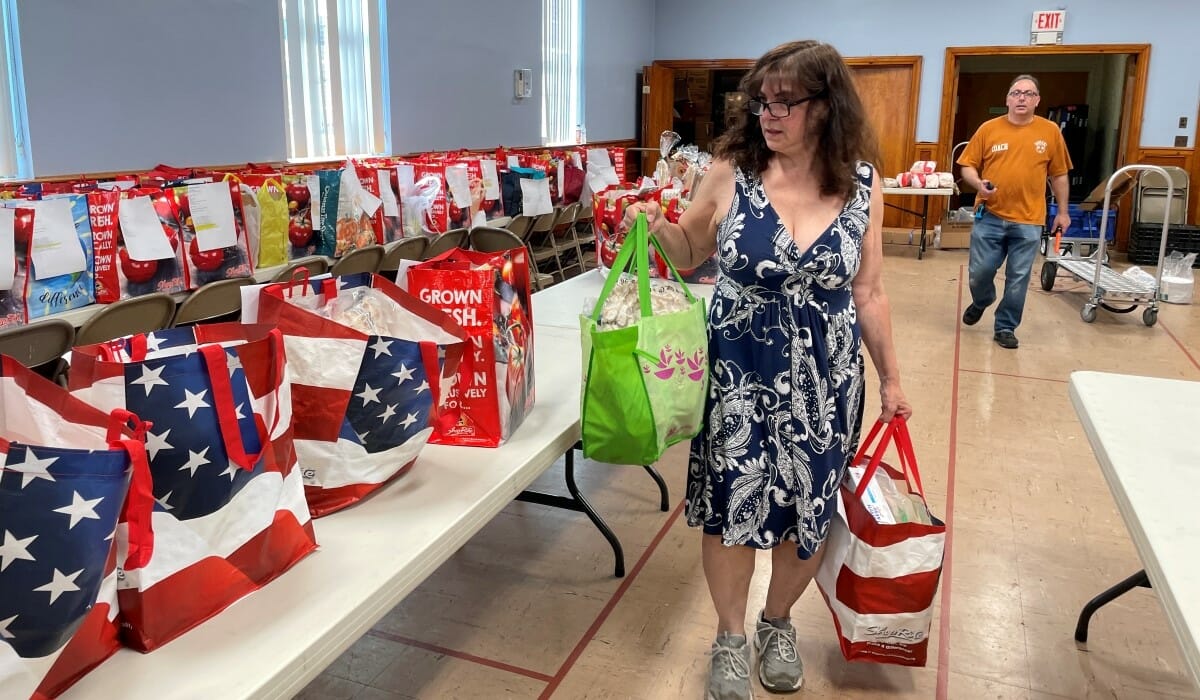
We set up an online pantry system where people can order what they want based on what our inventory looks like. Doing this allows people to get just what they need so I’m not giving people things they can’t eat, and I can cater closer to somebody’s dietary requirements. Every Tuesday, we custom pack the food and the distribution is every Wednesday. We probably handle about 800 to 1,000 people a week.
The Food Brigade helps thousands of people on a weekly basis, providing them with homecooked meals, fresh and packaged foods, and other needs such as diapers./Courtesy Karen DeMarco
Since the beginning of COVID, we’ve also been able to get meals from restaurants that are participating in a grant program and distribute over 16,000 meals during that time. During the holidays like Thanksgiving and Christmas, we hand out turkeys, and we did hams for Easter. We, of course, wouldn’t be able to do this without our volunteers. We have about 200 active volunteers right now, and they’re the best.
What keeps you motivated to keep The Food Brigade running?
The fact that the need is growing and seeing the impact that we make on people’s lives. I know there are a lot of people who count on The Food Brigade to put food on their table. We actually had a little incident where we thought we might have to cancel our operations for at least a week or so. When we told our clients, people started writing letters to us telling us about the impact The Food Brigade had on their lives. I already knew a lot of people’s stories, but reading these letters, I was in tears. That made me realize whatever impact I thought I had was so much bigger than me. We didn’t create The Food Brigade for it to be something that ends once the pandemic is over. There will always be a huge need for food.
What’s one of your favorite memories you’ve made while volunteering?
The first time I delivered food to a family, the mom made all of her kids come out. They were so excited to get boxes of fresh fruit and vegetables that you would think that I was Santa Claus and I had brought over a bunch of presents. But it was just food, food that most of us take for granted. So that moment was very special to me.
By allowing people to order what they need online, Karen is able to customize each bag and ensure no food goes to waste./Courtesy Karen DeMarco
Are there any future partnerships, programs or events that you are excited about?
We just started a partnership with DoorDash. The drivers are delivering food from our pantry to the recipients who don’t have the transportation to pick it up from us, so that will greatly increase the number of people that we can help.
What do you want people to learn from your story?
Some people have preconceived notions of what somebody who needs food is going to look like or what kind of car they’re going to drive. But we have all kinds of cars, old cars, new cars that pull up to our food drive. It’s important not to make judgments about people. Everybody’s situation is unique so if you can lend a hand and you’re able to do it, do it.
14-Year-Old Award-Winning Documentary Filmmaker Talks Hope and Hydroponics in Tel Aviv and Beyond
Meet Daily Point of Light Award honoree Steven Hoffen. Read his story, and nominate an outstanding volunteer or family as a Daily Point of Light.
Steven Hoffen, a 14-year-old New Yorker, is a shining example of what can happen when we combine the powers of innovation, cross-cultural collaboration and support from multiple organizations to create change.
When Steven first heard about the Sindyanna of Galilee, an Israel-based nonprofit staffed by Jewish and Arab women who share a vision of working together in peaceful coexistence, he wanted to get involved however he could.
Despite having never made a film, Steven filmed the documentary, “Growing Peace in the Middle East,” to document Sindyanna’s efforts and help fight food insecurity and hunger. And he did it all during the pandemic lockdowns, from thousands of miles away. Subsequently, he founded the nonprofit Growing Peace Inc. to contribute to the cause, with the mission to further tolerance, empowerment and food security through hydroponic farming.
“I feel that hydroponics is something that can make a real difference in people’s lives in an authentic, tangible way,” says Steven. “It allows people to have fresh produce, gain financially by selling the surplus food, feel proud and also profit from their efforts.”
Growing Peace Inc. raised 100% of the funds to install a hydroponics system at a food bank in Tel Aviv for asylum seekers. It is the first of its kind in the country and addresses a relatively little-known humanitarian crises amongst the 35,000 Eritrean and Somalian asylum seekers in Israel with no access to government benefits or support. These asylum seekers have no status (not even as refugees) and have been hit hard during the pandemic as they work primarily in the hospitality industry, which is among the hardest hit.
Steven is currently working with Topeka Sam and the Ladies Of Hope Mission to install a hydroponics garden at their facility in the Bronx./Courtesy Steven Hoffen
“We partnered with Volcani International and LivinGreen and implemented the first-ever hydroponic system at a food pantry in the country,” Steven shares. “The food bank is special to me because it opened at the beginning of COVID and primarily serves asylum seekers. Because they aren’t citizens and for a couple of different reasons, they don’t have the same rights and struggle to obtain food. With the funds raised, we built this hydroponic system to provide them with nutritious produce.”
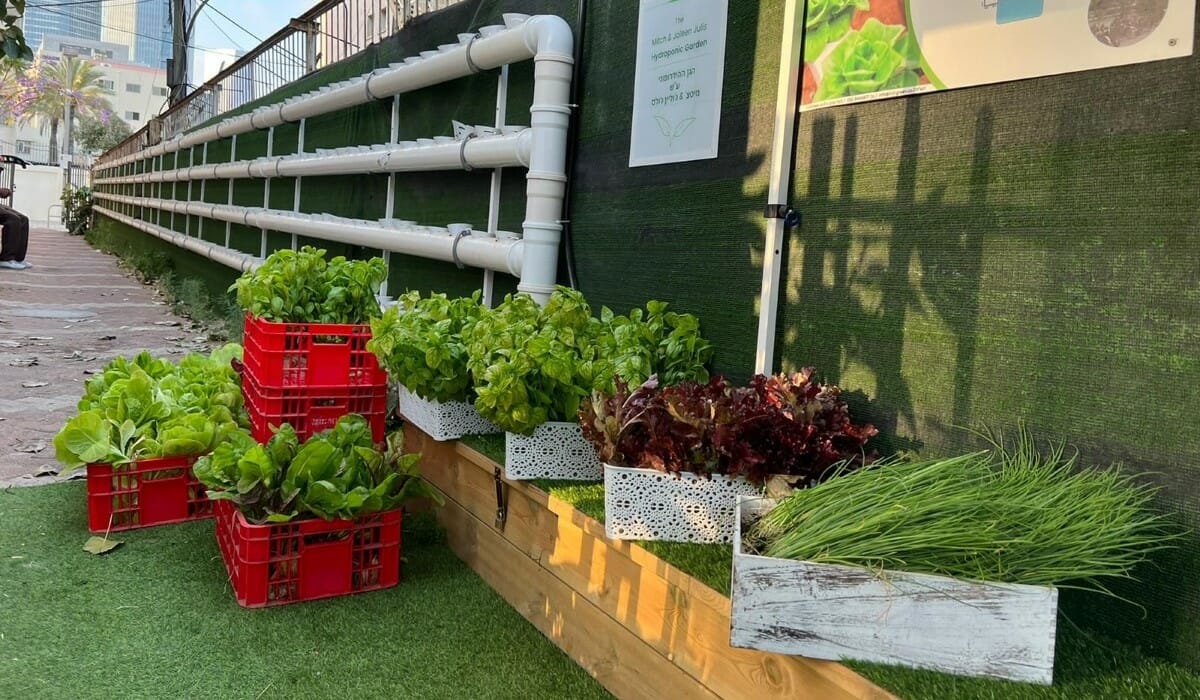
The hydroponics system, which was installed in February, is ready for its first harvest of nutritious leafy greens including mizuna (baby leaves), mangold, curly red lettuce, iceberg lettuce, green onions and beet leaves. This system will be able to grow 25,000 servings of fresh produce for the asylum community in its first year alone.
“It was interesting speaking to all the participants, especially Marwa and Mofida, two women in the hydroponics project at Sindyanna. I learned about their lives and their backstories, their parents, their kids and how the hydroponics projecthelps them personally,” Steven reflects. “These women explained that with hydroponics in place, they had to do much less physical work than in regularfarming, which benefitted them both, as they’d injured their backs. They shared howthe hydroponics project changed their lives –not only could they support their family by making food, but theyenjoyed the process of hydroponic farming.”
What started as an effort to support an overseas organization has grown quickly and dramatically, with multiple partnerships now in place on domestic soil. Growing Peace Inc. is actively tackling projects to educate, empower and help in the fight against hunger.
The hydroponics garden at the Tel Aviv food bank was installed and is operating via the efforts of Growing Peace Inc./Courtesy Steven Hoffen
The first partnership is with Topeka Sam and the Ladies of Hope Ministriesto install a hydroponics garden at their facility in the Bronx. The goal is to help women impacted by the criminal justice system by using hydroponics to promote the benefits of nutritious produce, build goodwill in the community and establish business skills. The producegrown will be partially for themselves, and partially to donate to the local food pantry and to sell to restaurants.
The second project is in partnership with the UJA-Federation of New York to install a hydroponics garden at the YM&YWHA of Washington Heights. The produce grown will be used to benefit the Weiner Center, which houses low-income seniors. The Y will also use the hydroponics garden to educate kids from the community.
“What makes these two New York projects so appealing is that I’ll be helping people right here in my hometown, allowingme to have hands-on experience with hydroponics andbe involved in the entire processdaily,” Steven says. “I also want to spread the word and encourage the use of hydroponics as I feel it is essentialfor the future of people and the planet.”
Steven has learned that people, even those from conflicting cultures that are historically at odds, can be united through a common cause that benefits all.
“All it takes is for two people to take a leap of faith, get to know one another and overcome the barriers and stereotypes that divide them,” he shares. “I saw this firsthand between the Israeli and Arab women working together at Sindyanna, and I think this is true everywhere. Uniting for the common good, pushing prejudices aside and finding peace between people can be done when you decide to work together.”
Steven’s inspirational story is a testament to no age being too young and no effort too small to contribute to sustaining and improving life for people across the globe.
Computer Science Leader Bridges the Gender Gap for Future Women in STEM
Meet Daily Point of Light Award honoree Sruthi Kurada. Read her story and nominate an outstanding volunteer or family as a Daily Point of Light.
Sruthi Kurada knows that the mentors in her life had a lasting impact on who the woman in STEM that she is today. Now, the high school senior works to ensure that girls in her Littleton, Massachusetts, community have the same guidance and support to fill the STEM classrooms that are commonly crowded with male students.
Sruthi directs the Metrohacks EmpowHER program, a year-long competition for high school girls to create and pitch STEM-related projects that benefit their community. After the competition, Sruthi helps raise and distribute thousands of dollars in scholarships to the competitors.
Describe your volunteer role with the Metrohacks EmpowHER program.
I’m the founder and Academic Director of the Metrohacks EmpowHER competition and program. The organization itself was founded in 2015 by high school students from school. It’s a year-long competition for high school girls to hone both their technical and business skills with the guidance of an industry professional. At the end of the year, we judge the projects that they submit and we’re grateful to award national winners with scholarships for people to hopefully pursue STEM at the collegiate level. Our overall mission is about getting professionals in the STEM field and to work with sponsors to raise money for our scholarships. We’re all high school students working with a team of mentors to set up the competition.
I’m a STEM student myself, and I’m planning on majoring in computer science in college with a business minor.
Sruthi Kurada directs the Metrohacks EmpowHER program, a year-long competition for high school girls to create and pitch STEM-related projects that benefit their community./Courtesy Sruthi Kurada
How can computer science projects serve community needs?
When creating the competition, one of the main things we want to emphasize to the girls who participate is to create projects that are beneficial to their community. The thing that we find the most important is not only learning STEM, but teaching the girls to program and run different workshops with leadership skills. We want the projects they create and lead to actually impact their communities.
Last year for example, one of the winning projects was a website that helps connect people to resources in healthcare. Community members could figure out where they could get a free vaccine during the COVID-19 pandemic. Another project was a machine created to identify melanoma with image recognition to help hospitals diagnose people in need and improve treatment. So each one of these projects that the girls create are something that could help people in their community.
Describe the scholarship program within the Metrohacks EmpowHER program.
The scholarships are for the girls who participate in the year-long program, which is the competition they submit STEM projects in. It also involves public essays and a video describing their solution to a societal problem. The students submit all of these materials to our volunteer judges, who then use a rubric that identifies different skills and student growth from the beginning of the year to choose winners.
Judges grant scholarships to three winners each year. Last year, we gave $5,000 to first place, $3,000 to second place and $1,000 to the third place team. The money is generously donated to us by our corporate sponsors and will be used by students to pursue their future careers and academic journeys in STEM.
What inspires you to volunteer?
As a woman in STEM, I know that there’s a huge gender gap in the field. A lot of my high school classes are mostly filled with male students. This kind of inspired me to start something that could help other girls break into the field.
Before I started the Metrohacks EmpowHER competition, I participated in hackathon events when I was younger. This was another place that was completely open and free to participate in, but it was still so male-dominated. So from these two different experiences, I dedicated my time to help encourage other girls and women to get involved in STEM with mentorship and workshops. I want to give them opportunities to get involved in things they’re genuinely passionate about.
What have you learned through your experience as a volunteer?
I had never really taken on a larger leadership role before. I learned how to create the best experience for both our mentors and students and judges, which was difficult to do without prior experience. I faced some difficulties and challenges, but I learned to overcome those with the teammates that I had. I also learned how to talk to different companies for donations and sponsorship. I explained to them why they should care about this competition and how we can not only benefit the students, but also benefit their company in the future. We encourage corporate sponsors to reach out to the students too — these relationships could provide girls with potential employment opportunities after the competition.
Why is it important for others to contribute, especially young people and students?
I had many mentors growing up who were able to encourage me both in and out of the STEM world. It’s important to also be that to other people who don’t have the same opportunities in their schools or in their daily lives. Even one volunteer or tutoring session a week makes a difference in a student’s life. It’s a very gratifying experience to be able to help someone else who may not have the same opportunity that you did.
Are there any partnerships, programs, or events that you are excited about?
I’m headed to college in the fall, and there’s a lot of different clubs focused on STEM volunteerism and women in STEM. One that I’m looking at now is called the Society of Women Engineers.
Our Metrohacks EmpowHER competition season is wrapping up right now. The projects are due soon. Judging will happen throughout the month of July and we’ll have our final ceremony in August. Us leaders who are heading off to college are hoping to guide the new program’s leaders at our school.
Aspiring Writer Improves Literacy for Kids Across Delaware
Meet Daily Point of Light Award honoree Nacesseca Cherazard. Read her story, and nominate an outstanding volunteer or family as a Daily Point of Light.
Nacesseca “Nessy” Cherazard has carried a love for writing and reading since she was in elementary school. She remembers how important words were to her, and through Read Aloud Delaware, she hopes to help young kids find their own love of reading.
As a three-year volunteer reader at her school’s connected daycare center, Nessy spends her afternoons mentoring kids one-on-one. She’s learned the responsibility and patience needed to grow literacy skills in the lives of kids. Looking back, no matter how rowdy the kids were, remembering their faces before she would read to them continues to be her favorite memory.
Describe your volunteer role Read Aloud Delaware.
About a year ago, I was searching for volunteer work and found a volunteerism website that listed different service opportunities around Delaware. That’s where I found Read Aloud Delaware. I’ve always been a very big believer in growing reading and literacy skills, so I just thought that it was the right time to merge it with volunteering. I was about 16 when I was placed at the daycare that’s connected to my school, the PACCT Center.It’s been great — I started reading on Fridays.
I applied before the COVID-19 pandemic. I was asked if I would consider picking up more days of reading, and I started reading three days a week because I didn’t want the kids to really miss out on reading during so much changing in schools. I know that not every kid is there every day.
When I was younger, probably in middle school and elementary school, I was always writing stories, poems and writing in my journal. I just loved writing song lyrics too and making up stories in my head. I still, and have always said, I want to be an author. I definitely think that I do want to write a book, like a New York [Times] Best Seller one day.
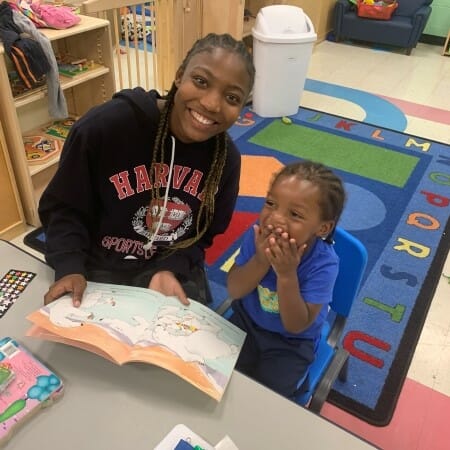
Nacesseca Cherazard fell in love with words and reading at an early age and now volunteers to spark that same love for literacy for kids in her Delaware community./Courtesy Nacesseca Cherazard
How has your volunteerism at the PACCT Daycare Center affected your life?
It’s affected my life a lot. I’m a big believer in volunteer work, but before this program, I just volunteered here and there — never anything permanent. But then I found something that had a huge impact on other people, and I feel like with kids, it’s always great to build literacy as early as possible. Having a place where I can volunteer to connect with kids has been so special. Sometimes I stay 30 minutes later just to play with them and help clean up the daycare. I love seeing joy on their faces and seeing how happy they get. It really changed my life. Reading to them is a big responsibility, and it’s become a part of me.
Do you have a favorite memory from improving literacy in the lives of kids?
I love when I’m reading to the kids, and they just first come to the table to begin. They all come in at once, and I love just seeing them all there before me. I’m supposed to just read to one kid at a time, but because they’re really young, they don’t really understand that all of the time and just smile and ask me if it’s their turn. It’s so adorable. I have so many cute memories.
What inspires you to volunteer?
What keeps me inspired to volunteer is that I’ve always known what I’ve wanted to do since the 5th grade. I’ve always wanted to make an impact in somebody’s life. With Read Aloud, I’m inspired because the kids are so young, too. What keeps me coming back is knowing that I might be somebody they remember like four or five years from now. I just hope that I can help them with their reading and literacy skills and to just overall enjoy reading.
What have you learned through your experience as a volunteer?
The kids are all over the place sometimes, so they’ve definitely taught me patience, kindness and a lot about responsibility.
Why is it important for others to give back, especially young people and students?
It’s important for people to give back because first of all, why not? I think that a lot of people aren’t always as fortunate as others, and when I see people struggling, I believe that it’s important for all of us to actually put a smile on their faces. Volunteering teaches you a lot of lessons and skills about humanity and soft skills about what people really need. You just become a better individual as a whole. It opens the door to so many things, and it’s very enjoyable.
Are there any partnerships, programs or events that you are excited about?
Nothing out of the ordinary, really. But I honestly, just look forward to continuing to read with the kids, even without events or anything coming up. I’m looking forward to continuing to work with Susan. She’s been the program supervisor and now is the site supervisor. She’s been really helpful in all of this.