Florida Teen’s Service Raises Awareness About Climate Change and Rising Sea Levels
Meet Daily Point of Light Award honoree Sara Pearl Adler. Read her story and nominate an outstanding volunteer or family as a Daily Point of Light.
16-year-old Sara Pearl Adler lives in Hollywood, Florida, and says she’s witnessed flooding in the streets right outside her home. Realizing the impact that rising sea levels were having on her own neighborhood, Sara Pearl dedicated her volunteerism to promoting climate change action.
As a volunteer with Sea Level Rise Solutions, Sara Pearl co-founded the King Tide Walk annual event in 2015, and has since connected with hundreds of adults and children in Broward County. Offering education and raising awareness about climate change, Sara Pearl is proving you can be any age to make an impact through volunteerism.
What inspires you to volunteer?
I’ve always been fascinated by science and the environment. As I’ve grown, I’ve continued to learn more about climate change and sea level rise, and it can’t happen any longer. I feel my work and my fellow leaders’ work is bringing some change and awareness.
Describe your volunteerism with the King Tide Walk event.
King tides are known as such because they bring unusually high water levels, and can cause local tidal flooding. Shoreline erosion and King tide flooding are an immediate threat in South Florida. As the co-founder of the annual King Tide Walk, I help neighbors witness the impact of king tides for themselves so they can become activated through experiential learning. In addition to the event, I serve as an advocate and activist around the community. I conduct speaking events including school visits, distribute education materials and manage online activity.
Share one personal story with me from your volunteerism.
Our King Tide Walk visits a neighborhood in Hollywood, Florida. Every year, we measure the water, and it always gets higher. There’s one street where driveways are literally under water. The homeowners have to stand on hills (to avoid water) and they can’t have real grass because it’ll die. The media shows up and the homeowners will come out and tell us how important the cause is. That shows the community wants to help, and understands that what we’re doing is really important. Knowing I can make this impact makes me feel that change is possible because the work we’re doing is helping the community.
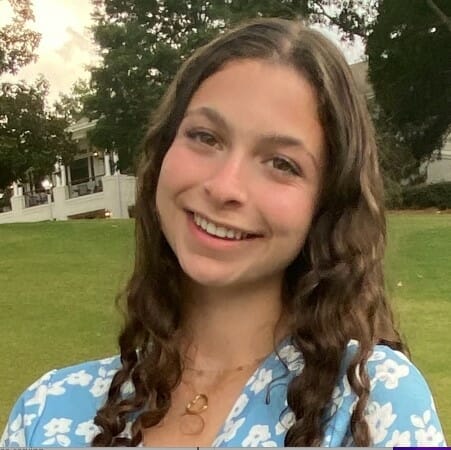
Sara Pearl Adler co-founded the King Tide Walk event to raise awareness about rising sea levels and climate change./Courtesy Sara Pearl Adler
Why do you think it’s important for others to contribute to causes they care about?
Helping people is important. Find what you like and help other people by bettering the world. There’s nothing that can beat that.
What’s been the most rewarding part of your service?
Personally, I’ve gained confidence. I have spoken to scientists, leaders and politicians in our community. I’m less afraid to speak up and ask adults to join my cause. Also, seeing how much the event grows each year and the kids who show up to learn, help and understand that change needs to happen is so rewarding.
How have you continued to volunteer throughout the COVID-19 pandemic?
Our annual King Tide Event couldn’t be held in person in 2020, so we held a virtual event, but we still had a ton of people attend. This year the event will be held in-person again.
What do you want people to learn from your story?
Find something that you care about, something that needs to change, something that people in your community need to care about, and be that person to step up. Take initiative to see what you want to fix and work towards it.
In one word, what does volunteering mean to you?
Purpose. Volunteering gives me purpose.
When you’re not busy volunteering or in school, what do you do for fun?
I love art. I’m a big artist. I also love social media, I’m the social media manager for my school newspaper and I’m helping a local representative with her social media. I am a rower and I love to read.
Autoimmune Encephalitis Patient Pays It Forward So No Other Patient Would Be Alone
Meet Daily Point of Light Award honoree Tabitha Orth. Read her story and nominate an outstanding volunteer or family as a Daily Point of Light.
Tabitha Orth went through a medical experience that no person should have to go through alone. No doctor could understand what was wrong with her, and she realized the dangers that come from misunderstandings and a lack of information. After the 64-year-old was diagnosed with autoimmune encephalitis, a rare inflammation of the brain, she worked to create a new normal with her husband.
But Orth didn’t stop there. The Beaverton, Oregon native founded the International Autoimmune Encephalitis Society so other autoimmune encephalitis patients didn’t have to go through what she experienced. As the organization’s president, Orth is creating ripples of kindness and community around the world.
Describe your volunteer role within the International Autoimmune Encephalitis Society.
I founded the organization in 2016. I was in this world where nobody knew anything about autoimmune encephalitis and there was no organization that could help me and my husband. My memory loss and cognitive ability were quite severe and very scary. I thought something had to be done. Somebody has to help and I didn’t want anyone to go through what I went through. This disease happens to people of all ages — infants to seniors can get it. It has no discrimination and often comes out of the blue. So I started learning about it and I started working in a support group environment and realized that we need somebody to support all of these people.
I then established the International Autoimmune Encephalitis Society. No matter where you are in your journey, we can help you. Our secret sauce is the volunteers who help run the organization, who are people in recovery of the disease themselves or were caregivers of someone in their family who had the disease. Now the organization has its own living spirit that people all over the world gravitate to. We also assist different researchers and caregivers get the most up to date information to their patients.
What is Autoimmune encephalitis, and how do you help others with the disease?
Autoimmune encephalitis is a rare group of brain diseases that was only identified in 2007. I got sick in 2013 and it took a year for me to get a diagnosis because no one knew what was going on. With adults, you have out-of-the-blue first time psychosis, hallucinations and paranoia and you really can’t tell what’s real and what’s not real. It mimics bipolar disorder and schizophrenia.
When I got sick, no one had heard about encephalitis before and there were only three places in the entire country that had people who specialized in it because they were heading the research, like at John Hopkins, the Mayo Clinic and the University of Pennsylvania. When I got sick, I was put on a psychiatric hold and almost legally committed. My husband got an attorney to get me out. After I went through all of this, we learned that it’s a swelling of the brain. It’s an autoimmune reaction where your body creates an antibody that’s not supposed to be there and it attacks healthy brain cells. People have trouble talking, walking and eating and if it’s not identified early, then the brain damage can be more excessive. If it’s identified early it can be reversed.
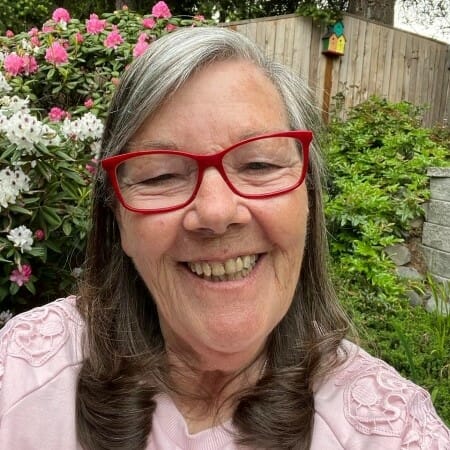
Tabitha Orth founded the International Autoimmune Encephalitis Society so no patient would be alone in their fight to understand the autoimmune encephalitis disease./Courtesy Tabitha Orth
How has the International Autoimmune Encephalitis Society grown?
First, we run a support group on Facebook, and we have over 3,000 members worldwide. Every day there will be new posts, either about new research that’s coming out or explanations of the disease. The core of what we want to do is help people understand that education is power. If you understand the disease and you understand the treatments, then you can have a much better relationship with your doctor and feel more confident in your doctor and treatment.
Our volunteer count has also grown. Most of the people who volunteer with us have some kind of talent, and a lot of them are in the medical field like nurses, different doctors, specialists and insurance workers. So we’ve become very effective in helping people. We have a website; it’s the best website in the field here and thousands of people have been positively impacted by our information.
What inspires you to volunteer?
What inspires me is that I don’t want anyone to go through what I went through. If I can save one person, it means the world to me. We want others to feel like they aren’t alone in this disease. So it’s really the passion of getting people through a difficult time and coming out the other end together and supported — that there really is a light at the end of the tunnel.
What have you learned through your experience as a volunteer?
I am going to surprise you with my first answer, because it surprised me. I wasn’t a business person but I don’t look at this organization as a business. We’re the only family and patient centered organization for this group of diseases. I think when you start an organization as a patient yourself, your focus is on the patient, the family and the caregiver. I never imagined it would get as big as it has, and I never imagined it would touch so many lives. We help people in the smallest corners of the world. Seeing the ripple effect of the work the organization has done, where people come to us and they get help, it’s incredibly rewarding. I never imagined that it would actually have its own energy and its own heartbeat.
Why is it important for others to contribute to the causes they care about?
When you have a trauma, you usually ask yourself, why me? I believe there was a greater purpose for me. People who have a serious and life threatening disease come out with a mindset that no matter how big or small their problem is, they realize the value of life more than they ever did before. They also realize the power of a simple act of kindness. Kindness becomes sort of infused into you. And you see life through a different lens and you appreciate your life a lot more.
Are there any partnerships, programs or events that you are excited about?
February is Autoimmune Encephalitis Awareness Month and we had experts from around the world give presentations. That’s our biggest thing of the year. But we are also going to be participating in two studies for two separate kinds of autoimmune encephalitis. We also have a children’s book that we’ve written and the illustrations are being wrapped up now; that’s our next big launch.
Football for Good: Volunteer’s “Three Piece Suit Football” Honors Veterans
Meet Daily Point of Light Award honoree Cameron Miller. Read his story and nominate an outstanding volunteer or family as a Daily Point of Light.
Honor, emotion, and appreciation are some words Cameron Miller uses to describe a moment during a Three Piece Suit Football (TPSF) game at halftime.
“We honored a veteran who played in our first game,” says Cameron. “He missed our second game because he was serving in Iraq. He became overwhelmed with emotion, and had to put his sunglasses on because he was crying, he was so appreciative.”
That sentiment, says the 41-year-old Atlanta, Georgia resident, speaks volumes about TPSF’s impact. As the founder of the fundraiser, Cameron is celebrating the spirit and camaraderie of football while also honoring the sacrifice and service of veterans and military families. Starting in 2009, the event has since turned into a festival that features a game of tackle football, the players donning three-piece suits. According to Cameron, the birth of TPSF and its support of veterans came about as a result of his interaction with the community.
“I was a graduate student training to be a clinical psychologist (and) was doing a lot of work with veterans dealing with PTSD (Post-traumatic Stress Disorder) and other reintegration issues (after returning) back to civilian life. I found it to be meaningful and important working with this population. I’m a big sports and football fan, so my friends and I came up with this idea that aligned with professional pursuits and the people we were supporting.”
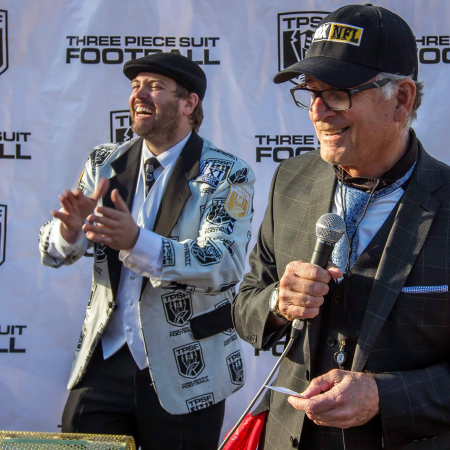
Cameron Miller, founder of Three Piece Suit Football (TPSF) pictured with former American football official Mike Pereira./Courtesy Cameron Miller
With chapters in Atlanta and Boston, Massachusetts, the fundraiser supports those who have fought for and protected the rights that allow the freedoms to host the TPSF event, says Cameron. Raising more than $180,000 for local veteran’s charities, primarily Pets for Vets and Operation Delta Dog, the funds go towards pairing a rescue dog with a veteran suffering from challenges including PTSD, Traumatic Brain Injury (TBI) and Military Sexual Trauma (MST), and are just one part of the service being offered to those who have made the ultimate sacrifice for their country and fellow countrymen.
“Neither the veterans nor myself or the organization’s volunteers, we’re not looking for that ‘thank you’ or to be put on pedestal, but that unwritten appreciation (shows that people) understand we’ve put a lot into whether it’s military service or making the charity happen. That nod of appreciation, gratitude and respect of sacrifices the veterans have made serving our country and they appreciate that we appreciate and recognize that.”
Cameron is the driving personality behind the organization, says Victor Morency, the Boston chapter president of TPSF, who says their volunteerism serves many purposes, from helping to save veteran lives, to helping save a dog’s life, and also offering a sense of community work to people.
“He’s a very kind and caring person,” says Victor. “(Cameron is) very charismatic, an incredible motivator and leader. He believes very strongly in causes that are important to him, and as volunteers, you gravitate towards him because of the excitement and enthusiasm he has. He always puts his best foot forward.”
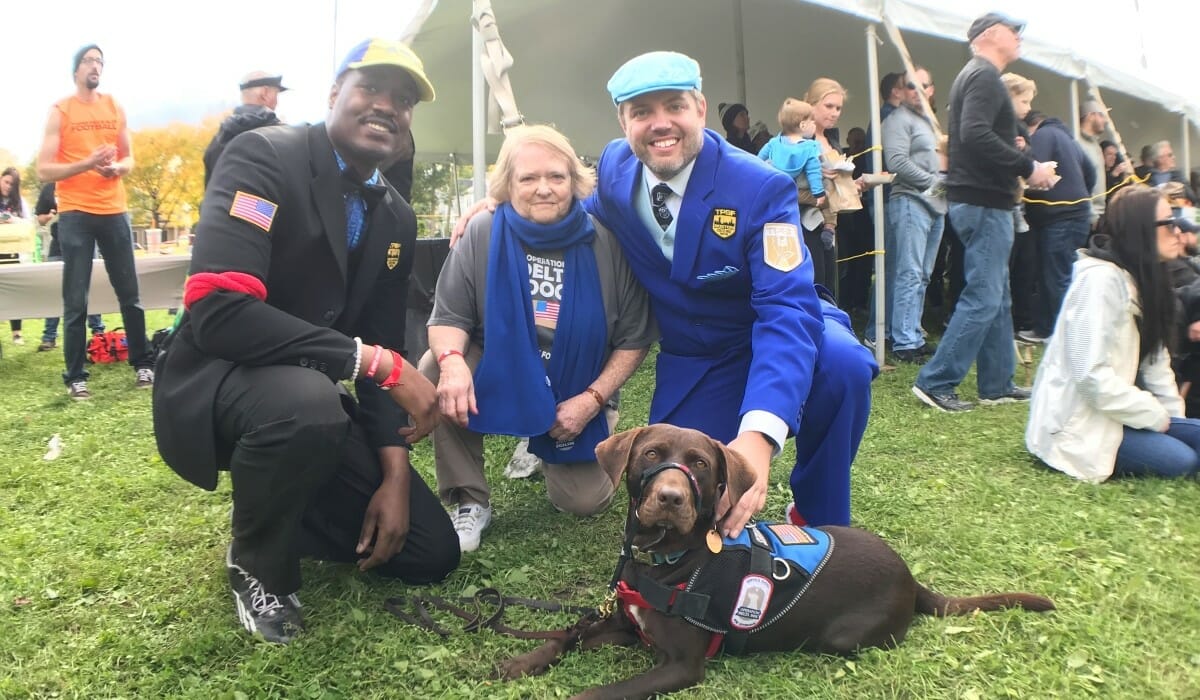
TPSF has raised more than $180,000 for local veterans’ charities, primarily Pets for Vets and Operation Delta Dog./Courtesy Cameron Miller
Putting his best “foot” forward on the football field and suiting up every game, Cameron used to play quarterback, but now plays in whatever position is needed, joining civilians and veterans before the start of every game to chant,“TPSF, TPSF,” the reminder that the game is being played for a greater purpose. For all of the hard work and stress, Cameron says when he gets a chance to step away and witness the event from a greater distance, it’s all worth it.
“I’ll go up on the hill whenever we are playing, and look through the entire crowd and game. I’ll see people coming together and enjoying themselves for a good cause, and that really feels powerful. We have brought people together to support vets and animals. I have a full time job, I have a life, everyone is busy, but knowing this isn’t about me and this is about being able to help and support others, when it comes together like that, it makes all those sacrifices all worth it.”
South Carolina Teacher Helps At-Risk Youth Expand their Horizons and Stay in School
Meet Daily Point of Light Award honoree Jermaine Singletary. Read his story and nominate an outstanding volunteer or family as a Daily Point of Light.
For more than a decade, Jermaine Singletary has been teaching middle and high school students at an alternative school in Columbia, South Carolina. With many of the students coming from struggling families and under resourced backgrounds, Jermaine has seen too many students drop out of school or get involved with gang activity. To help these students stay in school and become motivated to create a better future for themselves, Jermaine started a nonprofit organization called Binding Ties, Inc. in 2009. By taking his students on field trips to sports games and big cities such as Atlanta, Jermaine enables his students to expand their horizons and gives them an incentive to study harder in school.
Unfortunately, for the past two years, the COVID-19 pandemic put in-person events and field trips on hold, but that didn’t stop Jermaine from wanting to help others. He created the Good Deed Challenge in 2020, posting videos of him and other Binding Ties members doing good deeds around the community to social media in an effort to encourage others to do the same.
What is Binding Ties, Inc. and what gave you the spark to start it?
Binding Ties is a nonprofit entity that assists underserved youth, but we also assist all families in need. I teach at an alternative school, so I started Binding Ties back in 2009 to develop incentives for the kids such as field trips to professional football, basketball and baseball games. We’ve developed programs like Business Social where we take the top 14 students, have them dress up in business attire, teach them etiquette and take them in a limo to a restaurant where they can order anything off the menu.
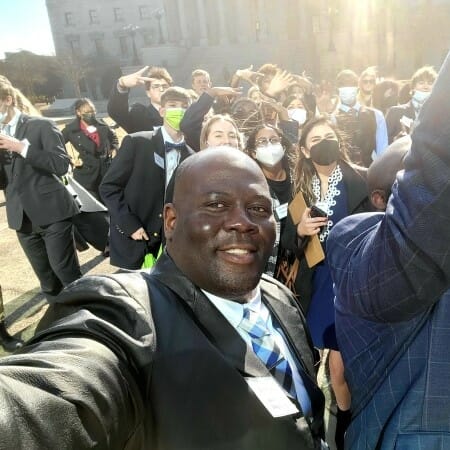
Jermaine Singletary is the founder of Binding Ties, a nonprofit organization that provides at-risk youth with field trips and other educational opportunities to help them reach their full potential./Courtesy Jermaine Singletary
How have you seen these field trips and other educational opportunities motivate the students?
A lot of these kids come from single-parent homes. A lot of them are already in the system or may be transitioning between foster care homes. These opportunities motivate them because a lot of them have never been out of the Columbia, South Carolina area. So having an opportunity to visit other places, experiencing different cultures, being able to interact with people on different levels, it gives them motivation to want to do better in school so they can participate on these trips, but also create a better future for themselves.
Do you have a favorite story or experience that’s most memorable for you?
When I first started, there was a young man who was always getting in trouble. He was affiliated with gangs and that type of thing. But we took him to Atlanta and that was his first time outside of Columbia. He was so excited. During that trip, I invited his parents also so they could spend time with their kid. From that point on, he started doing well just so that he could be on more of these trips. Later, he came to me and said, “If it wasn’t for these trips, I wouldn’t have graduated.” He said, “I was just so motivated to go to these different places and see different things that I wanted to change my life.” So that was touching, and it let me know that the work we’re doing is impactful.
How did you come up with the Good Deed Challenge?
During the height of the pandemic, we couldn’t do anything. There wasn’t much motivation going on so I started the Good Deed Challenge in 2020. We would upload clips to social media of us doing good deeds throughout the community to encourage others to do them as well. We did everything from buying a homeless person a meal, delivering food to various homes, fundraising money to help a family buy a television, different things. We just wanted people to see that no matter how big or small the act is, everyone can do something good. For our latest challenge, we took a family out to buy $300 worth of groceries thanks to the Kroger Foundation.
Jermaine (top left) and his students attend a baseball game in Atlanta./Courtesy Jermaine Singletary
What’s been the most rewarding part of your work?
No matter how bad of a day I have or how tough things get, just to see the looks in others’ eyes when you help them do something good for another person, that’s what keeps me motivated. I always feel that when you continue to do good, it will come back to you and I’ve witnessed that all my life.
Are there any future partnerships, programs or events that you are excited about?
I’m excited about just getting out and being able to meet the youth face to face. It was rough during COVID because we had to do everything through Zoom so it’s great to come out and meet everyone in person. We’ll be able to do events in group settings and travel again so we’re slowly working back into the process and getting things going again.
What do you want people to learn from your story?
What I want people to learn from my story is that everyone can make a difference. It doesn’t matter how big or small. You just need to reach deep into your heart and give what you can. It doesn’t have to be monetary. Just give your heart and help those in need.
Teen Uses STEM and GIS Mapping Technology to End Food Insecurity
Meet Daily Point of Light Award honoree Sudharsan Gopalakrishnan. Read his story and nominate an outstanding volunteer or family as a Daily Point of Light.
Sudharsan Gopalakrishnan doesn’t sit still when it comes to volunteerism and service. The incoming high school senior’s eyes opened to the difficult realities of food insecurity in his community and across the nation, especially during the COVID-19 pandemic.
Sudharsan decided to combine his strengths — STEM, mentorship and education — in a variety of service programs and volunteer opportunities throughout San Ramon, California. One of the biggest organizations he’s involved in, 4-H, has helped Sudharsan use GIS mapping technology to bring awareness to how vast and pervasive food insecurity is and has spent over 500 hours mentoring and teaching others.
Describe your volunteer role within the various STEM programs you’re involved in.
I’m an active volunteer and teen STEM project leader for a program called 4-H, which is an American organization that intends to empower both Californian youth and national chapters with fundamental skills. I’ve been in 4-H since 2019 and right now I’m serving as a teen project leader for the California state 4-H STEM Advisory Leadership Committee to encourage and implement STEM programs throughout the state and other 4-H clubs. I’m also working as a teen leader and Geomentor for the national 4-H GIS GPS leadership team. For the past year and half I’ve been using these leadership roles to fight food insecurities in my community through an initiative that I call, “Where’s the Food?”
The project is meant to fight food insecurity among communities of color and low-income families. I’ve been working with city officials and the County Food Bank officers as a Teen Council Ambassador to my city. I basically created a digital map using a GIS tool to map where food insecurities are in my county and also show different food retailers and farmers markets. I’m also mapping poverty status ratios and the ethnic composition of the communities here.
I’m geographically mapping food insecurities using GIS and related technology, and that’s why I call myself a “geomentor.” I was recently elected to be the vice president for community relations this year for my city’s 4-H club and I was selected as a teen project leader for the California state 4-H Youth Summit Education Planning Committee, so I’m going to continue bringing educational workshops to my community.
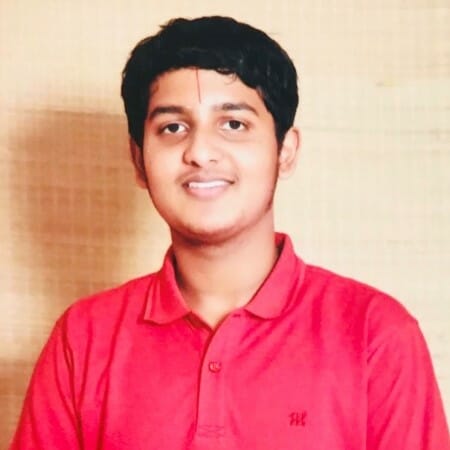
Sudharsan Gopalakrishnan’s food insecurity initiative, “Where’s the Food?” maps food insecurity and food resources in his community./Courtesy Sudharsan Gopalakrishnan
I’ve also volunteered with computer programming and I’ve taught more than 530 students and hosted some workshops. It’s a part of my 4-H STEM Committee to teach digital volunteering and technology for social good. I even had many students do fun activities like making a boat out of like materials from their homes.
Why is food insecurity important to you, and why should it be important to others?
I began to notice a huge food insecurity problem in my community, surrounding communities and also throughout the US. Many communities do not have access to food and I really wanted to do something about that. I channeled some of my personal interests, like computer science and environmental science, and I thought that if I kind of combined those efforts together then I could maybe do something about this problem. I thought of mapping, which could really help me help others. So once I mapped different food insecurities, or food deserts, it helped me increase awareness of food insecurities. We can all really chip in to help prevent these food insecurities.
I also started this effort during the pandemic. COVID-19 really took a huge toll on all of our lives and I thought this was the perfect opportunity to really do something about food insecurity since it was getting worse and worse. I noticed a huge effect on my surrounding communities.
Describe the City’s Teen Council Ambassador award you received.
The Teen Council Ambassador program actually helped me with my “Where’s The Food?” initiative. We’ve been working as a team on really coming up with solutions to different problems in our city. I really wanted to use the program as a great opportunity for me to help tackle food insecurities and talk to city officials and things like that. I felt really delighted and happy about the award. I think I have a great potential to really help spread awareness of the different problems I help, especially food insecurities. I feel so proud to have received something like this.
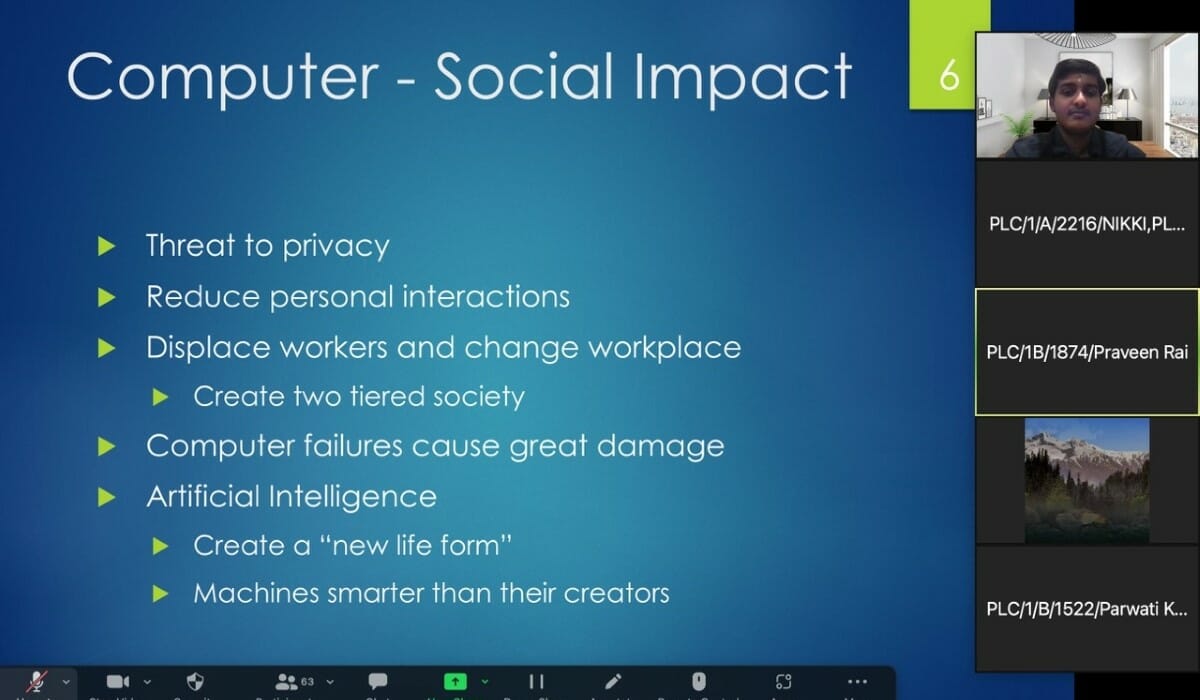
Sudharsan Gopalakrishnan leads an online webinar from the Lotus Petal Foundation about computers and STEM./Courtesy Sudharsan Gopalakrishnan
What have you learned through your experience as a volunteer?
As a teen volunteer and STEM educator, I’ve learned so much about the way a community functions and how there is so much to learn from every single member of a community. I’ve learned how to not only initiate mutually beneficial partnerships, but also how to also foster those partnerships. I went into volunteering thinking that I’d be sharing my skills and teaching young students and other peer educators about STEM. But little did I know that I would be learning just as much from them.
I even have advice for aspiring youngsters, which is find your inner calling first and be passionate about doing something that not only fulfills your own ambitions, but something that also makes meaningful contributions to society whenever possible. You can positively shape things the way you want it. So, I always tell everyone who I volunteer with to be the change they want to see by taking action.
Why is it important for others to volunteer, especially for young people and students?
I think the main reason why it’s important for everyone to volunteer is that there are many different issues in our society right now, whether environmental or technological — it can be anything, to be honest. There’s a huge lack of awareness of different issues and so they aren’t really being resolved. By getting everyone to volunteer, we’re all working together as a team to resolve things. I think we can really increase awareness across our society to these problems and solve these issues one by one to hopefully create a more sustainable earth.
Are there any partnerships, programs or events that you are excited about?
I am very much looking forward to the upcoming ESRI Global Conference in San Diego this supper, where I will be able to meet all the Global Partners who are part of the conference and connect and learn from them. I am presenting a workshop on my current project “Where’s the food?” initiative to the conference members who are attending from all over the world. I’m also looking forward to implementing a California State 4-H coding project across all the 4-H Clubs in California for the fourth consecutive year, as a multi-county project to bridge the technology gap among 4-H youth members.
Steadfast Food Pantry Volunteer Finds Meaning While Wishing Hunger Would End
Meet Daily Point of Light Award honoree Andrew May. Read his story and nominate an outstanding volunteer or a family as a Daily Point of Light.
Andrew May is known for his heavy lifting as a longtime volunteer for Hands On Hartford, a nonprofit organization that fights hunger in Hartford, Connecticut.
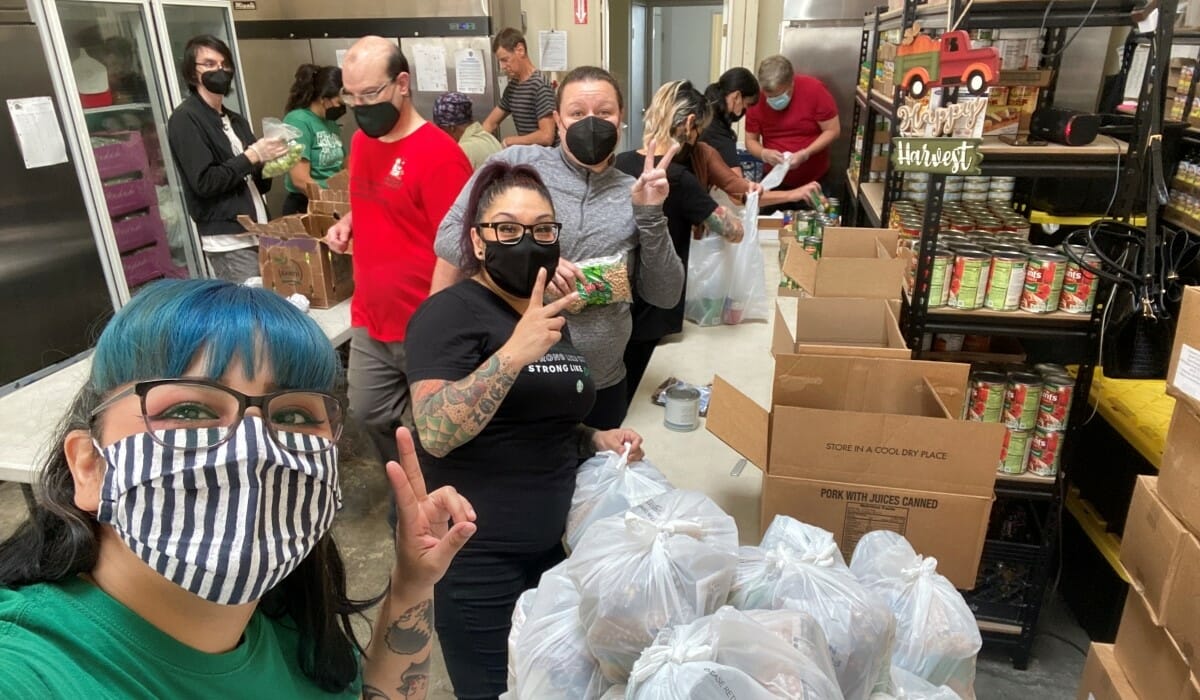
Week after week, Andrew can be counted on to pick up a truckload of donated food – as much as 3,000 pounds worth – then help unload the boxes and pallets, sorting and organizing the food items to be stocked at the agency’s food pantry. He’s also worked in the food pantry, helping clients select groceries. In addition, Andrew makes regular Friday visits to local schools, handing out packages of snacks for students through the pantry’s “Backpack Nutrition Program.” The idea is to give underserved kids who depend on school lunches some healthy snacks for the weekend. In one way or another, Andrew has volunteered for Hands On Hartford, a Points of Light Global Network affiliate, for over 16 years.
When asked about his willingness to do such heavy work for no pay, Andrew prefers to talk more about the weight of poverty and how he feels uplifted by doing what he can to help.
How did you get started doing volunteer work with the Hands On Hartford food pantry?
Hands On Hartford originally started out as Center City Churches. I liked the organization because many faiths got together to form it, and it was ecumenical, as in, “Let’s not care who gets the credit, let’s all work together.” That was appealing to me.
What is the most rewarding part of your volunteer work?
The people. I started because of the interdenominational thing, but I was really inspired by a guy named Reg who, when he retired from his law practice, devoted a lot of hours to the food pantry. He even learned Spanish so he could communicate with our clients better. Another guy is in his eighties and he still comes and helps me unload the truck whenever he can.
The Backpack Program is really cool. I go around to different schools. I’ve seen kids get excited when they see I’m pulling up. I’m 58, but I can still remember that when a kid gets a snack, that’s a good day. I like to think that they appreciate, in their own way, the fact that strangers care enough about them to bring them food. With how scary schools are these days, maybe a kid who realizes the community cares enough about him doesn’t get so angry he has to hurt others.
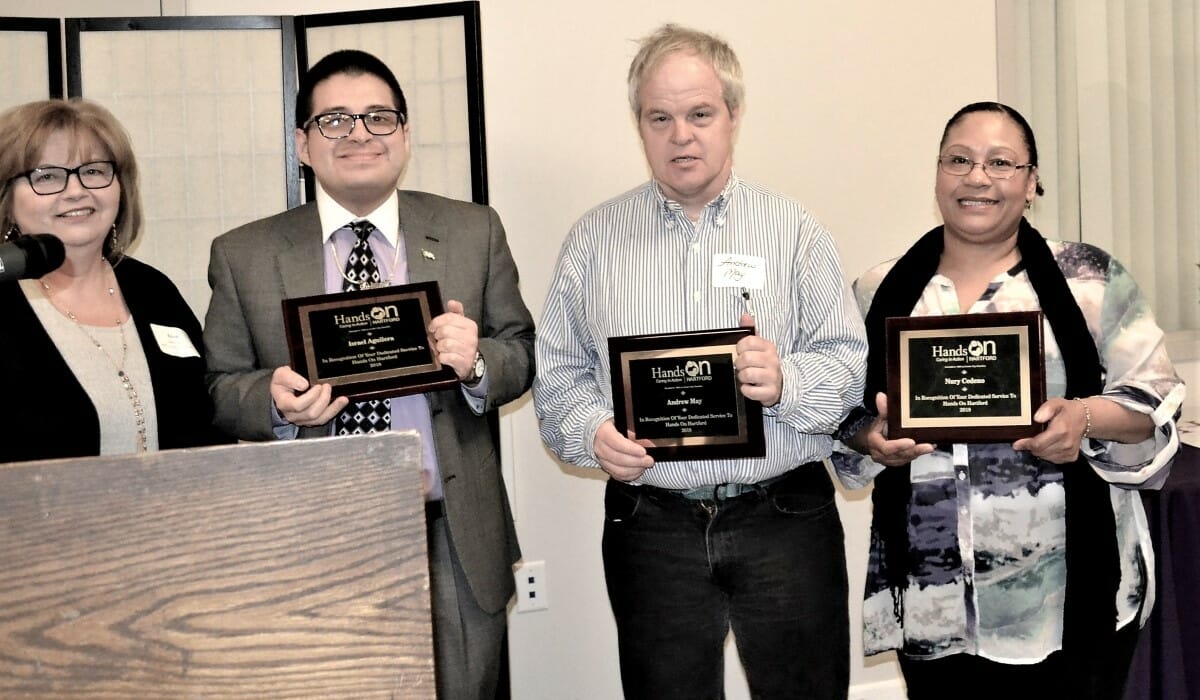
Hands On Hartford staff member Rosa Santiago presents “super hero” awards to volunteers at Hands On Hartford’s April 2018 Volunteer Appreciation Event. From left: Israel Aguilera, Andrew May and Nury Cedeno./Courtesy Andrew May
What is the most challenging part of your volunteer work?
Sometimes, it’s the long hours, especially after having worked third shift. I work nights as a counselor for a crisis hotline. Sometimes, and I hesitate to say this, but some people are not polite, even though they’re getting food. You have to have unconditional human regard.
How did the pandemic affect the food pantry?
Our pantry has just been hopping all the time. They’ve always had big orders. Hartford is a city that can use a lot of help with resources. They have a certain number of appointments and they’re always filled. I am very impressed and pleased that Hands On Hartford found a way to keep it going during the pandemic. They stopped the shopping in the building for a while, but if people came to the door, they gave them a bag of food. A lot of places, for justifiable reasons, completely shut down (during the pandemic), but I was very proud to help to try to keep it going.
What have you learned over the years from your volunteer work?
Hunger, along with food policy, should ostensibly be simple, but it’s not. It doesn’t seem as complicated as, say, health care or poverty. Like, we have plenty of food, can’t we just feed people? But it’s more complicated than all that.
The other thing is that for anyone who wants to do any type of good: Be grateful for small victories. For me, it’s seeing a little boy excited about getting a backpack snack. Am I solving childhood nutrition? No, but I’m making his day.
Why should anybody volunteer, in general?
It gives purpose to your life. As long as, again, you don’t think, ”I’m going to end homelessness,” but if you volunteer every week for Habitat for Humanity – or for Hands On Hartford – your life is going to be much richer. You’ll see the people you serve as fellow human beings. You will appreciate the staff and your fellow volunteers.
Florida Teen Starts Nonprofit to Feed Homecooked Meals to Foster Families
Meet Daily Point of Light Award honoree Laura Kopec. Read her story and nominate an outstanding volunteer or family as a Daily Point of Light.
For many students, a research paper is just another grueling homework assignment. But for 16-year-old Laura Kopec, a research paper was the spark that ignited the desire to create, along with her sister, Feeding the Fosters, a nonprofit organization providing homecooked meals to foster families in Pinellas County, Florida.
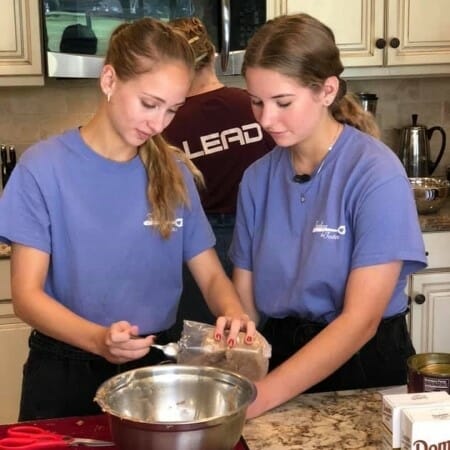
After exploring how immigration led to the development of the United States’ foster care system in her research paper, Laura learned of the struggles that orphaned children of immigrants endured and she was shocked to find that food insecurity existed at a foster sibling group home in her own neighborhood. So, in 2020, Laura and her sister, Samantha, started Feeding the Fosters. With the cooking skills they learned in their Great Grandma Gracie’s kitchen from a young age, Laura and Samantha have been whipping up baked ziti and meatballs, chicken and potatoes, vegetable quiche and more to serve 62 foster families. Not only are they filling the tummies of foster families with a warm, nutritious meal, but they’re also helping alleviate some of the financial burdens on these households and allowing them to have more quality time to spend as a foster family.
What is the mission of Feeding the Fosters?
The mission of Feeding the Fosters (FTF) Inc. is to provide healthy, homemade meals at dinner time to foster families to give the gift of time. Providing meals helps foster families spend time bonding, doing homework, attending medical appointments and visiting with biological parents instead of grocery shopping and preparing meals. Additionally, volunteers help foster children celebrate birthdays and holidays and introduce them to a variety of culturally diverse activities and foods. This support allows the licensed foster homes to continue accepting children, knowing that the community will be there to support them.
Why does your heart go out to specifically foster families and foster children?
In the US, drug addiction has been blamed for the rising number of foster children and my heart is heavy knowing children are put into the foster care system due to unfit biological parents. I feel blessed that my parents always involved me in their community outreach, whether it’s volunteering at a sibling group foster home, serving autistic children in church or participating in Big Brothers Big Sisters. They have made us more inclusive by exposing us to the world and its many diverse cultures, and I feel every child should have access to food and love. It is because of my parents’ devotion, guidance and example that I want to have an impact on the community as well.
Laura, right, and her sister, Samantha, cook a meal in their kitchen to feed foster families in Pinellas County, Florida./Courtesy Laura Kopec
Where did you learn to cook?
I began cooking at a very young age, spending entire afternoons in Great Grandma’s Brooklyn kitchen. Grandma Gracie used to cook for a convent and we constantly joked that she didn’t know how to make a meal for just a few people because she always fed an army. She taught me how to make many Italian dishes, but my favorite is baked ziti and meatballs. Now, my family enjoys bonding in the kitchen while following Great-Grandma’s Italian recipes. I make delicious dinners for the foster children and staff, such as tacos, enchiladas, meatloaf, shepherd’s pie, chicken parmesan, quiche and more. I also love to bake cookies and brownies and create fun, seasonally-themed cupcakes for the children. The gift of a meal allows the foster family time to relax and enjoy eating together, thus continuing the tradition of family mealtime.
What other organizations help keep FTF running?
Food surplus from local businesses allows us to remain sustainable. This donated excess food, picked up weekly, provides groceries to foster families and helps volunteers make healthy, homemade meals. I collaborate with nonprofits such as Harbor Dish, Mattie Williams, Feeding America and the Tarpon Springs Shepherd Center to assist volunteers in gathering end-of-day donations from a variety of restaurants and stores including Cheesecake Factory, Olive Garden, Whole Foods Market, Publix, Sprouts Farmers Market and Einstein Bagels. Preventing food waste and recovering nutritious, wholesome food allows FTF to make a difference in the community by feeding the hungry and helping the environment.
How many families have you served?
Pinellas County is the second largest county for foster care in Florida, with an average of three children being brought into the system each day. In August, FTF will celebrate our third year supporting the foster community, having served 397 children, bringing together a community of more than 2,300 volunteers to provide 39,099 individual meals for 62 foster families. Our criteria for eligibility initially was to have two or more foster children and live in Pinellas County, but we have grown to include nonrelative placement, reunited biological and newly adoptive families, also expanding our radius to include Largo and a part of neighboring Pasco County.
Are there any future partnerships, programs or events that you are excited about?
I recently published a collection of recipes used by our volunteers in a cookbook, which was a great fundraiser to raise awareness for the mission. We have an upcoming Spirit Day at La Dolce Vita Creamery in June and are raising funds to pay for the foster children to make their own ice cream rolls at this event. In August, we will have a back-to-school drive. People can follow us on Facebook and check out our website to help.
What do you want people to learn from your story?
I have learned that the foster care system needs more positive attention and foster children suffer because of the circumstances and choices of others. I will be participating in Girls State this summer in Tallahassee where I will try to pass a bill supporting foster children and encouraging their timely permanent placement before they become too old for adoption or age out of the system. Foster families are heroes, opening their homes and their hearts to children who need love and stability.
Starbucks Employee Spreads Kindness Across California During the COVID-19 Pandemic and Beyond
Meet Daily Point of Light Award honoree Daisy Guillen. Read her story and nominate an outstanding volunteer or family as a Daily Point of Light.
The COVID-19 pandemic left no household untouched or unaffected. Daisy Guillen understood this, but saw that as much hardship that the global pandemic brought, there could be just as much generosity to spread. As a Starbucks Community Champion, Daisy raised funds, food and hygiene kits for struggling community members throughout 2020 as a volunteer. At Starbucks, she continues to go out of her way to support individuals and families fighting for their basic needs with thousand dollar grants.
“One of the first things that I wanted to do when coming to Long Beach was to really showcase what Starbucks can do,” said Daisy. “I’ve never really needed anything, and the least that I could do is give my time to others.”
Community Champions, like Daisy, are Starbucks employees who are nominated by senior leadership. Now, Daisy is a store manager and can nominate baristas who exemplify company values of service and generosity as champions. “It’s like creating a beacon of hope within my team and leading more community involvement,” Daisy said.
“One of the biggest things that Starbucks does is have a positive social and economic impact in our communities, and early on when I went to my first Starbucks volunteer event, it really spoke to me,” Daisy said, who has been at the company at different California storefronts for 16 years.
She works at a Starbucks storefront that’s considered a community store, which receives various grants to give to its communities and organizations with the hope of creating positive social and economic impacts. Twice a year, Daisy and her team distribute funds to nonprofit organizations that are nominated for Starbucks Foundation grants.
“Daisy truly embodies what it means to be a Community Champion through servant leadership. She not only volunteers her time to local nonprofits but is the catalyst for inspiring her team, her peers and her leaders to make a positive impact in their communities and beyond,” said Anthony Rodriguez, Daisy’s former district manager and current mentor.
“She does this through advocacy and allyship in her local community and virtually supports community leaders across the country,” he added.
Daisy Guillen nominated a local food pantry for a Starbucks Foundation grant that delivers food and social service education to those in need across Long Beach, California./Courtesy Daisy Guillen
Most recently, Daisy’s team selected the Women’s Shelter of Long Beach — a nonprofit organization that has worked to eliminate domestic violence through compassionate intervention, education and personal empowerment since the 1970’s — for a thousand dollar grant. Eventually, they were able to raise $10,000 for the shelter, and delivered the surprise funds with a giant, movie-like check.
“One of the biggest things that my parents instilled in me is just being kind to others,” said Daisy. “It wasn’t until my first day at Starbucks that my heart felt that happiness of giving to others, and I saw what my own giving can do for others. It’s something that I love to do and I want to bring other people along with me on this journey.”
Daisy also helped nominate a local food pantry for a Starbucks Foundation grant that delivers food and social service education to those in need across Long Beach. Their team eventually nominated the highest number of nonprofit organizations for grants in their area of around 300 storefronts. Daisy’s store was ranked sixth in the nation for their nominations.
In her day to day, Daisy continuously fundraises to give hygiene kits to people experiencing homelessness in her community, especially those whose lives were turned upside down during the pandemic. She’s also committed to bringing the next generation of volunteers alongside with her by mentoring those around her.
She’s learned that it’s often easy to forget about others when you have a season of success, but the pandemic shook her to constantly have a mindset of looking for those who need help. Giving doesn’t always have to be a huge event, according to Daisy, it can be as easy as searching for a local nonprofit on the Internet to see what its biggest need is in your area.
Daisy always seeks out opportunities to give back, even if volunteerism wasn’t something that was on her agenda for her day or job. “I always tell everybody, you don’t always need to give money and you don’t need to give up a lot to help,” Daisy said.
“Kindness is the one thing that we can give in abundance and never run out of,” she added. “As a society, we never really know what’s going to happen next, but kindness can be spread like wildfire and the least that we can do is try to do better for others.”
New York Teen Starts Nonprofit to Empower Underserved Girls Around the World
Meet Daily Point of Light Award honoree Sabrina Guo. Read her story and nominate an outstanding volunteer or family as a Daily Point of Light.
While Sabrina Guo may be just 16 years old, she hasn’t let her young age stop her from tackling some of the world’s biggest problems. From speaking out against climate change at a UN summit to telling the stories of displaced individuals from Syria through her journalistic work, her list of accomplishments goes on and on.
But at the core of her activism is Girl Pride International (GPI), a nonprofit organization she founded in 2018 to empower girls around the world through advocacy, education, leadership opportunities and material support. By connecting with local organizations working on the ground in Kenya, Jordan and Central America, she’s been able to help build classrooms and maternity wards, provide scholarships and even prevent child marriage so that historically underserved or disenfranchised girls and women can reach their full potential and help grow the next generation of female leaders.
On top of her work with GPI, Sabrina launched Long Island Laboring Against Covid-19 (LILAC) when the COVID-19 pandemic hit in 2020. With the help of volunteers and generous donors, LILAC was able to donate hundreds of meals and more than 260,000 masks and other personal protective equipment to dozens of organizations in New York and beyond to support the medical workers and first responders fighting on the front lines.
Her work with GPI and LILAC has received numerous awards and recognition, including a Presidential Gold Volunteer Service Award and letter of thanks from President Biden in July.
What inspires you to volunteer?
The idea for GPI came in response to the crisis in Syria, which left many displaced. I covered this crisis as a young journalist. I deeply connected and became friends with several war-torn female Syrian filmmakers who were living in camps in Jordan. Through many conversations and interviews, their sharp contrast with my own life profoundly stirred my compassion into action. I asked myself, “Why was their life so difficult and what could I do to help?” So for GPI’s first initiative, I established the Crossing Borders International Pen Pal Program, which connects American students with Syrian displaced girls living in Jordan and migrant children from Central America. Through writing, we build mutual acceptance and respect, helping each girl realize that their pen pal is not so different from them.
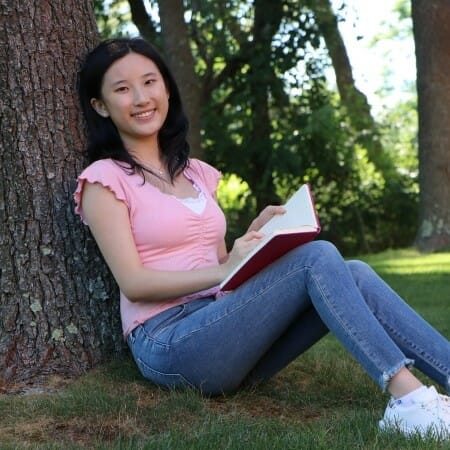
Sabrina Guo is the founder of Girl Pride International, an organization committed to empowering young women and girls around the world./Courtesy Sabrina Guo
Another source of inspiration is none other than FLOTUS Michelle Obama, in particular her Let Girls Learn initiative. I wrote a letter to her and she invited me to her “Becoming” book tour event, where I learned so much more about what it means to be a female leader.
Describe your volunteer role with Girl Pride International.
I am the founder and CEO of Girl Pride International or GPI, which is a 501(c)(3) global girls’ empowerment organization that I launched in the winter of 2018. Its mission is to serve underserved displaced and migrant girls through advocacy, education, leadership and community building projects so they can become leaders within their own communities and empower the next generation of girls.
An example of the impact we’ve had is the story of Lisano. She’s 11 and at the top of her fifth-grade class in Kenya. We learned that she was taken out of school during the pandemic and forced into a child marriage by her own father to a 50-year-old man. As soon as we learned of this, GPI fought hard with everything we got, including raising funds and hiring a local lawyer to fight the case in court and we won. Now she’s a Girl Pride ambassador and her dream is to become a lawyer to fight for other girls in her country.
How did the COVID-19 pandemic affect your volunteer work?
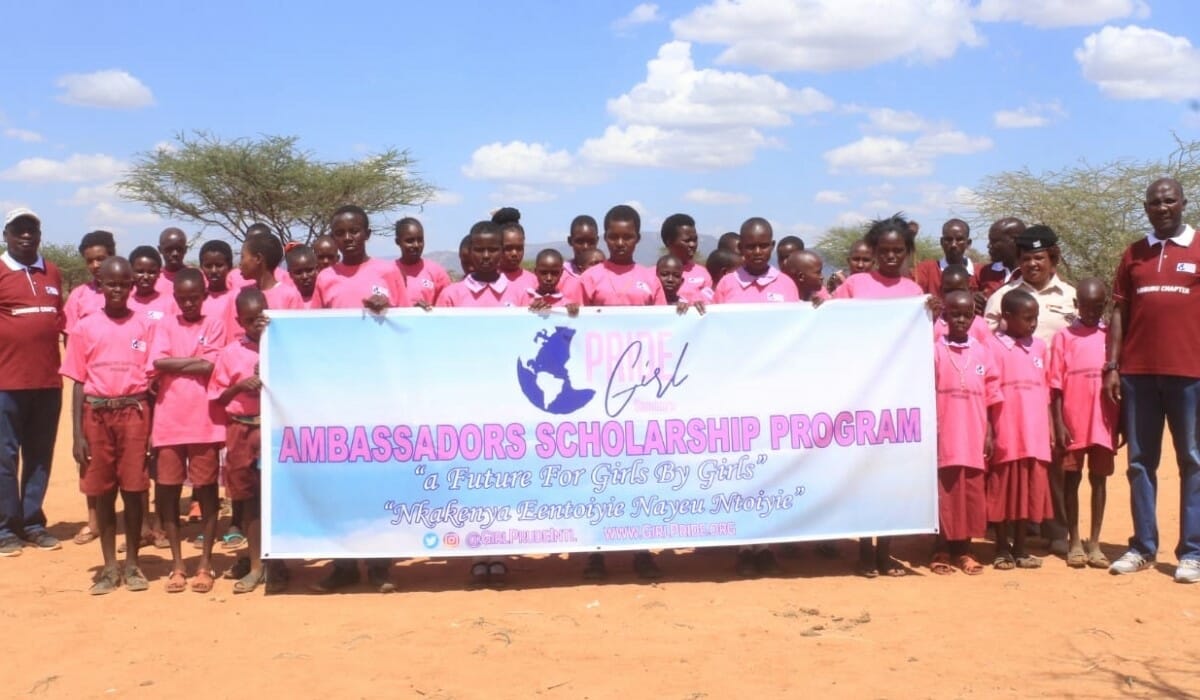
In March 2020, we launched LILAC, which stands for Long Island Labor Against COVID-19. It’s a COVID-19 relief organization that is also an anti-hate offshoot of GPI given the current social climate and increased hate and discrimination towards Asian Americans. Through LILAC and GPI, we were able to raise over $150,000, which we used to purchase PPE (personal protective equipment) and meals to donate to over 100 organizations and communities in New York and beyond, and established a GPI Ambassadors Scholarship Program in Kenya. We were able help over 55,000 frontline essential workers, seniors, veterans, students and teachers, and more than 800 families and 2,000 students in Kenya during the pandemic.
Through GPI’s Ambassadors Scholarship Program, these girls from the Samburu region of Kenya are receiving scholarships for current and future schooling./Courtesy Sabrina Guo
What do you see for your future and also the future of GPI?
GPI’s long-term goal is to continue to empower young girls from disadvantaged and marginalized communities to become the best version of themselves so they can become leaders in their own communities and change the trajectory of not only their lives, but the lives of others around them. This humanitarian work and women’s empowerment is something that will continue with me for my entire life.
Why do you think it’s important for others to contribute their time, talent and resources?
Contributing to our community is essential because the well-being of every single individual is dependent on the health and well-being of his or her own community. Especially during the times of chaos and crisis is when we need to think about ways to support our communities and strengthen them. During the pandemic, we’re all suffering loss and negative change one way or another. That is why we need to build bridges of trust and understand that showing love and compassion truly has no borders.
What do you want people to learn from your story?
To not perceive yourself as too young or too inexperienced to do something. It’s critical to be the best version of yourself, no matter your background, ethnicity, religion, gender or age. In the most challenging and darkest times, we must remember this quote from JFK, which is “Ask not what your country can do for you, but what you can do for your country.”
Inspired by Smiles, Volunteer Helps to Better Life for Thousands in Community
Meet Daily Point of Light Award honoree Brandi Rider. Read her story, and nominate an outstanding volunteer or family as a Daily Point of Light.
42-year-old Brandi Rider says her family didn’t have a ton of money when she was young, but her parents taught her to love and care for everyone. That lesson has stuck with the Hyde Park, New York resident, as Brandi now betters the lives of thousands in her community through service.
As a volunteer with Dutchess Outreach, Brandi’s years of volunteerism have addressed needs across Dutchess County, from preventing food insecurity to providing clothes to community members in need and everything in between. Sharing that love and care her parents encouraged so many years ago, Brandi says it’s the smiles from others that drive her volunteerism.
Describe your volunteerism with Dutchess Outreach.
I serve on the Volunteer Committee and am a former board member. I am responsible for the yearly coat drive, the USPS postal food sort where community members can donate food in their mailbox, our volunteer recognition reception and The Lunch Box, which is our community meal program.
What inspires you to volunteer?
Smiles inspire me. Doing the coat drive or food sort, having someone grab a bag of food and smile and say thank you, it means a lot to see a smile on someone’s face. It doesn’t matter their age, gender or race, every volunteer event I’ve done, [people] come out with a smile on their face, and that’s what matters.
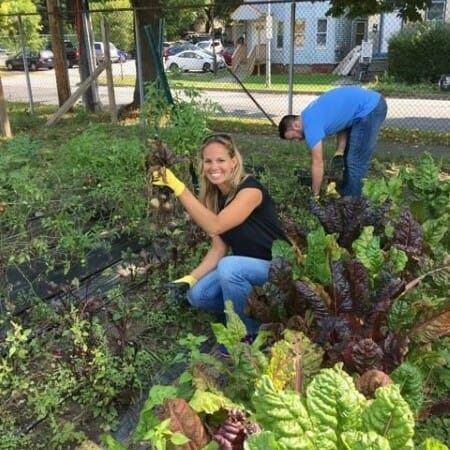
Brandi pictured pulling vegetables from the Dutchess Outreach garden./Courtesy Brandi Rider
Share one personal story from your volunteerism.
We hold an annual coat drive and give coats away in November. The coat drive is open to anyone, the client will come in and we tell them to go ahead and shop for a coat. Families will come in with their kids. Once, we had kids walk in and they looked sad. I tried to greet them as friendly as possible. [They started shopping,] I watched them smiling, joking and laughing, trying on coats and asking how they looked. They walked back with their parents wearing the coats and looked up to me with a huge smile. To some, it’s their only coat. I have two kids and they volunteer at the coat drive with me. I show them if someone’s hungry, you feed them, if someone needs a jacket, give them one.
Why do you think it’s important for others to support their communities?
The smallest things can mean the biggest things to other people. My children and their friends have even joined in to help our volunteerism. It’s important for us to volunteer and to teach others to do the same. The more hands and more volunteers, the better life is for everyone.
How have you continued to volunteer throughout the COVID-19 pandemic?
We offered walk-up service for our hot meals and did popup coat drives instead of organizing the big event in one place. We observed an uptick in the number of people seeking help. Everyone was struggling [during the pandemic.] People lost their jobs and needed to provide for their family.
Which saying guides your service?
I always like a quote by Helen Keller, “Alone we can do so little; together we can do so much.”
What do you want people to learn from your story?
It doesn’t matter who you are or what phase of life you’re in or what you have going on in your life right now, everyone needs help at some time or another. Look around —there’s somebody else who could use a helping hand or a smile on their face.
In one word, what does volunteering mean to you?
Love.
How can readers help?
Please visit the Dutchess Outreach website for more information about how you can help.