Husband & Wife Volunteer to Share Positivity and “HOPE Worldwide”
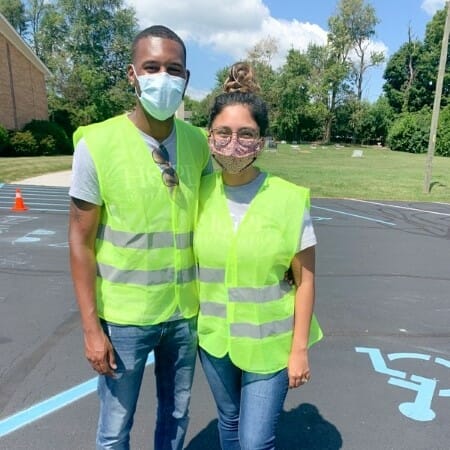
Meet Daily Point of Light Award honorees DeVonte and Diana Harpool. Read their story, and nominate an outstanding volunteer or family as a Daily Point of Light.
DeVonte Harpool recalls meeting a pregnant woman while volunteering, saying she’d told him she was looking for a sign that everything would be ok, and that his service answered her call. That uplifting moment sat with the 28-year-old Indianapolis, Indiana, resident, because it was then that he recognized there would always be someone out there with needs or wants.
Volunteering with HOPE Worldwide Indianapolis for the past five years, DeVonte and his 25-year-old wife, Diana, have connected with thousands across Indianapolis and more recently, boosted their service to address serious need during the COVID-19 pandemic. Through volunteerism, DeVonte and Diana are bringing hope to hurting communities, helping children and families in their city.
What inspires you to volunteer?
DeVonte: Impact is more than just materialistic items. The impact you make on someone’s life can be prayer or words of encouragement. I’m inspired to volunteer to be a light in a dark world.
Describe your volunteerism with HOPE Worldwide Indianapolis.
As chapter directors, we implement new processes and programs, build partnerships and collaborate with other organizations and vendors. We also work on budgeting, recruit advisor members and volunteer at events.
DeVonte Harpool: “There may be a parent who needs diapers, and they’ll express so much gratitude, sometimes they cry. I have a soft heart, and it’s very impactful to feel the emotional experience and to help people in that way.”/Courtesy DeVonte and Diana Harpool
Share one personal story from your volunteerism.
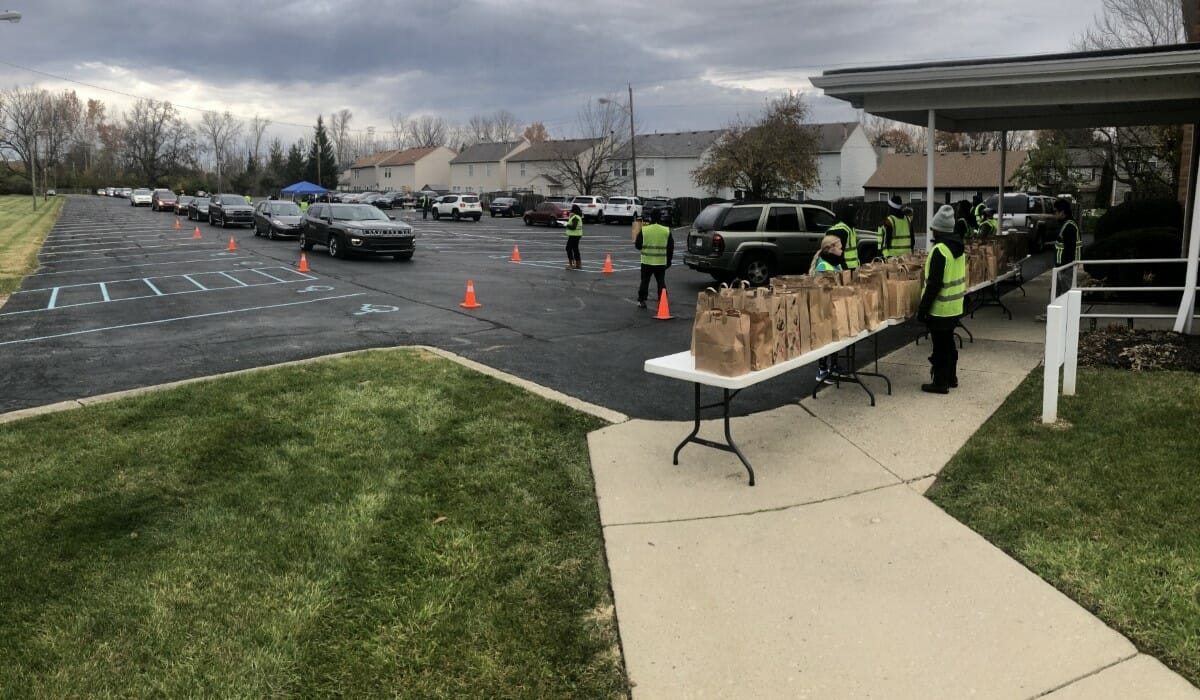
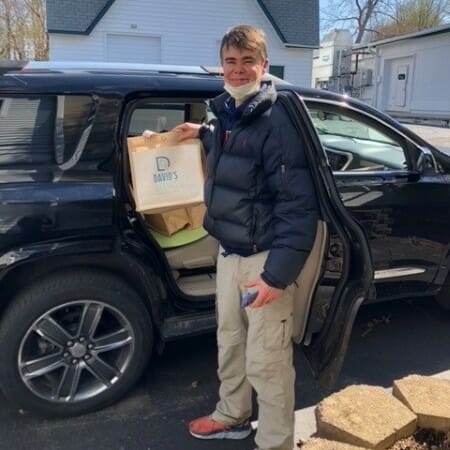
DeVonte: I dreamed about doing a drive-thru food pantry right before the pandemic hit. Ours slowly came together, with the assistance of a few other volunteers and several grants. It started as a monthly community drive-thru pantry, and we expanded from there, to offering the service bi-weekly. We help hundreds of our neighbors. There may be a parent who needs diapers, and they’ll express so much gratitude, sometimes they cry. I have a soft heart, and it’s very impactful to feel the emotional experience and to help people in that way.
Why do you think it’s important for others to give back?
Diana: Not everybody is in a good situation. Giving back to the community is rewarding in itself, and volunteering allows you the ability to help anybody that needs the help.
What’s been the most rewarding part of your service?
DeVonte: I tie volunteerism back to the heart and sacrifice. When I think of helping someone, and that emotional connection, it encourages me to serve more and be a light to someone else.
What do you want people to learn from your story?
Diana: You really don’t know what someone is going through on a day-to-day basis. They could be going through some of the toughest times of their lives. Giving back, whether financially or just being there for someone, could really make a big impact. Volunteerism helps others and helps you grow as a person as well.
DeVonte and Diana boosted their volunteerism during the COVID-19 pandemic, establishing a drive-thru food pantry./Courtesy DeVonte and Diana Harpool
In one word, what does volunteering mean to you?
DeVonte: Community.
Diana: Just one word? (laughs). Love. Just sharing love.
Former Social Worker Keeps Her Family’s Legacy of Service Alive
Meet Daily Point of Light Award honoree Jennifer Knutson. Read her story and nominate an outstanding volunteer or family as a Daily Point of Light.
Jennifer Knutson knew that service went hand-in-hand with her parents, especially her mother Florence. Their large family of 15 was always on the move in Chickasaw County, Iowa. When Knutson’s mother unexpectedly passed away in 2011, she decided to keep her legacy of serving others alive and well.
Each year, Knutson and her family gather in Iowa for one week in the summer to help a family in need improve or renovate something in their home with Project Flo. She’s keeping her parent’s legacy alive, and passing it down to her children to create generations of service.
Describe your volunteer role within Project Flo.
I was working as a social worker a few years before my mom passed away. I was working in people’s homes and worked with a family that had a lot of kids. Their family home just needed muscle and time to do some landscaping. I contacted my siblings and asked them what they thought about coming home once a year in honor of our mom to help someone with some home improvement project, like painting, roofing or landscaping.
They agreed, and we got together that summer as a family. I then asked our church if they knew of another family that could use some sprucing in their home. We just wanted to help. We helped paint another home in 2012. We decided to keep our service going, especially after my dad passed away. Our projects just kept growing, and one day we thought it could be a nonprofit so we could raise funds and apply for grants. We called our nonprofit Project Flo after my mom, who was nicknamed Grandma Flo by her grandchildren.
What’s your family connection to Project Flo?
I could go on and on about Project Flo. My mom was named Florence and my dad’s name was Ervin. We lived in a small, rural community in Iowa and my parents had raised 15 kids, including bringing in a couple of neighbor children to care for. My mom volunteered at our Catholic church, at a nursing home and delivered meals with Meals on Wheels. She also volunteered at our schools. Service was at the center of her life. Wherever God needed them and directed them, my parents helped.
My mom passed away in 2011 and it was a pretty big shocker. I decided to pick up some of her volunteerism and try to fill her shoes. That really wasn’t possible — she did so much — but I tried. I started to think about creating a home for all of my relatives. I thought, what are we going to do with mom gone and if dad passes? So I just emailed everybody and said that we’ve got a lot of strong backs in our family and great talents, and I thought we could put it to good use.
Jennifer Knutson named her family nonprofit Project Flo after her mom, Florence, who was nicknamed Grandma Flo by her grandchildren./Courtesy Jennifer Knutson
How do you use federal and state grants to help people refurbish homes?
We help people in Chickasaw County in Iowa and try to focus on veterans, families with young children and low to moderately-low income families. People contact us throughout the year for our week-long project in the summer time.
The most common need is roof repairs. It’s so expensive to repair a roof so we got in contact with a shingle company to donate shingles to us to try and offset the costs. It’s pretty difficult to complete that project in a week when you’re literally tearing a roof off of a home. We’re sort of like a cross between Habitat for Humanity and Extreme Makeover: Home Edition. Other things we use the grant money for are painting the inside of houses, flooring and fixing or adding windows to a home.
What inspires you to volunteer?
The generosity of people who give their time, service and financial generosity. Also, our past recipients get involved in future projects. So, if we help with their house, they’re usually working right alongside us during the following year. We just keep gathering people. We had up to 75 volunteers last year. We’re trying to get the community more involved in our family projects.
I honestly don’t know how else I would have been able to grieve my mother. I had to pour my heart into something.
What have you learned through your experience as a volunteer?
If there’s a need, people will fill it. People are just waiting to help. If you build it, they will come. If you ask them, then they will give, and they will give cheerfully. I also feel like if I didn’t have this whole group of family, there would be no way I could do all of this by myself. It’s a village of people who just want to help. People here have an innate compassion for other people who are struggling.
Why is it important for others to give back?
My mom used to say, if you’re feeling bad, go do something for somebody else. If you’re serving others, then you’re getting something back as well. Sharing your talents doesn’t always have to be in the form of sharing money. You can share your time. I just don’t want my parent’s legacy to end. My kids have been involved since 2011. They have been holding paint brushes since they were young.
God blesses you so that you can bless others with what you have and what you can do.
Are there any partnerships, programs, or events that you are excited about?
It’s our 10 year celebration this year! We’re going to have a little party in the park and hope to hear from some homeowners and volunteers about how Project Flo impacted their lives and what it means to them. I’m looking forward to more and more years of relationship building through service in our community and just catching up with past people that we’ve helped.
Maryland Psychotherapist Dedicates 30 Years to Repairing Houses of Vulnerable Homeowners
Meet Daily Point of Light Award honoree Roger Rothman. Read his story, and nominate an outstanding volunteer or family as a Daily Point of Light.
Whether it’s a broken heating system or a leaky roof, a house in need of critical repair can be debilitating and dangerous. For many, repairing their house is as simple as calling a roofer or plumber. But for some, house repairs are too costly and therefore, delayed.
Roger Rothman of Rockville, Maryland, has been working to fix that. By volunteering with Rebuilding Together Montgomery County (RTMC) for the past 30 years, Roger has helped to provide critical home repairs to the community’s most vulnerable homeowners, including seniors, veterans, people with disabilities and others.
Roger first became involved with RTMC in the early 1990s through his synagogue, Temple Beth Ami.
“I saw a flyer asking for volunteers to come and work on a house,” the 72-year-old said. “So I went down and worked for 4-5 hours on this very old house in downtown Washington, D.C., and I kind of got hooked.”
Since then, Roger has signed up to volunteer every year, climbing the ranks to become Assistant House Captain in the late 1990s, then House Captain in 2001 — a position he continues to hold today. He has also served as a board member and board president.
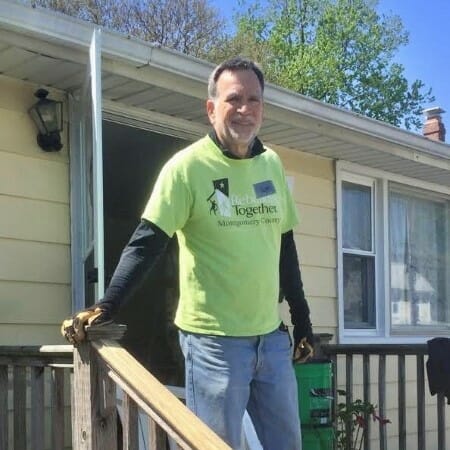
Roger Rothman has volunteered with Rebuilding Together Montgomery County for 30 years, helping to provide critical home repairs to people in need./Courtesy Roger Rothman
“Being a House Captain is kind of like being the general contractor. I find the volunteers, coordinate the purchase of materials,” Roger said. “I am not super skilled in construction. I would not be able to replace a roof or repair a challenging electrical or plumbing project, but what I am good at is organizing and leadership.”
So far, Roger has volunteered for 40 home repair projects, including one for a homeowner who uses a wheelchair, a renovation that’s especially memorable to Roger.
“When we got to the house that this man had lived in for many years, we found that there was no safe way for him to leave his home. There was a piece of plywood put down as a ramp, but it was really dangerous for him to leave his house that way,” Roger said. “The bathroom was also not wide enough to accommodate a wheelchair.”
After seeing all the difficulties this homeowner was facing, Roger and his team went to work. They built a wheelchair ramp. They widened the bathroom door, built him a roll-in shower and installed grab bars next to the toilet.
House repairs of this magnitude usually take weeks, but Roger and his team complete most projects in three days, working on just the Sundays of the last two weeks of April and the first Sunday of May.
“By the end of the third Sunday, I’m exhausted. It’s intense,” Roger said. “We start working at 8:00 in the morning till 6:00 in the afternoon, all day long. But when we have the emotional, positive feedback from the homeowners, it’s worth it.”
Another reason he keeps coming back to volunteer is because of the change he can see before his eyes.
“I’m a mental health clinical social worker. And a lot of the times, I work with people for a long, long time. But working on a house, within two hours, we’ve cut the bush down or painted the front of the house or installed a toilet. It starts happening right away, so having that tangible result at the end of three weeks is also extremely gratifying.”
On top of his volunteer work as a House Captain, Roger has raised thousands of dollars in donations for RTMC by sending out an annual year-end appeal letter to his family and friends. He also recruits new volunteers from his synagogue and circle of friends.
“Roger is like our North Star,” said Maury Peterson, executive director of RTMC. “He’s inspiring to everybody he volunteers with…. And our homeowners love working with him because he takes the time to listen to what they need and makes them feel comfortable. He really is the embodiment of our mission.”
Even with 30 years of volunteering under his belt, Roger shows no sign of slowing down. His advice for those wanting to start volunteering is to just show up.
“You don’t have to be a master plumber or carpenter. Just show up and we’ll find something for you to do.”
Volunteer Helps Ensure No Child Goes Hungry Across Florida Community
Meet Daily Point of Light Award honoree Gina Wilkins. Read her story, and nominate an outstanding volunteer or family as a Daily Point of Light.
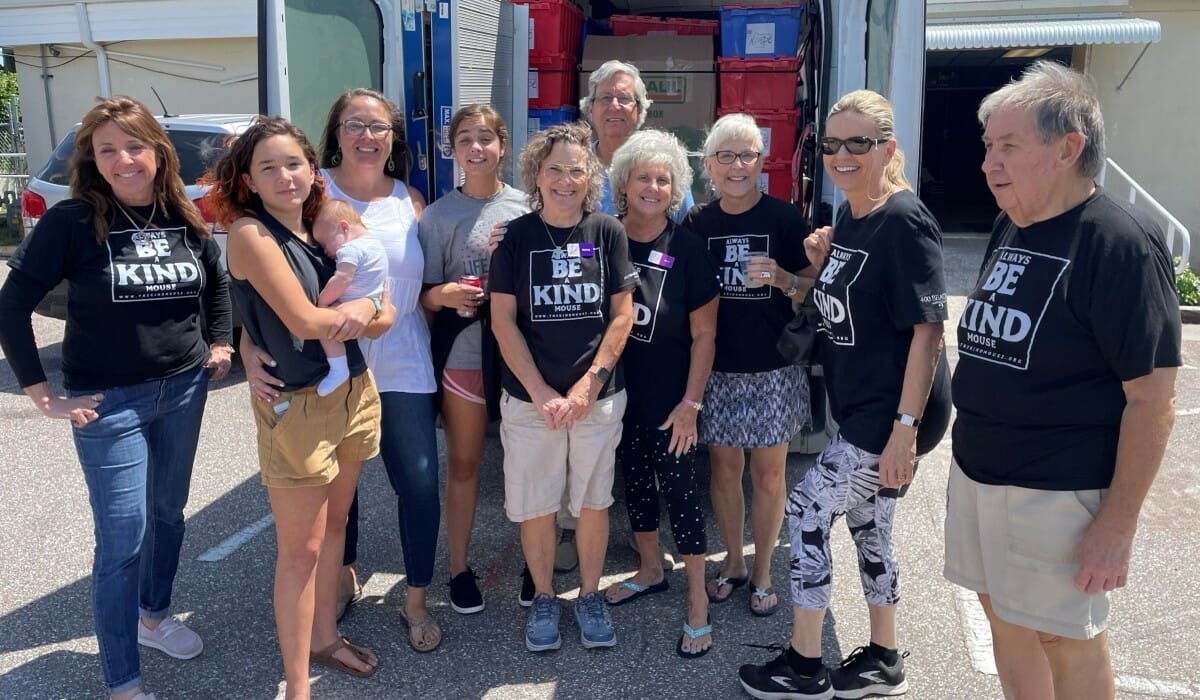
Gina Wilkins has dedicated her career to helping feed kids through her nonprofit The Kind Mouse, so it’s no surprise that she has extended that mission through service work as well. She has partnered with a variety of charitable organizations across her St. Petersburg, Florida, area to help raise awareness on childhood hunger.
Describe your volunteer role with Elks Lodge 1224.
I am the Christmas food basket coordinator. I’m on their gala committee. We also do food drives and provide food to the Elks for the children who are receiving therapy. I coordinate all the nonperishable foods. I am the chairperson of their Christmas baskets, and last year we fed around 325 families holiday meals.
What made you want to get involved?
When I heard that they help the autistic population, that really won my heart.
Why did you want to help specifically in ways that relate to food?
First off, at Kind Mouse, that’s what we do. We do food, so it was a very easy transition for me to go that route. I have all the connections and all the means, so I was able to teach people our ways. We have our own volunteer pool here, so many of them became Elks. I feel that every child deserves food. No one should go hungry, and if you don’t have the basics of food, you cannot function. I think it’s a good fit for me.
Gina Wilkins serves her St. Petersburg, Florida, community by helping to raise awareness for childhood hunger./Courtesy Gina Wilkins
Describe the work you’ve done with Angels Against Abuse.
With Angels Against Abuse, we provide baby food for their bags. We do a group effort where they provide bags for the Pinellas County sheriff’s office. With them, it’s age-appropriate baby needs, clothing, diapers, etcetera, and then we provide age-appropriate food. It could be formula, baby food, snacks. That’s an effort we’ve been doing.
What has made you want to expand your Kind Mouse work to other charitable organizations?
I think it’s so, so important that all the agencies work together. I always use the expression: “Stay in your own lane.” Kind Mouse is really good with food, so we don’t want to be doing clothing, for instance. We want to refer out clothing so we can serve people better and more professionally. We can do the food, and then we can refer out the clothing. Let’s say they need bus passes; we can refer the people out that way. I feel that it has to be a group community effort.
What drew you to volunteering in the first place?
I think the wonderful people who you meet and helping others. I think there’s nothing better than knowing you put a smile on someone’s face. They may not know who you are, but you know that, indirectly, you’ve helped them.
Gina Wilkins, left, collects food drive donations with The Kind Mouse./Courtesy Gina Wilkins
Why do you think it’s important for others to give back?
I don’t think that people should be without, for instance, food. Everyone should have food. No one should go hungry. I feel as though everyone should be on an even scale when it comes to that. We can raise awareness that people need help and do it in a nice way. For us, the people we feed are confidential. We have no idea who we are feeding, but we’re feeding thousands and thousands. I feel as if that’s the way to do it. We don’t want a pat on our back. We don’t care about how we gave so-and-so food. That doesn’t mean anything to me. I just know that someone tonight is going to sleep better because they received food from us.
What do you want people to learn from your story?
Don’t be afraid to go volunteer. You will be so amazed at the beautiful people that you meet. They will become lifelong friends.
What have you learned from your volunteer work?
I learned that the people who are involved in volunteering are a different breed of people. They are not takers. They are givers. They are just so loving. You actually find a second family through your volunteering, something you probably wouldn’t even think about until you are a part of it.
Maine Man Travels Across Country to Raise Awareness of Rare Cancer in Honor of His Late Daughter
Meet Daily Point of Light Award honoree David Fleischer. Read his story, and nominate an outstanding volunteer or family as a Daily Point of Light.
Sometimes, a really unusual form of volunteer work can have an extraordinary impact.
A unique, six-week drive by David Fleischer in 2021, to all 48 mainland United States, brought an unexpected amount of attention to a rare type of cancer and raised funds that far exceeded expectations. Best of all, it brought a sense of hope and comfort that participants and observers say can’t be measured.
It all started when Dave, of Ogunquit, Maine, wanted to raise awareness of cholangiocarcinoma, a rare cancer of the bile ducts, in honor of his daughter, Sarah Bennett, who lost her battle with the disease in 2018 at age 35. He also wanted to thank a number of people — in person, if possible — who had supported Sarah during her five-year battle with cancer.
They were scattered across the U.S., having found a Facebook page Sarah had created that provided education, friendship and comfort to people across the nation who had been diagnosed or had loved ones with the diagnosis. Dave had been amazed at how effective his daughter’s social media efforts were in helping people cope with a diagnosis that is relatively unknown, especially in reaching men, who, in his observation, find it harder to open up and reach out to others.
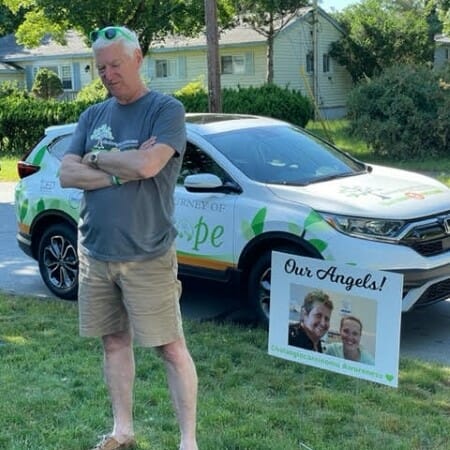
Dave partnered with the Cholangiocarcinoma Foundation, a global nonprofit that happened to be celebrating its 15th anniversary in 2021. Instead of sponsoring a short-lived run or fundraiser, he suggested that he try to raise $15,000 for the foundation by conducting a “Journey of Hope,” which would span 15,000 miles. He planned to stop in least 15 communities named Hope. He would also visit 15 caregivers and patients who knew Sarah. He agreed to post a daily online blog and photos. A car dealership provided a new vehicle with a special “wrap” on the outside. Other sponsors, and Dave’s own donation, kicked off the journey in May. Dave’s wife, Linda, accompanied him for part of the trip.
Ultimately, Dave raised $105,000 from 170 donors for cholangiocarcinoma research. “Actually, there is a number one and a number five in that sum,” says Dave, who did not actually ask for money during the journey.
“What happened, because of the blog and because of coverage promoted by the Foundation, people started to reach out me,” he said. “I frequently adjusted my route, sometimes on a day’s notice. But that was one of the most gratifying things about the whole trip to be asked, ‘You must stop here.’”
Through his volunteerism, David Fleischer raised over $100,000 for cholangiocarcinoma research, travelling 15,000 miles./Courtesy David Fleischer
Dave ended up meeting 27 people who had interacted with his daughter, Sarah. Sometimes, local news media were there when he arrived.
Kim Balkus, who lives in the Boston metro area, says she was honored when Dave and his wife, Linda, asked if they could visit. Kim’s mother, Geri Keegan, had been diagnosed with cholangiocarcinoma in 2013, and Kim and her two sisters were grateful to find Sarah Bennett’s Facebook page. “You just don’t meet anybody with this cancer at all,” says Kim. “If you Google it, you see how bad the odds are.”
Even after Geri passed away in 2020, Kim kept in touch with the Fleischers and has been inspired to volunteer herself for both the Cholangiocarcinoma Foundation and a local cancer group, the Target Cancer Foundation.
Kim and multiple family members greeted Dave and Linda Fleischer wearing “Team Keegan” shirts while holding balloons and signs. They even persuaded a cancer researcher from Massachusetts General Hospital to attend.
“In the face of adversity, Dave has taken an incredibly positive approach to continue to share the love he had for his daughter, and his daughter was just a ray of light, super loving, full of energy,” said Kim.
Thomas Leitzke, 73, who is currently battling cholangiocarcinoma, agrees that Sarah was “the epitome of hope.”
“If you look for people that you meet in your lifetime who you totally admire, Sarah and her parents, Linda and Dave, are right at the top,” said Tom, who contacted local media to be there when Dave showed up at Tom’s home in Santa Cruz, California.
“I don’t know how Dave did it, doing 15,000 miles and still having a smile on his face. It was very helpful for me,” said Tom, who says he and other cholangiocarcinoma “warriors” need more information and positive encouragement. Tom says he was originally told he had, at best, seven months to live. That was when he was 58.
Dave says he’s pleasantly surprised that his Journey of Hope seemed to reach so many people.
“I never was a blogger before,” says Dave. “I’m not an avid Facebook user. I don’t post a lot, but I did during the trip. During that time period, the Journey of Hope blog had something like 13,000 hits. It was the number one spot on the Cholangiocarcinoma Foundation website during May and June. That tells me we did raise a fair amount of awareness.”
For others who have a rare diagnosis, or want to help those who do, Dave encourages taking a first step to reach out. “Especially men,” he said. “I learned on my trip that it’s rare for guys to reach out and ask for help, compared with women. Getting people to talk and open up isn’t a bad thing. You can’t hold this all inside, whether you’re a caregiver or a patient.”
Teen Provides Over 10,000 Winter Clothing Items to Kids in Need
Meet Daily Point of Light Award honoree Alex VanHaren. Read his story, and nominate an outstanding volunteer or family as a Daily Point of Light.
When Alex VanHaren was nine years old, he noticed that some kids on the playground didn’t have any coats or gloves to keep them warm in the cold weather. He went home and immediately insisted to his mother that they learn how to knit so they could provide items for his schoolmates, a promise he kept by learning how to loom scarves. However, when he realized looming on his own wasn’t sufficiently meeting his community’s needs, Alex and his mom set out a donation box and reached out to social media to help fill it.
And so Scarves 4 Cozy Kids, the charity that Alex has run for the past seven years, was born. Now 16, Alex has expanded to both annual and monthly collections for different organizations in need throughout his home state of Michigan. In total, he has provided over 10,000 hats, gloves and scarves to kids in need, as well as over 450 used eyeglasses to the Lions Club, one-hundred-six pounds of soda pop tops for the Ronald McDonald House and more than 50 boxes of personal hygiene items for local domestic violence shelter HAVEN.
Describe your role with Scarves 4 Cozy Kids.
Scarves 4 Cozy Kids is a charity that helps less fortunate families in the wintertime by collecting and distributing winter items, like articles of winter clothing, hats, gloves and scarves. I founded it, and I am the CEO.
What inspired you to start this organization?
Around the time when I was just getting out of elementary school, I was on the playground outside in the winter, and I noticed that a lot of kids didn’t have coats, hats and gloves. They were cold in the winter and they still had to be outside for recess. I felt bad for them. That day, I went home to my mom and told her we need to learn how to knit.
Alex VanHaren serves as the founder and CEO of Scarves 4 Cozy Kids, a charity that provides collected items to those in need./Courtesy Alex VanHaren
How did you go from wanting to learn to knit to where you are now?
It started out with me [looming] two scarves, where I would have one for me and I would give one to someone else. Seeing that it wasn’t super efficient, I decided, hey, wouldn’t it be better if there was a box full of them for people to come through and get one if they needed it? We ended up asking the principal of my elementary school at the time, Oxford Elementary School, and he said yes, we could do that. Me and my mom, together, would knit enough scarves to fill up a box, and we would put it right outside the office for people to come and take when they needed it.
How have you expanded your work?
Instead of just doing hats, gloves and scarves only in the winter, we’ll collect them all year. We’ll end up doing one different charity collection a month, and normally two annual collections for each year. One of the annual ones we have is we collect pop tabs for the Ronald McDonald House for people who cannot afford hotels when their children are in the hospital. Ronald McDonald House uses the money they get from recycled pop tabs to be able to help fund a hotel for the families of the kids who are in hospitals. We did that to get the word out about other charities, and to help spread awareness for our charity and what we do.
which of the collections has been particularly meaningful for you?
There’s one we do every single year since we started. I’m an animal lover. There’s an animal rescue right on the edge of Oxford called K-9 Stray Rescue League. We will collect animal food, collars, towels, blankets – all the stuff you would need for shelter animals to be more comfortable when they get adopted. That means a lot to me because I’m an animal lover, and I get to see the change.
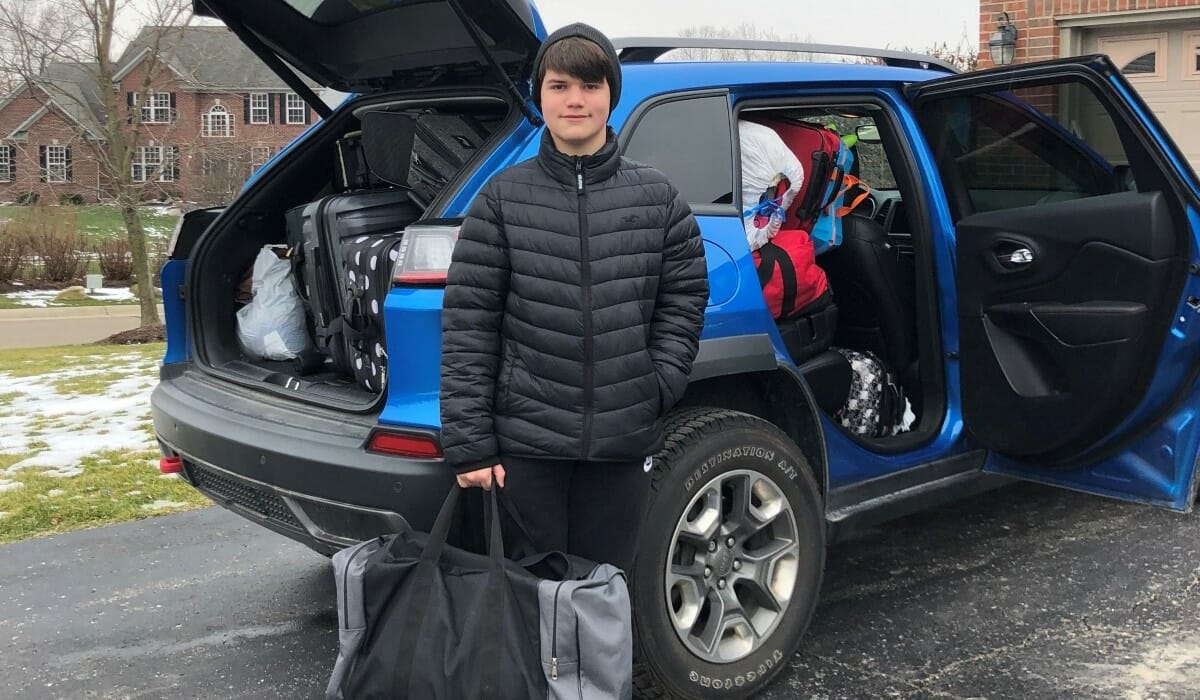
Alex VanHaren packs a car full of luggage and duffel bags that he collected to donate to a local homeless shelter./Courtesy Alex VanHaren
How does it feel to see your community helping you with these collections?
I feel amazing about it. It’s nice seeing my community unite for a common cause to help other people when a lot of families don’t end up thinking about that a lot of times.
What goals do you have for Scarves 4 Cozy Kids?
My charity spans a fairly large range. For the main charity, where we give the winter items to unfortunate families through schools, I think we’re at 20 schools, maybe a few more. I would hope to see that expand to all of Michigan eventually.
What’s been the most rewarding part of your work?
Being able to see the change and everyone coming together to make that change.
What do you want people to learn from your story?
Any little bit of help can spark into something amazing and powerful. It can become a movement and help so many people.
Having Lost His Mother to Leukemia, Army Veteran Volunteers to Fund Cancer Research
Meet Daily Point of Light Award honoree Chuck DeCitise. Read his story, and nominate an outstanding volunteer or family as a Daily Point of Light.
Chuck DeCitise, 51, remembers his mother as one of those people who was always willing to help others. With that same heart for service instilled in him, Chuck joined the Army after high school. For eight years, Chuck served his nation, deploying to multiple countries far away from home such as Kuwait and Thailand. Unfortunately, after a 10-year battle with a rare form of blood cancer called hairy cell leukemia, Chuck’s mother passed away in 1997 and his military journey came to an end. However, his passion for service only became stronger.
Soon after his mother’s death, Chuck worked with the Red Cross to run a blood drive at a local church in his city of Troy, New York. Thanks to the generosity of Chuck’s friends, family and other community members, the church was able to set a record for the largest amount of donations in its history of hosting blood drives. Today, 25 years later, Chuck is still donating blood every eight to 10 weeks.
On top of donating blood, Chuck is a dedicated volunteer with the Leukemia and Lymphoma Society (LLS). Despite various difficulties the pandemic presented in 2020, Chuck was able to raise $25,000 for LLS through an engaging social media campaign, earning him the LLS’s Man of the Year award for his region. By getting his 16-year-old daughter involved and mentoring new fundraising volunteers, Chuck is helping the LLS fund important cancer research to improve patients’ lives and ultimately find a cure for blood cancer.
Describe your volunteer role with the Leukemia and Lymphoma Society.
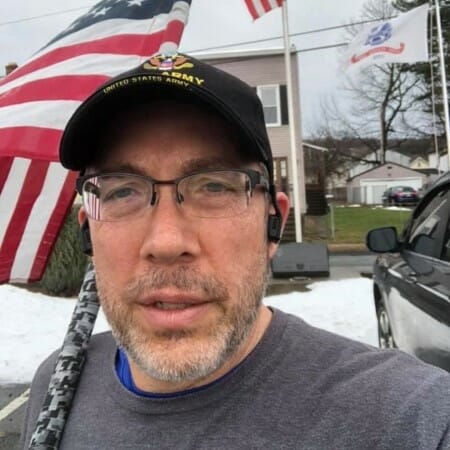
Two years ago, at the very beginning of the pandemic, a high school friend of mine, Holly, came up to me and asked if I was interested in being part of the Leukemia and Lymphoma Society’s Man & Woman of the Year campaign. Within a month, we were in full pandemic mode and all the other candidates for the campaign were dropping out. Holly asked me if I still wanted to be involved, and I said, “Yes, absolutely. Let’s do what we can.” So during the campaign, I did as much virtual stuff as I could. I ran with the American flag every Sunday to raise awareness. I had a band come to my house and play outside, and I posted it on Facebook and had donations come in from that. All said and done, I raised upwards of $20,000 for the LLS when most other areas throughout the country didn’t even have a candidate.
My daughter saw what I had done and asked if she could help. We worked together so she could run for Student of the Year in 2021 and she raised upwards of $25,000. She has been a mentor and she actually mentored a candidate who raised about $40,000. I continue to be a part of the leadership committee for the Student of the Year campaign and a mentor to the Man and Woman of the Year campaign candidates.
With the pandemic making in-person fundraising events impossible, Chuck launched a social media campaign and held various events online such as running with an American flag every Sunday to raise awareness./ Courtesy Chuck DeCitise
What inspires you to volunteer?
This started because I lost my mother when I was 27 years old to a very rare form of leukemia. Being a military veteran and seeing what my mom went through for the 10 years she battled cancer, I understand a little bit more about the need for all of us to take an hour or two out of our week to help people in need.
What’s been the most rewarding part of your work?
For Student of the Year, Olivia mentored Christian, who is a leukemia survivor himself. Seeing him running his Student of the Year campaign and then raising $40,000 was really emotional. This is a kid who went through all the treatments at a young age. To see that and then see him help others was one of those life-changing moments where I thought this is why we do what we do. I think Olivia, my daughter, really learned from that as well.
What have you learned through your experiences as a volunteer?
I’ve learned that I don’t always have to be the volunteer, but I can be the one that’s coordinating, mentoring and showing others the different volunteer opportunities out there. For example, at my job, I’m part of the veteran employee resource group. One of the biggest things that I do there is find opportunities for our group to volunteer at or donate money to.
Are there any future partnerships, programs or events that you are excited about?
With Memorial Day coming up, the veteran group at my job is holding an event to honor our veterans. We’re going to do a video presentation for our employees and their family members to talk about loved ones they’ve lost. Then we’re going to do a fundraising event at a brewery to allow people to donate to the Veterans Miracle Center here.
With LLS, I’m helping mentor the 2022 Man and Woman of the Year campaign.
Why do you think it’s important for others to give back?
There is so much need out there in our community on a daily, weekly, monthly basis. The prime example is our veterans out there. These folks made the choice to sign up and put their lives at risk to make sure that we have the freedom that we have so we should treat them with respect, dignity and honor. There are so many programs and opportunities to help them. We need to raise awareness and let people know of the opportunities out there to help them or volunteer for others. It’s why we are on this planet.
What do you want people to learn from your story?
To take the opportunity when it’s given to you to help others. We often put on blinders and focus only on our own little tunnel. But if there’s an opportunity for you to get out to help others and raise awareness, take it.
Lifelong Ocean Lover Volunteers to Promote Conservation
Meet Daily Point of Light Award honoree Beth Stephens. Read her story, and nominate an outstanding volunteer or family as a Daily Point of Light.
“It’s like music to my ears,” says Beth Stephens, as she describes the sights and sounds of her volunteerism at the Marine Mammal Center in Sausalito, California.
“The sea lions and elephant seal pups have vocalizations,” says Beth. “They’re so wonderful, so smart and they have such interesting personalities. The elephant seal pups have these big eyes you fall in love with, and their whiskers and face.”
As a volunteer who supports larger animals at the center such as sea lions, elephant seals and fur seals, Beth’s 13 years of service goes beyond her appreciation for the animals themselves, she says.
“Through the work, I’ve seen how our environment affects these animals. All the trash and debris we put into the ocean [causes] entanglement and illnesses. We know humans are impacting the wellbeing [of animals], and what affects them affects us. It’s very important to have ocean health for us to survive along with marine mammals. When I see a sick sea lion or elephant seal pup, I understand how that affects us. Helping to nourish them helps us to thrive as well.”
As a volunteer with the Marine Mammal Center, Beth Stephens is promoting conservation and inspiring others to serve./Courtesy Beth Stephens
Beth says the most important part of her service is seeing an animal released healthy into the wild, and knowing she had a role in making that happen. A San Francisco resident who has had a lifelong passion for the ocean, Beth cares for sick or in need marine mammals, preparing food and medicine for the animals, cleaning the pens, scrubbing the pools, even tube feeding elephant seal babies when they are underweight, eventually teaching them how to dive for fish themselves. According to Beth, her volunteerism helps to promote progress for both marine mammals and humankind.
“Our seasonal youth crew volunteers help during pup season. We have volunteers aged 15-18. It’s really cool to see them come to the center [and see] the joy on their faces. [After volunteering with the center]. they go to college, and next thing you know, they’re becoming marine biologists because of what they learned at the center. It gives me joy to watch them grow and become these amazing adults.”
As the co-lead for her employer’s Living Green Network chapter in San Francisco, Beth’s volunteerism is heralded for how she’s inspired others, change she says is gratifying.
“My peers at work come up to me and say they want to volunteer, or do beach cleanups. Through my actions, they’re inspired to go out there and do volunteer work. It really validates my passion for volunteerism. We’re not perfect, we can all learn just to inspire one person to act. Those little steps make a huge impact on our environment. It feels good to create that rippling effect and know I’m influencing others to do positive things for our environment.”
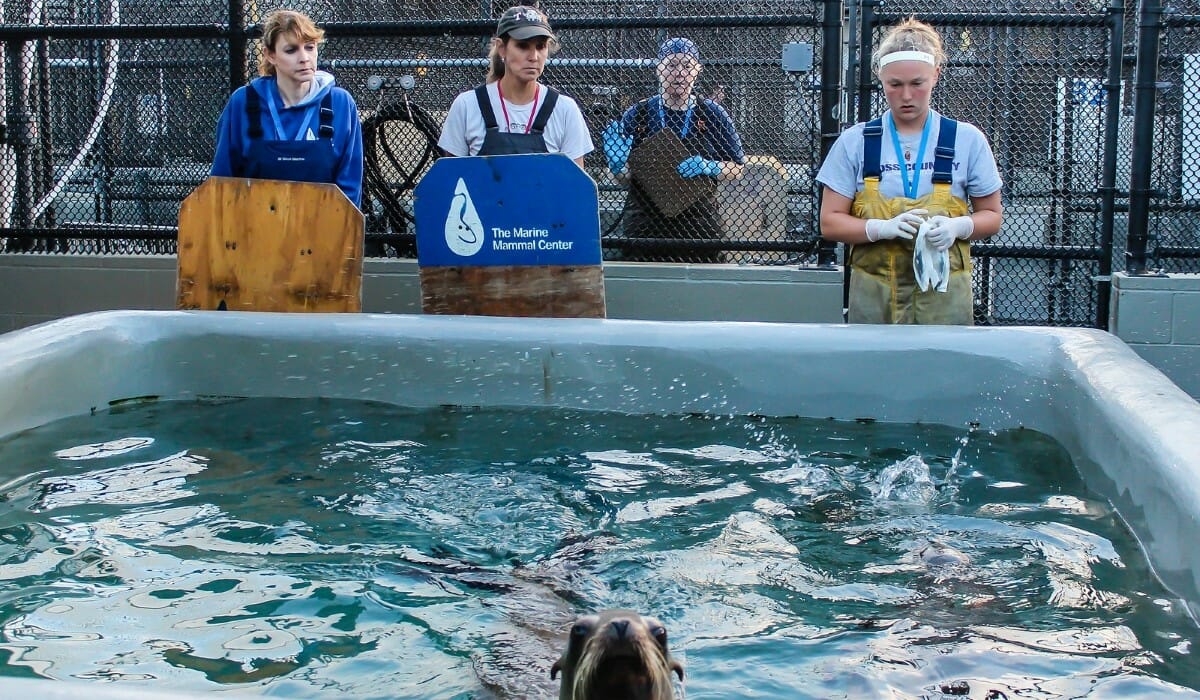
Beth (left) pictured feeding a sea lion./Courtesy Bill Hunnewell for The Marine Mammal Center
Beth’s mother, Lily Aquino, who drives her daughter to the Marine Mammal Center and has witnessed much of her important work, calls Beth’s inspiration extraordinary.
“The animals are benefitting, and [that] brings her a lot of joy,” says Lily, “but [her] biggest impact has been on people around her. Just by her example, a lot of people have become aware of compassion towards animals and people and that has inspired them to do volunteer work. They learn by just watching her. It’s quite extraordinary.”
In addition to her volunteerism at the center, Beth also volunteers with Shark Stewards, doing monthly beach cleanups and also working with youth to help them learn and appreciate the marine ecosystem. As she volunteers to create a healthier world, Beth urges others to show compassion and kindness.
“Especially with the pandemic, a lot of people are suffering, there’s been a lot of challenges. It’s really important to give back. It’s a known fact that having a sense of purpose helps with your longevity. People who live to be 100 and up, they have a sense of purpose, that’s what keeps them going. The world needs more kindness. We all need to do our part to be kind and help someone.”
Volunteer Helps Provide Respite to Parents Caring for Disabled Children
Meet Daily Point of Light Award honoree Bill Kirchoff. Read his story, and nominate an outstanding volunteer or family as a Point of Light.
Bill Kirchoff knows firsthand how difficult being a caregiver can be. He and his wife have tirelessly served as the caregivers for their two autistic children, a role that he said sometimes requires a village of support, which is why he has dedicated the past five years to providing care for fellow caregivers of disabled children through the nonprofit David’s Refuge.
In his volunteer role, Bill hosts respite weekends with his wife throughout the year. During these weekends, they lead happy hours, breakfasts and support groups for the parents attending, all with the goal of giving them much-needed rest while also introducing them to a community that understands what they are going through. He also assists with providing gift baskets to parents, mentoring parents, fundraising and a multitude of other needed roles. For their selfless and dedicated work, Bill and his wife were recently recognized as David’s Refuge’s volunteers of the year.
Describe your volunteer role with David’s Refuge.
It’s care for the caregivers. We host parents of disabled children, and we give them respite and caring, loving support in a whole host of different ways, so they can be better at their main role of caregiving. I do a number of things, all the way from driving and giving gift baskets to the different families. I drop things off at the respite weekends, at the bed and breakfast [where the weekends are held], things like the gifts and gift baskets. My wife and I also host for the weekends. Hosting means you’re the lead for getting set up for the weekends, planning the weekends and hosting the breakfasts each day and the support groups that go on during the weekend getaways. I have also been a part of a number of different functions of David’s Refuge, like manning the booth at different trade events. I’m part of the mentoring program, so I’m a source for parents – usually husbands who need help and support in the process of helping their disabled children. I lead different events like the Father’s Day events.
Bill Kirchoff helps make deliveries for David’s Refuge, a nonprofit that provides emotional and financial support for caregivers of disabled children./Courtesy Bill Kirchoff
What inspired you to start volunteering in this way?
I have two autistic children. I understand these parents and what their struggles are. It’s very personal to me, understanding how it effects the whole family and how the support is really needed for these families so they can continue being that main caregiver. With all the responsibilities that come with the role, sometimes it takes a village to help support those caregivers to keep doing what they’re doing, and to have a life of their own. … It’s a never-ending job, being a caregiver to the disabled child. Disabilities range. We have some children who are terminally ill with cancer all the way to folks with autism, to mental health challenges, to cerebral palsy. We have a whole host of parents who have dealt with life-threatening conditions that don’t allow them to focus on themselves much. This allows them the time to heal and to be at their best. I understand it personally because I’ve been through it myself.
How do these weekends of respite make parents stronger caregivers?
The weekend is designed as respite to let them know that they’re not alone in this. Many parents of disabled children sometimes get so isolated in their world of taking care of the children, taking care of doctors appointments, and all the care and medicine that goes along with it, that they don’t have any time to get centered or have support. That means so much to them, because if they’re not alone, then they have other people they can talk to, to get them through the tough times. The fact that they’ve got a loving community around them is so important to them. It was to us when we were going through our struggles with our kids.
Is there a specific program or event that is particularly meaningful for you?
We just went through host training, where we learned strategies on how to help support people and what our roles can be in terms of support. We’re not the doctors, obviously. We’re not a faith healer in any way, shape or form. But what we do allow — the learning and listening strategies — has really helped me with these training sessions I’ve done with David’s Refuge. How to listen to these people, how to learn to engage and let them know that they’re not alone and that this community of hosts in the David’s Refuge’s organization understands what they’re going through. So many of these families don’t have anybody to talk to. Even their own families, in a lot of cases, back away. People don’t know what to say because they don’t understand how, so it’s so important that these training events that I’m going through allow me to be a better listener and better understand what my role is in supporting them.
What is your favorite part of hosting the respite weekends?
I love the breakfasts. It’s such a joyful time. People had time to rest. We have the whole group all around one table and it’s basically open conversation. The one thing that we share as hosts that we want them to come away with is that they’re not alone and we’re here to support them. From there, it’s usually an open, lively discussion about things that have happened, strategies and ways they’ve learned, different medications, different doctors, different techniques of handling things — all of which have been very enlightening to us.
Do you have future partnerships, programs or events you want people to know about?
The Taste of David’s Refuge is a big charity event coming up June 5. That’s an event where we do a lot of our fundraising to help cover the costs of these weekends. Not only do we host, but we also provide dinner certificates and baskets of goodies for the families. It all comes out of donations. The Taste of David’s Refuge event is one of the big fundraising events of the year. That’s a whole other function that I do. I help fundraise and we have in our legacy a gift to David’s Refuge, because we understand that it takes a village both financially and with volunteers to make this continue to grow.
What’s been the most rewarding part of your work?
When I am able to see the results of families staying happy, healthy and balanced. Usually at the end of weekend, I can see what the rest and respite has done for the couples and the single parents. Holding on to hope is so important. People need to hold on to hope that they have a village around them that’s helping.
What do you want people to learn from your story?
I think it’s important not to judge families as they’re going through struggles. It’s more important just to understand and ask questions on how you can help. We’ve had a number of families who struggle because sometimes their own parents and siblings don’t understand and question how they parent. There’s a lot of implicit bias against disabilities. If there’s one thing I want people to know, it’s to try to understand. If you haven’t been a part of a family with a disabled member, try to understand it before judging.
Why do you think it’s important for others to give back?
I think it’s rewarding for me. It brings me joy to give back. Once you’re brought into it and you see these kids, they’re a joy. They’re different in a lot of ways, but they bring a lot of joy into the world and it’s important that we help foster that joy.
From Volunteer EMT to Girl Scout Troop Leader, Army Veteran Continues to Serve Her Country Through Various Volunteer Roles
Meet Daily Point of Light Award honoree Jen Tyes. Read her story, and nominate an outstanding volunteer or family as a Daily Point of Light.
As is the case with most mothers, 38-year-old Jen Tyes is a superhero to her two children. On top of carrying out all her motherly duties, she works a full-time job and writes children’s books. But Jen’s superhero status doesn’t stop there. She’s also a superhero to many others in her community of Bloomfield, Connecticut, and beyond as she has donated her money, time and resources to various organizations.
Ever since she decided to enlist in the US Army before college, Jen said she had a heart for serving others. She first stepped into the nonprofit world in 2006 by being a child sponsor for Compassion International, helping to provide financial, social and religious support to children living in poverty across the world. Wanting to create a direct impact on her immediate community, Jen started to look for local volunteer opportunities.
Now, while continuing to sponsor disadvantaged children, Jen volunteers as an emergency medical technician (EMT) and as a Girl Scout troop leader. She also volunteers with the Alpha Omega Phi Military Fraternity and Sorority to support homeless veterans and has surpassed 200 hours of community service just this year.
From volunteering as an EMT to being your daughter’s Girl Scout troop leader, you have four different volunteer roles. How do you balance them all on top of your fulltime job?
I’m not doing everything all at once. Things are planned, and the needs of all the organizations aren’t the same. With Compassion International, I write letters, and I send money to support the children I sponsor. With the Girl Scouts, it’s all about helping organize fun activities and encouraging the girls to make a difference in the world. With Alpha Omega Phi, we get donations and provide homeless veterans with hygiene products and clothing. Then, to become a volunteer EMT, I had to get certified for that. It’s a lot, but I make the time. Part of why I like to diversify my volunteer roles is so that I have the skills that will help anyone I might come across.
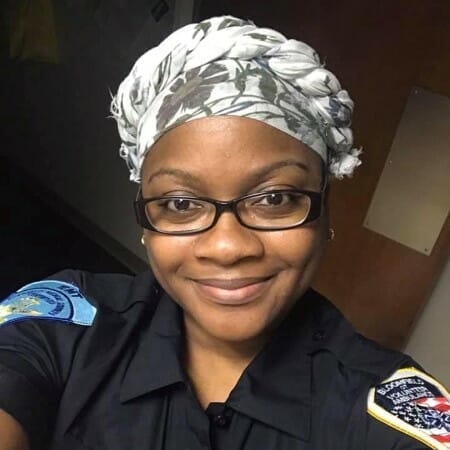
On top of being a mother, fulltime employee and author, Jen has completed over 200 hours of community service this year so far in her various volunteer roles./Courtesy Jen Tyes
Why did you decide to become a volunteer EMT in 2019?
My mom was diagnosed with cancer, and I’ve always wanted to do something in the medical field. Randomly, one day I came across a post on Facebook that said my town was offering EMT training, so I signed up. I thought it was a way I could support her by having a bit of medical knowledge. She passed away before I became an EMT, but I had finished all my training. I just had to do the test. So that’s how I got into that.
What does an average shift look like, and what’s your favorite part of volunteering as an EMT?
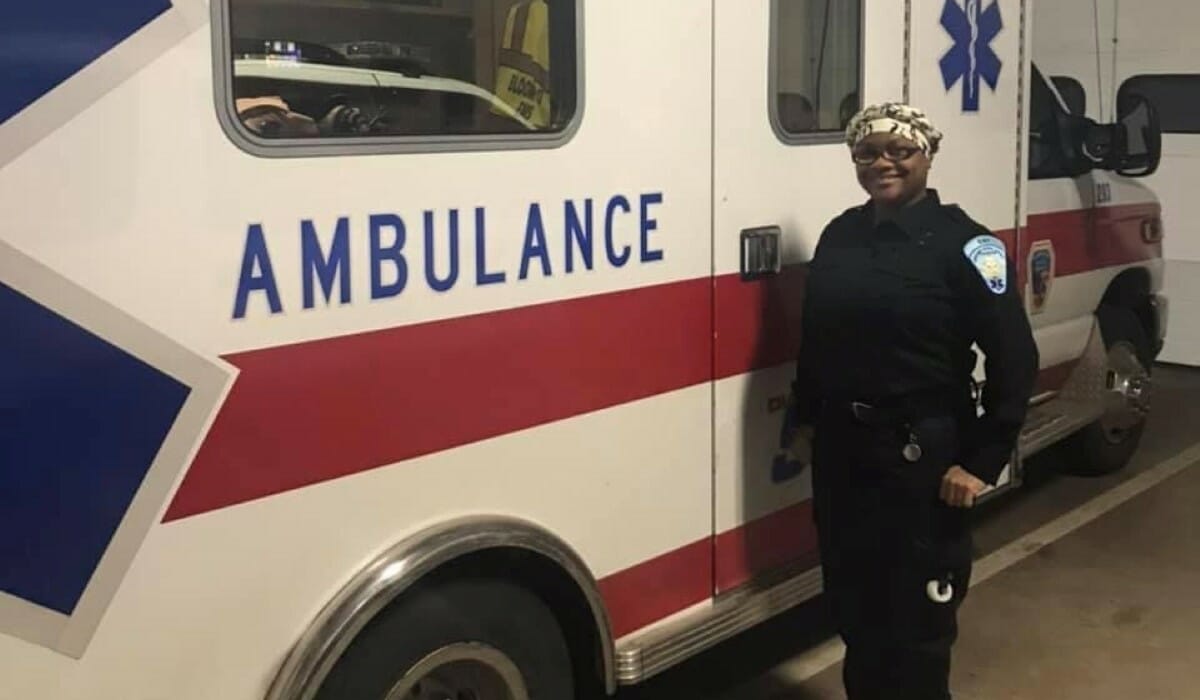
I arrive a half hour before my shift starts, and I go to the ambulance to check that we have enough supplies. I check the oxygen levels, make sure we have sheets, cleaning supplies, masks for the patients, things like that. And then, when we get a call, I drive to the residence of the patient and transport them to the hospital. In one shift, you can probably fit three calls.
I really enjoy meeting different people around town. We have a lot of elderly patients. I met a woman who was 95, but she was acting as if she was 16, very youthful and dropping gems of knowledge. In the instance where it’s someone younger and they’ve had an accident or something like that, it just feels good to be able to help them in their time of need and give them words of encouragement.
What inspires you to volunteer?
I remember when I was going through military training, you had someone called your “battle buddy.” That person was your support, and you were their support. You had each other’s back no matter what. There are so many times in life that we need that “battle buddy.” But there are so many people out there who don’t think anyone cares for them. I think it’s important for us to inspire and support each other to keep moving forward.
As a volunteer EMT, Jen helps paramedics save lives by stocking the ambulance with medical supplies and driving patients to the hospital./Courtesy Jen Tyes
Do you have a favorite memory or volunteer experience that STANDS out to you?
I have so many, but I remember one moment with the Girl Scouts when they changed from young girls who were just there for the fun activities to forward-thinking young women who wanted to change their community. It was when they were in the fourth grade. I had bought all the materials, and we built a water filtration system together. They were pouring the dirty water through the system and then, at the bottom, they could see the clean water come through. That moment was like a spark in changing their thought process to see that, while they’re young, they could make a difference. They then started to think of different ways to do something greater. One of the issues that concerned them was animal abuse and abandoned animals who didn’t have homes. So we created a t-shirt and sold them to donate the proceeds to an animal shelter in town. I think that was the catalyst for them choosing to do the Bronze Award. We were the first in the history of my town’s Girl Scouts troops to do this award. And it wasn’t me saying, “We should do this.” It was them.
Why do you think it’s important for others to give back?
It’s important because not only are you giving someone your time, energy and resources, but you’re also creating a better version of yourself. You’re showing your humanity and compassion to the world, and like they say, smiles are contagious. When you give compassion to another person, it opens them up, and it gives them the opportunity to also give back and pay it forward.
What do you want people to learn from your story?
I would like them to learn that we are all points of light. Martin Luther King Jr. once said, “If I cannot do great things, I can do small things in a great way.” Whether it’s helping a neighbor with yard work or taking care of a sick family member, no action or impact is too small. It doesn’t take this grand gesture to be a light in someone’s life. With every act of service, you can change lives.