Volunteer Promotes Better Money Habits Across Michigan
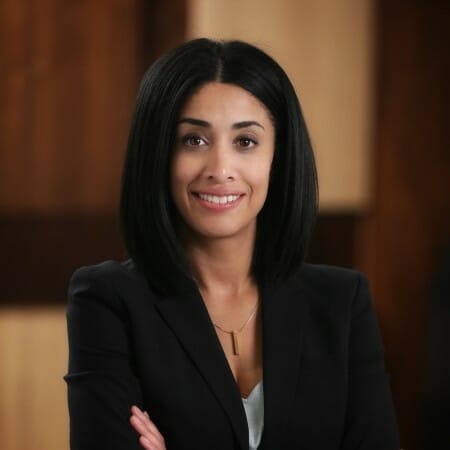
Meet Daily Point of Light Award honoree Nicolette Mendez. Read her story and nominate an outstanding volunteer or family as a Point of Light.
When Bank of America employee Nicolette Mendez looks back on her earlier life, she wonders if she and her family might be in a different position had she known about the financial resources that she knows now. Not wanting anyone else to be in that position, she has spent the past four years tirelessly working to spread personal finance education through Better Money Habits.
For the Bank of America-run program, Nicolette delivers and facilities sessions on financial tips and resources to people across her home state of Michigan. She also helps coordinate fellow Better Money Habits Champions across seven states. She is particularly proud of her work with Latinx small business owners, many of whom she has helped through the hardships caused by the COVID-19 pandemic.
Describe your volunteer role with Better Money Habits.
I am a Better Money Habits Champion for Bank of America. Currently I reside in Michigan and have provided better money habits all across the state. I support a variety of virtual events across seven states currently. I am also coordinating for other Better Money Habits Champions across the seven states I support to receive need-to-know information and event details. For instance, we had America Saves week in February and I provided all our Better Money Habits Champions details on our savings programs, literature to share as they are conducting events, and resources within Better Money Habits to provide and deliver. I do a lot of planning and coordination. I am a person who cultivates relationships with local nonprofit organizations and schools, so a whole host of things on top of actually delivering and facilitating sessions on better money habits.
Nicolette Mendez serves as a Bank of America Better Money Habits Champion, promoting financial literacy to people across Michigan./Courtesy Nicolette Mendez
What inspired you to start volunteering in this way?
Just a passion around helping people. I’ve been in banking for 26 years. Throughout my career, what has always been really important to me — in addition to developing teammates and supporting as a leader — has been helping my clients. Really helping them in a way that’s going to impact their personal lives and their financial lives so that they’re better for it. I think about my background and the fact that my family didn’t know about these resources. I moved into banking as my career, and had I known some of these things early on, myself and my family might be in a different position. I’m definitely implementing these things with my children. You always take your learnings professionally and apply them to your personal life, and I think that intent has been something I wanted to carry forward.
What do you go over during your Better Money Habits sessions?
It depends on the audience. Oftentimes I’m going over basic banking, so things like safety in budgeting and financial safety are really big right now. Understanding the different types of solutions, products that are available, services that are available, talking about the difference between a checking and a savings account. I find I tend to focus on that quite a bit. I engage a lot of young adults. Small business owners is a little bit different because we look to aspects of what they’re focused on for their business. Depending on the phase, it could be how do I start a business? How do I grow my business? How do I transition out of my business? We’ve got different resources available for small business owners for any phase of business they’re in. We have different resources available for a variety of young adults, students, anyone who is looking for some basic banking, home ownership, all of those things.
How important is financial literacy for communities, especially small business owners?
It’s critical. … When I engaged about 20 to 25 small business owners over the course of the last year, it was because they specifically had financial hardship during the pandemic. They were restaurant owners, hair dressers, nail salon owners. They didn’t have the kind of relationship with the bank to really understand how PPP [Paycheck Protection Program] could help them. They didn’t have a point of contact. They didn’t trust banks. And because of that, their businesses and their livelihood suffered.
Can you expand on why you are particularly proud of your work with Latinx small business owners?
These small business owners who I was referencing to earlier, all were of the Latinx community. All culturally have a level of distrust of banks or a lack of knowledge around banks. Because I am half Puerto Rican, half Black, it is personally important to me to help my community and make sure they understand.
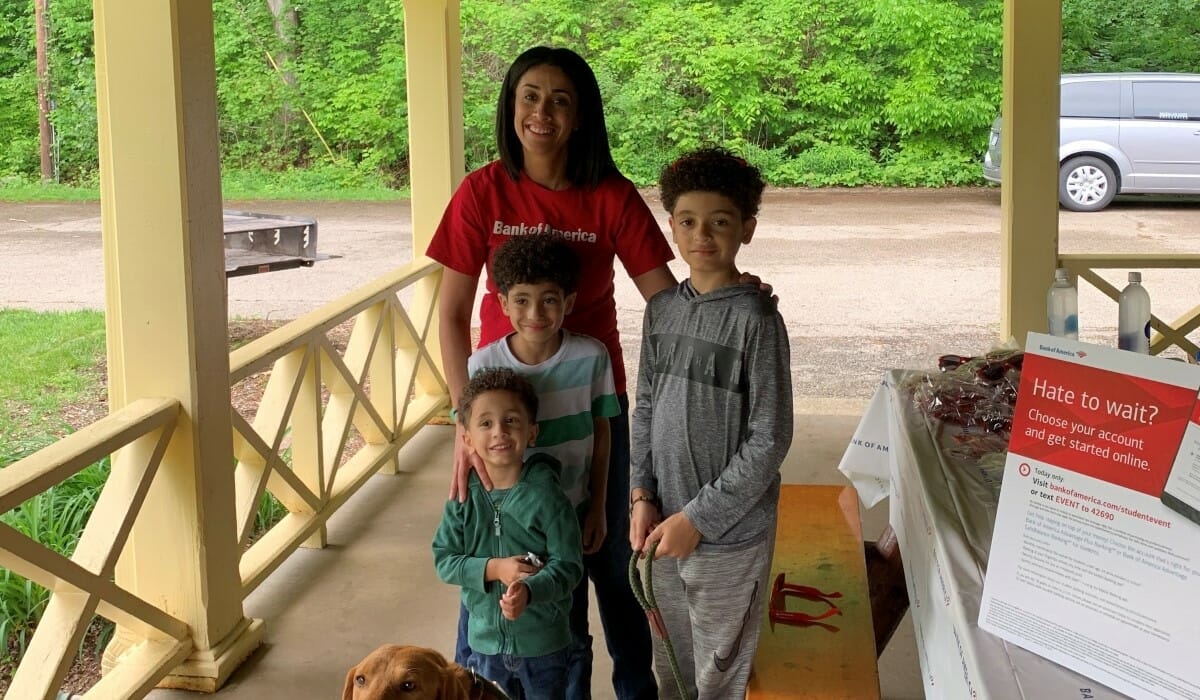
Nicolette Mendez attends a volunteer event with her employer, Bank of America./Courtesy Nicolette Mendez
Do you have any future partnerships, programs, or events you want people to know about?
Right now, we are working on a few different events specifically for banking sustainably. Banking sustainably is a program for not just the Latinx community, but all walks of life who feel like they can’t have a relationship with a bank, or who have had bad experiences and maybe distrust banks. [We are] really ensuring that they know of the resources that are available to help them reestablish a banking relationship or just get one. We have an FDIC virtual event on April 1 coming up. What I find to be really important about our banking sustainability program is that there are so many people, primarily of color, who because of their experiences or because of where they come from, may have a lack of knowledge or understanding. They are paying more to pay their bills and to save for themselves. They’re not earning interest to the degree they potentially could, or getting rewarded for the things they do, because they don’t have this knowledge or the resources on how to leverage a bank and ensure they are supported as consumers.
What’s been the most rewarding part of your work?
Hearing from a customer that what I shared with them was impactful. I think that positive feedback, hearing what I shared was helpful to them, is huge.
Are there any moments from your time volunteering that are particularly memorable for you?
The conversations with people that remind me of me when I was their age are particularly memorable. When they speak to their experiences, and then you can see the lightbulb go off for them and the commitment they make for themselves to work toward financial health or financial wealth, that’s rewarding.
Why do you think it’s important for others to give back?
I would hope everyone would think it is important or find value in it. As a society, I would hope that people would want to just help people. I would say for me why it’s important is because I think everyone is deserved of the education and the opportunity.
With Virtual Afterschool Programs, High School Teen Creates a Sense of Family During the Pandemic
Meet Daily Point of Light Award honoree Dhruv Girish. Read his story and nominate an outstanding volunteer or family as a Daily Point of Light.
When he was just in eighth grade, Dhruv Girish possessed a spirit to make a change for those around him. He created the Scholarly Program in 2019 to enrich the learning experience of his fellow students, and the virtual tutoring program was just what they needed once the COVID-19 pandemic spread.
Dhruv’s volunteer service has not gone unnoticed. This year marks his second term representing Frederick County on the Maryland Youth Advisory Council after being appointed by Maryland Governor Larry Hogan.
Now, the 16-year-old sophomore student works to ensure that youth voices are a part of important conversations in Frederick, Maryland and beyond.
Describe the school program you created, and why you started it.
I started the Scholarly Program as an affiliate to Urbana Stem, a community organization dedicated to bringing awareness to the community about academics and well being. The Scholarly Program started out very small before COVID-19, but as everything slowed down during the pandemic, our program just started blowing up.
With the help of my advisors and support from my community, I created this program with a mindset of helping students with their schoolwork. There wasn’t much one-on-one tutoring going on during the pandemic, which we would have received if we were in a physical setting. As the program progressed, it expanded to include community outreach events, food drives, book drives and a candy drive that supported the armed forces. We also focused on creating equity within the science, technology, engineering, mathematics and art community since COVID-19 halted all of our after school STEM activities.
We saw a huge interest in the program, and it has reached over 1100 people across the country with a group of 23 amazing volunteers.
How has COVID-19 impacted you and the learning environment for your classmates?
COVID-19 really messed us up for a while, but it also made education a priority. We just realized how school has been such a big part of our lives while we were all stuck at home. As we were ripped away from all of these educational programs and after-school activities, we realized that they really had a big impact on our lives. The pandemic created the need for the Scholarly Program and I think it helped create a sense of togetherness.
What’s your vision for the Scholarly Program’s Future?
I want to make sure that there is sustainability, that I’m not the only one running it and that students younger than me can also run it one day. I hope it will stay with the community even after I graduate high school.
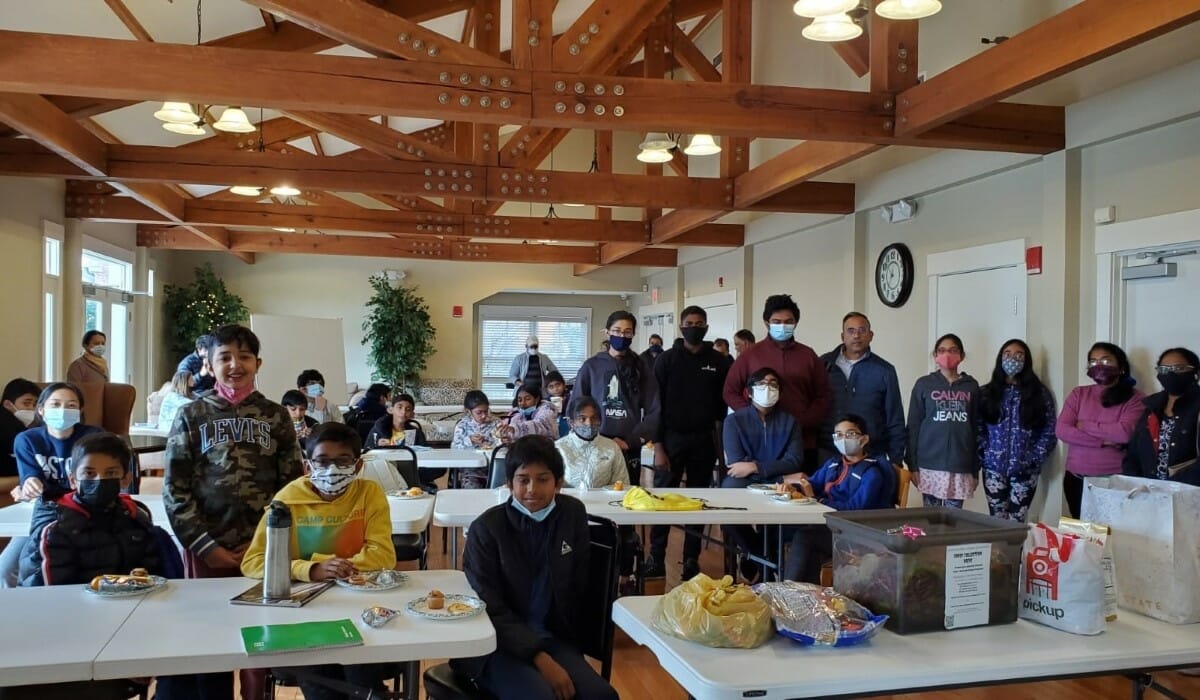
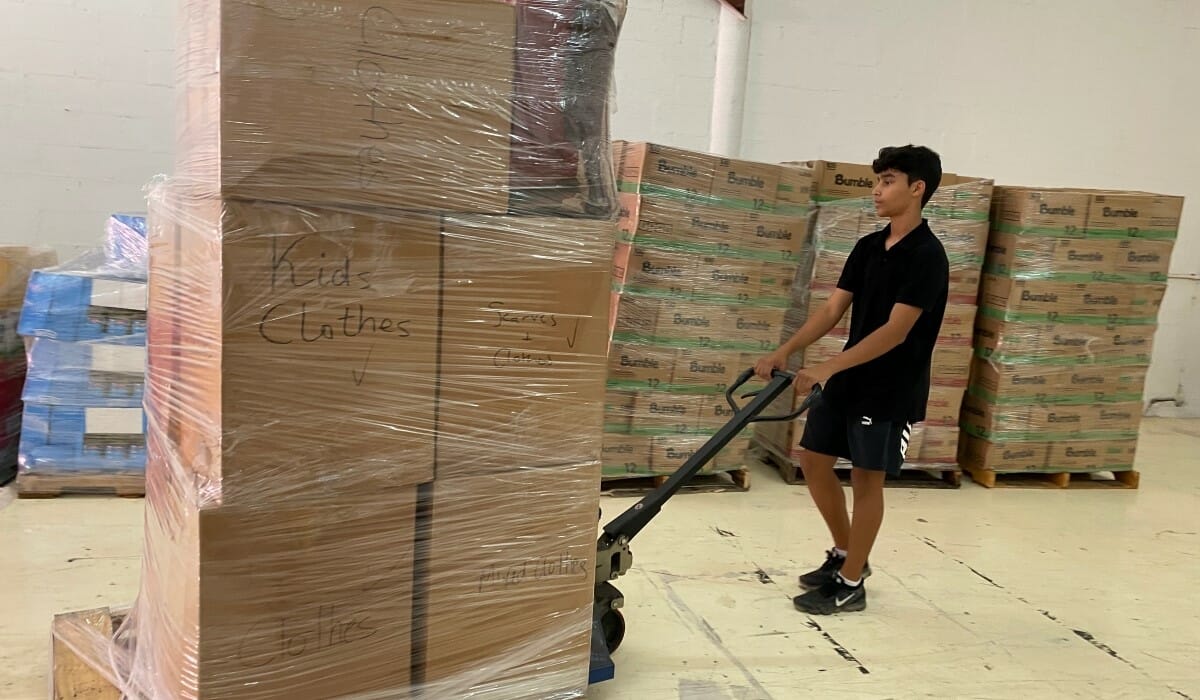
As Dhruv Girish’s Scholarly Program progressed, it expanded to include community outreach events, food drives, book drives and a candy drive that supported the armed forces./Courtesy Dhruv Girish
What inspires you to volunteer?
The most rewarding part of my work is the kindness and the impact the program has on these individuals. We’re a family, we stick together and support each other no matter the situation. I love the kindness and support the community has given me. I have the satisfaction of making a difference. It’s definitely astounding.
What have you learned through your experience as a volunteer?
Everyone has a story. You can learn from anyone, really, and you can also give people a chance to show you what they’re capable of. Kindness and compassion are the only ways to unlock those hidden talents.
Why is it important for others to give back, especially young people and students?
Helping others is important, and if you can’t help others, then what’s the point? We want to make sure that we’re creating sustainability. It’s important that we talk about that in our daily lives. Children are the future of our world, and a lot of children don’t have the same opportunities as I do. Giving back helps us make sure that everyone has an equal chance of opportunity and support.
What would you want others to learn from your service story?
Whatever you do, do what you love. Make sure that it makes an impact on you and that you’re happy. When you do what makes you happy, you’re going to make a difference in the world.
Are there any partnerships, programs, or events that you are excited about?
The Scholarly Program is starting a community garden this year where we’ll bring the community together to grow vegetables and produce for our local food shelter. All of the produce that we grow will be donated to homeless shelters, which is exciting for us and our community.
I’m also really excited about our recent partnership with EKAL Youth Vidyalaya, which supports building schools and eradicating illiteracy in rural and tribal India.
Teen Leads Peers in Protecting Animal Welfare Around the Globe
Meet Daily Point of Light Award honoree Emily Keller. Read her story and nominate an outstanding volunteer or family as a Point of Light.
Emily Keller has always been an animal lover, but it wasn’t until she started fostering cats at the beginning of the COVID-19 pandemic that her passion really took off. As she became more involved with volunteering at her local cat rescue, Kitty CrusAIDe, she started to learn more about animal welfare issues, from the overpopulation of cats to the mistreatment of animals bred for food.
Wanting to further promote animal welfare, Emily started Students For Animals, a youth organization that aims to educate students on animal welfare issues, as well as encourage them to volunteer to help animals. Emily has been able to expand Students For Animals to not only her local Utah area, but also to students around the world through the organization’s student ambassador program. This summer, the 18-year-old plans to open a summer camp for younger animal lovers, and wants to expand Students For Animals to even more colleges and high schools around the country.
Describe your volunteer role with Students For Animals.
Students for Animals is an organization to educate students about animal welfare issues, as well as how they can get involved. I started Students For Animals after learning about all the animal issues in our society and realizing just how unknown they are. When I first got involved with a local cat rescue, I learned about the issue of overpopulation, breeding, community cats, and I started taking part in the Trap-Neuter-Return [TNR] process to battle this overpopulation. I started to realize that cats were only the tip of the iceberg. There’s so many other animals that need my help. There’s breeding puppies. There’s elephants being forced to perform in circuses. There’s cows, pigs, chickens, and many animals being treated terribly in order to produce our food. Even worse, very few people know about it. That was the reason I founded Students For Animals. We have student ambassadors from multiple countries and all over the U.S., which is crazy. We’ve also been able to reach a lot of people through social media activism as well.
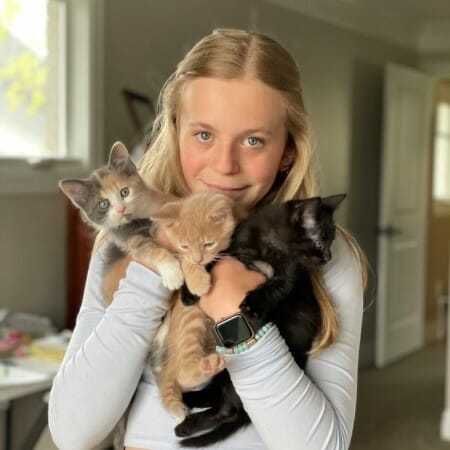
Animal lover Emily Keller serves as a dedicated volunteer for Kitty CrusAIDe, a cat rescue in Centerville, Utah, as well as the founder of Students For Animals./Courtesy Emily Keller
What accomplishment are you most proud of when it comes to your volunteer work?
I would say I’m most proud of my project to keep cats warm that I did with Kitty CrusAIDe. This is the project that started Students For Animals. When I was working on this, I realized so many cats are living outside in the cold, and they don’t have access to food, water, or shelter. I partnered with my peer and together we built homemade, insulated shelters to keep these cats warm throughout the winter. After building those, we set them out at different cat colonies around Salt Lake. Then we started a whole donation drive where we collected blankets and cat kibble, as well as monetary donations. We were able to raise over $2,000 in total to help Kitty CrusAIDe. Kitty CrusAIDe uses that money to aide in the TNR process, which helps those community cats. They will go trap those cats and get them neutered as well as vaccinated, so they can help with the overpopulation problem and prevent disease from spreading.
What aspect of Students For Animals is most special to you?
We have an ambassador program. It’s an online program where we connect students with the resources to start their own animal welfare groups wherever they are. We have people all over the United States, as well as in many other countries. We meet once a month over Zoom and we discuss ways for them to start projects in their communities. Right now we have someone who is doing a presentation to all their classes about elephant tusks and why that’s not OK. The ambassador program is definitely a huge highlight for Students For Animals, because it creates a way for anyone to get involved in this issue and for anyone to make a difference.
Do you have any future partnerships, programs, or events you want people to know about?
I’m in the process of planning a summer camp called Paws For a Cause. It’s going to be for younger children. It will be a week-long camp where they can experience different animal welfare activities, so playing with kittens and learning about the issues with cats, or going to a farm sanctuary and learning about pigs. There will be different activities each day to help build empathy and kindness with these kids, and it will also be super fun for them because they will get to have fun with animals.
Emily Keller, second from right, leads young people in protecting animal welfare through her organization Students For Animals. /Courtesy Emily Keller
What’s been the most rewarding part of your work?
I think the most rewarding part about volunteering is that after serving animals, my view of the world has shifted. I’m not only aware of the animal welfare issues happening in the world today and all around me, but I feel like I’m also no longer afraid to lead the action. Before I started volunteering with Kitty CrusAIDe, I used to be a follower. I was into volunteering and would do that, but I would never start my own thing. After I got involved in Kitty CrusAIDe and learned about all these issues, I figured out that I could be the change in the world, and that was really empowering.
Why do you think it’s important for others to give back?
I think it’s important for others to give back to our community because we are the future. Our generation will be the future leaders and I think it’s vital that we show kindness not only to each other, but for the animals as well. Being able to have empathy for animals definitely translates to our everyday lives. When we develop that understanding we get from serving others, we’re able to build better and deeper relationships with those around us, so it’s incredibly important to give back to our community.
What do you want people to learn from your story?
My favorite quote is to “be the change you wish to see in the world.” I want people to understand that it’s up to them to make a difference. If you see a problem or an issue somewhere, you can create change. It doesn’t matter how old you are. I want people to hear my story and to work on developing empathy for those around them — understanding where people are coming from, whether they’re in a different situation, and understanding where animals are coming from. When you hear about a dog being left by its owner and dropped on the street, have empathy for that dog, and think that dog needs a home and needs someone to take care for them.
Volunteer Offers Support to Homeless and Community Grappling with Addiction
Meet Daily Point of Light Award honoree Kayla Ducharme. Read her story and nominate an outstanding volunteer or family as a Daily Point of Light.
As the world grappled with the COVID-19 pandemic, more than 100,000 people in the United States fatally overdosed on drugs, the single highest recorded death toll during a 12-month period. According to Kayla Ducharme, her own community experienced a large increase in overdoses during the pandemic, nearly all attributed to opioids.
As a volunteer with Malden Overcoming Addiction, Kayla is connecting the community with addiction support and recovery services, removing the stigma of addiction, and fighting to eliminate overdose fatalities. The 26-year-old Chelmsford, Massachusetts volunteer, whose service with the Malden Warming Center first connected her to Malden Overcoming Addiction, is helping the most vulnerable members of her community access desperately needed treatment and services.
What inspires you to volunteer?
My friend passed away in October from an overdose. Losing my friend had a big impact, but it’s been furthered [since my volunteerism]. Everyone has a story and there are so many different factors and events that happen in a person’s life that can lead them to addiction. I’m inspired to volunteer because of the potential impact you could have on someone’s life. Maybe one person can’t change the world, but maybe they can change one other person’s life.
Describe your volunteerism with Malden Overcoming Addiction.
As a volunteer with Malden Overcoming Addiction, I help to coordinate events including the Candlelight Vigil, Sober Spring Fling and Malden Stop The Stigma Day. I manage outreach posts and hand out posters and blue ribbons to local businesses. I first started volunteering with the Malden Warming Center when I moved to Malden three years ago. The center helps homeless people to have a meal and somewhere warm to sleep, and they also connect guests to different services. Personnel from Malden Overcoming Addiction and the Warming Center work closely to provide help to clients.
As a volunteer with Malden Overcoming Addiction and the Malden Warming Center, Kayla Ducharme is serving the most vulnerable in her community. Kayla pictured wearing a blue ribbon on Stop the Stigma day, March 9th, in support of those suffering in silence from addiction as well as other stigmas such as mental health, gender biases, and other common stereotypes./Courtesy Kayla Ducharme
Share one personal story with me from your volunteerism.
Our candlelight vigils remember those who we have lost to the disease of addiction and come together to reduce the stigma associated with addiction. At a recent vigil, our community got together to listen to the mayor, police chief and president of Malden Overcoming Addiction talk about some of the real changes happening in Malden and our ideas for the future. It felt impactful because so many people have a personal connection to the cause. Walking around the courtyard, seeing all the candles and the names of the loved ones written on the bags by each candle, it was a really special moment to see the support we have from the community.
Why do you think it’s important for others to give back?
There are so many positives to volunteering. You meet people who care about the same causes you do, you learn new things about that cause and maybe even gain a new perspective as you listen to people’s stories.
What’s been the most rewarding part of your service?
It’s rewarding when we can connect someone to recovery services and get them into a program. I’ve seen a few different people who have been connected to services and have been able to change their life.
How have you continued to volunteer throughout the COVID-19 pandemic?
We now connect over virtual meetings, instead of in-person, but at the same time, it has been a little bit easier to connect people because of the flexibility and timing of virtual technology. We had to cancel our New Year’s Eve event due to omicron, and instead are holding the Sober Spring Fling.
Volunteer Serves Up Food and Wellness to Children & Adults During Pandemic
Meet Daily Point of Light Award honoree Kellyann Gallagher. Read her story and nominate an outstanding volunteer or family as a Daily Point of Light.
Kellyann Gallagher is a dedicated volunteer, so when service opportunities began to shift as a result of the COVID-19 pandemic, Kellyann knew she needed to find a new way to stay involved in her community.
“I wasn’t sure what I could do, so I started with baby steps,” says Kellyann. Realizing some students didn’t have access to adequate food, the Raritan, New Jersey mother joined together with a few friends to facilitate the delivery of the school district’s free school meals by collecting the meals from a central hub and delivering them to the local elementary school, helping to ensure that students in need could access their meals. Running the operation out of her garage, Kellyann branched out even further as demand continued, co-founding the Raritan Food Pantry in April 2021. Serving hundreds of children, adults and seniors across Somerset County thus far, Kellyann has made wellness and food insecurity a priority through her volunteerism.
What inspires you to volunteer?
For me, it’s important to not just see there’s a problem, but whether small or big, to make some kind of impact.
Describe your volunteerism with Raritan Food Pantry.
When traditional volunteer opportunities were impacted by the COVID-19 pandemic, Kellyann Gallagher helped to support wellness in her community by tackling food insecurity./Courtesy Kellyann Gallagher
Before we opened the food pantry, I picked up food from the school district’s main hub, packaged it and delivered it to the local elementary school nurse who served it to close to 60 children who lacked access to adequate food
In addition to my food volunteerism, I sewed 1,200 cloth masks for medical personnel and local residents. I had never sewed masks before but am an avid sewer, so I just found a pattern (laughs.)
Share one personal story with me from your volunteerism.
Most of our clients now come in on a regular basis and we’ve been able to form a nice bond with them. One woman came in and asked if she could take a couple extra bananas. The next time she came in, she brought us a dessert she’d made with the extra bananas, and a thank you card. I felt really humbled by that. I don’t [volunteer] for the thanks, I do it because I enjoy giving back. The fact that someone took the time to give back to us in appreciation was unexpected and made me feel like I was having a much bigger impact than I realized.
Why do you think it’s important for others to give back?
It’s important for people to help one another. You might come upon hard times yourself one day, so it’s important to give back to the community. Volunteering also makes you a better person, I teach my son [about service] because it’s an important life lesson.
What’s in the future for your volunteerism?
I definitely see this service continuing. In my mind, the pandemic brought to light the issue, but we opened the pantry based upon pre-pandemic numbers around the economically disadvantaged in our town, and those numbers have since grown.
What do you want people to learn from your story?
You can tap into your own strengths to make an impact no matter how big or how small. You don’t have to solve the whole world’s problems, if you can solve one, that’s enough.
In one word, what does volunteering mean to you?
Love.
How can readers help?
The Raritan Food Pantry relies on donations to support our clients. Please visit the website for more information about how you can help.
Volunteer Helps Provide Over 250 Adapted Tricycles to Kids with Disabilities
Meet Daily Point of Light Award honoree Lori Flavin. Read her story and nominate an outstanding volunteer or family as a Point of Light.
For children with disabilities, the quintessential youth experience of riding a bike can be much more difficult than a simple trip to the store. A modified bicycle or tricycle that’s adapted to their needs can cost up to $5,000, and isn’t covered by medical insurance. That’s where Lori Flavin and the nonprofit Share the Voice come in.
For almost a decade, Share the Voice has provided over 250 adapted tricycles to children with disabilities in New York and New Jersey. As one of their founding members and the current regional director of New York, Lori has helped improve the lives of countless children, while also bringing their families together to form one unified community.
What does Share the Voice do?
We fundraise money and donate adaptive tricycles to individuals with disabilities. We get applications, fundraise money, and then we’ll speak with the individual’s physical therapist or occupational therapist, their family, and their care team, and determine the best fit of a bike for them. We place the order with the manufacturer and it gets shipped to us. We try to do everything as a surprise. We’ll store the bike we get delivered until we’re ready to surprise the family. Then we usually tell a little white lie that we need a signature or we’re coming to do a re-measurement to make sure the family is home. Prior to COVID, we would try to gather community members to make it a parade down their block and surprise the family with their trike.
Describe your volunteer role with Share the Voice.
We have a New York and New Jersey chapter. I’m the regional director of New York. I oversee the New York volunteers. I help plan events. I help place orders. I plan the bike giveaways. I speak with the child’s care team to be sure all our records are up to date. Family engagement is a huge thing for us. We don’t just deliver the bike and never speak to the families again. We try to make it special. We tell all the families that now they’re part of our family, and our family continues to grow. We have picnics, galas, and fundraisers throughout the year that we send invitations to make sure they stay involved, and we can watch the individuals grow and continue to ride their bikes.
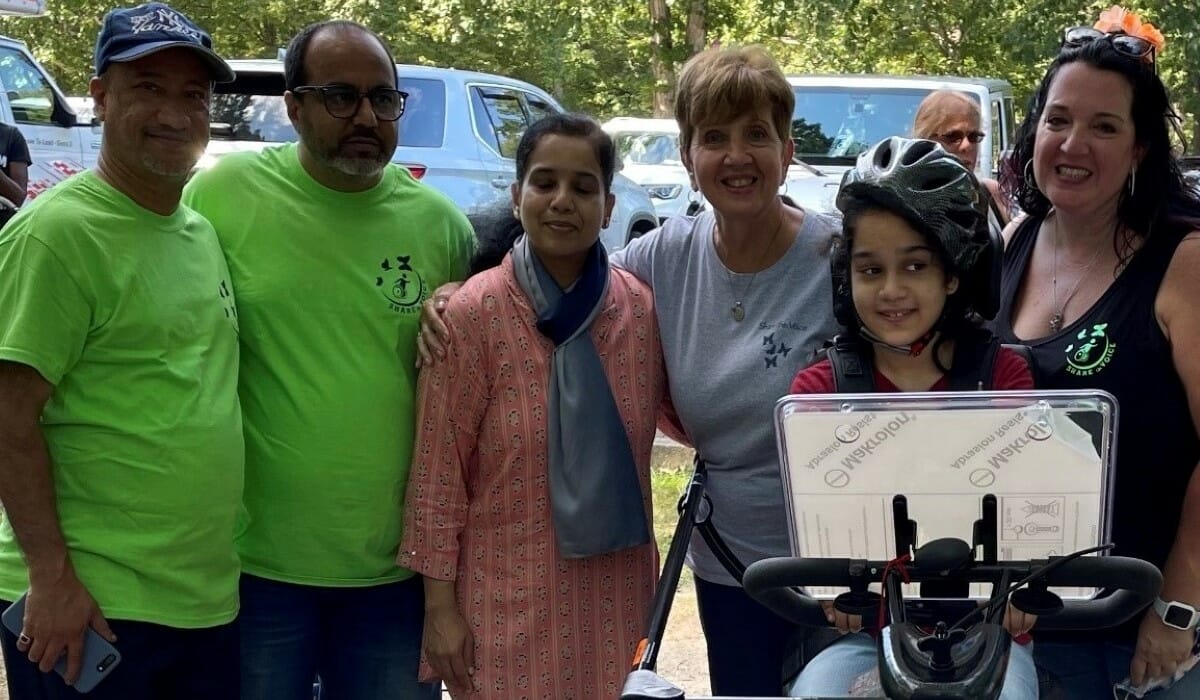
Lori Flavin serves as the New York regional director for Share the Voice, the nonprofit she co-founded in 2013./Courtesy Lori Flavin
Why did you want everyone touched by your nonprofit to feel like one family?
We want people who are in the same kind of situation to have other people they can speak to. We have a private group on Facebook that we just invite recipients and therapists to, where they can talk about things like schooling, potty training, doctors, therapies, and all different things. Nobody should feel like they’re all alone, so we try to create this network where people can use each other as knowledge, so we can all move forward and everyone can be better off.
How important is it for these kids to have these adapted bicycles?
It’s all about inclusion. Every child deserves a bike. Nobody should be left out of their community because they can’t ride a bike. Riding a bike gets them out, gets them interacting with other children and other adults, and lets them see things that they’re not going to see staying at home. It gives them the exercise they need to stretch their muscles. We have a child we gave a bike to, and the mother had said to me that she took him for a walk all the time but he was always looking down because he was afraid he was going to trip and fall. She said now when I put him on the bike, when we’re riding, he’s pointing at things. She says, these are things I thought he saw everyday, but he was so busy looking down because he was afraid to fall that he never saw anything. Trees, birds, planes. It helps them just be like everybody else, see things, get involved in their community, and be like any other kid.
Have there been any particularly memorable moments from your time volunteering?
We do a lot of giveaways. We try to be creative in how we’re going to surprise the family. Around the holidays, we try to get Santa and the local fire department to come with the fire trucks, and we parade down the block with the sirens and lights going. We have Santa come and present the bike to the recipient. Those are always fan favorites. We had one year when it started to snow, so that was amazing.
Lori Flavin, right, delivers an adapted tricycle through Share the Voice./Courtesy Lori Flavin
What goals would you like to see Share the Voice achieve?
I would like every child who needs a bike to have one. With COVID, it’s been hard. Money coming in has slowed down. The applications have risen because these individuals haven’t been in school or haven’t been getting the therapies they so desperately need. We had an increase in applications, and the money coming in didn’t increase, because obviously it was a rough two years for everybody. My goal would be to give a bike to everyone on our waitlist.
What have you learned through your experiences as a volunteer?
There’s a lot of people out there to help. I’ve learned how rewarding it is that you’re making a difference in other people’s lives. If you have a vision or a dream, follow it. Eleven years ago, I was talking to a friend in a parking lot, and I told her about this vision we had. I remember her saying that’s great, I hope you can give away a few bikes. I spoke to her recently and she said, you did it. Not only did you do it, you sustained it for ten years. Never give up. Never say “I can’t do it.” You can. Just put your mind to it and you’ll get there. It’s all about making a positive difference in someone’s life.
Why do you think it’s important for others to give back?
We have, as individuals, so much to give. I think the world would be a much better place if we worked together.
Volunteer Pays Back Life’s Blessings to Inspire Change for Low to Moderate Income Community
Meet Daily Point of Light Award honoree Victor Rivera. Read his story and nominate an outstanding volunteer or family as a Daily Point of Light.
Victor Rivera says it can be difficult for people to get themselves out of poverty, but he is extending his hand in service to help individuals and their families achieve the American dream.
As a volunteer for several organizations including Prospera USA, Blue Hub Capital, and the Florida Community Loan Fund, Victor, a 57-year-old Summerville, South Carolina resident, is helping to improve the quality of life for low-to-moderate income people and communities. Connecting with thousands across the United States, Victor, a relationship manager within the business banking team at Bank of America, says the professional work he does to serve clients translates to his volunteer work.
What inspires you to volunteer?
I’m inspired to help others. I was the second out of seven kids, so I started helping others really early. I am blessed with the opportunities I have received in my life and I’m paying back for all the blessings my family and I have received. I like to help others see there are opportunities to achieve success in life.
Explain the importance of this cause.
A lot of the clients we help, including Hispanic entrepreneurs, come from primarily South and Central America where there’s a distrust of the government and the bank. We all start from the same place, but sometimes, people don’t know or understand how to use their resources to get themselves out of poverty. Especially in our country, brown and Black communities and families feel stuck because of the color of their skin or where they came from. By seeing me, a Hispanic that came from the same place, I can hopefully inspire others.
Describe your volunteerism.
I’m really passionate about creating more opportunity for low-to-moderate income people.
Blue Hub: I am a member of the Board of Directors and I also chair the Loan Committee. Blue Hub’s community-based lending model supports low-to-moderate income schools throughout the American south, most recently supporting a 100% LMI school to create education equality to 744 children.
Florida Community Loan Fund: I am a member of the Board of Directors and also the secretary for the board.
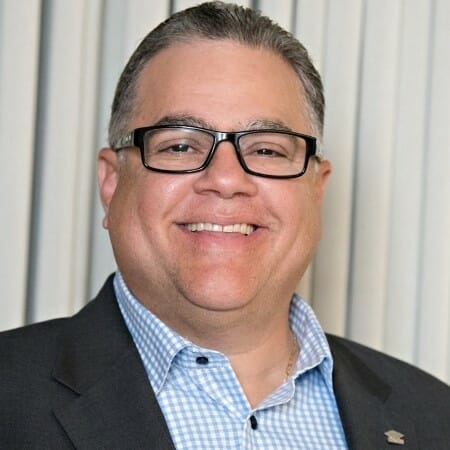
Prospera USA: As a member of the Central Florida Board of Directors, I review the activities of the organization in delivering services to the region and help with fundraising activities and raising awareness about the organization’s services. Victor Rivera is volunteering to improve quality of life for low-to-moderate income people and communities./Courtesy Victor Rivera
Share one personal story with me from your volunteerism.
Prospera USA’s annual event, Success Stories, selects clients to talk about their story and how Prospera was crucial in making their business a success. I listen to dozens of these stories and the impact the organization has had on the lives of Hispanic entrepreneurs. This makes me think of my parents. They were small business owners and they never received advice as to how to open or operate a business [in the United States.] They learned the importance of accounting, being in good standing with state taxes and the authorities through troubles. It gives me a lot of pride that this organization walks their clients through what it is to do business in the U.S.
What’s been the most rewarding part of your service?
It’s rewarding when I hear these stories. Tears come down my eyes a little bit because [this volunteerism] is not only making a difference for the first generation starting to work and build wealth, but their kids, and their kids’ kids.
Why do you think it’s important for others to give back?
Helping others is a part of my culture and how I grew up. Also, you get satisfaction by being able to help others. Thankfully, I work for a company that gives us opportunities to share our knowledge and expertise in communities.
How have you continued to volunteer throughout the COVID-19 pandemic?
Everything went virtual. At Prospera, a lot of the face-to-face work migrated onto the internet. The number of clients served during the pandemic was really high because the need was still there.
What do you want people to learn from your story?
It doesn’t matter what your experience is, we all have something to add. Everyone is busy, but you can still carve out a few hours a week to make sure you are making a difference in the community where you live.
Volunteer Honors Mother By Raising Millions for Pancreatic Cancer Research
Meet Daily Point of Light Award honoree Maria Fundora. Read her story and nominate an outstanding volunteer or family as a Point of Light.
After losing her beloved mother to pancreatic cancer in 2007, Maria Fundora knew she had to do something.
She and her mother, Iluminada Milian, had been extremely close. Her sudden death — which came less than four months after her initial diagnosis — changed the dynamics of Maria’s family.
“I could not just let her death go,” Maria said. “I had to do something. I had to find a way to honor my mother always and celebrate her life, and help others in the process.”
In the year following her mother’s death, Maria founded the nonprofit Purple Pansies, which has so far raised close to $4 million for pancreatic cancer research. The Alpharetta, Georgia-based organization also raises awareness of the disease, and provides grants and scholarships to families who have been impacted by pancreatic cancer.
Growing up, Maria always saw her mother giving back to those in need. The two had immigrated to the United States from Cuba when Maria was young, and she remembers her mother always sharing what little they had with fellow refugees.
“She was just an unbelievable woman, and for me personally, every year that I host this campaign, I honor my mother,” Maria said. “For me, my mom is not dead. She’s alive and still being able to help others in these kinds of efforts.”
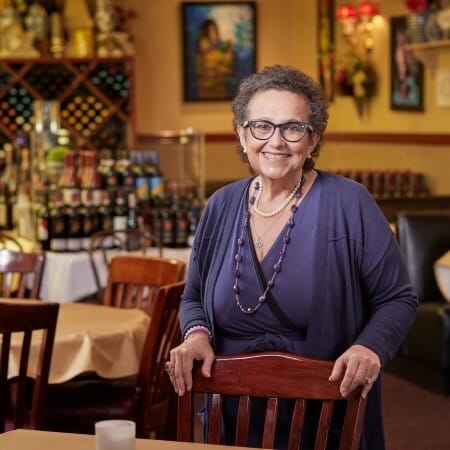
Maria Fundora stands in her restaurant, Casa Nuova Italian Restaurant, where she holds annual fundraisers for her nonprofit Purple Pansies./Courtesy Maria Fundora
Purple Pansies’ donations partly come from their annual fundraisers, including a community block party held at Maria’s business, Casa Nuova Italian Restaurant, as well as an annual gala held every September in honor of Iluminada’s death. One day each November, which is Pancreatic Cancer Awareness Month, Casa Nuova also donates a portion of their proceeds.
One of Maria’s proudest accomplishments has been Purple Pansies’ grant program, which began in 2019 and has issued about ten grants so far to families throughout Georgia who have been impacted by cancer. The grant money has helped families buy medication or pay for proceeds that their insurance did not cover.
Recently, Atlanta’s Piedmont Hospital reached out to Purple Pansies to see if they would be able to help a patient in need of a scan that would help determine if his pancreatic cancer had spread to another part of his body. Insurance wouldn’t cover the scan, and Piedmont had been unable to find anyone who would help pay for it. Purple Pansies agreed to cover the cost of the procedure, and the man had surgery for the scan the very next day.
“Stuff like that, I feel like my mom is saying, ‘Keep going. Don’t take no for an answer,’” Maria said. “‘Keep reaching out and keep trying to spread the word and trying to get funds for your nonprofit.’”
Last year, Purple Pansies started their scholarship program, which has so far has awarded eight students across the nation who have been impacted by a parent or guardian’s pancreatic cancer.
Tim Brown has known Maria for two decades since first visiting her restaurant. As the Atlanta Division President of Kroger, Tim has helped run promotional campaigns with the supermarket and its suppliers and vendors in order to raise money for Purple Pansies. He described Maria as a tenacious and passionate volunteer who has had a huge impact on her community.
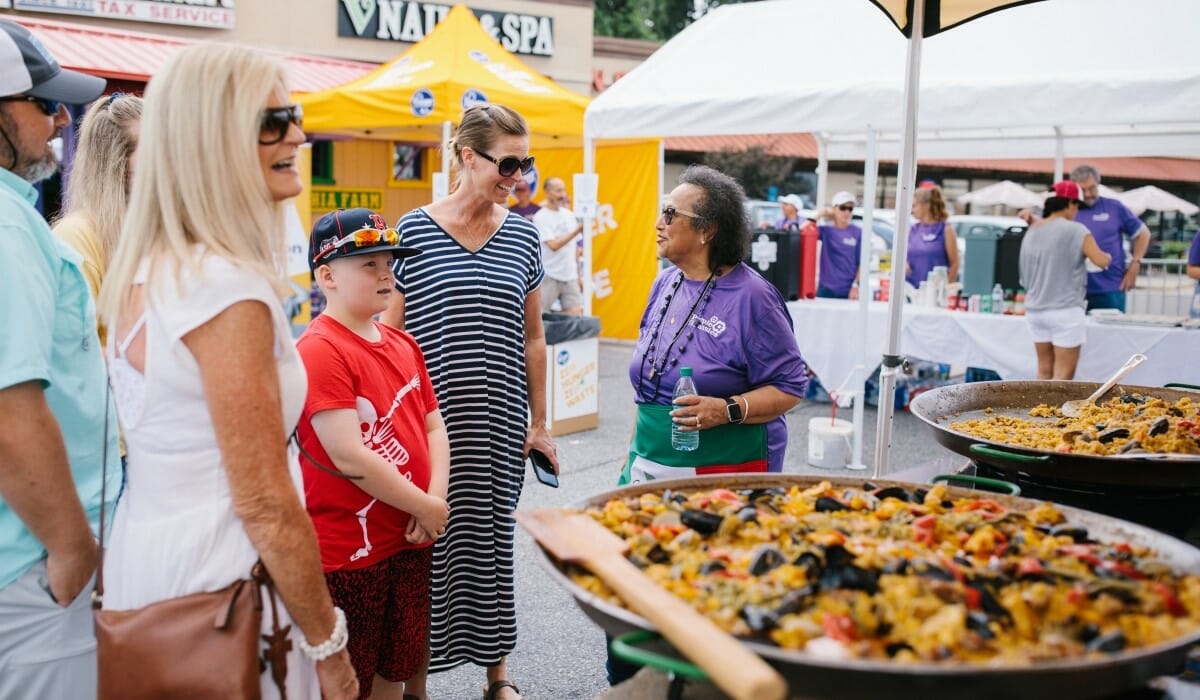
Maria Fundora, right, interacts with community members attending one of Purple Pansies’ annual fundraisers, a community block party held at Casa Nuova Italian Restaurant, in 2019./Courtesy Maria Fundora
“She has such an undying passion around trying to find a cure,” Tim said. “I’ve never seen anyone who has a passion like her, or her giving spirit.”
Looking to the future, Maria hopes to expand Purple Pansies’ reach and ultimately have a national presence akin to the American Cancer Society. She wants pancreatic cancer awareness to have a much larger national presence as well. Maria said she dreams of seeing entire sports stadiums wearing the color purple, the official color for pancreatic cancer awareness, the way athletics events often encourage attendees to all wear pink for breast cancer awareness.
Maria believes her mother would be proud of her efforts, and thrilled that she has been able to keep Iluminada’s spirit alive in helping others and giving them hope.
“I think my mom, looking down from heaven, is applauding and saying even when you can’t, even when you’re tired, get up and try again,” Maria said.
Siblings Volunteer to Provide International and Local Aid to People in Need
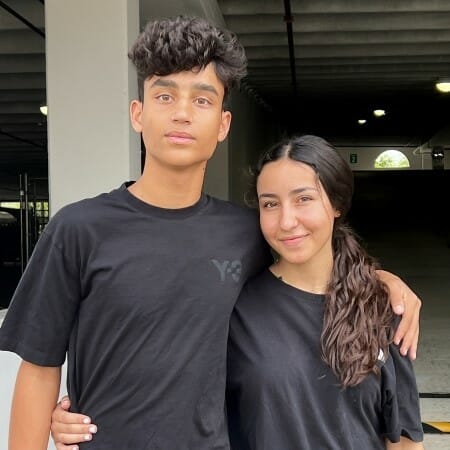
Meet Daily Point of Light Award honorees Noor and Mohamad Ali Hachem. Read their story and nominate an outstanding volunteer or family as a Daily Point of Light.
As sister and brother, Noor and Mohamad Ali Hachem share many things in common, including their passion for helping others in need.
Mohamad Ali: [We’ve] been raised to help. If there’s a country in need and if I’m able to help then I will. Thinking about if I was in that situation, I would want someone to help me. That pushes me to help.
Describe your volunteerism.
Noor: Our dad is Lebanese and mom is Moroccan and we both lived in Lebanon as children, so our roots have served as the inspiration behind some of our service. We manage promotion, packaging and solicit food donations. We use the profits from selling donated used shoes to defray our shipping costs.
Mohamad Ali, left, and Noor Hachem have helped over 15,000 people through their organization, Unite 4 A Cause./Courtesy Noor and Mohamad Ali Hachem
As co-founders of the Arabic Club, we have volunteered more than 1,000 hours along with some of our classmates with Beirut for Social Development. We sent three full containers of humanitarian aid to Beirut after a deadly explosion in 2020, and since then, have sent additional items to people in need like baby formula, dry food and tents.
As co-founders and directors of Unite 4 A Cause, we’ve offered disaster relief and aid to people in need, including a toy drive benefiting individuals in South America and the Caribbean, a Ramadan food drive for people in South Florida, and support for people in Lebanon.
Share one personal story with me from your volunteerism.
Noor: We were in Lebanon distributing food from a container, and I brought a bag of food to an old lady’s house. She looked at me, held my hand, and started asking me questions. She asked me to come inside and have coffee with her. It looked like she wanted to give me a hug. [That interaction] felt like I made a change. I chose the name of our organization because I want everyone, all ethnicities, to unite for anything and for anyone in need, because we’re stronger together.
Why do you think it’s important for others to give back?
Mohamad Ali: There’s a famous saying, “What goes around comes around.” There’s a big part of getting when you give.
What do you want people to learn from your story?
Mohamad Ali:Helping doesn’t hurt, it makes you feel better in every single way. [Volunteering] makes you feel good that you made a difference in helping our world become a better place.
In one word, what does volunteering mean to you?
Noor: Generosity.
Mohamad Ali:Change.
Mohamad Ali Hachem co-founder of Unite 4 A Cause and his high school’s Arabic Club./Courtesy Noor and Mohamad Ali Hachem
When you’re not busy with school or volunteering, what do you do for fun?
Mohamad Ali:I play tennis and the piano, do jujitsu and watch Netflix.
Noor: We’ve all been watching Netflix in our free time! I do ceramics and I dance ballet, jazz and hip hop.
How can readers help?
Please visit the Unite 4 A Cause website for more information about how you can help.
Content Warning: Points of Light highlights uplifting stories, however, we acknowledge that the following content may be difficult for some readers. We encourage you to please care for your safety and wellbeing above all.
Meet Daily Point of Light Award honoree Marena Beale. Read her story and nominate an outstanding volunteer or family as a Point of Light.
Marena Beale knows firsthand what it feels like to struggle with your mental health, and she is tirelessly working to make sure no other young people are without the education and tools to manage theirs. As peer board president for Reach 1 Teach 1 Love 1 (R1T1L1), a nonprofit that promotes awareness of mental illness and suicide, she helps teach kids of all ages throughout New Hampshire about mental health.
A few times a month, Marena travels to schools to give classrooms educational talks about mental health topics, ranging from suicide prevention to stress coping mechanisms. In her role as peer board president, Marena also helps plan fundraisers and promote events. The high school junior plans on studying psychology when she graduates, so she can one day become a child therapist and continue the conversation around mental health for young people.
Describe your volunteer role with Reach 1 Teach 1 Love 1.
Reach 1 Teach 1 Love 1 is a 501(c)(3) here in New Hampshire. They advocate for mental health awareness and suicide prevention. It was founded by Holly Fenn after she lost her son to suicide. Currently I am the peer board president, which means I run a lot of the youth side of the nonprofit. I help plan fundraisers, promote events, and I run our monthly meetings. Right now we have a lot of different projects in the works that I help oversee. It’s a super cool experience.
What inspired you to get involved in this organization?
I personally have had my ups and downs with my mental health. When I realized it had gotten as bad as it did, one thing I noticed was there was really a lack of education. Something Reach 1 does is go into schools and make sure there is some education in schools, whether there’s a class about it or some sort of talk about it. That really struck my passion with it. I love going into schools now. I work a lot in school districts that I represent as Miss Kingston’s Outstanding Teen in the Miss New Hampshire program, and also schools I attended or currently attend, and make sure they are talking about mental health.
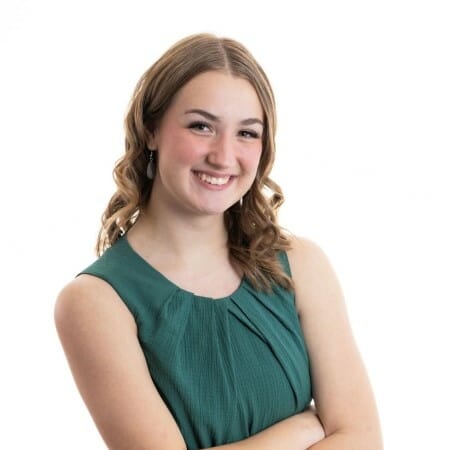
Marena Beale serves as the peer board president of Reach 1 Teach 1 Love 1, a nonprofit that promotes mental health and suicide awareness./Courtesy Marena Beale
Why is sharing R1T1L1’s message, and particularly in a school setting, so important?
I think it’s so important especially right now in our current situation with COVID-19. Mental health is stigmatized greatly, and to me it’s something that needs to be talked about just as often as going to the doctor. You go to the doctor whenever you have a sore throat. Why can’t people go talk to someone or see a therapist whenever they feel sad?
Do any of R1T1L1’s events or programs especially resonate with you?
Going back to our peer advocate program, we highlight someone who is on the younger side every month. They share their story about what adversity they’ve overcome, and how there is a light at the end of the tunnel and it does get better. When people visit our website, they can see those stories and see that it does get better. You just need to stay strong and stay positive.
Do you have any future partnerships, programs, or events you want people to know about?
We just got a date for our second wiffle ball tournament, so definitely keep up to date with my social media, Reach 1’s social media, and the website to make sure you can sign up and make a team. Recently we’ve been talking about maybe doing some sort of thing where we interview people every week, some type of a podcast or show, so I’m hoping to get that started pretty soon. We definitely have a lot of things coming out so keep up with our website and social media to make sure you’re up to date.
Do you have any broader goals you would like to achieve with R1T1L1?
I definitely want to expand going into schools. After Reach 1 got hit with COVID, going into schools became a little more stressful and scary for them, so I kind of took over that role of still continuing that implementation of education in schools. That’s something I want to keep continuing, and making sure that whether it’s younger kids or high school kids, they are aware of things that can help them cope with mental health. I definitely want to keep expanding throughout New Hampshire and hopefully the United States.
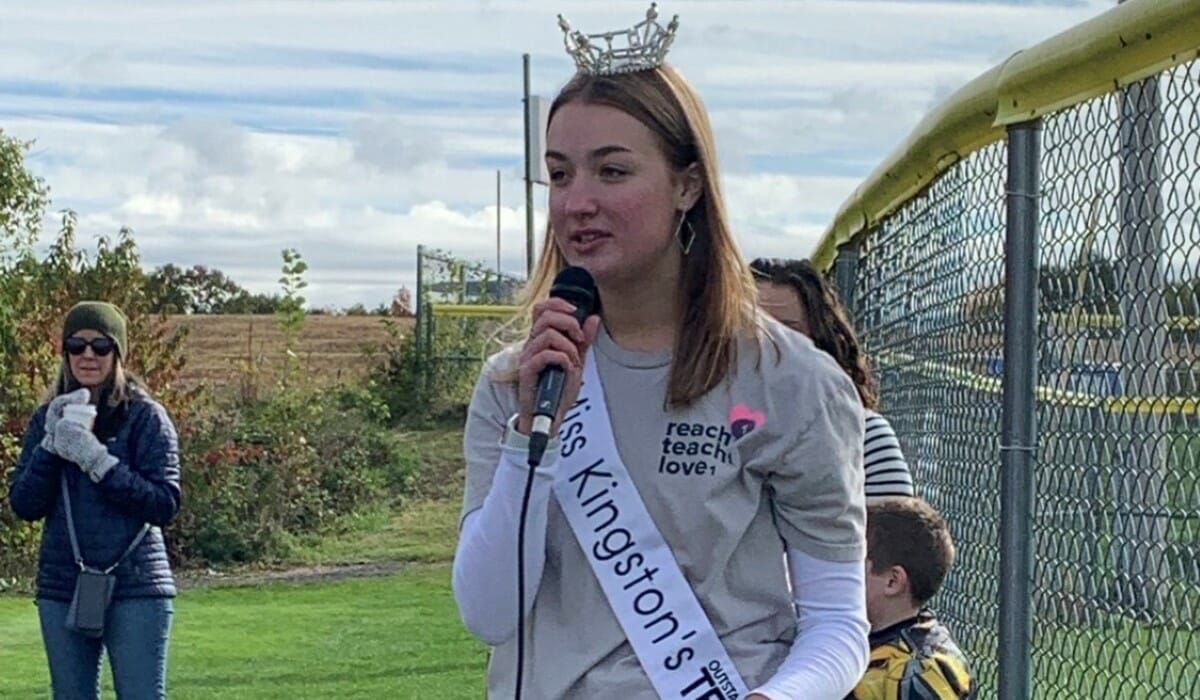
Marena Beale speaks during Reach 1 Teach 1 Love 1’s first annual wiffle ball tournament, a fundraiser for the nonprofit’s peer board./Courtesy Marena Beale
What’s been the most rewarding part of your work?
Seeing more and more people get involved with Reach 1 and other mental health nonprofits is definitely super rewarding. I recently competed at Miss New Hampshire’s Outstanding Teen this February. I was a finalist for the top three Teens in Action Award, and I had the opportunity to talk to a separate panel of judges about my social impact initiative, which is Reach 1. After talking to them, a bunch of these teens came up to me and told me they wanted to get involved in my platform and they loved everything I said. That was such a heartwarming moment, knowing I made an impact on those kids.
Why do you think it’s important for others to give back?
I think it gives you a sense of compassion and really humbles someone. I also volunteer with the New Hampshire Food Bank and a lot of other nonprofits. With New Hampshire Food Bank, I do a lot of their mobile food pantries. That’s such a heartwarming moment, to see those people who are so thankful for your time.
What do you want people to learn from your story?
Start that conversation. Suicide can be an uncomfortable thing to talk about, but if we don’t talk about it, we’re going to lose more and more people. Have a conversation with your kids. Have a conversation with your parents and talk about how you’re feeling. Going to a therapist is the same thing as going to a doctor, and taking care of your mental health is just as important as your physical health.
If you or someone you know may be considering suicide, contact the National Suicide Prevention Lifeline at 1-800-273-8255 or text HOME to 741741 to talk to a trained crisis counselor through Crisis Text Line – it’s anonymous, free and available 24/7.