Advocate and Writer Displays Unwavering Dedication to the Alzheimer’s Community
Meet Daily Point of Light Award honoree Dana Territo. Read her story and nominate an outstanding volunteer or family as a Daily Point of Light.
Dana Territo wants to be a light in the darkness for others, especially for the Alzheimer’s community. Dana was a caregiver from an early age, and she never let it go.
The 64-year-old resident of Baton Rouge, Louisiana started volunteering at a nursing home in the 1980s. The last 50 years for Dana have been filled with service hours, selflessness, a weekly column for Alzheimer’s caregivers, and even a book, “What My Grandchildren Taught Me about Alzheimer’s Disease”
She’s been recognized by several leaders, advocates and organizations. No matter the recognition, Dana wants the world to know that a person with Alzheimer’s is still a person, and that they deserve dignity and respect like anyone else.
Describe what you do for the Alzheimer’s population and how your dedication to the community began.
I started volunteering in a nursing home back in the 1980s, simply because I moved to Baton Rouge and I was missing a grandparent. I also wanted to instill in my children the value of the older generation. The nursing home paired me with a lady who had Alzheimer’s, her name was Peggy. I visited her once a week and I saw the whole span of Alzheimer’s disease. That was like 22 years, and she died when she was 102 years old. My work with her led me to become the activity director of the nursing home, which was the first memory care unit in Baton Rouge. It was kind of a big stepping stone.
What is the significance to the Alzheimer’s Walk Fundraiser, and why did you help start it in Baton Rouge?
We had a very, very small core group in 1995 trying to organize this walk and so many things. We ended up raising $14,000 and we had 75 walkers that first year. Now it’s up to thousands of more dollars and thousands of walkers.
That first year, LSU was playing Florida and LSU contacted me and said they were moving the game up early and we had to reroute our walk path. So we scrambled to make a half mile and a new turn around. I remember it very well, it was a very hectic time, but we were very proud that we raised so much in our first effort. So for 25 years, until the COVID-19 pandemic, I did something either as a team captain, a chair or public relations team member — I went through every committee, really.
Describe the weekly newsletters and columns you write about Alzheimer’s.
I started writing in the latter part of 2008. I approached The Advocate newspaper and asked if I could write a question and answer column for Alzheimer’s caregivers. They asked for me to send them a few samples, which I did, and by December of 2008 they were pumped. They started publishing every Monday. So I’ve been writing a weekly column voluntarily for 14 years.
I do it through my email. I read everything I can get my hands on about Alzheimer’s, and so I try to write about what’s trending and what would help caregivers.
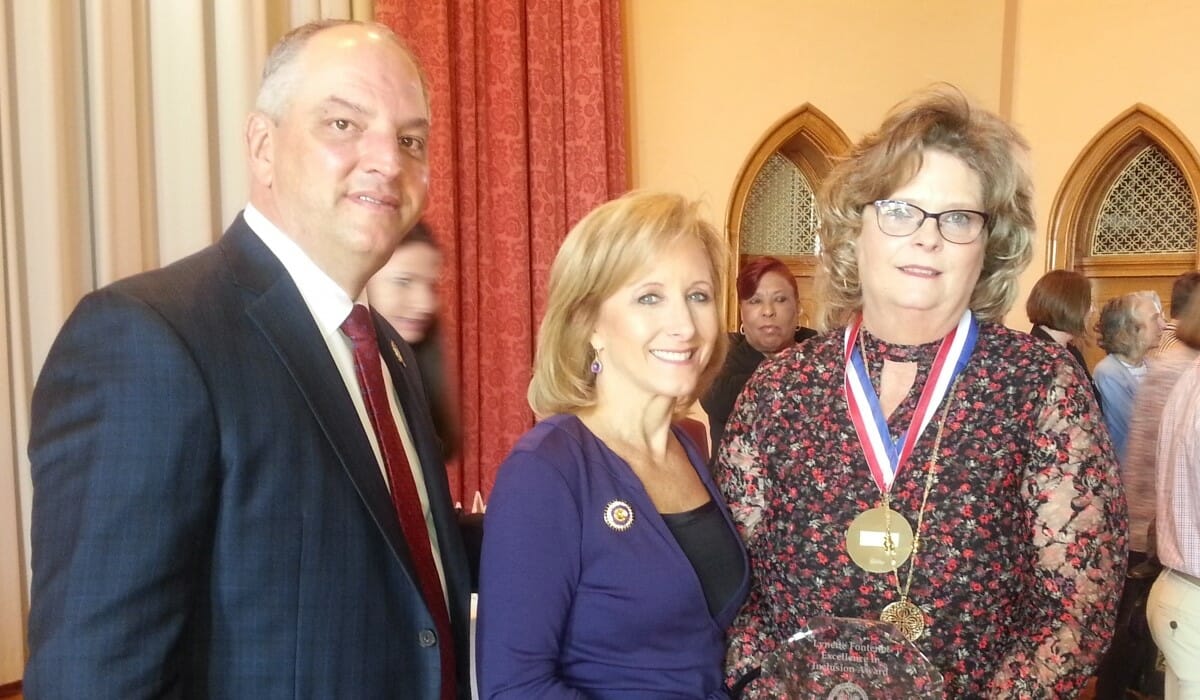
The Louisiana Governor’s Office of Disability Affairs awards Dana Territo the 2017 Lynette Fontenot Excellence in Inclusion Award for her advocacy work in the Alzheimer’s community./Courtesy Dana Territo
What inspires you to volunteer?
A priest from where I go to church said that there’s two things that are going to make you happy and fulfilled in life — which is to love God and to serve others. So I’ve always had a servant heart, I think it comes from when my grandmother lived with us and when she was diagnosed with cancer. I’m the fourth of nine children, and I moved into her room when I was 11 years old so I could care for her during the night.
At that age, I didn’t realize that I became a caregiver. Those values and everything were instilled in me. We’re here to help others and our world can’t be that small where we don’t touch someone else and work with others.
What have you learned through your experience as a volunteer?
The person with Alzheimer’s is still a person, and they deserve dignity and respect like anyone else. Sometimes there’s a stigma against it in this society, because it’s a mental disease, but I strive to show that there’s a person behind the disease rather than just the disease itself.
Why is it important for others to give back?
By the very nature that you walk this earth, you have a stewardship of others. We’re all in this together. Everybody says it’s a small world, and it is, because one one touch can lead to another. So I think we are all supposed to strive to see the bigger picture and to help others.
What would you want others to learn from your service story?
First, don’t be afraid of the Alzheimer’s population. And you receive so many blessings by giving yourself to others — more than you’ll ever know. A whole world opens up when you reach out to someone else or some other organization that needs your help.
Are there any partnerships, programs, or events that you are excited about?
The next Alzheimer’s Walk Fundraiser is this fall. I’m also doing monthly Zoom webinars through the Alzheimer’s Association. They have different topics — the one in March is going to be about ambiguous loss. Each month I get to connect with caregivers, especially to help them through the journey of Alzheimer’s.
After Losing His Vision, Artist Paints to Benefit People in Need
Meet Daily Point of Light Award honoree Joel Angel Garcia. Read his story and nominate an outstanding volunteer or family as a Daily Point of Light.
Joel Angel Garcia says he painted occasionally before he lost his vision to diabetes, but when the 61-year-old Palmview, Texas resident went blind, his vision for helping others became clear. “I would paint and so forth beforehand,” says Joel, “but when I got blind, I got on my knees and cried like a baby and asked God, ‘what do you want me to do? I need your help,’ and he did.”
Now a prolific painter, Joel has created hundreds of pieces of art over the last ten years, donating the pieces to benefit various organizations around his community. From Mujeres Unidas to hospitals for children, universities to the Salvation Army, Joel’s abstract paintings are changing lives and creating a stronger community.
What inspires you to volunteer?
Volunteering naturally came into my life. Someone said, ‘Why don’t you make a painting and donate it? It’ll benefit any type of charity.’ Then I did another one, and it just grew and grew, and I loved the service because it was for children or people with cancer, victims of family violence, their children and more.
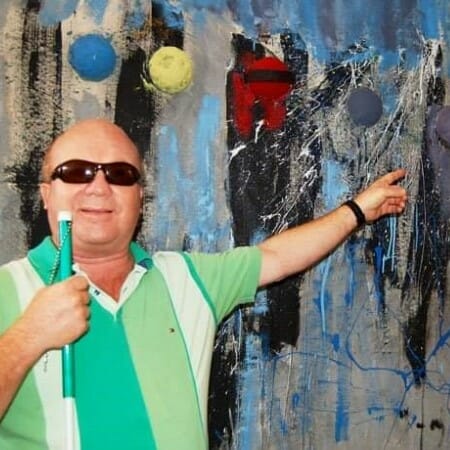
Since losing his vision, Joel Angel Garcia has become a prolific painter, creating hundreds of pieces of art to benefit various organizations around his community./Courtesy Aurora Garcia
Describe your volunteerism.
I’ve painted hundreds of pieces of abstract artwork over the last ten years. I paint using watercolors or oil. I hope to make art for as long as I can. My paintings are three feet tall and six feet long. My favorite artwork is called “Broken Promises” – it’s a painting of shattered glasses that I donated to Mujeres Unidas, an organization that provides shelter and support services to victims of domestic violence and sexual assault. I donate art to organizations around the Rio Grande Valley and several other states. My daughter and son-in-law help me, and the benefits from the sold artwork go to the organizations.
Share one personal story with me from your volunteerism.
I’m God’s humble servant and he gives me the energy [to volunteer]. [Volunteering is] soothing, it’s beautiful. I can hear the people, let’s say at St. Jude Children’s Research Hospital, thank me for my service, and of course a lot of children have brand new shoes or toys because of my donated art. That makes me feel so wonderful.
What’s been the most rewarding part of your service?
I feel a great humbleness and energy from volunteering. It’s hard to describe, but you feel fulfilled from service.
What have you learned through your experiences as a volunteer?
The more you give, the more power and love you feel inside of you. You want to volunteer more everyday no matter what you’re going through.
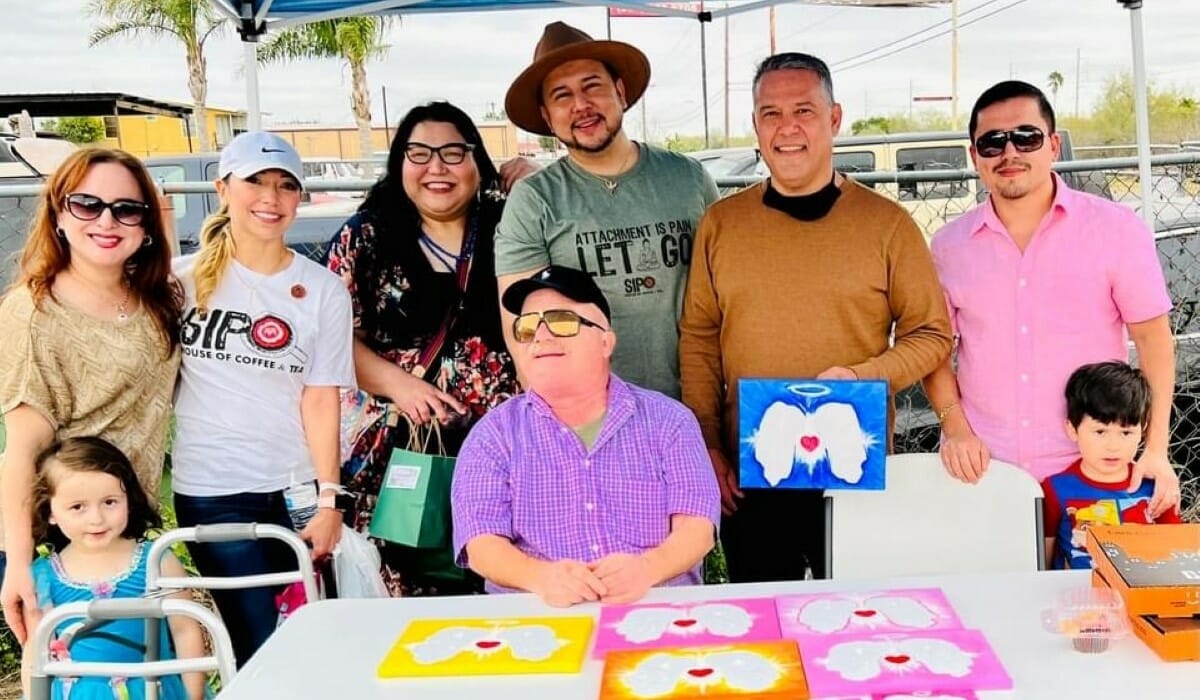
Joel pictured at a benefit in Palmview, Texas. Joel’s service benefits organizations and hospitals helping sick children, families in need and more./Courtesy Aurora Garcia
You have your own health challenges, but continue to give. What do you want people to learn from your story?
Keep on trying to do something in your life because if you stay stuck so to speak, you’re just going to stay there and that’s not going to help you, you’re just going to get worse. Keeping busy makes you succeed in life.
In one word, what does volunteering mean to you?
Love.
How can readers help?
Please visit my Facebook page for more information about my philanthropy.
Volunteer Builds Safer World for Children, Preventing Child Sexual Abuse and Exploitation
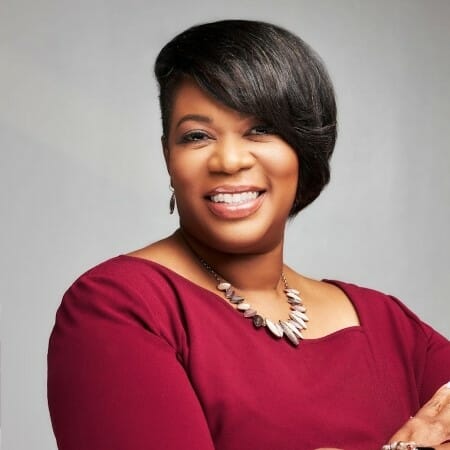
Meet Daily Point of Light Award honoree Shavontana “Starr” Davis who was a 2021 L’Oréal Paris Women of Worth Awardee. Each year L’Oréal Paris and Points of Light recognize and celebrate Women of Worth who make a beautiful difference in their communities. Ten honorees each receive a $20,000 grant to support their most cherished cause, and an online vote determines one honoree who will receive an additional $25,000 grant. Nominations for 2022 are now open! If you know a woman who works to create lasting and significant change in her community, nominate her to be one of the 2022 Women of Worth.
Shavontana “Starr” Davis is a criminal defense attorney who has earned many professional accolades and built a fulfilling personal life with her husband and two children. But it was just three decades ago that this shining leader was sexually abused at the hands of family members, leaving her feeling paralyzed, confused and ashamed.
“As a survivor of child sexual abuse, I don’t want another child to have to experience what I did,” says Starr. “As a child, I only confided in my best friend, also a child, about the abuse. I made her promise to keep my secret and she did, but some secrets aren’t meant to be kept. I made a vow to her at the time I told her that when I got older, I’d help girls like me.”
Starr remained silent about her pain for nearly two decades, but the 38-year-old Broward County, Florida resident is now shining a light on child sexual abuse and exploitation, as the founder and executive director of The Starr Institute, Inc. The organization is committed to educating, engaging and empowering youth and the community about child sexual abuse and exploitation, making good on the childhood promise Starr says she made long ago to shield children from trauma.
“I am doing this work so young people can avoid, not simply recover from, sexual abuse. You have to remember these are teens. Some days, they could care less about what you’re saying, that’s just the way it goes, but they expect for me to be there even if they don’t feel like being there. They know I’m going to show up as my authentic self. They look forward to that and I look forward to seeing them. I learn just as much from them as hopefully they’re learning from me.”
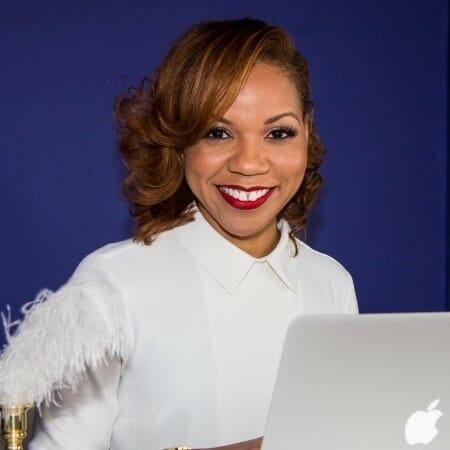
Starr, who says her service is guided by the well-known quote, “Service is the rent we pay for the privilege of living on this earth,” calls her volunteerism her purpose./Courtesy Shavontana Davis
Connecting with kids aged 12-17 across the United States, The Starr Institute offers creative, culturally-relevant and age-appropriate workshops and programming including sex trafficking awareness & safety 101, internet safety, goal setting and self-esteem. Serving with the belief that every child deserves a life free from harm, particularly the harm that comes from sexual abuse, Starr works with vulnerable children who have been abused or faced trauma and also those who have not. Dedicated to showing up every day for these children, Starr is modeling the behavior exhibited by her beloved grandmother who she credits with helping her to survive her childhood trauma and forming the adult she is today.
“I’m being to kids what my grandma was to me. Being a safe space before I even knew that was a real thing, which helps with resiliency for children who have experienced trauma. She was my person. She loved me, cared for me, supported me, believed in me, held me accountable and she always showed up. She was at every graduation, high school, college, law school, she was there for my marriage, the birth of my children…She was always encouraging me.”
Through speaking engagements, her published book, The Abuse Algorithm and more, Starr is raising awareness about child sexual abuse and exploitation in communities that are often uneducated about the topics. According to Starr, people will often wrongly assume child sex trafficking is an “international issue,” meanwhile, according to UNICEF USA, it’s happeningin every state in the U.S. Since 2017, more than 2,400 youth and adults have participated in The Starr Institute’s awareness and prevention programming, another 600 people across 32 states and three countries have raised funds to support The Starr Institute’s efforts through an annual 5K run, and The Starr Institute has partnered with organizations includingGeorgia Center for Child Advocacy (GCCA),The Center for Civic Innovation, and theBroward Human Trafficking Coalition to better support their work.
It’s Starr’s dynamic energy that is making the difference in the lives of children, says Giselle Balfour, project director for GCCA’s Envision Project, who has worked with Starr to provide programming for child sex trafficking survivors.
“Being a survivor herself, there is a connection, but even without telling her story, she has a positive life and energy that youth really connect with. Young people can sense when someone is being fake. They see the genuine spirit and passion for what she does and they really connect with that. They’re always so excited when they’re on a call with her because she’s always there to listen to them and also provide encouragement so they can keep going. The fact that she’s been through [abuse] herself shows that it’s possible to keep going.”
Starr, who says her service is guided by the well-known quote, “Service is the rent we pay for the privilege of living on this earth,” calls her volunteerism her purpose. As she works each day to make the world a safer place for children, Starr encourages others to help someone else in need.
“Because you’re blessed to be a blessing. That’s either with your time, talents or treasures. None of us are able to be as successful as we are without the help of other people somewhere along our journey. It’s always incumbent upon us to be able to reach out and help the next person, because no organization runs off the strength of one person, it takes all of us. We have to connect up with one another and just help each other. That’s what makes the world better anyway, we thrive off of being in fellowship with one another.”
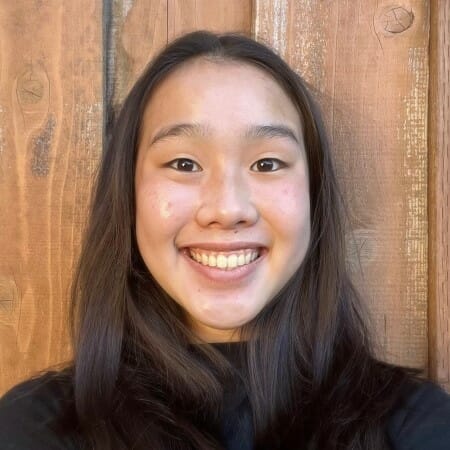
June Wang is out to prove wrong the notion that adolescents are unable to successfully fight the world’s injustices, and so far she is succeeding. When she was only in the eighth grade, June started her Community Health Initiative to target public health inequities in the San Francisco Bay Area and beyond. Now 16, June has been able to recruit over 350 active volunteers and has positively impacted the lives of 102,000 people.
With Community Health Initiative, June leads her volunteers in hosting workshops addressing various public heath issues, discussing topics from mental health to fitness and nutrition. Community Health Initiative has raised thousands of dollars in donations for Mental Health America, the American Public Health Association, and local groups. Their biggest project to date has been helping to launch an online mental health forum that has reached 100,000 people globally.
Describe your Community Health Initiative.
The Community Health Initiative I currently run is a group that does work targeting public health inequities. We reach out to various community initiatives and we host workshops with them, depending on the community need, to hopefully alleviate one specific public health issue. For instance, one workshop we’ve done was working with local senior homes to do Zoom activity workshops. We’ve presented in homeless shelters. We’ve also done quite a bit of fundraising for various national public health organizations. We raised a few thousand dollars for some national nonprofits as well. Besides helping marginalized communities, we also do school workshops. We work with school groups such as Monta Vista FBLA, which is my local student business club, to host workshops specifically for mental health as well as physical activity. We also do some nutrition work. Whatever need there is, we work to address it with workshops and fundraising.
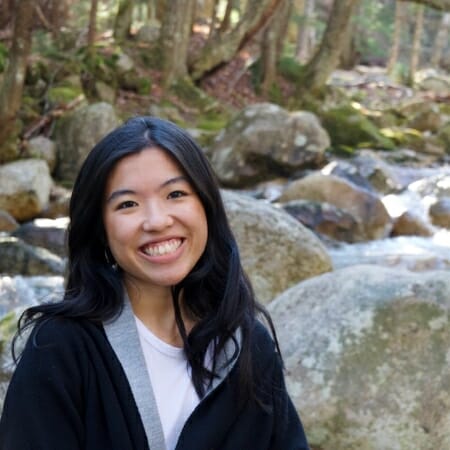
June Wang serves as the founder of Community Health Initiative, which tackles public health issues in the San Francisco Bay area and beyond./Courtesy June Wang
What inspired you to start Community health initiative?
One of the stories my parents always tell me is whenever I would pass a homeless person on the street, I would immediately cry and insist we donate. So I think this idea of altruism and doing that at an individual level is something I was also interested in pursuing as a community initiative, and at a professional level, too. I started with volunteering at a more direct level. I would help out with events with Girl Scouts, such as distributing coats for a coat drive. I would also do ground-level work from a young age. From there, seeing such pain and suffering at a large scale around me, it really angered me to see such injustices in all the issues of the world. I thought volunteering in public health avenues was one way that I as an individual could contribute to the continuous process of diminishing these vast injustices at the ground level. Starting as a grassroots-level volunteer myself, I decided then it was time to take more action and ultimately start my own initiative in eighth grade, since there is a greater need for that public health volunteering.
Why did you specifically want to focus on tackling public health?
The idea of community health and public health is that it’s a very mitigated process. Let’s say someone goes to the doctor. They’re there for the treatment because they’re already ill. That’s not something they have control of anymore, because they’re already affected by the sickness. With community health, we aim to reduce the chances and instances of the health problems in the first place. By approaching health from a preventative level rather than from a remediating level, that helps to solve some of the issues we see with public health and socioeconomic disparities from the fundamental level, rather than fix those issues after they’re already present.
What aspect of this initiative are you most proud of?
I would say one of the most interesting and the most widespread impact we’ve had is creating a global mental health discussion forum. We partnered with a startup company that was a mental health app on the Apple Store and Google Play store. We reached out to them, and from scratch, we created a mental health discussion forum that would allow people to share their mental health issues and discuss them in a safe space. The process of proposing the idea to its implementation took over a year to accomplish. So far to date, that forum has reached around 100,000 users in the app. The wide reach of that event is probably one of the things I’m most proud of with this initiative.
Do you have any future partnerships, programs, or events you want people to know about?
Currently, I am working with Monta Vista FBLA’s community service chapter. We’re working to create sexual assault care packages. That’s one local event we have coming up. In the future, I am hoping to expand our work beyond just local and online mediums, but also to other geographical areas. I’m creating a framework for finding issues and addressing them that I can hopefully share with other future change makers in other areas of the United States.
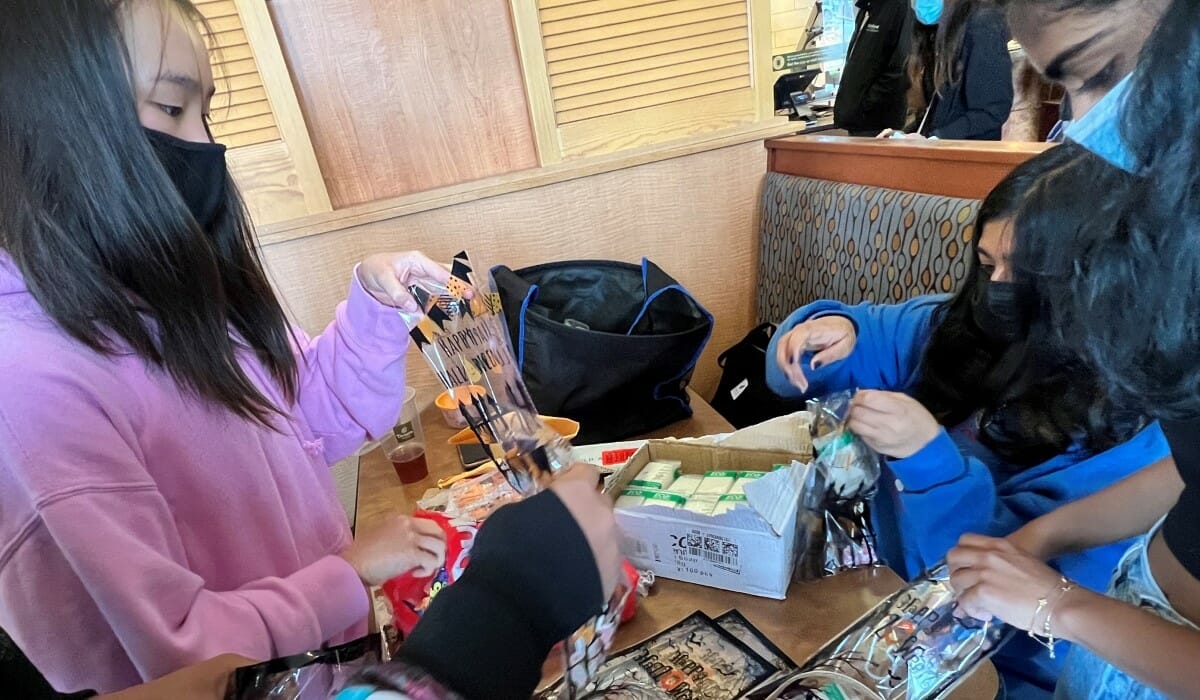
June Wang, left, makes Halloween-themed care packages for the elderly and houseless./Courtesy June Wang
Is there anything you’ve learned from your time volunteering?
While events and the number of people who attend our workshops from varying demographics is a quantifiable way to measure impact, I would say connecting with people person-to-person — like the conversations we have during workshops, conferences, and events — is one of the most valuable things I’ve gained from this volunteering. Seeing at a ground level the inspiring stories, and the overcoming of hardships that I think my initiative has somewhat been a part of, is really inspiring in terms of continuing the community service work I’ve done. Seeing the interactions of people directly has always reaffirmed that community service is necessary in our world.
Why do you think it’s important for others to give back?
While some people may say it’s idealistic for young people especially to act on the issues happening around them, I think volunteering is such a simple but powerful way for people to better the world. Because of how flexible volunteering is, ranging from direct initiatives to random acts of kindness, it’s a very effective and accessible method of bettering other people’s lives. I think especially with the present focus on ourselves and being caught up in our own personal goals, being able to recognize the problems of the world around us and the daily struggles of the others around us, and working to address them, can be a very fulfilling and very necessary thing to better society.
What do you want people to learn from your story?
Firstly, I think age is just a number in being able to better the world through volunteering and any initiative. I would also say that committing acts of service, whether that be leading service or volunteering for other organizations, is incredibly fulfilling and needed in its impact. We need it at a large scale. If multiple people are able to volunteer, and multiple people are able to see issues in the community and actively work to address them, then they’re already doing more than over half the people in the world to better the world around them. Continuously find issues in the world around you, because there are a lot of them. Know you have the power to better the lives of others. Seek those volunteer opportunities because they’re always out there, out of necessity.
Volunteer’s Personal Healthcare Experience Drives Community Service for Homeless
Meet Daily Point of Light Award honoree Sara Young. Read her story and nominate an outstanding volunteer or family as a Daily Point of Light.
Sara Young says she grew up in a medically underserved community, her family lacking access to health care insurance or resources.
Witnessing the barriers her community faced in trying to access healthcare, Sara joined ETCH (Education Transforming Community Health) as a volunteer seven years ago, the 20-year-old now serving as executive director of the Seattle, Washington organization. Currently a medical school student, Sara has connected with hundreds in the Seattle area through her service and led ETCH to expand to more than 40 volunteers. Volunteering to increase wellness resources for underserved populations, Sara’s service is transforming community healthcare.
What inspires you to volunteer?
Whether the barriers are financial, related to immigration or transportation, I’m inspired to make healthcare more accessible to everyone, specifically for homeless populations.
Describe your volunteerism with ETCH.
As executive director, I organize volunteers and help to recruit and train new volunteers. I develop workshops for new initiatives including helping populations access work materials to get back into jobs and the Community Health Navigator Program, which makes mental health and wellness resources more accessible to underserved populations. I also create healthcare brochures in consultation with area health care physicians and connect with other shelters and organizations in our community.
Sara Young: “If you put good out in the world, the good will also return.”/Courtesy Sara Young
Share one personal story with me from your volunteerism.
A few years ago, I spoke with a patient who stayed after one of our sessions and had detailed questions about hypothermia. This person had a friend who had passed away from hypothermia because they felt they didn’t have access to care. The patient asked me about signs, when to seek care and where to go. This was one of the first times that I realized the impact health care access had to a lot of people in the area, and how devastating it was if you felt like you couldn’t access healthcare when you needed it.
Why do you think it’s important for others to give back?
If you put good out in the world, the good will also return. You never know what someone is going through and you never know the struggles they are facing. Volunteering feels great, it benefits people and you also get to make a lot of good connections and great memories from it as well.
What’s been the most rewarding part of your service?
It’s rewarding to see how appreciative and thankful the patients are, even for a brochure or list of healthcare clinics they can talk to. Health is a big worry for many, and it’s great to be able to ease that worry.
How have you continued to volunteer throughout the COVID-19 pandemic?
At the beginning we couldn’t visit shelters due to restrictions, so we focused on making creative and informative brochures to have them ready once restrictions were lifted. As the pandemic went on, we provided safety training for volunteers and worked on expanding to more shelters to increase our reach. We are still operating under some restrictions, but we’re hopefully getting back to normal.
What do you want people to learn from your story?
You never know how much change you’re going to make in somebody’s life. Even in patients I thought I wasn’t really helping that much, they’d say afterwards that they were really impacted by the work we were doing. That is really special to hear.
In one word, what does volunteering mean to you?
Rewarding.
How can readers help?
For more information about how you can help, please visitETCH’s website.
Educator’s “Give Back” Mentality Builds Better World for Neighbors
Meet Daily Point of Light Award honoree Shenée Holloway. Read her story and nominate an outstanding volunteer or family as a Daily Point of Light.
Imagine a beautiful circle of helping hands, says Shenée Holloway. “A cycle of hands helping another hand,” says Shenée. “One hand reaching to help one, another to help another.”
That circle, says Shenée, is what she’s been supporting as a volunteer dedicated to strengthening her community. As the president of the Duluth-Norcross Kiwanis Club, Shenée, a 46-year-old resident of Duluth, Georgia, is volunteering to connect with hundreds across the cities of Duluth and Norcross in Gwinnett County. As an educator, Shenée has served her community wherever she’s lived, even taking her recent job as the Coordinator for Family and Community Engagement for the Gwinnett County Public School District because the role fed her love for community work and activism. Just as she shares knowledge as a teacher, Shenée is applying her “give back” mentality to volunteerism, sharing everything she has.
What inspires you to volunteer?
My main inspiration comes from our community. I live in a very diverse area in Georgia, and it’s becoming even more diverse, but to me, a lot of the leaders didn’t necessarily represent that diversity. We are doing the engagement to change that.
Shenée Holloway: “Sometimes we focus so much on our own problems or things we have in life. When you give back, it allows you to transition that train of thought to see that someone else could use that help. We are our brother’s and sister’s keepers. To have someone be there for you and look out for you, it’s what keeps the world going.”/Courtesy Shenée Holloway
Describe your volunteerism with the Duluth-Norcross Kiwanis Club.
As president, I organize our bimonthly speaking events and invite speakers to share what’s happening in the community. Additional activities for the club include holiday dinners for families in the school systems, reading to kids at school or virtually, connecting with schools to find out what they need, we may provide donations for snacks, food or water and the club’s annual golf tournament. My volunteerism isn’t limited to Kiwanis, I also volunteer annually for the Duluth Fall Festival, I serve on the city’s Ethics Board, I’ve also served on the city’s Citizens Budget Review Committee and the LEAD (Lead, Engage, Advance Duluth) Program for citizens to learn and become active and engaged within the community. I also serve at my church, my neighborhood homeowners association, and on the advisory board for the Gwinnett Technical College Adult Education Program.
Share one personal story with me from your volunteerism.
Every year during the Thanksgiving holiday, our club finds a couple families we can donate food to. This year, a restaurant provided a full turkey meal for the families. I personally delivered the food and the family was so, so, thankful. I told the mom we could help for Christmas as well, all she wanted was a laptop for her son and blankets. To us, a blanket or meal may be small, but to someone else who doesn’t have or is struggling to have, [it can mean so much]. It makes me feel grateful to help someone in that way. I literally could volunteer all day, I wish I could. Volunteerism is the thing that gets me going, it’s my purpose.
Why do you think it’s important for others to give back?
Sometimes we focus so much on our own problems or things we have in life. When you give back, it allows you to transition that train of thought to see that someone else could use that help. We are our brother’s and sister’s keepers. To have someone be there for you and look out for you, it’s what keeps the world going.
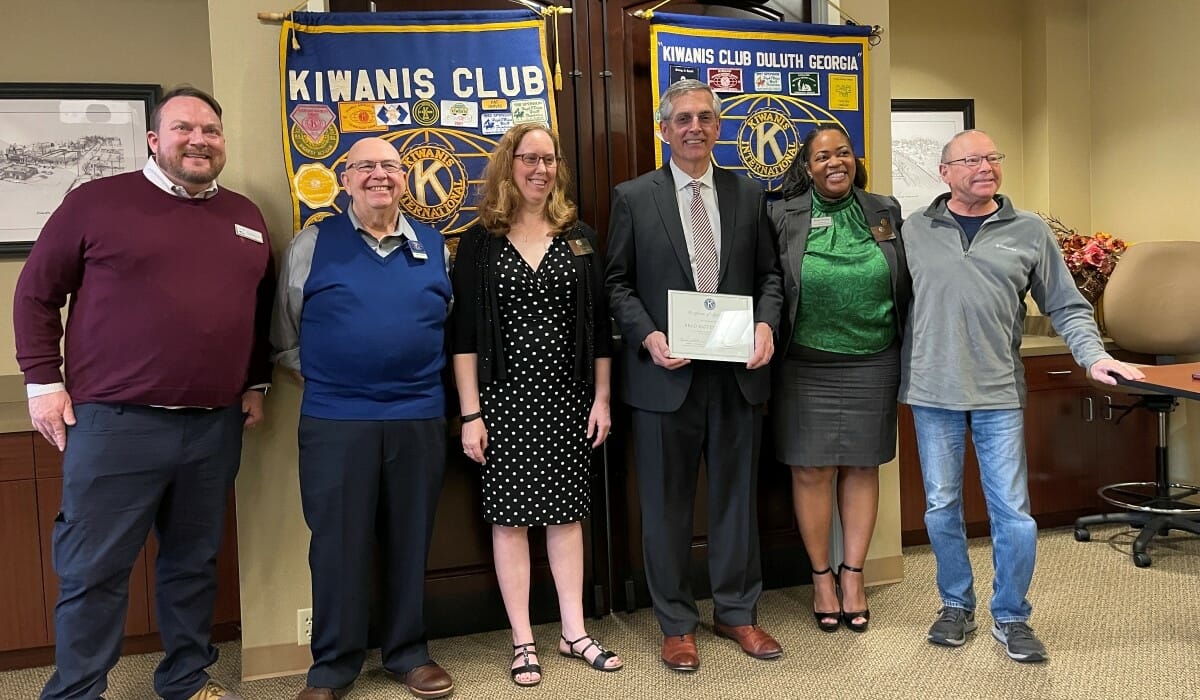
Shenée pictured with fellow Kiwanis Club volunteers and Georgia Secretary of State of Georgia Brad Raffensperger./Courtesy Shenée Holloway
What’s been the most rewarding part of your service?
It’s rewarding knowing that I’m helping someone or I’m there for someone. [Service is] no longer about me. I have limbs, a body, I can move and do. I feel like my purpose is to be there to help someone else.
How have you continued to volunteer throughout the COVID-19 pandemic?
We pivoted a little bit. For example, before the pandemic, we’d go into schools and read to students, but as a result of remote learning, we established Gwinnett Reads On the Web (GROW) and posted videos of us reading books to our website and the public library website.
Volunteer Serves San Diego’s Boys and Girls Clubs for Over a Decade
Meet Daily Point of Light Award honoree Lionel Deschamps. Read his story and nominate an outstanding volunteer or family as a Point of Light.
Lionel Deschamps has long been involved in charitable organizations, particularly those serving children. So when he moved to San Diego to work for the accounting firm KPMG, a longtime supporter of Boys and Girls Clubs, it was a no-brainer to start volunteering for San Diego’s chapter.
Since 2006, Lionel has supported Boys & Girls Clubs of Greater San Diego in a variety of roles. Most recently, he was the chair of the board sitting on the executive committee, and also served as the auction committee chair for the nonprofit’s biggest annual fundraiser, the Evening of Changing Lives. This year, Lionel is serving as chairman of the entire event, and hopes to beat last year’s record of raising 1.1 million dollars to support his community’s kids.
Describe your volunteer role with Boys & Girls Clubs of Greater San Diego.
I’ve been a member of the volunteer board for years. Through that, I’ve served in a number of different roles. I’ve been treasurer, chairman of the board, and most recently I was the past chair of the board sitting on the executive committee. I would say the other significant role in the last handful of years is [helping with] a big annual fundraiser called the Evening of Changing Lives. It’s our one big event where we raise most of our charitable donations for the year. Last year I served as the auction committee chair, and this year I’m serving as the chairman of the entire event.
Lionel Deschamps has served the Boys & Girls Clubs of Greater San Diego since 2006, most recently serving as chairman of their Evening of Changing Lives event./Courtesy Lionel Deschamps
What inspires you to volunteer for this organization?
I really like the mission that we have, which is to provide a safe place for kids to grow, develop, and learn life skills. It’s a place for them to come after school where it’s a safe environment, and where they can learn and play with their peers. In particular, we do tend to serve communities that are disadvantaged. Not everybody, but a large proportion of the children we serve do come from disadvantaged homes. I’ve always felt that helping kids who need it is important to me. I’ve always been of the view that kids don’t get to pick the situation they find themselves in. Sometimes they’re subject to the circumstances of their life or the challenges that their family is having. It’s sometimes hard for them to change their situation. Anything that we can do to help children in these challenging situations has always been something important to me.
What is the Evening of Changing Lives like?
I would describe it as a large gala dinner, silent auction, and live auction. It’s a very large event. We traditionally have over 700 people in attendance. Like many large events, we have a fundraising aspect, a silent auction and live auction, and we always have a lot of really cool items. But then after the event, as a thank you to everybody, we’ve had pretty cool musical acts that put on a concert for everybody after dinner. In past years we’ve had The Beach Boys, Don Felder from the Eagles, Kool and the Gang. We view that as something that really sets our event apart. Our goal is always to net over one million dollars after expenses, and last year we netted just over 1.1 million. We have a goal of 1.2 million this year, which for an organization of that size, comes out to over 10 percent of our total funding for the entire year. It’s a really important event for us.
Do you have a favorite memory from your time volunteering?
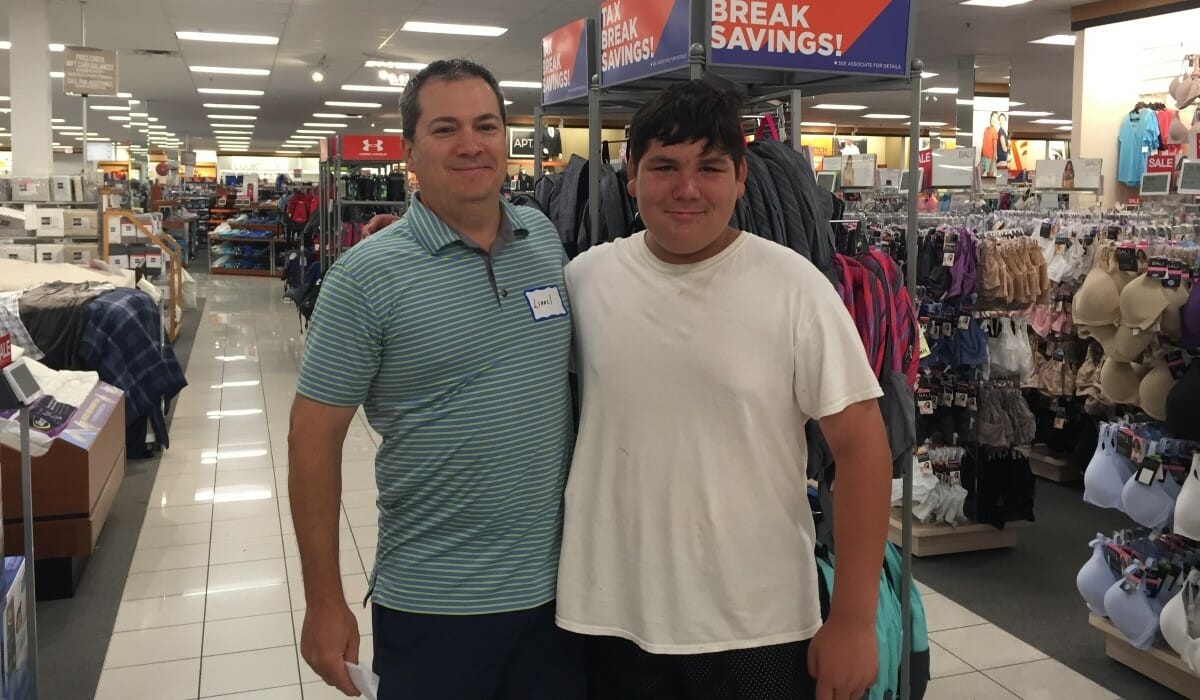
One of the things we do every year, although we didn’t do it last year because of COVID, is a back-to-school shopping event where board members or volunteers can sponsor a youth. We take them around Kohl’s and do their back-to-school shopping for them. You walk around the store with the kid you’re with and help them pick out clothes, lunch boxes, and backpacks. I’ve done that several years. That’s always a really fun event because that actually gives you some one-on-one time with the kids. I’ve brought my oldest son, who is now 10, with me a couple times. He gets a kick out of it, but also to show him why volunteering and doing these types of things are important. He’s pretty lucky that he’s growing up the way he is, but I do want my kids to understand that not every kid is as fortunate as they are and giving back is important.
Lionel Deschamps, left, attends a Boys & Girls Clubs of Greater San Diego-sponsored back-to-school shopping event./Courtesy Lionel Deschamps
What pushes you to make such a time commitment to this organization?
I do feel strongly that people who are in a position to give back, either financially or with their time, should do that. I feel that type of service to your community is important. As I mentioned, I’ve always felt that and where I’ve directed my time in that respect is always toward children. I do feel that obligation. I didn’t grow up advantaged. I’ve been successful. Where I am today in life is very different from where I came from, so I do feel that obligation to help some of the less fortunate children to hopefully be in a position to succeed the way I was able to.
What’s been the most rewarding part of your work?
At every board meeting, we have a mission moment. It’s when some of the folks who work full time at the Club tell a story or bring in one of the kids we helped. It gives you more of a direct line into seeing the impact that we’re having on kids in our community. I always really enjoy those at the board meetings because people get really choked up sometimes talking about the way the clubs helped them — whether be it helping them get through some challenging moments at home, dealing with bullying, or teaching them about technology or computers at the tech center at one of our locations. Hearing that direct impact is really great.
What do you want people to learn from your story?
If there is anything I would like people to take away, it’s that anyone can make a difference. Particularly when you’ve got a career and family, it’s real easy to get super busy and say I’ll just write a check. Lots of people do that and there’s nothing wrong with that, but I like to tell people that while charities definitely need and want your donations, finding a way to give up your time or doing something beyond writing a check gives you a greater appreciation for the challenges going on the community, and also the satisfaction in knowing that people can make a difference. You get a lot of intangible rewards from it as well — seeing the impact you can make, and the lives that you can impact through giving more than just money, but giving up your time and dedication.
Former Firefighter and Paramedic Spends Retirement Serving Hundreds of People at Soup Kitchen Each Week
Meet Daily Point of Light Award honoree Tom Quigley. Read his story and nominate an outstanding volunteer or family as a Point of Light.
On September 18, 2018, Tom Quigley walked into JOY Soup Kitchen in Greenville, North Carolina, looking for a way to serve the community he had only just moved to. The former Marine had recently retired from an over two decades-long career as a paramedic and firefighter in Massachusetts, and his loves for both helping people and cooking led him to his new area’s soup kitchen. Little did he know at the time, but that day would mark for Tom the beginning of his journey to overhaul the nonprofit and better his new community.
Later that year, Tom would start going to the soup kitchen every day. By 2020, he was on the board of directors, and began serving as its chairman in January 2021. Now, Tom completely oversees the nonprofit, which has since been renamed JOY Community Center to reflect its new social assistance programs, as well as the clinic Tom plans to open by mid-March. Aside from the new programs, JOY continues to operate its soup kitchen, serving hundreds of people lunch and dinner every week.
Describe your volunteer role with JOY Community Center.
I voluntarily run the soup kitchen. I work 40 to 60 hours a week for free, running the kitchen, making sure the meals are planned, the food is bought and the other volunteers are signed up. I’m in the process right now of opening a free clinic, and that’s why we went from JOY Soup Kitchen to JOY Community Center. I’m trying to bring in some social services and other services for children in the neighborhood.
Can you describe the Children Event Nights you started?
We’re right in the heart of a very bad neighborhood in Greenville, and there are a lot of children in there. Every other day, there’s gunfire. There’s drugs every day there. I watch these children out the window, and they’re going to get lost. There was nothing really going for them in the area, so we started doing a Wednesday night activity for them. The third Wednesday of every month, we would bring them to JOY from 6 to 8 p.m., and we would do a craft — one, to get them off the streets, and two, to get them off computers and video games.
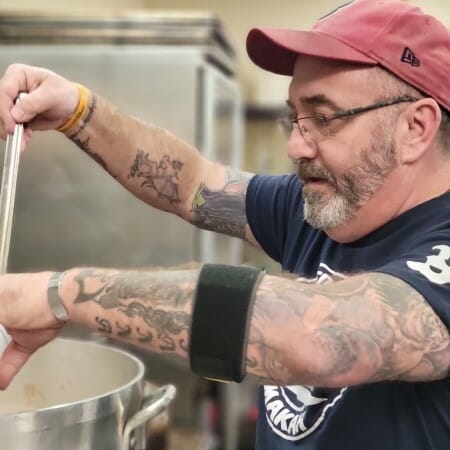
Tom Quigley cooks one of the thousands of meals he provides to visitors of JOY Community Center each year./Courtesy Tom Quigley
When did you decide to make JOY a community center, and what programs have you added?
Once we started doing the children’s events, we decided we wanted to do more services for people. … Vidant Medical Center, the biggest hospital group in our area, are going to pay for a nurse practitioner or a physician assistant for a year to help run our clinic. We’ve got [East Carolina University] involved. The head of the medical school there is going to be our medical director. I just put new floors in. We fixed the walls. We got all new medical equipment coming in. … I started reaching out to a service, Pathways to Life. They help people get jobs and apartments. Trillium is a mental health service that comes in. I reached out to Lifetime of Joy Baby Pantry. They come in once a month and give out diapers and Desitin and stuff like that. We bring in Pitt County AIDS Service Organization. They deal with HIV and STDs. We have all these services that are going to be coming in on a rotating basis. We’ve got four offices on my second floor that they’re going to utilize, and we’re going to offer classes. We have a diabetes support group. Last week was a cancer support group. We might even get an Narcotics Anonymous or Alcoholics Anonymous chapter in here. We have a lot of space that we can do a lot of good with.
Do you have any other future plans or goals for JOY?
I would really like to have a place where everyone can come and just be themselves with each other. I think that’s the big, important thing about this children’s event. When we bring all the kids into the building, we make the parents stay outside. This way, children can interact with other children. They don’t see color and hate. They’re taught that. I really want to have these children come in and have a good time together, so they can see that they can have a good time with somebody who doesn’t look like them or act like them. That’s what I want to push. I want to push community. I want people to say, “I’m in trouble, where do I go?”, and I want to be the lighthouse for this whole community. In stormy weather, ships look to the lighthouse to get to shore. I want JOY Community Center to be the lighthouse of Pitt County.
What is your favorite memory from your time volunteering with JOY?
I would say my favorite time was during the pandemic. I was sitting at the door. I propped the door open, and we would feed take-out trays out the door. I was sitting there eating a bowl of the soup I made. Somebody said to me, “What are you eating?” and I said, “I’m eating the same thing you’re eating.” He goes, “You eat what we eat?” And I said, “Yeah, I feed you like you’re family.” The guy said, “Can I hug you?” and I said, “Yeah, what’s the matter?” And he goes, “You’ve got to be the most righteous white guy I’ve ever met in my life, thank you.” You ever cook something for somebody, and they just look at you and they nod like it’s one of the best things they’ve ever eaten in their life, and then they smile? Those are my memories.
Tom Quigley, center, poses with some of the local kids who attend JOY Community Center’s monthly Children Event Nights./Courtesy Tom Quigley
What’s been the most rewarding part of your work?
I think the proudest thing I’ve done is I’ve gotten people together that weren’t used to being together. It’s good to see. The dining room is reopened and we’ve got people eating with people they never would have talked to before. Once the food service gets going, I always come out and I greet anybody in the dining room. I sit down and talk to people, and it’s like you’re at a restaurant with friends. Back in 2018, 2019, it wasn’t like that. We had people stabbing each other in the dining room. We had overdoses in the bathrooms. The place now is a place of respect. You’ll see from the other people who eat there, if somebody starts getting loud in there, they’ll stand up and say don’t disrespect the kitchen, and don’t disrespect Mr. Tom. It’s cool the way the whole thing’s turned around.
What can people reading this do to help JOY Community Center?
If people are not from here and want to be a part of [JOY], they can contribute financially. I have it set up now where you decide where your money goes. You can give money and say it’s for food, and it will strictly go into a food account. … They can donate money toward equipment. They can donate money to those Wednesday night children’s events. Getting pompoms, popsicle sticks, paint, glitter, and all that, it adds up to a few hundred dollars a month just buying the crafts for these kids. Last Christmas, I probably spent $2,000 on stuff to give 103 kids a good night. If they’re in this area, we run solely on volunteers. There are two employees here. We serve lunch five days a week, and we serve dinner four nights a week. They need help with that. Serving 150 people is tough with two people.
Why do you think it’s important for others to give back?
I think a lot of people want to volunteer and they just don’t know how. I think it’s important for people to volunteer so they can see how the other half lives, because a lot of people don’t realize that one bad day could take them from a life of comfort to needing that soup kitchen.
New York City Doctoral Student Works to End the Pandemic of Hate
Meet Daily Point of Light Award honoree Michelle Tran, who was a 2021 L’Oréal Paris Women of Worth Awardee. Each year L’Oréal Paris and Points of Light recognize and celebrate Women of Worth who make a beautiful difference in their communities. Ten honorees each receive a $20,000 grant to support their most cherished cause, and an online vote determines one honoree who will receive an additional $25,000 grant. Nominations for 2022 are now open! If you know a woman who works to create lasting and significant change in her community, nominate her to be one of the 2022 Women of Worth.
Hatred was spreading all around her in New York City as the COVID-19 pandemic continued around the world — Michelle Tran remembers people crossing the street to avoid her and even witnessed elderly Asian Americans getting attacked at restaurants and cafes she frequented.
In light of escalating hate crimes against Asian American Pacific Islanders, Michelle Tran rose up to give her community a sense of hope and belonging with her nonprofit, Soar Over Hate, an initiative to combat anti-Asian hate and equip vulnerable Asian American Pacific Islanders with self-defense materials, culturally-competent therapy and other resources.
“Our goals are to empower the community and to give a voice back to the people that are feeling like their voices have been silenced or taken away,” Michelle said. “The COVID-19 pandemic really illustrated how detrimental and dangerous racism can be.”
“It’s extremely eye-opening for people to see that lives can be lost from these horrible reasons,” she added. “It can be debilitating and affect people’s emotional well-being and ability to relax.”
Michelle co-founded Soar Over Hate with her mentee, Tiffany Yuen, in 2019. The doctoral student of medicine was recognized as a L’Oréal Paris Woman of Worth in 2021 and received a $20,000 donation to support her cause. She remains motivated to reclaim her power and voice, and to help others to do the same.
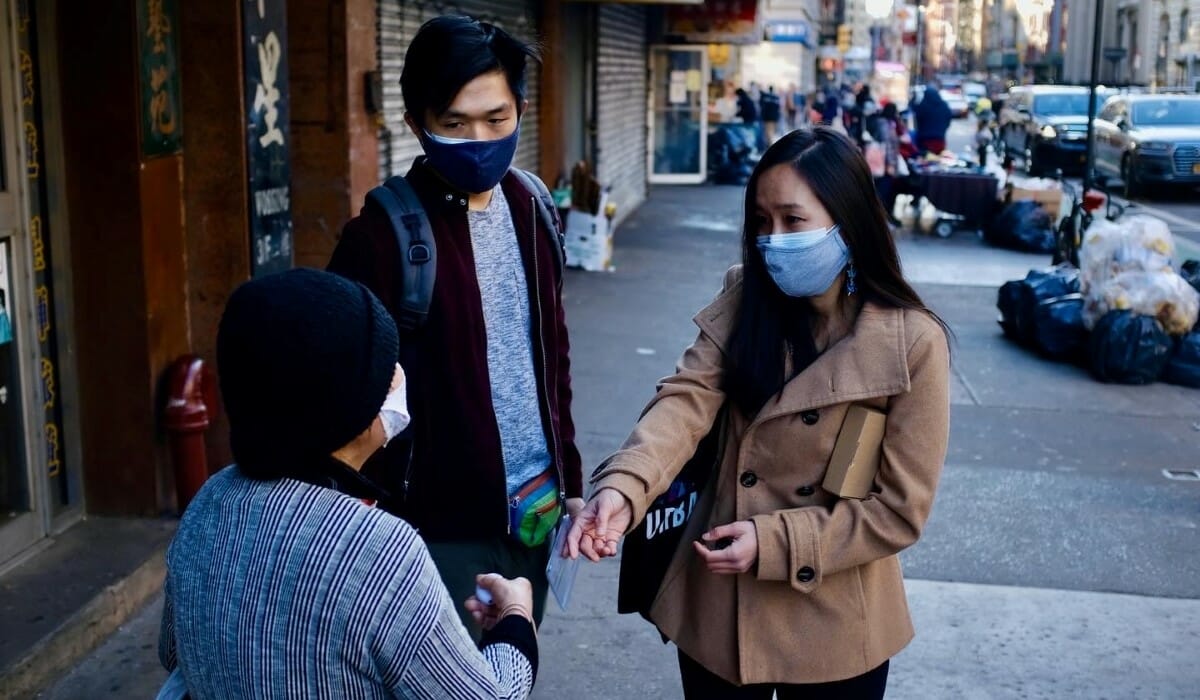
Michelle Tran and Howard Chen donate a personal safety alarm to a senior in Manhattan’s Chinatown./Courtesy Derek Kao
Michelle began attending rallies that brought together Asian American Pacific Islanders who stood in solidarity against hate crimes. She realized that people needed to take extra safety precautions in the city. The drive to keep herself, her friends and her family safe began as Michelle purchased pepper spray. Shortly after, she raised funds to purchase personal safety alarms for Asian Americans who didn’t know how to find the resources themselves or couldn’t afford them on their own.
Michelle realized how big this need was after thousands of dollars poured in from her friends, family and colleagues on GoFundMe. Vulnerable communities — immigrants that didn’t speak English, low-income residents, women and members of the LGBTQ community — were prioritized, and Soar Over Hate has distributed more than 23,000 safety alarms, whistles and pepper sprays.
The fourth year doctoral student didn’t stop there. Michelle began to host Asian American Pacific Islander Care Fairs that offered health care screenings, self-defense classes, mental health resources, therapy, meditation, healing circles and more.
Soar Over Hate’s Bright Futures scholarship program, launched in 2021, has awarded six people $500 or $1,000 in funds. Michelle hopes the scholarship program will continue to grow and help provide healing and hope to AAPI youth in addition to giving out more personal safety equipment to the community this spring.
“It’s been really meaningful for me to connect with the Asian community in New York City and to have so many bonds made, especially after more isolation throughout the pandemic,” Michelle said.
Throughout Pandemic, Volunteer Serves at COVID-19 Testing Sites and Local Food Bank
Meet Daily Point of Light Award honoree Lucy Harris. Read her story and nominate an outstanding volunteer or family as a Point of Light.
Lucy Harris has long been acquainted with social justice issues. As a child, her union organizer parents took her along to peace marches and civil rights protests. She later served as a social worker for 40 years. So when the COVID-19 pandemic first broke out, she fell back on her history of service to help out in any way she could.
Lucy began volunteering at the Redwood Empire Food Bank in her Santa Rosa, California community, helping to sort food that would be distributed to people in need. Once she received her own vaccine last March, she also signed up to assist at COVID-19 vaccination and testing sites with the Center for Volunteer & Nonprofit Leadership. She travels to sites across Sonoma County to help greet visitors and assist with registration. Lucy can most frequently be found at sites either within Santa Rosa’s Spanish-speaking neighborhoods, where she utilizes her bilingualism, or at elementary schools, so she can make use of her long professional history of working with children.
Describe your volunteer role with the Center for Volunteer & Nonprofit Leadership.
Essentially, I’m there to help ease people through the process from the time they arrive. They check in, they have to fill out forms, identify themselves, and identify their physical health and so forth before they can be vaccinated. Particularly in the places where [people are] Spanish-speaking, I assist them with understanding what the questions are and how to answer the forms they are given. … I sometimes do the registering, and I sometimes take people’s temperatures, but most of the time I’m explaining in English and Spanish how to answer the questionnaires.
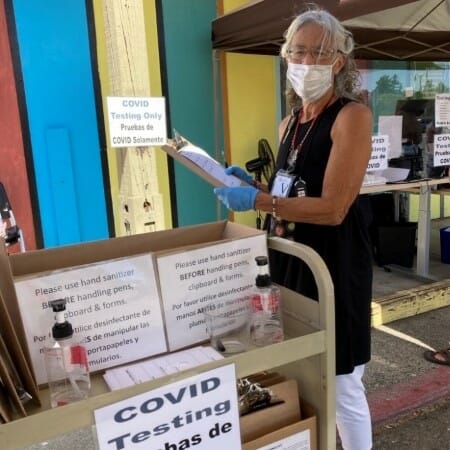
Lucy Harris volunteers at a COVID-19 testing and vaccination site, where she helps answer questions and assists with registration, particularly for people who speak Spanish./Courtesy Lucy Harris
Why is it important for testing and vaccination sites to have someone in this role?
My hope is that somehow by being there, I can move the process as quickly as possible, get people in and out. We’ve had parking lots where people have stood for an hour or two waiting to get in to get a test. They have to take off from work, they’re there with their kid, or the kid is out of school because they can’t go back to school until they get tested. Anything we can do to help make the process move smoothly and quickly, I feel like I’m happy to help with that.
Describe your volunteer role with the Redwood Empire Food Bank.
They have distribution sites where the food is actually distributed to the people or organizations who come to get it. Before the food goes to the distribution site, there’s a warehouse. Large trucks full of veggies and fruits come and deliver large quantities of food, mostly produce, to the warehouse. They need people to put those into proper-sized containers or bags in preparation for giving them out to the families who need them. That’s what I do. I just came from bagging maybe 500 pounds of sweet potatoes. You name it, I’ve done it — sweet potatoes, corn, broccoli, cauliflower, carrots, apples, oranges, plums, pears, everything.
What inspired you to start volunteering in these ways?
I have three sons and a son-in-law, and when the pandemic first happened, they all lost their jobs. I became personally aware of food insecurity in a way that I hadn’t really been before. Before it was more philosophical and about inequality of resources, but then I was able to actually feel it in a personal way. That’s when I decided to go work in a food bank. Meanwhile, my grandkids are out of school because of COVID. All I wanted to do was find some way, once the vaccine was made available, to help the distribution of the vaccine. Anything I could do to contribute to that distribution as quickly as possible for people who wanted it, so we could particularly get kids back in school and get all my kids back into their jobs. That was personal. It wasn’t just an ethical thing for me.
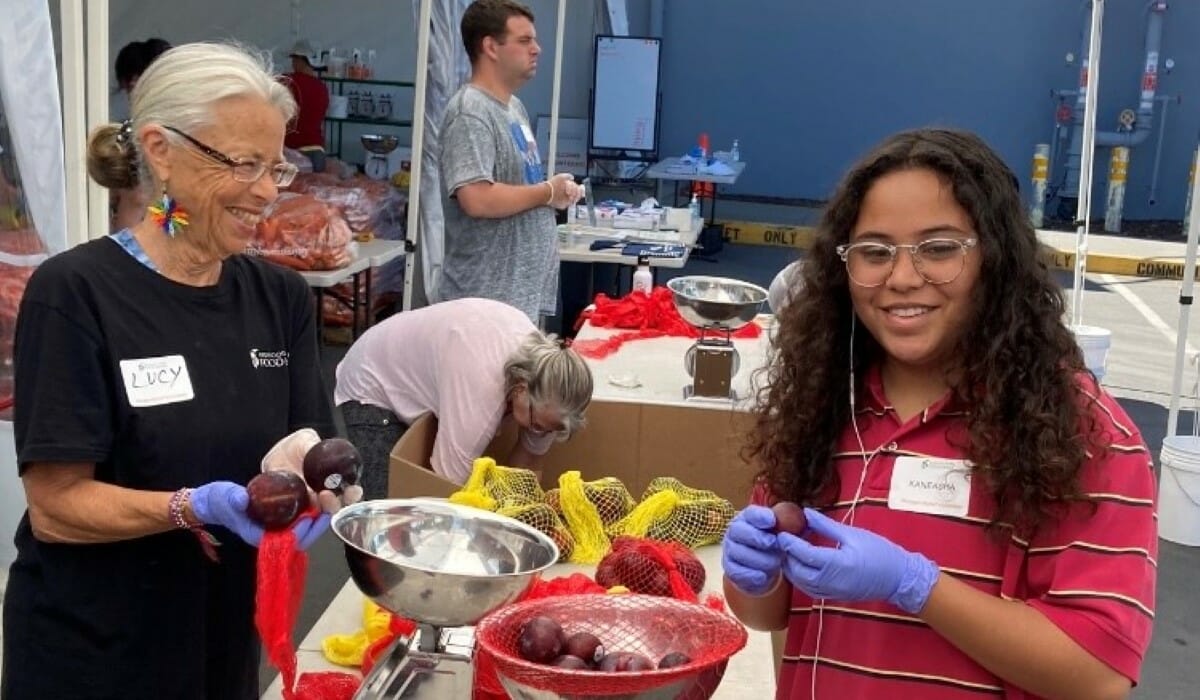
Lucy Harris, left, helps prepare Redwood Empire Food Bank’s produce so it can be distributed to families in need./Courtesy Lucy Harris
Why do you think it’s important for others to give back?
It’s great for me particularly, the feeling of being connected to other people and not feeling isolated, especially during the pandemic. That’s one reason that I’m really grateful, now looking back on this experience. From a personal point of view, I think it’s important for people to feel connected, and this is definitely an activity where you can feel connected while you’re giving back. I think we’re in danger of losing a feeling of connection to each other, and particularly of being able to care about what other people experience, what other people’s problems and difficulties are. This is a way for me to feel like I’m aware and I’m trying to make things a tiny bit better for people who are less fortunate.
What’s been the most rewarding part of your work?
I enjoy feeling like I’m making a contribution, being part of the solution and not part of the problem. That’s really important to me, to feel I’m doing something. It’s been a big deal, having so many people so sick, and people working so hard to try to save their lives. I felt like I wanted to do something. It made me wish I was a doctor. Just wanting to make a contribution and feeling like it’s very small, but at least I’m making an effort to use the time that I have to try to help — whether it’s food for folks, or getting them vaccinated and tested in a friendly space.
What do you want people to learn from your story?
I think people who don’t have enough to do should go out and volunteer. Find something that you like to do. I think it’s great for connecting with people and feeling less isolated, but I think it’s also really good for our mental health to feel like we’re making a contribution to something larger than ourselves. It can only make you feel better about yourself.