Brother Sister Debate Duo Help Students “Pass The Gavel”
Meet Daily Point of Light Award honorees Zach and Zara Yusaf. Read their story and nominate an outstanding volunteer or family as a Daily Point of Light.
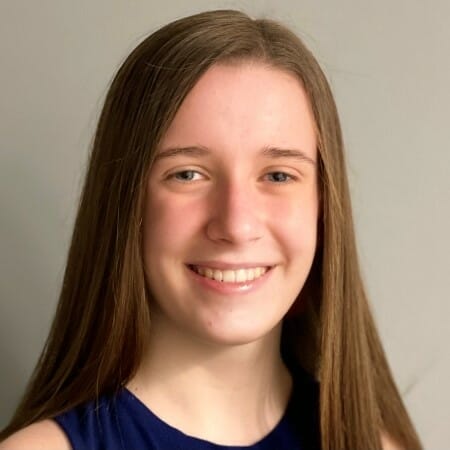
18-year-old Zach Yusaf and his younger sister, 16-year-old Zara, both started debate as middle school students, and the two learned how to apply beneficial skills from that training across all aspects of life, from public speaking to researching.
The Chappaqua, New York siblings launched Pass The Gavelin 2018 to advance critical thinking and analysis and promote civil discourse for students. Offering free debate programs including summer camps and crash courses in debate, Zach and Zara even launched a YouTube page during the COVID-19 pandemic to make sure their training could be accessed remotely by underserved students, and have since “passed the gavel” to hundreds of students across the United States through volunteerism.
What inspires you to volunteer?
Zara: We’ve debated for so long because of all the support we received along the way. If we can be that support or mentor to an aspiring debater, we’d love to help fuel that mission. We’ve grown up in a community that experienced a lot of privilege and we’re so thankful for the opportunities we’ve been given, but we realize not everyone has had the same opportunities. We’re volunteering to help close that divide in any way we can.
Describe your volunteerism with PTG.
Zach: As co-founders, we’re in charge of setting up free tournaments and camp sessions for under-resourced communities, organizing debate donation drives and gathering information and educational materials to make sure we are teaching kids the best possible information. We fundraise to help support debate programs and coordinate with schools and libraries to send donations including program materials, school supplies and more. For example, we sent financial support to a Texas school that needed video and lighting equipment for their debate program, and have also connected with one school in Africa. We’ve raised thousands of dollars thus far, and have even held clothing drives for debaters in need.
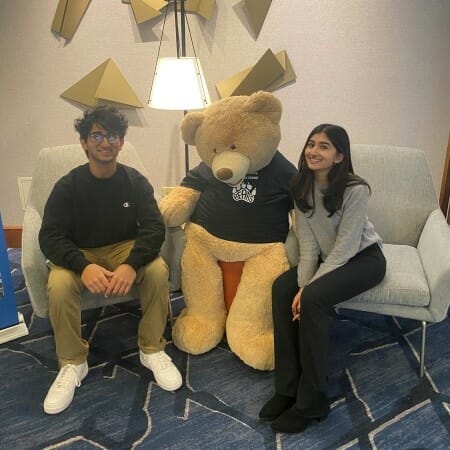
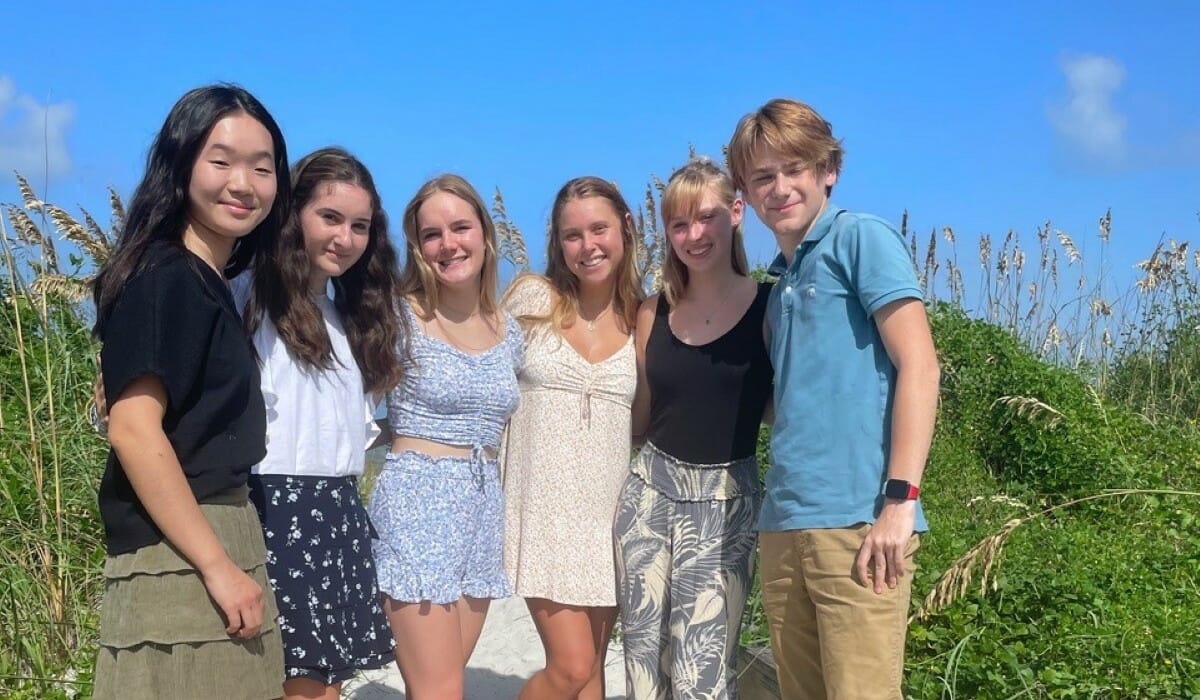
As co-founders of Pass The Gavel, siblings Zach and Zara Yusaf are offering free debate programs to students./Courtesy Zach and Zara Yusaf
Share one personal story with me from your volunteerism.
Zara: I volunteered as a judge at a debate tournament, and a parent there mentioned a lot of the teachers that taught [debate] had never learned debate themselves, so they couldn’t give the feedback students were craving. The parent told me the feedback I’d given to a student was so helpful and in-depth, and we helped the students grow as debaters. I was in 8th grade when this happened, and I didn’t realize the impact I could have on students my age. We’ve become a community and that community has allowed us to foster relationships to further the education and research that come along with debate.
Why do you think it’s important for others to give back?
Zach: As a community, it’s very important that we support each other. It’s important to bridge a lot of gaps we have in society whether racial, gender or socioeconomic. Volunteering helps to create a better life for ourselves and a better life for others as well.
What’s been the most rewarding part of your service?
Zach: We were running a PTG tournament at the Katonah, New York library, and a parent told me how proud she was that her kids were doing the debate tournament at the end of camp. Her kids were so excited about doing debate, and she was so excited, they petitioned to get debate at their own school. That moment made me realize the power my service can have, and made me feel really good.
How have you continued to volunteer throughout the pandemic?
Zara: The pandemic impacted many communities differently. Debate instruction was essentially canceled during the pandemic, so we created a YouTube page offering instructional debate videos and have also hosted online classes and skills seminars to connect with students nationwide.
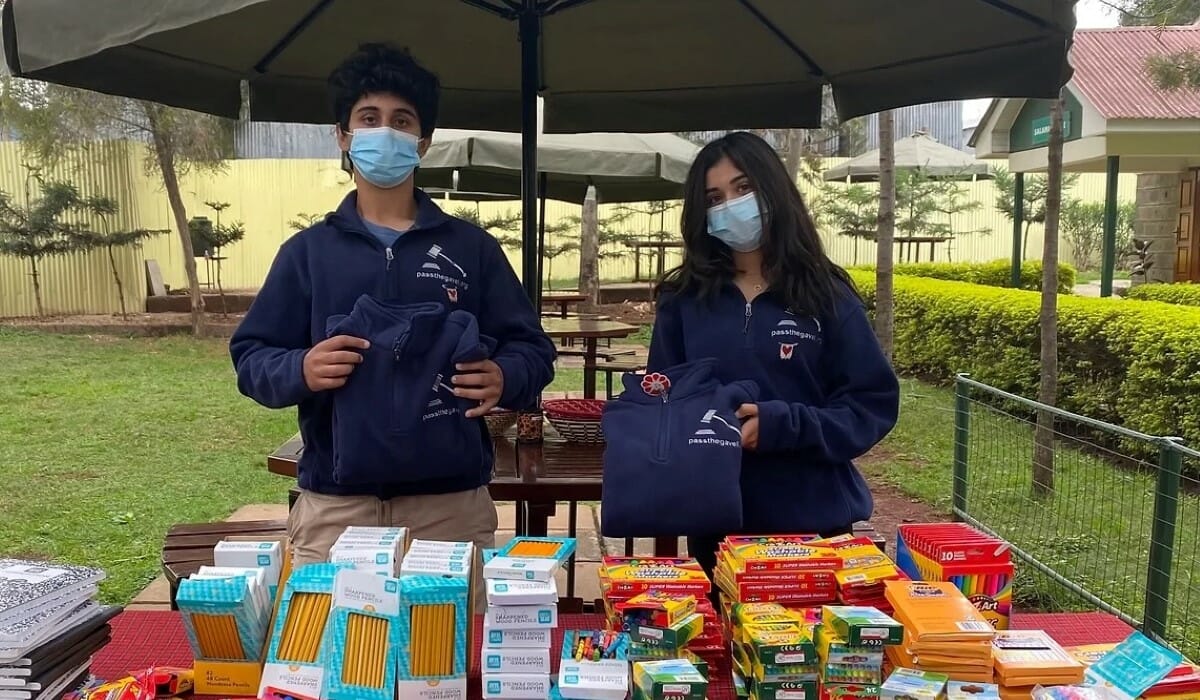
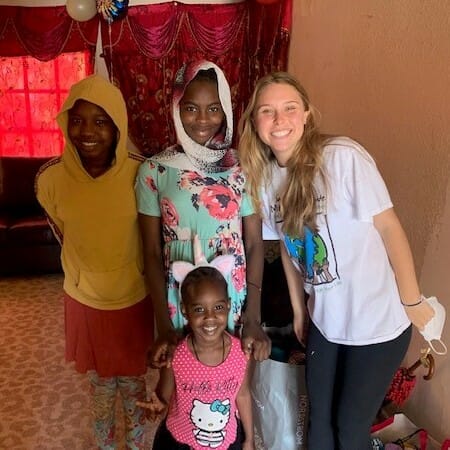
PTG donated school supplies to the Harambee Community Centre and School in Nairobi, Kenya./Courtesy Zach and Zara Yusaf
What do you want people to learn from your story?
Zach: Find a thing you’re passionate about, whether it’s debate like us, movie making or soccer, and try to do something with that besides helping yourself. Try to help people that aren’t able to access that passion in the same way you are and go from there, just like we’ve done with PTG.
In one word, what does volunteering mean to you?
Zara: Giving.
Zach: Sharing.
When you’re not busy with school or volunteering, what do you do for fun?
Zara: I run cross country and track for my school.
Zach: I like making movies, I like working out and I also love reading comic books like Marvel [and] DC. I’m the biggest comic book nerd that ever existed.
How can readers help?
Please visit our website for more information about how you can give back, and for debate resources, please visit our YouTube page.
From Mississippi to Belize, Lifelong Volunteer Helps Those in Need
Meet Daily Point of Light Award honoree Charlotte Monique Bardwell-Brown. Read her story and nominate an outstanding volunteer or family as a Point of Light.
Service has always been an important part of Charlotte Monique Bardwell-Brown’s life. While growing up in a military town, her mother would always host the sailors who couldn’t see their families during the holidays, and would enlist Charlotte in going around the neighborhood to collect goods they could bring back to the base.
“It wasn’t like she was doing it to try to instill it in me, it was just who she was,” Charlotte said. “So that’s who I became.”
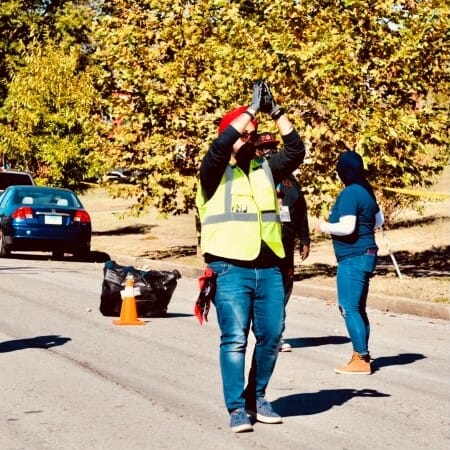
With her mother’s volunteerism influence, Charlotte now serves as a founding member and Public Relations Director for Moss Point Visionary Circle, a nonprofit that helps those in need in her Moss Point, Mississippi community. Originally started in 2006 to help the city rebuild after Hurricane Katrina, the organization now fills in whatever gaps the community needs, whether that be tutoring or COVID-19 testing. Additionally, Charlotte serves as a volunteer for Habitat for Humanity and a member of The City of Moss Point’s Cleaner and Greener Litter Coalition to clean up her community. She also joins her church on mission trips to Belize to provide much-needed medical care.
Describe your volunteer work with Moss Point Visionary Circle.
We initially started in 2006 right after Hurricane Katrina to rebuild the city, and specifically to rebuild the Sue Ellen [Recreation Center] so the kids would have somewhere to go. It eventually morphed into tutoring and assisting the eighth graders. We found out through the school system that the male eighth graders were failing math at an alarming rate. We started a tutoring program to help tutor them in math to pass the standardized test you have to take before you get to high school. It morphed into that and basically whatever the community needed. When COVID happened, we went out there and assisted with the testing.
How is Moss Point Visionary Circle assisting with COVID-19 testing?
We received a [COVID-19 relief grant] to do testing in Moss Point because it was designated a hot spot. We were doing free testing. We partnered with Coastal Family Health Center and they administered the actual test. We also provided 150 ventilation hoods to Singing River Hospital as well as Ocean Springs Hospital. I allowed them to video me taking the test … so everyone could see that it was quick and easy.
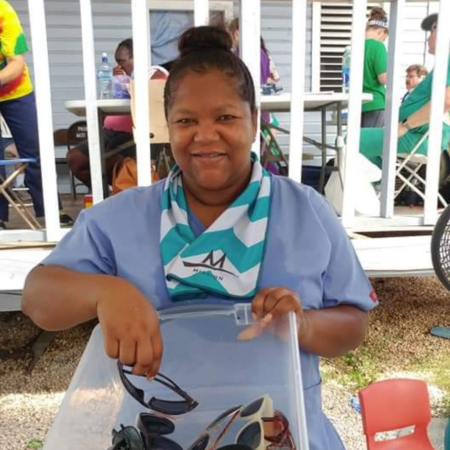
Charlotte Monique Bardwell-Brown hands out sunglasses and prescription glasses to rural communities while on a mission trip to Belize./Courtesy Charlotte Monique Bardwell-Brown
Describe theCleaner and Greener Litter Coalition.
We are a start-up coalition that was formed with the task to clean up the city of Moss Point and try to change the mindset of the people here in Moss Point. We realized that the litter is a side effect from a bigger issue. We came up with a template and set goals. We’re going to try to educate the kids at the schools, catch them younger, and go from there. Each month we do a beautification art that gets an award to install pride and get people interested in keeping it clean and green.
Can you talk about the volunteer work you do in Belize?
Through my church, First Presbyterian Church, we have a mission group. We have a group of us who go, mainly doctors and nurses from Singing River Hospital or Ocean Springs Hospital. We go for a week and we stay basically in the jungle. We go to this area called Pickstock [in Belize City] and it’s a pretty poor area. We set up a clinic. During the clinic, we administer shots, penicillin shots or vitamin shots, and small procedures like ultrasounds. It’s a makeshift clinic, so we don’t have hospital stuff, but anything that falls under acute medical — colds, flu, body sores, body aches, sprains. We see pregnant women and young kids. We give everybody an eye exam and they can get free glasses if they need that. A lot of over-the-counter stuff, because they don’t have anything there, so even something as basic as Pepto or Benadryl is lifesaving for them. We also go to the prison.
What work have you done withHabitat for Humanity?
I’ve assisted building 26 houses, starting with Hurricane Katrina. After the hurricane, I participated in the Katrina build and I got to work with former President Jimmy Carter and his wife. After that, I stayed involved with Habitat and I participated in four Women Builds. They have the Women Builds every year. A different organization will have only women during a three-month period.
What inspires you to volunteer in so many different ways?
The same thing I do at work [as the Coordinator of Volunteers for the Gulf Coast Center for Nonviolence] — I’m just a servant. I love to help however possible. I’ve been in that field all of my life, and it goes over to my personal life. I’m just helping people and helping them have a better life. I do what I can.
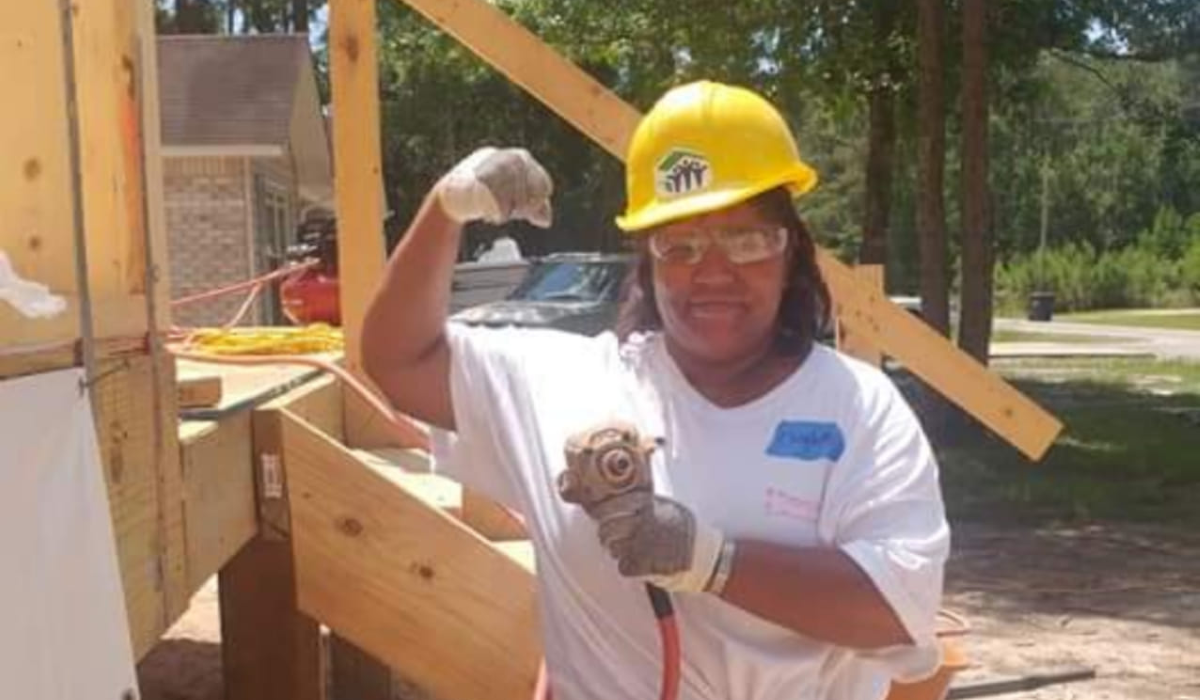
Charlotte Monique Bardwell-Brown helps build one of the 26 houses she has worked on with Habitat for Humanity./Courtesy Charlotte Monique Bardwell-Brown
Are there any future partnerships, programs, or events that you are excited about?
We still have some of the money from [the CARES Act], so we’re still doing COVID testing. As long as we have the money, we do free clinics. Anyone who wants a free clinic can call us and request one. We have people in Georgia and Mississippi, so if anybody’s organization or church wants to host a clinic, we provide the nurses and the tests.
What’s been the most rewarding part of your work?
Seeing people thrive. Seeing people can be better than the way they came in. Being a mentor, you have that task. You passed math or you got a home or you got some medicine — just seeing people be better from their current situation.
Why do you think it’s important for others to give back?
If you have an abundance, or you have a skill, or you have something that can help somebody, you just should. As a human being, you just should. If you see an old lady walking across the street and she’s got bags in her hand, nine times out of ten, somebody is going to go help her cross the street. If you see somebody who needs help, you should do it. I think it’s in all of us. We don’t all act on it, but I think it’s in there.
Teen Raises Half a Million Dollars Juggling Soccer Ball for Kids with Cancer
Meet Daily Point of Light Award honoree Hollis Belger. Read her story and nominate an outstanding volunteer or family as a Daily Point of Light.
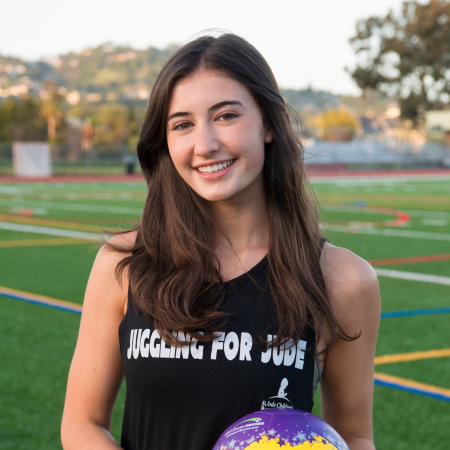
Her back is sore, there’s sweat dripping down her eyelashes, but when Hollis Belger is in the zone juggling her trusty “record” soccer ball, she says she is laser focused on one thing: helping children being treated for cancer.
“I’m in 60 minutes, and I just always picture every St. Jude warrior, every single time,” says Hollis. “I fight, because of all of the operations they have to go through, and suddenly, my back doesn’t ache and sweat doesn’t bother me. I just keep going, because 1,000 more juggles could mean $100 more in donations, and that is all worth it.”
The Larkspur, California 17-year-old started playing soccer as a child, but when Hollis learned about pediatric cancer and what kids were facing in battling for their health, her athleticism transformed into a skill for good.
“I started juggling because I joined a competitive soccer team when I was 8, and juggling helped with control. My mom first introduced the idea of helping pediatric cancer patients; she thought it was important I knew kids just like me had their lives turned upside down. They weren’t allowed to play sports or play with friends growing up, something I thought was important.”
Hollis, a high school senior, has since kicked her way to raising more than $575,000 in donations from thousands of people, and her efforts to benefit St. Jude Children’s Research Hospital have inspired countless others, her 2020 global soccer juggling challenge attracting participants from six continents.
Hollis has raised more than $575,000 in donations to benefit kids with cancer from thousands of contributors./Courtesy Hollis Belger
“I started to juggle for a bigger purpose. I knew St. Jude treated kids for free. That really resonated with me. I fell in love [with their mission because] they focused on hope and optimism. All your child should worry about is getting better, and not the expense of the treatment.”
Hosting her Juggling for Jude fundraiser throughout the year, Hollis participates in events and raises awareness through speaking engagements at schools, corporations, even meeting the U.S. Women’s National Soccer team. Her juggling personal best stands at 7,157 juggles, which amounts to over 1 hour and 15 minutes of consecutive juggles, all in the name of serving as an advocate for children with cancer and their families.
“The second summer of Juggling for Jude, I met a girl named Kayla. We lived about 20 minutes away from each other, and she was the same age as me. She was being treated for Medulloblastoma, a form of brain cancer. She was very recently out of the hospital, and I will literally never forget meeting her, because I saw cancer had a face and a name. It was a person, and she was my friend. For us to talk about normal things: sports, our school, our favorite Disney princesses, knowing in the back of my mind that she’d endured so much and I was completely healthy, all this juggling, the emails, writing blogs, it was all, it’s all still for her and other St. Jude warriors I’ve befriended since. From that moment on, I was going to juggle until no child has to worry about cancer.”
Kayla has been cancer free for many years now, and Hollis has become recognizable across the globe for her volunteerism – known as “the juggling girl,” because of her dedication to changing the future for kids with cancer. Calling Hollis one of the organization’s most impactful volunteer fundraisers, Emily Schlesinger, a philanthropic advisor for St. Jude, says Hollis is changing life for patients and is a service role model for others.
Hollis hosts her “Juggling for Jude” fundraiser throughout the year, participates in events and raises awareness through speaking engagements at schools, corporations, even meeting the U.S. Women’s National Soccer team./Courtesy Hollis Belger
“Research at St. Jude does truly change the world,” says Emily. “The money we use to do that comes from the generosity of the public. The fact that she’s personally raised awareness of our mission for so many, and spread awareness about how [St. Jude] has changed lives for children diagnosed and will continue to do so going into the future. By following her passion and talent, [Hollis] has changed the lives of young people who can see themselves in her. She can take something like soccer juggling and make a difference for kids with cancer. [Now others think], I can take something I’m passionate about and make a difference with something close to my heart. Follow your passion, and let’s change the world.”
Forming friendships with St. Jude patients who know she is juggling for them, Hollis is using her heart and feet to make a difference and inspire others to give back to their own communities.
“Anything can be used to make a difference. I never thought kicking a soccer ball a bunch of times would attract the people, the donors, the money that it did. But when you’re doing it for a greater cause, something bigger than yourself, people will be inspired and they will give. Never underestimate your ability to make a difference, no matter who you are.”
Teen Volunteer Provides Equipment to Student Athletes in Need
Meet Daily Point of Light Award honoree Kaitlyn Harrington. Read her story and nominate an outstanding volunteer or family as a Daily Point of Light.
For as long as she can remember, Kaitlyn Harrington has played sports. What struck the now 16-year-old Horsham, Pennsylvania student athlete was an imbalance when it came to the often costly equipment. Kaitlyn realized she could help her fellow athletes by connecting players who lacked the sports equipment they needed with donations from players that had extra.
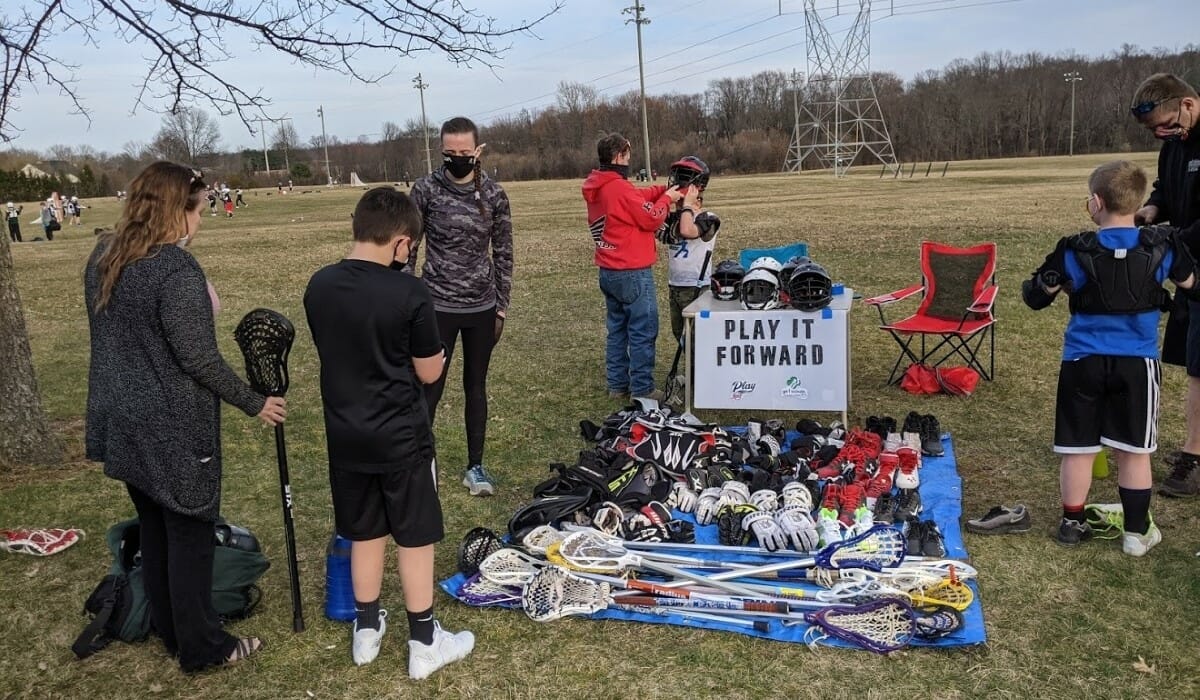
Launching Play It Forward first as her Girl Scouts Silver Award initiative in October 2018, Kaitlyn’s volunteerism has since expanded, transitioning into her Gold Award, and now serving additional sports teams. Donating equipment that benefits youth athletes in need of gear, Kaitlyn has collected thousands of items, helping hundreds of kids to play. A good sport to her community and beyond, Kaitlyn is inspiring others to give back and is getting more kids on the field through volunteerism.
What inspires you to volunteer?
There are always people who need help in the world. It brings me a lot of joy knowing there’s something I can do to help them. Whatever form it might be, volunteering gives you a sense of pride and fulfillment.
Describe your volunteerism with Play It Forward.
Play It Forward has collected more than 3,500 equipment items, worth approximately $125,000, and provided thousands of those items to over 260 youth players. As founder and director, I recruit and organize the volunteers. I promote our service at sports club meetings, manage our communications, organize donation and distribution stations, and spend a lot of time cleaning and repairing equipment.
As the founder of Play It Forward, Kaitlyn Harrington donates sports equipment to benefit youth athletes in need of gear./Courtesy Kaitlyn Harrington
Share one personal story with me from your volunteerism.
A little boy came up to one of our first distribution stations, it was his first season of baseball. I helped him choose all the equipment he needed, a glove, little bat, baseball and helmet. [The boy] had the biggest smile afterwards, he was basically glowing. He started playing with the ball, and his parents looked super happy about it. He just kept thanking me, there was a bunch of joy. That moment helped me realize how much [this service] means to kids and that’s really special.
Why do you think it’s important for others to give back?
There’s always going to be somebody out there who’s less fortunate than you are. The least we can do is try to make someone’s life just a little bit better or easier.
What’s been the most rewarding part of your service?
Volunteering has a really big impact because I know what it’s like for kids who have to stop playing sports or have always wanted to do a sport but haven’t had the time, equipment or money to do it. Allow kids to play sports and possibly find something they really love to do, that’s the reward.
How have you continued to volunteer throughout the COVID-19 pandemic?
We’re helping kids gain critical benefits from sports like increased physical fitness, elevated mental well-being, enhanced emotional health and greater social engagement, all of which are vital to counter the growing mental crisis COVID has caused. We had to keep a distance and wear masks while volunteering, there were more virtual exchanges and we do more in-depth cleaning, a lot of scrubbing.
What do you want people to learn from your story?
Everybody has something they enjoy and something they’re good at. Why not use that skill or thing you love to do to help others? Everybody has the ability to help in their own way.
A good sport to her community and beyond, Kaitlyn is inspiring others to give back and is getting kids in need on the field through volunteerism./Courtesy Kaitlyn Harrington
In one word, what does volunteering mean to you?
Impactful.
What’s the most unusual piece of sports equipment that’s been donated?
(Laughs.) A wrestling mat and pads were donated to us. We also got some golf clubs.
When you’re not busy with school or volunteering, what do you do for fun?
I do karaoke. I play soccer in the fall and spring. I also do a lot of theater, singing and Girl Scouts.
How can readers help?
Please visit our website for more information about how you can help.
Florida Boy Donates Thousands of Books to Serve Kids and Save the Planet
Meet Daily Point of Light Award honoree Zach Hartman. Read his story and nominate an outstanding volunteer or family as a Daily Point of Light.
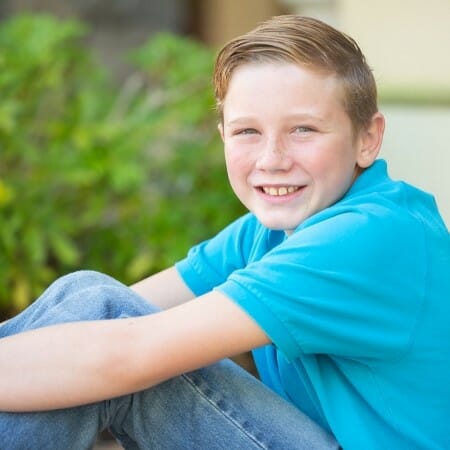
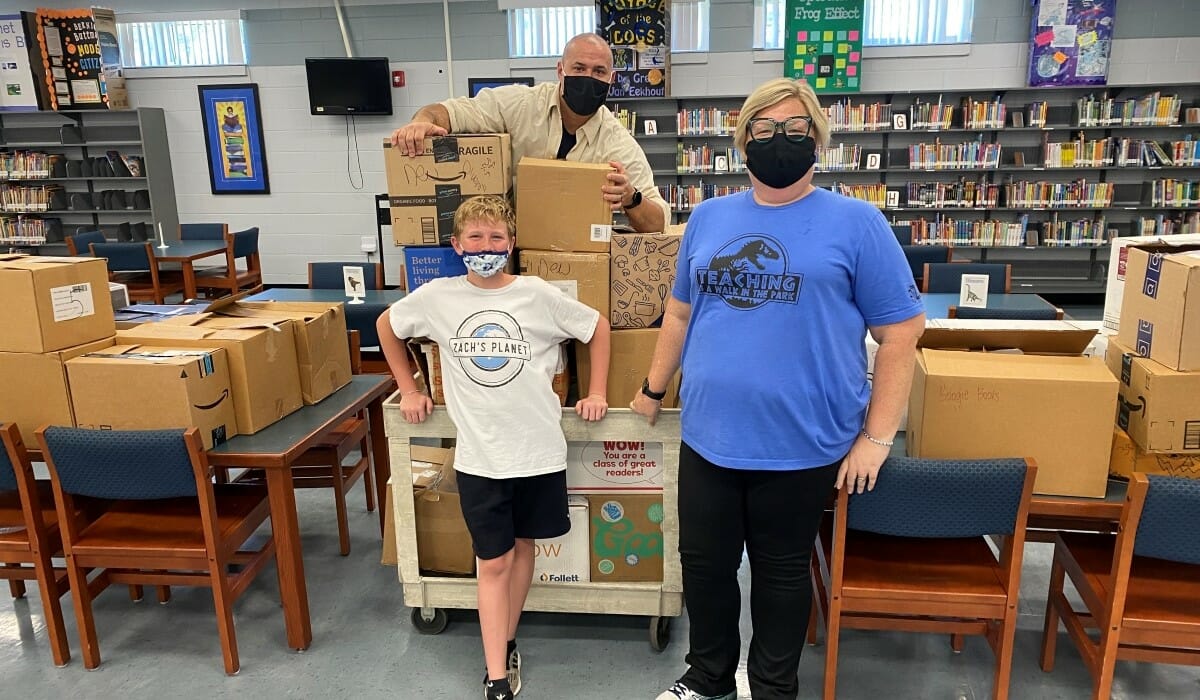
12-year-old Zach Hartman will tell you he loves the environment and helping people. The Tampa, Florida student has combined those two passions as he volunteers to help better his community and by extension, the planet.
Partnering with his older brother, Chase, Zach co-founded Eco Brothers to promote literacy and help the environment. Discovering that more than 300 million books are discarded into landfills each year, Eco Brothers has distributed more than 175,000 new and used books to 50 schools across greater Tampa, in addition to upcycling stuffed animals for shelter animals. Through hundreds of hours of volunteerism, Zach has positively impacted the environment and the lives of more than 35,000 students thus far.
What inspires you to volunteer?
There are lots of problems in the world, so we all need to volunteer, because one small action can make a great impact in the world. I’d tag along with my brother after he started read.repeat. and seeing the joy his project brought to people’s faces inspired me. I started Zach’s Planet, and then we joined efforts for Eco Brothers.
Explain the importance of your service.
More than 300 million books are discarded into landfills each year, and a lot of parents throw away stuffed animals that their kids have outgrown. Through volunteering, we’ve kept 125,000 pounds of used items out of local landfills and saved 5,000 trees by promoting reusing books.
Zach Hartman co-founded Eco Brothers with his older brother to promote literacy and help the environment./Courtesy Zach Hartman
Describe your volunteerism with Eco Brothers.
I collect used books and stuffed animals, and coordinate the drop-offs. The donated books are distributed to students in need, and we upcycle the stuffed animals by cleaning, putting squeakers inside and donating the pet toys to homeless animals in shelters and humane societies. Glad Dogs Nation preps the toys so they are safe for the animals.We distribute new and used books to schools and have filled more than 100 Little Free Libraries in all 50 states, and I raised funds to purchase a Little Free Library for a local school. I’ve personally raised around $30,000 and Eco Brothers has raised more than $90,000 in total to help purchase books, support literacy, and strengthen environmental initiatives in our area.
Share one personal story with me from your volunteerism.
During one book drop off, we’d brought 4,000 books to a school and a little girl asked me how we got the books. I told her that people like to share. I gave her some advice [about reading], and told her she could even trade books with her friends when she was done with a book, and then she’d have more books to read. She was very surprised. It made me feel good with a sense of happiness that I helped her, and let her know sharing is caring.
What’s been the most rewarding part of your service?
At the end of my service. It takes me about 30 minutes to set the books up for kids, and then you get to see all their faces. Most are definitely surprised [to receive books], most are very happy. There are some people that are wowed. When all the tables are empty and all those kids go home happy [with books], I can go home [and think], wow this is truly amazing.
How have you continued to volunteer throughout the COVID-19 pandemic?
Instead of visiting classrooms in person to donate books, we now bring books to schools and the staff distribute them to students. We also mail books to Little Free Libraries around the country; I raise money to pay for postage to ship books.
What do you want people to learn from your story?
Any person, any age, can do anything to make a small difference. As long as it’s helpful, from one book to one Little Free Library, or donating 4,000 books to a school. All people can do anything.
Eco Brothers has distributed more than 175,000 new and used books to 50 schools across greater Tampa./Courtesy Zach Hartman
In one word, what does volunteering mean to you?
Happiness. When you volunteer, you spread happiness both ways. You bring someone happiness, and knowing you left someone happy brings happiness back to you. Volunteering is a great way to connect with someone.
When you’re not busy volunteering or in school, what do you do for fun?
You’ve helped thousands of students to read. What’s your favorite book?
The Graveyard Book by Neil Gaiman.
How can readers help?
For more information about how you can help, please visit the Eco Brothers website and to support literacy for kids around the United States, please visit my GoFundMe page.
Air Force Member Helps Families Escaping Domestic Violence Start Anew
Meet Daily Point of Light Award honoree Matthew Storer. Read his story and nominate an outstanding volunteer or family as a Point of Light.
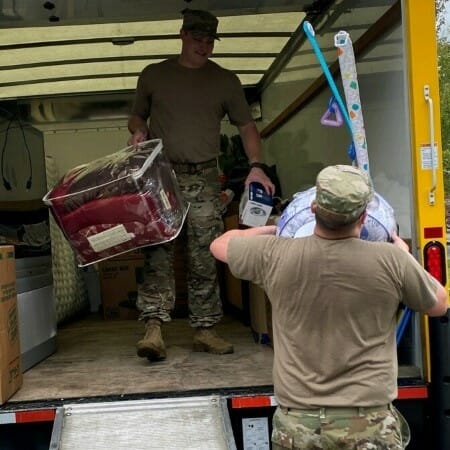
The Air Force is a strong proponent of volunteering, so Technical Sgt. Matthew Storer has always helped out here and there at Keesler Air Force Base where he is stationed. But when he was asked to use his truck to pick up donations for a local domestic violence center one day in 2019, a passion for service was truly sparked in him. Since then, Matthew has dutifully helped pick up and deliver donations to Gulf Coast Center for Nonviolence in Biloxi, Mississippi, as well as deliver items to clients moving out of the shelter into a new home, at minimum once a week.
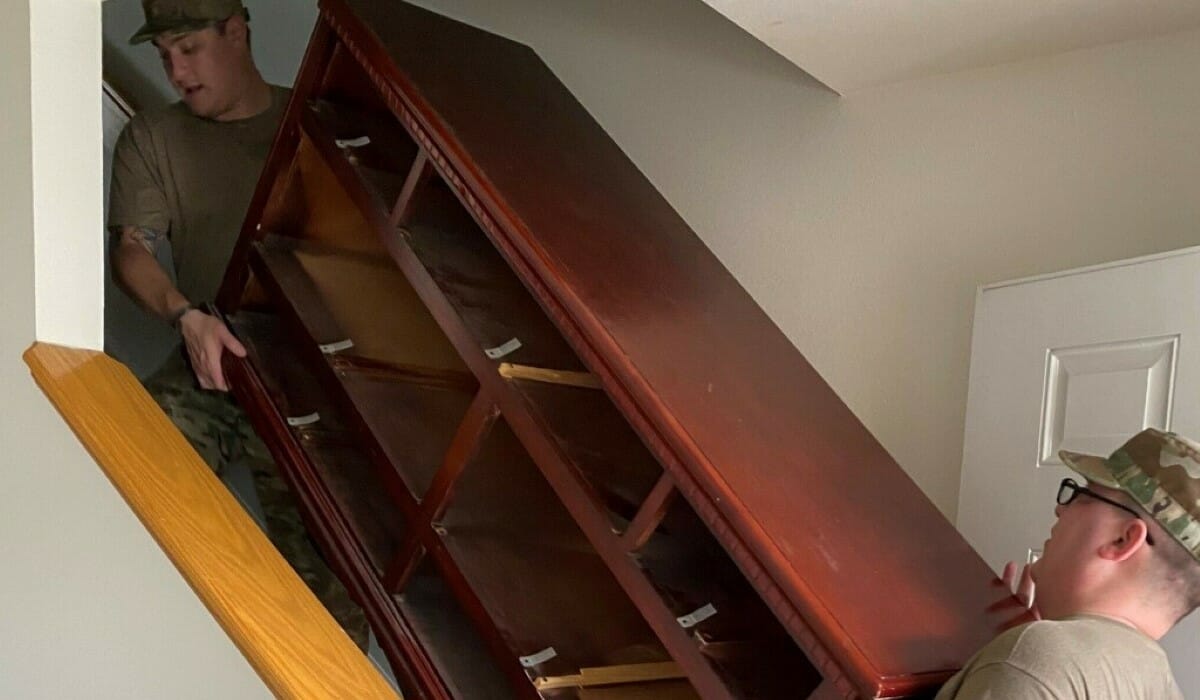
The donations include beds, mattresses, washers, dryers, clothing and small appliances — anything that a family in need may require after abruptly starting a new life. Matthew has driven all over the Gulf Coast area, including to Louisiana and Alabama, to collect the items. He also helps fix up and assemble bicycles to be donated to the center’s children each Christmas season.
Describe your volunteer role with the Gulf Coast Center for Nonviolence.
Charlotte, who is one of the directors who works with us over at Keesler Air Force Base, asks us to go pick up donations from community members throughout the area, whether it’s furniture, clothing, small appliances, beds, or mattresses. We have trucks within squadron members and we’ll go load up and pick things up from people’s houses in the area, sometimes trailer loads. We drop it off at the center or even make deliveries for the clients, so if they’re getting out of the actual shelter, we’ll help get some of the bigger items into their new home.
What inspired you to start volunteering in this way?
Air Force likes volunteering and they give us the opportunity to do it. I didn’t even have to look very hard. I had a truck and somebody asked ‘Can you do this?’ and I was like, ‘Yeah, that sounds awesome.’ A big thing for me is not just helping a small area with my spare time, but getting out and helping the community where you can see the first and secondary effects.
At least once a week, Matthew Storer helps collect donations to be provided to families impacted by domestic violence./Courtesy Matthew Storer
Talk about how you help fix up bicycles to donate to kids during the holidays.
That’s probably the coolest thing. … It’s one of those big items that’s donated. I believe this year there were 20 bicycles donated in one day. Several families were getting bikes for their children who asked for them. During the holidays, the kids will give a list and people will donate the items on these kids’ lists so they do not go without during the holidays, which is pretty important — that the kids are as little impacted as possible by some of the terrible situations they’ve been in.
How important is it for shelter’s clients to have access to these donations?
Sometimes they’re in situations where they, and their children in most cases, just have to grab what’s on their back and leave, get out as quickly and safely as they can. They essentially show up to the shelter with nothing. When the community donates these items, whether it’s food, clothing, mattresses, dressers, washers, dryers, or anything like that, they’re not starting over on their own. They don’t have to buy these things on their own, whether they’ve got a job or career they’re currently in or not. They don’t necessarily have to reset on their own. They have help from other people. I think it’s important that if anybody is in an abusive situation, there are these lanes to get out of it. You are not going to be alone.
Do you have any memories from your time volunteering that have really stuck with you?
A big thing is the kindness out of the clients. I remember a time we delivered a mattress and everybody was so thankful. Before we delivered it, I was like, ‘When do they want it?’ and they were all about, ‘Oh no, when it’s convenient for you.’ I showed up and they had been sleeping on the floor on an air mattress for a week plus, and that was unacceptable. I told them this isn’t about me, this is about y’all getting what you need to be comfortable, don’t worry about my schedule. The other guys that were there with me said the same thing. You’re not going to put us out by having us come and help you as soon as you would like.
What’s been the most rewarding part of your work?
Seeing the kids smile, and the mothers, too. The mothers are smiling because they can see their kids’ smiles. The sincerity of their appreciation, and to see them starting anew and in a positive way.
What have you learned through your experiences as a volunteer?
The camaraderie and the teamwork and the helpfulness of the community is probably the biggest. It is a very large area. The distance that I’ve traveled, from one side of the Gulf Coast of Mississippi to the other side, from Alabama to Louisiana, picking up items across the coast, is amazing. That’s just to help these families as much as they can.
Matthew Storer helps pick up and deliver furniture to be donated to the Gulf Coast Center for Nonviolence./Courtesy Matthew Storer
Why do you think it’s important for others to give back?
It builds connections between other people. I’m originally from Ohio, and to meet the people I have met in Mississippi through the people I’ve met them through has been amazing. You meet hundreds of people from all walks of life who are willing to do anything for you. I’ve met people who would literally give me the shirt off their back to help somebody else.
What do you want people to learn from your story?
There’s always an opportunity to help somebody else. Whether big or small, there is some way for you to go out and make a difference for somebody else.
Teenager Sends Care Packages and Letters to Service Members Abroad
Meet Daily Point of Light Award honoree Corinne Kelly. Read her story and nominate an outstanding volunteer or family as a Daily Point of Light.
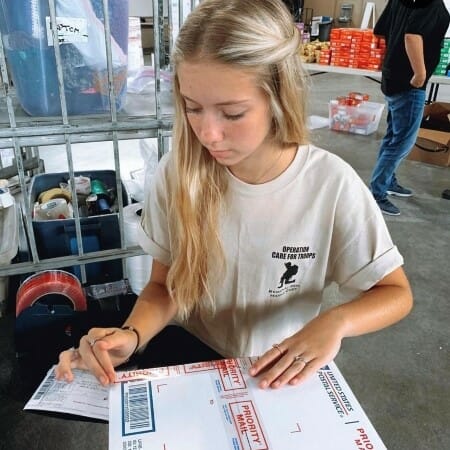
Corinne Kelly knows the power behind simple acts of kindness. The 16-year-old Pelham, New Hampshire high schooler dedicates her time to sending that kindness to American troops around the world who are in need of extra care and pieces of home. As the teen representative for Operation Care for Troops, Kelly has spent over five years volunteering, and that service only grew during the COVID-19 pandemic and ensured that more than 15,000 letters of light were sent to U.S. service members in a dark season.
Describe how you first got involved with Operation Care for Troops.
A few years ago, a family friend was deployed to Poland. His mom told us that he was extremely homesick, so my mom and I decided to go shopping for items to put in a care package. We got a pack of drink mixes, protein bars, socks, candy and a great blanket.
We put these items together in a box, and then we shipped it off to him. A few months later, we got a letter and a photo back from him, and he was so grateful and happy. I knew that I could do more, so I did research and I found Operation Care for Troops, and I’ve been with them now for the past five years.
Can you explain how your volunteer activities have grown, especially during the pandemic?
I’m the teen representative of Operation Care for Troops. I do a lot of supply drives, card drives and I collect socks, protein bars, drink mixes, and hydration packs. We need between 4,000 to 15,000 letters and cards per packing event, so I spend a lot of time getting cards signed and collected. I actually have set up a nationwide network between Stampin’ Up! card makers and Operation Care for Troops. Card makers from all over the country make and send cards and it’s my job to get them signed.
Corinne Kelly seals and mails cards to American service members, sending more than 15,000 letters of care throughout her five years of volunteerism./Courtesy Corinne Kelly
All of the volunteers in the organization help out, but over the pandemic, it went from 100 volunteers down to the board members and myself. So we had to do different jobs individually. My job was to sort 2,500 drink mixes into baggies. I was watching the Hallmark Channel Christmas movies putting together these packages. It’s just a lot of finding supplies, organizing them and making sure everything goes in [the care packages].
During the pandemic, it was really hard to get cards signed. We also had an urgent request from a unit in Africa. They said that they were forgotten at Christmas and all they wanted was mail because they were so homesick. They said you can give us other people’s mail, we don’t care. I put in an urgent request on social media and was able to collect lots of cards for them. They also asked for Reese’s Peanut Butter Cups, which I was able to include as well. Having social media as a tool to reach out when I couldn’t go out into my community really was helpful.
What inspires you to volunteer?
Honestly, it’s the stories that I hear back from the service members. I just recently got photos and letters back from a unit in Iraq and the smiles on their faces just bring so much joy to my life that I know what I do means a lot. It’s how I can thank them for what they’re doing for our country.
What have you learned through your experience as a volunteer?
I would say that giving back is so important. I’ve worked beside World War II veterans. One in particular, his name is Fran, is hard of hearing and [partially blind], but he’s still there to help and give back to other service members. I think that’s just so amazing. So that’s what I want to do as well. I want to give back to those who have served our country.
What would you want someone to learn from your service story?
It is so easy to make a service member feel appreciated for their work. My best friend’s brother is in the military. He’s actually in Poland right now. He’s had a really, really rough time. With the help of Operation Care, I sent him cards, letters and 97 Christmas stockings filled with supplies to share with his unit. Just that simple act of kindness makes his day so much brighter and he knows that he’s supported and people care back home.
Why is it important for others to give back, especially to service members?
It’s really hard to do things alone and to make change, but the little things count. And it takes a village to do something amazing — just [one person’s] help alone makes all the difference.
Are there any partnerships, programs, or events that you are excited about?
We just had our holiday packing event that was in November so that packages would get delivered in time for Christmas. We also have a packing event in March, so I’m currently trying to collect supplies for that — I have so many packages of peanuts in my living room right now. It takes a while to get all the supplies necessary to include, but anyone who donates is extremely appreciated.
Volunteer Serves Search and Rescue Community with Canine Training
Meet Daily Point of Light Award honoree Eric Darling. Read his story and nominate an outstanding volunteer or family as a Point of Light.
There have been two constants in Eric Darling’s life — dogs and service.
He doesn’t remember a single time in his life when he didn’t have a dog, and even recalls photos of him as a baby alongside his dad’s dog. He’s had the volunteer spirit instilled in him his entire life as well. He grew up watching his mother always volunteering with his Boy Scout troops and his schools, and continuing to do so today — despite Eric graduating high school in 1993, his mother still serves the California State Parent Teacher Association.
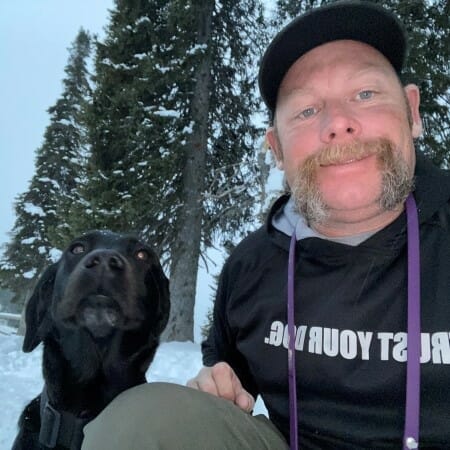
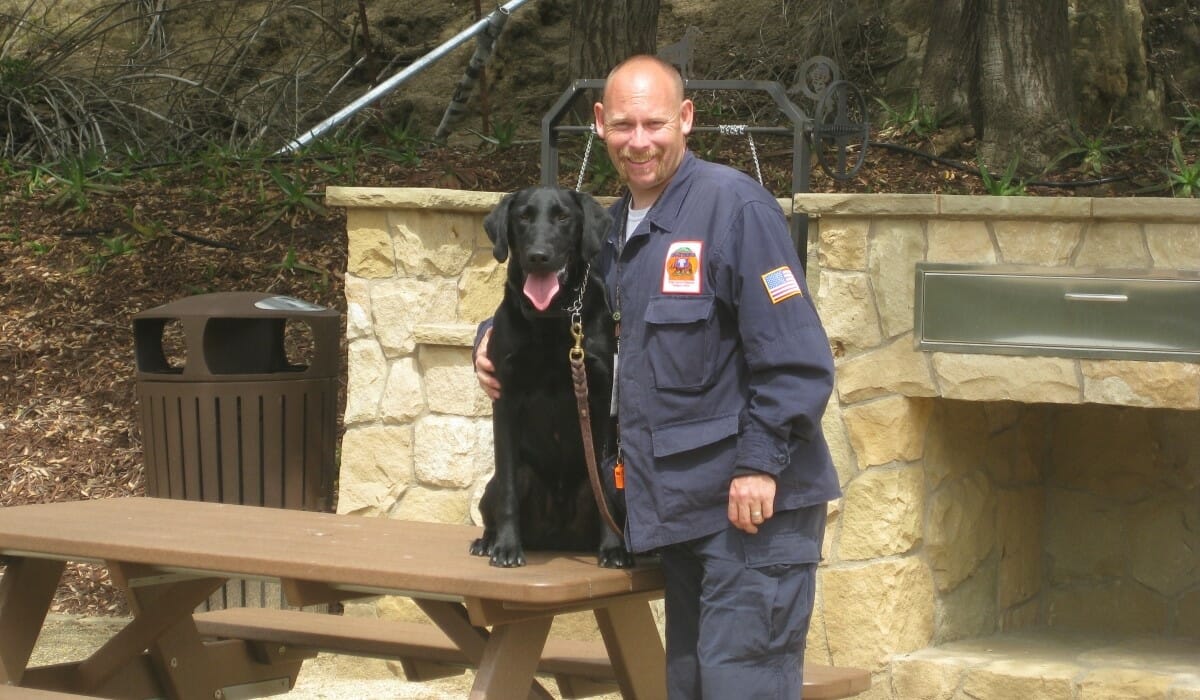
So it’s no surprise that Eric now serves his community as the founder of Superfit Canine, which offers disaster training in Ventura County, California for search and rescue dogs, including his own four dogs — black labs Mazie, Ben and The Dude, and golden retriever Wyatt.
“For me, it’s always been instilled that you always volunteer whenever you can,” Eric said.
Right before 9/11, he began volunteering for the National Disaster Search Dog Foundation, which trained Urban Search and Rescue (USR) dogs for firefighters like himself. Following the terrorist attacks, he became more entrenched in USR. After trying to find more avenues to gain training for himself, he decided to start Superfit Canine in 2014 so he would be able to provide more training for others as well.
Eric Darling and dog Mazie teach a canine avalanche search and rescue class in Colorado./Courtesy Eric Darling
Superfit Canine offers these trainings in Ventura County at least once a week, and travels at least once a month to offer them to people outside of the area as well. Each training simulates a disaster to get the dogs used to working in different areas, whether that be fields filled with loose debris to simulate the aftermath of tornadoes, or with loose rocks to simulate the aftermath of an earthquake.
Dogs are especially important in disaster recovery because of their strong sense of smell, and ability to move quickly and cover much more ground than a human could.
“They have four-wheel drive,” Eric said. “They can cover an area so much quicker than it would be to have people power to do the same area. Time is of the essence when we’re looking for someone who is still alive, and getting the dogs out there gives people the best chance for survival.”
Mark Seastrom, who has known Eric for almost a decade through his role as Ventura County Fire Department’s Urban Search and Rescue Officer, was able to attend one of Superfit Canine’s trainings in northern California. Seastrom, who also serves as a captain for Ventura County Fire Department and their regional task force coordinator, said Eric was able to command attention from a large class of canine search specialists from all over the country, while also showing how much he valued his fellow instructors.
“The way he spoke, and with the authority and knowledge that he spoke, people wanted to listen to what he had to say,” Mark said. “It was dynamic and it was fun.”
Most memorable for Eric is when Superfit Canine is able to do demos for people in his community at different festivals in Ventura County.
“It’s so amazing to see the reactions on the kids’ and the adults’ faces, like, ‘Really, this is in our backyard?,’ and that’s really more motivation,” Eric said.
Eric Darling and dog Ben attend a National Disaster Search Dog Foundation training event./Courtesy Eric Darling
He was once doing a demo for grade school kids when a young boy sat down next to his dog and started having a conversation with him. Eric noticed the boy’s mother crying. She told him that her son was autistic, and that was the first time she had ever heard him speak. He credits the connection between dogs and people to the animals’ ability to sense what people are feeling and then respond to those emotions.
While the COVID-19 pandemic has limited the scope of both the trainings and the location availability for them, Eric has persisted with Superfit Canine’s trainings. He said he is driven to keep going due to how much need there is for the dogs and the difficulty in finding other handlers with this specialty. With each training, he hopes to find the next generation of handlers who are just as dedicated and can eventually take over.
But just like his mother, Eric plans on volunteering for as long as he possibly can.
“I’ve instilled in my brain many, many years ago that this is what you do and this is why you’re doing it,” he said.
Nonprofit Founder Selflessly Cares for Community during COVID-19 Pandemic
Meet Daily Point of Light Award honoree Deb Bhatia. Read his story and nominate an outstanding volunteer or family as a Daily Point of Light.
Deb Bhatia learned the value of selfless care from his parents at an early age as he grew up in India with his sister. His selflessness merged in his professional career, and now Bhatia spreads the mission through the Sikhs of STL nonprofit in St. Louis, Missouri.
He could never have predicted how much the COVID-19 pandemic would leave his community in need. But Bhatia adapted and now bridges other local St. Louis nonprofits serving under-resourced families and individuals through free meals, hygiene supplies, masks, and sanitizers. Bhatia has touched the lives of thousands of people during the pandemic, and he has no plans of stopping his selfless care for communities in need.
Describe how you first got involved with Sikhs of STL.
I’m a founder of Sikhs of STL and I founded this organization sometime in 2019 or 2018 — that was the time when I moved to St. Louis and it was a second chapter after six New York chapters of the organization.
Before the pandemic, we used to basically just do big events for Susan G. Komen Foundation and St. Jude to honor cancer survivors. We would do a turban day on a large scale where people came in and we tied their turbans to reflect our thank you for the survivors. The turban symbolizes a priceless crown, so just sharing that among the cancer survivors was our biggest motive with those organizations.
But then we opened up another chapter underneath, which was the disaster relief project and emergency response during early COVID-19. It was the first week of lockdown. When we initiated this plan, we started distributing stuff to the shelter homes because [at that time] there was a scarcity of resources — there was no help from the volunteers to cook anything for them. A lot of people were in need of food, so we ended up reaching out to a few shelters and then went out and in the streets and helped the homeless community because they had no help getting resources from anywhere. It just kept on going after that — bigger and bigger.
Can you explain how your volunteer activities have grown, especially during the pandemic?
Hygiene supplies were the greatest demand along with hot meals and then non-perishables…like canned food or ramen noodles, pasta, pasta sauce — those kinds of things. Along with that, there was a lack of education during the time when people were getting those checks from the government about the pandemic relief. If anyone was not aware how to do that, our team basically helped them out with filling in the forms and getting them the money they deserve. If any individual was looking to get benefits from any kind of government resource, we were helping them out with that. So mostly, anything and everything except handing out the cash to anyone. We were just handing out supplies.
We were serving like 150 people in one shelter in three weeks and it spread to 14 shelters where we were serving 3,000 meals in a day. Eventually, we started going into communities where the pandemic [impacted] even more financially, where people lost their jobs. So we were bringing big food drives down to those counties. We were serving like 4,000 families in a day.
Deb Bhatia leads a meal drive for families in need of resources during the COVID-19 pandemic./Courtesy Deb Bhatia
What inspires you to volunteer?
I’ve been doing this for quite a long time. I’m from India and when we were kids, my parents taught us the basic principle of selfless service. They would always take us to the places where we can volunteer, so we always used to do services to the community. My parents always told me that giving back to the community is the best reward you can get.
I continued that effort. The only difference now is that I bring this into a larger scale where I could involve more families and more people. It’s also kind of, you know, bringing that education into the next generation and getting [them] involved so that they understand that giving back to the communities is a big deal. What I learned from my parents, I just keep on doing it, and then give it to the community also.
What have you learned through your experience as a volunteer?
If anyone wants to help, I would say start with one thing and in a matter of time, it will start helping out so many. Just be ready to help anyone. We’re thankful to God that we are getting so much in our life every day and if we can use a little bit to help someone in need, it would be so good. If we can be open and not judge and have no judgment between each other, that would help a lot too.
Why is it important for others to give back, especially during times of crisis?
I think it’s very important because there’s a lot of families. I met this single mother, and she hadn’t had food for two days. It was really bad for her on the third day. When we learned about her, we immediately delivered food to them. She was basically hesitant to reach out to anyone for food or help because our society has made up an aura, a space of judging someone, which makes it difficult for the people who are in need to ask for help. My intentions should be that I have to help someone and to always be ready to help someone.
Are there any partnerships, programs, or events that you are excited about?
I’m a part of the United States Air Force and I do emergency response services with them as well and I’m trying to gather more educational material for the local community where they can also get more information. I’m trying to show them how they can be safe in difficult times, and how we can provide more education for the emergency services. A lot of people are not even aware of how to get involved in emergency operations or how they can get involved in these things. But it’s very open to anyone and everyone. That’s one thing in progress.
Food drives through disaster relief are continuous and depend on who is in need. If anyone in any county is in need, they reach out and then we go ahead and do it. That happens to us quite a lot, [around] twice a month. We’re helping a few Afghan families who just recently arrived in St. Louis. We’re just being a little part of that, helping them with the resources they need.
Teen Provides Tutoring and Support to Local Refugee Community
Meet Daily Point of Light Award honoree Hope Freedman. Read her story and nominate an outstanding volunteer or family as a Point of Light.
After learning the organization where they volunteered with refugee children was closing down due to lack of funding, Hope Freedman’s family joined others to help keep the mission of supporting refugees alive. In 2017, Hope’s sister Grace co-founded JaxTHRIVE, a youth-led nonprofit that brings kids in the Jacksonville, Florida area together with refugees. Today, Hope has taken over as co-president, helped establish JaxTHRIVE chapters in seven different schools, and also helped develop a Teen Leadership Council of which she serves as co-president.
Through JaxTHRIVE, Hope joins over 200 student volunteers in tutoring over 150 refugee students once a week. Since beginning virtual tutoring services in 2020, JaxTHRIVE has also expanded to other cities across the country with plans for more. The 16-year-old also started the WOW Period Project after hearing that one of the refugees she works with was forced to leave school due to not having access to menstrual projects. Through her service work, nine different schools in her St. John County, Florida-based district are regularly supplied with menstrual hygiene products for students to take for free.
Describe your volunteer role with JaxTHIVE.
JaxTHIRVE is a youth-led 501(c)(3) nonprofit organization. It’s based on the belief that teens could create a lasting movement to help those in need in our community. JaxTHRIVE is a youth-led organization where kids meet with refugees in our community. We tutor them in homework and we create regular lesson plans so they can achieve more in school. Through JaxTHRIVE, we make really great friendships with these refugee children and we do wonderful activities with them. We do arts and crafts and sports while we’re also doing math and science and helping them get stronger in their academics.
What about tutoring refugee children resonated with you and made you want to continue to do so with JaxTHRIVE?
I feel like inside I’ve always wanted to help someone. I feel like everyone always wants to do something to help someone else, and it really resonated with me that it was kids who we were helping. These kids are the nicest kids you will ever meet. They come from nothing and they want to give back to you. They don’t want to take things, they want to give everything back to you. They want to help you even though they’re the ones who came from nothing. I felt like it was a really good thing to do. I made such great bonds with the children that it became more of a passion rather than charity work.
Hope Freedman, right, smiles alongside some of the first-ever JaxTHRIVE students, refugees from Sudan who have been with the program since 2018./Courtesy Hope Freedman
What is your favorite memory from your time volunteering with JaxTHRIVE?
We took the kids on a field trip. We went to the dollar store and we gave each of the kids five to seven dollars. They were able to go in and pick five to seven things and buy them, and we calculated the tax and made it a learning experiment, but it was more fun for them. The kids all came out and showed me their gifts. One of them bought laundry detergent. I was like, ‘Why did you buy laundry detergent for fun?’ He was like, ‘Because my mom ran out the other day and I wanted to get it for her.’ I was thinking, that’s not something I would necessarily do off the top of my head when I was five years old, go buy my mom laundry detergent. But these kids, all they want to do is help the other person. They didn’t want things for themselves. They wanted to give back and help others.
Can you tell me about the WOW Period Project?
We supply menstrual hygiene projects to schools in our district.It’s a project that I started because of JaxTHRIVE. One of the girls at JaxTHRIVE told me she didn’t have menstrual hygiene products and she had to leave school early. I was really surprised hearing this. When I did some follow up research, I learned that one in five American girls leave school early because they don’t have menstrual hygiene products. I created the WOW Period Project in 2019 and started supplying to schools across my district because I won a grant through WOW. With that grant, we were able to supply to three high schools, three middle schools, one K-12, and two elementary schools.
Why was starting this project important to you?
As girls, we all need the menstrual hygiene supplies, and we’re supposed to be focused on learning and school. The thought of a girl having to leave school because she didn’t have it was crazy to me. I just wanted to help as many girls as I could be able to get through it mentally, not have mental health issues because of it, not have to worry about school problems because of it, and have equal access for everyone.
What’s been the most rewarding part of your work?
I think the most rewarding part of my work is when the kids come and give you a giant hug and say thank you.
Hope Freedman, third from right, poses with the JaxTHRIVE Leadership Council for which she serves as co-president./Courtesy Hope Freedman
What have you learned through your experiences as a volunteer?
I learned that you need to be humble and you need to be kind to everyone. Giving back to others is the most important thing. Creating a smile on someone else’s face is the best goal in life. That’s more important than being the richest person. Being the nicest person, doing the most charitable things, and being a good person at heart is more important.
Why do you think it’s important for others to give back?
Especially as us kids who live in a community where we don’t really face a lot of the challenges that the [refugee] kids face, I think it’s important that we connect with them, include them in our everyday lives, and make them feel welcome. [It’s important to] give back and make connections, and help them feel like they can achieve the same things we can achieve.