Globetrotter Helps Under-Resourced Students See the World
Meet Daily Point of Light Award honoree Brandon Miller. Read his story and nominate an outstanding volunteer or family as a Daily Point of Light.
Brandon Miller grew up with the opportunity to see the world and experience other cultures. It opened his eyes to the beauty of traveling and exploring countries outside of his comfort zone. Years later, Brandon is helping underserved youth experience the same adventure he did through the Too Fly Foundation.
As a co-founder of the Too Fly Foundation, Brandon equips students with passport support, travel grants and travel toolkits so they too can see the world. Whether Brandon is helping fund passports, lead flight academies in schools or developing virtual reality travel, his mission remains the same: pave the way for Black, brown and under-resourced students to see the world, and help the world see them as well.
Describe your volunteer role with the Too Fly Foundation.
So, rewind back to 2015 — I’ve always had a passion for travel. I was privileged enough as a kid when my family took us abroad. I remember having my passport as a kid and really broadening my cultural curiosity and global perspective. In college, I was able to study abroad, so I studied in Metz, France. While studying abroad, I got to travel all over Europe and hit all of these different countries, which as a young adult was a whole different experience. It was something that I wanted to make sure any kid who wanted to study abroad or volunteer abroad could have the same opportunity to do. I was privileged enough to be able to, but I know a lot of Black and brown students and students in under-resourced communities don’t have that privilege. That’s what prompted the idea of wanting to start fundraising to be able to provide passports to kids.
It started with Happy Hour fundraisers to raise money for students and just provide passports and passport fees. And over time we gained a lot of traction and following. We were able to raise roughly 100 passports for students. After that we decided to make it a foundation so that we can continue to grow and build. The Too Fly Foundation was created in 2016, and over the past few years we’ve scaled, we’ve grown, but we also still do our grassroots fundraisers. We also have an in-person activity, which we call our Flight Academy. This is when we go into local schools and we do this pep rally type of event to educate students on international travel and study abroad opportunities. We try to help them also travel through the five senses, so we have a DJ who will have cultural songs and dances, we’ll have international snacks, do some trivia and try to get them curious and excited about traveling abroad.
During the pandemic, we started what we called “travel at home.” So, the world stops and nobody’s traveling; there’s no study abroad or there’s no volunteering abroad. But we wanted to keep our mission going. We created a virtual reality curriculum where we can send VR headsets to students, they can travel the world, from their couch with their family. We wanted to help bridge educational gaps and technology gaps all from the comfort of the students’ own homes.
What do the funds that you raise go towards?
They cover a lot of the cost barriers. During the grant cycle, a student can apply for however much funding they need to support their travel. It might cover a passport or it might help purchase a plane ticket. We might give them $500 to $1,500 for a plane ticket. It’s financial-need-based. We also give students one of our travel kits. So all of our students get a carry-on bag, swag, shirts, notebooks and water bottles because we want to make it an experience; we don’t want to just hand them a check, we want this to be a moment for them since it’s going to be the first time traveling abroad.
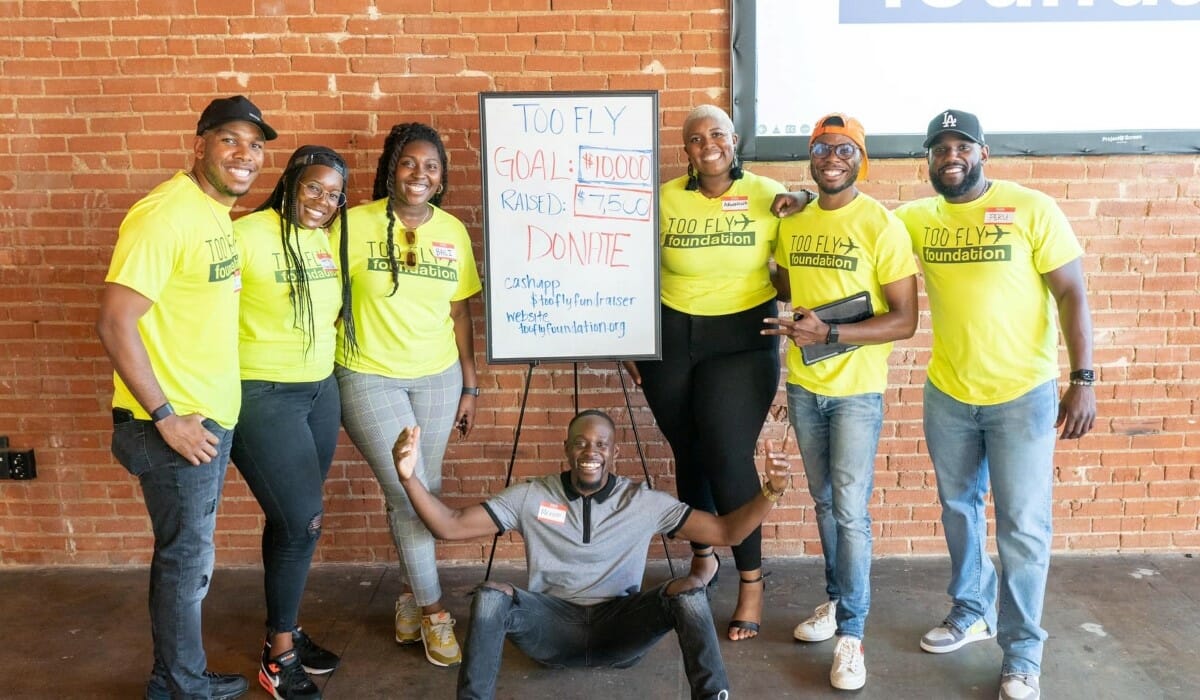
As a co-founder of the Too Fly Foundation, Brandon Miller equips students with passport support, travel grants and travel toolkits so they can see the world./Courtesy Brandon Miller
Do you have a favorite memory from mentoring with the Too Fly Foundation?
I have so many memories. Recently, we were on the Kelly Clarkson show to share our story. Tyler Perry joined us on that episode. So it was a really cool moment for us as an organization. But I think what was most meaningful was that they created this montage of the students that we’ve impacted, and the students were talking about how they’re a better leader and how they’re more curious and how they’re traveling more now after the impact of the Too Fly Foundation.
What inspires you to volunteer?
Seeing the impact and seeing how it’s truly changed student’s lives definitely keeps us all going. And it’s not just me and my co-founder, it’s a team of eight of us. It’s also knowing the importance of not only ensuring that our students can see the world and travel the world, but that the world sees the students as well. I think it’s important to see young Black and brown kids traveling, exploring and learning on a global scale. That definitely keeps me going.
Why is it important for others to get involved?
I think so many of us are privileged in different ways and different facets. I’ve been blessed and I want to be a blessing to others. I want to leave a legacy of help that creates a path for others to follow behind. That’s a mindset that I firmly believe in. That’s a reason that I think it’s important for folks to get involved.
Is there anything coming up with the Too Fly Foundation that you’re excited about?
We just had our fundraiser, which was a lot of fun. We had a great turnout. We’ll start to kind of pivot gears until Giving Tuesday and the end of the year. One partnership that I can say is that we’re working with TravelPro, the luggage company, on Giving Tuesday and they’re donating 5% of all of their sales on that day to the Too Fly Foundation. So that’s pretty exciting. This year, 23 of our grantees are going on study abroad trips so we’re working on getting them their checks and travel kits. We’ll also have 100 students traveling next year.
Chicago-based Volunteer Spends Five Days a Week Fighting Food Insecurity
Meet Daily Point of Light Award honoree Eileen Sviokla. Read her story and nominate an outstanding volunteer or family as a Daily Point of Light.
Eileen is a star volunteer at Care for Real, a 501c3 nonprofit providing food six days a week through pantry locations in Edgewater and Rogers Park in Chicago. Having volunteered every week since May of 2021, she is an outstanding example of someone who devotes her time to a causes she is passionate about – helping unhoused individuals get the goods they need, and fighting food insecurity in her community.
Originally from Boston, Eileen has been volunteering for most of her life. She moved to Chicago right before the COVID-19 pandemic began to be closer to four of her five children. As soon as she got her first COVID-19 vaccination in 2021, she began her Chicago-based volunteering.
“I instantly liked the place, I liked the spirit of the place,” Eileen says. “There are 12 people there – it’s mostly staffed by volunteers. It’s an enormous task to pick up this food every week and sort it. When I started, I was volunteering twice a week and now I volunteer five days a week, around 20-25 hours.”
Eileen is a vital member of the volunteer team at Care for Real, which was founded by a priest and a rabbi who saw a need, launched a short-term project and then grew into a nonprofit organization with far-reaching impact. Eileen does a variety of hands-on work at Care for Real, including setting up for food distributions, problem solving around issues that arise with clients and participating in special projects and events. She is also responsible for team training and welcoming and registering clients.
“I really love working with recent immigrants,” she shares. “We’ve had so many people come from Ukraine, Mexico, Central America, Asia, Western Africa. It’s just an ever-changing population. As a volunteer, you get to see the little kids come in with their moms and dads, then eventually start kindergarten. My passion is driven by seeing the regulars, getting to know the families.”
Many of Care for Real’s clients hail from environments that don’t require the heavy winter clothing that life in Chicago calls for. So part of Eileen’s volunteer work is organizing the winter coat distribution, which in 2022 provided over 1,000 new winter coats to adult and child clients.
Having raised five children, taught for most of her life and participated in other volunteer efforts, “being busy” is Eileen’s preferred state. She enjoys being able to use her time and talents to help her community in any way she can. And food insecurity is a particular area of interest for her, especially in these times of inflation where she sees the direct impact on families.
“Care for Real is a remarkable organization and it’s an honor to be able to volunteer and serve the clients we do,” says Eileen. “The rise of food insecurity – especially the difference in the last 6 months – is mind-boggling. It’s so needed! What I admire about Care for Real is that it’s all about serving the clients’ needs. The clients come first. You can build relationships, there’s trust. That’s very important to me.”
Eileen encourages anyone who wants to volunteer to give it some time. “At most organizations, there are many different tasks to do, but sometimes you have to get into an organization to find that place for yourself. Give it a few weeks, and then you’ll find out whether it’s for you, and whether you like working with the population.”
She also cautions people not to jump in “both feet first,” in order to avoid burnout. “Search for volunteer opportunities the same way you look for a job. Envision yourself in that physical space, and see if that environment speaks to you. Could you spend a lot of your time here? It’s also important to be able to grow in a volunteer opportunity, to feel challenged and utilize your talents.”
Eileen is shining light in her community, having gotten involved with volunteering as she’s built her life and home in Chicago. She is certainly an inspiration to others who want to share their gifts with the world through volunteering!
High School Senior Tackles Mental Health Awareness Amongst Students
Meet Daily Point of Light Award honoree Rohan Tirumala. Read hisstory and nominate an outstanding volunteer or family as a Daily Point of Light.
Seventeen-year-old high school senior, Rohan Tirumala, knows firsthand how cutthroat things can be for young people in the Cupertino, CA area. As he applies for colleges, he reflects on how competition thrives in the fight for the best grades, the most impressive extracurriculars, and most prestigious schools.
Four years ago, Rohan made it his mission to help students de-stress and to destigmatize mental health issues when he started a nonprofit called Stress Free Teens. In addition to leading the conversation, he and his team have initiated a music mentor program to provide free music lessons, raised money for COVID relief, and formed partnerships to offer training programs like the free social media graphic design workshop set for next year. A subject matter expert from the Santa Clara County Behavioral Health Services will kick off the multi-day event.
What inspires you to volunteer?
The Bay Area has always been a very competitive environment for kids and teenagers. A lot of people knew that it wasn’t healthy, but no one really addressed it. When I entered high school, I wanted to bring awareness to these issues.
So, I started Stress-Free Teens. I work with a team to advocate for these mental health struggles that a lot of young adults face. For me, that’s always been a really big motivation for volunteering, especially when it’s an issue that I struggle with as well. It makes it a lot more personal.
Tell me about Stress Free Teens and your role in it.
I worked throughout the beginning of freshman year to get it established as a 501C3. Going into that second semester of freshman year the pandemic started. Everything shifted, and we had to figure out how to do everything virtually.
My role is to bring the officer team together to brainstorm ideas and work with everybody to execute them. We’ve done that in a bunch of different ways. We’ve created a blog team. We’ve hosted podcasts and talked to experts across industries about mental health in their respective fields. We create regular Instagram posts talking about topics from mental health to different therapeutic activities like music.
I’ve also invested significant personal time in youth advisory groups, being trained on topics such as suicide prevention, social belonging, and anti-racist principles. Working with the California Coalition for Youth & Santa Clara County Wellness group has given me insight into what it takes to run a sustainable, ethical organization.
Do you put on events?
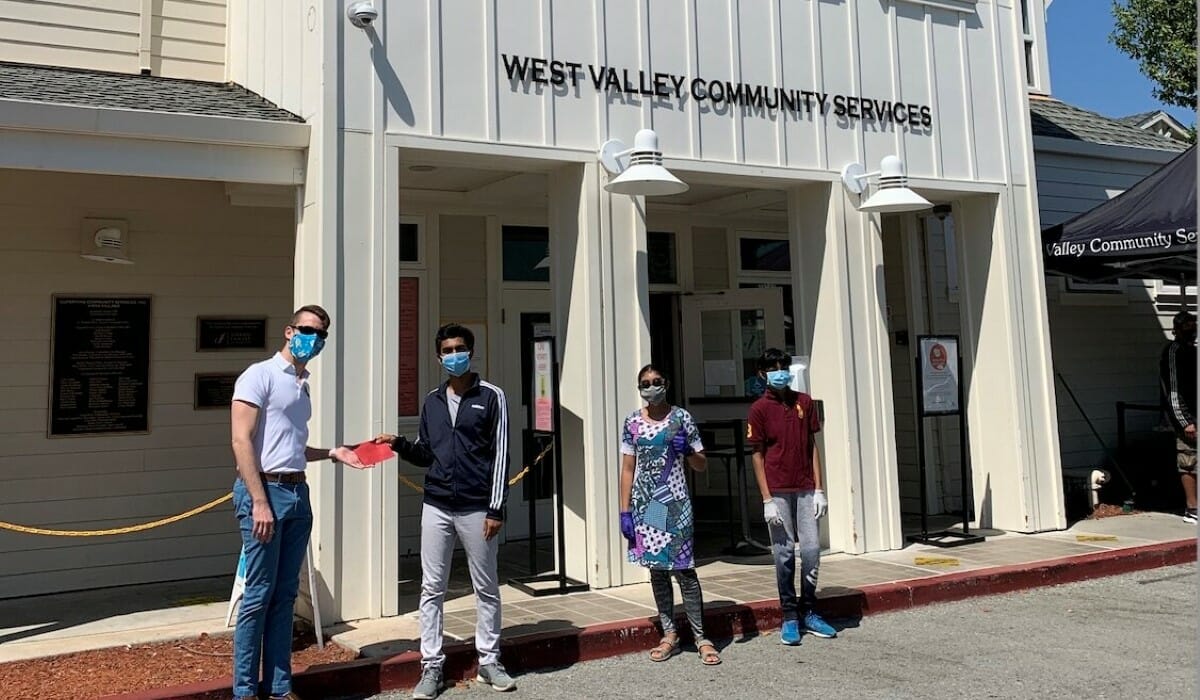
Many. One of our first was a two- to three-week science camp, through which we were able to raise $3,000-$4,000 to donate to West Valley Community Services. They provided COVID relief to low-income families.
We had another virtual event later that same year that was more of a fun event for people to relax after their finals. We’ve had art and music events, and we’ve partnered with our local Cupertino City Board to work at theirs. Our impact has even become international, with school partners in India using our training programs to educate 30+ teens on self-care and mental health.
Rohan and the Stress Free Teens officers hand over a check for over $3,000 for COVID relief to a staff member from West Valley Community Center./Courtesy Rohan Tirumala
Why is de-stressing so important, particularly for teens?
Mental health is just starting to garner more awareness, especially since the pandemic started, which is exciting to see. It contributes to daily life a lot more than people realize, because–especially in students–issues like burnout, anxiety, depression, and even a general lack of motivation can be tiring and make it really hard to function in day-to-day activities.
It’s really important to talk about these issues. The earlier you talk about it, the better the chance you have of being able to successfully address it rather than ignoring it or calling it what it’s not, laziness. It’s really important to change that perspective and make sure people know it’s a real issue that needs to be addressed.
What are some easy things people can do to relieve stress?
What has helped me are things like yoga and listening to music. Whether it’s playing it or listening to it, music has always been my outlet for de-stressing. And talking to people. If you find just one person that you are able to talk to about your feelings–it doesn’t even need to be a professional–it’s a really good way to take some pressure off.
A big key is just finding the right outlet, even if it’s just journaling or reading a book. If you’re starting to feel that pressure, it’s time to make a change, even if it’s just taking just a break from whatever it is that’s causing that stress.
What’s been the most rewarding part of your work?
It sounds like a cliché, but I think it’s really underrated how good giving back can make you feel. This is a really personal issue, and I’ve seen myself and so many people struggle with it. Even seeing comments or people DMing us about things in our Instagram posts makes me feel good. Nowadays there are many different students and organizations working together to address these issues, and that’s exciting to see.
What have you learned through your experiences as a volunteer?
Working with a team like mine, it’s cool to see how all of these people have so many different perspectives and everything comes together to move us towards one common goal. We’re all part of a bigger movement.
Why do you think it’s important to be involved in your community?
I’ve been really fortunate in the sense that I haven’t had to worry about things like financial issues. It’s feels good to be doing something with the chances that you’ve been given. It’s a win-win situation. You’re going to feel a good, and the cause that you’re working towards will be better off.
What do you want people to learn from your story?
You don’t have to create something world-changing to do something good. There are many organizations out there that are doing amazing things and who will always be looking for volunteers and for people to contribute. You don’t need to be a pioneer in the field. You can just be someone that helps the greater good.
From Kindergarten to High School: Decade-long Volunteer Brings Reassurance to Children Living in Shelters
Meet Daily Point of Light Award honoree Avery Robins. Read her story and nominate an outstanding volunteer or family as a Daily Point of Light.
Fifteen-year-old Avery Robins has played varsity basketball since her freshman year. She made it to State last year in shotput. She’s perfected her chicken fried rice technique and found a $13 North Face puffer with her savvy thrifting skills. But one of her biggest accomplishments has been helping others.
Avery has worked with Project Night Night for the last ten years. Project Night Night comforts children who live in shelters by providing each with a blanket, a stuffed animal and a book. While the story is always different, many kids are in the shelter with their mothers due to some type of domestic abuse. Of the 30,000+ bags that go out every year, Avery herself has distributed over 1,200 bags this year.
What inspires you to volunteer?
I can’t really remember a time when I wasn’t volunteering. Ever since I was little, my older brother and I would pick up cigarette butts in Golden Gate Park. I went to a Catholic school for elementary through middle school, and they really valued volunteering. So we got involved there. We would do little things like make sandwiches and gift bags for the Hamilton House [a local shelter for unhoused individuals] or period packages with sanitary pads for women’s shelters. And when I could see the difference I was making in people’s lives, even if it was for a short second, I got hooked on that feeling.
How did you get involved with Project Night Night?
The blanket and the stuffed animal we give each kid are so they can sleep at night, which I feel like is why I chose PNN to really put my heart and soul into. I really connected to that. You always have someone there for you, even if it’s just a stuffed creature. The book helps them with learning how to read and write.
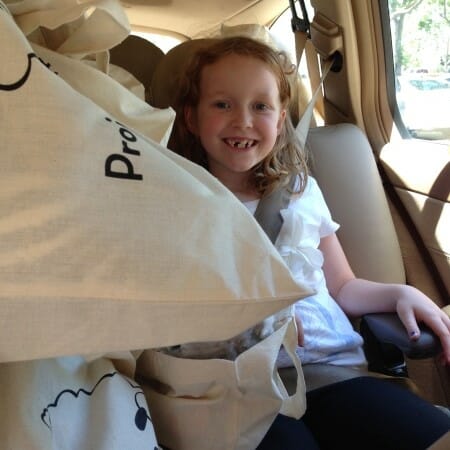
Avery, a long-time volunteer, as a kindergartener finishing packing Night Night Bags for shelters./Courtesy Avery Robins
We heard about them in kindergarten. My brother also loved going to sleep with a stuffed animal and a blanket. So we started a book drive at school. Our goal was to get 100 books, and we got 132. We were so proud of ourselves. And as I got older, I started doing more things, and I just got really involved in the organization.
What is your rolewith the organization?
I do a lot of things – some more glamorous than others. My favorite thing to do is to write thank you notes to donors. I feel like a lot of times in the charity realm, there’s not enough gratitude. That’s my way of paying it forward.
And I pack Night Night Bags, which is at the heart and soul of the organization. I love doing that, too. I also enter the tax receipts into QuickBooks. It isn’t my favorite job, but it’s something that needs to get done.
How did the pandemic affect the organization and the needs they strive to meet?
We still got to help a lot of people, which was the best part of it. Even though everyone was separated, we still got to connect with people. We couldn’t go inside, but we could still give them the Night Night packages. The only real thing that affected us in the pandemic was having fewer corporate programs. It made it less stressful, because there’s a lot to do for those.
What’s been the most rewarding part of your work?
For me, it’s the kids. A lot of times, we can sit and unpack the bags with them, and maybe they’ll have us start reading the book. When we can go into shelters and give them the bags, seeing the smiles on their face and knowing that I’ve touched their lives, even for a moment, is pretty special.
What have you learned through your experiences as a volunteer?
The biggest thing I’ve learned is that everyone can use a helping hand, no matter what it is. In Project Night Night, obviously these kids need to feel safe in the shelter, and they need to read books develop their literacy. It’s helped me recognize how people are feeling and what they need. If it’s a friend who’s feeling down, I can reach out and just sit with them. Things like that.
Are there any future partnerships, programs or events you are excited about?
I’m really excited about the holiday season, because a lot of times the kids in the shelters don’t get a lot of gifts for Christmas or whichever holiday they celebrate. So, we like to add some extra things in the bags like playing cards. I love to add handwritten notes or an extra stuffed animal to make them feel more special.
Why do you think it’s important for others to give back or be involved in their community?
I’m just a high school student. You don’t need any extra skills, and you can learn a lot of lessons through volunteering. You can just do a little bit, and it can make a big impact on someone’s life. There’s never an issue too small to help out with.
If you could model certain aspects of your life after someone else’s whose would it be and why?
The main person I take my inspiration from is a senior who I played basketball with last year, Annabel Schneiberg. She’s the model of hard work, and no problem is too small for her. If someone needs a hand, she will always be there to help that person. I learned a lot of lessons from her.
Filmmaker and Entrepreneur Offers Low-Cost Mentorship in Atlanta and Beyond
Meet Daily Point of Light Award honoree Forrest Tuff. Read his story and nominate an outstanding volunteer or family as a Daily Point of Light.
Outside of making films, Atlanta native Forrest Tuff has dedicated his time to help other entrepreneurs chase their dreams with SCORE, a low-cost mentorship program and workshop for small businesses. Forrest was a mentee himself in 2015 after years of navigating the realities of founding his own film business in 2004.
Forrest has assisted hundreds of small business owners locally, nationally, and internationally. He also volunteers at 3DE as a Junior Achievement Business Coach, preparing high school in entrepreneurship, financial literacy and career readiness.
Describe your volunteer role with SCORE?
I started a business back in 2004. As a business owner, you have a lot of trials and tribulations just trying to learn how to run everything. So here we go, ten years later in 2015, I found an organization that helps small businesses, which was SCORE. Not only was it a good idea to join, because now I’m surrounded by like minded people, but I’m also able to give back at this point where I have like a decade of experience as an entrepreneur. I wanted to help other business owners, especially minority business owners that weren’t aware of a lot of opportunities.
I got involved in the film industry. And I started to do very well as an independent filmmaker. Georgia became a multibillion dollar film industry and I was the only mentor in SCORE that actually worked in the film industry and had working knowledge. I actually applied and they gave me a grant to host a series of workshops about the film industry, film in general and TV.
Describe the curriculum you teach at the SCORE workshops.
For the workshops, we target small business owners, people that want to find work in the film industry. There were creatives and people that wanted to be directors, so I share with them a variety of different conversations. We talk about the schools that cater to the film industry and business that have internships and things like that. Then we’ll talk about services that were needed in the industry, because when most people think of the film or TV industry, they think of jobs like director, producer, the camera guy and video editor, but if you look at the credits at the end of the movie, there are a million jobs. I also gave them different books and organizations that catered to those types of things so they can know where to find the information.
How has SCORE grown since you’ve been involved?
Over the years, SCORE has really focused on becoming more inclusive In terms of having different types of mentors and has been working with different types of business owners. They’ve partnered with different associations of different nationalities to really start forwarding diversity and inclusion. On the inclusion side, now more mentors are also females. So that’s been a part of the culture shift for SCORE over the seven and a half years that I’ve been with it.
Also for me, a lot of what I do is one on one mentoring and workshops. I did a lot of online mentoring with people in different states, so I really got outside of SCORE. One of the areas that I focused on was the film industry. I had mentees in Los Angeles, Arizona and even someone in Seoul, South Korea.
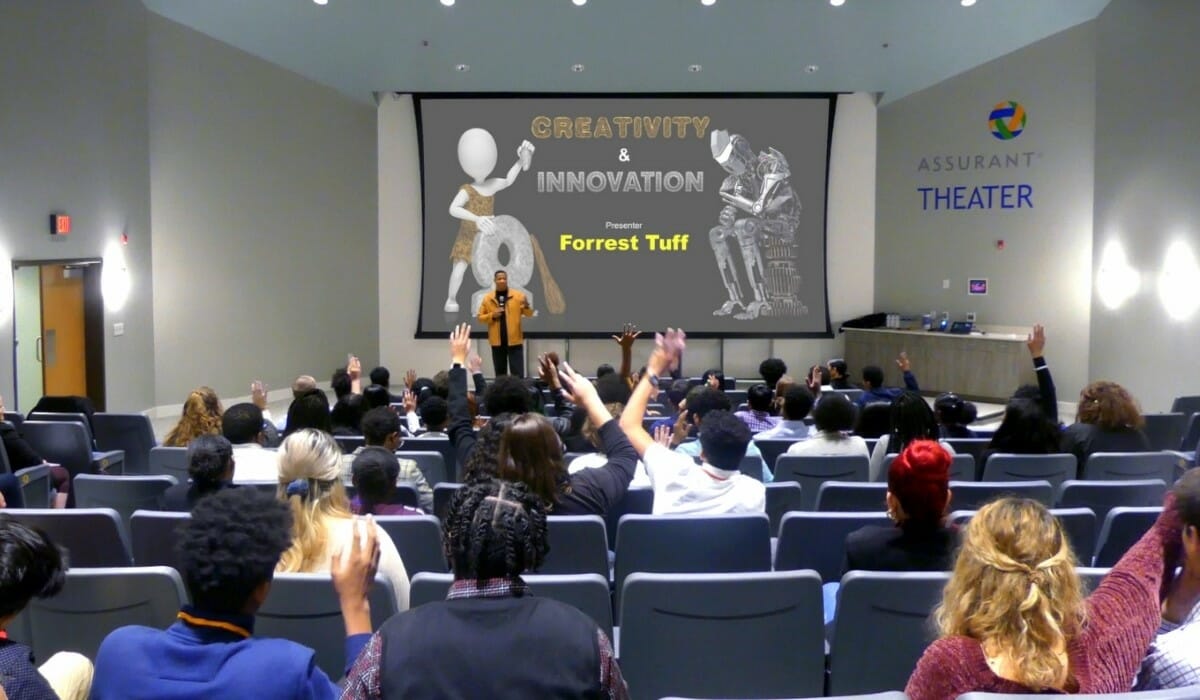
In addition to SCORE, Forrest Tuff also volunteers at 3DE as a Junior Achievement Business Coach, preparing high school in entrepreneurship, financial literacy and career readiness./Courtesy Forrest Tuff
Do you have a favorite memory from mentoring with SCORE?
It was actually a time when I was working with an organization, they were very well off financially. The problem they were having was between a mother and a daughter, they were just having a huge disagreement about the business. Somehow I’ve received this case, and I was talking with them and it was great because having this conversation with a mother and a daughter about business, we were able to get to the things that mattered outside of the personal things that were involved. We were able to find out which things really mattered towards the business. So that was what was important. It was a different type of mentorship. We don’t try to be counselors in your personal life, but it was interesting because we were dealing with things that were about the business and sticking to that was a great opportunity.
What inspires you to volunteer?
Recently, I’ve started working with an organization called 3DE, and one of the things that’s always helped keep me motivated is young people. I love mentoring business owners, but I’ve been doing this thing with 3DE where we teach young kids entrepreneurship and how to strategically look at businesses. I figure out how to help them grow. For me, being able to mentor people, especially youth and business owners, helps them not only look at what they’re doing, but to also look at alternative ways to look at a business. While you’re helping others, you’re also growing.
What have you learned through your experience as a volunteer?
I’ve learned that you never stop learning. Even being in business now for 18 years, I’m always surprised at how much I still learn. The landscape of business changes, and now I even have mentors that are younger people that I consult with. There’s so many different ways to grow and learn from others. And I think that’s the biggest thing for me, I just love to learn. So when I learn, I love to share.
Why is it important for others to give back?
In giving back, you give back to yourself. Giving back is one of those things where you don’t realize how much it also does for you. It’s not just a type of monetary gain, but just in how you feel about life. It changes your perspective on life. Giving back can help fight depression and it can make you feel better to see others have success. The reason that I give back is because I like the way that it makes me feel and I find joy in watching others grow and achieve.
Vietnam Veteran Helps Connect Other Vets with Benefits Earned from Their Service
Meet Daily Point of Light Award honoree Richard Nagley. Read his story and nominate an outstanding volunteer or family as a Daily Point of Light.
Content Warning: Points of Light is proud to share the following uplifting and inspiring story. However, we acknowledge that a small portion below may be difficult for some readers. We encourage you to please care for your own wellbeing above all.
It never crossed Richard Nagley’s mind that he would become a full-time volunteer upon his retirement. After all, he worked on the first two Apollo missions at NASA with Homer Hickam, the focus of the movie October Sky before he was called upon to serve in Air Force intelligence during the Vietnam War. In his words, he worked on computers when they “hardly fit in the building”.
After he got out of the military, he moved into the business world at MasterCard, United Airlines, and Levi Strauss. When he started work at IBM, he got an offer from Bill Gates to be the 23rd employee at Microsoft. They still joke about how he turned it down.
Today, after spending time navigating the system for his own health issues related to the service, Richard spends his time engineering the best way for veterans to collect the benefits they earned in the service. He created a nonprofit he called the Veterans Coalition of the San Luis Valley. In a time when there was no organized effort to help servicemembers in those six counties, Richard felt himself called. Today, there are 31 coalitions helping veterans as far as Guam.
What inspires you to volunteer?
It’s not something I thought I’d find myself doing. I started the Veterans Coalition of the San Luis Valley in 2006, because the VA in rural Colorado had a clinic but couldn’t keep a doctor or staff. Veterans needed healthcare help, and I finally took it upon myself–when I needed some help myself–to see what I could do about changing the VA.
Describe your volunteer role with the Veterans’ Coalition.
At the time, there was no one that was helping veterans and no one helping me, so I decided to jump in and figure out what was going on. I began to figure out how the system was dysfunctional, and one thing led to another until I was working with the Secretary of the VA and started the Veterans’ Coalition.
If I leave my cave, I usually find a veteran or a veteran finds me. In Colorado, 10% of the population are veterans, and 99.8% are related to a veteran. That begins a conversation. I then find whether somebody is in need of services I can connect them with. I’ve also been working on policies and a project for the Secretary of the VA.
I’m also on several research boards for the VA nationally. Somewhere between 20 and 22–or more–veterans commit suicide each day. The VA discovered that Colorado was fifth in the nation for veteran suicides, and San Luis Valley has twice their rate. They asked the Coalition if we would take on the Alpha Project, a study on why this is happening. In our own way, we make a difference in people’s lives, one veteran at a time.
What are some of the biggest challenges veterans face when they return home?
The suicide issue is the point of the sphere, but all the comorbidities—drug abuse, homelessness, unemployment, alcohol, physical and mental health issues–drive people to say, “I’ve had enough.” When someone gets out of the military, it’s like leaving home for the first time and going off to college or getting a job. How do you take that job description in the military and equate it into something in real life? We try to help them.
What are some of the biggest ways the average person can help support veterans?
Recognize that veterans pay up front. If the Average Joe on the street thinks about the fact that they’re related to a veteran, he would say, “Thank you.” Asking what you can do for a veteran is great, too. We’re not giving a handout but more of a hand up.
What’s been the most rewarding part of your work?
It’s when a veteran comes in and you start working with them, and they leave crying saying, “No one ever tried to help.” It recharges the battery. I ride a roller coaster every day, and the lows are extremely low. Every once in a while, there’s a really high high, because someone has been told for much of his life either that he was not a veteran or that didn’t qualify for benefits. When we find that he is and he does, he starts getting help and turns his life around.
What have you learned through your experiences as a volunteer?
In my day, others used to say, “Find a job that you would be willing to pay them to let you do.” I didn’t understand what that meant, but now I do. I’ve found that job. I wish I was 40 years younger or even 20 years younger.
The farther from an urban area, the less likely people can do things for free. I just happen to be lucky enough at the moment that I can. Not only can I do it for free, but I am the underwriter and safety net for the organization when it needs help.
What do you want people to learn from your story?
My story is not unique. I can give you lots of stories that I am in awe of. The first major battle of Vietnam was the Battle of Ia Drang Valley. There’s a movie out about it We Were Soldiers with Mel Gibson. Americans were outnumbered somewhere between 10 and 100 to one and survived. This is where helicopters were used for the very first time in the military. We have one of the survivors of that battle living here in the Valley.
One of the things they say at the end of the movie is, “You want to know what to do? There’s always one more thing you can do. And after that, there’s one more thing you can do.” That was the answer, in essence, to how did he and his men survive. People should know that you don’t have to start off big. If you find one little thing that you can do, there will be another thing after that.
If you or someone you know may be considering suicide, contact the National Suicide Prevention Lifeline by dialing 988, or text HOME to 741741 to talk to a trained crisis counselor through Crisis Text Line. Both resources are anonymous, free and available 24/7.
12-Year-Old Volunteer Recycles Batteries to Protect the Earth
Meet Daily Point of Light Award honoree Saadhana Dara. Read her story and nominate an outstanding volunteer or family as a Daily Point of Light.
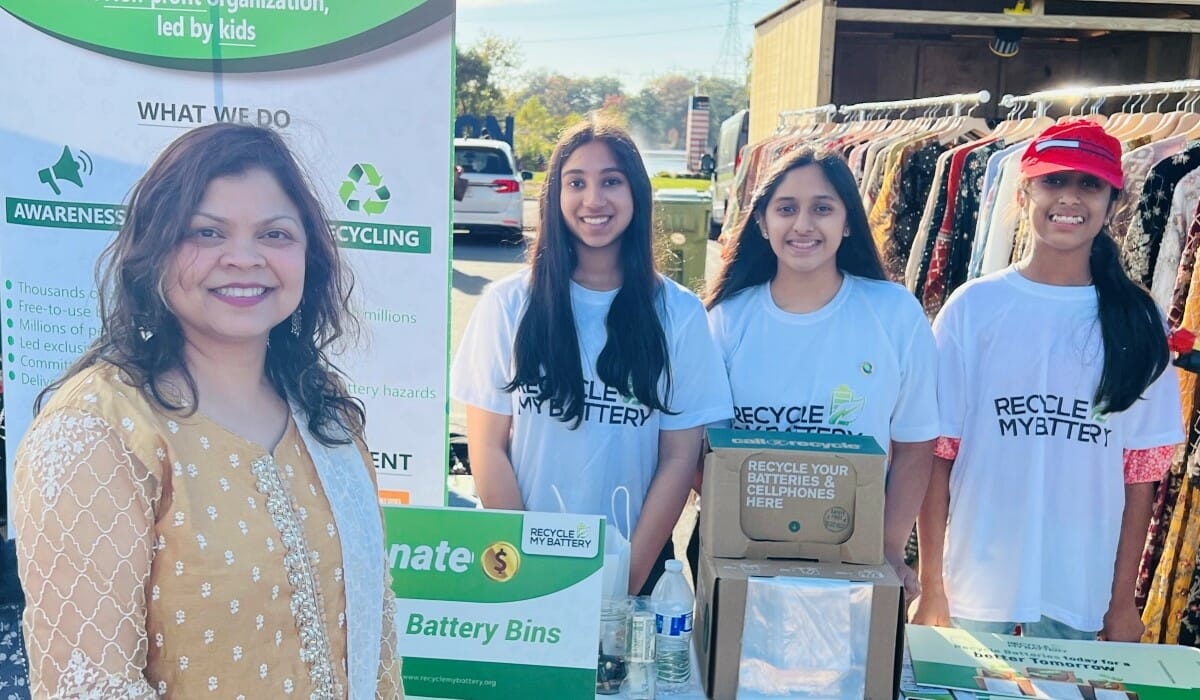
Seventh grader Saadhana Dara may be young, but she has big and ambitious goals to protect her planet. Saadhana didn’t always know what recycling batteries even mattered or that batteries can’t be disposed of like ordinary trash, but in 2019, she joined forces with Recycle My Battery, a national youth-led campaign to make the Earth a better place.
Saadhana helped grow Recycle My Battery’s small team to hundreds of volunteers. Together, they’ve placed more than 450 battery recycle bins and collected over 200,000 batteries safely nationwide.
Describe your volunteer role with Recycle My Battery?
In my childhood, I didn’t realize that there would just be trash everywhere. It seemed to not be that big of a deal because at that time I thought it was normal. People were minding their own business and doing their own thing. When I heard about Recycle My Battery in 2019, I realized just how much batteries would affect you. That’s when I realized that batteries and trash are really harmful to the Earth. They can harm our ecosystem and affect the food and water that we eat. It could be dangerous to the human body. So that’s when I started researching Recycle My Battery even more. It’s been a lot of fun. It’s educated me and helped me educate others.
We partnered up with another organization called Call2Recycle, the nation’s largest battery recycling organization, which does the actual recycling and makes them as other products. They also provide us with battery bins, which we place around our community for battery collections. Then we send them back to Call2Recycle. We also educate people with videos and spread awareness at different markets.
How has Recycle My Battery grown?
When I joined, the Recycle My Battery campaign was a small campaign, maybe like four to five people. But now, more than 300 people have joined the organization and we’ve helped educate an estimate of 5 million people about the importance of recycling batteries.
We were a little affected by the COVID-19 pandemic because we couldn’t really interact with the people, but we still met virtually. The team and I used social media to connect more with our community. It really helped us out.
Describe the kids mobile app that you’re developing.
In my coding class, we had to make a project that benefitted something we do at home. At first I thought of a recipe book app, but I knew a lot of other people doing that too and I wanted to do something meaningful. I thought, what could I do that’s unique? So I thought that I should use Recycle My Battery as content for my app. My app has all of the battery recycling information on it. I wanted it to be cool and something people will keep going back to. I also added resources where people can continue learning. I’m still working on the app, I want to continue making some modifications.
Saadhana Dara educates her community on the importance of recycling batteries with Recycle My Battery./Courtesy Saadhana Dara
Do you have a favorite memory from your volunteerism?
It’s a pretty recent memory, but I will say it’s probably one of my favorite memories. Some Recycle My Battery members and I went to market stands outside to try out different foods and had our own stand where people would come up and we would tell them about recycling batteries. I have lots of other colleagues there spreading information to others and it was fun just to talk about recycling together.
What inspires you to volunteer?
To be honest, it’s a straightforward answer. Many people say it but it’s true: we need to save our mother Earth. Recycling batteries is a unique way to do that, which not many people understand. But with Recycle My Battery, I’m really lucky to get the chance to teach others.
What have you learned through your experience as a volunteer?
I’ve learned a lot about recycling batteries, because if you were to ask me anything about batteries before joining the organization, my answer would be that I didn’t know. But another thing I learned about is just talking more to others and most importantly, leadership.
Why is it important for others to give back?
Because mother Earth has provided us with so much like water, land, shelter and food. And the least that we can do is recycle. It’s also important to keep in mind because you can also get involved in something you had no idea about, like me with recycling batteries.
Are there any events, partnerships or programs coming up with Recycle My Battery that you’re excited about?
We’re really excited to keep growing our school campuses, but one of the most important things for us as an organization is that we want to partner more with businesses and companies. We also want to continue educating our citizens.
Teenage Martial Artist Helps Seniors Strengthen Their Fitness and Confidence
Meet Daily Point of Light Award honoree Jeffrey Wall. Read his story and nominate an outstanding volunteer or family as a Daily Point of Light.
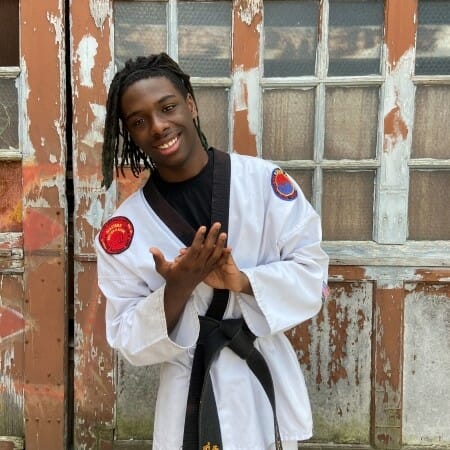
With his kicks that shoot straight into the sky and jumps that seem to defy gravity, there’s no doubt that 17-year-old Jeffrey Wall is a skilled martial artist. Since first stepping into the dojo at the young age of 6, Jeffrey has been mastering the Korean martial art of Tang Soo Do and was even inducted into the Martial Arts Hall of Fame at age 10. But what makes his talent shine even brighter is his heart for service because he teaches karate to an unexpected group of students – senior citizens.
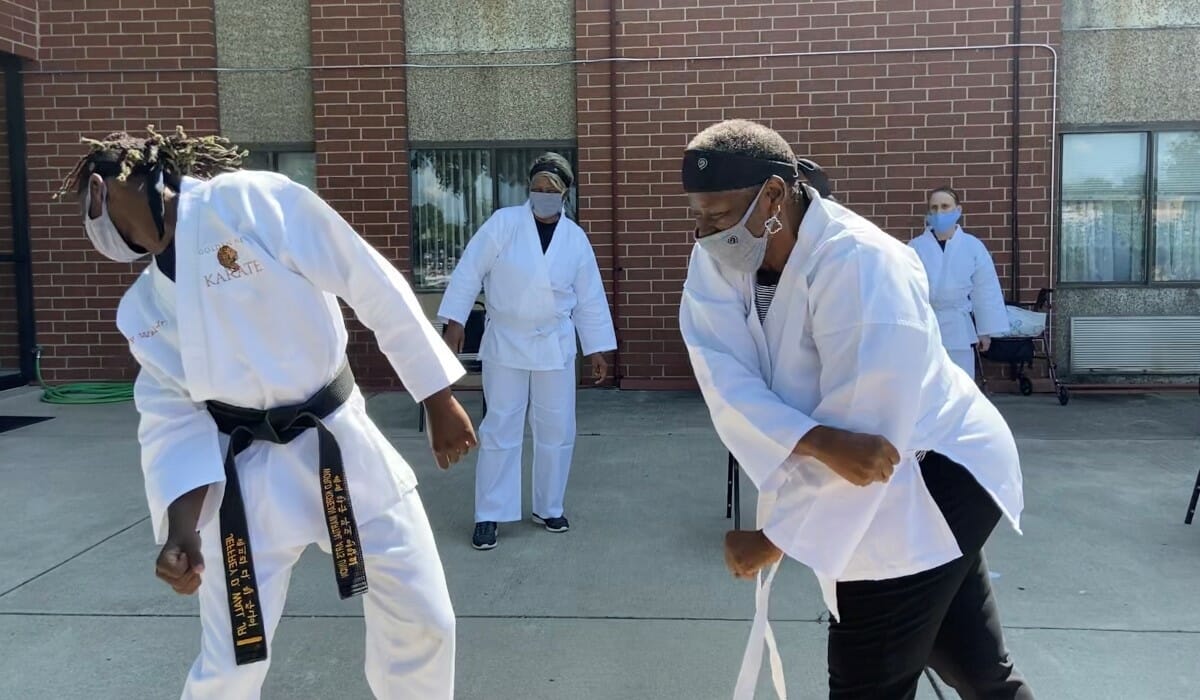
Once a month, Jeffrey visits local nursing homes in his city of Dayton, Ohio, and teaches the residents basic karate skills through his nonprofit organization called Golden Age Karate.
“We first go through the basics stances and then the bow, which is a sign of respect. Then we get into their favorite part, which is the punching and kicking. Then they beat me up at the end of class,” Jeffrey said.
With the ages of these seniors ranging from 70 to 102, many of them come into class stiff and nervous about the forthcoming physical activity, Jeffrey said. But soon enough, they’re kicking and punching with a smile on their face.
Jeffrey Wall teaches karate to senior citizens, helping them be more active and gain self defense skills./Courtesy Jeffrey Wall
Jeffrey refers to all his students as “Super Nanas” and “Super Grandpas” as what they can do at their age is remarkable. But something one “Super Nana” did during one of his classes when he first started Golden Age Karate four years ago still shocks him to this day. While he did real push-ups on the ground, his students pretended to do push-ups as they pushed their arms forward and back while standing up.
“But then one of my students got on the ground and started doing real push-ups with me. She was keeping up with me too,” Jeffrey said. “I asked, ‘May I ask how old you are?’ because I was thinking she was in her 50s. But she said she was 95. I was shocked.”
While the karate lessons Jeffrey teaches his students enables them to become more active and have fun, it also helps them gain the confidence to go about their daily lives without feeling as vulnerable as they did before.
“A lot of times when I went shopping and it started getting dark, I would be so frightened that I had to get home immediately, whether I was finished shopping or not,” said 70-year-old Sandy Campbell, who has been learning karate from Jeffrey since 2019. “But with the knowledge Jeffrey gave me, I’m much more confident.”
“I have a hard time calling him a boy even though he’s at such a young age because to me, he has achieved a mark in manhood that a lot of grown men will never achieve. I’ve never known such a selfless, caring young man in my life,” Sandy added.
When the COVID-19 pandemic put nursing homes in lockdown, Jeffrey posted his karate lessons on YouTube. But he has recently returned to in-person classes./Courtesy Jeffrey Wall
On top of maintaining excellent grades in school, Jeffrey is a star football player and track athlete. And while that alone would tire most people out and cause them to take a break from volunteering, Jeffrey is relentless. Not even the COVID pandemic could stop him. When nursing homes had to be locked down at the height of the pandemic, Jeffrey kept his students active by posting videos of his karate lessons on YouTube so they could follow along while stuck in their rooms.
“One of my students watched them every day until I came back,” he said.
Being a senior in high school, Jeffrey will go off to college next year, but he hopes to keep his karate classes going.
“Because if we want change, we have to be the change.” Jeffrey said. “So, if we all work to make someone else happy, everyone’s going to be happy. It’s as easy as that.”
Dogs Always Make Life Better, and They’re a Way to Give Back
Meet Daily Point of Light Award honoree Tammy Davies. Read her story and nominate an outstanding volunteer or family as a Daily Point of Light.
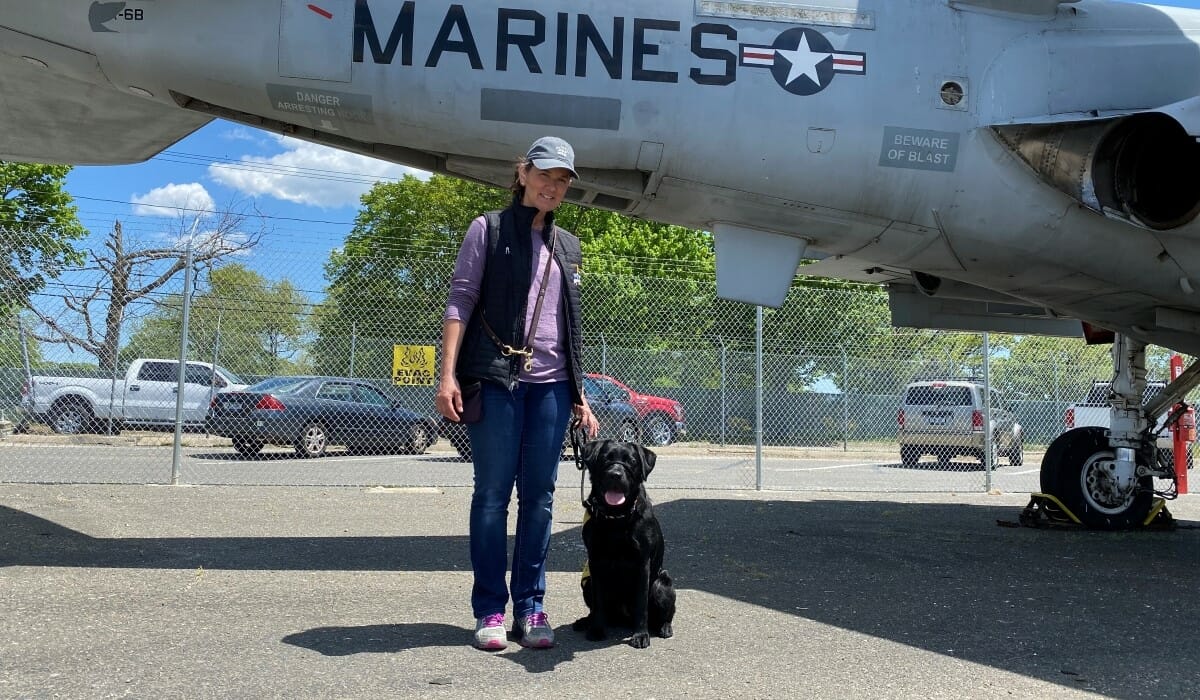
Tammy Davies is a lifelong dog lover. Volunteering at the Guide Dog Foundation was something she always wanted to do “someday” but as is the case with many people, life got in the way for years. However, the dream stayed at the back of Tammy’s mind. In 2018, Tammy’s husband surprised her on Valentine’s Day by driving to the Guide Dog Foundation campus in Smithtown, New York, and encouraged her to take the first step — to go inside and find out how to apply.
Tammy began as a level one kennel volunteer, visiting with dogs that were boarded at the kennel. She noticed that every member of the staff was – and continues to be – kind, grateful and appreciative of their volunteers, and she realized that this was a perfect situation for her.
For 75 years, The Guide Dog Foundation has trained guide dogs and service dogs and placed them with visually impaired, blind and otherwise disabled individuals. Guide and service dogs offer a chance for increased independence and mobility.
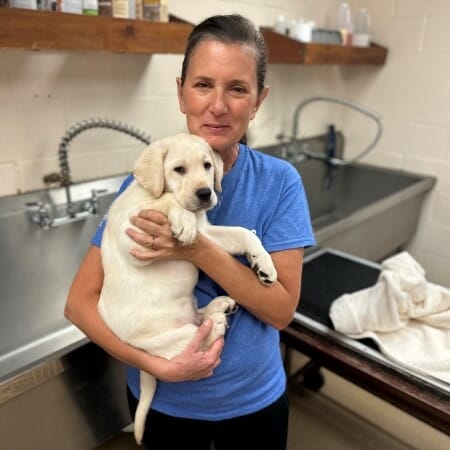
Bath time is not just about getting clean, it’s about socialization. Tammy shows puppies some love at her Monday morning puppy bathing shift./Courtesy Tammy Davies
Its sister organization, America’s VetDogs, trains service dogs to provide enhanced mobility, independence and emotional support for veterans, active-duty service personnel, police and first responders with disabilities or PTSD.
Although it costs over $50,000 to breed, raise, train and place one service dog, there is no cost to the recipient thanks to the tireless efforts of volunteers and generous funding.
What inspires you to volunteer?
My work as a volunteer is inspired by the words of St. Mother Teresa of Calcutta: “Not all of us can do great things. But we can do small things with great love.” When I am working with these beautiful pups, I imagine the joy and independence they will bring to someone who is living with a disability or suffering in some way. I am taking one small step on the journey with them to change lives.
Describe your volunteer role with The Guide Dog Foundation.
I commit to regular shifts on campus each week bathing puppies, providing early socialization activities for puppies from 3-6 weeks old in the nursery, and providing socialization activities for puppies over 6-weeks-old in the puppy transition center, which includes introducing them to walking on a leash for the first time.
I am also a Temp Home Volunteer for the breeding program, puppies in guide dog training and adult dogs at the “In for Formal Training” phase. Temp Home Volunteers provide temporary homes to program dogs while ensuring good house manners, obedience, socialization and offering a change of environment.
My family has welcomed 30 program dogs into our home. I also assist and support home whelps.
What’s been the most rewarding part of your work?
I’ve attended several events where recipients of our guide and service dogs have given speeches with their dog by their side. When they describe how their lives have changed since receiving their dog and what is now possible for them, it brings me happiness that I can’t put into words.
What have you learned through your experiences as a volunteer?
Animals teach me to live in the moment. The world can change so quickly but if you focus on helping, you can get through anything and not despair. It gives me hope.
Tammy attending puppy class with 12-month-old Mango, a guide dog puppy in training. When providing program dogs with a temporary home, Tammy continues their training with their regularly scheduled classes./Courtesy Tammy Davies
Are there any future partnerships, programs or events that you are excited about?
I am excited to continue my training and share my passion with new volunteers through leading orientations and shadowing sessions.
Why do you think it’s important for others to get involved?
I believe that it’s important to live an inspired life by using your time, treasure and talent in service to others. By instilling this in future generations, the world will change for the better.
What do you want people to learn from your story?
When I asked my 18-year-old daughter how she felt looking back on the events of 2020, her answer was “our family was thriving.” We kept busy delivering food to elderly members of our parish community and we regularly picked up pups from The Guide Dog Foundation. Volunteering simply changes your perspective.
Survivor of the 9/11 Attacks Shares His Story to Honor Victims and Remember History
Meet Daily Point of Light Award honoree George Mironis. Read his story and nominate an outstanding volunteer or family as a Daily Point of Light.
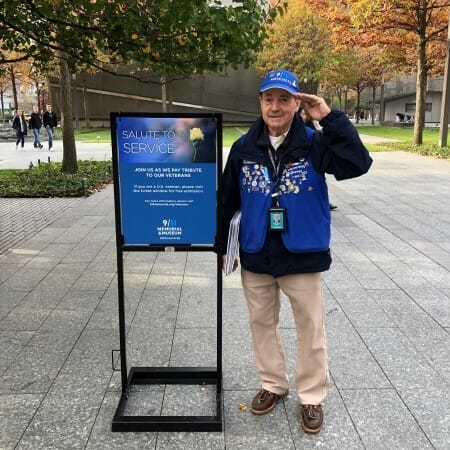
George Mironis knows the power of remembering our nation’s history, and endeavors to pass it on to future generations through his volunteer work. George has been a Visitor Services volunteer at the 9/11 Memorial & Museum for over four years and has worked for the organization since 2012.
Though he survived the attacks, many of his friends and coworkers did not. He honors their memory by sharing his story with visitors when they ask where he was on 9/11. Some visitors get very emotional when he tells his story, as they connect his personal experience with the historical event that changed the course of American history. Read on to learn more about what George does and what inspires him to volunteer.
Describe your volunteer role.
As a volunteer, I proactively greet our visitors and answer questions. I let them know about thedifferent programs and exhibitions that are available inside the Museum. My favorite place tovolunteer is outside of the museum on the plaza, which features the two large reflecting pools that sit within the footprint of the former trade tower buildings. I educate them as theyask questions and direct them to the different exhibits. Given the sacredness of the site, I doensure that visitors are being respectful of the memorial plaza and museum. As much as I can, Ilike to be assigned to place the birthday roses each day. This is where we place a white rose at a victim’s name to symbolize their birthday. It is interesting to me that there is a birthday eachday of the year.
Volunteers in Visitor Services enhance the visitor experience by proactively greeting andanswering questions. They inform visitors about the programs and exhibitions availableinside the museum, and assist with directing visitor queues and pathways. This role isbased in the museum and on the outdoor Memorial. I also attend and volunteer at many of the special events which happen throughout the year including the annual remembrance on September 11, the placing of flags in all of the names of the victims on July 4th, and fundraising events like the 5k run.
What does the 9/11 Memorial & Museum do?
The September 11 Memorial & Museum educates visitors on the events of September 11, 2001, and pays tribute to the almost 3,000 victims. The museum provides a way for visitors to connect to the victims and the event.
George enjoys meeting visitors from all over the world and sharing his personal experience on 9/11./Courtesy George Mironis
What inspires you to keep volunteering?
I worked in the south tower and was there on the day of the attacks. I lost 23 co-workers and 16 other friends that day. I worked for the museum as an employee for five years beginning in April of 2012. I have been volunteering now for an additional five a half years. I volunteer to honor the memory of the 39 people that I personally lost that day. I carry a little book with me everywhere I go and it lists each of their names and the location of their name on the memorial plaza. I will never forget the events of that day or the people. Volunteering, after having worked at the memorial, is part of who I am.
Any rewarding stories/experiences from your work?
There isn’t just one story or experience that stands out for me. Certainly visits from dignitaries and our military are special, but what is really rewarding for me are the individual interactions with an individual or family when they visit. It is the small moments of interaction that I enjoy the most. I enjoy helping them understand what they are seeing. I listen to them talk about their thoughts about the events and, as many visitors do, tell me what they were doing on September 11, 2001.
If visitors ask me about my experience on September 11, I do let them know about the 39 co-workers and friends that I lost. I do like providing a bit of comfort to a visitor if needed. I always have a pocket full of folded paper towels in case I see a visitor who could use something to wipe their tears. The museum is certainly an emotional place. I also have candies in my pocket and I give these out to children.
What are some lessons you have learned along the way?
The people I talk to when I volunteer are extremely compassionate and kind. God created this world and there is much more love than there is the hatred that caused the horrific events of September 11.
Are there any future partnerships, programs or events that you are excited about?
I enjoy each day I am at the museum and, even if I am not scheduled, I come to the museum for any special events and, at times, dignitary visits.
What would you like readers to learn from your story?
I’m a first-generation immigrant from Greece. I arrived in 1967 and became a citizen in 1972. I would have become a citizen sooner but, at that time, you were required to wait five years. I am proud to be an American. I have a beautiful family that supports my need to volunteer. My life was completely altered because of the events of September 11. Some people call me “The Treasure” and I embrace this as I know it is a reflection of my love for people and my desire to help. I volunteer to remember those that are no longer with us and I take pride in carrying out my duties.