Driven by Faith and Empathy, California Teen Provides Basic Necessities for Elementary-Aged Students
Meet Daily Point of Light Award honoree Hannah Karanick. Read her story and nominate an outstanding volunteer or family as a Daily Point of Light.
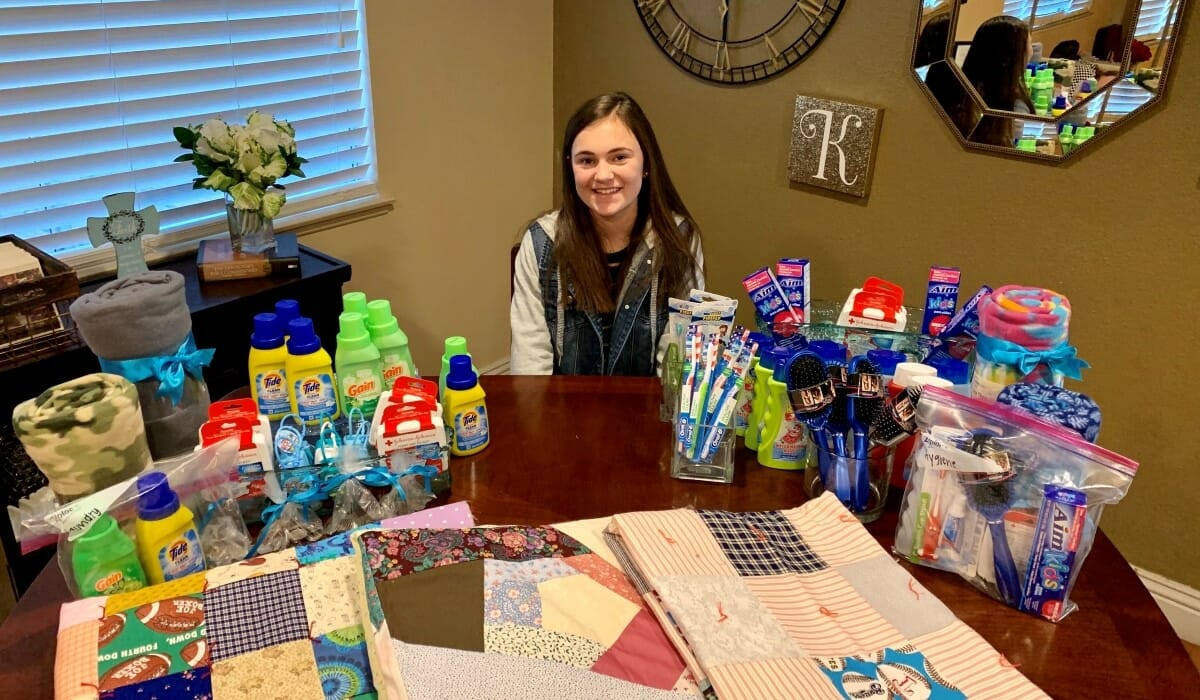
Having seen first-hand the need in her community, Hannah wanted to help as many families as possible. Hannah’s charity, Hannah’s Helpful Hands, was formed in 2018 to provide basic necessities for families in need at her alma mater elementary school. Hannah learned that laundry detergent, shampoo, soap, toothpaste, deodorant, blankets, shoes, socks, t-shirts and sweatshirts were in great need.
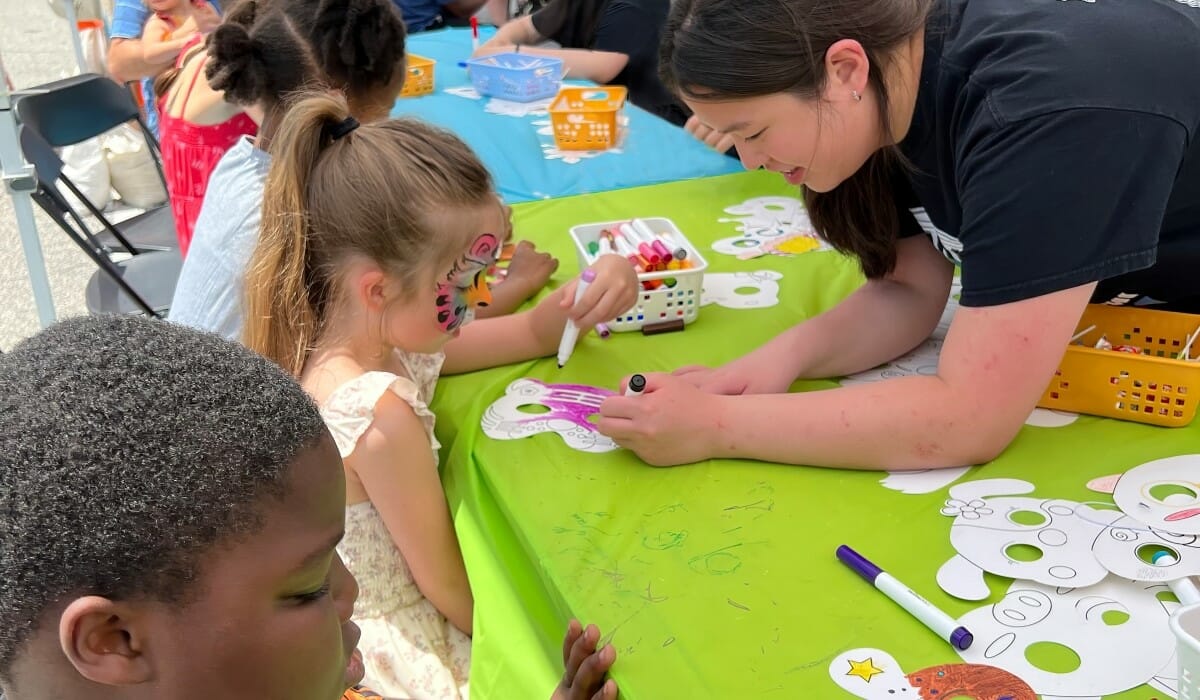
She developed a closet at Twila Reid School where school staff could discretely provide students with what they need: toiletry bags supplied with essential hygiene items, laundry detergent with quarters for the laundromat, new clothes, new shoes, backpacks, and quilts made by her grandmother. Since its founding four years ago, Hannah’s Helpful Hands has expanded to all four elementary schools in the Savanna School District. She maintains anonymous sign-out sheets to determine patterns of what needs to be restocked. She is indeed changing her community, one confident child at a time.
Describe your volunteer role.
I founded my charity, Hannah’s Helpful Hands, which is an anonymous closet in elementary schools for children in need. I started this nonprofit when I was 13 years old. I am now 17 years old. I am responsible for fundraising, procuring and delivering the items needed for the closets, meeting with school staff to keep up with the specific needs of each school and gathering volunteers to pack toiletry bags, pack laundry bags and sort new items.
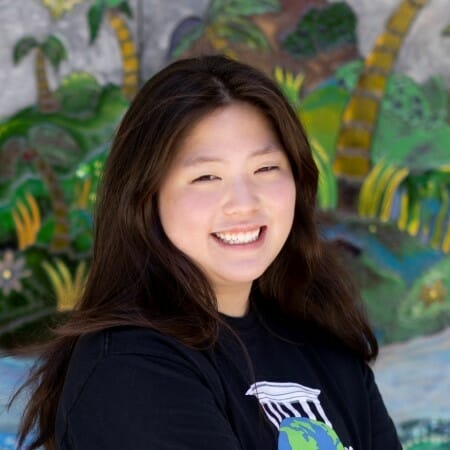
Hannah Karanick is the founder of Hannah’s Helpful Hands, a nonprofit that provides basic necessities for families at her alma mater elementary school./Courtesy Hannah Karanick
What does your organization do?
My family has hosted and loved thirteen foster kids during my life and I have noticed that their self-esteem and their involvement in school thrived when they had basic necessities like a backpack, new shoes and clean clothes.
For years, I had been trying to come up with an idea for how I could help the kids in my old elementary school. Then, when I was 13 years old, the idea of an anonymous closet was born! I talked with the school principal at my alma mater elementary school and received permission to supply hygiene and laundry kits for children who needed them. The school staff was very helpful and gave me a space in the school office to store these items and the staff would anonymously distribute them to children in need. From staff requests and brainstorming, I have added gift cards for new shoes, backpacks, handmade quilts made by my grandmother, plain shirts and sweatshirts, and other common items to the list of available necessities for students to receive.
Why are youth-led movements important in shaping our world?
As with most youth that I know, we are enthusiastic about trying new ideas. I went through many iterations of ways to help the low-income children at my alma mater elementary school. I did not know that I could fail, so I just kept trying! While youth need adult mentors to help them shape their new ideas, the power of perseverance makes our youth unstoppable.
What inspires you to keep volunteering?
I am inspired to keep volunteering because I am making a difference. I have even met with other teens so that they can duplicate this work in their own community. I am thrilled to share my knowledge – failures and successes – with others so that many more children can receive help.
The bags that Hannah’s Helpful Hands offers are also stocked with laundry detergent with quarters for the laundromat, new clothes, new shoes, backpacks and quilts made by her grandmother./Courtesy Hannah Karanick
Any rewarding stories/experiences from your work?
I like the anonymous aspect of my charity; school staff just go to the closet when they see a child in need and the child never knows where the help comes from. Taking a handout can be hard, so this method of distribution is very important.
However, as I meet with school administrators to ensure that the closets contain items that are useful, stories are shared and I get to catch a glimpse of the lives touched by the closet.
What are some lessons you’ve learned along the way?
This project has taught me leadership, determination and perseverance like none other. I’ve overcome many obstacles like COVID-19, fundraising and simply meeting the kids’ needs. However, I’m grateful that my charity has become a blessing to many youths in my community and that I’ve also inspired others to get involved. My friends and siblings pitch in because now they see that even young people can make a difference!
My foster siblings have forever changed my young life; they were the kickstart in my journey to help those less fortunate than me. I have become more grateful for the things I once took for granted, and in return, I am motivated to use that gratitude to help as many young lives as possible. I know that this is just the beginning of my impact for good!
Are there any future partnerships, programs or events that you are excited about?
I am excited that we are expanding the program to help more elementary schools in my community!
What do you want people to take away from reading your story?
My deep-rooted compassion is from my faith in God and from my 13 foster siblings.
Sophomore in High School Encourages and Assists People Experiencing Homelessness
Meet Daily Point of Light Award honoree ZaNia Stinson. Read her story and nominate an outstanding volunteer or family as a Daily Point of Light.
ZaNia Stinson is just a few days shy of sixteen and is already a shining example of how empathy can drive change. Until she was five, ZaNia spend time rotating between a women’s shelter with her biological grandmother, her foster family, and a local homeless shelter for women and children. Her circumstances changed when she was adopted by her foster family, and a few years later, she began to understand that others were not as lucky.
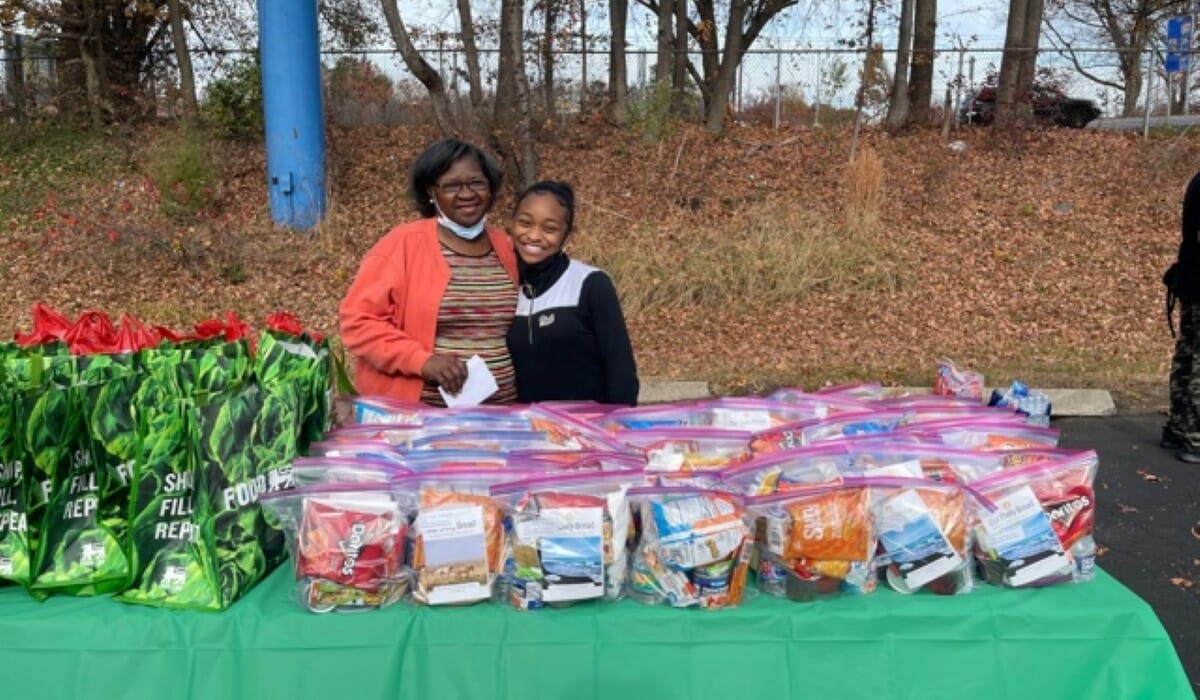
Today, ZaNia is a competitive dancer on her school team who likes to make TikTok videos and spend time with friends. She is already planning her future as a dermatologist but looks to her past for inspiration to help others along the way. She elicits help from the community to collect donations for and pack “Go-Go Bags”, care packages, to provide the homeless with help and hope during their time of need. So far, she’s raised over $35,000 and distributed over 1,750 food and 400 toiletry bags. Her compassion is a trait that medical schools don’t teach but that all doctors should have.
What inspires you to volunteer?
One day my mother and I were on the way to Food Lion, and we saw a lady and her two kids standing outside asking for food. I was nine years old, so I was really confused by their asking for food outside of a food store. My mom said they were homeless and that they didn’t have any food. I really wanted to help them, so I gave them a $5 bill.
It just made me want to give back to the community more, because I know especially how they felt. When I was younger, I used to live in the Women and Children’s Shelter in Charlotte, North Carolina with my biological grandmother before I was adopted. I was in and out of the shelter until I was five years old.
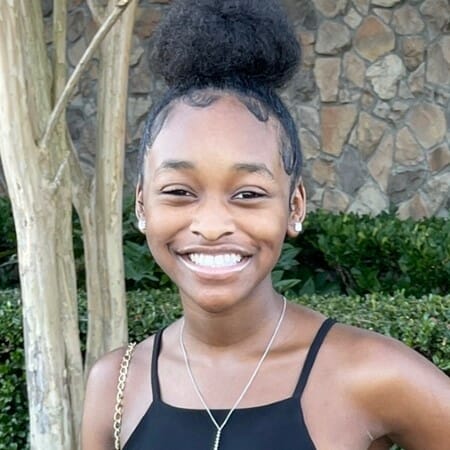
ZaNia Stinson, 15, creator of Go-Go bags and dedicated volunteer./Courtesy ZaNia Stinson
Describe your volunteerism.
I make Go-Go Bags. I take Ziploc bags, and I put non-perishable food items in some of them and toiletry items in others. I add an encouraging note to each, and I give them to anyone I see on the street that is asking. I also give them to the hotel by my church that shelters homeless people temporarily, and I give them to the women and children’s shelter that I used to live in.
A lot of people help. My family helps me. My church helps me. My dance team, my friends, my school. Everyone helps.
What’s been the most rewarding part of your work?
The most rewarding part of my work is to see children happy that they are getting something and to see parents excited that they don’t have to worry about food for the day. I just like seeing that I’m actually making a difference in the world.
What have you learned through your experiences as a volunteer?
I’ve learned to appreciate the things that I have. One little girl was so excited about getting some deodorant, it just made me appreciate what I have even more and not take where I am now for granted. I’ve also learned that homeless people are really just like us but in a difficult situation.
I’ve learned that other people around me want to help, too. It’s not just me. They just don’t know how. I tell them that even giving the smallest thing can really help someone who needs it.
ZaNia and her mom, Jackie (left) prepare to distribute Go-Go Bags./Courtesy ZaNia Stinson
Why do you think it’s important for others to give back?
I think it’s important for people to give back and be involved in their community, so that people who are struggling know that other people care about them and that they’re not alone. It also humbles people about where they are, and makes them realize that if they have it, they should give it to people who need help getting back on their feet.
What are some things that people can do in their own communities to help the homeless?
People anywhere can make their own Go-Go Bags with non-perishable food items, toiletries or things like towels and washcloths, socks and jackets, toothbrushes, etc. Those are the most important things, because people don’t really think about them during winter time.
I would say a word of encouragement is really important, too. They can add a note, or just give bags to anyone they see and tell them not to lose hope. Saying encouraging things like, “I’m thinking about you,” or “Better days are coming, so do not give up,” can really uplift people.
What do you want people to learn from your story?
I used to live in a homeless shelter, got out and am doing better, but I didn’t forget where I was. I go back to where I used to live and help people get out or just help them to get their courage again.
Bay Area Teen Makes Therapy Accessible for Children With Autism and Their Families
Meet Daily Point of Light Award honoree Anshul Gupta. Read his story and nominate an outstanding volunteer or family as a Daily Point of Light.
Anshul Gupta, a high school senior from Sunny Vale, California, has dedicated much of his extracurricular life to the neurodiverse community. Born from his experiences receiving therapy and working with neurodiverse individuals, he co-founded and currently serves as president of AUesome, an initiative using technology to make educational and therapeutic resources more accessible to children with autism.
Founded in 2020, AUesome already boasts an impressive number of initiatives to serve children and families across the world, beginning with its hallmark offering, autism therapy kits. Anshul’s hope is to ease the financial and physical barriers to therapy by consolidating and designing these therapy kits to bring treatment tools directly to families.
To date, he has delivered nearly 17,000 activities to 550 parents, educators and organizations across 25 states and seven countries. These kits encompass a variety of activities, accompanied by additional resources via the organization’s website, which proudly displays its motto: “Bridging the digital and physical world of at-home therapy, one kit at a time.”
AUesome’s therapy kits help with communication skills, sensory skills, fine motor skills and more. Along with the kits, AUesome’s e-learning platform (which is currently being developed into a mobile app) includes instructional videos for parents and caregivers to educate themselves on how to provide therapy to their children in an at-home setting. This doesn’t necessarily negate the need for children to work with a therapist, but it makes consistent and ongoing therapy more accessible to families.
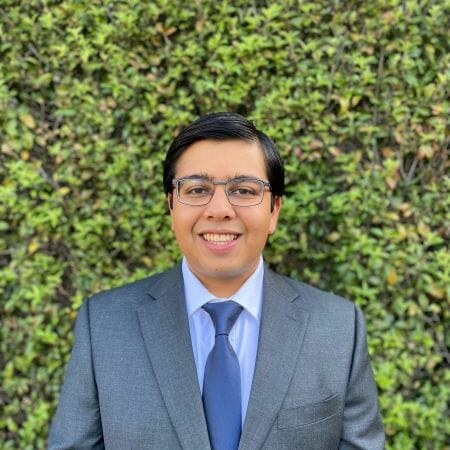
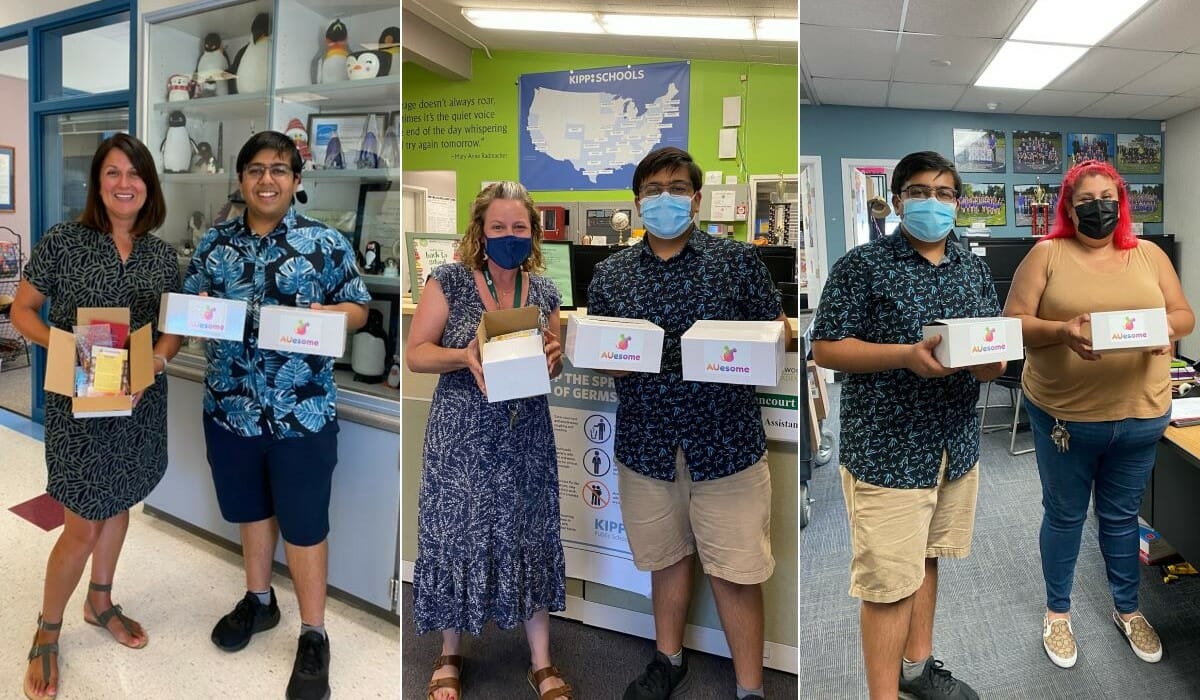
Anshul serves as president of AUesome, volunteering directly with kit recipients as well as forging partnerships with organizations and spearheading new initiatives./Courtesy Anshul Gupta
“I manage the entire program, providing therapy kits to children with autism – including their families – or working with schools, hospitals or companies,” Anshul says of his role at AUesome. “In existing therapeutic systems, there often are large physical or financial barriers that hinder individuals from receiving therapy. This issue is pretty prevalent and the pandemic only exacerbated it.”
Anshul, who has volunteered much of his time with children with special needs, also grew up with a stutter. These experiences inspired him to start an organization that could help better meet the needs of the neurodiverse community. AUesome has worked with over 35 different professionals to use the kits, gaining new perspectives from professors, parents, doctors, therapists and kids. These repeated uses allow Anshul to modify the design to increase effectiveness.
Aside from therapy kits, AUesome has launched an initative to create chapters, where students in high school or college can receive materials to help them with leadership and networking, as well as advocacy and spreading awareness about neurodiversity and the need for therapy. This new conduit allows students to be digital advocates in their own communities. So far, the organization has 17 chapters around the globe.
“We’re also hoping to expand more across the world through our global outreach initiative,” Anshul shares. “We’re currently working with the Brazilian government, Ukrainian hospitals, people in Canada, India and beyond, in an effort to make a bigger impact beyond just in the United States.”
Anshul and the AUesome organization has been featured in over 15 podcasts and news channels, including Think Kindness, CharityU, America Trends, CBS. Notably, Anshul got the opportunity to speak at South by Southwest EDU, winning their Student Competition and Diamond Challenge. He was also awarded the Equity Thru Entrepreneurship Award.
Anshul helps distribute therapy kits, which include nearly 17,000 activities, to parents, educators and organizations across the globe./Courtesy Anshul Gupta
“It was exciting seeing new faces from across the entire industry,” Anshul says of speaking at South by Southwest. “I got to meet teachers, people leading ed tech companies, executives, even parents just wanting to learn more about the industry. Even though it was intimidating, it was a great opportunity to share my journey and help educate others.”
As AUesome continues to design and develop kits and work on a mobile app – which will include games, additional videos and progress tracking – Anshul is grateful for contributions from supporters. AUesome currently has a Go Fund Me campaign to help raise funds to distribute more kits and keep expanding their efforts.
“It’s always important to have a drive to do something more meaningful in the world around you, using your background and previous experiences,” Anshul says of volunteering. “You can do something beyond yourself, something that really has an influence on society – whether it’s in your local community or across the globe. By getting involved in something you’re truly passionate about, you can really transform the lives of others while also having a fulfilling process that benefits you too.”
Future Astrophysicist Volunteers to Help Underserved Kids Reach for the Stars
Meet Daily Point of Light Award honoree Lucas Zimmerman. Read his story and nominate an outstanding volunteer or family as a Daily Point of Light.
Growing up in New York, Lucas Zimmerman had lots of opportunities to explore his passion for astronomy, from participating in STEM courses to attending lectures at local colleges. The 17-year-old Brooklyn student has dedicated his volunteerism to offering similar educational chances for underserved kids around the world.
Launching Future Astronomers in 2021, Lucas is educating children about astronomy and physics and helping students to develop their own passions in the field. Connecting with kids aged 8-18 from Brooklyn to Nigeria, Lucas is empowering young minds to reach for the stars.
What inspires you to volunteer?
I’ve been very fortunate in all the ways I could explore my passion in astronomy and continue to develop it. I will major in astrophysics when I go to college, and wanted to try to pay it forward just as other famous astronomers have helped their communities.
Describe your volunteerism with Future Astronomers.
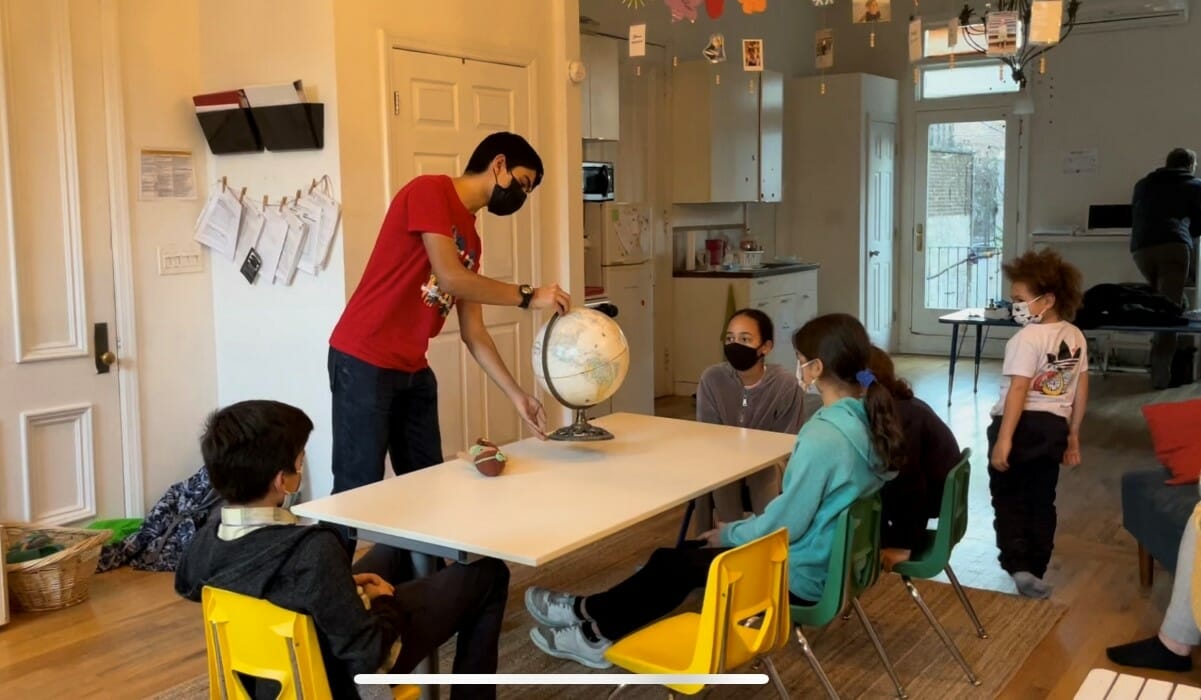
We expand on the field of astronomy and help to stimulate curiosity for students. I organize the curriculum and weekly classes and also teach classes, which are held mostly online, with some in-person. I teach students in the greater Brooklyn area and also offer astronomy classes at a high school in Nigeria. We fundraise to support our programs, provide resources and buy telescopes for students.
In addition, I’ve volunteered at after school and summer STEM programs at Kinderhaus, and my volunteerism there prompted me to launch Future Astronomers.
Share one personal story with me from your volunteerism.
During a weekly class teaching about stars, all the students were very engaged and asked a lot of questions even after I finished the lecture. I was running out of time but they were thanking me and explaining how much the class meant to them and that they wanted it to continue. Volunteering offers a sense of belonging and I really like when service brings communities together.
Lucas Zimmerman: “Volunteering progresses the world. It contributes more to the shared knowledge we have and expands upon what we have in a way that everyone is equally given the opportunity to do what they want and learn how much they want.”/Courtesy Lucas Zimmerman
Why do you think it’s important for others to get involved?
Volunteering progresses the world. It contributes more to the shared knowledge we have and expands upon what we have in a way that everyone is equally given the opportunity to do what they want and learn how much they want.
What’s been the most rewarding part of your service?
It’s rewarding to see kids’ faces light up when they learn something new or they discover something, like looking at stars or planets for the first time.
In one word, what does volunteering mean to you?
Getting involved. That’s two words.
What’s your favorite area of study in astrophysics?
Exoplanets outside of the solar system and the possibility for them to contain life or at least, the building blocks for life.
When you’re not busy volunteering or in school, what do you do for fun?
I enjoy going on long bike rides. I also enjoy reading, and I’m currently reading Girl in Translation by Jean Kwok.
Volunteer Inspires Community to Connect with Wildlife
Meet Daily Point of Light Award honoree Deb Bouchard. Read her story and nominate an outstanding volunteer or family as a Daily Point of Light.
When she started volunteering at the Lindsay Wildlife Experience more than 20 years ago, Deb Bouchard says she did not know a thing about animal husbandry and had never touched a bird.
Fast forward to today. Deb, a 54-year-old Concord, California resident, has interacted with thousands of animals through her service. Lindsay Wildlife Experience connects people with wildlife and also cares for injured and orphaned animals at its wildlife hospital with the goal of releasing them back into the wild. Literally taking her work home with her during the COVID-19 pandemic, Deb received a permit to provide personal care at her home to animals in need of help, her service positively impacting her greater community.
What inspires you to volunteer?
The people who volunteer and work (at Lindsay Wildlife Experience) are all in. They are very dedicated to what we’re doing. I also feel like I live in this world and I should contribute to it in some way. This is my way of helping the environment and helping to counteract my footprint on earth.
Describe your volunteerism with Lindsay Wildlife Experience.
I am a volunteer species manager which means I oversee husbandry for particular species of animals, the mourning dove and band-tailed pigeon. Wildlife rehab is a lot of cleaning cages and doing laundry! It’s not glamorous, but that’s a big part of it. I also prepare diets and make sure the diets in the enclosure are appropriate, and am required to draw up and administer medications. My house is considered a satellite site for the organization, so I am permitted to bring animals to my home. My home is quieter than the hospital. I have a dedicated room and I also have a backyard aviary, so I’ll typically bring the mourning doves and band tail pigeons to my home when they are stable to rehabilitate and prepare for release.
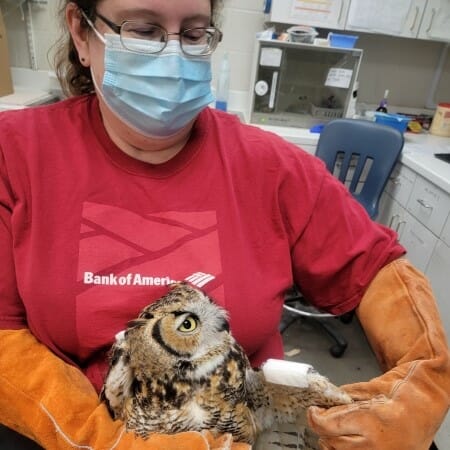
Deb with a great horned owl./Courtesy Deb Bouchard
Share one personal story with me from your volunteerism.
Parents come in with their children, and they’ve rescued an animal and the kids are invested. During one hospital shift, a young boy had stood up to some bullies who were tormenting a snake. He got them to stop and brought (the snake) to his parents who then brought it to us. That encompasses exactly what we’re trying to teach young people and students to do, to care for wildlife. It brought me to tears then, and it’s bringing me to tears now. A lot of people are afraid of snakes or don’t like them. It’s a powerful feeling to teach people to care. I started 22 years ago not knowing a thing; I’d never touched a bird. Now I’m able to teach people who bring in various animals why that animal is important, what’s important in the ecosystem and why they should care.
What’s been the most rewarding part of your service?
I never would have imagined 25 years ago that I’d be able to medicate or handle a hawk. I love learning, and that scratches an itch too, learning more about animals and the veterinary aspect of it. Also, hearing stories like the kid who stood up to the bullies — that is rewarding.
Explain the balance between your career and volunteerism.
I work in the technology field for a bank which is all email and phone calls. This (volunteerism) touches a different part of my brain and heart. That is so important for me, as a balance to what I do outside of volunteerism.
Why do you think it’s important for others to get involved?
Volunteering teaches you empathy. You may have a broad sense that you want to work in a particular area, and as you start working in that area, you learn more and you gain empathy for the situation or the organization’s mission. You learn a lot and you learn to care in a different way. You go from wanting to help the environment to, ‘I have an injured bird and I want it recovered and released and here’s why that is important.’ Service deepens your connection.
How have you continued to volunteer throughout the COVID-19 pandemic?
At the beginning, the hospital wasn’t allowed to have volunteers in the hospital. The hospital receives (on average) 6.000 animals a year. I was stuck at home, so I raised my hand and asked for all the mourning dove babies. I could feed them at home while I was working. Instead of doing a shift at the hospital, I was volunteering 100% at home and giving animals more personal care.
In one word, what does volunteering mean to you?
Joy.
What’s the most unique animal you’ve encountered through your service?
In my 22 years of service I have only held one bald eagle. That was pretty rare. We received a Connecticut Warbler that had screwed up his migration. It was fun to see all the birders get so excited about a bird that we never see in California.
Southern California High Schooler Champions Humanities Education in a STEM-Focused Community
Meet Daily Point of Light Award honoree Kayla Nguyen. Read her story and nominate an outstanding volunteer or family as a Daily Point of Light.
Kayla Nguyen, a senior in high school, is a self-described foodie who loves living in Orange County, an area where many different cultures collide. One side effect of going to a magnet school in the area, however, is a strong proclivity for students chasing STEM-related goals. And as a result, she found herself missing the mock trial program she loved as a younger child.
When the world was in lockdown in June 2020, Kayla decided to change that. She founded Student Speakers of America, a group that provides humanities-based extracurriculars, resources, and speech education on everything from presentations to debate. Today, in the midst of applying for colleges, she offers classes to students everywhere as Zoom has—as in most of our lives—found a permanent place in her programs. With two local chapters and volunteers from more than seven California cities, they’re just getting started.
What inspires you to volunteer?
It’s the personal experiences that I’ve had and also the people around me. Student Speakers of America (SSOA) is an organization I founded with my friend promoting humanities extracurriculars to kids ages 8-14. In my community, there is a lack of access to them. There’s a lot of focus on STEM-based extracurriculars, like biology or cyber. While that’s great, especially for women who haven’t had previous access to that, there is a lack of focus on public speaking and understanding the stories of others. I participated in mock trial in middle school, so I really wanted to do something where middle schoolers and other young students could get involved before they were older.
Describe your volunteer role with Student Speakers of America.
I’m the co-founder. I help run our volunteer chapters and some extra activities that we do. My co-founder and I really want to make everything accessible, so we are always brainstorming new ideas for things to add to our website.
I try to make my own volunteer opportunities for things I’m passionate about. One way I volunteer is through film. I go out and highlight stories and experiences in my community. I’m currently working on a project with a friend highlighting local small business founders and have a series about the Asian experience, especially with COVID-19. I’ve also done student documentaries about mental health and experiences at my school. I publish them on Instagram or YouTube and have submitted them to multiple competitions.
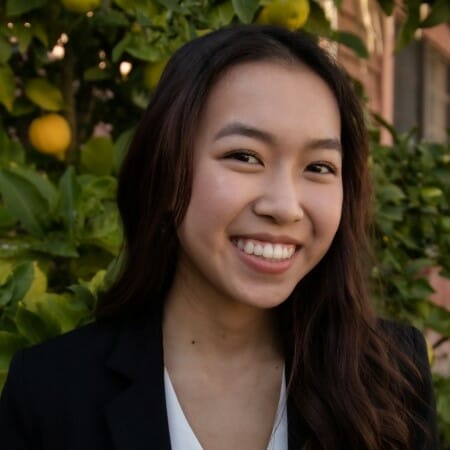
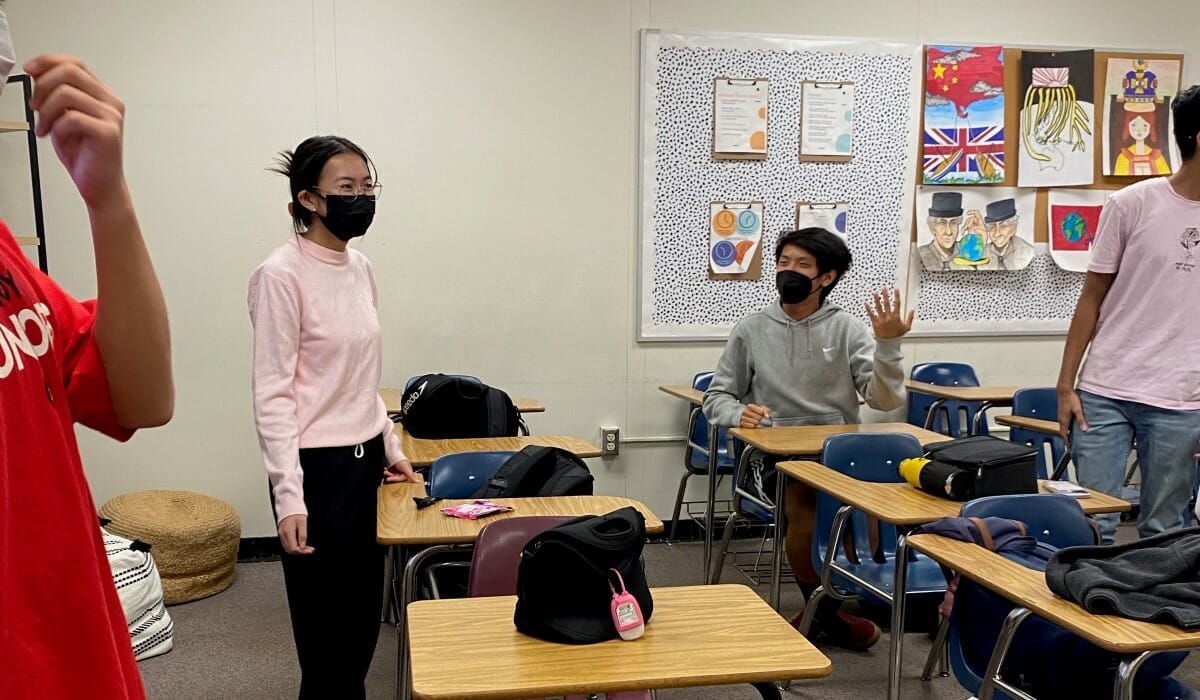
Kayla Nguyen, co-founder of Student Speakers of America and the Student Speakers of Troy chapter./Courtesy Kayla Nguyen
You started this when the world was in lockdown. Did that present any specific challenges?
I originally wanted it to be strictly in-person – activities in the library and promoting things through flyers. But we ended up going online to try to make everything accessible. It actually expanded our reach and made us realize that we could reach people in different states and around the world. It really gave us more freedom to talk to more people.
If you could give one or two tips to people who struggle with public speaking, what would you tell them?
First, don’t be afraid to try. I know that’s cliché, but I think telling your story or someone else’s is a role everyone needs to take at some point in their lives. You need to be a voice for others and a voice for yourself. Why let someone advocate for you when you could be advocating for yourself?
Second, keep the audience you’re speaking to in mind. You have to adjust accordingly with language and body language.
What’s been the most rewarding part of your work?
I really appreciate hearing kids say they want to pursue this activity in the future. When I think about SSOA’s impact, I think about students coming up after workshops and saying, “When are you having another workshop? I love talking about this topic. And I want to do it again next month.” Small moments like that mean a lot to me. One student who really likes debate came to three consecutive workshops!
What have you learned through your experiences as a volunteer?
I learned how to adjust the goals that I set in the beginning. What SSOA has become is completely different from what I thought it would be when I first started it, and I don’t think that’s necessarily a bad thing. I think it was an interesting process to adjust and to start new things based on what was well-received and what people seemed to want.
Student Speakers of America conduct a speech drill at one of their meetings to encourage speaking in front a crowd of 20 fellow members./Courtesy Kayla Nguyen
Are there any future partnerships, programs, or events that you are excited about?
We’re currently working with another nonprofit based in Irvine to do some online events together. We’re still working the logistics out, but we’re hoping to expand both of our reaches.
We also recently received the Taco Bell Foundation’s Ambition Accelerator grant, with is $500 that we’re planning on using to fix our website and to increase our investment in our activities. We really want to expand our reach across the United States. SSOA is open to everyone. That’s what we want to emphasize.
Why do you think it’s important for others to be involved with their community?
It’s important to help give other people opportunities that you didn’t have growing up. Plus, it makes you appreciate your community even more as it helps you stay grounded. Knowing where you came from is what makes you who you are.
What do you want people to learn from your story?
If you’re thinking about volunteering or creating your own volunteer organization, really examine people around you and see what your community needs. Don’t just do it because you have an idea in your head. You need to look for things that other people need and really focus your attention on others.
Meet Daily Point of Light Award honoree David Lee. Read his story and nominate an outstanding volunteer or family as a Daily Point of Light.
Eighteen-year-old David Lee grew up as a military dependent child. He currently lives on a U.S. military base in South Korea. David’s childhood was one of moving often from base to base, as is typical of military families. To date, David has moved nine times with his family.
Along with frequent moves, which make it difficult for military dependent children to make lasting friendships, David had to contend with his parents being absent for several years, four car accidents and bullying. David remembers his military childhood as one of loneliness and mental health issues. The thing that helped him cope the best was music. Whenever he moved to a new base where he didn’t know anyone, his only constant was music.
After David performed a solo at a rehab center, an audience member, moved to tears, requested that David play at her funeral. David kept his promise, although virtually because of COVID-19 travel restrictions. David remembers the woman’s smile as he thought about the people who were suffering all around the world from mental illness, and this sparked his passion project, Music Echoes.
He is now an accomplished violinist who loves to share the gift of music with others as a way to help them cope with stress, depression, anxiety and life’s hardships. Music is a universal language can help uplift moods and soothe fears in a turbulent world.
David says, “I believed music was something that everyone could share.”
What inspires you to volunteer?
The effects of the COVID-19 pandemic on mental health are a serious challenge society faces today. Isolation, loss of income, and fear are triggering mental health conditions and making them worse. Because of unresolved mental health issues, many more problems arise in communities and societies. These inspire me to volunteer.
Describe your volunteer role with Music Echoes.
My nonprofit organization, Music Echoes, strives to be the best free global music provider in the world. Music Echoes consists of around five specialists from high school friends and family, including my brother. We are all volunteers, and activities and projects revolve around creating music, recording at professional studios and delivering the joy of music to health facilities around the world.
As its founder, I rented professional studios to record and edit sound with a digital audio workstation, created websites and social media channels, and searched for contact information every night. Our recorded music has been distributed to 15,000+ hospitals, 1,000+ orphanages and 500+ nursing homes in all 50 U.S. states and over 100 countries across the world.
Since then, the organization has gained recognition by receiving letters from the Pentagon, U.S. government and the Chairman of the Joint Chiefs of Staff. We have been published and featured on CNN, AFN, OAFB, Military Times and Stars and Stripes. We were also nominated for 3-Star Commendation, Citizen Honors Medal, Pangaea Humanitarian Award and a United Nations Award.
I am glad to use my passion project to leave positive contributions to communities, societies and humanity.
What’s been the most rewarding part of your work?
The most rewarding part of my work was earning the Military Child of the Year Innovation Award. Each year, one military dependent child is selected for innovation. I received this award for my nonprofit organization, Music Echoes. I was chosen as a representative of approximately 2 million military children.
My prize included $10,000, a trophy, a free Ritz-Carlton ticket, a free cruise ticket, a laptop computer worth $3,000, an all-expense paid four day trip to Washington, D.C. and over 10 gifts from sponsor donors.
The honor was awarded by the director of the White House National Security Council and four-star U.S. generals. I received letters from the Pentagon including the U.S. Army Reserve Commanding General, the Chairman of the Joint Chiefs of Staff (the highest ranked U.S. military officer), and earned a Fortune 500 internship opportunity.
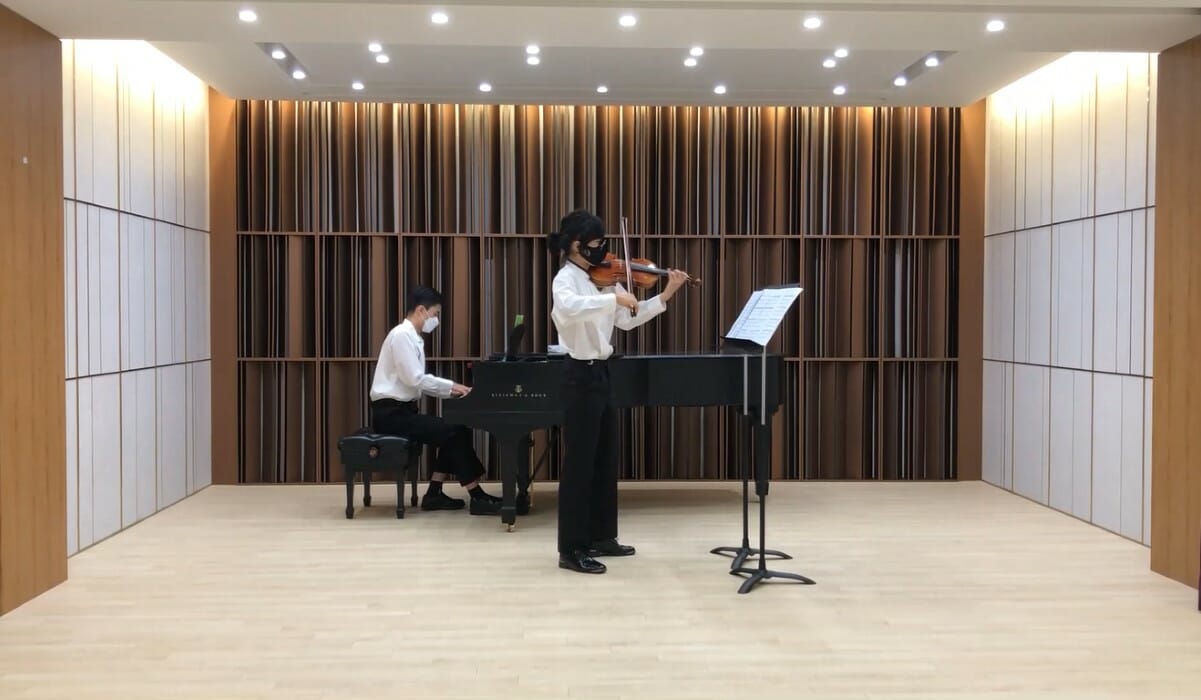
David and his brother in a recording studio. Music Echoe’s recorded music has been distributed to over 15,000 health facilities around the world./Courtesy David Lee
What have you learned through your experiences as a volunteer?
Passion, purpose and perseverance will make the impossible possible.
Are there any future partnerships, programs or events that you are excited about?
I am excited to continue my adventure with collaborations with organizations and maybe companies if possible.
I envision a career in clinical psychology and plan on continuing my musical journey by pursuing dual degrees at Harvard University and Berklee College of Music.
Why do you think it’s important for others to get involved?
It’s important to get involved because we all live together in communities, societies and the world. To survive together, we need to provide service and expand humanity.
What do you want people to learn from your story?
I wish others would learn that life contains more than just happiness or sadness. Life is much more than that!
Teen Inspired to Promote Reading Among Children in Book Deserts
Meet Daily Point of Light Award honoree Rania Zuri. Read her story and nominate an outstanding volunteer or family as a Daily Point of Light.
When Rania Zuri learned about “book deserts,” places where books are difficult to access, she was inspired to take action in a big way. Rania, now a high school senior from Morgantown, West Virginia, founded The LiTEArary Society to provide children in areas affected by poverty with brand-new books and promote a love of reading.
Acting as CEO of The LiTEArary Society, Rania works with Head Start, the federal program for preschool children who live at or below the poverty line. To date, The LiTEArary Society has donated more than $140,000 in value of new books, impacting more than 13,000 preschool children nationwide.
“In Appalachia, vast book deserts abound, and so many children in Head Start programs don’t even have one book at home,” Rania says. “In my home state of West Virginia, this past spring, I donated a brand-new book to every single child in Head Start – almost 7,000 in total.”
This mission has since expanded to all 50 states, with The LiTEArary Society donating brand-new books to Head Start classrooms in the most remote areas of each state. These books have the power to spark a lifelong love of reading among children who may not otherwise have the opportunity to cultivate that that passion.
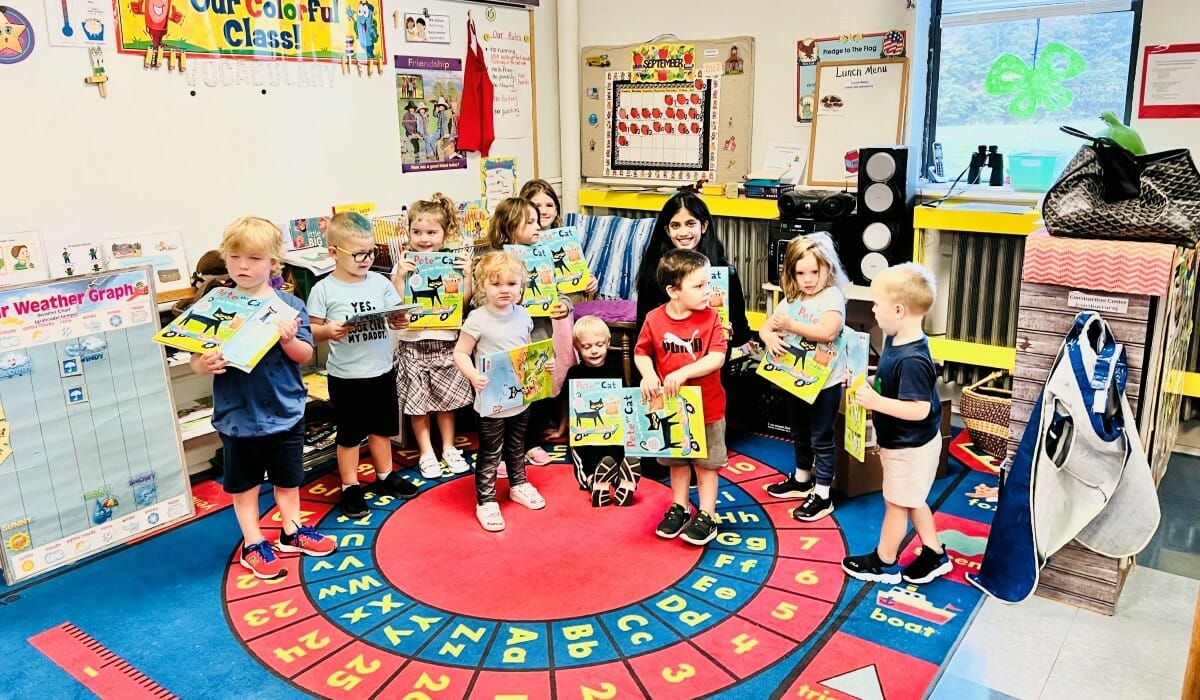
Rania donated a brand-new book to every single child at her local Head Start./Courtesy Rania Zuri
“Traveling throughout Appalachia and the nation, I have witnessed the magical connection between the children and the brand-new books we give out,” Rania shares. “Some children even, quite literally, jump for joy.”
Rania is currently in the middle of her largest initiative to date, The Fifty Nifty Head Start Road Tour. She is traveling throughout the nation to rural Head Start classrooms to donate brand-new Scholastic books – one for each child to take home. “It has been quite an adventure that has taken me everywhere,” she says. “For instance, I just donated brand-new books to a Head Start center in Alaska that is only accessible by boat!”
The LiTEArary Society aims to collectively end book deserts for preschool children just by donating one, high-quality, age-appropriate book to each child who needs it. Whether these children come from disadvantaged socioeconomic circumstances or live in places without access to a library, The LiTEArary Society seeks to meet this resource gap all across the nation. Watching the kids’ excitement when they receive a book of their very own is moving for Rania and acts as a catalyst to keep her going with her mission.
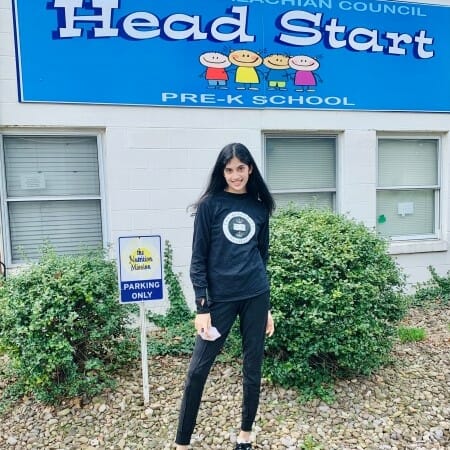
Rania Zuri is the founder and CEO of The LiTEArary Society, dedicated to providing books to children./Courtesy Rania Zuri
Rania is a powerful example of the momentum and impact that youth-led initiatives can have on the world. Starting with inspiration and a personal love of reading, Rania’s time and energy are now devoted to spreading the joy of books to kids everywhere.
“Youth-led movements truly have the power to create lasting, societal change,” says Rania. “If we are able to start youth-led movements to solve some of the most pressing issues of our time, we can make the world a better place for future generations.”
Teen Volunteer Makes Art Spaces More Diverse, Inclusive and Vibrant
Meet Daily Point of Light Award honoree Chelsea Hu. Read her story and nominate an outstanding volunteer or family as a Daily Point of Light.
During summer break in 7th grade, Chelsea Hu volunteered at an orphanage in Beijing, China. The Vienna, Virginia resident hosted drawing classes for the children, saying that in that moment, they were all equal, “makers” bound by the beautiful art they were creating.
The now 16-year-old Chelsea founded Teen Mobile Arts (TMA) in 2019, inspired by the children she met that summer in Beijing, who faced great challenges but could still experience the joy of art. To date, TMA has connected with more than 51,000 kids, including underserved youth, from the U.S. to China, India to Uganda. Through her volunteerism, Chelsea is bringing young artists from around the world together, making art spaces more diverse, inclusive and vibrant.
Describe your volunteerism with Teen Mobile Arts.
As founder, I created the Teen Mobile Arts Online International Exhibition, which showcases talented teen artists from around the world and supports charities through the artists’ choices. In 2022, we presented an international arts exhibition at the CCACC Art Gallery in Maryland named “Teen Mobile Arts United” where we represented seven countries: China, India, Liberia, Nigeria, Senegal, Uganda and the United States — and more than 10 states. All proceeds from this exhibition have been donated to the National Foundation of Cancer Research (NFCR). We’ve worked with organizations including NFCR, FAR (Fight against Rape), the Fola David Care Foundation and Rehab Africa.
Teen Mobile Arts founder Chelsea Hu is uniting youth artists around the world to make art spaces more diverse, inclusive and vibrant./Courtesy Chelsea Hu
Share one personal story with me from your volunteerism.
While volunteering in the Beijing orphanage, which was called Sun Village, the area received torrential rain and all of the leadership students raced to move the children’s valuables to a storage room. Even losing something as small as a piece of cloth from an old, favorite coat would have been upsetting to children who had so little.
After settling in for the storm, I led drawing classes. Watching the children’s eyes glisten as I showed them how to create animals with simple geometric shapes was one of the sweetest experiences of my life. A remarkable moment came when they noticed that they could be vehicles of creation—artists, voices, individualists. To pay homage to my experience at Sun Village, after founding TMA, I began working with the U.S Embassy in Sierra Leone to help support an orphanage called Variety Center by collecting needed items, donations, and, of course, artwork with loving messages from students around the world. No child should ever feel alone.
What inspires you to volunteer?
Making art with the children (at the camp in Beijing) bound us. They had lived through far greater challenges than I, but in that moment, we were all “makers.” Perhaps, through the right platform and mentorship, one of my little “makers” would be featured on museum walls someday.
Why do you think it’s important for others to get involved with causes they care about?
Winston Churchill once said, “We make a living by what we get, but we make a life by what we give.” It’s fulfilling to see stronger bonds being built among human beings regardless of race and social status, and that lives are bettered because we get involved.
What’s been the most rewarding part of your service?
We teach young artists to make an impact with their art by building an ensemble of creators through rotating shows in local communities. Communities are now seeing talented middle and high school artists’ work everywhere in town. It always brings me such joy envisioning the inspiration that TMA might bring to young “imaginers.”
Chelsea Hu: “Winston Churchill once said, ‘We make a living by what we get, but we make a life by what we give.’ It’s fulfilling to see stronger bonds being built among human beings regardless of race and social status, and that lives are bettered because we get involved.”/Courtesy Chelsea Hu
What have you learned through your experiences as a volunteer?
Starting small can make daunting tasks manageable. TMA started small: exhibiting teen’s artwork in shops, coffee houses and businesses locally to raise funds and visibility for young artists while bringing new and larger patronage to local “partnering” businesses. Only with the momentum of local endeavors can we burgeon globally.
How have you continued to volunteer throughout the pandemic?
During the pandemic, I led my team of artists in a global pandemic mask initiative by auctioning our paintings to purchase 5,000 surgical face masks for senior homes in metro D.C. When businesses started to re-open, we assembled local, young artists to do chalk art to bring love, encouragement, hope and support to the community. In addition, we created an international online arts exhibition that connects artists globally to make art spaces more diverse and funding charitable causes through sales.
What do you want people to learn from your story?
To turn the ideas that are swimming in our minds into tangible results, we start by believing in the things that inspire us. Thinking will not do anything until we take action, one task at a time.
In one word, what does volunteering mean to you?
Joy.
How can readers help?
We want to impact more artists in other countries and more at-risk communities. Please visit our website for more information about how you can help.
Making Financial Literacy Accessible to People of All Ages
Meet Daily Point of Light Award honoree Jonathan Compton. Read his story and nominate an outstanding volunteer or family as a Daily Point of Light.
Growing up in a low to moderate-income household and watching his parents struggle, Jonathan Compton, a Bank of America employee based in Savannah, Georgia, knew he wanted to dedicate his extensive volunteer time to preventing other households from experiencing the same.
Since the inception of Bank of America’s premier skills-based volunteer program, Better Money Habits® Volunteer Champions, Jonathan stepped up as a lead volunteer champion to deliver financial education to nonprofits. These efforts have included working with nonprofits like Park Place Outreach, a transitional living facility for young adults, and Step Up Savannah, which focuses on enhancing workforce opportunities for communities impacted by poverty.
Being able to help young adults budget and save, and teaching financial planning tools to help families improve their economic mobility, have been the most rewarding facets of Jonathan’s volunteer journey. Read more about Jonathan’s experience and how he ensures fellow employee volunteers can also become volunteer champions in order to continue to broaden the impact and reach.
Describe your volunteer role.
My job is to partner with our market executive, who partners with our local president of the community. These two roles help drive volunteerism in the community. And I partner with the market executive to plan and deliver Better Money Habits® presentations throughout the community. So when a need arises, I help facilitate those financial literacy sessions with nonprofits and other community organizations and sponsors.
Part of my role is to drill down into what kind of program they’re looking to implement, how many sessions, what type of content, etcetera. A few companies will set up recurring sessions, maybe every four weeks. Others might be one-offs – for instance, a summer camp we used to run with the Boys and Girls Clubs. Then I facilitate the sessions themselves, presenting the material, getting engagement from the audience, answering questions and getting feedback, and following up with them as well.
Since the inception of Bank of America’s premier skills-based volunteer program, Better Money Habits® Volunteer Champions, Jonathan Compton has served as lead Volunteer Champion./Courtesy Jonathan Compton
I’m also a lead champion for the Savannah market, so any employees who want to volunteer with the program, I train them in the different aspects of the presentations, give them best practices on how to present, how to become more confident about what they’re presenting, and getting them up to speed. We also do train-the-trainer sessions for companies that want to implement an ongoing program and facilitate it themselves. So I help those internal trainers review the material and help them build their own program so that they can run it themselves.
Why is financial literacy so important for nonprofits?
Fundamentally, there’s a gap between what is taught in schools from a budgeting or savings standpoint, to when you become an adult and get thrown into the mix yourself. A lot of nonprofits recognize this gap and have identified the need to understand financial basics.
That starts with getting resources covering the financial basics – basics like what checking and savings accounts are, how to balance debt with credit, saving for large purchases… even down to how to understand your paycheck. The difference between gross and net, what are the taxes being taken out? A lot of nonprofits see the value in these foundational skills.
What inspires you to volunteer?
Growing up, we didn’t have a huge financial background, there wasn’t a lot of talk about savings, budgeting, how to balance a checkbook, the differences between account types, how to structure your debt. During school, I had one class on it, then I watched my younger brothers go through school after me, and they had already taken that one class out of the curriculum.
When I got into my adult life and identified my own struggles with financial literacy, I really made it my mission. When I got involved with Bank of America seven years ago, I was learning about basic banking and how to use that knowledge, not only in my life but also to educate others. From there, the company rolled out Better Money Habits®, and I got involved from the start. Being able to see the impact I have on others, when they walk away with that “wow” factor, then also take that back to my own life, my own family… that’s what drives me forward.
What are some of the things people learn in your financial literacy classes?
We have two sections of the curriculum: the economic mobility basics and then next steps. First, we take you back to the basics of banking and managing finances, including structures of banking itself, different types of accounts offered through multiple institutions, broad foundational basics. Do you have emergency savings? Do you have a budget?
And then a lot of people want to talk about credit, which is a balancing act because credit is always changing. What applied three or four years ago doesn’t anymore. The scoring metrics are different. So helping people understand what’s impacting their credit. We talk debt structure. We explore different methods they can use to pay down debt, because each person has their unique situation and what applies to them could be different.
Of course, we offer one-offs with anyone who has further questions or needs. This program touches multiple generations, from college students to seniors. Everyone is in a unique financial situation, so we discuss best paths forward based on circumstances.
Can you share a rewarding moment from your work?
Early on in my Better Money Habits® work, we partnered with Park Place Outreach, which helps unhoused or underserved teens move forward in their lives, give them structure and teach them foundational skills. They launched a transitional living program when they identified a need for those aging out of the program and moving into adulthood and society. So they offered financial literacy education to these 25- and 26-year-olds as part of that communal living.
Since then, we’ve had tons of follow-ups with them, ongoing conferences, budget management and more. And being able to see one of the young adults make their first large purchase based on their budget, it was awesome to see and continue to get updates from that organization years later.
Are there any future partnerships, programs or events that you are excited about?
We have a major upcoming partnership with local community college, Savannah Tech, which we’re hoping could be a continued partnership going forward. They reached out to our market executive with an identified need for both students and faculty to receive financial literacy education.
So we’ll be imparting this education to younger and middle-aged adults, and they’re planning to build upon the curriculum, offering multiple sessions rather than just one class. We’re still working out the kinks, but we’ve got the virtual curriculum set, and we’ll be starting that at the end of September through the beginning of November.
How can people learn more and get involved?
Regardless of what institution you bank with, I would just encourage anyone struggling with financial literacy or interested in teaching it to check out our Better Money Habits® website. It’s free and available to anyone who needs some help with these things. There are tons of resources. There are workshops and toolkits.
I’d also encourage anyone out there looking to volunteer to continue to do so. I’m telling you that volunteerism as a whole is life-changing, so don’t be afraid to take the next step.