Meet Daily Point of Light Award honoree Aarushi Gupta. Read her story and nominate an outstanding volunteer or family as a Daily Point of Light.
12-year-old Aarushi Gupta is passionate about education and aspires to study Artificial Intelligence and become a software engineer. The Pleasanton, California student is already leveraging her passion for learning to make a difference in the lives of her fellow students as volunteer President and Co-Director of Operations and tutor with Edutine, a nonprofit tutoring organization that has reached over 650 students since 2020.
What inspires you to volunteer?
Staying connected with my community is a critical reason why I am inspired to volunteer. I am connected with other people to reach a goal, which in turn forms connections with the community.
As a student myself, I feel like I have gained more knowledge when I am tutoring another student. When I am tutoring, I am repeating the same information again, which helps my personal knowledge grow.
Not just that, volunteering as a staff member and a tutor has helped me with my organizational skills and lesson planning.
Describe your volunteer role with Edutine.
Founded in 2020 during the pandemic by Parul Gupta, Edutine is a 501(c)3 tutoring organization that provides free tutoring for students K-12; sometimes even college students.
Tutors are primarily high-school students that have excelled in the subject. We do have a few middle-school tutors that assist in tutoring elementary students. We train all of our tutors, so they know how the process works. As of this date, we have over 650 students and 50+ tutors. As a team, we have collected over 8,000 hours.
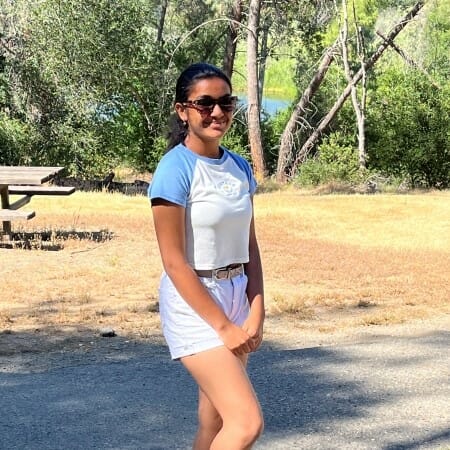
Aarushi Gupta, director of Edutine, which has helped 650 students receive over 8,000 hours of tutoring./Courtesy Aarushi Gupta
At Edutine, I am the President and Co-Director of Operations. I am also an Edutine tutor. In my role, I make sure that things are going smoothly, and both our tutors and students have a good experience. Along with that, I hire new tutors and staff and build the Edutine team, making it even stronger. I also assist tutors in earning volunteer awards and meeting their goals.
What’s been the most rewarding part of your work?
The most rewarding part of my work is when a student has mastered a concept they were struggling with earlier. I feel appreciated when that happens, and I am sure other tutors do as well! Seeing a smile on your student’s face is one of the most important goals for tutors, as we want our students to improve in the subject, but also not stress.
Another rewarding part of my work has been completing our Edutine team goal of reaching 8,000 volunteer hours. We completed this goal a couple of months ago, and we are proud of all of our tutors and staff members for contributing to the community.
I have conducted webinars and created group classes for students. Seeing the smiles on young faces, the happiness of the parents and the rewarding experience for our tutors and staff, makes me want to continue helping our community!
What have you learned through your experiences as a volunteer?
As a tutor at Edutine, I have learned to be patient and sympathetic. At the beginning of my tutor journey, I used to get frustrated when my student would not get something correct. However, that student was only in third grade and I knew they were giving their best effort.
As a staff member, I have learned how to deal with scenarios where the student and tutor may have an argument, or when the parent is frustrated with the tutor.
Are there any future partnerships, programs or events that you are excited about?
I am excited about connecting Edutine with guest speakers who will motivate our students and give students advice on their future careers. This could also help the students be less stressed about school or their personal life, as they will be receiving advice to help their future endeavors.
I am also planning an e-party celebration for Edutine’s three year anniversary in April to celebrate our achievements.
Why do you think it’s important for others to get involved?
I think it is important because it makes them have a stronger connection with their community, and know their community better.
As a volunteer at Edutine, I meet many students, parents and tutors on a daily basis and assist them with their needs.
Giving back to the community is also a form of kindness by making the word a better place. Not just does it make the world better, but it makes you a better person too. A simple act of kindness can make one feel so much happier and more confident.
What do you want people to learn from your story?
I want other people to learn that when one is learning something, they do not get it on their first try. Practicing it and reinforcing the concept will help them make it stronger. For example, in the beginning, when I was learning how to be a tutor, I was learning to be sympathetic toward my students as they were struggling with understanding a concept. From a student’s perspective, learning how to read takes time and practice; it was hard for us too at one point!
College Junior Transforms His Lived Experience Into Volunteerism at Free Medical Clinic
Meet Daily Point of Light Award honoree Bill Young. Read his story and nominate an outstanding volunteer or family as a Daily Point of Light.
Bill Young, a junior at the University of Washington, has volunteered with the Puget Sound Lahai Network of Free Medical Clinics for the past two years. He has served in roles from front desk volunteer to patient navigator to Certified Nursing Assistant (CNA).
In each role, Bill strives to provide the best care experience possible, even if that means spending extra time brewing fresh coffee for a patient in the waiting room or getting to the site early to help the clinic set up. He is an advocate for patients, whether it is following up on a social need that ancillary staff and resources can help with or speaking up for an alternative way to make a patient more comfortable.
Read more about Bill’s journey and what drives him to deliver the best-quality care he can.
Describe your volunteer role with Puget Sound Lahai Network of Free Medical Clinics.
The Puget Sound Lahai network of Free Medical Clinics is a free health clinic for patients unable to afford healthcare. I’ve been able to serve in a lot of different roles. I was a receptionist and worked at the front desk, managing intake. Then I started as a CNA, helping out physicians, taking patients’ vitals, etc. A couple of months ago, I was trained as a scribe, so I’ve been able to see what’s occurred during each visit.
What inspires you to volunteer?
For me, it’s just being able to help those in my community. I grew up coming from a disadvantaged background, so I’ve seen a lot of the same disparities in healthcare access. I see similarities between my stories and my patients’ stories, and that’s been a powerful motivator for my volunteering. That’s a big reason why I continue: I see myself in these patients as if they were a mirror. I can help families like my own.
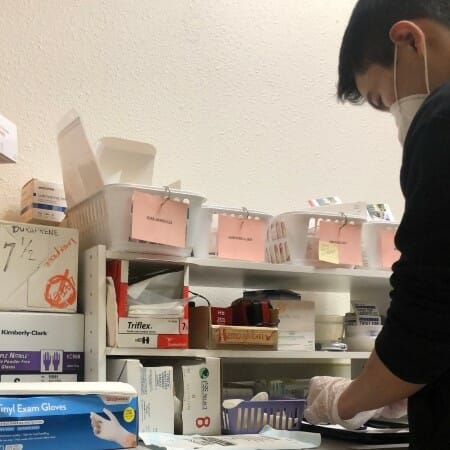
Bill, a Certified Nursing Assistant (CNA), is driven by seeing his own story of medical care in the patients he works with./Courtesy Bill Young
What’s been the most rewarding part of your work?
The most rewarding part is being able to meet my patients where they are and fulfill unmet needs in my community. Whether it’s something as simple as a prescription and seeing the relief on their faces when I can get them a discount – which happens nearly every visit – or even sometimes free supplies, like a glucose test strip or glucose monitor… this is something that’s very rewarding. Being part of that change in my community and seeing those needs met.
What’s your favorite part of medicine?
I really like primary care. That’s something I see a lot of in my experiences. Growing up, I wasn’t always able to have a wellness visit., so I always felt a little disconnected from primary care. But then I started shadowing primary care physicians, and I kind of fell in love with it.
I think primary care offers a really unique aspect of long-term care. You get to build relationships with your patients over time, and it’s unique in that it’s the first line of defense in medicine. You get to meet patients on a regular basis, and when something goes wrong, you’re the first one they reach out to in a time of need.
What have you learned through your experiences?
I think I went into it just thinking the role I had would be very minimal, that I wouldn’t have much interaction with patients. But being able to work as a receptionist was one of the most rewarding parts of my experience because I got to talk to patients, learn about their stories, learn about the patient populations I was working with.
This has been an important role in my evolution of volunteering, as I’ve been able to immerse myself in the stories of my patients. It was eye-opening for me because I never would have expected I’d gain that level of patient interaction and understanding.
Why do you think it’s important for others to get involved with causes they care about?
I think for me, a big part of it is part of a learning journey, encouraging myself to step outside my comfort zones in my passions. I went into volunteering with a view of quality care as comprehensive, thorough care. But as I volunteered at the clinic and shadowed physicians, I saw that care doesn’t just involve comprehensive care, but really taking into account every single part of the patient, whether it’s their living situation, what’s going on in their household… whether it’s social, emotional, mental, I saw how physicians could integrate every aspect of this into a very holistic delivery.
So that transformed my understanding of what it means to provide quality care. Experiences like volunteering can expand and broaden your understanding and perspectives of your passions; for me that’s been a shift in my perspective of quality healthcare.
Are there any future partnerships, programs or events that you are excited about?
The clinic is open almost all the time, even throughout COVID, which was unique for a free clinic. For any patients who are under-insured or uninsured, at or below the 300% poverty level, we’re open to all.
Child of Immigrants and Future Doctor Paves Path to Success for Black Scholars
Meet Daily Point of Light Award honoree Ashley Kyalwazi. Read her story and nominate an outstanding volunteer or family as a Daily Point of Light.
The daughter of Ugandan immigrants, 26-year-old Ashley Kyalwazi faced many challenges navigating her way as a first-generation African-American college student.
“A lot of what I learned was through first-hand trial and error navigating systems I didn’t have exposure to,” says Ashley. “For Black students in the U.S., there are many potential barriers to entering careers in health and biomedical sciences including financial constraints, lack of adequate exposure to healthcare or biomedical science and lack of appropriate advising. There were times when I was one of a couple of Black students in large science courses of over 100 students. When you don’t see enough people who look like you on the path you are on, it’s incredibly important to have access to a community of individuals who can support you.”
The Harvard Medical School (HMS) student currently lives in Boston, Massachusetts. Ashley says that an advisor even once told her to consider studying business instead of medicine. Explaining how “those experiences mount,” Ashley founded the MV3 Foundation in 2020 to empower Black undergraduate scholars pursuing careers in health and biomedical sciences.
Through a dynamic curriculum, comprised of both academic and professional development opportunities, MV3 Foundation seeks to invest in the personal and professional growth of Black undergraduate students at a key time in their early careers. Since launch, MV3 has served around 20 scholars across the nation and more than 50 graduate students have joined the organization’s efforts as volunteers, paving the path to success that Ashley says she longed for in her formative years.
“I wish I’d had more people in medicine to tell me, ‘you’re doing well, you’re on track, your dreams are valid and you can get there.’ Fortunately, I was able to be surrounded by organizations like the Jackie Robinson Foundation (as a scholar) that did serve as a catalyst for my own personal development. That was the reason I was able to make it. We’re all different but everybody has a similar narrative. The unifying theme with all students is that they had inappropriate mentorship or lack thereof. They need to have someone see them and empower them. That’s what motivates me.”
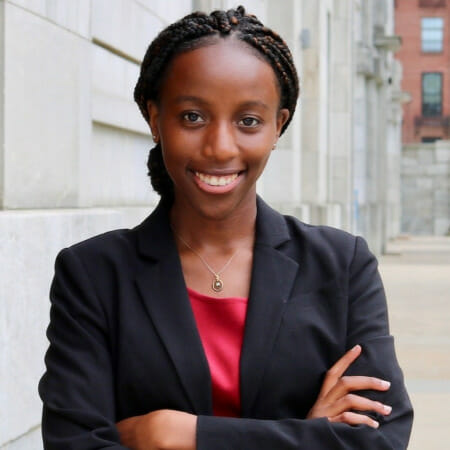
MV3 Foundation founder and CEO Ashley Kyalwazi is volunteering to empower Black undergraduate scholars pursuing careers in health and biomedical sciences./Courtesy Ashley Kyalwazi
Supporting students who will impact the future of health and biomedical sciences by mobilizing voices through the three MV3 pillars: education, service and advocacy, Ashley, who also serves as chief executive officer of the organization, says programs like MV3’s Academic and Professional Development offer MV3 scholars the chance to obtain one-on-one mentorship from a current medical, dental and graduate student, as well as group-based mentorship by a Black health and/or biomedical professional. MV3 also hosts monthly webinars with healthcare and biomedical professionals to increase access to opportunities in these careers.
“(Education is) an inequitable system. It favors people with greater resources, a greater network and higher income. I wanted to do my part towards creating a safety net based on my personal knowledge and the gaps for Black students who don’t have exposure, but have dreams of entering these spaces.”
The impact MV3 has had on Black students is measurable progress Ashley wants to see more of in the future.
“It’s very meaningful to listen to their experiences, challenges and hopes they have for themselves directly. The ability for a Black undergraduate scholar to be closely mentored by a Black grad student who has made it in areas they hope to get into but really need advice on how to make it is a big deal. Black scholars, speaking towards the power of being able to have access to someone who looks like them and has made it, makes me really proud of our scholars, mentors and organizations, and where we can go from here. The future looks like a more diverse and inclusive healthcare and biomedical science workforce comprised of individuals who represent the increasingly diverse population of the U.S. It’s one where students of color, students from low SES (socioeconomic status) backgrounds and students in under-resourced areas don’t fear their chances of achieving their goals because pathways to medicine and science are equitable and resources are equitably distributed.”
By building a network for Black students, Ashley is helping to improve communities, says Leonard Nettey, a classmate of Ashley’s at HMS and chief operating officer and research lead at MV3.
“Through the foundation, Ashley is helping to empower Black undergraduates who are interested in biomedical science and medicine across the U.S.,” says Leonard. “She’s helped build a comprehensive mentoring curriculum and professional network for these students, but beyond the work for the students, she’s also connecting Black scientists and physicians, really creating a comprehensive community to improve Black health in the U.S.”
Recalling a famous Jackie Robinson quote, “A life is not important except in the impact it has on other lives,” Ashley is making her mark on the world through her service, and urges other young volunteers to do the same.
“It’s never too early to start giving back and investing in people. We all have a unique set of perspective, gifts and skills. Recognizing and leveraging your own God-given talents and story is key to having a meaningful impact and everyone is capable of positively impacting people.”
STEM Club President Makes Science Accessible and Contagious for Others
Meet Daily Point of Light Award honoree Marvel Hanna. Read her story and nominate an outstanding volunteer or family as a Daily Point of Light.
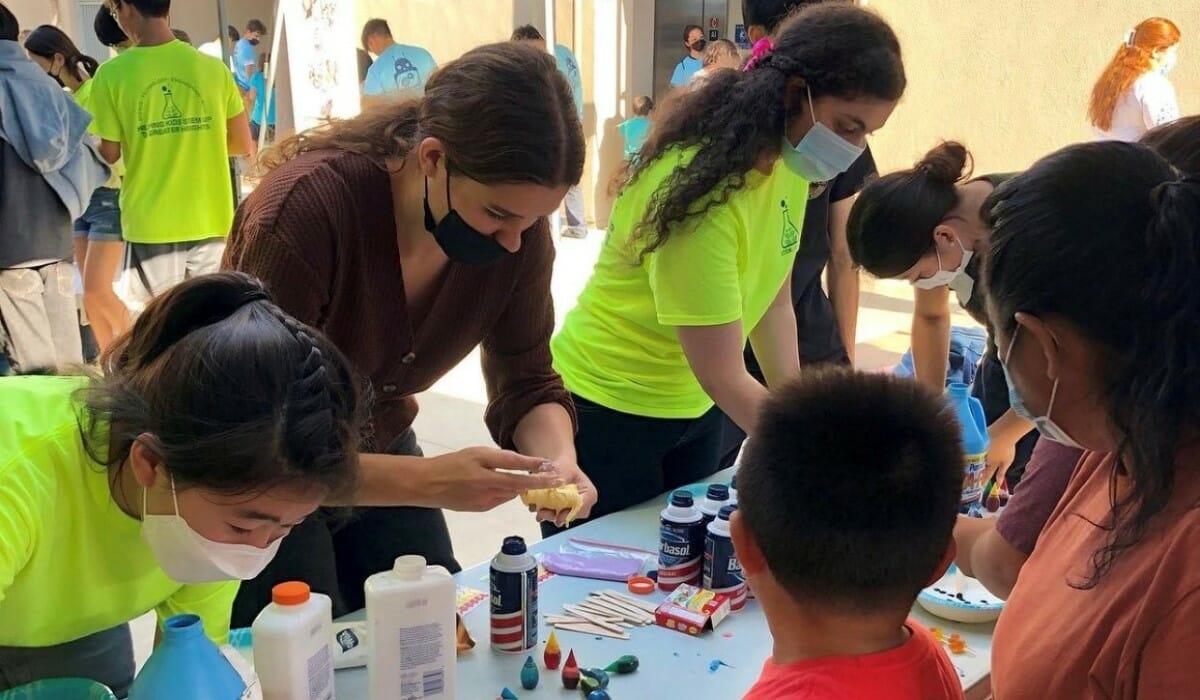
Marvel Hanna remembers walking around booths of clubs during her freshman year of high school. The now 17-year-old came across STEMup4Youth, and it was a perfect match. Marvel always had a love and desire to experiment with STEM — science, technology, engineering and math — but didn’t always have the resources to. As STEMup4Youth’s president in Huntington Beach, California, she wants to ensure that underserved kids have those opportunities.
After leading most of her club’s coding sessions online, Marvel is looking forward to more human interaction this year, and believes that access to learning is a human right that should be sustainable for generations.
Describe your volunteerism with STEMup4Youth.
I joined the club in ninth grade. We have something at school called club rush, where students talk about their clubs to the student body. I was looking for something that was stimulating and that I had a personal connection to. I saw STEMup4Youth and joined, and at the time, I was just a member. When I was younger, I used to love doing science experiments but didn’t have the opportunity to do them often. So I wanted to help give kids and teens that opportunity. Now I’m STEMup4Youth’s president. My interest in STEM started with science. I emigrated here from Egypt and at the time, my dad had health issues. So that made me interested in public health, which was my gateway into science. I used to conduct science experiments in my bathroom where I didn’t have any supplies — I just used recycled items or anything I could find in my house. That’s when I started loving STEM. Now I get to teach this to kids, and I even got to personally conduct research with NASA — it was amazing.
Then the COVID-19 pandemic came around and we had to do a lot of meetings and STEM activities online.
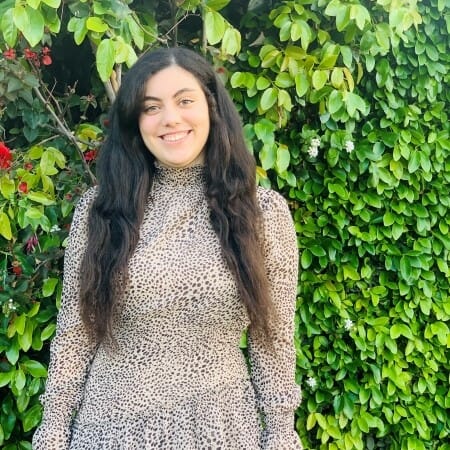
As STEMup4Youth’s president in Huntington Beach, California, Marvel Hanna works to ensure that underserved kids have opportunities in STEM./Courtesy Marvel Hanna
What programs and activities do you help students learn?
When I started, I was just teaching kids how to code. Now I make the coding because they can request games, and then I’ll make the games and teach it to the kids. We use a coding program called Scratch, which lets kids make their own games like Mindcraft. Then we have our science fair, which I help organize. Right now I’m teaching students how to make slime and rockets. I always make sure there’s science behind it. We also have an event at the Huntington Beach Secret Garden where we remove invasive species and learn about the science behind the species.
Why is lowering the barriers to STEM important?
Coding is an area that’s really inaccessible to kids. Many of them don’t have the resources or the opportunities to find out that they love it. And it’s important to expose them because then they can be the ones to help other students like them experience STEM. They have the talent, they just need the opportunity.
Surprisingly, my STEM community is very woman-based because for so long we weren’t given the opportunity to practice STEM. There was actually only one guy in STEMup4Youth at first when I joined.
Do you have a favorite memory with STEMup4Youth?
One time we were doing a science fair at our library with a booth and this girl came around to chat with us like seven times. It really showed me that she was enthusiastic to learn, and she even brought her brothers and siblings with her when she came around.
I love just seeing the children’s enthusiasm to learn. They’re happy to be there and happy to learn, and I’m glad to teach them.
After leading most of STEMup4Youth’s coding sessions online, 17-year-old Marvel Hanna is looking forward to more human interaction this year at her high school./Courtesy Marvel Hanna
What have you learned through your experience as a volunteer?
I’ve learned that my time is very valuable, and that if each of us can use a little bit of our time for others, we can make our community better.
Why is it important for others to get involved?
The most important reason is because when you help somebody, when they grow up, they’re going to do the same for others. If you’ve helped other people it’s like a rippled tidal wave of positivity.
Are there any partnerships, programs or events that you are excited about?
The coding sessions are going to be more in person and interactive this year. During the pandemic, the science was in person sometimes but not really the coding. I’m really happy that I can interact with kids more now.
High School Student Uses Intergenerational Volunteerism as a Bridge for Connection
Meet Daily Point of Light Award honoree Shawn Martinez. Read his story and nominate an outstanding volunteer or family as a Daily Point of Light.
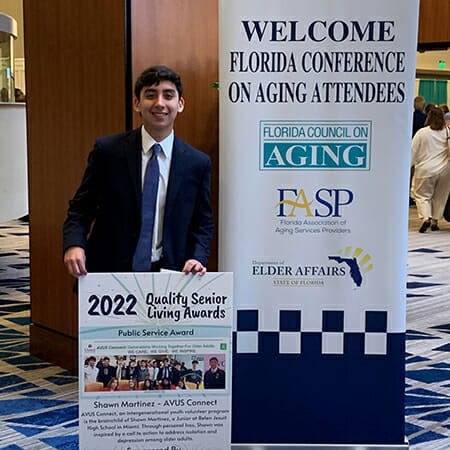
During the COVID-19 pandemic, 17-year-old Shawn Martinez realized how much isolation and loneliness was spreading through older adults without human connection. Martinez consulted his support system and made the jump to create his own nonprofit, AVUS Connect, to match student volunteers with older members of his Miami community.
So Avus is actually the Latin word for grandfather, and two years ago I created AVUS Connect after witnessing the effects of isolation during the COVID-19 pandemic. I always had a strong interest in community service and technology. Quarantine restricted interaction and contact with my family, so I looked for a platform that was intuitive and simple to create connection when it seems hard to. I used FaceTime and other virtual platforms to connect with my grandfather and immediately saw the potential of these internet applications to really facilitate meaningful conversations between generations.
I was familiar with Zoom and the virtual meeting platforms because of school, and after speaking with counselors, family, my friends and my amazing support system, I was encouraged to run with my idea. Today, I’m the president of AVUS and I share the responsibility of volunteer participation and community affairs. I eventually partnered with United Healthcare because they had the experience and community partners needed to impact hundreds of seniors. They enabled me to recruit students from various schools, not just high schools, in my community and I began to understand the true role that nonprofits serve.
Shawn Martinez founded AVUS Connect to match student volunteers with older members of his Miami community to combat isolation and loneliness through intergenerational dialogue. /Courtesy Shawn Martinez
What programs and activities do AVUS Connect volunteers do with older adults?
A part of my role is to find volunteers who are willing to have daily or weekly conversations with older adults who are living at their homes with health aids instead of in nursing homes. We do those conversations both in person when it’s safe and online. So they really just speak with them and learn about their lives.
Also, our volunteers have partnered with other organizations in our community to donate around 15,000 meals to people in need, 850 of which were older members of our town. We’ve also received 2,000 tablets so instead of just phone calls and FaceTimes, our seniors can have their own tablet to communicate and connect with.
Why is intergenerational volunteerism so important?
Intergenerational volunteerism is extremely important because two generations engaging in dialogue, especially in an age where misinformation is so widespread, helps us understand one another. It helps minimize loneliness and isolation, and even raises awareness to combat it. One of the goals I have for our volunteers is to create a taskforce of students who can visit and speak with local government representatives and city officials about intergenerational volunteerism; I want it to be a model for other programs across the nation.
Do you have a favorite memory with AVUS Connect?
I remember my first dialogue on the other side of an AVUS Connect phone call was a friend of my grandfather’s. Like my family, he was from Cuba, and he emigrated to the United States when he was 20 years old. So for two hours, he spoke about his journey and experience as a political refugee. From that conversation, I was given a brief summary of Cuba’s history, but really a greater appreciation for the sacrifice my grandparents made when they decided to leave their country of origin.
What have you learned through your experience as a volunteer?
I’ve learned the value of interaction. I’ve witnessed the connection between isolation and health and how isolation declines with more human interaction. Through AVUS, I’ve learned the significance of a phone call or just a simple dialogue with a friend or relative. I’ve also learned about the niche of service that nonprofits can help fill in addressing issues for underrepresented community members.
Why is it important for others to get involved with causes they care about?
The feeling of volunteering is unparalleled. Community service is seen as a two way street, so you’re just not giving, you’re also gaining a sense of purpose and insight within your community, and a perspective of another person’s life or experience. So often we place relationships in the backseat. Our mental and physical health deteriorate without meaningful contact and dialogue, so we really should prioritize relationships and service with others.
Are there any partnerships, programs or events that you are excited about?
Nothing too specific, our goal really is to just expand to other counties and surrounding areas. Right now we work with like six high schools, most of them private, so I really want to work with local governments to see if my project could be a model for other clubs. We’re really trying to work and write grants to see if we can secure more funding.
Meet Daily Point of Light Award honoree Shelby Farris. Read their story and nominate an outstanding volunteer or family as a Daily Point of Light.
Growing up, Shelby Farris says their learning disability made school very difficult, while at the same time they were struggling with challenges around their identity within the LGBTQIA+ community. Not sure where to turn or how to seek support, the 17-year-old Bridgeville, Delaware student is now volunteering to provide an inclusive community for other students.
Launching Students for Educational Equity in the United States (SEE US) amidst the COVID-19 pandemic in 2020, the organization is dedicated to offering support to students and families who face challenges accessing a safe and inclusive educational experience. Connecting with students across the United States, Shelby’s volunteerism is helping to boost educational equity in schools.
What inspires you to volunteer?
I felt like I’d gotten it all figured out in early high school, but then the pandemic hit and everything fell apart. I have two siblings with autism and one with a learning disability, so I knew there had to be other kids who were struggling too. Seeing the impact that my volunteer work has on the community is a big driving factor for me. There are so many causes that need to be addressed and someone’s got to do it, so it might as well be me.
Describe your volunteerism with SEE US.
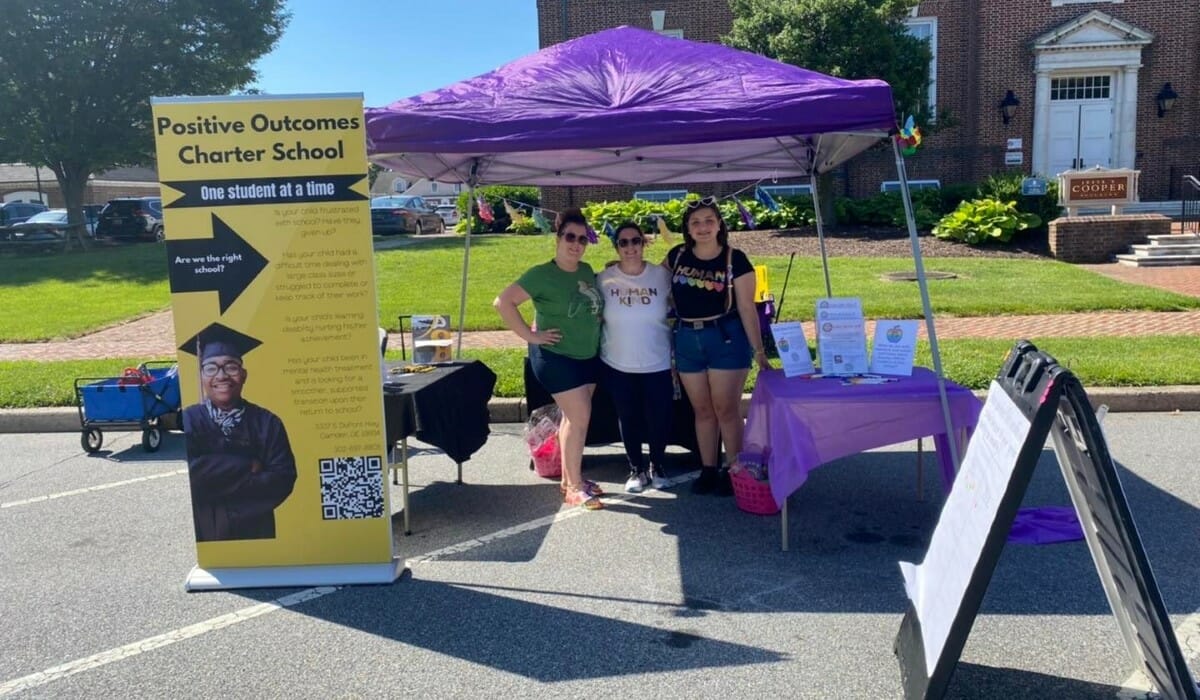
We teach students how to advocate for themselves and teach educators how to be more inclusive by providing information and resources to promote self-advocacy and awareness of equity considerations. As founder and director, I handle administrative work, communications, partnerships, events, marketing, identifying resources and working directly with kids in my community and all over the U.S. We connect with students through online resources and social pages, and also directly connect within the community. SEE US partners include my school, Positive Outcomes Charter School, Parent Information Center of Delaware and It Gets Better Project.
As the founder of Students for Educational Equity in the United States (SEE US), Shelby Farris is volunteering to support students and families facing challenges accessing a safe and inclusive educational experience./Courtesy Shelby Farris
In addition with SEE US, I launched the HeartArt initiative in 2015 which combined my love of art with my desire to make a difference.
Share one personal story with me from your volunteerism.
I recently worked with a student who’d bounced around, had a rough home life and was from a rural area. As a transgender student, (they’d) faced some bullying and misconceptions. We were able to find them a school district that was more accepting, and help find them support. He introduced me to his friends recently and it’s amazing to see how different this child is just because of the support given in school. Seeing that person grow, it makes me feel really amazed (because) I never really thought about how much my service could affect somebody, (volunteering) was just something I did to help.
Why do you think it’s important for others to volunteer?
A lot of people have privilege and it’s super easy to just sit there and not do anything with it, but when you have this privilege, it’s important to take steps to help your community because we all need to work together to create a better society for our future generations.
Is there a motto that guides your service?
Growing up, my mom used to say, “Be the person you needed when you were younger.” That is my self-motto at this point.
Through SEE US, Shelby is providing information and resources to promote self-advocacy and awareness of equity considerations./Courtesy Shelby Farris
What’s the future of your volunteerism look like?
This organization addresses a need that has been there for a long time, and the need has just been visualized during the pandemic. I see (SEE US) continuing maybe even past my service life.
In one word, what does volunteering mean to you?
Community.
When you’re not busy volunteering or in school, what do you do for fun?
I’m really into art, that is my passion… and dogs and puppies!
North Carolina Woman Volunteers on the Forefront to Support Her Community
Meet Daily Point of Light Award honoree Beverly Hines. Read her story and nominate an outstanding volunteer or family as a Daily Point of Light.
Beverly Hines was born in New Bern, North Carolina. The middle child of seven, Beverly has always been known as the helper. She taught her older siblings (one girl and two boys) as well as her younger siblings (one girl and two boys) many lessons. Her original dream was to become an accountant but she ended up a teacher, as well as a major force in her community.
Beverly’s volunteer work began in 2018 with the disaster that Hurricane Florence let in her community, with extensive flooding. After the hurricane, Beverly organized teams to help rebuild homes and to provide building supplies and food. She has written grants to help several churches rebuild, and opened the first food bank in the area. She has also set up a COVID-19 clinic and distribution sites for this very small rural community. Beverly works as the Media Specialist for Jones County Schools and is an advocate for citizens in need. She serves tirelessly and is always on the forefront to keep her community safe and well.
What inspires you to volunteer?
I volunteer because I can and I love to help others. I have strong spiritual beliefs and I think we were meant to do the very best we can to assist others. There is a saying, “Each one teach one,” and I take it further to say, “Each one help one.”
I quickly discovered that this work is never-ending and I’ve been working hard to address food insecurity, rural transportation needs, all COVID pandemic issues, mental health, substance abuse issues and tutoring with afterschool programs to combat learning loss due to school closures.
I work a full time job but I also work at least 28 hours per work on running the nonprofit. I coordinate all the programs, recruit volunteers to help and play an important role by coordinating and working right alongside other volunteers to get the work done. I have written grants that will allow me to offer some volunteer stipends but I do not pay myself. All of my volunteer work is non compensated until I can find a way to work the nonprofit as a hired employee. I am still working on that.
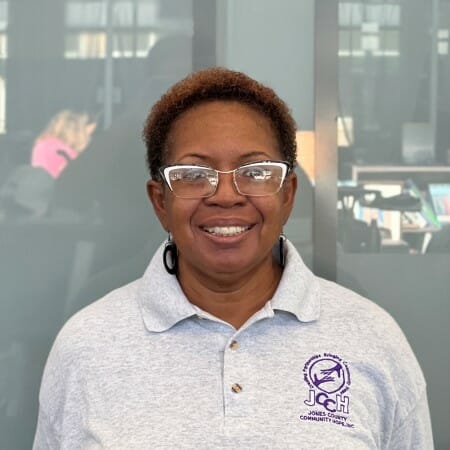
Beverly Hines, Founding Member of Jones County Community Hope./Courtesy Beverly Hines
I feel that I am doing the work that the Lord led me to do to be a help to our community. To date, we have held 25 COVID-19 vaccine clinics and have vaccinated over 310 individuals. We partner with Old North State Medical Society and they administer the vaccines. We coordinate the events and line up the appointments. We also provide transportation to residents in need for a ride to doctor appointments, COVID appointments, to get groceries, etc. We rent a church van to transport residents. We also held a successful after school program called “Closing the Gap” that showed 85% of growth for the 22 students that were enrolled. This was a six month program with tutoring three days a week. We provide volunteers weekly for the food pantry where we feed over 3,500 individuals per month. I am always busy but it is good to have purpose and fulfill the needs of my community.
Describe your volunteer role with Jones County Community Hope.
Jones County Community Hope, Inc. is the nonprofit organization that was started to address the needs of Jones County residents and the surrounding counties. Our mission is to influence lives in a positive way through education, health and safety.
I am one of the founding members of Jones County Community Hope. I handle the scheduling of volunteers. In the beginning my family and I were the only staff. But as we grew, I was able to get more and more volunteers to help us with food distribution, COVID work and even tutoring. Now we are a well-established organization known for hard work in the community and have volunteers who are ready and willing to help with the cause.
What’s been the most rewarding part of your work?
The most meaningful and rewarding part of the work that we do in our communities is providing the opportunity for individuals to have their needs met. We just recently received a transportation grant and can now provide rides to doctor appointments, deliver groceries to positive COVID patients, etc. I have written and received grants to help us continue the work that we have started in the community. Working with the public is very rewarding especially when you get to hear some of the client stories and realize that what you are doing is clearly making a difference in their lives.
What have you learned through your experiences as a volunteer?
In my experience as a volunteer I have learned that volunteering added a new meaning to my life. My children are adults and I am divorced. Volunteering takes the focus off of me and adds a burst of joy to my life. Service gives me a great feeling of reward and spurs me to do more. Whether I am writing grants or in the field working, I feel a sense of accomplishment and happiness.
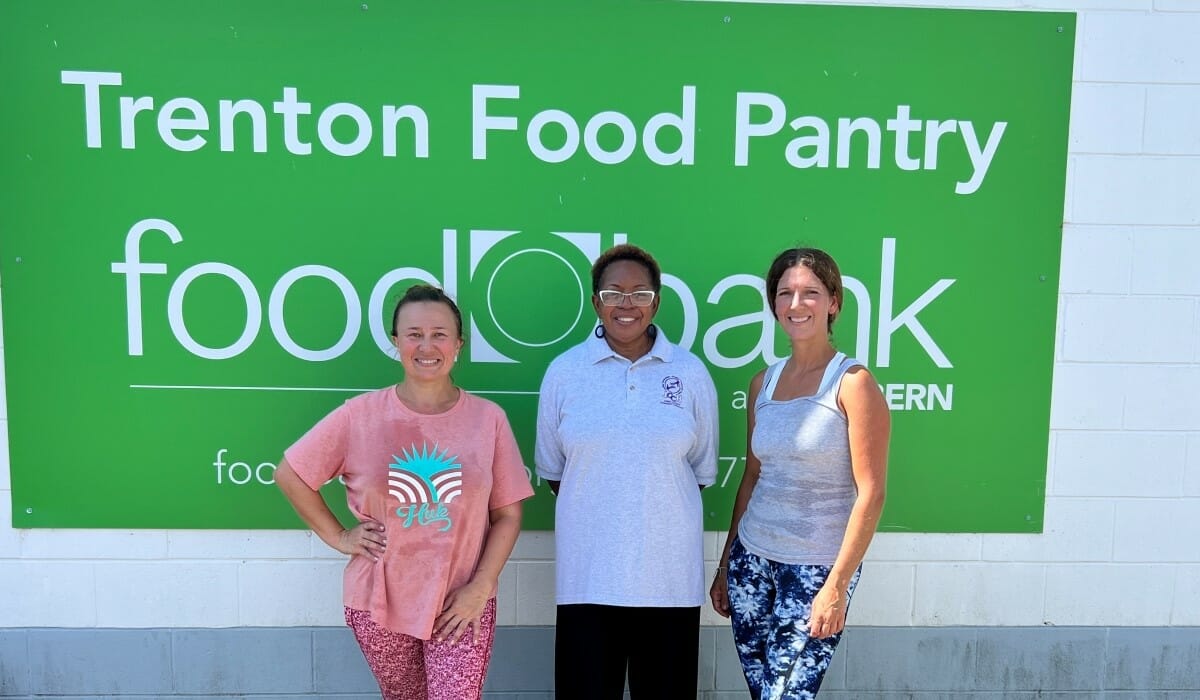
Beverly with Jowita Zerilli (left) from The Food Bank of Central and Eastern NC and Laura Hagerman (right) from The Salvation Army./Courtesy Beverly Hines
Are there any future partnerships, programs or events that you are excited about?
When I think of the future of Jones County Community Hope, I get excited. We are almost complete with the construction of our JCCH building. We plan to have mental health service, counselors, mentoring, food pantry, veterans program, single parent assistance, youth educational programs, exercise classes and so much more going on in this building. We have developed some really strong partnerships with other nonprofits, health equity groups, the health department and community health workers to ensure that we can offer quality programming.
Our grand opening is scheduled for December and we plan to hit the ground running. This building is located in a rural, underserved, minority neighborhood. Our presence in this community is going to give it a new purpose and recognition that was not there before. We are excited to see this dream coming to pass.
Why do you think it’s important for others to get involved with causes they care about?
It is important for others to get involved because you will feel better about yourself. There is a lot of anxiety and depression in the world today. Some of that stems from isolation. Volunteering once a week with a worthwhile cause can bind you to a group of people and provide social contact. Volunteering connects people and provides a platform to create new friendships.
What do you want people to learn from your story?
In 2015 I was going through a lot. My husband and I separated, my youngest was graduating from school, I was on the verge of losing my home and I was in graduate school. In December of 2015, at the age of 51 years old, I suffered a heart attack. I was lucky to survive and I now have 3 stents in my heart valves. This event caused me to take a good look at my life and to think about what impact I have had on my family, my church and my community. I felt like I had not done enough in any category.
The doctors were telling me that I needed to slow down but I felt that I needed to refocus and put first things first. So, that is what I did. Now, in all that I do, I make sure that I am there for my family. I have a 33-year-old son who lives with me and most times when I go to volunteer, he is with me volunteering as well. He admires the work that we do and it is now his passion as well.
I do all I can for my church and some of our volunteers are church members. The community members are the recipients of my volunteer labor and most of them are most appreciative. My life is very rewarding to me now. I got my master’s degree in 2016. II poured myself into establishing Jones County Community Hope, fundraising, writing grants and making a community presence.
Chicago Teen Stands for STEM, Providing Women with Research Opportunities
Meet Daily Point of Light Award honoree Nora Sun. Read her story and nominate an outstanding volunteer or family as a Daily Point of Light.
Nora Sun is deeply passionate about what she does: getting more girls involved in science. Already, the Chicago-based 17-year-old has been named a 2022 Global Teen Leader by Nile Rodgers’ We Are Family Foundation, and her organization’s research competition, ENVISION, has been featured in the Chicago Tribune.
Nora discovered that science research augmented her passion and self-efficacy for science. She built her organization in hopes of sharing her positive research experience and her passion with other girls… and her impact has been profound. Read more about Nora’s work and how she leads with quiet confidence and steady strength.
Describe your volunteer role with your organization.
I’m the founder and executive director of ATHENA By Women In STEM, which I started three years ago when I was 14 years old. My primary volunteer duties include drafting operational documents, building and communicating between various teams within the organization, forging partnerships and overseeing that all the organization’s programs run smoothly.
The under-representation of women in STEM is a widely acknowledged problem; less than 30% of all academic researchers are women, with numbers lower than 10% for some STEM fields such as computer science. The lack of non-male voices in research is detrimental because diverse perspectives are crucial to the progression of science.
What does ATHENA do?
ATHENA By Women In STEM follows a three-step pathway to introduce underserved female students to scientific research.
First, we have outreach and mentorship initiatives, which help students navigate high school, find subjects of interest and gain the confidence they need to pursue STEM. Second, we host virtual workshops and conferences with various scientists to help students gain a better understanding of the research process and research niches. Finally, we host the month-long Talaria Summer Institute research program, where students are paired with mentors (professors from the U.S., Canada and the U.K., as well as postdocs from the U.S.)
During the Talaria Summer Institute, female high school students are connected with these mentors to conduct research, write research papers and then present at the Talaria Conference.
This program has a 15% acceptance rate and over three summers has hosted a total of 400 participants. Talaria is the first research experience for 80% of mentees. And 95% of Talaria mentees report a significant increase in self-confidence following the program.
Finally, ENVISION is a research competition where teen girls write research proposals; each is judged by at least 10 judges from a panel of 300, most of whom are researchers at Ivy League universities. ENVISION has had more than 400 participants and has awarded $1,600.
What’s your favorite type of science?
Biology – specifically, the study of proteins. This is the field I’d like to pursue professionally, as a researcher.
Nora works on program logistics, including partnerships with researchers at universities across the U.S., Canada and the U.K./Courtesy Nora Sun
What inspires you to volunteer?
Other people’s love for science inspires me. As someone who’s interested in science myself, it’s very interesting to me to hear other students’ reasons they love science and the unique ways in which they view science – which is often different from how I view it. Those unique views are really beautiful and diverse, which is inspiring to me.
What’s been the most rewarding part of your work?
Meeting people and hearing the ways the programs have impacted them is gratifying, but even being able to establish a connection with people is gratifying in itself. Connecting with others who share the same passion for science is rewarding.
What have you learned through your experiences?
A lesson I’ve learned is that there are many different styles of leadership that can be equally effective. Growing up and consuming media, I often saw ideas of feminism or being a female leader associated with being loud and even a bit masculine.
I don’t possess these qualities. I’m actually quite soft-spoken. But I’ve been able to take advantage of my softer personality and use it to better connect with people who volunteer with my organizations and still be an effective leader, even if I can’t necessarily get everyone’s attention in a room, for instance.
Why do you think it’s important for others to get involved with causes they care about?
It gives you both purpose and gratification to get involved with something you’re passionate about, even if it’s not directly related to your job or source of income.
Are there any future partnerships, programs or events that you are excited about?
Regarding Talaria Summer Institute, this year we’re partnering with a few universities to actually bring the program on campus. So instead of students living in their homes and traveling to and from the research labs, they can actually live on campus for a month like university students, while they conduct their research and complete their mentorships.
What do you want people to learn from your story?
A tip I’d give is if you’d like to start your own initiative or solve a certain problem, do a thorough literature search and research the problem to understand what solutions already exist. This way you can create something unique.
For example, in my area, women in STEM, there are already a lot of initiatives. But after researching the initiatives that already existed, I found a lot of them weren’t actually focused on women in research specifically. They also lacked intersectionality of identities. So this helped me determine what I wanted to focus on with my own initiative.
Research has been described by many women as an intellectually empowering experience. So this fueled my philosophy around building ATHENA, because I really wanted the focus to be on building confidence in the people involved. That’s why research is such a big aspect of our initiatives, because it’s been said to be intellectually empowering.
After Diagnosis, Athlete ‘Plays’ it Forward to Special Olympics
Meet Daily Point of Light Award honoree Charlie Austin. Read his story and nominate an outstanding volunteer or family as a Daily Point of Light.
Seventeen-year-old Charlie Austin describes feelings of confusion and distress when he was diagnosed with a rare genetic heart condition as an adolescent, the diagnosis effectively putting an end to his competitive sports career.
“I was confused and upset because sports was everything that I had,” says Charlie. “That’s an age where sports is almost everything. I didn’t know what to do and I picked up golf and that’s good for summertime, but I used to play a lot of competitive sports including all-star baseball and basketball. I loved sports so much, I wanted to help other people get that experience and it makes me happy seeing kids get experience out on the court.”
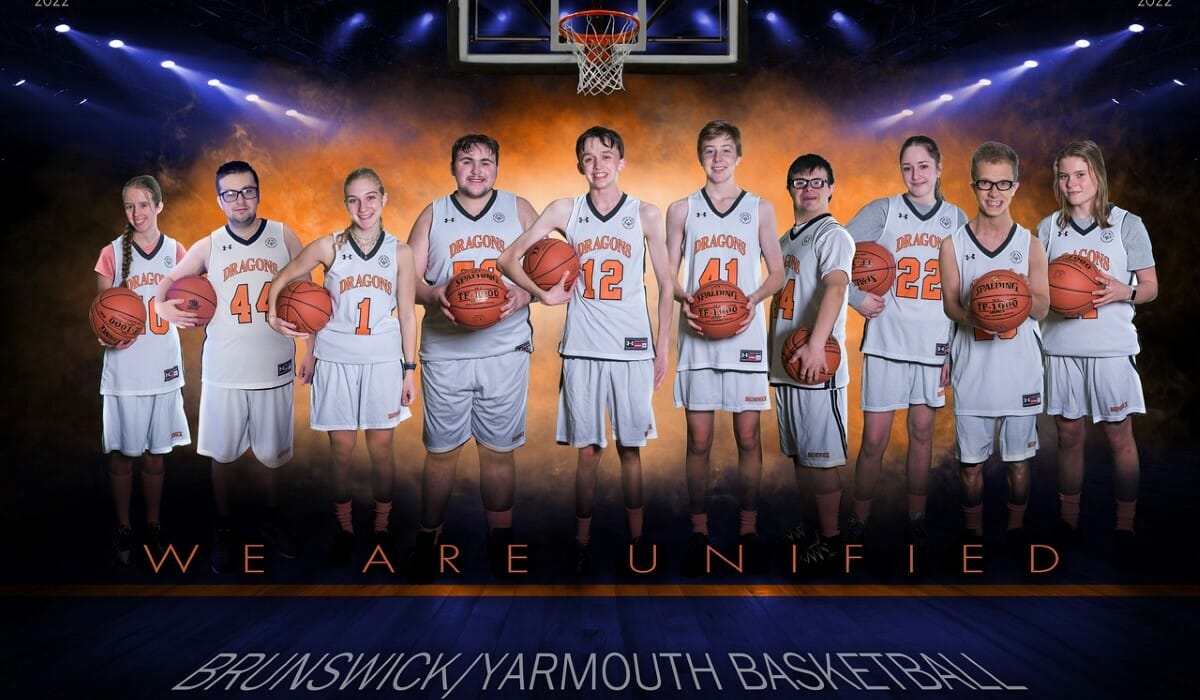
Giving back to the passion that had given him so much joy, the Brunswick, Maine student started volunteering with Special Olympics Maine, an organization dedicated to providing sports training and athletic competition for children and adults with intellectual disabilities. Beginning his service as a middle school student, Charlie volunteered as an assistant coach and team manager for the Yarmouth and Brunswick Unified Basketball Team, and now that he’s older, Charlie plays on the court with the team.
His service has grown over the years, from launching an initiative called The Warrior Program during the COVID-19 pandemic, which provided funding to Special Olympics coaches to make and distribute motivational and instructional videos for athletes while unable to meet in person, and serving as a U.S. Youth Ambassador.
After a medical diagnosis put an end to his competitive sports career, Charlie Austin became a volunteer for Special Olympics Maine./Courtesy Charlie Austin
“I attended the 2022 USA games as an ambassador,” Charlie says. “That was really cool, everybody (from Special Olympics) in the country gathered and there were so many events. You can tell it means so much to these people. It’s so inclusive and kind and everybody is there just to have a good time. Doing (Special Olympics) locally is big and fun, but the USA games is an experience I’ll always remember and be happy to look back on. At first when I started volunteering, I did it for the athletes out on the court, but now it’s a dual thing I can do it for myself as well because I enjoy it so much. I just have a great time.”
The love for the game Charlie had as a competitive athlete has persisted throughout his volunteerism, a contagious feeling for everyone involved, he says.
“In a Unified game, so it doesn’t matter who scores or who has the ball, everybody is cheering and there are always smiles. When I’m out on the court, I’m trying to make the best experience possible. You almost recreate the competitive experience, but make it even better so people are happy and enjoying the game. I’ll take a glimpse over at the stands, people are smiling, clapping, the other team will clap when my team scores and the same happens with my team. We’re all rooting for each other.”
Turning his diagnosis into a positive in his life and in the lives of others, Charlie says his life has been changed by the Special Olympics.
“What happened to me was really hard, but when I got told I couldn’t play sports, I had to make the best out of it, and I think I have.I’ve always stayed on the bright side. Without this program, my life would almost be so much more different.”
Charlie Austin: “The Special Olympics motto is, ‘Let me win. But if I cannot win, let me be brave in the attempt.’ We all need to be brave in the attempt of our lives. I think that’s a great motto.”/Courtesy Charlie Austin
Lisa Bird, director of youth initiatives for Special Olympics Maine has witnessed Charlie’s volunteerism first-hand, and says the teen is a role model to others facing challenges.
“Charlie took some challenges that he had in his own life and decided to use those in a positive way to help other people with challenges,” says Lisa. “He’s ambitious. He looks for what the needs are and then finds a way to help and doesn’t stop at anything to have success. I tell people all the time, Charlie could have gone in two different directions. He could have gone down a very negative path because he was dealt a tough card or done what he’s done. He found a positive (in his diagnosis) and found a way to work around it that’s good for others and good for himself as well.”
The silver lining of his health condition, says Charlie, is that he’s been able to help others get involved in sports and, as Lisa says, experience positive benefits himself.
“Volunteering is a great activity. You’re giving back but you’re also doing it for yourself. There are so many great things that come out of volunteering compared to other activities. Volunteering has given me the experiences, memories, that I don’t know I would have gotten if I hadn’t had the heart condition or started volunteering with Special Olympics. The Special Olympics motto is, ‘Let me win. But if I cannot win, let me be brave in the attempt.’ We all need to be brave in the attempt of our lives. I think that’s a great motto.”
Volunteer Duo Combat Food Insecurity and Teach Healthy Eating
Meet Daily Point of Light Award honorees Traci Anello and Debbie Hall. Read their story and nominate an outstanding volunteer or family as a Daily Point of Light.
It was the silver lining of the pandemic, according to Traci Anello and Debbie Hall. They’d originally wanted to bring healthy food and cooking lessons to community spaces, but when COVID-19 restrictions went into effect, the two shifted their plans to get food and instruction directly into homes.
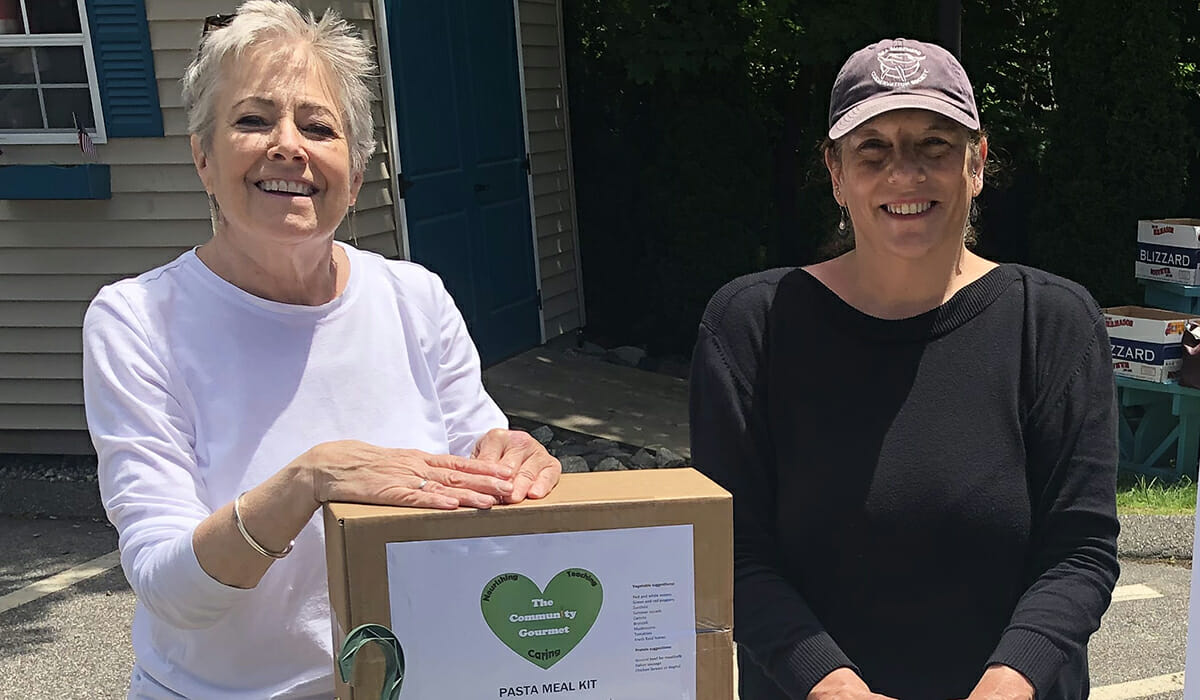
Launching The Community Gourmet in January 2022, Debbie, of Arundel, Maine and Traci, a resident of Kennebunkport, Maine, have provided meal kits for more than 1,000 people experiencing food insecurity to prepare healthy meals, with the goal of helping teach basic cooking skills as well as providing nutritious meals. Leveraging their skills for good, the two colleagues at Southern Maine Health Care are filling bellies and filling a need in their community, one meal kit at a time.
What inspires you to volunteer?
Traci:We think cooking creates confidence. I’m inspired knowing that we can teach people basic cooking skills which in turn can be inspirational for them. We hope that by teaching people they become inspired, and will have the confidence to not only cook food for the family but to have the confidence to do other things.
Why this cause?
Debbie:We know food insecurity is a huge issue in the state of Maine. Often, when people go to the food pantry, they get random ingredients they don’t know how to put together. We thought we’d add recipes to the kits and teach people how to cook.
Describe your volunteerism with The Community Gourmet.
Debbie:We are the co-founders of the organization, Traci serves as executive director and chairperson of the board and I am vice president and vice chair. We both bring very different skills to the organization. I write letters asking for donations, keep the books and come up with ideas for the meal kits.
Traci: I am a chef by trade for 35 years, and I create the recipes and prepare the meal kits. I also do the deliveries to the pantries. These are teaching kits, we’re not just handing out food, we’re handing out lessons on how to cook and shop for healthy food. For example, people could receive a pasta kit that feeds a family of four that includes pasta, tomato sauce, cheese, mayonnaise. The kits teach people there are cooking options — that you can make pasta salad, not just spaghetti and meatballs. Each kit also has a pound of coffee in it, and every kit includes an essential kitchen tool. We also hold fundraisers and I bake baked goods for the fundraisers. Our meal kits are available at organizations around the community, including: The Little Pantry, York County Shelter Pantry, Saint Mary’s Church in Wells, Maine and Big Love One Community.
The Community Gourmet co-founders, Debbie Hall (left) and Traci Anello (right) create meal kits to teach basic cooking skills as well as provide nutritious food./Courtesy Traci Anello anad Debbie Hall
Share one personal story with me from your volunteerism.
Traci: A woman approached us during a fundraiser and said she was worried about the food being served to her daughter, who lived in a group home. We asked her to take a meal kit to the home for the workers. The following fundraiser, she showed up and couldn’t thank us enough. The workers had used the recipe, followed the directions and they not only enjoyed cooking, but the food is now much better. People from food insecure homes sometimes don’t know how to cook at home, and it’s not that they don’t want to learn. This is proof that the kits work the way we hoped they would and it’s also validation for why we’re doing it. It warms my heart to know that I can teach someone to cook, and I know it’s going to be a better day for the family because they’re going to start eating better food and they’ll be more inspired. Knowing that is the best feeling in the world.
Why do you think it’s important for others to get involved?
Debbie: There’s a saying — to those whom much is given, much is required. I’d never experienced food insecurity. We grew up eating family dinners. We know that not all people can do that. It’s so special for us to be able to teach people and then maybe people will start having family meals together.
Traci: I did experience food insecurity as a teenager. It’s the reason I am so passionate about helping others to not have to go through this. I don’t talk about it but (this interview) has helped me to realize that it’s nothing to be ashamed of. On the contrary, telling my story could actually be helpful to someone.
What’s been the most rewarding part of your service?
Traci: We include a self-addressed postcard with a survey in our kits. When I receive the postcards back and see how grateful and thankful people are, it makes me feel good to know we’re doing the right thing. We want people to know they are being heard. That’s really important to me.
In one word, what does volunteering mean to you?
Debbie:Two words. Giving back.
Traci:Love.
How can readers help?
We maintain an Amazon Wish List that we rely on for donations. Please visit our website for more information about how you can help.