9/11 Red Cross Recovery Worker Pays Tribute to Memories as a Museum Docent
Meet Daily Point of Light Award honoree Sonia Argon. Read her story and nominate an outstanding volunteer or family as a Daily Point of Light.
On September 11, 2001, native New Yorker Sonia Argon’s world changed. She wished her husband, a police officer, a happy birthday before leaving the house that day and didn’t see him for over 24 hours. When the first tower went down, she made her way home, then found her teenage daughter staring at the TV as the second tower fell. They waited for hours to find that her husband, a first responder, would make it out alive. Several days later, Sonia took her EMT skills to Ground Zero as a recovery worker.
Since that day, her family has been trying to heal. Sonia has dedicated her time to reminding people about that day, educating those who weren’t there and comforting those who were directly affected. Suffering from 9/11-related illnesses, the loss of friends and traumatizing memories, she finds peace through writing, going for sunset walks and telling her story.
Describe your volunteer role with the 9/11 Memorial & Museum and beyond.
I volunteer as a docent at the 9/11 Memorial Museum and, before it recently closed, I was a docent at the 9/11 Tribute Museum. The Tribute Museum was the first 9/11 museum that opened, and the only people who could volunteer were first responders, recovery workers, family members or survivors. We told personal stories. The National Museum is artifact-driven. We interpret the artifacts and share the timeline. I don’t have to tell my story if I don’t want to. Sometimes it’s easier for me to just keep the story going instead of getting personal.
I also help with New York Cares and Stars of Hope, among others. During COVID, because my husband and I both have 9/11-related illnesses, we felt we couldn’t help because we would get sick. But we wanted to do something for the frontliners, so we cooked and delivered food.
What inspires you to volunteer?
It felt like we buried my husband twice that day. We thought he was in the towers. Then we heard from him, and later he was near the second tower that collapsed. After we did the cleanup, 9/11 was a taboo subject. Many of us whose husbands came home would be told, “Why are you so sad? You didn’t lose anyone.” There was a lot of guilt.
It’s important for me to live a life of service, because it makes me grateful. My story could have been very different. I found that it was very healing to talk and communicate. I even told my husband he needed to do it because it was cheaper than therapy. For me, the museum is a way to reach people, to remind them.
Why do you feel it’s so important to remind people or to teach those who weren’t alive at the time?
Young people inherited 9/11 just like we inherited Pearl Harbor. They think it’s normal to go through an airport and take your shoes off and practically undress. It’s important for them to understand that it wasn’t just people who were murdered that day who were affected. It was their families.
And most importantly, 9/11 didn’t end for many of us. It continues to haunt those of us who were there and are sick. Many of our friends have died. Telling that story to one more person who will go back home and tell someone else keeps the story alive. It’s our history. We can’t forget it.
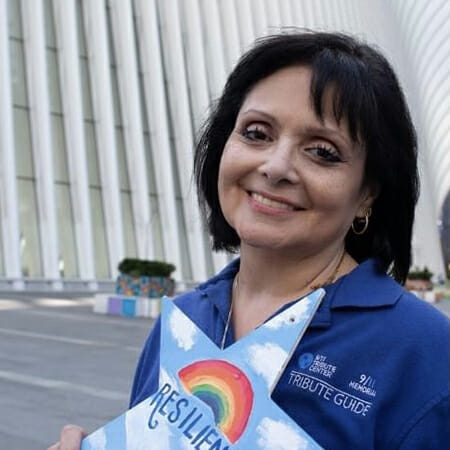
Stars of Hope honors Sonia Argon for her resilience./ Courtesy Sonia Agron
What is the most rewarding part of your work?
It’s wonderful to work with people who will take me to coffee on a bad day, and we don’t have to say a word. If we need a hug, or when we see somebody we haven’t seen in a while, we hug like the family we are. We didn’t ask to be members of this club, but we would never have met these amazing people had we not. I’m grateful for that and make the best of it by doing as much as I can to help others.
What have you learned through your experiences as a volunteer?
A year or two after 9/11, people from Oklahoma City had come to see us. They knew, as survivors [of the Oklahoma City bombing], we had no idea what was coming for us. And they were right. So a group of us went to Japan after the major earthquake, tsunami and nuclear meltdown of 2011. We wanted to extend ourselves to others. I saw how great that community was, and it helped me heal, too.
Are there any future partnerships, programs or events that you are looking forward to?
September 4th is the Father Mychal Judge Walk. He was a fire department chaplain, and on 9/11, he walked from St. Francis Church all the way to Ground Zero to help. He died giving last rites. Every year, we take that walk in his honor, stopping at precincts and fire houses. All the men and women stand in uniform saluting, and play Taps. For me, it’s a quiet walk when we can remember.
On September 10th, they have the Brooklyn Wall of Honor. They list those who have died, and we have a candlelight vigil. The Museum also does something for us on the 10th.
Why do you think it’s important for others to get involved in their community?
If your community is strong, when acts of hate or natural disasters happen, you’re strong because you’re part of that community. Everyone can help each other. When I talk to students, I tell them it’s simple. If it’s snowing, go ask your neighbors if they want some soup or need the snow removed. Be kind to one another. We saw the best of humanity after 9/11.
What do you want people to learn from your story?
At some point, you’ll go through something tragic, and it’s going to change you. Let that change be for good, because if you stay angry, whatever happened to you wins. If you take that negativity you’re feeling and turn it into something good, you’ve stared adversity in the face and know that there’s nothing in this world you can’t do.
We need to be better. We need people to remember and to stop thinking that this is something we should get over. Evil doesn’t end, but love conquers all.
A Bright New Future Starts by Empowering Girls in the Tech Space
Meet Daily Point of Light Award honoree Nishi Kaura. Read her story and nominate an outstanding volunteer or family as a Daily Point of Light.
Five years ago, Nishi Kaura’s family vacation to India included a visit to a girls orphanage. Meeting some of the girls and learning that they wanted to pursue careers in tech and achieve financial independence, Nishi was inspired to help.
She started small, with fundraising efforts and spreading online awareness about technical education for underserved groups. After raising a few thousand dollars, Nishi donated resources such as laptops and developed technical literacy curriculums to teach the girls. Nishi continued supporting the girls for the next few years by teaching technical literacy.
What inspires you to volunteer?
After meeting the girls at the orphanage, I realized that taking collective action towards making technology equitable is so important to unlocking the futures of underserved people, especially women.
Seeing the enthusiasm in the girls’ eyes and knowing the obstacles they faced to a fulfilling and prosperous life, I was inspired to create ChiCode, a tech-forward nonprofit that aims to dismantle existing societal barriers surrounding minority groups in tech.
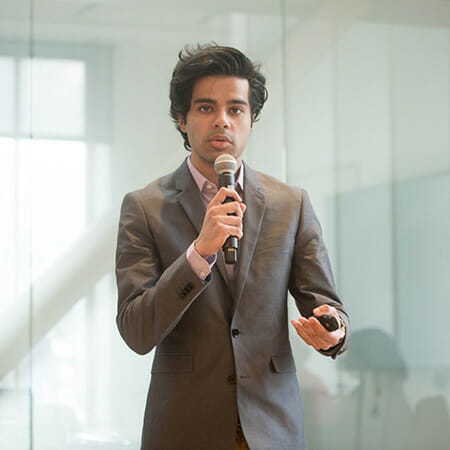
Nishi Kaure, right, teaching a younger student. /Courtesy Nishi Kaura
Describe your volunteer role with ChiCode.
I am head of the Social Media and Workshops department. I founded the podcast segment and developed the Intro to Java, Advanced Java and Slides Presentations courses.
ChiCode has worked with 300+ students from over 13+ countries with the support of ten companies. We have worked with many different underrepresented groups in tech including migrant domestic workers in Singapore, refugee women from Iran and Congo living in Greece, South Africa women, people from villages in Brazil and more.
ChiCode recently worked with refugee women from Iran and the Congo through website development courses. Their website will enable them to showcase their work in journalism, including documentaries and photography, as a tool to attract new clients. This website has allowed them to both grow their business and provide a platform for future projects, leveraging technology for whatever success may mean to them in the future.
As founder of the podcast segment, we invite technical leaders to share their journey in tech and give advice to younger students aspiring to join the tech field or students in general looking for meaningful advice and to connect with mentors. Recently, we have had guests like Rama Akkiraju, the Chief Technical Officer of IBM, and Rashim Mogha, Founder of Empowered Women of the World and a bestselling author on Amazon.
What’s been the most rewarding part of your work?
The most rewarding part of my work is seeing the groups that I work with through ChiCode build success through technology, whether it’s refugee women in Greece using their technical skills in website development to expand their client base or students in our coding programs building projects that positively impact their communities.
Recently I got a call from the head of the orphanage, Ms. Puri, letting her know that three of the girls I had worked with are now pursuing Computer Science degrees in college. It is truly humbling to know that I played a small role in enabling their passion for tech, whether their interests lie in coding, website development or other tech areas.
What have you learned through your experiences as a volunteer?
Through working with many different people from a variety of cultures, I realized the importance of leading with empathy. It dictates decisions and the community we are able to build and foster. This understanding allows for collaboration and synergy which is essential when it comes to helping support diverse communities.
Are there any future partnerships, programs or events that you are excited about?
I am excited about partnering with schools in Africa to bring technical literacy to more students through the Asante Africa Foundation. I am also looking forward to partnering with Her Journey to teach digital skills to female migrant domestic workers in Singapore through ChiCode.
What do you want people to learn from your story?
From my story, I hope others can learn that supporting one’s community can be done through many different avenues depending on your passions and the impact you aim to create. There are always people willing to help you in community service so finding a group of people to work with can be very helpful and meaningful in your journey.
Why do you think it’s important to get involved with causes they care about?
It’s important to acknowledge the opportunities that we receive in our life and pay it forward to others who are also in need of an opportunity or a chance to better themselves in different aspects of their lives.
Especially for me in the tech space, being able to help bridge the gap in accessibility between minority groups and tech is essential as we must ensure that we continue to provide opportunities for under-resourced communities to leverage as stepping stones towards achieving professional success. We must take collective action to strive towards making technology equitable by dismantling barriers and unlocking futures as technology has the ability to uplift our communities.
Volunteer Changes the World Through Clean Water, One Well at a Time
Meet Daily Point of Light Award honoree Sikander “Sonny” Khan. Read his story and nominate an outstanding volunteer or family as a Daily Point of Light.
For Sikander “Sonny” Khan, a Pakistani-American recent college graduate, the life-changing possibilities clean water offers are what drives his volunteerism.
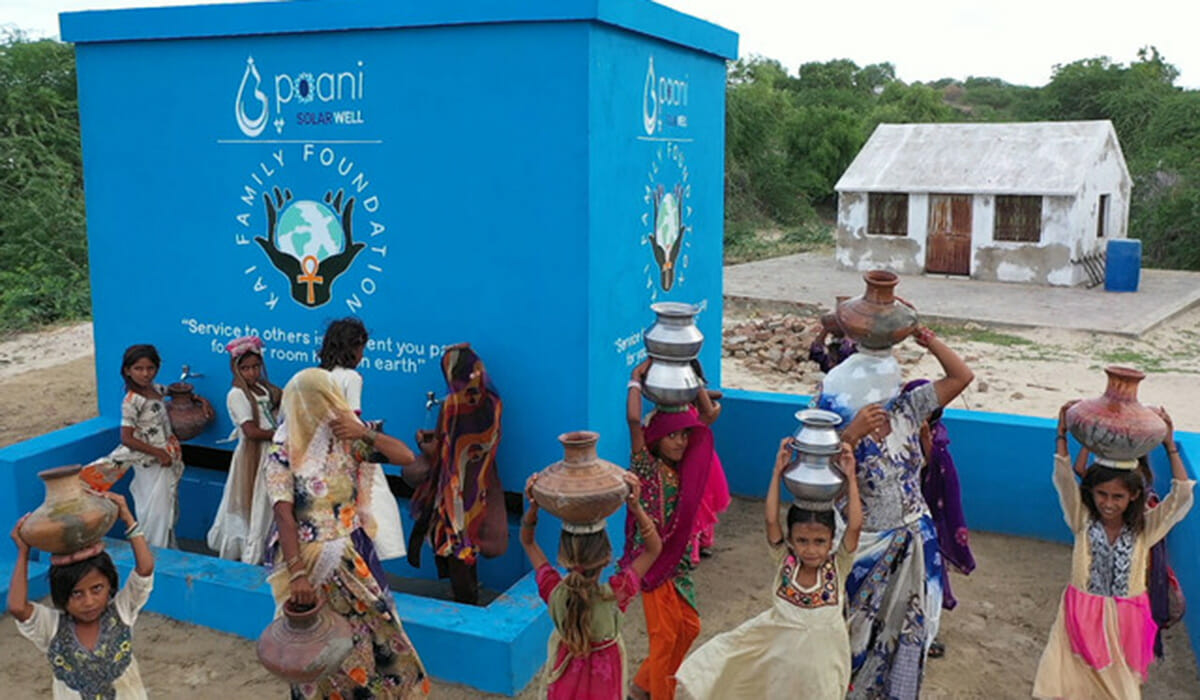
“We focus on regions where there’s little to no access to clean water,” says Sonny. “Where mothers have to go miles to get any water for their family, for bathing and for day-to-day activities. We make sure we are building water wells that not only meet their needs but are there for the long-term. (These wells are) essentially changing lives because they give (the villagers) time and health.”
Sonny, a 23-year-old from Jackson, Michigan, co-founded Paani in 2017 with several Pakistani-American friends in university. The organization has since installed nearly 10,500 water wells that serve more than 730,000 rural villagers across high-risk areas in Pakistan, where an estimated 70% of the population drink contaminated water, the co-founders inspired to give back to the country that raised their parents, says Sonny, who also serves as the organization’s CEO.
As the CEO and co-founder of Paani, Sikander “Sonny” Khan is volunteering to provide clean water for the people who need it most. /Courtesy Sikander “Sonny” Khan
“We built a school for children refugees from Afghanistan. It was surreal to see a school built literally miles from where my own father had gone to school and grown up, and now as a 23-year-old, to be able to create a project like that. It’s surreal that now 175 children have access to education and so much opportunity for the first time.”
Providing temporary and more permanent solutions, Paani helps to empower communities facing complex issues, according to Sonny.
“The situation at the beginning is always so broken and lost. People are just describing their present, and that’s been their present for their entire life. For us to then go provide that support, the entire culture and lifestyle changes for people. So many people are having the biggest smiles of their life, they are celebrating, they are excited and they’re also able to pursue their passions because they realize now, they can start entrepreneur projects, they can knit things, they can do other things with their time instead of gathering water which benefits themselves and their children.”
Broadening their impact, Paani helps others to launch their own fundraising campaigns for clean water. Paani has also distributed medical supplies to hospitals that focus on battling water-borne diseases, and provided emergency aid during recent disasters including flooding and the COVID-19 pandemic. These initiatives all contribute to Sonny’s deep sense of obligation to help others through volunteerism.
“My parents are immigrants from Pakistan and I constantly heard stories about the importance of water and food access in the region. As a student, I had so many resources and an unlimited amount of volunteer time to do something better than the opportunities I saw on campus. I thought it was a good opportunity as a young college student to create impact in a transparent way for the people that needed it most that wasn’t currently possible in areas we serve.”
According to Sonny, the co-founders started their efforts five years ago holding bake sales and raising tiny amounts of money. The organization has since received $3.5 million in donations. Sonny is stepping up to create real change for the people who need it most, says Muhammad Achar Bozdar, a program manager for Paani.
Paani has installed nearly 10,500 water wells since 2017, serving more than 730,000 rural villagers across high-risk areas in Pakistan. /Courtesy Sikander “Sonny” Khan
“Sonny’s consistency is what makes his service special,” says Muhammad. “In addition to the dozens of hours he spends each month in growing and maintaining water projects, he steps up his services when needed. When disasters occur, Sonny has dropped other commitments to reinvest additional time for relief efforts such as during COVID-19 and floods. Prior to installation of the water wells, many women’s lives were at risk, while fetching water, women and children fell into the wells. Now they are safe and have clean drinking water near their houses. Before, they were traveling around two to three kilometers for ten liters of water in a bucket.”
Sonny says Paani, which means water in Urdu, feels like his true purpose and the service now second nature. Moving forward with gratitude for the kind of impact he’s been able to make, Sonny says he is paying opportunities forward.
“To me, it’s a responsibility. I’m able to be that big brother for people who need it, the one who can open doors for others — the doors that someone else opened for me as a first-generation college student from a low-income background. I received scholarships from the Gates Foundation and mentors helped me figure out what college was. I recognize the importance of people giving time to others, so if I can, why wouldn’t I?”
Dedicated Volunteer Reaches over 1100 Hours Feeding Families and Fighting for Children
Meet Daily Point of Light Award honoree Stephanie Bolakowski. Read her story and nominate an outstanding volunteer or family as a Daily Point of Light.
As a longstanding member of the KPMG Global Mobility Services team and the mother of two teenage boys, Stephanie Bolakowski is a busy woman. But this Chicago native and newly-minted Floridian still has more time to give. In 2021 alone, she volunteered for over 100 hours and has done more than ten times that over the last decade. She finds herself most drawn to causes that help kids, including KPMG’s mission to eradicate childhood illiteracy. With a lifelong love for cooking, she also enjoys feeding families in need and often involves her own in prepping meals for distribution.
What inspires you to volunteer?
One of the first volunteer opportunities that really got me hooked came when my boys started elementary school. My son’s first grade teacher was looking for parent volunteers to come in each week for a couple of hours and help with her “Little Reader” program. The timing fit into my work schedule, was close to home and helped me feel more connected to my son’s education. I really enjoyed helping the kids learn to read and watching them grow.
Describe your volunteer roles.
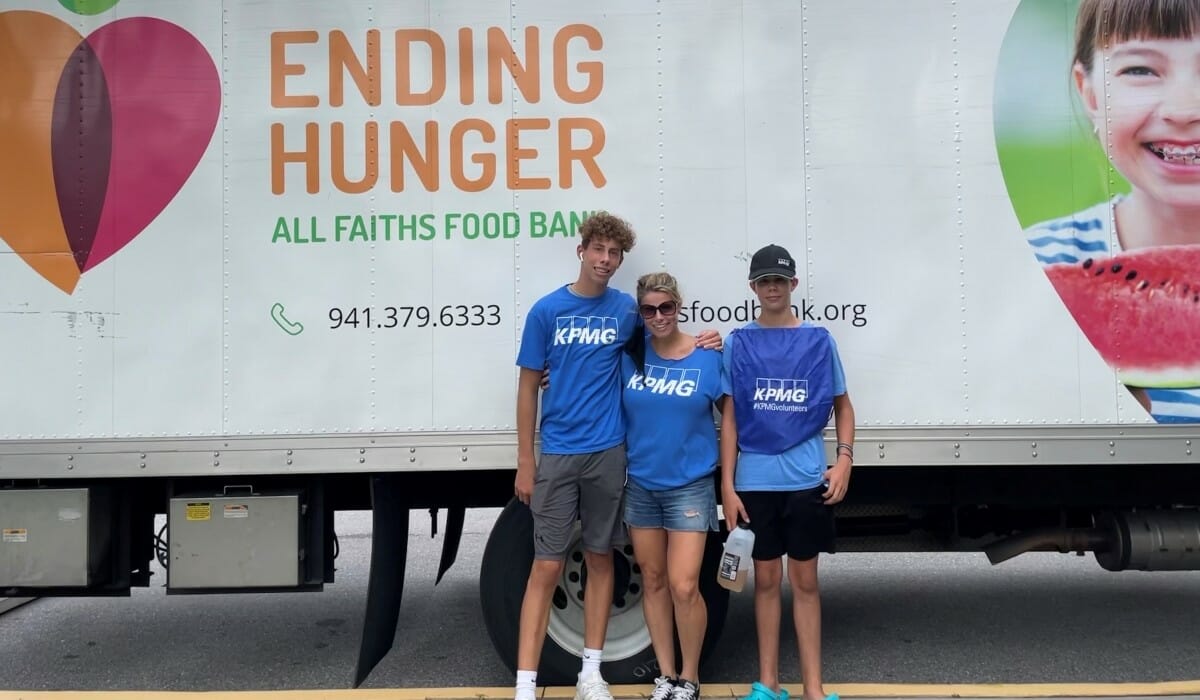
I’m currently an active volunteer with several organizations a few times per year, but my work at Lasagna Love and All Faiths Food Bank has been the most predominant. For the former, I shop for, prepare and deliver lasagnas to people. For the latter, I package up donated food from local grocery stores and help distribute it at mobile donation sites. I also spend time with each of these groups:
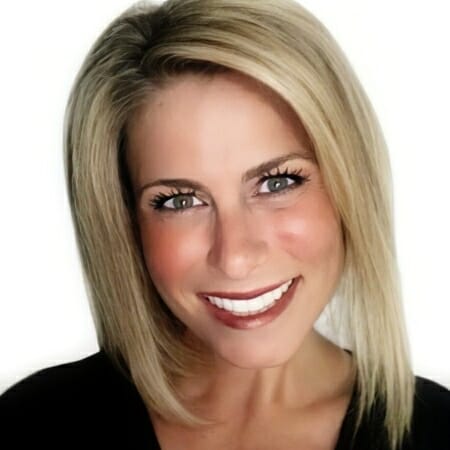
Stephanie Bolakowski is a dedicated volunteer in her community./Courtesy Stephanie Bolakowski
KPMG Family for Literacy – We’ve been packing backpacks and bookbags for donation to students at Oakridge Elementary School in Fort Lauderdale. For other events, we’ve written personal notes, affixed bookplates and packed bookbags with books and school supplies.
Institute for Entrepreneurial Leadership – I volunteer for two-hour IFEL ‘Hackathon’ sessions to help business owners with social media marketing ideas, content and website reviews.
It’s the appreciation. People are sometimes dumbfounded that random strangers would do something to help them. I don’t know how many times I go to the grocery store with two growing teenage boys. It’s countless. People driving through these food pantries are so grateful for just one box of groceries that so many of us take for granted, and it reminds me of the golden rule that they teach you as a kid: treat others how you would want to be treated.
“You have two hands… one to help yourself, the second to help others.” Why is this quote meaningful to you?
I was posting some pictures online and was looking for an Instagram-worthy quote. That stuck with me, because it’s true. It’s like when you’re in an airplane. You have to help yourself first to get your air mask on, and then go help someone else. You have two hands. If you have time, energy and space in your life to give five minutes or five hours, one can be for you and one can be for another.
Stephanie with her two sons, Jack (left) and Ryan (right) volunteering at an All Faiths Food Bank Mobile Pantry event./Courtesy Stephanie Bolakowski
Are there any future partnerships, programs or events that you are excited about?
I really like the Ronald McDonald House’s “Meals from the Heart.” I’m looking forward to when that can be opened up again. It’s for families with a sick kid in hospital who don’t want to leave them. If you’ve got a child that’s going through cancer treatments or something, they’re in the hospital for months on end. It would be extremely expensive for to stay in a hotel and eat out every night. Ronald McDonald House provides them with a place to stay and hot meals. We volunteer to make the hot meals. Pre-pandemic, my kids and I prepared a whole taco bar. I think I think as a mom, that was really sticks out for me.
Why do you think it’s important for others to give back?
There are quite a few people, whether it’s because of the pandemic or just life’s challenges, who just don’t have enough. We’re lucky enough to be safe and healthy with a roof over our heads, and some people aren’t quite as fortunate. It’s about making sure people have their basic needs.
Find something you like to do, and there’s probably an opportunity for you to use it help others. See if you can spare five minutes or five hours to do some good in the world. At the end of the day, I have a little bit of extra time and energy for this, and I feel like it’s my job to teach my kids that this is something that they should be thinking about.
Retired Navy Pilot Helps Others Heal with His Golden Retriever Therapy Dog
Meet Daily Point of Light Award honoree Rocklin Gmeiner. Read his story and nominate an outstanding volunteer or family as a Daily Point of Light.
Rocklin (Rocky) Gmeiner didn’t sit still once he retired from being a U.S. Navy pilot. Instead, Rocky filled his years of retirement with volunteerism and service — and he wasn’t alone. Rocky and his dog Bella have become a dynamic duo of therapy and kindness across Seneca, South Carolina, and bring smiles to a multitude of faces across their community.
In 2018, Rocky partnered with therapy dog organizations, like Alliance of Therapy Dogs and SC Dogs Therapy, and has now completed more than 570 therapy dog visits with his golden retriever, Bella. From children with special needs to memory care units in senior citizen homes, Rocky and Bella are dedicated to spreading hope wherever they visit.
Describe your volunteerism with your dog Bella and how you became a therapy dog team.
I grew up in a small town in Wisconsin, attended the U.S. Naval Academy and spent 30 years as a U.S. Navy pilot. Then I worked for a big defense contractor for 19 years before retiring. When a lot of people retire, they look for something to do. I’ve been an active person all my life. When you retire, if you’re able to, it’s a good time to pay if forward to do something for somebody else.
I made it to South Carolina and started looking for something to do. I spent four years helping Habitat for Humanity build houses, but then I hurt my foot. While I was recovering, people were telling me, ‘Hey you have this beautiful dog, why don’t you do some research and find something to do with her?’ In 2018, I looked up what we could do, and I knew my dog Bella could pass the requirements to be a therapy dog.
There are therapy dog organizations all around the country, and one of the biggest is called Alliance of Therapy Dogs, which is one I volunteered with. We’ve also helped SC Dogs Therapy, where Bella is actually one of the dog testers to test the new dogs. As a therapy dog team, we’re meeting new people all of the time who have incredible stories. To be honest, I was also looking to do something with my dog because it’s really nice when you can take your dog to work. I’ve been blessed in life, and in retirement, I don’t want to just sit around and play golf all the time. You have to do something for somebody else, and that’s what Bella and I try to do.
What are the benefits of dogs as a tool for therapy?
Dogs have been known to make people feel good… not all people, but a lot of people. When some people pet dogs or are around them, it actually helps boost endorphin levels. Taking your dog to a facility is a unique experience. What’s unique about therapy dog volunteerism is that you have immediate visual feedback on what you’re doing. Most of the time people start talking to your dog before speaking to you. They tell Bella that she’s beautiful and soft, and hug and kiss her. You can stand there and watch how joyful a person is when your dog comes up to them.
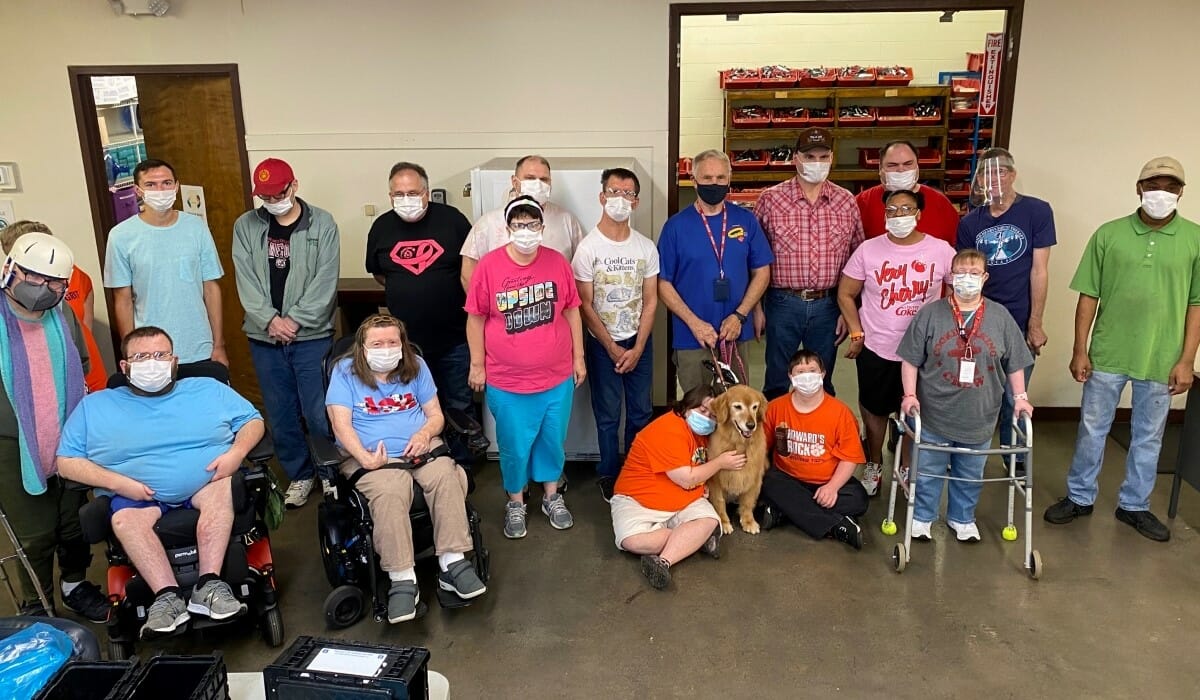
Rocky Gmeiner and Bella visit the Tribble Center Day Work Program, where people with disabilities explore opportunities of employment./Courtesy Rocklin Gmeiner
Describe the places that you and Bella visit in your community.
Every Tuesday, Bella and I visit many elementary schools where kids who are having reading issues come in for an hour and practice their readings with the dogs. Reading to dogs is pretty non-threatening, and the kids are really happy to spend a little time petting Bella. We also get to visit the special education classroom. But every week and month can be different. Normally, Bella and I have about 25 different events scheduled each month that I can choose to participate in and each event will usually have five to six dogs in attendance.
We regularly go out to senior citizen homes and visit the memory care units and normal apartment units. We also do a lot of things with colleges during their exam week or suicide prevention events. Bella and I are there to also help people register to vote in their communities. We get all kinds of calls for special events, too, like a buddy walk event where people run for special needs children.
What inspires you to volunteer?
There’s a lot of value in interacting with people and helping to make their lives better. I’ve been lucky to have a great life, but some people haven’t. Going and visiting them and letting them pet Bella is rewarding for both them and me. It’s just wonderful to be with your dog all of the time as well.
What have you learned through your experience as a volunteer?
We usually have normal visits where we go in, everyone pets Bella and I talk to them — it’s wonderful and everyone loves it. But every once in a while, something really special happens. Last year, there was a sweet young lady who was nonverbal and had trouble moving her arms and legs. We helped move her to where she could touch Bella, and she had the biggest smile you’ve ever seen in your life. She could hardly move in a wheelchair, but yet she was the happiest person in that moment. So these dogs really are intuitive and know that they’re making others happy. These little things are so rewarding and we keep going back because every once in a while, something magical happens.
Why is it important for others to get involved?
Helping others is really rewarding. You feel good when you’re doing something for somebody else and not just yourself. And you’ve got to have something to do in retirement. The worst thing you can do is just sit around; you sort of lose the joy of life when you don’t have something that’s getting you up in the morning. Getting involved is so important. This is something that’s bigger than just yourself, and it’s the little things that make a huge difference. When you come home from volunteering, you feel good and like you’ve done something worthwhile.
Are there any partnerships, programs or events that you are excited about?
We have camps coming up, which are a lot of fun. We’re also starting to visit a facility for children. Colleges are clamoring for us to come visit as well. Clemson University is so close to us, and they do an athlete recognition every fall and spring that’s a lot of fun. Bella and I get to interface with the athletes and they get to play with all of the dogs. During Christmas time, a lot of cities around here have parades and we decorate our dogs!
Meet Daily Point of Light Award honoree Marla P. Halbert-Goodwin. Read her story and nominate an outstanding volunteer or family as a Daily Point of Light.
Marla P. Halbert-Goodwin grew up about 20 blocks away from the food pantry she opened in 2008, her volunteerism now dedicated to helping the community that raised her.
Opening Jeremiah’s Food Pantry in 2008, Marla says the areas surrounding the food pantry around East St. Louis are “food deserts,” the residents lacking any convenient options for affordable and healthy foods. Since then, Marla, a 67-year-old Bellefontaine Neighbors, Missouri resident, has supported many across St. Clair County, Illinois through volunteerism.
What inspires you to volunteer?
My husband and I have been in the church ministry for almost 50 years now. That gives us a heart for the people. What gets us up in the morning is to help someone and see how we can be of service not just within our home, but within our communities.
Describe your volunteerism with Jeremiah’s Food Pantry.
There are no major grocery stores in this impoverished area, just little mom and pop shops. It was very, very important and vital that the neighborhood have a closer food resource. As founder and director of the food pantry, I am always looking for a social service that I can offer to my food pantry clients. We’ve offered our clients free savings accounts, free teeth cleaning, free eyeglasses, SNAP education and we even recently held a finance class. We have a group of about 19 very faithful and dedicated volunteers who support the pantry, which opens to clients once a week. Every month we hold community events including food fairs and free new clothes giveaways. Each year, we apply for grants and also receive support from Ameren Illinois, Walmart in Cahokia, IL and Illinois American Water. We’ve also given up to $19,000 in educational scholarships to college students and adults going back to college.
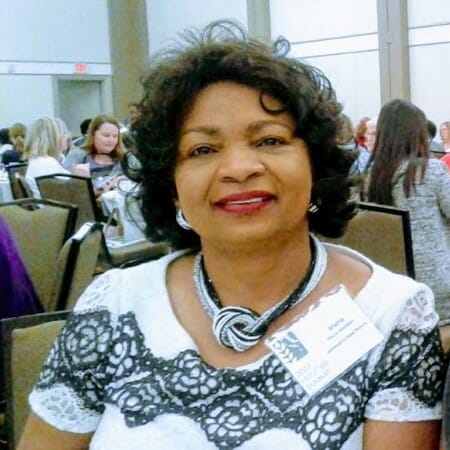
Through Jeremiah’s Food Pantry, Marla P. Halbert-Goodwin is offering accessible and affordable healthy foods to families in the St. Clair County, Illinois area./Courtesy Marla P. Halbert-Goodwin
Share one personal story with me from your volunteerism.
After serving the community for about six years, one client who was standing in line waiting to get some food solicited donations from other people standing in line. With those donations, that person bought a plaque and presented it to us, thanking us for what we are and who we are in the community. When that happened, I thought to myself, okay, now what else can I do for these people?
Why do you think it’s important for others to get involved?
It is so important for other people to get involved, not just giving money but giving of themselves. Volunteering gives you a joy that nothing else can do. It’s a joy that’s unspeakable, especially when you see the results. Service makes you complete.
How have you continued to volunteer throughout the COVID-19 pandemic?
When the pandemic hit, some of my volunteers got COVID and we shut down for two months. People were still coming to the food pantry needing food, so we reopened using a no-contact food distribution system. Our clients would stay in their cars and we would put food in their trunks. We’ve continued the no-contact system but also now give our clients the opportunity to come inside and do their personal shopping like before. Before COVID, we fed over 550 families each month. We are still catching up, and we’re currently feeding more than 400 each month.
What do you want people to learn from your story?
Just one person can make a difference. It doesn’t take an army. If you have a vision, seek that vision out and don’t stop. Don’t let anyone hinder you, make that goal happen.
In one word, what does volunteering mean to you?
Joy.
How can readers help?
We rely on monetary donations to support the individuals we serve at the food pantry. Please visit our Facebook page for more information about how you can help.
Formerly Unhoused Businessman Lends a Hand to Kids in His Hometown and Beyond
Meet Daily Point of Light Award honoree Willie Kirkland. Read his story and nominate an outstanding volunteer or family as a Daily Point of Light.
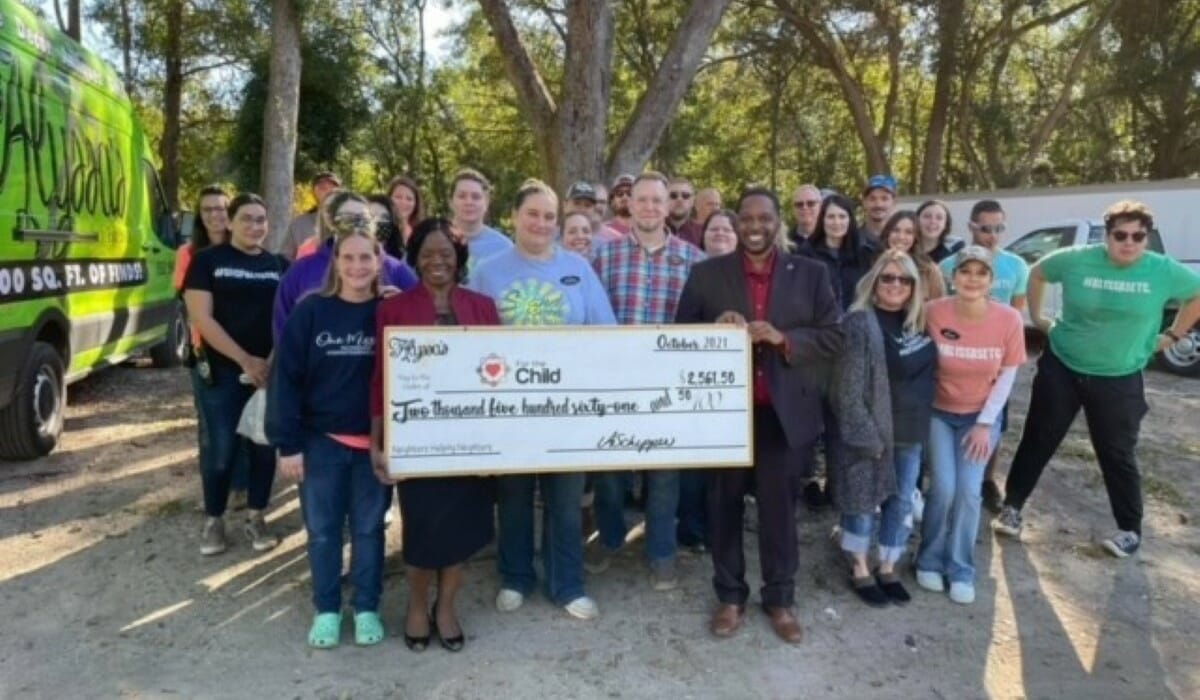
Willie Kirkland, Jr. has volunteered every day for the last 17 years. This 43-year-old Pensacola, Florida native and local dump truck company owner donates his time—and equipment, if needed—to help in his hometown community and beyond. He founded For the Child Inc. to help kids who have fallen through the cracks of other aid organizations in three counties, but he also helps provide food to unhoused individuals, sponsors events, serves on boards, shows up to assist after hurricanes, and helps with many other notable causes. And in his spare time, he brings people together with his new Facebook cooking show, Cooking With Mr. Willie C.
What inspires you to volunteer?
Being a business owner gives me flexibility to be able to get involved with volunteering When I was 16, my dad put me out, because I was a hard child at the time. It was one of the best things he ever did for me, because I went through a huge struggle in my life; I experienced homelessness. So, I know what it is not to have. I know that people sometimes fall short in life.
I was in that situation not because I didn’t have family that was there for me—I have always had that—but because it was the road I chose when I was younger. Some people don’t have that choice. Some people end up in situations because they lose their job. Some people have mental illness. There are so many different reasons why someone may be in need for something.
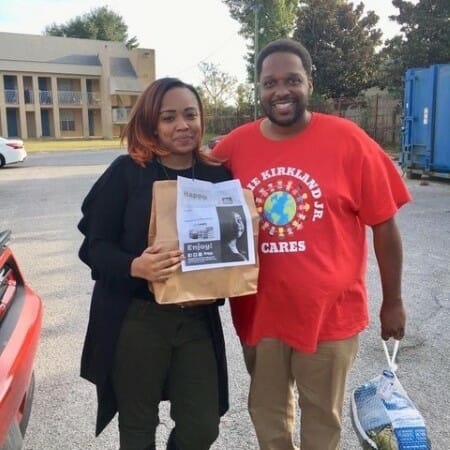
Willie and his wife, Priscilla, hand out turkeys and groceries during Thanksgiving./Courtesy Willie Kirkland, Jr.
Tell us about your volunteerism.
I founded For the Child Inc., because when I was serving as the president for the Northwest Florida Guardian Ad Litem Foundation, I had a chance to see the needs kids in the community have. We had so many calls about kids that we couldn’t see, because they weren’t a part of the program. They weren’t in the court system. I decided to design a program that would fit the needs of these kids. It’s similar to Ad Litem, but you don’t have to be a in the court system. One of the main goals is to keep them from becoming a part of it.Not only do we support those kids, but we support their parents, grandparents, or whoever their guardian is at the time as well. I believe if we invest in our children now—metal health, education, foundation—it will be way cheaper than waiting until later on down the line when they’re older and on the street or in the food line.
I also help Ms. Jacqueline Knight, Vice President of For the Child Inc., provide meals for seniors around the holidays each year. Sometimes their kids are incarcerated and they’re caring for the grandkids, or they have kids that are sick. I volunteer my dump trucks during hurricane and flood season and we go across state lines with water and supplies. Additionally, I volunteer on the Escambia County School Sales Tax Committee and the Escambia County Board of Adjustment. I work with many organizations around town.
What’s been the most rewarding part of your work?
My wife founded DCS Outreach Ministries about 17 years ago, before we were married. The most rewarding thing is having a wife that does the same thing as I do. That’s how I met her. I also appreciate having a community that loves me back, that sees and appreciates me. I love being in a community that really cares. I’ve worked hard to gain the trust of the people of this community, and they support everything that I set out to do. Also, it’s very rewarding when you can sit back and say you had a part of making a difference in someone’s life.
For the Child Inc.’s Vice President Jacqueline Knight and Willie receive a donation from volunteers and sponsors at Alyssa’s./Courtesy Willie Kirkland, Jr.
What have you learned through your experiences as a volunteer?
If you get out there to volunteer and you do it from the bottom of your heart, you learn to be more patient and kinder. You learn that you can be a light on difficult situations people are in. You can bring hope for tomorrow. You can be that person they need to lean on. And you can be used as a vessel each and every day if you allow yourself to be available and give freely.
Are there any future partnerships, programs or events that you are excited about?
Every day, there is a need for the kids. I just look forward to waking up every morning and being able to financially and physically provide everything that we have been providing for these kids. The need is greater each day.
What do you want people to learn from your story?
I made it; I’m a successful man. And I know that people are out there struggling or may need help when they’re down and out. I know that they can make it as well. And I know that when they make it, they’ll be a blessing to someone. They can share their story the same way I have. I want people to see themselves in me and be inspired to do even more. I want them to see my best. To see the best in me and be inspired to do their best.
High School Senior Works Towards Building a More Sustainable Future
Meet Daily Point of Light Award honoree Ishan Mahajan. Read his story and nominate an outstanding volunteer or family as a Daily Point of Light.
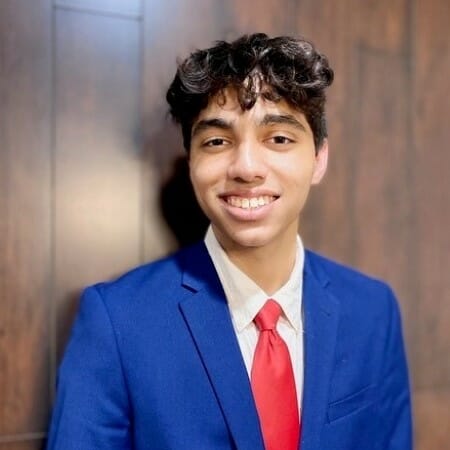
Like many others, Ishan Mahajan, 17, had his high school career derailed by COVID-19. He was nearing the end of his freshman year when the pandemic forced schools around the world to rethink the way they delivered lessons. Ishan, a self-described “people person,” was disappointed to miss the casual hellos and daily conversations with his friends and classmates.
Later, after emerging from lockdown, Ishan and a couple of his friends were inspired by their collective rediscovery of a love for the natural world. When paired with the desire to do something to soften the blow of pandemic layoffs that had hit their Atlanta, Georgia community, they realized they could not only protect their environment but directly help people at the same time.
That’s when they founded GreyToGreen. With the straightforward mission to create a sustainable environment in which future generations can thrive, Ishan’s pandemic project has expanded into a multi-faceted organization that has attracted many volunteers and partnerships. He credits being able to get back out in the community to talk to people with helping him identify specific problems to solve.
Ishan Mahajan, 17, co-founder of GreyToGreen./Courtey Ishan Mahajan
“We kept pushing, and through the right guidance, working together, being communicative and putting in the hard work and effort over time, we were able to achieve our goals and get to where we are today,” he says proudly.
To begin, they raised thousands of dollars to build a 10x20x8-foot greenhouse on their high school campus. After adopting an aquaponics system created by previous graduates, building up their ability to produce food seemed like a natural extension. Today, with other collaborators, Ishan estimates GreyToGreen has donated 100-200lbs of pesticide-free produce to food banks in Atlanta and hopes to increase that in the years to come.
Not only are passionate students able to lend a hand and learn about different growing techniques, but they can participate in the upkeep of their surrounding land. GreyToGreen, in partnership with Keep Forsyth Beautiful, has adopted a road near the high school and provides volunteers for a monthly trash pickup in order to keep the land nice for everyone who passes by it.
The group has also raised funds for two community seed libraries in Forsyth County whose funding was cut during the pandemic.
“We knew how important this was to the people in our community, so we stepped in to see how we could help,” Ishan states.
Later, after learning about the many indigenous communities and the alarming rate of deforestation in Guatemala, Ishan was moved to advance their work abroad. He teamed up with Air Guatemala to set up a nursery and has planted nearly 25,000 trees in this beautiful Central American country in just the past year.
“Deforestation is really bad in Guatemala. From 2000 to 2019, the number of trees in the country decreased almost 20%,” he states.
After spending years volunteering and shadowing doctors at various hospitals and nursing homes, Ishan sees health and sustainability as inextricably linked. Your health can be negatively affected, for example, by an environment with heavy pollution. He’s seen it firsthand while visiting family in New Delhi, India, an area struggling with air quality issues. He also recognizes doctors’ direct impact on people’s lives and wants to fill that kind of role in his community.
More than 50 volunteers help maintain GreyToGreen’s greenhouse where produce to be donated is grown./Courtesy Ishan Mahajan
“My passion for the environment stemmed from those initial [medical] volunteer experiences,” he says.
In his role as co-president, this environmentalist has gone from doing foundational work — creating a group website, doing odd-jobs, going door-to-door and more — to taking on a more managerial position. He now oversees events, fundraising, partnerships and day-to-day operations involving everything from repairs on the aquaponics system to organizing meetings.
So what’s next for Ishan and GreyToGreen? Ishan has set a goal of getting over 100,000 trees in the ground in Guatemala and Atlanta, and he’d like to establish another greenhouse near the nursery in the former. There are many fundraising events in the works in an effort to support these efforts.
“This is really important for me personally, because I want us to be able to offset all the carbon emissions that happen in Atlanta and help the deforestation issue that’s happening in Guatemala,” he says.
Ishan and his fellow volunteers have also been asked to present at one of the seed libraries they fund. Educating people about their greenhouse and inspiring volunteers to start similar initiatives or join GreyToGreen is just one step on the path to empowering people to make change. They’re also trying to build a movement around green technology, bringing new tech and research to their town to improve efficiency. One example Ishan cites is using drones to analyze crops that may have disease in order to spark better farming practices and more sustainable crops.
Next year, Ishan plans to set himself up on the pre-med track at college with hopes of becoming a surgeon or another type of doctor. He would also like to keep growing GreyToGreen at his university.
“If we really want to live in a world that people can enjoy, we have to work together. […] We need to all have a good relationship with nature. There’s other life besides humans. Volunteering broadens your perspective. It helps you realize that there’s more to what’s happening than just you and your experience.”
Meet Daily Point of Light Award honorees Ron Lebow and Deborah Elkis-Abuhoff. Read their story and nominate an outstanding volunteer or family as a Daily Point of Light.
Deborah Elkis-Abuhoff and Ronald Lebow know what it’s like to deal with tragedy and personal challenges. Deb, an art therapy professor at Hofstra University, lost her first husband to cancer. Circumstances left her and her two young daughters in financial despair. Ron, a former Marine and business owner, lost his brother from the same disease. Today, in a much stronger position, and as they recognize the generosity of others during difficult times in their lives, they aim to help others who are struggling by raising puppies to become service dogs and helping raise funds to cover the intensive training.
What inspires you to volunteer?
Deborah: In 1997, I was widowed and having a hard time financially. My husband had been on disability, and I had started my doctorate program. Our food money was going to the pharmacy, because I had to buy him morphine. Right after he died, a couple whose kid was in our daughters’ classes gave me enough money to pay three month’s rent to help us get back on our feet. I didn’t take it lightly, and I promised myself that when I got back up and running, I was going to pay it forward to the community.
I discovered the Guide Dog Foundation through my daughter’s friend and her mother who were raising dogs a few years earlier, but I put it on the back burner until I was able to give back.
Ron: I knew Deborah wanted to do this, and I was on board but wasn’t fully committed. As soon as we were handed our first dog, Grey, I was all-in.
Describe your volunteer role with the Guide Dog Foundation and America’s VetDogs.
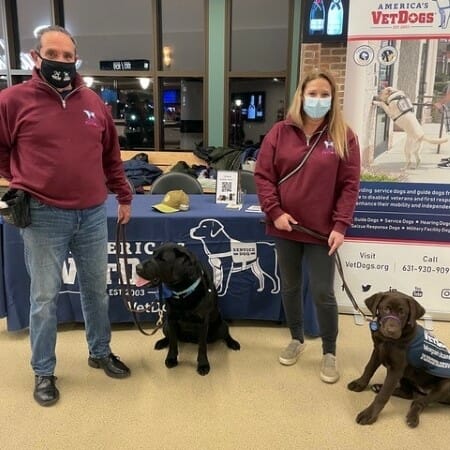
Deborah: Guide Dog Foundation for the Blind breeds and raises puppies to serve the visually impaired –your typical guide dogs. We take a puppy from eight weeks to the time they go in for formal training. Then, that dog is partnered with someone who’s visually impaired or blind. And America’s VetDog is the same kind of thing, but after training, they are partnered with a veteran or first responder with physical challenges or combat-related PTSD.
Ron: We started out being puppy-raisers, then I got involved as a transport driver bringing puppies, dogs and people to and from the airport. As members of the speaker’s bureau, we go out to public speaking events. We’ve taken Grey and Juno — the puppy we’re currently raising — out to New York Islanders hockey games to bring awareness to the organization and to try to raise some money. It takes about $58,000 to raise the dog from start to the time they give the leash to the person, and the organization doesn’t charge the recipient any money.
Ron and Deborah with Breeder Skye and Ambassador Grey in eastern Long Island./Courtesy Ron Lebow and Deborah Elkis Abuhoff
Do you have any pets the puppies have to get along with?
Deborah: Typically, we raise one at a time, but we have five right now. We have two 20-pound rescue dogs from Puerto Rico. They’re strictly pets. We have a trained guide dog, a handsome boy named Grey. Grey is a trained guide dog who had a career change and never went into service. We adopted him and he’s now an ambassador for both organizations. He’s a certified therapy dog, too, and he just started working — he gets paid in Kibble — with the hospital where my husband and Ron’s brother had their treatment.
We also have Skye, who is part of a breeder colony. And Juno is one of her puppies whom we’re raising for America’s VetDogs. Everybody does well, but the pet dogs are the ones who like to get in trouble!
What’s been the most rewarding part of your work?
Ron: People always ask how we can give a dog back after we’ve raised it. The answer: we see how it changes someone’s life. We get cute little puppies, and we raise them and take them to classes. It’s work, but It’s fun. When we’re out in public, and people will come up to us and say, “My mother has a dog from your organization, and it’s changed her life!” or, “It saved her life!” That’s why we do it, and that’s the reward that we get.
What have you learned through your experiences as a volunteer?
Deborah: When you see somebody in a wheelchair who might have a speech issue, you might not want to go over there, because you’ve not sure how to engage with them. All of that has gone away with the puppies. Now I have engaged where I might not have in the past and have met some amazing people as a result. I’ve learned so much. It has opened up my interactions with others.
Are there any future partnerships, programs, or events that you are excited about?
Deborah: We just walked a 5K to raise money. We have “Give-Back Thursdays” and two big fundraisers. One event coming up is a golf outing for America’s VetDogs. Another is Dogs on the Catwalk, where puppies walk the catwalk with models while wearing Anthony Rubio’s creations.
Why do you think it’s important for others to get involved?
Deborah: I was always taught to be kind to others and be supportive. I’ll hold the door for somebody. Or when someone is short a few cents at the grocery, I’ll pay it. Little things like that. When that couple came forward and did such a generous thing after my first husband died, it changed my life and helped my family survive. That was invaluable, and I can’t go through life without feeling that I have passed it forward. Everyone has their hurdles and difficulties. If we can support people and help their lives be better, we should.
Ron: My grandfather always told my father to pay it forward. My father, who just turned 100, has always been very involved with local charities, and he’s instilled that in me as well. It’s not always the about the less fortunate or those in need, but it’s about getting involved to the community.
What do you want people to learn from your story?
Ron: It doesn’t take a lot to make an impact or change someone’s life.
Deborah: We raise one puppy at a time that goes to one person. Then, it’s a domino effect. We hand someone the leash to a dog that will enhance their functioning and abilities, and that might help them get a job to be able to pay the bills or to their kids out. The thing that you think might be small could really have a big impact.
High School Senior Leads Movement for Health Equity
Meet Daily Point of Light Award honoree Dipti Venkatesh. Read her story and nominate an outstanding volunteer or family as a Daily Point of Light.
First-generation American and health-equity advocate Dipti Venkatesh is a senior in high school but is already marching forward with a singular determination: give underserved communities a hand. Her family’s experiences navigating healthcare in the US have led her to take action as she works towards her educational goals.
Despite COVID protocols derailing her high school experience at the end of freshman year, she is not only focused on her studies but on addressing disparities in healthcare and lowering barriers to resources. Her volunteer group, HealthEquityPlus (HEP), offers Youth Action projects supported by the Santa Clara Department of Health and local nonprofits also working in the field. This future physician and researcher is on a mission to eliminate bias and bring resources to those who need them.
What inspires you to volunteer?
The core message of our organization is helping people in communities like mine, who are not adequately served. There are a lot of gaps when you compare healthcare in communities comprised mainly of people of European descent to those like mine, mainly Asian. If you look at research, there are a lot of studies done with a lack of diversity in test subjects. So, there’s not a lot of specialized health care for people of Asian descent. I’ve listened to my parents talk about experiences with the healthcare system when they first came to America from India. And how their community was affected during 9/11 because of the prejudices that were put on them. There are many people with similar experiences.
Since I was in middle school, I’ve been volunteering with Breathe California’s anti-tobacco group that researches the impact of things like vaping. I also worked in the Veterans’ Affairs hospital. There’s a big disparity in terms of care for veterans as well. Seeing those issues exacerbated by the pandemic made me want to research the underlying causes.
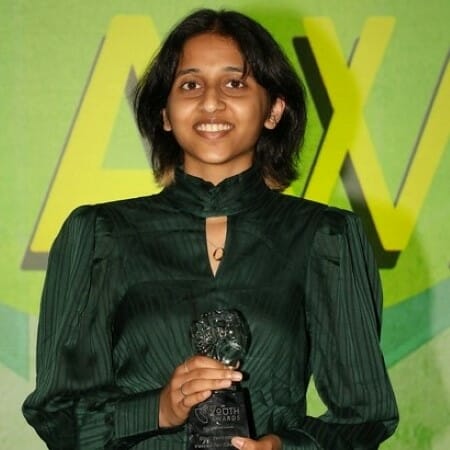
Dipti Venkatesh is the founder of HealthEquityPlus, an organization that works to address disparities in healthcare./Courtesy Dipti Venkatesh
Describe your volunteer role with HealthEquityPlus.
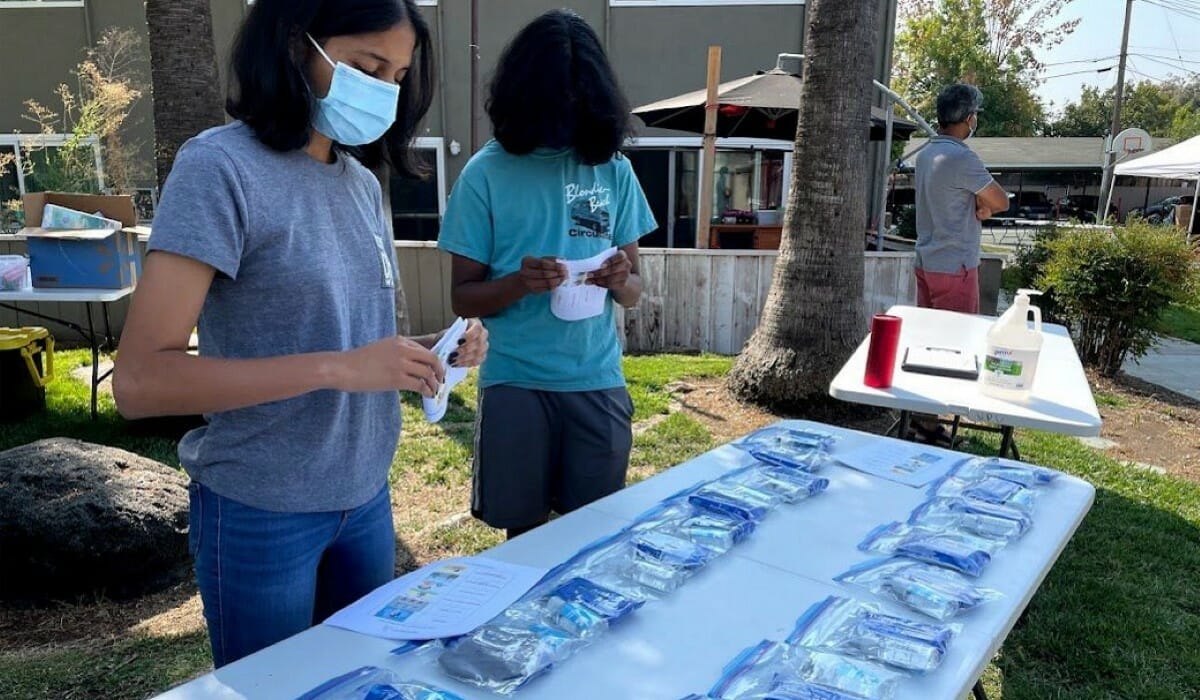
My personal role involves contacting and planning outreach with partner organizations, applying for grants, and organizing events like our Back to School COVID session. I also interview professionals in the field and do personal research for informative blogs.
When we started, COVID was the biggest issue, so we ran a drive for supplies: wet wipes, masks and hand sanitizer. Then, we handed out supply packages with info on how to avoid COVID when returning to school. We educated people about vaccines and spent time looking into vaccine equity.
Vaping and tobacco use are another big issue. We got a research grant and collected data on flavors tobacco shops offered, the average distance from a school and more. Then we used our findings to make a video that we presented to groups of people. In total, our volunteers have done 4000+ hours of volunteering!
What’s been the most rewarding part of your work?
It’s a small thing. When people tell me to my face that they love the blog, it feels great. But when a random person on the internet takes time out of their day to send a comment saying how much they enjoyed reading the work that you do and the work of all of your volunteers, that makes me feel amazing. We’re reaching a community that isn’t just my personal circle or my parents’ friends.
What have you learned through your experiences as a volunteer?
Sadly, I’ve learned about the way we have this gilded cover over everything. For instance, Medicaid expansion is happening, but not all of the states have adopted it. But there are also a lot of positive things I’ve learned. There are so many people interested in this issue who want to make a change! It’s also great to learn that there are professionals in this field who have been combatting this for decades, people who can help guide us.
Dipti and HealthEquityPlus’ Director of Education, Varun Puvvala, prepare to greet students at the event./Courtesy Dipti Venkatesh
Are there any future partnerships, programs or events that you are excited about?
We’re in the process of making an app. It includes a map of all the free clinics in the area, so if anybody ever needs access to healthcare quickly or if they don’t have the financial capacity for a traditional facility, they can just pull up our app and find a place to go. We’re trying to cover the California and Oregon areas. We’re also going to add some surveys, so we can collect our own data to use for other projects in the places people need our help.
Why do you think it’s important for others to get involved?
I grew up in a very tight-knit community. It’s important for me to give back to these people and change their lives for the better because of what they’ve already done for me. I think it’s the duty of every single person to give back to the people who raised them and give back to the communities that have impacted their lives.
What do you want people to learn from your story?
I want people to learn about this issue, for people to take a stand in their communities and figure out what’s going on there that they care about. It doesn’t have to be equity. Work as hard as you can to make an impact on the people around you, because that will reverberate. People will hear about what you’ve done, and they’ll take a part of it and go to their own communities to create change. Change starts from the bottom up. If kids grow up to give the values they’ve learned to the next generation, we will bring about lasting change. When like-minded people come together, history has always proven that change will happen. It’s inevitable.