Strength from Loss: Texas Mom Pays it Forward with Organization that Supports Families
Meet Daily Point of Light Award honoree Ashley Gooden-Stewart. Read her story, and nominate an outstanding volunteer or family as a Daily Point of Light.
Ashley Gooden-Stewart was a young mother in her mid-20s when she lost her firstborn, a three-and-a-half-month-old boy, in August 2015. As she moved through her grief, Ashley felt compelled to open a nonprofit, The Baby Stewart Foundation, to honor her son and spend her days filling the needs of others experiencing difficult times. She supports families with infants and toddlers by offering services like parenting and safety classes, support groups for parents who have lost a child and donations for those expecting or who need personal hygiene care. She has also gone out to assist with disaster relief across the south.
Today, Ashley runs the organization with the help of family and usually garners roughly 10 volunteers’ support for large events like hygiene drives. Sometimes, she brings her 6-year-old daughter and 4-year-old son to help. With a sibling on the way, they are already learning to be role models and care about others. What began amidst tragedy has become a center of hope for people when they need it most and a lasting way to honor Baby Stewart.
What inspired you to get started with this initiative?
I always knew I wanted to help people; I just didn’t know what the career looked like. I tried working for Child Protective Services, but it didn’t work for me. It felt like the needs were there but weren’t being addressed.I started volunteering at the Salvation Army and met someone who connected me with the man who would become my mentor. I went through his nonprofit certification program, but he told me that I needed to quit my job and volunteer for a nonprofit for at least a year before starting my own. But a week or two after my child passed, he told me he would help me, and the only way I could repay him was by not giving up and honoring my son.
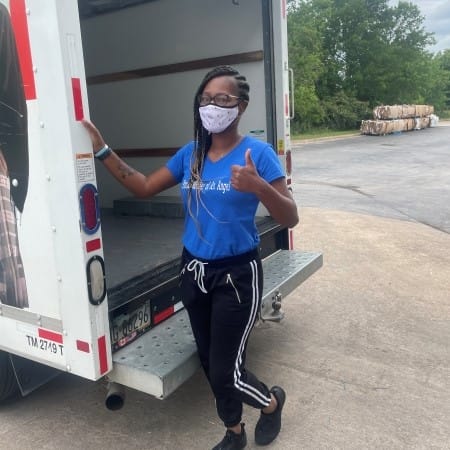
Ashley Gooden-Stewart, founder of The Baby Stewart Foundation, gets ready to load a U-Haul with Walmart donations./Courtesy Ashley Gooden-Stewart
Some people have to make the difficult decision to take $10 or $15 to put gas in their tank to get to work or to buy diapers or feminine hygiene products. No one should have to make those decisions. We came in to fill the void because there was an immediate need. We want to provide people with dignity.
Tell us about your volunteer role with The Baby Stewart.
My day-to-day activities include a lot of networking, partnering, going out into the community and talking to different commissioners or the mayor. I educate them about the baby store and the people in need. Our focus area is Galveston County, mainly in La Marque and Texas City, though we send supplies abroad, too. I manage volunteers, organize events—health fairs, school events, unhoused outreach, etc.—arrange donation pickups and cover administrative duties.
I don’t have a building or anything just yet. So, I’m in homes. I’m in the streets. I’m meeting people wherever they feel comfortable addressing their needs. I’m not like the normal nonprofit that will make you do a lot of paperwork or anything tedious. If you tell me that you need diapers and we have them, I’ll drop them off.
What are your long-term plans or goals for the organization?
I want to expand. I want to have a building and be fully operational, nine-to-five. I want people to be able to come in, tell me their need and get an assessment that’s followed-up with holistic care. I want to make sure that people can thrive in this community that lacks so much.
I want to have classes on parenting, hygiene, car seat safety and CPR. Maybe even an afterschool program where children can sit down, get a snack or a hot meal and do homework until their parents come home from work. The things that we often take for granted are what I want to be able to provide the community.
What’s been the most rewarding part of your work?
The most rewarding part is seeing the smiles on people’s faces and hearing their stories. Sometimes, they let me know how everything worked for them after I gave them a little help. They were able to go back to school or rebuild their confidence.
I never want people to be in the situations I was in. I faced homelessness and underemployment. I didn’t have all the necessities for my first child, and I had to reach out to organizations. I feel like the only way I can pay it forward is by helping others so they don’t have to struggle as hard.
What have you learned through your experiences as a volunteer?
The biggest things that I have learned are empathy and compassion. I see people from different walks of life trying to make it like every other person. They have a lot of pride, but they know they need help and to ask for that takes courage. It amazes me and keeps me going.
Why is it important for others to get involved with causes they care about?
I feel like we are in this world to be a blessing for others. My children sometimes come with me to events to help. I want to instill in them that it’s okay to help someone. It’s okay if you find yourself down on your luck. I want them to know that there are people out there who care. You don’t have to sit alone in your brokenness during your hardest time.
Any advice for people who want to start volunteering?
Make the commitment. Make me sure it’s a cause that you’re passionate about. When you’re volunteering, make sure you have gratitude, compassion and empathy. Make sure you’re coming from a place that’s non-judgmental, that you don’t bring any biases with you. I’m listening to people. I’m engaging with them. I’m not afraid of physical touch and making them feel seen and heard.
What do you want people to learn from your story?
Grief and loss are hard, and everyone’s loss is unique. But keep moving forward. Find something you’re passionate about. A lot of us throw ourselves into volunteering and philanthropy because it’s really good for our health. It motivates us to keep going, and we can connect with different people. I just want them to not let anything defeat them or detour them from what they’re meant to do.
Teen Recycles Batteries to Make the World a More Sustainable Place
Meet Daily Point of Light Award honoree Godasrita Dintakurti. Read her story, and nominate an outstanding volunteer or family as a Daily Point of Light.
With 17-year-old Godasrita Dintakurti’s leadership, Recycle My Battery champions a sustainable and eco-conscious future for people of all ages across her New Jersey community. Godasrita has been a part of the organization for more than four years and joined when she was only 11 years old. She’s raised awareness and educated more than 30,000 people in that time and has no plans to slow down.
Godasrita partners with different community leaders and businesses to place battery bins all over town and leads battery drives, informational stands, interviews, video recordings and promotion for Recycle My Battery. To date, the high school student has collected more than 12,000 used batteries to be recycled.
What inspires you to volunteer?
My permanent volunteering service for Recycle My Battery began around six or seven years ago during my middle school years. When I heard about the organization at school, I realized that not many people know about the steps of recycling batteries or the risks if you don’t do it properly. I wanted to help raise awareness to others. I thought that you can just throw batteries away in the trash, I really didn’t know there were so many dangers to that.
So, I guess that’s what really interested me and sparked me to join this organization. Throughout the years, the organization grew so much. It’s helped me feel like I’m doing something that’s making a change. That’s what’s kept me interested and the reason that I’m still doing this now.
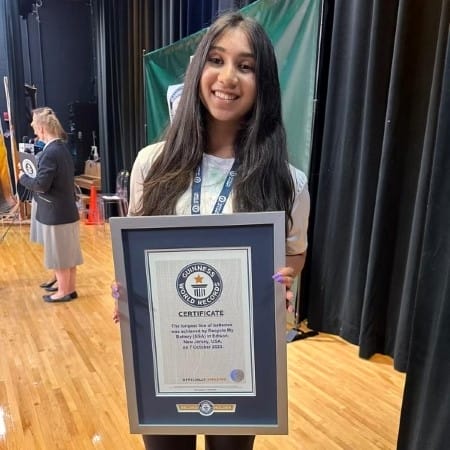
Godasrita Dintakurti helps Recycle My Battery break the Guinness World Record for longest line of batteries in October of 2023./Courtesy Godasrita Dintakurti
Tell us about your volunteer roles with Recycle My Battery.
I’m the chair of the PAC and outreach team. My responsibilities and roles include reaching out to as many places or institutions throughout the community as possible and ask them if we can place our recycled battery bins there so we can make recycling more accessible to those who can just drop them off where it’s convenient.
A lot of people still don’t really know where they can drop off batteries or know what they can do with them. They usually just keep them stored away in their houses. But we’ve seen these recyclable bins really help them have a place to put their batteries easily with our bags that are attached to the recycle bins. You basically just come by, drop them in a bag, seal it and then drop the batteries in a closed box that we’ll eventually ship to FedEx. They take the bags from there and do the actual recycling. Our job is to just collect them.
What have you learned through your experiences as a volunteer?
I’ve learned that it can be a little hard starting an organization, but after you start talking to more people and reaching out to other people to spread awareness, a lot of people are really going to accept it and support you. Instead of shutting down your idea, people really do support others who are trying to do good work.
With Recycle My Battery, we’ve done fairs at schools and educate people out in the community about recycling batteries and people get really interested in the topic. Once I tell others about our mission, it really starts to spread in the community.
Why is it important for others to get involved with causes they care about?
I think it’s important for them to actually take action on what they care about so they have something to motivate them. Once you find something that you’re passionate about, it’s hard to stop. And once you start doing it and get other people involved, you really get to see the changes you’re helping make. I think that just fuels you to do more good. It helps you be more productive and make bigger changes. So I think it’s really important for anyone to just find their passion or interest and take action on it.
What do you want people to learn from your story?
I think I just want to end by saying that you’re never too young to start something that you’re interested in. I feel like even if you’re maybe a kindergartener or senior in high school, you can still step forward and work to do good. If you want to see the change in the world, you have to be a part of it and it’s never too late to be a part of it.
Tell us about future partnerships, programs or events that you are excited about.
I will be receiving a silver Presidential Medal for volunteer service for the year 2023. Previously I’ve received the gold medal in 2022 and bronze in 2021 for my volunteer service.
One Woman’s Journey Through Loss Motivates Her to Guide Others in Their Time of Need
Meet Daily Point of Light Award honoree Patricia Maxin. Read her story, and nominate an outstanding volunteer or family as a Daily Point of Light.
Patricia Maxin has shown great strength and compassion throughout her life. A decade ago, when her husband became sick, she retired from 30 years in the public school system teaching kids unable to attend school due to medical or emotional issues. It was a job fraught with challenges but an experience she cherishes and a role that would help prepare her for the work that would follow.
In 2015, Patricia discovered the Cholangiocarcinoma Foundation after her husband’s death from the disease. She has given her time as a board member, a research advocate, a mentor and an annual conference and fundraiser volunteer. CholangioConnect, a program she founded in 2017, has matched more than 1,100 patients and caregivers with experienced mentors—often in less than 48 hours—and has been an overwhelming success.
Patricia volunteered to manage the program for six years, putting in 120 hours of work each month until June 2023 when a permanent staff member was hired for the role. She remains a dedicated mentor and research advocate for patients around the world, work she is not only uniquely qualified to do but that she loves.
What inspired you to volunteer for this initiative?
The foundation wasn’t even on my radar when my husband, Mike, was diagnosed. Things were more primitive back then. My husband wasn’t able to get a tumor sample, so we weren’t looking at trials.
My husband’s physician was instrumental in introducing me. He suggested that I go to the conference after Mike died. He thought I would enjoy the event and the people. When I decided to be a mentor, the idea for CholangioConnect had been hatched, but no one had run with it. I was asked to be the program manager until they hired someone.
Tell us about your volunteer role with the Cholangiocarcinoma Foundation.
I still work as a research advocate and a mentor, but I stopped managing the program this year. I’ve lived in Houston for the last 40+ years. Patients often travel here for trials and second opinions, and I have the honor of hosting and caring for them while they’re here, often in my home. I’ll walk them through situations and scenarios. I’ll give them resources. Two nights ago, an individual who lives in India called to ask about the normalcy of a situation, and I will research for her and find out. I’ll sit with someone at an appointment and provide transportation. I listen, I advocate, I research. We do dinners.
Not all mentees come to Houston; they are all around the world. I’m just there for them. I don’t have family here, so it frees up a lot of space. They can call anytime, and it’s one of the most flattering things when someone is comfortable enough to take me up on that.
I don’t do much volunteer training now, but for the last six years I did all of it. I served as a quarterback for people who were going to be mentors. For some, you actually would do it with them for a while. Others were ready from the get-go. A lot of people are worried they won’t have all the answers. No one has all the answers, including the doctors. That’s why the program is wonderful.
What’s been the most rewarding part of your work?
The friendships that have developed, even with those who have died, are forever. Tomorrow, I’m going to visit a family in Mexico that stayed with me and has become family. Their patient has passed away.
Thirty-five years ago, I was volunteering at MD Anderson. A chaplain told me that when someone lets you in their life in those final days, it really is a privilege. And it is. It’s a very private place. I think that’s why the friendships are so deep; it’s emotionally and spiritually rewarding to be with other people through their journey.
What have you learned through your experiences as a volunteer?
If there’s anything that is frustrating for me, it’s seeing what these people are going through. I lost my mom when I was little, so for me, the ones that really hurt are the ones where there are children. That’s probably my greatest gift, being able to relate to the children.
You just learn that life is short. You want to make today a better day for someone through a smile or a kind word. You realize what’s important and what’s not. What blows me away are the patients who are so giving that they’re willing to volunteer to help another patient. Even when they’re weeks or months away from dying. You see beauty in people.
What is the best way a friend or neighbor can support someone going through a medical journey like this?
Don’t say, “I know how you feel.” You don’t. And don’t ask what you can do to help. Just do it. Go to the grocery store, and call the person and say, “I’m standing in the juice aisle. Do you want the grape or orange?” If you ask what you can get them, they’re going to say, “Nothing.” But if you say, “I’m here. Which one do you want?” They are much more inclined to give you an answer.
Ninety-five percent of the people are not going to “call if they need anything,” because they feel like they’re imposing. Take action. Pick up their garbage can at the end of the day when you know they’re in treatment. Do things without them asking, because for many people, it’s hard to ask.
Why is it important for others to get involved with causes they care about?
It’s nice to believe that humans are here to help each other, whatever the cause. When you have had the opportunity to be on the receiving end of kindness by a perfect stranger, you realize that’s what we should all strive for.
What do you want people to learn from your story?
It’s an honor to be able to do things for people. My father used to always say you find time for what’s important. And I think doing things for others is very important.
Meet Daily Point of Light Award honoree Adam Katz. Read his story, and nominate an outstanding volunteer or family as a Daily Point of Light.
Adam Katz had been married for barely a month when his wife Doreen, his college sweetheart, lost her life to breast cancer. The couple were trying to decide between a comfortable life in upstate New York and a more vagabond life traveling the world. Doreen’s diagnosis came when Adam was in the Navy. Knowing that he couldn’t wait another moment, Adam proposed and married Doreen. Due to his high-level security clearance, he couldn’t tell anyone about the marriage as Doreen would have had to obtain clearance to marry Adam. Instead, Adam was forced to bottle up the pain and carry his secret for more than 12 years.
Adam turned the tragedy of his wife’s death into a vehicle for social good with the founding of the Doreen Katz Memorial Cancer Foundation. Currently active in 11 states, the Foundation assists children and families of cancer patients by covering the cost of after-school childcare, all school fees for specialty classes for grades K-12 and therapy for children to help them process the situation.
What inspires you to volunteer?
I’ve always been a helper. My wife Doreen was also active in volunteering. Throughout college, we were involved in the Special Olympics. When I was in the Navy, our ship would do volunteer activities in whichever port we were visiting. My job in the Navy was solitary. Volunteering allowed me a way to be around other people and meet people from all over the world. It felt good to do something positive worldwide.
After Doreen passed, I came to Denver. I was completely despondent, at the lowest point in my life. I volunteered at Brent’s Place, which is an amazing organization that provides a sterile home environment for families of kids with life-threatening diseases, such as kids who are receiving bone marrow transfusions. Brent’s Place ended up being a great source of information when I was starting my own foundation.
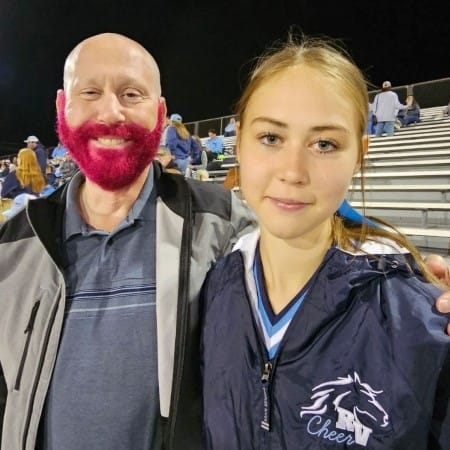
DKMCF Founder Adam Katz and Kaitlynn Bernard at the Ralston Valley vs. Lakewood High School football game, September 2023. Kaitlynn lost her mother to breast cancer in 2015. /Courtesy Adam Katz
In 2009, I wasn’t ready to start a charity yet. I happened to receive a flyer from the Cherry Creek School District saying that the school district hadn’t met their budget so they would have to start charging for Advanced Placement classes, music, art and other activities. It didn’t sit well with me knowing that people with cancer, who already had so many additional expenses, now couldn’t afford to give their kids the best well-rounded education possible. That got me thinking about how to provide financial assistance to cover school-related costs for kids of cancer patients
Tell us about your volunteer role with the Doreen Katz Memorial Cancer Foundation.
I am the founder of the Doreen Katz Memorial Cancer Foundation. One of my roles is to regularly check in with social workers at various hospitals throughout eleven states, to help identify families that we could help. I reach out to these families and find the ones that are open to receiving support. Not all are, which is difficult for me to hear, but I always respect their wishes.
I source therapists who can help counsel the children of cancer patients. We don’t have an in-house therapy team, but I’ve found some amazing therapists in all of the geographical areas we serve.
I also work with the schools that these kids go to. My goal is to completely relieve the family of the burden of having to pay for activities. The Foundation takes care of the payments.
Currently we are serving around 100 families, which is over 200 kids in 11 states. Since the program goes through K-12, we’re there for the kids all the way through their high school graduation whether the parent survives or not. During this time, the kids and their families become our family.
What inspired you to get started with this initiative?
A month before Doreen passed, we were discussing our lives together. I didn’t tell anyone in the Navy about the fact we wanted to marry because I had top security clearance and Doreen would have had to go through exhaustive clearance, which she couldn’t because she was in treatment for breast cancer. I married her clandestinely, on the spot, and she passed about a month later. It was extremely difficult that I couldn’t talk to anyone about getting married, or my loss. I had to bottle up the hurt.
I spoke about my experience for the first time at the Avon Walk for Breast Cancer, in front of 2,000 people in June 2009. At the closing ceremony I noticed that one man had started a foundation to support kids of cancer patients. Even though Doreen and I didn’t have kids, I got inspired to help.
When a parent has cancer, they are often too sick or exhausted to interact with their children. They sometimes don’t have the skills to talk about the situation with their kids and so the kids are left confused and without anyone to talk to about their fears and feelings. I decided to do something to help. I looked for organizations that offered financial support as well as therapy for the kids of cancer patients.
At the time, I was busy working on my master’s degree in Leadership and Organizational Studies from C.S.U., but I couldn’t shake the idea of wanting to help these kids. I kept checking whether anyone had started a foundation near me that I could join. I kept coming up empty. I decided that if I didn’t find such an organization by the time I graduated, I would start one. I registered the Doreen Katz Memorial Cancer Foundation on the anniversary of Doreen’s day of passing.
What are your long-term plans or goals for the organization?
We quickly saw that our program was working and saw the opportunity to help in every state. We started in Colorado but we are now in 11 states. My ultimate goal is a physical presence in all 50 states. We are gradually working our way across the country. Some states are more challenging to work in than others, but we are making headway in establishing a presence in all states.
What’s been the most rewarding part of your work?
I love getting to meet the families and being able to spend time with them during the good times and the bad. Thanksgiving can be challenging in a good way because I’ll often receive eight or 10 invitations to Thanksgiving dinner, and I can’t possibly say no to anyone. I spread myself thin among all of the families that invited me. I’ve attended sports practice with the kids, school plays and other events with the families. We are family.
The social workers in hospitals are always so grateful to give their patients this resource. In many cases, these social workers have had personal experience with being a child of cancer patients, and it’s often the reason they became social workers in the first place. Our family of social workers across the nation is growing.
What have you learned through your experiences as a volunteer?
Volunteering is incredibly rewarding. When you’re having a bad day, you can shift your focus to someone who’s going through something much worse than you. Being in service puts things into perspective and you don’t have the time to feel sorry for yourself.
Tell us about future partnerships, programs or events that you are excited about.
We’ve been slow to restart our fundraising events because I don’t feel it’s what our families need. Instead, we want to focus on fun events. Our biggest event before COVID was a laser tag tournament for the families, therapists and sponsors. We are hoping to resurrect this type of event in the near future.
We collaborate with various therapeutic partners such as ranches that offer equine therapy. One of our partners in Colorado is Hearts and Horses. There are other equine therapy facilities where the kids can ride horses, partly as therapy and partly just for fun so they can have as normal a life as possible. Equine therapy is a less intimidating type of therapy for the kids. It’s often easier for them to open up about their feelings outdoors with horses around, than sitting in a therapist’s office talking to a stranger.
Why is it important for others to get involved with causes they care about?
Volunteering brings people together. Everyone has a passion and when they volunteer in that area, they’re more excited about it. They inevitably find plenty of other people who share their passion. One person can do a lot, but joining together helps fill in skill and knowledge gaps. I appreciate all of our volunteers because they often come up with brilliant ideas and solutions. The more people get involved, the better equipped an organization can be to effectively provide services to the recipients.
Any advice for people who want to start volunteering?
The easiest thing is to Google anything you’re interested in. There are literally thousands of wonderful organizations out there you can get involved with.
Put your own spin on what you do. Every October I grow a beard and dye it pink for Breast Cancer Awareness Month. I showed up with my pink beard to an equine therapy program. That pink beard awakened something in a nonverbal autistic child who kept reaching out to try and touch it. This was an incredibly moving moment.
What do you want people to learn from your story?
Keeping things inside is not helpful. Holding on to your pain will eat at you. Find someone you can talk to. I held my pain inside for twelve and a half years. I believe that if I didn’t finally open up and talk about it, I wouldn’t be alive today and wouldn’t have had the inspiration or the opportunity to start the foundation. Pain can be transformed into something incredibly impactful.
Meet Daily Point of Light Award honoree Ava Pakravan. Read her story, and nominate an outstanding volunteer or family as a Daily Point of Light.
A passionate artist, Ava Pakravan understands the healing power of art. Now, the Honolulu teen is bringing the healing power of art to other young people across her hometown. As the Founder of the nonprofit Art2Wellness Inc., Ava works to ensure that children, particularly those living in shelters, staying in hospitals or facing other difficult circumstances, have access to art education and supplies. Read on to learn how Ava is making a difference in her community.
What inspires you to volunteer?
When I was much younger, my little brother had a seizure. My parents picked me up from school, and we rushed to the hospital. I remember being confused, not knowing what’s going on. When I saw my brother, I thought about how sad he looked and wondered how I could make my brother feel better. Since I’d been picked up from school all I had on me was my school backpack. There wasn’t much there that I could use to cheer him up, except for two crayons. I gave him the crayons and asked him to draw whatever his heart desired. He drew a sun and immediately started smiling. Even then I understood that art could heal, and this has been the inspiration for creating an organization that supports art as therapy.
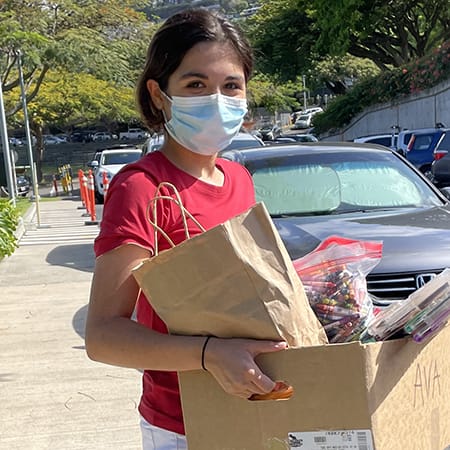
Ava gathers donations from an Art2Wellness art supply drive. /Courtesy Ava Pakravan
Tell us about your volunteer role with ART2Wellness.
I am the founder and president of Art2Wellness. I’ve been a passionate artist since age 4 and today, I help ensure that kids, particularly those who are in shelters or hospitals or face other hardships, have access to art education and art supplies as a way to encourage them to express themselves and process difficult emotions.
I lead art classes for kids. Some of these are YouTube tutorials and some are interactive sessions that are either in-person or via Zoom.
I have also been active politically. I participated in Girls State, which is a mock government program for high school girls. Then, I was selected as one of two girls from Hawaii to attend Girls Nation which is a federal-level mock government program. Being accepted to Girls Nation is one of the most meaningful honors I’ve ever gotten. Participating in Girls Nation gave me the opportunity to talk to other girls who had a similar mission. I developed an understanding of the nation’s mental health crisis as well as the skills to write a bill.
I authored a bill called “The Low-Income Planned Housing Act” which increases the possibility of developing more affordable housing while controlling skyrocketing real estate prices in Hawaii. The bill would increase taxes on luxury real estate transactions and the proceeds would go toward funding affordable housing to ease the state’s homelessness crisis. The bill is currently under review with the Hawaii state legislature for passage.
We have partnered with seven institutions, including homeless shelters, orphanages, schools, support groups and hospitals. We donate prepackaged art kits to these organizations. These kits contain a mix of used and new art supplies. For example, we collect crayons and either sharpen them or melt them down and reshape them. We also collect used canvases and paint them white, literally creating a “blank canvas” so every child recipient has usable supplies.
I applied for a Google Grant which contributes about $10,000 a month to advertise Art2Wellness on Google. This has helped us gain a lot of traction in the public eye. We currently have 150 volunteers in Hawaii, mostly in grades 4-12 and we have raised over $12,000 to fund our programs.
I work with therapists who teach our online classes. The therapist introduces a wellness value, such as bravery or resilience. Then, depending on the type of class, the child is encouraged to create art. Sometimes, the kids are guided toward expressing their feelings through art, and sometimes they are simply encouraged to create.
I am also running Art2Wellness’ 1,000 Card Project. This is the process of having kids create caring, hopeful cards that they will give to children in hospitals or shelters. We do this through the Art Pals program.
Art2Wellness has self-published a coloring book called “Wellness Coloring Book: For Youth, by Youth.” This book is available on Amazon and the proceeds help fund Art2Wellness.
What are your long-term goals for Art2Wellness?
I hope to take Art2Wellness with me to the state where I will attend college. Mental health and homelessness is a nationwide problem. I also hope to keep Art2Wellness going strong in Hawaii by having younger underclassmen run the local chapter. My ultimate goal is to expand internationally. Right now, we are partnering with an orphanage in Bhutan. Even though it’s billed as the happiest country in the world, there are still kids in Bhutan that are suffering.
What’s been the most rewarding part of your work?
The best part is sitting with kids making art at a hospital or shelter. It is heartwarming when they call me Aunty Ava and say they love me. It really reaffirms my passion to support these kids using something I’m so passionate about.
What have you learned through your experiences as a volunteer?
One of the biggest takeaways from running a nonprofit is the importance of being self-sustainable. We can’t always rely on grants or donations. I got a lot of inspiration from Professor Steve Blank, one of the authors of the Mission Model Canvas. He outlined ways to run a nonprofit without a constant influx of money. I learned how to keep our head above water without relying on outside sources. One of those ways is through the proceeds of my coloring book.
Ava presents Art2Wellness and its student-made coloring book initiative to Punahou School’s Art of Entrepreneurship class. /Courtesy Mark Loughridge
Tell us about future partnerships, programs or events that you are excited about.
We are doing a holiday art kit donation for our partners. We are also busy on the 1,000 Card Project. Kids create these cards in an art class, and then give them to kids who are in shelters or hospitals. Any kids who want to participate are welcome!
Why is it important for others to get involved with causes they care about?
I really believe that as citizens of the United States of America, it’s our civic duty to get involved in the places that have supported us. It’s important to step up and embrace civic duty so we all do a part in bettering people’s lives. What we do is only a slice of the pie in improving Hawaii so the more people who get involved, the better, and not just with Art2Wellness but other initiatives. With lots of hands, we can take steps to create a better society for everyone.
Any advice for people who want to start volunteering?
Do lots of research and inform yourself about a problem before you start to develop a project or solution. People often drown in wanting to help because “help” is so general and it’s easy to become overwhelmed. Narrow down what you want to see improved. Identify who you want to help. If you empathize with the problem and the audience your efforts will be more impactful.
What do you want people to learn from your story?
Art is not just something people do for fun. Yes, it’s a hobby, but the meaning behind art is a form of communication and therapy. It helps kids articulate emotions and recover from hardship. Art is powerful in healing.
A Pillar of Compassion and Support for Military Families and Beyond
Meet Daily Point of Light Award honoree Sharon Mineo. Read her story, and nominate an outstanding volunteer or family as a Daily Point of Light.
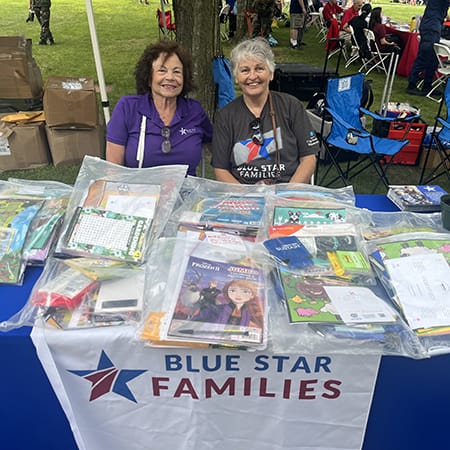
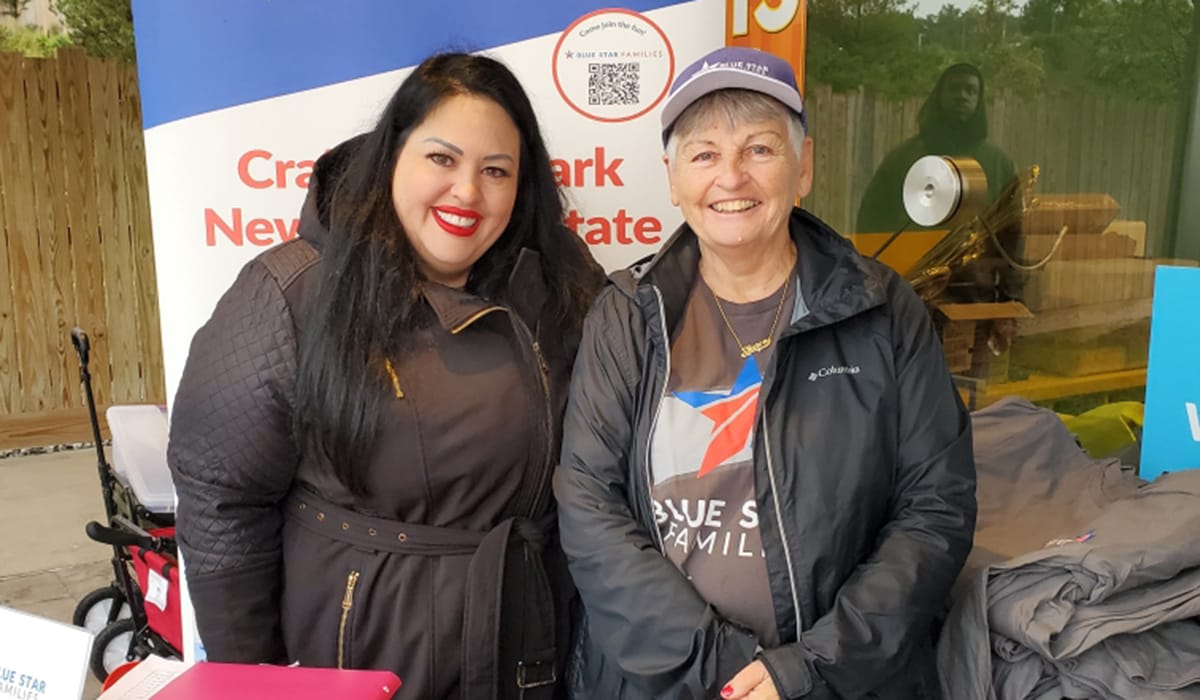
For the past 15 years, Sharon Mineo’s dedication as an AmeriCorps Seniors RSVP volunteer has been nothing short of extraordinary. Her extensive volunteer work with Blue Star Families, the Coast Guard Kids Club and various other organizations highlights her commitment to serving military families, children and her community. Sharon’s personal connection to the military, as mother and grandmother to veterans and active-duty service members, fuels her passion for addressing the unique challenges they face, especially food insecurity.
Sharon’s role at Blue Star Families is multifaceted. As a food pantry assistant with the Nourish the Service Food Closet, she plays a crucial role in addressing the issue of food insecurity among military families. Her efforts extend to leading collection drives to ensure the pantry is well-stocked. Furthermore, as a special events volunteer, Sharon helps these families feel more connected to their community, providing a sense of belonging and access to essential resources.
With children who were United States service members, Sharon’s passion for the military shows through her service work, particularly with Blue Star Families.
During the holidays, Sharon’s thoughtfulness shines through as she creates special packages for military children, recognizing and appreciating their sacrifices. Her involvement with the Coast Guard Kids Club further demonstrates her commitment to providing a supportive environment for children in military families. By organizing fun and safe activities at Fort Wadsworth, she ensures these children have joyful experiences while their parents engage in sponsored events.
Sharon’s service extends beyond military support. At Richmond University Medical Center (RUMC), she assists the auxiliary in raising funds for hospital equipment and participates in major events like golf outings and charity walks. Her dedication to HAVE A HEART Foundation, a nonprofit aiding those with heart conditions, is evident in her involvement in their major fundraisers, such as the spring walk and breakfast with Santa.
Finally, Sharon’s long-term involvement with the Grandmothers Club, spanning more than 30 years, showcases her enduring commitment to children’s charities. Despite the national organization disbanding, Sharon’s local club remains active, continuing to raise funds for children.
Tell us about your volunteer role.
Which one? I really enjoy working at Fort Wadsworth. I like working with all the military, spouses and their children. That’s probably my biggest passion: the military.
I do work with the Grandmothers Club and have for 30 years. I have lots of friends there. We have a monthly meeting, and I’ve always enjoyed it. We raise money for children’s charity.
Then, there’s the hospital. Again, we raise money for items needed at the hospital. For instance, a warming blanket in pediatrics, new bassinets, those types of things. We host fundraisers there.
Why is this organization and issue so important to you?
Regarding Fort Wadsworth, I always wanted to work with the military. My daughter served, my two sons served, my nephew served. They’ve done their part, and I always wanted to do my part. I’m part of the Senior Corps, and when the opportunity came available and they were asking for people, I jumped at it. It’s gotten to be a really important part of my life.
For the Grandmothers Club, our national charity focused on childhood cancer called Cure Childhood Cancer Association. Every childhood disease needs something. Now, we sponsor local charities, for instance nonprofits for children with autism or cerebral palsy.
What’s been the most rewarding part of your work?
It’s all rewarding. As far as working with Cure Childhood Cancer Association, the new treatments that they’re getting are remarkable. We were watching children who didn’t survive, seeing what they went through. Now, they have new individualized treatments. It has made an impact.
Then, I see the spouses and children of the Coast Guards, and what we’ve done has really made a difference for them. Their kids are happy, they’re happy. We can help them out a little.
Why is it important for people to get involved with the causes they care about?
I know a lot of people care about a lot of different causes and don’t necessarily do anything. They might donate money. But with volunteering, you’re more directly involved. You learn more about the situations and what’s actually going on. What I’ve gotten out of it myself is a lot more than I’ve ever given. You meet people that you would never have expected to meet before. That’s so rewarding.
Sharon Mineo is an enthusiastic volunteer who champions multiple cause areas in her Staten Island community.
Any advice for people who want to start volunteering?
Just do it! There are so many opportunities. It’s not just food pantries or volunteering at the hospital. Especially here in Staten Island, there are so many different opportunities – Meals on Wheels, Snug Harbor Garden. There are so many ways to get involved.
Find something close to you, something you like. It’s a shame more people don’t do it. It doesn’t really take more than a couple of hours. You don’t have to do five days a week. You could put in an hour a week and still feel fulfilled.
What do you want people to learn from your story?
I’ve been doing this for many, many years, and as I said, I feel I’ve gotten much more out of it than I’ve ever put in. My time has been rewarded by getting to know people and seeing change happen.
Mother Illuminates Lives for Young Adults with Cancer Through Wish-granting Nonprofit
Meet Daily Point of Light Award honoree Kelli Boehle. Read her story, and nominate an outstanding volunteer or family as a Daily Point of Light.
As the founder and president of Nik’s Wish, Kelli Boehle’s commitment to honoring her son Nikolas’s memory has transformed into a powerful mission of delivering hope, happiness and cherished moments to those in their darkest times.
The foundation of Nik’s Wish is deeply rooted in a personal story of love and loss but has created a profound impact for young adults with cancer and their families.
Kelli’s son, Nikolas, battled cancer. His journey inspired the inception of the organization. In his memory, Kelli channeled her grief into a force for good, creating a legacy that extends Nikolas’s spirit of courage and resilience. This journey began as a heartfelt mission to fulfill the unmet wishes of young adults with cancer, acknowledging a demographic often overlooked in wish-granting programs.
“Nik was diagnosed with synovial sarcoma when he was 17 years old,” Kelli shared. “He was in high school. We finally found out on Christmas Day that the cancer wrapped around his spine was a cancerous tumor. You can imagine the devastation and tornado of terrible news at that time. But the one thing that Nik got was a wish from the Make a Wish Foundation. He happened to meet another kid, Nate, when he was going through clinical trials at the National Institutes of Health. He was telling Nate all about his wish and how excited he was about it, and Nate explained that he had missed Make a Wish by one month – he was diagnosed one month after his 18th birthday.”
Kelli Boehle and her son Nikolas.
After that conversation, Nik ran through the door with a passion to do something about Nate’s missed wish. Kelli explained that all of their efforts were focused on saving Nik’s life, but Nik was persistent.
“But it was very heavy on his heart; it was really important to him,” Kelli recalled.
Eight months later, while in Arizona for a procedure, Nik played an inspiring Dave Matthews song for his mother and explained how important it was for young adults with cancer to have something positive to look forward to. He asked Kelli again if she would help kids who missed out on wishes due to their age, to get the opportunity to have a wish granted. She agreed to try.
“Little did I know, the next morning during his 20-minute procedure, the tumor would invade a major blood vessel and he would die in the hands of the doctors,” Kelli shared. “But that little seed that he planted in my head kept nagging at me. Finally, about three months later, I finally decided I needed to find out whether the idea had any merit.”
Kelli called Nik’s oncologist and explained Nik’s idea. The doctor confirmed that Nik had been spot-on about the lack of programs for young adults with cancer, once they turn 18. Understanding the unique challenges faced by these young adults, Nik’s Wish emerged as a sanctuary of hope and joy, offering not just wishes, but a symbol of support and understanding to those navigating the complexities of cancer during a pivotal stage of their lives. The very first person to have his wish granted was Nate, the young man who had sparked Nik’s passion for the idea.
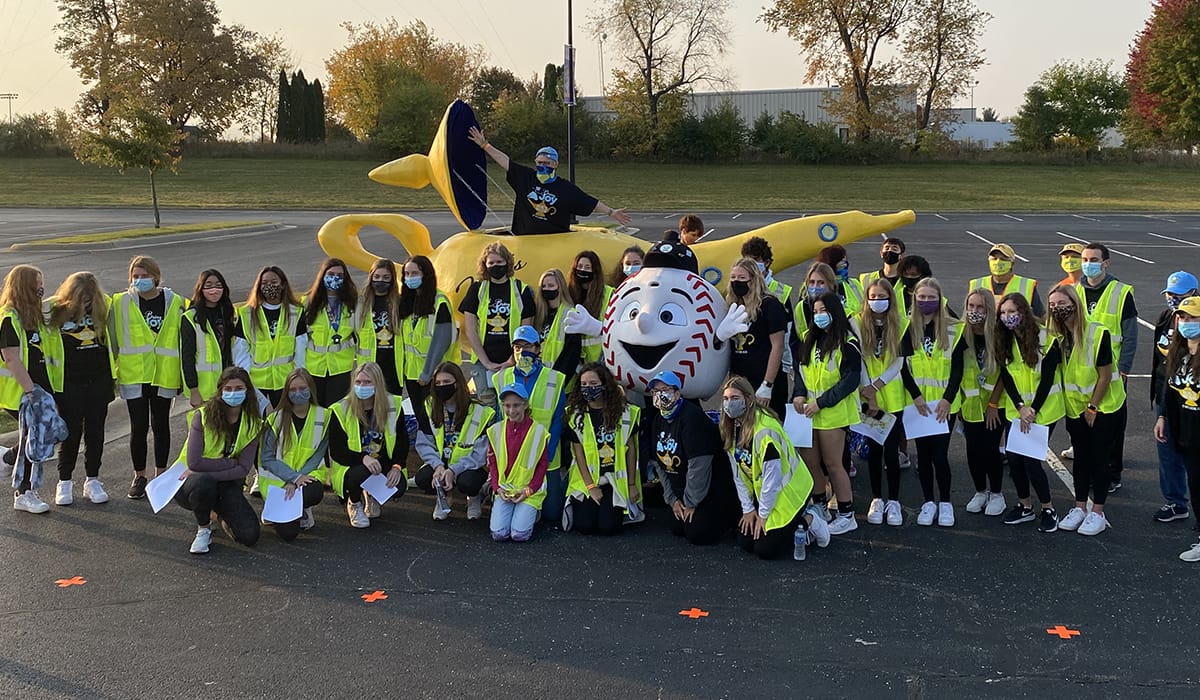
The growth of Nik’s Wish, from an idea borne of personal loss to a nationwide beacon of hope, illustrates the transformative power of human empathy and the impact of turning a personal tragedy into a pathway for bringing light to others in their darkest moments. To date, the organization has granted more than 318 wishes in 38 states. When wishes are delivered, the team brings a 16-foot wish lamp that expels smoke and lights up – something that the organization built.
The Nik’s Wish team works tirelessly to grant a variety of wishes to young adults battling cancer.
Kelli says of the wishes, “A lot of them are trips. Some are really souped-up gaming systems – which are sometimes a means of escape and often connection to other people. We’ve had some puppy wishes, which are always fun. And then there have been some musical instrument wishes. Sometimes concerts or sporting events. But mostly, they’re travel related. What I hear a lot from these kids is that they want to take their parents somewhere to say thank you – parents who have quit their jobs and devoted all their time and resources into treatment. That’s just incredible, that these kids are then able to give something back to their parents.”
Kelli’s role in Nik’s Wish goes beyond traditional leadership. Her responsibilities encompass a wide range of activities crucial to the organization’s success, from running events and coordinating volunteers to overseeing marketing, hospital outreach and the administration of donations. Her involvement in public relations and speaking engagements further amplifies the reach and impact of Nik’s Wish.
“We want to be around to deliver joy as long as there is cancer to fight,” Kelli expressed. “We’re really working on trying to become more sustainable and put pieces in place so that Nik’s Wish can continue. Sadly, we’re just scratching the surface of young adults who fit into this 18- to 24-year-old category. So, we’re ramping up and creating a sustainability plan. I’d love to close up shop, but sadly I don’t see that in our future, so we have to continue on.”
Kelli’s innovative approaches not only harness the joy of fulfilled wishes, but also captivate and uplift the spirits of those receiving them. Beyond the enchanting wish lamp, she has spearheaded a variety of unique initiatives to personalize each wish experience. Understanding that joy can be found in the smallest details, Kelli and her team tailor each wish to reflect the individual’s personality and dreams, whether it’s a special trip, meeting a personal hero or receiving a cherished item. These experiences are crafted not just to bring a momentary smile, but to create lasting memories that infuse strength and happiness in challenging times.
Kelli’s approach goes beyond the material aspects of wish-granting; she ensures that each interaction is filled with warmth and personal connection, making every wish recipient feel valued and understood. This personal touch in every wish granted is a hallmark of Nik’s Wish, setting it apart as an organization that truly understands and cherishes the essence of spreading joy.
Perhaps the most heartfelt aspect of Kelli’s work is her role as a wish maker. Having personally delivered more than 100 wishes, Kelli has been at the forefront, witnessing the immediate joy and impact these wishes have on young adults with cancer. Her direct involvement underscores her deep personal commitment to the cause.
“When I’m able to deliver that news to someone and they’re so excited their wish is granted – the wish reveal – I just love that moment,” Kelli said of the rewards of running the nonprofit. “Something else has happened that I didn’t know would. When families lose their loved ones, a lot of times the parents come back and band together. Creating that community and that bond, that friendship and understanding we have for each other, the support we create beyond the wish, that’s really rewarding too.”
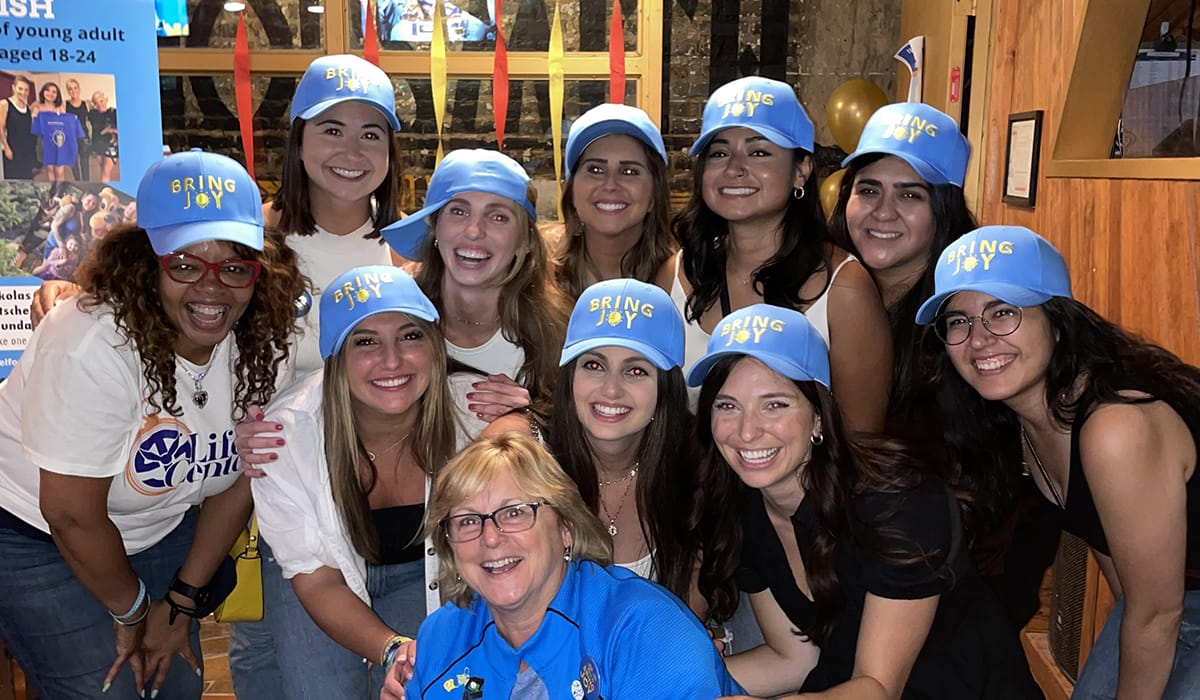
Kelli and the Nik’s Wish team help grant wishes to young adults aged 18-24 diagnosed with cancer.
The success of Nik’s Wish is also attributed to the dedicated team of volunteers and the recent addition of a development director. Kelli’s collaboration with the volunteer CFO, Lydia Bainter, ensures that the organization remains financially stable and capable of continuing its mission.
“Volunteering is the most rewarding thing that you can do,” Kelli said. “When you care about something and you’re passionate about it, and you’re able to volunteer your time and talents and truly make a difference, there’s nothing in the world more rewarding than that. So do it, even if it’s small. You’ll find your niche. There are always great friends to be found in volunteering too. Just take that first step.”
Kelli, through her leadership and compassion in Nik’s Wish, has created a legacy that transcends the personal tragedy of losing a child to cancer. Her tireless dedication to bringing moments of happiness and respite to young adults facing cancer is a poignant reminder of the power of human kindness and the impact one individual can have.
Meet Daily Point of Light Award honoree Connie Rich. Read her story, and nominate an outstanding volunteer or family as a Daily Point of Light.
The nonprofit world is a familiar place for Connie Rich, a retired B2B sales and fundraising professional. At one point, Connie even ran her own company assisting women getting back into the workforce after career breaks. Today, her volunteer work extends to her church, community social justice programs and Heart of Ida.
The last of these was started by Connie’s two daughters and is dedicated to helping seniors remain independent as they age, the familial connection making helping out an easy decision. During the pandemic, increased needs of seniors led to more funding and expansion with the opportunity to purchase and distribute tablets that helped people stay connected during isolation. Among other initiatives, the organization provides education on how to use technology, engaging teenagers on summer break to impart their often-extensive knowledge on the topic.
Using her skills from previous volunteer work, Connie spends nearly 50 hours a month building connections with seniors by creating personalized homemade cards with heartfelt messages to send through the mail. Whether it’s a happy birthday, a get –well soon or a simple hello, Connie’s cards brighten the day of all recipients. In the age of email and iPhones, physical mail feels like a gift of friendship. From the newest intern to the most veteran of staff, Connie’s kindness and infectious energy also brings a smile to the face of everyone in the office.
What inspires you to volunteer?
I’ve pretty much always volunteered. When I retired, I began doing more because I like getting involved. And there’s plenty of organizations and people out there who need help. It’s been about three years that I’ve been doing this for Heart of Ida. I started at my church. Once a month after our service, about 10 of us would make handmade cards for the people in the church who were hospitalized or in nursing homes or couldn’t make it to the services. That’s where I was taught, and I just love doing it. I just carried it over to Heart of Ida. I try to do five a day, and I’m there three days a week. It ends up being approximately 60 to 70 cards a month.
Tell us about your volunteer role with Heart of Ida.
I make handmade cards with handwritten notes that go out to all types of clients. A big part of their program for seniors is to keep them connected, because so many of them live on their own and are lonely. A lot of them are isolated; they don’t have any family nearby, or their relatives have passed away. Sometimes it just gets harder as people are older to be able to get out and be social. And so, I send these cards. Each one is completely customized. No two are the same.
Older generations especially like getting mail. They’re used to it, and a lot of them don’t text or email much. So, a handwritten card means a lot to them. A lot of younger people don’t even use cursive writing anymore. I also write thank-you letters to the donors and other people who help out with the organization.
Are there other designated card-writers?
I’m the only one. Occasionally, I’ll ask a volunteer to do things like put stamps on envelopes or something. But really, I do everything else. We have other a few other volunteers along with our staff. We also have interns from Long Beach or Cal State Long Beach. I once asked them to put stamps and return addresses on the envelopes for me, and they put them on the wrong sides. They put the stamp on the left side and the return address on the right side. We got a kick out of that, but the post office did take the cards. We had to teach the interns how to address a letter.
What’s been the most rewarding part of your work?
It’s really rewarding when you get phone calls about how they’re saving the card on their shelf so they can look at it. I love being creative with them, designing and then writing in the message, but hearing back that it really means something is what makes it worthwhile.
What have you learned through your experiences as a volunteer?
I’ve realized how much helping people stay connected means to them. It’s so important. I’ve seen the different ways that Heart of Ida helps older people when they come into the office and tell their stories. You see how much more we can do for more people.
Tell us about future partnerships, programs or events that you are excited about.
I’m really busy right now sending cards to different partners, donors and clients just to make sure they know we’re thinking about them over the holidays. When we were able to give people the tablets, I would send a card later saying that we hope they’re enjoying their new device and to let us know if they need help. I include that on every card for clients to remind them that we’re always here for them.
Why is it important for others to get involved with causes they care about?
I think it helps the person who’s doing the help. I’ve always gotten as much out of it as I’ve given. When you help somebody else, especially if you’re even having bad times, it can really lift you up.
What do you want people to learn from your story?
They, too, can find something that they enjoy doing and give it to the world. It makes it better for everybody in your community, the organization and yourself.
Young Man’s Dedication to Volunteering Honors Korean War Veterans in Pittsburgh
Meet Daily Point of Light Award honoree Hanseung Oh. Read his story, and nominate an outstanding volunteer or family as a Daily Point of Light.
Hanseung Oh’s remarkable journey of volunteerism embodies the essence of community building and honoring history, with personal passion at the center. Over the past five years, Hanseung has devoted his time and skills to supporting individuals with intellectual disabilities, Korean immigrants and Korean War veterans in Pennsylvania, showcasing his multifaceted approach to service and his deep commitment to his community.
As an immigrant himself, Hanseung’s work with the Korean American Association of Greater Pittsburgh is a reflection of his commitment to promoting civic engagement and sharing Korean culture and traditions within the community. Hanseung’s dedication to Korean War veterans is particularly noteworthy. He leads the Korean War Veterans Memorial Maintenance Team, gathering students and parents to clean and maintain the memorial every Saturday morning. This consistent effort ensures that the sacrifices of veterans are remembered and honored. His work has increased visitor engagement at the memorial, fostering a deeper appreciation and understanding of the veterans’ bravery.
Hanseung’s commitment to honoring Korean War veterans has even extended into the literary realm with the publication of a book documenting the history of the Korean War Veterans Association Chapter 74. This project involved interviewing veterans, visiting their homes and ultimately distributing the book to 48 school districts across Western Pennsylvania. The book serves as an educational tool for more than 50,000 students, offering insights into the Korean War and the lives of local veterans. This initiative, which commemorates the “Forgotten War,” is a testament to Hanseung’s passion for preserving history and educating future generations.
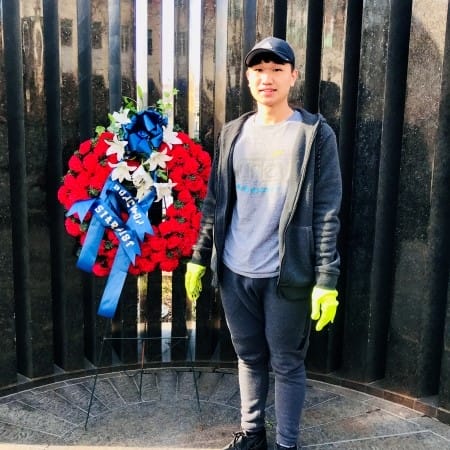
Hanseung presents a wreath at the Korean War Veterans Memorial, a symbol of his dedication to honoring the sacrifices of those who served./Courtesy Hanseung Oh
Find out more about what inspires Hanseung to carry on his journey of civic engagement for the benefit of many.
Tell us about your volunteer role.
I started off just cleaning the Korean War Memorial in downtown Pittsburgh. But later on, as I got more involved and worked with them for a couple of years, I was approached to become the president of the maintenance team. Through that, I started to communicate with other members who were helping clean up the memorial. I was responsible for sending out important dates and events they should consider attending, making schedules for everyone and communicating their dates for cleaning up the memorial. And if something came up that kept them from volunteering, I’d go down and clean up the memorial in their place.
Why is this issue so important to you?
As a Korean American, I wanted a deeper sense in my community. My parents were born in Korea and so was I, but I moved here when I was fairly young, so I felt a lack of connection with my Korean culture. Being able to learn more about the history of my people, meeting Korean War veterans. It was honestly such a great way for me to connect with my Korean side and get to learn more about the history of the Korean War and Korea in general.
What are your long-term plans or goals for the organization?
Well, I mainly hope to spread awareness about the Korean War and Korean War veterans. I wrote a book to help share what our local Korean War veterans have done. Most of the time, the Korean War is known as or often regarded as the “forgotten war.” I wrote a book to document the journey of Korean War veterans, their efforts and everything they’ve done to make themselves known and, for the most part, set South Korea free.
I’ve sent out books to 48 school districts in the local area in hopes of reaching more students and helping to educate them. It came to my attention that schools may be skimming past some of the history and contents of the Korean War. The book is called “The Chronicles of the Korean War Veterans Association of Western Pennsylvania,” and is distributed locally.
What’s been the most rewarding part of your work?
Definitely seeing all the veterans smiling and being so happy. I’ve noticed that, for being up there in age, they’re always so cheerful. Whenever they come down to the Korean War Memorial, seeing all the efforts and the clean-up that we’ve done, and then when they receive the book, seeing them so happy, seeing them reminisce about the past, is always very heartwarming.
Why is it important for people to get involved with the causes they care about?
I think even the smallest things make such a huge impact. When I first started off cleaning the Korean War Memorial, I didn’t think it was doing much because I didn’t have that connection yet. But then after seeing how much joy it brought to the Korean War veterans, I realized that even these small, sometimes relatively easy things you can do, may not seem like a lot to you, but to someone else it could make their day.
Any advice for people who want to start volunteering?
I think you just have to put yourself out there and go for things that interest you or that you think could benefit others. When I first started off, I wasn’t sure about my impact. I didn’t know how long I’d continue with that volunteer work. But putting myself out there gave me the great opportunity to befriend these Korean War veterans, make an impact and try to educate more people. I’ve made many great memories just from the things I did. So, putting yourself out there and reaching out is always the best first step.
What do you want people to learn from your story?
Anything is possible. I never thought I’d be a part of something so big, making an impact on my community or meeting so many veterans or even writing a book. This wasn’t something I ever had on my list of things to accomplish. But anything is possible if you put your mind to it and work hard at it. Be optimistic that things will work out.
California Teen Brings Financial Literacy to Gen Z
Meet Daily Point of Light Award honoree Aadi Gujral. Read his story, and nominate an outstanding volunteer or family as a Daily Point of Light.
Aadi Gujral’s Sikh culture means that being in service has always been a part of his life. When he realized how many of his peers lacked financial literacy, the California teen decided to launch the Foundation for Financial Literacy, or FinLitFun, a nonprofit dedicated to bringing financial literacy to young people. Through engaging programming such as online games, FinLitFun has taught foundational financial concepts to more than 3,000 users worldwide and raised more than $25,000.
What inspires you to volunteer?
My younger brother’s impulsive Pokémon Go and TikTok Made Me Buy It shopping sprees, as well as my own impulse shopping, awakened me to the destructive prevalence of our instant gratification culture.
While our dopamine receptors are always happy, people get hooked on instant gratification and this can have devastating financial consequences. Kids are taught at a very early age to want, and to get, but they aren’t taught how to manage their money. I knew I had to address the glaring financial literacy gap faced by students.
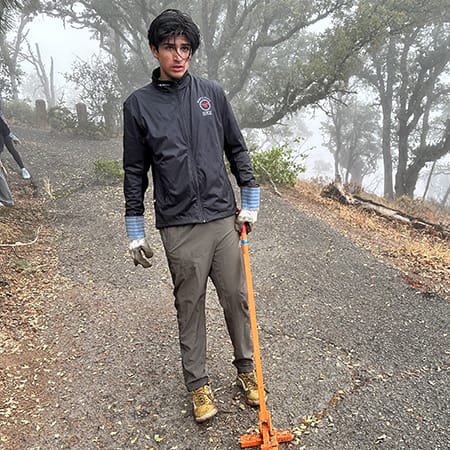
Aadi Gujral involved in environmental conservation with his other initiative TrailGuard, shown here removing invasive species as part of his commitment to ecological sustainability. /Courtesy Aadi Gujral
Tell us about your volunteer role with FinLitFun.
FinLitFun.org, or the Foundation for Financial Literacy, is a 501(c)(3) nonprofit initiative I founded four years ago to bring essential financial education to youth, particularly in underserved communities. My first project was to create an online simulation called Lemonade Stand. This game is aimed at kids aged 8 to –12. It takes kids through financial choices and outcomes. The goal is to save enough money from their lemonade sales to buy a bicycle. This fun game helps to make complex financial concepts accessible to Gen Z kids. There are currently over 3,000 users worldwide.
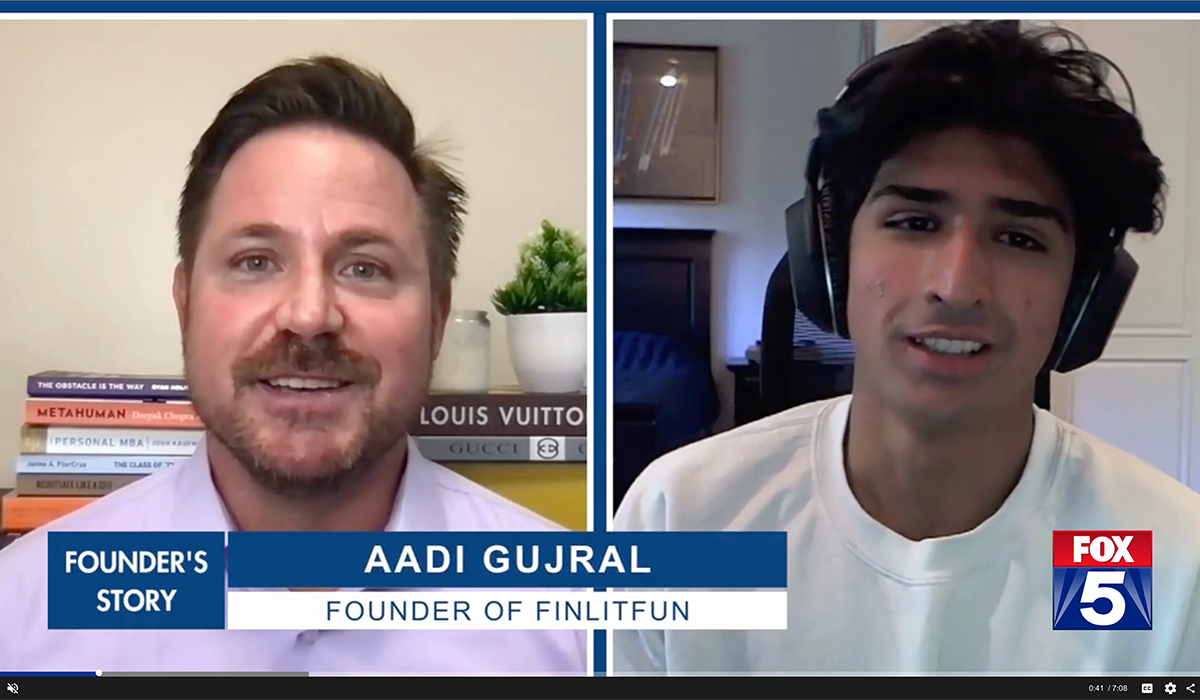
I also write blogs and op-eds to raise Gen Z’s financial literacy. I’ve been featured in Fast Company, where I wrote about the mindset and culture of money; and on Fox5 where I talked about the importance of financial literacy among the youth. We have also integrated our financial literacy curriculum into school systems.
We have raised over $25,000 to fund various initiatives. Key mentors who are actively involved in FinLitFun include Aimee Kerr, my school’s personal finance teacher, Bhupinder Anwar, my school’s computer science teacher and tech entrepreneur Steve Hoffman, creator of the educational entrepreneurial game Gazillionaire.
What inspired you to get started with this initiative?
The desire to help my generation become financially literate grew from seeing the effects of poor financial literacy in my immediate circle that included my younger brother, myself and my friends. As I learned more about financial literacy I realized that the status quo around financial literacy is nowhere near where it needs to be. We’re taught to consume, but not to manage our money. This leads to a lifetime of bad spending habits and debt-slavery.
I am working with startups all around the world including Kazakhstan, Cambodia and Hong Kong. We are collectively looking at how finances are influenced by culture, technological accessibility and other factors. What started with my brother in the living room has become a global platform for financial literacy.
What are your long-term plans or goals for the organization?
I want to continue to expand FinLitFun globally and disrupt the status quo around financial literacy. A huge goal is to integrate FinLitFun into every school curriculum because I feel that financial literacy is just as important as any other subject, yet only 22 states now mandate high school financial literacy courses. This is grossly inadequate. It’s a graduation requirement in these states, but it should be accessible to all students everywhere because learning financial skills early can shape the rest of their lives.
Our instant gratification debt culture often leads to generational poverty and a fear-based psychology around money. Students also need to be educated in how to let go of FOMO, or the fear of missing out. We are learning calculus at young ages but practical skills like budgeting are being ignored. It’s ironic because personal finance is so easy to teach and can set people up for success in life.
My brother is involved in FinLitFun too. He gives an even younger perspective as a 13-year-old which can help us reach a younger audience.
What’s been the most rewarding part of your work?
It’s been rewarding to see FinLitFun scale. We have experienced exponential growth. Small actions snowballed into big changes, and this continues to inspire me. Thousands of people are now experiencing the benefits of what I’ve done.
What have you learned through your experiences as a volunteer?
I’ve learned to hustle. It can be hard to gain traction in the beginning. Being in high school when I started FinLitFun, at first nobody took it seriously in terms of its potential impact. It was seen as a passion project for me so I got support, but people didn’t see how far I could take it.
At first, the only users were my brother and myself. Getting people to rally behind my cause was difficult but I didn’t give up. I spoke to my principal, went to school board meetings and spoke to policymakers. I am grateful to have the support of my teachers. It’s all about initiative and drive. If you keep pushing and challenging, anything is possible. The main challenge I’ve had to overcome, though, was my own fear. As a small child, my mom once asked me to go into Starbucks to get a straw but I was too scared. Fast forward to today. I’ve been on TV and I’ve spoken to people all around the world. I’m so passionate about what I’m doing that I forget my own fears and sense of inadequacy.
On Fox 5 TV, Aadi Gujral (white shirt) shares his motivation and journey in the founding of FinLitFun, which aims to promote financial education among youth. /Courtesy Aadi Gujral
Tell us about future partnerships, programs or events that you are excited about.
The big new partnership is working with an incubator, an opportunity that came about through one of the op-eds I wrote. The Global Possibility Network: Youth Entrepreneurs Initiative chose six social projects from around the world to support. I’ve been nominated as the United States representative. We are working together to scale our initiatives internationally.
I am also receiving great mentorship from several University of Pennsylvania (UPenn) professors. I have also joined as a Student Fellow of the National Education Equity Lab. This organization offers free financial literacy courses to Title One schools. This serves kids who wouldn’t otherwise have access to these courses. I give the Gen Z perspective to their initiatives.
Why is it important for others to get involved with causes they care about?
It’s all about impact. One stick alone can break, but a bundle of sticks is strong. One person can make a difference, but when you rally people behind a cause, the collective energy and efforts can bring about tangible change.
Any advice for people who want to start volunteering?
In the words of the Nike slogan, “just do it.” There’s nothing hard about starting. If you care about something, you can volunteer. You immediately feel so good and accomplished on a personal level, but if you stick to working with a cause you are passionate about, it’ll have a ripple effect. You have no idea in the beginning how massive your impact and reach can be. It becomes so enjoyable that you embody it. You start living and breathing your volunteer journey and it snowballs from there.
What do you want people to learn from your story?
We’re the next generation. We’re the ones with a new perspective. We will be shaping the future. No matter how young you are, you can initiate powerful change.