There’s an App for That: Inspired Teen Creates Service Opportunities for Arizona Youth
Meet Daily Point of Light Award honoree Anmol “Molly”Budhiraja. Read her story and nominate an outstanding volunteer or family as a Daily Point of Light.
Molly Budhiraja was just 16 years old when she coded an app that connects youth with local volunteer opportunities. She’d been doing it offline for a few years at that point, but during the pandemic, she did more than her classwork online. She learned to code.
The platform, named My Wish for My Community, promotes roles offered by local organizations as well as Molly herself — school supply drives, street cleanups, citrus picking for food banks, cardmaking for active military and senior homes, and more. Collectively, volunteers using her platform provided 800 service hours in 2022 and have reached the 1500-hour mark so far this year.
Now a senior in high school, Molly is applying for colleges with her sights set on heading to Washington, D.C. to study public policy and do hands-on work in the nation’s capital. In fact, one of her pieces of artwork has proceeded her to the city, submitted to the Congressional Art Competition and featured in Congresswoman Debbie Lesko’s office in the Capitol building. Using both her STEM skills and artistic talent, Molly has amplified her service impact and brought others along for the ride.
What inspires you to volunteer?
My grandpa spent a lot of time with me while my parents were working when I was a kid, and he’s always talked to me about the importance of giving back, giving other people a voice and just being a kind person.
For my sixth-grade birthday party, I asked for people to donate to a charity instead of getting me a gift. I realized that that’s a lot more fulfilling than just opening up a toy that would probably be lost in two weeks. Plus, I didn’t contribute to the plastic waste problem, something I tried to address with another app, Project Toy Exchange, that allows parents to exchange toys rather than buying new ones.
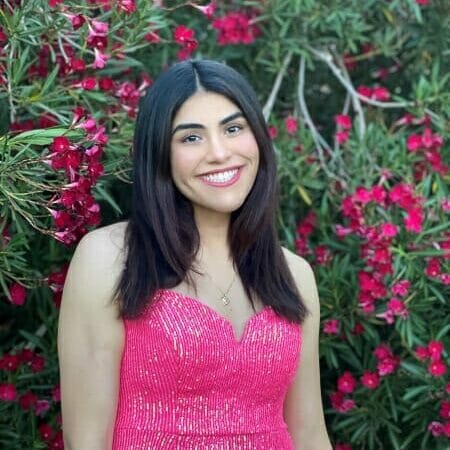
Molly Budhiraja, founder of My Wish for My Community, built an app to connect volunteers with service opportunities in their communities./Courtesy Molly Budhiraja
During my freshman year of high school, I noticed a lot of homelessness. It was wintertime, and it worried me. I called my neighbors and friends, and with my family’s support, I was able to collect 22 large moving boxes worth of warm clothes and blankets. That was the first drive I held, and I was able to also create 200 hygiene kits from personal savings and birthday money. When I delivered them, I saw how much I could impact someone’s life. It opened my eyes to how much the world needs people to give a helping hand.
How did you learn to code?
During online school, I had a lot of downtime, so I started watching YouTube tutorials. I used a lot of different forums and just taught myself. I wouldn’t call myself a software engineer, but I definitely learned the basics and enough to develop the framework of my app and some cool features. I’m still learning.
Describe your volunteer role with My Wish for my Community.
We currently have five wish ambassadors in various areas of Arizona who expand the organization to their respective areas and inspire kids around them. They also recruit members and show them the opportunities we can provide. We have interest from someone in Texas looking to start a chapter, so we’re slowly expanding nationally.
As the founder and CEO, I host monthly Zoom meetings with them and connect with organizations in my local area to organize new opportunities which I put on our website. I network, outreach, oversee the board of ambassadors and generally make sure everything is running smoothly. I also communicate with our website developer. Our organization has grown so much that even though I initially created the app, I cannot handle it on my own now. I just oversee everything and report to our board of directors, adults who oversee what all the kids do.
How many people use your app right now?
My first volunteer was my little sister. She was five years old at the time. Now, she is almost nine, and we have 80 regular users and many who come and go.
What’s been the most rewarding part of your work?
Talking with volunteers after their experiences. Most kids come in looking for opportunities because of school requirements, but they have a good time. Community service isn’t just about service. I found my own community in service, and that’s what I see them doing. They’re forming connections with those around them.
Sometimes, volunteers come with their families, and I see families getting closer. I think that’s what it’s all about, especially in the age of technology. It’s so easy for teenagers to get wrapped up in their phones. I’m guilty of this too, but when we go out there and serve together, we find our own community purpose and fulfill the wishes of many.
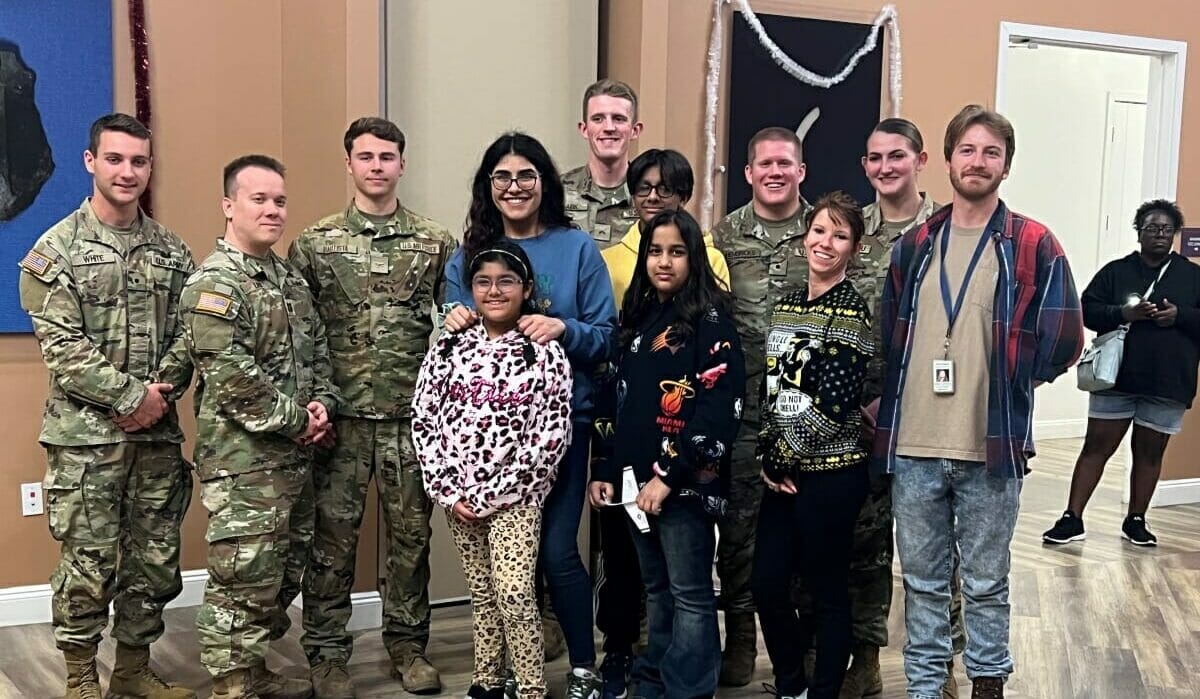
Molly [blue], Wish Ambassador and Molly’s little sister, Aryan [animal print] and Suhana visit active military as part of the Cards for Troops campaign./Courtesy Molly Budhiraja
What have you learned through your experiences as a volunteer?
It’s so important to use your voice and take initiative. That is the whole reason I created this platform. I felt that there was no space for me to do so as an 11- or 12-year-old who wanted to volunteer. Anyone who wants to make a change or start something new should take that leap no matter how scared they are or how unachievable it may seem. Take small steps, and you’ll be on your way.
Are there any future partnerships, programs, or events that you are excited about?
Currently, we’re partnering with the Gary Sinise Foundation to create gratitude letters for veterans from World War Two. We offer remote and in-person opportunities, because we don’t want geographical locations to be a barrier. We went volunteering to be equitable.
We also host monthly in-person music performances for dementia care patients, and we have one coming up next month with new performers. Additionally, I’m excited about our project to combat senior loneliness known as the Heritage of My Legacy Project. A young volunteer gets together with a senior from a group home and asks them to share a story they want the rest of the world to know. We’re compiling these stories and will publish them in a book so they can live on forever. It’s a multi-generational project.
Why is it important for others to get involved in causes they care about?
There are many kids my age who have a general apathy towards volunteering, because they just haven’t seen firsthand what they have to offer and how they can make a difference. Once people understand and get involved, they see that what they’re doing truly matters. Even the smallest donation of time can put a smile on someone’s face.
What do you want people to learn from your story?
Number one, don’t be scared to take that leap and do something. When I first started, I had no idea how to code. All I knew is that I wanted to give people my age a platform to get involved. And number two, people are always watching. I did the that first blanket drive because it worried me that people were out in the cold. After I donated everything and was on local news, it was a domino effect, a chain of positivity; people followed. Take that leap. You can inspire people.
Couple Has So Much More Than Puppy Love for Raising Guide and Service Dogs
Meet Daily Point of Light Award honorees Eric Newton and Holly Eschrich. Read their story and nominate an outstanding volunteer or family as a Daily Point of Light.
What started as Eric Newton’s grand plan to lure Holly Eschrich to move across the country, quickly turned into a life so much more rewarding than they could have imagined. In 2016, the couple saw an advertisement in Baltimore, where Eric lived, by the Guide Dog Foundation calling for local puppy raisers. A puppy raiser’s role is to take an 8-week-old puppy and teach them basic obedience, house manners and give them life experiences to prepare the puppies for more rigorous training to become certified service animals. The dogs will then be placed by the Guide Dog Foundation or America’s VetDogs for those who are visually impaired, a veteran or first responder in need.
Eric has always had a love for animals, but Holly specifically has dreamed of raising a guide dog since she was young. At an early age she remembers reading the book, “Follow My Leader,” about a character’s life who is made whole by a guide dog, and ever since then Holly has wanted to help raise a dog for that purpose. So, she decided she would move from Los Angeles to Baltimore with Eric, and only 2 months later they got their first puppy together.
“We learned a lot with our first puppy,” Eric says. The couple admits that they didn’t know much about raising a puppy, especially one who was one day going to be a service animal. Luckily, the Guide Dog Foundation requires monthly training classes to support families who are raising the puppies. It is mandatory for each puppy to attend 2 training classes a month. “In the beginning I think we were going to 10 classes a month,” says Eric.
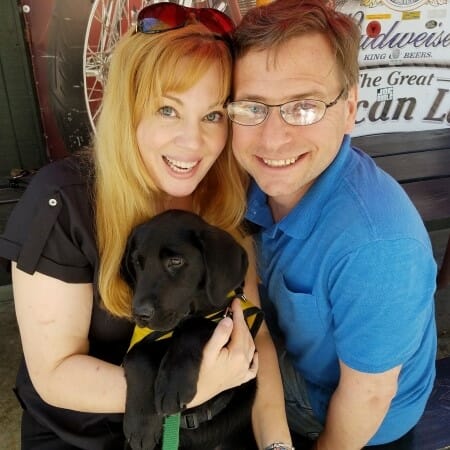
Eric Newton and Holly Eschrich pose with a puppy in training./Courtesy Eric Newton & Holly Eschrich
Flash forward to today, Eric and Holly are on puppy number seven, and are now area coordinators for the Guide Dog Foundation. As area coordinators, they have additional responsibilities such as helping encourage people to volunteer and providing assistance to those who have any training or environmental challenges with their puppies. Holly also helps transport puppies from breeders, families and to training facilities.
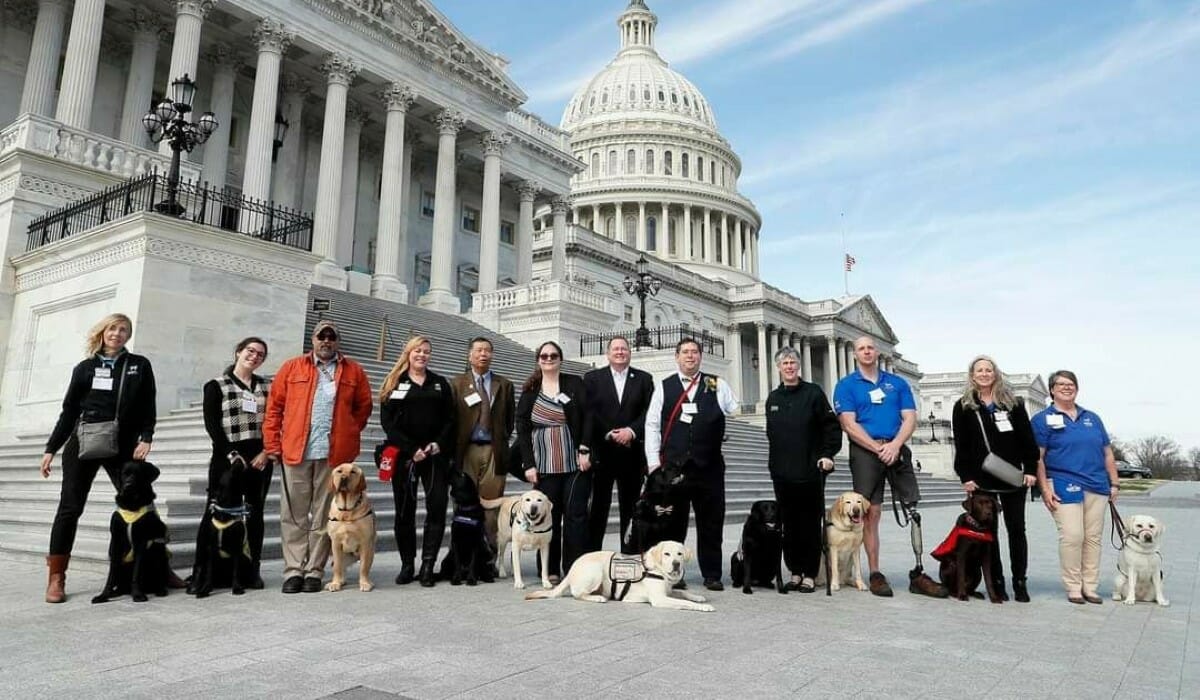
Plus, they play key roles in raising awareness in the area. Eric and Holly bring puppies in training to Washington, D.C. and walk the halls of Capitol Hill to tell congress members about the importance of America’s VetDogs. Currently the organization is looking for congressional support on the Working Dog Commemorative Coin Act, a bill that would mint a three-coin commemorative series to raise funds to provide service dogs to veterans and first responders at no cost.
Also, the local television station, WBAL-TV, has sponsored puppies alongside local organizations, such as the Baltimore Orioles or and the Baltimore Ravens, through a segment the station calls, Puppy with a Purpose. Eric and Holly will raise the puppies, and then Holly appears on the segment to talk about the puppy’s progress, and the Guide Dog Foundation and America’s VetDogs as a whole.
The best part about raising puppies? “New puppy smell!” Holly says. But beyond that, Holly has found that volunteering helped her create a new community after her move. “Everyone I meet through this program are wonderful, loving, supportive people that I like to hang out with,” Holly says. “Especially in my fifties and being from California where I had my core group of friends for the last 30 years, when I moved here, I don’t know anybody.” Through the puppy classes and play dates, Holly met other like-minded people with shared interests and now has a very strong network. “We can call anybody at any time if somebody needs help, it’s like a family –I know that sounds cliché– but it truly is like a family here.”
It doesn’t hurt that Eric and Holly are now pros at raising puppies. “When we first got our first puppy, it took us maybe a week to get the puppy to be able to sit on command, and now we can do it in like four hours,” Eric says.
Other Guide Dog Foundation volunteers are quick to sing the couple’s praises. “From day one they’ve been so willing to help, so willing to learn, drive puppies to classes, doing puppy transport – whatever we need,” says Melissa Harrington, a Puppy Program Rep for the DC metro area. “Whether it’s attending some of these functions either at on Capitol Hill or smaller ones, like a school who needs someone to come there and talk about guide dogs or service dogs, they just raise their hand and they’re always there to help.”
Volunteers and their puppies visiting Capitol Hill to raise awareness for the importance of service dogs for veterans and first responders./Courtesy Eric Newton & Holly Eschrich
But the job does come with its challenges. “The hardest part about raising a puppy for the program is that you spend 12 to 15 months with a puppy, you bond with them and then you have to go turn them in to the training center,” Holly says. “So, the only soothing part is that we walk about 20 feet to the kennel and pick up a new puppy to bring home and start all over.”
Melissa says that Holly has a gift for when other people are getting anxious about returning their puppies to the organization. “When people are nervous or sad about their dog leaving to do their training, she is the one that I always reach out to because she’s so empathetic and helps them feel better,” Melissa says.
Eric reflected that volunteering with guide dogs taught him something more than just sit, stay and come. “The majority of my life I’ve spent on my career and getting better and better at a thing that I’ve been working at for a very long time,” he says. “And doing this volunteering, I kind of started all over again with something I didn’t know how to do very well, so I learned a lot about myself, and I learned a lot more about how to be a good learner again.” Eric encourages others to use volunteering to learn something new while also giving back to the community.
Oregon Veteran Crusades for Child Abuse Awareness and Prevention
Meet Daily Point of Light Award honoree Dena Burian Blacklaw. Read her story and nominate an outstanding volunteer or family as a Daily Point of Light.
Content Warning: Points of Light is proud to share the following uplifting and inspiring story. However, we acknowledge that a portion mentions abuse and may be difficult for some readers. We encourage you to please care for your own wellbeing above all.
Dena Burian Blacklaw has been volunteering since childhood. “It’s the way I grew up,” she says. Over the years, she has volunteered for a variety of organizations around her Albany, Oregon community, including animal shelters, the Mid Valley Gleaners, Habitat for Humanity and the Lebanon Optimists.
While all of these causes are important to her, the main focus of Dena’s volunteering is Dala’s Blue Angels, an 11-year-old nonprofit focused on child abuse awareness and prevention. As President of the organization, Dena works to raise awareness, as well as organize its many events and raise funds for organizations that support survivors of abuse. To date, Dala’s Blue Angels has raised over $100,000 for community organizations.
Read on to learn what drives Dena to volunteer and how she is helping her community to have difficult conversations around an important subject.
What inspires you to volunteer?
Dala Johnson, the founder of Dala’s Blue Angels, works for the Lebanon Police Department. Dala was deeply touched by a local case involving child abuse. She founded Dala’s Blue Angels as a way to raise awareness about child abuse, and to raise funds for organizations that assist victims.
When Dala asked me to join her, I immediately said yes. The community needs to talk about child abuse, because it’s more prevalent than people think. It’s a subject that people don’t want to talk about. They don’t want to face it, they don’t want to admit it happens in even the “best” families. Well, someone has to talk about it and do what we can to stop it!
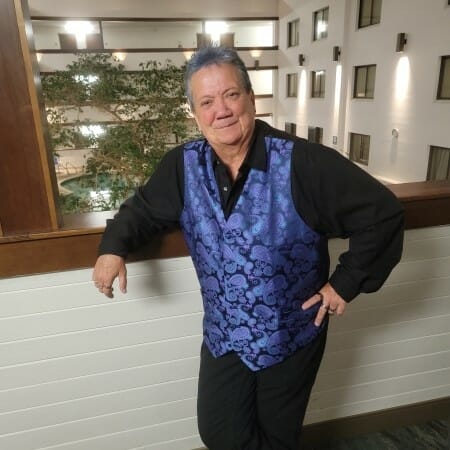
Dena Burian Blacklaw, Dala’s Blue Angels President./Courtesy Dena Burian Blacklaw
Describe your volunteer role with Dala’s Blue Angels.
I am currently the President of Dala’s Blue Angels. I preside over monthly board meetings and all Blue Angel meetings. I do a lot of “spreading the word” and fundraising. Fundraising is essential for our organization. I keep members informed of our events, meetings and fundraisers. I also handle most of our Facebook activities.
I’m also there for any community member who has questions about what we do. In fact recently, a man came up to me and asked if we were the Blue Angels that fly fighter jets. I laughed and said ‘No, we’re the ones who help save kids from abuse.’
Some of our 20 Blue Angels volunteers are certified as security guards. We volunteer at several local events as a way to raise funds. This includes providing security for the Strawberry Festival, Boys and Girls Clubs events and high school graduations.
I also organize and support many other events, including raffles, online auctions, bottle/can drives, hot dog sales, car washes, the Cast with a Cop event, the Santiam Excursion train for First Responders/Veterans, traffic control for the Corvallis Marathon and the National Night Out each year.
Every April during Child Abuse Awareness Month, we “Turn Lebanon Blue” with blue ribbons, pinwheels and signs, to raise awareness of the issue. The first Saturday of the month, we organize a Walk a Mile for a Child 5K event. This is a bittersweet event filled with vendors, speakers and plenty of things for kids to do. Unfortunately, we also honor a child from our community who has died because of abuse. This year we were able to honor a 16-year-old survivor of abuse rather than a deceased child, which was a positive experience.
I am one of the volunteers standing out in front of businesses wearing blue tutus to help raise donations. I also help shop for kids at the annual “Kidzshop” held by the Altrusa International of Albany, of which I am also President.
We donate all money raised to local agencies that help child abuse victims. We try to request specifically what a donation is for. For example, the ABC House got a $10,000 donation from us with the intent that they use it for an exam table where abused children are examined after reports of abuse. We donate money for staff training expenses, goods like diapers and baby wipes, food, and shelter for victims of domestic abuse. We’ve raised well over $100,000 in the 11 years Dala’s Blue Angels has been in operation and all of it has gone back into the community.
Mostly, my aim is to raise funds and spread the word. Whatever I can do to raise funds and get the word out, I do it.
What’s been the most rewarding part of your work?
Being able to donate money to organizations that were previously unable to help their clients as much as they wanted to. Honestly, I wish I didn’t have to fight against child abuse but it has to be done. Somebody has to do it. But it’s rewarding when somebody that has been struggling with past trauma is finally able to tell their story. This happened recently when Dala and I were “Turning Lebanon Blue” with blue ribbons. A woman came up to us at the park and asked what we were doing. When Dala told her, the woman broke down and told us her own story of childhood abuse. She had never been able to say anything before, but now she could get the story out.
Like Dala, founder of Dala’s Blue Angels, says, ‘If we can save one child we have done our job.’
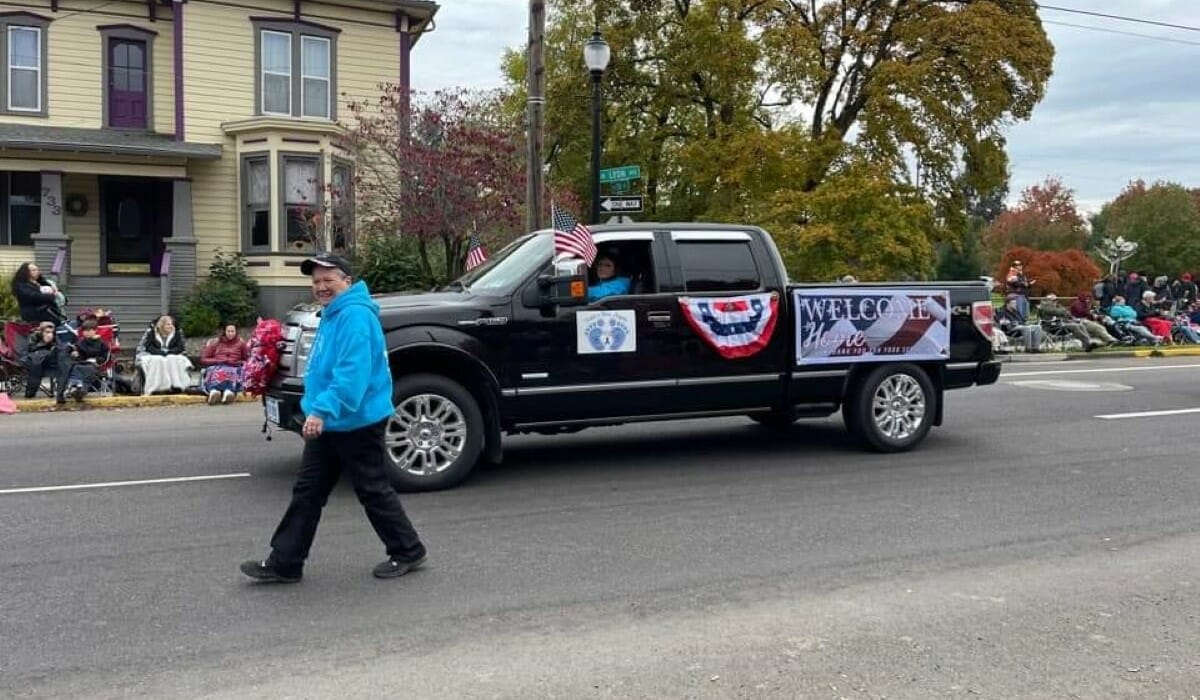
Dena Burian Blacklaw, Dala’s Blue Angels President marching in the Veterans Day Parade./Courtesy Dena Burian Blacklaw
What have you learned through your experiences as a volunteer?
To quit raising my hand. (laughs). I’ve learned a lot of effective ways to raise money. I’ve learned that there’s a huge need for people who are willing to help.
I have learned about myself, too. I’ve always been a loving, caring person, and I am so appreciative of the volunteer organizations I participate in. Volunteering is a way to figure yourself out, in a way helping yourself while helping others.
Are there any future partnerships, programs, or events that you are excited about?
We will be participating in the National Night Out in Lebanon which is a nationwide event where the community gets to know neighbors and police officers and discusses community safety.
Why is it important for others to get involved with causes they care about?
The issue is there, it needs to be talked about. What I do makes my heart happy. Makes me feel like I’m making a difference in my community.
What do you want people to learn from your story?
My 20 fellow Blue Angels are a close family and we aren’t picky about what we do to help. Whatever needs to be done, we do it. We show people that someone does care. We care about each other, and we care about the people in our community.
If you or someone you know has experienced the trauma of sexual assault or rape, you can support them by listening, letting them know you believe them and offering to help them find medical attention or mental health support. Contact RAINN to find help near you or call 800-656-HOPE (4673) to talk to a trained crisis counselor. These services are free and confidential.
Inspired By Her Father, Teen Gives Support to Displaced People in the Middle East
Meet Daily Point of Light Award honoree Jolene Massad. Read her story and nominate anoutstanding volunteer or family as a Daily Point of Light.
Jolene Massad, 17, still remembers when she was 10 years old and her father brought her along on a trip to Jordan while he visited families with the nonprofit he founded, Christian Mission to Gaza (CM2G). CM2G provides practical and spiritual assistance to refugees, Christians experiencing persecution, orphans and widows in Gaza as well as Jordan and other parts of the region. The organization gives families food relief, helps with transportation for any visa appointments and Jolene’s father, Hanna, even pastors a church virtually every Sunday.
Now, Jolene has traveled to Jordan almost every summer and has her own role with CM2G. She finds joy in visiting the families in Jordan and helping in any way CM2G can. Then when she is stateside, she regularly tutors other teens and their families in English and helps her father spread awareness of the nonprofit. Now, she has just started applying for college and is even considering following her father’s footsteps in management of nonprofits.
You started volunteering at age 10, how did you get involved at such a young age?
Since I was young, I’ve been actively involved in volunteering with organizations like Feed My Starving Children, Filling in the Blanks and serving at our church. However, Christian Mission 2 Gaza has a special place in my heart because my father started it during his time at Fuller Seminary. His goal was to help the people of Gaza, and it later expanded to Jordan to assist displaced people from Iraq and Syria. Witnessing his impact on the Iraqi congregation inspired me to make a difference too. Our visits to these families in Jordan showed me the profound impact the organization has, going beyond basic aid to bring hope and support to those in need. This experience drives my passion to continue the mission and positively impact lives, just as my father does.
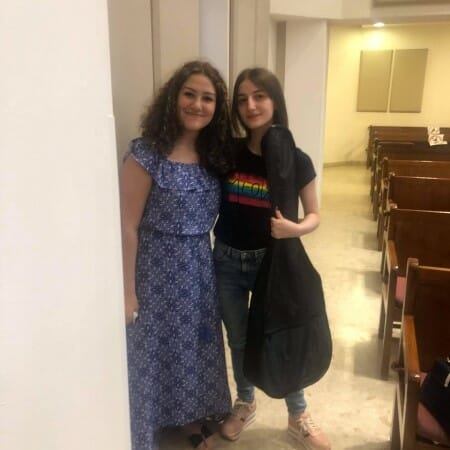
Jolene meeting someone whom she had tutored and gifting her a guitar from Christian Mission 2 Gaza./Courtesy Jolene Massad
What inspires you to volunteer?
Witnessing the profound impact of the organization’s work on people’s lives has ignited a strong desire within me to make a positive difference in the world. For example, tutoring a girl in Jordan and supporting small businesses for displaced people has shown me the real difference volunteering can make. The sense of purpose, fulfillment and the opportunity to contribute to causes I care about motivates me to be actively involved in volunteering. I am driven by my passion for helping others and creating a positive impact in their lives, which fuels my inspiration to continue volunteering with dedication and enthusiasm. I also witnessed the work and impact done in Gaza with the mission. Although it would be very impactful to witness firsthand and help, it can be dangerous to go to Gaza.
Describe your volunteer role with Christian Mission 2 Gaza?
When we go to Jordan I help in food distribution, attending the Iraqi congregation meetings, visiting families in their homes and camps and tutoring displaced people in English. When I am here in the United States, I tutor in English virtually, helped with the creation of the website, editing writing that has gone out, sometimes write the newsletter and also travel with my dad when he speaks at different places promoting CM2G.
What is the best part about volunteering in Jordan?
The best part is the opportunity to witness the direct and positive impact of your efforts on the local communities. Engaging with the people and being on the ground allows you to see firsthand how your contributions are making a difference in the lives of those you serve. Additionally, volunteering in another country provides a chance to immerse yourself in the rich cultural heritage of the region, interact with diverse communities, and gain a deeper understanding of the challenges they face. The experience can be both personally rewarding and eye-opening.
What’s been the most rewarding part of your work?
The most rewarding part of my work with CM2G is witnessing the impact it has on people’s lives. One memorable experience I want to share is when I was tutoring a young girl who had immigrated to Jordan with her family while waiting for their visa to Australia. During that time, I had the opportunity to help her and her siblings learn English, making their transition to Australia smoother. Eventually, the family’s visa was granted, and they successfully moved to Australia. When I was in Jordan, I had the chance to meet her in person and gifted her a guitar, which one of our CM2G team members had bought for her. It was a heartwarming moment to see the positive change our organization brought to her life.
What have you learned through your experiences as a volunteer?
Through my volunteer experiences, I’ve learned the power of small acts of kindness and empathy. It has taught me resilience, teamwork, and gratitude. Giving back to a community not only brings personal fulfillment but also builds lasting connections. Additionally, I’ve become more aware of social issues and the global impact of local actions. I’m committed to continuing my journey, making a positive impact and contributing to a better world.
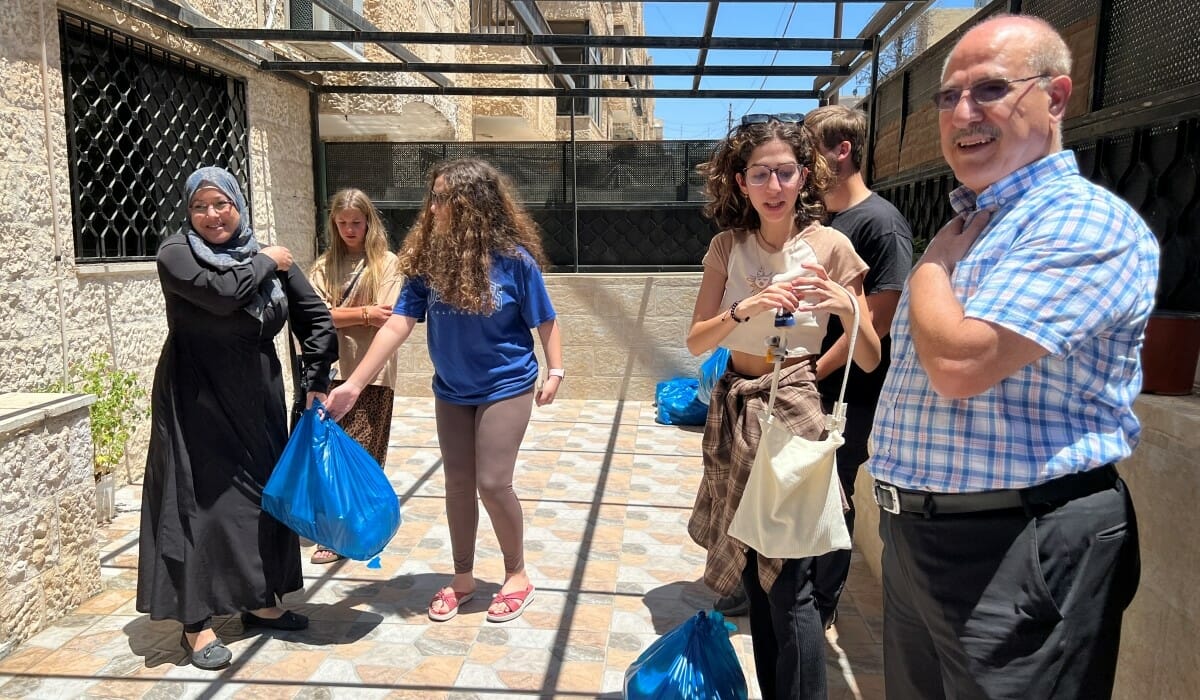
Jolene is a volunteer with Christian Mission 2 Gaza, a nonprofit supporting families./Courtesy Jolene Massad
Are there any future partnerships, programs, or events that you are excited about?
Last year, CM2G expanded its support to include several orphanages in Lebanon, the West Bank and Egypt. This year, the organization made significant progress by funding small businesses for displaced people, enabling them to earn a modest income despite their displaced status, which often restricts their ability to work. Personally, I am looking forward to the possibility of visiting these orphanages and witnessing the impact of these small businesses in person within the next year or two.
What do you want people to learn from your story?
I want people to learn about the power of compassion and empathy towards those in need. I aim to inspire others to take action and make a difference in their communities and the world, emphasizing that even small contributions can have a significant impact. My involvement with CM2G highlights the critical importance of supporting displaced people and orphanages, while also showcasing the transformative power of empowering vulnerable communities through initiatives like funding small businesses. Additionally, I hope to foster a sense of global solidarity and encourage others to find joy and fulfillment in giving back and being actively involved in causes they care about. Ultimately, my story with CM2G serves as an inspiring testament to the potential for positive change when individuals come together to create a more compassionate and just world for everyone.
Do you want to make a difference in your community like Jolene? Find local volunteeropportunities.
Teen Activist Fights Child Abuse and Mobilizes Virginia’s Youth to Make a Difference
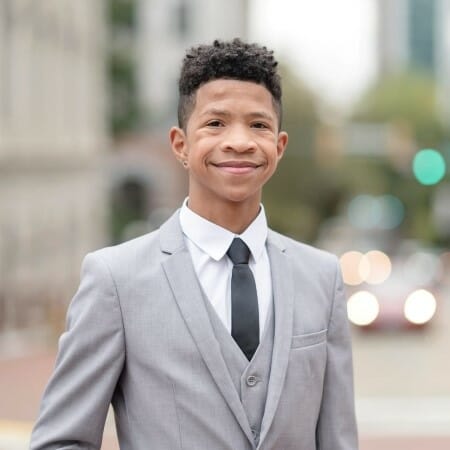
Meet Daily Point of Light Award honoree Elijah Lee. Read his story and nominate an outstanding volunteer or family as a Daily Point of Light.
Elijah was born in Roanoke Rapids, North Carolina. His family, teachers at KIPP Gaston College Preparatory school and key mentors instilled the love of learning in Elijah. Elijah’s father passed away when Elijah was three years old. Despite this loss, Elijah’s mother placed a high value on education and made sure to provide the best possible learning environment. The message that Elijah grew up with was a message of resilience. It was also a message of the importance of support, whether it’s from a family or a community.
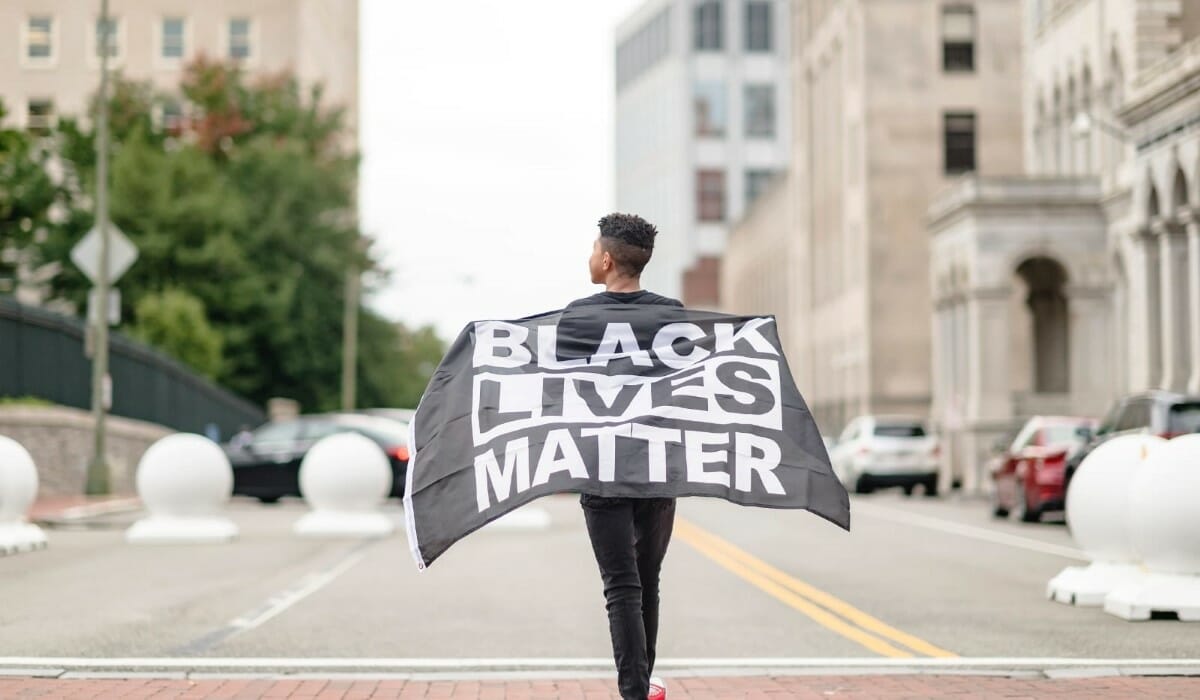
Now a teenager, Elijah has strived to carry on this message. As the founder of Hear Our Voices, a nonprofit promoting empowerment for young people, Elijah works to equip fellow young people to become advocates for the causes that matter to them. A staunch advocate himself, Elijah leads by example as he works to promote civic engagement among his peers. Read his story to learn how he is making a difference.
What inspires you to volunteer?
When I was in first grade, a friend confided in me that she had been abused. I had never heard anything like this. In that moment, my perspective on the world changed. I had to understand why this had happened. I told my teacher about it, and we got help for my friend. I soon learned that my friend wasn’t alone. I learned that she wasn’t the first child to be abused, and wouldn’t be the last. Even as a young child I wanted to know why we as a community could allow this to happen and what we can do about it. Progress comes from action, so why were people still experiencing this pain? Why wasn’t someone stopping it? As I grew up I learned more about the systems we live by. I also learned how to raise my voice in protest. I was just 10 years old when I led my first advocacy march and gave my first speech. That was my first experience with the fact that our country is ready to accept young activists.
Elijah Lee is the president of Hear Our Voices, which promotes empowerment for young people./Courtesy Elijah Lee
Describe your many volunteer roles.
I am the founder and Youth President of Hear Our Voices, which promotes empowerment for young people. We provide young people with resources they need to become advocates for any cause they care about. As president, my work is mostly drafting a nonprofit budget, hosting bimonthly and quarterly meetings, and communicating with board members. I also organize and lead annual marches. This includes managing the logistics and working with local organizations to ensure that we don’t just talk about resources, but actually provide them. I also devote a lot of time to talking to other young people about how they can become involved and helping them through the process. I am also active in the educational sector. I talk to teachers about safe spaces, how to use the right language when talking to abuse survivors, and how to make educational institutions a safe space of learning for any child.
I work with Virginia Teen Democrats as its Political Director where I work to empower young people to vote and get more involved in politics.I and I act as the Co-Chair for the Voters of Tomorrow of Virginia, which is a chapter of the national Voters of Tomorrow organization. Our task is to make it easy for more young people to become active in politics and increase youth voter turnout to ensure that their voices are heard. I have also drafted, introduced and lobbied for legislation that will help young people in Virginia. I’ve participated in over 150 legislative meetings. I have testified for over 15 bills. Every one that passes is a huge win!
I’m also honored to serve as the Executive Co-Director of the Coalition for Virginia’s Future. This coalition is one that I helped start in an effort to unite the youth organizations in Virginia so that we can unify young people, and present a unified voice.
I became an ordained minister at age 10. God is at the center of what I do. I enjoy preaching and teaching, but more than anything I see Jesus as an example of how to help one another.
What’s been the most rewarding part of your work?
It’s so rewarding to hear how I have impacted other young people. There have been a few times when other young people told me they saw me speaking, or leading a march, and that I inspired them to start advocacy on their own. Every legislative bill I can get introduced and passed means we are making history! Every dollar I raise changes lives. It’s rewarding to see that today’s young people are empowered, strong and willing to do what it takes to be heard.
What have you learned through your experiences as a volunteer?
I’ve learned that even if you fail, you can always get up again. Success is all about resilience. It might be easy to give up every time a bill isn’t passed or I can’t raise enough money. It’s so easy to say I’ve failed, that I can’t do anything to solve this problem. But I always have to keep pushing! Making progress, even if it’s slow, is the only way to make change.
I’ve also learned that when we have conversations about racism or other social problems, things don’t have to become political. People need solutions, not bipartisan squabbling. The same goes with talking about religion. Sometimes when I talk about religion, I feel people shut down, but I am forever inspired by God and I live by the Scripture. What I do isn’t about religion, it’s about doing good for my fellow man.
Elijah Lee advocates for the causes he cares about and equips fellow young people to be advocates as well./Courtesy Elijah Lee
Are there any future partnerships, programs, or events that you are excited about?
At Hear Our Voices, we are planning our upcoming march. This time, we’re considering going beyond child abuse advocacy. We’re considering adding an element of youth empowerment. It would be the first event of its kind in Virginia! Some of my political organizations are looking forward to introducing life-changing legislation that basically says the kids are here and we’re ready to take charge. I have high hopes for the future of the work I do!
Why is it important for others to get involved with causes they care about?
I am forever inspired by the quote, ‘If not now, when? If not us, who?’ This quote has been attributed to so many authors but I believe it says it all. Our world is not perfect. If you have even a sliver of passion to make change, an instinct to make progress on an issue, I ask that you get into action. You owe it to yourself and to the future generations. I’m invested in helping other people share their voices. You can, too.
What do you want people to learn from your story?
I hope that people realize that with a little support, young people can truly do anything we set our minds to. My story shows that we have the capacity to change the state of our nation. But we need the support of our community in order to be successful.
Volunteer Shares Love to Those in Need Across Chicago with Home-Cooked Lasagna
Meet Daily Point of Light Award honoree Aimee Look. Read her story and nominate an outstanding volunteer or family as a Daily Point of Light.
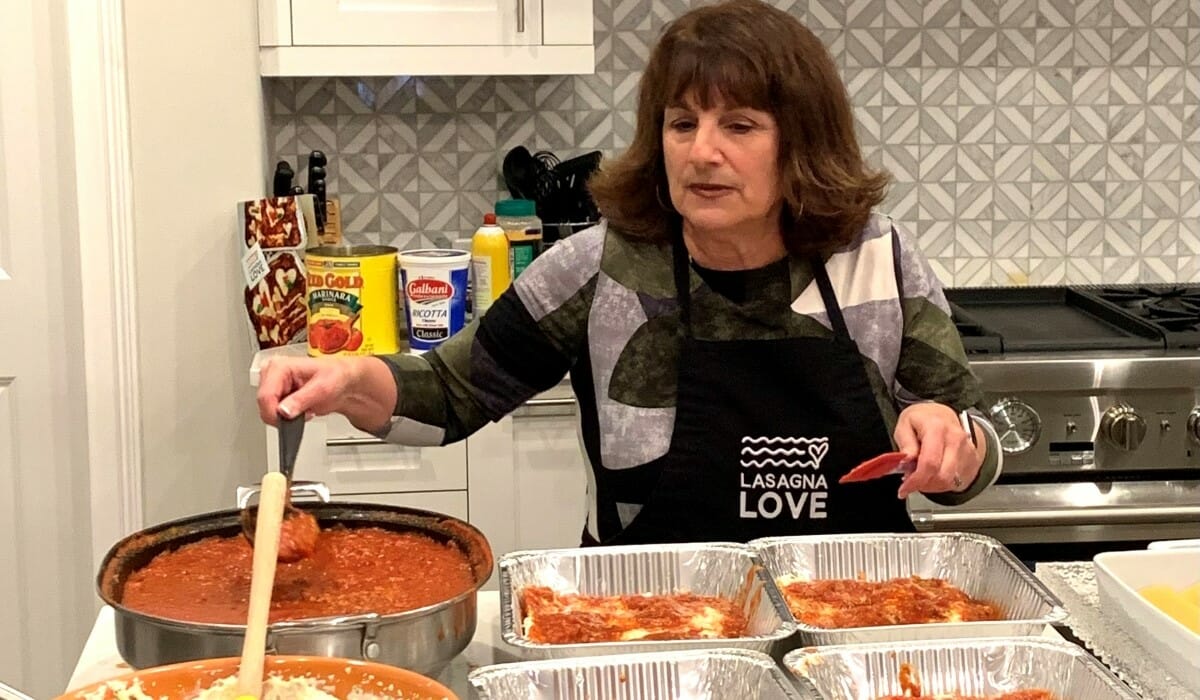
During a time of uncertainty and fear, Aimee Look turned time at home during the COVID-19 pandemic into time of service. As the current Regional Director for Illinois, Aimee volunteers with Lasagna Love to deliver meals and kindness to strengthen her Chicago community. In 2023 alone, she helped her team deliver more than 3,000 lasagnas which fed over 7,670 adults and 5,360 kids.
Aimee started off as a volunteer chef for the organization, which gave her the opportunity to cook nostalgic food of her childhood. Look helps find new leaders and volunteers for Lasagna Love, plans events, helps spread the organization’s mission across Chicago and more.
What inspires you to volunteer?
Well it all started in 2021. One of my friends posted on Facebook about Lasagna Love. That was during the pandemic and I was looking for a way to help out, but I was concerned about having close contact with people. So this was a great opportunity because what we do is get matched with someone in our community who needs a meal and we make a lasagna for them. Then we just drop it off at the house and let them know that it’s there and they’re good to go. I didn’t have to be in close contact with anyone and I could volunteer from home and make my lasagna. It felt really good to be able to help out that way.
Describe your volunteer role with Lasagna Love.
I started out as a chef volunteer. Then I went to be a local leader, which was for the north side of Chicago. I was the leader for the volunteers on the north side of Chicago. And now I’m the Regional Director for Illinois. I oversee all of the leaders and the volunteers in Illinois. I don’t get to cook as much as I did when I started, but I get to do the organizing of things. It’s great for me because I really enjoy bringing other people into volunteer opportunities that I feel is important, and being able to help even more people out.
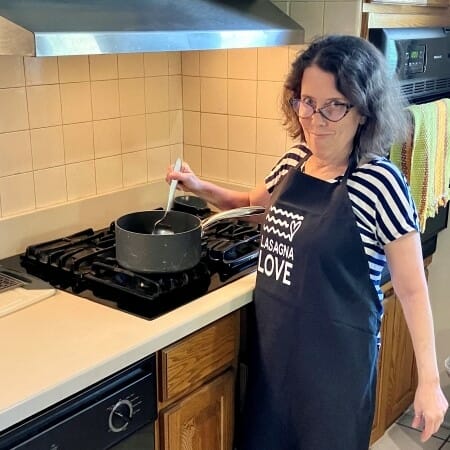
Aimee Look helps find new leaders and volunteers for Lasagna Love, plans events, helps spread the organization’s mission across Chicago./Courtesy Aimee Look
What we do is have different organizations in our community that we work with — people who are food insecure contact us and ask for lasagna. We don’t work directly with the same organization over and over. Instead of providing a single meal for somebody, we organize group meals. For instance, Asian Youth Services is an after-school program for kids that are food insecure. We organize an event where different volunteers in our area make food, and then we all drop it off to that organization for the kids to eat.
We’ve also been helping out a lot with a lot of migrants that are coming to Chicago since there’s not a lot of space for them to live right now. Many of them are living at the police stations around Chicago. I’ve been organizing group meals and volunteers to cook and drop it off at different police stations for migrants.
I don’t do this alone. I have an incredible team of leaders and volunteers in Illinois. This organization is so supportive and everybody’s just really wanting to help somebody out.
What’s been the most rewarding part of your work?
I think just really feeling like we’re making a difference. We get to help people that request lasagna after they fill out an online form and sometimes they tell us their story about what’s going on and why they need a meal. They’re not required to, but sometimes they do. Just to be able to hear a personal story of somebody and to be able to help them out with just one meal — it’s amazing.
What have you learned through your experiences leading this organization?
One person can make a difference. Taking one meal to one person in your community can make a difference for that family. With everything going on, it feels kind of overwhelming sometimes. Like, what can I do? This has become something that I can do. And it also makes you feel good when you get to help a neighbor.
Are there any future partnerships, programs, or events that you are excited about?
July 29 is National Lasagna Day. We’re in the middle of our celebration which we celebrate for 10 days from July 21 through July 30. We’re trying to reach an organizational goal of 10,000 Lasagnas being delivered during that time period. We’re doing our best to do our part in helping Illinois.
Why is it important for others to get involved in causes they care about?
You get more out of it than the person that you help. It’s really just a great feeling to be able to do something to help somebody else. If you have the time and if you have a particular cause that you’re passionate about, a lot of people can’t always donate money, but I feel like service or time or energy can be even more important than that.
What do you want people to learn from your story?
If you’re feeling like you don’t really know how to make a difference, just pick a local organization or cause that you’re passionate about. Try to give it a little time and see how it goes. That’s kind of what I did with this. I’m not like a big gourmet cook or anything, but I used to make lasagna. It was a childhood memory that comes back when I cook. So just try to help out where you can in your community. Good starts there.
Polio Survivor Advocates for the Korean Senior Community
Meet Daily Point of Light Award honoree Dongwoo“Joe” Pak. Read his story and nominate an outstanding volunteer or family as a Daily Point of Light.
Dongwoo “Joe” Pak ran the 1998 Los Angeles Marathon in 6 hours and 12 minutes. Even a young athlete at the peak of their fitness would find the grueling race challenging. Dongwoo was 46 years old and spent much of the week working in an office. He raised $2,500 for the disabled Latino community in the process.
“’Joe, you’re stupid. You just shortened your life by several years by doing that,’” he recalls a friend telling him.
Aside from the other factors at play, Dongwoo is completely paralyzed in his left arm and a bit in his left leg. He is a polio survivor, like his friend, and he lives with the knowledge that post-polio syndrome could further compromise his mobility long after he battled with it as a three-year-old child.
“I always do the best I can while I can and when I can, because I never know when this post-polio syndrome will hit me and I’ll have to depend on other people to take care of me,” he says.
Growing up in Korea with a visible disability, Dongwoo was often picked on. In 1970, when he was 18 years old, he and his family immigrated to the United States where he eventually graduated from University of Southern California. For the next 27 years, he worked for Pacific Bell Telephone Company, now AT&T.
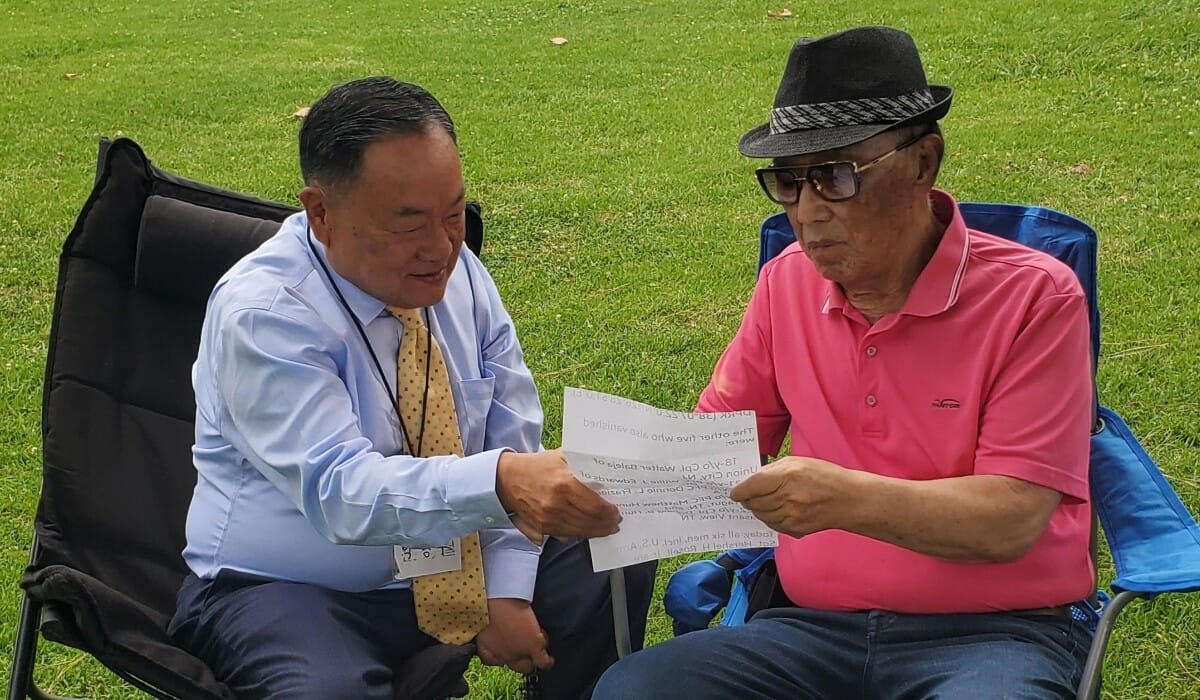
In 1999, well before Dongwoo was a senior himself, Orange County Supervisor Charles Smith appointed him to the Senior Citizen Advisory Commission. Dongwoo cites that perhaps the man made the connection between the disabled population and seniors in regards to the challenges they face, with seniors also experience vision, hearing or mobility loss. It was something Dongwoo had long ago put together, and while he initially started working with Korean American seniors over a decade before, it was then that he was empowered to dedicate his time to the Korean American Seniors Association of Orange County (KASAOC), the organization he has gone on to support and advise for the next 25 years.
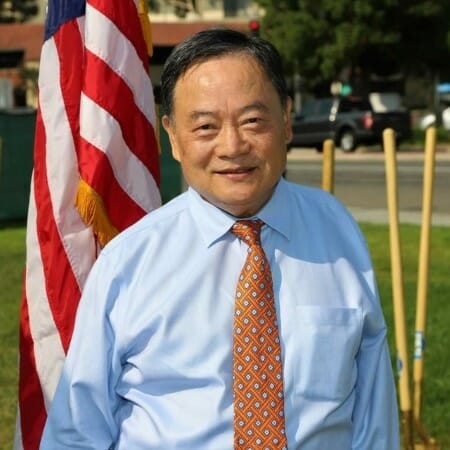
One of Dongwoo’s proudest accomplishments is the launch of the hard-won Senior Mobility Program from Orange County Transportation Authority (OCTA). It’s especially vital to those with limited language skills and struggle to get around on a set-route bus./Courtesy Dongwoo “Joe” Pak
One of his proudest accomplishments took three years to bring to fruition but continues to benefit seniors in the area. July 1, 2003, was the launch of the hard-won Senior Mobility Program from Orange County Transportation Authority (OCTA). It’s especially vital to those with limited language skills and struggle to get around on a set-route bus.
“We were not educated in this country, so we need a lot of help from someone who knows English,” says Jin Bang Park, retired engineer and former president of KASAOC who came to the United States in 1972.
The program utilizes two 17-passenger vans that drive people to places like the grocery store, the Korean Community Center and doctor appointments. The original 10-year contract with KASAOC was renewed in 2013 until 2036.
Dongwoo initially learned of the program when he was serving on the Orange County Special Needs Advisory Committee, an appointment he received from the mayor, and spent a lot of time convincing other committee members to award the contract.
“I always tried to take at least 20-25 Korean seniors to big senior events. And none of them really understood what was going on, so I stood in the front and translated for them,” he recalls. “And then, they all said, ‘Oh, yeah, we have language problem.’”
“Our community now has a population of around 100,000,” Jin Bang says of the number of Koreans in Orange County, many of whom face language barriers.
Park, now 80 years old, appreciates the work his old friend has done to benefit the community they share. His four adult children have moved to different states, and he occasionally needs assistance as well.
“Dongwoo helps me, so we spend a lot of hours together,” he adds.
Aside from tackling big projects, Dongwoo is there to advise KASAOC on services available to seniors. He also fundraises, brings in donations and food distributions, and helps individuals with things like recertifying MediCal services.
“A lot of times, when they get the mail, they don’t know what it is. It looks like junk mail, and they throw it away,” he notes. “I always treat them as if they’re my own father and mother. My parents died at a young age, so I didn’t have a chance to interact with them when they got older. But when I go to the Senior Center, I see what their needs are.”
Since 2012, upon her election, Dongwoo has worked with Assemblywoman Sharon Quirk-Silva in a role that he also uses to benefit Korean seniors.
As part of his work with Korean seniors, Dongwoo translates important information for those who don’t speak English./Courtesy Dongwoo “Joe” Pak
“A lot of times they don’t have the networking connections to the mainstream; they’re kind of living in a silo. I’m exposed to more of mainstream than other people, because I’m working as a senior field rep for the assemblymember,” he cites. “I go to a lot of relevant events.”
One such example is an upcoming Super Senior Saturday event. With the support of the assemblywoman, he is working on creating a Korean version. He’s also able to find corporate funding opportunities and introduce KASAOC leaders to elected officials who can connect them with resources
In 2009, Dongwoo was honored by President Obama with an appointment to the National Council on Disability. During his time working on policy, he helped get rid of sub-minimal wages for the 61 million Americans living with a disability and advised Congress and the Obama Administration on things like the Americans with Disabilities Act (ADA) and special education.
When trying to make change, people in positions of power can often overlook challenges seniors or those with disabilities face.
“They don’t put themselves in another person’s shoes saying, ‘If I were in a wheelchair, what would I need?’” he says. “I’m just happy to be an advocate for the people who cannot speak for themselves.”
After his appointment, he went to Washington, D.C., and visited the Korean War Memorial. He was disheartened that none of the 36,591 American soldiers who died in defense of Korea were written in the stone. It was a stark difference to the nearby tribute to those who died in Vietnam, and he decided to do something about it.
For 12 years, Dongwoo worked out the details of erecting a monument in his home state of California. None of the local cities wanted to give up space in their parks for the project, so he designed something more compact, five stars facing the sky. Each would have 750 names on each of their 10 panels, leaving space for an additional 750 discovered through DNA matching those missing in action.
“I’m so grateful to my boss and her husband. Her husband was the mayor of the city of Fullerton back in 2019, [as was the assemblywoman herself, in 2011]. And they are the ones who gave us that venue,” he says of the site allocated to the project in Fullerton’s Hillcrest Park.
After a lot of hard work and donations from the Korean government and around 400 individuals, it was finally dedicated on Veterans’ Day 2021. Even now, Dongwoo will photograph names for people who can’t get to California to see it themselves.
“It was something that we needed to do to show respect and thank not only the those who gave their all but their parents, relatives and family who lost them during the Korean War. I feel like now I can show up to events with my head up instead of head down,” he says.
After appointments to all levels of government from county to federal, Dongwoo continues to use his expertise as a volunteer. Now a senior himself, he remains vigilant in making sure the senior mobility program runs smoothly and dedicates his time to making life better for the people around him.
“I think you need to always have a bit of discontent. If you’re satisfied with everything, there’s no room to grow. You can always bring something positive to the community if you try hard.”
High School Student Makes Skiing Accessible for Historically Excluded Kids in His Community
Meet Daily Point of Light Award honoree Jackson Darr. Read his story and nominate an outstanding volunteer or family as a Daily Point of Light.
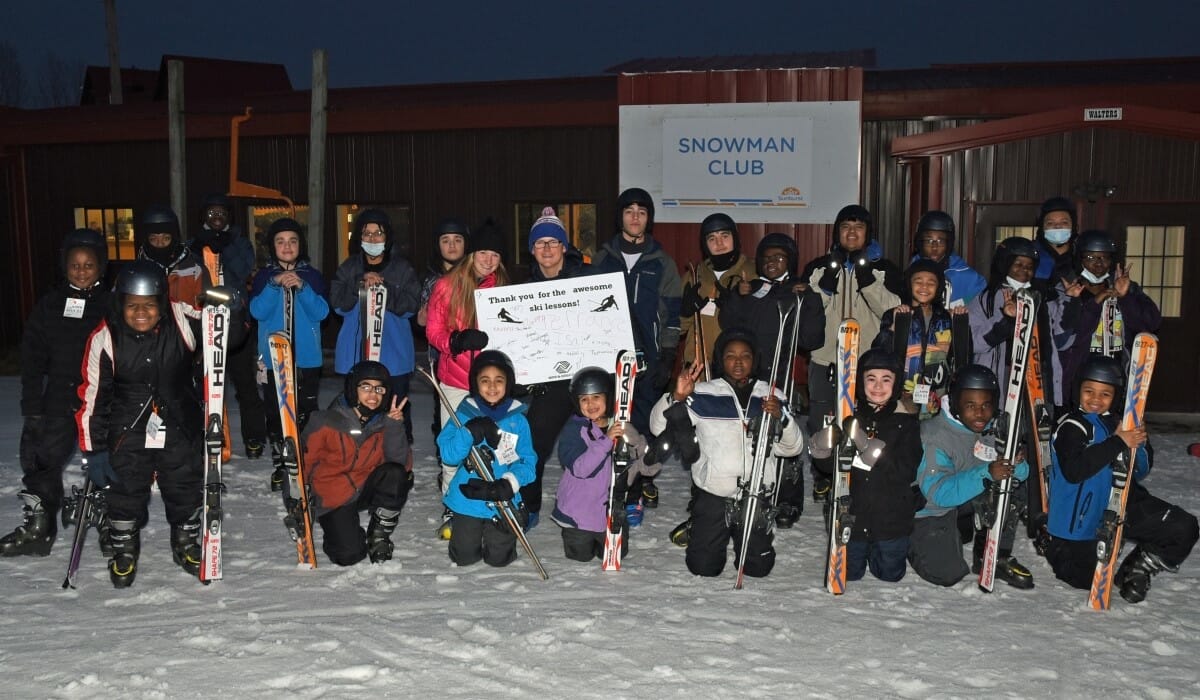
Jackson Darr, 17, has been skiing since he was 5 years old. He loves how it relaxes him and gives him a clear state of mind. But what bothered him and his younger sister, Mia, is that because skiing is an expensive activity, there are many kids in the nearby city of Milwaukee, Wisconsin who aren’t able to access the experience. In the fall of 2021, they decided to change that and founded Positive Altitudes, a nonprofit organization with the mission to increase the participation of kids from underrepresented communities in the sport of downhill skiing.
Each year the organization and their partnerships host about 60 participants at Sunburst Ski Hill. They provide transportation, ski lessons, rental ski equipment, winter clothing and meals. The age range of participants is from 6 to 18, and Jackson is always delighted by how quickly everyone is able to get comfortable with skiing by the end of their fourth lesson. Over the past two years, Positive Altitudes has provided 400 ski lessons and taught over 100 kids how to downhill ski.
What inspires you to volunteer?
Skiing has had such a positive impact on my life and Mia’s. It was something we gained an even deeper appreciation for during the COVID-19 pandemic as it was one of the only activities we could to safely. We know there are many financial barriers that prevent kids from being able to experience the sport and wanted to change that.
What motivated you to start Positive Altitudes?
My sister and I came up with the idea when we were actually on a chairlift skiing and thinking of ways how we could bridge the diversity gap in the ski world. Milwaukee, the nearest major city to Sunburst Ski Hill, the local ski mountain, is one of the most segregated cities in the United States, so we thought it’d be a great place to start Positive Altitudes. Also Sunburst Mountain is a smaller ski hill, so we knew we could make it possible.
Jackson Darr, his sister and some of the participants of Positive Altitude in 2022./Courtesy Jackson Darr
Describe your volunteer role with Positive Altitudes.
Not only are my sister and I the founders, we basically run everything relating to Positive Altitudes. Whether it’s teaching the ski lessons, getting all the clothing and equipment, picking up the food or working with the lawyers to establish a 501c3 nonprofit organization.
What’s been the most rewarding part of your work?
The most rewarding part is seeing the Positive Altitude participants on their third or fourth lesson and they’re already starting to be able to ski on their own – and they usually look pretty good for skiing for the first time. Hearing them describe how they feel like they’re flying, or hearing them say it’s an experience that they thought they would never be able to have is a great feeling. I love connecting with them, because we are all similar ages and have fun together. Many say that our program is a break in their stressful day. To know that we can provide a life in the day of our participants feels great.
What has surprised you about teaching people who have never skied before how to ski?
I am so impressed with how resilient our participants are. They may make a few spills at first, but the progress made week over week is so awesome to see. Every single person by the end of the four sessions is able to go down a run and make turns on their own. It’s pretty cool to see that.
What have you learned through your experiences as a volunteer?
I’ve learned that you can’t get down about any setbacks, you have to keep moving forward and keep trying. For example, one of the biggest problems is getting transportation to and from the ski mountain for the participants. Most of the kids come from four different Boys and Girls Club of Greater Milwaukee locations, and buses aren’t always reliable because of the snow and the 45-minute drive to the mountain. Trying to coordinate everything and making sure every sure everyone’s there on time is the most challenging part of my role. But I also think being able to show that kids can do like what most of adults can do. So, even if you’re young if you have an idea – keep pushing forward. Running the organization is so much like skiing, there are going to be spills along the way but if you get back up and keep trying you will succeed.
Are there any future partnerships, programs, or events that you are excited about?
Yes! Last year we had a lot of donations for food and clothing, so we hope to form even more partnerships with different organizations in the coming months for this upcoming ski season. Especially clothing donations because that is one of our most expensive costs. Also, after the participants ski all day, we give them dinner. So, this year we also want to try to add a speaker series during their dinner of influential people in the community to come out and talk to us about what has led to their success.
Why is it important for others to get involved in causes they care about?
I think it’s important because sometimes when people are doing service, they’re just doing it to get it done. And when that is your mindset, you don’t really see the impact of what you can have on different communities. If your volunteer work is something that you’re interested in – for example, for me it’s skiing – I’m able to have fun skiing and teaching kids how to ski, but I can also see the impact and feel how rewarding it is to be able to help these kids. Finding service that you’re interested in, and impacts people I think is the most meaningful type of service that you can do. Getting involved in causes you care about is super rewarding. Being able to see the smiles on the faces of our participants and knowing we may have had something do with is a really great feeling!
Do you want to make a difference in your community like Jackson? Find local volunteer
Volunteer Matches Buddies for Mentorship, Friendship and Support
Meet Daily Point of Light Award honoree Danielle Williams. Read her story and nominate an outstanding volunteer or family as a Daily Point of Light.
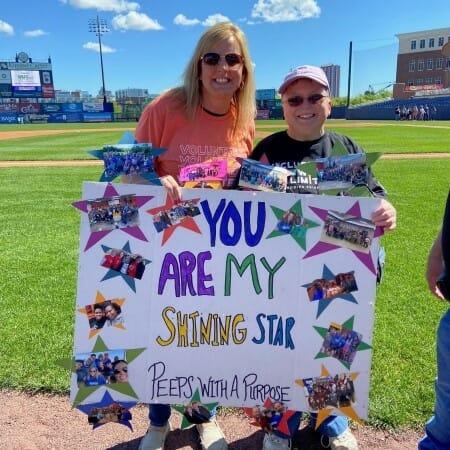
Since 2013, Danielle Williams of Newark, Delaware, has volunteered with Best Buddies Delaware, an organization that creates opportunities for one-to-one friendships, integrated employment, and leadership development for people with intellectual and developmental disabilities (IDD).
Danielle co-chairs Bank of America’s Delaware chapter, which is the organization’s second-largest chapter in the world, having matched over 70 buddy pairs. She personally spends 200 to 400 hours a year volunteering for the program and, after a decade, her passion hasn’t waned. Through Best Buddies, Bank of America employee volunteers are matched in a one-to-one mentorship with a Support Services employee who has an IDD.
Find out how Danielle lends her time and talent to this cause and what inspires her.
Describe your volunteer role.
I co-chair the Best Buddies Delaware chapter at Bank of America, along with co-chair Krista Scott. As a volunteer, I spend time with my own best buddy, Margaret, as if she was part of my family. As co-chairs, Krista and I create and hold numerous events throughout the year, and attend events for our chapter.
We try to be as inclusive as possible with the planning of these events. There are people in wheelchairs, people who can’t read… so we try to make our events fun for everyone. We manage the events, coming up with our own games and awards for everyone.
Danielle has been volunteering with Best Buddies Delaware for a decade./Courtesy Danielle Williams
The program we have is about mentoring and growing friendships, focusing on inclusion and being a role model for our buddies. We try and help them overcome fears, encourage them to do things that will boost their confidence and assist them with life events.
Some of our chapter events include our annual Fall Fest – which takes 50+ hours to prepare, including coming up with games, shopping for prizes and supplies, coordinating food and providing recognition. We also created a mock event for “The Voice” (including red carpet, TMZ reporters, live judges… you name it, we had it!). We organize karaoke, bingo, bowling, mini golf, craft nights, holiday mall event and monthly lunches. We attend larger events such as professional baseball games and an annual Longwood Gardens night during the winter, along with bowling events and dances. And we manage the “matches” – interviewing and matching “citizens” and “buddies.”
What inspired you to get started with this initiative?
I’ve always had a passion for helping others. When I first was introduced to this program a decade ago, I fell in love with it. At the bank, we have a department called Support Services, where we employ individuals with IDD. Krista first walked me around and I met the employees there, just seeing people and being introduced to them, seeing how excited they were just to say hi… from that day forward, I joined and have been involved ever since.
Are there any rewarding stories from your work?
We have karaoke nights. A lot of people are shy, and they don’t like to speak out in front of people. But let me tell you, when they have a microphone in their hand, they are a completely different person! Screaming and singing at the top of their lungs! Dancing, throwing their hands up, getting their friends involved. It just melts my heart.
Another situation that was very inspiring was when we had someone join the program who couldn’t read. This woman was in her 40’s, and her buddy has been working on literacy with her over the past two years. She is now at a first-grade reading level, which is a remarkable amount of progress. She’s come such a long way – it’s amazing.
My buddy, Margaret, grew up with her parents and her brother who also has an IDD. Her brother moved out years ago but visits each week. Their father passed in 2016 and in July 2021, their mother passed away unexpectedly. This left both siblings at a complete loss – not knowing where to begin in planning a funeral or taking ownership of the family home, plus all the responsibilities and bills that come with this situation.
This is where I stepped in – being cautious that I wasn’t overstepping. In reality, I was all Margaret really had, aside from her lifelong best friend. That being said, I assisted Margaret with funeral plans. I made very personal phone calls to the hospital, wrote the obituary, dug for details of their childhood memories and also wrote a eulogy and spoke at the funeral, helping pick out clothes for her mothers’ departure – all while being by Margaret’s side the entire way.
Any lessons you’ve learned along the way, or things you’d do differently?
Some of the lessons are more specific to our chapter. For instance, we wanted to increase the compatibility of our matches, so we implemented an interview process five or six years ago. Through this process, we can better match people who have common interests and live close by, which makes the buddy relationship and time spent together much easier for everyone.
We’ve had pairs matched for 13 years… some of these buddy relationships can last a lifetime. Buddies become part of your family. They come to your Christmas Day, your barbeques at home. People who have left the bank have even stayed part of the program because they were so bonded with their buddies.
What’s your advice for people who want to start volunteering?
Time is our biggest ability to give back. Once you’re volunteering, it just becomes a part of you. Being able to change lives one day at a time, one person at a time, to just be there for somebody, is so impactful. You’re giving your time… and who doesn’t want that?
Georgia Senior Brings Comfort and Care to Families One Lasagna at a Time
Meet Daily Point of Light Award honoree Lynn Hirsch. Read her story and nominate an outstanding volunteer or family as a Daily Point of Light.
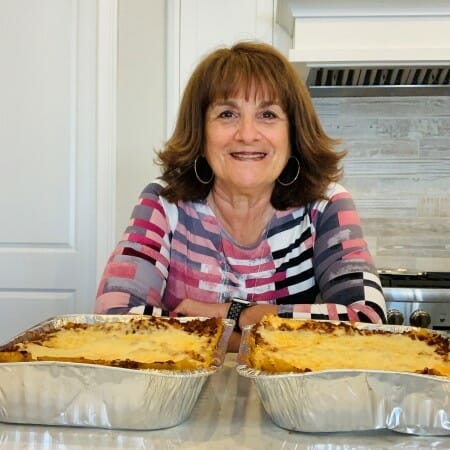
Lynn Hirsch, 71, is from a tight-knit family. She and her husband, approaching their 50th wedding anniversary, have known each other since they were two and four years old, respectively. Together, they have three kids and, now, five grandsons. They take family trips and celebrate special occasions as a unit, so when the COVID-19 pandemic hit, things got rough. It was the isolation of moving to a new town followed quickly by the pandemic lockdowns that led Lynn to volunteer with Lasagna Love, an organization she saw on The Today Show, as a way to meet her neighbors and do something meaningful.
For nearly three years, she has brought comfort food to anyone who requests it. Recipients may be dealing with health issues, adjusting to life with a new baby, working overtime at the hospital or managing any number of stressful situations. Finding purpose and new skills, Lynn uses her role as Outreach Director with Lasagna Love to train organization leaders, form partnerships, coordinate volunteers and more. Her husband, a retired physician, serves as a sous-chef and driver when they make and deliver pans of homemade lasagna.
What got you interested in cooking?
Growing up, my mother didn’t want our help in the kitchen, so I didn’t grow up learning how to cook. I got married right out of college, and my husband had to show me how to make spaghetti. It’s been a work in progress over the years. I always cooked for my family, but I never made lasagna. When I started with Lasagna Love, I had to learn how to make it. Now I’ve made hundreds.
What inspires you to volunteer?
When my kids were young, I volunteered at their schools and was president of the women’s group at my synagogue. I always did it for the better of that institution or group.
When we moved near our son to help with the grandkids, COVID hit and they decided to sell their house to travel the country in an RV. We didn’t know anybody, and nobody was meeting anybody at that time. Everything came to a standstill, and I didn’t have anything of importance to fill my hours. Volunteering with Lasagna Love was a great opportunity, because it was contact-free. I cooked in my home, and then I would drop it at people’s front doors.
Lynn Hirsch, National Volunteer Outreach Director of Lasagna Love, focuses on finding partnerships and places to spread kindness and comfort food./Courtesy Lynn Hirsch
I’ve also sporadically volunteered at the Ronald McDonald House. My sister lost a child, and she stayed for a very long time at the one in Atlanta. I always wanted to give back, so our family would cook meals there. When I got involved with Lasagna Love, I reached out. Now, I organize the Casserole Club. We go once a month and make a dozen casseroles or lasagna to put in the freezer for nights they don’t have food delivered.
Describe your volunteer role with Lasagna Love.
When I joined there were 500 volunteers and now at least 45,000 people have delivered lasagna over the course of three years. I started as a lasagna chef and realized that the only way Lasagna Love was going to grow was with outreach, which means social media and reaching out to media outlets. I started doing that on a really small scale. Leadership saw some merit in it and made me Outreach Director, which covers all 50 states, Puerto Rico, Canada and Australia.
I train the leaders. I created an Outreach Toolkit, which contains sample social media posts, sample emails that they can send to groups and organizations and the media, and tips and tools to let the world know about Lasagna Love and what we do. We’re brand ambassadors. I try to arm volunteers with materials that will be helpful for making first contact. I also build partnerships and recruit and match volunteers with families in need in my area.
What’s been the most rewarding part of your work?
First and foremost, it’s feeding the families. We don’t do this for thank yous, but it’s always nice when you get an email or a text telling you how much someone appreciated it. It’s also been great for me, because I’ve learned so much in my role.
What have you learned?
I wasn’t very tech savvy when I started this, but I know so much now. All of the leadership is young, so I call myself the matriarch of leadership. They’ve taught me so much. I create things on Canva, and I know how to run Zoom meetings. We have a new database called Tableau that I’m learning, and I know how to make spreadsheets and create content for social media.
I manage five email inboxes and use Bitly to track links. My Instagram account is public so that I can tag our partners and they can see my posts. I wouldn’t have ever done any of these things on my own without the encouragement of the people I work with.
Are there any future partnerships, programs, or events that you are excited about?
We celebrate National Lasagna Day, which is coming up on July 29, like it’s our Mardi Gras. We’re hoping to deliver 10,000 meals from July 21st to the 30th. Usually, we deliver 3,500 meals in a week, so it’s really been amped up to clear out the backlogs.
Carrabba’s Italian Grill is a partner each year for the occasion, and they provide us with 10 lasagnas at each of their locations – 2,000 in all – for our volunteers to deliver. Ragu provides sauce to some of our communities having big events. Galbani Cheese is another supporter. There are many partners, and they’ve all made monetary donations, too.
We’re also aiming to raise $100,000 and get 1,000 new volunteers in the month of July. On the day, July 29, our founder is going to host a lasagna-thon, on a Zoom or Facebook Live for two or three hours with guest chefs.
“No matter how it’s made, no matter how you vary the ingredients, the fact that you’re delivering it to a family who needs some comfort, makes it the best lasagna that they’ll ever taste.” – Daily Point of Light honoree Lynn Hirsch/Courtesy Lynn Hirsch
Why is it important for others to get involved in causes they care about?
The only way we can make this world a better place is by spreading kindness. Any volunteer work that you do is spreading kindness, whether it’s delivering a meal or mentoring a child. Our main tenant at Lasagna Love is “Feed families. Spread kindness. Strengthen communities.”
What do you want people to learn from your story?
You’re never too old to start something new in life. It’s important for me that people know that when they volunteer their time, the rewards are as great for them as they are for the people that they’re helping.
What’s the key to a good lasagna?
Patience. And the one thing I will never change in my recipe—I’ll use different sauces, noodles, meat, etc.—is the use of fresh parsley in my ricotta mixture. I don’t know if that’s the key to it, but that’s my constant. No matter how it’s made, no matter how you vary the ingredients, the fact that you’re delivering it to a family who needs some comfort, makes it the best lasagna that they’ll ever taste.