Volunteering to Improve the Quality of Life for Seniors and Their Caregivers
Meet Daily Point of Light Award honoree Jarvis Freeman. Read his story and nominate an outstanding volunteer or family as a Daily Point of Light.
Jarvis Freeman’s volunteer journey began at home, when he and other family members were taking turns caring for his grandmother. His family is close and everyone does their part. Jarvis helped his grandmother around the house, took her to the store and sat with her.
After his grandmother passed, Jarvis realized there was a greater need to help seniors. In 2007 he started volunteering at the West County Senior Care Center in Florida. In 2008, he started volunteering in seniors’ homes. Read on to learn more about his volunteer service, and what inspires him to get involved in causes that matter to him.
What inspires you to volunteer?
Many seniors don’t have companionship and help. For those that have family caregivers like a spouse or an adult child, there is often no relief for the caregiver. Other than caring for their loved one, these family members don’t have much of a life anymore.
Describe your volunteer role with the Palm Beach County Division of Senior & Veteran Services.
My primary role is to relieve a family caregiver. The service only relieves family caregivers, not paid caregivers. Volunteers give family caregivers a chance to get out and enjoy their life for 4-8 hours whether it’s to visit friends, get their hair done, go for a walk or go shopping.
What I do day to day depends on the person I’m with and what they’re going through. My aim is to help both the seniors and their caregivers. For example, I helped one paralyzed individual get in and out of bed and shower, and I would take him out in his wheelchair to get fresh air. Although my main role is to be a companion to a senior, I often do some cooking, light housekeeping and other chores around the house. We don’t drive the seniors around but I’ll go on the bus and accompany them to their doctor appointments or make transportation arrangements.
What’s been the most rewarding part of your work?
I have been doing this for years and I’m usually assigned to the same people. I get to know them, share stories with them and help them. It’s rewarding to know that because of what I do these seniors get some stimulation and relieve family caregivers.
What have you learned through your experiences as a volunteer?
Never judge a book by its cover. Sit and listen to the seniors. They have wisdom and you never know what you’ll learn!
Are there any future partnerships, programs, or events that you are excited about?
The Palm Beach County Division of Senior & Veteran Services offers dementia classes for volunteers and for the family members to help them understand dementia and how to care for their loved ones. Every case of dementia is different, so these classes help anyone that’s dealing with a loved one with dementia.
Why is it important for others to get involved with causes they care about?
Not enough people do it, to be honest. Not enough people take the time to be with and help seniors. Some seniors don’t get a chance to get out and have much of a life. Many are isolated. They are desperate for companionship. They are also often desperate for help but may be too proud to ask.
What do you want people to learn from your story?
It’s never too late to help somebody. No matter what age you are, you can always give other people some kind of help and guidance.
Turning Great Loss into Effective Action: A Story of Resilience, Art and Community
Meet Daily Point of Light Award honoree Charlotte Rosario. Read her story and nominate an outstanding volunteer or family as a Daily Point of Light.
Content Warning: Points of Light is proud to share the following uplifting and inspiring story. However, we acknowledge that a portion mentions suicide and may be difficult for some readers. We encourage you to please care for your own well-being above all.
When Charlotte Rosario was just 12 years old, she lost her dad to suicide. Her family was already devastated when, shortly after, the rest of the world came to a grinding halt with COVID lockdowns. What was already a difficult time led to even more challenges.
“My dad, reflecting back on his life, was disconnected in many ways from our community and didn’t get much support,” Charlotte, now a rising high school junior, says.
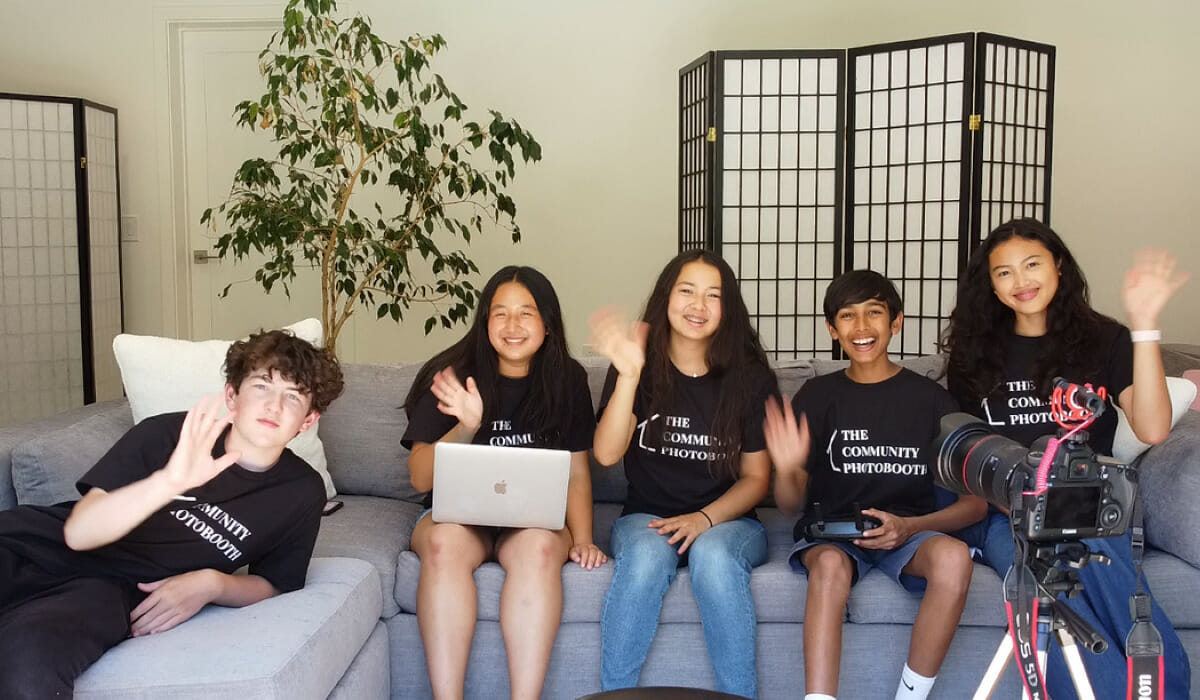
Unsure of how to spend her days at home, she stumbled upon her family’s old Nikon D60 camera and started taking it — and her dog, Kipper — on walks around the community. She’d even venture into San Francisco to take pictures of people and places, meeting new neighbors along the way. It was her enjoyment of photography and the need to channel her grief into action that led her to found The Community Photobooth later that year.
“After my dad’s death, my family — my mom especially — taught me the importance of healing by helping others. That’s the guiding principle of how I live my life now,” Charlotte shares.
The organization utilizes teen photographers to host family photoshoots or to cover events around Northern California in order to raise funds for people who don’t receive much support or recognition for the community work they’re doing. They also raise awareness of the importance of mental health. While it was initially supporting local hospitals and food banks impacted by the pandemic, it has since expanded its reach.
The group spends a lot of time researching potential recipients before deciding who will be the subject of their fundraisers. One such person was Ukrainian photographer, Julia Kotchetova, who is working independently to document the war in her country.
“We worked with her to raise funds to help support her efforts and purchase protective equipment for her so that when she’s going out into the battlefields, she’s protected,” Charlotte adds.
As for her part, Charlotte oversees 12 photographers, each with their own “photobooth” where people can book shoots. Much of her work is coordinating events and creating an overarching strategy for the organization.
“It feels like family, and it really warms my heart to know that The Community Photobooth is helping unite teens in a shared mission of highlighting and supporting invisible needs,” she says.
Charlotte Rosario [middle], 16, and her team of photographers and filmmakers on the set of their youth mental health documentary, “It’s Time We Talk About It,” which garnered national media attention and has been integrated into high school curricula across the country./Courtesy Charlotte RosarioSince 2020, The Community Photobooth has raised over $40,000. Around $13,000 of that went to the National Alliance on Mental Illness (NAMI) and a high school mental health program Charlotte helped implement in multiple districts called Ending the Silence.
“We’ve since really grown the program and our funding, but when she came to us, that funding was crucial to us re-launching. Since she raised that money, we touched over 2,500 high schoolers in that year alone,” explains Leslie Davis, interim Executive Director of NAMI during that period and Charlotte’s current mentor.
Due to the success of Ending the Silence, NAMI has been able to form youth support groups for high schoolers and college students. Charlotte, who also volunteers with NAMI, will be leading their new Youth Advisory Committee, a group that ensures the umbrella organization knows what students need without making assumptions.
“The great thing about Charlotte is that anyone who works with her, especially other students that may not be as savvy in different areas as she is, she brings along. She mentors so many people,” Leslie adds.
Last year, Charlotte’s passion for ending the stigma around mental health and building community led to another project, a documentary called It’s Time We Talk About It, that she wrote and directed. It was inspired by Katie Meyer, a Stanford women’s soccer team captain who took her life in March of 2022.
“I remember hearing about her passing on the news and turning to my mom, telling her that I couldn’t keep our story in any longer,” Charlotte recalls. “My family was not comfortable talking about our situation for many years following my dad’s death. And so, in the last year or two, it’s been really transformative, because I’ve finally been able to come forward about my story, and the documentary was the big way that I did that.”
In the film, three young adults including Katie Meyers’ teammate, a member of the LGBTQ+ community and Charlotte speak about their experiences surrounding suicide. It has garnered national media attention and has been adopted as an educational resource by organizations like CASSY Bay Area and The Health Care Collective.
“The documentary has been really a powerful and effective way of sharing all these stories all around the country, to have them be used as educational resources and to start conversations in families and schools,” Charlotte mentions.
In February of this year, she went into more detail about her story than ever before on a segment for CBS’s Kids in Crisis segment, feeling that being vulnerable with the population she was trying to support would make her a better advocate. Sharing was a big step in her healing process, and she was motivated to give others the chance to do the same. Last December, Charlotte hosted a community open mic night where she and others could talk about their experiences with mental illness and suicide, breaking the ever-present stigma along the way.
“The biggest thing I’ve learned through this whole experience that I hope to share with others is to take what really festers inside of you — the sadness, the grief, the anxiety or fear — whatever keeps you up at night, and use that as fuel to do something good in your community,” she suggests.
What began a tragedy has become a movement. Not only has Charlotte built a stronger, more caring community, but she touches people wherever she goes.
“She really cares about each person. She will make that person feel like they’re the only person in the room and the only person that exists. And she will truly get to know them,” Leslie says. “If there’s an anniversary or something coming up, she’ll remember things like that. And she always gives the extra effort.”
“Getting through the last few years was very tough, and I think knowing that my dad did not have a robust community support system really drove me to build that community, not only for others, but in many ways, for myself,” Charlotte says.
This year, she and The Community Photobooth look forward to supporting a group in Kenya that helps young refugees get off the streets by teaching them photography as well as Battle Osteosarcoma, an organization that promotes the research of a cancer that has sadly taken multiple members of the local community.
“Charlotte has been through a lot, and she’s the most resilient, incredibly brilliant, high schooler that I’ve seen in years, and I’ve hired thousands of high schoolers over my nonprofit career,” Leslie states.
“I’m just really grateful for all the people that have been a part of this mission,” Charlotte reflects. “Going forward, I hope I can continue to support my community, and I hope that more people will do the same.”
If you or someone you know may be considering suicide, contact the National Suicide Prevention Lifeline at 1-800-273-8255, or text HOME to 741741 to talk to a trained crisis counselor through Crisis Text Line. Both resources are anonymous, free and available 24/7.
Dallas Father Creates a Sense of Belonging and Empowerment for Youth Through Rowing
Meet Daily Point of Light Award honoree David Slear. Read his story and nominate an outstanding volunteer or family as a Daily Point of Light.
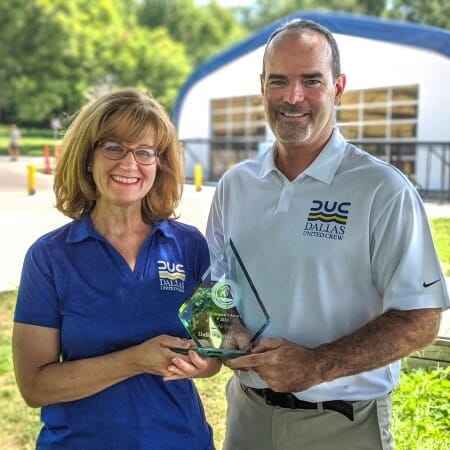
When David Slear’s son started rowing after moving to Dallas, the team sport changed both of their lives. David saw his son and many other high school and middle school-aged students truly flourish as they became a part of a team. Eventually David got involved with Dallas United Crew (DUC) himself and helps empower youth in the city through rowing and dragon-boating.
For seven years, David has transitioned in and out of various leadership roles where he expanded outreach to underserved youth, nearly doubled DUC’s financial aid to rowers, built the club’s boathouse, added a van for after-school transportation, reached an agreement with Dallas Parks Department and more.
What inspires you to volunteer?
With the Dallas United Crew, what really inspired me was the impact I saw it having on our youth athletes. My son was a perfect example of this. He was a kid when we moved to Texas for work and he was in eighth grade, I think. He was a smart kid, but had never had much success with any sort of athletic team he joined. When we moved to a new city, we told him that he needed to get involved in something; he couldn’t just sit at home and go to school. So, kicking and screaming, we made him join this rowing club. He just gelled with it right away and it turns out that he was actually pretty good at it, too. Rowing is really a sport where the more you work at it, the better you’re going to be. You get out of it what you put into it, and he loved it.
Describe your volunteer role with Dallas United Crew.
I just rolled off as president of the Dallas United Crew after three years and my tenure on the board actually just ran out, so now I’m a member of the finance committee. I was also vice president as well.
For the past seven years, David Slear has volunteered with Dallas United Crew, a nonprofit organisation that helps empower youth in Dallas through rowing and dragon-boating./Courtesy David Slear
Rowing is an expensive sport, and it has a history of being kind of an elite, “Northeast prep school” type of sport. The equipment is expensive; you can’t just get a soccer ball and hop on a field. These racing sculls that the kids race in cost about $50,000. It’s like giving these kids a car to drive around. So, something that Dallas United Crew has done is really work hard at expanding the program and finding ways to allow more and more kids who maybe can’t afford the club dues and equipment to row. We also work at breaking down that barrier of going on the water on a boat, especially for some groups of kids who didn’t grow up swimming. Rowing isn’t a sport that people hear about a lot in Texas. It’s a football state. Everybody knows football down here. So, we’ve done a lot of work with outreach, especially with some of the less resourced schools and kids.
We do this because not only does it transform their confidence and sense of self, but rowing is hands down one of the best ways to go to college. There’s no other youth sport that has the opportunities to join a team as rowing. The women’s rowing team at the University of Texas is the second largest team after the football team on campus. There are 169 women’s rowing programs in the country, but there’s just not that many youth rowers, so your opportunities are really, really large to be a part of them if you start rowing.
What’s been the most rewarding part of your work?
I get to see these students gel and get to be part of an organization and part of a team. Then comes all the leadership, camaraderie and sportsmanship. I saw it happen to my son and to so many others. In this sport, there are no superstars, there’s no one who scores the winning point. The whole crew in the boat, they all win or lose together. You crossed the line together. They call it the ultimate team sport for that. I see it happen and then I see them kind of transcend. All of a sudden, you have a kid who has confidence and who is getting physical fitness. They’re part of a group of people who would do anything for them. All the young people are experiencing this. That’s something that I can certainly be supportive of, to try to help other people have that opportunity to do.
What have you learned through your experiences leading this organization?
Honestly just the impact that rowing has on these high school kids, even middle school kids, but it’s really the high school kids who start to experience it. Rowing helps them, but it also carries them forward into life. It teaches you how to function as a group. It’s just such a good skill set for kids to have when they get to college and start entering the workforce.
Are there any future partnerships, programs, or events that you are excited about?
The rowers just finished their summer training and their summer regatta. We also have an exciting grant that was just awarded to us that we’re planning to announce either this month or early next month. Then we’ll kick off the fall season and we have two brand new coaches that joined. There’s a lot going on.
Why is it important for others to get involved in causes they care about?
It’s important because, when you’ve been through some life experiences, you have areas that you can contribute to and make an impact on for others. There’s so much besides work that can be super impactful for people. Getting involved helps the community and it changes lives. Give your time and allow others to experience things in life that are good. This rowing club can be an example: it’s not all sunshine and butterflies – we’ve had contentious moments and issues – but something like this club can continue because people believe in what it’s doing and the mission it’s spreading.
What do you want people to learn from your story?
You’re going to get more out of giving your time than what you’re going to put in. It will be a lot of work, but it will be fun. It won’t always be fun, but at the end of it, you’ll get more out of it than you put into it and you’ll be a better person because of it.
High School Senior Combines Music, Gratitude and Self-Care Practices to Spread Wellbeing
Meet Daily Point of Light Award honoree Joseph Darcourt. Read his story and nominate an outstanding volunteer or family as a Daily Point of Light.
Joseph Darcourt, a rising senior from Merrick, New York, grew up in an immigrant family. His father, born in Lima, Peru, dedicated his entire life to the service industry. His work brought him joy while supporting the family, allowing Joseph’s mom to be a devoted stay-at-home mom. Joseph’s mom grew up in Taipei, Taiwan, and instilled in him, since he was little, the value and practice of meditation, gratitude and the belief that “giving is a blessing,” regardless of its magnitude.
Today, Joseph has served in the classroom, hospital, church, monastery, street, park and local settings through the medium of his “M&M/Music and Meditation” workshop. This workshop aims to normalize self-care and daily gratitude practices with a two-part structure that includes a breathing meditation focused on gratitude, and the soothing melodies of the cello. Joseph and his mother established their nonprofit Olifeclass during the pandemic.
Read on to find out what inspires Joseph and hear about the volunteer work he’s been doing utilizing music and self-care practices in recovery settings.
Describe your volunteer role.
During my sophomore year in the summer of 2022, I initiated the “M&M” workshop as part of the Sparks of Life program at NewYork-Presbyterian (NYP) Brooklyn Methodist Hospital. As a volunteer, I led the workshop to bring joy and brightness to patients’ days in the neurological rehabilitation unit.
Initially, I conducted group sessions alongside a physical therapist as the COVID-19 restrictions were lifted. While interacting with patients, I discovered varying musical preferences, with some even being classical music enthusiasts unfamiliar with the cello. Nonetheless, the sound of the cello had a profound impact, touching the hearts of listeners.
Joseph’s nonprofit, Olifeclass, seeks to spread wellbeing./Courtesy Joseph Darcourt
In my junior year, I was able to start conducting room-to-room visits weekly. Each visit encompassed approximately five rooms, including patients, their loved ones and, occasionally, nurses and staff. I volunteered regularly over the course of a year, visiting hundreds of patients and their families. Volunteering became the highlight of my week, bringing immense joy to others as to myself.
What inspired you to get started with this initiative?
When I was 11 years old, I created the “M&M” workshop as part of the Artist as Citizen assignment at the Juilliard School’s Music Advancement Program (MAP). The assignment aimed to explore how the arts can foster connections, strengthen community and inspire social change. Combining the “Thank You Breathing Meditation,” which I learned from my mom at age five, with classical music, I invited my elementary school principal, teachers, friends and their families to my first workshop at my local library. The performance moved everyone, and it reaffirmed for me the power of music in bringing people together.
Recognizing stress as a significant concern among my peers, I became inspired to use classical music and the “Thank You Breathing Meditation” to promote collective mental well-being among youth. A little self-care can go a long way.
Through volunteering at the library and my elementary school, I was able to witness the positive impact of music on listeners. Although it was my dream to bring the “M&M” workshop to a hospital, age restrictions delayed that plan. During the pandemic lockdown, I witnessed the overwhelming growth of depression and anxiety-related disorders worldwide; my motivation to volunteer at a hospital only grew. Research led me to the “Sparks of Life” program at New York-Presbyterian (NYP) Brooklyn Methodist Hospital, one of, if not the only program that accepts individually-created projects for the healing process. Once I turned 16, I submitted my project, and my dream of volunteering at a hospital came true through NYP’s “Sparks of Life” program.
Any lessons you’ve learned along the way, or things you’d do differently?
Like my mom says, “It is a blessing to give.” Having the privilege to share the uplifting power of music and a simple “Thank You Breathing Meditation,” engaging in meaningful interactions with patients and their families along the way, I have realized the immense potential music and meditation can hold in the healing process.
That is another key point: social interactions. Whether it be asking questions about the meditation, the pieces being played, or even about what the cello is, the “M&M” workshop can help participants feel connected and loved. I have realized the transformative impact volunteering has had on giver and receiver. Seeing the nurses, hospital staff and the patients’ families during every hospital visit has inspired me to create an “M&M” hub/pod within the hospital, providing a dedicated space for patients/staff alike to rest and rejuvenate. My hope is to bring this vision to life in the near future.
What’s your advice for people who want to start volunteering?
Be sure to start small, stay open to new experiences, choose a cause you are passionate about, research local opportunities, reach out to organizations directly, and most importantly, enjoy the journey. And know that you are welcome to join my team!
Playful to Powerful: Arizona Couple Fosters Therapy and Service Dogs as They Train to Assist
Meet Daily Point of Light Award honoree Mike and Cindy Sturgill. Read their story and nominate an outstanding volunteer or family as a Daily Point of Light.
Like most couples in the post-work phase of life, Mike, a retired engineer, and Cindy Sturgill, a nearly-retired auditor-turned-business-manager, love travelling and spending time with their friends and grandkids in the endless summer of Arizona. Both are active outdoor enthusiasts who enjoy hiking and cycling, though Mike’s passion takes him around the world on ultra-distance rides of 200+ miles a day. While he prefers riding with company, it can be a challenge to find someone with the time and stamina for the task.
It’s that same stamina the couple uses for their volunteer work. Since 2018, Mike and Cindy have dedicated their time to Power Paws, an organization that trains dogs to assist disabled adults and children. What began as an expected two-week dogsitting gig turned into a nine-month stint that changed their lives. So far, the Sturgills have placed four dogs and are currently caring for their fifth and sixth, Jami and Coco.
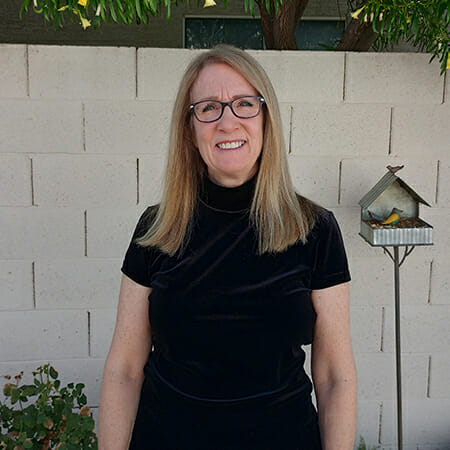
Cindy Sturgill, business manager for an architect and dedicated volunteer./Courtesy Mike and Cindy Sturgill
What inspires you to volunteer?
Mike:A friend who trained her dog to become a therapy dog with Gabriel’s Angels was taking her into disadvantaged schools to comfort traumatized kids. In order to have the dog with one child at a time, she needed some help. So, we would do activities with the other kids while they took turns working with the dog with Teresa. Eventually, Power Paws sent out an email to the Gabriel’s Angels email list asking if anyone would be interested in being a dogsitter.
We had recently lost our dog, so we decided to give it a try. It was supposed to be a two-week gig, and nine months later, Taylor–our first–was placed in the home of a child with Type 1 diabetes as a diabetic-detection dog. Seeing that process, we fell in love with it, and we’ve been volunteers ever since.
Describe your volunteer role with Power Paws.
Mike:We get a dog that’s generally very excitable, normally a Lab or Golden Retriever. Once they’re at least 10 months old, and they’re potty trained with some other basic training, we take them until they’re placed. Vail was with us the shortest amount of time, around six months. And the longest was as Aztec, almost three years.
At that age, they’re still babies at heart and just want to play. We provide structure, love, food, housing, etc. We take them everywhere in order to get them used to people, other dogs and noises. We go to all of their vet appointments for shots and everything. We basically have them 24/7 except when we take them into training at Power Paws.
We’re not trainers, but we work with the Power Paws trainers to understand what they’re working on so that we can reinforce it when the dogs are in our care. We try to mimic the training so that there’s consistency with what the dog sees and knows it has to do.
What’s been the most rewarding part of your work?
Cindy: Power Paws essentially shut down during the pandemic, so Aztec became our COVID comfort dog. I’m still grieving that loss. No matter how much you prepare yourself, you still miss them when they get placed.
These dogs are very special, well-behaved animals. They’re sweet and loving, so I know they’ll go on to give that to a person that needs them more than I do. They will be enhancing another life in ways that we can’t begin to comprehend. That’s what gets me through.
Mike: It’s both the most challenging and the most rewarding part. Working with these animals is a fantastic experience. Because of HIPPA regulations, we don’t get to hear the specifics of where a dog is going. We know if it’s for mobility or diabetes, etc. but we don’t know anything about the people. That being said, the lady who took Taylor for her son wrote a story we got to read about how he changed their lives. It’s so heartwarming.
What are some examples of people who would be eligible for a dog?
Mike:Power Paws has four different services that they train the dogs for: PTSD, diabetic-detection, mobility-impaired or a facility or comfort dog who would accompany someone in, say, a courtroom or other high stress situation. You may have seen dogs underneath witness stands, especially when children are deposed, who are there for a person who may be afraid.
Before they get to us, all dogs are trained for a general set of commands and activities. Then, they let the dog determine the ultimate direction. Taylor, the diabetic-detection dog, was an absolute nutball personality-wise, but he had the most incredible nose, so Power Paws felt it was worth the additional effort to try to rein him in. Ultimately, he was placed with the 8-year-old boy we mentioned.
What have you learned through your experiences as a volunteer?
Mike:I was heavily involved with Taylor’s training. I had seen dogs on TV that could sniff and detect cancer or find bodies hidden in 40 feet of rubble or under avalanches, but I never understood how. That was one of the more interesting things that I learned, how to actually train a dog.
Cindy:One of the most important things that I’ve learned is the impact that dogs have on people’s lives. It transcends having an adorable pet that you love. They’re vital to our quality of life.
Mike: Also, dogs can do things that humans can’t. When we first walked into those classrooms with Gabriel Angels and the therapy dog, those kids had been abused in any number of deplorable ways. They were so introverted that most of them wouldn’t even look up. After two or three visits, they were looking up and getting involved in activities. Seven or eight visits in, the entire class was looking forward to Ellie Mae coming in and working with her. It changed every kid in that classroom in positive ways and was astounding to see.
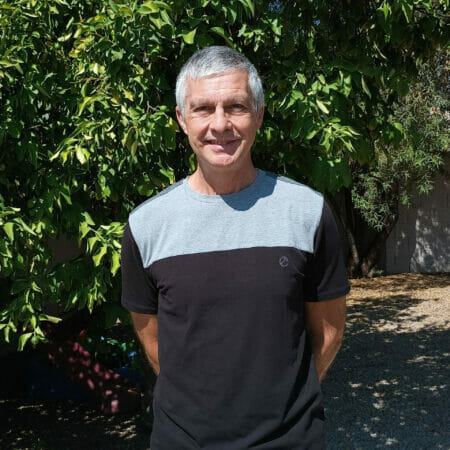
Mike Sturgill is a retired engineer, an ultra-distance cyclist and an Power Paws volunteers./Courtesy Mike and Cindy Sturgill
Why is it important for others to get involved in causes they care about?
Cindy: We all have an effect on each other in some way or another. It’s important to get involved in something that has a positive impact on people’s lives so that it’s intentional.
Mike: There are many people in the world with challenges and disadvantages that I don’t face on a normal day. Each place I volunteer is out of a desire to fill a need that people either can’t afford or don’t know how to achieve on their own. For me, it’s that feeling of gratification I get when I see the results of the work I do.
What do you want people to learn from your story?
Cindy: Our biggest goal is to encourage other people to help out Power Paws, because they really need more volunteers to do what we do.
Mike: These are long-term investments, not activities that you can just do for an hour and be done, so it’s hard to get volunteers. Don’t be afraid to share your time with others, to give without expecting something in return. It feels great to make someone happy.
14-year-old volunteer brings sports to schools in San Diego wihtout athletic programs
Meet Daily Point of Light Award honoree Arden Pala. Read his story and nominate an outstanding volunteer or family as a Daily Point of Light.
At a young age, Arden Pala started volunteering with his family, and he immediately was hooked. Now, at the age of 14 years old, he is the founder of his very own volunteer program in San Diego called Sports4Kids. Fueled by his own passion for basketball and wanting to support students who are unhoused, Sports4Kids provides sports clinics for schools in areas where income levels are below the poverty threshold. Additionally, twice a year, the organization puts together care packages full of hygiene products, toys and sports equipment. Arden is very excited when he can give kids their own basketball so they also can play in their free time. Currently, the Sports4Kids serves three schools – approximately 450 students each year – but Arden is working on expanding to many more.
Arden is enthusiastic about spreading awareness of the unhoused population in San Diego. Not only does he spend time with the students participating in Sports4Kids, but he also created a documentary, “A Second Chance,” that shows the challenges of people who are currently living without housing. He interviewed six people who are unhoused, and two experts on the subject. The documentary received numerous awards and recognition.
What inspires you to volunteer?
This one instance really sticks out to me. A few years ago, I read books to students at César Chavez Elementary School, where there is about a 90 percent rate of unhoused students. Then a week later, I found 80 little notes in my mailbox – every kid wrote a note for me. It was so sweet. And I think that really drives me to do more volunteering because I saw how much it really affects people. Even by doing a task so small that other people might take for granted. It just warmed my heart to see those little notes come in the mail, and it really changed my perspective about volunteering.
Why did you start Sports4Kids?
After I read the books to the students at César Chavez Elementary School, the principal was walking me out and he said the school had to lay off their athletics teacher, and they had no other coaches available. The kids weren’t getting any P.E. time or any athletics at all. So, I stepped in as the athletics coach. I only came once a week, but I thought maybe it would help the kids at least a little bit. Later, I realized how big of an affect one hour a week of sports had on these kids – it even improved their grades believe it or not. I realized how big of an affect fitness had on a growing child’s mind. So, I decided to spread Sports4Kids to more and more schools.
Describe your volunteer role with Sports4Kids.
Now that the organization has been able to hire private coaches for the schools, right now my main focus is to apply for more grants and more partnerships. I’m an assistant coach at two of the schools, and I also do presentations at other schools about our organization. During these presentations, I talk about common stereotypes about unhoused people, and how most of the stereotypes are wrong. I just want to spread awareness about the people without housing in San Diego because at the end of the day one of my biggest concerns is about how little people know about how large the unhoused population is in the city.
What’s been the most rewarding part of your work?
Whenever I finish a volunteering task, even if it’s picking up trash on the side of the road, I always have a good feeling in my heart. I feel like you don’t get that feeling from any other activity. Another rewarding part of volunteering is the friends I make. Especially when I was first starting Sports4Kids, I made friends with the students I coached, and I made so many fun memories of the kids and I playing basketball. I even have some of kids’ phone numbers and we text from time to time. It’s so much fun, and we’re all really good friends now.
What have you learned through your experiences as a volunteer?
I learned volunteering is not as hard as people think, and a task that someone might think is not a lot of help can actually make a big impact on people. For example, the book reading I did early on took maybe an hour and a half out of my day, but my mom, the student’s teacher, later told me that so many kids loved me doing the book reading, and that many of them were inspired by it.
Are there any future partnerships, programs, or events that you are excited about?
Yes! We just made a partnership with Dick’s Sporting Goods Foundation. They’re giving us $5,000 to spend on private coaches, snacks and sports gear for the kids. Also, they might donate some Puma soccer balls. Then, more long term, we really want to open our clinic in more schools because I never realized how big of an affect sport has on kids. I think there is about 20 different schools whose communities’ income levels are below the poverty threshold in San Diego, and we’re only working with three right now. I keep on imagining how big of an affect we could have if we worked with all 20 schools. And that’s our main goal is just bringing Sports4Kids to more schools and creating more partnerships so we can help more kids.
Why is it important for others to get involved in causes they care about?
I think about the Gandhi quote, “be the change you want to see in the world.” If you want something to change, instead of hoping for someone else to do it, why don’t you step in and help that cause? I thought of that quote when the principal at César Chavez Elementary School told me about the students not having an athletic program and I wanted the kids to have a sport to play. I remember falling in love with basketball, and I wanted the kids to have that same feeling and that same opportunity with other sports. So instead of waiting for someone else or another P.E. coach to come in maybe a few months, I stepped in, and I coached the kids.
What do you want people to learn from your story?
What I want people to learn from my story is that no matter what age you are, you can make a change if you just pour your heart into it. I started volunteering when I was about four years old, and my parents took me to a dinner serving at Interfaith Community Services where I served food to the unhoused people at the shelter. I still have those good memories that I made volunteering at a young age, and that’s the reason why I’m still volunteering today. So, I want people to know, no matter what age you are, you can make a difference. It’s never too early and it’s never too late. Just pour your heart into it and really believe in the problem that you want to solve.
Hedgehog Beanies: A Young Entrepreneur’s Mission to Warm the Unhoused
Meet Daily Point of Light Award honoree Cooper Schwartz. Read his story and nominate an outstanding volunteer or family as a Daily Point of Light.
Cooper Schwartz’s parents took him on volunteer outings as a child, hoping to instill a sense of compassion and altruism in him. But they never could have imagined that volunteerism would become such a big part of his identity that it would lead him to start his own business to help others.
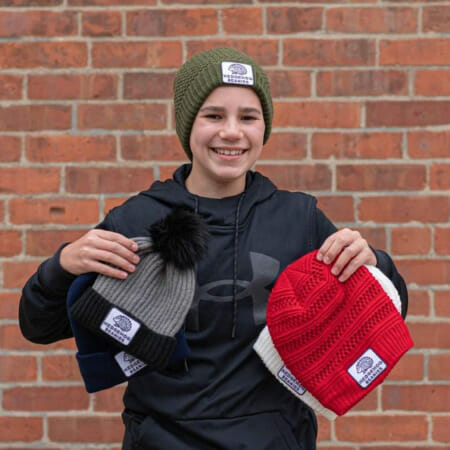
Today, at the age of 17, Cooper is the founder and CEO of Hedgehog Beanies, a not-for-profit business that sells stylish winter headwear and donates all proceeds to provide winter clothing to those who are unhoused. For each beanie or hat sold through his website, Cooper donates a beanie, a pair of socks and gloves to a person without safe and consistent housing. The remaining proceeds are donated to shelters and organizations helping the unhoused find stable housing, including homeless veterans.
The inspiration for Hedgehog Beanies came to Cooper as he volunteered with his family at local soup kitchens and clothing drives from fourth to eighth grade while he lived in Connecticut.
“Once or twice a month, I passed out warm clothing and food on the New Haven Green where there’s a high [unhoused] population,” Cooper said. “After meeting all these people and hearing their stories, I wanted to do something bigger.”
Since starting Hedgehog Beanies in 2020, Cooper has donated more than 16,000 beanies, socks and gloves to those who are unhoused./Courtesy Cooper Schwartz
So, in May of 2020, as the COVID-19 pandemic made conditions even more dire for the unhoused population, Cooper started Hedgehog Beanies, funded by the money he saved up working as a youth hockey referee and a start-up loan provided by his dad, with a set of terms for payback.
“It was a mess at the start because of how COVID disrupted the supply chain,” Cooper said. “Everything was delayed and out of stock. But I had a few manufacturers for the beanies, and the initial rounds were a lot of sample testing, probably close to 100 different types of hats. I worked with the companies to establish 12 or 15 hats. Then it was just a matter of keeping relationships with manufacturers and getting the hats on time so that I could sell them on my website.”
While Ian Schwartz helped Cooper kick off the business with a few legal issues and basic business fundamentals, he credits his son for doing the heavy lifting.
“He learned most of this himself in terms of how to set up a business, how to do marketing,” Ian said. “He really connected with a lot of people – store owners, people in the community – who really latched onto what he was trying to do.”
For every beanie sold, Cooper donates a beanie, a pair of socks and gloves to a person who is unhoused./Courtesy Cooper Schwartz
Since sending out its first beanie in November 2020, Hedgehog Beanies has been a massive success, donating more than 16,000 hats, socks and gloves to dozens of shelters and organizations across New England, Wisconsin, New York, Illinois, Michigan and Minnesota – states with life-threatening winter conditions. Sometimes Cooper hands them out directly to people experiencing homelessness.
“You can just see that they’re truly grateful for it and it’s stuff that they really need,” Cooper said. “Some people have not been given anything in quite a while, so I think they were very appreciative that I was there.”
Cooper, who moved to Elm Grove, Wisconsin, last August, is now a rising high school senior. Outside of running Hedgehog Beanies, he likes rock-climbing and playing his guitar. And while his young age could’ve caused him to be intimidated when dealing with business owners and adult customers, he didn’t let that hold him back.
“You can be the little guy and still be able to do great things,” Cooper said.
High School Senior Takes on Gender Inequality by Empowering Girls to Pursue Underrepresented Fields
Meet Daily Point of Light Award honoree Sahana Ahuja. Read her story and nominate an outstanding volunteer or family as a Daily Point of Light.
Marian Wright Edelman, Founder and President of the Children’s Defense Fund once said, “It’s hard to be what you can’t see,” in regards to the lack of female role models in computer science. Sahana Ahuja, now a senior in high school, was just 13 when she was inspired to show young women some of the many things they can be. When she founded The Launch Project in 2019, Sahana decided to build critical skills and equitable opportunities in the underrepresented areas of business, politics and STEM for girls. Her goal is to address gender gaps for women by empowering, educating and developing girls – particularly those in middle school, high school and college – to become tomorrow’s leaders, changemakers and entrepreneurs. And she’s off to a great start.
With 65 chapters worldwide and thousands of members, people are taking note of The Launch Project. The organization has been covered in the press, and Sahana has been a featured guest on the Wharton School of the University of Pennsylvania’s podcast. One of the organization’s crowning achievements was the soon-to-be annual Female Empowerment Summit held at the US Patent and Trademark Organization (USPTO) offices in Alexandria, Virginia. Over 200 girls and women of all ages attended in-person and many more virtually. There were speakers and sponsors from government agencies, small businesses and Fortune 500 companies.
Sahana seeks out many leadership roles and currently serves as the head of day students at her boarding school, one of the two highest student government positions. She also co-led a team with her younger sister and vice-president of The Launch Project, Ariana, that raised nearly $100,000 for the Leukemia and Lymphoma Society and gave a TED talk last fall about gender equality. As she prepares for her college career, she plans to study business and bring more chapters of The Launch Project to campuses everywhere.
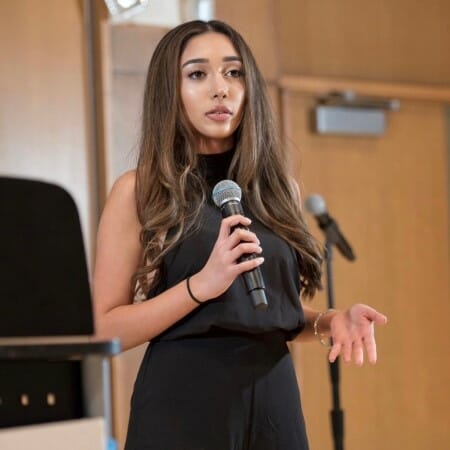
Sahana gives a speech at The Launch Project’s Female Empowerment Summit./Courtesy Sahana Ahuj
What inspires you to volunteer?
Volunteering allows me to contribute to causes that I’m really passionate about, and I love making a positive impact on society. Witnessing the transformative power of volunteering and the difference it can make in people’s lives is truly inspiring. And I love having a personal connection with like-minded individuals, and forming a community dedicated to a shared purpose.
What led you to start The Launch Project?
I decided to start The Launch Project because of two transformative experiences. The first was when I was very young. I encountered a girl abroad who had to work in a rock mine while her brother was able to go to school. It really highlighted the harsh realities of gender inequality.
The second was attending a Girls in Leadership Conference when I was 13 years old. It helped me realize the transformative power of bringing together successful female leaders as role models and mentors for teenagers. Speakers were really open to sharing their stories, and it emphasized the idea that you can be what you can see, because they were women in such powerful positions. So, I combined my passion for mentorship, education and gender equality. And these became the driving force of the organization.
Describe your volunteer role with The Launch Project.
I’m the founder and president, so my role entails overall strategic planning, organizational management, and overseeing the implementation of programs and initiatives. I do everything from social media to executing and organizing all of our events. And I work closely with the chapter presidents and volunteers to provide guidance, support, resources and templates for everything they need. We focus on developing leadership, financial literacy, networking skills and more, and building organizational networks that include girls from underserved communities.
I train all chapter presidents and meet with the national leaders regularly. I’m always happy to do anything the organization needs, because I really enjoy the work. I’m also able to collaborate with our partners and speakers to create opportunities. This has led me to develop some mentors in the process, which has been incredible.
What was your biggest challenge along the way?
One challenge was in planning the Female Empowerment Summit. The night before, my sister and I were getting everything together, and we had two speakers cancel around midnight. The summit was early in the next morning, so being able to adapt and pivot quickly has been a really important skill. And, also, not letting small things throw us off our game. We were able to adjust the schedule, and it ended up being amazing.
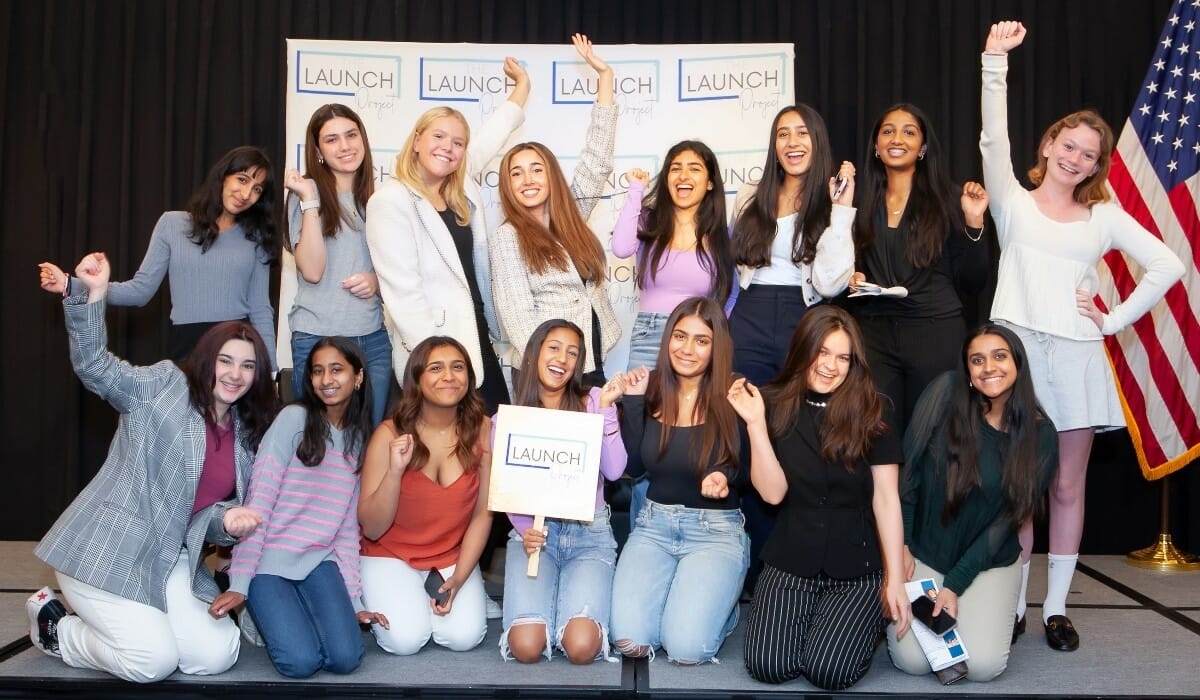
A group of attendees join Sahana [back row, fourth from left at The Launch Project’s Female Empowerment Summit./Courtesy Sahana Ahuja
What’s been the most rewarding part of your work?
The most rewarding part has been witnessing the impact that we’ve had on the lives of young girls. After all the events, girls have come up to me saying that it’s helped them gain confidence and build skills. Some have actually said that it helped them start their businesses. It’s incredible to see them gain confidence and pursue their dreams.
The connections and relationships that I’ve formed have enriched my life and continue to inspire me. I find immense fulfillment in working towards creating a more inclusive and equitable society for everyone. It extends beyond just gender-related issues and encompasses supporting marginalized communities as a whole and so much more.
What have you learned through your experiences as a volunteer?
I’ve learned the power of perseverance and determination. Being able to build and grow an organization like The Launch Project requires a lot of dedication and adaptability. I’ve also learned the importance of collaboration and bringing together individuals with diverse backgrounds and skill sets. It leads to innovative solutions and a greater impact, and it brings different perspectives to the table. Change starts with small steps and believing in the mission.
Are there any future partnerships, programs, or events that you are excited about?
I’m definitely looking forward to this year’s Summit. But I’m also excited about our partnership with the Shatter Fund. Through this and University of Maryland Smith School of Business, we’ll be providing a free six-week, online entrepreneurship program for high school girls. Our vision is to democratize education for every girl irrespective of socioeconomic background. The first cohort will be starting this fall.
The founder of the Shatter Fund, Shelley Kapoor Collins, has been an incredible mentor. I’m really grateful for her help growing the organization.
Why is it important for others to get involved in causes they care about?
Change starts with you. Getting involved in causes that one cares provides an opportunity to use your skills and passions to address pressing issues. Not only does it benefit others, but it leads to personal growth and a sense of fulfillment.
What do you want people to learn from your story?
Action and pursuing your passions is important. Small steps lead to significant impact, and everyone has the ability to make a difference. I hope to inspire others to believe in themselves and embrace change. I want people to recognize the importance of empowering and supporting the next generation and the potential that they hold to shape the future.
Director of Elementary School Chess Club Builds a Generation of Social Entrepreneurs
Meet Daily Point of Light Award honoree Kiran Frey. Read her story and nominate an outstanding volunteer or family as a Daily Point of Light.
Dr. Kiran Frey never expected to be in a leadership role of a chess club, but when her son was eight years old, that journey began. Her son started his elementary school’s first chess club, and Kiran was there to support him and Chess Without Borders every step of the way.
From growing its members to raising money through club fees and donating those funds to local organizations in need, Kiran helps the chess club in innumerable ways and teaches children lessons that stick with them for the rest of their adult lives. Today, Chess Without Borders has donated over $218,000 to charities and educated more than 10,000 students in both chess and service.
What inspires you to volunteer?
When my son was eight years old, he was quite good at chess. He was ranked six or seven in the state of Illinois at the time. He wanted to start a chess club at his school, Grove Avenue School in Barrington, Illinois, so he talked to his principal at the time who was very encouraging. She let him start it, but the only problem was that he was the only one playing chess at his public school. He wanted to charge participants $5 a day and I thought, ‘Okay this is never going to happen.’ But 77 students eventually joined the club! All of this money was coming in and the principal asked me to help out. I started going to the chess club and helping them with the money they raised. We started donating all of the money that we made to different programs and nonprofits that the students wanted to support.
Then my son said that we should have some sort of chess tournament, so he became tournament director. We would charge $25 per child and these tournament results were submitted to the United States Chess Federation because, in chess, people get a rating. We eventually started donating proceeds from our tournaments to provide food for children and families in need. The Chess Without Borders organization sort of took off then.
These children have done very well; it’s inspiring and motivating. There are three arms to what they do: One is that students train other children to learn chess and compete, then there’s philanthropy and the third arm is service. We’ve donated over $200,000 to different charities.
From growing its members, to raising money through club fees and donating those funds to local organizations in need, Dr. Kiran Frey helps Chess Without Borders in innumerable ways and teaches children lessons that stick with them for the rest of their adult lives./Courtesy Kiran Frey
Describe your volunteer role with Chess Without Borders.
As the director of volunteers, I supervise the students and volunteers who are trying to qualify for the President’s Volunteer Service Award. I supervise them on a day-to-day basis and I help coordinate our partnerships with different individuals and organizations that our student volunteers engage with.
What’s been the most rewarding part of your work?
I think it’s the children who started this with me. Eventually in high school, they developed great self esteem. As a psychiatrist, I’m always working towards raising the patient’s self-esteem so that they make better decisions. I think Chess Without Borders has really opened my eyes because these students also just learn skills and absolutely transform into something I didn’t even imagine. There’s a volunteer who joined the chess club when he was only six years old, and he was so shy; he didn’t talk at all. He’s turned out to be one of the most amazing and generous men. He has an inspiring story and is so aware of what service and philanthropy mean. That’s just one example out of so many.
What have you learned through your experiences leading this organization?
I think that if you give children direction and encouragement, they really can live up to expectations. They really meet their potential if you believe in them and tell them that they can achieve what they set out to do. I think that’s the biggest lesson for me.
Are there any future partnerships, programs, or events that you are excited about?
Some people from a church around here are taking 15 volunteers to South Korea this summer, and they asked for our help. We started fundraising and raised over $2,000 for that upcoming trip.
Why is it important for others to get involved in causes they care about?
I think that volunteerism teaches children so much; there’s social, emotional and physical growth added to their journey and they become very culturally and geographically aware of this world. For example, these two brothers started volunteering when they were around 10 and 12 years old and they went to visit their grandmother’s home in South India. They saw next to their grandmother’s house that there was a small orphanage, so they went, and they learned it didn’t have a roof and that a lot of the children were orphaned from parents who fought in a civil war. They raised $700 at a chess tournament for that school near their grandmothers. And all of us were educated on what these children were going through and how the brothers helped repair some of that hardship.
It’s inspiring when children come up with these initiatives on their own and follow through. Very, very inspiring.
What do you want people to learn from your story?
I think that children work as a team and team membership is very important for children to reach their goals, and encouraging children to be team leaders is a good thing. The leadership roles that children take on helps them chase those roles as adults and to take initiative for their projects. It’s so amazing when children become social entrepreneurs and develop so much responsibility and initiative. A lot of these chess players from our club have started their own businesses and have gone to do great things. That spirit of entrepreneurship started with them.
Longtime Community Member Spearheads Local Park Cleanup in Huntington Beach
Meet Daily Point of Light Award honoree Nancy Buchoz. Read her story and nominate an outstanding volunteer or family as a Daily Point of Light.
Nancy Buchoz, 58, has been a resident of Huntington Beach, California for most of her life. Her parents arrived from the East Coast in 1976. And when Nancy married and began raising her two daughters, now 31 and 29, she moved a couple of streets away to the house she has resided in for over three decades. That’s why, after noticing some neglect at nearby Edison Park, a place she and her family have formed many happy memories, Nancy decided to take action.
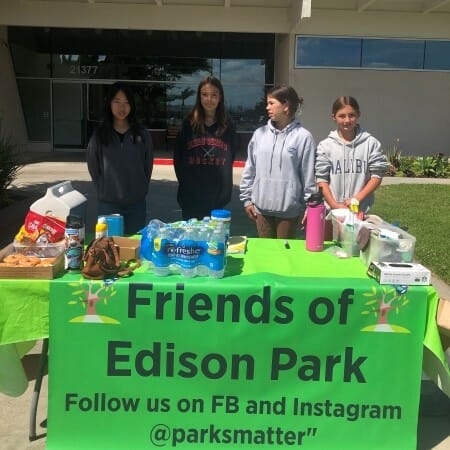
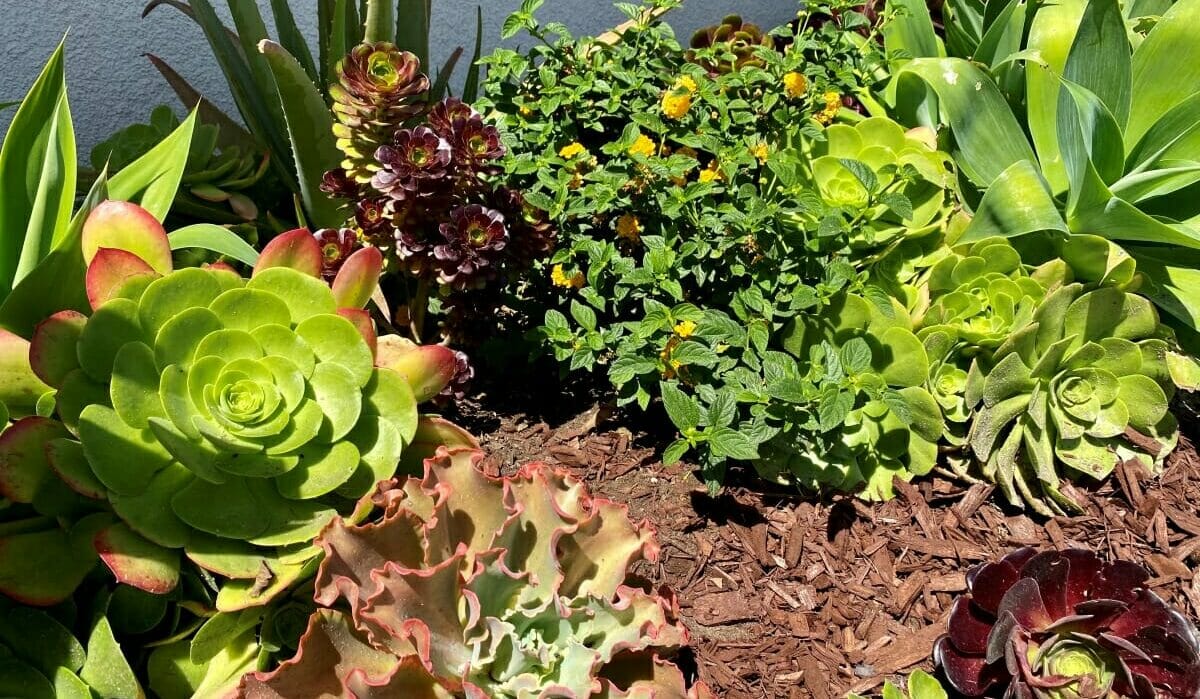
Three years ago, rallying the neighbors and community members, she and her enthusiastic project partner, Betty Flynn, created Friends of Edison Park to fill in the gaps that the city can’t or won’t. Betty focuses on social media while Nancy is the organizer. Once a month, they gather volunteers to pick up trash, pull weeds, plant drought-resistant succulents and more.
Even with one daughter at home needing extra care, another with a grandchild in Los Angeles, a vocal 22-year-old cat and multiple dogs, Nancy still finds the time to lead the charge. She has motivated residents of all ages to lend a hand. Even her parents, now in their 80s, join cleanups, proving dedication to service runs in the family. Nancy has a long-standing commitment to bettering the community and has previously served on the Community Services Commission and Citizens’ Infrastructure Advisory Board, and she continues to advocate for the future of Edison Park.
What inspires you to volunteer?
I grew up here. I went to the high school across the street and played at the community center. My kids played on the fields. I’ve been around this park for decades, and a few years ago, right before COVID hit, we started seeing a lot of neglect.
Edison Park is the second largest park of 78 parks in Huntington Beach with almost 40 acres (about twice the area of Chicago’s Millennium Park). There were overgrown flower beds, debris and trash. We had a growing homeless environment. Kids weren’t going to the park anymore. People weren’t using the amenities because they didn’t feel safe. So, I reached out to the city and formed Friends of Edison Park. I want the people in the community to see that there are still people who care.
My oldest daughter suffered a spinal cord injury when she was 16 and became a quadriplegic. She’s thriving in her world as it is now, but it made me think life’s too short to go around waiting for good things to happen. You’ve got to be the catalyst. She motivates me to do things like this. I also have a great husband who helps out all the time. And we’ve got a lot of steady volunteers.
Young volunteers get community service hours for school and take ownership of the work they’ve done to clean up the park./Courtesy Nancy Buchoz
Describe your volunteer role with regards to Edison Park.
We bridge the gap between what the city provides and can pay for and what the community would like to see. I’m the person on the community side. I reach out to our public works and community services directors on an ongoing basis to see how we can help.
I also go to the park with my dogs every day to see what needs to be done. Betty and I manage a Facebook page with over 250 people. We’ve planted succulents, weeded gardens, picked up trash…Whatever needs to be done. For the Fourth of July, I put about 50 flags around the community center. We do little things to bring out the beauty of the park.
Over the last few years, we lost a couple of our friends of Edison Park. Betty came up with an event called Kindness Rocks, and we ended up getting donations for paint and big smooth rocks. Everybody came out and painted something encouraging or a tribute. Mike is a kid who went to Edison High School who tragically died at 32 years old. We put around 20 rocks in the garden dedicated to him, and it’s a comfort to his mom.
How have you seen your work affect the community?
The park looked better after the first couple of months. Once COVID went away, we started getting kids looking for volunteer hours for school. That was when it got really fun. I was able to introduce them to giving back, and there was a ripple effect. Things started to look better, and then kids started caring more. When they’re visiting the park or walking by and they see someone with a piece of trash in the garden they weeded last weekend, all of a sudden they’re taking ownership. They’ve also learned about gardening.
The city has come back to mirror our efforts, too. We said we needed more trash cans with lids, and we got them. Now there’s no trash blowing around in the breeze. Today the park has people under trees reading, dogs being walked, people skateboarding and folks enjoying the flowerbeds.
What’s been the most rewarding part of your work?
Teaching kids what a healthy garden looks like is great. Whatever they choose to create, I try to build them up, thank them.People who care more about the environment around them than their own personal comfort are generally people who do well in life. In a world where so many negatives cloud every day, we’ve managed to find something that motivates, encourages and builds confidence in our kids.
What have you learned through your experiences as a volunteer?
I’ve learned that it’s something that we need to encourage more of. Society goes through shifts where it’s relevant and when people are just in their own little worlds. And I think computers, social media and some technologies really pull people away from being outside.
I didn’t think I was an environmental activist until one day, I realized I am. Last year, the city was getting ready to do a big park renovation and wanted to cut down 100 of the 50-year-old, established trees to put in pickleball courts and soccer fields, all concrete. A nearby neighborhood came together in another effort separate from mine, which we worked with to stop that from occurring.
Friends of Edison Park volunteers weed, mulch and plant succulents among other duties that make the park more enjoyable for everyone in the community./Courtesy Nancy Buchoz
Are there any future partnerships, programs, or events that you are excited about?
This summer, the Community Services Department is going to have another movie night where they put up this huge projector and have a couple of vendors come out. Typically, Friends of Edison Park collaborates. I will try to raise money to sponsor it.
Why is it important for others to get involved in causes they care about?
When my daughter got hurt, I had two choices. I could be mad at the world or be a role model for her, which means being upbeat and reminding her that we can do anything we want to. Life is all about choices and where you put your efforts. I chose the latter.
I feel very lucky to be physically able to do the work, because I see my daughter struggling. She doesn’t have the ability to bend over and pull a weed. But I do. I’m motivated by her, but I’m also motivated by the sense that you get what you give in this world. And if everybody gave just a teeny bit, wow, what an amazing place it would be.
What do you want people to learn from your story?
It’s important to give back, even if it’s just a small thing. Don’t be afraid to reach out or do something other people aren’t doing. If I could give anybody motivation to do those things and to jump in with both feet because it feels right, that’s it.
At the end of the day Huntington Beach is a beautiful city to live in, and we have a beautiful park. I always say Southeast Huntington Beach is where the rainbow ends.I’m just proud of the effort the group makes and am happy to be a part of it.