From Alzheimer’s Awareness to Food Security, San Diego Teen Inspires Youth Volunteerism Across Various Causes
Meet Daily Point of Light Award honoree Arthur Wang. Read his story and nominate an outstanding volunteer or family as a Daily Point of Light.
For 15-year-old Arthur Wang, food is more than just a necessity to survive. To the self-proclaimed food enthusiast from San Diego, California, food is an avenue to explore diverse cuisines and cultures. And when prepared with the right ingredients, food can be nature’s best medicine. So, when Arthur discovered the shocking reality that a staggering 119 billion pounds of food is wasted each year in the United States, amounting to almost 40% of the nation’s total food supply, he knew he had to act.
Arthur began volunteering with Feeding San Diego over a year ago during his eighth-grade year. Since then, he has dedicated more than 250 hours to support the organization’s mission of maximizing food rescue and ensuring that every person facing hunger receives nourishing meals.
His involvement with Feeding San Diego ignited a passion for volunteerism, leading him to also volunteer with Alzheimer’s San Diego and even establish his very own volunteer club named ForSocialGoods. Through his club, he aims to promote youth volunteerism across various causes, with a particular focus on food security and health equity.
Read on to discover the inspirations behind Arthur’s volunteerism and the various projects he has spearheaded.
What inspires you to volunteer?
When I was in eighth grade, my school started to give free lunch to everyone through the Universal School Meals program. I really enjoyed the meals that they gave since it was free. However, many times a lot of the food was thrown away even though it was perfect. I learned that all the food ended up in landfills and this can cause many problems like climate change. This motivated me to change the situation. I asked myself, ‘What can I do to make a little difference in this big problem?’ So that’s when I discovered Feeding San Diego’s food rescue program and volunteer program. Instead of food being thrown in the trash, Feeding San Diego actually rescues surplus food and gives it to people in need. So that’s why I’ve been volunteering with them since.
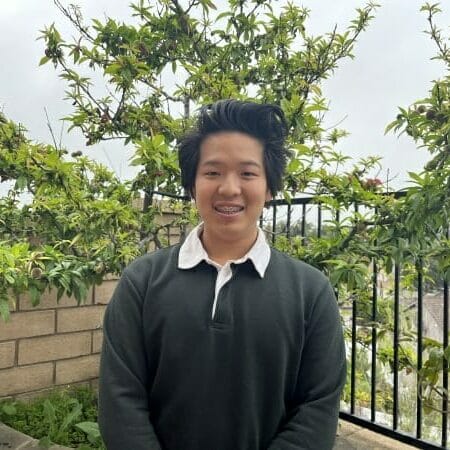
Arthur Wang is the founder of ForSocialGoods, a club that empowers youth to volunteer by organizing projects such as food drives, beach cleanups and helping seniors with Alzheimer’s./Courtesy Arthur Wang
I started volunteering with Alzheimer’s San Diego in the summer after eighth grade because one of my own family relatives actually died from it. I was really sad but also intrigued by it because I didn’t know what Alzheimer’s disease was. So I started researching and found out that Alzheimer’s is the third leading cause of death in San Diego, and what’s even scarier is that there’s no cure for this. I became saddened by this and thought about what I could do to lessen the horror of this. So that’s when I found Alzheimer’s San Diego.
Describe your volunteer role with Feeding San Diego and Alzheimer’s San Diego.
At Feeding San Diego’s Sorrento Valley headquarters, I lead a group of around 40 volunteers to manage the produce pantry. Together we glean fresh produce, pack food boxes and organize donated items to serve around 700 households.
With Alzheimer’s San Diego, I first started with their internship program, where I participated in educational classes to learn about what Alzheimer’s disease is. I also did different learning activities, projects and worksheets. For example, I wrote a letter to Representative Scott Peters expressing my concern and urging him to increase funding for research to find a cure for Alzheimer’s.
How did your passion for serving others lead you to start your own volunteer club ForSocialGoods?
I established ForSocialGoods in January of 2022 to encourage especially youth participation in the community with the aim of promoting volunteer activities that address food insecurity and reduce health disparities. Our club has attracted around 20 dedicated members. Together, we’ve organized and participated in various activities including beach and campus cleanups, food rescues, many food drives and smile drives. To further extend our outreach efforts, I have taken on the responsibility of managing the ForSocialGoods website. Through this platform, we aim to promote the principles of zero waste, foster healthy living, and advocate for safe communities. By writing blogs, we can reach a wider audience and inspire positive change in our society.
What’s a smile drive?
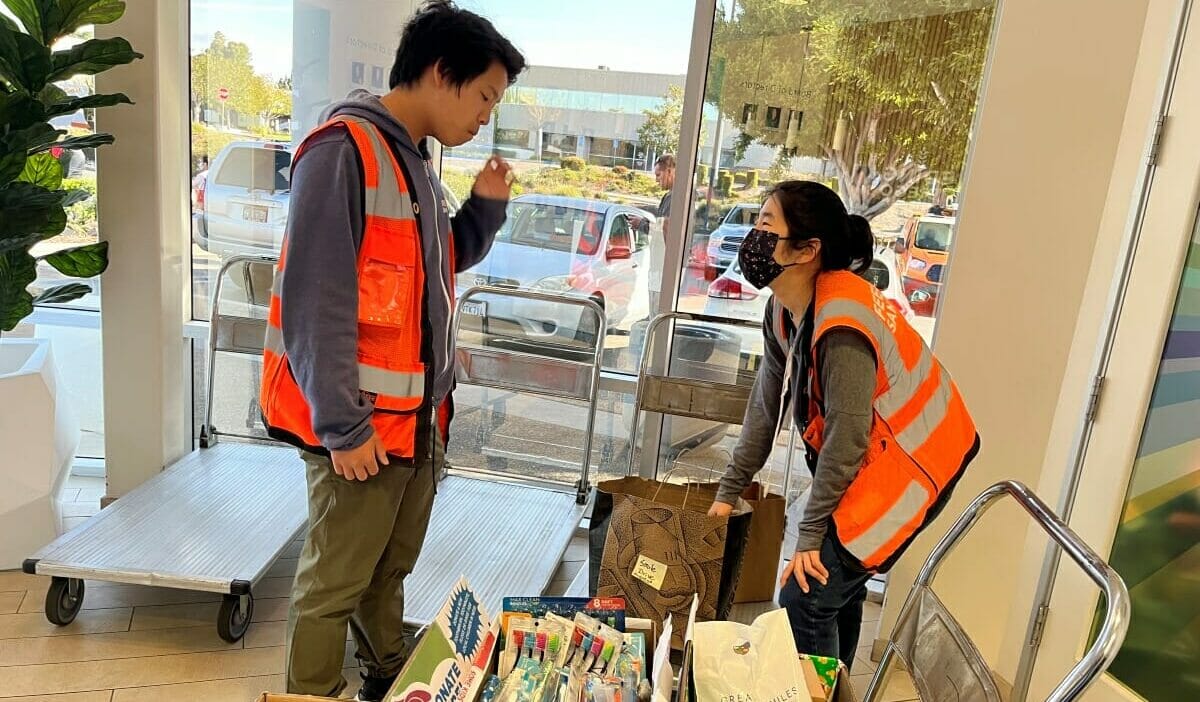
We realized that many of the people who were receiving food from Feeding San Diego also didn’t have access to good oral care products. So, we decided to set up smile drives at many of our local libraries to collect oral care products like toothbrushes and toothpaste. And we donated them to Feeding San Diego, which distributed the products out to the community during a produce pantry distribution.
Arthur has dedicated more than 250 hours to Feeding San Diego, serving as a volunteer leader to ensure the community has access to healthy produce./Courtesy Arthur Wang
What’s another one of your favorite projects you led with ForSocialGoods?
One of my most memorable experiences is a project we did called Birthday Tote Bags for Seniors. I secured a $500 Hershey Heartwarming Young Hero grant and with fifth-grade students from Ocean Air Elementary School and my club, we were able to make 100 birthday tote bags to bring up the spirits of seniors living with dementia. The tote bags included many goodies such as a hand-drawn picture and a birthday note.
This was my favorite project because the response that we got from the students was very inspiring. Reading the birthday notes that they wrote was a very touching experience because they reminded me and everyone else the power of kindness and the impact they can have on others. In addition to that, Ocean Air is the elementary school I went to and I still receive a lot of positive responses from the students.
What motivates you to continue volunteering?
I know volunteering is a huge thing. It takes a lot of time and effort to do activities like this. But there are so many problems in our world that haven’t been taken care of and I just really want to stop those problems. So, I think that with my presence, especially as a young volunteer, I want to inspire other youth to volunteer also.
Are there any future partnerships, programs, or events that you are excited about?
Right now, I’m organizing a group volunteer event at Feeding San Diego with the students from Ocean Air Elementary. I’m also planning a homegrown garden project, where I plan to build gardens at schools and public places across San Diego. Also I have picked surplus fruits from my neighbors who have fruit trees and donated them to low-income families and seniors in San Diego.
What do you want people to learn from your story?
What I want people to learn from my story is that regardless of who you are, whether you’re old or young, rich or poor, you can make a difference if you care and be consistent about it. I especially want to encourage young individuals to take action in their communities. Any small act of kindness and compassion has the potential to create a positive impact on society and the world at large.
Building Coalitions Across Oceans: Helping Bring Clean Water to Over 100,000 People in Guatemala
Meet Daily Point of Light Award honoree Bob Swope. Read his story and nominate an outstanding volunteer or family as a Daily Point of Light.
Bob Swope is the retired owner and operator of a Ford dealership in Elizabethtown, Kentucky. But during retirement, he has found himself in the role of a lifetime: helping bring clean water to communities in Guatemala that have no access to it.
Since 2007, Bob has led the Living Waters Guatemala Partnership team, a philanthropy that trains, equips and supports volunteers in forming global, clean-water mission partnerships.
To date, Bob and his teams have installed over 30 water systems in Guatemala – a record among all of the teams in the organization. It’s estimated that over 100,000 people in western Guatemala now have access to affordable clean water for the first time, just from these 30 systems.
Bob is responsible for communicating with partners in Guatemala, recruiting and training team members, arranging all trip details, fundraising and much more.
“I help with partnership development – locating good partners in communities that need access to clean water, site assessments and development of the relationships with our partners. That relationship development is so essential for the sustainability of the project,” Bob shared.
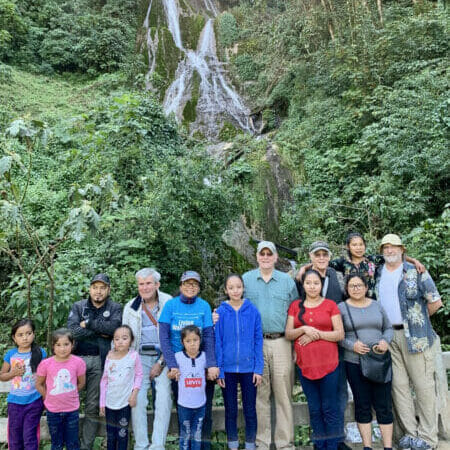
The team with some of the children and volunteers at a waterfall outside a village. The water looks clean, but it is not safe to drink./Courtesy Bob Swope
In fact, Bob and his team make return trips multiple times a year to ensure their partners in Guatemala feel supported, equipped and encouraged. During the COVID travel restrictions, they maintained communication with these partners virtually.
“We want to make sure these water purification systems we install continue to provide clean water in the community for many, many years. Generations, even,” Bob said. “We go back and visit them as often as possible, continue to provide additional training and any kind of maintenance assistance, and encourage them to keep doing great work!”
Bob was first moved to this mission a decade before he retired from automobile sales, when the Elizabethtown Rotary Club he was a member of decided to do an international water project. While Bob didn’t know anything about water projects, he was intrigued by the opportunity to travel abroad. Quickly, he became passionate about the cause. Eventually, he moved into the team leader role and has now visited Guatemala somewhere between 30 and 40 times – even he’s lost count!
The water purification systems are installed in remote villages in Guatemala, places in the Western highlands that had no access to clean water until Bob and his team started arriving. Along with the installation of the systems, the team also teaches the communities health and hygiene practices, as well as how to use the water and keep it from contamination.
Bob remembers learning on his first trip that the infant mortality rate in Guatemala is one of the highest in the world and that one in five children never see their fifth birthday. This is largely due to contaminated water. “That trip changed my life,” he said.
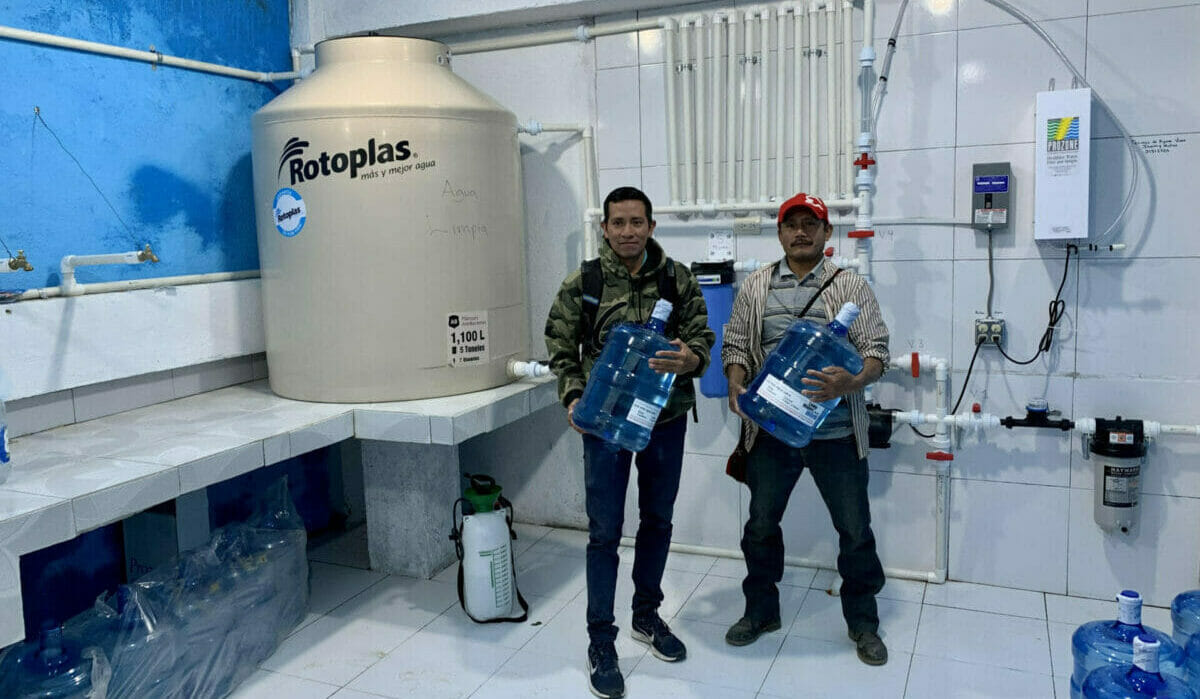
The water purification system in El Boquerón, and operators with the first batch of purified water./Courtesy Bob Swope
In addition to the 30 systems already installed, Bob and his team have two more water filtration system installation plans for communities currently in the works.
“There’s just a tremendous amount of need in the world,” Bob expressed. “Needs of all different kinds. I just happen to be interested in sharing the gift of clean water. We take clean water for granted in this country – we flush our toilets, water our lawns, wash our cars with purified water – while millions of children around the world are getting sick every day because their water is contaminated.”
Bob is honored to receive the Daily Point of Light Award, but insists that he doesn’t deserve it on his own. “Our team makes all of this happen,” he shared. “We have a very dedicated team of volunteers that travel with me to Guatemala, that do the hard work. I’m just one of the members of the team, but all of the other roles are just as important. The team deserves this award.”
Survivor Bridges the Support Gap for Others Who’ve Faced Domestic Abuse
Meet Daily Point of Light Award honoree Mckayla Julian. Read her story and nominate an outstanding volunteer or family as a Daily Point of Light.
Content Warning: Points of Light is proud to share the following uplifting and inspiring story. However, we acknowledge that a small portion below may be difficult for some readers. We encourage you to please care for your own wellbeing above all.
Mckayla Julian never expected to be a nonprofit founder, especially one centered in supporting those who’ve faced the tragic experience of abuse. But after experiencing abuse firsthand, Mckayla understood what other people needed once they left their abusers.
In a single year, Mckayla has helped over 1,500 women and children recover from their trauma with her nonprofit, Pretty Tough Ladies (PTL). She has made it her mission to support women leaving domestic violence situations and to ensure that they’re not alone and not empty handed after they make the vulnerable decision to enter into a new reality. Mckayla is helping others find healing across Utah’s West Valley, and is continuing her own healing along the way.
What inspires you to volunteer?
Pretty Tough Ladies comes from my own pain and my own story. I’m a domestic violence survivor and I wanted to turn my pain into purpose. I noticed that there wasn’t a lot of support in that aspect. We do have shelters and different things like that, but even in the shelters sometimes they don’t have a lot of support groups or a lot of access to resources. I saw support gaps and I started PTL as a support group. From there, we kind of grew into having resources and organizations that we partnered with. Now we can send people in the right direction depending on what their needs are. We also have a little boutique that has hygiene and household essentials for those that need them. We also provide gift cards for gas or groceries if we have them available; we give those to the clients as needed. I started it just based on my own story.
Describe your volunteer role withPretty Tough Ladies.
We’ve been operating for a little over a year. In that time, we’ve run a couple of events and led support groups. It’s been mostly run by me. We definitely need some more volunteer help. I would love to get more people involved. It can be a lot to take on when you’re doing it yourself. But I love the work, so I definitely want to be involved even moving forward. As more people get involved, I would still love to be a part of it. Just as of right now It’s basically all me.
McKayla Julian has helped over 1,500 women and children recover from their trauma with her nonprofit, Pretty Tough Ladies./Courtesy McKayla Julian
I wasn’t planning on starting a nonprofit, I simply just wanted to bring women together and support each other. There’s always similar, but different, stories. We’ve all experienced a base of some sort of trauma and mental health battles. I really just wanted to create a support group and then when we realized that it was growing rapidly, we saw this giant need and decided to tackle it. We knew that we needed a nonprofit status in order to really get the help that we needed funding- and permission-wise. I did the whole 501(c)(3) process myself. I didn’t have any attorney to help or anything like that and I got our results back within a month that we were approved. So it was very fast.
Life is so short. You have to go out of your comfort zone to experience things that life has to offer. Being in the state that I was in just three years ago when I had originally left my abuser, I really never saw myself being in the position that I’m in now: happily married with another son. I had a daughter with my abuser. Since then, you know, I’ve had another baby and I’m happily married now. My life has just drastically changed. PTL has drastically changed my life for the better.
What’s been the most rewarding part of your work?
It’s definitely been seeing the lives that we’ve changed and the gratitude from the clients that we serve. We get a lot of messages and testimonials on how we’ve helped people. We see that in our reviews on social media too, and that always makes me feel really good. Because I’m like, ‘Okay, we are making a difference and an impact.’ When you’re immersed in your work, it can be hard to see the difference that you’re making until they tell you. I’ve been on my own healing journey, but I’ve also been able to be a part of others’.
What have you learned through your experiences leading this organization?
I’ve learned that you can want to help everybody, but you can’t help everybody. That’s been a hard lesson to learn. But I have also learned that we have a very large community of world changers who have a passion to give back. We’re not alone in the philanthropy world. That’s also been another learning curve for me, that it’s okay to ask for help. It’s also okay to know that sometimes you have to set boundaries and you’re not always going to be able to help everybody like you want to. But there are others who can step in and help too.
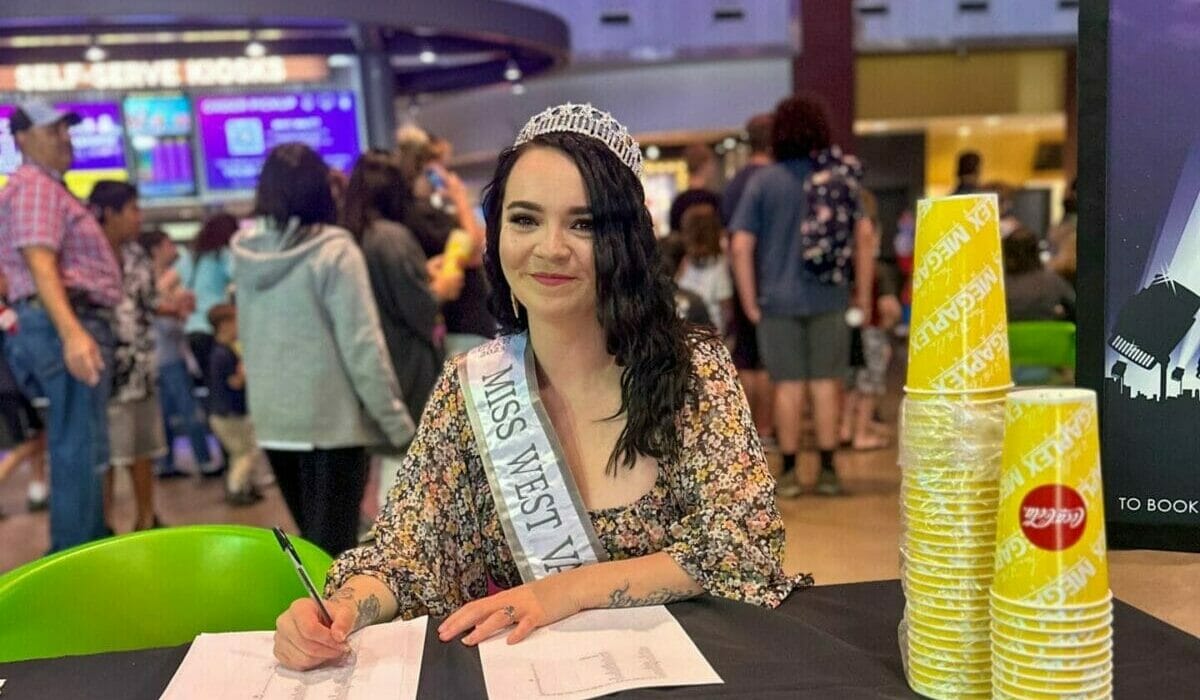
McKayla Julian represents West Valley Utah and uses pageants as a platform to spread the mission of Pretty Tough Ladies./Courtesy McKayla Julian
Are there any future partnerships, programs, or events that you are excited about?
I’m actually representing West Valley City, so I’ll know soon if I make it to the Miss Utah pageant, which is coming up. I’m excited about that since pageants are a really big platform for PTL. But I’m also very excited because we’re hoping to get to do our back to school event this year. It’s still in the works behind the scenes. Last year at our back to school event, we were able to help 175 kids receive backpacks and school supplies. Then we were able to help over 60 children get free haircuts. It was amazing, so I definitely would love to do something like that for the fall.
Why is it important for others to get involved in causes they care about?
I always say that there’s not enough of us; we can always use more people who want to be involved in the community and give back. There’s a very dire need for help and for people with a passion to give back to be out there in the field of support groups. Go where your passion is, whether that’s animals, food banks or domestic violence. Every one of us has something to offer.
What do you want people to learn from your story?
Trauma does not define you. There’s so much more to life than what your trauma has withheld from you. I think that finding your purpose within your pain is really important and really crucial.
If you or someone you know has experienced the trauma of sexual assault or rape, you can support them by listening, letting them know you believe them and offering to help them find medical attention or mental health support. Contact RAINN to find help near you or call 800-656-HOPE (4673) to talk to a trained crisis counselor. These services are free and confidential.
Florida Teen Takes a Two-Sided Approach to Global Hunger and Poverty
Meet Daily Point of Light Award honoree AmoghBaranwal. Read his story and nominate an outstanding volunteer or family as a Daily Point of Light.
In the town of Miramar, Florida, just 30 minutes outside of Miami, Amogh Baranwal is leading a revolution. It’s not political or motivated by recognition. It’s human and based on the simple idea that everyone deserves to eat. With Joshua’s Heart Foundation (JHF), Amogh is tackling poverty and hunger head on. The organization has done work in six states and on four continents. Collectively, volunteers like Amogh has served five million meals and recruited 60,000 other youth volunteers.
Amogh joined the fight as a six-year-old when his parents took him to a food distribution. Today, at 17 and with over 1,000 hours under his belt, he is the Chair of the Junior Advisory Board of JHF and an advocate with Bread for the World. He focuses on both charity and justice. As an outgoing people-person, Amogh had to find new ways to communicate during the pandemic lockdown and thrives as he leads meetings, hosts educational seminars and meets with congressional representatives.
So, what does the future hold for a teenager with a passion for improving the lives of others? Amogh is eyeing an MD with a Master’s in Public Health, following his older sister into the medical field. In the meantime, he’ll continue helping people in need by working to change the system while providing temporary solutions.
What inspires you to volunteer?
I was six the first time I attended a Thanksgiving food distribution. I remember giving another kid who looked exactly like me–someone the same age who grew up in the same area but had much less–a grocery bag full of food. The smiles that come from such simplistic things has made an impact on me ever since.
My parents grew up in India and moved to the States almost 30 years ago. They never got the opportunity to volunteer growing up. It was just a different culture. So, when they came to America and saw students doing service, they really liked the concept of giving back, regardless of requirements. If I wanted to go somewhere to help out, they would make time to let me go there and provide me all the resources I needed to be helpful. Their love and passion for it is definitely something they’ve passed on to me.
I’m so fortunate to be able to go home and have a full meal and not think twice about whether I’ll eat tomorrow. Some people have to have the mindset that this might be their last meal in a while. Making sure that every kid has a plate of food in front of them was something that inspired me to continue working with the foundation.
Describe your volunteer role with Joshua’s Heart Foundation.
I’ve helped run a lot of food drives and distributions. As chair of the Junior Advisory Board, I’ve brought together hundreds of youth across the country, run meetings and advised on how to bring about change and how to build upon the structure we’ve already created.
Before this, I was one of the kids doing projects. Now, I’m able to guide them and give them all the tools they need to achieve the goals they set. Joshua’s Heart has the resources and will support them however it’s needed. We try to give back to the community by fostering an environment where youth can take charge and make an impact.
What do you do with JHF’s partner, Bread for the World?
Recently, someone taught us the difference between charity and justice. Charity is a band-aid while justice is fixing a problem before it starts. Both are extremely important. Without charity, we would let problems go awry; people wouldn’t be able to get the resources they need. Without justice, people continue to get into the position where they need charity.
Being able to work on both ends has been enlightening. We do charitable events with Joshua’s Heart. Through Bread for the World, I lean into advocacy. I’ve held racial wealth gap seminars, which help people learn about racial disparity and how it impacts nutrition and access to food security. I had a conversation with the late representative Alcee Hastings from Broward County in his Washington, D.C. office, and he ended up passing House Resolution 189 which helps mitigate female malnutrition in regards to prenatal health.
My work with Joshua’s Heart has allowed me to think of health and food in a more big-picture way. Most recently, I ran a youth advocacy conference. I taught hundreds of students how they could write letters to their representatives and held Offerings of Letters, giving participants talking points and background information for expressing support or criticism of specific policies or legislation.
What’s been the most rewarding part of your work?
I think the most rewarding part has been seeing our impact. It has grown a lot since I was six. When we see people smile when we hand them food or when they get back on their feet… That is the most rewarding part. Seeing that people are finding benefit in the work that we’re putting into the foundation.
Another big part is when the youth that I’ve been able to help helps others, and I’m able to help create a new generation of leaders. Our world sometimes seems scary and unknown, especially in Florida, but we’re still going strong.
What are some other things you’ve learned through your experiences as a volunteer?
I’ve learned a lot of people skills and life skills. It’s allowed me to grow as a person by tenfold. I’ve learned how to talk to different people, whether it be community members who might not have as much as we do or people who have much more than we do, like big sponsors or Senators Marco Rubio and Rick Scott.
Learning how to make my voice heard has been invaluable. Everyone living in a community has the right to talk about what’s happening there, including youth. We all have a voice. No one is too young to take charge. No one is too young to make a difference.
We’ve also been modernizing Joshua’s Heart Foundation, so I’ve been learning things like business skills, Intel and working with Excel. It’s been empowering. When I go into the real world, I’ll be well-equipped.
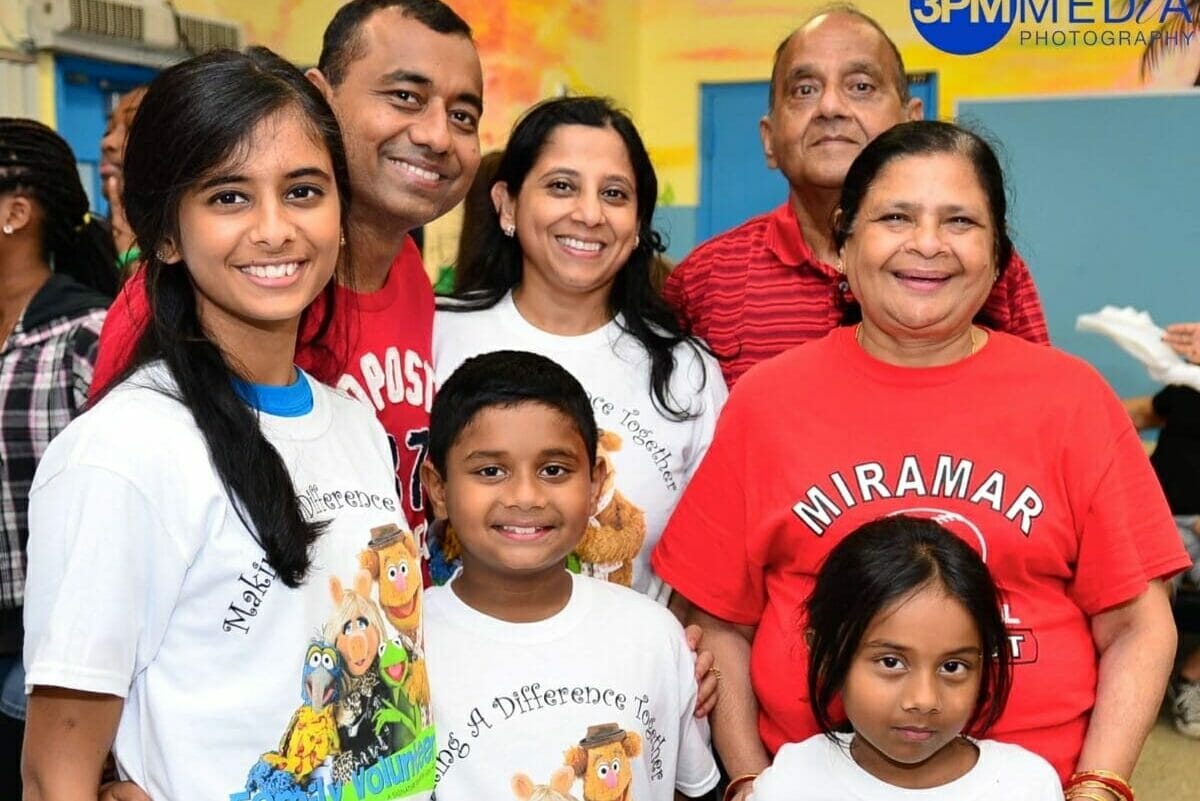
A photo of three generations of Amogh’s family volunteering near the beginning of his service journey: his grandparents, parents and sisters join him./Courtesy Amogh Baranwal
Are there any future partnerships, programs, or events that you are excited about?
I’m really excited to see how all of our new tech and programs impact how we run. I think we’ll make even more of an impact. Essentially, I’m looking forward to increasing the number of people that benefit from our programs and adding new partners along the way.
Why is it important for others to get involved in causes they care about?
It’s crucial for us to come together as a community to help tackle problems. Youth can take charge and really relish in the fact that they have a voice. We are a strong force in the community that’s able to take problems we see and work towards solutions. We need to make sure that everybody who is passionate about something has the capability and the resources they need to do that.
What do you want people to learn from your story?
I think the general theme of my story is that no one is too young to take charge. Just because you might not be able to vote or drive or do other things that adults can do doesn’t mean you don’t have a voice in your community. If anyone gains anything from my story, I hope it’s that they can make a difference.
Teen Inspires Community Through Volunteer Projects
Meet Daily Point of Light Award honoree Ava Khossravi. Read her story and nominate an outstanding volunteer or family as a Daily Point of Light.
When she was eight years old, Ava participated in one of her first service projects: packaging care packs for unhoused people. The care packs consisted of necessities such as shampoo, toothbrushes, toothpaste, floss, tissues, socks, combs and protein bars. From that first volunteer project, she caught the service bug, and continued to participate in other service projects around her community, including beach cleanups. Later, in middle school, she joined Junior Optimist International, the youth wing of Optimist International, a worldwide volunteer organization consisting of more than 2,500 local clubs whose members work each day to make the future brighter through volunteerism.
As a member of Junior Optimist International, she has volunteered on other projects such as maintaining lagoons, volunteering with youth athletics and donating 100 backpacks filled with school supplies to a school for unhoused children in downtown San Diego.
Read on to learn how Ava is inspiring other young people in her community to get involved through service.
What inspires you to volunteer?
I am inspired to volunteer as I want to continue to spread good deeds. For example, during an event that I volunteered at called Junior Adaptive Sports Camp, other JOI Club members and I helped children with disabilities play sports. I learned so much from these kids. One kid I was helping tried many times to hit a tennis ball. She had cerebral palsy, but she had such a positive attitude. She focused on all of the things that she could to create the best version of herself while supporting the people around her. As soon as someone else was able to hit the ball, she had the biggest smile and was genuinely happy for them.
Ava Khossravi volunteers at her local food pantry, sorting through food, packaging it, and organizing it so people can take what they need./Courtesy Ava Khossravi
The positive attitudes of the people at Junior Adaptive Sports Camp have influenced me to think about all the things that I can do instead of what limits me, which ultimately inspires me to volunteer.
Later on in the camp, there was a fun tennis match where there were two teams consisting of a mix of volunteers and campers. Volunteers sat in a wheelchair and played tennis alongside the campers for a change. The goal of the match was to try to get the ball over the net to the other side. I remember I was having a very hard time moving around in the wheelchair quickly and holding the tennis racket in the correct position. My team was very coordinated, and they all could easily hit the ball over the net and have a consistent match going. But, I will never forget when one of the players stopped to explain to me how I could wheel myself faster using only one hand. I thought it was very nice of her to stop to explain because even though she was a very fast player essential to the success of the team, she also had such an amazing heart to try to include others and make sure they could all put in their very best effort. Being inclusive and positive in various situations also drives me to volunteer.
Describe your role with Junior Optimist International.
I frequently volunteer at the food bank or Feeding San Diego and inspire others to join me. I really love volunteering, especially when some of my friends join me. With more people, we can sort through more food and share it with the community before it goes bad.
Additionally, I organize and volunteer at special events and I have reached out to other organizations and grants to help spread optimism. For example, last year, I received a $600 grant from AoPS Academy. I used this money for a new service project. In collaboration with other members from the club, I purchased one hundred backpacks and filled each with school supplies such as folders, loose leaf paper, spiral notebooks, pencil cases, pens, pencils, erasers and crayons. Then, I brought them over to the Monarch School, which is a school for unhoused children in downtown San Diego.
Spreading positivity in environments is contagious. As a Lieutenant Governor of Junior Optimist, I hope to reach out and continue to support others who want to help people.
What’s been the most rewarding part of your work?
The most rewarding part of my work is helping others spread good deeds. Whether that is through recycling food before it goes bad, maintaining a lagoon, helping out with different Helen Woodward Events, volunteering at a Toy Drive to make sure people have food and toys for the holidays, tutoring an underprivileged student or creating STEM lessons to empower girls’ education, I believe that there are many different ways to help others and make a positive difference in the world.
What have you learned through your experiences as a volunteer?
One thing that I have learned through my experiences as a volunteer is learning about different people of different backgrounds. When I volunteered at a Holiday Toy Drive and Celebration for Low-Income Families, I had the opportunity to make cotton candy and popcorn as well as watch kids safely play in a bouncy house and obstacle course. I loved talking with them and sharing their enjoyment when they made it through the bouncy house obstacle course successfully!
Are there any future partnerships, programs, or events that you are excited about?
Yes! Some events coming up in the future that I am excited about are Junior Adaptive Sports Camp, which is happening again this summer. I am also really excited for the beginning of the school year because I hope we can recruit more people to join Junior Optimist as well as make their own clubs at their own schools.
Why is it important for others to get involved with causes they care about?
It is super important for others to get involved with causes they care about because it helps them make meaningful connections with others. Through these meaningful connections, people can share their experiences and help each other reach their goals together.
What do you want people to learn from your story?
There are so many ways to volunteer and get involved in your community. It is also very important to have a sense of appreciation. It is super important to appreciate your situations, experiences, connections, opportunities, and everything that life has to bring!
Hospital Volunteer Brings Comfort to Patients in Stressful Times
Meet Daily Point of Light Award honoree Alison Juray. Read her story and nominate an outstanding volunteer or family as a Daily Point of Light.
Well before the time Alison Juray started volunteering at Mount Sinai Morningside hospital last year, she was fluent in both Russian and English. In 1989, her parents and grandmother immigrated to New York City from Tajikistan. Alison grew up in Brooklyn speaking the former at home and learning the latter in school. And after seeing the large Spanish-speaking population amongst patients, she hit the books again.
During the summer of her 21st birthday, Alison is spending her time volunteering in a lab that researches pancreatic and colorectal cancer treatments. Of her three older siblings, she’ll follow her two sisters – one a dietician and the other a healthcare manager – into the field.
When school is in session, Alison averages 20 hours per week volunteering by scheduling her classes in a way that enables her to spend full days at the hospital, mimicking hospital staff. This future physician has an innate ability to comfort patients, from being a listening ear to distracting people in pre-op from hunger. Her adaptability, kindness and composure in the fast-pace of the hospital makes her a point of light for everyone who steps through its doors.
What inspires you to volunteer?
My parents told me a story once that when I was a kid, I was going down a slide and slid too far. I fell and scraped my knee. I didn’t cry but instead said, “Can you please take me home? I need to clean this and put a band-aid on it.”
That story inspired me, and after seeing how hardworking and fulfilled doctors, nurses and people in the medical field are and how they change the lives of patients every day, that cemented my decision. So, I’m currently on the pre-MD/PhD track at CUNY Hunter College. I want to be a physician-scientist.
Describe your volunteer role with Mount Sinai Morningside.
I’ve assisted nurses with lab deliveries, dietary requests and overall patient well-being. I also train incoming volunteers across all units of the hospital. That’s one of my favorite parts. I show them the ropes, introduce them to the staff, make sure they’re able to communicate with patients in the correct manner, etc. Occasionally, I help with health fairs or events.
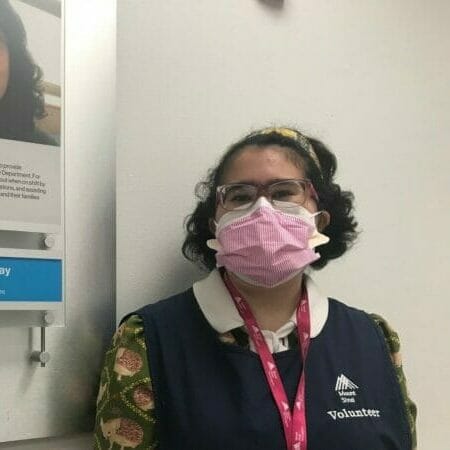
Alison Juray, a volunteer at Mount Sinai Morningside Hospital balances service with school and, during the summer, pancreatic and colorectal cancer research./Courtesy Alison Juray
In the emergency department, one of my favorite things is working in triage. The triage nurse takes vitals and records the main complaint, and we transport patients to their bed or seat for their follow-up with the other nurse and doctor inside. You get to see the frontlines. I ask patients if there is anything I can get them such as a pillow or water. I adjust the bed and get them ready for the nurse.
Also in the emergency department, we give out lunch trays. Patients about to go to surgery aren’t allowed to eat, but we all get hungry. So, I like to sit there with them. We have books and games in the volunteer office, so I grab one of those. Anything that can distract them. Before they know it, they’re going for their surgery. It’s something that I really love to do. Making people less uncomfortable in uncomfortable situations has become my strength as a volunteer.
Why is speaking someone’s native language important?
Even speaking a couple of words, like if I noticed that they’re Spanish-speaking, or they look to their translator or interpreter. In that gap or delay in translation, just saying, ‘Hola! Cómo estás?’ is something that can really brighten their face. They feel like they’re being seen and heard. And that means a lot to me, because when my parents went to the doctor, they always had to take either me or one of my siblings with them. Even though they speak English, medical English is difficult.
What’s been the most rewarding part of your work?
I love talking to people about their life, so patients who are willing to open up during their most vulnerable time is very rewarding for me. I’ve heard stories of people who came to America 10 years ago with their children, and they struggled to adjust. Hearing their stories of perseverance makes me emotional just thinking about it, because my parents went through the same thing. Hearing that type of story makes me feel like I’m not alone. And I tell them that my parents did the same thing, that they’re not alone.
You go into the hospital with the hopes of recovering and coming out. But unfortunately, that doesn’t always happen. My first week in the inpatient unit, I met a Russian-speaking patient and was able to get to know her really well. She became one of my favorite patients. I went to her every time I had a shift, and one day, she passed away. Her daughter came back to thank everyone at the hospital and said that her mother remembered me and wanted to thank me. That really changed my life. Being able to comfort someone in their final days means a lot to me.
What have you learned about patient care through your experiences as a volunteer?
I’ve learned how to communicate with patients when they’re frustrated. Being in the hospital is stressful; you’re in there because you’re in pain or sick. Having someone check up on you and make you feel better is valuable. I’ve learned a lot of ways to do that. If I notice a patient is uncomfortable and hunched over in their bed, I make sure that everything is close to them so they don’t have to move around a lot. I make sure the TV is on their favorite show. It makes a world of a difference.
A lot of the time, patients spend all day in their room without many people to talk with. So, I sit next to a patient asking them ‘How’s your day? What are you looking forward to when you recover?’ Taking the time to listen is so important.
And outside of patient care?
I’ve learned time management. I’m kind of a busy person, but being at the hospital is always my priority because it’s fulfilling. Instead of feeling drained after a shift, I feel full of energy. And that’s just because of how much happier I feel that I’m able to make other people’s day a bit better.
One thing I learned in the emergency department is to keep a level head. It’s very noisy. There are people running around everywhere. Staying calm, cool and collected is the best thing you can do. Patients are depending on you. And the nurses and other healthcare staff are depending on volunteers and co-workers to make a calm, safe environment.
Why is it important for others to get involved in causes they care about?
I think everyone should learn something new every day, and the only way to do that is to step out of your comfort zone and do these types of service acts to make yourself and the people around you feel better.
After the pandemic, one of the things that people struggle with is being open to listening to other people. One way to do that is acts of service. It’s a great way to learn and be open to new perspectives. You grow as a person. Volunteering has opened my eyes to the possibilities of making one small change and creating a butterfly effect.
What do you want people to learn from your story?
I want people to read my story and volunteer at the nearest hospital, because it is such a rewarding experience. You walk out a different person than when you walk in. Being in the hospital is stressful. Anyone willing to offer a helping hand will be valued, loved and taken care of.
Former Foster Care Youth Turned Nonprofit Founder and Advocate for Young Men
Meet Daily Point of Light Award honoree Jamal Stroud. Read his story and nominate an outstanding volunteer or family as a Daily Point of Light.
Jamal Stroud of Blythewood, South Carolina, grew up in the foster care system and lived in six different homes by the time he was 6 years old. But where this experience could have led to negative outcomes throughout his life, instead Jamal harnessed hope for his future and ended up creating his nonprofit organization, Big Homie Lil Homie Mentoring, a 501(c)(3) offering a mentoring program for young males growing up without father figures.
“I wanted to contribute to my community – Columbia, South Carolina,” shared Jamal. “I feel that giving my time, and other volunteers giving their time to mentor these young men, contributes to a healthier Columbia, a healthier South Carolina, and ultimately a healthier world.”
Big Homie Lil Homie focuses on instilling confidence and building character in young men from fatherless homes or who are in foster care settings. This mentorship program, which includes 500 young men in South Carolina, takes place both virtually and in person.
On a national level, Jamal also works as the mentor and outreach manager for Camp HOPE America, where he provides technical assistance to 40 different programs throughout the United States.
The Big Homie Lil Homie program mentees often struggle with depression, hopelessness, acting out or other issues due to a lack of positive adult male role models. Jamal saw this pattern and knew he wanted to help create a different trajectory for South Carolina youth.
Jamal has been recognized locally and nationally for his lasting impact on more than 10,000 youth./Courtesy Jamal Stroud
Jamal was given a chance, when someone said they believed in him, and wanted to work with him, supporting his organization. This one chance led Jamal to his desire to create the same situation for other young men who perhaps haven’t been given a shot.
“I wanted to make sure that other children who are growing up how I grew up, in toxic environments, or being shipped from home to home, don’t lose the ability to dream,” Jamal said. “That’s what happened to me. So when we work with mentees now, we talk about the power of dreaming and the power of seeing great potential for the future.”
Today, Jamal has been recognized locally and nationally for the lasting impact on more than 10,000 youth, offering support and positive male role models for young people in South Carolina. He’s been a guest on The Ellen Show and has received numerous awards, including winning the prestigious Jefferson Award and the Public Elevation from MENTOR.
To those who are interested in volunteering with a cause they care about, Jamal encourages jumping in now.
“We have to care about what we love. We have to care about our communities,” he stated. “At Big Homie Lil Homie, we work with kids in traumatic situations or who have been exposed to trauma. If we don’t work with them now, we’re only going to lock them up at 18 or 19 because we’re not dealing with the problems early on. If there’s a cause that you care about, start now. Maybe it’s a small act of volunteering for a couple of hours. It doesn’t need to be a big, big goal. Start small, start now. You’ll find that pouring into that community or passion will truly change the world.”
High School Senior Lightens the Load for Medical Staff at John Muir Hospital
Meet Daily Point of Light Award honoree Anya Gupta. Read her story and nominate an outstanding volunteer or family as a Daily Point of Light.
The COVID pandemic hit the medical community hard. Staff were confronted with high workloads, burnout and an endless stream of patients – all while trying to understand the novel virus they were fighting. While most of the world was focused on the patients, Anya Gupta, a compassionate 17-year-old high school senior from Lafayette, California took note of the doctors and nurses and the challenges they were facing.
As Anya nears graduation, she has set her sights on a future degree in computer science. Or biology. Or some combination of both. That’s where her interest in medicine comes in and her volunteer service at John Muir hospital. Every Sunday for the past two years, Anya has volunteered picking up the slack by doing things like discharging patients, transporting medical images or samples, and delivering food to patients.
Aside from improving the experience for patients and the day-to-day of staff, she is well on her way to a career in the field. During the school year, Anya participates in Model UN, Robotics, and HOSA — an academic Olympiad for future health professionals. Points of Light caught up with her in Indonesia during her three-week internship for a biotech company in the region to speak about why she volunteers and what she has learned from her volunteer experiences.
What inspires you to volunteer?
I started volunteering after COVID had really jarred operations in most hospitals. My approach is about providing assistance to people who have too much on their plate. A lot of what I do in the hospital is taking some of the burden off of doctors and nurses, which ultimately also helps patients. The healthcare staff is doing a million things in one day, and helping them out can make things run much more smoothly for everybody. And it’s a really rewarding experience.
Describe your volunteer role at the John Muir Hospital.
It’s tasks that help around the hospital, most commonly discharging patients – mother-baby discharges for moms who have just given birth – and sometimes taking lab samples from different floors down to the lab. There are set times where food trays go to patients, but sometimes they order late trays, so they need volunteers to deliver those. And we take also CDs to medical imaging and write patients’ rehab schedules for physical therapy.
How did the pandemic affect your work?
There are a lot of things we weren’t allowed to do as volunteers because of COVID restrictions. Prior to the pandemic, we could deliver things like gifts or bags from the lobby and food trays directly to patients’ rooms. But because of COVID, it became a requirement to leave things at the nurse’s station or to not take them at all.
Now, they’re peeling back those restrictions, but people have gotten so used to them that some people still leave things at the nurse’s station and others go into rooms. And then it’s even more important to sanitize everywhere you go in the hospital that could have bacterial buildup on it. During the peak of the pandemic, they couldn’t even risk having volunteers. Now, it’s really nice to be able to help out to make sure staff aren’t burned out with all the COVID cases among everything else.
What’s been the most rewarding part of your work?
It’s being able to contribute to something that’s greater than myself. I help with individual tasks and seeing patients, but it’s helping in the grand scheme of things and helping the hospital run smoothly that I find so rewarding and interesting. Before I became a volunteer, I didn’t really understand how complicated processes were in the hospital. Now, I can see how everything is intricately woven together, and I get to be part of that. I can be someone who helps people directly and on a wider scale.
What have you learned through your experiences as a volunteer?
I’ve learned about hospital management, but the main takeaways are my people skills and how I interact with patients. John Muir is becoming more aware of people’s preferences, cultural and otherwise. So, I had to learn how to approach patients properly, how to not ask inappropriate questions and how to create a comfortable, safe environment for them to be in, such as new mothers. We don’t want to overwhelm them with questions, but asking their name or just complimenting their baby can make a difference in easing the tension.
Why is it important for others to get involved in causes they care about?
It’s something that ends up being really fulfilling. Not only can you give back to others, but you also learn a lot about the work you’re involved in and about yourself. I realized certain skills I had and certain skills I didn’t have when I became a volunteer. And I think everybody needs that grounding experience in their life.
People tend to forget how people struggle, patients and staff, which I didn’t know before. Patients’ mental health was something that became more of a focus during the pandemic. I would never have known the extent of all the struggles people face if I wasn’t going up to their rooms or discharging them. The experience has helped me grow as a person.
I’ve been really privileged. Volunteering has given me access to things that I hadn’t seen before, for example seeing people who can’t afford health insurance and how that impacted their experience in the hospital. Or encountering people seeking care because of domestic abuse. It’s been really eye-opening, and being able to contribute has been very fulfilling.
What do you want people to learn from your story?
You can give back in more ways than one. It’s not just about raising funds. And I feel like people shouldn’t be afraid of their impact being lessened if they help a larger organization. Even though I’m just one volunteer, patients thank me all the time. Kids are so grateful to me for discharging their parents, and that’s such a heartwarming experience. Just because I wasn’t their doctor or nurse, I wasn’t involved in that patient’s recovery journey in that way, I was still someone who helped them.
Ultimately, that’s what being a volunteer is about. Giving help where help is needed. There are multiple ways to approach volunteering, and it’s also something that can align with your personal interests. I have a great interest in medicine, so volunteering at a hospital, I take away just as much as I give. And that’s something people should look for. It’ll enhance their volunteer experience. I love being in the hospital.
Age Isn’t a Barrier: 12-Year-Old Volunteer Helps Protect the Earth Through Battery Recycling
Meet Daily Point of Light Award honoree Ananya Potnuru Read her story and nominate an outstanding volunteer or family as a Daily Point of Light.
Rising seventh grader Ananya Potnuru grew up in Newark, Delaware with one younger sister. Inspired to work toward environmental causes, Ananya joined Recycle My Battery so she can help the Earth. This nonprofit recycling organization is completely run by kids and its mission is to spread awareness of the proper disposal of used batteries.
Outside of caring for the Earth, Ananya’s interests include art and dance. Read on to learn how Ananya is using her voice to educate others about the importance of battery recycling.
What inspires you to volunteer?
Until I found out about how terrible batteries are for the environment, I didn’t take recycling that seriously. My parents recycled but I didn’t understand how necessary it was. I didn’t even know you had to recycle batteries. When my dad told me about it, I decided that this was one way I could help the Earth. When I did some research I realized recycling batteries was a really big deal. Batteries that are just dumped in a landfill cause fire hazards. They release toxic chemicals that contaminate the soil and water, and endanger all living things.
Describe your volunteer role with Recycle My Batteries.
My main work with Recycle My Battery is to get more kids to join. I am the director of RMB Membership. I give speeches at schools and I also run orientation programs on Zoom for our new members, where I talk about proper battery recycling and answer questions.
So far I have educated thousands of people and I plan on continuing to spread the word about RMB. RMB has about 325 members right now and we’re still growing.
Ananya Potnuru is a volunteer with Recycle My Battery./Courtesy Ananya Potnuru
I also distribute battery recycling bins that we get from Call2Recycle, which is the largest battery recycling organization in the United States. Call2Recyle then collects these bins and properly disposes of used batteries.
RMB holds battery drives at schools, learning centers, community centers and libraries. One thing that all these places have in common is kids, and kids usually have a lot of batteries to recycle from their toys and electronics. These are great places to not only recycle batteries, but also to encourage other kids to join in the effort.
What’s been the most rewarding part of your work?
The best part is that I feel like I’m making a difference. I love helping the Earth and knowing I’m doing something to improve it makes me feel good inside.
What have you learned through your experiences as a volunteer?
When I was little I was super shy and wouldn’t talk at all. I still don’t love giving speeches but I’m more confident because I’ve done so many talks about how important it is to recycle batteries. When I recruit people for RMB, I host a Zoom meeting where I give information and host a live Q&A session. This has made it easier to speak in public.
It’s important to make recycling easy for people because otherwise they won’t do it. A lot of people will do what’s convenient, not what’s best for the Earth. RMB works to make battery recycling simple for the community.
Are there any future partnerships, programs, or events that you are excited about?
I would love to hold more battery drives. I’ve been meaning to hold some but can’t find a place yet. It’s frustrating that not everyone I reach out to agrees to use their location for a battery drive. I’m still working on finding locations for upcoming drives.
Why is it important for others to get involved with causes they care about?
Getting involved is good for everyone and it’s good for the Earth. Volunteering helps with people skills. It makes you feel like you’re a part of the community. You’re contributing and making a difference.
I definitely see myself volunteering in the future. I hope to expand on what I’m doing with RMB and move on to something bigger. I don’t know what that will be yet but I will definitely keep working to save the Earth.
What do you want people to learn from your story?
There’s no age limit on helping. Kids who are RMB members range from about 8-16 yrs old. My six year old sister just enrolled too!
Knowing what a problem is and knowing that something should be done about it is awesome but actually doing something about it is way more awesome.
High Schooler Fights Food Insecurity with Home-Cooked Meals
Meet Daily Point of Light Award honoree Nate Buescher. Read his story and nominate an outstanding volunteer or family as a Daily Point of Light.
Nate Buescher is 15 years old and, like many other new drivers in the Chicago area, is a bit hesitant to get out on the road. Between traffic and his mom’s nerves from the passenger seat, it’s a bit of an uphill climb. But as a professional dancer and actor, he’s used to confronting the butterflies in his stomach.
Specializing in hip hop, Nate danced for the Chicago Bulls for four years in a program called The Bulls Kids and is now on a professional team called Xtreme Dance Force. With Nationals quickly approaching, he’s spending a lot of his time preparing for the upcoming trip to Florida and the 1,000 other teams in the competition.
He’s also only just returned from a month-long shoot in Toronto acting in a new Apple TV show called Circuit Breakers. And in the midst of all of that, he’s also on his school’s cross country and lacrosse teams.
“I’m a very active guy. I do a lot,” Nate admits.
One of his longest standing commitments has been with community service. Nate started volunteering at age seven with The Honeycomb Project. His former neighbor and co-founder and executive director of the nonprofit, Kristina Lowenstein, helps mobilize nearly 5,000 kids and their families every year across the city.
“When my kids were little, I was looking to get them involved in volunteerism and was finding it really difficult to find meaningful, high-impact projects that welcomed younger kids. But I also was really looking for ways for them to connect to their community and learn about issues in Chicago’s neighborhoods,” Kristina says of creating the organization.
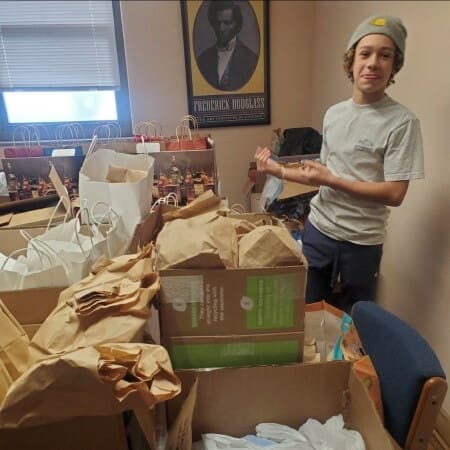
Aside from preparing food for St. Sabina’s Food Pantry, Nate makes his way to tent cities around Chicago to combat food insecurity./Courtesy Nate Buescher
The Honeycomb Project provides opportunities for younger kids to get involved across a wide variety of different causes. In the beginning, their parents make decisions about where they’ll spend their time, but as the kids get older, they begin to participate in what is most meaningful to them. For Nate, that is helping people experiencing homelessness and food insecurity.
“Growing up, my mom always taught me to give back to others. I really didn’t know the concept of volunteering until I started [with The Honeycomb Project], but I really fell in love with it because of the way it made me feel. I saw the smiles on everyone’s faces,” he recalls. “I see a lot of [homeless] people mistaken for being ‘druggies’ who only want money for the wrong things. You don’t see stuff like that every day in the suburbs, so they’re often perceived as ‘bad’. I think helping them out is really important, because I know how I would feel if I were in that position.”
His mom also taught him to help others without judgement. A person in need is a person in need.
Over time, Nate has moved into a leadership role at The Honeycomb Project, where he still enjoys participating with his mom. He now mentors the younger kids along with doing his own service projects. One of his favorites is working with partner organization St. Sabina’s Food Pantry where, after donating over 200 goodie bags of food in his first week, he saw how big his impact could be.
“I think what sets him above and beyond is his incredible leadership and taking it next level, particularly with his work during COVID,” Kristina mentions, recalling the surge of people visiting the food pantry during the pandemic. “Nate personally collected, prepared and donated hundreds of meals–I think upwards of 1000–that he donated on a regular basis to the pantry so that they could better meet the needs of these clients with healthy non-perishable meals.”
Even still, he wanted to do more.
“St. Sabina’s is only a couple times a year. I wanted to help more regularly. Going through Chicago, you see a lot of tent cities and my mom and I decided to help every other week or as much as we can. There are over 20 tent cities in just a three-mile radius of where I live,” he notes of bringing donations directly to residents of such areas and connecting them with social services.
As an advocate, he often uses his social media platforms to get as many people as possible to participate in making donations. As he is sure to tell people—especially the friends he recruits—it doesn’t take much; anything helps.
Sometimes, communication and the logistics of it all can also be a challenge. Making sure volunteers are clear on when they need to be somewhere or what they can donate is vital. Giving someone with an allergy something with peanuts can be devastating, and coordinating distribution can be complicated. But when it all goes well, it’s like a well-oiled machine.
“All they have to do is go to The Dollar Store, buy a pack of stuff and put in gift bags. Then, we pick them up,” he says. “For a lot of these people, their biggest reason for not volunteering is that they don’t have time. So, if you’re that one person who has time to help others, make it easy for them.”
Another outlet for his creativity and service is the group of under-18 artists he performs with to bring attention to social issues. Singers, spoken word artists, and dancers specifically bring their show to the south and west sides of the city where people are struggling the most. Nate has created a hip hop piece revolving around home insecurity in an effort to reach out to people who might need it.
“He’s just a really special kid with an incredibly busy schedule, and I’m just always blown away by how he fits it all in. And I think service is really important to both Nate and his family. No matter how busy they are, they seem to make it a big priority,” Kristina adds.
As high school graduation keeps getting closer, Nate has had some time to think about his future. While he has already had a lot of forward movement with his artistic endeavors, he is planning a more certain future.
“I want to go to Notre Dame and work in the medical field. Maybe a physician’s assistant. I’m really into helping people,” he reiterates.
He is, however, leaving space for the possibility of an acting career if things take off between now and then.
“I’m that kind of guy who’s like Let’s just see what happens.”