High School Student Makes an Impact Through Civic Engagement
Meet Daily Point of Light Award honoree Maya Sriram. Read her story and nominate an outstanding volunteer or family as a Daily Point of Light.
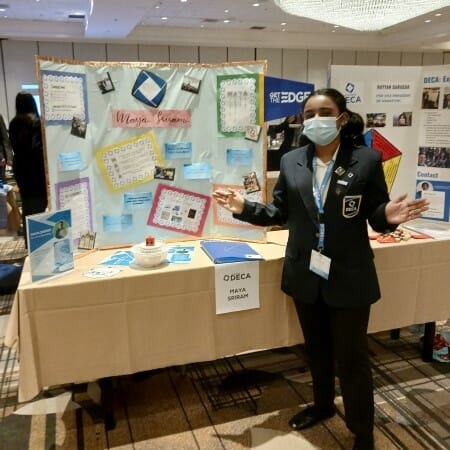
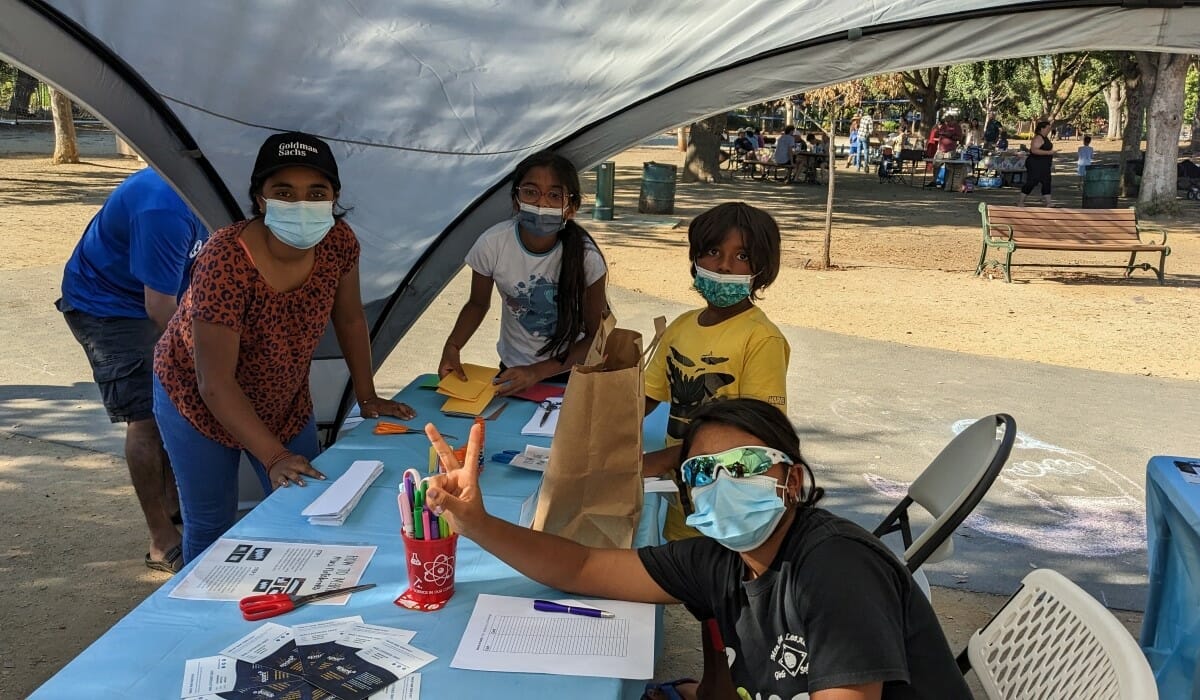
Despite the challenges of navigating life in the middle of the COVID-19 pandemic, 17-year-old Maya Sriram sought out ways to help others in need — including students struggling with online learning. With the nonprofit Edutine, think “education” and “quarantine,” Sriram tutored kids of all ages on various subjects including art, STEM and even curriculum she invented. Her service didn’t stop there. While tutoring, Sriram also took on an internship, co-founded an art and neuroscience-focused nonprofit and worked to end food insecurity in her community.
What inspires you to volunteer?
I mostly started doing my general volunteering during the COVID-19 pandemic when I was about in the middle of eighth grade. I was at home during that summer and I was thinking how hard it was for me to follow along with everything that my teachers were teaching online. If it’s hard for me and I have a solid foundation in all of these subjects already, I thought about how it must be hard for kids who are learning all of this for the first time or kids who don’t have a solid foundation trying to follow along with something difficult.
Describe your volunteer role withEdutine and other organizations you’re involved in?
I decided to try and find a way for volunteers to tutor other students since I’ve always liked working with other people and working with kids, that kind of thing. I started looking for an organization to work with and it ended up being Edutine, likea combination of education and quarantine. We’re essentially trying to help the kid whose education is impacted by the quarantine get back up to speed.
While tutoring, Sriram also took on an internship, co-founded an art and neuroscience-focused nonprofit and worked to end food insecurity in her community./Courtesy Maya Sriram
I also interned as a volunteer with an organization called Aram Seithat I’ve known about for a while after they opened up a handful of spots on their team. I was able to do a lot of work with them. I’ve always been interested in business, and I was able to grow my business skills and at the same time do something for the community. It was all online so it was wonderful. We were raising a lot of money and I kind of fell in love with volunteering again. I worked with a couple of other organizations as well. I started volunteering with a group called Blueprint Oasis, where we helped food insecure communities by redistributing food. I hosted a project with them and raised awareness about food labels. My volunteering has just kept growing and growing. I work with a lot more organizations; I’m now with North South Foundation, which is an organization I’ve been participating in competitions with for a really long time. I help them by coaching and by hosting some science pro webinars and I get to tell a lot more people about what we’re doing.
What’s been the most rewarding part of your work?
Definitely seeing the effects of my actions in my community. I co-founded a nonprofit with my friend called the Neuroscience Art Option. We have a group of 30 students and we all work on creating art and then we host events where we sell our art and donate the profits to neuroscience and raise awareness about neurological diseases or health research. I just have a true passion for science.
A lot of the time with volunteering, it may feel like you’re doing a lot of work that you don’t see, but I have directly seen my work affect others. That’s the best part of it.
What have you learned through your experiences as a volunteer?
I wanted to expand my skills in high school and sometimes it can feel like you’re trapped with what you’re learning in high school. I learned that I want to set up some kind of a future for myself where I can make all these opportunities to continue learning on my own. I also do a lot of volunteer tutoring so all the kids that I tutor also teach me things about knowledge and remind me of past topics that I don’t exactly remember anymore but are important for me to understand. I’ve learned a little bit more about how it’s not always about earning money or benefiting yourself, a lot of it’s about giving back and making sure that most people can benefit from what you’re doing. It’s my responsibility to make sure that everyone has these opportunities. It’s not always about me.
Maya Sriram started volunteering during the COVID-19 pandemic when she was in the middle of eighth grade./Courtesy Maya Sriram
Are there any future partnerships, programs, or events that you are excited about?
We’re organizing our next in-person auction for Neuroscience Art Option, it’s going to be around the first week of June. We’re also looking into hosting some summer programs for kids who are from primarily low- income communities. They can learn a lot more about science, art and STEM in general. The other thing that I’m also interested in with education this summer is that we’re going to have summer tutor programs so I get to bring back my group classes.
Why is it important for others to get involved in causes they care about?
It’s our job to work on equalizing this divide in knowledge. I think that if you have a particular skill that’s useful in the world, and you really think that you’ve done well with that skill, then you can help others who are having trouble with the same thing. It’s your responsibility as a human being who has a responsibility to each other because you have to share that with the world and make sure that a lot of people can benefit from what you’ve been able to learn from.
What do you want people to learn from your story?
The COVID-19 pandemic actually helped a lot when things shifted online, it was easy for me to involve myself in many different organizations without necessarily having to go around. I was able to have the same impact online with online fundraising and whatnot. It made the time commitment a lot easier. So even when you do have problems, you can always find some way to help others. I’m sure you have your own skills that can be helpful. You shouldn’t let your situation stop you from helping others.
California Woman Helps Abused Children on Road to Recovery
Meet Daily Point of Light Award honoree Tracy Sarge. Read her story and nominate an outstanding volunteer or family as a Daily Point of Light.
Content Warning: Points of Light is proud to share the following uplifting and inspiring story. However, we acknowledge that a small portion below may be difficult for some readers. We encourage you to please care for your own wellbeing above all.
Statistically, one in four girls and one in six boys in the United States, has faced some type of abuse by the age of 18—physical, sexual, emotional or otherwise. When Tracy Sarge came across Room Redux, a nonprofit that transforms the rooms of such children in an effort to give them a new space to heal in and a fresh start, she decided to do something about it.
Tracy studied psychology and early childhood education. She taught for a bit before becoming a mother of two and changing directions. With the flexibility of being a personal trainer and health coach, she invested more of her time in her kids’ schools as they grew and in the Fremont, California community.
These days, she’s also the unintentional parent to four cats after her daughter’s cat had kittens and she couldn’t part with them. And in 2019, as part of her “Year of Yes” inspired by the book by Shonda Rhimes, Tracy flew to Texas, where Room Redux was founded, to participate in her first room transformations.
“It was at a time when I felt like the country was in a little bit of turmoil. There was a lot going on,” she recalls. “There was a lot of divisiveness and anger, and I wanted to figure out a way that I could make a difference instead of just sitting at home and being irritated or upset about the situation.”
What she discovered there motivated her to start a chapter of the organization in California, Room Redux Bay Area. One of her first calls was to Michelle Schmitz, a swim team parent who became a training client and friend of more than 14 years.
“I thought it was great, because her daughters were out of the house. It was a perfect time. She was going to have quiet. She just dove right in. And she didn’t know how to do a nonprofit. She just jumped in with both feet and has figured it all out. I so admire her for doing that,” Michelle says.
Between looming COVID concerns, an unexpected medical issue and starting a nonprofit, Tracy was understandable anxious and overwhelmed. Luckily, after joining the Chamber of Commerce, she finished the paperwork and got approval before the world went into lockdown, making her feel more in control.
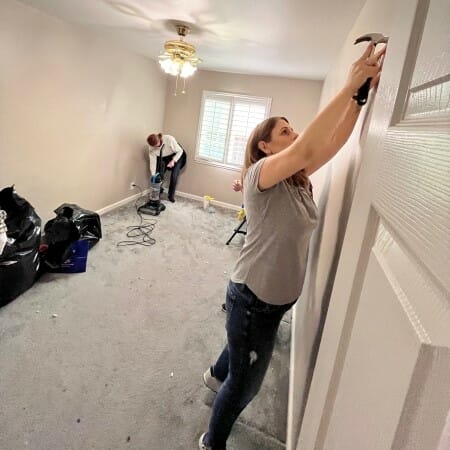
Tracy Sarge, founder and executive director of Room Redux’s Bay Area chapter, in the midst of a room transformation for a child who has suffered abuse./Courtesy Tracy Sarge
Leaving her paid work behind, Tracy works 40- to 60-hour weeks. Knowing there were children forced to shelter in place with their abusers during the pandemic is particularly motivating. Some children continue to be traumatized by getting help but are then returned to the space where it happened.
“The hard thing was convincing businesses and different organizations to utilize us. We were going into an area that was very confidential. It was a very sensitive subject, and not being able to go personally and introduce myself to people was difficult. Having to do everything via email or phone calls was hard,” she says of the pandemic.
Today, her role varies but often includes building relationships and holding meetings with people in the community to create a network, particularly with places like health and wellness organizations and police departments. She organizes fundraisers, answers emails, contacts referrals and drums up donations from local businesses.
Next week, she’s setting up at a community event called Street Eats to gain visibility as a source of information for families and as a place to refer a child.
“We help these children, help the families but we also help the community economically, because we help provide services that then the community doesn’t have to pay for and maybe don’t have to provide,” she states.
Referrals generally come from law enforcement, counselors, teachers and other organizations in the field. Room Redux requires that children actively be in or previously participated in counseling for the abuse. The team works closely with their counselors, caseworks and therapists to meet each individual’s needs. For example, many children have issues with being in the dark, so Tracy plans things like task lighting and motion sensor lighting to make them more comfortable. Water features can also be calming.
After speaking with Tracy, Michelle immediately volunteered to help. What started out as a transformation day role evolved into a vital part of the initial room assessment.
“I’m a civil engineer, and I love to move furniture around, so was a good fit for my brain and how my brain works. She made me her person that helped do the sketches, and we do a lot of the measuring together,” she adds.
When the plan is ready, 12 to upwards of 20 volunteers work together to renovate recipients’ rooms in a single day. Many of them are not experienced in construction but are simply caring citizens who have either been affected by abuse themselves or are familiar with someone who has.
“I feel like our team of volunteers is like a little family. We all know each other. We know who does what best,” Michelle adds.
Since its inception, Tracy’s chapter has completed 37 rooms in the Bay Area. While the team doesn’t stick around to meet the kids, family members will sometimes send videos or audio of the big reveal.
“I joke about it, and my family teases me. I’ve never listened to one where I don’t cry,” Tracy confides.
She feels like her team has a small part in helping the whole family get past the trauma. While they’re in the throes of counseling, facing the abuser and trying to move forward, Room Redux is there to help, no strings attached. They don’t even ask for credit. Parents can explain the room changes however they want.
“We had a grandmother tell us one time that we renewed her faith in humanity, because she was feeling really beat down by the systems that she was having to go through,” Tracy says.
Parents and caregivers talk about how children are more confident and sleeping in their room again after avoiding it for a year, inviting friends over. The results are clearly visible.
The community is taking note as well. Their most recent fundraiser, Rooms in Bloom, was attended by 125 people and exceeded all expectations for their first in-person opportunity to show people what they do.
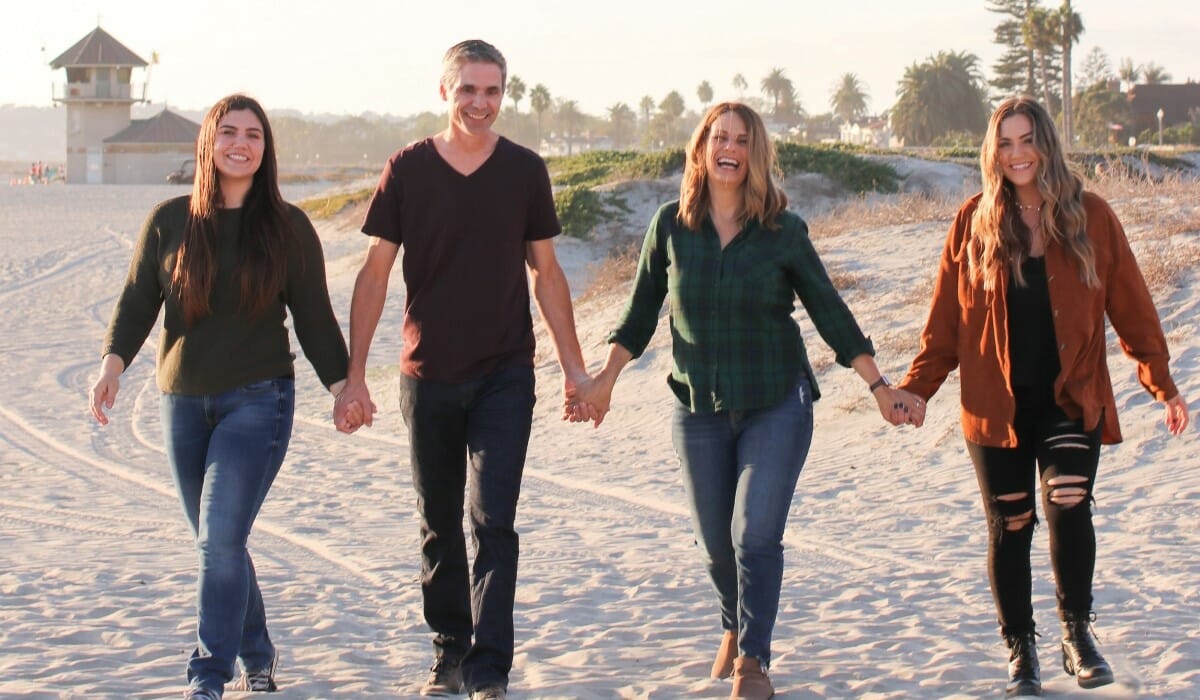
Tracy’s family: [left to right] Michaela, Jeff, Tracy, and Vanessa./Courtesy Tracy Sarge“We were shocked and touched by people’s generosity and how much they cared. Right now, we live in a world where the disconnect from people and the anger is blasted everywhere,” Tracy reflects. “I think people don’t realize that the majority people are truly good people that want to make a difference and come together to help.”
As Tracy looks towards the future, she hopes to turn many of the volunteer positions into paid opportunities in an effort to bring in more experiences help. She also dreams of starting chapters in other parts of California and beyond.
“Tracy has a tremendous amount of empathy. I think that she and I share that to the point where there’s almost pain if you feel like you can’t help somebody,” Michelle says of having to turn people down due to lack of proximity.
In the meantime, Tracy will continue advocating for children affected by abuse and building her organization one day at a time. Next on her list is finding a space to store donated furniture in an effort to reclaim space in her house.
“People feel like you get to a certain age and you’ve done what you’re going to do. I’m 55 right now. I’ve learned how to work on websites, social media, how to connect with people in a different way. And it’s given me a whole new group of people that I interact with,” she states.
The magnitude of what she has accomplished recently hit her during an event with a speaker from the UCSF Benioff Children’s Hospital.
“We had a whole audience sitting there. We had people willing to make thousand-dollar donations to us. And it was just because I stepped out of my comfort zone and did something that maybe I wouldn’t have done before.”
If you or someone you know has experienced the trauma of sexual assault or rape, you can support them by listening, letting them know you believe them and offering to help them find medical attention or mental health support. Contact RAINN to find help near you or call 800-656-HOPE (4673) to talk to a trained crisis counselor. These services are free and confidential.
Longtime AmeriCorps Volunteer Helps Kids Find their Future
Meet Daily Point of Light Award honoree Raymond Knight. Read his story and nominate an outstanding individual or family as a Daily Point of Light.
Raymond had just applied to move to Kenya to teach sign language to hearing-impaired students with the Peace Corps when COVID hit. Like many others, when volunteers were recalled, he was left looking for a new plan.
With previous experience working at a job center through a Goodwill and AmeriCorps partnership, he started following up on leads in that direction. And after reading a description for the first Montana Campus Compact (MTCC) AmeriCorps College Coach for Miles Community College, he was hooked. His assignment led him to Miles City, Montana, a town of around 8,000 inhabitants. After a lifetime of urban living, rural life came with some unexpected culture shock, even for a man who has been to more than a dozen different countries.
With time, he has not only adjusted but thrives. In the first eight months of his year-long term, Raymond has established the college’s Career Services Center where he supports students—many of whom are the first in their family to enter higher education—finding and preparing for careers they’ll love. He co-teaches a career skills development class and recruits volunteers for events such as 911 Day of Remembrance Project and MLK Read for Peace. And his community outreach has led to accomplishments like donating 334 pounds of food to the local food pantry. With Raymond’s close work with the community and new-found love of the outdoors, he may have a longer stay in Montana in mind. After all, for an amateur astronomer like Raymond, it’s a good place to see the stars.
What inspires you to volunteer?
Like a lot of high school and college students that I work with here, I didn’t know what to do, so I did just about everything. I worked in construction, hospitals and mental health centers, clinics and banking. I was all over the place.
I find it more rewarding to work in the nonprofit sector, much more than I did in the private sector. There’s a difference between the way I feel about working for the public and in the public interest. I just feel better as an individual.
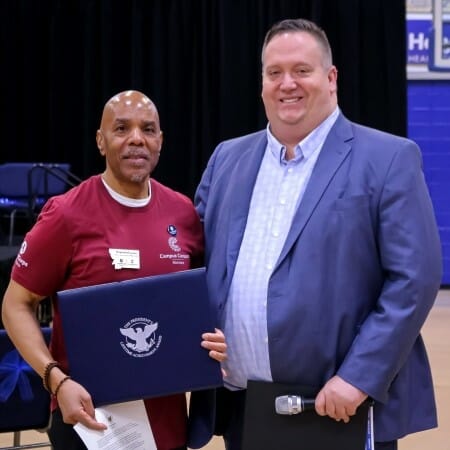
The Dean of Students at Miles Community College [right] awards Raymond [left] with the President’s Volunteer Service Award Lifetime Achievement Award for his 6500+ hours of volunteer service./Courtesy Raymond Knight
Describe your volunteer role with Montana Campus Compact (MTCC) and AmeriCorps.
You can serve up to five terms and can work either direct service or increasing capacity of organization to do direct service. This is the first time that Montana Campus Compact has worked with Miles Community College here in Miles City. So, the college, in conjunction with AmeriCorps, created this position.
I help students identify their interests, strengths and strategies needed to achieve their career and life goals, both in-person and virtually. I co-teach a class on career development twice a week for high schoolers and here at the college. I put out a quarterly newsletter and do community outreach, too.
Tell me more about the MLK Read for Peace.
It’s a national initiative where volunteers go to elementary schools and high schools and read age-appropriate stories about Dr. King, his life and legacy to people who ordinarily wouldn’t get that kind of information. Then, they can write a poem about peace or draw a picture of what a peaceful world looks like to them. It was new for this town when I recently hosted it. That is one of the nice things about being here.
What’s been the most rewarding part of your work?
I had no idea what I wanted to do when I was in school, and I’ve kind of fumbled my way through everything. That really helps me, because now I work with students in the same position. I help them figure out what’s going to work for them in terms of a career and then how to get on track and stay on track.
One student that I counseled had absolutely no interest in going to college. So, he came in, and we sat down and talked, just his parents, me and him. He started opening up about his interests, and we talked about being a museum curator. Then, I got a letter from the principal saying that he’d decided to come to college to pursue that. It was a complete turnaround.
What have you learned through your experiences as a volunteer?
I’ve learned not to have any expectations, to go in with an open mind. A one-size-fits-all model doesn’t work. People are unique. You have to meet them where they are to get to where they want to go. I’ve also learned to listen more.
Are there any future partnerships, programs, or events that you are excited about?
Because I laid the foundation for MLK Read for Peace, 911 Day of Service and Global Youth Service Day, I’m looking forward to stepping up for the next time they come around. This time, I have a state representative who wants to come to say some words about 9/11. And I have a partnership with the library to do Local Youth Service Day.
Why is it important for others to get involved in causes they care about?
Historically, change comes through populations from the bottom up. When people at the top make changes, it’s because people at the bottom are of a singular mind about what needs to be different. People need to get involved. If everybody does a little bit at the end of the day, you’re going to have a lot done.
I used to be one of those people who sat around and watched things happen and always said, “Wow, somebody needs to step in and do that.” Eventually, I asked why that somebody couldn’t be me. That’s the attitude everybody should have. It can start right here.
What was it like moving to rural Montana from a big city?
When I came here, I figured I’d hit the ground running. I’ve worked in rural communities on the east coast, but I’d never actually lived in a rural community. The pace is slower. It was a culture shock. But after a while, I acclimated, and now I love it.
People are not living on top of each other. There are lots of open spaces full of natural beauty. I’ve become an outdoor person. I also went to my first rodeo and absolutely loved it.
When I go to Walmart, I sometimes get stared at. There aren’t a lot of Black people out here. Sometimes people see me according to their own version of culture shock. So, I allow latitude for that. I’ve had more people stop and talk to me and be friendly than any other kind of experience. For the people who aren’t there yet, I just give them the benefit of the doubt. I think that’s important.
What do you want people to learn from your story?
People are often conditioned from birth, but you can transcend that. That’s what I like about volunteering. It’s a transcendental experience. I always try to leave assignments as a better person than before. And I try to leave the work environment better than it was before I got there.
Do you have any plans for when your term is up?
I was offered a second term with AmeriCorps, so I signed up to extend my time here. I might stay longer.
Teen Inspires Action for Mental Health After Helping Hundreds Through Crisis Line Volunteerism
Meet Daily Point of Light Award honoree Azin Anees. Read her story and nominate an outstanding volunteer or family as a Daily Point of Light.
Content Warning: Points of Light is proud to share the following uplifting and inspiring story. However, we acknowledge that a small portion mentions suicide and may be difficult for some readers. We encourage you to please care for your own well-being above all.
High school student Azin Anees wants to continue to keep mental health in important conversations. After learning that schools within her community had five times the national suicide rate, she began volunteering with SamaritansHope, a 24/7 crisis line that provides suicide prevention services and created her own initiative, Let’s Talk Mental Health, shortly after. She’s helped hundreds of individuals through both organizations and continues to cultivate a culture of peer support to inspire others to volunteer for local mental health organizations.
What inspires you to volunteer?
I first became passionate about mental health advocacy two years ago when I discovered that high schools within my local area had five times the national suicide rate. This alarming statistic is what motivated me to start volunteering for SamaritansHope. I realized that so many individuals, even those within my own life, were struggling with loneliness, depression, etc. By volunteering on the helpline, I am able to provide a safe and nonjudgmental listening ear for callers and texters.
Many of the skills I developed through volunteering on the helpline also inspired me to take initiative within my own school community. I decided to start Let’s Talk Mental Health — an initiative that aims to address mental health stigma through education. I am inspired by the opportunity to work towards a stigma-free future.
Describe your volunteer role with SamaritansHope and Let’s Talk Mental Health.
I am a teen crisis line volunteer for SamaritansHope. I answer calls and texts on the helpline each week and provide a safe and nonjudgmental place for callers and texters to share.
I created the Let’s Talk Mental Health initiative about a year ago and through that I have helped promote mental health dialogue and support within my high school. By creating a mental health curriculum which was implemented within a health class at my school, I have been able to encourage discussions surrounding mental health in and outside of the classroom. I have also created a podcast called, Let’s Talk Mental Health, and through that I have brought on guest speakers working within the field of mental health to help reach an audience beyond my local community.
What’s been the most rewarding part of your work?
One of the most rewarding aspects of being a crisis line volunteer is the opportunity to provide support to individuals who are feeling distressed and/or lonely. Just being able to lend an empathetic ear and be present in listening to someone has been incredibly rewarding.
What have you learned through your experiences as a volunteer?
Through my volunteer experiences, I’ve developed a greater awareness and understanding of the needs and issues within my community. Mental health isn’t something that is often spoken, and I am determined to change this through my volunteer work. I’ve also learned crisis support and empathetic listening skills that have transferred over into my personal life and interactions with others.
Are there any future partnerships, programs, or events that you are excited about?
I am definitely excited to get involved with other mental health organizations in the future! I am also really excited to tune in virtually to Mental Health America’s 2023 conference this summer.
Why is it important for others to get involved in causes they care about?
I think it’s important for everyone to get involved in causes they care about because it empowers them to be agents of change. Getting involved means actively participating in shaping the world they want to live in. I also think that getting involved in causes they care about creates a ripple effect in the way that their actions inspire others to take notice, learn more, and get involved themselves. This often expands the impact beyond their own efforts.
What do you want people to learn from your story?
I want people to learn that everyone can be an advocate for any cause — no matter what stage in life they are in. When we hear the word advocacy, we often think about big acts of change such as influencing legislation or creating national campaigns. To me, advocacy means so much more than that. Starting conversations, educating oneself and others, or even getting involved with an organization as a volunteer are all ways someone can make an impact.
If you or someone you know may be considering suicide, contact the National Suicide Prevention Lifeline at 1-800-273-8255, or text HOME to 741741 to talk to a trained crisis counselor through Crisis Text Line. Both resources are anonymous, free and available 24/7.
Caring College Student Volunteers to Ensure All Kids in Her Community Are Fed
Meet Daily Point of Light Award honoree Sofia Petito. Read her story and nominate an outstanding volunteer or family as a Daily Point of Light.
The COVID-19 pandemic uncovered a lot of hidden unmet needs amongst the most vulnerable, and in 2020, then-17-year-old Sofia Petito decided to jump in and meet them. With a bit of research and a lot of paperwork, she founded The Viola Project, a nonprofit that sends elementary school students on the free lunch program home with food for the weekend.
Sofia is the middle child with two brothers. She graduated high school the year before the world changed and was—and is—a student at Stony Brook University on Long Island at the time. She’s majoring in biology while working full-time as a vet tech at an animal hospital. To say her free time is limited would be an understatement. So, she has called in some backup to help get things done.
The Viola Project a family production with Sofia at the helm, her two senior pugs and shih tzu on guard duty. Her brothers, parents, and even grandparents pitch in to organize, pack and deliver 100 bags of food on a weekly basis. Sofia coordinates volunteers and monthly fundraising campaigns, runs social media, collects donations, performs weekly inventory, etc. Together, the Petito family and their volunteers keep the children of their community happy and healthy while giving their parents a much-needed sigh of relief.
What inspires you to volunteer? What led you to create The Viola Project?
My family has always volunteered at church and local organizations. When I was in elementary school, my mom was on the board of a local non-profit called HACO–Harborfields Alliance for Community Outreach. She would bring us to the pantry to help out all the time by making food bags or just stocking the shelves. HACO provides monthly food bags and other assistance to families in our local school district.
Sofia Petito, 19, founder of The Viola Project./Courtesy Sofia Petito
Once we were able to return to the classroom during the COVID Pandemic, I realized the kids who receive free breakfast and lunch did not always have food on the weekends . I wanted to create something that would be just for them. When families get staples donated to them they are mostly beans pasta, soup, cereal – nothing that a child would get excited about. I wanted our weekend bags to have something fun that the kids would not normally get at home. I spoke to my parents and decided I wanted to create a nonprofit to help feed kids on the weekends. I named it The Viola Project after my grandma. It was her maiden name, and it is my middle name.
Describe your volunteer role with The Viola Project.
My mom and I actually had to research and meet with many people to learn what it takes to start a nonprofit. At the time, I was only 16 so my mom had to help with all of the paperwork. And there was a lot of paperwork.
Once we received our nonprofit status, we asked for donations from friends, family and local businesses. Everyone was extremely generous. I was very involved in every aspect of the Viola Project from social media, fundraising and ordering food to stuffing and delivering the bags. Since I am a full-time college student and full-time vet tech, my family helps me with the weekly stuffing of the bags. It’s a huge family affair. My brothers help with all the heavy lifting; my grandmother makes sure all the stickers are on the bags; my grandfather breaks down all the boxes and my mom and dad fill the bags and prepare them for delivery.
What’s been the most rewarding part of your work?
Knowing that the kids who receive the bags look forward to them every week is very rewarding. We work with local social workers who give us the number of bags they need. We don’t know which students get them; we just hear back from teachers how the kids really look forward to getting them every week.
What have you learned through your experiences as a volunteer?
I’ve learned a lot about myself, the status of my community and how much my family helps when I need them to step in.
Are there any future partnerships, programs, or events that you are excited about?
I’m looking forward to planning our annual fundraising event this November. It will be our second year hosting it, and I have a lot of new ideas.
Why is it important for others to get involved in causes they care about?
The world needs more people to help others.
What do you want people to learn from your story?
There is always someone who could use your help. Something very little to you could mean the world to them.
Do you have any post-graduation plans?
After I graduate Stony Brook University, I plan on going to veterinary school in an effort to one day become a vet. I also hope to grow the Viola Project to help out other districts on Long Island.
Seventh Grader and Family Rallies Community Support Behind a New Cause Each Month
Meet Daily Point of Light Award honoree Christian Patrick Kuhn. Read his story and nominate an outstanding volunteer or family as a Daily Point of Light.
Christian Patrick Kuhn, 13, moved to the steamy coastal town of Tampa from South Africa just ten years ago with his parents and older brother, Michael. In 2017, things took a devastating turn. Christian’s father passed away. As it often does, humanity showed off its best when tragedy stuck, and the support of their community inspired the Kuhn brothers to start an organization that would do the same for others.
Christian, Michael and two of their cousins, Dominic and Sheldon Fouché, banded together to create Kids 4 a Cause in February of 2019 and have chosen a charity each month since to assist with supplies, monetary donations or volunteer power. The boys show up in person to hand out donations to the homeless, veterans, the elderly, foster children, food pantries and more. Christian’s empathy for those less fortunate and his dedication to getting his peers involved at school helps his Florida community and extends to many parts of the world.
In addition to his volunteer activities, Christian is an active middle schooler who loves cooking, fishing and playing soccer and football. He whips up dishes with international flair, citing some of his favorite things to make are alfredo, curry and spaghetti when he’s not baking. Even Mia, the family pug, gets her share of his culinary work if she sticks around long enough. And whether they’re volunteering abroad or relaxing in their home country, Christian and his family make it back to visit relatives in South Africa every summer or two.
What inspires you to volunteer?
Unfortunately, in 2017, my dad passed away. And our community helped us a lot, so we decided to start giving back and create a charity. That’s when we started Kids 4 a Cause.
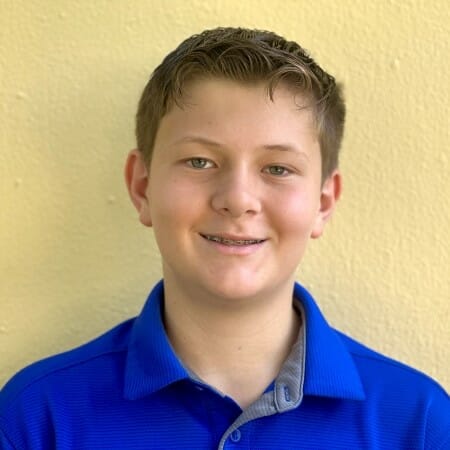
Christian Kuhn, co-founder of Kids 4 a Cause./Courtesy Christian Kuhn
Why is helping animals particularly meaningful to you?
I was born in South Africa, and our whole family owns a house in the safari, so we love to see animals. We see giraffes, lions, cheetahs — you don’t see cheetahs as often as people think you do. You see leopards more often. You also see hippos, crocodiles, wildebeests and a lot of other beautiful animals. We take care of a lot of them ourselves.
Describe your volunteerism.
The four of us — my brother, my cousins and I — organize everything together, so that it’s not like someone’s role is more important than the others. Every month, we decide on a specific organization to help. It often revolves around holidays. For example, if it’s Christmas, we do a Christmas theme. One of our biggest projects for the year is Santa’s Shoebox. We put essential supplies for people experiencing homelessness in little shoeboxes, and then we wrap them so they have a Christmas gift. We also do a ton of stuff around Thanksgiving. This month, for Mothers’ Day, we’re helping mothers in need. We’re collecting clothing, bedding, blankets and more to help women destress.
Our goal is to reach $1,000 or more every month, and for the past 52 months, we’ve exceeded that goal. We’re very happy about that. We raise money by selling a lot of products we make, for example soaps, jewelry, straws, bath bombs, chocolate bombs and a lot more. And we normally advertise them on our website.
One of our highest fundraising projects was for the Rhino Rescue Project, based in the area where I’m originally from. We raised way above $5,000 to hire security to stop poachers from getting all the rhinos’ horns. That was really big for us. We also did another project in Africa for Little Eden. It helped special needs children. Basically, we raised money so that other children could get clothes and care.
What’s been the most rewarding part of your work?
It’s really nice to see smiles on people’s faces. We’re overjoyed that we get to see all these people who are really happy that someone is caring for them.
Tell us about future partnerships, programs and events that you are excited about.
For next month, we’re doing Bunches of Love for the elderly, so we’re making flower bouquets for them. We did it during COVID, too. It really made them happy, because they couldn’t see other family while in quarantine.
Why is it important for people to get involved in causes they care about?
One of our mottos is that kids can make a difference. So, we like to get a ton of other kids involved in helping with all these service projects. People volunteer on our website and at school, which is really awesome, and our entire community around us who love to come around and help out.
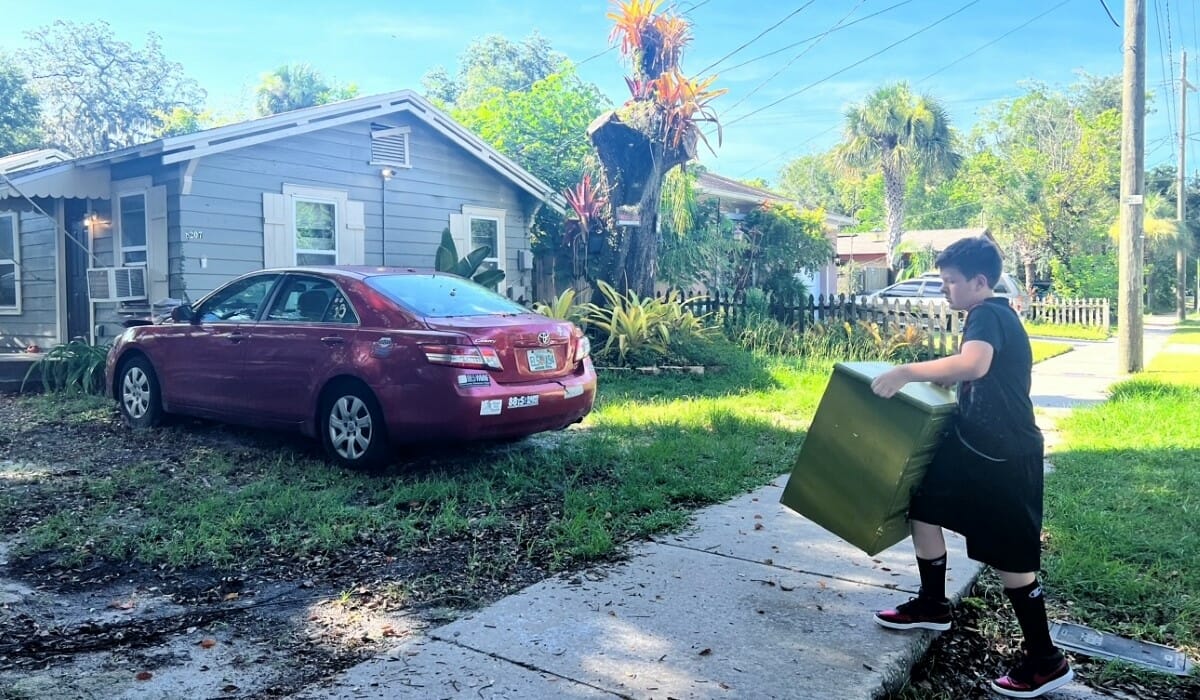
Working with New Life Warehouse, Christian takes furniture and other home items donated by Kids 4 a Cause into homes being set up for families in need./Courtesy Christian Kuhn
What do you want people to learn from your story?
Our biggest motto from the late South African President Nelson Mandela is, “It is in our hands to make a better world for all who live in it.” And we stand by that motto, so we have to try and do whatever we can to make a big difference.
What are your plans for the future?
I would like to do something culinary and engineering with electronics. I want to find a way to do both. Our family is really big into cooking. My mom and my grandma are probably my biggest influences on that. I love doing that with them. It’s one of my favorite things to do.
Former Skid Row Resident Fights for Improving Community Members’ Lives
Meet Daily Point of Light Award honoree Adelene Bertha. Read her story and nominate an outstanding volunteer or family as a Daily Point of Light.
Adelene Bertha is a highly motivated, accomplished and caring student at the University of California, Los Angeles and Senior Peer Support Specialist with the Downtown Women’s Center in L.A. She focuses on Project 100, one she helped pioneer to house 100 women from Skid Row. The project has since secured over $1 million in funding. Her dedication to volunteer work is especially striking.
Adelene is the middle child of seven kids. Her mom was born in Puerto Rico and grew up in Cuba to a Cuban mother and a Greek-Cuban father. She looked different than her siblings, something she noted when she had children of her own.
“She told us that just because we’re different doesn’t mean we’re not the same. She was really adamant that we share our culture and share in other people’s culture, so that we were knowledgeable and aware,” Adelene says.
Adelene and her siblings grew up moving around. Originally from Pennsylvania, they stayed in Wilkes-Berre, Hazleton, Shenandoah, Exeter and a place that she remembers started with the letter P. One place she remembers vividly was an area where no one looked like her. She enjoyed interacting with other nationalities and recalls her mom advocating for a cause particularly important to the Black community.
When they first moved to town, a teacher called Adelene’s mom to inform her that the kids had to come to school on Martin Luther King Day. It was not a holiday. Her mom refused. The next year, the school made it a half-day. Still, Adelene’s mom kept her kids home. The following year, it was an official holiday. At the time, Adelene didn’t realize her mom was advocating, but she thinks about that time often as she volunteers today, citing service as another way to advocate for change.
“I had the best relationship with my mom. It only took one day for everything to change. The day it changed, I left and didn’t see her again for five years. When given the choice between me and the man she was currently with, he won. At that time.”
At the age of 16, Adelene first became homeless, taking up occupancy on Skid Row on and off for the next several months in tents, mini apartments — many without bathrooms — and later, shelters. Her wallet and purse were stolen enough that she stopped replacing them. The shelter she spent the most time in, on and off for five years, was Covenant House California, before saving enough money for her first apartment around 2017. She was working two jobs, one at Verizon and another in Gang Reduction and Youth Development with the Mayor’s Office, starting as a volunteer before getting on the payroll.
While she was originally planning to go to college and was accepted to eight different schools, some on scholarship, she ran into an issue that is common — and often overlooked— amongst the unhoused population.
“I didn’t just lose somewhere to live. I lost my identification. So, I didn’t have my social security card or my ID. And so, it took a while for me to prove that I was myself,” she says.
It was then that she decided to focus on getting a job. Over time, she got a job with the county working on drug and alcohol prevention in Skid Row and volunteered and worked with the United Coalition East Prevention Project.
Eventually, she was nominated to the LA City Skid Row Park Advisory Board, a role that provides resources and services, educational programs and community events for residents. As co-chair, she is pivotal to organizing and hosting quarterly resource fairs for which she conducts outreach to local organizations to provide housing assistance, employment opportunities, COVID-19 and HIV testing, and mental health and substance abuse resources. She especially enjoys when the community comes in for public comment.
There was a quote on the wall of the Covenant House California shelter that has stuck with her over the years: Too many people listen to give an answer than listen to understand. These days, Adelene focuses on understanding, even when she doesn’t have the solution. She considers it one of the most important parts of her work.
When she was homeless, she also especially valued the people who looked out for her, spoke with her and encouraged her. They became the support system she didn’t have, and now she’s repaying the favor and serving as inspiration for the youth on Skid Row.
“I’m very appreciative for the people around me that pushed me to do something more and encouraged me never to drink or smoke, because I know what alcohol and other drugs can do to a person. It’s very apparent in the Skid Row community, and hopefully one day that will change,” she says.
Adelene recommends anyone who is interested to volunteer inside shelters or with underfunded community partners who could use the help. Then, they can use what they learn to uplift the people they’re volunteering for.
“The best things that ever happened to me were because I decided to say ‘yes’ to volunteering.I learned humility and public speaking skills. And that it’s ok not to have the answer to everyone’s problems; just being there and having a conversation with them can be enough,” she confides. “You build trust and connection that you’re not even aware of. It could be someone that you barely talk to or that you see every day. You might not really even know each other. But to them, you coming by, bringing a resource and saying hello, can feel like their whole world.”
Outside of her previously-mentioned work, Adelene also volunteers for Skid Row 3-on-3 Basketball League, LA Mayor’s Summer Night Lights Program, Skid Row Movies at the Park and the LA City College Umoja educational preparation program.
Today, Adelene, fully housed and on the verge of getting her bachelor’s degree, is aiming for her PhD in psychology. Having gone through five years of therapy herself, she tries to normalize conversations around mental health and the positive experience talking about it can be.
“I want to focus on using the research as an implementation tool to address those that live in Skid Row, because therapy is not seen as a positive option there. I want to change the stigma around therapy for those that reside in and live in Skid Row.”
Oftentimes, she cites, people experiencing homelessness are so consumed with finding a place to live that they don’t address the trauma that comes along with it or how they got there in the first place. Others may have diagnosable mental health issues that get pushed aside in the rush to find employment. Shelters don’t require therapy for guests. Adelene wants people to feel heard and credits her therapy experience as one of the reasons she volunteers to listen to people’s concerns or troubles.
Adelene has also reconnected with her mom. In 2018, she saved enough money to buy her mom a flight from her new home in Las Vegas for a challenging reunion.
“Even though I was badly hurt by her, she’s the one that I could never stop loving. Even to this day, if she calls me, I’ll answer. At the end of the day, she brought me into this world. I’ll always be in her orbit,” she states.
After five years of hard work, Adelene has almost completed a novel based off of her life and homeless experience but with supernatural characters. And she’s about six years into the launch of a clothing line, Nerdy Ink Apparel, that she started with her boyfriend. They shared a history of growing up homeless and felt judged for what they didn’t have as well as their love of anime and books, so they teamed up to foster his passion for fashion and graphic design and her desire to make people feel good about themselves. And in a few days, she’s joining UCLA’s Alumni Scholar Club and Heal the Bay in her first beach cleanup.
More than anything, she encourages everyone she meets to volunteer. What became very clear during the pandemic is that people need other people. They need to connect. The results are positive for both the recipient as well as the volunteer. She likens it to a sense of self-care.
The future is bright for this force of nature. And she’s reaching behind to bring others with her every step of the way. Adelene is a true point of light for everyone around her, including those in a position to make systemic change.
Eight-Year-Old Helps Save the Planet Through Proper Battery Disposal and Recycling
Meet Daily Point of Light Award honoree Nithya Tammana. Read her story and nominate an outstanding volunteer or family as a Daily Point of Light.
Nithya Gopika Tammana, an 8-year-old, started observing her brother, the founder of Recycle My Battery, at the age of 5. Seeing Nihal spread awareness about battery recycling and the impact he created on people inspired her to learn about the ill effects of throwing used batteries in the trash.
For the past three years, Nithya has volunteered over 500 volunteer hours, participating in battery drives and educational campaigns organized by her brother. She is always behind him in all activities, lending a helping hand whenever needed. She has collected thousands of batteries and educated thousands of people, always encouraging them to recycle their used batteries. Nithya is vocal about her passion and reminds people to love the earth as they would love their mother.
Nithya’s contributions to Recycle My Battery are numerous and varied. She helps with terminal protection for batteries, ensuring that they are properly insulated and stored for safe transportation and disposal. She assists with outreach efforts, speaking with schools and community groups to raise awareness of the importance of responsible battery disposal. And she plays a critical role in planning and executing all of Recycle My Battery’s activities and events, helping to ensure that each initiative is successful and impactful.
Read more about what Nithya has to say about her volunteer work and the importance of proper battery disposal and recycling.
Describe your volunteer role with Recycle My Battery.
I help my brother, the founder of Recycle My battery, educate others. I do battery drives. I collect batteries and do terminal protection – when you tape up the batteries and investigate to ensure the batteries are safe for disposal. If you throw batteries away in the trash, they go into landfills, and the chemicals in the can batteries leak, causing fires and pollution. Can you imagine that right now we are eating polluted food and drinking polluted water due to batteries leaking in landfills?
Battery drives are first a way to educate people if they don’t know about our organization. And we tell them where we keep our battery bins. If they have used batteries on them, they can dispose of them in the bins we bring for the drives. It’s also a chance for them to donate money to our organization.
How did you get started with this?
I got started around age 5, when I saw what my brother was doing. I knew it was a really important mission and I knew he had to get some help. So I decided to join Recycle My Battery and help my brother.
Any rewarding stories from your volunteer work?
I got two Presidents Volunteer Service Awards – one silver and one gold. I answered some questions, and we took pictures when Congressman Frank Pallone handed me the awards and medals. Getting two President Volunteer Service Awards is rewarding.
Why is it important for people to get involved with the causes they care about?
I think it’s important for people to take care of the environment and Mother Earth. My slogan is, “Our planet, our friend – let’s protect it til the end!”
Just like we have friends, Mother Earth is our best friend. If you have batteries, please recycle them in battery bins!
What’s your advice for people who want to start volunteering?
I would say that at first, you could be nervous, but once you start doing it, it feels so exciting. And when you reach your goals, you feel very, very happy. Also, many people appreciate what we are doing.
What do you want people to learn from your story?
I want people to learn that if they have used batteries, make sure to recycle them in the proper battery bins. Never ever throw them in garbage bins!
Computer Science Student Passes On Coding Skills to Youth and Students with Learning Disabilities
Meet Daily Point of Light Award honoree Karnika Choudhury. Read her story and nominate an outstanding volunteer or family as a Daily Point of Light.
Even as a new student to the University of Texas at Austin, computer science major Karnika Choudhury has a strong desire to teach others how to code. The 18-year-old understands that not every student has the opportunity to code while in school, so she set out with Unite & Inspire to bridge that gap. She’s volunteered more than 600 hours teaching youth and students with learning disabilities how to code, even in the midst of the COVID-19 pandemic.
What inspires you to volunteer?
What inspires me to volunteer the most are the results of my volunteering, the impact that what I do has on other people. For example, I do a lot of coding and help special needs individuals work through their own code and get through all of the errors to see the results they want. When they finally click “run” and I see their faces light up, it’s really inspiring how happy they are with their accomplishment.
What I’m doing is really inspiring someone else to continue coding and helping them develop their interest. I feel like that’s what keeps me going. I love it when I can see for myself that what I’m doing is genuinely making a difference. Just a little bit of my time is helping someone pave their own career path and build skills that they’ll need in the future.
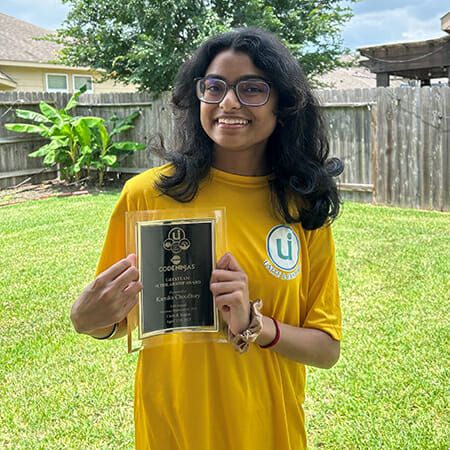
18-year-old Karnika Choudhury teaches coding and digital skills to students of all ages and life stages with Unite & Inspire. /Courtesy Karnika Choudhury
Describe your volunteer role with Unite & Inspire.
Initially, I found Unite & Inspire when they were advertising an internship during my freshman year. I was like, “okay, this seems cool.” They eventually developed their coding team. I really liked coding and I knew that I’ve wanted to pursue computer science since freshman year of high school. This was before the COVID-19 pandemic, when we used to host our in-person library sessions – where you go to your public library and an adult actually teaches everyone how to code, and the kids go around and help them with debugging and other things.
But Unite & Inspire has been so persistent with continuing a lot of educational resources and activities during COVID. That really helped me keep my morale up with some kind of normalcy in my life. I kept getting to volunteer and help people and that’s when we got to teach special needs individuals how to code in different languages. We started with block-based languages like Scratch and Microsoft Arcade, and slowly moved into coding with Python and HTML. Now we’re doing a little bit more of growing digital skills like photo editing, video editing and website building.
With our coding camps, I help kids of a lot of different ages. I have students anywhere from ages 5 to 22 so I get to help teach people who are older than me. It’s really cool working with people of so many different ages.
What’s been the most rewarding part of your work?
The most rewarding part of my work is just knowing that I grew up with so many different privileges – like going to an amazing public school with amazing teachers who taught me coding – and now I get to pay it forward to people who didn’t have those same opportunities.
From those with lower incomes, students who don’t go to schools that offer coding classes and even special needs individuals, I’m really grateful to work with all of them. It’s so fun teaching other people and watching them experience the same kind of epiphanies I had when I was learning all of this.
What have you learned through your experiences as a volunteer?
I think I learned two things. One is patience and how to be empathetic and understanding of other people’s struggles. I know that I have my own pace of learning and coding, but you can’t really teach well if you’re teaching at your own pace. You have to understand what your students need and design everything around that. With my special needs students, I’ve found that explaining things in relatable ways and through everyday objects they know is helpful. And the second thing I’ve learned is definitely just self-growth.
Are there any future partnerships, programs, or events that you are excited about?
One thing that I’m really excited about is continuing to partner with folks at Texana and teach students with special needs how to code. We’re also bringing back the library sessions where we taught at public libraries so we get to reach a lot more people. We’re also teaching Java at Cinco Ranch Library this summer so I’m really excited for that. We’ve been prepping and I’m writing out the curriculum and developing slides for presenting.
Why is it important for others to get involved in causes they care about?
I think volunteering is so important to everyone because of how it changes your outlook on life. When I started volunteering, I was a freshman in high school. At that age I think we tend to be more self-centered and try to navigate everything. It’s really easy to get lost in all of that. So when you start volunteering and helping other people, not only do you become more aware of this entire world outside of you that needs your help, but also you get to tap a side of you that maybe you didn’t know about before.
What do you want people to learn from your story?
I would want people to understand that any self-doubt you have shouldn’t hold you back. When I had to teach coding, I was still learning things myself and I was scared because I didn’t want to say the wrong thing. I wasn’t sure that I was qualified. I would encourage people to just take that first step and that they can really make a difference. It doesn’t matter how strong your skills are, it matters that you’re willing to show up and help. Everything will fall into place, all you have to do is take that first step.
Pennsylvania Woman Supports Unhoused Families and Sets Example for Others Through Volunteer Work
Meet Daily Point of Light Award honoree Sue Diehl. Read her story and nominate an outstanding volunteer or family as a Daily Point of Light.
Sue Diehl of Ambler, PA, embodies hospitality. It’s impossible to meet her and not feel her warm, welcoming demeanor. This is why Sue is an excellent fit for the volunteer roles she serves in – hosting unhoused families and making them feel seen, heard and accepted.
For the past 25 years, Sue has served as a volunteer for Family Promise (formerly Interfaith Housing Alliance). For the past 18 years, she has served in the role of Host Coordinator, greeting unhoused families on her church’s doorstep, creating a safe, home-like setting and organizing volunteers for meals, rides and children’s activities.
An accomplished businesswoman and active member of the Jarrettown United Methodist Church, Sue has been recognized locally and nationally for her work in the community. Sue can be found each evening, sitting on the stoop of her church, waiting to warmly welcome the parents and children in Family Promise Montco’s emergency shelter program at the end of a long day.
Read on to learn more about Sue’s volunteer work and why she is driven toward the mission of supporting unhoused families.
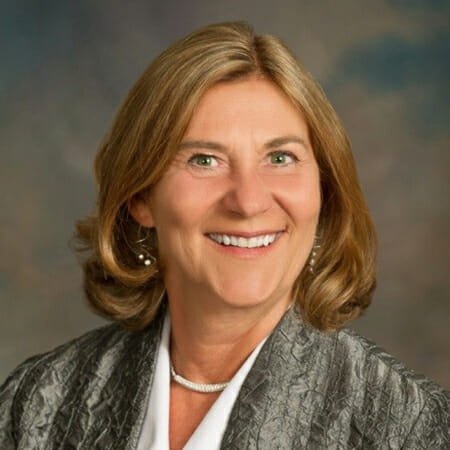
Sue Diehl is a volunteer with Family Promise, an organization working to transform the lives of families experiencing homelessness.
What inspires you to volunteer?
I always felt I was put on this earth to help people. I do a lot of different missions through the church, but I started with Family Promise when my kids were little. They thought it was neat that we could camp out at the church and they could play with other kids. I thought it was important for my kids to see the nature of their own circumstances, and to get involved in our community through volunteering with unhoused families.
Then, I established this tradition with my granddaughter. Every night after work, I started sitting on the church stoop between 5 and 5:30 to greet the families. And my granddaughter Harley would come with me. One year, I got a heart-wrenching note from one of the moms saying that she never in her life had someone wait on her. That there were days she would leave the church and cry all day, not knowing how she’d get through her situation, then she’d drive up and see my smiling face waiting for her, and she knew everything was going to be alright.
At that moment, six or seven years ago, I knew why I was doing it. Now, every time we’re hosting the families, I do that – greeting them at the entrance. So when Harley was 4 years old, she connected with one of the little girls in the program. And they were sitting on the stoop holding hands. The little girl said, “We could be sisters,” and Harley said, “We could be sisters!” When I drove Harley home, she told me she wanted to give the little girl her stroller and doll. This was her favorite doll! From that point forward, Harley has cleaned out her toys every year and they go to the church for the kids.
Describe your volunteer role.
We take up to three families, and in 90 days, Family Promise helps turn their lives around. Volunteers are there to help with dinners, overnights, be there to help with the kids, be there in case the parents wanted to talk. It’s typically single moms with their children, so talking with them is part of what I do.
I’ve seen everything over the last twenty-something years. I’ve seen people come out of abusive situations – people with nothing but the clothes on their backs, nothing for their babies and kids. When I became a host coordinator, I started to get the volunteers together to make meals and bring them over or provide gift cards for additional food. I try to get playdates coordinated for the families who have kids.
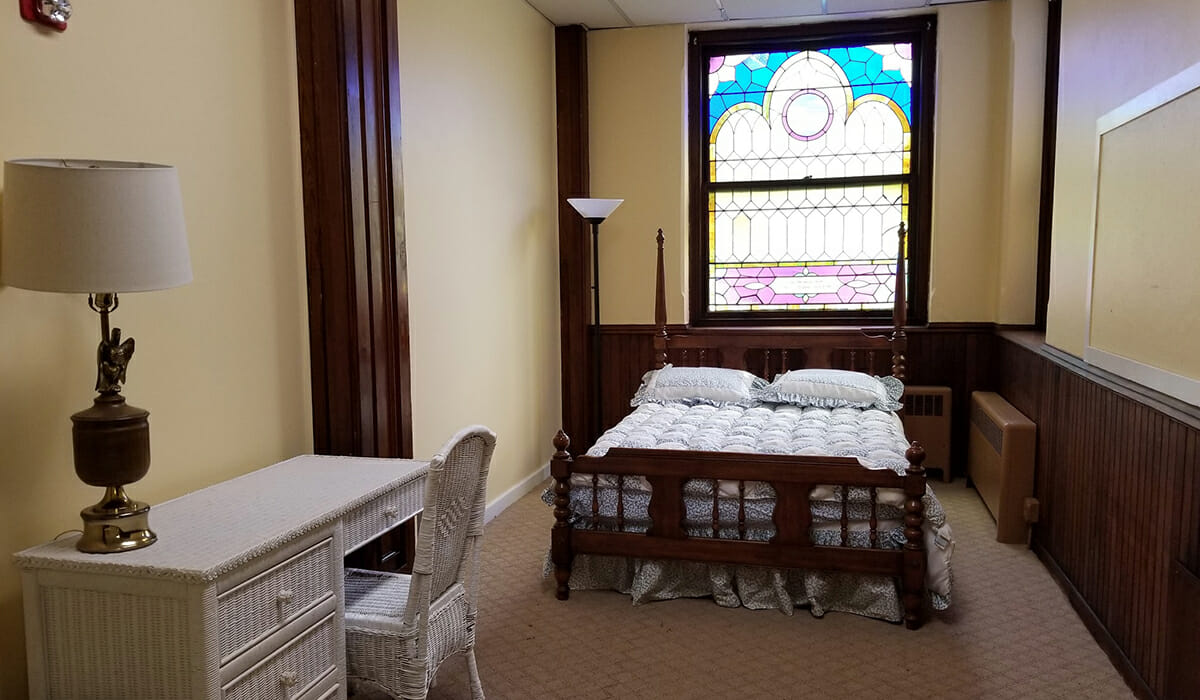
I organize the donations too, and we set up three bedrooms. I try to make them real bedrooms, not like a multi-purpose room. Volunteers donate anything – sofas, beds. I try to make it like home. We housed families for multiple months during COVID when many of the churches couldn’t.
Any rewarding stories from your volunteer work?
I have so many. There was one little boy who wanted an orange backpack. It was all he talked about. He wanted to go to school with an orange backpack. I looked everywhere for an orange backpack and finally found one. While he was with us, he slept with that backpack!
I ran into a woman who was in the program about 10 years ago, and she said, “I was in the program with a little baby. I didn’t know what I was going to do. You gave me a sofa!” It’s the mission that keeps on giving.
Why is it important for people to get involved with the causes they care about?
Some years, it’s hard to see if you’re making an impact. But having people come back years or decades later… adults who were children in the program, and are now volunteering their time. We saw a man who said that the program had taught him how to get involved and give back to the community. I get a lot out of it.
I follow the families when they leave Family Promise, to help them if they need something, help them get a car or anything. It’s so great to show them that we care about them. I love the kids! They don’t understand what their situation is. They just know that they’re meeting new adult friends.
One of the bedrooms set up at the church through Family Promise./Courtesy Sue Diehl
What’s your advice for people who want to start volunteering?
You have to figure out what your internal mission is. I know that I’m here to help people. Look for your inner passion. Is it unhoused or displaced families? Is it a student at a school who needs mentorship? Is it food insecurity? You can look to your city, your municipality, your congregation. There are nonprofits and ways to help individuals depending on what your passion might be. It’s easy if you look for it.
What do you want people to learn from your story?
One of the things I say, when I look for volunteers, is that we must remember we’re all one step away from homelessness – it could happen so suddenly. The death of a loved one, the death of the breadwinner. The loss of your home for whatever reason. Spousal abuse. Disaster or disease. Funds running out. Eviction. Properties being condemned. Military spouses who didn’t have enough funding from the military. We’ve seen all of this at Family Promise.
We all could be in that situation, with just one life event. Wouldn’t it be nice to know that there’s an organization that’s there to help you?