Meet Daily Point of Light Award honoree Sahaana Sai Rajagopalan. Read her story and nominate an outstanding volunteer or family as a Daily Point of Light.
Sahaana Sai Rajagopalan is a junior at the Charter School of Wilmington, Delaware. Her parents are from Mumbai, India and Sahaana has been fortunate to travel there every year to visit relatives. However, Sahaana’s travels also exposed her to a side of the city that is shocking. Kids her age and much younger are unhoused, often on the streets without access to basic needs, including education.
Sahaana talked to her aunts about this troubling issue, and they introduced Sahaana to an organization they volunteered with called AngelXpress. AngelXpress works to give underserved children the best educational start possible through city-wide free learning centers and an extensive volunteer network. Sahaana’s aunt took her to one of the centers and Sahaana got to see her aunt demonstrate basic math and science skills to a group of kids. Seeing the children’s sheer joy when learning, coupled with their innate curiosity, made Sahaana realize that she too wanted to work with children and “spark” their passion for STEM learning. She started working as a virtual tutor for AngelXpress, tutoring a 2nd-grade girl named Anshika.
But Sahaana wanted to do more. She realized that STEM disparities exist even in her home state of Delaware, and she knew she had to get involved to close this divide. Sahaana wanted to focus on the demographic of elementary school kids since those formative years can set children up for success. Sahaana found these years to be the most enlightening in terms of her STEM education experiences.
While doing further research on the issue of STEM elementary education equity, Sahaana realized that many STEM organizations addressed the educational divide through worksheets and aggressive tutoring techniques. Sahaana wanted children to develop creative, tactile and critical thinking skills as well.
Thus The S.P.A.R.K.S. Project (Students Providing Awareness & Reach of Knowledge in STEM) came to life as an organization dedicated to bridging the socioeconomic STEM divide with an inventive, collaborative and creative curriculum
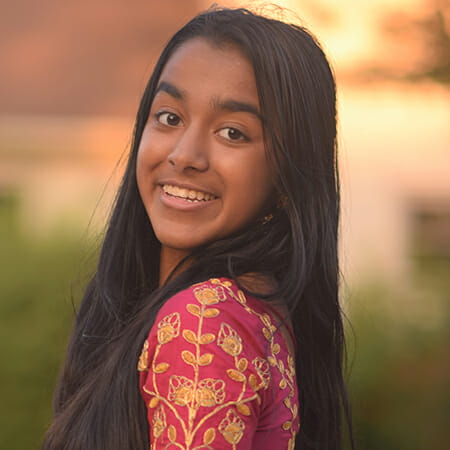
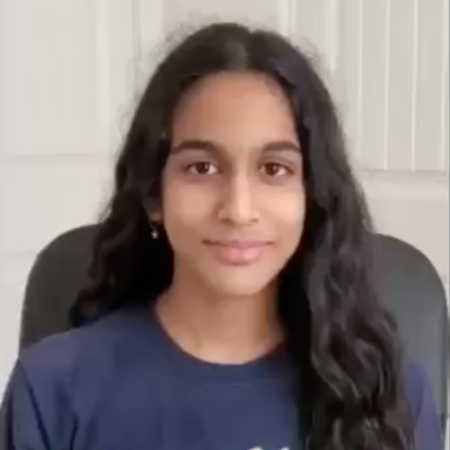
Sahana Rajagopalan, founder and the executive director of The S.P.A.R.K.S. Project.
What inspires you to volunteer?
Knowing that there are children my age and younger that don’t have access to a proper STEM education, and having the chance to make a difference is pretty amazing. Another aspect is how my classroom experiences as a child fortified my love for STEM and desire to go in the STEM field, so having the chance to do that for another child is extraordinary.
Describe your volunteer role with The S.P.A.R.K.S. Project
I am the founder and the executive director of The S.P.A.R.K.S. Project. Our mission is to bridge the STEM K-5 educational gap that exists due to socioeconomic factors. To meet our mission, we have a three-pronged approach of raising awareness of STEM, promoting accessibility of STEM, and forming alliances in the community.
As Executive Director, my role aligns with overseeing chapters, marketing, education and partnerships. However, I make sure to get involved at the root of the organization by speaking at PTA meetings for increased awareness, hosting free workshops, lessons and summer camps for as many students as often as I can, and filming at-home STEM youtube videos on The S.P.A.R.K.S. Youtube Channel to promote STEM accessibility, as well as cultivating and sustaining strong alliances in the community.
In March, we participated in Delaware’s DoMore24 Campaign, which is Delaware’s Annual Giving Day and were able to raise $1,040 in 24 hours. These funds will be used for the materials needed for our summer programming.
I have worked with 500+ students across our chapters in Delaware and Connecticut in school partnerships, summer camps and workshops. To promote STEM accessibility, we place emphasis on student discovery and innovation. A typical curriculum includes an explanation of a STEM topic, and application of that idea through a hands-on activity. We have taught the concept of density and had students make their own lava lamp to take home. We have taught engineering, through students working in teams to create a tower with select materials.
Lastly, I am an active community communicator, and constantly discuss initiatives with our partners which include the Boys & Girls Club, Urban Promise Project, New Garden Growers Market and Delaware Libraries. I also serve on the board of the nonprofit NerdItCares, which works to bridge the technological divide in the tri-state area, and we are hoping to do a pop-up event soon for The S.P.A.R.K.S. Project & NerdItCares!
What’s been the most rewarding part of your work?
The most rewarding part of my work is the interaction and hands-on work with elementary students. Getting the chance to see them for one hour, two hours, one week or two weeks — depending on the programming — and forming a connection with each one of them is incredible. It’s the best feeling when a child remembers you came from summer camp a year ago, and is excited to see you again!
It’s also amazing to see the growth of these students during the times I am with them! It’s those little moments that resonate with me. I love seeing them lead a group during an engineering activity, seeing their enthusiasm when we learn about chemistry, and something explodes, seeing their curiosity when I explain why some objects are magnetic…. I could go on! They are truly the best!
What have you learned through your experiences as a volunteer?
I have learned the importance of flexibility. There are many instances I can recall when I am teaching a STEM topic and I see the students are tired or bored… I have to adapt and change the lesson for the day, or add an extra interactive component to the lesson. Through this increased flexibility, I have gotten more comfortable with change, and now I know that with kids, things rarely ever go as planned. However, as long as the kids are happy and engaged, I must be doing something right!
Are there any future partnerships, programs or events that you are excited about?
Yes! I am very excited to be partnering with Urban Promise Project in Delaware this coming summer and am looking forward to doing many hands-on activities with the elementary school students and meeting many bright, curious, and passionate kids!
Secondly, I am very excited about continuing our partnership with Delaware Libraries for our Magic Tree House STEM Curriculum. In April, we went to the Route 9 Library and taught a lesson about identifying physical characteristics in conjunction with Mary Pope Ausborne’s Dinosaurs Before Dark. To teach students about physical characteristics, we did a dinosaur scavenger hunt around the Library STEM Room. I am very excited to come back in a couple of weeks for the next book: Knight At Dawn.
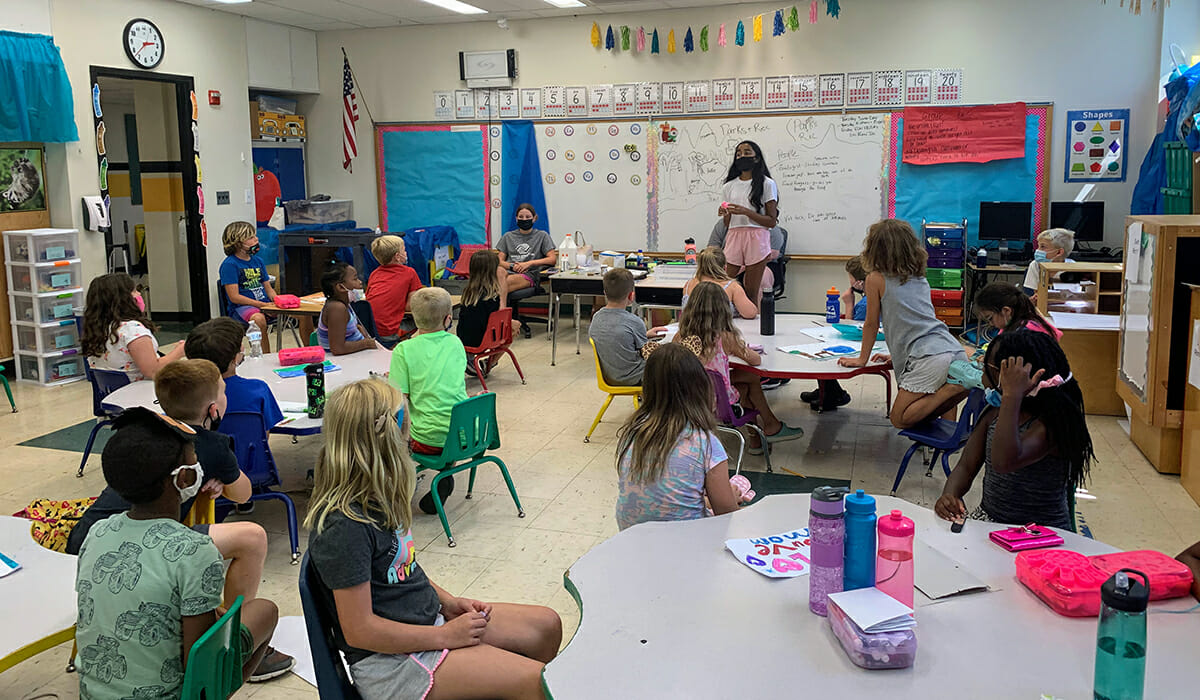
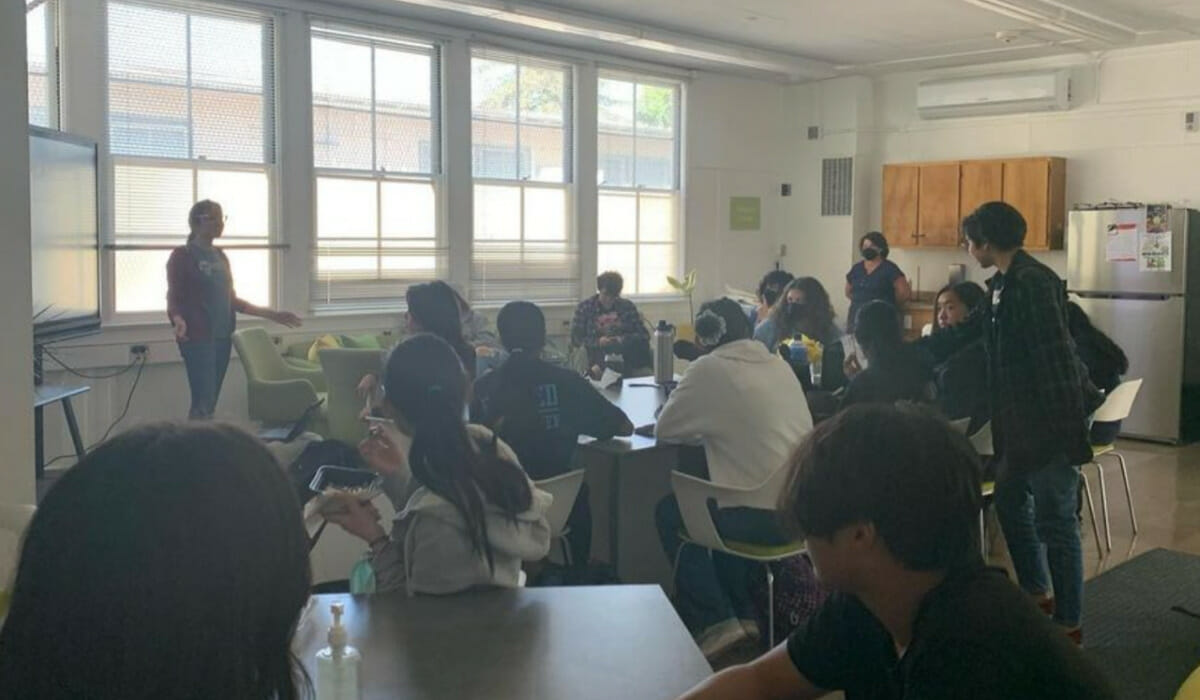
Sahana Rajagopalan teaching a concept to a group of second graders at Boys & Girls Club Summer Camp at Brandywine Springs Elementary.
Why is it important for others to get involved with causes they care about?
Meeting like-minded individuals you that you never knew existed is unmatched. Their passion for change and advocacy is exuberant. That is why I believe every positive change, regardless of magnitude, makes a difference! No one should get discouraged by the “size” of change they create. If we all do our part little by little, we will be building a society of motivated changemakers!
What do you want people to learn from your story?
Observing the world around you is powerful. I implore everyone to get involved in their community, big or small, and take action to support the causes they care about. Passion goes a long way as well. Do what you love! Lots of times people will get discouraged by their age, race or other societal factors, but by taking the risk, and doing what makes you happy for the improvement of society, you will pave the way for a brighter future.
Meet Daily Point of Light Award honoree Denise Parker. Read her story and nominate an outstanding volunteer or family as a Daily Point of Light.
Denise lives in Bryan-College Station, Texas. She is a Texas A&M University “Aggie” Class of 1977 alumna. Denise married her high school sweetheart and the couple was a military family for 26 years, which Denise enjoyed. Denise spent most of her adult life in Middletown, Maryland, about 90 miles northeast of Washington D.C., where she was a stay at home mom.
When her three boys went to school, Denise worked part-time at a local church and later worked as a humanitarian finance officer traveling to Kenya, Tanzania and South Sudan with a nonprofit organization. She recalls having mixed emotions seeing the families in these African countries. She felt empathy for the people she worked with and was glad to be making a difference in their lives.
My family inspired me to be a volunteer as a central role in my life. I volunteered before I had children in several organizations. After having my three boys, I volunteered in their schools, sports teams and at church. I always felt I had something to give to various organizations whose values and missions resonated with me. Many of these organizations were tied back to my family in one way or another.
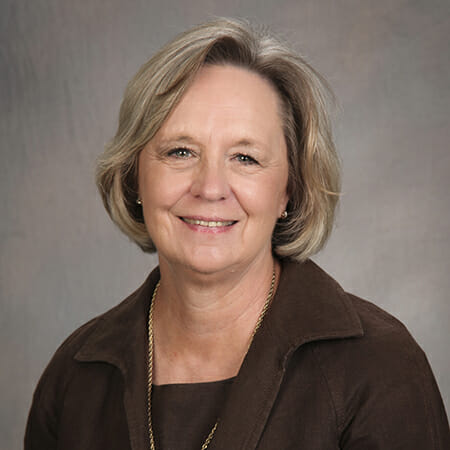
Denise Parker, administrative associate at the Center for Nonprofits & Philanthropy, Bush School of Government & Public Service at Texas A&M University./Courtesy Denise Parker
Describe your role with the various organizations you volunteer with.
Currently, I volunteer three to four times a month as a driver for Meals on Wheels. I enjoy meeting the individuals on my route and hope I can bring a smile to their day. Many times, I can tell they are not feeling well or have an issue that is heavy on their heart, and I just want them to know that they are special and there are many who care about them.
I am also the scholarship chair for the Texas A&M (TAMU) Women’s Club. This organization is over 100 years old. Currently, the club sponsors six TAMU Foundation Equal Endowed Opportunity Scholarships to high school students from the Bryan-College Station area who attend Texas A&M University.
Prior to COVID, the organization celebrated its 100th anniversary by raising funds for the sixth scholarship. I organized the event to celebrate the longevity of the organization and also to raise the funds for the sixth scholarship. The students are selected by the TAMU Foundation and each year the scholarship recipients are celebrated for their accomplishments. It is fun meeting these young students with great goals and appreciation for their scholarships.
I am also the treasurer for the Friends of the Bryan-College Station Library System. The Friends of the Library is a nonprofit organization that supports the Public Library System through volunteer services, cultural and education activities. The organization financially supports the libraries by providing funding $40,000+ per year for programs and materials that are not supported through government funding. The funds are raised by hosting three used book sales per year in the community, as well as through membership dues and donations.
Our family previously lived in Middletown, Maryland, where I volunteered with the PTA. I was a soccer mom, board director for the Fort Detrick Thrift Shop and also had many volunteer duties at our church. The revenue from Fort Detrick Thrift Shop provided funding for youth activities on the base, which supports the children who remain as their fathers, and/or mothers are deployed overseas.
What’s been the most rewarding part of your work?
The most rewarding experience is knowing I am making a difference in the community or in someone’s life. I enjoy seeing military families coming to the Ft. Detrick Thrift Shop looking for bargains or donating items when they are reassigned to another station. It’s rewarding to provide a meal to someone who is blind or bedridden, and watching children picking out books at one of the book sales makes me happy. I like knowing I am able to contribute.
What have you learned through your experiences as a volunteer?
I have learned we all have something to contribute to our community. It may be a very small role or a leadership role, but if we all work together for a common cause, we will make our community a better place.
Are there any future partnerships, programs or events that you are excited about?
I am hopeful that Bryan-College Station will be able to fund and find a location for a satellite library that will provide additional opportunities for more citizens to take advantage of the local library system.
Why is it important for others to get involved with causes they care about?
We are a village. It takes your talents, commitments and respect for others to make a difference in your community or in your organization. Everyone has a talent and to share that talent is a gift you can give in making a difference.
What do you want people to learn from your story?
I want everyone to know that no matter where they are in your life journey, they can contribute something — small or big — to make a difference in someone’s life, or in the community.
Meet Daily Point of Light Award honoree Sara Cropp. Read her story and nominate an outstanding volunteer or family as a Daily Point of Light.
As a child, Sara Cropp was a Girl Scout herself, first as a Daisy and then as a Brownie. She then switched to 4-H, because in the rural part of Upstate New York where she lives, 4-H was more popular. Growing up, Sara babysat regularly for a diverse group of kids. When she went to college where she studied Occupational Therapy (she is now a Certified Occupational Therapy Assistant, or COTA), Sara found a job as a provider who went into the homes of children with disabilities who required assistance. One of these children happened to be a Girl Scout. Sara accompanied this child to Girl Scout meetings and soon became active in the troop. As Sara’s daughter entered kindergarten, Sara realized that aside from 4-H, there was not much for local kids to do in their rural community. Sara reached out to a local Girl Scouts troop only to find out that it would not be continuing the next year. She took on the leadership role and that year, she started off with fifteen girls, including her own daughter.
Now, 10 years later, Sara continues supporting and inspiring young girls in her Wyoming County, New York home as a Girl Scout leader.
What inspires you to volunteer?
I enjoy taking my skills and using them to empower our girls. My biggest desire is to see them succeed. I love seeing the “aha moments” when they realize, “I can do this!”. I enjoy helping the girls grow into the next generation of leaders and I’ve seen this happen as the older girls in our troop have been with me since kindergarten and they have blossomed into amazing young women.
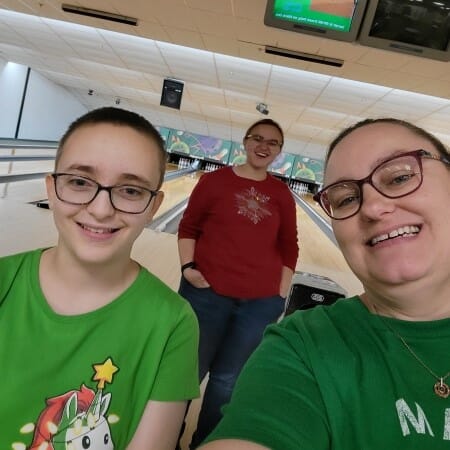
Girl Scout Leader Sara Cropp attending a bowling party./Courtesy Sara Cropp
Describe your volunteer role with the Western New York chapter of Girl Scouts of Western New York, Oatka Valley Service Unit.
I have been a Girl Scout leader for over 10 years. I currently run two Girl Scout Troops in Wyoming County, New York. I have one troop of girls from grades K-3 and another troop with girls in grades 10-11. We combine troop meetings and activities when we can to allow the girls to grow and interact with each other.
I am the Attica troop coordinator and am responsible for recruiting new girls and informing leaders of any needed information. I have planned and ran a Thinking Day event for our service unit as well as numerous Journey in a Day activities. I often plan day camps for our area as well. I am responsible for managing the various cookie, nut, and candy sales we do for the year and I act as treasurer for both troops. I also organize outings such as going to the Challenger Center. My troops have gone to the science museum, Rock City, Urban Air and various local parks.
What’s been the most rewarding part of your work?
I love seeing the girls grow. It’s very rewarding to see the girls take projects through to completion. The older girls have their own meeting which is followed immediately by the younger troop. The older girls help model behaviors, demonstrate color guard movements and set an example on how to act during an emergency situation. They also help the younger girls with learning and they help me with logistics.
Younger girls learn about space, basic first aid, making posters for cookie booths, participate in a family heritage presentation, Thinking Day where they learn about our country, and everyone enjoys an Easter egg party.
Older girls also participate in Thinking Day, but what is most rewarding to me is teaching them about budgeting, planning, outdoor safety and other practical skills.
What have you learned through your experiences as a volunteer?
Overplanning is never a bad thing. Being overplanned and over prepared takes a lot of energy and effort but it makes everything run a lot smoother! I have learned how to manage different personalities. We’re all different and do things differently, but we still have to get along and work together.
Are there any future partnerships, programs, or events that you are excited about?
We are currently working on setting up day camps, including coordinating volunteers, and reaching out to the community to invite kids into the camp from the community who are not in Girl Scouts. It’s a fun week of hands-on activities. About 40-50 girls from kindergarten to high school attend these day camps.
Why is it important for people to get involved with causes they care about?
Knowing there’s a need and not doing anything is a disservice to the community. In our rural community, there’s not a lot for kids to do. Kids need to be part of something bigger. You need to see where there’s a lack and put your skills to work.
What do you want people to learn from your story?
We’re all different and that’s good. The world would be boring if we were all the same! Think for yourself, be you, don’t mask for anybody, and then you can shine and do wonderful things.
High School Mental Health Advocate Promotes Wellbeing in Her School and Community
Meet Daily Point of Light Award honoree Sriya Sai Pushpa Datla. Read her story and nominate an outstanding volunteer or family as a Daily Point of Light.
Content Warning: Points of Light is proud to share the following uplifting and inspiring story. However, we acknowledge that a small portion mentions suicide and may be difficult for some readers. We encourage you to please care for your own well-being above all.
Sriya Sai Pushpa Datla is just 16 years old. She’s an outgoing junior in high school and a third-degree black belt in taekwondo – she started at age six – but she’s a bit hesitant to get her driver’s license just yet. And that’s ok. Because among other things, Sriya is also a mental health activist and journalist who wants people to know it’s ok to feel things. As a first generation American – and later, a big sister – she flew from India with her mom at just three months old, and she is particularly focused on destigmatizing mental health issues within the Asian American community.
Among her extensive list of accomplishments are the founder and president of her Active Minds chapter and the youngest board member of her neighborhood council. She established her high school’s first-ever Wellness Center while writing articles for the LA Times High School Insider and participating in Model UN and the debate team. With her resilience, strong work ethic and ambition, Sriya is a true point of light in her community and beyond.
What inspires you to volunteer? And why is talking about mental health important to you?
I didn’t even know what mental health was until eighth grade. In the midst of the pandemic, I got involved because my best friend was experiencing suicidal ideation.She was faced with extreme stress and isolation; school was entirely online. After hours of calls, I was able to help her reach out to a therapist who understood her needs. Now she’s doing better.That’s what inspires me to volunteer: the feeling after you volunteer and someone comes up and says thank you. It warms my heart to know that I truly made an impact on someone else’s life, however small.
Sriya Sai Pushpa Datla, mental health activist and journalist./Courtesy Sriya Sai Pushpa Datla
Describe your volunteerism with Active Minds and beyond.
There had never been a mental health club at my school, so in 2020, I started a chapter of Active Minds, a national nonprofit.I got my school’s counselors, nurse and psychiatrist to give talks, and the club expanded from three of my friends to almost 50 people on one call. I’ve created programs like Gratitude Card Writing, mental health discussions, kindness talks and our school’s first ever Wellness Center.
We host 45-minute club meetings every Friday, and I start each one with the goal to genuinely help someone out. In 2022, we won the national Active Minds award for high school mental health advocacy. Additionally, I was selected to be a National Student Ambassador and write for their national blog.
I also started my own wellness column for the LA Times High School Insider community. Last summer, I was one of 11 interns selected to create an enterprise story for them about Asian American mental health and present it in a showcase with accredited LA Times journalists. On their student advisory board, I lead mental health discussions and initiatives.
As the Youth Committee Chair on the West Hills Neighborhood Council for the last two years, I proposed a Kindergarten through fifth grade mental health initiative and am working with city officials and neighboring councils to gather resources to implement it.
What’s been the most rewarding part of your work?
The feeling that I get is phenomenal. It’s not something that you can find with paid work. I work at Kumon, a learning center, but my satisfaction comes with helping other people with mental health. There’s nothing in this world that could compare to that feeling for me.
What have you learned through your experiences as a volunteer?
I’ve learned how to be empathetic. It’s so important to let other people know that you truly care and you genuinely want to help them. Just that feeling itself can make them feel so much better.For example, I also volunteer for the American Cancer Society; I’m part of my school’s Relay for Life committee. I was talking to a patient who was battling cancer. If we tell them that we truly care about helping them get better – especially if that patient has no one else – we inspire hope.
Are there any future partnerships, programs, or events that you are excited about?
I got accepted into the Stanford Summer Institute Medical Research Program, so I’m going to be working on a medical innovation that helps address a clinical need.
I’m also participating in Active Minds’ Mental Health Advocacy Academy, focusing on public policy and legislation and developing my own plan as part of the Academy. I’ll be meeting world renowned mental health experts.And I’ll continue my journalism work with the LA Times. On top of all of that, I have to start my college apps and study for my SAT.
Sriya Sai Pushpa leads the weekly ECR Active Minds Club meeting with discussions on mental illness, self-care tips, and advocacy campaign ideas in the Wellness Center she advocated for./Courtesy Sriya Sai Pushpa Datla
How can people contribute to the mental health of the people around them?
You don’t have to be a part of a big movement. When I started, I was just trying to help my friend. Letting others know that you truly care about them is such an important part of life.
It doesn’t even have to be for other people. In order to be kind to others, you have to be kind to yourself. You have to understand what it means to make mistakes and that it takes time to get over them. That’s how you grow as a person.
Why is it important for others to get involved in causes they care about?
If you have something you’re genuinely passionate about — it can be something small —I t’s important to reach out. Reach out to friends who also share that support for a certain cause and volunteer with them. You can really make a difference.
Do you have any ideas about what you’d like your future career to look like?
I really love science. I was part of University of California, Santa Barbara’s Summer Research Academies where we researched asthma and how it affects our central nervous system. I’m excited my research will be published soon.
There’s often this idea that the humanities and STEM don’t go together. That’s not true. I want to become a physician, because it combines all of my passions. I see myself working with kids, telling patients about mental health while treating them physically.But I also I want to work for the United Nations or volunteer with Doctors Without Borders. I come from India, so I want to go back and get permission to set up my camp in the middle of the road and treat patients for free.
What do you want people to learn from your story?
Hard work can sometimes lead to more success than just intelligence.When there’s a big exam the next day, some people will rely on their intelligence. Other people who work hard might study for several nights and be better off.
And age isn’t a factor of how much hard work you can put in. The age limit to be considered for my neighborhood council is 19. I was 14 when I started calling them every week for a year until they let me go through an interview process. I’m the youngest person in history on that board. Never let other people limit what you can do. If you truly set your mind to something, even if it doesn’t work out, it’s okay. We’re all human beings. You don’t have to be happy all the time. And mental health can play a big role in the ability to keep on going.
If you or someone you know may be considering suicide, contact the National Suicide Prevention Lifeline at 1-800-273-8255, or text HOME to 741741 to talk to a trained crisis counselor through Crisis Text Line. Both resources are anonymous, free and available 24/7.
Volunteer Helps Champion Equity Through Her Work with Unhoused Women
Meet Daily Point of Light Award honoree Rue Mushavi. Read her story and nominate an outstanding volunteer or family as a Daily Point of Light.
Rue Mushavi has been volunteering with Foundation for Girls (FFG) in Charlotte, North Carolina, for over three years. As a coach, she works with unhoused and marginally housed women, serving as a vital part of their support system. As an organization board member, she is hands-on in strategic decision-making and planning.
In her personal life, Rue lives the FFG values of leading without labels, inspiring inclusivity and championing equity. As a community leader, she always inspires others to give back and invest in the community. Rue invests hundreds of hours each year to turn around lives for those who do not have anyone to help them. And now, she has her 4-year-old daughter beginning to join her on the volunteering journey.
Read on to find out about Rue’s volunteer work and what inspires her.
Describe your volunteer role.
So my current volunteer role includes coaching – I coach about four program participants. Three of them are young, single moms here in the Carolinas. The FFG organization provides support in the form of the Career Journey, Financial Well-being, Digitally Forward and Circle of Care programs. I take an extra step to build and nurture the relationship between FFG and these women, and by extension, their families.
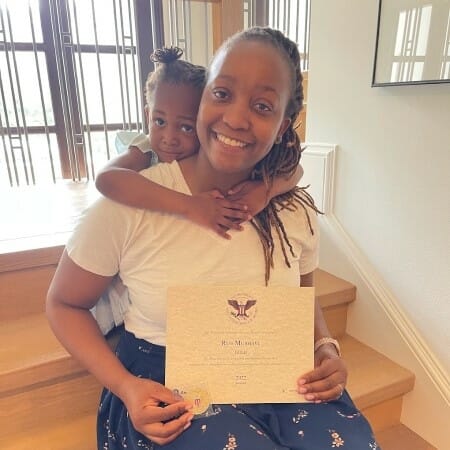
Rue Mushavi with her daughter after receiving the President’s Volunteer Service Award./Courtesy Rue Mushavi
Another role I have is that of a board member. As a board member, I try to take an active role in the community surrounding conversations around investments from the community. I’m considered one of FFG’s Adverse Childhood Experiences (ACEs) Champions. During COVID-19, we recognized that the pandemic itself was affecting our participants even greater than us. We ended up doing a lot of research and leveraged resources from specialists. I ended up creating a guide for coaches, to really understand how trauma can manifest in so many different ways. We wanted coaches to understand that if program participants were not respondent, it had a lot to do with all of their trauma bubbling up to the surface and them really struggling to handle everything that was coming their way.
Our role as coaches is to really be accountability buddies as well. So each week, taking steps forward. There are so many things going on in our participants’ lives that we can’t even begin to imagine. With the situations that they’re coming from – getting out of abusive relationships, transitioning out of homelessness – weighing so heavily on their hearts and in their heads, it can be difficult for them to focus on themselves and their children. So FFG acts as an extension for them to lean in and get those resources.
What makes you passionate about this cause?
I was born and raised in Zimbabwe. And while I was there, I attended an all-girls school. And they really instilled service above self, and servant leadership. We explored what that looked like. Through an organization called Interact, we went out into the community and connected with young mothers who had HIV and AIDS. We supported them.
When I came to the U.S. for school, I was a student-athlete. I didn’t really get involved at that time, but when I moved to Charlotte, I made a point to look for organizations that really resonates with me and where I was coming from. As a mom, FFG really resonates with me. These women are singlehandedly trying to raise a family and often struggle with marginal housing or lack of resources.
I’m super passionate about it. I think it’s so important to support these moms and get them to a place where they’re financially stable and can support themselves and their children, leading to multi-generational change.
Any rewarding stories from your volunteer work?
So many! So many. If I’m to pinpoint one recently, one of my coachees was accepted into undergrad and is wrapping up their first year. They’re super smart, and I always knew they had the potential to truly flourish. It’s been really rewarding as a coach to watch this all unfold.
Another recent instance, one of my coachees – a young mom – hasn’t had a drivers license. And she recently got her license. I know to some it may seem trivial, but a license literally opened the door for her to transport herself and her daughter, be at work consistently and limit her reliance on others. I was super thrilled for her to get her license, whereas it had been a challenge in the past. This is going to continue to open doors for her to elevate her career.
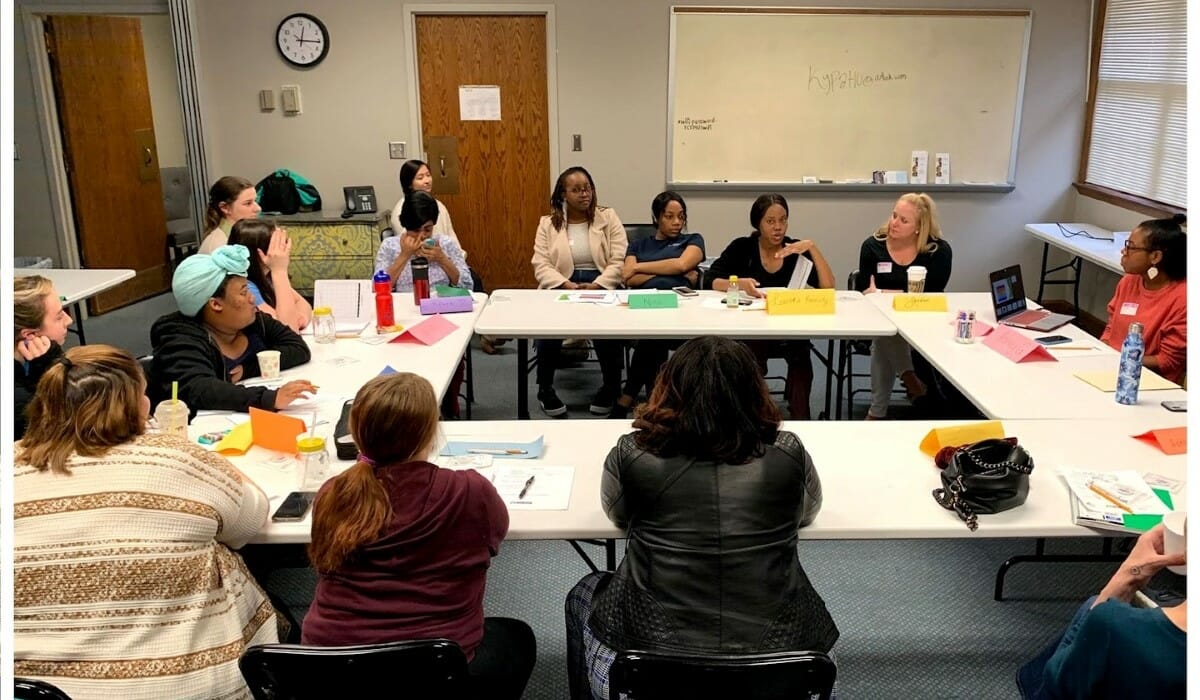
One of Rue’s first FFG volunteer events, a Career Journey event, in 2019./Courtesy Rue Mushavi
Why is it important for people to get involved with the causes they care about?
To be honest, when we look at the statistics, nearly 4 million children in the U.S. are living at or below the federal poverty level. When you look at the numbers, when you see what’s happening, there need to be more of us mobilizing and getting involved. There’s so much work to do. I think it’s truly important for people to take steps to get involved. There’s so much happening in the world, and now more than ever, it’s time for us to lean in roll up our sleeves, and do the type of work that truly makes people’s lives better – impact that matters, so to speak.
What’s your advice for people who want to start volunteering?
I think at the end of the day, we’re all passionate about something, whether it’s animals, children, young moms, rehabilitation. It’s important to be inquisitive. Ask questions! You never know what you can do to help. What I strongly believe is that it’s important to lead with compassion. Advocacy can show up in many different ways. It’s so crucial to get involved.
What do you want people to learn from your story?
I think from my story, I want people to remember that it’s important to be a fierce and constant advocate for the people and communities around you. Look beyond what’s going on in your individual life to ask, “What does my community need from me and what can I do for others?” I always tell the co-founders at FFG, “Thank you for allowing me to be a part of this movement, a part of this community. It’s created so much change in my life.”
Retired Teacher Supports America’s First Public Elementary School
Meet Daily Point of Light Award honoree Karyn Stranberg. Read her story and nominate an outstanding volunteer or family as a Daily Point of Light.
Karyn Stranberg, 62, retired from 37 years as a teacher and administrator with Boston Public Schools in 2018. She worked as an itinerant teacher for the blind as well as in her own classroom. For many years, she ran the only after school program for blind kids and a summer program for special needs children. Eventually, her path led to becoming a principal and director of special education with a grand total of around 11 different licenses.
She spent the last 12 years of her career at the Mather School, the first public elementary school in the country founded in 1639. It was also her favorite. Nearly 640 students—fewer since the pandemic—from all over the world attend K-5 classes. Most are from low-income homes, and many speak a language other than English at home.
Even now, Karyn dedicates her free time to making sure students, staff and families of the school are well cared for and set up for success. She builds partnerships and writes grants, sets up drives for resources, organizes groups of volunteers for special events, helps maintain the beautiful outdoor spaces on campus and much more.
What led you to become a teacher?
I’ve always had a lot of energy. My mom encouraged me to volunteer in sixth grade, so I started teaching at the Association for the Blind. I really loved helping people. I thought I’d go into nursing, but I love educating children of all ages. So, I became an elementary school teacher.
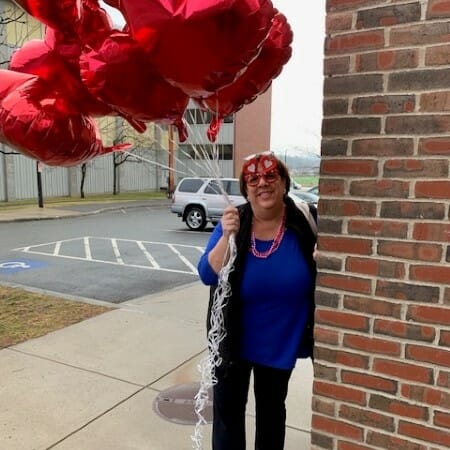
Karyn Stranberg, former teacher and administrator, brings balloons to an event for the Mather School./Courtesy Karyn Stranberg
I eventually received a job in Boston as a middle school administrator and was there for five years. Then, I decided to go back to elementary, and I landed at the Mather. It was my favorite school. And I said, “This is where I’m going to be, and I’m going to retire here. I love this place.”
What inspires you to volunteer?
One of the most important things to me is that when a child arrives at school, that it looks nice outside as well as inside, that it’s welcoming. For the families, it’s important that they feel the child is safe. And that it’s a great learning environment. That teachers care.
I want every child to have what they need. I want them to be dressed for success with their eyes on the prize. That is, I want every child to go to college and to have all the tools they need. That’s what we work on.
Describe your volunteer role with The Mather School.
I coordinate getting coats. I bring flowers to the school, and we have groups that plant and clean up. We work with many high schools, colleges and community partnerships that love to come over and spend a day or two helping in whatever way they can, whether it’s cleaning up our science classroom, painting or donating supplies.
I have high schools that donate school bags and one that sends a group of boys over once a month to help within the building. They also do several drives for things like school bags and school supplies. Another boys high school sent volunteers over last week and cleaned up the whole outside of the property.
One event that I usually organize is a school-wide canned goods drive. Our students are not wealthy, but they will bring in cans around 1500, and I will make sure they get to a food bank for Thanksgiving.
Throughout the year, I do a lot of staff appreciation activities, because the staff works hard, and I want them to feel appreciated. They’re working so hard trying to educate the kids, and it’s hard to do everything. I know that because I was an administrator.
What’s been the most rewarding part of your work?
Just to see kids smile and be happy is rewarding to me. I make a lot of deliveries to the building, and it’s just so much fun to see kids come out and say, “She’s back! She’s back!”
I gave a pumpkin to every classroom for Halloween. We have 40 classrooms, and I had 40 big pumpkins in my car. There were children who had never seen a pumpkin who got to help decorate it. It’s also nice to see parents waving to me. They come up and say, “We’ve heard so much about you!” I just want to help society. It’s tough out there. I see a lot of families struggling, and if I can put a smile on a child or a teacher’s face by just doing a little something special, that’s all it takes.
What have you learned through your experiences as a volunteer?
I have to be very clear when I have volunteers. I have to know my mission. I know exactly what to do throughout the year, and I go to the same organizations. I need to make sure that I’m not wasting anyone’s time. And I want feedback from the staff. I don’t want to overwhelm anyone, but I want to be helpful. This is my way to give back to children in Boston that are in need.
Are there any future partnerships, programs, or events that you are excited about?
In December, I run a winter carnival. I want kids to enjoy the holidays, so I bring in all sorts of volunteers and the Boy Scouts and E Ink, an environmental science program.
Brooklyn Literacy, a group of Brookline High School students, come and donate books to the kids. We have games and face painting. My family helps with crafts—we do gingerbread houses. I have a family that makes around 400 cookies for kids to decorate. It’s everything I was brought up doing as a kid, that I want to share, for about 350 to 400 people.
And in June, Spring Fling gives families opportunities to network with each other in a safe environment. I have a lot of partnerships. It’s not just me; it’s a village.
Why is it important for others to get involved in causes they care about?
It makes such a difference in people’s lives. I had a lot of senior citizens helping me with the blind. They read books on tape for me so the children could hear. They felt like they were doing something good for someone. It can be big or small. It doesn’t have to be monetary, but every bit helps.
What do you want people to learn from your story?
There’s a need everywhere. Find your interests and then see if you can help. I want people to find what’s in their heart, what would make them happy. They just have to reach out, and they’ll be surprised how much they can help. Everyone is looking for volunteers.
Detroit News Anchor Creates Advancement Opportunities for Teen Girls
Meet Daily Point of Light Award honoree Rhonda Walker. Read her story and nominate an outstanding volunteer or family as a Daily Point of Light.
Rhonda Walker, a native of Detroit, has been working as a broadcast journalist for 25 years and is currently an anchor on her hometown’s NBC affiliate. Even as a kid, she was an inquisitive person who loved reading, writing and telling stories. It was a natural fit. She also grew up with a family that valued helping others.
“My parents were always mentors and involved in different community causes. It was an important pillar for our family. And when I started working in TV news, I often got invitations to come out and speak and emcee as a professional speaker for a lot of different community causes,” Rhonda recalls.
As she spent more and more time with people who were working behind the scenes to make such events happen, she began to question if she could make more of an impact by directing her efforts towards a specific cause rather than spreading her time amongst different organizations.
In the early 2000s, she was visiting different underresourced schools to speak to teen girls about believing in themselves and being leaders. One middle school assembly changed her future and that of many others. In the middle of a conversation, one student asked what to do when you don’t have the encouragement and support of your family but you’re motivated to achieve.
Rhonda reflected on her good fortune of having two college-educated parents who built up her confidence and cheered her on. How many other kids out there were lacking the support system they needed to succeed?
“As soon as I left that day, I just had a clear vision of what I needed to do for kids: to inspire, to empower, to give my time, my love and attention to help them reach their greatest potential. And that was the beginning of the Rhonda Walker Foundation (RWF),” she says.
That was in 2003. As the foundation’s 20th anniversary approaches, RWF has funneled hundreds of girls in 8th through 12th grade through their Girls into Women program, a five-year program that focuses on instilling confidence and preparing students for college and beyond through mentoring, workshops, retreats, summer camp and more. They provide tutors, college test prep classes, scholarships and college tours to the 65 to 75 kids that are in the program at any given time. The Dress for Success program and exposure to summer jobs teaches participants about appropriate work attire, professional etiquette, networking and public speaking.
“To see the kids come into our program as incoming eighth graders, shy and not sure of themselves, and to watch them grow and blossom in our program to become leaders and great big sisters to the kids that have come after them, it’s just been incredible,” Rhonda says.
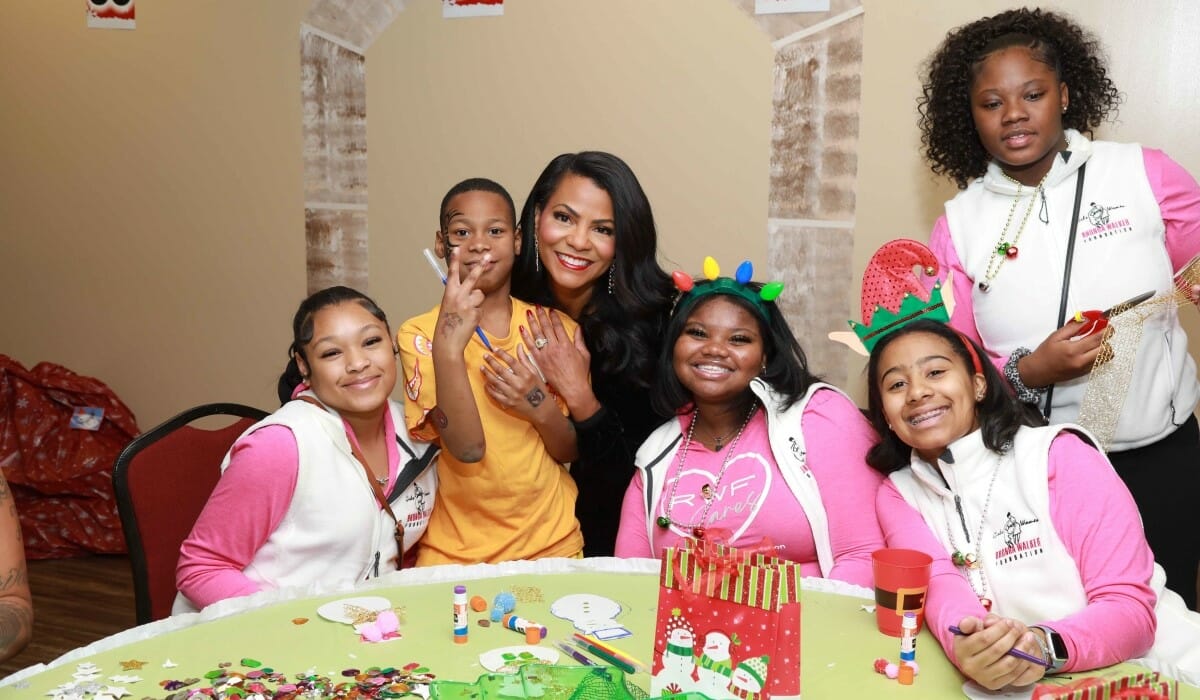
RWF teens and Rhonda [third from left] help guests of the annual RWF Cares Christmas Party for homeless families at the Detroit Rescue Ministries House II./Courtesy Rhonda WalkerAnd the program works. 100 percent of Rhonda’s girls have graduated high school, mostly from Detroit Public Schools. 100 percent either go on to college or the military, and 98 percent have graduated from college. Many from the alumni network return as volunteers, and one even works as a program manager for RWF.
Ruselda Villanueva Johnson, the foundation’s CEO, joined the team in the fall of 2019. She has had many companies in the area mention how much a resume with the Rhonda Walker Foundation listed makes a candidate stand out.
“They’ll hire them, because they know they’re poised and polished, educated, confident, empowered…all of that,” she states. “Not only are the girls well-rounded by going through this five-year program, but they also are giving back to the community. Every December, we go to the homeless shelter, and we provide services, especially for the Detroit Rescue Mission.
The girls aren’t the only ones who have learned from the experience.
“I didn’t have any background in program management or development and running a nonprofit organization, but I just had a love and a passion for kids and a determination to use whatever resources and time that I had in order to create empowering opportunities for them,” Rhonda says.
Learning on the job wasn’t—and isn’t—the only challenge. Securing funding for sustainability is key to any nonprofit. Rhonda notes the unpredictability of situations like major donors from the automotive industry declaring bankruptcy.
“It does create a sense of stress and pressure knowing that you have to deliver and that nothing is guaranteed or promised,” she notes. “You do really well one year, and you have to fight off the anxiety of whether we do as well the next year.”
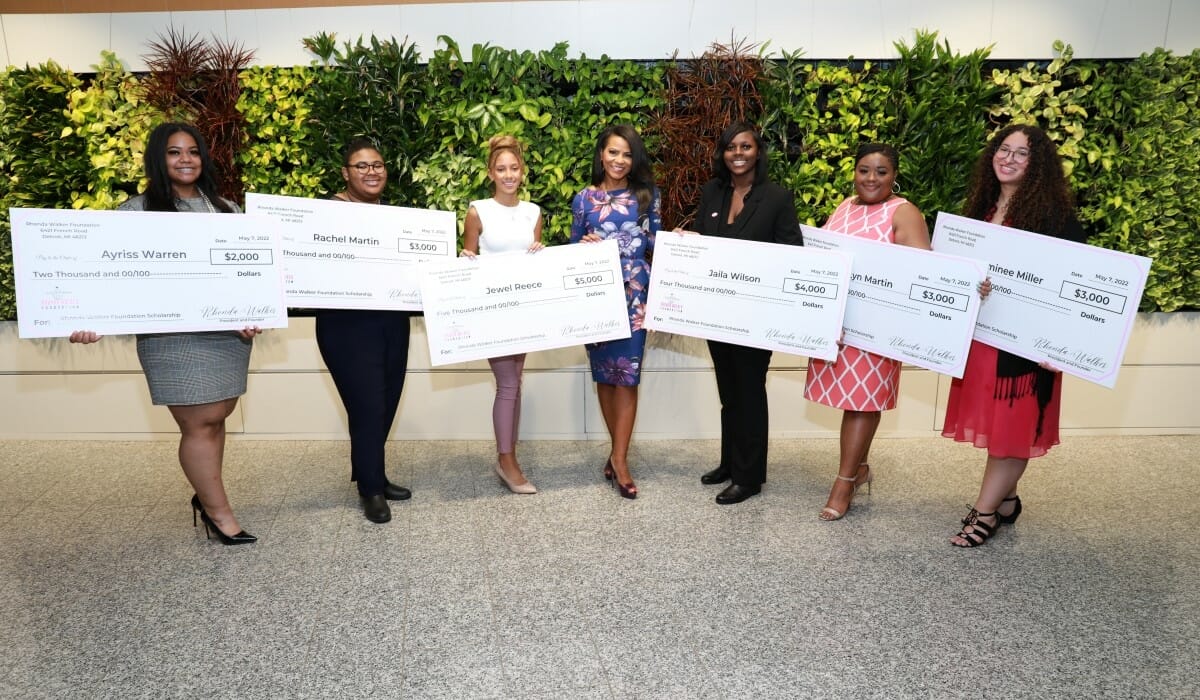
2022 RWF Graduates stand with Rhonda [middle] and their scholarship checks./Courtesy Rhonda WalkerRhonda’s strategy for securing finances has evolved over the years. For the first 16 years of its existence, RWF only had one employee. Since they’ve began to gain donors offering multi-year support, committing to support a certain number of students through the full 5-year journey, they’ve added seven to the staff. 100 percent of donations still go towards programming.
When the COVID-19 pandemic arrived, RWF changed the way they did things. Moving from doing mostly in-person events to virtual ones reduced costs and increased the number of events they could do.
“Our expenses were cut down, but we still brought in about the same amount of money. When the pandemic hit, we’d already gotten commitments for a couple of our major summer fundraisers,” Rhonda reflects. “We just had to deliver on the events, and thankfully they were outdoors. We never halted our fundraising.”
The outdoor charity golf outing went off without a hitch. They were also able to host a 5k and 10k run/walk. Rhonda volunteers around 20 hours each week planning and leading programs and events, fundraising, staff meetings and general management. Her commitment to her work inspires everyone around her.
“She’s really fearless. She doesn’t like for anyone, whether it’s a teen or adult to say, ‘I can’t do something.’ She’s solution-based. She would like everyone to have some confidence to figure it out and to move forward. With her drive, she drives others to do better. To be better,” Ruselda adds.
In October, Rhonda and her team will celebrate 20 years of making an impact with an International Day of the Girl-themed gala to celebrate their accomplishments and to honor community members who uplift and empower women. After that, the sky is the limit. Rhonda aspires to expand her work beyond inner-city kids in Detroit to other cities in Michigan and even across the US.
“I just think that that’s what we’re on this planet to do, to make the space around us better. And whatever passions that we have, that we’re giving of our time to help make a difference,” she says. “It has brought so much to my life. I have made new friends, people that I would otherwise never have known and that I have so much in common with, because they share this passion and interest to help others and to make a difference in the community.”
California Teen Works to Improve Access to Education Globally
Meet Daily Point of Light Award honoree Saket Pathak. Read his story and nominate an outstanding volunteer or family as a Daily Point of Light.
Saket Pathak is a high school student from California who is passionate about making a difference in the world. Inspired by his experience during a family trip to India in 2017, Saket founded Learning Quest, a youth-led nonprofit that distributes donated books and other educational supplies and tools to underresourced children in India and around the world.
Through his volunteer service with Learning Quest, the young changemaker is advocating for equitable access to quality education and proper learning tools for children globally. He says, “I believe that education is a fundamental right that should be accessible to all, regardless of their socioeconomic status or background. With the support of my family and growing up in a culturally diverse community, I have learned the importance of empathy, compassion and community in bringing about positive change.”
Read on to learn how Saket is engaging civically to improve access to education world-wide.
What inspires you to volunteer?
My experience during a family trip to India motivated me to advocate for equitable access to quality education and proper learning tools for children across the globe. Witnessing the positive impact of education on children’s lives has inspired me to volunteer and help them overcome barriers to a successful future. It’s heartening to see even small contributions make a significant difference, and that drives me to continue making a positive impact through volunteering.
Saket Pathak, Founder of Learning Quest./Courtesy Saket Pathak
Describe your volunteer role with Learning Quest.
As a volunteer with Learning Quest, I have been involved in various initiatives, including book donation drives and STEM supplies drives. I have helped to spread awareness about the cause and the organization through social media platforms such as Facebook and Youtube. My responsibilities as a volunteer include coordinating donation drives, collecting and sorting books for distribution, and conducting outreach to potential donors and supporters via email and social media.
What’s been the most rewarding part of your work?
The most rewarding part of my work with Learning Quest has been seeing the impact of our efforts on the children we serve. Knowing that we are making a difference in their lives and giving them the tools they need to succeed in their education is incredibly fulfilling. It’s also rewarding to see the community come together to support our cause and to know that we are making a positive impact on a global scale. I am grateful to have the opportunity to make a positive impact on the lives of the 20,000+ children through Learning Quest’s initiatives having donated 8,000+ books and STEM Supplies to India and countries in Africa, and it brings me joy to see the smiles on their faces when they receive the donations.
What have you learned through your experiences as a volunteer?
I built up personal skills and happiness by participating in the cause of education. For starters, I learned how difficult it is to run a community initiative, and as I progressed through Learning Quest, I discovered the challenges that must be overcome to make a project successful. At first, we had difficulty attracting book donations. However, I persevered through this time and never gave up, going door to door for weeks around my community sharing my initiative’s vision. I was able to get a lot of connections this way and build my way up to getting my initiative partnered with other organizations for the cause.
Are there any future partnerships, programs, or events that you are excited about?
I am excited about the potential to partner with more organizations and schools in different countries to reach a wider audience and make a greater impact. I am also looking forward to expanding our initiatives to include the distribution of STEM supplies, which can help provide underprivileged children with the tools and resources they need to excel in their education. I believe that by continuing to work towards our goals and collaborating with others, we can create positive change and make a meaningful difference in the lives of children around the world. I am excited to see how these partnerships and initiatives will continue to grow.
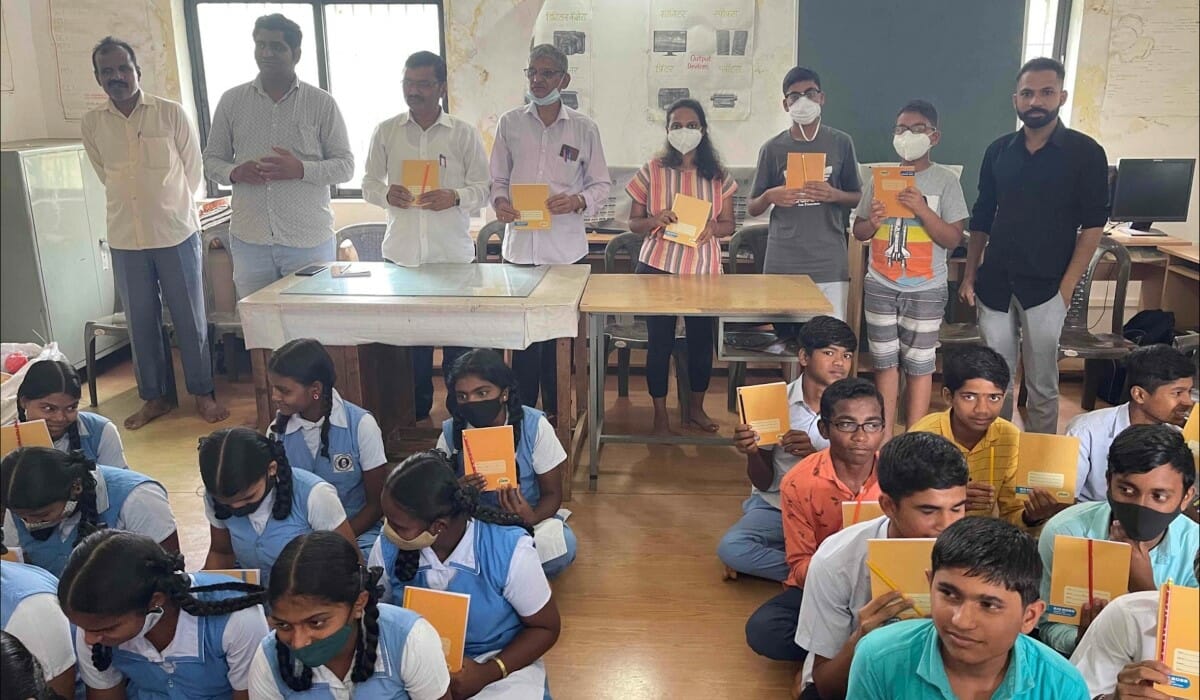
Saket Pathak donating school supplies to high schoolers in a school in Mulshi, India./Courtesy Saket Pathak
Why is it important for others to get involved with causes they care about?
People should get engaged in topics they care about because it gives a feeling of fulfillment and purpose. Helping others and having a positive impact on the world can be tremendously satisfying as well as conducive to personal development. Participating in a cause can also bring people together who have similar interests and foster a sense of community. Ultimately, people may make a difference and influence the world by getting engaged with causes they are passionate about.
What do you want people to learn from your story?
I want people to take away from my tale the value of acting and changing their neighborhood. Inspiring others to follow their passions and use their talents to aid those in need is something that is never too late to foster. My experience with Learning Quest has shown me that even modest actions may have a major impact and that putting together a committed team and working toward a common objective can result in positive change. In general, I want people to understand that they all have the ability to change the world and that it is never too late to start.
Formerly Unhoused Woman Founds Nonprofit to Support Others in Similar Situations
Meet Daily Point of Light Award honoree Jessica Currie. Read her story and nominate an outstanding volunteer or family as a Daily Point of Light.
Jessica Currie of Milwaukee, WI, is no stranger to homelessness. After dropping out of high school, she spent time as an unhoused teenage mother, struggling to find the assistance she so desperately needed. Today, after having earned a Diploma in Nonprofit Management from Milwaukee Area Technical College and graduating with honors, she is a wife, mother of six, motivational speaker, author and founder and executive director of Missionary Currie for Women and Children.
This community-driven, nonprofit organization is dedicated to assisting underserved and unhoused women and children in Milwaukee and Racine through transitional housing and essential supplies, plus access to workshops, mentors and resources.
Read more about how Jessica’s own experiences with homelessness gave her insight into the type of support that unhoused individuals most need, and how she works to provide this support.
Describe your volunteer role.
I run a nonprofit organization, Missionary Currie for Women and Children. We provide emergency housing, clothing and supplies and a food pantry for unhoused women and children. We have a drop-in center where people can come in and have a meal, take a hot shower. We have a community room where people can come access computers, work on resumes or Excel spreadsheets, whatever they need. I’ve been doing this work for about seven years.
Jessica brings her personal experience with homelessness to her volunteer work and advocacy./Courtesy Jessica Currie
What inspired you to start Missionary Currie for Women and Children?
This all came from me being an unhoused teen mom. I experienced homelessness at 16 and then again at 19. During that time, when I reached out to services that people referred me to, they were largely unavailable. They were fully booked.
So, when I transitioned from homelessness, I went back to school, I got married and I was making engine parts for Tesla. When my department was shut down, my husband and I talked about me either going to school or starting a business. I decided to do both. I got an education in nonprofit management and then I started Missionary Currie for Women and Children.
The food pantry is one of the greatest assets we have. We can serve any county and any zip code, with no restrictions. In the nonprofit world, it’s a luxury to have an organization that can provide food without restrictions. We provide emergency food, local schools, senior homes and even youth centers. We’re out here filling in the gaps.
What inspires you to volunteer?
What keeps me going is God. This is my assignment. This is my purpose. When I was unhoused and sleeping in my car, there was no one but God that was able to help transition me out of homelessness and transform me into who I am now. There was no one there for me. I was calling all of these agencies, trying to get my stuff together. And I remember crying in my car, not knowing how I was going to continue. I heard God tell me my next steps. And even though I didn’t transition out of homelessness that night, I never cried again during my time of homelessness. I just knew things were going to get better. I knew I had a mission.
Any rewarding stories from your volunteer work?
I think the biggest reward is serving women who have survived domestic violence. Those women are so vulnerable, but they are so strong. We try to help them manage in any way we can. For instance, we try to do things during the holidays to help take their minds off of problematic past relationships. We do cards, we give candy, we send Santa or the Easter Bunny to their houses.
We do an annual community baby shower every single year. I came up with the idea for this when someone was interviewing me and asked what I wished I had had as an unhoused teen mom. I thought, maybe a community baby shower, since my parents had not been supportive during my pregnancy. After that, it just came to pass within months, and this is our sixth year of doing it! We do car seats, strollers, big raffles, hundreds of dollars. We help with credit repair, rent assistance programs, emergency assistance programs, we have the Health Department there.
During COVID, we did two community baby showers – both virtual! We get donations from all over – Amazon, Target. I broadcasted from my living room with a throne of diapers set up behind me! At the end, I always do an “Oprah moment.” “You get a car seat!” “You get a stroller!” “You get a pack n’ play!” It’s a huge event, and we’ve had women give testimonials years later about how it’s impacted them and provided them with things they could have never afforded.
Why is it important for people to get involved with the causes they care about?
If you really care about your community, you’ll care about the causes that affect them. A community should be like family. Family starts in a community. If you can help, if you can show love, there will be less crime, fewer mental health issues. It’s so important to pour into your community. They will pour into you.
My six children range from 1 to 14, and they help me with the nonprofit. They help with the events. They dress up for the holidays. They help me with supplies. They are very involved.
What’s your advice for people who want to start volunteering?
My advice is to get involved with a cause that’s near and dear to you. Go and support a cause that means something to you. There are so many different organizations working with so many different causes. Everyone can find something that’s meaningful to them.
What do you want people to learn from your story?
If you’re unhoused or going through a tough time, just trust God. Know that your story is not just your story. It will help someone else.
Bishop Volunteers to Support Domestic Violence Survivors’ Fresh Starts
Meet Daily Point of Light Award honoree Bishop J.L. Bryant. Read his story and nominate an outstanding volunteer or family as a Daily Point of Light.
Bishop J.L. Bryant was born and raised in the Henderson and Warrenton area in North Carolina. He is the oldest of three siblings. Years ago, his middle sister, Kearah, passed away at the age of seven after a valiant battle with cancer. Bishop Bryant didn’t want his sister’s name to fade away because her life was shortened. In his role as a pastor, he often came across people needing somewhere safe to stay. He decided to open up a home that would house women and children, and a separate home that would house men. To honor Kearah’s legacy, he named the organization Kearah’s Place Inc. “I decided to name it after my sister Kearah,” he says. “That way her name would still thrive in this universe. And she could still touch lives.”
Kearah’s Place Inc. Is a 501 (c)(3), is nonprofit organization with a mission to provide transitional housing and support services to survivors of domestic violence to transform and empower them toward self-sufficiency.
Read on to learn how Bishop J.L. Bryant is honoring the legacy of his sister, Kearah, and what drives him to volunteer.
What inspires you to volunteer?
I love helping people. I like the way it makes people feel to receive assistance and help. Many things have drawn me to do what I do such as the story of Robin Hood. Robin Hood is a story about a man who they would say takes from the rich to give to the poor. But in my case I ask the rich to help the poor. I always wanted to be a superhero. By doing the work that I do, I’m my own superhero. Instead of me being Bruce Wayne, I’m Jay. And my superhero name is Bishop, not Batman. So this is my story. This is how I live my life. Saving lives, helping people and destroying barriers that people may face.
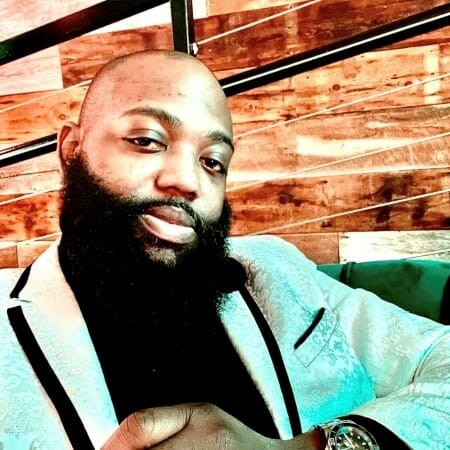
Bishop J.L. Bryant is the founder of Kearah’s Place, which provides transitional housing and support services to survivors of domestic violence./Courtesy Jameel Bryant
Describe your volunteer role with Kearah’s Place.
My role as Program Director is to push forth the vision and goals of Kearah’s Place. For 10 years now, we have housed and supported over 1,000 individuals with job assistance, employment referrals, interview and resume-writing development, opportunities for survivors to further their education through receiving their High School Diploma or GED, case management, searches for housing, victim advocacy services, crisis intervention and safety planning, as well as transportation and healthcare services.
My current and daily duties as Program Director include meeting with survivors during the intake process, providing one-on-one counseling to survivors daily and weekly, checking in with survivors to ensure their progress in the program, maintaining the operating tasks of The Kearah’s Place Transitional House where survivors reside, developing programs and activities for survivors, as well as facilitating and delegating members of the Kearah’s Place Staff to tasks and responsibilities that support the program. I also provide crisis intervention and safety planning through our crisis hotline daily.
What’s been the most rewarding part of your work?
Knowing that someone is safe, has been rescued and is free from abuse.
My platform will always be helping. I center my life around helping others even if helping them hurts me. There is a rush that I get when I see a smile on a person’s face when they reach their goals or understand the potential that they have in them. See, I grew up not the smartest kid, but always the kid that was trying to be the best at what he could do.
I’ve overcome many challenges, mentally and physically, and you can say spiritually. But I’m reminded of one of my favorite teachers. He would always say, “In a world full of followers I dare you to be a leader.” And so I lead not because I’m perfect but because I believe that just like the little boy in me that always found himself last in line, I could one day be first.
What have you learned through your experiences as a volunteer?
Do not take life for granted and appreciate every opportunity that you have.
“I decided to name Kearah’s Place after my sister Kearah. That way her name would still thrive in this universe. And she could still touch lives.” – Bishop J.L. Bryant
Are there any future partnerships, programs, or events that you are excited about?
I am excited about The Butterfly Awards. This is an award show that honors people that make our communities better. This award show will be a fun-filled night celebrating special people that do amazing things in our community.
Why is it important for others to get involved with causes they care about?
I have found that you are more passionate and give more energy to things you care about. You can move mountains if it’s important to you.
What do you want people to learn from your story?
Anybody can make a difference no matter your circumstance, where you come from or your color. Everyone has a specialness about them that once you tap into what’s special about you, you can change the world.