Young Art Prodigy Paints a World of Kindness and Compassion
Meet Daily Point of Light Award honoree Zoya Eshwar. Read her story, and nominate an outstanding volunteer or family as a Daily Point of Light.
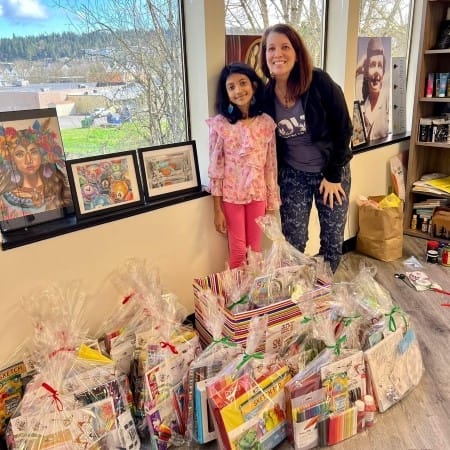
Zoya Eshwar of Sammamish, Washington, a young art prodigy and the founder of Zoya’s Rainbow Touch, embodies the spirit of creativity and philanthropy. Starting her artistic journey at just 2.5 years old, Zoya has since channeled her talent into a force for good, impacting communities and setting remarkable records in the world of art and philanthropy.
At the tender age of 5, Zoya already displayed her prodigious talent by winning the “Best Product Design” award at the Acton Children’s Business Fair. Remarkably, she sold her paintings for $600 and donated all the proceeds to charity. This early act of generosity was a precursor to her continuous participation in art shows, where she consistently donates her proceeds to the various causes she’s passionate about.
Zoya holds two world records, as the “Youngest Art Prodigy & Philanthropist” and “Global Child Art Prodigy & Philanthropist,” highlighting her extraordinary capabilities. Her accolades further include 18 international awards and 16 national awards, a testament to her exceptional talent and heart for philanthropy. Zoya’s dedication to spreading positivity through art has also earned her the President’s Volunteer Service Award.
Zoya Eshwar transforms canvases into catalysts for change by combining art and philanthropy./Courtesy Eshwar Stalin
At 6 years old, Zoya initiated the “Pastel Souls” community outreach program, a platform where children create art for noble causes. The program has grown from a team of five passionate kids to more than 100 volunteers, donating more than 1,500 pieces of artwork and organizing various fundraising activities. This initiative has partnered with 25 different nonprofit groups, creating a significant impact through art donations and free art workshops.
Read more about Zoya’s remarkable and inspiring journey to spread wellbeing and get civically engaged through art.
Why is this issue so important to you?
This issue is important to me because it brings me a lot of joy to contribute to society. When we get involved in the community, the people who are affected are always very grateful and happy for the impact we gave. They might be happy and pass it along to other people. It is like a chain reaction. We always want everyone to feel this way – whether it’s because of us, or not.
What inspires you to volunteer?
My mom inspires me to volunteer. She does these wonderful events for philanthropy and getting involved in the community. When I was 4 years old, my mom did these painting workshops for seniors in memory care units, and I was volunteering and I had a lot of fun spending time with them, offering love and companionship.
What are your long-term plans or goals for your organization?
A long-term goal for my organization is to give everyone access to art. I believe that art is a driving force that can help people express their feelings and emotions, their passions, and their cultures and values. We want everyone, even the people in different circumstances than us, to be able to access art.
What has been the most rewarding part of your work?
The most rewarding part of my work is the number of lives and people we impacted in the time and place of which the members of Pastel Souls were volunteering in. It brings me and my team a lot of joy when the people we affected are grateful for what we have done to support them.
What have you learned through your experiences as a volunteer?
Through my experience as a volunteer, I have learned that it is important to get involved. If nobody contributes to the community, people who may be underserved wouldn’t have the resources they need to live a healthy life.
Tell us about your partnerships, programs or events you are most excited about.
I am most excited about the Unity Project happening this year. This project is where all the passionate members of Pastel Souls come together to do a project, which we donate to different places and organizations. We are partnering up with Expressions Arts, a nonprofit organization to do this event. This year, we are doing a wall mural project for Redmond Elementary.
Why is it important for others to get involved with causes they care about?
It is important for others to get involved with causes they care about because everyone should do what they are most passionate about. The people who you partner with when you do your event also get affected in a way that can help them.
What do you want people to learn from your story?
Something I want people to learn from my story is that everyone should follow their passion. When I followed my passion for art, it led me to become the kind and caring person that I am now. If you follow your passion, you can make great things happen.
High School Student Bridges the Digital Literacy Gap Worldwide
Meet Daily Point of Light Award honoree Maurya Bonu. Read his story, and nominate an outstanding volunteer or family as a Daily Point of Light.
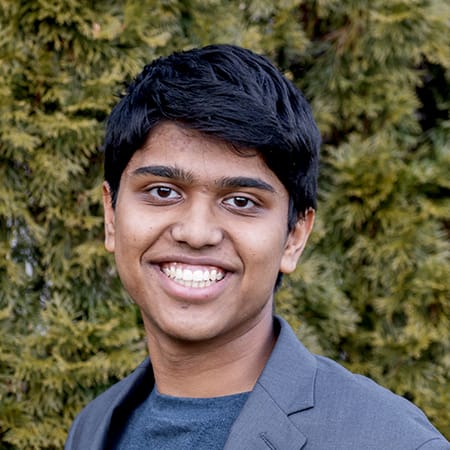
During the COVID-19 pandemic, the now 17-year-old Maurya Bonu struggled with communicating with his grandparents, who weren’t comfortable using technology. This initial struggle quickly turned into an idea to help those who need it learn the digital tools they need to succeed and communicate with others around them. His nonprofit Code2Connect was born, and he’s served as co-founder ever since.
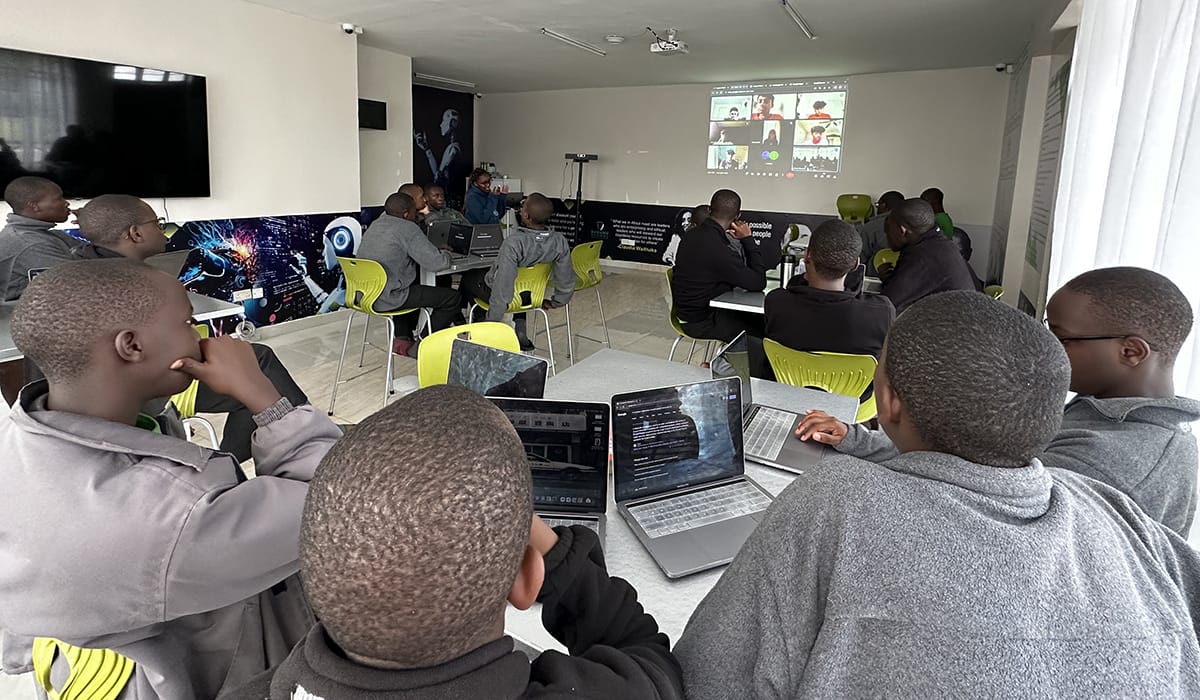
With Code2Connect, Maurya teaches middle school students coding and reaches out to international organizations to partner alongside him and his peers with the mission of providing resources to underserved communities. Bonu has helped teach more than 3000 students, raised thousands towards digital literacy and continues to work with numerous schools in Kenya, Tanzania and Rwanda.
What inspires you to volunteer?
The main reason I started this organization happened during COVID-19 – when I saw that everything was moving online to virtual learning and in remote learning, it was really important to have the right digital tools. During that same time, I was trying to communicate with my grandparents who I couldn’t meet face to face because they’re older. Communicating with them when they didn’t have a bunch of tech experience was difficult like being able to use FaceTime, Skype or things like voice chatting. They weren’t able to use them. And I really just realized the importance of being digitally literate to communicate with others around the world and in your own community.
From there, me and a group of my friends saw that there was a need to ensure that there was equitable access to digital literacy and digital education. We created Code2Connect to do just this. Originally, we were community-based, mostly working for local growth and in local areas. Eventually, we started to get bigger and we started working in other states, and then also internationally.
So, I think just like moving from local to international, we were able to get a lot of students that had different experiences. And I think that’s something that’s really driving me today to continue my work; seeing all these people from different areas of the world being connected by our organization. And also just being able to see how it’s improving their lives and actually creating an impact. I think that’s the reason why I like continuing to do the work that I’m doing right now.
Tell us about your volunteer roles with Code2Connect.
I’m a co-founder of the organization and it was started by me and a group of friends. At first, we worked mostly on making a website and teaching some of the digital courses to ourselves to practice. We were teaching basic things like email usage and some beginner coding lessons like Python and web development. That was nearly four years ago. As we started to grow, we gained partnerships and started working with different organizations. That’s a lot of the work that I do today — making sure that communication and partnerships are strong.
For example, we work with the focused on Kenya. We also work with the Tanzania Development Fund and Grow Ghana. Those are all organizations that are focused on different countries. In my role as director, I’m basically facilitating communication between those different groups. And I’m also just always looking out for new opportunities for us to expand and grow into new areas.Specifically, I work as director of communications for the organization and so my role right now is to lead the communication team. We work on reaching out and securing new partnerships and new opportunities. Another thing that I do right now is trying to expand our financial team.
I also work with our existing team to get funding and donate computers and laptops in addition to other tech to the organizations and chapters that we work with in Rwanda, Ghana and Kenya. So most recently, I was able to get a grant from Google and Microsoft, and that was really integral in being able to provide laptops and computers to those students in other countries.
What’s been the most rewarding part of your work?
I think the most rewarding part of the work is just meeting new people. I’ve met some incredible people working, originally teaching people, just being able to meet students and just being able to learn so much from them. And more recently, I’ve been able to meet people that are as passionate as I am about working in digital literacy and improving education across the world, like leaders for organizations like Grow Ghana and being in communication with them, bouncing ideas off of different people. It’s been really incredible to find a community that is passionate about making change. And I think that’s something that has been really impactful in my journey for the last four years.
What have you learned through your experiences as a volunteer?
I think one of the biggest takeaways I’ve had is that you always have to keep going after opportunities. Whatever you see, you have to take the opposite to heart. There are so many instances where we could have just said, let’s stop here — let’s not expand into a new country and bring opportunities to new people. And every time that came up and there was an opportunity to expand, I think as an organization, we took that opportunity to go into new countries, meet new people and truly collaborate. I think having that drive to push forward is something that I’ve really learned. I’ve really taken away lessons from my experience just in the last four years.
Seventeen-year-old Maurya Bonu raises thousands of dollars towards digital literacy with Buffalo Grove, Illinois, based Code2Connect.
Why is it important for others to get involved with causes they care about?
I think the reason why people should be getting involved and the reason why it’s important is because without taking that leap and becoming involved, you can’t create change. And if you want something to change, the only person that can really start that movement and really make a difference is you. Without taking that first step, others can’t follow you. Because in many cases, the work that you’re doing is something new, something that people haven’t done. When they see you doing the first step, it motivates others to do the same thing. And I think being that person that takes that leap motivates others to do the same thing. And then you’re able to create a movement behind you that achieves the goal that you were hoping to achieve in the first place.
Things are really advantageous for us in the United States because we are able to have 100 opportunities to go after anything. We’re able to make an impact, the work that we do here in the United States is able to have an impact globally due to the reach. I think it’s really important for us as global citizens to understand the impact that we can have and look for opportunities everywhere in everything that you do, even locally. I think for anyone that’s looking to try to get into this line of work and try making an impact on others, I’d say it’s important to start locally. And as you grow as you get, as you realize that your work is really important. You try to find a community that also shares that same belief because without finding that community, it is difficult to do everything yourself. And I’ve been really lucky to have a group of colleagues and friends that have really pushed me to be the best that I can be and push our organization forward. So I think it’s really important to find a community within that goal that you’re trying to achieve.
Tell us about future partnerships, programs or events that you are excited about.
So, we’re really focused right now on our Rwanda chapter, which was started pretty recently. And we’ve been working on organizing on the ground volunteers. Right now, we have over 65 volunteers in Rwanda and we’re looking to increase that chapter because we’ve seen from some of the statistics that we’ve gathered and the information that Rwanda has lower levels of digital literacy, especially regarding the gender divide and women’s education in Rwanda. We’re hoping to address that problem by focusing on women’s schools in the area and really just honing in on that specific problem by increasing the support to our Rwanda chapter.
Another thing that we’re trying to do is work with some of our chapters and some of the organizations to create a virtual hackathon to maybe connect these different organizations that all are really doing impactful work in their own countries and being able to create a community of like a global community or across the continent of Africa. We’d like to work together and develop ideas, plans and also just bounce ideas off of our community. We hope that these independent organizations will be able to collaborate with us in organizing this hackathon and being able to incentivize people across the continent to work together and increase digital literacy across the board.
What do you want people to learn from your story?
I think the one thing that I would hope people learn is that the way you make an impact doesn’t have to be something that’s really profound; it can be something as simple as helping teach your grandparents how to use their computer. It doesn’t have to be some grandiose way to make an impact but can really just start from you and one other person. That’s where the passion for creating change starts with interpersonal connections and finding a personal connection and then taking that and really
expanding it and using it to help others.
Points of Light Board Member’s Symphony of Leadership, Innovation and Community Impact
Meet Daily Point of Light Award honoree David Williams. Read his story, and nominate an outstanding volunteer or family as a Daily Point of Light.
In the realms of business consultancy and corporate citizenship, few names resonate with the impact and expertise of David Williams. His career, spanning more than three decades, is a testament to his unwavering commitment to excellence, integrity and social responsibility. David, a principal at Deloitte and former Points of Light board member, has not only shaped the landscape of business consulting but also left an indelible mark on societal advancement through his diverse roles and contributions.
At Deloitte, David has been a pillar of innovation. He served as the CEO of Deloitte Financial Advisory Services LLP and Deloitte Transactions and Business Analytics, guiding teams through periods of significant growth and strategic repositioning. Under his leadership, these subsidiaries nearly doubled in size and profitability, a feat achieved through a keen understanding of market dynamics and an unrelenting focus on sustainable growth.
David’s expertise isn’t limited to financial advisory. His roles within Deloitte, including serving on its board and as a global business leader, highlight his versatile leadership capabilities. His proficiency in strategic planning, business transformation and performance measurement has been instrumental in guiding Deloitte through complex market environments.
Post his tenure as CEO, David took on the role of Deloitte’s leader of policy, government relations and corporate citizenship. Here, he showcased his ability to blend business acumen with societal needs. He focused on influencing policy and legislative issues, aligning them with Deloitte’s business strategies while advancing societal goals.
With an educational background in economics and finance from the University of Pennsylvania and Wharton School, coupled with his association with the American Bar Association, David brings a unique perspective to his roles. His regular interactions with top-tier media and prominent industry conferences underscore his status as a thought leader in the business world.
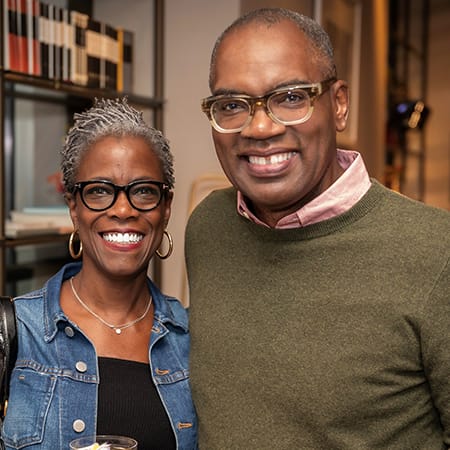
David Williams with his wife, Valerie Williams.
David’s influence extends well beyond the corporate corridors. His work with the My Brother’s Keeper (MBK) Alliance stands out. As noted by AmeriCorps CEO Michael Smith, David was pivotal in designing the MBK Community Challenge. His approach combined a deep understanding of the societal and economic implications, underlined by a strategy that resonated with both families and corporate leaders.
“David was one of the first individuals and business leaders to answer President Obama’s call to action to help improve life outcomes for boys and young men of color,” Michael shared. “The initiative was launched late in the administration, which made it even more important that there was a strong public-private partnership that could help embed the work and ensure it had staying power… From day one, David brought a deep personal commitment for the work. It was personal to him. He understood the obstacles that boys and young men of color – like he was – face, and how seemingly small acts of kindness could open doors of opportunity for youth that might otherwise not meet their full potential. David also deeply understood the business and economic case for the work and helped us shape a strategy that would not only make sense to moms of our boys but for corporate leaders who could see America’s global competitiveness was inextricably linked with reducing barriers and expanding opportunity for boys and young men of color and their families.”
David’s tenure on various boards, including Independent Sector and Points of Light, has been marked by strategic insight and a commitment to integrity. His ability to simplify complex issues and engage thoughtfully in discussions has been a hallmark of his board contributions. As noted by Jeff Moore, chief strategy officer at Independent Sector, David’s analytic clarity and focus on the core issues have been invaluable.
“David has a unique talent for seeing simplicity in great complexity,” said Jeff. “He’s persuasive and authoritative, yet never off-putting. He doesn’t dominate conversations, which means when he does choose to engage, people really listen. His insights are invaluable; they push your thinking and help clarify the direction we should take.”
At Points of Light, David’s contributions have been significant. He served in various capacities, with a tenure characterized by intelligent leadership, as recalled by Pamela Norley, former president of Fidelity Charitable.
“David has been an extraordinary Points of Light contributor,” Pamela reflected. “First, as head of the Corporate Service Council, then as a board member, followed by serving as co-vice chair and finally co-leading the recent POL CEO Search Committee. He’s smart, funny, no nonsense and a wonderful person who I am privileged to have had the opportunity to work with at Points of Light.”
David’s approach to mentorship and coaching has been inclusive and empowering. He has been open to sharing his experiences, guiding both staff and board members and fostering a culture of trust and preparedness. His extraordinary listening skills and ability to engage constructively have made him a respected figure in every room.
David demonstrates a unique blend of authoritative wisdom and approachable leadership style.
Jean Becker, former chief of staff to President George H. W. Bush and Points of Light board member, spoke highly of him, saying, “He’s just one of the smartest people I know,” Jean said. “I liked to sit next to him at the meetings, and not just because we agreed on a lot of things. I found him to be so wise. He’s just so insightful and can think through an issue or a challenge – think both with his mind and through his heart – finding the best solutions, the best path forward.”
“Beyond lending his head and his heart to the work, I will always appreciate his humor,” said Michael Smith. “In serious moments David could always keep us grounded and focused on building personal relationships, which were pivotal to the mission. He also was a mentor and role model that I could look up to and call on whenever needed over these past ten years. And I know that was a role he cherished for not only me, but for youth and young staffers who always knew his door was open.”
David Williams’s journey is more than a career; it’s a blueprint for balancing professional excellence with societal impact. His leadership, strategic vision and unwavering integrity have not only propelled Deloitte to new heights but also made a tangible difference in the lives of many. David embodies the ethos of a leader who not only excels in his field but also uses his expertise to uplift communities and shape a better future.
“President Bush talked about ‘points of light’ being ordinary people doing extraordinary things every day,” said Jean Becker. “David Williams could be the poster child for that, although I’m not sure I’d call him an ordinary person. He’s exactly the kind of volunteer President Bush envisioned: somebody who would be all in. David gives his all, and President Bush would be so proud.”
The Unsung Hero Behind the Scenes of Volunteer Work in Her Community
Meet Daily Point of Light Award honoree Evey Antle. Read her story, and nominate an outstanding volunteer or family as a Daily Point of Light.
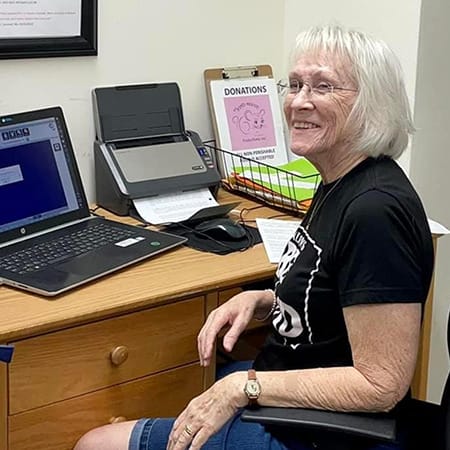
In the realm of volunteerism, it’s often the quiet dedication of individuals like Evey Antle that forms the backbone of community service. Evey’s commitment to various organizations, including Lynch Elementary School, The Kind Mouse and Healthy Start, showcases the profound impact of behind-the-scenes work in supporting vital community programs.
Evey’s journey as a volunteer began in 2006 at Lynch Elementary School. With a previous background at the school and subsequent experience at the Postal Service, her return post-retirement reflects her deep-rooted commitment to education. At Lynch Elementary, she plays a crucial role in the media center and kindergarten, contributing significantly to the school’s day-to-day operations and the educational experience of young students.
For more than two years, Evey has also been volunteering at The Kind Mouse, an organization dedicated to assisting families in transition and children experiencing food insecurity. Her responsibilities involve meticulous office work and managing the pantry. Evey’s role in checking in and out volunteers, tracking volunteer hours and maintaining accurate records is invaluable. This organizational work ensures the smooth operation of volunteer activities and the effective distribution of resources to those in need.
And at Healthy Start, Evey has dedicated over a year to assisting with office work and sorting baby and children’s clothes and food. Her contribution is crucial in streamlining the process of providing essential supplies to new mothers and families, directly impacting the wellbeing of the community’s youngest members.
Read on to learn more about Evey’s dedication of around 76 volunteer hours monthly.
Evey Antle works tirelessly behind the scenes to uplift her community.
Tell us about your volunteer role.
I started volunteering at Lynch Elementary, where my daughters attended school. I assisted the Kindergarten class and 3rd grade class that my daughters were in. After I retired, I returned to be a volunteer and mentor at Lynch Elementary. I volunteer in a Kindergarten class, where I have reading groups. We also do some arts and crafts at holiday times. I also assist in the media center, where I shelve books, help students find and check out books, help with book fairs and decorate the media center for holidays and other occasions. This will be my seventeenth year at Lynch Elementary.
How did you get started with The Kind Mouse?
While at Lynch, I learned about The Kind Mouse pantry. The Kind Mouse helps supply snacks for the students signed up for the “Pack A Sack” program. The bags were delivered to students on Fridays with snacks to have some food to eat over the weekend. The Kind Mouse was founded in 2012 by Gina Wilkins. It is a nonprofit organization based in St. Petersburg, Florida.
This nonprofit is comprised of a dedicated group of volunteers ranging from 3 to 88 years old. Leadership includes a devoted Board of Directors and an involved advisory board. I help with office work, dating donated food coming in and help putting together items for events and fundraisers.
What other causes are you involved with?
One of the agencies that the Kind Mouse donates items to is Healthy Start Coalition of Pinellas County. This is how I learned of this agency. I have been volunteering there for close to two years. Healthy Start is a community-based, private nonprofit organization focused on improving the health and wellbeing of pregnant women, their children and their families. Donations help provide basic needs for the families, including providing a safe and separate place for babies to sleep. My volunteer duties there include helping with office projects, sorting donated children’s clothing and bagging and labeling the diaper sizes – all to be given to families.
I also belong to a home fellowship group located in St. Petersburg. The group was formed to use our talents to bless others through knitting, crocheting, loom working, sewing and machine knitting. The “Made With Love” group gathers together women who wish to serve the community by making baby blankets, shawls, scarves, hats, bookmarks, pins, toys and other items to bless others. We have two meetings monthly.
What makes you so passionate about volunteering?
I have always felt the need to help others with whatever I can do. Volunteering makes you feel like you made a difference in someone’s life.
Why is it important for people to get involved with the causes they care about?
I think it is important for people to start volunteering because there are so many people who need help with everyday living. It doesn’t matter how much time you give it’s about knowing you are helping others.
Meet Daily Point of Light Award honoree Reeva Khokhar. Read her story, and nominate an outstanding volunteer or family as a Daily Point of Light.
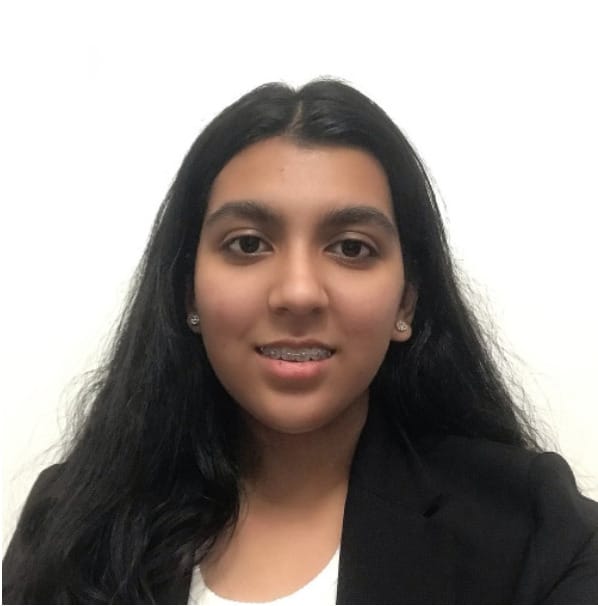
Seventeen-year-old Reeva Khokhar is a senior in high school. She plays number one second doubles on her varsity tennis team and performs with a Bollywood dance troupe around the tri-state area. But, perhaps most importantly, she enjoys coding. Inspired by her parents, both programmers, Reeva grew up seeing firsthand how code plays a fundamental role in much of the world today from powering websites to enabling functionality of the apps on her phone. As a Marvel movie fan, she sees coding as a superpower to create and make an impact.
Without many options to learn at school, Reeva took the initiative to explore online education resources and book suggestions from her dad. Her resourcefulness became even more useful as she was offered AP classes in high school. It was there that she noticed she was one of few women pursuing that knowledge and decided to make a change.
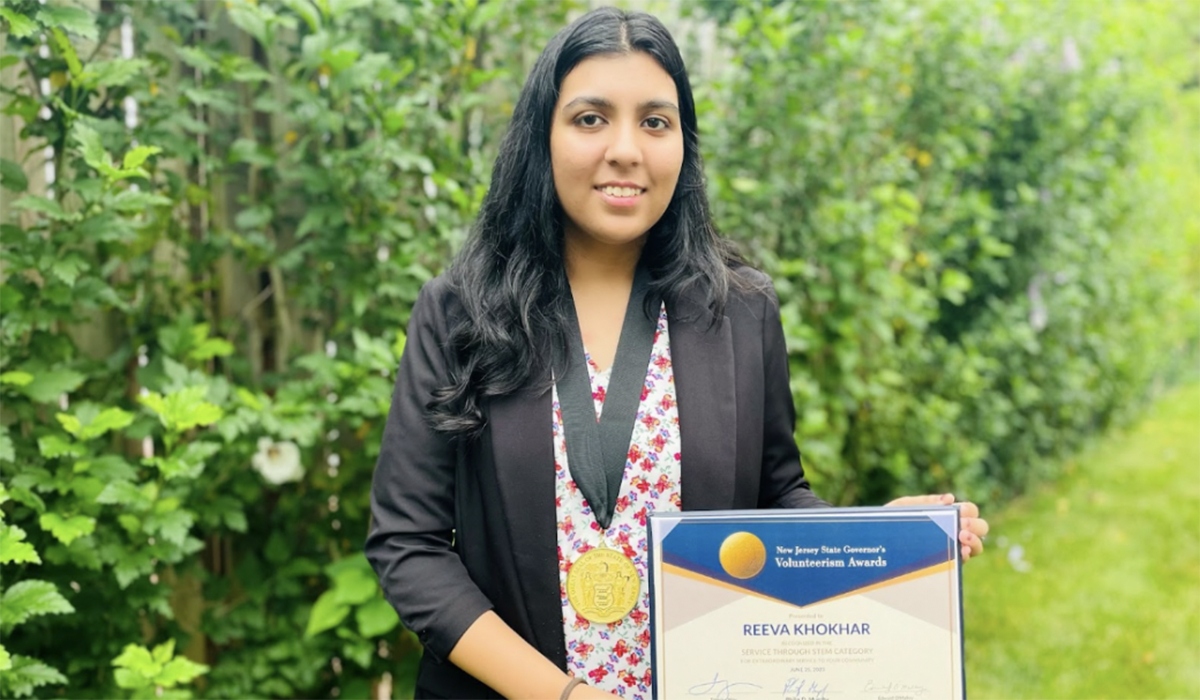
Reeva’s roles at Girl Genius, Techgirlz and Girls Who Code have empowered more than 460,000 girls in more than 35 countries through workshops, events and conferences. Her female-focused hackathons provide a supportive community for participants to learn and showcase their skills. At the intersection of technology and advocacy, her work is chipping away at the gender gap in STEM industries and has earned her recognition with the New Jersey Volunteerism Award for Service Through STEM.
With the mission of addressing the gender gap in STEM fields, Reeva works to create supportive communities for girls to learn and be inspired.
What inspired you to get started with this initiative?
When I started becoming more involved in coding, I couldn’t help but notice a significant gender gap within the field. It was really disheartening to see some of my friends, who are equally as passionate, shy away from it because of that. In my first high school programming class, I think my two friends and I were the only three girls. Even now, women make up less than half of the STEM workforce.
When I went to hackathons, I saw these moments of imposter syndrome. All of this collectively fueled my work towards challenging this gender gap. I started improving my skills to be at the level where I could speak passionately and contribute. And I started empowering others to do the same. That brought me to the nonprofit space.
Tell us about your volunteer role with Girl Genius, Girls Who Code and Techgirlz.
TechGirlz runs workshops locally, teaching middle school girls about the possibilities of technology. I joined them four years ago as a volunteering assistant. Eventually, I became a lead instructor and led 40+ workshops introducing more than 800 girls to coding, web development, machine learning, etc. And now I work as a national teen advisory board member planning workshops and how we can expand their reach.
I joined Girl Genius as a blog writer during my sophomore year after finding it on social media. Their mission to empower and educate the next generation of STEM leaders resonated with me. Now, I’m the national executive director. We use workshops, blogs and social media to encourage girls to pursue their tech passions and have reached more than 460,000 people in 35 countries. I’ve started a chapter program that has expanded to 40+ locations, and I publish a bi-annual magazine exploring tech topics for a readership of more than 13,000.
I’m also co-president of my high school Girls Who Code chapter. Every Wednesday, I teach a group of 80 girls from my high school about different technology and how they can use it to create projects.
What’s been the most rewarding part of your work?
I think the most rewarding part is when we get messages from people that say things like, “We really love this workshop and want to pursue this.” That positive feedback, whether it be virtually after a workshop or in person from someone at approaching me about joining Girl Genius or attending a hackathon, really drives me.
What have you learned through your experiences as a volunteer?
Social media is a very powerful tool, and learning how to produce content that reaches and engages our audience is something that I really value. One challenge we initially faced at Girl Genius was volatile audience numbers. Some weeks we’d reach around 5,000 accounts and others around 3,000. Now we’re at around 6,000 accounts on a weekly basis.
We figured out when to post stories, what types of content to post and how to cater to our audience to create consistency. I’ve also learned how to effectively communicate and run community engagement activities so that everyone feels like they’re part of the mission and can add value.
Reeva is given a medal in the New Jersey State Governor’s Volunteerism Awards for her 1100+ hours of work empowering girls in STEM in the nonprofit space.
Why is it important for others to get involved with causes they care about?
If you see a problem and you turn a blind eye, that problem will persist. When we start raising awareness about the problem, other people start resonating with the mission. They might become volunteers, gaining your cause more support and traction. Be an informed citizen and start speaking about what you feel is wrong or right.
Any advice for people who want to start coding?
Number one, don’t be afraid to take initiative. You have to start somewhere. When you have that inner drive to learn a skill, it will happen. You just need to be persistent. When I started programming initially, my problem sets wouldn’t work. I’d get frustrated, but I kept at it for hours and hours. In the end, it would work. It really helps to find what fuels you. When you leverage your resources and find ways to keep growing, there is no limit to what you can do.
My second piece of advice is to find people who make you want to become better at something. One of the main reasons I was able to develop my skills is because I had a supportive community. I’d encourage you to find peers and communities that support you and help you grow.
Massachusetts Teen Advocates for Public Bathroom Accessibility
Meet Daily Point of Light Award honoree Amith Saligrama. Read his story, and nominate an outstanding volunteer or family as a Daily Point of Light.
Seventeen-year-old Amith Saligrama and his grandfather used to regularly go on walks together, but one day, his grandfather stopped. The joy he felt while exercising turned to anxiety when he was diagnosed with a condition that made bathroom stops necessary and was unable to locate facilities along his routes.
“That really hurt me, because I knew how much he loved walking, especially with me and my family,” Amith recalls.
After struggling to find information on municipal websites and realizing that apps designed for the purpose of locating bathrooms weren’t updated or included private facilities, Amith dug deeper.
“I did a lot of surveys and found horrific stories of, for example, racial minorities getting arrested for using retail restrooms and taxi drivers having to use wide mouth bottles to relieve themselves,” he says. “It became very clear to me that nobody really had a solution to this issue yet.”
It was then that he decided to use his coding skills to create bathroomaccess.com, an interactive map of all the public restrooms in the greater Boston area. For the last four years, Amith has been tracking down vital information like stall numbers, hours of operation, wheelchair accessibility, etc. for more than 400 locations. He leaves private restrooms off the map, citing that they might charge for entry or require you to be a customer. There are other unfortunate barriers involved as well.
“You also need to kind of look a certain way; an unhoused person, for instance, might not easily be able to walk into a hotel to use the bathroom,” he explains.
Amith Saligrama, creator of bathroomaccess.com, an interactive map aimed at increasing access to public bathrooms in the greater Boston area.
Grecia White, a former reporter and current mobility planner for the City of Boston, preaches the importance of public restrooms for mobility. She cites the complications of a simple trip across town with kids as an example where better infrastructure could lead to peace of mind.
“As a planner, it’s something I definitely think about. I was lucky enough to be able to go to Vienna earlier this year, and they have a pretty robust network of public restrooms,” she notes. “I think there’s a lot to learn from other countries, and it’s something I hope to be able to incorporate into my work, even if it’s just adding wayfinding information.”
Curating a list hasn’t been an easy process. While Boston itself has a list of public bathrooms, the 40+ municipalities surrounding it with over 5M+ residents and even more visitors do not. An average resident will work in one area, live in another and visit friends in yet another. The status quo wasn’t enough.
Town halls and public libraries are almost guaranteed to have bathrooms for anyone to use, so Amith starts there. Then, he makes a list of parks and public buildings and starts calling. He also contacts city officials.
“Not everyone keeps a list, but when they do, I’ll ask them to list the information on their municipal website. They’re sometimes hesitant to do so, fearing it will attract undesirable activity like drug use or misuse by the unhoused population, but I’ve had success with three so far,” he offers.
Grecia emphasizes what a momentous accomplishment getting the list posted on a municipal website is.
“With government work, things take time. And if you think about building out a network of public restrooms, that takes a lot of money and a lot of political will,” she adds.
Amith considers lack of access to public restrooms a dignity and fairness issue, and as part of his two-pronged approach to tackling the problem, focuses on advocacy as well as building out his resource. He hopes to get cities to acknowledge the issue, make a list available and build more restrooms to meet the need. Today, more than 1,000 people use his map every day. It has been added to websites like the New England Crohn’s and Colitis Foundation, Massachusetts Department of Health and Social Services and Massachusetts Independent Drivers’ Guild.
Amith has also spoken at town halls and authored op-eds to raise awareness about lack of adequate public facilities. In fact, his advocacy work has earned him a spot as the youngest board member in the history of the American Restroom Association (ARA). It has led him to the US Capitol as well as the office of Massachusetts State Assistant Majority Leader Alice Peisch’s office where he’s helping draft a bill that would increase access to public bathrooms statewide. It was his trip to DC after winning the Congressional App Challenge informed his approach to the latter.
“In my meeting with [Congresswoman Ayanna Pressley], she gave me pointers on how to talk about this as an information justice issue and how to convince lawmakers to help,” he says. “That helped me a lot with my work with State Representative Peisch.”
Words matter, and Grecia cites Amith’s approach to communication one of the reasons for his success.
“Sometimes when talking to him, I would forget that, at the time, he was only 16. He’s able to speak about these issues in a way that most people that I have worked with are not able to really articulate,” she says. “He’s very effective in his messaging.”
In addition to using his website to bring attention to an unlisted bathroom, users routinely express gratitude. One man on the verge of retirement uses the map to plan his walks and noted his appreciation for the assistance staying active as he gets older.
“I really appreciated that, because it reminded me of my grandfather,” Amith recalls. “I’ve helped someone keep walking because of the map. That’s what I set out to do.”
The initiative to solve a problem that affected someone he loves led Amith to help thousands, both in his community and beyond. His dedication to meeting a basic human need and recognizing the indignity of society failing to do so shows a level empathy beyond his years.
Amith hopes to take what he’s learned through his experiences and explore urban studies in college. In the meantime, he urges people to call their state representatives, volunteer for an ARA initiative or even start a bathroom list of their own.
“Everyone recognizes problems, but not many people try to fix them. And that’s what I want to impress upon people. There are small things that we can all do to help others,” he states. “Be open and understanding of other people’s situations.”
Jim Rutherford enjoyed a long career with Chevron where he worked as an internal statistical consultant. The job was fairly solitary, and Jim, a self-described “extreme introvert,” found that volunteering on the weekends was a way to come out of his shell. He did some volunteering at a local food bank and served as a volunteer coordinator or “Captain of the Welcome Team” for his church.
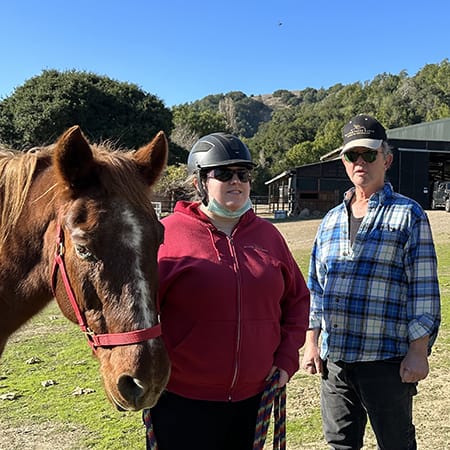
As a teen, Jim’s daughter was participating in a school program that included community service. She found Halleck Creek Ranch (HCR), an equestrian facility that offers therapeutic riding as well as unmounted horse-handling skills to people with disabilities. Since his daughter was 14 at the time, Jim had to drive her to the ranch. He figured, “Why not join her?” And so began his volunteer journey with therapy horses and their riders. He has served in various capacities at HCR since then, even throughout cancer treatment and after a stroke.
What inspires you to volunteer?
The time I get to spend with horses is very important to me. We have 18 horses at the ranch, all with different personalities. The community I’ve become part of at Halleck is amazing. The staff, volunteers, parents, caregivers and riders have all become family. I like to say, “I’ve never met a mean person out here.” The location is beautiful and so peaceful. It’s a wonderful place to spend a day. Halleck Creek Ranch has recently received an incredible donation: an entire 200+ acre ranch. We received local news coverage when that happened. A lot of people found out about the ranch and as a result, we got more volunteers, donations and riders.
Tell us about your volunteer role with Halleck Creek Ranch.
I volunteer two days a week. I perform horse care, I catch the horses, groom and tack them before the riders come, side-walk with the riders and then untack the horses and return them to their stalls or pastures.
I have a real affinity for our horses and riders. I particularly enjoy side-walking. Side-walking means walking next to the rider, engaging and ensuring the rider’s safety. The horse leader, which is a role I also enjoy, manages the horse.
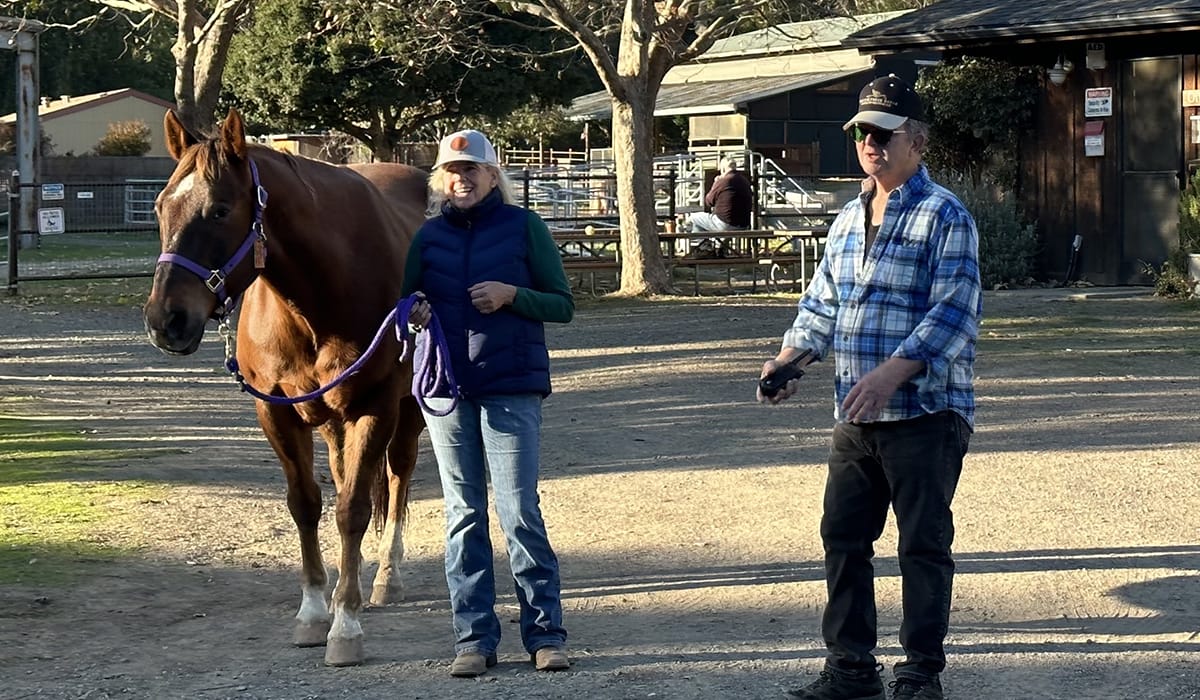
Jim Rutherford working with Dani, a Groundwork student, and Don Fuego, one of the Halleck Creek Ranch horses. /Courtesy Sandy King
We have riders of all ages with a wide range of mental and physical disabilities. Some of our riders are in wheelchairs, some use walkers or canes and others are able-bodied. Some of our riders are autistic, and I’ve found that I relate particularly well to them, probably because I’m extremely introverted. Some of our staff say I have a calming effect on the horses and the riders. I hadn’t been around horses much before this. I always try to understand what’s going on in the horse’s mind. I learn from their facial expressions, body language and of course, their ears. I have learned that you can take this huge animal that weighs a quarter to a half-a-ton, and you can control them with a rope and one hand — not by force but by understanding them and developing a bond.
The ranch offers four sessions a year. A session is 8 to 10 weeks long with rides or ground activities happening typically once a week. Some people ride, while others are involved with ground work like grooming and caring for the horses. We have riders who have been involved with Halleck for over 10 years. They started out as kids, and now are adults who still love to spend time with the horses. I fill in wherever I’m needed, and help out with fundraising events like our auctions and other community events.
What inspired you to get started with this initiative?
My daughter was in high school when she started volunteering at Halleck. Our drives to the ranch were memorable. I had time to spend with my daughter, and volunteering together was a special experience. Eventually she went to college, and I kept volunteering. We often go out to the ranch when she comes home to visit from college. HCR is a very special place. I’m honored to be part of it.
What are your long-term plans or goals for the organization?
I plan on volunteering at Halleck for as long as I am able. Now that we have the second ranch, some of our horses can go into full retirement. I’m glad to see that the new ranch is being used by other groups as well. There’s one organization that works with autistic young adults who come to the new ranch to hike and do other activities. There’s also a PTSD veterans support group that comes out to the new ranch.
What’s been the most rewarding part of your work?
It’s rewarding when I can really relate to a rider, when I can really relate to a horse and when I hear someone say I work well with the horses. I believe it’s my introversion that has helped me relate to our riders, especially the nonverbal ones. One interesting thing that happened to me is that my whole life I’ve been an extreme introvert and talked very little. I had a stroke one-and-a-half years ago. One of the outcomes of that stroke is a change in my personality. I’ve become much more social, and people say I talk a lot now.
What have you learned through your experiences as a volunteer?
I can control a horse. This was new to me. Since I’ve been volunteering at Halleck, I have gained an intimate knowledge of horses. I find that I can also communicate with people I never expected I could connect and communicate with. The riders are so excited, so happy. Everybody at the ranch, from the staff to the volunteers and riders, has such great energy.
I have become a more vocal advocate of the ranch and its services. Since my stroke, I’ve begun joining a Zoom support group for traumatic brain injury (TBI) survivors, including stroke survivors. One day I saw someone I recognized from work on the call. She had also suffered a stroke and has some physical ailments, and she’s now riding at Halleck Creek Ranch. She found out about the ranch from me. Another man from the support group is in a wheelchair, and he’s riding too. I’m not sure if I played a role in getting them out to the ranch but I hope so.
We hold a fundraiser every year. One part of the fundraiser is a silent auction, online auction, and a live auction with a real auctioneer. I like to participate in the auction by making a significant donation. The auction fever is contagious. If they see me bidding, they’re more likely to bid. I have often come home with silent auction items.
Tell us about future partnerships, programs or events that you are excited about.
Our holiday party for the staff, volunteers and riders is coming up. It will be held at the ranch house at the new ranch. We’ll bake cookies, enjoy a potluck, games and Santa may even appear. One of our white horses is a former dressage horse with a lot of presence. She gets decorated too. People love to see the ranch and some of the horses all decked out for the holidays.
Jim Rutherford working with a Groundwork student, Otto (side profile). /Courtesy Sandy King
Why is it important for others to get involved with causes they care about?
People talk to young people who are anticipating their career and say, “Find your passion.” You don’t have to look too far to try out something new and what you find can become your passion and a huge part of your life. I especially encourage people who are retired to start volunteering. People think when they retire that all they can do to fill their days is to learn to play golf. That’s something to do, but it’s nowhere near as rewarding as going out and helping someone who can really use the help. It’s hard to make the transition from a very involved rewarding career to retirement. When you retire, you may feel a letdown. Suddenly you don’t have a sense of purpose, but volunteering can fill that void.
Any advice for people who want to start volunteering?
Do it! It depends on where you are in life but think about how much time you can make available. Everyone is so busy, but if you make the time, you will find that volunteering is the most rewarding time you spend. If you find something you enjoy and you can learn something, you will feel great. I found a whole community that is now a big part of my life.
What do you want people to learn from your story?
Right now, I’m starting my second round of treatment for cancer, but through all of this, through the cancer and the stroke, I can still help. The ranch community has allowed me to be able to continue helping. It’s important to stop being the victim. Change your focus from yourself. Go out and help.
Everyone has a story. When you volunteer, you hear so many incredible stories. People are so diverse and fascinating, and I would never have talked to them had it not been for this opportunity. My therapist told me I should start talking to my plants. Sure, that works, but I have also learned to talk to horses. That’s an incredible skill. You have to control yourself, figure out where you are, and figure out where the horse is and then you make the connection.
Young Visionary Spreads Health Awareness and Drives Global Action Through His Nonprofit
Meet Daily Point of Light Award honoree Derek Chen. Read his story, and nominate an outstanding volunteer or family as a Daily Point of Light.
In a time where youth voices are increasingly leading the charge for change, Derek Chen stands out as a remarkable example. A 16-year-old high school student with a passion for healthcare and community service, Derek has founded Statice Public Health Society, an organization dedicated to enhancing health awareness among youth worldwide. His journey from founding a small online platform to influencing millions encapsulates the power of vision, dedication and hard work.
Launched in May 2022, Statice began online and then rapidly evolved into a global movement with physical chapters in schools and colleges across different countries. Derek’s commitment to Statice and its mission is evident in the impressive 1,000 hours he has volunteered, coordinating leadership teams and overseeing operations.
Statice’s digital platforms, offering health awareness guides and blog articles, have made a significant impact, reaching more than 20 million unique Instagram users. Additionally, Derek’s involvement with the United Nations International Youth Conference, where he plays a key role in organizing a youth leadership conference and managing social media, has exponentially increased the event’s reach. Further, his dedication as a junior volunteer firefighter and his pursuit of EMT certification underscore his commitment to serving his community in multiple capacities.
Read more about what inspires Derek to volunteer with the causes he’s passionate about and some lessons he’s learned along the way so far.
Derek is passionate about getting other youth involved in the mission of global health equity.
Tell us about your volunteer role.
I’ve served as CEO of Statice Health International for nearly two years now, and on a day-to-day basis my responsibilities include coordinating my team of officers and ensuring that all of our operations are running smoothly – mainly content creation for our awareness campaigns, as well as social media and blog articles for our website. I’m also responsible for managing volunteers and ensuring that everyone knows what to do and is taking full advantage of the opportunities we provide.
Coinciding with this, I also oversee branches of Statice Health worldwide, and our leadership programs, where I teach like-minded students as myself how to start branches in their own local communities. Last but not least, I’m also responsible for a lot of our ideation work – essentially coming up with new ideas and organizing events to further our mission of advancing health literacy and global health equity worldwide.
Why is this issue so important to you?
Growing up, I always aspired to become a physician. Since middle school, I was always very passionate about all of the science classes I’ve taken, especially biology and health. Obviously, since I’m only 16 years old right now, it’s going to be a long time until I’m a full-fledged doctor, so working with Statice now is a way of creating positive change at my age. Taking issues and concepts I learn inside of the classroom and implementing them into the real world to help solve these global issues.
What are your long-term plans or goals for the organization?
As of today, we have 2,000 volunteers from across 65 different countries and 150 different cities, and we have 60 branches located in schools worldwide. Our main long-term goal is to continue expanding, but we really want to have a larger focus on addressing health issues in underserved populations. By the end of 2024, I’m hoping to increase the number of branches we have to 150 and the number of volunteers to 5,000. Our volunteers and branches are really the highlight of our organization and how we’re able to reach so many people worldwide. The larger our community, the greater amount of impact we can have in achieving our mission – global health equity.
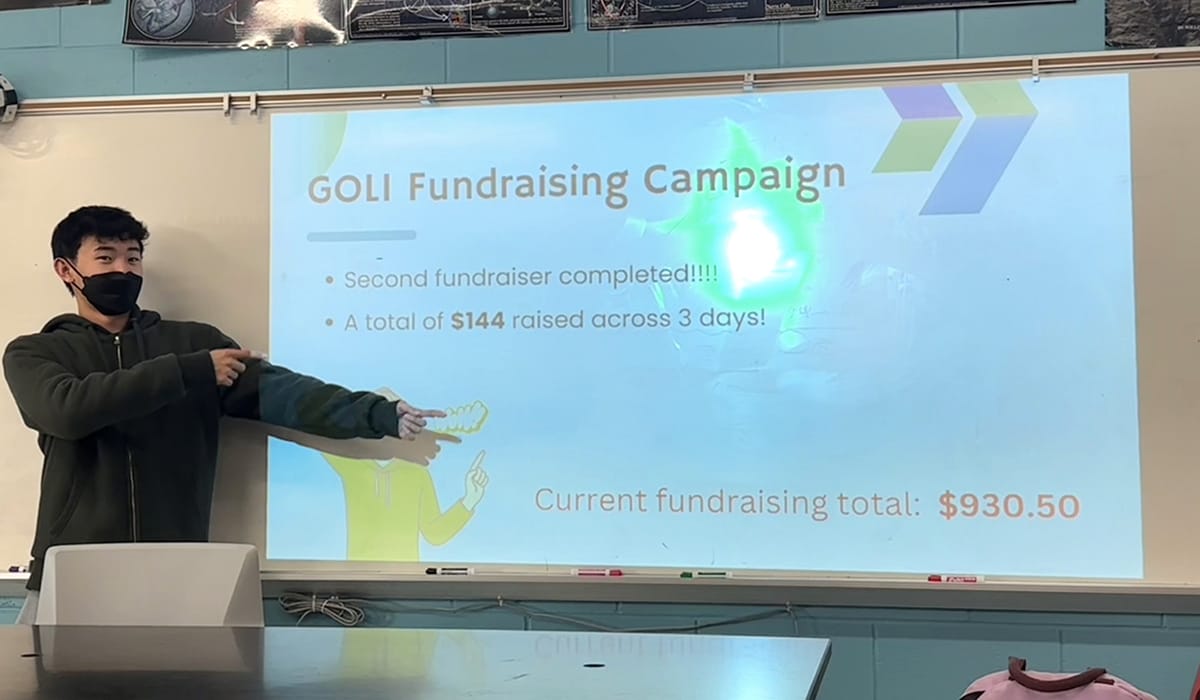
Recently, we took on a fundraising campaign with a nonprofit called Gift Of Life International, which is providing life-saving open-heart surgeries to children born with heart defects in underserved areas. Our fundraising goal for 2024 is to raise $10,000 for this organization.
What’s been the most rewarding part of your work?
There have definitely been a lot of rewarding aspects with running Statice, but number one has to be the people. A few years ago, I never would have expected to be connecting with so many unique people from all over the world. We started with members from my high school and evolved to the point that now, more than 80% of our volunteers are from countries outside of the United States. It’s been very interesting and insightful to hear perspectives from people from all different educational and cultural backgrounds. Helping them addressing their own local community’s health issues, no matter what those might be, is rewarding.
Secondly, the opportunity that I get to share stories and inspire other youth to join the movement for global change is definitely one of the most rewarding aspects. My work has really allowed me access to networks of youth and other changemakers from all across the globe, including the International Youth Conference and the United Nations.
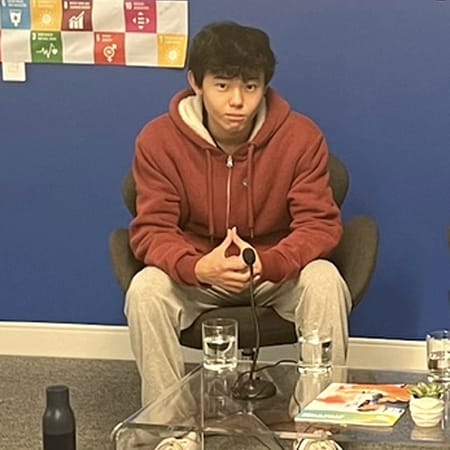
A few months ago, I had the opportunity to speak as a Youth Regional Ambassador on a panel discussing youth engagement and addressing the Sustainable Development Goals. Overall, it’s awesome to know that I have a voice and a part in solving global issues.
Any lessons you’ve learned from running a nonprofit?
I’ve learned a lot about leadership. I’ve always been a very introverted person, but having the opportunity to interact with so many people on a daily basis has helped me step outside of my comfort zone. I’ve developed myself as a leader – especially in skills like communication and organization. With Statice especially, it’s interesting to see so many people from across the world who are also passionate about health and creating change. There are so many other people who care about these issues.
One of Derek’s responsibilities is to oversee fundraising goals and campaigns to further his organization’s mission.
Why is it important for people, especially youth, to get involved with the causes they care about?
I think getting started with volunteerism at an early age is a very valuable experience. People are able to gain exposure to the fields that perhaps they plan to pursue a career in, while also having the opportunity to help so many other people. I think that a lot of people are under the misconception that other people are going to do the work for them – solving issues like climate change or health equity. Really, it has to be youth. Youth are the new generation who will solve these issues. There’s a chance that everyone’s thinking that, and therefore no one does it. It’s really important to take initiative – especially those in my generation.
Any advice for people who want to start volunteering?
I think the main point that I’d like people to take away is to step outside of your comfort zone. A lot of people are afraid to take initiative because they think they’re not cut out to be a leader or not capable of taking on volunteer responsibilities. But anyone can get involved with volunteering, as long as they’re dedicated and committed to creating change.
Another thing to remember is that if, for instance, your community doesn’t have established volunteer opportunities for youth, it’s never not an option to start your own organization to address the issues – like I did with Statice.
Meet the High Schooler Spearheading a Youth-Led Movement Against Substance Abuse Stigma
Meet Daily Point of Light Award honoree Ashwak Kalil. Read her story, and nominate an outstanding volunteer or family as a Daily Point of Light.
In the heart of Indiana, high school student Ashwak Kalil is reshaping the narrative around youth substance abuse. Through her nonprofit, Folded Hope, Ashwak has crafted a unique and powerful approach to combat this critical issue. Her journey and the work of Folded Hope stand as a testament to the transformative power of youth-led initiatives and the impact they can have on a community.
Ashwak founded Folded Hope with a clear vision: to address substance abuse holistically and effectively. Since her first year of high school, she has been at the forefront of developing multifaceted strategies in collaboration with addiction clinics and prominent nonprofits in Indiana. Folded Hope’s approach is comprehensive, tailoring workshops for children and teenagers from ages 5-18, and encompasses everything from prevention to recovery.
One of Folded Hope’s key strengths is its ability to engage deeply with the community.
Ashwak’s commitment to understanding and sharing real-life stories of those battling addiction sets her organization apart. These efforts culminate in impactful workshops and community events, which Ashwak leads with the support of an average of 20 volunteers, drawing in about 100 participants each time.
Her involvement in a substance abuse awareness group with Indianapolis Mayor Joe Hogsett underscores her influence in policy discussions. Through monthly meetings, she informs the mayor about the challenges youths face regarding substance abuse. Her discussions with The Office of Public Health about school districts further highlight her commitment to creating sustainable change.
Read more about Ashwak’s inspiring story of spreading hope for those struggling with addiciton.
A high school student in Indiana, Ashwak Kalil is the founder of Folding Hope, dedicated to combatting substance abuse issues while destigmatizing conversations around it.
Tell us about your volunteer role.
Two years ago, in my freshman year of high school, I founded Folded Hope, which is a youth-led initiative aimed at raising awareness about substance abuse and addiction in underrepresented communities. Through our workshops, we’ve been able to reach and impact so many participants as well as getting parents involved.
I started Folded Hope because I recognized the need for open conversation about substance abuse, especially in communities like mine where it’s often considered a taboo and sensitive topic. I believe that raising awareness is key to addressing the issue, breaking down stigmas and fostering understanding and support overall.
Why is this organization and issue so important to you?
I’ve seen so many people affected by this issue in my community. Most of it is privately handled, unspoken about. Many families will say they won’t talk about it, with a “we’ll deal with it on our own” stance. Of course, that’s unhealthy. So, I think breaking down those stigmas and encouraging conversations about it, and then providing support systems for those affected contributes to a healthier and more informed community.
What are some of the initiatives your organization has led to combat the issue?
Just three weeks ago, we partnered with numerous addiction clinics, as well as the Discovery Café. This is a place for young people, ages 12 to 17, who may be facing mental health issues, substance abuse or other challenges. In the Discovery Café, youth can join their peers for a wide range of activities that provide fun and inclusive support for everyone’s wellbeing. My work mostly centers around the youth, and the Discovery Café is something I really look forward to.
What are your long-term plans or goals for the organization?
I see Folded Hope as an initiative that will continue to evolve and make a positive impact in my community. While I’m currently a junior in high school, my vision for the future involves taking Folded Hope with me into college. I believe that by continuing it, I can not only deepen my own understanding around the complexities of substance abuse, but also expand our reach and impact.
I hope to learn more, collaborate with other like-minded individuals and explore innovative ways to bring awareness to underrepresented communities. Ultimately, my goal is to contribute to a society where discussions around substance abuse are not only destigmatized but met with empathy and support.
What’s been the most rewarding part of your work?
Honestly, just seeing young kids, around ages 9 and 10, get involved. One of the most memorable moments for me personally was during a workshop, having the opportunity to talk with this young girl. Discovering how passionate she was about rocks – which seems really random – but the fact that she could hold a 30- or 40-minute conversation about it really inspired me. She shared stories about going to exhibits across the U.S., including one of the biggest exhibits in the country, as well as her collection. Each rock holds a unique significance to her.
I was truly inspired by her enthusiasm and fearlessness in expressing her passion. It reminded me of the power that genuine passion holds, and how it can bring people together, transcending the boundaries of age and background.
Why is it important for people, especially youth, to get involved with the causes they care about?
Obviously, the future is the youth – especially my generation. It’s hard seeing youth not getting civically engaged with activities like voting or volunteering. They often don’t really care about it. I think that involving youth and making sure their voices are heard is one of the most important things for our future.
Any advice for people who want to start volunteering?
Stay true to what you’re truly passionate about – highlighting impact. What do you envision for the future? Connect with your audience. Try to find out what your community is specifically struggling with and how you can help combat that. Stay open to learning, encourage inclusivity and inspire others – who may be older or younger than you.
What do you want people to learn?
I want them to learn that coming from a very small community in the state of Indiana – I can say don’t worry about others trying to take you down or those who don’t see meaning in your initiative. If you see meaning in your own initiative, you’ll surely make an impact on the right people.
Texas Attorney Advocates for Patients and Caregivers Fighting Cholangiocarcinoma
Meet Daily Point of Light Award honoree Toni Pham. Read her story, and nominate an outstanding volunteer or family as a Daily Point of Light.
Toni Pham was just 2 years old when her family moved to the U.S. from Vietnam. Today, she has a successful career as an attorney and real estate broker where she advocates for clients. Her passion for advocacy was born amidst hardship when, as a young girl, her father was diagnosed with kidney failure. Toni was 16 when he passed. Often being in the hospital setting, she quickly recognized that patients like her father needed someone to help them get what they needed.
Decades later, a second tragedy left her even more motivated to help others. When her sister passed away from cholangiocarcinoma, a rare and aggressive form of cancer, Toni felt called to use her difficult experience to guide others through the diagnosis and help them get the best care possible. For the last four years, she has served as a research and patient advocate for the Cholangiocarcinoma Foundation and sits on multiple patient advisory boards. She also participates as a one-on-one mentor for caregivers and patients, supporting over 150 people so far.
As Toni celebrated her 50th birthday this year with a low-key evening and lots of sushi, she continues to celebrate her sister’s life and legacy. Her tireless efforts to fight and lead others through this disease are, in turn, celebrated by many.
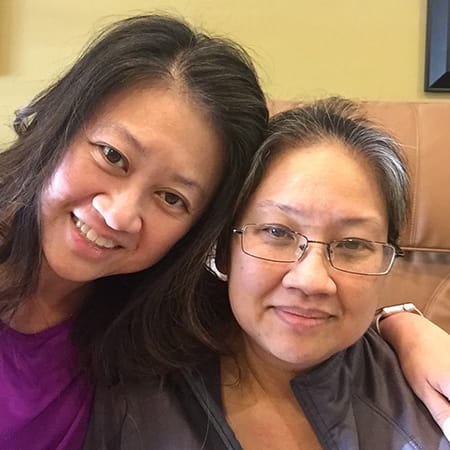
Toni Pham (left) and her late sister Nicole, whose experience with cholangiocarcinoma inspired Toni’s dedication to supporting others dealing with the same diagnosis.
What inspired you to get started with this initiative?
Being a patient advocate felt like a natural evolution of life experiences and my profession. When my sister, Nicole, was diagnosed with advanced stage cholangiocarcinoma, it was devastating. I dove into learning about clinical trials, because I knew that only about 30% of patients have any beneficial response to the first line standard of care, chemotherapy. Unfortunately, the trial that we looked at to combine with that did not open in time, and due to the advanced stage, we made the decision to continue with chemotherapy.
When that didn’t benefit my sister, the earlier biomarker testing we had done led us to three clinical trials. She was the very first cholangiocarcinoma patient on the trial she chose. I had studied the science, and we really believed in the mechanism of action. She had a wonderful response and a good quality of life on it, and I’m glad to say that other patients have now benefited from that same treatment.
Nicole helped so many people throughout her life before cholangiocarcinoma, and she continues to help people now because of her bravery. I feel like it would be irresponsible of me to have this knowledge and experience with everything that we went through and not pay it forward. I try to be the person that I needed during my journey.
Tell us about your volunteer role with the Cholangiocarcinoma Foundation.
I serve as a research and patient advocate. That involves attending some educational webinars and conferences, being actively engaged in research. I share that information with other research advocates and the foundation.
I’ve been able to serve on patient advisory boards including for the investigational drug, zanidatamab—originally called ZW25—the clinical trial drug that my sister was on. It has since been granted “Breakthrough Therapy” designation by the FDA, and we expect to see it approved soon for HER2 positive biliary tract cancers. Advisory boards shape further development of the clinical trial and give them insight into the patient experience. And we review proposed educational materials for patients and caregivers by the foundation or drug manufacturers.
I also serve as a mentor and work one-on-one with a caregiver or a patient to provide them with social or emotional support and to provide them with resources, clinical trial opportunities, symptom navigation, etc. I do a lot of research, particularly on clinical trials. Some people don’t realize their own treating institution can be a great resource. My sister was treated at MD Anderson, and they have a medical library. They’ll help you find medical journal articles. Similar to what I did for my sister, I help mentees compare and analyze treatment options.
Do you have international mentees as well?
The Cholangiocarcinoma Foundation has a global presence. Anybody can request a caregiver or patient mentor through the CholangioConnect Program. I’ve had people in India, Asia, Europe and the Middle East. It’s interesting, because there are time zone, cultural and healthcare system differences, but the science of cholangiocarcinoma is the same.
What’s been the most rewarding part of your work?
The best part of my day is when I get to talk with mentees about how they’re doing or seeing improvements in the condition of a patient or just knowing that you’ve made them feel less alone. You develop these lifelong friendships, because you’re their first point of contact when they have a question or want to share how their day is going. You’re providing support and the benefit of your experience so they can make informed choices. Some of my former mentees have now gone on to become mentors because of the positive experience they had.
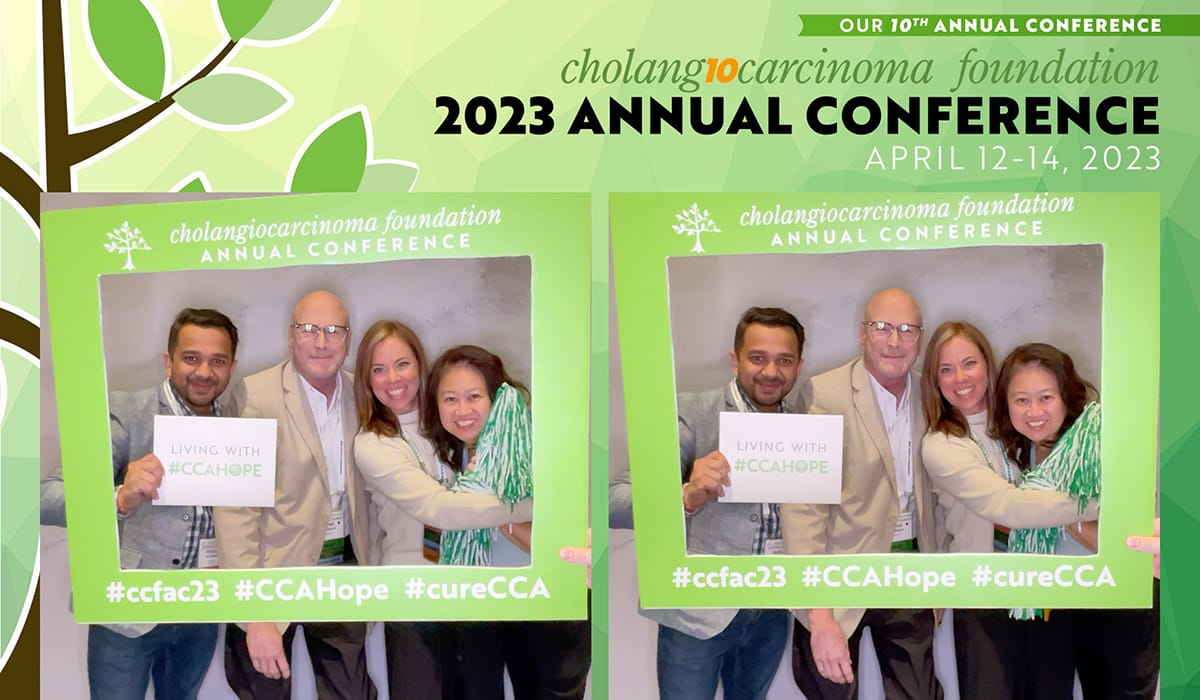
Toni (right in both photos) joins research and patient advocate friends at this year’s annual Cholangiocarcinoma Conference in Salt Lake City.
What are some ways to show support for someone going through a difficult medical journey?
Let them know that it’s okay; whatever their feelings are, they’re valid. It’s okay to have good days and bad days. Show them that you love them and be understanding. Provide them with hope. For me, hope is in having information to make informed decisions about your care.
What do you want people to learn from your story?
I understand the fear of a cholangiocarcinoma diagnosis, but I also have hope because I’ve seen promising treatments, and I know that the science is moving forward. Knowledge helps to quell the fear. Getting support from a patient advocacy group like the Cholangiocarcinoma Foundation and getting to a specialist who is knowledgeable and actively participating in the research of the disease is key. There are many resources available. Look into getting a mentor and attend conferences as you’re able.
When my sister was diagnosed, it was a scary time. Most of it was because of what we didn’t know. I told her, we have two roles in this: my job was to provide her with the best care that I could find, and her job was to focus on healing. That ultimately, was the best result for Nicole. Arm yourself with knowledge, get the best care that you possibly can and advocate, advocate, advocate.