Volunteering Since She Was 5 Years Old, Florida Teen Works to End Hunger in Her Community
Meet Daily Point of Light Award honoree Charlotte Krass. Read her story and nominate an outstanding volunteer or family as a Daily Point of Light.
Ever since Charlotte Krass was five years old, she possessed a heart to serve others. After hearing the founder of The Joshua’s Heart Foundation, Joshua Williams, speak to her school, Charlotte joined the movement to help end hunger in her community alongside other kids and teens her age. From mobile food drives to art supplies collections, Charlotte has no plans of changing her busy volunteer schedule to ensure her community has everything they need to live happy and healthy lives.
What inspires you to volunteer?
When I was younger, I heard Joshua, the founder of the Joshua’s Heart Foundation nonprofit organization, speak when I was around five years old. Its mission is to solve hunger. We host food drives in our community where we put together bags of food and groceries for people who can’t afford to buy their own. The organization is run by people around my age, so that really inspired me to be surrounded by a group of people like me who aspire to do the same thing.
Describe your volunteer role with the Joshua’s Heart Foundation.
My twin sister Julia and I, and our friend Sydney, fundraised for a refrigerated truck. During the COVID-19 pandemic we led mobile food drives, since it was hard for a lot of people to get food because they didn’t have access to a vehicle. We fundraised for this truck by selling bracelets and we also wrote to local corporations and supermarkets asking if they could help us out. We partnered up with our local grocery store and they did a “roundup donation” drive, where they ask the person who’s shopping if they want to round up and donate to our project. That helped us out a lot. The grocery store also wrote us a check. I also saved up birthday money and sold clothes to fundraise for this project.
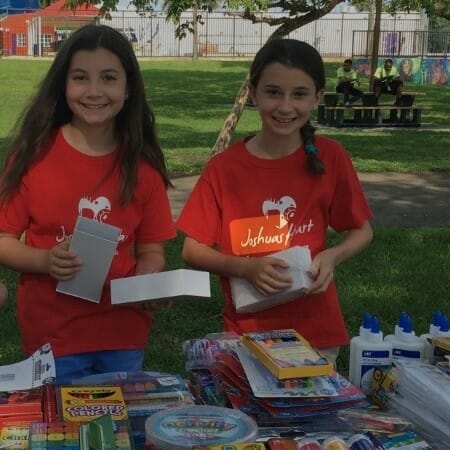
Since she was young, Charlotte Krass, left, has collected art supplies for students in need./Courtesy Charlotte Krass
When I was younger, I led a project called the I Heart Art program. A lot of local schools cut their curriculum because they didn’t have enough money to pay for art supplies. So, during a school day, my sister and I posted flyers around school asking people to bring in art supplies. We collected a bunch of art supplies from people at our school and we handed them out to the people at our food drives. We felt that it was really important for people to use their creativity and to make art. The kids were so happy and it was an amazing experience.
What’s been the most rewarding part of your work?
I’ve been able to meet a lot of people while handing out food at the food drives. I feel like the most rewarding thing is just seeing people be happy. Sometimes we give them hugs or we’ll write letters and put them in with the donated food, encouraging notes like “you are loved” or “have a great day.”
What have you learned through your experiences as a volunteer?
I’ve learned a lot about collaboration. Since I work with people around my age, I learned how to work on a team. Management was something that I’ve also learned because we had to send out all those letters, make time to fundraise and manage the project.
Are there any future partnerships, programs, or events that you are excited about?
We don’t have any new projects planned right now, but we’re planning more things for the future. As a member of the Joshua’s Heart Foundation Junior Advisory Board, I help lead weekly food drives. We will be using the truck we fundraised for to help with those. We also are remodeling our job board, which is the board of Joshua’s Heart with people my age. We’re remodeling it and trying to make the most out of it.
Why is it important for others to get involved in causes they care about?
If you care about something, it’s really important to go for it. Even the smallest things can make such a big change. Even if you’re just helping out people in your community, that still has a domino effect and it’s going to make a greater impact.
What do you want people to learn from your story?
I want them to learn that it’s easy to get involved. You can start little projects within your community. For me, I was able to sell bracelets and sell clothes. Doing little things like that can help you get involved and it shows that anyone at any age can make a difference.
From a Science Fair Discovery to Working for Healthcare Equality for All
Meet Daily Point of Light Award honoree Cam Srivastava. Read his story and nominate an outstanding volunteer or family as a Daily Point of Light.
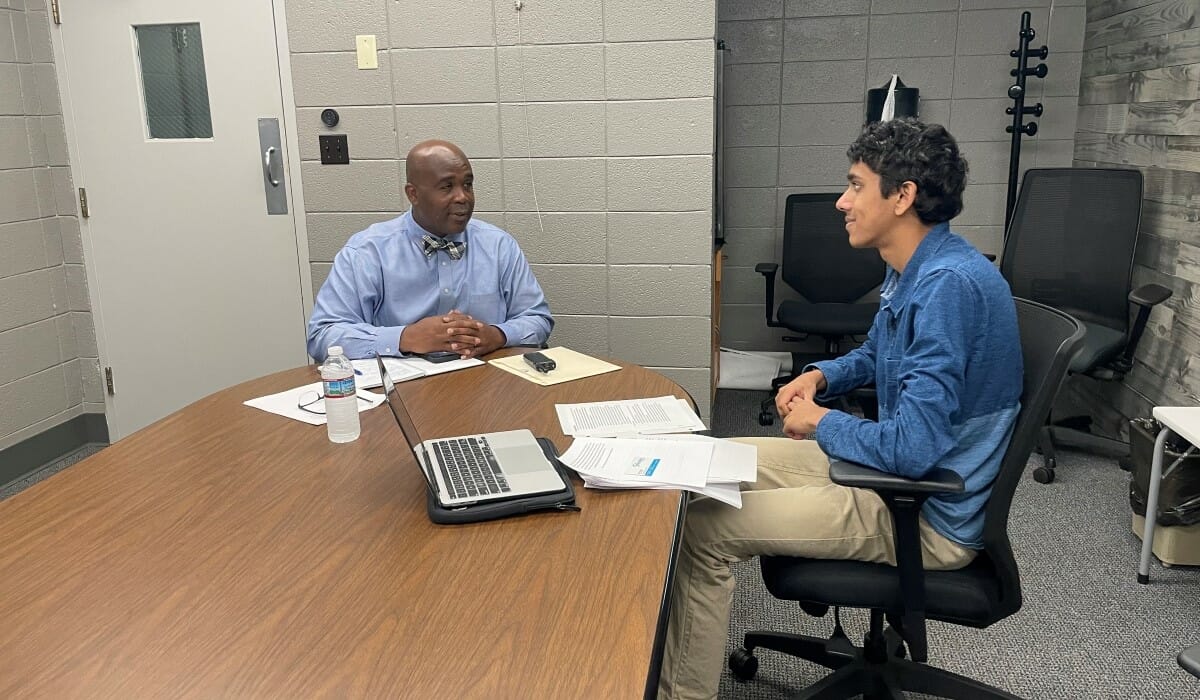
Cam Srivastava did not expect a ninth grade science fair project to change his life. Cam’s family has a history of severe heart disease. His grandfather couldn’t walk without gasping for air, and he needed heart surgery but was too frail for it. For his science fair project, Cam learned about a new heart procedure, TAVR or Transcatheter Aortic Valve Replacement which is a non-surgical option for patients like Cam’s grandfather.
Cam’s initial aim was to examine risk factors associated with heart valve disease, but he quickly discovered an unexpected and shocking finding: whether patients received TAVR at the local hospital or not depended on their race. This disparity in access offended Cam’s sense of fairness and equity. Cam made it his mission to ensure that all patients receive equitable treatment by the healthcare system, founding an organization called Equity Starts from the Heart.
What inspires you to volunteer?
I realized that through no fault of their own, people of color weren’t getting the healthcare they needed. This inspired me to make healthcare more equitable and accessible to all. Behind each data point on a chart or graph is a person with a family who deserves to be treated fairly!
To examine the reasons for BIPOC people not having access to certain procedures, we conducted biostatistical analysis on deidentified patient data from the local hospital, Spartanburg Medical Center (SMC). We analyzed a patient population at SMC who received a novel treatment, TAVR, for one of the most common heart diseases, aortic stenosis, and found that 9.7% of the patients treated with TAVR in Spartanburg, Laurens, Union and Cherokee counties (those whose nearest TAVR option is SMC) were Black, and that 89.7% were white. This is in stark contrast to the racial demographics of 73.5% white and 22.1% Black of those four counties. Black patients are not represented in the TAVR patient population in accordance with the community demographics, despite having equal or higher levels of risk for needing the procedure.
Additionally, we distributed a survey to more than 200 community members at barber shops, churches, community centers and schools. The results of the study indicate that the Black population on average does not have the same distribution of “advantages” that the TAVR patient population has — access to insurance, primary care physicians or average household value (marker of socioeconomic status) — which could be a factor for why they are not represented equitably. Another factor for why they are not represented equitably could be implicit bias, which has been well documented in broader studies of healthcare systems throughout the United States. However, the data does indicate a similar outlook in the disadvantages between the TAVR patient population and the black population — risk factors such as high cholesterol and high blood pressure.
Describe your volunteer role with Equity Starts from the Heart.
My role as founder of “Equity Starts from the Heart” is to raise awareness of disparities in heart healthcare and broaden access to innovative treatments. I have created a coalition of community members, physicians, nurses, hospital leaders, pastors, politicians and educational institutions to attack the problem together. I regularly go to Black churches and other community centers, explaining my findings to pastors and making presentations on the newest treatments and offering free screenings to their congregants.
What’s been the most rewarding part of your work?
I met an elderly BIPOC woman who said she had been diagnosed with a heart murmur, but her primary care physician had taken no follow up action; thus, she had no conception of her situation’s severity. Her example of no follow up action and no referral to a specialist is significant because it illustrates the implicit bias exhibited by physicians in the healthcare system. There have been many studies documenting implicit bias in healthcare.
I encouraged her to ask her doctor questions, and she ended up needing TAVR. Her family told her pastor that my presentation helped save her life. I was humbled and impacted by the power of advocacy and continued my work through informing hospital administrators of my findings. “Equity Starts from the Heart” has allowed me to broaden access to this new heart procedure for the marginalized in my community and revealed that research and medical advancement are most impactful when they bring widespread benefit to all.
Cam met with Spartanburg Mayor Jerome Rice to discuss ideas on addressing healthcare inequity and increasing community understanding of heart disease./Courtesy Cam Srivastava
What have you learned through your experiences as a volunteer?
Healthcare professionals did not know that these healthcare inequality issues existed. Once I explained my findings to them, they were willing to help and wanted to do their part to improve access to healthcare.
Furthermore, I’ve learned that BIPOC members of the community are not looking for handouts or abstract advice; they are looking for practical advice such as what to ask their doctors, procedures to inquire about, and so on. They also need someone to take an interest in their lives and actively advocate for healthcare accessibility for all.
Are there any future partnerships, programs or events that you are excited about?
Heart disease is a rampant problem in the southeastern United States, so I hope to continue improving access to heart care throughout the region. I want to extend my current project to partner with outreach organizations including the American Heart Association and others throughout my local community and beyond South Carolina. I am now focused on talking to hospital systems outside of South Carolina and sharing my findings and experiences with them. Equity Starts from the Heart is responsible for organizing free heart screenings and presentations at community centers.
Why is it important for others to get involved with causes they care about?
To strengthen community bonds and truly act as each other’s keepers, we must get involved and realize that a community is only as strong as people helping each other. Each of us has an area of life that we’re passionate about, where we might notice a need. This is a good opportunity to make a difference!
What do you want people to learn from your story?
My story should tell people the power of getting involved and being willing to speak up. Discovery can take you on unexpected paths, and asking questions is only the start in making a difference. After you ask questions, you may find a problem or need in the community. Then comes the “hard” part. Instead of just sitting on what you have found, you need to take action and come up with a plan of how to alleviate the issue, even though that may be an arduous process.
As John Lewis said, “when you see something that is not right, not fair, not just, you have a moral obligation to continue to speak up, to speak out.” I try to embody that mindset in all areas of my life and would encourage others to always be inquiring and willing to take that next step beyond mere identification of a problem.
Volunteer Shows Her Love of Parks and Plants Through Service
Meet Daily Point of Light Award honoree Dawn Isbell. Read her story and nominate an outstanding volunteer or family as a Daily Point of Light.
San Diego resident Dawn Isbell has been volunteering with Forever Balboa Park since September 2020, contributing over 385 hours of volunteer service. Dawn volunteers as a member of the Rose Garden Corps and Visitor Services team.
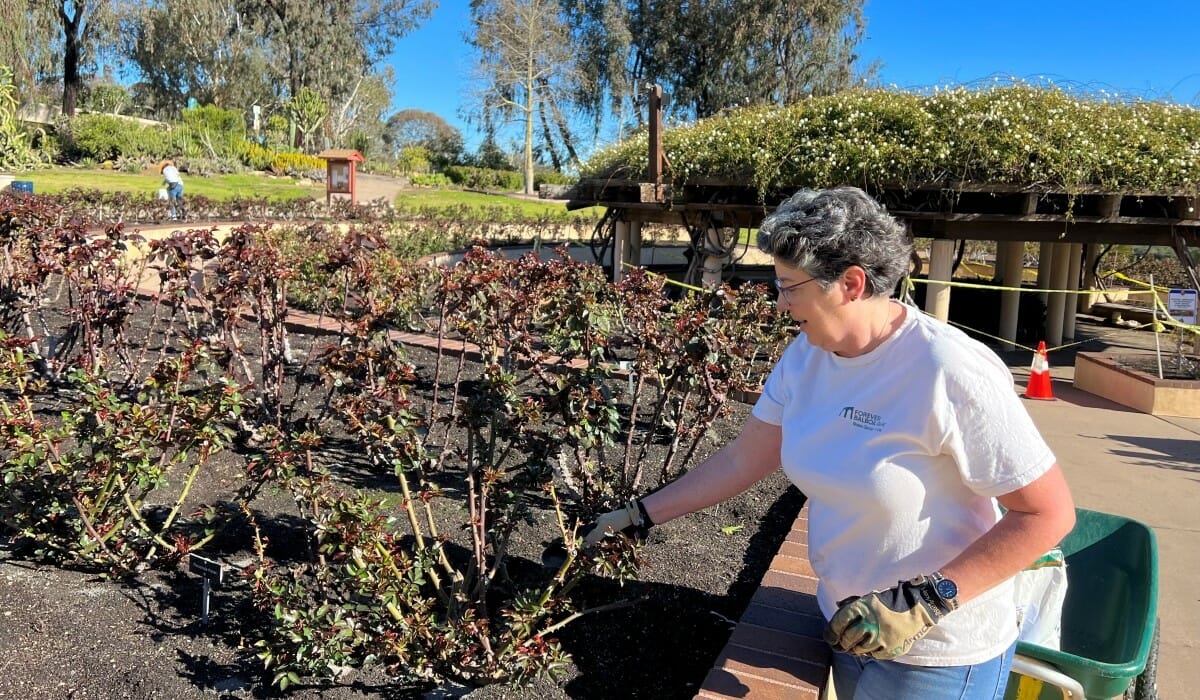
As a Rose Garden Corps member, Dawn cares for the park’s award-winning Inez Grant Parker Memorial Rose Garden. Her duties include pruning, weeding, fertilizing and much more. Dawn is also a Botanical Building Ambassador, greeting visitors of the Botanical Building and providing information and directions.
Helping people find their way and plan their visits, Dawn is a valued volunteer throughout the park. Read on to find out what inspires her to dedicate her time and talent to Forever Balboa Park.
What inspires you to volunteer?
Well, I’ve always loved going to Forever Balboa Park. I’ve spent a lot of time there and my kids loved going there when they were little. We’d go to the museums and the gardens, and they learned how to ride their bikes there, had their birthdays in the playgrounds. We always loved the place.
In the summer of 2020, the San Diego Rose Society, which I’ve been involved in, put out a call that the garden needed volunteers at the park. I didn’t know you could do that. I’d stepped away from some other work I was doing and my kids were older so I had some time. It sounded like a lot of fun so I started volunteering working at the rose garden. It’s a beautiful place, people stop by and enjoy the roses. They come and take pictures in the garden. I had a really good time and did that for about a year.
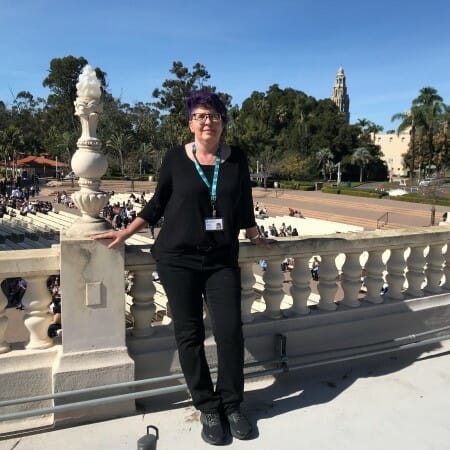
The park includes many exhibits across sprawling grounds./Courtesy Dawn Isbell
In fall of 2021, they invited some of the garden volunteers to work in the historic botanical building. They asked for people to come in and host, to be park ambassadors. This means being a friendly face, answering questions, talking about the history. And I fell in love with it! It was the most fun thing I had done in a long time and I wanted to keep going. The botanical building closed for renovations. And I missed it! Then, they put out a call for park ambassadors at the visitors’ center, work the information center, to be tour guides. I signed up for all of it.
It’s so much fun to share such a wonderful place with people. You meet people from all over the world, all over the country, and some who’ve grown up their whole lives in San Diego. Everyone has their favorite thing to see and do, and it’s just such a joyful place. People ask me, “How’s your day?” And I say, “I work at a park and talk to friendly people. It does not get better than this! I have one of the best jobs around.” I haven’t had a bad day there since I started.
What’s your favorite part of your work?
My heart really lies in the rose garden. I have a very small garden of my own at home and have been doing rose gardening since I move here. So I’ve always been interested in that. Going out there about once a week or so and making some friends out there has been so enjoyable. It’s just growth and peace and little kids walking around. There are bird watchers and so many people who really love the garden. I have baby pictures of my kids in that garden! It’s really my favorite place. I do miss the botanical building too, and once it opens back up I’ll be signing up for volunteering there again.
Any rewarding stories from your volunteering?
It’s hard to pick because everyone’s really interesting. But one of my favorite groups of visitors was in the botanical building. This big group of 10 or 12 older people came in wearing Winnie the Pooh and Tigger T-shirts, hats and scarves. This older gentleman was celebrating a milestone birthday and his nickname was Tigger. He had a big Tigger hat on. All his kids and kids-in-law had come to San Diego and they had one day in town before going on a cruise. They came to Balboa Park on that day. I have a soft spot for Tigger, so I had fun meeting them and chatting with them!
Dawn works in the rose garden, a favorite spot for visitors./Courtesy Dawn Isbell
Why is it important for people to get involved with the causes they care about?
I think about “giving back” more as sharing. If you really enjoy something, don’t you want to share it with people, if and when you can? Like I said, I have good memories of the park and have enjoyed learning things about it. My kids are grown now, and I enjoy going back in a different way, seeing things differently.
I’m always learning something new. We have over 100 years of history but there’s always something new as well. I’m learning and it’s fascinating. I enjoy it so much and have the opportunity and ability to share it with people, so I like doing that. Everyone comes away with something new.
What’s your advice for people who want to start volunteering?
I would say start with a small commitment. I started with the rose garden one morning a week and a meeting once a month. I already had some familiarity with it.
Part of what makes volunteering with these organizations really nice is that everyone is really friendly and helpful. They go out of their way to ensure volunteers have what they need. Our CEO walks around the park, learns everyone’s name and wishes them a happy birthday. There’s a lady who’s been working at the rose garden for 40 years and helps train you. It’s wonderful.
So start small, find a group that’s welcoming and friendly and will teach you what you need to know. Then you’ll know whether it’s for you. If it is, that’s great. If it’s not, it always gets your foot in the door.
I want to give a shoutout to the rest of the volunteers – especially the Wednesday afternoon crew, they’re the best! We have over 300 volunteers in the gardens, visitors’ center and trails. They’re friendly, they’re helpful, they’re a great bunch of people to work with.
Breakfast Delivery: Maryland Dad Stocks Local Food Pantries With Cereal
Meet Daily Point of Light Award honoree Brodie Wise. Read his story and nominate an outstanding volunteer or family as a Daily Point of Light.
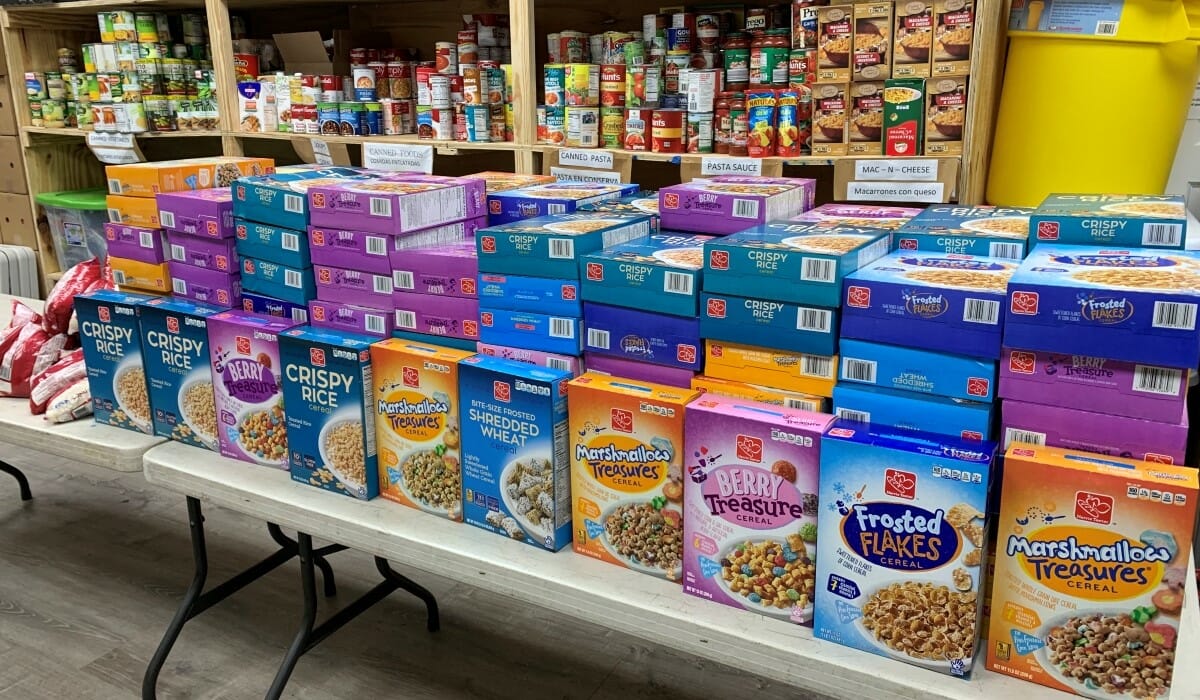
As a married, father of three teenage sons with a full-time job as an Executive Vice President of Business Development and Marketing of a tech company, Brodie Wise is a busy man. Despite all of his responsibilities, Brodie manages to find time to drum up carloads of donations for his local food pantries.
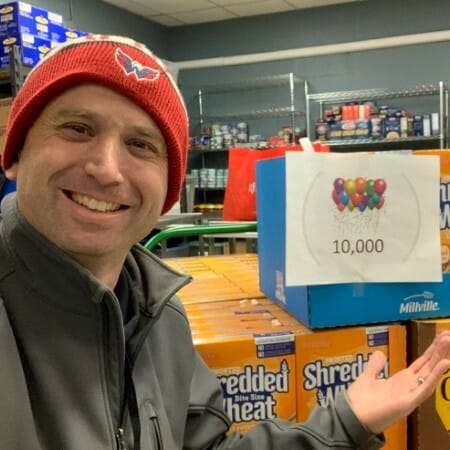
Brodie is the ultimate breakfast hype man. He focuses on collecting cereal, something kids love that will feed a family for more than just one meal. His social media is filled with videos of himself at the grocery store encouraging others to join his mission or to donate money. Photos of him with shopping carts piled high with food keep people updated on his #Roadto10000 goal. After all, he is a marketing expert.
Whether he’s whipping up a meal for his family or filling the shelves at a pantry, Brodie knows the importance of food. It’s vital to our everyday lives, but it also can be a source of great joy and can bring people together. At the end of the day, his work does all of these things and more; he inspires the people around him to lend their fellow citizens a helping hand.
What inspires you to volunteer?
I feel it’s my responsibility to give back to the community. Anyone who is privileged, anyone who receives or works hard and makes money… We have a responsibility to help the people that are less fortunate. It’s ingrained in me. It’s part of my faith.
Describe your volunteer role with local food pantries.
When I started doing this, I was supporting up to four pantries. I volunteer and spend my own money, but I also get other people to volunteer, help out, donate and so on. Right now, I’m pretty much only serving St. Jude’s. I focus on cereal, because when you donate to a pantry, you can give a bunch of different things, but that actually isn’t as helpful as if you bring all of the same thing.
In 2021, Brodie broke his goal of 10,000 boxes of cereal delivered./Courtesy Brodie Wise
So, I focus on cereal. It makes me think of my kids eating it. It’s easy to relate to. It’s fun to talk about. And it gives other people something to grab onto. If I show up when they’re doing packing, I will pack bags and help them get ready for distribution. If I’m available on a Saturday, I’ll distribute food to the people that come. At one point, I would dress up as a blow-up turkey on Thanksgiving when we were giving out food to make it a little bit more lighthearted.
How did you originally get involved, and why is it so important to you?
When it comes down to it, people need to eat. And when the pandemic set in, and I was sitting at home hearing about people not working and not having food, it just broke my heart.
It breaks my heart seeing a family that’s struggling to feed their kids when I have been blessed that I can provide for my family. So, I go to the store, and things that I would buy from my own kids, I buy for the pantry.
Tell me about #Roadto10000.
Everybody needs goals. I set a goal each year to donate 10,000 boxes of cereal. My first year, I ended up donating 10,800 boxes. The only way you can do that is if other people engage with you. The hashtag helps keep people updated.
What’s been the most rewarding part of your work?
It’s seeing the engagement of other people. One of the things I try to do is get people to bring their families to help out. There’s a family that just came within the past couple of weeks. He and his two children, six and four, have been packing bags.
When you see people thrive and do more for the people around you, it’s the most wonderful feeling. Getting other people to get out of their comfort zone to give back to the community and help the people around us…it changes you.
St. Jude’s food pantry after Brodie delivers cereal./Courtesy Brodie Wise
What have you learned through your experiences as a volunteer?
You can’t get disappointed. What I mean by that is people are people. Some people are going to come through. Some people you can count on to do things. And you can only do the best that you can do. If you step up, people are going to see it. They’re going to want to be a part of it. They’re going to want to want to help.
Why is it important for others to get involved in causes they care about?
It goes back to my original thing. I feel it’s our responsibility as human beings to help the people that are less fortunate in whatever way that is. My friend’s company donates about 15% of their profits to charitable organizations. Instead of pocketing money and just getting things for themselves, they’re using money to help the people around them. If more people did that, it would have a huge impact.
What do you want people to learn from your story?
It doesn’t take a lot to give. It just takes that extra minute. It becomes a thought process. It becomes part of your daily routine. I hope people see me as an example of change and use that to make it a normal routine for themselves.
Instead of just going to the grocery store, maybe the routine is buying two of something that’s on sale and donating one. When you make it part of your life, it becomes ingrained in how you live, how you talk, how you share. I want to see change in people. There’s so much more that all of us can do.
High School Student Passionate About Solving His Local Community’s Needs
Meet Daily Point of Light Award honoree Tyler Feichthaler. Read his story and nominate an outstanding volunteer or family as a Daily Point of Light.
Service has been important to Tyler Feichthaler, a high school student in Cape Coral, Florida, since he participated in his first mobile food pantry at age 5. There, Tyler saw many children like him who needed help, and he enjoyed volunteering with the Cape Coral Food Pantry to help individuals in his community.
From there, Tyler became active in his elementary school’s Kiwanis K-Kids Club and led the club as president in fifth grade. The team organized stocking stuffing for special populations for the Christmas season, made holiday cards for seniors in nursing homes for Valentine’s Day and organized food and clothing drives for the Cape Coral Caring Center.
Currently Key Club President, Tyler has volunteered over 500 hours in his community since starting high school, mostly with the Kiwanis Thrift Store. The store is completely volunteer-run, so his hours directly result in earnings that are donated back to the community and worldwide – totaling over $300,000 per year. From hurricane relief to food distribution, read on to find out what this Florida teen is doing to contribute his time and talent.
What inspires you to volunteer?
Well, when I was in elementary school, around second grade, my dad invited me to a food distribution event with him. I hadn’t been to one of them before. I went and really enjoyed helping everyone out. I did a lot of carrying bags for people who couldn’t get them to their cars, plus handing out food, things like that. I think that’s what made me want to volunteer more. So then I joined the Kiwanis organizations at the elementary school and I did more volunteering there. I just continued to volunteer to this day.
Tyler Feichthaler is an active volunteer in his Florida community, involved with a number of different organizations and initiatives./Courtesy Tyler Feichtaler
Which cause area are you most passionate about and why?
I think the cause area I’m most passionate about is hurricane relief, because I went through it along with everyone else and it was a really terrifying experience. I want to be able to help everyone make sure that they can be alright after a hurricane. In fall 2022, Hurricane Ian did a lot of damage and a lot of people suffered because of it. I volunteered for over 100 hours at nonprofit organizations and schools in Cape Coral tearing out wet carpets, cleaning up debris, saving museum exhibits and helping get our school ready to reopen three weeks later.
Any rewarding stories from your work?
Every year in Cape Coral, we have a Kiwanis Kids Fest. This is for a lot of the Kiwanis organizations in our city to come together and throw a festival for all the kids. They get a free hot dog for going, and it’s just a lot of fun. I volunteer there every year, and it’s always fun to see everyone enjoying themselves and helping out.
The first year I volunteered with my school’s Kiwanis, so we ran a dart game booth handing out prizes. I helped to operate that. It was fun! Later on, I helped with the main part of the event, moving food around, helping the adults who were cooking, etc.
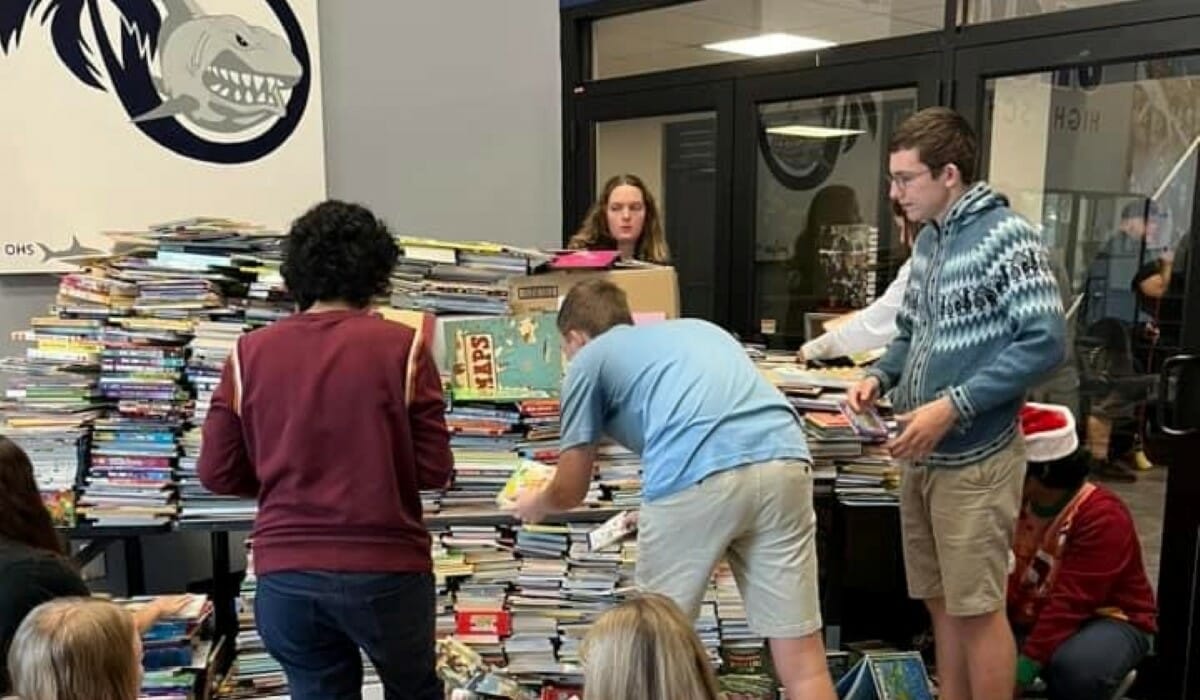
Tyler helped organize a book drive that collected 3,000 books to replace the library at Hector Cafferata Elementary School, which was completely flooded during Hurricane Ian./Courtesy Tyler Feichtaler
Are there any future partnerships, programs or events you’re excited about?
I’m excited for DCON for the high school Key Club, for the Florida District of Key Club International. It takes place in April and it’s essentially for all the Key Clubs in the entire state of Florida to go up to Daytona Beach. We vote on officers for the state of Florida Key Club organization, and also do workshops on how to run a better Key Club and things like that. It’s a lot of fun.
Why is it important for people to get involved with the causes they care about?
Well I think it’s important because if you don’t actively get involved but just say you support a cause, then not much will be made different. But if you actively support it by volunteering and helping the cause, you could actually make a difference.
What’s your advice for people who want to start volunteering?
I can understand those who feel nervous about volunteering, because that’s how I felt when I started too. But once you start volunteering, it’s easy to adjust and you’ll end up enjoying it a lot.
Outside of volunteering, what are your interests?
I really like traveling the world and learning about history. Australia is one of my favorites.
7500th Daily Point of Light Honoree Uses Data Analytics to Support Teams During Disasters
Established in 1989 by President George H.W. Bush during his presidency, the Daily Point of Light Award is given out each weekday to extraordinary volunteers who are dedicating their time and talent to better their communities. Points of Light has continued this legacy for over 30 years, and today we are proud to recognize Daily Point of Light honoree 7,500, Joanna Glover. Read her story and nominate an outstanding volunteer or family as a Daily Point of Light.
Twenty-eight-year-old Joanna Glover, an Atlanta native, is a highly specialized, full-time disaster management volunteer who finds purpose in solving problems and being there during what are often the worst days of someone’s life. But that isn’t how it has always been. As a kid, she had her eye on becoming a veterinarian.
Joanna, pronounced jo-ah-na, got her name when her Jamaican father added some flair to her mother’s name choice. She is the oldest of 11 children, three of whom are biological siblings. Two joined the family when Joanna’s mom married their mother, her best friend of many years. And when Joanna was an early teen, the crew increased by six via adoption, eight if you count the dogs. They have always been a tight-knit family.
Volunteering was always part of their lives. Joanna remembers doing things like passing out turkeys and gifts for holidays very early on. Her experiences increased in size and complexity as she got older: helping out at a house for women and children leaving abusive relationships, becoming a STEM tutor for people of color and many more initiatives, particularly with children from under-resourced backgrounds.
“My mom often reminded us that even though we didn’t have a lot, this is how you can give back to your community,” she recalls. “It was just something that was pretty instilled in us.”
“When I do service work, that’s my way to become present. It grounds me.” – Joanna Glover, Daily Point of Light honoree 7,500.
Joanna, the first in her family to go to college, graduated with a bachelor’s degree in mathematics with a minor in chemistry. She played competitive soccer and became a Zumba instructor, balancing study time with physical fitness. After graduation, she saw the opportunity to serve with AmeriCorps National Civilian Community Core (AmeriCorps NCCC) and took it.
“That’s where I first got my exposure to nonprofits. I started as a team leader,” she adds.
AmeriCorps, the federal agency for national service and volunteerism, provides opportunities for Americans to serve their country domestically, address the nation’s most pressing challenges, improve lives and communities and strengthen civic engagement. Each year, the agency places more than 200,000 AmeriCorps members and AmeriCorps Seniors volunteers in intensive service roles and empowers millions more to serve as long-term, short-term or one-time volunteers.
With AmeriCorps NCCC, 18- to 24-year-old volunteers live and work together on projects around the country. Joanna led 8-11 Corps members on multiple service projects, including building houses after Hurricane Harvey devastated parts of Texas.
After her 11 months of service, Joanna earned a full ride for her master’s degree in education psychology with a focus on research, measurement and evaluation.
“I was the girl who was coding nice graphs of statistics behind psychology,” she says.
It was the beginning of her foray into data analytics. But upon finishing her second degree, she wasn’t ready to spend her days at a desk writing educational tests for profit, a path her background prepared her for. When her friend mentioned FEMA Corps, she jumped at the idea.
FEMA Corps, a partnership between AmeriCorps NCCC and FEMA, is a 12-month service-learning program for emergency management. It’s a full-time, live-in volunteer job with a stipend, and there are four rounds of projects.
Dr. Jarrad Plante, Wave Unit Leader with AmeriCorps NCCC FEMA Corps Seven Campus and Joanna’s supervisor, considers it one of the most immersive service-learning opportunities someone can participate in.
“You’re working together. You’re traveling from place to place together in a 15-passenger van. You’re sleeping together, you’re cooking together, you’re doing physical fitness together, other service projects, other specialty roles together. I mean, you’re basically doing this almost 24/7,” he says. “It takes a special kind of person to be able to do that kind of program, and it takes a really special person to be able to lead. Now Jo’s done it multiple times.”
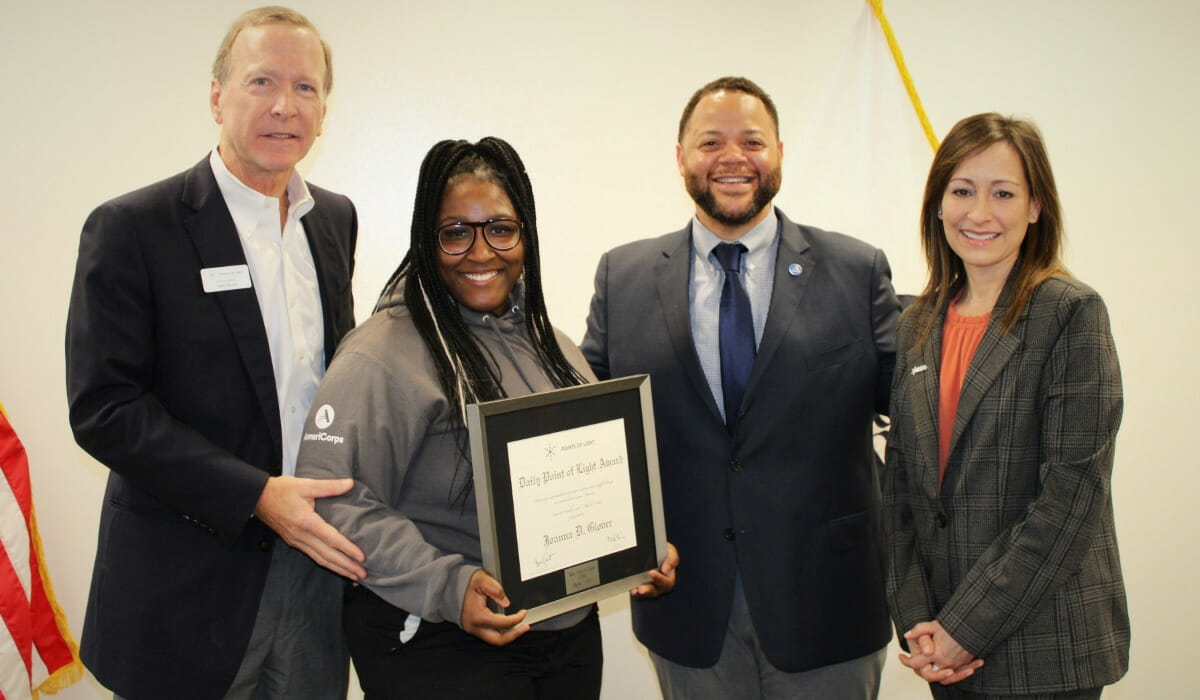
Daily Point of Light honoree 7,500, Joanna Glover (second from left), receives her award during a special presentation presented by Points of Light board chair, Neil Bush, AmeriCorps CEO, Michael D. Smith, and Points of Light interim president & CEO, Diane Quest.
Joanna started out as a support team leader with operations. She was responsible for supporting her supervisor and making sure people had everything they needed to be successful when going out into the field.
In round two, she supported a team out of Oakland, California, archiving and sorting records and information to make sure everything went smoothly when people needed access. Then, she spent some time in Puerto Rico in the aftermath of Hurricane Fiona, where she began to focus on using data analytics to make dashboards.
“They’re much easier to look at than seeing a report every day that’s written about the people who have power, the percentage of water that is clean, the people who are still registering to get money from FEMA. Rather than reading those documents separately, what I did was give a nice pretty snapshot of a dashboard. And I would create it for different departments, so they could all see it,” she explains.
Now, she also oversees a team of people, making sure they have a project and are meeting goals, and offering general support and professional and personal development. She keeps things on track by staying in contact with a FEMA employee on each project on how to best engage.
“It’s kind of like being a supervisor but also a mentor for the AmeriCorps side; and for FEMA, it’s just being the extra hand or being an extra person to help alleviate all the work they have, especially when a disaster comes,” she summarizes.
Jarrad attributes Joanna’s success to her adaptability, her empathy and her experience.
“She has been in those members’ shoes before. She has gone through a lot of those trials and tribulations and has found ways to kind of become self-motivated in those circumstances,” he says. “She’s a rock star.”
As someone who sees learning as nonlinear and a lifelong interest, Joanna loves her work.
“Not only was I able to find my passion, I was able to utilize the skills that I gained in school and figure out how I could merge those two fields [math and educational psychology] to make my volunteer work more impactful,” she says. “When I do service work, that’s my way to become present. It grounds me. It slows me down. You learn hard skills and soft skills when you are out there doing service work.”
She finds it rewarding to be the person people depend on during difficult times, recalling her work in Puerto Rico, the people’s gratitude and even the opportunity to be an ear for venting during the aftermath of the disaster.
So, what’s next? Joanna will finish the program in March. She hopes to join FEMA in a role that uses data analysis to persuade decision-makers to send resources to the places that need it most. But for now, she’s focused on the role in front of her, identifying solutions and supporting her team.
“Did I ever think in my younger years that I would be trying to focus on using data analytics to help different communities? I would never have thought that. But doing service work first and figuring out how I could be more impactful, it led me down this path. And I have never been happier in life.”
Retired Hospital Administrator Leads Multiple Nonprofits in Making an Impact on Her Rural Virginia Community
Meet Daily Point of Light Award honoree Inez Arnett-Ferrer. Read her story and nominate an outstanding volunteer or family as a Daily Point of Light.
Inez Arnett-Ferrer worked for New York Presbyterian Hospital for 40 years before retiring and moving with her husband to rural Virginia. Looking for activities to fill her former workdays, she started accepting offers to join different organizations, the first of which was Literacy InterActives, an organization that provides interactive learning and bridges communities.
In 2017, Inez was diagnosed with breast cancer. After getting treatment, including a mastectomy, she felt a regenerated sense of purpose in serving others. Over time, she has come to run both her local food pantry as vice president of the board and her chapter of AARP, as president. The former has seen food distribution increase from 13,000 lbs to 19,000 lbs under her leadership with the number of volunteers almost doubling. She also works on multiple historic projects that memorialize the overlooked figures of history.
In fact, her dedication is so strong that her family sometimes has to remind her to take care of herself as well, to relax in her garden or at her book club. While she may no longer pick up a paycheck each month, she is, no doubt, working. It was her strong belief in benevolence that led Inez to the nursing field and eventually to hospital administration. After a lifetime of helping others through her vocation, she continues to lend a hand in the community she lives in.
What inspires you to volunteer?
I don’t want to say that I’m a very religious person, but I do have a religious background. I was born and raised in the Baptist church. So, I’ve always had the feeling that I was put on this earth to serve God to do things that he wants me to do better mankind. From a very young age, I always volunteered for different organizations to try to do something for others as opposed to just myself.
Describe your volunteerism.
I am the president of our local AARP chapter. Right now, we’re working on a couple of different things in order to benefit the seniors in our community. We’re working with the National AARP to inform seniors about Social Security and Medicare. We also have monthly meetings during which I try to have guest speakers who will give us information to help better our lives. In February, we invited a lady to talk to us about taxes and finances.
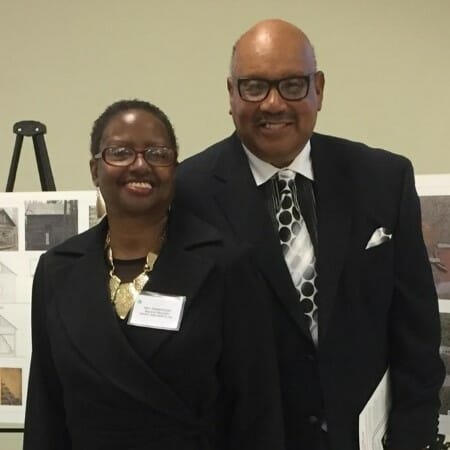
Inez and her husband, Allan, attend a Mile Marker dedication ceremony held by Literacy Interactives, Inc., where Inez serves on the board./Courtesy Inez Arnett-Ferrer
I’m the vice president of the board of the Clarksville Food Pantry. We operate twice a week, plus Saturday. Ten church organizations and one community organization service it every time we’re open. My job is to schedule them for the days that they’re supposed to serve as well as about 25 community volunteers who rotate in and out as we need them.
I’m also a board member for Literacy InterActives. One of our main projects is restoring a historic cabin here in Mecklenburg County. It’s called the Parker Sydnor Historic Log Cabin, and we started working on it in 2010. As the community liaison, I keep the community updated on our progress as well.
What is the St. John Baptist Church Restoration?
I recently became the project manager on that. We realized that there may be deceased enslaved individuals whose graves are in one part of the cemetery associated with our church, so we’re trying to get some assistance in determining if that’s true. And if it is, we want to have that section preserved and memorialized.
What’s been the most rewarding part of your work?
The most rewarding part is when I can complete a project. I know what my aim was to set out and do, and it has come full circle to fruition. It’s the sense of accomplishment.
What have you learned through your experiences as a volunteer?
I’ve learned that people recognize what you do, that they are appreciative of what you do and that they are grateful knowing that there are people out here who care about other people.
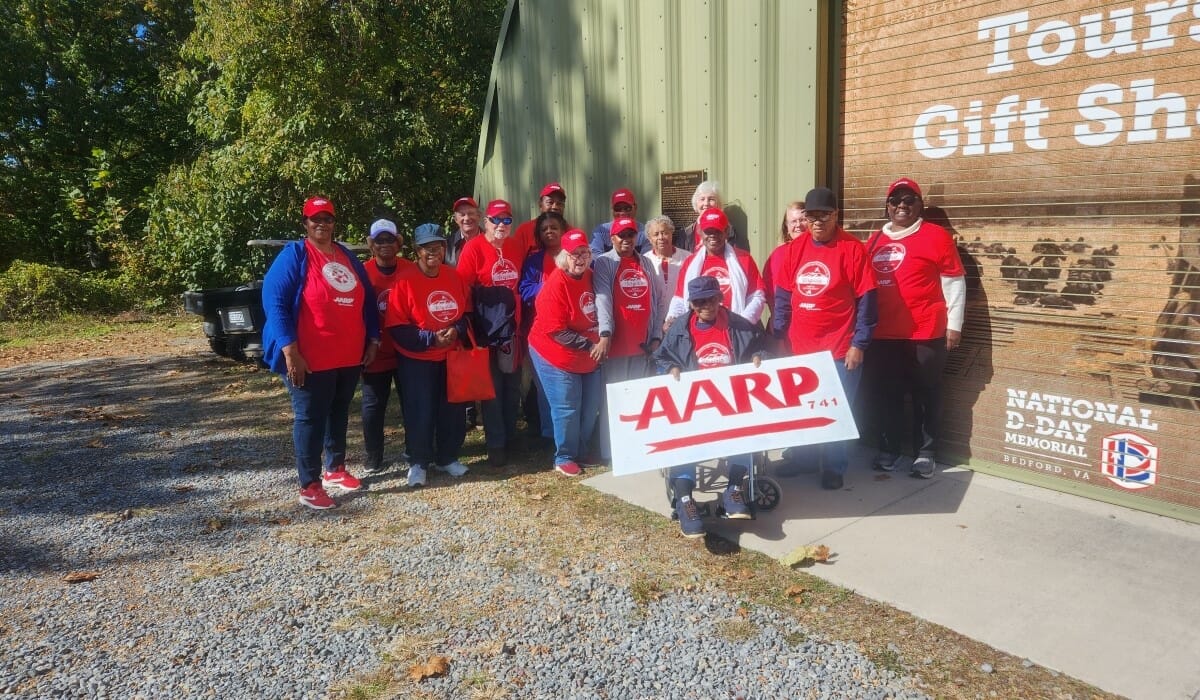
Inez and AARP membership on a trip to the Virginia D-Day Memorial./Courtesy Inez-Arnett-Ferrer
Are there any future partnerships, programs or events that you are excited about?
AARP is working on a shredding event for the community where we will set up a big shredding machine in the street somewhere, and people can just come and bring whatever important papers they need to have shredded. It’ll be open to the community sometime in May.
Overall, I just want everything that I’m working on to come to fruition, especially the work that I do for AARP. AARP is an organization that’s very close to my heart, because as seniors, both me and my husband are looking for a quality of life while we’re still here on earth. So, I really and truly have been enjoying my work with them.
Why is it important for others to get involved in causes they care about?
I believe God wants us to be benevolent to others. It’s something that he has mandated for all humans no matter race, religion, color, creed. We all have to reach out and be benevolent to our neighbors, to our family and to others in general.
What do you want people to learn from your story?
Humanity is a very important aspect of life. If you don’t think about your fellow man and how they’re being affected, then you can’t think about what’s going on with yourself. You can’t be selfish in your thought process. You have to think about others. And when I say others, I mean what’s happening with your family, what’s happening with your neighbors, what’s happening in the world at large.
Michigan Teen’s Bottle and Can Drive Benefits an Entire Community
Meet Daily Point of Light Award honoree Mateo Lange. Read his story and nominate an outstanding volunteer or family as a Daily Point of Light.
Fourteen-year-old Mateo Lange hails from Indian River, Michigan. A freshman at Petoskey High School, Mateo has been involved in his community for as long as he can remember: from projects in Boy Scouts where he expects to make Eagle Scout in April of 2023, to helping in soup kitchens and the Manna Food Project.
Mateo is also an accomplished athlete, including football team captain, Tae Kwon Do second-degree blackbelt and avid baseball player, who has made the All Star team each year he has played.
It was his love of baseball that led Mateo to start his largest volunteer project: a bottle and can recycling drive to support his local youth baseball team, the Northern Michigan Cyclones. What started as a two-week recycling drive in 2020 has since grown into a community-wide effort that has recycled over 2 million bottles and cans and raised over $200,000 for youth-oriented programs in his Indian River community.
Read Mateo’s story below, and learn what inspires him to volunteer and the lessons he has gleaned from his experiences as a volunteer.
What inspires you to volunteer?
For this particular project, I originally had the idea to help benefit our baseball organization through a two-week bottle and can drive. The drive was incredibly successful, and the community wanted to continue bringing their bottles and cans for recycling. The light bulb went off that I could continue doing the drive to help other youth-oriented programs who desperately needed help due to the struggles of COVID.
Describe your volunteer role with the Northern Michigan Cyclones.
The organization started out simply to support youth baseball. I was one of its players. I convinced the Northern Michigan Cyclones to use their 501(c) )3) tax-exempt structure to expand their services into other community projects. I created the community bottle and can drive and continue to run this project through the Cyclones organization.
Mateo Lange has collected, sorted, recycled and donated the proceeds from over 2 million returnable bottles and cans./Courtesy Mateo Lange
What’s been the most rewarding part of your work?
Just knowing that I’m doing my part in the community and being able to help others significantly is so rewarding. Also, it feels very good when I give the school or organization the check; it’s not for the thanks, but just the feeling of helping! I guess I could say that I’m making the world a little bit better which makes me feel great! Another reward is seeing the community come together over one thing to make it better. It’s truly amazing!
What have you learned through your experiences as a volunteer?
I have learned that volunteering is worth it when you know how much you are contributing to a cause and how much others appreciate it! I have also learned that there are many different types of volunteer opportunities. Some are small and can be finished in a small amount of time, some are big and take longer. I’ve also learned that size doesn’t always affect the significance of the job.
Are there any future partnerships, programs or events that you are excited about?
Right now, I am part of a 15-person national youth advisory council for The Kroger Co. Zero Hunger|Zero Waste (ZH|ZW) Action Plan. Their mission is to end hunger and eliminate waste in the places we call home. They challenged each of the youth advisory council members with designing, planning, partnering, preparing, promoting and executing their own project focused on ZH|ZW.
My project involves helping to ensure no students miss a meal because of a lack of funds on their school lunch account. I am working with multiple area high schools, and am very optimistic that this project will have an amazing ongoing impact on our community.
Why is it important for others to get involved with causes they care about?
Quite simply, if we don’t care or get involved… who will? I would much rather be a part of the solution than to just believe that “someone else” will eventually fix the problem. That kind of thinking (that someone else will do it) actually makes you part of the problem.
What do you want people to learn from your story?
To make a difference, you don’t need some elaborate program that is dependent on donations and other support from wealthy individuals and businesses. You don’t need the right connections or know the right people in order for your actions to be meaningful and have an impact. You just need to find a cause that you are passionate about, and figure out what you are able to do to help.
My project is about as simple as you can get: collecting returnable bottles and cans (and other recyclables) and distributing the proceeds to area youth-oriented programs. I’ve collected, sorted and distributed the proceeds from over 2 million returnable bottles and cans. Over 50 area programs have benefitted, serving thousands of area youth.
Additionally, we have recycled many tons of non-returnable recyclable items including garbage bags, wine bottles, glass jars, etc. Many of these bottles and cans and other items would have ended up as trash on the side of the road, or in our precious natural resources such as streams, rivers, lakes, etc.
Each and every one of us can make a difference, one returnable bottle or can at a time… or picking up trash that we see when we are out and about (instead of pretending that we don’t see it, or thinking that someone else will do it.) Just try to make the world a tiny bit better every day!
Meet Daily Point of Light Award honoree Ruby Arun. Read her story and nominate an outstanding volunteer or family as a Daily Point of Light.
Ruby Arun, 15, is a sophomore at William Fremd High School in Palatine, Illinois. The internationally-recognized American classical and musical theater singer also has another passion: empowering girls to be tomorrow’s leaders in STEM through her organization, Mission:MathMinds, a 501(c)(3) nonprofit organization.
Ruby’s journey in becoming an active member and leader in her community started at a young age. Her involvement in math competitions, where she placed in the top 5% nationally several times, led to Ruby noticing a serious gap in gender equity. Ruby would rarely see a team with a majority of girls, including her own teams. Ruby also noticed a strong animosity towards math from her female peers, all of whom were more than capable intellectually. She felt increasingly lucky to have a strong connection to math and STEM that had started at home and continued through her education. Ruby felt called to share her passion for STEM with her community and worldwide in the height of the COVID-19 pandemic, when math education looked different for so many students.
Ruby founded Mission:MathMinds in June 2020, creating a platform for girls to explore their STEM interests with a supporting community of like-minded girls and female role models. Ruby’s mission was to ensure that Mission:MathMinds supported underserved girls with time and resources.
What inspires you to volunteer?
I am inspired to volunteer because of the continued embrace from my local community to empower our mission to reach more girls. The messages I’ve received from parents — where they’ve shared how their daughter despised math before but now could not wait for her next mentoring session — are a result of the heartwarming community we have built. This inspires me to work harder to ensure quality STEM education and awareness in gender-equal spaces.
My inspiration and desire to volunteer started within my family. For years, I chose to have birthday parties at Feed My Starving Children. My family, friends and even other community members would come together and pack meals for children in countries in North, Central and South Americas, Africa, Europe and Asia. The presence and support from the community grew when I founded Mission:MathMinds, as the Palatine community was the first to stand behind and share our purpose and goals.
Through leading this organization, my love for volunteering has only grown more. My efforts through Mission:MathMinds are now focused on increasing the number of communities active in supporting our mission.
With our Global Book Drive, the Palatine community single-handedly collected and donated 15,000+ books worth over $180,000 for us to give to children in underserved communities. The sorting, packing and labeling would not have happened without the Palatine student volunteers who attended our events on weekends to help our team. Our Mentoring Program has served over 6,000 girls within Palatine from the several STEM awareness campaigns we support.
Describe your volunteer role with Mission:MathMinds.
As the founder and CEO at Mission:MathMinds, I have had the privilege of working with female leaders from all backgrounds and journeys. This is inspiring not only for me, but for our organization. I look at what we can do to empower students with our current initiatives. I also seek external opportunities to give our work a platform and partner with other causes.
I create the vision that Mission:MathMinds takes within our original foundation, and I do not take that responsibility lightly. I look at the issues currently being faced in education and why current solutions are not increasing girls’ participation in STEM activities throughout primary, secondary and post-secondary education, so we can better craft our efforts to fill these gaps.
What’s been the most rewarding part of your work?
The rewarding parts of my work span from reflecting on our growth as an organization, to the community messages we receive from girls and women we’ve helped inspire. After having over 30 conversations with female leaders as part of our Female Role Models initiative, my perspective on the impact that the STEM fields has on all industries globally broadened. STEM needs more female participation moving into the future!
Since founding the organization, our team has increased exponentially, with over 400 volunteers involved in our various STEM awareness campaigns. Seeing the joy in volunteers and girls after participating in our events is what brings me the most joy.
I had the opportunity of traveling to Poland in July 2022 to volunteer at several educational centers, spending time with Ukrainian refugee children displaced by the Russian invasion of Ukraine. It was a truly humbling experience to meet the students and hear their stories, and connect with the teachers and administrators, and also displaced children, who volunteer their time to start and run these schools to address displaced childrens’ loss in education.
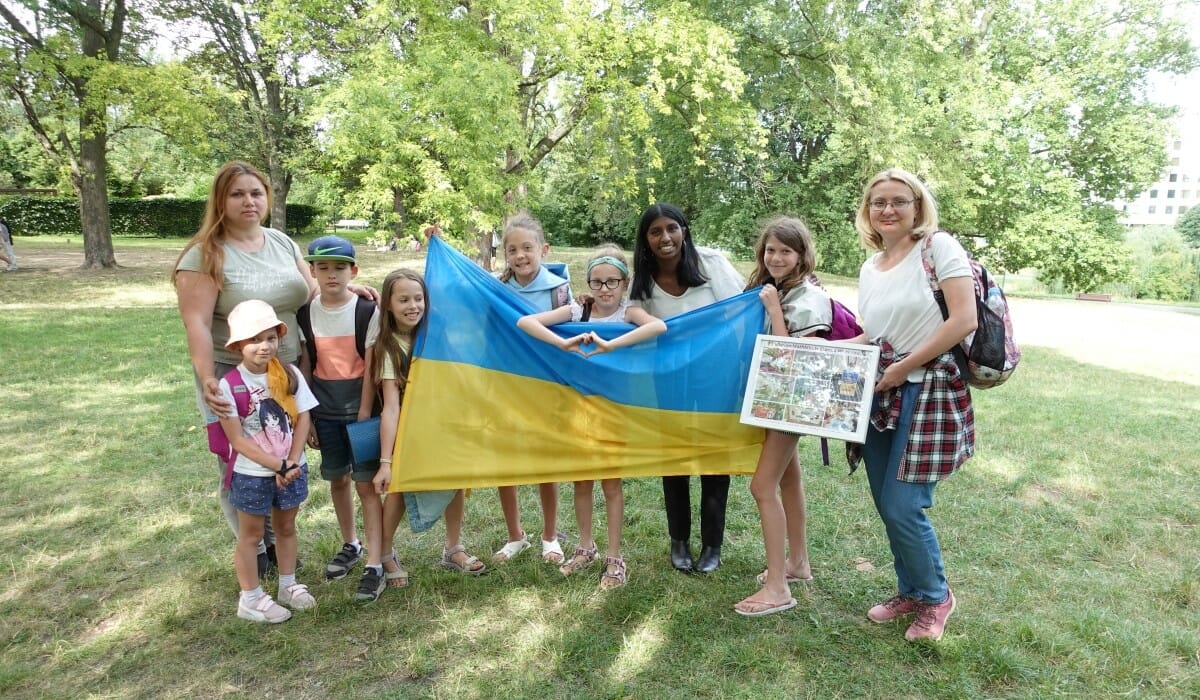
Ruby Arun (third from right) travels to Poland to volunteer and lead workshops with Ukrainian displaced children./Courtesy Ruby Arun
What have you learned through your experiences as a volunteer?
Volunteering has broadened my view of the world. It seems that many do not take the time to understand what different communities, near and far, are going through. My Chicago community is home to underserved students who deserve quality education. Mission:MathMinds has donated over $20,000 worth of educational materials to their students.
However, if I had not volunteered within the community for years and taken time to listen to people and their stories, I would not have understood the tangible and fiscal needs that were not being met. Volunteering has also widened my professional and personal network. I’ve had the pleasure of meeting incredible changemakers solely because we have volunteered together.
Are there any future partnerships, programs or events that you are excited about?
Yes! Mission:MathMinds will be shipping over $80,000 worth of books to Ukrainian displaced children overseas in the coming months. We will continue to be partnering with our local library and community leaders to emphasize the importance of coming together to promote quality education.
Also, more information about the 2023 Mission:MathMinds Annual National Conference will be coming out soon. This is a great opportunity for girls in middle and high school to network with like-minded peers and female leaders. Girls can visit our website, missionmathminds.org, to learn more about upcoming opportunities including workshops, webinars, volunteering and much more through our Mentoring Program, Female Role Models initiative, and Children’s Education Sector.
Why is it important for others to get involved with causes they care about?
Everybody has a story to share. We need to activate more young changemakers who are passionate about causes and have the will to dedicate themselves to impacting the lives of communities globally. When I founded Mission:MathMinds, having the support of my family and those I looked up to allowed me to be confident in my efforts. Listening to our young people, giving them a chance to vocalize injustice and issues they have seen or experienced — this is critical to creating changemakers and instigating change.
What do you want people to learn from your story?
My message is for people to see what our youth is capable of when given the opportunities and resources to execute. Society struggles to equip passionate and driven young individuals with the resources they need to activate communities. There is a large community of young people, hard-working and dedicated individuals who are eager to transform the current status quo in various spaces. Mission:MathMinds is a movement that has impacted thousands and will continue to, founded by a (then) seventh-grade female student of color.
California Teen Brings Music to Those Without Access
Meet Daily Point of Light Award honoree Daniel O’Grady. Read his story and nominate an outstanding volunteer or family as a Daily Point of Light.
Daniel O’Grady, a 17-year-old junior at Orange County School of the Arts, centers his life around music. As a longtime clarinet player, his acceptance to the school was a ticket to daily conservatory. He’s in orchestra and a band chamber group as well. Much of his free time is filled with practice, the occasional video game and, of course, hanging out with his rescue dog, Bingo. While he’s also interested in engineering, music is definitely a frontrunner for career potential.
In 2021, Daniel’s friend, Hannah Cho, had the idea to create Empowering Arts and pulled Daniel and three other fellow musicians in to get things up and running. As a group, they use their passion for music to enrich people’s lives through Empowering Arts. They put on performances for seniors with limited mobility, children with disabilities and the underserved, as they are groups that might otherwise not have access to live music, something that has shaped the lives of the volunteers who participate.
Daniel has personally played a key role in starting a music education program via small group lessons for an underserved elementary school and shares his knowledge with 3rd through 5th graders. Today, thanks to Daniel’s focus on volunteer recruitment, Empowering Arts has expanded to include a visual arts committee as well.
What inspires you to volunteer?
I think it’s important that everybody has an opportunity to learn about music, to know what it feels like. I don’t expect every student to love clarinet. I just expect them to experience it. And maybe one or two of them will find out they love it and pursue it.
Describe your volunteer role with Empowering Arts.
The core goal of Empowering Arts is to bring the magic of the arts to our community. During COVID-19, our resources were put into performing for senior homes. They couldn’t go out because of the virus. They didn’t have access to live music, so we would volunteer our time on weekends.
Last year, we teamed up with a local elementary school and we started doing small group lessons there. That’s the part I like most about Empowering Arts. We have lessons every Friday, and we’ll do performances on Saturdays and Sundays.
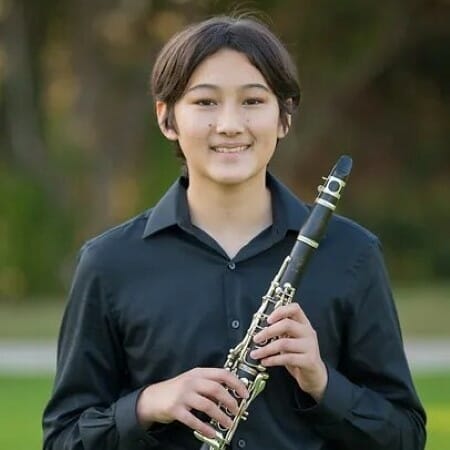
Daniel O’Grady, volunteer and performer with Empowering Arts, an organization that offers free music lessons to young students without access and performances to seniors and children with mobility issues./Courtesy Daniel O’Grady
I perform, I teach and I’m the treasurer of the board. I’m also tasked with recruiting new volunteers. We started with the five of us, all musicians, and I think we’ve grown to something like 17 now.
Why is music important to you, and how did you get introduced to the clarinet?
I got introduced in elementary school by pure chance. It was a public elementary; the music program was really small and was supposed to be limited to strings. My first choice was the cello. By chance, my teacher was a winds major, and she convinced the board for that year to include clarinets and increase the budget. So, I got super lucky being able to learn clarinet, and I just think it’s important that kids in our community get that chance as well.
What’s been the most rewarding part of your work?
Just seeing the audience’s smiles is so nice. We’ve been asked to return to several senior homes to perform again, because the residents are so happy. I guess that’s all there is to it. It’s just changing someone’s day for the better.
I’m also hoping that I’ve maybe sparked a passion in somebody. I don’t get a lot of opportunities to change someone’s day as a junior in high school. So much of my time is devoted to myself, setting up my own future, I forget about my community a lot. It’s important for me to get out sometimes.
What have you learned through your experiences as a volunteer?
I’ve learned how privileged my life has been. Whenever I’ve wanted to learn something, I’ve had the chance to learn it. And whenever I wanted to see something, I’ve always had the time to see it. That’s really driving me. There are so many people out there who don’t have that.
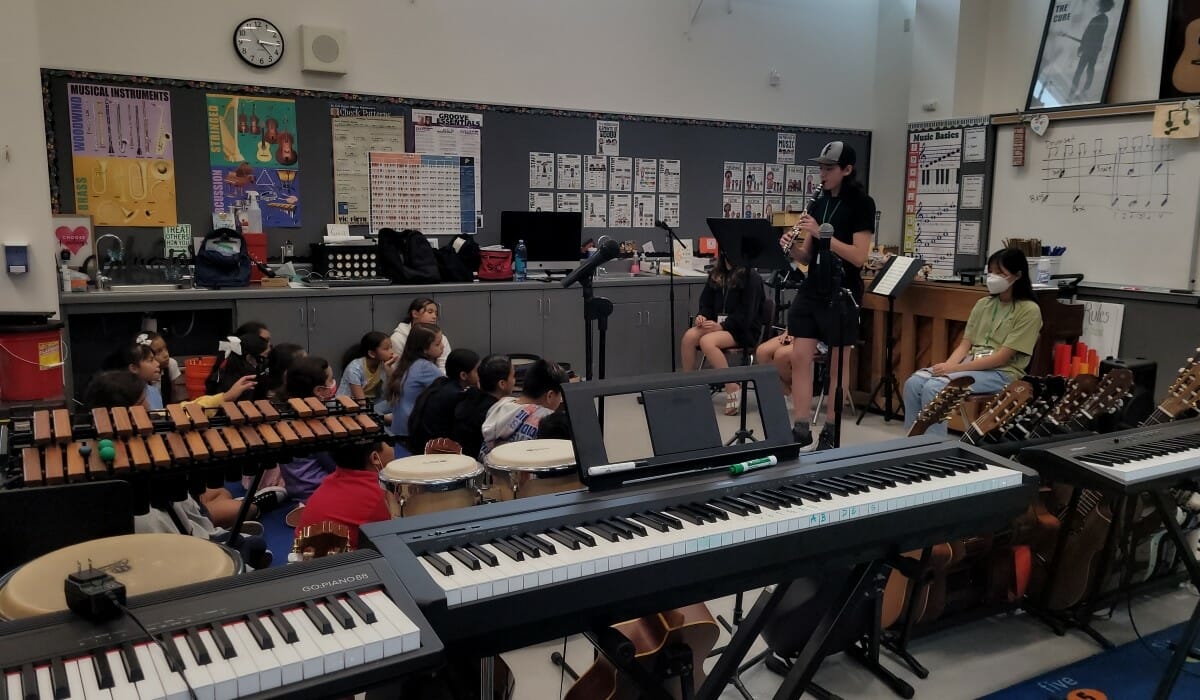
Daniel teaches students at El Sol Elementary how to play the clarinet./Courtesy Daniel O’Grady
Where do you want the organization to go in the long-term?
The most important part about being a musician is performing. I’ve always thought it would be cool if I could expand to community ensembles. My first community ensemble outside of my elementary school, was this place called the Community Youth Orchestra of Southern California (CYOSC). It’s completely free. I wouldn’t have known about it if it weren’t for my private teacher. And it’s that performance experience that really got me on track to apply to Orange County School of the Arts in the first place.
Why is it important for others to get involved in causes they care about?
It’s important that we remember how much we have, especially those with privilege. Also, I feel like if enough of us get involved in our community, maybe we can just understand each other a little better, so that maybe when I’m in a ditch, others will feel a little more compassion to help.
What do you want people to learn from your story?
I want people to learn that it’s really not that hard to help somebody else. You might see examples like a guy who gave his homemade food to 1000s of people, and it feels daunting. But it’s really not that hard. Even if you’re just picking up trash for one hour every weekend, you’re still doing something, and that’s worth something.