A Passion for Volunteering: Retired Business Manager Finds Community and Purpose Setting Others Up for Success
Meet Daily Point of Light Award honoree Cindi Watts. Read her story and nominate an outstanding volunteer or family as a Daily Point of Light.
After 48 years in the medical industry—from nuclear cardiology to nuclear radiopharmaceuticals—and moving from Ohio to Florida, Cindi Watts decided to retire. As a mother of two and grandmother to five, children have always been a big part of Cindi’s life. Growing up, her own mother was a cornerstone of the neighborhood, feeding anyone who was hungry and playing in the area. The house was, no doubt, a popular place to be, especially around mealtimes.
When she found herself with new amounts of free time, she joined several service groups in an effort to stay busy and, in the process, her passion for helping others only increased. She spends the most time working with The Kind Mouse, an organization that aids children and their families with food insecurities in Pinellas County. It was founded during the last recession after the increase in unemployment and housing loss.
Every Tuesday morning, Cindi and her close-knit group of volunteers, self-titled “The Golden Girls,” label and pack food—aka Mouse Nibbles—and assist where they’re needed. They give 30-50 hours each month, and Cindi is now on the Advisory Board. During her volunteer work, Cindi reflects on her career mindset. When she helps set others up for success, she herself is successful. And without food, it’s hard to fuel the day.
What inspires you to volunteer?
When I retired, I was afraid of being bored, because I was so busy before; I was traveling the country all the time. So, I kept joining all these different wonderful societies.
My mom was my role model, and I got my love of helping people from her. She used to say, “If you’re having a bad day, all you have to do is do something for somebody, and your day gets better right away.” All of them are wonderful, but The Kind Mouse is truly where my heart is. I don’t see any greater need than feeding children or families who are in crisis.
There’s so much love for this community and making sure that everyone has food, it just pulls you in. It’s almost addictive. Today, we’ve filled almost 800,000 tummies. If you hear some of the stories that these children tell about what it was like to sleep in their car or to not have a change of clothes or food, it’s devastating. And it pulled me in immediately.
Describe your volunteer role with The Kind Mouse and beyond.
I joined a little bit before I retired, but I became full-blown and part of the advisory board after that. There are usually three major food drives a year that require calling places and asking for food and taking bins in so they can collect donations. After we get the food we sort it, make sure it’s dated properly and send it out to families in need.
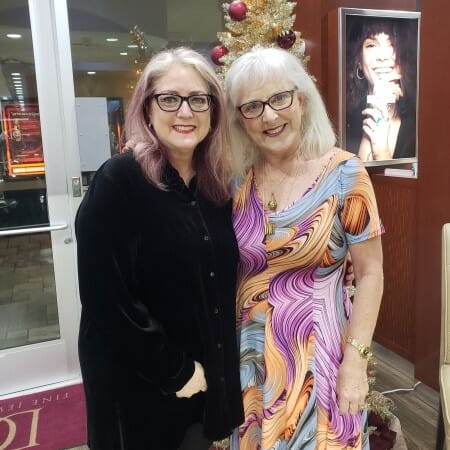
Cindi Watts volunteers weekly with The Kind Mouse and serves on its advisory board./Courtesy Cindi Watts
There’s also a big fundraiser every year. I was in charge of the fashion show side of the event in January. We had a tea and worked with all The Kind Mouse volunteers and raised a lot of money to keep the doors open and buy food for families.
St. Anthony’s Hospital Auxiliary – I’ve volunteered here for three years as a Nominating Committee member and as the Chairperson for the Annual Card Party.
Boley Angels – I’ve assisted with fundraising events for two years.
Guardian Ad Litem – I’ve served as a children’s advocate for five and a half years in Ohio.
What’s been the most rewarding part of your work with The Kind Mouse and beyond?
Knowing that children are fed, knowing that the mentally ill have a way forward, meeting all these wonderful women… Most of the people I work with are women who saw a need and are fulfilling it, and I want to help them.
What have you learned through your experiences as a volunteer?
I’ve learned how very blessed I am. When I have a bad day and think that something’s horrible, it’s kind of a quick kick in the head to realize how lucky I am that I’m able to do something to help people.
Are there any future partnerships, programs or events you are excited about?
There’s a place called Mastry’s. Every Tuesday is going to be “Kind Mouse Tuesday” where a portion of proceeds from certain items are donated. We also do a lot with St. Pete Fools Social Club, the local motorcycle club. They do so much for this community. They help us raise money for toys and collect toys for the kids at Christmas time. There are so many organizations that tie into this.
Why do you think it’s important for others to be involved in their community?
I think that’s what we’re supposed to do. It’s what I learned in catechism. It’s what I learned through work when I was working as a regional manager. It was not only important from for me to follow the organization’s goals and what they need, but as a manager, it was my responsibility to make sure that people had what they needed to be successful. If they were successful, I was successful.
What do you want people to learn from your story?
Anybody can do anything. No matter where you go, there are things that you can do to be part of the neighborhood. And all these organizations have taught me what you can do when it’s necessary and how, if you’re all working together, you can accomplish things.
I had three strokes back when I was 60 years old. They told me that I might have to go to a nursing home, and it scared me. I was determined to come back. I think those strokes made me realize how lucky I am. I’m not supposed to be here.
Secondly, I am here for a reason, and I’d better do something with it. I think I’m a kinder, more patient person because of that. I still have a ways to go with patience; I still get upset in traffic. Losing my younger son was devastating. Losing certain abilities from those strokes brought me down a level, but there were other things I could do. I feel really blessed that I moved here. I’ve met so many wonderful people, and I’ve had a ball.
Meet Daily Point of Light Award honoree Anna Devolld. Read her story and nominate an outstanding volunteer or family as a Daily Point of Light.
Seventeen-year-old Anna DeVolld of Soldana, Alaska, has grown up learning about community service and the value of helping others. So, it didn’t take long for her to identify a problem while working in her garden and decide to do something about it.
In 2018, after being fascinated by the number of bees her sunflowers were attracting, she did some research. Pollinators, especially bees, are vital to food production and plant sustainability, but The Science Times estimates that nearly 90% of the total bee population has been destroyed because of habitat loss and pesticide use. With a bit of thought and planning, Anna founded Promote Our Pollinators.
“My first goal was to educate others about the importance of pollinators, their decline and what we can do to help, so I created a flier, activity book and website,” she recalls.
The flier was geared toward adults and the activity book toward children. From there, she designed Pollinator Packs, six-packs of pots with pollinator-friendly seedlings to hand out for free.
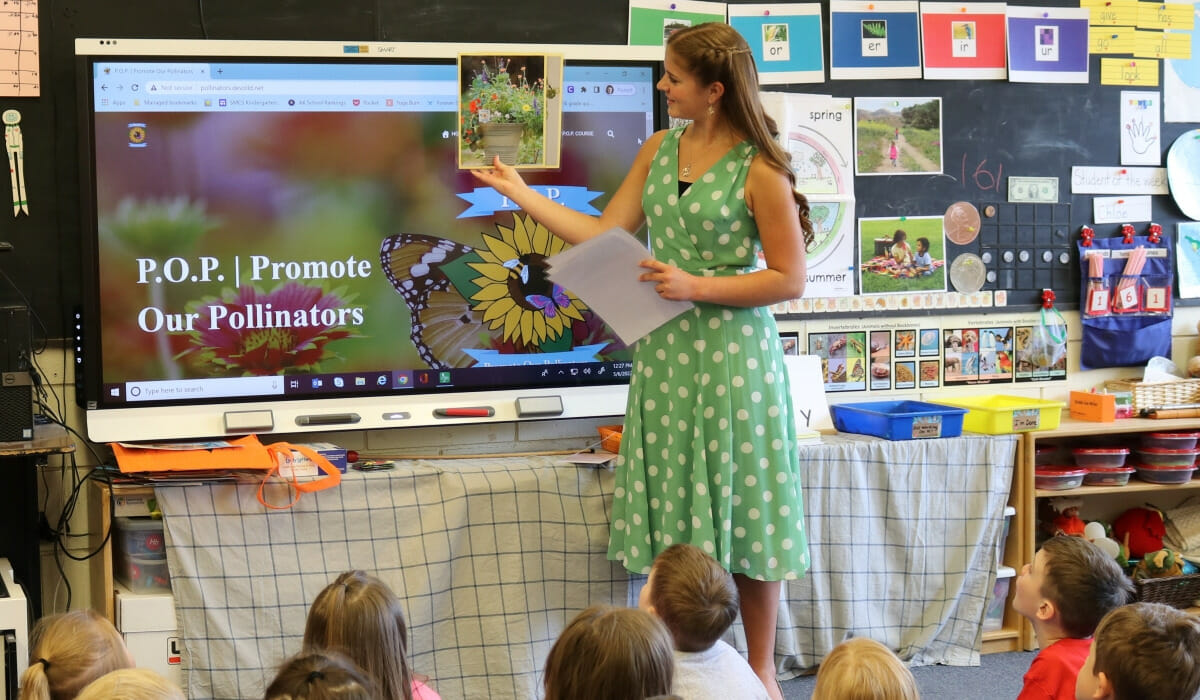
She then started presenting Plant-and-Take lesson at schools, senior centers and community events, sending learners home with Pollinator Packs. She sent out Curriculum Kits to help elementary and middle school teachers lead lessons on the topic as well. When COVID-19 hit, Anna redesigned the curriculum to be used online.
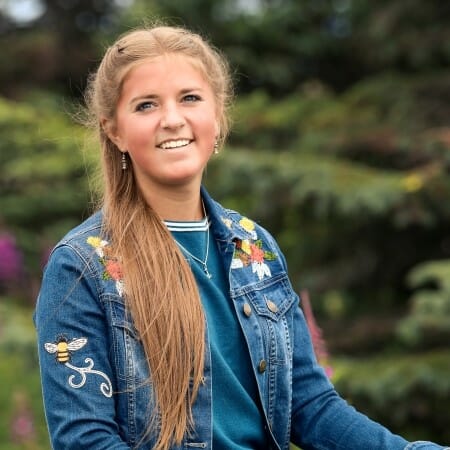
Anna DeVolld, founder of Promote Our Pollinators, educates the public about the importance of pollinators and how to grow their population./Courtesy Anna Devolld
As a family, the DeVollds annually travel to the “lower 48” to see the country and often spend time outdoors. They enjoy camping, skiing and kayaking. Maybe it’s this connection to nature that drives Anna to take such momentous steps towards saving it.
Even while running and growing P.O.P., Anna donates her time freely to other causes. Among other things, she teaches seven- to 12-year-old dance classes twice a week with her younger sister. As a dancer from the age of three, she also participates in Peninsula Artists in Motion, a local dance nonprofit that puts on shows for the community.
“I love being able to share that experience and that love of dance that I have with younger kids, because that’s what I felt when I was younger,” she says.
Working toward increasing the pollinator population has grown from an interest to a passion. After five years of spreading the word, and over 670 hours of her time, Anna’s community knows her as “The Bee Girl.”
“When she finds something that she’s really passionate about or really interested in, she goes all in. She is an incredibly hard worker and has longevity of interest,” Anna’s mother, Shona, observes.
Shona has served the organization as a driver and designated adult when one is needed to order and sign things. She also serves as the group’s—and founder’s—biggest fan.
Today, people carry P.O.P. tote bags, and families stop Anna in the street to tell her they’re planting for pollinators at home after going to her online class. She’s distributed over 2,000 Pollinator Packs and has raised more than $5,700 to differ the cost of those along with curriculum kits. Local business sponsors and grants have also been helpful.
“I think it’s been both exciting and humbling to see the long-term impact it’s had and how enthusiastically the community has embraced the message,” Anna says. “I believe it’s [especially] important for youth to be involved in environmental actions, because we’re the generation whose future will be affected by the choices of today.”
Her work has garnered national and international attention and has earned her a spot on a local environmental government advisory commission. On top of that, over 20,000 people follow P.O.P.’s social media account, and that number is growing every day. Even her family has jumped on board becoming more cognizant of dragonflies, butterflies, and of course, bees.
“We’re trying to make our home area more pollinator-friendly and not quite so much just grass but using more of our acreage for blooming plants,” Shona adds. “And because of Anna’s project, some of our growing space in the spring is now dedicated to her Pollinator Packs.”
Kindergarten students watch Anna present a Plant-and-Take lesson./Courtesy Anna Devolld
Despite focusing on wild pollinators, the DeVolld family has also started keeping honey bees as a hobby sparked by their newfound interest in the species. What used to be just another cool bug is now a respected yard guest.
So, what’s the future of P.O.P look like? Anna plans on ramping up her services.
“I’m being contacted by teachers and organizations around the world who would like to participate in Plant and Takes and order Pollinator Packs and curriculum kits,” she states, “But right now POP is not equipped for this kind of worldwide demand.”
She hopes to expand accessibility in the U.S. before eventually being able to branch out further. Funding is an issue, but so are the logistics of shipping pollinator packs. Those are the problems she’s working on now. In the meantime, Anna recommends that anyone who can research native plants and pollinators and plant flowers that will act as a habitat and food source, particularly ones with longer bloom times. She also warns against using chemicals.
“Instead of using chemical pesticides, which can be very dangerous for our pollinators, there are a lot of natural pest control methods like ladybugs that are far more pollinator-friendly,” she mentions.
Pollinators aren’t the only ones building their future. Her work building P.O.P. has inspired Anna to major in communications at University of Alaska in Fairbanks next year with the hopes of using her knowledge and experience to help a service-based organization or business in her home state. Along with her career goals, Anna has found something else.
“I also discovered a confidence that I never knew I had. Time and time again, I had to step out of my comfort zone to accomplish POP’s goals, and as I did, I realized I was far more resilient, brave and strong than I ever thought possible.”
High School Junior Advocates for Women’s Rights and an Equitable Future in Policy
Meet Daily Point of Light Award honoree Isheta Kulshreshtha. Read her story and nominate an outstanding volunteer or family as a Daily Point of Light.
Isheta is a high school junior in Hockessin, Delaware, but is already leading an organization that advocates for women’s rights under the law. Leveled Legislation is devoted to creating an equitable future for women all around the world, while empowering youth to become active civic participants and participate in today’s political landscape.
The organization is youth-led and spans 10 countries, meeting with local legislators to discuss current and upcoming policy, publishing articles on topics regarding gender parity in legislation, the workplace and more, and creating content to educate young changemakers about the realities of gender inequity.
Through the #RoeAndMe: Global Reproductive Justice Summit, 200+ registrants were able to engage in meaningful discussion regarding the past, present and future of reproductive advocacy. Read on to find out more about what inspires Isheta and the exciting things her organization is doing.
Describe what Leveled Legislation does.
Leveled Legislation is a youth-led advocacy organization, and what we do is mobilize youth to get involved with current legislation, create new policies and educate changemakers from around the world. We have members from Qatar, Tennessee, California, Delaware… they’re all working for gender equity in their own communities as well as at the national level.
We started in June of last year and we’ve already seen tremendous support for our initiative. We’ve engaged over 140 youth in civics, and we’ve expanded to 15 states and 18 countries. We’ve done a lot of work with the overturning of Roe v. Wade. So we connected with a week of action where we gave youth the tools to organize locally. We also did a “Roe and Me” video campaign where we asked youth why Roe matters to them and really grounded our advocacy in that perspective. Recently, in January, we hosted a gender pay gap town hall where we conversed with senators from Ohio about the gender pay gap, their legislation and what the future of that legislation looks like. So we do a lot of work there, and we also do articles, workshops, educational social media posts. That’s the essence of the organization.
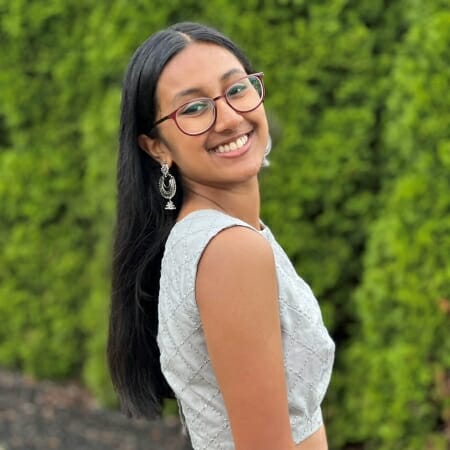
Isheta Kulshreshtha is the executive director of Leveled Legislation, an organization advocating for women’s rights under the law./Courtesy Isheta Kulshreshtha
Why are you passionate about women’s rights, specifically as they relate to law?
A few years ago I visited my grandfather’s school in India, which he started for underserved girls because he wanted to make sure they had access to education. To me, it was really unsettling that without this school these girls may have never received this education, especially because of their location. That was so striking to me.
As I was walking around the school, I was just thinking of this, and that’s when I launched into doing research. I started researching the issue and came across an article, “7 Shockingly Sexist Laws Targeting Women That Still Exist Around the World”. And I quickly learned that there weren’t just seven sexist laws. So after that, I went straight into grassroots organizing mode. I started learning about policies and legislative processes. There, I learned how bills work, how policy works, how bills are passed in the legislature in the U.S.
I wanted to do more so I started reaching out to people in other states, people in my state, started getting people involved. That really sparked the movement for Leveled Legislation. I began posting on social media about different laws that were sexist and creating resources for other young people to get involved. Laws are such pillars and cornerstones in our society, so for those to be prejudiced is something we can’t have, and engaging youth in that movement is really important.
What’s been the most rewarding part of your work?
Two things come to mind. By far, one of the most rewarding things is meeting the amazing people throughout the country and world who have the same commitment to women’s rights as I do. Seeing the endless motivation, work and hours that youth put into the projects we work on, is one of the most inspiring things. And honestly just conversing with them – people from Taiwan who want to get involved, and people from Michigan, impacted by, say, menstrual inequity. People are really touched by these issues and it’s really inspiring to see people from all over the country and world get involved.
The other thing is the interaction with legislators. In our meetings with legislators, you can see how intrigued they are by youth who are coming to the table and making their voices heard, especially when we talk knowledgeably about the policies – that’s often something they don’t expect. It’s really rewarding to see youth becoming active civic participants and take the steps to make their voices heard in their communities.
Why is it important for youth to get involved with the causes they care about?
In my perspective, youth are the backbone of society. We’re the future of society. What’s surprising is that youth don’t get involved in politics. Our voices and youth political engagement have a lot of implications for the future of democracy. I think it’s really important that youth recognize that everyone is in politics.
Youth sometimes don’t know that the environmental project they’re working on, for instance, can be addressed with policy change. So while Leveled Legislation provides a platform for youth to get involved, there are so many other ways to get involved in politics and the causes that they care about. So emailing their local legislators, maybe even proposing to talk about an issue and work on a bill together. Those are things that youth can do to really influence and make an impact in their own communities. Politics influences every corner of the world. You can talk about environmental issues, deforestation… anything that someone’s interested in, policy is there.
What’s your advice for people who want to start volunteering?
My advice is to just start. That’s what I did with the organization; I just started. I may not have had all the experience I needed, but you learn on the job. I mean, fake it till you make it – that’s how you gain experience. A lot of people will wait until it’s the right time, but now more than ever, with climate issues, with women’s rights issues, it’s the right time. Now is the time for youth to organize, protest and engage. We as youth have so much power as the future innovators, doctors and leaders, so it’s important to engage, put yourself out there, embrace your potential. We must embrace the strength of our voices in politics and really fight for what we believe is right.
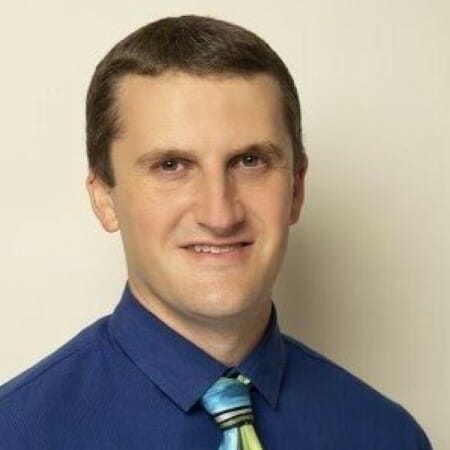
Meet Daily Point of Light Award honoree Michael Calhoun. Read his story and nominate an outstanding volunteer or family as a Daily Point of Light.
Michael Calhoun is a lifelong resident of Vernonia, a small town in rural Oregon. Growing up, if he wasn’t doing projects for school, he was involved in nature-related projects, which sparked his interest in environmental issues, volunteerism and activism.
After the murder of George Floyd and the subsequent nationwide protests, Michael wanted to join in to protest the injustices against people of color. He met other people who also saw the need for highlighting the marginalized people in the Vernonia community who felt unwelcome or unsafe due to their skin color or sexual orientation. This led Michael to found VERJ, or Vernonians for Equality and Racial Justice. This volunteer group is focused on bias education and social justice work. Last June, the group held the first-ever Pride event in Columbia County, Oregon.
What inspires you to volunteer?
My parents inspired me to volunteer. They were always active in the community. My own experiences with nature projects helped me see opportunities for becoming active in environmental causes.
Describe your volunteer role with VERJ.
The whole point of VERJ is to create an inclusive community. Along with other members, I brainstorm ideas about events we hadn’t seen in the community. It’s my mission to make sure the event gets across the finish line, whether it’s Black History Month or our annual Pride event.
I am currently working to build awareness of the local Indigenous community and their needs through education workshops with the city and county.
We try to have at least five major events a year. With a town of just 2,000, that’s a lot of events!
What’s been the most rewarding part of your work?
I enjoy seeing the community come together over our various events and workshops. I’m a lifelong resident of Vernonia so I enjoy seeing things highlighted that help represent the community’s diversity. It’s all about people getting to know new people.
Michael Calhoun, founder of Vernonians for Equality and Racial Justice (VERJ)./Courtesy Michael Calhoun
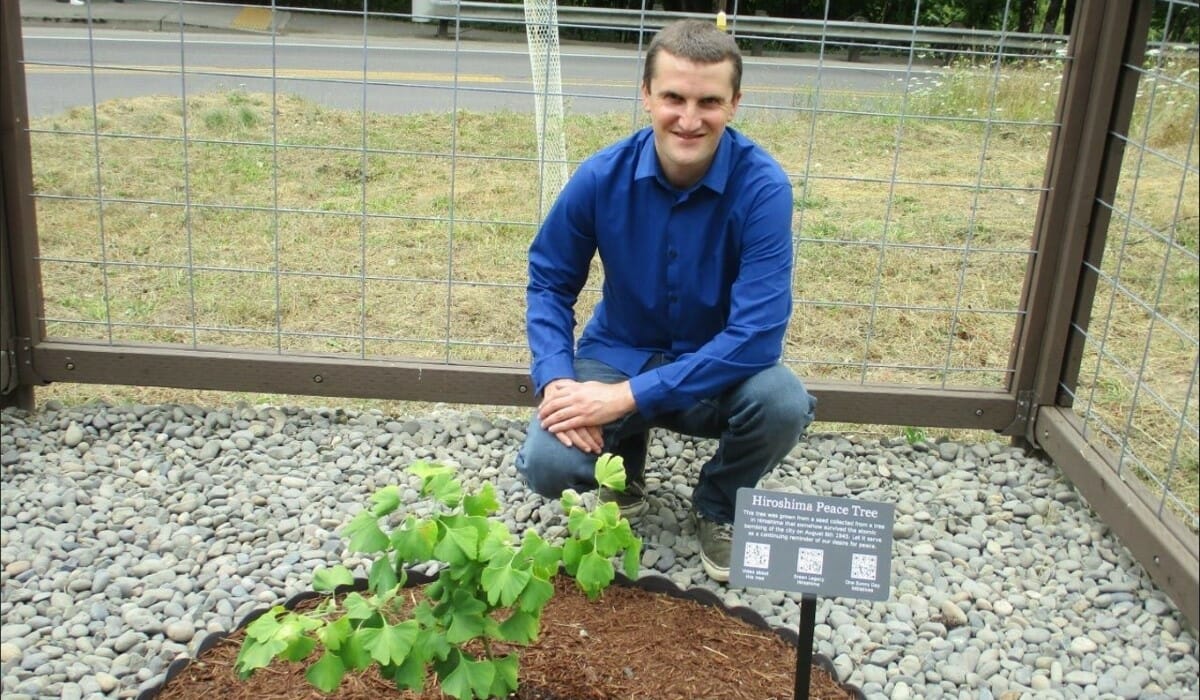
There’s a wonderful program between Japan and Oregon called the Hiroshima Peace Tree, which celebrates the end of World War II and peace between Japan and the United States. As a symbol of unity, the program plants seedlings from trees that survived the Hiroshima bombing. I brought a tree from Japan to Oregon and had the pleasure of meeting a Hiroshima survivor, now in her nineties, who started the Hiroshima Peace Tree program.
What have you learned through your experiences as a volunteer?
The community response to VERJ has been mostly positive. Historically, rural communities have not been the most successful place for the BIPOC community (Black, Indigenous, and People of Color) to thrive. There is still some of that, but those sentiments are far outweighed by community support. When we first started, it was all about having conversations and we hope these conversations continue to open hearts and minds.
In the summer of 2020 after we protested the George Floyd murder, we wanted to accomplish something concrete. I worked with the City Council to draft an ordinance which was passed by the city stating Vernonia was against all forms of bigotry and would work to have staff receive bias education training. We got to hear all of the stories and the various points of view. It’s these conversations that can be the start of something powerful!
I’ve learned that if you see something you’re passionate about, you can start something or get involved. You’ll never be alone in your efforts. There will be others who share the same feelings but haven’t started anything. If you start something, others will join in!
I’ve also learned that it’s vital to have input from everyone. You can’t do it yourself. Listening to people’s perspectives can open up ideas for events, outreach initiatives or community programs that bring people together.
Are there any future partnerships, programs or events that you are excited about?
I’m excited to build on what we started. It’s my goal to make our Pride event bigger and better, which means more outreach efforts. We had about 50 volunteers for the Pride event and I’d love to expand that. Some volunteers like in-person events, others like to work behind the scenes doing emailing and outreach, and they’re all needed!
Michael planting the Hiroshima Peace Tree in Vernonia, Oregon./Courtesy Michael Calhoun
Why is it important for others to get involved with causes they care about?
When I get involved, there is so much good for the community, and I feel fulfilled. I feel that I have a purpose. That’s the encouragement I would give for anyone who’s wondering how to get involved in a cause they care about.
What do you want people to learn from your story?
I believe we are making an impact by addressing topics that, in my lifetime of living in Vernonia, have never been discussed. People who have felt unsafe in the community are able to express themselves at our brainstorming sessions and our events. Immigrants or people who are afraid to come out as LGBTQ+ are able to find space to be themselves and feel that they can be a part of our community without fear of rejection or hate. There are people in any community who don’t feel they belong, yet they are valuable to the community and should feel that they are a welcome part of it.
Retired City Planner and Economic Developer Gives a Helping Hand to Grandparents Raising Grandchildren
Meet Daily Point of Light Award honoree Howard Grossman. Read his story and nominate an outstanding volunteer or family as a Daily Point of Light.
Howard Grossman has eight grandchildren and three daughters of his own. He’s had a long and impressive career in city planning, working for the Economic Development Council, creating a consulting business and leading Jewish Family Services of Greater Wilkes-Barre, all of which have made him deeply ingrained in his wider community. Now, working part-time at the Pittston Memorial Library as the fundraising director, he considers himself semi-retired.
He spends a large part of the rest of his time fighting for grandparents who have become the primary caregivers of their grandchildren with his organization, Grandparents Raising Grandchildren, also known as Northeastern Pennsylvania Intergenerational Coalition (NEPA). It’s comprised of 42 entities, mostly nonprofits involved in human services or health. Howard has spent the last 17 years serving families in the region and has served as the Chair since 2004.
With 21,000 grandparent-led families in northeastern Pennsylvania and over 90,000 in the state as a whole, the need for support continues. Two and a half million families are in the situation nationally. Howard and his coalition are connecting newly-made caregivers with the education and resources they need to raise their grandkids to be strong, smart and productive members of their communities.
What inspires you to volunteer?
I’ve been a volunteer my whole life, my whole career, and I probably have served on 125 nonprofit boards and been president of many of them. In one year, while I was working full time, I was president of six nonprofits simultaneously. That’s just me. That’s part of my life.
Describe your volunteer role with Grandparents Raising Grandchildren.
One part of the role is fielding calls and emails from grandparent families that have suddenly found themselves in this kind of situation. Sometimes, it’s not the grandparent. We don’t turn them away if it happens to be another relative. We try to help them as well.
They often don’t realize they need to learn about the educational system that exists today, not when they or their kids went to school. They also need information about health and other things that are important in raising a youngster.
I chair monthly Coalition meetings, help develop support groups—I run one at the library where I work—secure grants, plan and facilitate an annual conference, add new members to the coalition and focus on PR and activities to promote our interests.
What were or are some of the biggest challenges of your work?
I think some of the biggest challenges deal with the fact that most of these families are low-income, and they don’t necessarily have the ability to handle the financial situation of raising grandchildren. The first family I ever worked with in this region had five youngsters. The grandmother moved from Delaware into our region, and she was very involved in raising them.
Unfortunately, she has now passed away. That creates another issue. What happens to these youngsters when the family can’t raise them anymore? That’s a question that came up at a couple of our meetings, and I don’t have a good answer for that yet.
What have you learned through your experiences as a volunteer?
I’ve learned to listen to what the grandparent has to say. A lot of times in the phone call or email, I ask them questions about who they’re raising. Are they doing well in school? What kinds of problems are you facing? And so forth. It’s a learning experience, and we try to bring these issues before the coalition.
I get a lot of insight out of learning what goes on in these different family situations. Even though I’m not raising any of my grandchildren, we help our daughters raise them, in a sense, when they need help.
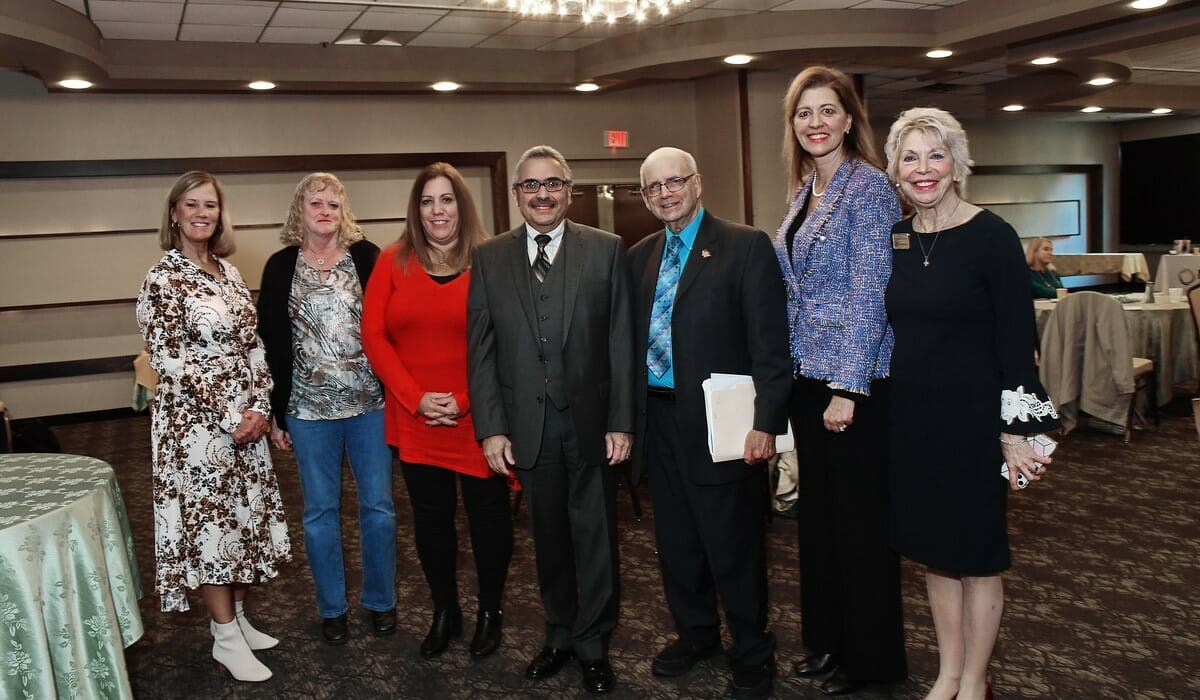
Howard Grossman (third from right) volunteers fighting for grandparents who have become the primary caregivers of their grandchildren./Courtesy Howard Grossman
Are there any future partnerships, programs or events you are excited about?
Fifteen or 16 years ago, we started an annual conference. In the first couple of years, we had around 280 people attend. The last two that we had prior to the pandemic, there were over 200 people attending plus 40 resource tables. And in 2020, we had it virtually.
They bring a lot of folks together, and the grandparents learn a lot. We have agencies set up resource tables with literature. It’s an all-day event with lots of speakers who have helped develop different programs and who offer education and support to families with legal challenges.
This year, it’s on October 20 at The Woodlands, a hotel-resort right outside of Wilkes-Barre, so it’s easy to get to, and we put a lunch together. Thanks to sponsors, we don’t charge grandparents anything to attend.
Why do you think it’s important for others to get involved?
When I was living in King of Prussia, I was involved with the Institute of Service Learning in the Philadelphia area, and I believe strongly in the volunteerism community. Being a volunteer is very important to community life at the county level, the state level and the federal level.
What do you want people to learn from your story?
There is a grandparent community of large consequence across the United States, and certainly across Pennsylvania. I want people to know how significant this community is and that it is growing in size and in the kinds of issues they face.
Texas College Student with Pancreatitis Starts Nonprofit with Her Mom to Help Children with Same Debilitating Disease
Meet Daily Point of Light Award honorees Rebecca and Christyn Taylor. Read their story and nominate an outstanding volunteer or family as a Daily Point of Light.
Rebecca Taylor was only seven years old when her happy childhood in San Antonio, Texas, came to a terrifying halt. On Memorial Day weekend of 2010, she was hospitalized and diagnosed with pancreatitis – a disease uncommon in children – caused by an even rarer autoimmune disorder that attacks her organs. Over the years, Rebecca underwent numerous procedures and surgeries to battle the incurable disease, including a transplant that removed her pancreas, gall bladder, spleen, duodenum and bile ducts.
Due to her condition, Rebecca’s childhood and teenage years were impacted as she missed out on family holidays, her entire senior year of high school and other typical life events, such as summer camp.
“I went to camp maybe a couple of times and most of the time, I had to leave early, once in an ambulance,” Rebecca, now 20, recalled.
As hospitalization after hospitalization eventually turned into more than 1,500 days in the hospital, Rebecca and her mother, Christyn, became experts in not only pediatric pancreatitis but the hospital system as well.
“It was months and months of trying to find out what was happening,” Christyn said. “But then it moved to an acceptance of, ‘Well, we’re here. So what can we do about this to make Rebecca’s life better while she has to live in the hospital?’ And even though the pain medicine and treatments were good, that’s not what made her happiest. What made her happiest and come alive was knowing that she could help somebody else in this situation.”
At age 12, when Rebecca was approached by the Make-A-Wish Foundation to grant her any wish she wanted, it was to no one’s surprise that Rebecca asked for help staring a nonprofit that could help other children with pancreatitis. From there, Rebecca’s Wish was born.
Rebecca Taylor (left) and her mother, Christyn, run Rebecca’s Wish, a nonprofit providing help and hope to children with pancreatitis./ Courtesy Rebecca’s Wish
Make-A-Wish helped Rebecca’s Wish get started by organizing its first gala, which raised more than $500,000. Since then, Rebecca’s Wish has exponentially grown, fundraising through galas and other events such as Wild for Wishes, where patients and donors meet each other while enjoying a day at the San Antonio Zoo.
“Eighty thousand children potentially can get a pancreatitis attack in a year, but when it gets to an extreme state, children had no choice but to live their lives in terrible pain because there was nobody to treat them and very little information about the disease,” said Christyn, who leads Rebecca’s Wish as president of the organization. “To this day, we raised over $3 million and have helped children, not just in the San Antonio area, but across the nation.”
With these funds, Rebecca’s Wish has been able to spread awareness about pediatric pancreatitis and provide support to patients in various ways, such as helping families with medical bills and connecting them to specialty doctors.
“When I was seven years old, there was no pediatric pancreatic doctor, only adult doctors who were willing to take on children in emergencies. So, we trained the first pediatric pancreatic doctor,” Rebecca said. “A child in New York shouldn’t have to fly all the way down to San Antonio every time they need treatment, so we are slowly but steadily planting them all over. So far, we have doctors in Utah, California and Louisiana.”
The money raised by Rebecca’s Wish also goes toward funding crucial research on pediatric pancreatitis. This year, Rebecca and Christyn plan to attend several medical conferences across the United States to present the latest research they have worked on with a team of doctors. Rebecca’s Wish is also funding production of the first pediatric pancreatic stent as there is currently only adult-sized equipment for the procedure, according to Rebecca.
One of Rebecca’s favorite programs is Camp Hope, a summer camp where children with pancreatitis can enjoy activities such as swimming, archery, horse-back riding and crafts, all while being in a safe environment.
“We have doctors up there so the children can get the care they need if anything happens,” Rebecca said. “They’re able to do fun things and be a kid, which is something that’s just taken away from so many of these children so early on.”
Hannah Martinez, 16, is one of the many pediatric pancreatitis patients Rebecca’s Wish has helped. In October 2018, she had her first pancreatitis attack, and the pain was so severe that between bouts of vomiting and moans of agony, she was begging to be put to sleep, according to her mother Jeanette Robinson.
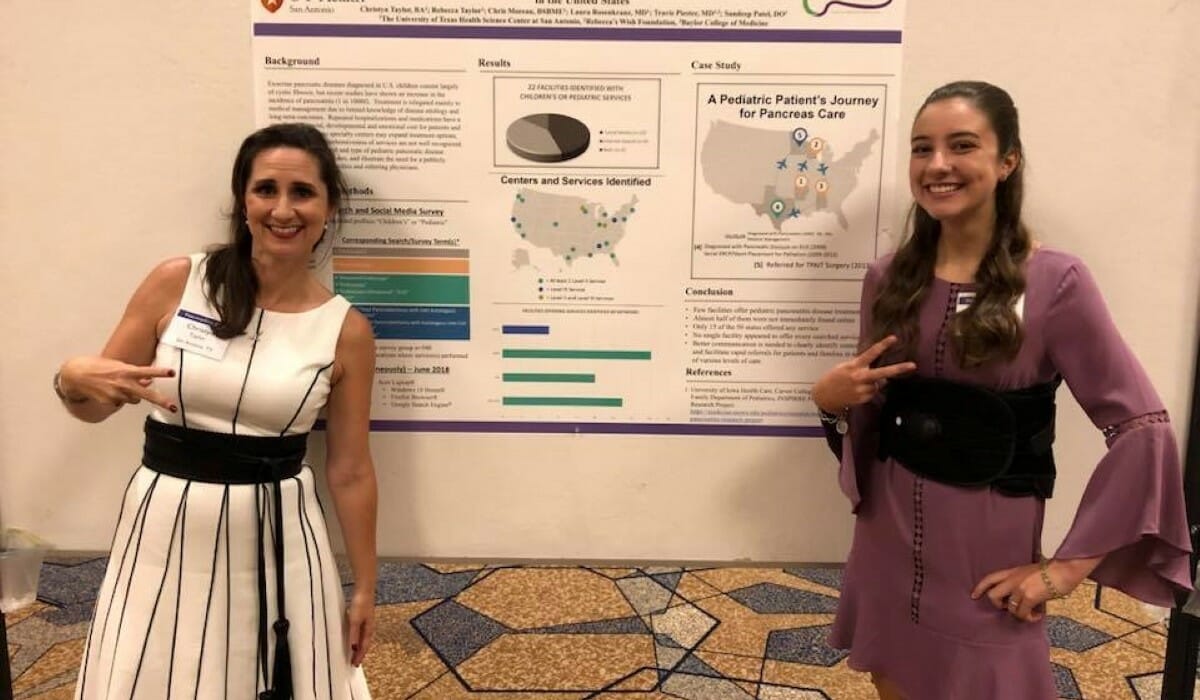
Rebecca Taylor (right) and her mom, Christyn, present their research on pediatric pancreatitis at PancreasFest 2018. / Courtesy Rebecca’s Wish
“Before meeting Dr. Patel through the work of Rebecca’s Wish, we were plagued with ‘I don’t knows’ and diagnostic uncertainties,” Jeanette said. “Thankfully, with Rebecca’s Wish intervention we at least now have answers. And these answers, while they are terribly hard ones to hear, allow Hannah understanding and the ability to create plans and strategies for her life.”
“I could not be more grateful or indebted to the work of Rebecca’s Wish in literally saving us from darkness, giving us a community for comfort and sharing, and more than anything, relentlessly pursuing better treatments, better education, better access to specialized doctors and ultimately, hope for a better life ahead, with a cure,” Jeanette added.
Rebecca, now a sophomore at Texas A&M University, is studying to become a medical researcher as Christyn runs the day-to-day operations of Rebecca’s Wish. Hospitalizations for Rebecca are still frequent, the pain is constant and she often needs a wheelchair to get around, but she said that won’t stop her from continuing Rebecca’s Wish.
“I’ll be in that lab one day and working there as much as I can to find a cure for these kids. I can do research from a hospital if I need to,” Rebecca said. “But as long as there’s a child with pancreatitis, Rebecca’s Wish will be around.”
“Although [Rebecca’s illness] is not what we wanted, our purpose now is a lot bigger and filled with more beauty than it could have ever been had this not happened,” Christyn said.
Florida Teen Addresses Food Insecurity Through His Volunteer Work
Meet Daily Point of Light Award honoree Pranav Prakash. Read his story and nominate an outstanding volunteer or family as a Daily Point of Light.
Pranav Prakash of Tallahassee, Florida, has been an Eagle Scout scout for nearly a decade, and in that time has engaged in many other worthy pursuits through his volunteer work. When the COVID-19 pandemic affected the elderly and vulnerable members of society the most, and the number of donations the senior homes received plummeted, Pranav took action.
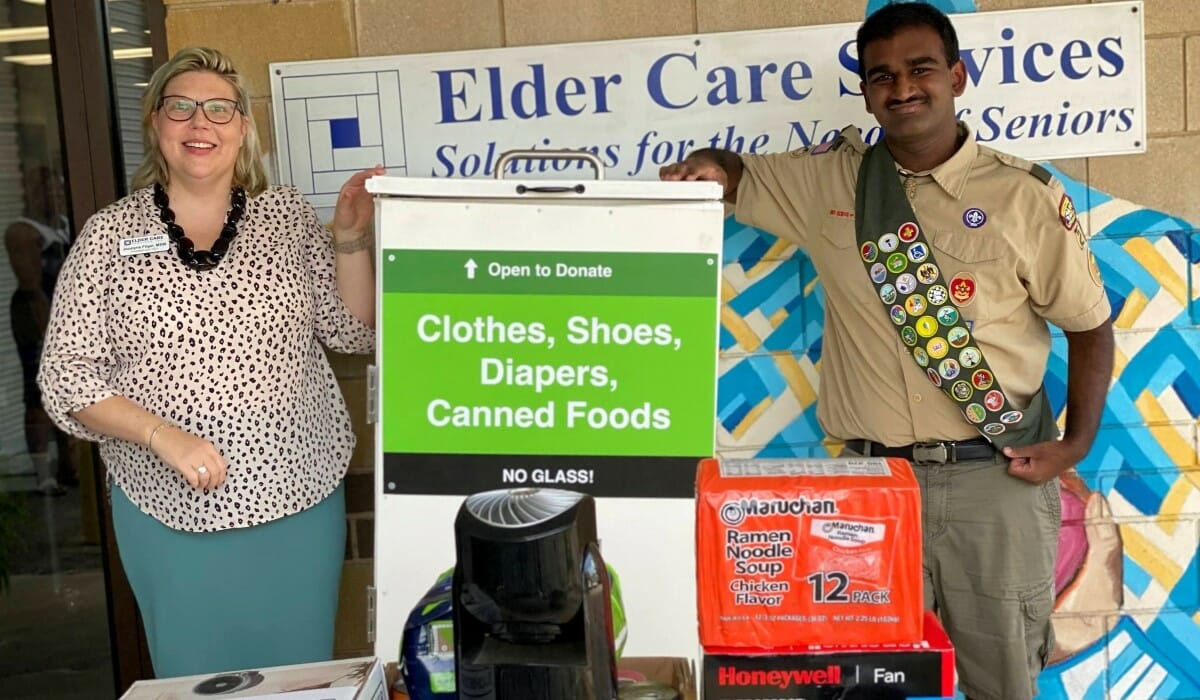
Through volunteering, he helps provide essential goods like food and sanitary products, things in short supply at some facilities. He noticed that the donation infrastructure at some facilities was critically insufficient, an issue he also strove to fix. To do this, he built a smart and secure donation box for Elder Care Services Inc. The box was 4 feet in height and was equipped with a sensor, enabling it to communicate efficiently with staff when donations were dropped. This helped the staff to focus on other important activities instead of regularly checking for donations.
As part of his volunteer duties with Ronald McDonald House Charities, Pranav plans, prepares and serves one to two Indian multi-course meals each month. Read on to find out more about what this young changemaker is doing to impact the needs he observes in his community.
What inspires you to volunteer?
I’ve lived in Tallahassee for over a decade – I’ve been here for the greater portion of my life. Throughout this time I’ve witnessed the most vulnerable people suffer in society, and I’ve always wanted to help them in some way.
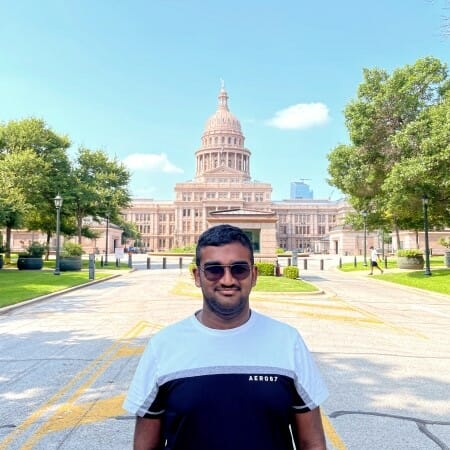
Pranav constructed a food donation for Elder Care Services as part of his Eagle Scouts project./Courtesy Pranav Prakash
I’ve taken that on through my volunteer duties. Among them is cooking meals for Ronald McDonald House Charities. How that works is I cook meals for families of children who are currently in the hospital. So while they go through this dark period in their lives, they can still have comfort, a place to stay and some warm food.
Why are you passionate about the Ronald McDonald House Charities?
Something about having to see your children in the hospital at such a young age really resonates with me in particular, so I feel committed to helping the parents who have to go through that situation.
What’s been the most rewarding part of your work?
The most memorable aspect of this service is receiving feedback from the people I’ve served. For instance, I receive feedback from people who have eaten my food. They let me know what needs to be changed, the spice level preferences and what their allergy needs are, and I adapt my food to meet those needs.
What kinds of dishes are you cooking?
I’m Indian, so I’m cooking various Indian dishes. This includes various kinds of rices – there’s one popular one called lemon rice and I prepare curry and serve it over that.
Addressing food insecurity is one of Pranav’s many passions in his volunteerism./Courtesy Pranav Prakash
Why is it important for people to get involved with the causes they care about?
As I mentioned, some people – no matter what they do – are just at a disadvantaged state in their life. I think it’s important for people with good lives to go out of their way and help those who are struggling, help them get on their own two feet again. That’s what I and many of the other volunteers in Tallahassee have been doing these past few years.
What’s your advice for people who want to start volunteering?
I would just say find a cause that you’re truly passionate about and would be willing to commit yourself to, then find a regular schedule for volunteering your time and efforts toward that cause. As time goes on, you’ll see that you’re rewarded for your efforts through feedback from those you volunteer with. You’ll also see that you form bonds with fellow volunteers, and that’s a really wholesome experience.
Teen Bridges the Education Gap Through Access to After-School Educational Programs
Meet Daily Point of Light Award honoree Ben Who. Read his story and nominate an outstanding volunteer or family as a Daily Point of Light.
Ben Who is an 11th grader at The Hotchkiss School, a boarding school in Lakeville, Connecticut. From a young age, Ben’s parents encouraged him to volunteer in his community wherever he could. He recalls loving these experiences — in fact, he remembers feeling discouraged that there was an age minimum for working in one of the project areas at the Houston Food Bank.
He began to develop a personal drive to get involved in his community in a more detailed and focused manner during the end of middle school. The area that he decided to focus on was educational inequality. Being a student who’s fortunate enough to attend a prestigious boarding school, Ben had an opportunity to reflect on how the educational system perpetuates inequity. Thinking back to his work at Title I schools in Houston and how stark the contrast was between his own educational experiences and that of the students of those schools, he knew he had to do something.
After educating himself by reading books and research reports, Ben decided to take action against educational inequality by founding Giveducation. This organization seeks to provide low-income students with free access after-school to educational enrichment programs, bridging the gap between them and their wealthier peers.
What inspires you to volunteer?
I’ve always had a desire to help others and make a positive impact in my community. From a young age, I began volunteering at the local food bank, and that experience taught me the importance of getting involved. As I grew older, I realized that simply providing food wasn’t enough to address the root causes of poverty and inequity.
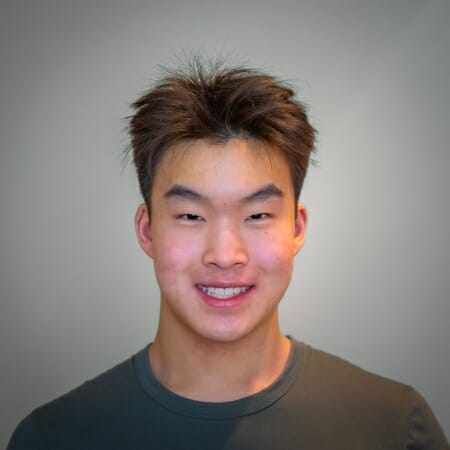
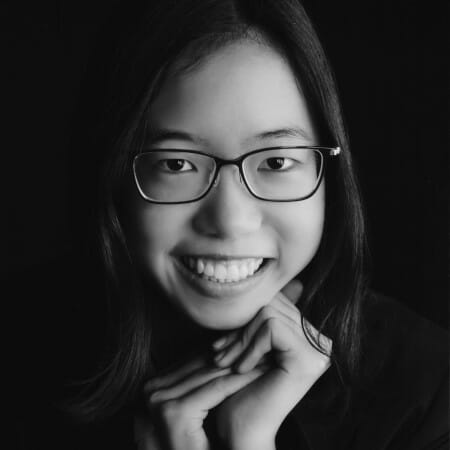
Ben Who is the founder of Giveeducation, which provides low-income students with free access to after-school educational enrichment programs./Courtesy Ben Who
I was particularly struck by the issue of educational inequity, which affects far too many students. According to recent statistics, approximately one in five K-12 students come from low-income families and face significant barriers to accessing high-quality education. This lack of access can have devastating consequences, from lower graduation rates to reduced lifetime earnings.
But it wasn’t until I joined a volunteer group that served Title I (majority low-income) schools in Houston that I was inspired to act. At this school, I witnessed firsthand the issues I had read and researched about, such as underfunding, the school-to-prison pipeline, and underachievement. The problem wasn’t a lack of curiosity or passion — the students I worked with loved learning. The schooling system, however, was keeping them from reaching their potential.
That’s why I created Giveducation and began working to provide scholarships for professionally-taught classes to low-income students. I believe that education is the key to breaking the cycle of poverty and creating a more equitable society. By giving students the tools they need to succeed, we can help to ensure that everyone has the opportunity to reach their full potential.
Describe your volunteer role with Giveducation.
I founded Giveducation and currently serve as its president. My work involves overseeing our scholarship program, which pairs low-income students with seats to programs at learning centers for free. I also negotiate partnership agreements with educational companies, asking them to commit to donating a certain number of seats for their programs to our scholarship recipients. Lastly, I manage our amazing team of student volunteers, who do the critical work of communicating with students, reviewing scholarship applications and so much more.
What’s been the most rewarding part of your work?
It’s truly special to see how excited our scholarship recipients are when they’re learning new things in the program they’ve earned. Our students are highly motivated and ambitious, yet they’ve been constantly prevented from realizing those dreams. Our scholarships offer them an opportunity to learn something they’re passionate about. For many of our students, these classes further inspire them to study in school, which is extremely crucial to their success.
What have you learned through your experiences as a volunteer?
Working with Giveducation has taught me the importance of always pushing the boundaries and striving for more. Whether it’s advertising our scholarship opportunities, convincing businesses to join us or working to raise awareness about the issues of educational inequity, I’ve learned that there is always more that can be done.
One of the most important lessons I’ve learned is that small actions can have a big impact. By simply showing up and doing my part, I’ve been able to make a difference in the lives of students and families. And by constantly pushing myself to do more, I’ve been able to inspire others to get involved and make a difference as well.
Overall, my experiences as a service leader have taught me the value of giving back, the importance of persistence and determination, and the power of community. I feel incredibly grateful for the opportunities I’ve had to serve and make a difference.
Are there any future partnerships, programs or events that you are excited about?
Giveducation has reached partnerships with some of the nation’s largest educational companies — such as Art of Problem Solving, SpiderSmart and iCode. These partnerships mean that our Giveducation scholarship recipients are receiving top-notch instruction from the most trusted learning centers. It always excites me to negotiate agreements with learning centers because new partnerships allow us to diversify and augment the programs that are available to our scholarship recipients.
There’s nothing better than the feeling of being able to add a highly requested class or program to our list of offerings, as it means that we’re one step closer to our goal of equalizing the playing field for underserved students.
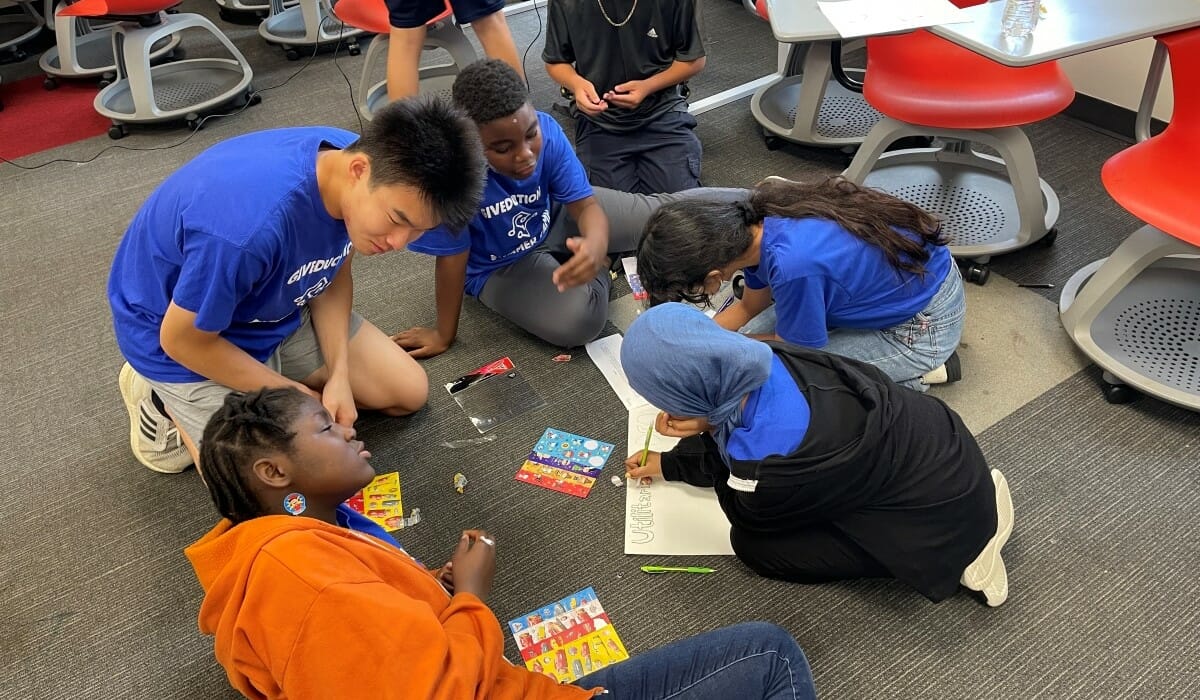
Ben works with students at KIPP Academy Middle School during Giveducation’s 2022 Summer Camp as they work on a project./Courtesy Ben Who
Why do you think it’s important for others to get involved in their communities?
To me, community involvement isn’t just important — it’s obligatory. We can’t sit back while structures like the educational system or housing system continue to stifle people’s ambitions. Though it often feels like our actions won’t change something overnight, we should focus on how we can maximize our personal impact instead of getting discouraged by how large the task is.
Moreover, through civic engagement we have a chance to make a difference in someone’s life. Whether it’s volunteering at a local food bank, donating to a worthy cause or simply being there for a friend in need, our actions can have a profound impact on those around us. We can help to create a world that is a little bit brighter, a little bit kinder and a little bit more hopeful.
When we get involved with an issue we care about, we not only improve the lives of those we are helping, but we also strengthen our own sense of purpose and connectedness. In a world where so many people struggle to find meaning and fulfillment, this offers us a way to live a life of significance.
What do you want people to learn from your story?
Before I created Giveducation, I spent a lot of time thinking about how I could tackle the issue of educational inequity differently from what everyone else was already doing in the field. This approach yielded our unique scholarship model which utilizes existing educational resources and directs them towards underprivileged students. This innovative strategy allows us to leverage for-profit learning centers in our quest to empower low-income students with educational classes and programs.
Creating this approach required me to approach the issue of educational inequality creatively and uniquely. Of course, serving in ways that others are already doing is amazing and essential work. But I view it as a starting step towards making an even larger impact. I want to inspire other students like myself to challenge how people are tackling issues in the world and build on those approaches. We have to keep pushing the limits and thinking furiously about how we can do the most good — that’s what will allow us to make the largest impact.
Meet the Hawaii Teen on a Mission to Keep Seniors Safe from Cyber Scams
Meet Daily Point of Light Award honoree Esther Chan. Read her story and nominate an outstanding volunteer or family as a Daily Point of Light.
It’s not hard to find someone who has been the target of an Internet scam in today’s world. Many people, especially those who have grown up with the web at their fingertips, brush them off as attempts clearly designed with malicious intent. But what about those who can’t spot the difference?
After her grandparents were scammed, Esther Chan, a 16-year-old from Honolulu, had seen enough. In early 2021, as a STEM-loving freshman in high school, she made it her mission to arm the island’s kupuna, or older adults, with the knowledge that would keep them safe from deception and help them navigate the digital world.
Initiated as a project for her Girl Scout Gold Award during the pandemic, Cyber Safe Seniors offers an online curriculum and workshops on the topic. With the help of her board, Esther has begun to offer the latter of these in person.
What inspires you to volunteer?
I love helping other people. Being able to see the impact I make on other people’s lives using my strengths and interests really brings me a lot of joy.
Describe your volunteer role with Cyber Safe Seniors.
I’m the president of Cybersafe Seniors. I also have a bunch of board members who have been helping out a lot with the various workshops and things with other volunteers. I’ve had some mentors as well. For example, the Chief Information Security Officer and the Instructional Design Manager for the University of Hawaii and people from AARP of Hawaii.
We started during COVID, so we only recently started doing in-person workshops. We had our first one in December, and we have more scheduled this year. We’re really excited to be able to work directly with people and get to know them.
What is the Girl Scout Gold Award?
This project was originally started as a part of my Girl Scout Gold Award. It’s the highest award that Girl Scouts can earn when they’re in high school, and requires that you do a community Take Action Project. It’s not just community service or volunteering, but you try to make an impact in your community that is sustainable over the long term.
Essentially, you need to work a minimum of 80 hours on this project. And afterwards, you have to send in a submission to your local council to be approved. Not too many people end up doing it. If there are other Girl Scouts out there, I definitely encourage them to do it. Doing the Gold Award definitely helped me with leadership skills and self-advocacy.
What’s been the most rewarding part of your work?
Being able to go to the senior care homes in person and see them learning things and being able to defend themselves with cybersecurity firsthand and hearing feedback and personal testimonies has been super valuable. People have been telling me what they’ve learned, what they’ve put into practice and that they’re grateful because we helped them avoid a scam call.
Esther Chan, 16, founder of Cyber Safe Seniors, an organization on a mission to protect seniors from scams./Courtesy Esther Chan
What are some of the most important things for seniors to keep in mind so as not to get scammed, and how can family members best support them?
People, in general, should be very suspicious whenever you’re receiving emails or phone calls from people you don’t know. One tactic cyber criminals often use is called social engineering. Essentially, they prey on people’s emotions, and they make things seem urgent when they’re really not.
Be aware of texts, phone calls or emails that ask you to do something right away or else something’s going to happen. Be cautious when perhaps they’re asking you for money, because those tend to be the most common scams.
Caregivers, just be there to help support them and if something happens; don’t get upset. It’s not their fault. It’s the scammers’ fault. Let it be a learning experience. I know a lot of seniors are afraid to ask for help, because they think that person will get mad at them. It just makes the problem worse. Seniors, don’t be afraid to ask for help. And caregivers, don’t blame seniors for the cyberattacks.
What have you learned through your experiences as a volunteer?
One of the biggest things I’ve learned is how to lead a team: organization, encouraging people, inspiring people. Honestly, it’s not easy. There have been times when I think, “I didn’t do that very well.”
And I’ve learned how to advocate for myself and contact people I’m unfamiliar with. When I started this project, I reached out to a bunch of people. Even now, I’m still reaching out to various senior care homes.
Why do you think it’s important for others to get involved?
It’s very rewarding, and I think it can bring people a lot of joy. Right now, I feel like our communities need some help, especially in certain areas. Getting involved is a way to make our world a better place for everyone. And everyone can benefit, both the volunteer and the people who are being helped.
What do you want people to learn from your story?
I would like younger girls to be able to realize that they can also make a difference in their communities. When I saw other Girl Scouts when I was younger, that was very inspiring. I remember thinking, “One day, I want to do something like that as well.” Also, if you’re shy, especially younger girls, that’s okay. You can learn to be courageous. Just be yourself and don’t let that be a setback.
High School Student Shares Coding and Computer Science Through Volunteering
Meet Daily Point of Light Award honoree Ashley An. Read her story and nominate an outstanding volunteer or family as a Daily Point of Light.
Ashley An is a high school student in Porter Ranch, California, making a big impact on the world of youth in computer science and coding. Working with the organization Voice of Calling, she has been involved in several projects, from the first project where the team provided coding and robotics education for children in a foster family center on Thanksgiving of 2019, to distributing 3,000
COVID relief supplies to local hospitals and foster families during the COVID-19 pandemic, as well as an online coding camp that taught 1,300 students – not only in the United States but also in South Korea and Africa.
Voice of Calling has donated 12 educational tablets and computers, 20 tons of food to Kenya, four educational tablets and computers to a kindergarten in Tanzania, and funds to make a lab room with 20 computers in Ilboru High School. And all of this has happened in the last three years!
Ashley, now student body president of the Voice of Calling NPO and president of Education, has been an integral part of this process. Read on to find out what inspires her to share coding and computer science with other youth.
Describe what Voice of Calling does.
Voice of Calling is an organization centered around coding and computer science. Our main goal is to democratize education, specifically coding and computer science education, throughout our community and, more recently, globally.
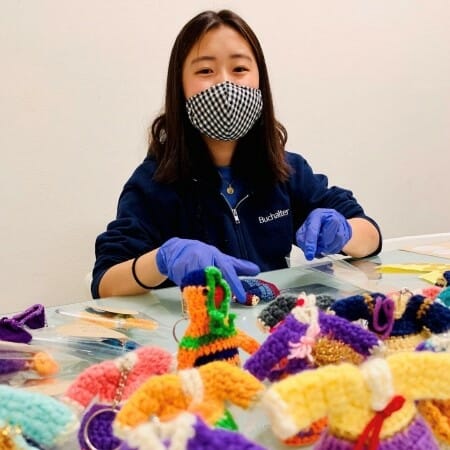
Ashley was still able to find ways to get involved, even throughout the COVID-19 pandemic./Courtesy Ashley An
What inspires you to volunteer?
When I first started, I just did it because my friends were doing it, but after seeing what computer science is capable of doing and what STEM can offer for a lot of people, I’ve become more passionate. We worked with people in Tanzania to set up a computer lab and they were just so motivated to learn, which is something I feel like I haven’t necessarily seen among my peers. Their motivation was really striking to me, and I feel more motivated by their motivation.
Why are you passionate about technology and coding?
Ironically, I actually started not knowing any computer science at all. I joined Voice of Calling because I just wanted to volunteer, and this was something in my community I could do. I was really hesitant because I didn’t know how I could help, I didn’t know any coding, because I had not been provided with those resources. But it’s so versatile. I teach Scratch block coding to little kids who can then make their own cartoon characters and make them move. They’re five years old! So many people can do it, and it’s fun! It’s like school, but even better.
What’s been the most rewarding part of your work?
I love when I get to teach students and hear their feedback, and they say I’m their favorite teacher. It’s so rewarding. Obviously, I lacked a lot of self-esteem at first because I felt like I didn’t know enough coding to be teaching people, but after I taught myself and learned from other people, I was then able to teach others. It’s so rewarding now that they learn from me.
Why is it important for youth to get involved with the causes they care about?
I feel like this is super cliché, but honestly, we are the future. We are the ones that are going to make the world a better place for the future and for ourselves. So I feel like getting started young and learning to be passionate about things that are going on in the community and in other places – having an open eye – is super important. When you don’t volunteer, you don’t get to see the struggles of others and how you can help. It feels like an outside lens. Volunteering brings you into the inside of that world.
What’s your advice for people who want to start volunteering?
Just do it. There’s always something you can do. At first, because I didn’t know coding, I was responsible for ironing our logos onto the shirts. There’s something you can do, and there are always ways to learn more. Everything you do can be helpful.