Rise Up, Lift Your Voice and Stand for What You Believe In
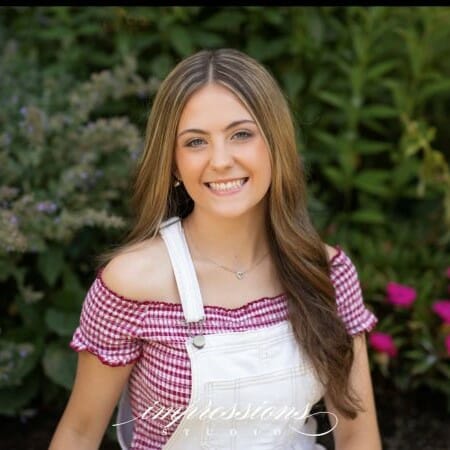
Meet Daily Point of Light Award honoree Morgan Welliver. Read her story and nominate an outstanding volunteer or family as a Daily Point of Light.
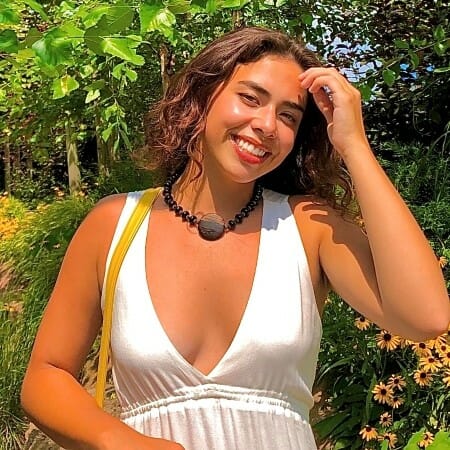
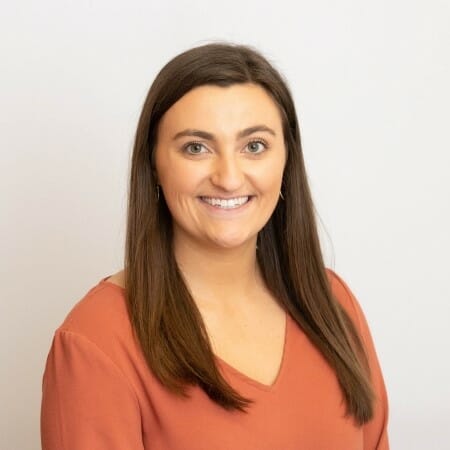
Morgan Welliver is a sophomore at the University of Miami where she studies Music Therapy as a classical voice principal with minors in Spanish and Psychology. Her first experience with volunteering was when she was a 6th grade student and part of a group called G-Squared, which has since evolved into VOiCEup Berks where she served as Student Representative with VOiCEup’s Executive Board during high school. During high school, Morgan also served as part of the Youth Advisory Board within the Youth Volunteer Corps. As a high school senior in 2020, she not only co-founded this movement and created a STAR peer group at her school to discuss matters of race and justice, she also volunteered her time facilitating STAR programs virtually for several groups of youth in other states.
As part of her high school’s Equity Taskforce, she worked with faculty and staff to encourage open dialogue, increase awareness and understanding, and enhance equity efforts at her school. For the past two summers, she helped to create and run a STAR playground program, teaching the importance of diversity and inclusion to elementary school students through fun but educational activities. In fall 2021, Morgan took her passion for social justice to University of Miami where she joined the DEI and the Multicultural Societies, volunteering to facilitate diversity initiatives on campus, educate others, facilitate dialogue, and increase voter registration.
Morgan credits her strong support system, including her mother, for the encouragement to start volunteering and for believing in her ability to spark positive change.
What inspires you to volunteer?
As our world continues to develop and advance, there is a common misconception that a singular person can’t make a meaningful or impactful difference. I volunteer to disprove this and inspire others to do the same. It is true, perhaps one person can’t change the world, but volunteering is about being a part of a group effort to accomplish something bigger than yourself. As a volunteer, you are part of a unit and that is the small droplet soon to be a ripple effect.
Morgan Welliver is co-founder of Stand Together Against Racism (STAR)./Courtesy Morgan Welliver
Describe your role with STAR
I am one of the co-founders and members of Stand Together Against Racism, or STAR. This beautiful organization started as a summer series called Community Conversations for Change through VOiCEup Berks in 2020 but rapidly blossomed into what we know as STAR. Our mission is to address racism and injustice in our community through education and dialogue which is initiated, supported, and facilitated by youth. We have a whole new generation continuing this movement, but with many senior members graduating, we are working hard to expand STAR into the collegiate world.
Another summer volunteer opportunity I was a part of was our STAR library series where we would read a different book each week to the kids with a fun and educational activity that followed.
I am very active with volunteer activities at the University of Miami.
I am the Student Life Liaison for the Diversity, Equity, and Inclusion (DEI) committee as part of the Student Government at the University of Miami. In this position, I create projects/initiatives to accomplish over the course of the school year based on the equitable needs of the student body and university.
I am the Secretary and co-Music Director for Tufaan A Capella, the University of Miami’s only multicultural A Cappella group. Our goal is to embrace and highlight South Asian music encouraging students of all backgrounds to join this welcoming, collaborative, multicultural environment.
I am a member of the UM Disability Ambassadors where we serve to educate and empower the community about disability and accessibility issues in efforts to make our campus more inclusive.
I am a member of Alpha Mu (Music Therapy Club) which educates, advocates, and supports the Music Therapy profession.
I volunteer for Miami Jam Sessions which is a socialization group for neurodiverse teens and young adults and volunteer mentors.
What’s been the most rewarding part of your work?
This is probably predictable, but seeing STAR grow so organically has been indescribably rewarding. As I mentioned, there can be negative feelings associated with volunteering when one feels as if they aren’t big enough to make a difference. I would be lying if I said I haven’t had that “Am I doing enough?” internal crisis. Seeing a visible, tangible creation formulated after countless hours of passionate people working so hard is about as rewarding as it gets! The members and adult mentors involved in STAR are a tightly-knit family that looks out into the world with hopes of educating others and inspiring changemakers. Seeing this family grow across the country, and even the world, shows the power of lifting our voices toward what we believe in and that is something everyone needs to experience in life.
What have you learned through your experiences as a volunteer?
The two biggest take always gained from volunteering are:
First, being an effective volunteer starts with you believing in yourself. I consider it a privilege to be in a state where I have the option to help others. We all have days where we might be “too busy” or may not want to get out of bed at all, but how you spend your time is a choice. Both the intrinsic and extrinsic motivation formed after even one volunteer session is incredible, just try it!
Although volunteering emphasizes giving, giving, and more giving, the irreplaceable experiences gained as the volunteer are not talked about enough. I have sweated, laughed, and cried countless times throughout my volunteer experience. Looking back, I wouldn’t change a thing because I can’t imagine what my life would look like or what kind of person I would be if I hadn’t had the opportunity to partake in these volunteer experiences.
STAR’s mission is to address racism and injustice through education and dialogue which is initiated, supported, and facilitated by youth./Courtesy Morgan Welliver
Are there any future partnerships, programs, or events that you are excited about?
I am most excited about our upcoming projects related to growing “STAR on Campus.” Seeing a concept that was started when I was going into my senior year continue to grow, now connected by the schools of our alumni, is a dream come true.
Why do you think it’s important for others to get involved in their communities?
You never know the true circumstances of anyone around you. If you are lucky enough to have the ability to get involved, why not do it? It’s not a chore, it’s a gift. We as individuals have a responsibility to help the people and situations around us. Engaging with our communities is just one step into an entire network of people that will change the future.
What do you want people to learn from your story?
I want my story to show that volunteering can truly change a life. I had always loved helping others but volunteerism created the path I needed to find my voice. Community Conversation for Change was the first place I felt heard and I was unafraid to share what I believed in. Because the cohort involved with this series felt so accepted and inspired to do more, STAR was born and has now surpassed all our expectations regarding success. With that, there are many ways we can grow and improve, but I want my story and STAR’s story to show that monumental outcomes can occur even as a result of the smallest actions. Rise up, lift your voice, and stand up for what you believe in!
Meet Daily Point of Light Award honoree Maggie Morales-Moody. Read her story and nominate an outstanding volunteer or family as a Daily Point of Light.
Maggie Morales-Moody has been involved with Down syndrome advocacy since the birth of her first daughter, Melissa. At the time, Maggie was just 24 so the diagnosis was completely unexpected since Down syndrome is often associated with pregnancy at a later age. The kindergarten teacher had been recognized as an outstanding teacher in the El Paso school district; but it was the birth of her daughter that became a guiding light for her life.
Melissa suffered a stroke in 2010 — another unexpected occurrence. Melissa has recovered but during her stay in the ICU, Maggie, her husband, Bill, and her other children were inspired to do something to honor Melissa’s beautiful life. Maggie engaged other families to help and led the charge to found GiGi’s Playhouse El Paso. GiGi’s Playhouse provides free educational, therapeutic, and career programs for individuals with Down syndrome from birth through adulthood, their families and the community.
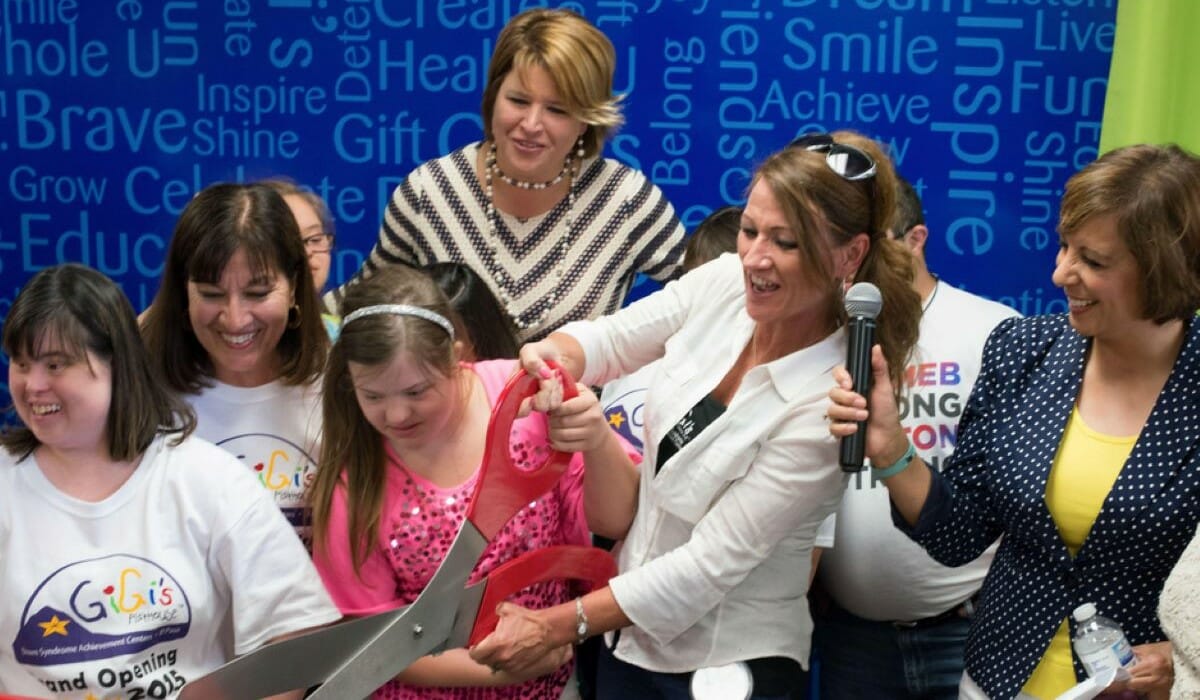
The story of the chapter’s founding shows just how generous people can be. In 2013, Maggie was celebrating a milestone birthday and brainstormed the idea of charging a cover which would go toward the $10,000 needed to start the local GiGi’s playhouse. At first, only a handful of people responded to the invitation. A downhearted Maggie decided to make the best of it and went grocery shopping. At the store, she ran into not one, but two, individuals with Down syndrome. Taking this as a clear sign that she was on the right path, Maggie made some phone calls. Over 100 people attended the party. After showing guests a video of the Chicago GiGi’s Playhouse, the fundraiser brought in $15,000. Two years later, when the doors opened, people were lined up around the building for the grand opening and due to the center’s popularity, it has since moved to a bigger location with twice the space.
Founded by Nancy Gianni and originally based in Chicago, GiGi’s Playhouse is now found in 61 locations across the USA and one in Mexico. The El Paso playhouse founded by Maggie is the first GiGi’s Playhouse in Texas. GiGi’s Playhouse features programs for all ages. GiGi’s makes a lifetime commitment from the time a family receives a prenatal diagnosis through adulthood.
What inspires you to volunteer?
“When my family and I toured the Chicago GiGi’s Playhouse, we were inspired by the happiness and positive energy all around us. It was addictive! No one was feeling sad or sorry about anything. Instead, they were supporting the children and celebrating their accomplishments. I recognized that our community needed a place like that. We are now in our eighth year and seeing the gains made by the children and adults participating in the programs brings me immense joy.”
Maggie Morales-Moody, Executive Director-GiGi’s Playhouse El Paso/Courtesy Maggie Morales-Moody
Describe your volunteer role with GiGi’s Playhouse.
“I am the local founder and currently serve as an unpaid Executive Director. I am involved in all aspects of the Playhouse, from fundraising to speaking to community groups to recruiting more volunteers, to events and my favorite: welcoming new families. We have over 150 volunteers throughout the year, helping with programs, fundraising, community outreach, and special events.”
What’s been the most rewarding part of your work?
Helping to change the way the world sees Down syndrome…opening people’s eyes to the fact that Down syndrome isn’t “less than,” it’s just different. The volunteer experience at GiGi’s allows people to see the other side of the diagnosis and opens a whole new dimension in their own lives. My favorite volunteers have to be the middle school students who volunteer at GiGi’s as part of their schools’ community service program. They love it! When they become friends with our individuals with Down syndrome and see how much harder they have to work to accomplish things, the middle schoolers begin to appreciate what they have. I’ve heard teacher after teacher say that middle schoolers who volunteer at GiGi’s thrive as a result of the experience.
What have you learned through your experiences as a volunteer?
People are incredibly generous and kind. They want to help, but many just don’t know where or how.
When people get involved with GiGi’s — or any other volunteer opportunity — they blossom. The medical school students who volunteer at GiGi’s all have so much on their plates, and yet, when they leave the Playhouse after volunteering with a program, they leave refreshed and renewed and feeling that all is well with the world.
Are there any future partnerships, programs, or events that you are excited about?
“We currently partner with the Paul L. Foster School of Medicine and the University of Texas at El Paso and are excited about continuing and expanding their volunteer involvement with GiGi’s Playhouse.
In April, we are hosting our annual “I Have a Voice” gala that will feature Jillian Benfield, author of “The Gift of the Unexpected.” The gala is all about celebrating the children and adults and their accomplishments.
We’ll also host a 5k fun fundraiser in April, and a health conference in May. The health conference will feature two tracks: One for medical/health professionals and one for families/caregivers. Continuing education credits will be awarded to health providers and families will learn more skills to become stronger advocates for their children.
I’m most excited about new programs coming soon to our Playhouse because they will all contribute to a better quality of life for our Down syndrome families. I am especially thrilled about our new piano class for our adults. As our adults get older, there is a risk of Alzheimer’s/Dementia becoming a challenge and we know that engaging in new activities will help stall that process.
Grand opening of GiGi’s Playhouse El Paso with national founder, Nancy Gianni and daughter, Gigi./Courtesy Maggie Morales-Moody
Why do you think it’s important for others to give back?
There is so much more joy in giving that there is in receiving. Volunteering not only helps people in need, worthy causes in the community, but more than that, it keeps you mentally stimulated and gives you a sense of purpose. It brings fun and fulfillment to your life. We are on this earth to serve others and not be served.
What do you want people to learn from your story?
Not everyone has the privilege of knowing someone who lives with Down syndrome. It’s life-changing to experience what individuals with Down syndrome contribute to the world. I believe they are teachers whose mission is to teach compassion. Their way of being so present in each moment and their pure and innocent joy is a gift. Sometimes it’s those unexpected situations that help us become better versions of ourselves when we are open to acceptance.
Gardening for Good: Bank of America Employee Finds Purpose in Creating a Community Garden
Meet Daily Point of Light Award honoree Beth Hartnett. Read her story and nominate an outstanding volunteer or family as a Daily Point of Light.
Beth Hartnett, a senior vice president of Business Support and Program Management at Bank of America, has been proudly serving on the Board of Directors of the Portsmouth Community Garden for the last few years. This sunny plot of land in the seaside town of Portsmouth, NH, has become a community space where individuals and local organizations can grow food in a peaceful, respectful and inclusive environment.
About an hour north of Boston, Portsmouth has a rich history of community gardening – dating back to the WWII era. But when a group of passionate local leaders recognized that a present-day community garden was lacking in their area, they joined together to research, plan, fundraise, work with the city, physically build and launch the first phase of the garden this summer.
“Phase 1 was 33 plots, but we built the fence to accommodate 90 plots,” Beth shared. “Phase 2 is lining up corporate sponsors to provide volunteers so we can complete those. It’s awesome working with the gardeners. We’re in a lovely sunny spot and the gardeners love working with us! I can’t tell you how many pounds of tomatoes I grew, harvested and ate this year.”
One of Beth’s primary goals is to help improve the environment, which she does through personal decisions like composting, as well as through her volunteer work./Courtesy Beth Hartnett
Leveraging her business acumen and skills as a strategic communications and planning professional, Beth successfully built and executed a fundraising plan to attract major donors, resulting in a coffer of $12,000. These funds enabled the organization to build a high-quality fence and a rodent barrier large enough to house the planned total 90 garden plots and to purchase the soil and build the 33 raised beds for the first phase.
In addition, Beth created the content for the garden’s website, including member rules and processes, as well as the format for the member newsletter. She wrote press releases and helped coordinate the four volunteer build-out days, plus prepared PowerPoint decks for presentations to city leadership including the Legal team and Public Works department as well as the City Council.
Additionally, Beth has engaged with point people at local organizations to ensure the group leverages its over 80+ corporate and community volunteers effectively. Now that the garden plots are growing, Beth shares in the management of the bi-monthly member work days.
“I started getting involved in my own sustainability journey and I’ve been learning more and more about making small changes in my life,” Beth reflected. “Then I had the opportunity to help launch a community garden in my hometown. I leaped in because it fit in with my own growth in the sustainability space, but then it led to this broader impact. Post-pandemic, it really was a healthy way for us to connect with other people, and there are so many impacted people in our community.
Beth is passionate about what the garden provides not only in terms of community camaraderie through volunteering, but fighting food insecurity locally. Last year, the garden provided 250 pounds of surplus harvest and Beth anticipates they’ll end up tripling that number this year.
“I love the aspect of the garden where we give surplus harvest to a local food bank,” she said. “I have my own plot, and then we have community plots with sweet potatoes, tomatoes and herbs. Any gardener can go and just take those. That’s where we also harvest for the food bank.”
Beth not only volunteers with the garden, but takes individual measures to help positively impact the environment. “Besides composting, I’m interested in education, in learning about environmental issues and their impact,” she said. “Also, every season I have clothing exchanges with my friends where we exchange clothing, and then we donate the rest to local organizations. But now I’m much more thoughtful about my purchases, so that I don’t necessarily have to get to the point of having to reuse and recycle. Education has helped immensely.”
Beth knows that individual effort isn’t enough to create something like the Portsmouth Community Garden. She recommends that anyone looking to start a cause of any kind partner with other passionate individuals to get the job done well.
“You can’t do it on your own,” Beth shared. “It takes a lot of work – more than you think – to create something that positively impacts your community. Come together with like-minded people, put a call out to the community, find other people who are interested. Find a team.” For the Portsmouth Community Garden, visionary founder Trisha Donohue was the individual who brought together a team, including Beth. “It wouldn’t have happened without her,” Beth noted.
The future is bright for the Portsmouth Community Garden as they move on to Phase 2 of the project. “We have plans for engaging with more of the community, partnering with our local library and having a walking book tour with laminated pages of books where kids can walk through, get exercise and read more about gardening,” said Beth. “We’re excited about expanding our program. So it’s the food insecurity advocacy plus the community programming that I’m really excited about for this next phase.”
And Beth hopes to share her knowledge and experience in this space to help other communities achieve the same outcomes. “One of the things I want to do is put together a top-ten list of how to start a community garden. I think that might be helpful for people. We didn’t make up the rules in a vacuum – we did our research. I want to put together templates for people to use, which will make things more easily replicable,” she says.
This exciting, impactful and fulfilling volunteer experience has greatly benefitted Beth and her community, driving forward sustainability and advocacy in Portsmouth and beyond.
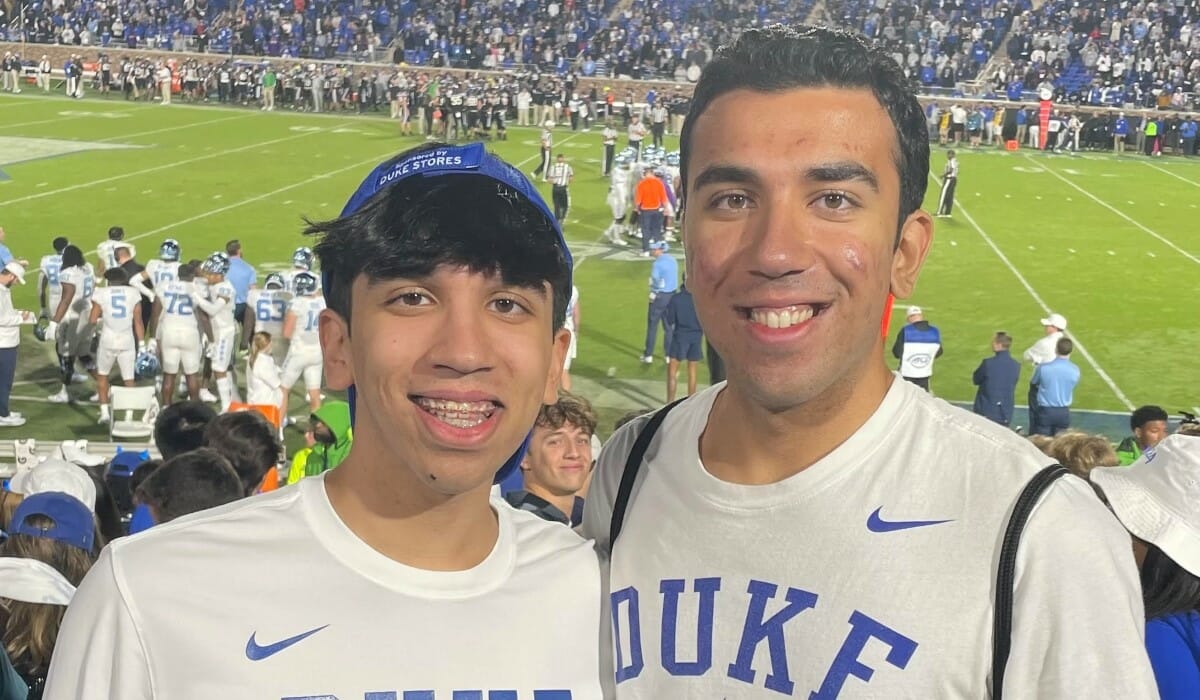
Meet Daily Point of Light Award honoree Ansh Khurana. Read his story and nominate an outstanding volunteer or family as a Daily Point of Light.
From a young age, Ansh Khurana has always been passionate about mathematics. He pursued math at the highest levels by taking advanced courses, tutoring younger students and joining math clubs. Yet, growing up in Arizona, a state which is ranked almost last in public education and was among the worst in the nation for high school graduation rates, Ansh didn’t see many kids who loved math like he did. Many of his public school classmates only attended school grudgingly and disliked school, particularly math.
When Ansh and his family relocated to Charlotte, North Carolina, it was a completely different experience. North Carolina ranks higher nationally, but still lags behind many states. Ansh had a “lightbulb moment” after reading an article about the math teaching methods taught by Bob Moses. Ansh imagined what it could mean if every student in every state could have access to the best classrooms for mathematics.
“Could everyone love math? Or, at least graduate without deficits?” he wondered.
Ansh decided that, rather than pouring his time into competition math, which was tempting, he would help others excel in math, too. He started tutoring his peers and founded Math2Empower to bridge numeracy gaps that lead to poor math performance and increased rates of high school dropout. He began working tirelessly toward addressing math literacy.
For Ansh, math has always been joyful. He knows that if kids are offered more resources and inspired math teaching, more kids will love math and graduate.
What inspires you to volunteer?
Today, the single leading reason that students of color drop out of high school in the United States is algebra. Failing algebra is fueled by deficits in math literacy that can be traced back as early as fourth grade. I learned that students who fail algebra are four times more likely to drop out of high school.
To tackle the algebra problem, I realized I needed to get more math-talented people involved. After researching the algebra problem in the United States, I came across the Algebra Project and its founder Bob Moses. Moses was a leader in Mississippi during the Civil Rights movement and the founder of the Student NonViolent Coordinating Committee. Many years later, he founded the Algebra Project, an organization aiming to guarantee math literacy for all. Through his organization, Moses worked with many students from the inner city of Baltimore who had been consistently scoring at a very low percentile on their standardized tests and risked dropping out of high school. He used real life and engaging application problems to assist these students, and a few months later, these same students were passing their standardized tests.
I was inspired by this story, and I realized that all students have the ability to excel in mathematics if given additional resources and assistance. A few months later, I got the opportunity to speak with Ben Moynihan and Bill Crombie from the Algebra Project. They encouraged me to continue my work with Math2Empower, and said that I was one of the keys to solving this algebra problem.
Describe your volunteer role with Math2Empower.
As the co-founder of Math2Empower, I pursue three main goals.
First, I open dialogues and find solutions. We have ongoing dialogues with pioneering leaders to discuss systemic problems challenging students, and explore various solutions. We also promote interviews through Google Adwords grant funding. This year, we secured an in-kind Google Grant of $120,000. Thus far, we have been able to draw over 12,000 unique website visitors from 43 different countries. We have 150-200 daily visitors, and over 150,000 impressions from Google ads. Our website visitors view many of our pages that result in 44,000 interactions with our website. We have interviewed Ben Moynihan and Bill Crombie from the Algebra Project, Joel Rose from New Classrooms, and Richard Rusczyk from Art of Problem Solving.
I also support Math2Empower in providing engaging, accessible, free and uniquely helpful resources and fun games targeting algebra learning. The 122 algebra videos we post apply algebra topics to real-world scenarios. We also have posted math read-along books on our Youtube channel in order to foster a love for math starting from a young age. Within less than two weeks, we have garnered over 27,000 views and more than 100 subscribers.
Finally, I am working on expanding Math2Empower to reach as many students as possible. Our model is replicable and we have spread to states across the country. Establishing Math2Empower chapters nationwide, we work to advance our online model, creating dialogue while planting boots on the ground. We have around ten individuals that are part of our officer teams, representing Math2Empower chapters in Michigan, Utah, Pennsylvania, New Jersey, and more.
Ansh (left), with his brother Neil, is the co-founder of Math2Empower, an organization dedicated to stemming high school dropouts due to challenges with algebra./Courtesy Ansh Khurana
What’s been the most rewarding part of your work?
Perhaps the most rewarding part of my work is seeing the impact I have had on others. Math2Empower’s Youtube channel has garnered over 25,000 views in just over two weeks of posting our read-along videos, and it has been amazing to see this. Recently, I received a message from a parent on the contact form of our website saying how these videos have been very helpful for her daughter, who was struggling in math. Our algebra games were also very helpful since they were very engaging and made her daughter see that math could actually be something enjoyable.
After my experiences in Arizona, I founded my Math2Empower to accomplish just this: helping others excel and actually enjoy math as well. This gratifying message has inspired me to continue my nonprofit and spread its impact so others get the help they deserve.
What have you learned through your experiences as a volunteer?
Before I started working on Math2Empower, I always viewed students struggling with algebra as “victims.” That was before I came across Jamarria Hall. Jamarria Hall was a high schooler in Detroit, a city with very low literacy rates. He saw classrooms missing textbooks, students not interested in their education, and a lack of teachers. He determined that this simply could not be considered a proper education. He brought a very interesting human rights case against the Detroit Public School system, and is working towards guaranteeing a proper education for all children.
After hearing about Hall’s story and actively volunteering, I came to realize that all students have the ability to flourish past the obstacles they face in their academics when they are given the proper guidance and resources. They can control their futures by flourishing in their academics and pursue a career that they will truly enjoy. I hope that with my organization, I am able to demonstrate this to others and help students recognize their full capabilities.
Are there any future partnerships, programs, or events that you are excited about?
One of the main things that Math2Empower does is interviewing leaders in the algebra space. We plan to invite Laura Overdeck of Bedtime Math, Drs. Bucci and McEwan from the Ohio State Math Initiative, Maisha Moses, daughter of Bob, Dr. Titu Andreescu of Awesome Math, and Larry Martinek of Mathnasium. We also have been in contact with Jamarria Hall about an interview, and learn more about his active civil rights case.
Currently, Math2Empower has chapters in San Francisco, Dallas, Utah, Pennsylvania, Michigan, and New Jersey. In these respective chapters, we are working on partnering with different schools in the area to spread the resources on the Math2Empower website. We hope to launch Math Days in which we will host events for students and demonstrate that math can be something students can genuinely enjoy. In addition, we are in talks to create chapters in New York, Arizona, and even India!
Why do you think it’s important for others to get involved?
The various problems that exist in our society today, including the algebra problem, require individuals, coalitions, and organizations to come together to solve them. Getting involved in one’s community is the first step in solving some of these problems. The idea for starting Math2Empower came from my decision to tutor a few kids in my community. Looking back at it, I am very happy that I took this first step since it launched me on a journey that I have enjoyed and has helped others as well.
What do you want people to learn from your story?
I want people to recognize that anyone is able to make a difference in their community. All it takes is completing the first step, and from there everything develops. Even if you are young, there is still so much that you can do to help out others. I hope to inspire more individuals to join my cause. I firmly believe that together, we can solve the algebra problem and ensure that millions of students excel in their academic careers.
A Tale of Tails: High School Junior Helps Keep Pets With Their Owners in Assisted Living
Meet Daily Point of Light Award honoree Sonya Colattur. Read her story and nominate an outstanding volunteer or family as a Daily Point of Light.
Senior citizens who rely on fixed incomes can sometimes be faced with tough decisions, especially if met with the need to pay for a care home. Sometimes, the heart-wrenching choice to relinquish a beloved pet is less a choice than a necessity due to financial burdens or physical ability.
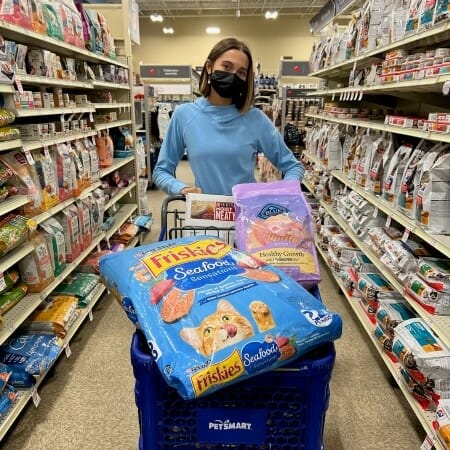
Sonya Colattur founded GrandPaws Pantry when she was just 10 years old after seen her grandmother’s friends struggle to remain with the companions that brought them joy. With a mission to keep furry sidekicks with their families, she used her birthday money to buy pet food and supplies. Today, just a day from getting her driver’s license, she removes the financial burden from about 70 senior citizens at 10 assisted living facilities throughout Arizona with the help of grants, business sponsorships and individual donations.
When she’s not volunteering, Sonya spends a lot of time with her two chihuahuas, both rescue dogs. She also spends a lot of time perfecting her aim as a ranked athlete in the Junior Olympics archery division and thinking about a future career in public policy. In fact, her passion for public policy has led her to advocate for the mental health needs of seniors, bringing her all the way to the Arizona Governor’s Council on Aging to make policy suggestions. Her work brings joy to the lives of people who are too often overlooked.
What inspires you to volunteer?
I think a lot of my volunteer work has been inspired by my rescue dogs. Ever since I was little I’ve just really had a passion for animal advocacy. I started by volunteering with the Humane Society and the Arizona Animal Welfare League.
My own organization was inspired by my connection with my great-grandmother, whom I would visit in assisted living. Many of her friends had companion dogs and cats in the facility but lacked the resources to take care of them either financially or due to physical limitations. Knowing how much my dogs contribute to my own life, I wanted to do something to help make sure they could keep their pets.
Sonya Colattur, 16, shops for pet food for GrandPaws Pantry./Courtesy Sonya Collatur
Describe your volunteer role with GrandPaws Pantry.
Even though I’m president, it’s really important to me to not only be involved in the administrative aspect but directly with the seniors. One of my main responsibilities is coordinating with assisted living facilities so we’re able to provide as many pet care packages as possible. I help manage board meetings with the board of directors, do meeting minutes and the monthly newsletter. I also do all of the deliveries along with a few youth ambassadors.
Do you have volunteers?
I have a Youth Ambassador Program. When I was volunteering in the animal advocacy sector, a lot of organizations required that volunteers be at least 16. When I was thinking about GrandPaws Pantry, I really wanted to focus on increasing opportunities for young people to get involved in helping out animals. Now we have several youth volunteers from ages 6 to 16, and a lot of the Board of Director members are also college students.
What are some things people might not know about adopting elderly pets or about the challenges faced by their owners in assisted living?
It takes an extra step to care for senior pets, because we have to make sure we meet the pets’ dietary and health needs. A lot of seniors’ pets are also senior; they’ve have had them for a while. So, when they’re relinquished, they’re often the most likely to be euthanized in shelters.
During the height of the COVID-19 pandemic, many seniors in assisted living facilities were unable to leave their rooms and apartments for fear of contracting the virus. While they were kept physically safe, many experienced increased rates of depression and anxiety. Isolated from family and friends, companion pets were their only source of comfort during that difficult time.
Tell me about your other volunteerism.
Learning more about public policy inspired me to question why senior citizens have so many financial limitations. And it’s really because there’s a lack of support. That inspired me to begin the advocacy part of GrandPaws Pantry.
Two years ago, I also founded The Color of Us, an online youth community for biracial, multiracial and multicultural youth to have a platform to express themselves as well as educate about what it means to be mixed in America. I host a monthly podcast series, create content and engage in advocacy for that as well.
What’s been the most rewarding part of your work with GrandPaws Pantry?
One senior I provide for is Carol. After paying for her assisted living and outside costs, Carol has $22 to live off of per month. That’s not enough to buy a box of Friskies canned cat food for one month. So, she’s put in a position like so many other seniors I’ve talked to who aren’t able to provide for themselves and their pet who brings them so much joy. Being able to make sure that seniors don’t have to worry about that and can focus the remaining money they have on themselves is such a rewarding experience that I know seniors appreciate.
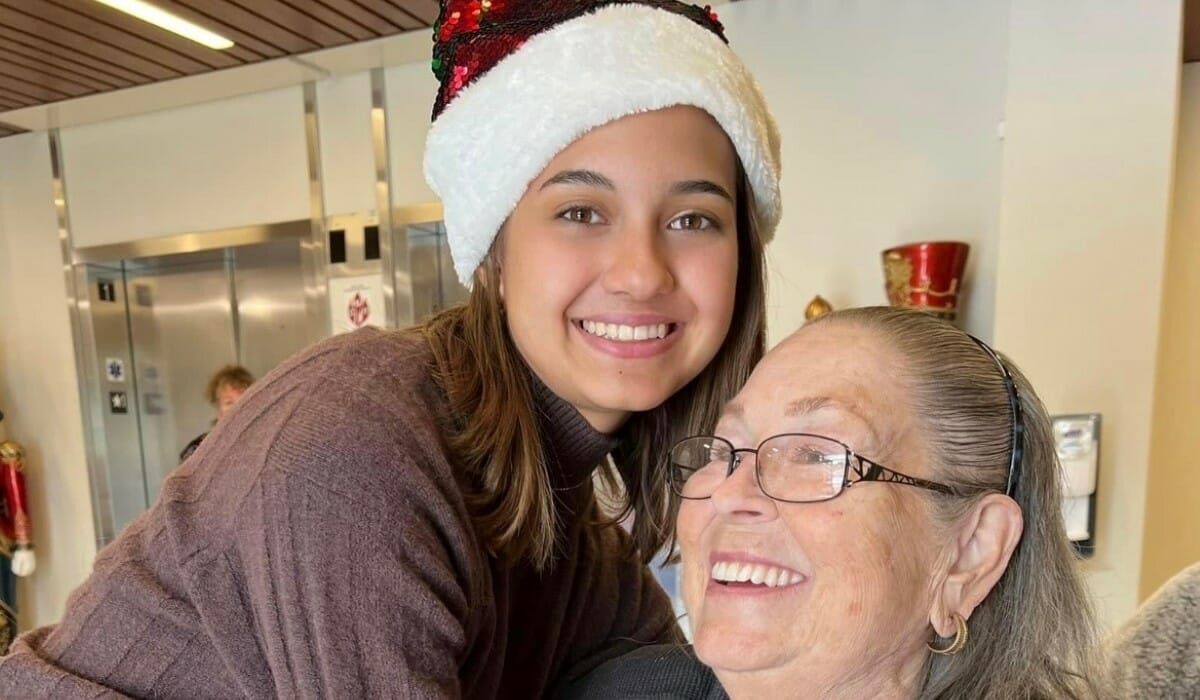
At the annual Santa Paws event, Sonya brings seniors extra gifts for their furry friends./Courtesy Sonya Collatur
Are there any future partnerships, programs or events you are excited about?
Usually, we just provide pet food to senior citizens, but during Santa Paws every December, we provide extra gifts for their pets: blankets, toys, treats, etc. It’s one of my favorite activities every year.
Why do you think it’s important for others to get involved?
A lot of the work that gets done in communities is from grassroots efforts. I don’t think people realize how much it matters to contribute regardless of age, abilities, donation size… Every person can make a difference no matter how small, and I think everyone should try.
What do you want people to learn from your story?
It’s never too young to make a difference. I started GrandPaws Pantry when I was 10 years old, and often when I approached organizations wanting to partner with or told people about what I was doing, it would be treated as a cute hobby but not something that could ever make a lasting difference.
Now, six years later, I manage an operating budget of over $60,000 and have spoken on national news and to state representatives about the work I do. Regardless of how young or old you are and how many resources you have to contribute, everyone can make a difference.
Meet Daily Point of Light Award honoree Jane Leamon. Read her story and nominate an outstanding volunteer or family as a Daily Point of Light.
Jane has lived in North Haven, Conn., her whole life. She is currently a senior at two high schools: North Haven High School and the ACES Educational Center for the Arts in New Haven, where she studies theater. Because of her busy schedule, Jane doesn’t have the opportunity to participate in school clubs.
When she was first exposed to the local Lions Club, she instantly resonated with their mission and wanted to create an opportunity for middle and high school kids to participate in a volunteer capacity. This led to Jane founding the North Haven Leos (a youth extension of the Lions Club) whose motto is, “Where there’s a need, there’s a Leo.”
What inspires you to volunteer?
My family has always been big on recycling. When I was in elementary school, I realized that neither the cafeteria nor the classrooms had any recycling bins at all. I immediately took action. I talked to the school’s principal, inquired about bins at a local recycling plant, created posters with my classmates and gave a speech at my school about the importance of recycling. This was instrumental in my school getting a recycling bin. This instilled a “can do” attitude in me.
My family has always been involved in community service and supporting causes we believe in through helping others. As a sophomore, I founded an extension of the local Lions Club just for middle and high schoolers called the North Haven Leos which is an entirely youth-led organization that empowers kids to do good in their community.
Describe your volunteer role with the Leos Club.
The Leos Club is similar to the Lions Club in our dedication to community service. Leo members help out at club events, are encouraged to attend meetings and bring their own ideas of what kind of projects they want to pursue and causes they want to support. Students are encouraged to bring their own ideas for service projects and to be in leadership positions.
As president, my duties include fundraising and organizing service projects. For example, we raised money to deliver Valentine’s Day gift baskets to nursing home residents, sold recycled can-tab bracelets at Earth Day events and donated the profits to a Ukrainian relief organization, and had a successful toy drive for the Yale New Haven Children’s Hospital during the holidays, among other activities.
Jane is the founder of the North Haven Leo Club, a youth extension of the Lions Club./Courtesy Jane Leamon
This year, I was elected vice president, and so far this school year we have created chalk murals for the local elementary schools, fundraised for the Diaper Bank of Connecticut and held a drive for resources for the North Haven Animal Shelter.
I also help with running and assisting with meetings, reaching out to local organizations, coordinating with the Lions to plan activities, serving on committees and frequently attending service events.
What’s been the most rewarding part of your work?
Seeing teenagers and young people make connections and friends and become empowered through youth-led community service has been wonderful. We decide which projects to take on and when we can’t find ways to help, we create them. If members are passionate about supporting a cause or an organization, or have an idea for a service project, we as a club make it happen.
The power of the club comes in giving resources to kids and teenagers to do what they love, while also helping the community in the process. Leos are very involved. We jump at every opportunity! In fact, in our last meeting, we had to get more chairs because so many more people showed up than we expected. Seeing people rally around a cause and be part of that enthusiasm and energy is amazing!
What have you learned through your experiences as a volunteer?
I have learned how to advocate for myself and for our group, how to run a club, how to rely on others and how to follow up on responsibilities. It has really helped shape me as a leader and as a person. It makes me feel more connected to other people in my community.
I am more confident in myself now. Also, it’s really incredible how much people will help you when you’re supporting a good cause. I’ve met some wonderful people who are doing great things, and it makes me so happy to know that we’re all in this together.
Are there any future partnerships, programs or events that you are excited about?
Yes! There are three projects I’m especially looking forward to this year.
First, the Leos will be collecting coats/winter items at the schools. What we collect will go directly to IRIS, an organization that helps refugees find shelter and resources to recover their lives.
We also plan on partnering with a local conservation committee and other groups for a town-wide Earth Day event. Last year was very successful! There are clean ups happening all over town, as well as information booths and service events set up at different places, like the high school. All town residents are encouraged to come and help out, or just support the people who are doing so. It’s a huge event with a lot of different opportunities for us (and everyone) to do community service and make our Earth a little greener.
Finally, this summer our town is hosting its first-ever Pride Month. We will work with the Coalition for Diversity and Inclusion to organize this event. The Leo Club is very excited to take the lead in planning something that means a lot to so many people and we can’t wait to see what will come out of it. We don’t know what it will look like quite yet, but we have lots of ideas, and we can’t wait to see how everyone else celebrates Pride Month, too.
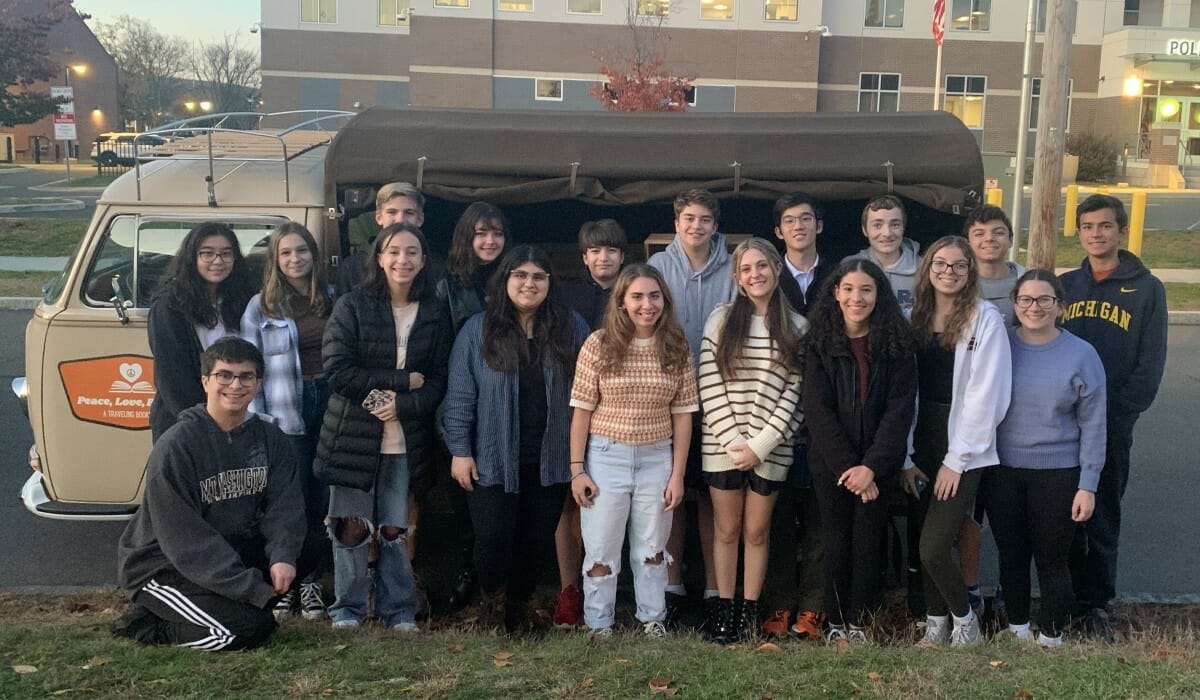
The North Haven Leo Club members in front of the Peace, Love, Book Bus which sells donated books and shares all proceeds with local underprivileged communities./Courtesy Jane Leamon
Why do you think it’s important for others to get involved?
Volunteering makes the world better for everyone. If you have the privilege to help, you should absolutely try to do it. Volunteering benefits you through increased confidence and empathy, and there’s something special about knowing that your actions have directly and positively influenced the lives of others and made them better. People sticking together makes the world a better place.
What do you want people to learn from your story?
It doesn’t matter how young you are, you always have the power to make a difference and create positive change. If there aren’t opportunities to help, make them yourself. You are strong and capable enough to do that for yourself. There are many resources available to you, more than you may think, so use them if you can and create the change you want to see.
When Rizwan Khan joined his wife in St. Louis in 2005, where she was working on her MBA, it was a struggle. While in his home country of India, Riz worked with multimillion-dollar companies. Then, after studying in the UK, he left school to join the Sony Corporation as a Sales & Customer Service Specialist. But 18 years ago, upon his arrival in the U.S., finding a job was a challenge. It was also around the time he and his wife, Farah, lost their son.
Eventually, he was hired at an investment firm as a global marketing director, and in 2013, he founded Little Angels Foundation, originally created to help children in resource-scarce communities, in memory of his son. When the COVID-19 pandemic hit, and he once again found himself looking for work, he decided to run the organization full-time.
Riz shifted gears as the unhoused and food insecure population increased. Today, Little Angels Foundation has served over 151,000 meals to children, the unhoused, migrants and refugees. They’ve also distributed over 20,250 pounds of groceries to those in need.
What inspires you to volunteer?
My focus was initially to help kids. Schools would reach out to me when they needed school supplies, canned food for their pantry or school bags. When the pandemic started, it was a call to expand from being solely a children’s foundation. So, in 2020, I included the unhoused and the Hispanic communities in our mission, who were hit the hardest at that time.
Describe your volunteer role with Little Angels Foundation.
When we started serving food, my wife, 11-year-old daughter and I would make 30-40 simple hot meals and pack them in boxes to take downtown where unhoused individuals were living in tents. Then I talked to my friends about how we could reach out to more people. After that, we all started cooking hot meals in our own homes. Now, I have 70-80 volunteers from eight years old to 83, and they cook with us.
The food comes to my house, and we put it in boxes. Then, I take about 50 of them downtown every Saturday morning, 10:30 am-12:30 pm, regardless of weather. Then, in the evening, we serve 50-70 meals in a shelter. Sunday morning, we serve about 60 meals at second shelter. In total, we serve almost 200 hot meals every week. My dad used to say, “Do something that you love.” So here I am.
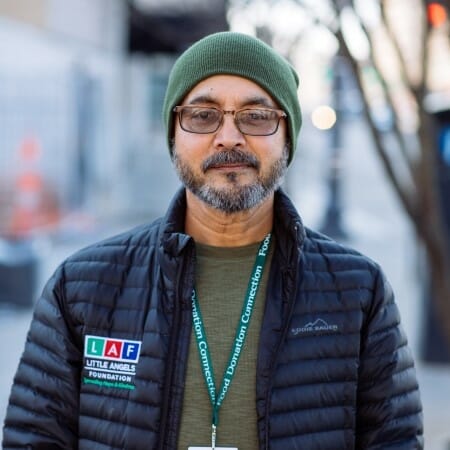
Rizwan Khan, 50, is the founder of Little Angels Foundation in St. Louis, Mo./Courtesy Riz Khan
In 2021, I got a call from the International Institute’s senior manager who needed help with food for 200+ refugees from Afghanistan. LAF doesn’t have any grants. Whatever we do comes from our own pocket, so I didn’t know if I could do it, but I signed up for three weeks. We lasted nearly five months.
What’s been the most rewarding part of your work?
A few months ago, a woman who had recently moved to town called me. She and her husband didn’t have food, and they’d heard about us. Every week, she would come and take food from our table. Then, about two or three weeks ago, she sent me a text: “Riz, I got a job. Thank you so much. I don’t need food anymore.”
This has happened two or three times with different people. This is what inspires me to help. We’re able to directly help people and change lives. All of my friends and volunteers are making a huge difference. Together, we are stronger.
What have you learned through your experiences as a volunteer?
We don’t have to be experts to be helpful. We all know what is right and what is wrong. We all should find one thing that we care about and start doing that. Things will change drastically.
I was invited by the United Nations to be on a panel alongside the Mayor of St Louis, Tishoura Jones, and the Deputy Assistant Secretary of the Bureau of International Organization Affairs, David McFarland.
The discussion was about food insecurity and its relationship to peace. I believe that if our stomachs are full, there will be less conflict and crime. Food, shelter and water are human rights. No discussion. It was an honor to be at the event. And last month, I was offered a position on the Board of Directors with the United Nations Association of St. Louis.
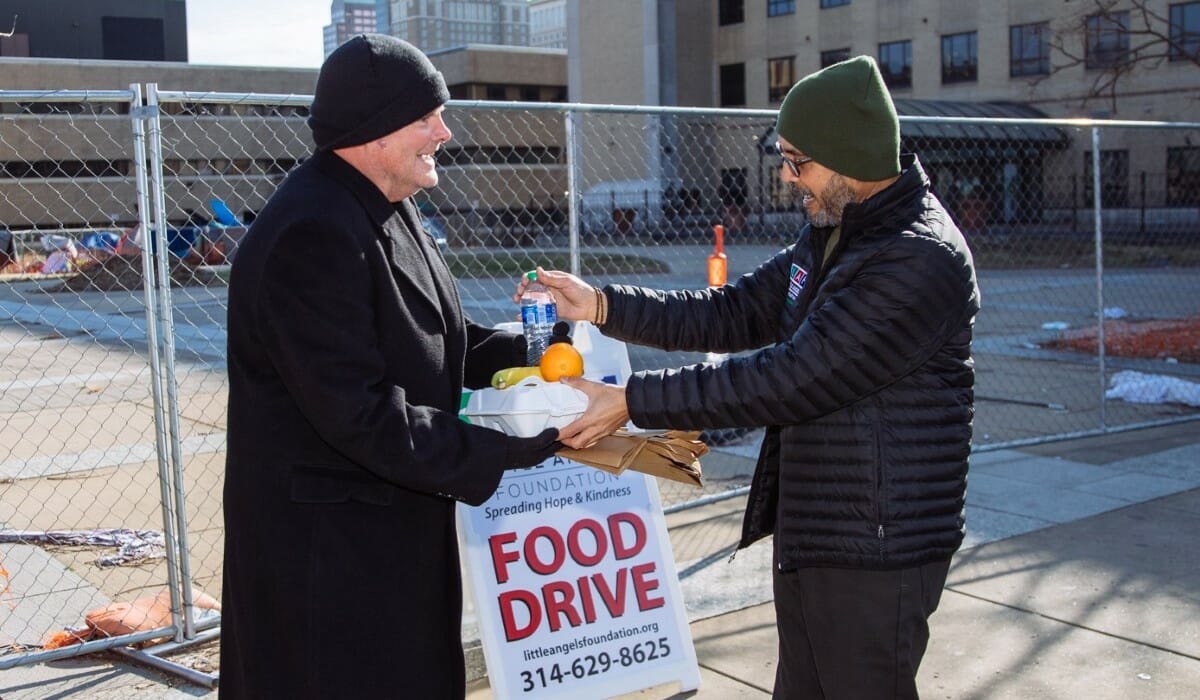
LAF hands out about 1,000 each month with items like pasta, salad, a dinner roll, fruit and a cookie./Courtesy Riz Khan
Are there any future partnerships, programs or events you are excited about?
We want to add more shelters to our program to help more families throughout the week. Since April 2020, I’ve sought partnerships with food retail organizations, but we’ve always paid for everything out of pocket. This year, we’re going to try to apply for grants, because now that it’s getting bigger, we need help.
I’m also looking for a bigger space. Right now, everything is in my home. 60% is occupied by groceries and supplies. We’re currently serving about 200 people. My aim is to serve about 500 people by April.
Why do you think it’s important for others to get involved?
When I was growing up, my mother would help a poor family whose daughter was getting married or people who needed contributions to build a church or a mosque or a temple. My dad also used to say that if you have a piece of bread, cut it in half. Eat half and give somebody else half so you are both are half-full. I am following my what my dad and my mom taught me.
One of the best, kindest countries in the world is the U.S. People are willing to help, and this has all truly inspired me. I’m trying to be a better person every day and leave a story behind for my family and friends.
What do you want people to learn from your story?
We all just need to come together to help whoever needs it. Apart from the tables we set up, I carry fruits in my car. At a red light, if I see some people asking for help, I always have something to give them. When you’re doing good things, you feel nice and want to do more.
A Big Sister and a Big Role Model Shares Her Time and Talent with Youth
Meet Daily Point of Light Award honoree Brianna Weiss. Read her story and nominate an outstanding volunteer or family as a Daily Point of Light.
Brianna grew up in a small town in Wisconsin where people were always willing to help out neighbors and friends in need. She was involved in Girl Scouts and sports teams that encouraged giving back. After graduating from the University of Wisconsin-Madison, Brianna knew she wanted to go to a bigger city and that is how she ended up in Chicago, working for KPMG, one of America’s “Big Four” accounting firms.
Brianna’s childhood experiences with volunteering now had a much bigger audience: the underserved youth in Chicago.
Regardless of her professional workload, her personal life and other obligations, Brianna takes time out of her busy schedule every week to volunteer as a mentor through the Big Brothers Big Sisters of America program. The Big Brothers Big Sisters one-to-one mentoring supports social and emotional development for children across America, pairing them with a mentor who will help create a solid foundation for their “little’s” success.
Even on weeks when she is working 70+ hours, Brianna takes time to mentor her “little” and explore Chicago together.
What inspires you to volunteer?
I was very fortunate to grow up in a household where I was well supported and encouraged to chase after the dreams and goals I had set for myself. I hope that through my volunteer experiences I can provide these same experiences for the youth in the community in whichever way they may need.
Describe your volunteer role with KPMG.
KPMG is a community-minded company. Soon after joining the firm, I was introduced to the Big Brothers Big Sisters Program and I knew it was something I wanted to participate in. I was matched with a high school student, and we meet with other “Big and Little” pairs every other week. My “little” and I also communicate outside of the programs on a regular basis.
I have also organized food drives in the office, and have set up events to help collect money for the KPMG Family for Literacy (KFFL) which is dedicated to eradicating childhood illiteracy by putting new books and educational resources into the hands of children in need and developing the next generation of young leaders through reading.
Brianna Weiss volunteers as a mentor with Big Brothers Big Sisters./Courtesy Brianna Weiss
What’s been the most rewarding part of your work?
My experience with Big Brothers Big Sisters has been rewarding to know I’ve made a difference in my “little’s” life. She has expressed that the program is great for her, not only to learn about college and other life experiences, but also as a space where she can forget about the stressors in her life and enjoy the company of others. Knowing that I have been able to help provide that for her is very rewarding.
What have you learned through your experiences as a volunteer?
Through my experiences with Big Brothers Big Sisters, I’ve developed leadership and relationship skills. I’ve grown as a person by supporting my “little” through high school. What’s so wonderful is that I also learn through her sharing her life experiences with me, which helps me broaden my perspectives and become a more compassionate person.
Are there any future partnerships, programs or events that you are excited about?
As my “little” prepares to finish high school and start her college experience, I’m excited to stay in touch through her transition and provide any guidance she may need. I plan on being there for her even though she will no longer formally be involved in the program once she graduates high school.
Why do you think it’s important for others to get involved?
I think it is important for others to get involved because you never know how much the actions you take can influence others in the community. Volunteering is such a rewarding experience; you are able to meet new people, and oftentimes you learn and grow through the process as well.
What do you want people to learn from your story?
I hope people recognize all of the benefits that come from volunteering. Big Brothers Big Sisters has been a great experience for me, and I hope this encourages anyone who has been interested to take that step to get involved!
Meet Daily Point of Light Award honoree EliAnnaBermundez. Read her story and nominate an outstanding volunteer or family as a Daily Point of Light.
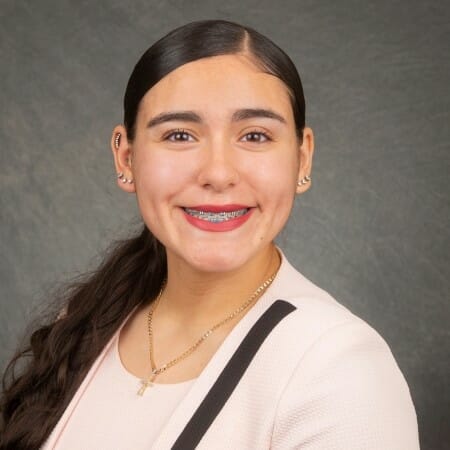
When EliAnna Bermundez, a middle schooler at the time, was confronted by a student at her new, primarily white school demanding, “Go back to where you came from,” it was a jarring experience that would change the course of her life. The student was trying to tell her to go to Mexico, and EliAnna, ethnically Puerto Rican, decided to educate her peers about diversity and her culture.
“I found that it was in the household, that it was something that they were never taught. It wasn’t something that they chose not to learn,” she recalls.
With permission from her social studies teacher, EliAnna did a presentation on Puerto Rico for the whole school, around 500 people, and with the help of her mother and grandmother handed out 500 homemade pastelillos, a savory meat pie popular in the island nation.
Afterwards, and with a better understanding, the offending student apologized. EliAnna was asked to do the presentation every year for the next several years, driven by seeing the permanent perspective shift in the students.
“From that point on, I made a promise to myself that any chance I had, I would teach others about my culture and about other cultures to make them aware, because it’s not their fault,” she says. “If they’re willing to learn, I’m willing to teach.”
Since then, she has spoken to and led conversations with schools, banks and other companies, at company trainings and conferences, and more. Some highlights for EliAnna were being the keynote speaker for Women2Women and speaking to the students of Milton Hershey School. In the beginning, she was shocked that not everyone could see or had experienced racism.
EliAnna is the co-founder of STAR, a youth-led initiative designed to start conversations centered around racism and racial equity./Courtesy EliAnna Bermudez
“I’ve learned that there’s two different types of ignorance: the ignorance of not knowing because they were never taught and that they choose to be. That’s what I’ve learned from these discussions,” she states. “The only way we grow is together, not individually, when there is a problem.”
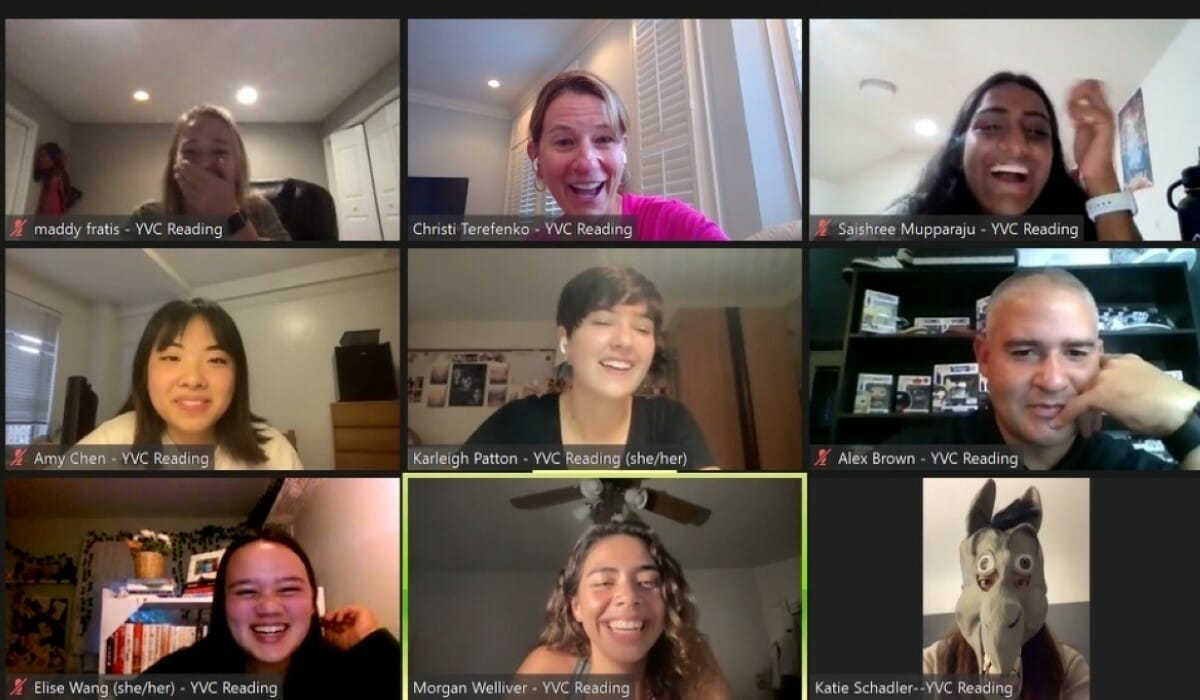
During her last two years of high school, EliAnna co-founded a project though Youth Volunteer Corps of Reading called Stand Together Against Racism (STAR), an initiative designed to start conversations centered around racism and racial equity. She met her mentor and future STAR advisor, Christi Terefenko on a Zoom call during the beginning stages of the program.
“After the death of George Floyd, we were hearing that our students that we work with didn’t know what to do. They were stuck in their homes, and they were having all of these massive emotions. We decided to run a program through the summer of 2020 via Zoom, where we got several dozen youth from our county involved in conversations about race and racism and racial justice and what that looks like,” Christi recalls.
This program eventually became STAR. Recently, EliAnna helped create a documentary about the group, leading discussions after screenings.
“When she speaks, and when she stands up in front of a room, she has a way of drawing people in. It’s really an exceptional ability,” Christi says. “[When she accepted a changemaker award last year], she gave an impromptu five-minute speech that literally had everyone in the audience crying.”
Today, EliAnna is 18 years old and halfway through her first year as a nursing student at Messiah University, where her older sister also attends. She has brought her enthusiasm for community involvement to campus, joining many different clubs and activities including La Alianza Latina (LAL), a gospel choir, a dance worship team, a leadership group and more. Her goal? Become a First Assistant RN and a missionary nurse.
Her motivation comes from seeing family members with health issues and wanting to care for them. She also keeps her grandmother in mind as she works towards her dream.
“In Puerto Rico, back when she was young, it was a tradition that kids didn’t go to school. They stayed home to help in the household or on the farm. She got out in third grade, but her dream was always to become a nurse. So, I’m kind of following in her footsteps, as well, and learning from her,” EliAnna adds.
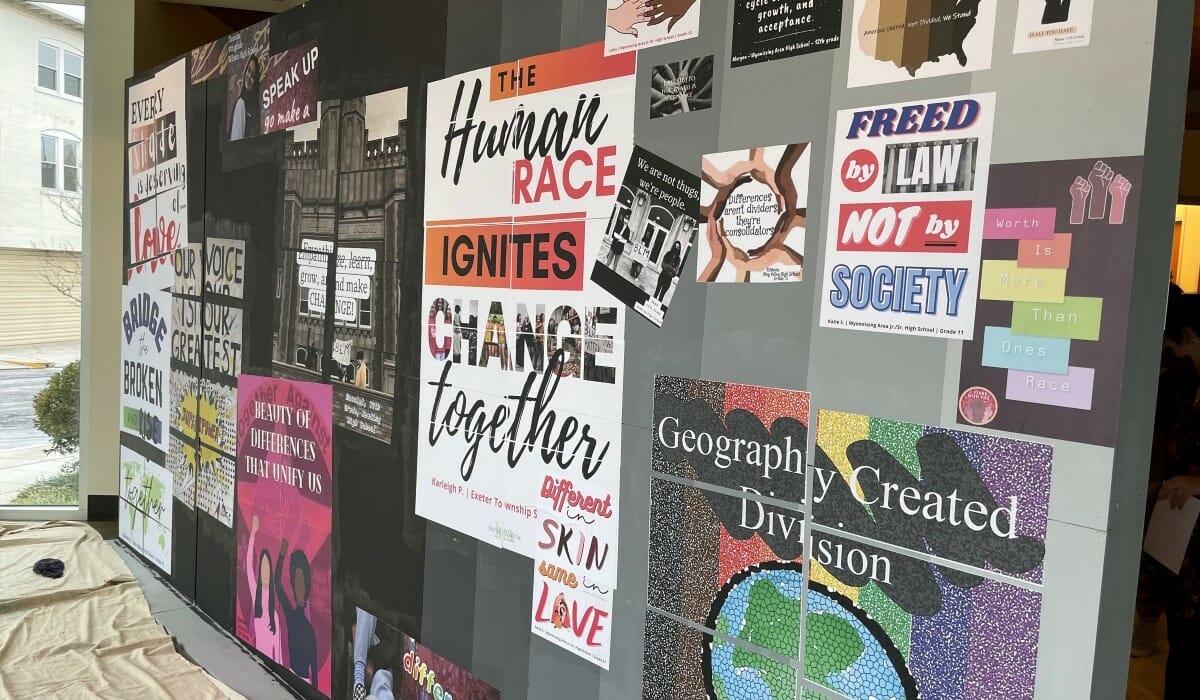
Compiling artwork of 50 local students from 14 schools, EliAnna pastes their messages of justice, equity, and inclusion on a wall now in the City Hall of Reading, Pa./Courtesy EliAnna Bermudez
EliAnna will have a chance to take her skills abroad this year as she volunteers in Zambia, the Dominican Republic and Spain. The last of these will be a six-month stint during which she will take classes and do clinical work at a local hospital in Granada, Spain.
Aside from that, EliAnna looks forward to more speaking events with Women2Women and leading a discussion for LAL on cultural identity. Also on her agenda for this year is putting together a full-day STAR convention with nearby colleges.
Crediting her mom for her life of service, EliAnna recalls volunteering with Girl Scouts, American Clean-up and with her church from a very young age.
“My mother helped me understand what it is to help others that are in need or who might not even ask. Sometimes you just do it,” EliAnna states.
Her mom, one of five children, is the only one to get a Bachelor’s degree in her family. Despite experiencing racism throughout her life, she has always shown her daughters that things can be accomplished in spite of the barriers in their way.
“Basically, my mom opened the door for me and opened my eyes to all these things that I could do with that concept of ‘do what no one else can do or do what other people aren’t motivated to initiate,’” she says. “Not every issue is going to be solved by one person. I can’t conquer the whole world, but small beginnings make big changes. I live by that.”
Over 1,600 Volunteer Hours to Help Spread Community Access to Books
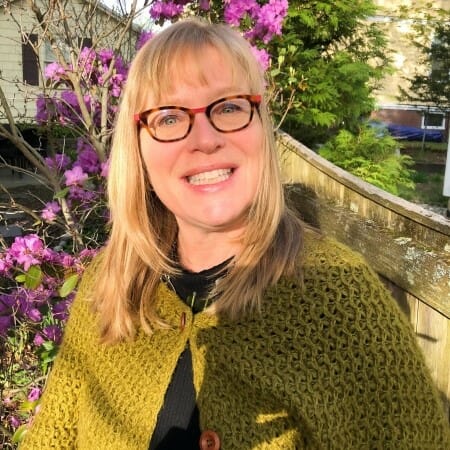
Meet Daily Point of Light Award honoree Vicki Denk. Read her story and nominate an outstanding volunteer or family as a Daily Point of Light.
Vicki Denk began her volunteer work for the Friends of Johnson County Library Board of Directors in 2018. She jumped in with both feet and took on the officer duties of board treasurer right from the start. The responsibility of continuously balancing the double bottom line between mission and money is never simple. But Vicki’s leadership has been a critical component in professionalizing the organization over her tenure.
In her roles, Vicki oversees the Friends’ finances, helps with review and enforcement of financial policies and procedures, works with the director of operations to create the annual budget and advises the board on financial strategy. To date, she has served more than 1,600 hours. Read on to see what inspires Vicki and why she’s passionate about this cause.
Describe your volunteer role.
It’s evolved over time. I started off being more of a working board member than I have been in the recent past. When I started five years ago, it was a very small staff. And we didn’t have enough people to do everything that needed to be done. With my finance background, I was able to come in and help do budgeting, work on planning a reserve level and some of the things we just didn’t have enough people on staff to handle.
Now, I have so much experience after having been there for so long that I’m able to help direct the way the business is headed. I understand more from a high-level aspect what needs to be done as far as future planning and current planning. A lot of my role has just been helping the organization move forward and become what it is now, help develop the staff and a new business model.
Vicki enjoys spreading greater access to books throughout the community./Courtesy Vicki Denk
How did COVID-19 change the organization?
We’ve been in the process of changing our business model over the past year. COVID-19 changed things. Our customer patterns changed. We closed our bookstores. Things really have evolved over my tenure.
I felt like COVID changed our business model, but not the way we operated as a board. We went right to Zoom, right to offline meetings. Our staff was absolutely fabulous. They handled everything beautifully. Granted, sales decreased, but what were once in-person sales became internet sales. And we probably would have headed that direction anyway. COVID pushed us a little faster into a business model that probably would have happened anyway. It changed our revenue streams, but the in-person sales at bookstores were becoming obsolete anyway. Traffic that would generate sales in the bookstores became online sales. It brought us along to a point we’d inevitably be heading anyway.
Why are you passionate about this mission?
I absolutely love what we’re doing, I love it. It’s so important for the community. I’ve pushed to refocus the organization on more of the service aspect of what we do rather than just the fundraising. I feel that what we do is so important. We collect donations from the entire community. We sometimes have more donations than we know what to do with! People love that they have a place they can bring their books they’ve read and know that somebody else is going to actually literally go through those books, value them and pass them on at a very low price to other members of the community so that they too can enjoy reading them and get the knowledge that all of these books impart. I love that about us.
And we are really good at it! We process a lot of donations. We also handle all of the library’s “weeded” materials – materials that are no longer checked out as frequently on the bookshelves. Those books then become weeded, and those are oftentimes very valuable to people too. The library values what we do very highly. They’re not necessarily able to do what we are doing as far as sorting and redistributing and pricing, so that they’re not just thrown away or wasted, but that they’re actually redistributed into the community. I’m very, very passionate about the service we provide. For me it’s not so much about raising money as getting these books back out into the community.
Vicki Denk happily serves on the Friends of Johnson County Library Board of Directors./Courtesy Vicki Denk
Any rewarding stories from your work?
One that’s always the most rewarding is the Bookmark Contest, when the kids submit their drawings and win a prize for them. I absolutely love it. I love seeing the creativity that the kids come up with and the bookmarks they create.
I also love the donations we make to local organizations, like the incarcerated services and the 6 by 6 Ready to Read project. Even though I don’t see people literally pick up the books and read them, these causes and services are very close to my heart.
What’s your advice for people who want to start volunteering?
For me, I was just on the lookout for something. I really wanted to volunteer, and there are so many roles available. There are so many avenues to pursue. I think if you just get out there and start looking around, you’ll find it. You’ll find something that appeals to you, something that’s of interest to you.
Everything I’ve done, I’ve loved. I chose things that I knew either I had a skill set that would benefit them or something I thought I’d really enjoy. It was the combination of “I think I’d be really good at this” and “I think I’d really enjoy doing this.”
How can people help?
Go to the website. We could always use an increase in membership, as that is part of our revenue stream. And of course, you can purchase books via our internet platform. Locally, there are weekly book sales at our Pine Ridge location. You can see all of the information on our website.