Overcoming Fear to Become a Crisis Hotline Counselor
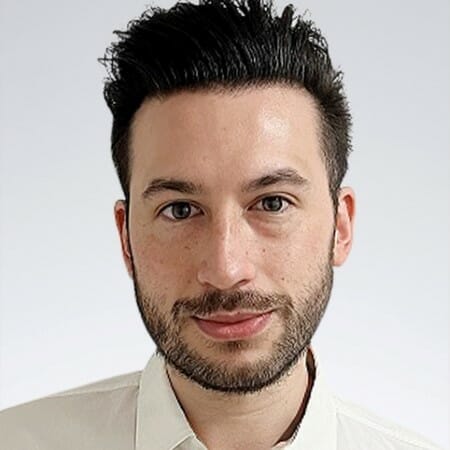
Meet Daily Point of Light Award honoree Alexander Kong. Read his story and nominate an outstanding volunteer or family as a Daily Point of Light.
Content Warning: Points of Light is proud to share the following uplifting and inspiring story. However, we acknowledge that a small portion below may be difficult for some readers. We encourage you to please care for your own wellbeing above all.
During college, Alex worked at a Neuropsychiatric and Behavioral Health Institute where he was exposed to mental health in an outpatient setting. He found it a refreshing change from his Business Economics major. After graduation, Alex began working full time as a public accountant and lost touch with his interest and direct exposure to mental health. However, he would often see signs for the 1-800-273-TALK line (now known as the National Lifeline 988 number) on his commute, and wonder what it would be like being on the other side of the line helping someone through a crisis.
He continued seeing the signs, and the hotline number often showed up on public transportation. His interest was rekindled, but Alex didn’t know whether he had the right skillset to be a crisis counselor and felt intimidated by the thought. His fears prevented Alex from pursuing this journey sooner. Alex sat with these thoughts for a few years, ruminating and thinking about signing up to volunteer, but he didn’t feel brave enough to actually commit.
An incident that occurred at work changed everything. One day, he supported a co-worker who was going through a crisis. He had never dealt with an individual going through a crisis and was unaware of the right protocols to follow or best words to say. Alex simply relied on his instincts in order to ensure the individual felt safe and supported as they made it through their moment of crisis. After the incident, Alex reflected on the situation with other co-workers. Some pointed out Alex’s calm demeanor and natural ability to deal with stressful and anxious situations. Others weighed in as well, voicing their agreement. This prompted Alex to look at himself a bit differently and provided him with the confidence to sign up to be a volunteer, to take a chance and try something new. Shortly after, Alex started volunteering as a phone counselor.
What inspires you to volunteer?
I originally was inspired to begin volunteering given my personal desire to learn more about mental health and learn a new skillset that was outside of my comfort zone. Mental health had always been something that I was interested in, but my own personal knowledge was fairly limited. I was also held back by fear of the unknown – fear of not knowing whether I would be able to pick up a new skillset that was so different, and fear of not knowing how to support others. These fears did hold me back for a bit, but with the encouragement of others, I was able to push past these internal fears and was inspired to continue a mental health journey I had started back in college but put on pause.
Through volunteering as a phone counselor, I found a meaningful way to get involved and support my community. I have found that I am also improving myself. I feel that each time I volunteer for a shift, I am able to learn new skills and abilities that help me support others, but also have incredible opportunities to learn skills and teachings from my fellow shift mates and shift supervisors.
The volunteer work began as an overall interest in mental health, but has evolved into a personal development that continues to inspire and motivate me.
Alex Kong serves as a volunteer phone counselor for those in crisis./Courtesy Alex Kong
Describe your volunteer role with the Alameda County Crisis Support Services (CSS).
I currently volunteer as a phone counselor with Alameda Crisis Support Services, which provides a 24-hour phone line that connects people in need with a counselor and support. We field calls from the National Lifeline (988) number, the local Alameda Crisis line, and provide after-hours support for various other California county behavioral health departments and local crisis lines.
My role is serving and supporting individuals that call into these lines. These individuals are going through a crisis or are experiencing suicide ideation or desire. I provide emotional support to help people get through difficult moments or thoughts. I also assist in providing additional resources or referrals options based on the caller’s assessed suicide risk
What’s been the most rewarding part of your work?
There have been two things that have been incredibly rewarding as a part of my work.
The first is the impact that I feel I make when I support people on the crisis line and support my community. Each time I answer a call and am able to connect with the individual on the other side of the line, I’m thankful the individual feels comfortable and courageous enough to share their story with me so that we can try to get through their moment of crisis together. I find it rewarding that individuals are strong enough to call into the line and trusting enough to discuss their crisis with someone, as the individual knows that they need someone to talk to at that moment.
Every call is different – and calls do not all end with an individual thanking the counselor for their time or their help. Oftentimes, it can be difficult because once the call ends, the counselor needs to be able to sit with the unknown of what happens after speaking with an individual during their time of need and the call ends. I’m thankful and grateful that I have had experiences while working on the lines where individuals have expressed their gratitude for being able to talk with someone, which continues to remind me of the value and importance people have for crisis lines and having a resource they can call 24/7.
I am also grateful that my volunteer work continues to provide me with an opportunity to continue to challenge myself and further my own personal development. The support I have from shift mates and supervisors while on the lines is indescribable. They create an incredible team environment and a place where I can learn by observation and through practice. I’ve been able to push past internal fears of not knowing whether I could learn a new skillset, to a place where I continue to surprise myself shift after shift in my own abilities as a counselor. I continue to have a lot to learn and experience, but I am grateful for the opportunity and environment the organization creates in order for me to continue learning and progressing on my own mental health awareness journey.
What have you learned through your experiences as a volunteer?
I have learned a lot about mental health, and about how best to support others through moments of crisis or suicide ideation. I’ve learned completely new skills in terms of crisis management and counseling that I continue to build upon with each volunteer shift that I work. I have also learned tremendously from each counselor on my shifts. I’ve strengthened my abilities to connect with people, and I’ve also learned that it is never too late to continue one’s own journey of self-discovery and improvement.
Are there any future partnerships, programs or events that you are excited about?
I look forward to continuing my volunteer shifts and learning more as I talk with individuals on the lines and work with others within the organization.
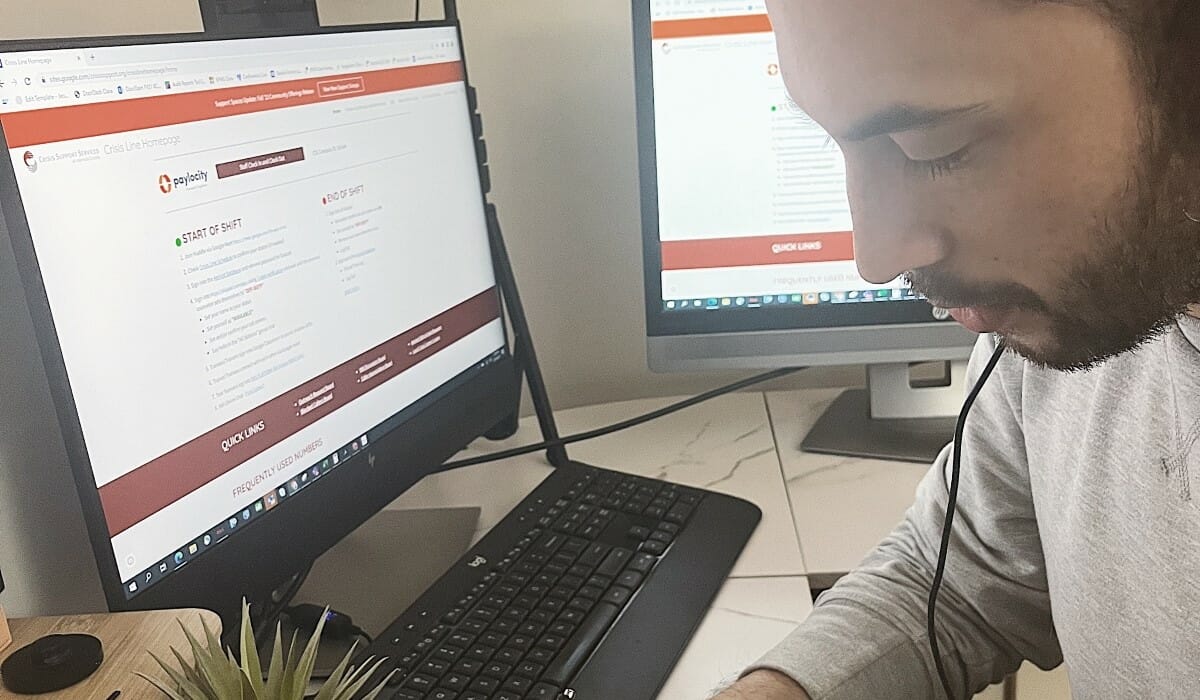
Alex listens to a crisis line call and looks up referrals and resources that help people get through their difficulties./Courtesy Alex Kong
Why do you think it’s important for others to volunteer?
Volunteering is important because at some point throughout our lives, there has been at least one time where someone has provided some type of support, whether large or small. It’s important we remember and reflect on those times and resources that were helpful to us in our own time of need and take time to appreciate those resources and find a way to pay it forward. Volunteering looks different for each individual. There is no one prescriptive way that someone needs to get involved. As such, everyone can find and develop their own way to contribute so that others can benefit from hearing and learning about an individual’s experience.
What do you want people to learn from your story?
I would like people to understand that it is never too late to try something new or to rekindle any interests that we may have forgotten or put on the back burner for some time. I hope that people are able to hear my story and maybe identify with feeling scared or frightened to try something completely new relative to their everyday life, or perhaps reinvigorate a thought or interest from the past that one has thought about exploring or pursuing further.
In my own personal story, it took a push from others to help me get past my initial fears of trying something new in volunteering as a crisis hotline counselor assisting individuals going through a crisis. I’m hoping this story might inspire or serve as that push for someone having those same feelings of fear or doubt, and for them to know it’s worthwhile and rewarding to take that chance.
If you or someone you know may be considering suicide, contact the National Suicide Prevention Lifeline by dialing 988, or text HOME to 741741 to talk to a trained crisis counselor through Crisis Text Line. Both resources are anonymous, free and available 24/7.
Middle School Principal Helps Give Youth a Voice and Develop Their Skills
Meet Daily Point of Light Award honoree Alex Brown. Read his story and nominate an outstanding volunteer or family as a Daily Point of Light.
Alex Brown, a middle school principal in Reading, PA, supports youth through his vocation on a daily basis. But for the past several years, this volunteer hero has taken his impact a step further by inspiring youth through the organizations VOiCEup and Youth Volunteer Corps of Reading (YVCR).
Alex has been a VOiCEup board member for four years and for the last two has also become a very active adult adviser to the youth-driven YVCR initiative called Stand Together Against Racism (STAR). Launched in 2020 by a group of local students to address racism and injustice in the wake of George Floyd’s death in 2020, STAR has since grown into a budding national youth movement.
As a STAR advisor, Alex supports this youth-driven work by encouraging new project ideas, lending guidance to new youth initiatives and ultimately inspiring and elevating the voices of these young social justice advocates. Under his quiet and humble guidance, the STAR initiative has grown from a small Zoom gathering with 27 students to an expanding team of passionate youth who engage hundreds of people annually in initiatives and projects supporting racial equity.
“As a VOiCEup board member, my role is multi-layered and includes a variety of tasks to support our mission and programming,” Alex shared. “I vote on specific volunteer projects for our organization to facilitate, while also actively participating in such projects. As a member of our organization’s Program Committee, I assist in the development of some volunteer opportunities while also overseeing the programs that are running.”
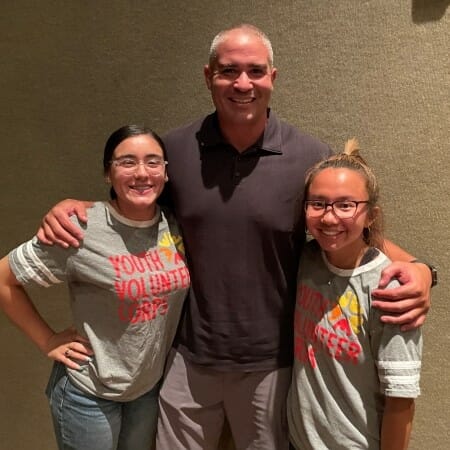
Alex Brown supports and inspires youth through the organizations VOiCEup and Youth Volunteer Corps of Reading (YVCR)./Courtesy Alex Brown
And the projects Alex is involved with are certainly making an impact. Last year, the team engaged 594 youth in 6,279 hours of service, filling community needs through projects ranging from volunteering at homeless shelters and cleaning parks to leading DEI (diversity, equity and inclusion) projects, advocating for menstrual equity and more. Over the past six years, Youth Volunteer Corps programs have cumulatively engaged 1,500+ unduplicated youth in more than 25,000 hours of community service to Berks County, PA.
“After George Floyd’s passing, as an organization, we felt we had a platform and an obligation to do something beyond what was going on with peaceful protests in a lot of parts of the country,” Alex reflected. “We decided to create a series of six virtual engagements in the summer, and thought that might stir the pot a little bit. But the momentum that was created with the kids evolved into the STAR organization and the formation of student groups.”
STAR now has affiliates throughout the country and in Canada, and Alex helps advise these affiliates on their programs, based on his experience. A documentary was filmed about the STAR program, which has won a couple of awards at independent film festivals.
“We certainly felt that we could magnify the message through the youth, rather than the typical adult rhetoric,” Alex shared. “When kids speak in a room full of adults, believe it or not, they tend to get the attention.”
Last summer, three YVCR students were chosen by the National Youth Volunteer Corps organization to sit on an International Youth Advisory Board. As part of this role, they worked with other students from around the country and Canada on projects and lent their voices to the national YVC organization. They served one full year in this national leadership position.
Multiple YVCR students have won prestigious awards, including the Outstanding Youth in Philanthropy Award from The Berks County Chapter of the Association of Fundraising Professionals, a Berks Best in Community Service award from The Reading Eagle and the Mujer de Mujer Young Changemaker Award from the Women2Women organization.
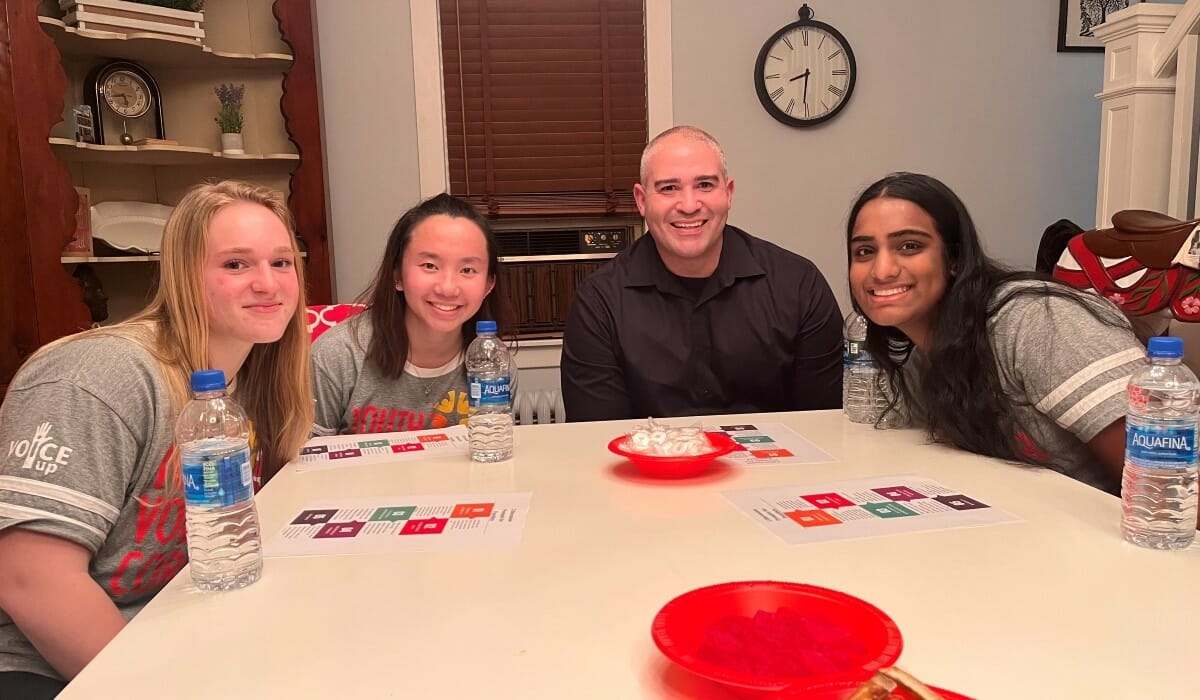
Developing strong youth leaders and student activists are pillars of Alex’s mission through his volunteerism./Courtesy Alex Brown
“In my role as a building principal, what I try to preach to my teachers is that as adults, we don’t have to be the ones in control,” Alex said. “We have some networking bridges we can help the kids with, but really our role is to support the kids and 99% of the work we do is the brainchild of our youth. We as adults are just there as support systems, connecting them to different people and organizations.”
Indeed, some of the program’s former youth have now gone on to expand their impact in their universities and beyond. The STAR program has helped set them up for greater success, and their involvement in the organization has even set them apart from other applicants in the interview processes for highly competitive schools.
“Giving the kids the platform and support is all that is needed to make the difference we all want,” said Alex. “It is an overwhelmingly exhilarating experience to witness the work of our youth, and to play a small part of this journey is priceless”
Alex encourages anyone thinking about volunteering to jump in without hesitation. He says, “There’s nothing magic about it. If you have that volunteer itch, scratch it! It doesn’t matter what cause it is. Volunteering is so rewarding. It’s something special – it’s so authentic and it comes from a great place, which is an individual’s heart. You should never think any volunteer opportunity is too small. It can grow into something huge. STAR started on Zoom screens when we couldn’t meet in person, and now we’re speaking to people in Canada and across the country. Don’t let any barrier, whatever it may be, stop you.”
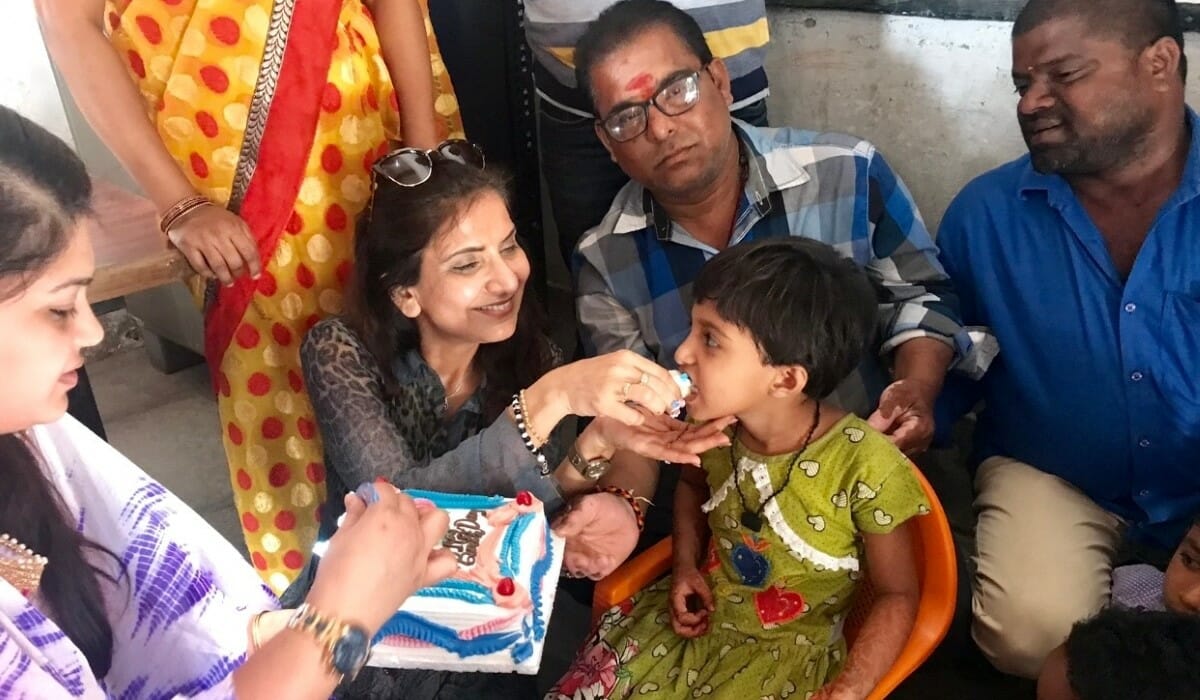
Meet Daily Point of Light Award honoree Kavya Sriram. Read her story and nominate an outstanding volunteer or family as a Daily Point of Light.
Kavya comes from a family of immigrants hailing from India. One thing the family has always emphasized is the value of education and helping people attain their educational goals. Kavya’s maternal grandma always says, “Money and looks will fade; knowledge is forever.”
After becoming interested in Spanish language and culture at an early age, Kavya realized many Hispanic families in her area were struggling with language barriers, lack of social and economic resources and systemic inequities that put up barriers to their community as well as other communities of color. Kavya’s love of Spanish and her desire to help others inspired Kavya to get involved with the local Hispanic community through service.
For more than four years, Kavya has been volunteering as an ESL (English as a Second Language) educator with a Hispanic nonprofit called El Centro Hispano. The center’s education department serves 10,000 Hispanic families annually.
What inspires you to volunteer?
There’s something very gratifying about being able to directly see the impacts of your efforts. This pushes me to contribute to my communities. In addition, I love learning Spanish and wanted to use this passion to benefit others. Finally, my family, who is very civic-minded, inspires me to stay engaged within my community.
Describe your volunteer role with El Centro Hispano.
I’ve been involved with my role for nearly four years.
I create and teach complete syllabi through 8-10 week-long classes, based on English grammar, vocabulary, and other helpful topics to benefit my students. I helped grow the program to over 500+ annual students in Level A, B, and Intermediate ESL classes.
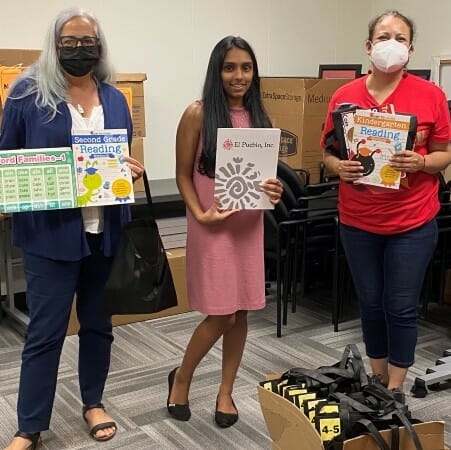
Kavya pictured with El Pueblo NC, after creating and distributing literacy kits to benefit Hispanic youth./Courtesy Kavya Sriram
I launched several new state-wide programs for El Centro after seeing the unique needs of my students. These include several 10-week classes teaching community resources, U.S. government, and navigating citizenship. I also host workshops from state department speakers, including Medicaid and Child development departments.
I work to train other volunteers, attend weekly meetings, have led fundraisers raising thousands of dollars for El Centro Hispano and won grants.
I also tutor students weekly, ranging from second grade to high school.
What’s been the most rewarding part of your work?
I love seeing the impacts my teaching has on my students, especially their new confidence in the English language or other academic subjects. Nearly all of my students are immigrants. I understand how living in a foreign country and not knowing the language can be extremely difficult. As well, many systemic barriers and the pandemic worsened social and economic conditions for many communities of color, especially Hispanic communities. By being able to connect with each student and modify the curriculum to fit their needs, I am able to propel them to use English to succeed. This is a heartwarming reward for my work.
What have you learned through your experiences as a volunteer?
I’ve learned you may need to take several approaches before you find the one that yields the most impactful results. For example, when I first started working with El Centro Hispano, many of the courses we taught had topics that wouldn’t actually benefit my students who often needed English to communicate with employers, doctors and people they spoke to often. I realized I could create newer courses and modify the curriculum to better suit their needs. In addition, I’ve learned it’s very important to listen to the people we work with. By hearing their stories and putting ourselves in their shoes, we can adapt the way we support them.
Are there any future partnerships, programs or events that you are excited about?
Yes! We are launching several courses in January, serving beginner, middle and advanced ESL learners. In addition, I’m hoping to continue my workshops; this time, hosting speakers from labor and immigration departments to help students who need help in those areas. My community has given so much to my family and others to help us grow to our full potential, so by giving back, we continue the cycle of helping.
Why do you think it’s important for others to get involved?
Getting involved is acknowledging the stories that shape our communities. By taking the time to listen to those who need help, we benefit the communities that have shaped us. I’ve realized that even if your acts of service seem simple, they are much more meaningful than you may imagine.
What do you want people to learn from your story?
I want people to understand the most important thing is picking a cause you are passionate about and sticking with it — being consistent and adapting to your community’s needs over time leads to greater results. Volunteering is incredibly rewarding, so finding your niche is the best way to go.
I hope to take my passion for Spanish and service into college and beyond. I hope to pursue a major in Hispanic Studies/Spanish to better understand Hispanic language and culture and the economic inequality many Hispanic communities face. My career goal is to work in nonprofit management, so I can advocate for equitable outcomes long-term.
Launching a Nonprofit with the Mission to Aid Unhoused Populations in Ohio and Beyond
Meet Daily Point of Light Award honoree Diannah Pennyman. Read her story and nominate an outstanding volunteer or family as a Daily Point of Light.
Diannah Pennyman has been volunteering in various capacities for most of her life. But in recent years, this Winchester, Ohio resident has elevated her service by establishing her own nonprofit, The Imani Center. Now, Diannah spends most of her weekends packaging up hygiene kits and other items for unhoused individuals and setting up tables to pass these kits out to people within her community.
Read on to find out what inspired Diannah to start The Imani Center, her future goals for the organization and how you can get involved with its mission.
Describe your volunteer role.
My service goes way back. I don’t remember specifically where I started; volunteering has always been a part of who I am. I can remember when I was younger, volunteering on a teen suicide hotline in the local area. The Imani Center just kind of evolved out of all those experiences. I lived in Atlanta and volunteered at a shelter there. I can’t even explain the experiences there – I saw the best examples of giving.
I live in Ohio now, and The Imani Center just kind of sparked from a project I was working on. I was finishing my graduate studies and had just finished a strategic planning class. One of the final projects was to create a nonprofit. I remember being so scared, but it made me face my fears. When I realized my nervousness was coming from tapping into all my fears and my dreams, I realized at that point that it was a God-given dream within me that I had to trust.
For the project, we had to write a mission, a vision and a strategic plan for five years and 10 years for our nonprofit. Often as adults, we have things we want to do but we don’t think we’ll be able to, for whatever reason. I challenged myself to start by just writing out the plan for the center as if there were no limitations. And it was hard because of these fears!
Diannah gleans inspiration from nonprofit organizations around the country, including The Los Angeles Dream Center./Courtesy Diannah Pennyman
Now the name is special. Imani means “faith” in Swahili. It’s one of the seven principles of Kwanzaa; it’s the principle for the seventh day. It’s about believing in your community, believing in your leaders, believing in your people. So The Imani Center was born. And it’s a statement of faith. It’s a journey, and I’m learning. We’re not where I want us to be five or 10 years from now – we’re operating out of my garage – but it will grow.
What kinds of things does The Imani Center do for the community?
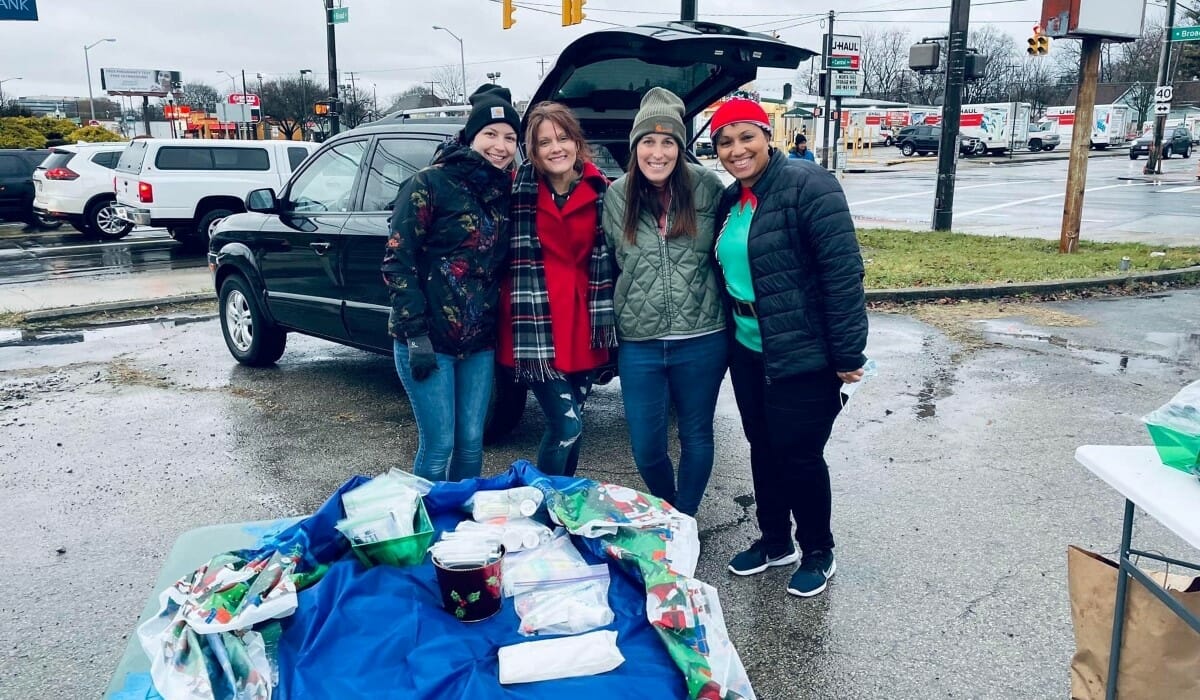
It started off small. I would go to The Dollar Store and just pick up some deodorant, some tissues, some toothpaste. I’d create these little bags to have in my car – most people call them blessing bags. So instead of giving money when I stop at the corner, I can give out this blessing bag. I was also involved with outreach at my church. And groups of people at the church started doing these blessing bags to give out to unhoused people.
Then we started this blessing box project. I got my church to start doing it too. You host one of these blessing boxes, and the concept is to leave non-perishable food, or household items, or baby supplies like diapers. It’s an honor system: leave what you can, take what you need. We started this in an area that’s considered affluent, so I didn’t know if it would go well, but it stays constantly replenished. There are people in need and we don’t even realize!
Eventually, I started The Imani Center after I got an A on my project. We go wherever we see a need. Typically this means street corners with a lot of homeless camps, usually in an open lot. We pull out a table, set things up and hand out blessing bags. Over time, we started realizing we needed to break down the bags a bit more. We want to be good stewards of the resources we’re giving. And we noticed that not everybody was needing everything in each bag. So now we have a sock kit. A dental kit. A shaving kit. And so breaking these donations down into smaller kits works out really well in terms of minimizing waste.
We give candles, blankets, coats and shoes in colder weather. We partnered with a local pantry to set up there, and we’re continuing to build partnerships with other local nonprofits.
What keeps you volunteering when you face challenging times?
We’ve been out in rain, snow, single-digit temperatures. It’s hard. But you keep the perspective of the fact that you’re out there for an hour, an hour and a half max. Then you’re going to get into your warm car and then you’re going to go to your warm house.
I feel that The Imani Center is my purpose. It’s something bigger than me. I work full-time. I was in graduate school when I started the nonprofit. I was trying to build this organization, and it’s a lot to think about. How do you get a solid financial structure? How do you get a good team in place? What keeps me going is thinking about the people we’ve helped. Delivering a bowl of chili to someone in a wheelchair. Talking to people who just want to have a conversation, just want to be seen. I know what it’s like to feel lonely.
This mission is bigger than me. And don’t get me wrong – there are times I want to give up, but there’s always something that happens that encourages me, right in that moment. I have no volunteers that day, and suddenly someone texts me because they saw a post.
The Imani Center’s team of volunteers at a Christmas outreach event./Courtesy Diannah Pennyman
Any rewarding stories from your work?
When I lived in Atlanta, at the shelter where I volunteered, there was a man who was freezing. In this shelter, you had to sign up, and it was a first come, first serve policy. One man was on the list, he was next, but he gave up his spot to someone who needed the meal much more than him. He gave up his spot for this other man to have the meal, which meant that he had to sleep outside. Many times, I left heartbroken and crying. You see so many people in need. You’re seeing people at some of the most vulnerable times in their lives. It really left an impression on me.
We see men who are sleeping at the bus stop. Women with no shoes, who we strongly suspect are being trafficked. And we’ve also met a lot of people who don’t fit the stereotype of homelessness. There are families. There are children. There are many faces of homelessness.
Little things make a big difference. People come from their campsites because they’ve heard that we have a certain item that they need. Giving a man a razor and a little pack of shaving cream, and he tells us that it’s just what he needs because he has an interview the next day! These are the rewarding stories that keep us going.
Anything you’re looking forward to in the future?
At The Imani Center, our goal is to eliminate homelessness, but we know that may not be possible on a broad scale. So instead, we help eliminate homelessness for one person, one family at a time. We equip one individual at a time. Homelessness is an issue globally, so one organization is not going to be able to end it on its own. We want to make a dent in homelessness.
Our goal is to have a transitional housing facility, a financial literacy program, a charging station for phones, GED classes. We hope to have job prep. These things will come in stages, but we truly hope for it to become a full-service center that helps people live in a healthy state, in a safe environment. We want to help them live physically, mentally and emotionally well. We’re still looking at what all this will look like, what relationships we will need to build with other nonprofit partners.
We’re continuously asking unhoused people what they need so that we make no assumptions. We don’t know what’s best. We ask, “What’s meaningful to you?” We don’t want to give them something that isn’t impactful. They voice to us what they need, and we can design The Imani Center around those needs.
What’s your advice for people who want to start volunteering?
Some of it is just stepping out and doing it. When people finally come and volunteer, they often say, “Wow, this is so much more than I thought it would be.” So just doing it, even when you’re going through a tough time. Sometimes you get so much more out of it than you give. I’ve gotten so much more out of mission trips than I even gave. Volunteering gives you so much more perspective.
I’d encourage people just to do it. Find what your passion is. At The Imani Center, we try to ask people what they like, what they’re good at, and then create the volunteer experience they’re looking for. Find something that works for you, something you can be committed to.
How can people help?
We do have an Amazon Wishlist that goes directly to the organization. As another way to contribute, people can make cards – a great activity to do with kids – and mail them to us to include in the blessing bags! Homemade cards give the messages of “you are loved” and “you are seen.”
We have financial needs, so we always appreciate donors. And we can make a dollar stretch far! We’re looking for nonprofit partners.
In terms of the organization, we’re looking for someone who’s great at social media. We’re looking for someone to help with our website. There are so many needs! You can contact us via our website. Everything helps.
Teenager Facilitates Food Recovery and Composting Programs to Feed Families and Help the Environment
Meet Daily Point of Light Award honoree Shrusti Amula. Read her story and nominate an outstanding volunteer or family as a Daily Point of Light.
Shrusti Amula was just 13 years old when she founded the Rise N Shine Foundation Inc. in 2019. Challenged with solving a problem in the local community for a STEM competition, she identified food waste as an issue that contributed to the effects of climate change while recognizing that the solution could benefit those facing hunger and homelessness. After starting her first composting program in a local school, Shrusti saw the impact she was making and decided to expand the program and incorporate food recovery.
This passionate dancer and cricket player has only recently gotten her driver’s license but has already made changes in her community that will benefit the area for years to come. Today, Shrusti’s organization runs composting programs in eight schools and has donated over 50,000 meals to those in need. It has diverted over 35,700 pounds of food waste from landfills, helping schools get “Green School” certified in the process.
What inspires you to volunteer?
We didn’t really compost at our house, and I didn’t learn about it in school. I just felt a need to help the environment, because we’re in a really bad place, and someone needs to stand up. Rise N Shine is committed to making sure that food is used for its intended purpose: to feed people. Everyone knows that food waste is such a big issue, but no one really thinks about the environmental aspect of it. One of the things that I do is start composting programs in local schools.
In my county, all the food waste goes to incinerators instead of landfills, which are much more harmful for the environment. We found that around 40% of all waste is food waste, so we’re trying to keep that 40% from going to incinerators by turning it into compost, which is a lot better for the environment. Also, we’re trying to recover uneaten food in schools and donate it to those in need.
Shrusti Amula, 16, is the founder of Rise N Shine Foundation Inc./Courtesy Shrusti Amula
Describe your volunteer role with the Rise N Shine Foundation Inc.
I founded the organization in 2019. When we started, it was just me. Now, we have 10 people on our executive board and many volunteers. Some people started in elementary school and others in high school. We try to make it completely youth-based and turn volunteers into leaders who can then make change in their own way.
When we recover food from local businesses, we have to go pick it up almost every single day. For food recovery in schools, I’m partnered with the MCPS Department of Sustainability and Compliance, and their leader drops it off to our house, and we donate it from there.
Some of the schools you implement composting programs in are full of very young students. Is it challenging to teach them their part the process?
A lot of people hesitate to teach elementary schoolers, because they think it’s going to be difficult, but I find that they catch on quickly. One of the things that we do to ensure that they understand completely is show them cute little videos about a week before we actually start the program.
We also create posters to hang up in the school, so they have an idea of what they’re going to do before they actually do it. And then on the day we actually start the program, I go there in person with members of our organization. We walk them through the process of sorting your waste. They’re really excited and they mostly get it by that point.
You lobbied for Senate Bill 124, a grant program for composting in Maryland schools. What were some of the things you did?
That was a really exciting time. I’m in a student group that created a postcard campaign. We sent out postcards to schools across Maryland, and we received the support of over 6,000 community members from 23 schools across the state. Then we went to Capitol Hill in March or April of 2022 and dropped off the postcards to the different legislators there, talking to them in-person and trying to convince them to vote for these bills. A lot of it was virtual as well, so I was able to testify online.
Is there any other legislation that you guys are focused on right now?
We’re mostly focused on these two bills. It was supposed to have around half a million dollars for composting in schools, and the bills got passed, but the funding didn’t. So, we’re still working on getting funding.
What’s been the most rewarding part of your work?
It’s knowing that it’s actually having an impact on people’s lives and the environment. I’ve even heard that the younger students are going home and telling their parents about the composting program, and they’re starting it in their own homes.
We also do something called Food Pop Up Pantries to give away food we’ve recovered to folks who have experienced homelessness in our county. I love seeing them in person. They’re excited, because it’s one of the only opportunities they have to receive healthy, organic food, and they’re very grateful. I love talking to them.
On the first day of their school’s new composting, Shrusti (right) walks young students through how to use the bins./Courtesy Shrusti Amula
What have you learned through your experiences as a volunteer?
When you’re young, you feel like only older people can make bigger changes, but one of the most important things I’ve learned is that no matter how young you are, you can always make a big change in your community as long as you’re willing to put in the work.
Are there any future partnerships, programs, or events you’re excited about?
We’re presenting for the fourth time at Maryland Association for Environmental and Outdoor conference in February. I also look forward to just talking to other schools and trying to expand the reach of the programs. I’ve been talking to our county, and we’re hoping that food recovery will be in all schools by the end of the next school year. It’s a lot of work, but I’m very excited for that.
What do you want people to learn from your story?
There’s a quote that one of my mentors told me that I try to keep in my mind for everything I do: “Be a solutionist, not just an activist.” Everyone has opinions and things that they’re passionate about, and that’s great, but only solutionists will make the change. If I want something change in our community, I have to take the actions to make it happen.
High School Senior Creates STEM Opportunities for the Underrepresented
Meet Daily Point of Light Award honoree Tony Wang. Read his story and nominate an outstanding volunteer or family as a Daily Point of Light.
While many service-oriented leaders focus on tackling some of the more visible problems of the world, Tony Wang, 17, takes a different approach. As a longtime STEM enthusiast, he has jumped at the chance to participate in activities like science fair and research opportunities at his well-funded school. When he looked around him, he noticed that not everyone had the same opportunities, and in the summer of 2021, he decided to do something about it.
So amidst completing classes on Zoom and managing the side effects of the pandemic lockdown, he was building the newly formed Alameda County Science and Engineering Fair Student Leadership Board (ACSEF SLB). As he marches towards end of his high school career, he and his team of 50 other high school students across 20 different schools are trying to close the gap in STEM education access.
Reaching out to nearly 100 Title I schools, institutions where students from low-income families make up around 40% of enrollment, Tony and the ACSEF SLB offer free workshops and mentorship with the goal of increasing research opportunities for underprivileged communities and encouraging kids to get involved with science. Tony pulls up others along the way who haven’t have the same chances he has, and it’s this “succeeding together” mindset that has led him to seek a career at the intersection of science and service after graduation.
What inspires you to volunteer?
I come from a relatively affluent part of California, but growing up, I had friends from Oakland and relatives from rural areas of China. Something that really stood out to me was just how stark the difference in the quality of education was between those locations.
At school I have access to core lab materials, and I can produce science fairs. I have all these cool interactive ways of learning science and about the world. But a lot of other people, who I’d say are much smarter than me, don’t have access to the opportunities that I do. They can’t get involved with these things and learn as much as I can. That’s always really bothered me and has driven me on my volunteer journey in the fight for equalizing the educational playing field a little bit.
Describe the setup of the Alameda County Science and Engineering Fair Student Leadership Board (ACSEF SLB) and your volunteer role within it.
The board is split into four main divisions: Mentorship, Communications, Marketing and Activities. Each one has its own team of students and an officer leading it, and they run their own initiatives. My role as president is to oversee all of these. I host meetings with representatives from the divisions to update each other and make sure we’re on the same page. I set the agenda each month for what our goals are as an organization, like what workshops we want to hold, how many hits we want to reach on social media and more. I also spearhead our different initiatives.
What’s been the most rewarding part of your work?
It’s been seeing people build up confidence and curiosity. Throughout our different workshops, I’ve seen some familiar faces keep showing up, and I love that. Sometimes, during our earlier workshops, they will be very hesitant and not even know if they’re going to work on a research project or get involved with the science fair or pursue STEM.
At a local school, Tony volunteers to lead a class on public speaking./Courtesy Tony Wang
What have you learned through your experiences as a volunteer?
I think the clearer your mission and the more impact-driven your organization is, the more people are willing to collaborate with you and work harder with their volunteering. At the start, we had a lot of different goals, but slowly, we were able to crystallize that into helping underserved and underrepresented students get involved with science research.
As we began to focus more on that and hosting more workshops, we had other volunteer organizations reach out to us. A local library offered to give us laptops and a local robotics team offer to give us demonstrations, because they also believed in the mission and wanted to also be a part of it.
Are there any future partnerships, programs, or events you are excited about?
We’ve mainly been virtual the past couple of years. All of our events have been on Zoom. Our next big focus is doing in-person events. We’re currently planning a large hackathon and Maker Faire in Oakland so that we reach these Title One schools and make sure it’s close to them.
We’re renting buses. We’re going to have tables set up and make this something that students will want to go to, have fun at and want to come back to. As long as they can have fun at these hackathons and workshops—and I think in-person workshops are much more fun—it’ll make our impact much greater. We’ll also be able to directly see how our students are learning.
Why do you think it’s important for others to volunteer?
As members of a community, we all benefit from different things other people have done for us. And when we uplift others, even if it’s just a small thing like comforting a friend or doing something nice for a teacher, it can create such a beautiful kind of butterfly effect. Being able to volunteer is a privilege, because you’re able to work with others to put something positive into the world.
What do you want people to learn from your story?
I really want people to learn that being young isn’t a barrier or an obstacle to creating change. Being young is something that can help you, because young people have a lot of passion. They have a lot of interests and a lot of time, and they are some of the greatest agents for creating positive impact and change. It’s never too early to volunteer.
What do you see for the future of the organization?
I really want the organization to have longevity. I want it to be something that can continue being passed on and to continue changing to fit what the community needs. If there are new things that we want to address or if old issues become less relevant, I definitely want it to be something that can shift focus, and recenter itself on the things that really matter. I just want it to continue creating the biggest impact that it can in whatever shape that may take in the future.
Surge in Anti-Asian Violence Prompts New Yorker to Respond Through Volunteering
Meet Daily Point of Light Award honoree Howard Chen. Read his story and nominate an outstanding volunteer or family as a Daily Point of Light.
Just as fast as the COVID-19 pandemic spread around the United States, so did racism against Asians. From California to New York, thousands of Asian-Americans across the country reported being bullied or assaulted. In 2021, data revealed that anti-Asian hate crimes increased 339 percent nationwide.
From an 89-year-old woman being lit on fire to the tragic murder of Christina Yuna Lee, these senseless attacks terrified the Asian-American Pacific Islander (AAPI) community, including 28-year-old Howard Chen and his fiancée, Michelle Tran. Wanting to help their community, they joined forces with another activist named Kenji Jones to form Soar Over Hate, a nonprofit working to provide members of the AAPI community with the equipment and resources they need to protect themselves and combat anti-Asian hate.
“We wanted to get everybody who was willing to help to pull together funds and use those funds to purchase personal defense devices to distribute back to the community, especially to those who are elderly and women,” Howard said.
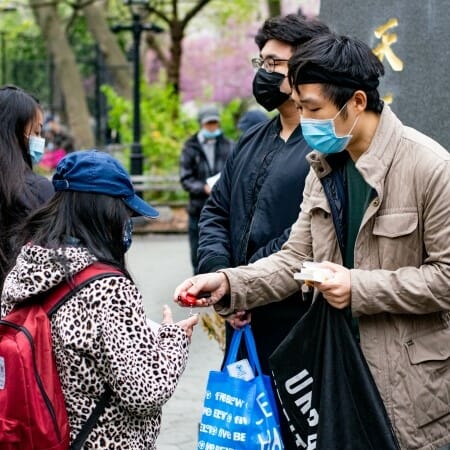
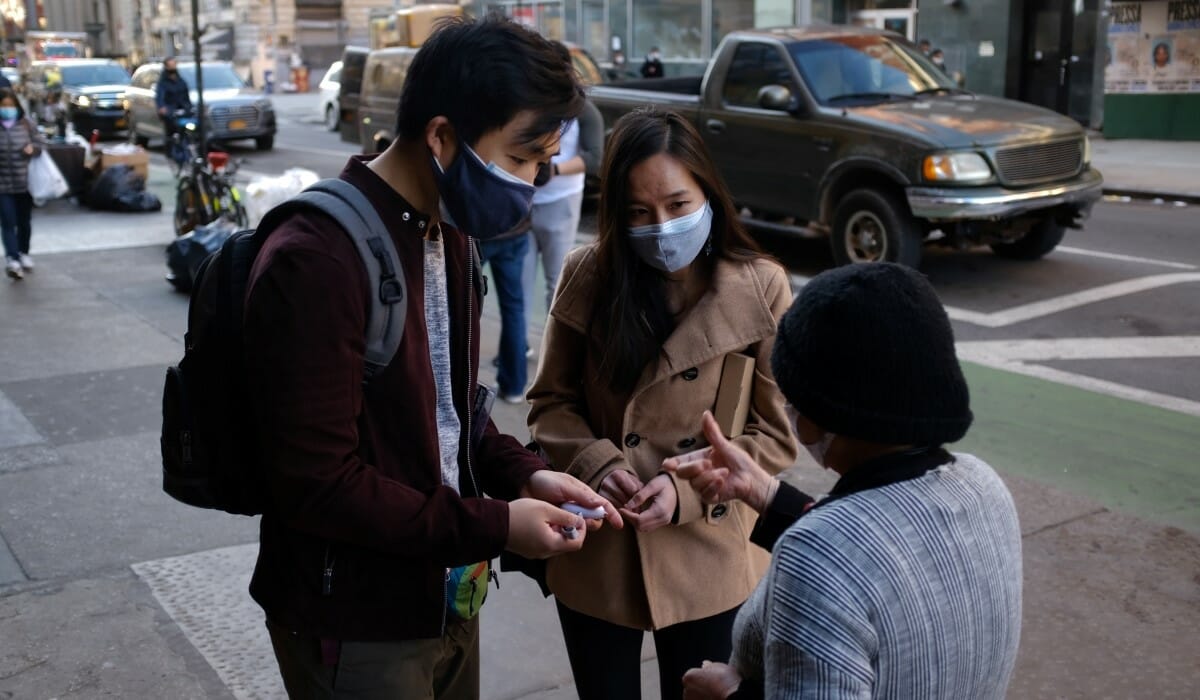
Howard passes out personal alarms and whistles to members of the AAPI community in New York./Courtesy Howard Chen
They first started raising funds by reaching out to friends, family and coworkers. But as the news of their efforts reached more and more people and eventually the media, donations started pouring in from companies and people across the country.
With those funds, Soar Over Hate has been able to distribute more than 31,000 personal alarms, whistles and pepper spray across New York and California since March 2021.
“We have people tell us how one of our devices, whether it’s a pepper spray or personal alarm, made them feel safer and even have warded off a potential attack,” Howard said.
In addition to handing out self-defense equipment whenever they can, they have also held “AAPI Care Fairs” and other events, during which they served thousands with self-defense classes, puppy therapy, meditation classes, mental health referrals and hepatitis B screenings, among other helpful community resources.
Jessica Ng, a Muay Thai instructor, taught basic self-defense skills at Soar Over Hate’s Care Fair last March, with participants’ ages ranging from teens to seniors in their late 60s.
“It was extremely powerful because it was inter-generational,” Jessica said. “And I think self-defense has more to do with empowerment, because once you’re empowered and confident, it goes a long way, and it gives you the tools to look out for each other instead of being individualistic.”
“We wouldn’t be able to have successful workshops and services without individuals like Howard and organizations like Soar Over Hate,” she added.
Howard and his fellow co-founder Michelle Tran pass out personal defense equipment to members of the AAPI community in New York./Courtesy Howard Chen
The remaining funds have been used to provide nearly $15,000 worth of scholarships for rising AAPI high school seniors who are in financial need and to provide $4,000 worth of therapy sessions to victims of anti-Asian hate incidents.
Running a nonprofit organization while also working a full-time job as a manager at KPMG isn’t easy. But Howard said when he sees his community come together because of Soar Over Hate, it makes it all worth it.
“The quote we always go by at Soar Over Hate is ‘The only way to survive is by taking care of one another,’ by Grace Lee Boggs,” Howard said. “Interacting directly with my community and being able to see people being safer because of what we do at Soar Over Hate has been the most rewarding experience and I wouldn’t trade it for anything.”
Reviving Communities and Spreading Wellbeing Across the Globe, One Water Well at a Time
Meet Daily Point of Light Award honoree Nisha Mandani. Read her story and nominate an outstanding volunteer or family as a Daily Point of Light.
Nisha Mandani, a resident of Dunedin, Florida, is helping create waves of impact in some of the most vulnerable communities across the globe. Fourteen years ago, she founded Our AIM Foundation with the mission of helping those most in need of resources like water, food, healthcare and education.
Today Nisha manages the foundation, serving as founder, president and CEO. Our AIM Foundation’s team of incredibly hard-working, dedicated volunteers has been awarded with The Global Water Award by the International Water Association and Most Empowering Remote Community Support Organization 2022 – East Africa by the UK Acquisition International.
Read on to discover what drives Nisha forward on this mission and how you can help the cause.
Describe your volunteer role.
I act as founder, CEO and president, on a completely volunteer basis. We started Our AIM Foundation in 2008 out of passion. We were doing grocery shopping for isolated seniors who were immobile. This led to intergenerational bonding and more people started joining, and this became a program that spread to all the counties in Florida and expanded beyond. This passion grew, and eventually, we started work in Africa.
When we went to Africa, we saw that people were walking eight to ten kilometers just to get a drink of water. We started putting wells in, and to date, we have over 2,000 water sanitation projects going. Our work is in seven countries. We’ve helped over four million people in the United States and countries in Africa and South Asia through education, health, water and sanitation, women and youth empowerment, and hunger prevention as well as COVID-19 and other disaster relief responses.
Water was the reason we started the project in Africa. After putting in just one well, they were celebrating as if they hit the lotto! When we go on a mission trip to see the projects, these are the 5,000 to 10,000 women who were waking up at 4 in the morning, walking up to five to 10 miles, and they’re dancing. They celebrate that their prayers were answered. They’re in the most remote villages. There’s no electricity. There are no toilets. The biggest paycheck you can ever see is the contentment, the smiles and the laughing you see on these people’s faces.
What keeps you volunteering when you see all this devastation and poverty?
When things are tough, you see the light at the end of the tunnel. You are the light for these people sometimes. Most of the time, people look for the candles in the darkness. When you have sunlight, you’re not looking for candles. But in the darkness, you’re looking for light. And this is the light for these communities. These are the times you become the candle for these people.
When we have gone to Palestinian and Syrian camps, we see people who have been suffering for ages. They have no identity for themselves. They can’t go to school, they can’t get healthcare. They don’t have proper homes. They don’t have food, they don’t have water, they don’t have electricity. They’re living in shacks. Sometimes your heart breaks. What keeps me going? To know that I’m changing someone’s life.
Nisha helps bring water, education and health resources to vulnerable communities around the world./Courtesy Nisha Mandani
Any rewarding stories or experiences from your work?
There are so many. Our AIM Foundation only works in areas where no one works, where no one goes. Also, 100% of the funds we provide go to the ground. We all work from home, we’re all unpaid and we have no expenses, no overhead.
Before we start projects, we do our research. I was in India, and I switched my trip from U.S. to Bangladesh to go serve in the refugee camps there. I heard devastating stories. I saw devastating things. Women being treated horribly. All you hear are children and babies crying nonstop. They’re not allowed to have any water bottles. They have no food or milk. Babies are teething on rocks. Children drinking from the gutter, eating raw flour. We heard that 25,000 children die each year from infections. Every night we’d come back to the hotel, and we’d sit and cry. You can’t even watch this in a movie. We saw the pain with our own eyes.
The world has a lot of pain. A lot of people are suffering, but you can be the hope for them. The more people can join hands to bring hope in others’ lives, any little difference you can make can impact lives. We have schools, health clinics, women empowerment centers, computer classes, and we do all this for free. Of the 126 villages we’ve volunteered in in Malawi, Africa, not even one person has died since we opened the health clinics.
Me and my family volunteer and donate together. We donate for my birthdays, my anniversaries, my children’s weddings. All the money goes to the foundation. I’ve celebrated 90% of my birthdays on mission trips.
Any upcoming events or programs you’re excited about?
We’re starting a program, Awareness in Mind. We see a lot of high school children going into depression, anxiety, stress. Our mission is to bring these programs into high schools, to teach students what life is, and how to be happy. How to embrace each other, love each other, care for each other. They will receive volunteer hours, and they’ll be learning this on a daily basis – how to lift each other, how to work as a team. We want these children to stand up, stand together and not be a bystander to things like bullying.
How can people help?
Absolutely go to the website or email us at [email protected]. We can take volunteers from every age and every angle. Volunteers, donors, partners, corporate partners, even coming on a mission trip with us, which is a life-changing experience. They can be the light in the darkness for the millions of people who are suffering and need us.
We also have an Adopt a Child program, and even youngsters can save their money and adopt a child for $75 a month to provide education and health supplies for vulnerable children. We monitor every penny and provide proof of where funds are going. We have hundreds of children in many countries, including India, Pakistan, Bangladesh, across Africa.
Any advice for people who want to start volunteering?
I think these types of decisions should not be weighed for a second! Just jump in right away. Volunteering doesn’t just mean dedicating your whole life. Just a note. Just a phone call. Just appreciating someone who’s around you. You yourself can step into someone’s shoes, feel their pain and help improve their lives. Volunteering can start with shaking someone’s hand or patting someone on the back, all the way to going on mission trips or donating every month. Volunteering is a blessing. When you give, you receive. You receive an abundance of peace, happiness and improved outlook on life.
I also encourage our youth to start getting involved, even five or 10 minutes a day. Youth are the leaders of tomorrow. Giving, volunteering, helping and lifting up others is vital.
Giving a Voice to the Marginalized in Her Long Island Community
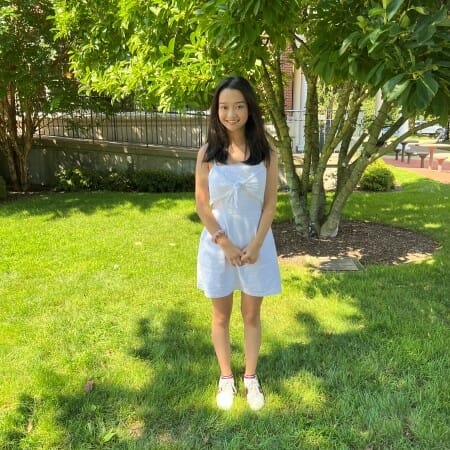
Meet Daily Point of Light Award honoree Yating Tang. Read her story and nominate an outstanding volunteer or family as a Daily Point of Light.
Yating “Tina” Tang is a high school student from Long Island who is passionate about anti-bullying efforts, lifting up the marginalized and combating gun violence through activism and art.
Born in China, Yating immigrated to Long Island when she was eight years old. Her experiences as an immigrant have made Yating uniquely capable of supporting those who are excluded. She has naturally been drawn to volunteer activities that impact the marginalized, especially through efforts to combat bullying. Most recently, she has served as a youth board member for the Long Island Coalition Against Bullying, an organization that provides resources for students who have been targeted by bullying. Yating recently proposed a student ambassadors’ program where each school in Long Island has representatives engaged in bi-monthly youth summits, sharing experiences and planning for organized action.
As a young girl, Yating saw injustices and vaguely understood them. But her ability to impact the world seemed limited to her immediate circle and environment. Even then, she feared being alienated as she had been as a new immigrant.
There is a Quaker saying, “Let your life speak.” As a student, community member and activist, Yating hopes to use her life experiences to empower others instead of living in fear. She says, “With empathy and understanding, we can all create expanding ripples of kindness when we choose to offer others the helping hand we ourselves crave.”
What inspires you to volunteer?
Many of my volunteering efforts stem from my experience as a Chinese immigrant and my personal struggles to fit into a new culture. I moved here in fourth grade and felt very lonely for a while. As a result, I have a unique ability to connect with those who are struggling with social isolation.
Describe your volunteer roles.
As an executive member on Long Island Laboring Against COVID-19 (LILAC)’s Creative Arts Committee, I helped to organize ThankYou & WeCare artwork initiatives to pay tribute to frontline workers, uplifting the spirits of all affected by COVID and raising community morale. Additionally, as a youth executive board member of Long Island Coalition Against Bullying, I helped advise the Board of Trustees on anti-bullying policy and program development in schools across Long Island. I raised funds to bolster programming through bake sales and online fundraising campaigns. I also proposed an Ambassadors Program to increase the reach of our anti-bullying efforts, a program that will be launched in the coming months.
Yating “Tina” Tang is a high school student from Long Island who is passionate about anti-bullying efforts, lifting up the marginalized and combating gun violence through activism and art./Courtesy Yating Tang
As the director of fundraising for Girl Pride International, I raise money for our Fighting Hunger for Education’ initiative to help girls in the Remot Primary School in Samburu, Kenya where the community is suffering from drought and food shortages. I helped design and execute our highly successful t-shirt campaign by negotiating with manufacturers on Long Island and creating a cost-benefit analysis. I used GPI’s position as a nonprofit to receive the product at half price and maximize profits for the girls. With the funds raised, we purchased over 6,500 pounds of maize, flour, rice, beans, salt, cooking oil and bottled water. These supplies were then distributed to 1,200 vulnerable students and their families, providing four months’ worth of nutrition. In the months since this initiative, every student who had to drop out of Remot Primary School due to the severe food shortage in Samburu has returned to school.
As a service-based artist, I created a digital portrait of journalist Marie Catherine Colvin for Women’s History Month, highlighting the atrocities of the war in Ukraine. A variety of publications covered the dedication, including Syosset Advance and Newsday. The Oyster Bay Herald featured my artwork on its front page. Later, I created graphic designs used to promote Long Island’s March For Our Lives, calling attention to the gun violence crisis. This artwork was exhibited on the front steps of the Nassau County Legislature. My artwork has been presented in front of the Nassau County Legislature and featured by several news outlets. I have received several honor citations from my local government for my work. From posters to t-shirts and portraits, I feel that art deepens human connection and encourages empathy and kindness.
What’s been the most rewarding part of your work?
The most rewarding part of my work has been connecting with other activists and community members to bring about genuine change. It has felt amazing to have an impact on the lives of girls and communities across the world.
What have you learned through your experiences as a volunteer?
Through my experiences as a volunteer, I have learned to use my talents for a greater purpose by amplifying marginalized voices. I like to focus not so much on what talents I have, but more on what my talents can do for others and the kind of message I can send to inspire other young artists and musicians. Over the last year and a half, I have been involved with two different nonprofit organizations that seek to build bridges of solidarity and trust with the BIPOC community and empower girls. Through these organizations, I use my artistic ability to contribute by creating art that brings attention to social problems such as bullying, gun violence and racism.
Through my experiences as a volunteer, I have learned that creativity goes far beyond art for art’s sake–that art can truly make a profound positive impact on the world.
Are there any future partnerships, programs or events that you are excited about?
I am very excited to attend college in the fall of 2023! Although I am not sure where I will be attending yet, I plan to get involved in community service organizations in my university community. Additionally, I hope to start a Girl Pride International branch at my college and continue my work with the Remot Primary School for Girls in Kenya.
Why do you think it’s important for others to get involved with causes they care about?
It is so important to get involved, because fostering a community and sharing love is the core of human experience. The abundance of suffering in the world can often feel overwhelming, but participating in community service reminds you of the positive impact you can have. Uplifting others will uplift you as well, so give back today!
What do you want people to learn from your story?
I want people to learn that no matter how hopeless or lost you feel, there is a light at the end of the tunnel. It will get better! Try to turn those negative feelings and experiences into something productive, like getting involved in your community.
I also want to say thank you so much for this award! I am extremely honored. I am very proud of my commitment and efforts to lift the voices of marginalized communities and will continue to participate in service for the rest of my life. I am so honored to be a part of this organization.