Minnesota Teen Brings Students Together to Raise Money for Local Causes
Meet Daily Point of Light Award honoree Alexander Ren. Read his story, and nominate an outstanding volunteer or family as a Daily Point of Light.
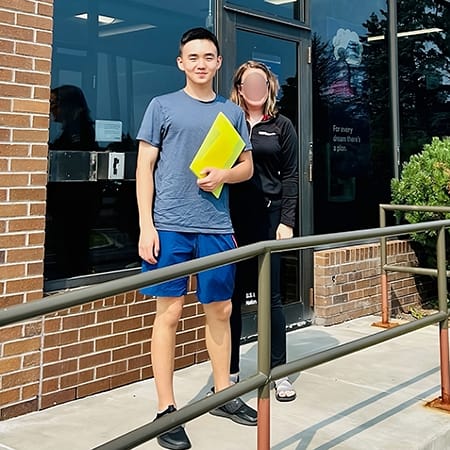
When people were struggling with the effects of the pandemic, Alexander Ren, an 8th grader at the time, wanted to help. In 2021, he started with friends in order to aid local nonprofits via fundraising and on-the-ground volunteering. The organization also hosts its own events, including food drives and clean-ups.
Alexander, now a high school sophomore, serves as the head director for Duluth as well as the executive director for CORA as a whole. The group has expanded to nine different branches with the help of motivated students across the country with the Duluth branch alone maintaining more than 40 people on staff.
In his free time, Alexander is a competitive swimmer who enjoys playing the piano and hanging out with his poodle. But more than anything, he loves helping people with his friends. His math tutoring program has helped more than 100 students. He has coached three elementary school math teams. He’s currently training to become a member of ski patrol.
What inspires you to volunteer?
Growing up, I had a lot of people supporting me: my parents, my grandparents, my teachers, my friends and so on. And now that I’m able to contribute to my community, I feel the duty to do so. I also just find volunteering with my friends to be super fun and rewarding.
Alex Ren, founder and executive director of CORA head and director of the Duluth branch, works on the company’s financial and legal registration.
What inspired you to get started with this initiative?
I started CORA with my friends when people around us were still struggling with the ramifications of the COVID-19 pandemic. We felt we had to make a difference, even if small. Since then, CORA has grown to encompass the support of local and international nonprofits and has made direct improvements to our local community through that volunteering. Building upon our success in Duluth, we started recruiting passionate leaders who share our values and expanding CORA’s mission across the nation.
Tell us about your volunteer role with CORA.
I founded CORA and am the head director for the Duluth branch as well as the executive director of CORA as a whole. As the Duluth director, I help lead meetings and help plan small, student-led events like local cleanups. I also help design and facilitate large-scale competitions and events like the door-to-door fundraising campaign that’s going on now. I work with local and international charities to organize fundraising and volunteering. I’m the point person between CORA and multiple school administrations and student groups. I actively volunteer at events, and I cover miscellaneous administrative tasks like setting up PayPal accounts or managing bank account issues.
As the executive director of the overall organization, I lead the team dedicated to seeking out student leaders to start core branches and interview them. I verify volunteer hours for all 200 staff members and non-CORA students who attend events. I regularly advise branch leaders and leadership teams regarding their events and connect them with financial resources and skilled staff—graphic designers, tech people, contract writers, etc. And I help push the organization forward with new ideas.
What are your long-term plans or goals for the organization?
We want to continue to inspire students everywhere to start a branch of their own. In order to support existing and new branches, we’re looking at some potential company sponsorships. There have also been discussions regarding new initiatives and applications of the CORA methods in other fields. One recent idea was to provide free peer tutoring and tutor certification. We’re always looking for new student leaders to take initiative and push CORA to new horizons.
What’s been the most rewarding part of your work?
It’s being able to see the impact firsthand. When I’m able to, for example, meet pet owners who have adopted pets from shelters that CORA has raised thousands of dollars to support. When I’m able to see people benefit from food that we’ve donated. When I’m able to walk down miles of lake walk trails with my dog that we helped clean, there’s really nothing like it.
What is your favorite CORA memory?
We’d been running a month-long food drive this spring with students from different schools competing in teams to stock our local food shelf. We had planned a day-long, door-to-door finale event in late April, and I woke up that morning to five-degree weather and snow. I encouraged people to stay home if they didn’t feel comfortable but mentioned that I would be there and, for those who came, I would try to figure out accommodations. After making some calls to people living nearby, I figured out a place teams might be able to stop in to warm up.
At the meeting time. I walked over to our rendezvous location with some boxes not expecting much, but what I saw was our full team—almost 30 people—warm, ready and excited. We had raised 500 pounds of food and hundreds of dollars. It really showed the resilience and passion of my team.
What have you learned through your experiences as a volunteer?
I have really experienced the importance of student leadership. Students like Oscar Thompson and William Shanks have really stepped up over the past few months in Duluth. They, like myself, started out without a ton of previous leadership opportunities, but through a personal sense of duty and drive to make change, really took initiative. I believe every student with passion can become a leader, and as an organization, we strive to provide opportunities.
Any advice for people who want to start volunteering?
Never give up. There will always be unsuccessful plans. Everyone makes mistakes. There will always be people criticizing your ideas and actions, even if those actions are doing good. People throw rocks at things that shine. Whenever something goes south, just think of the words of musician Rick Astley: Never gonna give you up, never gonna let you down. Never gonna run around and desert you. Get up and keep going.
Champion of Compassion and Community Service Lends Her Time and Talent
Meet Daily Point of Light Award honoree Deb Landry. Read her story, and nominate an outstanding volunteer or family as a Daily Point of Light.
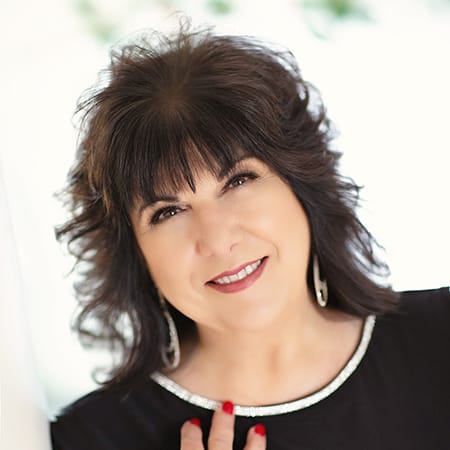
Deb Landry, the co-founder and executive director of Crossroads, has dedicated the past 24 years to fostering a culture of volunteering and empathy among youth and adults alike. Founded on January 1, 1999, Crossroads Youth Center (CYC) emerged as a beacon of hope and positive character education.
Deb, driven by a vision of a socially responsible and inclusive society, has been instrumental in shaping CYC into a 501(c)(3) organization that empowers youth to value and participate actively in their communities. Under her leadership, CYC has evolved into a sanctuary that is safe, educational and accepting for all, nurturing future leaders and volunteers.
Deb’s leadership has seen the volunteer and community service program at Crossroads flourish, accumulating more than 20,000 hours served in Maine annually and extending its reach across the United States. Her programs inspire youth to honor diversity, respect and community, engraining these values in their daily lives. Her dedication is not just about hours served; it’s about lives touched and changed.
One of Deb’s most commendable contributions is her relentless advocacy for bullying prevention. Her work with the Unity program has garnered national appreciation. Through her tireless efforts in lobbying for laws to protect children in schools, she has played a pivotal role in creating safer educational environments for all students. Her advocacy underscores her commitment to ensuring a world where kindness, honesty, respect and inclusivity are not just ideals but realities.
Read on to find out more about Deb’s inspiring journey and the profound impact of her volunteerism.
What inspires you to volunteer?
It’s just something I wanted to do. I felt like I had to. I don’t even look at it as volunteering. Service is just a part of my life. It fits into everything else – kids, work. I’m compelled to do it and have been all my life.
In her role as the executive director of Crossroads, Deb Landry oversees various program directors and fundraising initiatives.
How did you get started with this initiative?
Crossroads Youth Center will be celebrating its 25th anniversary in January. My husband was taking a post graduate course at a seminary when he was getting a Certificate in Christian Education. He was able to get extra credit if he started a program. He initially thought he’d start this in our church, providing an afterschool space for kids who just didn’t have anything to do.
It grew so fast. It was supposed to be a trial-and-error thing for the kids in his Sunday School class, and it just blew up. I don’t know how it went from Point A to Point B, but all of a sudden when we opened, it was for the community members and not even many kids from our church. There were so many kids who didn’t have any place after school if they weren’t involved in sports.
The organization itself has evolved over many years. We don’t have a specific after-school program anymore; all we have are programs, which can take place any time – after school, Saturdays, once a month. We started programs as we saw kids who needed them. I’ve worked with a lot of kids with ADHD. Kids questioning their sexuality. You don’t know what’s going to happen. We had an art-based program. We did a theater program, with full-fledged productions. It’s just taken off.
Describe your volunteer role with Crossroads.
I’m the founder and executive director. So, I take care of the business side. I write the programs. I’ve been on a mission for bullying prevention. I’ve lobbied a lot in different states. I’ve helped get a few laws passed in Maine. I’ve worked on three over the last 18 years.
I wrote a book – I got a grant to write it – and now I own a publishing company. I go around to schools talking about bullying prevention. Then, I started training volunteers. Now, this program sends high school and college-aged kids into schools to read the book and talk about core values, like respect, compassion, honesty and inclusion. Of course, the kids really relate to these younger volunteers more than me, so that’s been a win.
We hire program directors. We encourage kids to start initiatives they want to do. People come along and pitch program ideas. We help them obtain grant money and start those programs. We provide support.
What are your long-term plans or goals for the organization?
Well, it’s 25 years old and I hope it reaches 50. I think we just keep going. It’s an educational organization, and we just keep evolving. There have been years we’ve been really small, and years we’ve been really big. It’s whatever the community needs. We raise money for scholarships for kids to go to college. The plan is to just keep going.
What have you learned through your experiences as a nonprofit leader?
This type of work isn’t for the weak. You’ve got to have passion and be committed. Without the passion, you may burn out because it’s not income-producing work. You’re contributing to the community.
One thing I really realized is that as I’m teaching children to be resilient and to volunteer in their community, hopefully they’ll carry those values and actions into their adulthood. I hope they have the same feelings I do when they’re adults. Giving them that little piece can help them for their future. The people volunteering get as much out of it as the recipients of their volunteerism. They’re learning, they’re getting self-confidence and self-worth. People who volunteer live longer. I think everyone should volunteer and see what it’s like on the other side.
Any advice for people who want to start volunteering?
We have 500 to 1,000 members, with an active 100 to 150 members and I like to find out what they like to do, then find a program that allows them to do that. Everyone volunteering in something they’re passionate about – that’s how you sustain this work.
There are a ton of things out there you can do. First, find out what your passion is and follow that. Do you like the arts? Sports? Once you identify that, follow that and find a program or organization that helps you do that. You can sit at home and make blankets for animal shelters or the unhoused community – our kids did that through COVID. It’s endless, what you can do, and when you get down to your passion, you can find something to volunteer with.
What do you want people to learn from your story?
Every time I give a talk on bullying prevention, I mention acceptance. Bullying is a symptom of a much larger disease we have in this country, which is the lack of positive character and self-esteem and social awareness. We spend a lot of time teaching tolerance. Loving each other.
Not judging. If we all had respect – mutual and self – we wouldn’t have the issues of bullying and hate crimes. So, teaching kids to be resilient and have self and mutual respect is our basis.
Be the Change: This Chicago Mom Engages Neighborhood Kids to Make the Community Safer and Better for Everyone
Meet Daily Point of Light Award honoree Aisha Oliver. Read her story, and nominate an outstanding volunteer or family as a Daily Point of Light.
When Aisha Oliver moved from LeClaire Courts, a community on the south Side of Chicago, to the Austin neighborhood, she missed the family-oriented, close-knit neighborhood she grew up in. Living in a new place touched by gun violence and gangs, Aisha started building bonds through volunteerism.
Today, she is a 39-year-old single mother of two biological teenagers and a “bonus baby” she met while volunteering in the park district, now 21. She took in the third when he was in 3rd grade upon learning of his home environment. The connections she’d built with kids in the community led her to create the Root2Fruit Youth Foundation in 2009, a nonprofit that gets young people engaged, and that work led to her day-job as the Community Engagement Specialist at Lurie Children’s Hospital, where she dedicates her career to outreach as well.
Three years ago, noticing an increase in violence in the area, Aisha worked with local youth to create the Austin Safety Action Plan (ASAP), a strategy that has decreased gun violence 30-50%. Inspired by her old journals, she followed that up with her first book, designed to give kids hope that they, too, can move beyond challenges and become agents of change. Aisha’s tireless commitment to kids on many fronts has made her a neighborhood hero and a model of what community engagement can be.
What inspires you to volunteer?
I’m focused on being a change agent for Black people in Black communities, especially in cities like Chicago where it’s never been a level playing field. I’m from one of the hardest hit communities. If I could find a way to do better and be better, so can they.
My first love is dance. I got started volunteering by teaching dance in our local park districts for free to neighborhood kids. I wanted to share my classical ballet training with kids who didn’t have the same access.
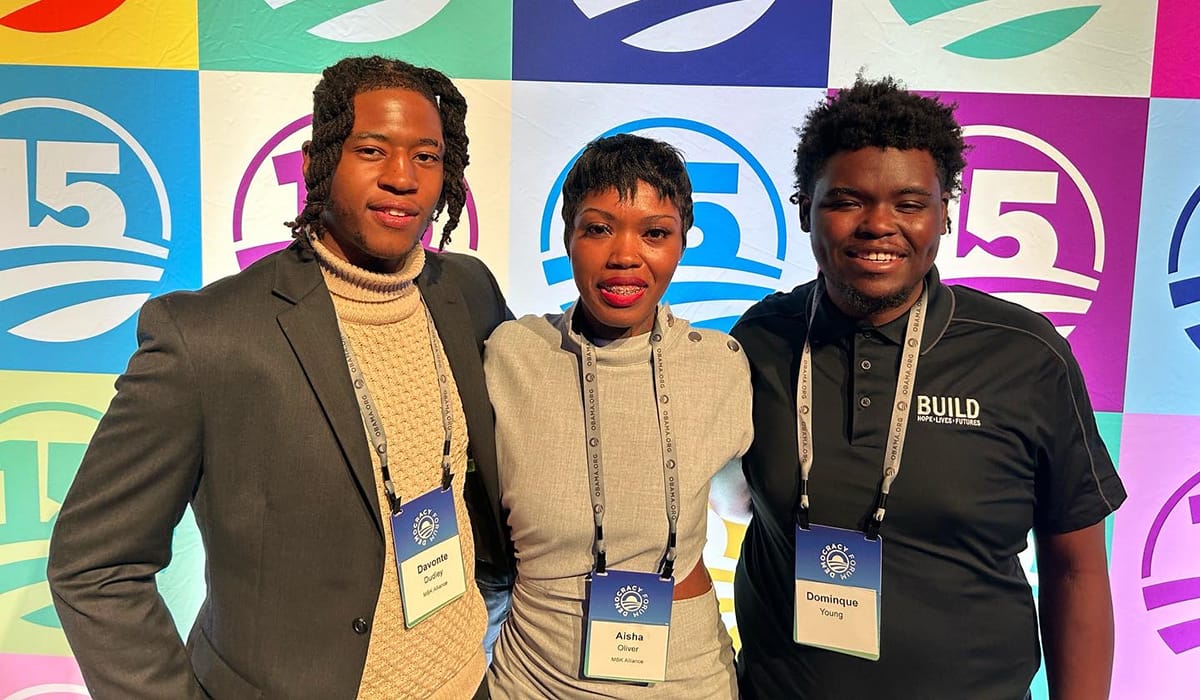
Aisha (middle) is joined bby Root2Fruit consultants (left to right) Davonte Dudley and Dominique Young at the Obama Foundation Democracy Forum.
Tell us about your volunteer role with Root2fruit Youth Foundation.
I started Root2Fruit after being in the park district running those teen clubs and seeing how kids found a safe space within me. I’d plan things to get them together and expose them to things outside of the community. I became the neighborhood mom.
I’ve spent a lot of time going to graduations and taking kids to doctor’s appointments. I’ve done things that people wouldn’t have thought about doing with kids that weren’t their own. But in my eyes, all of these kids are mine. Someone told me one day this if this is what I really wanted to do that I should probably start an organization. So, I did.
What inspired ASAP?
We created ASAP three years ago. A three-year-old was shot and killed in the back seat of a car, and I couldn’t understand how people weren’t in an uproar. I didn’t know the baby or his family, but this happened on my block. It weighed on me.
I invited the neighborhood kids over for a meal to talk about the things happening around us and how that made them feel. I had 12 young men meet weekly for nine months, and I took notes on what we talked about. When I presented it back to them, we decided to turn it into a blueprint for safety in our community. And that was ASAP, a hyper-local, intergenerational safety plan that’s based on community engagement, diversion and violence prevention methods.
We started by holding community conversations. Kids walked people through the safe zone and explained the plan. Everything we did was youth-focused and youth-led.
What are your long-term plans or goals for the organization?
I want it to leave it in the hands of a young person who came up in Root2Fruit. I’ve always told them they have to learn how to do everything I do. Not everyone wants to lead an organization, but I want them to have the experience. A lot of these kids have known me since they were in third or fourth grade.
For three years straight we’ve been able to decrease violence in the safe zones. It’s had a greater impact than organizations with million-dollar budgets. Being born and raised here, we can do things that others cannot. Now the goal is to take our blueprint and teach others how to do the same in their communities.
What’s been the most rewarding part of your work?
The most rewarding part is seeing kids make a decision to have a better life. One of the biggest things that hurts a lot of the kids in my community is losing hope. I can’t exactly give them hope, but I can promise that if they stick with me, I’ll show them a better way and find resources to get them to a space where they feel like I can do this. I want to see these kids win.
What have you learned through your experiences as a volunteer?
Time is the greatest gift you can give a kid. I’ve had a greater impact because when other people didn’t show up, I did. Working with the street is a different type of work, and there’s not a paycheck attached to what I do. I still have to work a job, but I know that I’m making a difference in their lives, and they show me that with the respect that they give me and this neighborhood. I appreciate them.
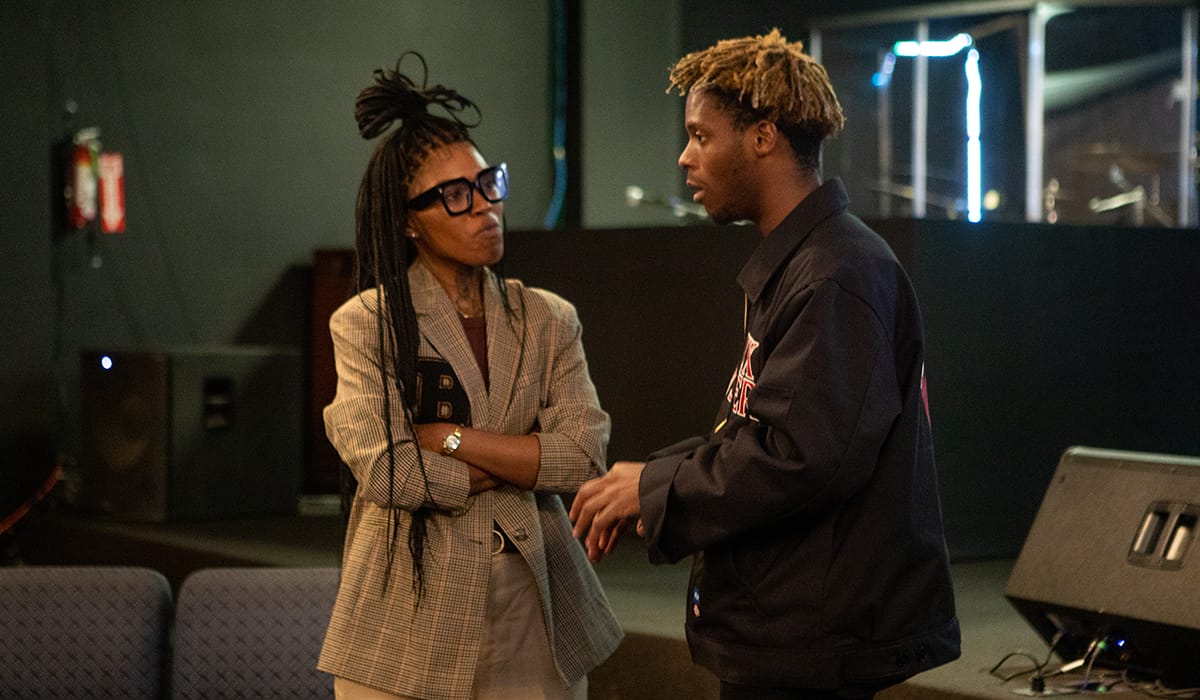
Aisha (left) speaks with youth organizer Keishwaun Owens about a collaborative project between Austin’s Stone Community Development and Lurie Children’s Hospital as part of her role as community engagement specialist.
Tell us about future partnerships, programs or events that you are excited about.
This is our fifth year of doing Ruby’s Roses, an event we do around Christmas to honor a homeless woman who used to sleep under a viaduct in our neighborhood. Miss Ruby passed away, but I’d been teaching the kids to acknowledge her for years so they would take her food and speak to her. We treated her like a human and acknowledged her as one of our elders.
We celebrate her every year by giving back to the community—toys, dinner, etc. And we invite families who are really hard hit to partake with us. Volunteers come from all over. It’s a way to build bridges.
Why is it important for others to get involved with causes they care about?
It’s really important to start from the inside-out instead of attempting to wait for someone to come in and do the work for you. To have a bunch of kids leading those efforts makes a difference; it leaves a mark on people and makes them want to go back and do more. I teach these children to be solutions-based in order to create the change they want to see.
Any advice for people who want to start volunteering?
Remember what it feels like to not have or to struggle, or look in your community and think about the things that make you feel uneasy. Then, think about what you can do to affect change, even on a small level. If you know the issues, you can figure out the solutions.
Young Woman Pioneers Menstrual Equity in North Carolina Schools
Meet Daily Point of Light Award honoree Rose Rosaleen. Read her story, and nominate an outstanding volunteer or family as a Daily Point of Light.
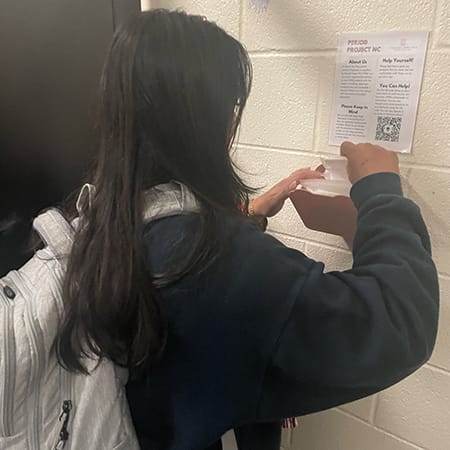
Rose Rosaleen’s transformative journey began with a personal challenge: a high school incident due to lack of menstrual products. This spurred the creation of her nonprofit, Period Project NC, dedicated to installing free menstrual product dispensers in North Carolina’s public schools.
Under Rose’s leadership, the initiative quickly grew, with more than 120 ambassadors and installations in multiple schools. Beyond state lines, Period Project NC has also made international strides by providing products to schools in Bangladesh.
Rose’s tireless efforts have significantly heightened menstrual product accessibility, reaching more than 8,000 students in more than 80 bathrooms and amassing funds exceeding $10,000 to combat period poverty. Her initiative extends into the realm of education, bringing menstrual health resources to young learners and actively engaging in policy advocacy to support legislative change for menstrual equity. This comprehensive approach has not only provided immediate relief but has also paved the way for long-term systemic change.
Read on to learn more about Rose’s journey and why she’s passionate about this cause.
Rose Rosaleen started Period Project NC, a nonprofit dedicated to installing free menstrual product dispensers in North Carolina’s public schools.
Tell us about your volunteer role with Period Project NC.
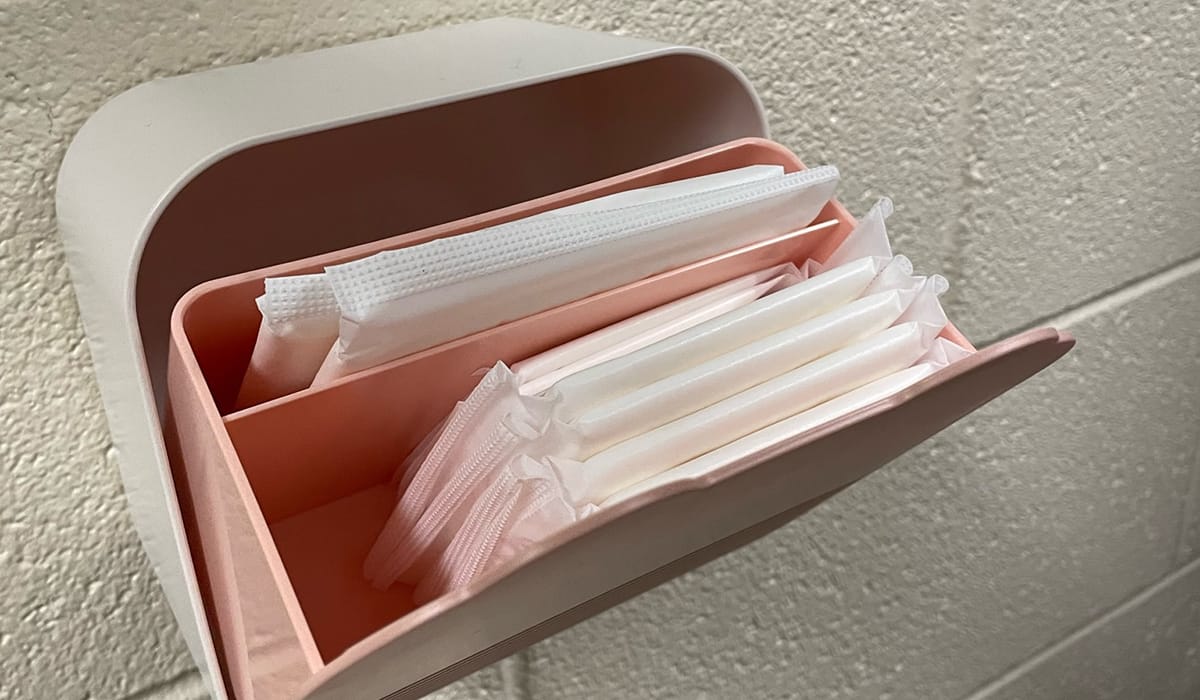
I started Period Project NC in my sophomore year of high school. That was my first year back in school after COVID, and that year I became really aware of just how much menstrual inequity is a problem. It can be so scary to not be prepared for your period at school. After that year, my friend and I started Period Project NC and we set up dispensers in girls’ bathrooms across our state. These dispensers offer menstrual products like pads and liners so girls can grab whatever they need.
Currently, we’re in 80 bathrooms across six or seven schools. We’re supplying over 10,000 students with products. After we first got dispensers installed at my school, I noticed that every week the dispensers were completely empty, which meant that they were needed and being used. And that was incredibly rewarding.
What inspired you to start this initiative?
My friend and I have both had negative experiences with our periods at school. We thought it was such a problem that many girls are facing but doesn’t get a lot of coverage. For such a big problem, it truly has a simple and small solution. We thought having these dispensers would help make girls feel so much more secure.
From there, we registered as a nonprofit. And since this is such a widespread problem, we figured other girls would want to join us. So we started an ambassador program as well, for girls our age – in college or below – can be representatives, advocate for menstrual equity and have dispensers installed in their schools as well.
What are your long-term plans or goals for the organization?
My founding friend and I are going off to college next year, but we do have those 120 ambassadors helping us continue the mission. We will still manage the big picture stuff, but our ambassadors will be continuing to take initiative and managing the day-to-day details.
We’re really focused on getting more into rural communities and expanding into other sectors of menstrual equity and women’s empowerment. Some things we’ve been looking into are conducting menstrual education in elementary schools across the state. And then continuing to expand our dispensers into schools on the west coast and east coast of North Carolina and throughout the state.
What’s been the most rewarding part of your work?
This is a problem that’s been kept really quiet, but this has such a simple solution. Our dispensers have helped girls feel more confident. Period inequity isn’t just an experience I’ve had – other girls have also been there with me. It’s rewarding to know they can feel more secure in their education because they have these products available.
What have you learned through your experiences as a volunteer?
I think it’s really important to just keep going, even if you hit a hard spot. When we first founded the organization, my school’s previous principal didn’t want to allow our dispensers into the school. There was a six-month period where we couldn’t be active in any schools.
But we stuck to it and regrouped over the summer. And after that, we got a new principal and I’m really glad we kept going and kept pushing. After we worked so hard to get into my school, we were then able to expand into more schools. So it’s important to keep pushing for what you’re advocating for, even if things don’t always initially go your way.
Why is it important for others to get involved with causes they care about?
I think it’s important to get involved in any way at all. Otherwise, nothing’s going to change. When I was a freshman in high school, I never would have imagined I’d be doing this now and that it would make such a big impact on girls in North Carolina. But I think having those conversations with my friend about how we’ve had these negative experiences was enough to get us going and make change. It’s important to keep pushing for a cause, even if what you’re doing doesn’t feel like it’s making a difference, it is. It’s potentially making a huge impact on people.
The product dispensers have been set up in more than 80 bathrooms across multiple schools in the state.
Any advice for people who want to start volunteering?
Remember that it’s okay to go slow. At the beginning, we faced a lot of objections, backlash and lack of support. So that first year or so was really slow. But I’m still proud of our progress, making it into two schools. So, if you just wait it out and keep going, you’re going to get traction, support and awareness.
Even if things aren’t as fast or productive as you’d like, you’ll make progress. Our first full year of operation was really hard, and I couldn’t commit a lot of my time, but I’m so glad I stuck it out.
What’s the ideal scenario you envision for the future of menstrual equity?
For menstrual products to be available to girls of any age in their schools. It should also be more openly talked about. This is a public health issue. In recent years, it’s been over-politicized and made a political issue. It’s not. It’s a health issue. And it should be addressed like that, without taboo. It’s just a bodily function, at the heart of it.
An Unwavering Advocate Supports Service Members Across Louisiana
Meet Daily Point of Light Award honoree Veronica Mallet.Read her story, and nominate an outstanding volunteer or family as a Daily Point of Light.
Veronica Mallet’s remarkable volunteerism is a beacon of hope for veterans across Louisiana. As the co-founder of Veterans Point Louisiana (VPL), a 501(c)(3) nonprofit Veteran Resource Center, she has dedicated the past 13 years to serving those who have served their country, driven not by monetary gain but by an unwavering commitment to support and uplift.
“My husband and I found VPL in 2009. There have been more silent, slow years and more active years throughout our journey,” Veronica said. “We’re a veterans’ resource center – so we help veterans with a multitude of things. This includes free clothing, shoes, socks and towels. We also help veterans with understanding their benefits. A lot of times, there’s a VSO office down the street, but they can’t necessarily sit down with a veteran for 45 minutes to an hour to help explain benefits. That’s where we come in. We have a retired sergeant who helps veterans with their claims. We offer free blood pressure checks, administrative things, providing office materials they may need to communicate with the VA. We have computers they can use as well.”
What sets Veronica apart is not just that she co-founded VPL, but her relentless devotion, which mirrors that of someone with the highest professional obligations. This dedication is all the more striking as she balances it with personal endeavors, including seeking employment and furthering her education online. Despite the heavy workload and the complex challenge of running a nonprofit, Veronica serves with unmatched enthusiasm and heart.
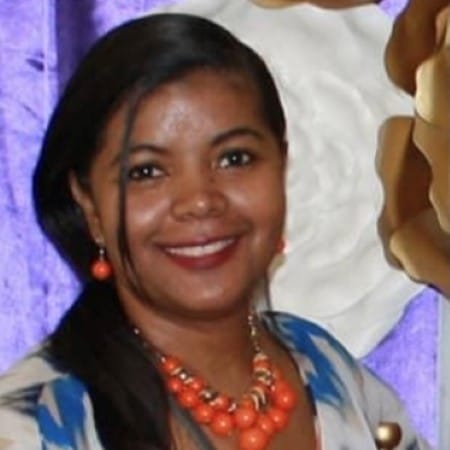
Veronica Mallet is the heart and drive behind Veterans Point Louisiana, an organization embodying the spirit of service and the resilience of hope./Courtesy Veronica Mallet
Veronica’s leadership at VPL has turned the center into a veritable hub of support for veterans. From her home’s humble beginnings to the center’s current location acquired in 2020, VPL has expanded its outreach significantly. Every week, veterans receive free benefits claims assistance, plus resources, like clothing, shoes, furniture and much more, gathered through generous community donations.
Under Veronica’s guidance, VPL offers its comprehensive suite of services ranging from administrative and computer assistance to health checks and exercise equipment usage. Importantly, she has also facilitated access to a home repair grant application through USDA, extending support beyond immediate needs to long-term wellbeing. As president, Veronica’s wears many hats: she manages finances, organizes the clothing room, plans events, and even writes grants to secure funding. Her efforts have touched the lives of approximately 700 people over two years, and she aims to reach even more as VPL grows. VPL is also an organization that offers several appreciation events, including the annual Stand Down Event.
“We hold this event once a year to help locate as many unhoused veterans as we can,” Veronica explained. “We want to help those connected with unhoused veterans to bring them to this event, where we gather veteran resources from throughout Louisiana. This year’s event was a success, with over 43 vendors gathered. We served food. We had a veteran playing music. So now, we’re the organization that will be hosting the Stand Down Event each year.”
In January 2023, Veronica achieved a long-held dream by opening a Homeless Veteran Shelter, addressing the stark issue of veteran homelessness in Louisiana. Though the shelter faced challenges, the gratitude of those it helped during its operation speaks volumes about its impact. Veronica’s resolve remains unshaken, and she continues to work towards securing the resources needed to reopen the shelter and fulfill her vision.
Despite the strides VPL has made, the road has been fraught with challenges. There have been moments when the burden seemed too heavy, the resources too scarce and the horizon too distant. Veronica, with her profound dedication to the cause, has faced these trying times with a resilience that is both humbling and inspiring. It’s in these moments of doubt, when the thought of stepping back has fleetingly crossed her mind, that she draws upon an inner strength, a wellspring of determination fueled by the stories of those she’s aided.
Veronica’s unwavering commitment is renewed by the voices of gratitude, the letters of appreciation from veterans whose lives she’s touched, and the community that continues to stand by her mission. These instances are reminders of the vital need for VPL’s services and the positive impact it has, motivating Veronica to press forward, honoring the trust and the needs of those relying on her tireless efforts.
“There’s a lot of good in the world, but there’s a lot of bad too,” Veronica shared. She encourages anyone thinking about volunteering, “If a passion is placed on your heart, then there’s a reason for that. If people just stand on the sidelines and think they can’t make a difference, things won’t get addressed. Really and truly, one person can make a difference – whether you have anything in your pocket or not. Even just an act of kindness goes such a long way. Veterans are such an appreciative group, but people in general really are appreciative of the small things.”
Despite any setbacks, Veronica’s love for her work and her dream to provide stable housing for veterans and community members in need shine through. Her story is one of love, dedication and the transformative power of volunteer service. It’s a narrative that not only highlights her remarkable contributions but also underscores the community’s essential role in supporting those who have bravely served their country.
Florida Dad Vows to Help 1 Million Special Needs Kids
Meet Daily Point of Light Award honoree Keith Gilkes. Read his story, and nominate an outstanding volunteer or family as a Daily Point of Light.
Keith and his wife Rosario have two sons, Conner and Cristian. An avid golfer, Keith hosts golf tournaments for charitable causes, volunteers with Keys to Kindness at its annual Kind Camp for special needs children and devotes a significant amount of his free time to making sure that special needs children can have fun and enjoy life, just like anyone else.
What inspires you to volunteer with Keys to Kindness?
When our son Cristian was 14 months old, my wife and I noticed that our son was not progressing in the way we thought he should be. By 20 months, Cristian had been diagnosed with several Autism Spectrum labels. The diagnosis made our heads spin, since he was diagnosed with Asperger’s, Autism, Apraxia of Speech and many more disorders.
We had been participating in golf tournaments in years past for The Children’s Dream Fund, which helps fulfill the dreams of children with life-threatening illnesses. When Cristian was 5 or 6, it became apparent to us that Cristian and the other children in the special needs program really just wanted to be “normal” and have fun like their peers.
This inspired us to dedicate ourselves to raising money and awareness for several Exceptional Student (ESE) programs at local public elementary schools over the next several years. At one particular school, we raised enough funds to install “smart boards” for that school’s ESE classrooms, and a second golf tournament that funded an ESE playground that was geared toward the safety and enjoyment of special needs children.
Then we raised funds for another school that had zero funding for their ESE department over a 50-year span. We raised enough funds to enrich the lives of the 175 ESE children through augmented reality and sensory specific educational tools. Sharri, the founder of Keys to Kindness, approached us to thank us for raising funds for schools our children didn’t even attend. Something resonated with me. A few weeks later, I reached out to Sharri and said I wanted to be part of her organization.
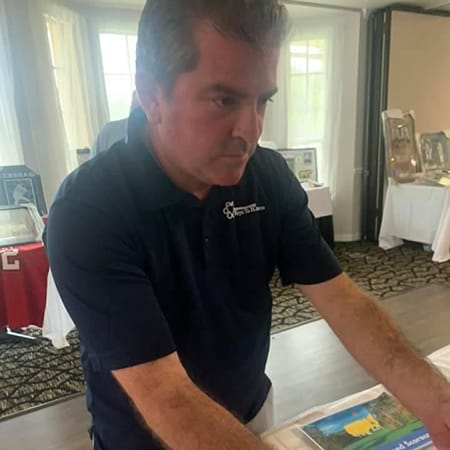
Keith Gilkes, vice president of Keys to Kindness.
These multiple projects made us realize that these tournaments were an effective way to raise funds for special needs children. I believe that if you have a disability, you should be allowed to do everything else that other children can do. This has become my life mission, to enrich the lives of special needs children that don’t get the support they need, either at school or at home.
Tell us about your volunteer role with Keys to Kindness.
I am the vice president of Keys to Kindness. Every year we host Kind Camp, which is a camp for children with special needs, foster children and children who are battling life-threatening diseases, among typical peers. During camp, the children have a lot of fun. They also do meaningful activities such as care packages for pediatric cancer patients as well as wounded veterans.
I assist with training the camp counselors. The counselors are usually high school volunteers, and it takes a lot of training to get them ready for Kind Camp. I participate in the camp itself as well, overseeing logistics to help keep the camp running smoothly. Kind Camp runs anywhere from one to four weeks, and it’s an intense and enriching time for all of the volunteers.
I also volunteer with community give-backs. If there’s a family with a pediatric cancer patient or a family that has lost a child for example, my family and I volunteer to offer them comfort and support in this difficult time.
I spend at least one hour a day planning and organizing our golf tournaments. This is a year-round effort that ensures that the tournament runs smoothly and raises enough money to cover every initiative.
I also meet with community members and professionals to put together resources for families with special needs children and to provide scholarships for high school students who have volunteered at Kind Camp.
What are your long-term plans or goals for the organization?
My personal goal for Keys to Kindness and our Instagram page, Hope on the Spectrum, is to enrich the lives of at least one million special needs children. I don’t see a reason why we cannot take this into a more national association. I envision something as big as Tim Tebow’s foundation. Tim Tebow partners with people of influence who have been touched by special needs in their lives to raise money and change kids’ lives.
What’s been the most rewarding part of your work?
I am, to a fault, a very emotional person. When we repurposed the playground for one of the schools, we were sent a picture of 5- or 6-year old twins with ASD who had never, not once, smiled in their entire lives. The picture showed them smiling. They were on the slide, on the playground, with huge smiles from ear to ear. The teacher told me, “You made these children smile for the first time in their life.” You can bet I cried tears of joy.
When we raised enough funds to provide smart boards for this same school, the teacher said, “You realize you give voices to the voiceless.” That was another tearful moment. Smart boards are similar to a 60” tablet that children can write on and use to communicate. They also use the boards to learn to read and write. The boards help nonverbal kids verbalize their thoughts and feelings. Each classroom received a smart board. We raised enough money to provide six.
Our latest Kind Camp was held at a local church. All of the counselors line up at the front doors to greet the campers as they come in with their parents. Each “Little Buddy” is assigned a “Big Buddy.” The high school counselors can get a bit rambunctious and ESE children can be very sensitive to loud sounds, so I asked the counselors to be extra calm. At the end of the day, the grandmother of one camper, a severely autistic 15-year-old girl with the brain of a 6-year-old, approached me. Her granddaughter was very shy at first. By the end of the day, this girl, who is largely nonverbal, said to her grandmother, “This is heaven, Grandma.” That’s the first thing she had said all day.
Our son Cristian , now 14, is now a counselor at Kind Camp. Cristian is a freshman in high school, an almost-A student, and he’s trying out for varsity wrestling. He’s our miracle child, there’s no doubt about it. It has taken many years of hard work, and part of his success comes from the fact that we never took no for an answer. We advocated for him, and he blossomed. Cristian even inspired me to start an Instagram page called Hope on the Spectrum. Cristian and I do videos, and people reach out to us for support. It’s become something much bigger than I thought it could be!
What have you learned through your experiences as a volunteer?
I couldn’t do everything I do without the support of my wife. I learned through volunteering and raising money never to ask anyone for a thank you. Never expect a thank you. And never brag about what you do and how you help people. When you volunteer your time or money, don’t brag about it. It’s about how you make people feel.
As I became involved with Keys to Kindness, I realized just how big of an impact the organization has, and how much it could grow. Our last camp had 70 campers and about 80 volunteers. Nearly 30% of the campers can’t afford the camp, so we fund their tuition through golf tournaments.
I feel like a speck on the planet. Ours is a great organization on a small scale, but I don’t see a reason why this can’t go more national. The kids we serve, I call them “Earth Changers.” This is what makes me excited to get out of bed in the morning.
Tell us about future partnerships, programs or events that you are excited about.
We have another golf tournament coming up on November 11, 2023. I am also excited for Kind Camp next year. We’re already getting sign-ups for next year’s camps. I’m excited about building a platform with the scholarship process, which are corporate sponsorships giving back to support the teens who selflessly help with Kind Camp. We also have a fundraiser coming up for pediatric cancer patients. One of my big personal goals is to write a book about Cristian in 2024.
Why is it important for others to get involved with causes they care about?
Volunteering builds character. It fulfills and feeds the heart more than any amount of money. Some people will find their actual purpose in life through volunteering. It happened to me. Many people are attached to a biweekly paycheck, shackled to a job and living a mundane life. Volunteering will take you out of that. Volunteering has taken me out of my comfort zone and made me do things beyond my own needs. Once you do it you realize how fulfilling it is, you just don’t want to stop.
Any advice for people who want to start volunteering?
Find something you’re extremely passionate about, something that’s near and dear to your heart and put your heart and soul into it. Let your passion fuel your efforts. It shows.
What do you want people to learn from your story?
Never, ever, EVER quit. Never take no for an answer. Never underestimate the strength of someone’s will to persevere and drive through adversity. They will always impress you. Two years ago, Cristian couldn’t do a single pushup. Today, he’s a freshman trying out for varsity wrestling. Last year he was second in the state in his weight and age division and he’s in all honors classes.
California Teen Fights Mental Health Stigma and Supports Those in Crisis with Helpful Resources
Meet Daily Point of Light Award honoree Niku Sedarat. Read her story, and nominate an outstanding volunteer or family as a Daily Point of Light.
Addressing mental health has become a prevalent topic of discussion over the years, and Niku Sedarat is prepared to dedicate her life to making sure that dialogue continues. At just 17 years old, she has decided to major in psychology when she goes off to college next year but has already gotten a head start. As a participant in the Middle College Program, she is finishing out the second half of high school at a local college, exploring the types of psychology courses she hopes to pursue.
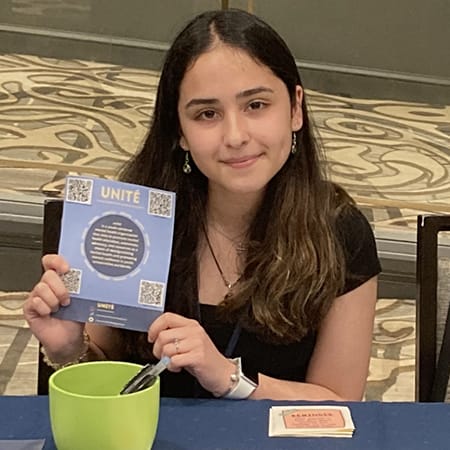
Three years ago, after recognizing mental health needs amongst her peers, she trained to be a volunteer crisis counselor at the California Coalition for Youth. During her weekly four-hour shifts, she supports young people in distress who reach out on the California Youth Crisis Line. In addition, she founded Unité, an organization that destigmatizes mental health and fosters emotional resilience in youth.
With 2000+ active online followers and more than 165 volunteers across 20 states, Niku is well on her way to making a lasting impact.
What inspires you to volunteer?
We really need it in the community in the current state of our nation. We’re in a youth mental health crisis. What better way to support people than through volunteering in a way that’s really meaningful, especially with the California Youth Crisis Line? It’s beautiful that you get to help people who are struggling but reaching out with hope and to be able to turn that hope into something that’s worth living for.
Niku presents her Unité work at the National Active Minds Mental Health Conference in Washington, D.C
Tell us about your volunteer role with California Coalition for Youth and Unité.
The California Coalition for Youth has a youth crisis line for mental health. You can contact us when you’re in a mental health crisis or struggling with other issues. I’ve been volunteering weekly as a crisis counselor for the past three years or so. It’s online. I just hop on the chats and calls and support people who are reaching out. We had 52 hours of training on things like suicide prevention and other mental health challenges, as well as how to support someone going through them.
I started Unité three years ago to destigmatize mental health issues, put out educational resources and boost awareness in order to help those who are struggling. Some examples of things we’ve done: partnered with a local pet shelter where I led de-stressing activities alongside cats and have launched a monthly mindfulness journaling challenge to promote self-care. I’ve used my crisis counselor training to write articles and make infographics. It has also translated to my daily life helping my peers, family members and friends navigate their own struggles.
What are your long-term plans or goals for the organization?
I’m always thinking of things to incorporate to better help the youth that we’re trying to serve. At Unité, we’re trying to make our articles and infographics more culturally inclusive by providing translated versions. Right now, we have six different languages, but I see that growing in the future.
What’s been the most rewarding part of your work?
With the crisis line, the most rewarding thing is when people consistently use it. I take weekly shifts, so if there’s ever a person who’s texting the crisis line every time I have a shift, that’s amazing. It feels great knowing people are putting in an active effort to better their mental health and overall wellbeing.
For Unité, it’s the community we’ve been able to build with youth from different states. It’s cool to not really know people in person but still be united in passion and purpose. Also, just having people read those articles and use those resources. Occasionally, we’ll get messages on Instagram asking about posting an article about certain topics. I find that amazing that we can engage with the community and provide the support that they’re asking for.
What have you learned through your experiences as a volunteer?
One of the main things is trusting that people know themselves best. When we think of people volunteering on crisis lines, we think of them actively providing advice, and that’s just not the case. It’s hard to refrain from giving direct advice and allowing the person to steer the wheel of their own life, but I’ve been able to practice during my time on the crisis line. The art of listening and being reflective while still supporting someone was challenging at first, but it’s a skill that I’ve found to be really helpful.
Tell us about future partnerships, programs or events that you are excited about.
We’re currently doing a Send Hope postcard challenge campaign for Unité where we create cards with positive messages to distribute to hospitals and psychiatric units across the nation. I’ve been working with a couple of hospitals and getting schools and organizations to band together and create cards. The goal is to spark hope on other people’s mental health journeys.
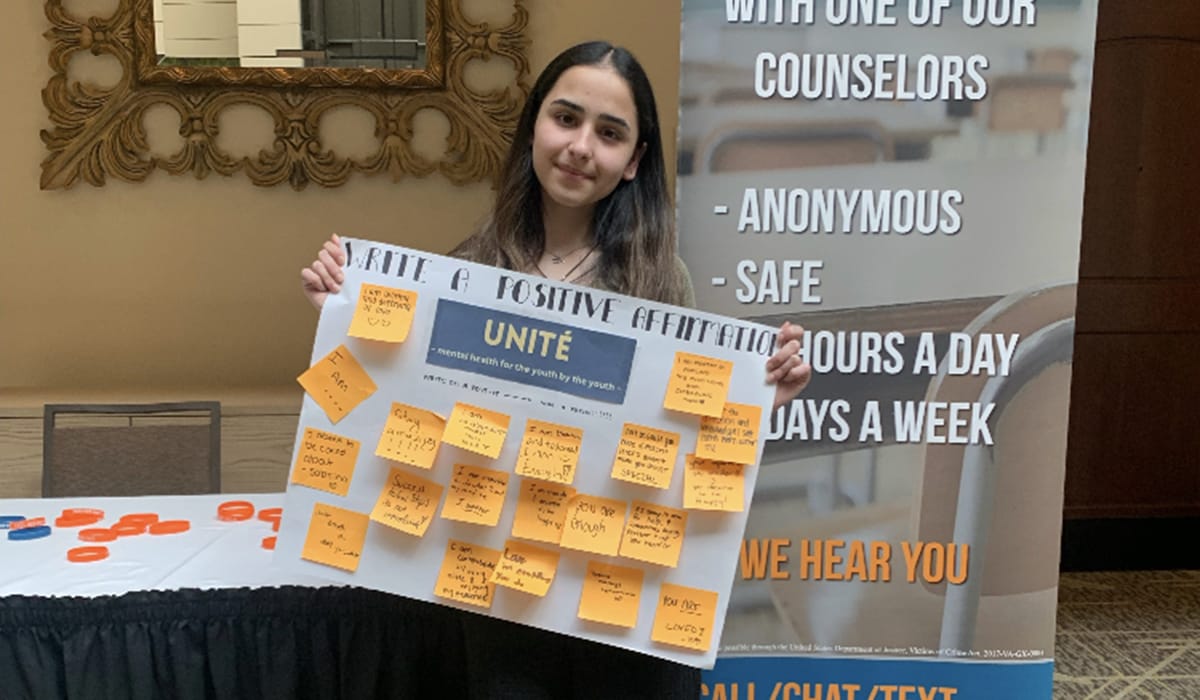
Holding a poster of positive affirmations written by volunteers and conference participants, Niku promotes mental health at the Youth Empowerment Summit.
Why is it important for others to get involved with causes they care about?
It’s very rewarding to know that you’re helping people and supporting their lives in a way that will equip them with an experience that they can carry throughout the rest of their lives and look back on with a smile. But it’s also important for all of us to volunteer. Volunteering is a great way to build community. It brings people together and creates unity. That’s the main reason I do it and encourage others to as well.
Any advice for people who want to start volunteering?
If you’re a student, take advantage of school clubs. Often, they’re connected to bigger organizations, so that’s a great way to get involved. Otherwise, reach out to organizations like the National Alliance of Mental Illness or Active Minds. The first step before doing anything is just educating yourself and building awareness. That’s the most important step, and it’s super accessible to do a Google search.
What do you want people to learn from your story?
If you see an issue in the community you want to change, you can be that change. You don’t have to wait for someone else to do it. It’s possible. Just take it step by step.
Phoenix Teen Fights Social Issues with a Multifaceted Approach
Meet Daily Point of Light Award honoree Monica Nitu. Read her story, and nominate an outstanding volunteer or family as a Daily Point of Light.
Monica Nitu has lived in Phoenix her whole life. She is a first-generation American — her parents immigrated as young adults to escape the poverty of their native Romania. Today, Monica utilizes her incredible energy to uplift others.
What inspires you to volunteer?
I’m an avid reader and passionate writer, so it’s important for me that young children have access to books. Learning to love reading at a young age can shape their development and affect their future education.
I am also inspired by the fact that Arizona has the dubious distinction of ranking as the eighth worst state in family and youth homelessness. I am inspired by organizations around me that put so much work toward trying to fix this growing problem. Single moms and Native American families often can’t afford housing, which can have a devastating impact on the children. What lifts my spirits is that ordinary citizens are stepping up to tackle this significant problem.
Tell us about your various volunteer roles.
I am the founder and president of the Book Box Project. My main focus is the collection and distribution of boxes stocked with books, clothing, toys and hygiene supplies. I also coordinate with local businesses such as healthcare offices that set up collection boxes and collect donated items from their patients. I pick these up and distribute them to various organizations including Maggie’s Place, which offers temporary housing and support for single mothers, and the Native American Connections which provides housing for families in need. I also collaborate with my school to collect books to donate to the project. This past June, I collected and delivered 1,000 books, 75 handmade baby hats, numerous boxes of donated and new clothing and over $22,000 in donations to benefit unhoused youth and families.
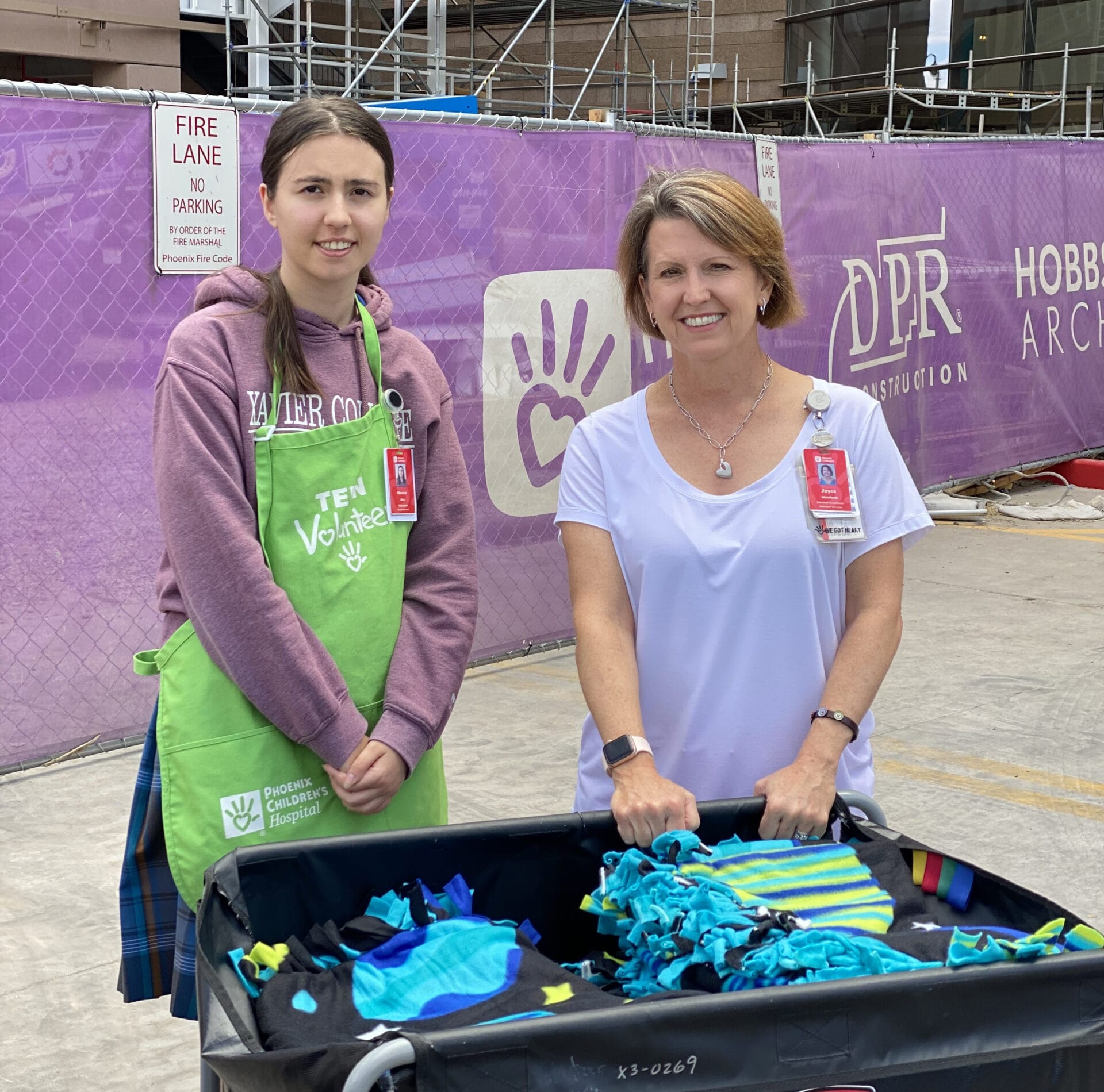
Monica (left), donating hand-made fleece blankets to Phoenix Children’s Hospital for patients to stay warm in the hospital. /Courtesy Monica Nitu
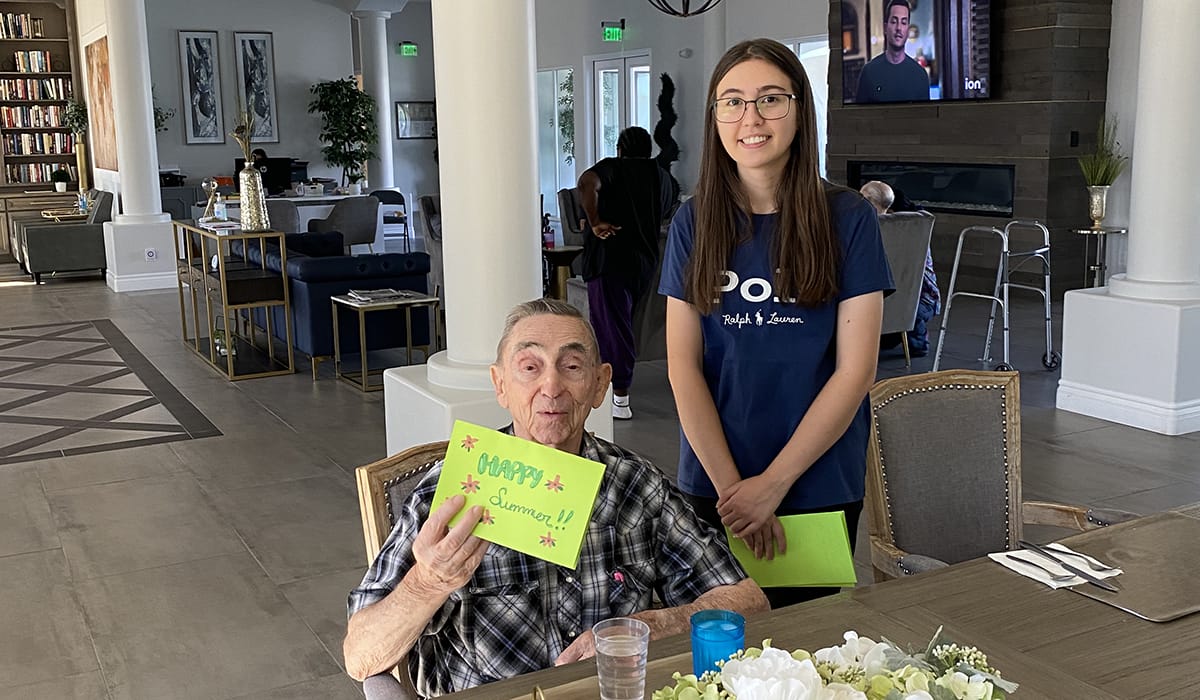
I am the founder of the Phoenix chapter of Brighten A Day, which makes handmade greeting cards for senior living facilities. I and other student volunteers have made over 350 cards and gifts. This fall, we’re gearing up for the holiday season. Senior home residents are often incredibly lonely and isolated from their families. I coordinate everything from handmaking greeting cards to collaborating with seven smaller facilities and one large senior care facility to distribute cards and gifts to the residents.
At the Phoenix Children’s Hospital, I work as a teen volunteer in the hospital’s central supply. I can’t work with patients until I’m 18, but I work behind the scenes putting together medical kits that include blankets, toothbrushes and other supplies. I deliver these kits to patients’ rooms. I coordinate with nurses and doctors, making sure that supplies get to where they are needed. This year, I fundraised over $2,500 and donated 180 homemade blankets to give comfort to patients. I have logged over 700 volunteer hours at PCH since fall of 2021. I have also raised $20,000 for cancer research through the Leukemia/Lymphoma Society, or LLs, which is dedicated to further research on blood cancers as well as financial and other support for patients and their families.
What inspired you to get started with these initiatives?
Let’s start with Brighten a Day. COVID-19 had a devastating effect on seniors living in facilities. Pandemic restrictions meant absolutely no family or friends could visit. The residents felt isolated, lonely and many became severely depressed. As soon as the restrictions were lifted, I knew I could make a difference in their lives. Something as simple as a beautiful handmade greeting card can make a resident feel like someone cares.
I volunteer at the Phoenix Children’s Hospital because of my interest in pursuing a career in medicine. I am always amazed how people work together as a team in the hospital. I speak to hundreds of nurses, and all of them work incredibly hard and truly care for their patients.
What are your long-term plans or goals for the Book Box Project and Brighten a Day?
I plan to expand the Book Box Project so we can work with more organizations and help more people, not just in Phoenix but in other areas as well.
The same holds for Brighten a Day. I want to expand our reach. I want to get more people participating in making cards, and I want to organize groups of students to do group visits to senior facilities.
When I turn 18, I will be an adult volunteer at the Phoenix Children’s Hospital. This opens up a lot more opportunities to help. This can include patient visits, supervising play rooms and running craft activities with the kids.
What’s been the most rewarding part of your work?
In general, the most rewarding part is seeing the positive impact I have on the people I serve, for example how happy kids are when they receive picture books and toys I donate to Maggie’s Place and Native American Connections. People will mention how desperately they need supplies, and they are so grateful that we came through and provided them.
What have you learned through your experiences as a volunteer?
I’ve learned a lot about the challenges that families face in Arizona. It has been eye-opening to see the isolation and loneliness in senior homes and seeing firsthand the issues surrounding homelessness and poverty. It is so important to have support systems for these vulnerable populations.
Just this year, Arizona has had the largest increase in the country of unhoused youth. There has been exponential growth in the numbers of homeless youth. These kids are incredibly resilient, but they can’t do life alone. I am continually in awe about how hard the charitable organizations work to make positive change. I have learned how important community support really is.
Tell us about future partnerships, programs or events that you are excited about.
I work with Maggie’s Place, which offers support and temporary housing for single mothers. I will be holding a book drive just before the holidays to provide the children with new picture books for Christmas.
Monica (right), gifting a card to a senior living home resident to bring cheer through her Brighten A Day Chapter. /Courtesy Monica Nitu
Why is it important for others to get involved with causes they care about?
I believe it’s important to get involved because it fosters a sense of connection with the community. When I contribute to a cause I’m passionate about, I see a positive impact on others, but I also feel more fulfilled. Even though I’m just a high school student I can still have a huge impact on the world around me. Volunteering means people come together to build stronger and more compassionate communities. Being involved makes you see the world around you in a different light. I have seen firsthand how people come together when there’s a need. Despite the negativity we see in this world, volunteering helps us all see that people are really good.
Any advice for people who want to start volunteering?
Find a cause that resonates with you personally. For example, I started the Book Box Project because it matters to me that children need access to literacy. Choose something you’re passionate about because it will show through your work. Volunteering can be incredibly rewarding but you have to stay committed to the cause you chose. Don’t underestimate your impact, even if you have very few resources when you start, you can still make a difference and let it grow from there.
What do you want people to learn from your story?
I want people to learn that it’s possible to make a positive impact even as a student. I don’t have access to major funding, yet I have still succeeded in making a difference because of the generosity of our citizens. If you see a problem or need, you have the power to take action. You can address immediate problems and you can work toward long-term solutions.
Content Warning: Points of Light is proud to share the following uplifting and inspiring story. However, we acknowledge that a small portion mentions suicide and may be difficult for some readers. We encourage you to please care for your own wellbeing above all.
Meet Daily Point of Light Award honoree Sophie Fontecchio. Read her story, and nominate an outstanding volunteer or family as a Daily Point of Light.
Volunteering has been a part of Sophie Fontecchio’s life since she was young. Sophie, along with her sister and mother, volunteered for an animal rescue where they would take care of cats up for adoption in pet stores. A close friend’s suicide, and the COVID-19 pandemic, sparked a desire to help on a grander scale.
At age 15, Sophie founded Let’s Bake the World a Better Place, which sells home-baked goods to fund a variety of local, national and international organizations. To date, Sophie has raisedmore than $17,000 through the sale of cinnamon rolls (her signature baked delight), scones, cupcakes and other baked goods.
What inspires you to volunteer?
I was inspired to start Let’s Bake the World a Better Place after a friend of mine died of suicide at age 14. My friend’s mother started an organization, Rhy’s Above, in his name. The organization opened up the conversation around mental health and funded mental health first aid to train regular community members to spot and help people who are in mental distress. I wanted to help their organization and raise awareness about it.
I had always loved baking and really started baking a lot throughout the COVID-19 lockdowns. I saw this as an opportunity to help. I did my first bake sale to raise funds for Rhy’s Above and it was hugely successful. Then, I had the confidence knowing I could make a difference.
Tell us about your volunteer role with Let’s Bake the World a Better Place.
The organization is founded on three pillars: philanthropy, which is donating funds from our bake sales; advocacy for mental health awareness and the different causes we support through the bake sales; and action in the area of mental health. My focus is baking, but also involving youth and creating the next generation of changemakers.
We typically do one bake sale each month in support of a local nonprofit. These nonprofits have included Aidan’s Heart Foundation, The Fund for Women and Girls, Chester County Food Bank, Home of the Sparrow, To Love a Canine Rescue, the Downingtown Library and Toys for Tots of Chester County, among others. We also participate in service projects. Service projects are mostly around mental health, but we also recently conducted a back-to-school supply drive that includes purchasing school supplies with donated money, assembling backpacks and distributing them.
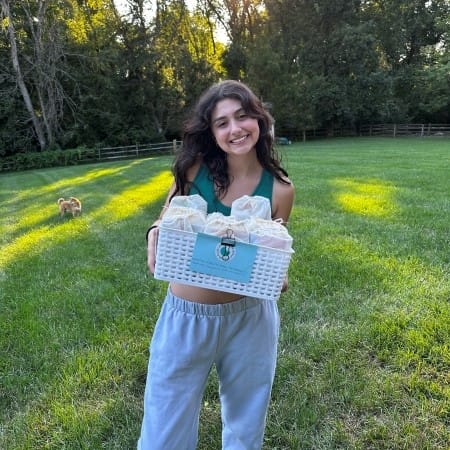
Sophie pictured with a basket of teen mental health care packages to be delivered to a local mental health resource center in September 2023. /Courtesy Sophie Fontecchio
I have received two Hershey Heartwarming Young Heroes grants from the Hershey Company and Youth Service America. I received $250 from the first in 2022. This funded a bake sale to provide opportunities for students and other community members to host their own bake sales and learn about advocacy. This sale raised money for Aidan’s Heart and involved local elementary school children including the Quaker Leadership Team from the West Chester Friends School.
The second grant was in spring of 2023. I received $500, which funded the creation of mental health care packages. These care packages are placed in schools and resource centers where teens might be going if they need some type of mental health support. Care packages show the kids that they aren’t alone, that others are going through hard times and there are people who care. Inside the packages there are journals, friendship bracelets created by local elementary school kids, candy and a personalized note of encouragement from a student in the community. The idea behind the packages is to destigmatize getting help in a school setting, where kids may be bullied for seeking mental health help. This fall we are collaborating with Aevidum, a national mental health club, to distribute mental health care package kits to 100 Aevidum high school chapters around the country. They will be able to make 25 kits to distribute in their communities. The care package kit arrived at my high school yesterday. This is one of the best things that’s come from this nonprofit so far.
What inspired you to get started with this initiative?
I’ve always loved baking, and it became a passion during the Covid pandemic. Also, baked goods are common ground. Food brings people together. Everyone loves baked goods and it’s a springboard for conversations. While I was initially motivated by my love of baking and the desire to help improve our county’s mental health resources, over time I’ve been inspired by the idea of motivating young people to serve their communities. I’ve also realized that my nonprofit can play a direct role in advocacy, whether it’s for mental health awareness or the need for AEDs in our schools. AEDs are automated external defibrillators, used to help anyone having a heart attack.
What are your long-term plans or goals for the organization?
We just established ourselves as a 501(c)(3) organization, which will allow us to apply for funding and expand our reach. It also reduces our costs and allows us to give more to the recipients. We continue to expand the bake sales by including community guest bakers. A long-term goal is to expand the reach of the teen mental health care packages. Finally, I plan on not only continuing to combine baking and philanthropy, but providing other youth a platform for their voice and teaching them about advocacy.
What’s been the most rewarding part of your work?
One of the biggest rewards comes after doing the hard work of baking and that is totaling up the money! It feels so good to be able to donate a lot of money to organizations that might otherwise not receive a lot of funding. Baking used to be a hobby, but now it easily brings in over a thousand dollars per bake sale to an organization in need.
It is also very rewarding to bring attention to smaller nonprofits that people might not know about. After buying baked goods from our sale and hearing about an organization, they might go on to volunteer with these organizations or help in another way. For example, my neighbor adopted a dog from To Love a Canine Rescue after we held a bake sale for them.
There is also a lot of joy. Kids who want to help bake and support causes get so excited sharing their baked goods with people while helping. Finally, it is very rewarding to know that our advocacy and action in the area of mental health is making a difference.
What have you learned through your experiences as a volunteer?
Change can start small. One person can make a big difference. My Grandma used to say that the individual can make a difference. That’s definitely been the case for me.
This past August, our bake sale for the Downingtown Library involved seven youth volunteer bakers and raised $1,672, which was a bake sale record. In October, we held a bake sale for a local animal rescue called To Love a Canine Animal Rescue.
Tell us about future partnerships, programs or events that you are excited about.
I am working on developing youth baking classes that teach participants about leadership and advocacy. At the end of the class students would host a bake sale for a cause they care about. We have the support of our local YMCA and United Way for this idea, but we are still looking for a professional kitchen where we can host the classes. It all revolves around the common ground of food to do good in their communities.
Why is it important for others to get involved with causes they care about?
One person can definitely make a difference. When one person gets involved, it can start a chain reaction and inspire others to get involved. It can be something as small as volunteering at an animal shelter, which seems small, but you are impacting the lives of 20+ animals. Every little bit helps. And when you get other people involved, it just grows and grows.
Any advice for people who want to start volunteering?
Finding something you’re passionate about makes volunteering so much fun. When you’re passionate about it, you’re more likely to follow through and do what needs to be done. I love baking so much, so it’s no stretch to bake more for a good cause.
What do you want people to learn from your story?
I can’t say this enough. One person can make a big difference. A small idea can turn into something big. Don’t be afraid to take chances. I didn’t know if people wanted to buy my baked goods but now I have regulars at every bake sale and it blossomed into this amazing organization.
Ninth Grader Leads Environmental and Educational Change in Community and Beyond
Meet Daily Point of Light Award honoree Mihir Kumar. Read his story, and nominate an outstanding volunteer or family as a Daily Point of Light.
In the suburban streets of Urbana, Maryland, a young leader is making waves with his dedication to environmental sustainability and education. Mihir Kumar, a rising 9th grader at Urbana High School, is not your average teenager. His remarkable journey as a community activist and advocate for STEM education is a testament to the impact one individual can have, regardless of age.
Mihir’s commitment to environmental sustainability is evident through his role as the Maryland Chapter Lead of Recycle My Battery. This nationwide nonprofit organization plays a crucial role in addressing the often-overlooked issue of battery recycling.
“The lack of battery recycling within our community is a multifaceted problem. Used batteries leaking toxic chemicals into our landfills pose a significant environmental hazard. They contaminate our soil and water bodies, present fire and combustion risks, and waste precious non-renewable minerals,” explained Mihir.
Under Mihir’s leadership, the Maryland chapter of Recycle My Battery has seen remarkable growth and impact. With more than 40 student members across the state, the organization has expanded its reach, establishing collection points in local schools, community centers and libraries.
But Mihir’s contributions to his community don’t stop there. His passion for STEM (Science, Technology, Engineering and Mathematics) has led him to play a pivotal role in organizations like Ekal Foundation and Urbana STEMM. His involvement includes teaching Lego robotics and mathematics to elementary and middle school students.
Read on to find out what inspires Mihir and why he’s passionate about the causes he’s involved with.
Tell us about your volunteer roles.
I have two roles within my community. One is environmental – I lead recycling batteries, with the goal to collect as many used batteries as possible in our community that could end up going into trash cans and landfills. Working with Recycle My Battery is one of the biggest things I do. My goal is to recycle them so that the materials are being saved as well as our environment. I also like to tutor young kids in STEM, and I like getting them involved with Recycle My Battery as well. I get them involved in the organization so they can get involved and contribute to the community as well, as I tutor them in math. When I was little, getting a head start in school really helped put me on an upward trajectory for my future. I want to do the same for them – so I tutor them in mathematics and robotics.
What inspires you to volunteer?
I just know that these problems – regarding recycling and our environment –will only keep getting more important in the future. I know that I have to start now. The best time to start is always right now. I’m inspired by people who say it’s never too early to start, and you should start young. I’ve taken that into account, and I’ve started young, so hopefully I can keep going and doing even bigger things in the future.
Why is recycling batteries so important?
Recycling batteries is very important and unfortunately, they don’t really teach this in schools. They’re a major fire hazard. When they go into landfills, there’s a chance of them creating wildfires – especially in places like California. It can be completely devastating, just from a battery spark. Another benefit is that a lot of the metals in batteries are super precious, limited natural resources – zinc, alkaline, cobalt. These are limited resources and especially as we move into the future where cars are going to be more electric, we’ll need more and more of these valuable materials.
What are your long-term plans or goals for Recycle My Battery?
Recycle My Battery is currently nationwide, but it’s primarily in four or five different states. So, some of the long-term objectives are just getting into more states and spreading out more. I’m the Maryland chapter lead – I live in Maryland – and we’re mainly based in Frederick County. But recently we’ve been trying to recruit more members outside of the county and throughout more of the state in general. So that’s one of the future goals I have personally, and that the organization has in general.
What’s been the most rewarding part of your work?
The most rewarding part is honestly the sense of fulfillment you get. You’re seeing improvements in the community. We’ve collected more than 30,000 batteries – just knowing that impact feels really good, as well as knowing that others are growing and learning in the community.
What have you learned through your experiences as a volunteer?
As a volunteer and as a leader, I’ve learned a lot about working with others. Trying to make sure they’re contributing, that they know what to do, that they’re on the same page as everyone else. I’ve also learned about how to organize events better. There’s a lot of planning for community events – reaching out to community hosts, asking them if we can do certain things, like set up a booth or stand and have some volunteers there. There’s a lot of organization and communication skills I’ve learned.
Why is it important for people to get involved with the causes they care about?
If you want to make something happen, everyone needs to help. Everyone needs to contribute. Otherwise, things won’t change. Recruiting a big team of members who are pretty passionate about a cause in general will help. You can create big things, and you can always expand.
Any advice for people who want to start volunteering?
Honestly, to volunteer you just need to be committed. People always like to teach others how to learn different skills. So, make sure that you reach out and get involved in some way. A lot of schools will offer volunteer opportunities, so you can start there. Ask for volunteer opportunities, get involved. Everyone’s willing to help – and it doesn’t have to be scary to start!
What do you want people to learn from your story?
As I said, it’s never too early to start. You can be any age to start volunteering in the community. You just need to find something, make sure you’re reaching out and talk with people. A lot of things can be achieved by talking with people.