AFTER BEATING CANCER, TEEN CREATES FOUNDATION TO SUPPORT OTHER CHILDREN WITH CANCER
Meet Daily Point of Light Award honoree Elana Koenig. Read her story and nominate an outstanding volunteer or family as a Daily Point of Light.
In 2016, Elana Koenig, who was 7 years old, was diagnosed with Ewing Sarcoma, an aggressive bone cancer, in her hip. She was in the hospital for well over a year, enduring nine cycles of chemotherapy and 15 surgeries. Elana fought hard, and she is now cancer free. But when she thinks back on that time, she still remembers how much pain she was in and how lonely she felt at times. She knew that what helped her the most was the bonds she formed with the other children battling cancer alongside her.
Elana literally emptied her piggy bank to start the Koenig Childhood Cancer Foundation (KCCF), an organization that fundraises for life-saving financial and emotional support for kids and their families dealing with cancer. KCCF knows no bounds, Elana reaches people all over the world with her 17,000+ Instagram followers and raised $1.5 million in just two and a half years.
Elana’s mom, Rena, is so proud of her daughter’s work.
“What differentiates us is that it’s a child startedled organization, and we do things differently,” she said. “We come into the picture and pick at least one challenge for the family, whether it’s 50,000 or $500, and take care of it.”
Elana, now 14 years old, hosts fundraisers on social media, gives speeches and sings at events to raise awareness and creates care packages for children currently undergoing cancer treatment. Most notably, she was able to bring a young boy, who needed specialized care, and his family from Ukraine to New York City. She even hosted them in her family’s home before they could find long-term housing. That boy is now cancer free.
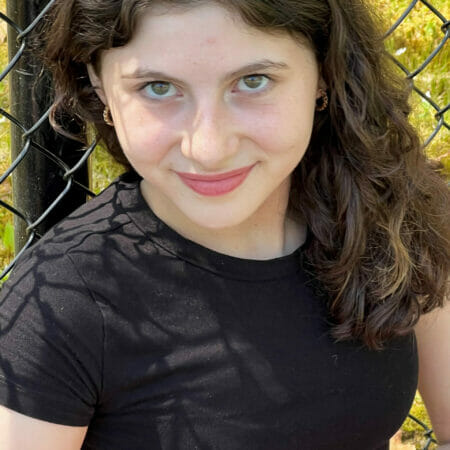
After battling cancer, Elana now comforts other children who are going through a similar experience. /Courtesy Elana Koenig
Why did you start Koenig Childhood Cancer Foundation?
When I was seven, I went through cancer treatment. I was in and out of the hospital for a year and a half and it was a miserable time for me. I didn’t have much social interaction. Some of my friends came to the hospital to visit me and that was, honestly, my favorite part of the day, but most of the time I was heavily drugged. I was not myself, and I was suffering most of the time. When I did finish my cancer treatment – my surgeries, my chemo – it was probably one of the happiest days of my life. We were all celebrating.
However, I had this nagging thought in the back of my mind because I had made so many new friends in the hospital. Also, these friends understood me, what I had been through, and I had become very close with them. I knew that even though I was done with my treatment, they were not yet done with theirs and I couldn’t stand the thought of leaving them there. So, I talked with my parents, and told them I wanted to do something to help.
So, we started the Koenig Childhood Cancer Foundation, and I helped a lot of my friends in the hospital and then even more. We do so much. I believe we helped them emotionally and financially. Me going through cancer was probably my biggest failure, but also my biggest success because it inspired me to do so much more with my life and so much for others.
When I say it was my biggest failure, what I mean is that I was so upset and was suffering so much in the hospital that it affected me a lot. But I turned it into something beautiful, so that was definitely a great success.
Tell us about your volunteer role with Koenig Childhood Cancer Foundation.
I started the charity with $900 that I had in my piggy bank. Most of the money was actually a gift from my grandparents, and it was the only money I had saved up, but I wanted to use it for a cause that I believed in. Now, I fundraise over social media, or I make speeches in front of big crowds and inspire people to help join us. I now have over 17,000 followers on my Instagram account and we have raised $1.5 million dollars in just two-and-a-half years.
Also, I deliver gift bags to camps that are for children battling cancer, and to hospitals in my area. Or I go to Target or other stores to pick up stuff for them, such as supplies. Additionally, I organize events for kids in the hospital. Everything I do is for the kids, connected to the kids.
When you’re speaking in front of a lot of people, do you get nervous?
Actually, before I started KCCF, I used to publicly speak for other foundations for other causes and help raise money for them too. So, I feel like I’m practiced about telling my story and speaking about what I’m doing. I take so much pride in how much I’m helping other people.
How do you use singing to bring awareness to your cause?
I sang at a Mets game recently! KCCF was awarded there, and I got to sing the national anthem. Also, I sang a little while ago at Radio City. I sing to raise money at galas or on social media to bring awareness to the foundation. I like to think I use my voice to spread awareness for the kids that I help.
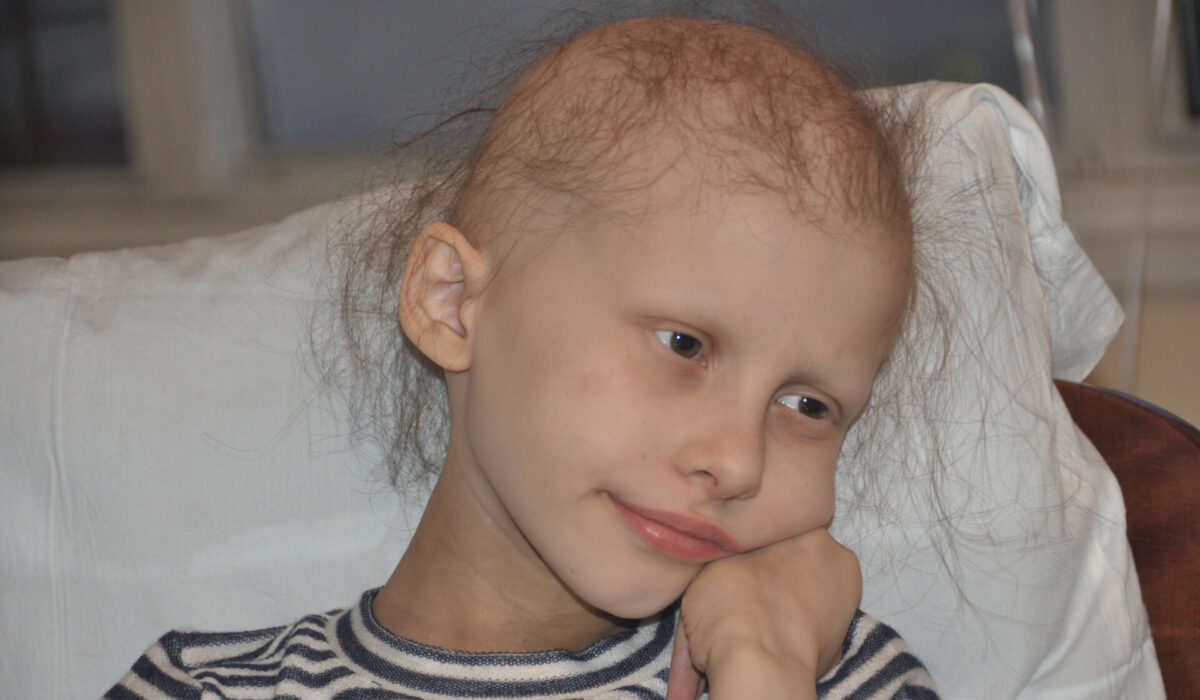
When Elana was just 9 years old she was diagnosed with a an aggressive and rare bone cancer in the bone in her hip. /Courtesy Elana Koenig
What’s been the most rewarding part of your work?
Definitely, the impact that I’m making and what I’m doing for these families because all I want to do is make them happy or make their lives easier. So, whenever I get a thank you note or something that shows their gratitude it fills me with so much pride. It’s just beautiful to me how much we’re doing and how many people we’re affecting.
What have you learned through your experiences as a volunteer?
I think I’ve learned how to be patient and how to interact with the families correctly. I went through cancer treatment, so I feel like I have a deeper connection on a different level. But as the foundation has grown, I feel like I’ve learned how to lead projects more and interact with the families more. I’ve learned how to help these families. How to make them feel loved, connected and special.
Tell us about any future partnerships, programs or events that you are excited about.
We are thinking of purchasing a house on the Upper East Side [of Manhattan] called KCCF House where we can invite families to stay there because it’s right next to a lot of hospitals in NYC. Right now, I live next to a lot of really great hospitals, and we used to bring over kids from other countries to the U.S. to get their treatment, and before we could afford to pay for a hotel but we would have them sleep in our living room. And obviously I’m happy to help, but I want to have a safe haven for them – a real house, a real place to live while they’re over here.
For example, there are two kids, their names are Denise and Mark. Denise we brought over from Azerbaijan because she suffering there, she didn’t have the right means or the money to get her treatment over there. So, her chances of survival were very low, and I wanted to bring her over here to get the proper treatment she needed. Fortunately, she’s almost done with her treatment, and she is doing very well here, which is amazing.
Mark was a boy that we brought over from Ukraine when the war had just begun. It was very tragic, and Mark and his family lived in a very violent area. There were bombs flying above his head. He couldn’t get the treatment he needed, and I wanted to bring him to a place where he could comfortably get the proper treatment. We brought him over to the U.S. so that he could sleep in a hospital bed, have access to doctors and not have to hide in a basement. And now Mark is cancer free.
We paid for all the expenses of both kids, but the only thing I wish was we had a house that they could stay in because both of them did sleep in our living room when they first came to the U.S. before they could find proper housing. I want to be able to immediately be able to give them the proper housing in the KCCF house.
What do you want people to learn from your story?
I want them to learn to never give up. That’s my message to everybody. I found this quote a long time ago, and I use it everywhere now: If your heart can’t keep going, use your legs. Always try to reach your goal because if you give up, it would’ve all been for nothing. I love people who work hard and who never stop working for their goal.
Volunteer Works With Initiatives Spanning Education, Food Security, Poverty and More
Meet Daily Point of Light Award honoree Dilip Kumar Sangaraju. Read his story and nominate an outstanding volunteer or family as a Daily Point of Light.
Dilip Kumar Sangaraju of Pleasanton, CA, is the personification of service to others. As a member of SiliconAndhra, he has led many service projects for the last six years. From the “Find the Match” for bone marrow transplants to “Kids Against Hunger,” which provided 42,000 meals, Dilip is always willing to jump in and help.
Read more about what inspires Dilip to volunteer, from teaching a language in local schools to organizing a drive for non-perishable items.
Tell us about your volunteer role.
I started to volunteer with SiliconAndhra back in 2015. I was playing a role whenever there was a need – they’d give me a quick phone call and I’d come help. I used to do that, travel up to 50 miles over a weekend and help for a few hours. But then, when you start seeing the impact, you feel like you have given something to the people you’re helping. And eventually, the satisfaction you have from that makes you feel like doing more.
The more I got to know the power of volunteering and the self-satisfaction, I started taking roles that gave me more responsibility. When I get exhausted with my actual work, I still don’t feel burned out by volunteering. Even now, if I have a 10-minute break, I am thinking about the upcoming volunteer events we have. I often spend more time on volunteer efforts than on my actual work. There’s something about the satisfaction you get when you look at people’s faces that makes you want to do more.
At some point, when you’re a child or at some point in your life, you might have benefitted from some services. You might think, ‘When will I be at that stage myself where I can give to others?’ A recent example was during the height of the COVID-19 pandemic. Everyone was exhausted. I was in Santa Clara and there were no masks. You couldn’t even buy masks. But I was driving around and saw an organization was donating masks to the library. I donated a pack of masks. It’s so simple.
SiliconAndhra is a nonprofit organization. The only call is to serve – in whatever manner we can. We have so many initiatives. For education, we have a K-12 supplemental educational program. I’m the coordinator for Santa Clara-Pleasanton location. I recruit teachers and volunteers to help teach kids their mother tongue language, Telugu, which isn’t taught here in the schools. Every week, we go to schools for two hours and teach there. For that portion of that initiative, I play the role of coordinator.
I also play the role of secretary for the mother organization. I was the international chair for the Rotary Club of SiliconAndhra. I play multiple roles for multiple initiatives – and each initiative has multiple projects. So there’s a lot we do!
Which initiative are you most passionate about?
I’d say everything! Because it’s all about giving. It’s all satisfying.
But when it comes to service projects – the stem cell drive is one that really impacts me. It’s a direct impact. I organized a webinar, and one of the participants was the only match for a specific person whose life was in danger. Someone’s life was saved because of this person volunteering at a stem cell drive. So, that is one initiative I’m passionate about. We have so many projects – there’s a shoe drive, where we’ve successfully collected nearly 2,000+ pairs of lightly used shoes and sent them to women in Africa to set up temporary shops to generate income. There are so many service projects.
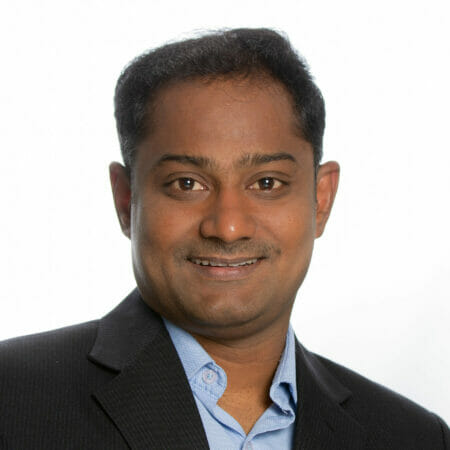
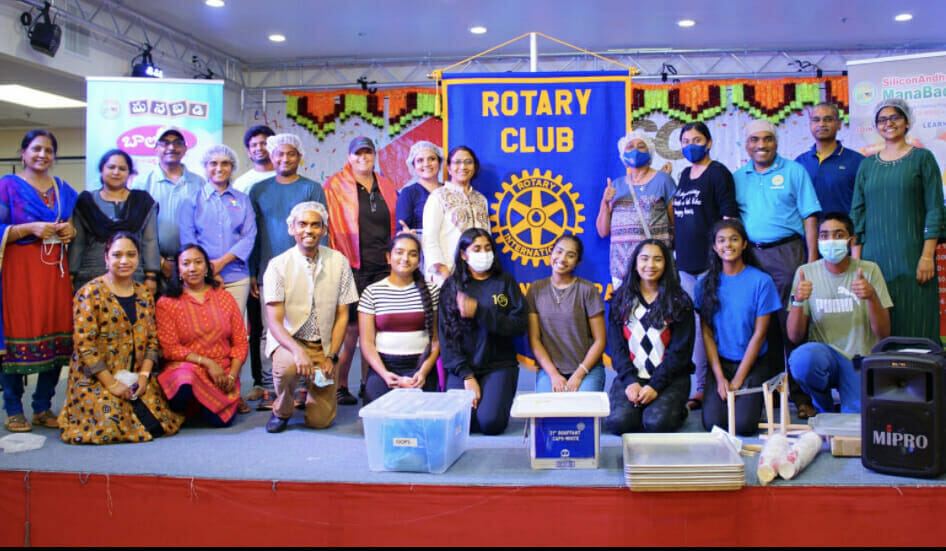
SiliconAndhra runs many projects and initiatives, and Dilip enjoys helping with a variety of them./Courtesy Dilip Kumar Sangaraju
Share some rewarding stories from your volunteer work.
When we did a food drive, the expectation was for me to bring at least 150 people to come to our facility. And I did that. Together, we packed non-perishable food items for two hours, resulting in the packaging of over 6,000+ food packets.
We reached out to everybody. They’re not just donating their hours, they also donate $20 each. At the end of the day, seeing not 150, but 180 people – driving to help, donating and serving their time. It just makes you want to do more.
Any advice for people who want to start volunteering?
Specifically with our organization, especially now that it’s spread across the United States, we need help in everything. Good at web technologies? We need you. Good at phone calls? We need you. Good at teaching? We want you. Good at organizing? We want you. You’re an extrovert, an introvert… we need you.
We have close to 2,000 volunteers who work with SiliconAndhra, who spend at least three hours every week volunteering. Regardless of your skill set, just jump in, you’ll find a place to fit in.
Upstate New Yorker Brings High-Quality Care to a Clinic in Rural Uganda
Meet Daily Point of Light Award honoree Matt Liquori. Read his story and nominate an outstanding volunteer or family as a Daily Point of Light.
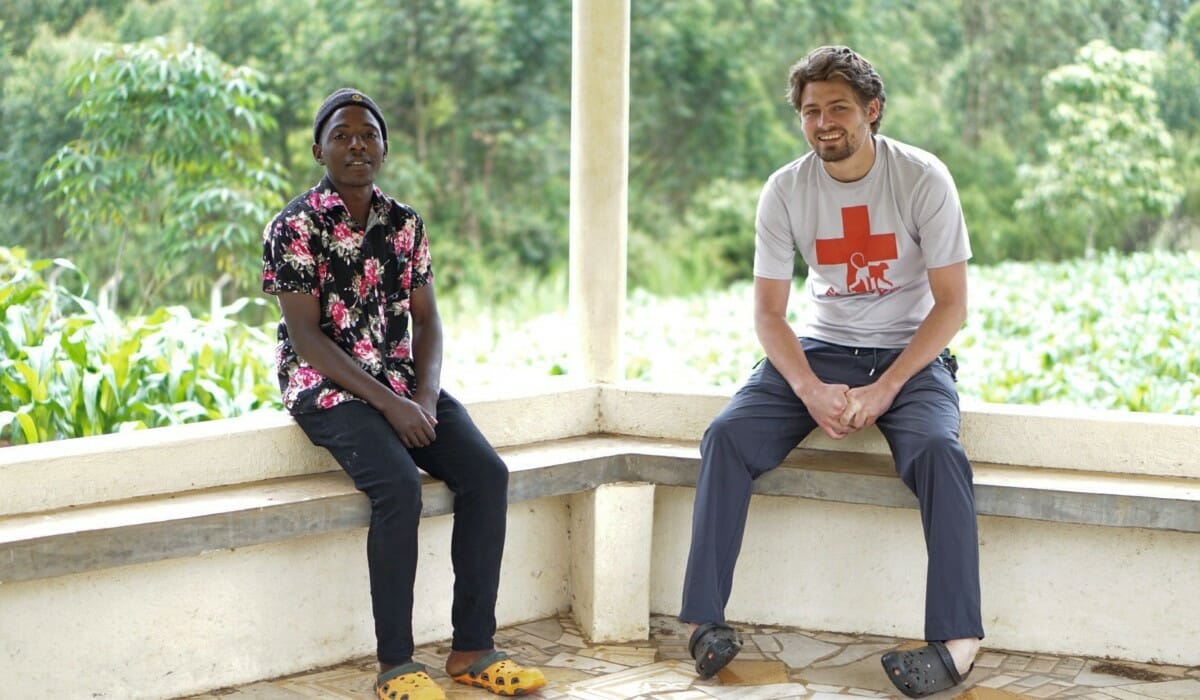
Matt Liquori works in early-stage biotech manufacturing, but when he graduated from Union College, he wasn’t sure what he would do. On a whim, he applied for a nine-month, post-grad fellowship through which he was placed with a partner organization abroad. He landed with Engeye, a nonprofit medical clinic in rural Uganda.
It wasn’t his first time traveling outside the U.S. He has spent a semester in Sicily working at a research organization while taking culture and language classes and exploring on the weekends. In fact, Matt credits that period with sparking his love for travel, something he took with him to Africa. Other than the kindness and openness of locals, he was struck by the difference in the pace of life, learning to throw out the schedule and see what the day brings.
Upon his return and into his employment at Regeneron Pharmaceuticals, Matt–now 27 years old–continues his work for the clinic. In addition to fundraising activities, he organizes and leads trips back to Uganda for specialized medical professionals with knowledge that could benefit staff and patients. He has also served on the board of directors for nearly three years.
What inspires you to volunteer?
When I graduated, I wasn’t ready to go into the workforce and was thinking about a career in medicine. Union College has a nine-month postgraduate fellowship with NGOs around the world. When you return at the end of spring semester, you share knowledge with students who might not be able to travel abroad or experience other cultures and communities.
I was placed with Engeye in rural Uganda, and I’ve stayed involved ever since. I’ve always had the desire to help others. There were a number of different organizations that I volunteered with when I was in school. I spent one summer at a hospice home. I think I’ve been building on those volunteer experiences and ultimately found an organization I really love and want to dedicate more time to.
What kinds of activities did you do in Uganda?
The clinic is staffed by 13 full-time staff members. It doesn’t need our help to run their day-to-day. We would do projects like look for upgrades in equipment or procedures that the clinic might be able to pursue. We helped manage a group of Engeye scholars. The organization provides merit- and need-based support to 22 local students continuing their education where they wouldn’t have otherwise had the means to do so. We would visit them, help them on their breaks and put on different types of enrichment classes.
We also worked with a group of local women called The Artisans who would make local crafts that we’d sell to tourists or Engeye visitors. At the clinic, we’d check patients and do the monthly reports for the Ministry of Health, work on the electronic medical record system, and other small things.
Matt leads fundraising activities for Engeye, as well as organizing trips to Uganda for specialized medical professionals.
Describe your volunteer role with Engeye now.
Engeye clinicians would be equivalent to a nurse practitioner or physician’s assistant in the U.S. We supplement that with visiting American physicians with a specialty that might not be taught or well-understood through Ugandan medical training. For example, we’ve recently acquired an ultrasound machine unique for a maternity center or clinic in the area. We have an ultrasound tech that comes once a week, but we don’t use state-of-the-art techniques. We’re trying to send someone with that expertise over for a couple of weeks to train the staff.
Mental health isn’t treated, diagnosed or managed in a way that is optimal, so we’re also working on getting psychologists to share their experiences. Having lived there, having relationships with the clinic founder and his staff and understanding the basic premise of the language, my role there is as team guide. I make sure everyone’s documentation and travel is set and serve as a liaison between the Ugandan staff and the visiting 10-12 Americans. I’ve done that twice now, once in 2020 and again in April.
This is my third year on the Board of Directors, which consists of 12 Americans who work in conjunction with the Ugandan board. The Ugandan Board oversees day-to-day operations of the clinic, and the U.S. board manages fundraising, finances, capital projects, long-term expansion, and other things along those lines.
I’m also the vice-president of our fundraising and education committee. I lead our fundraising work, social media and website maintenance, grant writing, donor relations, etc. We contribute to staff salaries, all of whom live on the grounds of the clinic as an incentive to attract high-level clinicians. We support our scholars and greatly subsidize patient visits and medication so that they’re affordable for everyone. Last year, we raised $156,899 to support those initiatives and were able to provide a new ambulance. We saw over 17,000 patients, and that number continues to grow.
What has been the most rewarding part of your work?
In 2017, we started building a high-level maternity center. I was in Uganda for the first birth in the facility. The alternatives were to give birth at home or travel a great distance to a significantly more expensive hospital or clinic. Filling a need that is so significant and really making an impact on this community means so much to me. Ultimately, the most rewarding part is seeing the organization being able to step in to help people who really need it.
What have you learned through your experiences as a volunteer?
As an outsider living at the clinic where everyone’s working towards the same goals, the way I might think about a problem might be different than the way that someone in Uganda thinks about the problem. Being able to step back and understand that they understand this community at a different level than I do and appreciating different perspectives for the value that they bring is something that I’ve been able to carry over to my professional and personal lives. And I think it’s helped us be successful with the work.
Tell us about future partnerships, programs or events that you are excited about.
The clinic was founded by John Kalule, a Ugandan from Ddegeya Village, and a medical student from Albany Medical Center. Most of the groups that we bring over are based in Albany. We’ve trying to build on that with other medical networks interested in partnering with us. We’re getting the ball rolling and are looking forward to seeing where that goes.
Why is it important for others to get involved in causes they care about?
In the volunteer world, the mentality that if you don’t do it, someone else will isn’t really accurate. There are a lot of situations where, if someone doesn’t step up and take the reins, important initiatives fizzle out. If there are causes that you’re passionate about, being involved and seeing what you can do helps keep those alive and moving forward.
What do you want people to learn from your story?
I brought my mom with me on the trip in April. She’d never been outside the country, but she’s passionate about the organization from me living there and all the work they’ve done. And she’s become involved. She’s a teacher and writes pen pal letters with the students in our scholarship program.
Getting involved with Engeye was a chance encounter with an organization that I was pleased with because of my willingness to be open to a place that I wasn’t comfortable with or aware of. Then, something really great blossomed from it. If nothing else, just be open to different people, cultures and places. Sometimes there’s work to be done in a place you might not expect.
North Carolina Volunteer Inspires Positive Change and Civic Leadership in Her Community
Meet Daily Point of Light Award honoree Shanta Dutta. Read her story and nominate anoutstanding volunteer or family as a Daily Point of Light.
Not only is Shanta Dutta a full-time technology architect at a bank and a mother of two, but she is also the founder and president of Bengali Women’s Forum in Charlotte, N.C. Shanta created the Bengali Women’s Forum to empower the local and greater Bengali community while focusing on equity for equality, equal opportunity and opportunity for wellbeing.
One of the events she is most proud of helps inspire young adults to become civic leaders, teaching them how those roles can create positive change in society. Additionally, Shanta emphasizes the importance of bringing people of all genders, ages and backgrounds together to work toward a common goal. She wants to show volunteers that in order to bring lasting change, people must work together towards common goals.
What inspires you to volunteer?
What inspires me to volunteer is the opportunity to make a tangible difference in the lives of individuals and communities. Knowing that my actions, along with those of fellow volunteers, can positively impact others is a powerful motivator. Volunteering allows me to align my personal values with meaningful actions, fostering a sense of purpose and fulfillment. I’m inspired by the idea of contributing to a cause I care deeply about like those championed by the Bengali Women’s Forum and being part of a collective effort to create positive change.
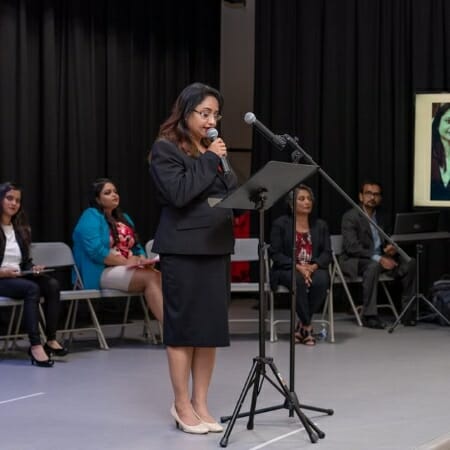
Shanta Dutta is the founder and president of Bengali Women’s Forum./Courtesy Shanta Dutta
Describe your volunteer role with Bengali Women’s Forum.
As the president and founder of the Bengali Women’s Forum (BWF), I am dedicated to driving our organization’s mission of fostering empowerment within our community. While acknowledging the historical significance of women’s roles, our core principles center around equal opportunities and collaborative efforts among all members.
BWF’s guiding motto is “Aamrai Poriborton.” It’s a Bengali phrase, and it means, “We are the Change.” It underlines our commitment to addressing pressing issues impacting our diverse community in Charlotte. My role involves conceptualizing and executing events such as community-awareness campaigns, panels on various topics, and active participation in volunteering with shelters and cultural organizations as well. Additionally, I lead efforts in advocating for positive action, coordinating programs for holistic growth and providing educational opportunities for all age groups.
On the BWF website it says, “Over the course of history, women have played some of society’s most significant roles.” Is there a woman in your life who has inspired you to support other women?
My mom and my mom-in-law. They were heavily involved in community betterment. In India they were involved in many nonprofit organizations. My mom-in-law has passed, but my mom continues her charity work. They were both involved in many organizations that support villages where people are living their life with almost no opportunities, and every day they struggle with their basic amenities and food. The organizations raise funds to help them get the basic facilities and help them with the essentials. Basic facilities in terms of education – building the schools, appointing teachers for them. Also, my mom-in-law used to volunteer with an organization that brings doctors into those villages as well. She would coordinate the logistics and ensure the funds were going to the right people.
What has been the most rewarding part of your work?
One cherished memory that comes to mind is an event we hosted. There is natural leadership in children, and I don’t believe that traditional career paths like scientists and engineers are the only option for bright minds. One crucial role often overlooked is civic leadership because many avoid it due to negative perceptions, but without legislators and diplomats, our communities and nations are stagnant. I think that it’s our duty to educate children on the roles of government and administration as we share responsibility for grooming future leaders. That is why we organized an event and named it Leaders in the Making – Our Children are Tomorrow’s Civic Leaders. It was a huge success.
Another rewarding part of my work has been witnessing the transformation and empowerment of individuals within our community. Seeing women and men from diverse backgrounds come together, access resources and develop personally and professionally has been truly fulfilling. It’s immensely rewarding to know that our efforts at Bengali Women’s Forum are helping community members overcome challenges, achieve their goals and lead more empowered lives. The sense of unity and collaboration fostered within our organization has been deeply rewarding, as it highlights the positive impact we can make when we work together towards common goals.
What have you learned through your experiences as a volunteer?
Through my experiences as a volunteer with the Bengali Women’s Forum, I have learned the immense power of collective action. Working alongside dedicated individuals who shared a common goal has really reinforced the idea that together we can affect meaningful change. I have also gained a deeper understanding of the challenges faced by community members, particularly in areas such as health, social welfare, education and equal opportunity as well.
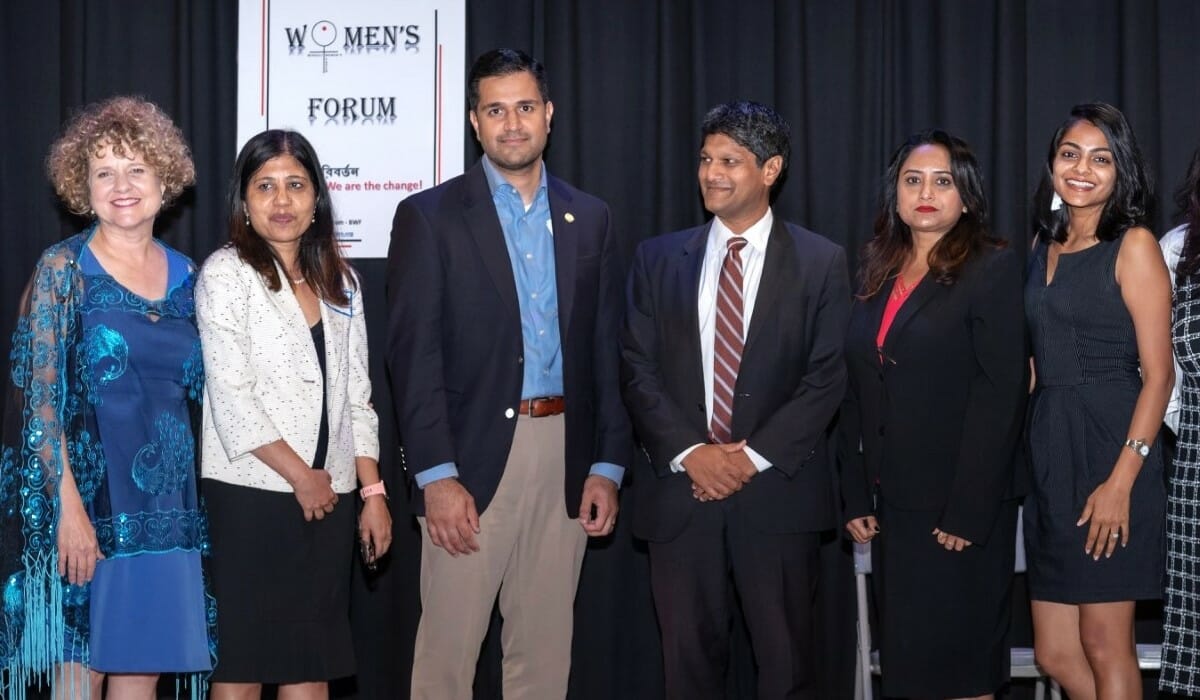
Shanta and the other members of the Bengali Women’s Forum board strive to address issues that are affecting both women and men in Charlotte, N.C./Courtesy Shanta Dutta
Tell us about future partnerships, programs or events that you are excited about.
I’m thrilled to share that in November, we are actively collaborating with community leaders from Cambodia, China, Philippines, Korea and more to organize an event named, “Behind the Badge.” This event will focus on opportunities within the Asian Americans and Pacific Islander (AAPI) community and the Charlotte-Mecklenburg Police Department (CMPD). It’s going to be a fantastic initiative aimed at empowering our community’s youth and providing them with insights into potential career paths in law enforcement and public service. We are looking forward to making a significant impact through this event and continuing to forge valuable partnerships for the betterment of our community.
Why is it important for people to get involved in causes they care about?
Getting involved in volunteerism is an excellent means to connect with your community and its residents. Each of us possesses unique gifts and challenges, all of which are crucial in realizing the full potential of our community. When we unite to address important issues, remarkable achievements become really, really possible. It becomes easy.
Our mission at the Bengali Women’s Forum is to harness these talents and unite women and men from all the backgrounds to confront pressing social challenges. We are committed to remedying key issues such as health, social welfare, education and barriers to equal opportunity. In the interim, we also serve as a beacon of hope for our neighbors facing difficult circumstances, fulfilling our mission to empower individuals, strengthen our community, and make positive change our reality. I am inspired by JFK’s words, “We choose to go to the moon in this decade and do the other things, not because they are easy, but because they are hard.”
What do you want readers to learn from your story?
I want to emphasize that life extends beyond education and career growth. It’s about helping others whenever possible. Also, I’m grateful for my dedicated team, whose unwavering support has been invaluable on this journey.
Do you want to make a difference in your community like Shanta? Find local volunteeropportunities.
Son Honors His Mother’s Legacy Through Personal Safety Activism for Professionals Who Work Alone
Meet Daily Point of Light Award honoree Carl Carter. Read his story and nominate an outstanding volunteer or family as a Daily Point of Light.
Content Warning: Points of Light is proud to share the following uplifting and inspiring story. However, we acknowledge that portions may be difficult for some readers. We encourage you to please care for your own well-being above all.
Carl Carter is the eldest son of late realtor Beverly Carter. In 2014, during the course of her work, Beverly Carter was kidnapped and murdered while showing a home to a couple she believed were prospective clients. In the face of this great tragedy and loss, Carl has turned his grief into action, founding the Beverly Carter Foundation, a nonprofit dedicated to the safety of real estate professionals and other professionals who work alone.
Through the Beverly Carter Foundation, Carl volunteers to deliver safety education for lone-worker professionals, and has reached tens of thousands of individuals through speaking and safety education courses. Read on to learn how Carl is honoring his mother’s legacy and working to keep others safe through volunteerism.
What inspires you to volunteer?
Since I was 17, I have worked for the Blue Cross Health Insurance system in Arkansas. The company was connected to the wellness of the community, and there have always been opportunities for community service and volunteering. Projects included tornado cleanup efforts and much more.
When my mother’s story blew up in the national media, we faced incredible pressure from the media wanting the inside story. Suddenly we were in the national spotlight, and ever since then, we’ve lived in a glass house. Between the time that she was found and the funeral (which had been delayed because of the investigation), I spoke with many, many people asking if I would start a nonprofit. My initial thought was, “Why?”
Fast forward to a few months later… With all the publicity, I became the voice for the family standing up for the truth and her character. I began hearing from female real estate agents who shared their own stories of assault. These stories became a heavy weight on me. I’m not a mental health expert. I don’t know how to console people or for that matter myself, but I felt I had a responsibility to do something. The foundation sprang from a desire to help from my mom’s story.
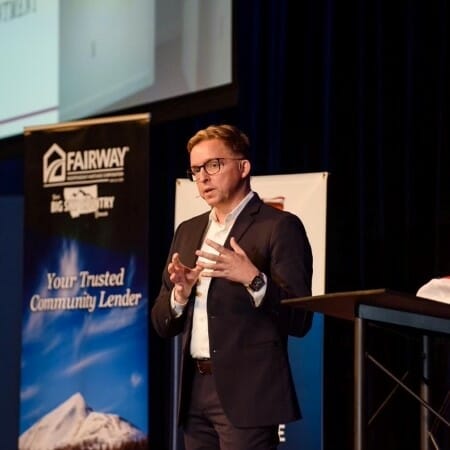
Through the Beverly Carter Foundation, Carl volunteers to deliver safety education for lone-worker professionals, and has reached tens of thousands of individuals through speaking and safety education courses./Courtesy Carl Carter
Describe your volunteer role with the Beverly Carter Foundation.
In January 2017, I founded the Beverly Carter Foundation, a 501(c)(3) nonprofit foundation dedicated to the safety of real estate professionals and other professionals who work alone. The foundation provides resources, information, consulting, training and support.
I wear many hats in my founder’s role but where I make the most impact is through safety education, which includes speaking, teaching at seminars. That’s where there’s a lot of power in what I’m attempting to do. I have spoken to tens of thousands of people in over 300 events. Most often when I’m asked to speak, it’s focused around my mom’s story and how its lesson can be applied to help others. Safety education is a main priority for me.
My safety education takes me across the country. I had, and still have, the fear that we’re such a crime- and drama-obsessed country. I sometimes wonder, am I just a true crime entertainer, or am I making an actual difference? I’ve been able to overcome that fear just by hearing the stories of other real estate agents who have either been survivors or realize that there are inherent dangers in their profession.
My safety training courses that I’ve developed were developed for real estate professionals but apply to anyone who works on their own. Lone-worker professionals are always at risk and so we offer proactive, preventive risk mitigation. Currently, we don’t offer the reactive aspect of self-protection such as self-defense.
Some of the key takeaways that we encourage people to practice is to know who you’re meeting. Never meet someone without verifying their identity. Many real estate agents shy away from pre-qualifying or asking for proof of cash, but this is one step that can keep them safe. Another safety tip that we learned thanks to the pandemic is the power of virtual showings and virtual tours. And of course “be a buddy, take a buddy” wherever possible.
I also emphasize the safety measures in our smartphones such as location sharing, panic buttons and other technology.
What has been the most rewarding part of your work?
The most rewarding part is when people say I opened their eyes. Months or years later, people say they consciously made a different decision because they thought of Beverly. They had a gut feeling, or put safety measures in place, and they believe these decisions saved their life.
Secondarily, we’ve all experienced loss but I have a platform where I can continue to talk about my mom and in that way she continues to live on. This is helping me heal, and to carry on her legacy.
What have you learned through your experiences as a volunteer?
A tough thing for me that I constantly have to relearn is that through the nonprofit, I’m trying to inspire people to make change. In order to inspire, I have to be inspiring. I can’t be inspiring if I’m giving too much. If I give of myself to the point I’m empty, I’m not able to represent my mom well. I’ve learned to fill my well first, which makes it possible for me to give 100%.
I have also learned that it takes money to do anything. In many ways the foundation has to function like a for-profit business. It’s been eye opening.
Tell us about future partnerships, programs or events that you are excited about.
September has been deemed Safety Month by the National Association of Realtors, so it’s our biggest month for safety education programs all across the country. Volunteers from the Beverly Carter Foundation participate as speakers at safety events nationwide.
Why is it important for others to get involved with causes they care about?
In my case, volunteering has been partly about healing and processing. It has been a positive outlet for my grief as I put my grief into action while creating a legacy for my sweet mom.
Many of us are in jobs we enjoy, but may not be fulfilled because we don’t always have the opportunity to directly touch lives. Volunteering gives an opportunity to engage in something that you love outside of work. Volunteering gives life a richness of purpose beyond what we do from 9 to 5.
What do you want people to learn from your story?
I think in the end, it’s about becoming empowered and trusting our God-given instincts. Listen to your gut if something feels unsafe. Alternatively, listen to your gut if something feels absolutely right and do not be afraid to express appreciation and gratitude. Always tell people you love them.
If you or someone you know may need support in processing tragic events, Help Guide provides evidence-based articles and self-help tools for a wide variety of mental health topics.
Nonprofit Founder Equips College-Aged Adults and Community Members Through the Power of Volunteerism
Meet Daily Point of Light Award honoree Max Gerall. Read his story and nominate an outstanding volunteer or family as a Daily Point of Light.
Max Gerall of College Station, Texas, was in college when he started his nonprofit, The REACH Project, with the vision to empower university students to connect with community members – for the benefit of both. Among an array of initiatives, the organization helps provide ESL and GED classes, financial literacy and other technical skills and soft skills to community members and gets college students involved with volunteer work.
This work all began when Max was battling an illness before he started his freshman year at Texas A&M, thinking he may never be able to make it college. When he finally did make it to campus, the first person to see, hear and appreciate him was a foodservice employee. It was then he had the realization that there was a whole group of people out there who keep the wheels turning. They do their jobs every day, without fail, and they deserve to be seen, heard and appreciated.
Now, Max not only works for The REACH Project but also does extensive volunteer leadership work through Brazos Homeownership Coalition, a community coalition creating pathways to affordable homeownership. He also serves on Texas A&M’s Community Engagement and Economic Development Committee. As a social entrepreneur, Max has even given a TED Talk on how to see and honor individuals in your community.
Read more about what inspires Max and the various types of volunteer work he’s involved with.
Describe your volunteer role.
I do some mentoring, both for college kids and up-and-coming minority businesses. And so, a lot of that looks like support through life experiences, but also the more technical things, like how to host events, how to create business plans and marketing plans, that kind of stuff. That’s one bucket of what I do – the mentoring.
Max Gerall is the founder of The REACH Project and works extensively with Texas A&M and the Brazos Homeownership Coalition./Courtesy Max Gerall
The other part is some community activism. I’m part of a housing coalition here in town, with the mission of creating affordable pathways for homeownership. Another gentleman and I came together and decided we needed a larger brushstroke of community representation in the conversation.
So we created a housing coalition of 21 local organizations, plus various community members, to have monthly conversations about the environment, the need, the market, and also creative solutions to overcome the housing crisis we’re experiencing here. So planning meetings, setting agendas, recruiting partners to join on, hosting community listening events and engaging with the community to ensure we’re making decisions based on real need and not assumed need.
Another area of service is with youth. So, finding ways to connect college students and underserved children. We do a lot with The Boys and Girls Club. I’ve been lucky enough to be an external events coordinator, so we do a lot with STEM fairs, Halloween events, meal distributions… anything we can to try to make those connections and help serve the broader community.
Finally, one initiative that’s really important is meal distribution. We created a hunger consortium in town, and pulled together the local church as well as several nonprofits. Not only do we provide weekly and monthly meal distribution, serving about 750 families a month, but we also have larger system-wide conversations about how we can be more efficient and effective in the community when it comes to food resources. So, bringing in the local cafeterias and getting food donated instead of thrown away. Sending home backpacks of food during the weekends for students whose families may struggle to afford food. So, we’re coordinating the drive-throughs and also collecting food and dollars, as well as hosting events to raise awareness and help better serve the community.
Share some rewarding stories from your volunteer work.
I think some of the most rewarding aspects are when we’re able to connect university students with community members, providing hope for both. Seeing that tangible impact on both parties is incredibly empowering.
One story that comes to mind is of a woman at Texas A&M – she was a foodservice employee for 18 years, and she always had a passion for clothing. She never thought she’d be able to do anything with it, but through access to an entrepreneurial platform and then becoming her mentor, I was able to work with her to build out a plus-sized brand selling in Texas and in surrounding states. She’s now making enough money to support herself and her family through her side hustle. She was able to quit her minimum wage job, where she wasn’t receiving benefits, and provide for her family more than they’d ever imagined.
What do university-age students bring to the table that is beneficial?
I think their energy and their time in life positions them well to have big paradigm shifts. At Texas A&M, we have a majority of white kids. Many of them come from a background where they’ve never seen poverty and don’t understand it or even know that it’s real.
And so, if we can catch these students at this time, hopefully when they become future leaders, they’ll be more empathetic to those individuals. So it’s not just the immediate impact, which is beautiful, like the changing of credit scores or helping people get their ESL or GED, but it’s also the long-term systemic change we help create through impacting these young people. That’s the motivating factor: how can we have an impact today, but an even bigger impact tomorrow? There’s no better way to do this than by involving our future leaders – the 18-23-year-old college kids.
Tell us about future partnerships, programs or events that you are excited about.
With the start of the school year, we’re able to launch our youth STEM activities. So, our partnership with various engineering departments and their students allows us to do math mentoring, STEM fairs, a veterinary education platform… with the college kids coming back to campus, we get to have a much bigger impact and get them involved, and that’s really exciting.
Why is it important for people to get involved with the causes they care about?
Every action has a ripple effect, even if it’s a small action. I think if you get back to helping people feel heard, seen and appreciated, you don’t realize what kind of impact that can have. You have to be present, you have to be there. Don’t underestimate what a tiny action can do and the effect it can have on someone’s life. It can create ripple effects you may never see, know or understand.
What’s your best advice for people who want to start volunteering?
Just do it. Follow your heart. What are you passionate about? Start small. If it’s a good fit, you’ll naturally create more time to meet that need. Dive in, listen to your heart and don’t hold back!
Former Teacher Supports Under-Resourced Students Through College Applications and Beyond
Meet Daily Point of Light Award honoree Jeniece Howe. Read her story and nominate an outstanding volunteer or family as a Daily Point of Light.
Jeniece Howe, 38, moved to San Francisco in the fall of 2018. After five years of teaching in underserved neighborhoods — math in Denver, and economics and government in Dallas — she was looking for a change. But as she shifted into doing administrative work for an architecture firm and, during the pandemic, managing the prepared foods department at a local Whole Foods, she wanted to continue helping the community she no longer professionally taught. It all started with a Google search.
“I made a list of all the different volunteer programs and made a point to make appointments with them or do info sessions,” Jeniece recalls. “Minds Matter Bay Area (MMBay) is the organization that I thought had the best mission. And the one that did all the things that I had wished that I’d had the time and resources to do when I was a teacher.”
This standout organization is a volunteer-run group that empowers underserved students with guidance, academic support, and test prep as they apply to and prepare for college. Two mentors are dedicated to each mentee throughout the multi-year process, and it is cost-free for their families.
“It’s so important for high school students, especially low-income high school students, to have supportive adults in their lives,” Jeniece explains. “Our mentees come from caring families. They have teachers and coaches at school, but, speaking from personal experience, families aren’t always able to offer advice on college and career. And teachers don’t always have time for extra support outside of the classroom.”
MMBay has been around since 2010, graduating their first class of mentees in 2013. At least 10 adults support each mentee as they navigate the college application process.
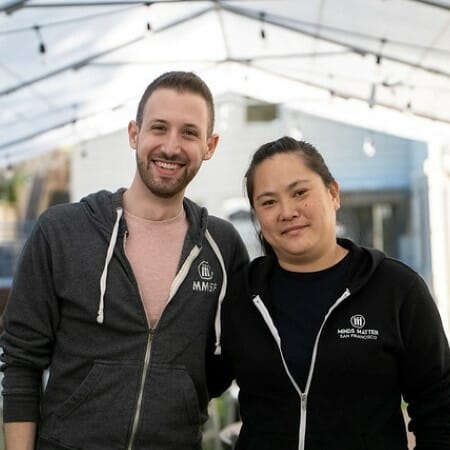
Jeniece Howe [right], instructional coach at Minds Matter Bay Area, and Adam Farchone, co-chief programming officer, at Senior Send Off 2023./Courtesy Jeniece Howe/Minds Matter Bay Area
“[Today,] we’ve graduated over 200 students. And 100% of them have been admitted to four-year colleges. When you talk about outcomes like that and the fact that all of them are on track to graduate within four years, that is huge for our community,” says Niharika Ray, chief operations officer of MMBay.
For five years, Jeniece has been a pillar of the organization. She starts each week figuring out where she is needed most and goes well beyond her defined roles to improve student experience.
“Jeniece truly embodies what it means to have deep care and service for our students. That’s why she’s so good at what she does. No matter what she does, her lens is always how can we serve our students better, and in a nonprofit, especially where we serve students, that’s what you need,” adds Niharika.
Initially, Jeniece joined the team as a mentoring lead for the sophomore class, writing and delivering curriculum to mentee-mentor teams and working with program leaders to refine mentees’ three-year learning arc while strengthening lessons. For the last two years, she has led all of the mentee-facing programs–instruction, mentoring, summer programs, college admissions, and financial aid–as co-chief programming officer. She has also overseen the return to in-person sessions after the pandemic lockdowns.
There’s no direct contact with mentees defined in the role, so Jeniece attended weekly sessions in order to stay connected. During that time, she discovered that many of the students had never been on a college tour and took the initiative to organize a trip. She garnered leadership support, worked out the details with fellow volunteers and created a lesson plan for mentees to use on the tour. It went so well that volunteers planned another visit shortly after.
“One of the things I love about Jeniece is that she may have a role or a title, but she never lets that limit the scope of her imagination,” Niharika proclaims.
Now, five years into her service to the organization, Jeniece is an instructional coach, a role she saw a need for and created. She will use her teaching experience to serve as a resource and help improve the teaching skills of volunteers, many of whom have a background in finance, engineering and tech. Over the course of the year, she’ll provide training, observations and individualized feedback for each instructor.
“In the past, we put a lot of focus on the mentee experience in our program – rightfully so – but this year, we’re putting more investment into the volunteers so they, in turn, can help our mentees. We’ve found that volunteers who have more preparation and competence tend to be more engaged in our community,” she states.
Jeniece spends five to 15 hours a week at MMBay, depending on the role and the needs. Her favorite part of the work is watching students thrive.
“I get to see shy sophomores turn into successful and confident high school graduates,” she says. “Going to the graduation ceremony is probably the most rewarding thing. It’s also nice to see people as they continue their journey. There’s a lot of growing up that happens once they go off to college,” she adds of welcoming back former mentees to share their experience with current students.
College is an experience Jeniece wants to make available to anyone who is interested.
“Go outside your comfort zone and apply for the programs and financial aid, because there’s a lot of goodwill in the world. And you’re important,” she advises students. “You should be able to have all these neat experiences.”
But that’s not the only positive benefit. As a transplant to the city, Jeniece has built a community and found purpose outside of work in a place where, at one time, she knew very few people.
“Volunteers get as much out of the experience as our mentees do. For example, one of our mentors told me he had never had a little brother, but after volunteering with Minds Matter Bay Area he feels like his mentees became his family,” she mentions. “Another volunteer invited his mentees to his wedding.”
Looking ahead, Jeniece is excited for the yearly School Night fundraiser coming up in October. It’s a night to celebrate mentees and volunteers while hearing from various speakers including a former-mentee-turned-volunteer.
Through outreach, reputation and word-of-mouth, the organization continues to grow. As MMBay expands to a second site this year, Jeniece looks forward to diving into her new role and learning more about recruiting and fundraising while expanding her understanding of the organization as a whole.
“Volunteering is really a way for everyone to make a positive impact on [their] community. So often, we hear about negative things that are happening in the world, and for me, volunteering is a way to push back on some of that negativity through my actions.”
As she looks for her next career move, Jenice focuses on helping others. And while the weather is nice, she’s enjoying the outdoors by walking and biking, sometimes leaning into that pushback vibe with her motorcycle.
Volunteer Driven by Data Helps Gift Vehicles to Families in Her Community
Meet Daily Point of Light Award honoree Catherine Cole. Read her story and nominate an outstanding volunteer or family as a Daily Point of Light.
After leading a capstone class at the Bush School of Government and Public Service working with a nonprofit called OnRamp, Catherine Cole hoped to become part of the organization’s board. Her wish was granted, and she became the first non-family member to join. OnRamp’s purpose is to help individuals and families of the Brazos Valley in Texas who are in urgent need of reliable transportation. When Catherine first joined, OnRamp had gifted 10 vehicles. Today, they’re up to 154.
Catherine has robust experience with public service. She began her professional life as a social worker but later got an MBA and used her social work and business skills to work for an international relief and development agency, Catholic Relief Services (CRS). During her time at CRS she worked in 12 different countries. When she returned to the U.S., she became a practitioner scholar by getting a PhD in Human Resource Development.
She’s so proud of the work that OnRamp accomplishes, but she credits others involved in OnRamp with inspiring her.
“What drives me now is being around people who have similar values in order to live out those values,” says Catherine.
You began your professional career as a social worker. What motivated you to become a social worker?
What motivated me to become a social worker is that my grandmother had such a hard time in her end days. It didn’t really seem like anybody was there to holistically coordinate things and treat her as a human being. She just went from doctor to doctor to doctor, got on medication and then quickly deteriorated and died. And I thought there has to be a better way to care for people who are older.
Catherine Cole is the board chair of OnRamp./Courtesy Catherine Cole
How did you find the organization OnRamp?
I received a PhD in Human Resource Development, which is like career development, organization development and professional training, and afterwards I did some teaching at the Bush School of Government and Public Service. At the Bush School, I did a capstone there which are these two semester courses that assign students a real-life organization and a real-life problem, and we got OnRamp.
We studied the field of this automotive nonprofit, including variables like what does personal vehicle ownership do for a person. We found that it provides access to healthcare, it provides parents the ability to get their children to the schools they want their children to go, it allows people to go back to school or to get a better job. In fact, personal vehicle ownership is more closely related to finding a better job than a GED.
I just fell in love with OnRamp. At that time OnRamp had given away their seventh vehicle, and they were a four-member board, just a little startup, and it was chugging along and, and grooving. My husband and I were praying, I was like, “I hope Blake [Jennings, Founder and President of OnRamp] asks me to be on the board after the capstone is over.” Then, the capstone ended, and my prayer came true. And I said, “I don’t even have to think about it, I’ve been praying for this.”
Describe your volunteer role with OnRamp.
I was asked to join the board in 2019, and I sort of did a wide variety of different things because it was still a startup. I helped with policy writing and developing the OnRamp onboarding manual. I was still teaching at the time, so I supervised an intern who wrote the polices within the manual, and I was able to develop her as a professional. I served on the client care team, I conducted interviews. I sat in on making decisions.
Then, after my second year at OnRamp I was asked to be the board chair. So now I lead the board, coordinate the board, professionalize the board and recruit and orient new board members. We just hired a client care director, so I’ll help onboard her. I help drive strategy, such as deciding are we going to go deeper with our current clients or are we going to try to bring on more clients? I attend giftings and speak on behalf of the organization. Recently we had a gigantic fundraiser, so I was there to thank our donors and represent OnRamp. I also help with recognizing all our volunteers at our volunteer celebrations. I have a fig tree, so I make fig preserves to give to the volunteers.
I feel like I’ve had my hand in every little customer relationship engagement of On-Ramp since it was such a small startup, and now we’ve gifted 154 vehicles to date.
What has been the most rewarding part of your work?
For me being a scholar practitioner, it’s being able to take research, apply the research and get results. So, my biggest reward is when I can say, okay, we originally did this capstone research, we saw that vehicle ownership was linked to X, Y, and Z. We’ve gathered data now, and we know clients are reporting X, Y, and Z. For example, when we first measured savings accounts, our average client is a Black woman working full-time with two or three children with $40 in the bank, and then with a gifted vehicle the balance went from a median of $40 to $800. I started jumping up and down, that was so satisfying to see that pan out.
What have you learned through your experiences as a volunteer?
I have learned researching this type of nonprofit, although I kind of knew it beforehand, how doggone hard it is to make good evidence-based decisions. But it’s critical. You better have evidence to show that what you’re doing with people’s lives is going to have a positive effect. For example, if we at On-Ramp did not take the care to vet our folks to ensure that they properly can take care of that vehicle, we could give it to somebody who could crash or hurt themselves or somebody else, or the vehicle could just sit in the driveway because they don’t have the money to buy fuel or insurance. So instead of being a gift, it ends up being a burden to them. Working with OnRamp, I think it was brought to light to me in such a tangible way, how hard and important it is to get measurable results.
Tell us about future partnerships, programs or events that you are excited about.
We’ve got a volunteer event tonight, and it’s super exciting because I remember when we got our first single volunteer and then later at a different event, we counted 60 volunteers for OnRamp. It’s so awesome. The spirit is really contagious so we will be celebrating that. And these other volunteers are part of two teams, one is the client care team and helping making decisions for where vehicles should go. The other team, they scour the U.S. for the best used, reliable vehicles – we buy them from everywhere and the cost of the vehicles doubled during COVID – and they will either drive them to clients or have them shipped. So, we would be unable to do this ministry without our volunteers for sure.
What do you want people to learn from your story?
I think what I’d like for people to learn from my story, and particularly related to OnRamp, is when you see somebody with their heart invested and passionate, get behind them. Blake Jennings the founder and the current president of OnRamp had given up a lot of his life. When it first began, he was a pastor at the time, and I think worked three and a half years as both a pastor and getting OnRamp off the ground. So, I knew I would be working with somebody who was fully committed and passionate. I loved that he did his homework first; he wanted evidence and he wanted facts. He took everything to heart, he took notes, you know, he wanted to do it not just as a fantastic ministry, but as an effective ministry. I was really shocked and saddened by how many people turned Blake down to be on his board and how long he had to tread water and before somebody would really get behind him and support him. And I think that’s what I’d like people to learn: when you see people out there and they are trying to make a difference in the world, you don’t have to go invent your own way to make a difference in the world, get behind that person.
Teen Strives to End Food Insecurity in Florida, India and Across the Globe
Meet Daily Point of Light Award honoree Aakash Suresh. Read his story and nominate an outstanding volunteer or family as a Daily Point of Light.
Serving as the vice chair for the Junior Advisory Board of Joshua’s Heart Foundation, Aakash Suresh of Pembroke Pines, Florida, has displayed remarkable leadership and dedication in addressing food insecurity and advocating for the wellbeing of vulnerable populations. This youth’s impact is evident through his tireless efforts in setting up distributions and providing nourishment of 5 million meals to families in need as well as coordinating meetings with Congress to champion important initiatives such as the Child Tax Credit and Farm Bill.
Aakash’s influence has ensured that policies are in place to support those experiencing food insecurity and create lasting change. His global perspective and compassion have led him to travel to India to combat food insecurity and establish a development school for children who face physical and cognitive challenges.
Through this multifaceted work, Aakash embodies the spirit of volunteerism and encourages others to take a global role in service. Read on to find out more about his story.
Describe your volunteer role.
I’m the vice chair and head of relations of the Junior Advisory Board of Joshua’s Heart Foundation, a nonprofit based in Miami, that works to end world hunger. We work nationwide as well as internationally. We have a food pantry based in North Miami, and now we’re restructuring and launching Joshua’s Foundation 2.0, to make a more youth-run foundation, rather than a youth-volunteer foundation.
As vice chair, I work to coordinate members. Prior to COVID-19, it was around 100 members, and now we’re down to about 20 or 30, but we’re climbing back up to that number. So coordinating daily pantry operations, connecting with old as well as new relations, getting donors to help us out, getting more food sponsors – like Whole Foods and Publix – so we can use those donations in our pantry network. We also have a sister foundation called Bread for the World, where we work in advocacy. Priorities there include passing the Child Tax Credit Bill, or the Pandemic EBT Bill.
I’m also involved in computer science and machine learning. So on the side, as a passion project, I’m creating a machine learning predictor in order to find food insecurity in geographical areas before it occurs.
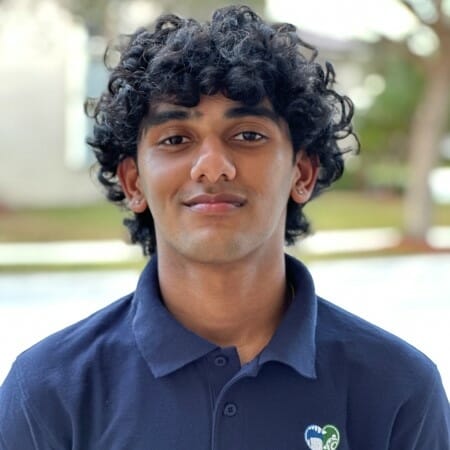
Aakash Suresh serves as the vice chair for the Junior Advisory Board of Joshua’s Heart Foundation./Courtesy Aakash Suresh
What inspired you to start this initiative?
It was a family thing. My brother was involved when I was around 10 years old. My parents are also involved in it. The whole essence of family is what the organization is all about, and that’s how I initially got involved. Joshua’s Heart was founded by Joshua, his mom and his grandmother. For the past six or seven years I’ve been involved.
Why is addressing food insecurity so important in today’s world?
I think it all ties back to this idea of equity, not equality. Everybody deserves not to be hungry. But some people are in worse economic situations than others. We’re all trying to get the same amount of food and trying to make the hunger situation better in general, but some people are not as privileged or economically advantaged as others.
Nutrition is such a big, important part of someone’s life. Joshua’s Heart was one of the first nonprofits to implement nutritional values into pantry development, rather than giving out junk food. It’s food that is supposed to actually help make people more healthy.
Food security helps provide a foundation for everything else. By meeting this basic need – giving people food – you give them a point to jump off of. They can get a job. They can get a home for themselves. They themselves can solve food insecurity. It’s a cycle.
Share a rewarding story from your volunteer work.
This past spring break, I went to India on a family trip, as well as to establish a development school. My family and I helped develop this school in an area of India that was hit by a tsunami and has mostly [low-income residents]. The school takes in cognitively and physically disabled kids and helps to teach them and provide them with food and schooling.
Joshua’s Heart helped us connect with them. I think it was one of the most rewarding experiences – establishing this school in my hometown, where my roots are. Seeing how we can make change, not just there but everywhere.
Why is it important for people to get involved with the causes they care about?
It fosters your own independence and activism. If you care about something, take charge of it. If you’re in a job you don’t like, you’re not going to be performing as well. If you’re not as emotionally involved in a role, you’re not going to succeed in that role. If you are passionate about it, you will succeed because you’ll want to succeed.
As teenagers and kids in youth service, if we don’t find interest in something, we don’t really want to do it. But if we take an interest in the issue – such as solving food insecurity – we will continue to take charge of it no matter what. Anything that gets in the way, we’ll work through, because we are interested in the success of the mission.
What advice would you share with people who want to start volunteering?
Make sure to help out wherever you can. No matter the situation, help someone. I’ve seen situations where people who have less, help more. Make a change in your community.
World Archery Champion Uses Her Talents to Help Fellow Veterans Heal
Meet Daily Point of Light Award honoree Lia Coryell. Read her story and nominate an outstanding volunteer or family as a Daily Point of Light.
It was the early 1980s when Lia Coryell joined the Army. After a trauma-filled childhood in foster homes around northern Wisconsin, she was looking to build a different kind of life from the one she had known. Two years later, things took a turn. She was diagnosed with multiple sclerosis (MS) at 19 years old. For a long period, she was fine. She married, had kids and earned multiple degrees. As the first in her family to have ever graduated from high school, the last of these life goals is something Lia considers especially rebellious for someone for whom there were no expectations of success.
As part of her master’s in education, Lia worked with young combat veterans going back to college as first-generation students. She started a program called From Combat to the Classroom to help with the transition. It’s now been implemented at every state school across the country. With eight siblings, Lia’s life as a teacher started young, but when the disease progressed and left her in a wheelchair, she was forced into retirement. After her chair-bound students suggested she try adaptive sports, she discovered the healing power of archery and has never looked back.
Today, at 58, Lia has competed in two Paralympic Games as America’s very first W1 archery team member in her class. She was the first archer in a chair elected to the U.S. Olympic and Paralympic Committee Board to represent able-bodied archers. The year 2022 also saw her top the podium in Dubai at the World Para Archery Championships. Back in the U.S., she has started multiple archery programs, including for The Pink Berets, female veterans with invisible wounds. Through her sport, she gets people out of their heads and rebuilds self-esteem.
What inspires you to volunteer?
I went to an adaptive sports camp, and the thing that changed my life was a word. They kept calling us athletes. I’ve never been an athlete, and I’m not built like one. But by the end of that week, I was an athlete. That shift in my mind was when I realized that I get to pick my identity, even if it’s just a word. When people used to ask me to tell them about myself, I would say, “I’m a divorced, single mother of two. I have M.S.” I don’t say that anymore. I say, “I’m an advocate. I’m an educator. I’m a leader. I’m funny. I’m artistic.” When you think of yourself that way, you’ll begin to believe it, and that can be a very powerful thing. So that’s how I got started in archery.
I have accolades on and off the field, and they’ve equally driven me to look deeper. I was invited to a Pink Berets retreat, because I’m an archer and a female veteran. Archery was the sport for me, because you can’t shoot a bow well and still think about other things. It’s a very mindful sport. It’s very meditative and healing.
The commonality with The Pink Beretsis they all have invisible wounds—PTSD and MST (military sexual trauma). People think they know my pain because they see me in a chair. They have no idea of the pain that these ladies—and even my son who was a combat medic and has PTSD—feel. I realized I need to be the person they needed. If you have a means to fix something for somebody that’s struggling, and you don’t do anything about it, then you’re the problem.
Describe your volunteer role with The Pink Berets archery program.
I’m the coach. I did fundraising. I found benefactors to help us with equipment and worked with an archery shop in town. Then, I put the word out. Last September, we had our first practice, and we now have around 40 women that come and go through the program.
We’ve taken a hiatus for summer, because I’ve been critically ill. I spent weeks in the hospital, and about six weeks ago, I woke up and couldn’t feel the right side of my body. I just keep going forward. In the beginning, it was really scary, but these women who were afraid to leave their houses or to be in big crowds are doing that now. So how can I put any less effort into it? Somebody once told me that the best gift you can give another human being is validation that you see them. You don’t have to know them or even say anything. Just make eye contact. There are still people out there who need to know that I see them.
What has been the most rewarding part of your work?
In the military, when you get off the bus at basic training, everybody is a leader and nobody is an individual. All of these ladies were in a leadership position at one point or another. When life gets so shook, and you have internal pain, you forget that you have those skills. It’s about learning to be confident again, because confidence becomes leadership and leadership becomes involvement. It’s a wonderful cycle, but there has to be an igniter, and for this, it happens to be archery.
What have you learned through your experiences as a volunteer?
With The Pink Berets, what people ask for help with is usually not what they really need from me. They might ask me to help them pick out the right arrows or to look at the way they shoot when really what they need is for me to encourage them. I’ve learned to read people. When they become more confident and more self-aware, they’ll start to ask for what they really need.
Tell us about future partnerships, programs or events that you are excited about.
We shot at The Vegas Shoot this year, the world’s largest indoor archery tournament, and we’re hoping to make it back. I’m also trying to set up an online program for women who fit the criteria to be on the team but don’t live in Texas.
It isn’t necessarily life changing unless you have the support and the background to go with it, so before practice, we’ll talk and connect with each other. That’s the growth part I would like to see continue to expand. What can we do to help each other?
Why is it important for others to get involved in causes they care about?
It makes the world a better place. The most powerful tool in the world is words—spoken, written or signed.And, like I said, eye contact and validation don’t cost a thing or take a lot of time. Being a part of the solution will bring you self-esteem and self-confidence. Everybody needs that. I never thought, as messed up as I was after coming back from Iraq and Afghanistan, that I would ever have anything worth sharing with anyone else. And I realized that I do, because of that experience.
What do you want people to learn from your story?
We all have something to offer other people. You don’t have to have a million dollars to change or save someone’s life. It saddens me to think of this, but in the last year, I’ve had about six people—men and women—come up to me and say that I saved their lives. It’s not about the sticks. It’s about getting them involved in something that gets them out of their head and out of their misery. Helping out is in our nature, but when you’re afraid to leave your house or depressed, it’s very dark. You have something, even if it’s a smile.
If everybody did something every day, can you imagine what a better place this would be? Also, if I don’t use the blessings I got from my time competing and in the service to help other people, then they were for nothing. I was 50 years old at my first Olympics. I coach people with no legs or arms. Everybody has a challenge.Some are physical, and others are mental, emotional or cognitive. Archery evens the playing field.
In Dubai, the biggest trip was when they played “The Star-Spangled Banner” for me. I never thought that after I got sick and had to leave the military that I’d get to wear a uniform with my name and the U.S. on it again. And here I was at the world championships at full salute while they were raising the flag. It ain’t over.