Building a “New Normal”: Two Volunteers’ Dedication to Sensory Inclusion
Meet Daily Point of Light Award honorees Maya and Lara Hammoud. Read their story, and nominate an outstanding volunteer or family as a Daily Point of Light.
Maya and Lara Hammoud are driving forces for inclusivity and acceptance, having co-founded the Perception Foundation, a nonprofit dedicated to creating sensory-friendly spaces and events for neurodiverse individuals. Through their tireless efforts, the sisters have established nine sensory rooms across schools, medical clinics and community centers, providing safe and calming environments that support sensory regulation and alleviate stress. Their work ensures that neurodiverse individuals have access to spaces tailored to their needs while fostering a sense of belonging and empowerment.
Beyond physical spaces, Maya and Lara have organized more than 20 sensory-friendly events, including ice cream socials, art classes and other activities designed to encourage participation and socialization without sensory overwhelm. Their events are not only joyful but impactful, providing families with opportunities to connect and build a strong, supportive community. Their efforts have directly benefited over 25,000 individuals, demonstrating the profound need for—and success of—sensory-inclusive initiatives.
Funding these initiatives is no small feat, but the Hammoud sisters have proven their resourcefulness, raising more than $21,000 through fundraising and grant applications to fuel their mission. As the foundation’s leaders, they personally oversee every aspect of its operations, from building sensory rooms and organizing events to distributing over 215 sensory kits to families in need. Their commitment to accessibility shines through in every program they’ve designed and every space they’ve created, ensuring lasting impact.
Maya and Lara’s advocacy extends far beyond their local community. Through platforms like Instagram, international podcasts and appearances in films, they’ve amplified awareness for autism and neurodiversity on a global scale. Their message is clear: acceptance and understanding can reshape the world for neurodiverse individuals. With their foundation’s mantra, “Building our world’s new normal, one sensory space at a time,” the Hammoud sisters continue to inspire change and demonstrate the power of community-driven action.
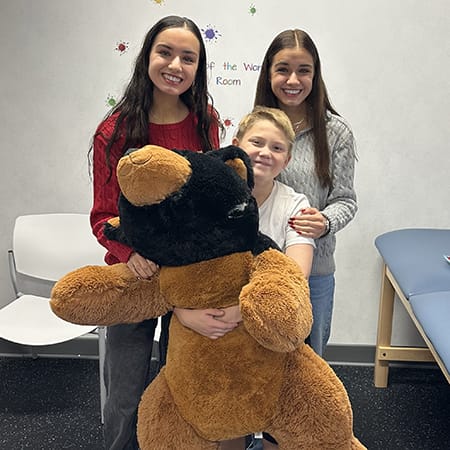
Maya and Lara at the new sensory room at Bloom Pediatrics ./Courtesy Maya and Lara Hammound
Tell us about your volunteer role.
For us, volunteering isn’t just something we do – it’s who we are. It’s our mission, our purpose. We don’t see it as a role, but as a lifelong commitment to making the world a better place, especially for those who are often overlooked: the neurodivergent community. Volunteering is about using everything we have – our time, our energy, our resources – to create spaces where every individual, regardless of their needs, can feel seen, supported and empowered. It’s about building a future where everyone has the opportunity to thrive.
Why is this issue so important to you?
This issue is personal. It all started when we met our best friend in elementary school. Every lunch hour, we spent time with him in his sensory room, watching him grow more confident and more capable. But then, his parents wanted to build him a sensory room at home – and they couldn’t afford it. That was a turning point for us. We realized that countless families were facing the same challenge, without access to the resources they needed. That moment lit a fire in us to make sure that no one would have to go without a space that makes them feel safe, understood and supported. It’s about ensuring that every child and every adult has the opportunity to thrive
Why are you inspired to get started with this initiative?
It began with a simple book, Duck! Rabbit!, that we read in elementary school. In that book, the same image can be interpreted as either a duck or a rabbit, depending on your perspective. This idea – that the world isn’t just one way, that each of us sees things through our own unique lens – resonated deeply with us. It became a guiding principle: that our differences in perception should not only be accepted but celebrated.
This lesson became even more meaningful when we witnessed the transformative power of a sensory room in the life of our best friend. When his family couldn’t afford to build one, we stepped in. We raised the funds, built the room and saw firsthand how it gave him the freedom to truly be himself. It wasn’t just a space – it was a doorway to self-expression, connection and growth. In that moment, we realized the profound power of creating environments where people can exist without judgment or limitation.
All of this ignited a drive to create a “new normal,” a world where sensory spaces aren’t an exception, but a basic right. That’s why we founded the Perception Foundation. What began as a single sensory room for one friend has now grown beyond our wildest dreams. We’ve built over nine sensory rooms, hosted more than 25 sensory-friendly events and created over 200 sensory kits. And yet, this is just the beginning.
Our foundation’s logo – the Duck! Rabbit! – has become more than just an image. It symbolizes our mission: to create spaces where people, especially those with neurodivergent needs, can experience the world on their own terms and thrive in an environment that respects their unique perspective.
As we continue to grow, we are more determined than ever to build a world where sensory spaces are not just available, but accessible to all. A world where every individual, regardless of how they perceive the world, has the opportunity to flourish. A world where our differences are not just accepted but celebrated. This is just the beginning, but with each sensory space we create, we’re building a world where everyone belongs. Together, we can change the way the world sees, one space at a time.
What are your long-term plans or goals for the organization?
Our goal is simple, yet ambitious: to make sensory spaces accessible to everyone, everywhere. We’ve seen, firsthand, the life-changing impact a sensory room can have. It’s not just about creating a space; it’s about offering someone the chance to truly be themselves, to feel safe, understood and free from judgment. We want that experience to be available to every person, no matter where they are.
We envision a future where sensory rooms and resources are as commonplace as road signs woven into the fabric of schools, museums, libraries and public spaces. Only then will we create a world where no one is isolated in the classroom, left to suffer in public, and no one is left behind because of the lack of sensory spaces.
But we know that real change doesn’t come from building rooms alone. It’s about shifting the culture – educating communities on the importance of sensory inclusion and fostering a lasting empathy. It’s about showing the world that our differences don’t make us less – they make us more.
We aim to bring this vision to life nationally in the next decade. We want to partner with schools, institutions and organizations to ensure sensory spaces are available to all. We want every child, every adult, every person to know they belong and that the world is ready to embrace them for who they are and give them the resources they need to thrive.
What’s been the most rewarding part of your work?
The most rewarding moments come from the lives we touch. One story that truly stands out is from a parent who shared that, thanks to our sensory-friendly holiday event, it was the first time in 18 years her son could celebrate the season alongside his siblings. Moments like these – witnessing families come together and knowing that our work made it possible – are what remind us why we started this journey. Hearing how our efforts have opened doors for others is not only humbling but inspires us to keep pushing forward.
Tell us about future partnerships, programs or events that you are excited about.
We’re thrilled about our partnership with the Michigan Science Center to build a sensory room in their newly revamped Kid Town. This project will bring inclusion and accessibility to a space where children can explore, learn and play together.
Any advice for people who want to start volunteering?
The most important thing is to simply start, regardless of your age, background or resources. For us, it all began with sitting down during lunch with our friend and helping him build social skills. We didn’t have a grand plan or know where it would take us; we just wanted to make a difference. That one small act grew into something far bigger than we ever imagined.
If you’re passionate about an issue, take that first step, no matter how small. Learn along the way, don’t be afraid to ask for help and remember that even the simplest actions can create a ripple effect that leads to lasting change. Volunteering isn’t about solving everything at once; it’s about making a meaningful difference in someone’s life, one moment at a time.
What do you want people to learn from your story?
We’ve faced plenty of challenges along the way. There were moments when our sensory room designs didn’t fit the spaces we imagined, and grants turned us down because our impact was hard to measure. We also had to confront the stigma surrounding neurodivergence, which wasn’t easy. But despite all of that, we refused to give up. We found ways to adapt, get creative and push through. And over time, we turned our vision into a reality – creating spaces where people can truly thrive.
It wasn’t easy, and it certainly wasn’t quick, but we learned that the only way forward is to keep going, no matter the setbacks. If you’re passionate about something, the road will be hard, but it’s the persistence and the belief in your mission that will carry you through. That’s how change happens.
Meet Daily Point of Light Award honoree Danielle Kim. Read her story, and nominate an outstanding volunteer or family as a Daily Point of Light.
Danielle Kim is a senior at Bergen County Academy in Hackensack, New Jersey. She studies design and engineering and plans to pursue a data science or environmental engineering degree. She is fascinated by STEM and thoroughly enjoys coding.
Danielle co-founded The Enlighten Project to link her passion for STEM with positive impact on the world. The Enlighten Project is a 501(c)(3) nonprofit organization that aims to bridge the digital divide in education. It prides itself on providing personalized support for people worldwide. Through its initiatives, The Enlighten Project reaches out to specific communities with concerns about education, digital literacy or the inability to access digital education.
The organization is comprised of over 100 volunteers in 14 countries, including the United States, Canada, Australia, Cambodia, China and more. They have raised over $20,000 in grants and donations. And their digital resources impact approximately 4,000 people monthly.
Danielle finds joy in her work to improve the experience for people of all ages and backgrounds worldwide. She hopes to continue making a difference.
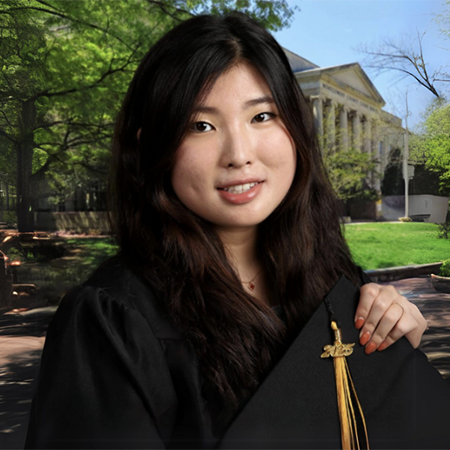
Danielle Kim co-founded The Enlighten Project to link her passion for STEM with positive impact on the world./Courtesy Danielle Kim
What inspires you to volunteer?
During the pandemic, I saw its disproportionate effects on different communities. Learning became virtual, and we wondered how underserved communities managed their circumstances due to various technological issues.
After we returned in person, the reliance on technology in education became apparent. We noticed that many communities were falling behind, and the disparities in education were getting worse because of the digital divide. In 2023, we decided to officially incorporate our ideas of digital education.
Tell us about your volunteer role with The Enlighten Project.
I am the co-founder and CEO of The Enlighten Project, which I founded alongside my friends. We both currently serve as CEOs. We manage the executive board and our members. We also partner with different organizations, manage partnerships and fundraise. We oversee all operations and have significantly expanded the organization to 100 members in over 14 other countries.
What are your long-term plans or goals for the organization?
We recently secured a $400 grant to develop a digital online learning platform. Two summers ago, we studied how current digital learning platforms do not accommodate neurodivergent students on the spectrum because they have specific preferences. One of the things we proposed in our organization was to develop a platform that adjusts to students’ auditory and visual needs. After receiving the grant, we began working to find the people, volunteers and resources to build this platform. We hope that the platform will be built over the next six months.
Also, we recently hired a new executive for the school year. They’re building upon our current initiatives, and we hope to find more along the way.
What’s been the most rewarding part of your work?
Whenever we tutor or support our students in China or Cambodia, we receive many thank-you messages from them, saying how we’ve impacted their lives even though we don’t know each other in person. It’s heartwarming and touching to see that the initiatives I am passionate about, and my efforts, are helping people there, which keeps me going.
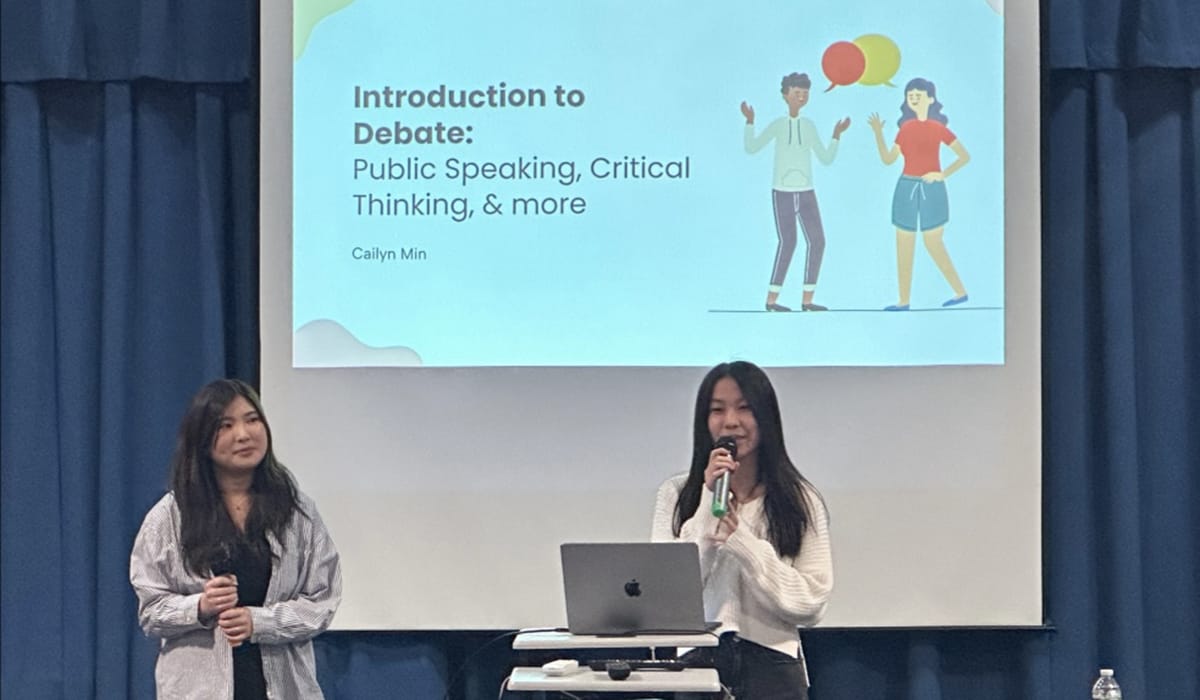
Danielle Kim (left) and her co-founder Danielle Shi (right) speak at a debate workshop, The Enlighten Project in Livingston, New Jersey. / Courtesy Danielle Kim
What have you learned through your experiences as a volunteer?
This was my first significant leadership role, and I didn’t know what I was getting myself into initially. Leading so many people and establishing an organization was very difficult at first, but it has become super rewarding over time. I learned I must be patient, understanding and empathetic toward everyone working for me. I’ve also learned to find suitable volunteers based on their applications.
Two immense struggles are getting adults to trust us because we are a youth-led organization. The second part is that although the volunteer efforts are intangible, a difference is made.
Our service sometimes feels like a drop in the ocean, but everything we do matters. Even if we help one or two people, we must strive to have a more significant impact.
Tell us about future partnerships, programs or events that you are excited about.
We are excited about our learning program, which is a significant commitment. Thankfully, we got the grant and are looking for volunteers.
We also contacted Newark, New Jersey, schools because many initiatives are abroad. However, we need help locally, so we’re talking to some elementary schools in Newark to provide the support they need. We look forward to developing a partnership in Newark. We’re always open to more partnerships overseas and in the U.S.
We have ongoing initiatives, including partnering with NextGenCAMA in Cambodia, to train CS instructors there. Another ongoing initiative is providing weekly tutoring for orphans in Chongqing, China.
Any advice for people who want to start volunteering?
Two things: first, it’s okay to start small. You don’t have to start an idea from scratch. Even if you join someone else’s organization, that is still positively impacting the world. Second, feel free to start something new, because many people will put in more time than you think.
What do you want people to learn from your story?
There’s no archetype or model figure for someone who’s creating change. You can be interested in something entirely irrelevant to social impact, and you can find a way to spin it.
I am a mathematically and scientifically inclined kid who uses my passion to make an impact. Many people might wonder how to help others by using their love, but many different ways exist. People can pursue something they’re passionate about and make a difference.
Data Analyst Gives Immigrants Tools to Build a New Life
Meet Daily Point of Light Award honoree Jessica Kueker. Read her story, and nominate an outstanding volunteer or family as a Daily Point of Light.
Jessica Kueker, 48, likes to contribute. She spends her weekdays managing data at a biotech company doing trials for an oncology drug. In short, she reviews data for cancer studies. She and her husband also care for a teenager, two cats, a corn snake and a leopard gecko.
Inspired by her grandmother towards the end of her Girl Scout tenure, Jessica discovered yet another way to support the people around her.
Since September 2022, she has been teaching free English Language Learner classes at Johnson County Library, motivating students originally from all over the world to return week after week.
Her 16-year-old daughter, an aspiring linguist, has discovered the power of language herself and joins her for Saturday morning classes. Jessica lets other volunteers shadow her and her co-teacher, mentoring them as they proceed to teach their own classes. As a certified master naturalist, she also educates the community and volunteers on projects that support the management of natural resources.
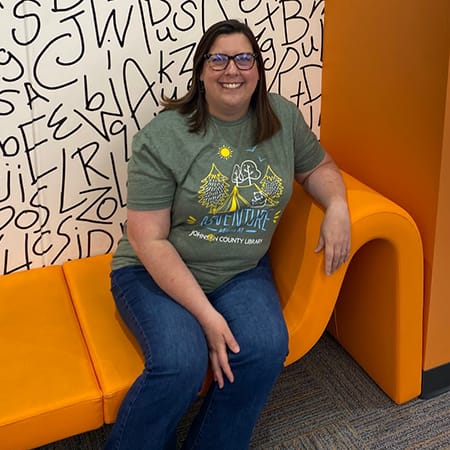
Jessica Kueker volunteers to facilitate a beginner English Language Learner conversation class at her local library. /Courtesy Jessica Kueker
What inspires you to volunteer?
I started volunteering as a Girl Scout leader when my daughter was in kindergarten. I did that for around seven years, until she started middle school and was not as interested as she once was. I was on the library website looking for volunteer opportunities for her, and I came across their ad for English Learner conversation teachers. My Girls Scout days were winding down. I had time and wanted to keep volunteering. At the same time, I also started the 40-hour certification process to be a Johnson County Master Naturalist through the K-State extension office.
What inspired you to get started with this initiative?
My 92-year-old grandmother volunteered at the women’s prison for a long time. She and my mom both have done a lot of volunteer work. My grandmother has always lamented the fact that she never helped people learn English. That was one thing on her volunteer list that she never got to do, and she feels like she’s too old to do it. So, I applied.
Tell us about your volunteer role with ELL at the library.
Each instructor designs their own curriculum, handouts, slides, etc. based on the level of their class. Madhavi Menon, my co-teacher, and I teach students who have little to no knowledge of English. The library also has instructors for intermediate and advanced. Each trimester, the library invites people for an in-person interview to assess their English level through a series of questions.
While one of us is teaching, the other can go around and help people. My daughter is in Spanish 4 in high school, and she loves foreign languages. She helps people with pronunciation or, if we have them speaking in groups, will walk around with us and listen to each person.
Each week, we’ll have a topic. The first one will just be introductions and small talk. We might do a situational lesson on going to the grocery store and practice asking, “Excuse me, where can I find the corn flour?” The goal is to get them to practice and have fun. Everyone wants to work on pronunciation, because a lot of people are shy about their accents. It makes them very nervous to ask questions in public.
Do you tutor?
Dalia, a Syrian student in her twenties who was in one of my first classes, has been coming ever since and asked if I would tutor her one-on-one. I do an extra two hours a week with her. That’s more structured, because she wants to go to college, and to do that, she needs to know English. She didn’t know any when she started. She had her English-speaking niece with her to help translate and feel more comfortable. After that, she was able to come on her own.
It’s amazing watching people who have different alphabets—like Arabic speakers—progress. The learning curve is so much higher. Dalia has worked so hard, and I’m so proud of her. She had a baby and only took off a couple of months.
A lot of immigrants are isolated in different communities. Dalia doesn’t drive. She spends a lot of time with her family, and they speak Arabic. A lot of my Spanish-speaking students work in places where there are a lot of Spanish-speakers, so even at work, they speak Spanish. It’s really hard, and it’s a slow process to learn English if you’re not out there speaking it every chance you can get.
Are most of your students adults?
They’re all adults. About 75% speak Spanish and are mainly from Mexico or South and Central America. The rest are from everywhere else. We’ve had people from China, Afghanistan, Russia, Ukraine and more.
What are your long-term plans or goals for the organization?
I’d love to start a teen program. Parents come in with children, and we don’t have a program for them. And it would be cool to have one or two of our Spanish-speaking students hold a conversation class for people who want to improve their Spanish.
What’s been the most rewarding part of your work?
Seeing students progress and become more comfortable in the world is so satisfying. Seeing a person like Dalia, who is able to now go to a restaurant, understand what she reads and order for herself is so rewarding.
What have you learned through your experiences as a volunteer?
I’m humbled and awed at our students’ dedication. It’s really difficult to learn a second language as an adult. Also, you have to throw your assumptions aside. People who don’t speak English are not undocumented. Our students are all here legally. A lot of our students have college degrees. Many college-educated people are working at warehouses, packing boxes for Amazon or JCPenney. They give up a lot to come to the United States and contribute.
Do you have any tips for facilitating conversation with someone with a low level of English?
Smile and introduce yourself. Ask if they need any help. Speak slowly, and keep trying. There are many ways to communicate non-verbally, so if you can’t get your point across initially, just keep trying, because you’ll eventually figure it out.
Do you want to make a difference in your community like Jessica? Find local volunteer opportunities.
Warm Despite the Weather: One Teen’s Work to Collect and Redistribute Winter Clothes
Meet Daily Point of Light Award honoree Aanya Bhatia. Read her story, and nominate an outstanding volunteer or family as a Daily Point of Light.
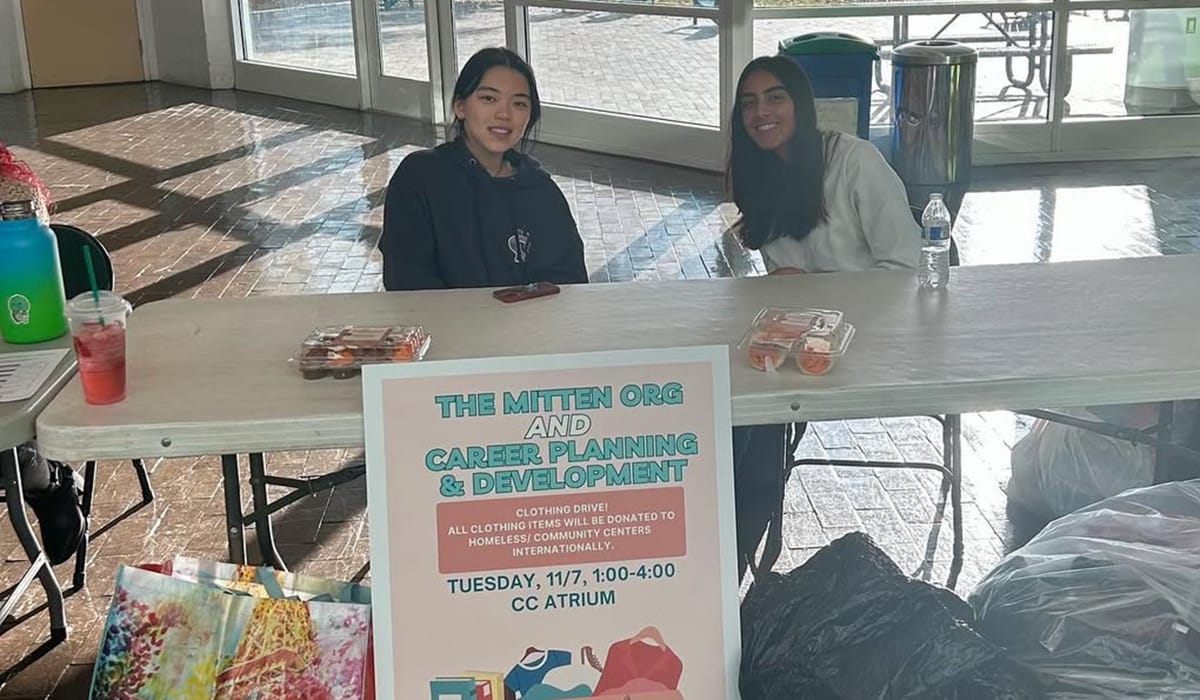
After collecting her third film camera, 17-year-old Aanya Bhatia could definitely be considered a photography enthusiast. Her keen eye for finding the best light and framing each shot has built her capacity for observation, so when the number of unhoused people in her community began to rise, she noticed. She also decided to act.
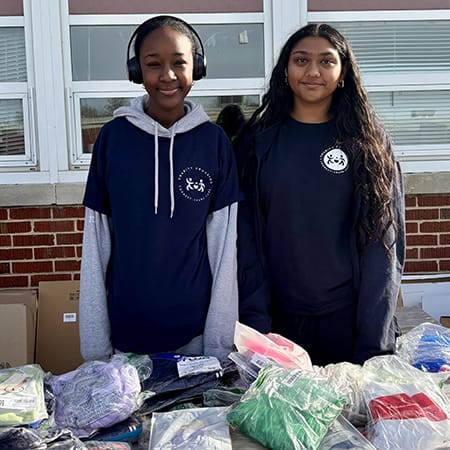
Aanya and her friend, Hannah Sim, founded The Mitten Organization to address the increase in clothing insecurity, particularly amongst children and teens. They have run more than 50 clothing drives and have hosted redistribution events partnering with universities, thrift shops and other organizations. New chapters in Indonesia, Pakistan, India, California and Canada, each with two to three members, recreate the system Aanya and Hannah built in their own areas. So far, they’ve collectively donated more than 1,000 pieces of clothing—as well as funds—and are working to ensure everyone has warm clothes for the winter weather.
What inspired your organization’s name?
Our name is based on a children’s book called The Mitten by Jan Brett. It’s about a snowy day when the animals in the woods go inside a lost mitten together to keep themselves warm. We also wanted to offer a safe space for people to access basic needs important for the colder months. We emailed the author and asked if we could use the name of the book as our organization’s name, and she agreed.
Tell us about your volunteer role with The Mitten Organization.
As co-founder, I oversee the organization’s operations. I organize monthly clothing drives and coordinate with team members and partner organizations. We host a lot of drives at universities, schools and libraries, so I usually call or email them to organize those and redistribution events. My role also involves strategizing our outreach efforts and managing our donations. We have bi-weekly meetings with members in different locations to discuss goals and what we should all be doing.
We have a joint collection. We’ve donated to multiple different organizations. Most recently, we just donated to Children’s Hope India, an organization that offers food, education and shelter to kids in India who don’t have access. Once we amass some money, we decide where to donate. With our GoFundMe page, we’ve raised $6,000 of our $10,000 goal.
Additionally, I ensure that donations are distributed to people who need it the most. I also work on spreading awareness about clothing insecurity and building partnerships with local and global organizations to expand our impact through social media.
(Left to right) Hannah and Aanya collaborate with the SUNY Old Westbury Career Development department to host a clothing drive.
Describe your growth process.
We posted a Google form on our Instagram multiple times, and somehow people found it and applied. Then, we asked them why they wanted to be part of our organization, collected their contact information and created a group chat to keep in contact.
What is something that people should know about the population you serve?
There are a lot more things that bring people closer together than there are that separate them. When people think of homelessness, they usually think of it as some far-off thing that they have no connection to. But once you actually interact with these people, you notice that you have a lot in common. At the end of the day, we’re all just people.
I also want people to understand that anyone can make a difference, regardless of age or resources. Giving back creates a ripple effect. It not only helps people in need but also fosters a sense of connection and purpose. It’s a way of building a stronger and more compassionate community by reminding us of our shared humanity.
What are your long-term plans or goals for the organization?
We want to expand our reach and impact by collaborating with local businesses to host clothing drives. My partner and I reached out to a lot of them in our area, but they were unwilling. We’re hoping that in the future, we find some who are. We also hope to establish a mentorship program to help those in need learn skills for employment and self-sufficiency. We want to offer more resources to propel the unhoused community forward.
What’s been the most rewarding part of your work?
It’s seeing the joy on people’s faces when they receive our clothing and the excitement at our clothing redistribution events. As soon as we put our clothing down, people run to the counter. It brings me joy. I remember being at a redistribution event, and a young girl received a winter coat that fit her perfectly. Her smile lit up the entire space, and her mom shared how they’d been struggling to find warm clothing throughout the winter. It showed me how the small act of kindness made a huge difference in their lives and reminded me why our work is so important. It motivated me to continue on with the organization.
Any advice for people who are trying to start their own initiative?
Don’t get discouraged. At first, it can be hard to find organizations to reach out to or to get your name out there and make an impact. If your social media only has 10 followers, it can feel like your efforts aren’t going anywhere. But eventually that momentum will pick up, and you’ll have a moment like I had with that girl. You’ll see why you should keep pushing forward. It’s important. Even if it only makes a difference in one person’s life, that’s a good reason to continue.
What do you want people to learn from your story?
I know a lot of people who, when they’re starting new things, feel like they need to have a perfect plan and lots of resources. Don’t spend all your time planning to do it. Just do it. No matter how long you plan, the execution will never be how you envisioned it, and you’re going to have to adapt to new challenges and environments. Have some sort of mission, but don’t waste too much time. Act.
Bilingual Volunteer Fosters Inclusion While Bridging Cultures
Meet Daily Point of Light Award honoree Iqra Ameen. Read her story, and nominate an outstanding volunteer or family as a Daily Point of Light.
Iqra Ameen is a passionate advocate for cultural representation and community support, dedicating her time to empowering underserved communities in Delaware. As a volunteer with Charity Crossing since 2021, Iqra’s involvement spans various initiatives, from organizing environmental events like coastal cleanups to aiding in monthly charity giveaway events. These events serve over 150 attendees, and her efforts in outreach and event coordination have made essential resources more accessible to the local community.
A standout aspect of Iqra’s service is her role with the Hispanic American Association of Delaware, where she leverages her bilingual English-Spanish skills to serve as a translator during community events. By bridging language barriers, Iqra ensures that Spanish-speaking individuals can fully benefit from the services provided, fostering a sense of inclusion and support. Her linguistic abilities also extend to Hindi, Sindhi and Arabic, amplifying her impact across diverse groups.
Beyond translation and charity events, Iqra contributes to social causes like autism awareness walks and environmental conservation initiatives. Whether organizing supplies, assisting with donations or participating in awareness campaigns, her multifaceted service demonstrates a profound commitment to making a difference. Iqra’s work shows just how important cultural understanding is in efforts to create a more inclusive and engaged community.
Through her efforts with multiple organizations and her dedication to fostering connections across languages and cultures, Iqra exemplifies the power of individual action in building stronger, more inclusive communities. Her service not only provides immediate support to those in need but also inspires others to embrace the values of empathy and engagement.
Iqra bringing donations for the event./Courtesy Iqra Ameen
Tell us about your volunteer role.
Over the years, I’ve grown to enjoy volunteering with my family, whether it be participating at a giveaway event or unloading and sorting donations at the warehouse. I didn’t fully understand the importance of volunteering until 2020, but by 2022, I could see the heavy impact especially after seeing the happiness on people’s faces when they find items that can help them.
As a student from an English-Spanish Charter School at ASPIRA, I found a role as a volunteer to provide assistance to people with a language barrier for the event as the lead youth volunteer for the Hispanic American Association of Delaware (HAAD). My assistance played a crucial role in helping Spanish speakers so that they don’t miss out on the benefits of community resources. Language barriers shouldn’t stop community members from getting the help they need, so I help spread the word about giveaway donations and other important details.
During community events, I also assist the community one-on-one by assisting them in understanding forms, guidelines and other important information. This guarantees their full participation and use of all services offered. In addition to helping with cleanup after events, I also help with the distribution and organization of donations, household items, pet supplies, holiday supplies and canned or dry food. I work together with community members and peers to ensure that everyone has access to necessary help and resources.
Why is this issue so important to you?
My personal connection to this issue is that I grew up in a multilingual household and have seen the difficulties faced by Hispanic communities, especially those who do not speak English as their first language. I am aware of the importance of making people feel seen, heard and included as well as the problems that language barriers can put on people. This can impact the ability of many Hispanic people to better their lives. Knowing that even simple acts of kindness can make a big difference in someone’s life makes it extremely meaningful to me.
What inspired you to get started with this initiative?
I decided to volunteer after seeing the difficulties some communities experience, especially those who have trouble navigating systems because of language barriers. Having been raised in a multilingual environment, it became easy to recognize that my language skills could possibly help alleviate this issue. I came to see how much more I could do to support the community, especially those who often feel left out. I was more motivated to use my skills to ensure that no one is left behind, especially when attempting to access essential services, and my willingness to support the Hispanic community is only getting stronger.
What are your long-term plans or goals for the organization?
I plan to continue supporting HAAD in expanding their program to reach various heights with focus on youth engagement and creating more opportunities for students, especially bilingual/multilingual youth, to get involved in community services. In the long term, I hope to help broaden the organization’s efforts by making programs that can be accessible to diverse communities, especially those facing language barriers. My ultimate goal is to empower the Hispanic community in Delaware by offering assistance.
What’s been the most rewarding part of your work?
The most rewarding aspect of volunteering is making a significant impact on others’ lives and our community. After each serve, seeing smiles and happiness on people’s faces is priceless and great courage to keep contributing to the community.
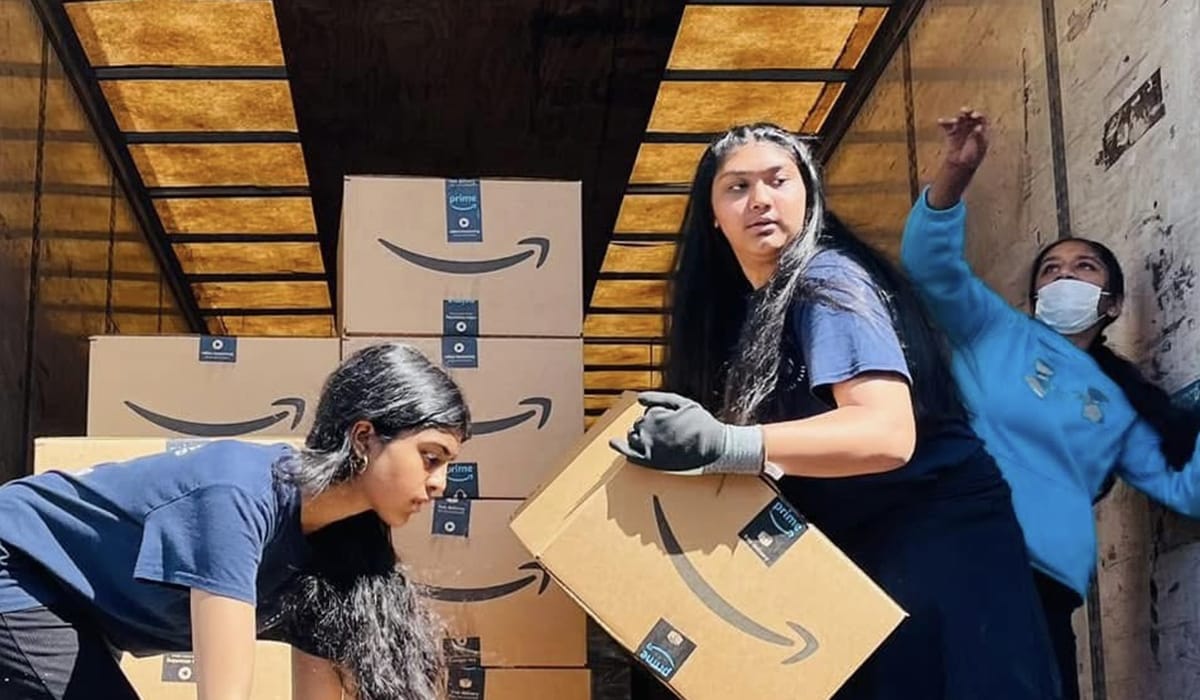
Iqra unloading the donation boxes (totaling 24 pallets) from a 53-foot trailer truck with Charity Crossing volunteers./Courtesy Iqra Ameen
Tell us about future partnerships, programs or events that you are excited about.
I’m excited about youth programs that inspire me to take up leadership and volunteer roles that can help people, especially those who are inexperienced or come from bilingual and multilingual backgrounds. In addition to providing worthwhile chances for development, the initiatives will promote a better understanding between individuals from various backgrounds.
I’m also excited about the 2024–2025 volunteer appreciation award ceremony, where I’ll have the privilege of serving as the event’s pre-MC. It’s a wonderful chance to use my earned skills and my effort and commitment to people who have improved our community.
Any advice for people who want to start volunteering?
Start by identifying something that you are passionate about. Volunteering is an opportunity to learn new skills, meet new people and make a positive impact in your community – for which I am grateful to Charity Crossing for giving me chances to do. It also teaches responsibility, building relationships, teamwork and developing new skills. Show up, get involved and support the community.
What do you want people to learn from your story?
I want people to learn that anyone, no matter who they are, can make a difference. My ability to speak different languages has made a meaningful impact, but everyone has something of value to contribute. Whether it’s language, time or experience, you can always find a way to help. I hope my story inspires others to recognize the power of individual action and the value of community engagement.
Bright Future: Ohio Teen’s Mission to Support Education Worldwide
Meet Daily Point of Light Award honoree Vibhaas Appaji. Read his story, and nominate an outstanding volunteer or family as a Daily Point of Light.
Vibhaas Appaji is a student at Dublin Jerome High School in Dublin, Ohio. He has worked with PURE since he was eight and has been a PURE youth ambassador since the second grade.
PURE stands for People for Urban and Rural Education. Established in 2016, PURE is a volunteer-led organization that works to support quality education for underserved and marginalized populations. Based in the U.S., PURE has a global footprint, helping provide educational opportunities in the U.S., India, Uganda, Ethiopia, Sierra Leone, Tanzania, Kenya, Barbados, St. Lucia and Trinidad and Tobago. With hundreds of volunteers, PURE has impacted over 200,000 lives, offering everything from skill development and menstrual hygiene awareness to improving school infrastructure and sponsorships for persons with disabilities
Vibhaas leads the PURE Youth Ohio chapter of the organization, where he organizes projects and other volunteers. PURE has been a life-changing experience for Vibhaas, and he enjoys the work he does for his community and communities worldwide.
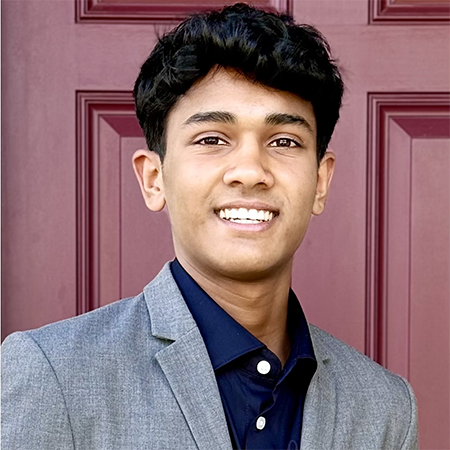
Vibhaas Appaji is the director of the PURE Youth Ohio chapter./Courtesy Vibhaas Appaji
What inspires you to volunteer?
My mom, the COO of PURE, got me started volunteering at PURE. Once she saw that I was interested in PURE, she started a chapter called PURE Youth in Ohio. This initiative began with the help of my brother and a couple of his friends.
One of PURE Youth’s first events was attending a cricket event and selling snacks to people in attendance. I decided to tag along to see what my brother and his friend would be doing, and it turned out to be an enjoyable day. I enjoyed selling snacks and speaking with other volunteers.
This event inspired me to volunteer and help kids through personal interactions. At that moment, I realized that donating would not be enough. I wanted to make a difference through my actions.
Tell us about your volunteer role with PURE Youth.
I am the chapter director for the PURE Youth Ohio chapter. My responsibilities include organizing projects, events and fundraisers. I also manage volunteers who volunteer their time both in person and online.
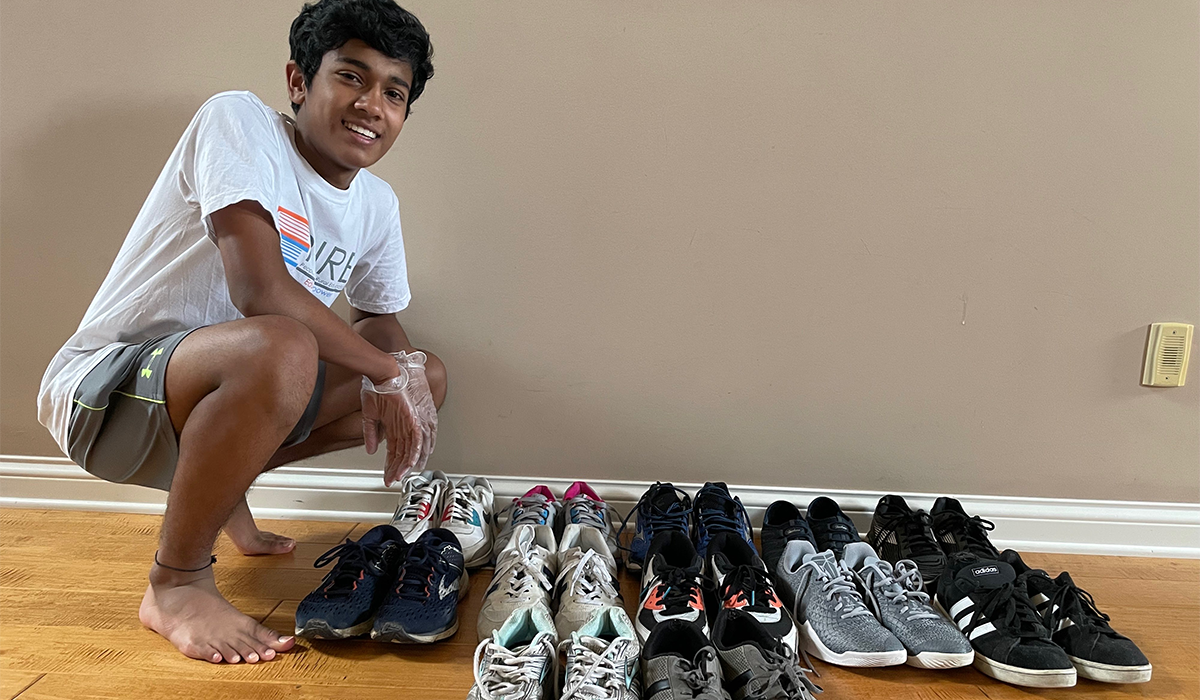
While working with PURE Youth, one of my most significant accomplishments was being able to create a sneaker recycling program. One day, I realized I had many sneakers in my home that I didn’t use anymore. This program allows people to donate shoes they no longer need to help kids who need them. The donated shoes are recycled and repurposed for playgrounds and other materials in underserved areas.
What are your long-term plans or goals for the organization?
My goal for PURE is to continue expanding in as many countries as possible. I believe it’s essential to continue expanding our footprint to impact people worldwide positively.
I would like more recognition for PURE Youth within our city and state. We hope that with more attention and support from our community, we can achieve our high goals and allow PURE Youth to continue to achieve great things.
What’s been the most rewarding part of your work?
The most rewarding part of volunteering at PURE Youth is the difference I make in my community and worldwide.
We do many projects and fundraisers, which allow us to see their direct impact across the country, the world or our community. Your hard work and efforts are making a difference for kids who don’t have much. It humbles me.
Vibhaas poses with donated sneakers that will be repurposed to create playground materials in underserved areas./Courtesy Vibhaas Appaji
What have you learned through your experiences as a volunteer?
Volunteering with PURE has taught me leadership. I’ve worked with many different people and helped others discover their strengths.
I have learned a lot about leading a group of ambassadors and helping them gain new opportunities. I’ve also been able to build upon essential skills such as bonding, teamwork and communication, which have helped me become a better leader.
Tell us about future partnerships, programs, or events that you are excited about.
We are working on a small project related to candle making. We will sell homemade soy candles at local markets and several festivals. This remains the chapter’s most significant source of income.
Then, on MLK day, we plan to make blankets and give them to the unhoused.
What do you want people to learn from your story?
From my experiences, I want people to learn that they can always make a difference, no matter where they come from, how old they are or what they want to do.
Remembering Our Veterans: A Woman Honors America’s Legacy
Meet Daily Point of Light Award honoree Patricia Kowalski. Read her story, and nominate an outstanding volunteer or family as a Daily Point of Light.
Patricia Kowalski has volunteered at the Edward Hines, Jr. VA Hospital for over a decade. The hospital specializes in curating a haven for veterans of all backgrounds. Its goal is to hire and train highly experienced staff and be guided by the needs of veterans, their families and caregivers.
Edward Hines, Jr. VA Hospital is a second-generation veteran’s hospital in Hines, Illinois, not too far from Chicago. It has treated more than 56,000 veterans from World War II through the wars in Iraq and Afghanistan.
Patricia started volunteering at the hospital because of her family’s military service. Her father served in World War II, and her husband served in Vietnam from 1964 to 1968. Patricia has made it her life’s mission to remind veterans of their legacy and to give them something to live for.
Patricia takes great pride in volunteering at the hospital and being the spokeswoman for the hospital’s veterans. She works collaboratively to advance best practices throughout the hospital for veterans and to fight for their rights. Not only is Patricia hands-on, but she has also used her position to secure tens of thousands of donations.
More than ten years after she started volunteering, Patricia continues to make a difference.
Seeing the smiles on these veterans’ faces is genuinely the best feeling in the world. They give you such a smile, and it’s heartwarming to know you’re uplifting them.
To me, after fighting for their country and giving us our freedom, we can do so much more to say “thank you.” They cared for our country, and we should be proud of them and take care of them.
Tell us about your volunteer role with Edward Hines, Jr. VA Hospital.
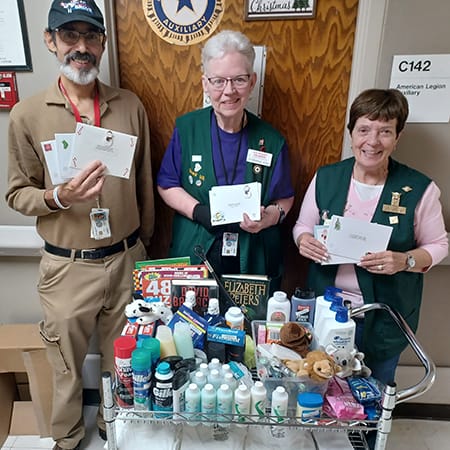
I’ve been volunteering here for 14 years now. I am the state representative for the American Legion Auxiliary Department of the Illinois hospital here. I deal with all of the American Legion Auxiliary chapters throughout Illinois, with responsibilities such as bringing in donations. I log donations and do reports. We go out on the floor three times a month and distribute supplies to all veterans because many vets come in and need clothing, so we provide them with sweatsuits, toiletries they need, t-shirts and more.
What’s been the most rewarding part of your work?
The most rewarding part of my work is the number of veterans who turn around and say thank you for your service. It’s a fantastic feeling to see the smiles on their faces and to be able to help them with whatever they need, especially within the food pantry, giving them extra supplies, like laundry detergent, everything that they can use. They always say, “Hey, what can I do for you?” I always say, “Nothing. I’m here for you.”
What have you learned through your experiences as a volunteer?
Two things: Be a good listener and be willing to help. I’m there for them if I’m in the room and they need assistance. It just makes me happy and sad at the same time.
Many can’t use their hands to cover numbers during bingo, so we’re there to help them and give them a nudge. I’m there to help them, and everyone should be.
I just wish people would care a little more for them. Look at what they went through. As Americans, we all need to learn to care more here in the United States. We must show each other the importance of caring and the significant impact on one’s well-being, especially our veterans.
Why should others get involved with causes they care about?
People need to be self-aware and get involved. They should know what these men have gone through and care. We need more Americans coming in and saying, “Hey, we’re here for you. We’re fighting for you. We will help you.”
What do you want people to learn from your story?
There is so much to do, to care for, and to show that I can’t control what our men and women go through and what they have sacrificed for us and the country. We must find more people willing to learn how to care for veterans. Showing our gratitude goes a long way, and it significantly impacts their well-being.
HOME IS WHERE THE HEART IS FOR THIS DEDICATED VOLUNTEER
Meet Daily Point of Light Award honoree Eileen Rogers. Read her story, and nominate an outstanding volunteer or family as a Daily Point of Light.
Eileen Rogers knows that home is where the heart is.
As a volunteer with Good Neighbors Home Repair, an organization that provides critical home repairs to those in need, Eileen has seen what happens when a home falls into disrepair. Maybe someone’s roof is on the brink of caving in and a family doesn’t have the means to have it patched up. Or perhaps a senior citizen has sustained an injury and they need to have grab bars installed in their bathroom so they can continue to live in their home. In each of those circumstances, Eileen and the Good Neighbors team are ready to save the day.
While Eileen has been a Good Neighbors donor for over a decade, her involvement as a volunteer started around six years ago. As a member of the organization’s advancement team, her work is visible across several facets of the Good Neighbors team. She implemented the biannual Hands of Hope Corporate Work Weeks, which bring in employees of local companies to help repair the homes. Thus far, 23 different companies have brought their teams in to change the lives of low-income homeowners. Her talent and creativity for planning dynamic events are visible in the fundraisers she plans, like GNopology, a Monopoly-themed event, or an upcoming one inspired by the board game Clue.
However, Eileen isn’t afraid to get her hands dirty. No stranger to hammering drywall or painting houses, she can occasionally be found on work sites alongside contractors and fellow volunteers.
One of Eileen’s favorite aspects of her work with Good Neighbors is the practice of empowering others. Whether it’s installing a ramp to make a home accessible or making sure a property has running water once again, Eileen sees creating a safe home environment for people who are struggling as a method of returning the ability to care for themselves once again. Her diverse skills and willingness to lend a hand in any situation is a true example of what it means to be a good neighbor.
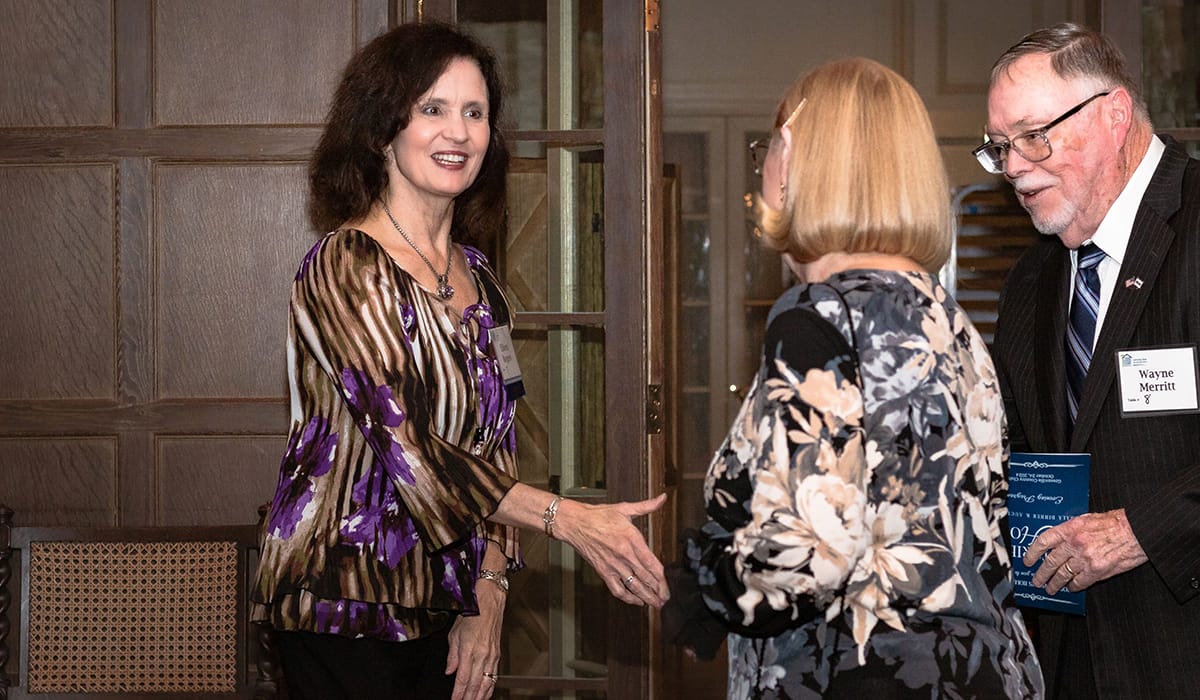
EILEEN ROGERS GREETS GUESTS AT THE ANNUAL GOOD NEIGHBORS GALA, A MAJOR FUNDRAISER FOR THE ORGANIZATION. /COURTESY EILEEN ROGERS
What inspires you to volunteer?
The magic is renewing hope. When you go out there, you see somebody who was at a point of losing their home. Your home is like your best possession. It gives you not just a physical structure to live in, but also all the memories and the comfort of everyday life. It’s for your family. It’s not just a house, it’s truly a home. You’re repairing their house, but you’re giving them back their home.
Also, I love to see young people get involved. Good Neighbors has a youth group and they do a youth camp. It’s great to see the young people getting involved. With corporations that come in to volunteer, it’s great to see people in their twenties and thirties helping out in the community.
Tell us about your volunteer role with Good Neighbors Home Repair.
I’m a member of the advancement team. We meet every week and we talk about planning, whether it’s events or marketing. We talk about thebest ways to engage people. We talk about how we can maximize our social presence. Anything we can do to advance the growth of the organization. We do a lot of planning.
What’s been the most rewarding part of your work?
The homeowners. Meeting them and having them hug you and just be so grateful. You don’t realize how much you touch different people. The reach is amazing. It’s amazing how with just one little touch, you’re planting a seed. It can grow into this amazing, beautiful flower. It can just grow with just that opportunity.
What have you learned through your experiences as a volunteer?
It’s more than just one person. It’s a team that makes the organization successful. The team isn’t just the organization– it’s the community with the organization. It takes everybody to make a contribution. That contribution could be a financial one or it could be time. All those things are needed. Or maybe somebody says they’re going to pray for you or they’re going to click on your website. Any little piece puts it all together to make the full package.
Tell us about future partnerships, programs or events that you are excited about.
Our Clue event! I’m looking forward to having new people come and learn about us and learn about the organization. Also, our continued efforts with contractors and getting new people to volunteer. We’re always looking to have those folks join in and volunteer on a different level. They’re not necessarily getting out and breaking things with a hammer, but maybe they’re donating resources or donating supplies or sharing their expertise. We’re always looking for contractors to help with those things. So those kinds of efforts, looking for other ways to bring new people in, are always exciting.
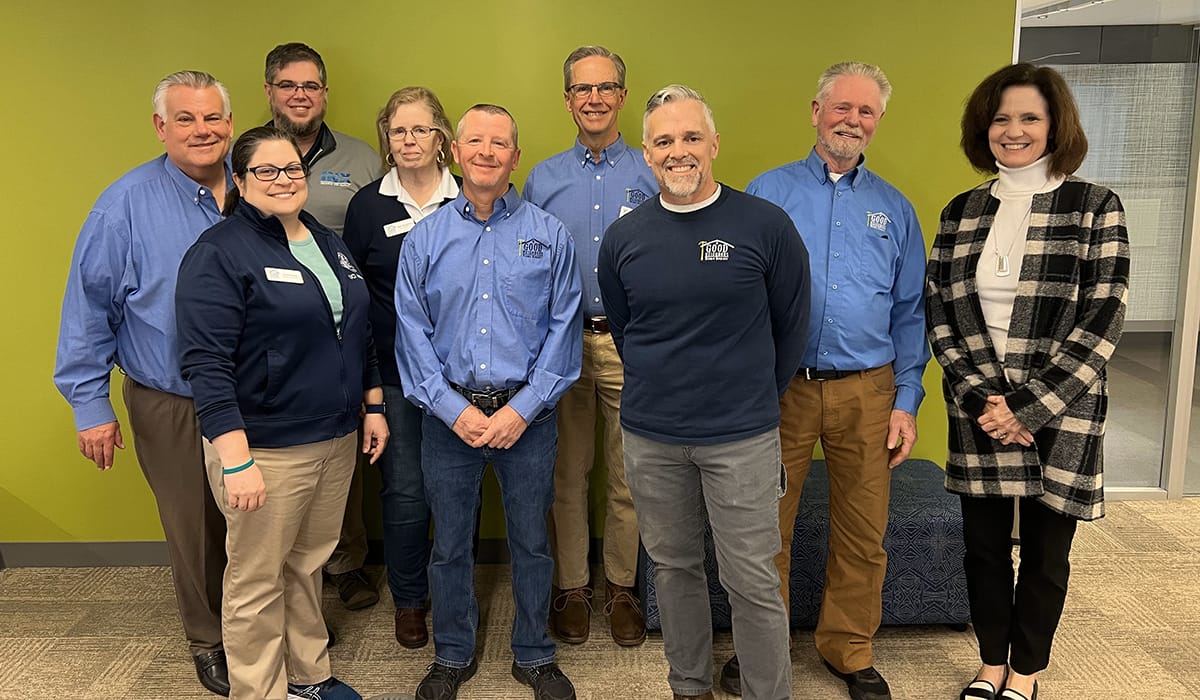
EILEEN ROGERS (RIGHT) JOINS GOOD NEIGHBORS STAFF AND BOARD MEMBERS FOR A CONTRACTORS’ BREAKFAST. /COURTESY EILEEN ROGERS
Why is it important for others to get involved with causes they care about?
We just can’t wait for things to happen. It’s important that we step in and help. Especially with the backdrop of society being all about “I want it for me.” I think we need to stand up and flip that. It doesn’t have to be just those who are of strong financial means. It can be any of us. It can be donating our time. It can be donating our goodwill. It can be donating financially, of course. You get even more back than you give. Just a couple hours of time and you get so much back. It’s really tremendous.
Any advice for people who want to start volunteering?
Reach out to different charities and ask them questions. Any charity I can think of would welcome volunteers. Be persistent. Maybe talk to some other people that you know who already volunteer for a charity, and shadow them. Go to an event of theirs and see what it’s all about.
Also, look at your skill set and see how it might match what they need. Whatever you do in your full-time job probably could be done and used for a charity on some level. Look into what you’re passionate about. For example, if you’re really crafty, or you’re a good photographer, charities would welcome those artistic skill sets.
What do you want people to learn from your story?
Follow your passion and stick with it. There are always challenges, right? We had COVID– that was a challenge. Certain events or efforts don’t work out. Don’t get knocked down by that. It’s amazing the people you meet. It’s a great journey. Like I said, you get back so much more back than you give. I think that’s really the best message.
California Teen’s Cultural Exchange Program Promotes Curiosity, Inclusivity and Mutual Understanding in a Divided Time
Meet Daily Point of Light Award honoree Sanja Jing. Read her story, and nominate an outstanding volunteer or family as a Daily Point of Light.
Sanja Jing grew up with her grandmother, a refugee from the USSR who escaped to Mongolia with her family as a child in the 1950s and eventually settled in China. Steeped in both the Russian and Chinese cultures, Sanja moved to the U.S. when she was 8 years old. The stories about her grandmother’s challenges with the cultural divide made Sanja uniquely appreciative of her own circumstances. It moved her to look for similarities and ways to connect, a practice that served her well as she began learning English in her new home.
Sanja moved close to the Mexican border in a multi-cultural environment that fed her curiosity for exploring different food, traditions, languages and more. That interest led her to create GlobalVisioneers (GV), a 501(c)(3), with three friends, to promote cross-cultural understanding and empower youth to become global citizens. The organization offers language workshops in more than 10 languages plus cultural exchange events.
Today, her executive team consists of 10 student directors with over 1,000 members, all of whom help teach at events and workshops. Her partnerships span 30 educational organizations and international charities. Sanja now speaks English, Mandarin and Cantonese, Russian, Spanish and French, which allows her to connect with people worldwide.
What was your language-learning experience like when you came to the U.S.?
It was my first time here, and I didn’t know English as well. At first, it was pretty isolating. I went to our local language school, and that was where I found my first sense of community. There were a lot of other immigrant children from Mexico who also hung out there, and together we were learning English.
What inspires you to volunteer?
I’ve been involved with that language school since I was 8. In middle school, I started taking more initiative with community performances, like dances. I would help emcee. Once, we did a Chinese New Year performance at SeaWorld. That was the first big event that I helped host. I do the work that I do because I see the importance of fostering community.
We create an atmosphere of compassion and sharing. We make it fun for students to learn about or reconnect with their culture. What motivates me is community, people and the individual stories that we each have. That’s something I came to value early on and want to share with others.
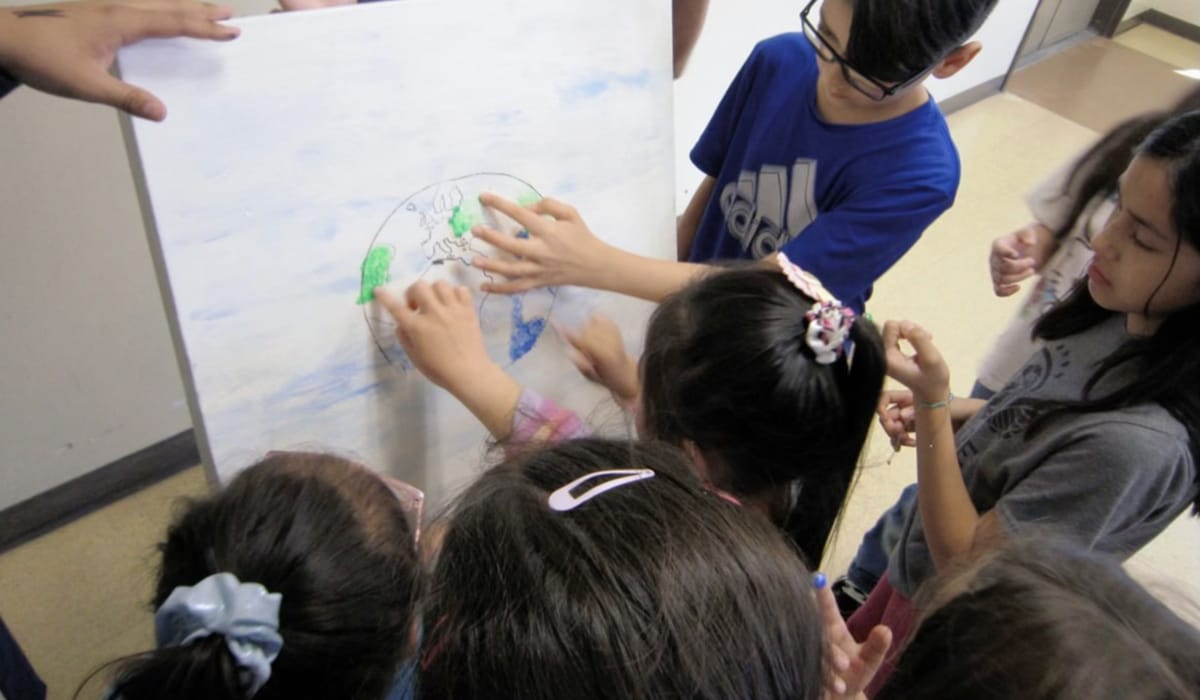
Young participants in a community art workshop gather around to paint a world map with their hands.
Tell us about your volunteer role with GlobalVisioneers.
Three friends with diverse backgrounds, like myself, joined me to start the organization. I’m the executive director, and I work on expanding our impact and overseeing initiatives.
We started with a free Spanish language workshop hosted at our community center for children ages 6-14. We focused on providing language education, but we also incorporated arts and crafts to make it even more fun. Lessons are developed around the season or a cultural event. In November, we had another Spanish workshop celebrating Día de los Muertos.
We were eventually able to involve other schools around our community. Now, we have over 15 international chapters and multiple within the US. It’s become a large global community. I help organize our pen-pal program and various fundraisers and events. I also develop new programs and build partnerships with local and global organizations.
What is “GV Around the World?”
It’s a video series where students from around the world share landmarks, stories or facts about their lives and countries. For example, a student in Japan talks about the significance of different shrines. A student who works at her family’s taco shop talks about what it’s like to manage a restaurant. It’s a way for people to see what life is like in different parts of the world.
How did you start expanding internationally?
As more chapters started around our community, we wanted a way to communicate and share events, so we started using Instagram. Not two months in, we got a DM from a student in Hong Kong who was passionate about cultural exchange and wanted to get involved. Hong Kong was our first international chapter.
What are some of your long-term plans or goals for the organization?
We’d like to build a digital platform to facilitate students publishing stories from all corners of the world. I want to make GV a safe place where anyone can showcase their voice and advocate for causes that are important to them.
We would also love to provide free ESL lessons for children to learn English in a more structured setting vs. our workshops, which are designed for learning a few words and phrases to promote cultural exchange more than bilingualism.
What’s been the most rewarding part of your work?
First, the community, my team and the amazing students who take part in this organization – they are just as passionate as I am. I would also add the events that we’re able to do. I often see myself in the younger participants, and I love seeing them enjoy their experiences.
Our workshops, pen-pal exchanges and community events create space for conversation. I’ve met many people and have been able to collaborate with amazing organizations. I’ve even been able to talk with our mayor and put on a big event with his office called the City Hall Art Gallery.
What have you learned through your experiences as a volunteer?
I’ve learned how important it is to have a vision or goal that resonates with people. Once you start building towards it, others will find you. They’ll want to be a part of it because of how meaningful it is. Our biggest strength as humans is our empathy and compassion for others.
What do you want people to learn from your story?
Talk to people. In person. We’ve grown to be more isolated with social media and technology. Have conversations with strangers and be open-minded. You can learn so much from others, because everyone has their own experiences that they draw from. It not only makes you more perceptive and aware, but it makes you kinder and more empathetic. I think that’s the root of everything.
How One Teen Is Helping Peers Learning to Invest with Purpose
Meet Daily Point of Light Award honoree Alice Zhou. Read her story, and nominate an outstanding volunteer or family as a Daily Point of Light.
Alice Zhou, 16, wasn’t even a teenager when the world went into the COVID-19 lockdown in 2020. For many, it was a time of rest and reflection. For Alice, it was eye-opening. Having always been a numbers kid, she was fascinated as stocks dipped and rallied during the GameStop saga, discovering a passion for investing. That, in turn, led her to create Finclusion, a 501(c)(3) that offers fellowships and online classes on investing with an emphasis on social impact and responsibility.
Armed with a thoughtful investing approach, she gradually built up a team of 32 students from across the US and abroad as well as four financial experts on the board. Though primarily funded through grants—$15,000 so far has funded 150 fellowships—they hold occasional local fundraisers.
Alice also discovered a talent for making artisan bread during that period. Breaducate was born from the realization that she could sell loaves to fund Finclusion and her work as a tutor and principal’s assistant at the Salvation Army Oakland Chinatown Corps Tutoring Program. After all, there’s only so much a family of four—five, including her German Shepard, Cookie—can eat.
What inspires you to volunteer?
What our community is, is solely thanks to the efforts of others. I’ve really seen how important service is. In a sense, it’s an obligation to leverage my skills and knowledge to get involved in my community.
Alice Zhou, founder and president of Finclusion, an organization that educates young people about social impact investing./Courtesy Alice Zhou
What led to the creation of Finclusion, and what is your volunteer role within it?
During the pandemic, when the stock market crashed, I saw a lot of people investing. That was when I started investing myself. Many of those people were youth or new retail investors on social media promoting these stocks like GameStop. It was more like gambling. There were a lot of risks around blindly investing in companies that don’t necessarily have a mission.
Finance has the power to drive social change based on where you allocate your money. I want my peers to understand the importance of investing in socially responsible companies. I want to help them understand the fundamentals of evaluating those companies and leveraging finance to improve their financial circumstances.
I serve as president of Finclusion. On a day-to-day basis, beyond managing communication, we’re constantly developing programs with more interactive components like a stock market simulator. We fundraise and build partnerships with Title I high schools and national organizations to promote our fellowships and online courses.
Our fellowship is our core, 8-week program through which fellows learn the fundamentals of evaluating a company in order to invest. We’ve also created four free online courses with a social finance approach. They take you from no knowledge to the basics in investment strategies and portfolio management. We include a lot of case studies about companies that are already driving social change along with quizzes and interactive components. I also coordinate with team members on our stock pitching competition and secure sponsorships.
What is something that people often misunderstand about impact investing?
Many people don’t believe it’s actually driving change. They see companies focusing on meeting those standards as a way to improve their reputation rather than making serious change. But even if they’re just trying to improve their reputation, they’re still setting higher standards.
Finance is involved in almost every aspect of what we do every day. If all companies are held to the standard of having socially responsible missions because investors are demanding it before allocating funds, that becomes the new standard for companies everywhere.
Tell us about the inspiration behind your work with Breaducate and the Salvation Army Oakland Chinatown Corps Tutoring Program. What are your volunteer roles?
I started making artisan bread like everyone else, and it reached a point where I had so many loaves that I shared them with family and friends as gifts. Then I recognized the potential to help the community. I bought 50- to 100-pound bags of flour and started making more to use as a fundraiser. It became a small business from my kitchen. I’ve sold 320+ loaves and generated $2,800 in revenue. I’ve also hosted two bread-making events at my local community center, each with 20+ learners.
I heard about the Salvation Army opportunity through social media or a friend. Initially, I went through their leadership program and became a tutor for underserved students. I love teaching and wanted to get more involved. Eventually, I was promoted to the principal’s assistant role where I now help with outreach, student registration, tutor hiring and more.
What have you learned through your experiences as a volunteer?
Communication. Picking up on small details and figuring out how I can use those to support our fellows, students and team members has been huge. Within my day-to-day at Finclusion, I’m constantly reaching out to people.
I’ve also learned about grant writing through my work with our fundraiser team. In the early days, we struggled and had to step back to figure out how we could improve our applications and programs. Most grants we’re applying to are for youth projects and involve less formal grant writing. Many offer feedback when you get rejected, which helps.
Why is it important for others to get involved with causes they care about?
Everyone has a voice and knowledge. As a youth, speaking up for what is needed is especially important. Speaking out inspires others. It’s a ripple effect.
What do you want people to learn from your story?
I want them to see it as an inspiration to go and start something to get involved in their community. It doesn’t have to be big, but if it is, I want them to know that when I started Finclusion and Breaducate, I had little to no experience. Part of being successful is having missteps and failures throughout the process. My experience growing Finclusion has always been a learning journey. They should be fearless and just go for it.