Riding Across Abilities: How One Volunteer Increases Access to Equine Activities
Meet Daily Point of Light Award honoree Jen Subin. Read her story, and nominate an outstanding volunteer or family as a Daily Point of Light.
Jen Subin, 57, grew up on the east coast but after a meandering, post-college road trip with a friend ended up settling in California. She had fallen in love with Colorado during the previous summer, but her friend didn’t want to be landlocked, so they drove on until they hit the Pacific. It was there that Jen began her lifelong work helping children.
She started out teaching special education and preschool before going back to school and taking on the role of a pediatric nurse at Children’s Hospital in Oakland. When COVID hit, everything changed, and she returned to a preschool classroom.
Eight years ago, Jen began volunteering at Halleck Creek Ranch and has worked her way up to the role of volunteer team leader. Today, she spends 15-20 hours a week after school and Saturday mornings helping people with disabilities ride horses. Throughout the years of rugged trail rides, she’s logged 500-600 miles with riders as young as three and as old as 74 taking the reins.
Age isn’t a disqualifier. Programs are based on upon ability, goals, needs and how volunteers can support them. Jen even sees the occasional student, merging her volunteer and professional lives with her passion for seeing children and those with different abilities succeed.
What inspires you to volunteer?
I have volunteered for as long I can remember. I like contributing to society and to my community in that way. My dad always told us that it didn’t really matter how lucrative your work was as long as it was fulfilling and meaningful and did some good. That’s always been volunteering for me.
I found out about Halleck Creek from a friend on staff at the preschool. She put me in touch with her friend, an 80-something-year-old friend who has been volunteering there for at least 25 years. I was so excited to get started. One of the things that appealed to me about it was that I was a former special ed teacher, and that is the population they serve.
I filled out the paperwork on my first visit and have been there about four days a week ever since. I used to take riding lessons, and I rode as a kid. But when I came to Halleck Creek, I hadn’t been around horses in a while. It’s like riding a bike. It comes right back.
Tell us about your volunteer role with Halleck Creek Ranch.
New volunteers get orientation and training before starting as a side walker. You support the rider by walking alongside them next to the horse. We do a lot of lessons in our arena, but most of our program is our trail ride that goes through Nicasio Valley.
There’s more training for each level as you go up–horse handler, horse leader and, eventually, team leader. As a team leader, I can do everything that we need to do with the horses, which includes catching them in the paddocks, grooming and tacking them, getting them ready for the rides and more. I also support the riders and their families. And I help supervise and train new volunteers.
Most of our riders have been with us for several years, coming once or twice a week. Some of them started riding with us when they were in preschool and are now in their twenties. Our sessions are eight weeks long followed by two-week breaks to give the horses and volunteers a chance to rest. Riders usually ride the same horse with the same volunteer team. We try to keep it as consistent as we possibly can, because that’s really important when working with this population.
Right now, our herd is around 25 horses, all donated. They have all had other jobs. One worked as a police horse. Some are show horses or endurance trail horses. They’ve all had a had a rich history before coming to us. Then, our staff trains them for this new job, which is not easy for them. It’s difficult to have riders who don’t know how to communicate with them and often don’t sit still.
How does riding help people?
You might meet a new rider who’s in a wheelchair and having a hard time holding his or her head up, who looks like they need a lot of support. When you get them on the back of a horse, they might be able to sit up. They eventually learn how to hold on to the reins, and their muscle tone improves. It can be scary at first, but once they get used to it, they feel pride.
They might not have realized this was possible for them, and then they realized it is. My favorite part is watching participants become more able and seeing them feel good about something that they’re doing that’s not easy for them. Watching them feel that sense of accomplishment really touches me.
Tell us about future partnerships, programs or events that you are excited about.
Last weekend, we celebrated the 47th birthday of the ranch. We do movie nights for the kids. There’s a big fundraiser in September that I always look forward to. We have potlucks and barbecues throughout the year, and we do big Halloween and Christmas parties.
Someone generously donated a 20-acre neighboring facility called Rock Rose Ranch, which we now call Halleck Creek Ranch at Rock Roads. We’re still figuring out the best way to utilize the space. It has a beautiful barn and house that we’re planning on using for fundraising events in the future.
We’ve also developed a program there for people unable to ride. They can participate by doing groundwork, learning how to be around the horses and groom them without actually riding.
What do you want people to learn from your story?
Get involved in whatever way you can. Volunteering is an amazing way to touch people’s lives and to grow at the same time.
Empowering Mothers Through Access to Breastfeeding Education and Resources
Meet Daily Point of Light Award honoree Amelia Tan. Read her story, and nominate an outstanding volunteer or family as a Daily Point of Light.
Amelia Tan, a 17-year-old high schooler at the University of Chicago Laboratory Schools, is making a huge impact on the lives of many mothers through her nonprofit. Amelia’s journey began over two summers at Rush University Medical Center, where she participated in research on the socioeconomic barriers to infant breastfeeding. Deeply moved by the challenges faced by new and expectant mothers in economically depressed neighborhoods, Amelia was inspired to make a difference.
Motivated by her research findings, Amelia founded “Mommy’s Gift to Me,” a nonprofit organization with a mission to create a society where all women feel inspired, empowered and enabled to breastfeed their infants. The organization provides free breastfeeding starter kits and education on the benefits of breastfeeding to under-resourced new and expectant mothers. Amelia’s vision is clear: to remove the barriers that prevent mothers from breastfeeding and to support them in giving their infants the best start in life.
Since its inception, “Mommy’s Gift to Me” has made a significant impact in Chicago. Amelia and her team have distributed hundreds of free breastfeeding starter kits across 36 of the city’s most economically depressed neighborhoods. Each kit includes essential items and educational materials designed to support new mothers in their breastfeeding journey. By addressing both the practical and educational needs of these mothers, Amelia’s organization helps ensure that more infants can benefit from breastfeeding.
Amelia’s efforts have not gone unnoticed. She has successfully partnered with numerous community organizations, such as Everthrive Illinois, to expand the reach and impact of her nonprofit. Additionally, she has secured corporate sponsorships from companies like Motif Medical, which provide crucial support for the distribution of the breastfeeding starter kits.
Read on to hear more of Amelia’s story of empowerment and support for mothers in her area.
Tell us about your volunteer role.
I’m the founder and executive director of Mommy’s Gift to Me, a nonprofit with a mission to promote the health and wellbeing of both mother and child by providing education and access to resources about breastfeeding. I help run the organization. Our website has a lot of educational resources, and then we also go to various events such as community resource fairs, baby showers and community health fairs, spreading awareness and education and also giving out breastfeeding starter kits.
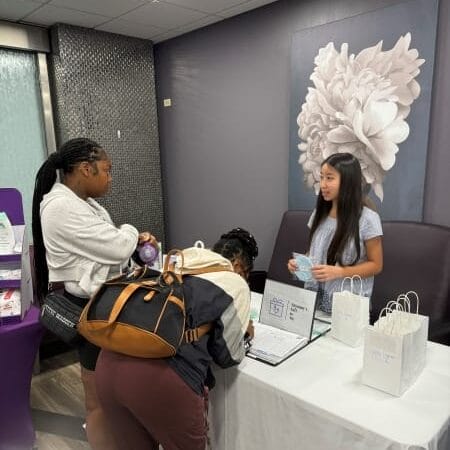
Amelia Tan (right) teaches two teen mothers about the contents of Mommy’s Gift to Me’s breastfeeding starter kits.
Why is this issue so important to you?
Breastfeeding is something most mothers go through, and while a lot of people are fortunate to have access to the resources they need, there are a lot of mothers who face a lot of barriers to those resources, including economic barriers. It could be their time that’s blocking their access to these resources too – having to work other jobs or take care of other kids. I think it’s very important that all mothers have the same experience providing the best they can for their babies.
What inspired you to get started with this initiative?
For the past few summers, I’ve been working at Rush on a research project called Ready Mom, which is an intervention trial, testing the positive outcomes of removing economic barriers to breastmilk provision in the NICU – whether it’s providing a hospital-grade pumping machine, a milk courier service or compensating the mothers for their time. I got to speak to a lot of these mothers and saw the positive impacts of that study, which included being able to breastfeed when their baby was in the NICU. I wanted to take that out of the hospital setting and into the larger community.
What are your long-term plans or goals for the organization?
Currently we’re implementing an ambassador program. A lot of the mothers we’ve been able to help want to get involved and help support other mothers like them. They’ll be able to come to events, speak to other moms with similar experiences and bond through that program.
What’s been the most rewarding part of your work?
Everybody is trying to do their best with whatever they have. Everyone, especially these moms, only want the best for their children. Being able to help them fulfill that goal is really rewarding.
What have you learned through your experiences as a volunteer?
While I haven’t necessarily gone through the same experiences as these mothers, I always find something in common with them and connect with them on a deeper level when I speak to them at these events. I don’t have to have the same background as them to connect with them on a personal level. I’m fortunate to have had access to any resource helpful to me, and being able to help others with access to the resources they need is very valuable to me.
Why is it important for others to get involved with causes they care about?
People may think, what could one person do? But one person doesn’t have to make the biggest difference in the world. When many people make small changes, it really adds up to something much larger. When you make an impact on someone, they’re inspired to make an impact, and it creates a ripple effect. And that’s exactly what we’re seeing through our ambassador program – moms who have been impact wanting to share that impact with other moms as well.
Any advice for people who want to start volunteering?
Anyone who is thinking about volunteering should do it. If it’s something they’re passionate about, they’re bound to find others who are just as passionate. There are so many people in the world who are passionate about the same things as you – and so manty communities willing to support you and help you on your journey as well.
“Sheep Dogs” and Supporters Help Veterans, First Responders Thrive
Meet Daily Point of Light Award honoree Colleen Vytlacil. Read her story, and nominate an outstanding volunteer or family as a Daily Point of Light.
Content Warning: Points of Light is proud to share the following uplifting and inspiring story. However, we acknowledge that a small portion mentions suicide and may be difficult for some readers. We encourage you to please care for your own wellbeing above all.
Sheep Dog Impact Assistance (SDIA) is a national organization based in Rogers, Arkansas and founded by former Marine Sergeant-Major Lance Nutt after watching his brothers in arms struggle to transition back to civilian life. Many soldiers and first responders struggle with PTSD, depression, isolation and addiction, as well as any number of debilitating physical conditions. According to the US Department of Veterans Affairs, over 6,000 veterans commit suicide every year and twice as many First Responders die by suicide than while on duty.
Why “Sheep Dog”? By their nature, veterans and first responders are helpers. These “Sheep Dogs” have a mission and desire to help people in their time of need and an idea was born to harness this innate desire to help others as a way to help them not just survive but to thrive.
One of the key tenets of SDIA is harnessing the veterans and first responders’ innate desire to help by encouraging participation in disaster relief. Today SDIA has crisis response teams based all over the country to provide services on the ground during and after natural disasters and other emergencies. Today, DRMs (Disaster Relief Missions) is one of three distinct programs designed to support and improve the lives of veterans and first responders in the United States.
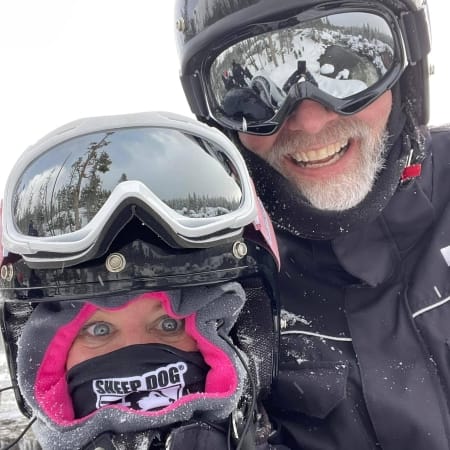
Sheep Dog Impact Assistance volunteer Colleen Vytlacil, front, at the 2023 SDIA Outdoor Adventure at Yellowstone National Park. /Courtesy Colleen Vytlacil
The second program, Outdoor Adventure, is designed to get Sheep Dogs more active, challenge them mentally and physically, provide opportunities to engage others with similar backgrounds and experience, and reintroduce them to community and adventure. Participants enjoy activities such as kayaking, snowmobiling, scuba diving and so on. One of the hallmarks of this program is an annual hike to the summit of Mt. Kilimanjaro.
The third program is the Warrior PATHH training program, a week-long intensive program focused on mental wellbeing and post-traumatic growth. SDIA’s mottoes are “Helping is Healing” and “Helping Others is a Way of Life”.
Colleen Vytlacil has been a passionate volunteer with SDIA since 2020.
What inspires you to volunteer?
I became aware of Sheep Dog Impact Assistance during COVID. My son is an Army veteran who lives with PTSD and has addiction issues. He had visited the Caribbean and ended up working there as a scuba instructor. When COVID-19 hit, he was locked down on a small island and began drinking heavily, and his mental health spiraled down. It took a lot to get him off the island. I reached out to Sergeant-Major Lance Nutt for help. I was expecting a list of resources, but he went one step further: he took a team of people to the island to engage my son and encourage him to come home from the island!
They were initially unsuccessful as my son dug in his heels and refused to leave. Ultimately he did leave the island and engaged with SDIA while working on his sobriety. While he was on the island and I was working to get him home, I saw the great work SDIA was doing and not just for veterans and first responders, but for their families. My son continues his struggle with addiction, but he knows he has a community and resources in SDIA when he’s ready to become a healthier version of himself. While I can’t help my son directly, I can support other people and that is why I am part of SDIA.
Tell us about your volunteer role with Sheep Dog Impact Assistance.
I am involved in planning for SDIA fundraising events including the Turkey Trot for Heroes 5K, and the Heroes Gala. As part of the planning team, I help acquire sponsors and silent auction items, and set up and clean up after the event. The Heroes Gala hosts around 500 people and it’s a huge fundraiser for us. In 2023, the event raised over $200,000.
Fundraising is my primary function, but I do more. In May I went to Dallas for three days to partner with Carry the Load, a nonprofit that also supports veterans. They dedicate the entire month of May to fundraising and it culminates on Memorial Day with a multi-day event that draws 15 to 20,000 people. SDIA volunteers managed the meal station for the Carry the Load event volunteers throughout the course of the weekend.
Bentonville, Arkansas also has a week-long festival to honor our veterans. At the end of the week, we host an Airplane Haul at the local airport and people build teams to pull airplanes across the tarmac. This event puts the “fun” in fundraising, and the winners get serious bragging rights! The Airplane Haul coincides with the swearing-in of young people who are joining the military, which is really cool to watch.
Recently, the Bentonville area experienced seven large tornadoes throughout our area and we immediately deployed our local Disaster Relief team to help the community. This coming Monday, my husband and I will be joining SDIA to help with ongoing post-tornado cleanup.
What are your long-term goals?
I hope to always be plugged in with a donor management/donor development role with SDIA. I feel that this is where I add the most value to the organization. Right now we are in the “off” season for fundraising but once we get closer to the fall fundraisers like the Turkey Trot, I’ll be talking about SDIA nonstop to prospective and current donors!
I would love to help drive some strategic planning for fundraising initiatives by developing plans, budgets and actively putting together a path to secure those donations.
I’m also an occasional “connector.” I try to find others with talent and similar interests and connect them so that they can add value to the organization. This lets everyone involved play to their strengths.
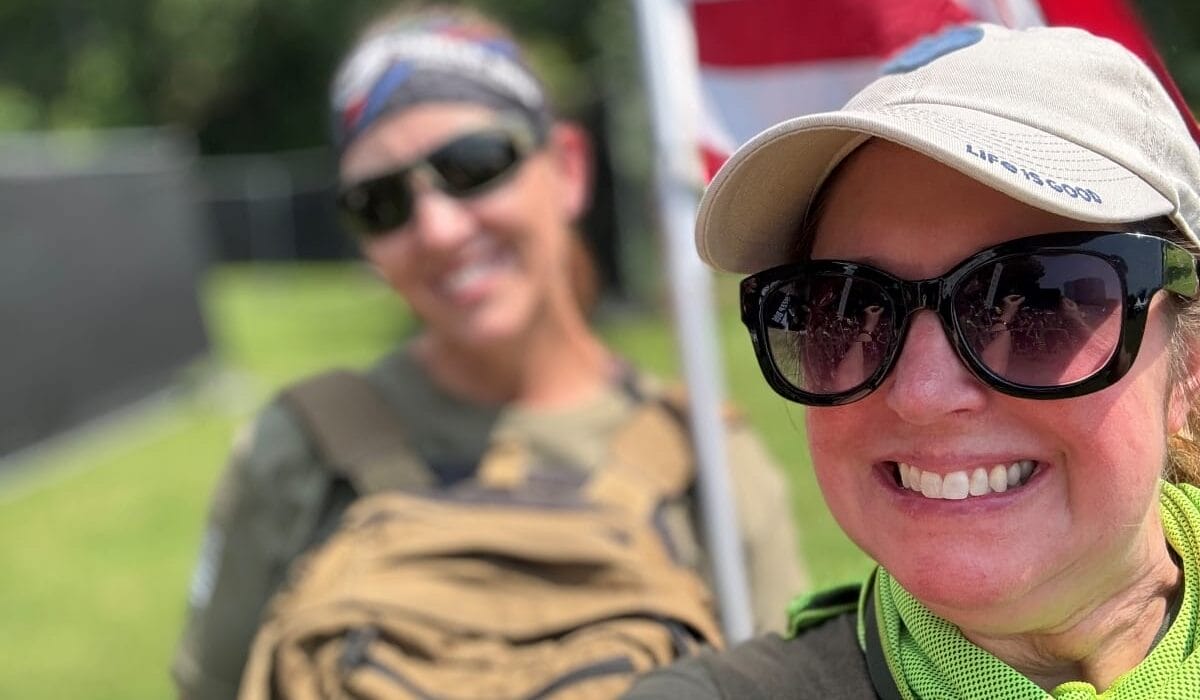
Sheep Dog Impact Assistance volunteer Colleen Vytlacil, front, at the 2024 SDIA Carry the Load event in May. /Courtesy Colleen Vytlacil
What’s been the most rewarding part of your work?
I was named Sheep Dog’s Volunteer of the Year for 2023 but that’s not why I do it. The most rewarding part has been watching the personal growth and recovery of some of the people I’ve met through the organization. I love watching them evolve into the best version of themselves.
What have you learned through your experiences as a volunteer?
Everybody has trauma. Everybody. It takes a community to successfully help people process and grow from their trauma. The key deliverable of the Warrior PATHH program is to create post-traumatic growth. There’s no room for judgment in what we do, and there is always room for healing. SDIA celebrates the diversity among our community as well as the diversity inherent in the military and first-responder community.
Why is it important for others to get involved with causes they care about?
Helping each other is what feeds us as humans. At some point we all need help from our community. A lot of people are busy and their lives are full so they don’t have much time to volunteer, but I am 59 and retired and volunteering has been one of the most fulfilling things I’ve been able to do. Everyone should get involved in any way they can.
Any advice for people who want to start volunteering?
Find your niche. Find where you add value and lean in there. Use your energy well by doing what you do well.
What do you want people to learn from your story?
Plugging in and volunteering can be a lot of fun and rewarding! I’ve gone snowmobiling in Yellowstone and I’ve been out to the ranch with our “Sheep Dogs” (“Sheep Dogs” are active or former military or first responders and to be clear, I am not a Sheep Dog!) There is a lot of fun in addition to a lot of rewarding work!
Dedication and Heart in Service Dog Training for Veterans
Meet Daily Point of Light Award honoree Sarah Moffitt. Read her story, and nominate an outstanding volunteer or family as a Daily Point of Light.
Sarah Moffitt’s journey as a volunteer for Warrior Canine Connection (WCC) began in 2019, and since then, she has been passionately supporting the organization. Her dedication to raising service dogs and her commitment to the veterans they serve make her an exceptional volunteer – always willing to go above and beyond to meet the needs of WCC, its service dogs in training and the veterans benefiting from their companionship.
Raising a service dog is no small feat. It requires full-time commitment, patience and love, all of which Sarah provides in abundance. As a puppy raiser, she ensures that these future service dogs receive the best care and training possible. In addition to this full-time role, Sarah also serves as a puppy sitter, hosting dogs that need new placements or more specialized training, or simply a respite for other puppy raisers. Her willingness to take on more challenging dogs without hesitation is a testament to her dedication and passion for the cause.
On average, Sarah volunteers six to ten hours a week. Her volunteer duties are varied and impactful. She helps lead classes for veterans, teaching them how to train service dogs that will eventually be given to other veterans. This process, known as Mission Based Trauma Recovery, involves veterans taking an active role in preparing the service dogs while benefiting from the therapeutic animal-human connection. Despite being a therapist by profession, Sarah’s work with veterans in this context is less overtly therapeutic, focusing more on the therapeutic process that naturally occurs as veterans engage in training and supporting young pups.
Sarah’s role extends beyond just training the dogs. She has been instrumental in running puppy parent classes, troubleshooting and training raisers. She works with groups through veterans’ treatment courts and other agencies to create a supportive community for veterans. Sarah also supports veterans by taking dogs out into the community for training outings, providing crucial real-world experience for the dogs.
Read on to find out more about Sarah’s volunteer work and why she’s so eager to support this cause.
Tell us about your volunteer role.
I am a volunteer trainer with Warrior Canine Connection. I help run groups and individual sessions with our service dog training instructors to help our veterans learn how to train our service dogs in training. I intermittently will help puppy raise or puppy-sit. I usually get some of our more sensitive dogs that need a soft touch or support in building confidence, because those are some of my strengths in training. I will help other trainers with whatever they need, if I have the space in my schedule to help.
Why is this issue so important to you?
I was raised in the Air Force as a dependent for my entire childhood and my sister married into the Army, so our family has always been impacted by military service. I’m passionate about our veterans – and also their families – receiving the support they need. I’m also a therapist by trade: an art therapist and marriage and family therapist. I really believe in alternative therapies and the impact they can have on individuals and families. As soon as I started working with WCC and our dogs, it was clear how effective the process can be in helping our veterans.
What inspired you to get started with this initiative?
The dogs! Well, first I met Amy Guidash, the program leader. I had moved to Asheville, NC, in the hopes of developing a dog training business, but initially got a job at our local hospital in the Emergency Department where Amy was also working. She was right at the beginning of setting up the Asheville Program and was looking for help. It seemed like a great opportunity.
The first dog I remember training was Tallman. He was the sweetest yellow lab and he and I really clicked. I got to help teach him how to interrupt emotional distress by using stress cues. I think that was all it took! I fell in love with the dogs, the process and seeing our veterans do the same!
What are your long-term plans or goals for the organization?
I would love to be able to spend more time supporting the Asheville Pack. In my dreams, we have a lovely training space that allows space for veterans and their families to come together and build community. I would love to see our capacity for more dogs grow, to create more puppy raisers and train more puppies. Because we are a small satellite, we have fewer dogs and they work really hard! We want to be able to give the dogs more down time as they are growing.
I would also love to see us partner with other groups in our community to continue to build opportunities for our veterans to come together in lots of different settings. Additionally, I would love to see us have more partnered teams, meaning our veterans teamed up with a dog of their own. It takes a lot of work and investment to train a service dog and the demand is high.
What’s been the most rewarding part of your work?
Seeing our community grow and watching the veterans we work with be able to expand their lives. We have veterans who were very isolated and unable to handle social situations that go on outings with us and participate in events. It is amazing to see.
It is also so very cool to see some of veterans that are teamed up with an actual service dog. Seeing the flexibility they are able to have in their lives and relationships as a result of the relationship with their dog is truly inspiring. I also just love spending time with Amy and Michele. We have so much fun with each other and the dogs always make us laugh.
What have you learned through your experiences as a volunteer?
I’ve really been able to re-connect to a military community and that has been valuable to me. The civilian world really is different and the camaraderie and support in the veteran community feels like home to me. I’ve learned to slow down, which is not my strength! Our dogs are low drive and I’m a high drive kind of girl so taking the time to be really present, take in the environment, have clear communication and helping the dogs to really think things through has helped me down-regulate some of my own stress in life.
I have been able to build a non-traditional schedule around my desire to volunteer and have changed the way I think about my working life. I want to fill my life with things that fill me up and give me joy and volunteering with WCC absolutely delivers. And I have made some amazing and resilient friends and have come to realize that, in the end, community is what matters most to me for myself and what will help our veterans and families as well.
Why is it important for others to get involved with causes they care about?
Having purpose and getting involved is powerful medicine. I work in a service-oriented career, but volunteering allows me the freedom to give in ways that fit my life and my available energy. You get to have fun, make friends and build awareness.
Any advice for people who want to start volunteering?
If you want to volunteer with WCC go to our website to see how you can get started. We are always willing to have people come in and see what we do and any little bit of help is greatly appreciated. If you want to volunteer in something else, think about the things that you love to do and see what opportunities there are locally for you to engage in.
I’m considering volunteering at our local community garden, or helping with hiking trail and river clean-up. I’d also love to help kids learn how to train dogs. I think just seeing what your interests are and connecting to other people is the way to go. I’ve done a lot of reaching out to strangers to learn more about things I’m interested in. It can be anxiety provoking, but I’ve found that most people are out there looking for like-minded individuals and are happy to connect. Start small and then see how things bloom!
A Champion of Comfort and Joy with Dog Therapy Group
Meet Daily Point of Light Award honoree Connie Compton. Read her story, and nominate an outstanding volunteer or family as a Daily Point of Light.
For over two decades, Connie Compton has been a driving force in the world of animal-assisted therapy. As one of the five founding members of the SC Dogs Therapy Group (SCD) in 2001, Connie has dedicated countless hours to bringing comfort and joy to thousands of individuals through therapy dog visits.
Since becoming president of SCD in 2008, Connie has overseen an impressive expansion of the group’s activities and membership. Under her guidance, SCD has grown to over 100 members, with 20 new members qualified in the past year alone. The organization now boasts a regular schedule of over 300 visits to 65 locations annually, including 20 monthly visits. In 2013 alone, SCD therapy dogs brought comfort to over 6,000 people.
Connie’s role as president involves a wide range of responsibilities to ensure the smooth operation and sustainability of SCD. She secures insurance for the group’s visits, a critical requirement for their activities. She also monitors all dog teams to ensure they meet SCD requirements, with each team required to complete at least one visit every three months without incidents. Additionally, Connie is responsible for obtaining local business grants and donations to keep the organization viable and schedules bi-annual silent auction charities to fund their efforts.
One of Connie’s notable contributions is overseeing SCD’s “Books and Reading Kids” (BARK) program, which conducts weekly reading sessions at 18 schools. This initiative not only promotes literacy but also provides children with the therapeutic benefits of interacting with therapy dogs, creating a nurturing and supportive learning environment.
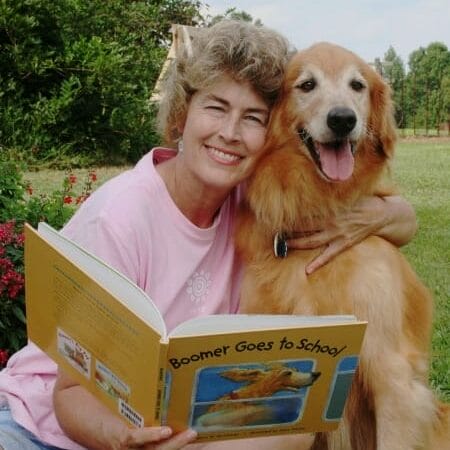
Connie Compton and dog Amos, reading to children at a camp visit.
Connie personally leads 12 therapy dog visits each month with her two Golden Retrievers and one rabbit, making a difference in the lives of individuals at assisted living and nursing facilities, special needs centers and children’s events. Read on to find out more about Connie’s dedication to SCD and what drives her passion.
Tell us about your volunteer role.
I am the president of SCDogs Therapy group, Inc., a nonprofit organization that provides animal assistedactivities to nursing and assisted living facilities, hospitals, hospice, cancer centers, senior daycarefacilities, camps, schools and much more. We work in the upstate counties of South Carolina.
I currently oversee 67 volunteers and approximately 20 regular monthly visits as well as many specialevent activities with schools, universities and libraries.
I am the evaluations coordinator for the group and lead three to four evaluation workshops each year, testing prospective volunteers and their dogs to become members of SCDogs. And believe me, I was a nervous dog mom when our evaluation team tested me and my two Goldens! Additionally, I am a team leader for several visits each month to nursing and assisted living facilities where I take one of my Golden Retriever therapy dogs, Jasper or Chert, and we also do many special event activities with schools, libraries and universities.
I also work with our BARK program, (Books And Reading Kids), and spend one day each week during the school year with 2nd grade students who need help improving their reading skills. These students read to one of my dogs each week and the results in their reading improvement and comprehension are amazing. I was a teacher for 44 years before retiring, so the BARK program gets me back into the schoolswith children and into my happy place!
Why is this issue so important to you?
I have witnessed firsthand the smiles and joy on the faces of the residents and children we visit. I walk inwith one of my dogs and the atmosphere instantly changes. The day seems a little brighter and sooneveryone is happy and reaching out to touch the dogs, eager to share stories and tell you about dogsthey have had or known. You can tell the memories are good ones through the smiles and laughter ontheir faces.
I have also sat with family members in sad times as well and watch tears fall as they slowly pat my dog’s head and talk about a loved one who is in hospice care or has recently passed away. Sometimes no words are spoken but I know that it is enough that we were there for a time. A squeeze of the hand or a quick tearful smile, and I know we made a difference.
What inspired you to get started with this initiative?
In 2001 my father-in-law was in the middle stages of Alzheimer’s. He would stay with my family on theweekend and I noticed that my Golden Retriever, Amos, would stay by Papa Bill’s side, particularly if hebecame nervous or agitated. Amos seemed to know that Papa Bill was comforted by having him nearand within petting range. If Papa Bill went outside, Amos would bark until one of us would come andwalk with Papa Bill or bring him back inside.
I was amazed and began to research therapy dogs and the benefits they could provide. SCDogs Therapy Group was just getting started under the guidance of a young mental health counselor. I met with the group and explained what I had seen with Amos and they assured me I was on the right track in hoping he could become a therapy dog. Amos passed his therapy dog test that October and I have never looked back. And even though Amos is gone now, I have kept Golden Retrievers and trained them as therapy dogs. I took over as president in 2008 and feel so fortunate to be part of such a caring and committed group. Dogs really do make our lives whole!
What are your long-term plans or goals for the organization?
We desperately need more volunteers and have more visit requests almost weekly that we cannot fillwithout more therapy dog teams. We have schools that would love to have our BARK program and at this time we just don’t have the needed volunteers. We hope to continue providing our animal assistedactivities for many years to come.
What has been the most rewarding part of your work?
For me the most rewarding part of my work is creating relationships with the residents that my dogs andI visit and spending part of each week during the school year with my BARK students and watching theirconfidence and reading ability grow while sharing a book with a dog who thinks they are wonderful. Andthey are!
So many residents in nursing and assisted living facilities have little family or friends to come and visitand they look forward to myself and our volunteers coming each month. We recently had one sweet lady who was going to turn 100 on her birthday. We visited her in the evenings and she always had on her pajamas and she would laugh and say, “You caught me in my pajamas again!” Our visit was scheduled the night before her birthday so the volunteers and myself decided we would wear our pajamas that night to the visit and surprise her. We took flowers and a small gift because after all, turning 100 definitely calls for a celebration! She was delighted and I think we all got a little teary eyed and I don’t think any of us will ever forget that evening.
This sweet lady later moved to another facility and we worried we had lost contact. After checking different facilities, we found her and surprised her again with a visit. Upon opening her door, she threw up her arms and said, “You found me!” Her daughter explained she was afraid she would never see us again. So many stories and so many memories to share.
What have you learned through your experiences as a volunteer?
Through my work with SCDogs, I have learned that as a volunteer I do make a difference and I enjoy mytime, particularly with the older adults that I visit. So many of my “senior friends” have shown me thataging is a natural part of life and you can still find joy and meaning in every day life. They have truly become my role models.
Why is it important for others to get involved with causes they care about?
I have always felt that each of us have special talents or gifts and that we should be willing to sharethem to benefit others. I think to be a successful volunteer it is important to find a cause or organizationthat has a special meaning to you and just follow your heart. I have a friend who loves to bake and shehas started a volunteer organization who bakes cookies each week and delivers them to senior residential facilities.
Any advice for people who want to start volunteering?
Take some time and do some research to find a cause or group that shares your interest and that youfeel comfortable with in sharing their mission. No matter how big or how small, there is always a needfor volunteers who want to get involved in the community.
South Florida Teen Rallies Support for Hospice Staff and Patients
Meet Daily Point of Light Award honoree Asha Gandreti. Read her story, and nominate an outstanding volunteer or family as a Daily Point of Light.
Caring for patients in hospice can be a rewarding yet emotionally draining journey for healthcare workers. Asha Gandreti, a 17-year-old high school student, recognizes the challenges of providing end-of-life care and founded Help for Hospice to show her gratitude for their roles. Through this and her volunteer work on the ground with Catholic Hospice, she creates care packages for nurses, does clerical work, assembles grief boxes for grieving families, accompanies hospice patients as a companion, strategizes ways to increase her impact with the hospice youth leadership board she founded and more.
When she’s not working on hospice care activities, Asha is heavily involved in school activities including serving as president of the Girls Who Start club, co-president of a tutoring program for foster children, sergeant-at-arms of the Technology Student Association chapter and a varsity athlete in weightlifting. Her musical talents on the violin and viola have led her to perform internationally in places like the Sydney Opera House in Australia and the Musikverein in Austria.
Whether sparked by her compassion for others or her drive to improve lives, Asha’s interest in the medical field has inspired her to pursue medical school after college. Empathy and kindness will, no doubt, serve her well as a physician and endear her to future patients in their time of need.
Asha (left) gives a hospice nurse a care package, recognizing the emotional toll her work can have.
What inspired you to get started with this initiative?
During the COVID-19 pandemic, it was very troubling to see nurses, doctors, and other healthcare workers being overburdened and unappreciated. These relentless individuals worked tirelessly to provide for their communities and to ensure the health and wellbeing of their patients while consistently putting their own health at risk. It was at that moment, in 2020, that I became determined to start this initiative. With a mission to support and uplift hospice healthcare workers, I have worked to create a community that honors those who dedicate their lives to providing comfort and care during life’s final stages.
Tell us about your volunteer role with Help for Hospice and Catholic Hospice.
As a volunteer for Catholic Hospice, I frequently assist with on-site tasks from clerical work in the finance department to preparing grief boxes for families who have lost their loved ones. My goal is to make as large of an impact as possible, which looks different on any given day.
I also serve as the founder and president of Help for Hospice, an organization I developed for students at my school who also have the desire to recognize hospice nurses, doctors, etc. My role is to plan, organize and execute service projects to spread appreciation for hospice healthcare workers across South Florida. Some of the projects that I’ve designed include on-site volunteering with Catholic Hospice Services, writing thank you letters during Thanksgiving and assembling care packages for nurses. Being able to craft these projects from scratch is very rewarding, and I love seeing my ideas come to life. Nearly 100 students have shown interest and been involved thus far, and I’m very excited to see how much more it grows in the upcoming years.
What’s been the most rewarding part of your work?
Seeing the smiles on the nurses’ faces after receiving their gifts was one of the best feelings. It was apparent that we had made their day and had a big impact on them. I still have nurses reaching out to me to thank us for our work! It really makes me happy to see how impactful a small gesture of kindness can be.
It has also been really rewarding to see the amount of involvement of other volunteers in my community. To be able to inspire so many young people to work towards this cause has truly been gratifying.
What have you learned through your experiences as a volunteer?
Consistency goes a long way. Showing up, being ready to help and having a positive attitude each and every time I volunteer motivates me to keep going again and again. You may face challenges and setbacks along the way, but if you keep working hard and diligently, you will see the impact in the long run.
What is something important for potential volunteers to know about working in hospice?
Volunteering in hospice care requires not only a very deep sense of compassion, but also a tremendous amount of emotional resilience. We’re supporting patients near the end of their lives and providing comfort for their families. I think that it is important to acknowledge the fact that this is a difficult role to have, but an extremely rewarding one.
Why is it important to get involved with causes they care about?
Getting involved transforms personal passion into impactful action. When you notice a problem or shortcoming in your community, the first question you should ask yourself is “How can I change this?” or “What can I do to help?” Once you start taking responsibility and step up as a leader, you’re already halfway there.
What do you want people to learn from your story?
Be an advocate in your community, and spark change where you see it necessary. As a middle schooler during the pandemic, there were times that I questioned my ability to make a difference in such a large community since I was only 13 years old. I’m glad that I didn’t let that stop me from pursuing my passion in healthcare and making a difference in my community. Now, we have a large community of hospice volunteers not just within my school community, but around South Florida, and I am so honored to have ignited the journey.
Award-winning Recording Artist Lachi Champions Inclusion in the Music Industry After Losing Her Vision
Meet Daily Point of Light Award honoree Lachi. Read her story, and nominate an outstanding volunteer or family as a Daily Point of Light.
New York City-based Lachi, creator of Lachi Music, is making history — not only in the music world, but for communities of people with disabilities and neurodiversity. Three years ago, Lachi, an award-winning recording artist and cultural activist who was born legally blind, created Recording Artists and Music Professionals with Disabilities (RAMPD) when she found herself navigating the music industry as someone who was losing their vision. Today, the organization is home to 80 vetted music professionals and its mission is to amplify Disability Culture, promote equitable inclusion and advocate for inclusive and accessible spaces in the music and live entertainment industry.
“There are so many movements. Think about the people who started the women’s movement. Who are the people that started women really being seen in the music industry or the people who helped Black and Brown folks get seen in the music industry? I can tell you who really started helping folks with disabilities and neurodivergence get seen in the music industry; it’s RAMPD,” Lachi said.
Because she was keeping her disability a secret, Lachi kept herself from asking for accommodations that would help her perform at her best at studios or networking events. “I would miss handshakes in darker rooms that could cost me a touring or record deal, and I realized that I was going to have to get in front of the situation,” Lachi said. “If I wanted to go to the next level in my career, I needed to accept all parts of myself and not hide who I am in an industry that frankly rewards authenticity,” she added.
Recording Artists and Music Professionals with Disabilities partners with agencies like The Grammy’s to make their organizations more accessible for people with disabilities or neurodivergence./Courtesy Lachi Music
Lachi started getting involved in different organizations with musicians and even joined The Recording Academy, the community of music professionals that hosts the annual Grammy Awards. She asked the professionals around her what they were doing about disability culture and accessibility at their organizations and throughout the music industry. “I’m not going to say I heard crickets, but folks didn’t have an adequate answer,” said Lachi. So she set out to make some big, important changes.
Lachi knew there was a stigma around disabilities, especially neurodivergence — when a brain processes information in a way that is not typical of most individuals — and other chronic conditions, but she dreamt of an industry that was equitable, safe and an environment that people felt genuine pride and joy to be a part of. After being a part of an online panel with the Recording Academy in April of 2021 and speaking to other music industry professionals, Lachi had a dream of five letters: RAMPD.
She had an epiphany, and that was the beginning of her professional platform that equips the music and entertainment industry with disability inclusive tools, programming and strategy. Lachi quickly had her first task and client: make The Grammy’s more accessible. As a Grammy’s Board Governor, Lachi helps RAMPD continue its partnership with The Grammy’s to make music’s biggest night more disability-inclusive. It pushes for a visible ramp to stages, American Sign Language translation, audio descriptions and more. This year, The Grammy’s brought four RAMPD members to grace the official red carpet.
RAMPD has also partnered with Netflix, Women in Music, Songwriters of North America and more. They’re currently working with the Country Music Awards and brainstorming more ways to help venues and their city as a whole become more inclusive.
“Growing up, I didn’t have a disabled woman of color in the music industry to look up to. I always knew that my goal would be to uplift my communities and become the first blind Latina at the forefront of the industry, but I knew I had to create my own lane. I didn’t think I’d have any real guidance until I met Lachi and found RAMPD,” said Precious Perez, a blind Puerto Rican music artist, educator, disability advocate and president of RAMP.
“When I think of Lachi, I see this beautiful Black woman who is a strong, confident and determined force of nature. She isn’t afraid to break down barriers, but she does it in such a way that both educates and brings people together to create true inclusion. She struts around with her stylish glam canes, and she is authentically her,” Perez added.
RAMPD has two levels of membership. There are community memberships which are free to join and peer vetted professional members who pay yearly fees to get paid opportunities and perks. Lachi hopes to extend RAMPD beyond New York City and grow their new MIX program, the Music Industry Accelerator, which helps professionals go from great to greater. Lachi says that It’s very difficult in this industry to be able to compete with non-disabled counterparts, so this incubator will have everything from mentorships, resume reviews and more.
“I think the most rewarding part so far is that I can confidently say that RAMPD has officially established itself as a leading voice in the music industry,” Lachi said. “It’s such a beautiful thing that’s never been done before. There’s so much stigma, there’s so much shame, there’s so much fear, there’s avoidance and there’s anger — but we have been able to penetrate one of the more superficial industries that cares about appearance.”
In October of 2024, RAMPD and Lachi Music will be featured on a PBS Digital series that celebrates renegade rebels and revolutionaries with disabilities who have shaped America. Under Lachi’s volunteer leadership, RAMPD has also raised over $175,000 in funding since its launch in 2021.
Lachi encourages employers to listen and engage with their community, and to educate themselves on how to better their organizations to be more accessible for people with disabilities and neurodivergence. She’s going to unapologetically infiltrate pop culture with disability narratives through music or her personal style.
Meet Daily Point of Light Award honoree Ayaan Parikh. Read his story, and nominate an outstanding volunteer or family as a Daily Point of Light.
Newly graduated from high school, Ayaan Parikh is driven by curiosity. He plays the violin (with a Western-style musical education) and enjoys combining that with Indian classical singing, which is more improvisation-based. The contrast between the two is beautiful and challenging, much like his volunteer work as the founder and executive director of Medic All, which strives to navigate a healthcare system that does not adequately serve the needs of everyone.
Medic All is a 501(c)3-status organization that offers free mental and physical telehealth healthcare consultations for low-income patients who otherwise have little or no access to the healthcare system. Telehealth uses technology to facilitate appointments with medical professionals without actually visiting a clinic. Medic All healthcare professionals donate their time to helping the underserved of Kansas. They consist of MDs, PAs, RNs and medical students. The service is extremely valuable for patients who are not currently insured or don’t have a primary doctor. However, Medic All serves any Kansas resident within 200% of the federal poverty line.
As he enters Stanford University this fall, Ayaan plans on continuing with Medic All, but this time with a focus on growth, and less “boots on the ground.”
What inspires you to volunteer?
I have been interested in health equity and community development since 9th grade, when I discovered the glaring disparity in the accessibility and quality of healthcare between the poor and the wealthy.
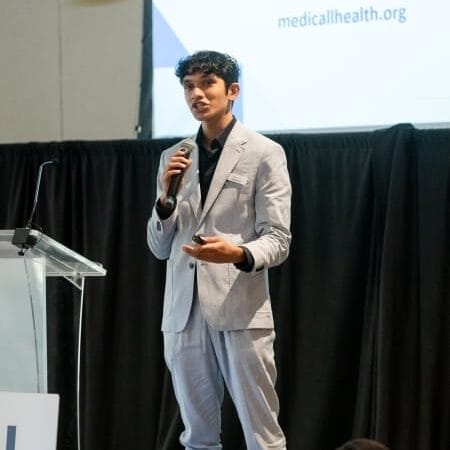
Medic All founder Ayaan Parikh presents Medic All at a local NXTUS Health competition. /Courtesy Ayaan Parikh
In 9th grade, I had the opportunity to shadow the director of a free clinic in Wichita, Kansas. I had read a book called The Physics of Future which talked about the future of technology and its impact on everyday life. As I was reading about medicine, the book discussed telehealth as a way to create healthcare accessibility. I became interested in researching this topic. I found that although telehealth is being used throughout the healthcare system, it is only at a privatized level. It is not used to increase healthcare accessibility in the low-income sector. I thought it would be interesting to meet with one of the directors of the free clinic and talk about telehealth. This is when I became attuned to the challenges of certain individuals in accessing healthcare.
I look for answers to the question, “What can we do to expand the healthcare system to ensure that all people have the right, access and privilege to healthcare?” I understand that changing a healthcare system this big seems impossible, but I believe we can chip away at the negatives and build up the positives. I regularly ask myself, “How big of an impact can I have by making small changes?”
Tell us about your volunteer role with Medic All.
I am the founder and executive director of Medic All. I have assembled a Board of Directors and Board of Advisors composed of doctors, hospital presidents, healthcare technology specialists, nurses, medical students and other community leaders.
I typically work five to six hours a week with Medic All. I am constantly seeking new partnerships with healthcare professionals, hospitals, labs, community centers and shelters for unhoused individuals to provide a seamless entry into the healthcare system for underserved individuals and families. We administer their first telehealth consultation, at which point our clients are given a path forward. For example, we may make appointments for blood work, or refer them to specialists if their problem cannot be solved in a telehealth meeting.
I am also in charge of fundraising, securing grants and developing our revenue model. One of our key revenue sources is white labeling our software. We sell software licenses to organizations that also serve low-income individuals so they can hit the ground running without taking valuable time to develop software.
We are also finding ways to work with insurance companies, which is a win-win because they can save a lot of money when patients do telehealth, and patients can get quality care.
Today, the Medic All platform has many clients who receive free healthcare and a continuity-of-care plan. The continuity-of-care plan is developed during the initial telehealth consultation. Each patient’s medical report includes diagnostics, general instructions and future steps. There is also a follow-up meeting in three to six months to ensure continuity of care.
We offer telehealth consultations in general health check-ups, mental health, symptom-based care and fitness and health. This comprehensive approach is often missing when low-income individuals need to improve their overall health and well-being.
What are your long-term plans or goals for Medic All?
My goal is to continue expanding Medic All outside of Kansas, first throughout the Midwest, and then nationwide and hopefully worldwide. The goal is to scale it once we can show that it works effectively on a relatively small scale like Kansas.
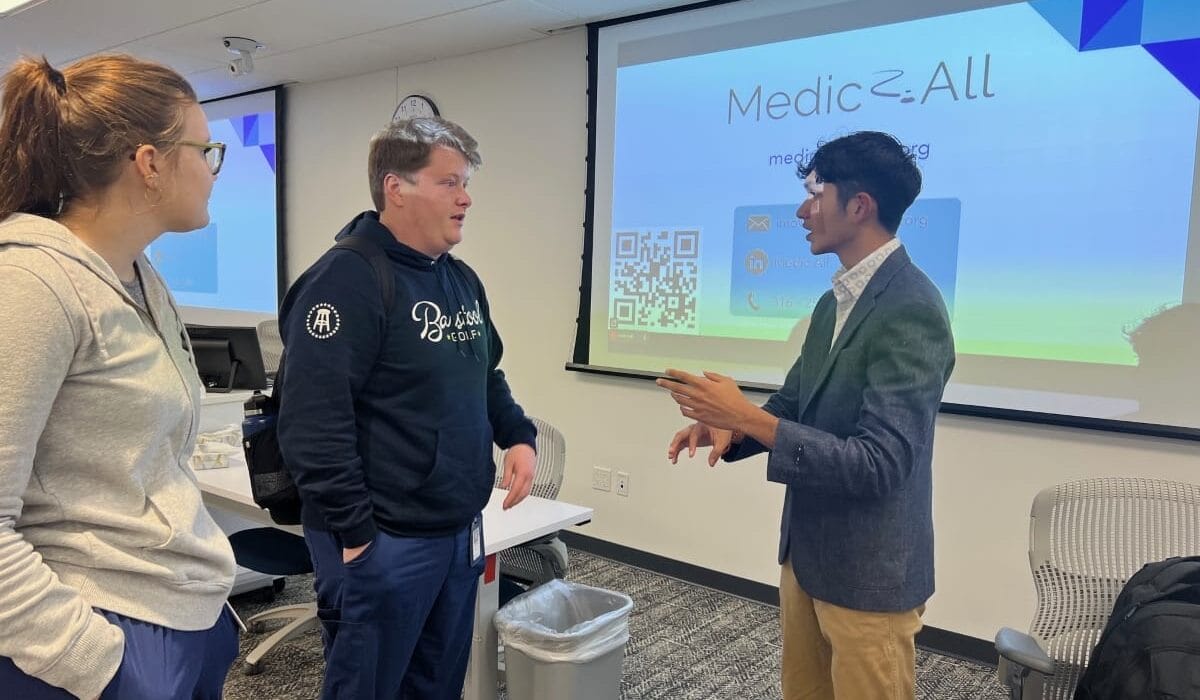
Medic All founder Ayaan Parikh discusses Medic All with a student at the Kansas College of Osteopathic Medicine. /Courtesy Ayaan Parikh
What’s been the most rewarding part of your work?
I have very few opportunities to speak to our clients and hear their stories, but when I do, it is easily the most rewarding part. One client told me, “I thought there was no way for me to get any medical care. I haven’t seen a doctor since I was 15, but because of this platform I could meet with a doctor.”
What have you learned through your experiences as a volunteer?
One of the most important lessons has been the importance of networking and learning from people who have a lot more experience than you. I started Medic All in 9th grade, so I had very limited knowledge. Just a lot of passion. The most valuable thing was talking to people who knew what the problem was and could offer solutions.
Any advice for people who want to start volunteering?
Try to understand the problem. When you see a problem, research it and see what you can do and what organizations are involved. Speak to people who are using a service in addition to the people who created the service. Knowing the larger purpose of your volunteer efforts will fuel your motivation to do all these things.
What do you want people to learn from your story?
When I was creating Medic All, there were many times I hesitated and wondered if I should continue. I had to overcome a lot of doubts. Most importantly, start. If you have an idea, don’t overthink it. Talk to people. Talk to potential partners, experts, organizations and users and understand the problem deeply before you jump in with a solution. You can evolve as you grow. The first step is the hardest!
Compassionate Advocate and Empathetic Listener Holds Space for Teens in Crisis
Meet Daily Point of Light Award honoree Sophia Manole. Read her story, and nominate an outstanding volunteer or family as a Daily Point of Light.
Sophia Manole may not have experienced a mental health crisis personally, but her commitment to helping those who are experiencing such a situation is extraordinary. Serving the youth crisis line Teen Link, Sophia spends two to three shifts each month, each lasting 4.5 hours, answering calls and texts from youth in need.
Her role as a youth crisis specialist involves providing vital support, resources and de-escalation for high-acuity situations. But her contributions don’t stop there; Sophia is also a key member of Teen Link’s social media outreach team, creating educational posts on mental health topics to further the organization’s reach and impact.
In addition to her work with Teen Link, Sophia has been tutoring a young boy in English and Math for the past three years. Her commitment to education and mentorship has made a significant difference in his academic journey, providing consistent and reliable support multiple times a week.
Sophia Manole is an advocate for teenagers’ mental health and wellbeing through her volunteerism with crisis line Teen Link.
Sophia’s compassion further extends across the globe through her involvement with Forgotten Faces, a nonprofit organization run by a group of dedicated teens. This organization focuses on helping underserved children in Romania. Sophia has organized several fundraising events, successfully raising over $10,000. These funds have been used to provide art camps, basic necessities and Christmas gifts for children in Romania, bringing joy and hope to many lives.
Finally, Sophia is the co-founder of Seeds4HOPE, a nonprofit organization aimed at assisting underserved children in Romania. Through Seeds4HOPE, Sophia has organized two clothing drives, collecting over 200 pounds of clothes. These clothes were sent to a philanthropic organization in Romania to be distributed, ensuring that the children have access to essential clothing.
Read on to find out more about Sophia’s multifaceted volunteer work and why she champions the causes she does.
Tell us about your volunteer role.
I’ve been volunteering with Teen Link for almost two years now. My role there is working as a phone worker. I talk to callers by chat or by phone. I help to deescalate the situation, give resources where I can and listen non-judgmentally. I try to give them the space to talk about whatever they’ve been going through.
Apart from that, I also volunteer as part of the social media subcommittee, where I create Instagram posts for the Teen Link account promoting mental health and the program in general.
Why is this issue so important to you?
I like to remember that everyone is affected by mental health in some way, whether big or small. Since it’s such a common experience, it’s important to support each other through it and continue working to get rid of all the stigma surrounding mental health issues. To be able to do that on the phone line is really important to me.
What inspired you to get started with this initiative?
When I was younger, I didn’t have a lot of exposure to mental health issues. Because I didn’t know much about it, it was a little harder for me to understand what was happening when I first saw that some of my friends were dealing with mental health disorders. When I heard about Teen Link and what a great resource it was for people, it seemed important for me to get involved so that I could support my friends. Volunteering with the organization has taught me a lot about mental health and helped me empathize with my friends – so I could be a better resource for them, a better support for them.
What’s been the most rewarding part of your work?
A lot of the time, with Teen Link, it feels like instant gratification. You can hear how the person you’re talking to becomes more relaxed, leaves the call feeling a lot more confident with a plan for the next steps they’re going to take. While this isn’t always the case, it’s definitely fulfilling to know that I was there for a person when they needed help most.
What have you learned through your experiences as a volunteer?
I’ve definitely learned about being a good communicator – learning how to talk to people who have different needs or various communication styles. I’ve also learned to think more quickly and stay calm in higher-stress situations. More importantly, hearing the stories about people who have struggled with mental health has helped me understand it more. It’s helped me become more compassionate and supportive to people in my life, those I personally know who may be struggling with mental health issues.
Why is it important for others to get involved with causes they care about?
Volunteering is something that everyone should get involved with. Not only does it help your community, but it helps you grow as a person. It’s even better when you can get involved with organizations that align with your passions. For me, caring about mental health has been a big motivator in continuing to put a lot of time and energy into my work at Teen Link.
Any advice for people who want to start volunteering?
It’s really important to just take the first step and explore all the opportunities available to you. Once you find that one thing that you feel is really important to you, dig deeper into it and find out how much of an impact you can have on the issue.
High School Ski Racer Brings Access to the Sport She Loves
Meet Daily Point of Light Award honoree Mia Darr. Read her story, and nominate an outstanding volunteer or family as a Daily Point of Light.
Mia and Jackson Darr started skiing at ages 3 and 5, respectively. Their parents passed down their passion for the sport and gave them something fun to do during the harsh Wisconsin winters. Now 17 and 18, Mia and Jackson use their racing skills on their high school teams. This year, Mia’s team was the first in school history to have won a state championship in skiing.
Realizing that without their parents’ interest and the financial resources to equip them with gear and passes, they likely would never have learned to ski, the siblings decided to give those with fewer resources and who were underrepresented on the slopes the same experience. The result was Positive Altitudes, a 501(c)3 that organizes four-week learn-to-ski programs at no cost. They’ve provided lessons to 150 kids ages 5 to 18 since their founding three winters ago with the help of the Boys and Girls Clubs of Greater Milwaukee and Big Brothers Big Sisters.
While Jackson is headed to college in the fall, Mia will be taking the lead. She’s a three-sport athlete—tennis, ski racing and lacrosse—who will be applying to colleges on top of running Positive Altitudes. Her fundraising work has already raised over $80,000 in donations and grants to continue the work.
What inspired you to get started with this initiative?
My brother and I came up with the idea for Positive Altitudes on a chair lift ride during COVID. Skiing has always brought us so much joy, and we appreciated it even more during COVID, when it was one of the few sports that you could do safely. We live in Milwaukee, Wisconsin, which is one of the most segregated cities in our country. It has one of the highest poverty rates among children, so we knew that many kids faced financial barriers that kept them from skiing.
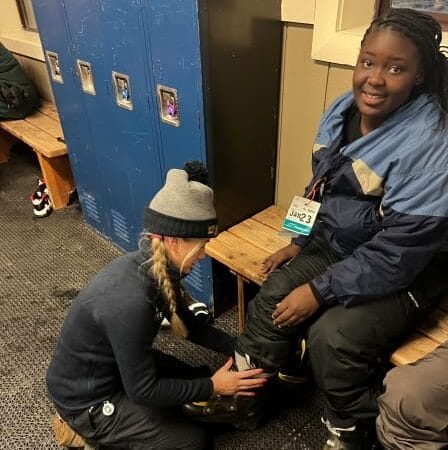
Mia (kneeling) helps a participant put on ski boots before a lesson.
We wanted to change that. If you’re not born into a family that skis, and you don’t have the financial means, there’s a pretty good chance that you’ll never learn to ski. And this didn’t seem fair, especially in Wisconsin, where there is lots of snow. We thought that every kid deserves the opportunity to experience the joy, the challenge and the freedom that comes with learning to ski. Wisconsin winters and skiing should belong to everyone, not just those who can afford it.
Tell us about your volunteer role with Positive Altitudes.
My role involves both managing operations and teaching ski lessons. I work with the Boys and Girls Club of Milwaukee each year to market our program and recruit. I also work with instructors at Sunburst Ski Hill to plan our goals and structure our weeklong program. And I contact restaurants regarding our dinners and purchase ski clothing and gear for participants each year.
In the winter, my role shifts to running the program with my brother. It’s about an hour to Sunburst. Each Tuesday, we arrive at the ski hill after school, around 4:30 pm, and help get the kids booted up and on the hill to meet the other volunteer instructors. In the evening, we pass out dinner, and I get home around 10 pm. In the spring, when the season is over, we focus on raising funds for the next year by sending out letters to donors and updating grant applications.
What are your long-term goals for the organization?
For me, skiing is an escape from daily stressors. It’s a place to be with my friends, breathe fresh air and have a good time. So, our top priority is for the kids to enjoy themselves, but also, we want them to come away with new skills. Skiing really isn’t easy. They’re going to make mistakes, but they’ll build confidence and resilience.
What’s been the most rewarding part of your work?
It’s seeing how much our participants grow from lesson one to lesson four, not only as skiers but as young people. Most people come to our program unsure of what to expect. The rewarding part is seeing the kids stick with it and to watch their determination and resilience grow. By the end, all of them are going up the tow rope, and many on the chairlift can ski independently.
What have you learned through your experiences as a volunteer?
Jackson and I have learned a lot about time management and how to be a successful team. I buy everything 50 to 70 participants need to ski each session–snow pants, long underwear, gloves, hats, etc. We have to make sure that we’re getting the right sizes, and that takes time and is challenging. We might have to go back to the store many times.
I’ve also learned that getting involved makes a community stronger, and it helps people have a greater understanding of and compassion for the challenges that others may be facing. Many program participants are close to my age, and I’ve built relationships with them. I’ve learned about the daily challenges of poverty and food insecurity. The awareness has changed my perspective of my own life and has motivated me to do more for other people.
Why is it important for others to get involved with causes they care about?
It’s important to understand other people’s challenges and have compassion for them, because you never know what they may be facing. Being able to build relationships with people from different communities is essential. Not only do kids learn how to ski and learn from the volunteers, but we also learn from them. That’s the beauty and the importance of this whole thing.
What do you want people to learn from your story?
We all have like the power to make a difference, and even through Positive Altitudes isn’t changing the structures or the policies that contribute to poverty or segregation, our program is bringing kids in our community together through the shared experience of skiing. By dedicating time and passion to others, you can make a difference in people’s lives while positively impacting your own.