Six Decades of Dedication Through Selfless Service to the Community
Meet Daily Point of Light Award honoree Sandy Thomas. Read her story, and nominate an outstanding volunteer or family as a Daily Point of Light.
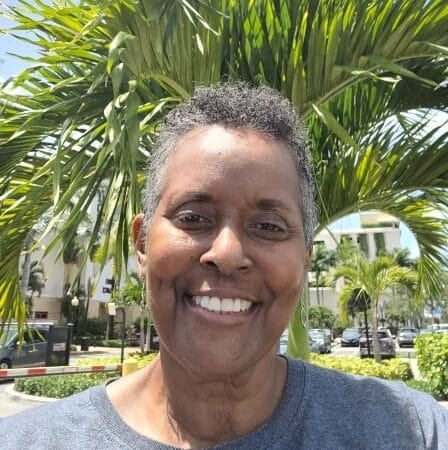
Sandy Thomas has been an integral member of her community – through volunteering in many capacities – for over six decades. As past president of the AT&T Telecom Pioneers, a volunteer organization that assists individuals in almost every facet of life, she has led numerous initiatives that touched the lives of countless people in her South Florida community.
From providing toys and clothing to families at the SafeSpace Domestic Violence Shelter to preparing meals for families at the Ronald McDonald House and working on homes with Habitat for Humanity, Sandy has gone above and beyond to lend her time through volunteering. In recent years, she has organized and participated in food collections and distribution for Joshua’s Heart and other area pantries, ensuring that families have access to the food they need.
Even after her diagnosis with Multiple Myeloma, which has limited her “hands-on” involvement due to a compromised immune system, Sandy’s dedication to volunteerism hasn’t wavered – in fact, she’s figured out ways to keep volunteering despite any of the challenges posed by her illness.
Sandy’s work is truly an inspiration and has earned her the Presidents Volunteer Service Award many times over. Read on to find out what got her started with volunteering and why she continues no matter what life throws her.
Tell us about your volunteer roles.
I volunteer and have volunteered for many organizations over the years. Currently, most of my volunteer work is done with the AT&T Telecom Pioneers. I’ve done many little projects, as well as bigger events. When the pandemic hit, of course we had to stop a lot of the face-to-face volunteering, and right around the same time I was diagnosed with Multiple Myeloma. Right now, I’m immunocompromised, so I’m not able to get out a lot. So now, I’m doing a lot individually.
Sandy Thomas holds many volunteer roles, and has since the age of 3.
Whereas before I’d go shopping for a pantry, like Joshua’s Heart, I would go shopping and purchase the items, I would package them, put everything together, take it over and help with distribution. But there are too many people involved so lately what I’ve been doing is ordering things that go directly to the pantries, or other volunteers help with that part.
We’ve worked a long time with the Ronald McDonald House, making mostly breakfast or lunch. What we started doing was enlisting a Boy Scout Troop, and they get badges for cooking! We incorporated bingo, which was such a big hit. We gave out prizes, typically $10 gifts from Walmart. I helped start that initiative.
When I would go to senior homes, I noticed seniors who were in wheelchairs would have all their stuff in their laps. I thought how great it would be to have them have bags to hang on the handles. I helped with purchasing materials and found a woman who sewed the bags! I also got involved with toy and gift distribution around the holidays and Easter baskets – those are such fun initiatives.
For many years I logged my hours for the Presidents Volunteer Service Award, but eventually stopped logging them. I’m hoping next year that my oncologist will give me the okay to be around more people.
What inspired you to get started with these initiatives?
I started volunteering when I was 3 years old. My mother was a single mother and she taught us that it was better to give than to receive. So we helped anyone who didn’t have as much as us. Maybe it was moving garbage cans out of the street, or buying little things – like a can of soup – for a neighbor. We didn’t have much, but we still learned to give. Now, I’m 67, so 64 years ago my volunteering started!
I worked for the phone company – Southern Bell, Bell South, ATT – for 40 years. I retired three years ago and I volunteered my whole time there. Most of my projects dealt with helping children or seniors, or feeding unhoused individuals.For my whole career, I had supportive supervisors and directors who recognized how important getting involved in the community is. I’m very appreciative of all of these leaders.
What’s been the most rewarding part of your work?
The most rewarding part is definitely handing out food and seeing appreciative families. They’re thankful for an apple. For a banana. For a bag of fruit. Often, we don’t think about how important it is to have these small items, but they’re so grateful. I can’t do it on my own. I have my Pioneers behind me who reimburse me for many of the things I purchase and help support me as well.
Why is it important for others to get involved with causes they care about?
Because we take so much for granted. Because we don’t take time to see how important it is. Whenever I bring someone along with me to volunteer, I get to see them feel good about it. It’s important to get involved just so you can see outside of yourself and see how much impact it can make. Sometimes it just takes one event, one time dropping off a bag of food.
Any advice for people who want to start volunteering?
Just do it. Do it from the heart – it’s such a warm feeling. There’s one organization here, Feeding South Florida, and a lot of times the phone company wanted their employees involved, which I’d help organize. The employees would have so much fun that a lot of people went back individually and brought their families!
Whatever you’re interested in, look it up. Find out about the cause and the organization. There are so many out there. It doesn’t take a large percentage of your dollars. Many organizations out there just need time. So find something that you’re interested in, and ask about it! Look things up! There are so many places and so many causes to contribute time to.
Multifaceted Volunteer Transforms Healthcare and Community Support
Meet Daily Point of Light Award honoree Dyanna Thresher.Read her story, and nominate an outstanding volunteer or family as a Daily Point of Light.
For more than 15 years, Dyanna “Dy” Thresher has provided extensive volunteer service at Northeastern Vermont Regional Hospital (NVRH). Her multifaceted contributions range from providing Reiki, a complementary therapy aimed at improving patient well-being, to supporting critical hospital operations and community health initiatives. Dy’s unwavering commitment and extensive volunteer efforts have profoundly impacted the hospital and the broader community.
In 2009, Dy was retiring from her job and thought she’d like to volunteer her skills at the hospital. “I have very few hobbies because I worked all my life,” she said. “I’ve worn many hats. When I retired, I knew I had to do something. I started with food distribution because our CEO had put out a memo asking people if they’d like to volunteer. I didn’t know you could volunteer for the food bank, so I started doing that. Eventually, after getting connected through my primary care provider, I ended up at the hospital, which is my happy place.”
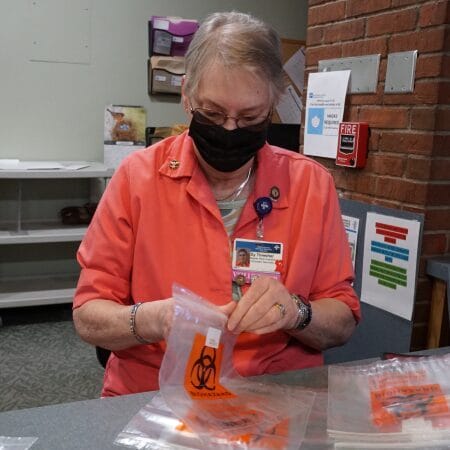
Dyanna has volunteered in a plethora of capacities at NVRH. She played a vital role in ensuring the safety of staff through N95 mask fit testing. Trained during the height of the COVID-19 pandemic, she has administered fit tests to over 700 staff members, including new hires. This essential task has allowed clinical staff to focus on providing quality patient care while ensuring their own protection.
Dyanna also serves as a Reiki provider in the Cancer Center, offering calming sessions to patients undergoing chemotherapy. She spearheaded the establishment of the hospital’s Reiki program in 2013. As the lead Reiki provider and trainer, Dy has administered over 11,991 Reiki sessions to patients, staff and family members. Her dedication has helped integrate Reiki into various hospital departments, including the Medical Surgical floor, Day Surgery Unit and Emergency Department.
“It gives me so much joy being at the hospital and working with patients,” says Dy. “Before I started, I had no empathy at all. Now, every week, I’m asking myself where this empathy came from. It gives me such a good feeling to be working at the hospital. Being appreciated by a hospital is a very rewarding thing too. They treat us volunteers very, very well.”
Dy puts together COVID Test kits, a crucial responsibility during the COVID-19 pandemic.
Dyanna’s volunteerism extends beyond the hospital walls. She actively participates in the Veggie Van Go program, a partnership with the Vermont Food Bank, which delivers fresh food to community members through a drive-thru model. Dy was also instrumental in launching the Health Care Share program, distributing fresh food to local residents during its inaugural year.
During the pandemic, Dyanna joined the Medical Reserve Corps (MRC), a group of healthcare-experienced volunteers who were permitted to serve in hospital settings when other volunteers were not. Dy provided crucial support at NVRH by screening employees at the security door and assisting in rooming patients at a busy family practice. Her service through the MRC ensured that essential healthcare services continued smoothly during a challenging time.
Dyanna’s commitment to community health doesn’t stop there. She also serves as a volunteer for Red Cross Blood Drives hosted at NVRH, regularly assisting with donor registration – ensuring that blood drives run efficiently and that donors are well-prepared for their contributions.
“The most rewarding part is just making the patients feel comfortable,” Dy reflects. “I go in and chit-chat with a lot of them. Some patients, I may be in there with them for half an hour. Before I started this work, I was never really a giving person. Ever since I’ve been at the hospital, I don’t get grumpy anymore!”
Throughout her extensive volunteer career, Dyanna has dedicated over 7,118 hours to NVRH, averaging 40 to 80 hours per month. Her contributions have provided a sense of calm and healing for patients and staff alike. Whether through Reiki sessions, fit testing, food distribution or blood drives, Dy’s presence is a testament to the vital role volunteers play in healthcare settings.
“A person who volunteers can do so much good, particularly at the hospital,” Dy says. “We’re so appreciated there, and it’s a fun job. I encourage my friends who retire to come volunteer there. It’s so rewarding, working with people who don’t feel good and helping them feel better. If you want to volunteer, just go for it! I never thought I’d be this content in my life. I’ve amazed myself with how much my empathy has grown. It’s all because of volunteering.”
Dedicated Volunteer Makes a Marked Difference in STEM Education
Meet Daily Point of Light Award honoree Braedyn Brosamer. Read his story, and nominate an outstanding volunteer or family as a Daily Point of Light.
Braedyn Brosamer’s dedication to Prairie STEM has not only earned him the prestigious President’s Volunteer Service Award at the gold level but has also made a significant impact on the community. With 195+ hours of volunteer service over the past 12 months, Braedyn’s contributions have been invaluable, especially during the eight weeks of summer camps – where his efforts have left a lasting impression on both students and teachers.
Throughout the summer camps, Braedyn’s ability to anticipate teachers’ needs and provide assistance to struggling students has crucial to the organization. His genuine passion for helping others is palpable, and his compassionate nature has a profound impact on those around him. A particularly poignant example of Braedyn’s empathy and dedication occurred when he formed a special bond with a young refugee student facing sensory challenges. The student was uncomfortable using a computer mouse during a 3D building activity, but Braedyn selflessly dedicated himself to assisting her throughout the entire week. His patience, kindness and willingness to go the extra mile made a profound difference in the student’s experience.
Beyond the summer camps, Braedyn’s commitment to Prairie STEM extends to other events and activities. He volunteered at the YMCA when there were no other volunteers available and assisted with the Prairie STEM exhibit at a local school. His adaptability and readiness to step in wherever needed exemplify his dedication to the organization’s mission.
From computer use and robotics to drones, coding to eSports activities, read on to find out why Braedyn passionately contributes to the success of Prairie STEM’s programs.
Tell us about your volunteer role.
I volunteer with Prairie STEM where I help the staff teach, prepare for classes, clean up after classes and gather resources.
Why is this issue so important to you?
Prairie STEM’s cause is important to me because the organization expands the community’s knowledge of science, technology, engineering, art and math. This helps kids learn about careers in STEAM. It also helps kids determine their interests.
What inspired you to get started with this initiative?
When I was first introduced to Prairie STEM, I was taking some of their summer classes. I enjoyed taking the classes and working on the hydroponics class. When I learned that I could help other kids learn about STEAM, I knew it was a good way for me to get involved in the community.
What are your long-term plans or goals for the organization?
I would like to see more outreach in the schools – especially for people who may not be able to afford the cost of camps – to have the opportunity to participate.
What’s been the most rewarding part of your work?
I like knowing that I am a help to the staff and students. There is always a lot of appreciation from everyone.
What have you learned through your experiences as a volunteer?
I’ve learned how to improve my communication skills. I also learn skills that help me in my volunteer capabilities – such as the use of 3D printers and new features in robotics.
Why is it important for others to get involved with causes they care about?
They can help their community and build relationships. Volunteering also allows individuals to learn new skills and develop new interests.
Any advice for people who want to start volunteering?
Try to learn as much as you can about your organization and ask about how you can help. If there is an organization you enjoy, you should offer to volunteer and inquire about what they need in a volunteer.
Meet Daily Point of Light Award honoree Aadya Chaudhary. Read her story, and nominate an outstanding volunteer or family as a Daily Point of Light.
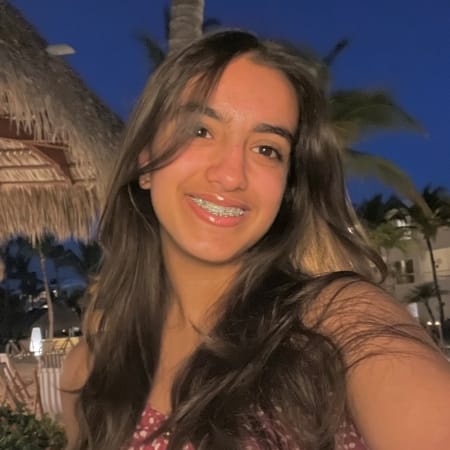
Aadya Chaudhary, 17, is a typical teenager. She’s a rising senior in high school, a swimmer, an avid reader and a film buff. Outside of her academic work and extracurriculars, she’s been training in classic Indian dance for the last decade, an activity that connects her with her cultural heritage. But her initiative is anything but ordinary.
Aadya’s interest in entrepreneurship and tech, particularly AI and coding, led her to take a computer science class as a freshman that set the course of her high school career. Of the 30 students in her class, three were girls. It was a fact that didn’t go unnoticed. Wanting to change the experience for future women, she and two co-founders created uEmpower, an organization that connects young girls with resources and mentoring to encourage leadership.
They empower 300+ members across the globe by inviting female leaders in various fields to inspire members through speaking opportunities and events. Their initiatives have led to partnerships with organizations like Miss Teen USA and have reached over 40,000 people through social media campaigns, virtual events, volunteer efforts and programs.
Additionally, Aadya serves as the lead student director for Math Fact Mania and the executive director of Butterfly Mentoring.
Aadya Chaudhary, co-founder of uEmpower and lead student director of Math Mania, advocates for girls’ empowerment.
What inspires you to volunteer?
To me, volunteering is taking the resources that I’ve had the privilege of having access to and giving them to those who haven’t. With my work, we’re giving everyone an equal playing field and showing them that they, too, can accomplish great things
What inspired you to get started with this initiative?
Being one of three girls in my computer science class and experiencing our work not being recognized or respected by the guys in our class led me to believe that if I face these challenges privileged to be at an incredible high school, then there are some girls who are facing them on a larger scale. My co-founders had similar experiences in their physics and robotics classes, so the three of us decided to create uEmpower.
Tell us about your volunteer role with uEmpower.
I’m a co-founder and head of the Marketing and PR Outreach Department. I handle internal and external communication—emails, PR, outreach for partnerships and collaborations, soliciting woman who we want to speak with. I also make social media posts. Recently, we introduced our ambassador team, so I worked on the introductions and relevant videos. A lot of the time it’s just recognizing activities our chapters are working on in their own community. I lead our 30-person ambassador team, and I work with Miss Team USA and Miss Remaja Tawa on our ambassador partnerships to get content and explore new ideas.
What are your long-term plans or goals for uEmpower?
We’re working on a project called Pad Donation Drives, because we want to bring hygienic—and potentially reusable—products to those without access. We’re also creating a podcast that will help highlight our mission and help members better understand themselves and the society around them.
Tell me about your other volunteer work.
Math Fact Mania’s goal is to encourage mathematical literacy in elementary school students. We hand out timed math worksheets to create a bit of competition with prizes. The point is to build enthusiasm for the subject in a fun way. We want people to like math. It’s not something to fear. It’s something to master.
As the lead student director, I handle the 44-person volunteer team, the worksheet grading process and prize organization. Currently, we’re helping around 700 students, and I’m working on expanding the program to two more local schools in the next school year to double that.
Butterfly Mentoring helps kids start and grow their passion projects around the world. A lot of them have initiatives they want to implement but don’t have the right guidance or knowledge. As the executive director, I provide marketing help and growth strategies to different organizations to help them understand how they can grow and organize.
What have you learned through your experiences as a volunteer?
The main thing is to not be afraid to go for what I want and believe in. Two or three years back, I received a lot of negative feedback about my ideas—it wouldn’t really work, create impact or reach anyone. It was demotivating, but I went for it anyway. If you believe in the work that you’re doing, it will go somewhere. Hard work always pays off, and that motivation will carry your work.
I’ve also learned to adapt to how I work with people, because everyone has different styles of working and different expectations from their team. Developing that mindset has helped me assess a situation first and understand the people I’m working with before moving forward.
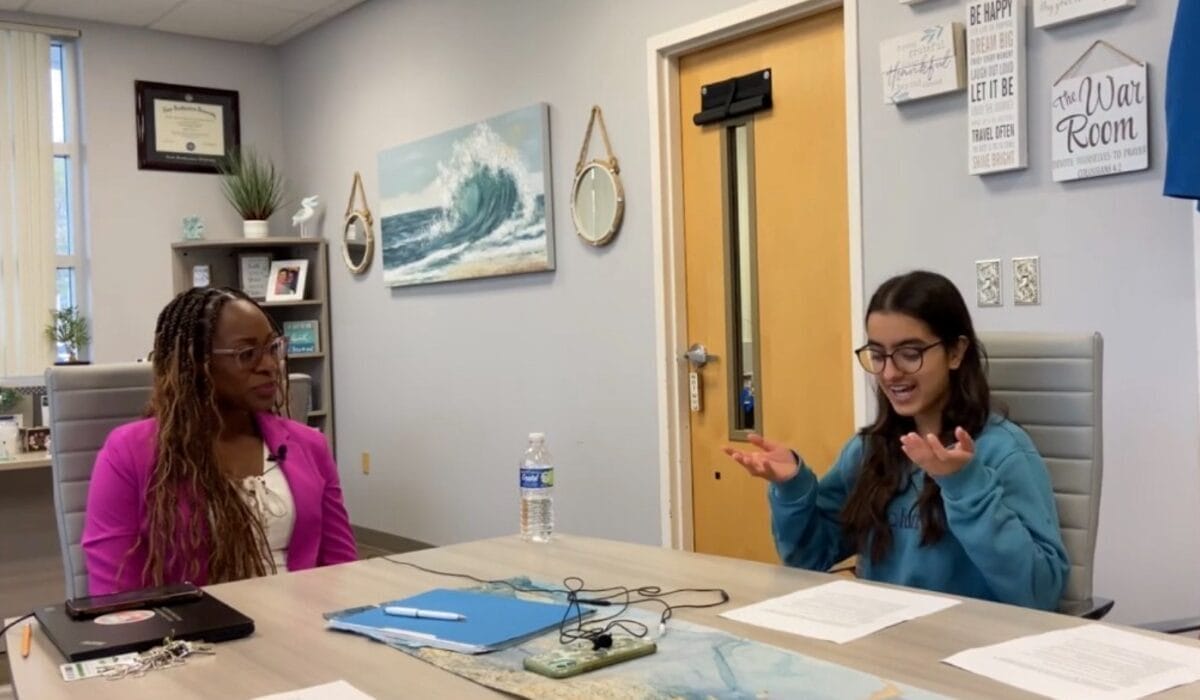
Aadya (right) speaks with Dr. Kassandra Fried about women’s empowerment during a Connect Event Episode by uEmpower.
What do you see as the role of teachers and employers in empowering girls and women?
Empowerment starts from a young age. The mindset kids develop will be carried throughout their life, and teachers play a big role. The environment they create in their classroom and the equivalence that they give to everybody in the room is incredibly important.
My computer science teacher supported all three girls. She would put us in positions where we would lead the team or oversee a project. It allowed me to see that I can be a leader, too. Teachers can show everyone in their classroom that they’re on an equal playing field and can accomplish just as much as the next person. And the same can be said of employers. They can show women and young girls that they’re part of the team and the impact.
What do you want people to learn from your story?
Don’t let societal norms or stereotypes that govern our world put you in a position you don’t want to be in. If something goes against norms, don’t worry about it. It’s our job to break the norms and expand our world. That’s how we learn and grow. Be CEO of that company, become a doctor or a software engineer and feel empowered to do so, even if you’re the only woman in the room.
When Claire Laveglia was a teenager, she volunteered as a candy striper for a local hospital as a way to earn hours for her Service Club. Two years of helping people navigate the hospital and being a friendly face amidst others’ challenging times cemented a love for community involvement that she’d carry throughout her life.
After retiring from a 20-year career in special education teaching children on the autism spectrum and training parents, staff and other caregivers, Claire set out to dedicate her newfound free time to volunteering. She found a nearby Jewish Community Center (JCC)—and later, Jewish Family Services(JFC)—and has been focused on Older Adult Services for the last five years. As a reliable and friendly visitor, Claire’s visits are bright spots for those she is paired with to socialize, deliver groceries to and drive to appointments each week.
What inspired you to get started with this initiative?
I retired young. I still had plenty of energy and interest in contributing to society. At the time we were living in southern New Jersey, and the JCC there had lots of volunteering opportunities, so I got involved. Subsequently, we moved to Delaware, and because I’d had such a good experience, I connected with JFS here.
Tell us about your volunteer role with Jewish Family Services.
I got started with the Memory Cafe, where caregivers and people suffering with memory problems would meet once a week to discuss a topic of the day. And after we started talking, you couldn’t tell the difference between the people with memory problems and the people without. People could recall what they’d done 25 years ago as clearly as if it had happened yesterday even though they couldn’t remember what they’d done five minutes ago.
That was a wonderful experience, but it got shut down during the pandemic. Subsequently, JFS started a program to bring meals to seniors who were shut in. One of the homes that I went to belongs to a woman that I still shop for, despite the program being eliminated when Covid-19 got under control. She was there with her husband, who was quite ill, and couldn’t leave the house for fear of bringing Covid back to him. So, I went grocery shopping for them every week. He has since died, and we have maintained a relationship. Now, I go into her house and visit when I bring her groceries.
Another woman I connected with is a retired family therapist in assisted living. She still has all her wits and still does research, but her body is failing. I visit her once a week and take her out if she needs to go somewhere. We’ve become very good friends. I also drive other clients to appointments, the grocery store and so on.
Additionally, I’m involved with Nemours Children’s Hospital in Wilmington. I volunteer there once a week. Most of the kids are very sick and enjoy being distracted. I’ll read to them or hold the babies. I’ll bring things that they request. They have a very big donation network, so they usually have a big stash of toys and other things.
Nemours also has an estate adjacent to the hospital. I started helping in the gardens two years ago. I really enjoy that, because I’m a gardener.
What’s been the most rewarding part of your work?
It’s getting to know amazing people. I know two Holocaust survivors who have written books through my volunteering. I’ve met people who have lived through amazing experiences and are positive and upbeat, and people who are chronically ill who maintain a sense of humor, keep themselves informed, read the newspaper and continue learning.
What have you learned through your experiences as a volunteer?
I grew up with a perspective that you get older, and you’re put out to pasture. But so many people I work with are knowledgeable and have had fabulous careers and are continuing their education, whether or not they’re homebound.
You’re never too old to learn. University of Delaware Osher campus offers classes for people 50+. All the professors are volunteers, so you have a lot of retired people teaching. And the topics are deep–the beginnings of the CIA, Russian history, the nuclear movement. People come using walkers and canes and with assistants who would stay with them during the class every week.
It really opened my eyes. There’s a whole lot more to getting older. The word retirement doesn’t sound right to me. It’s like you’re leaving your life, but you’re just moving to the next phase.
Why is it important for others to get involved with causes they care about?
People need to understand that their presence matters. We’re human beings, and we need each other. Loneliness is a major cause of health problems. We need to be able to help our fellow people, not because we’re getting a paycheck at the end but because that’s what we need to do. That’s what gives our lives meaning.
Another issue, particularly in the US, is not being able to rely on your family. My father was French, and we have another home in Europe. People there can rely on their family to take care of them if they’re ill or aging. That doesn’t seem as common in the US, because we’re so spread out. That’s why volunteers are important, because if you don’t have family to help you, you have to depend on somebody else.
What do you want people to learn from your story?
People always say they get more out of volunteering than the people who they help. I feel that way, too. It’s not just something for people who are finished with their career or who don’t have one. Everybody should and could volunteer and be a better person for it. You just need to get connected with an organization. You get to meet great people, too, not only the clients that you serve but other volunteers.
A Tireless Advocate for Military Families in North Carolina and Beyond
Meet Daily Point of Light Award honoree Stephanie Roberson. Read her story, and nominate an outstanding volunteer or family as a Daily Point of Light.
Over the past three years, Stephanie Roberson has volunteered for more than 3,000 hours to Operation Homefront (OH), an organization with a mission to build strong, stable and secure military families. As a team captain and volunteer administrator, Stephanie ensures that these military families receive the support and resources they need. Her roles involve maintaining high-value, consistent and timely communications with both military families and other volunteers.
In 2023 alone, Stephanie managed the administrative duties for eight official programs and six partnership programs. Her responsibilities included logistics, identifying items to order, shipping supplies and scheduling volunteers. Stephanie’s meticulous planning and coordination also helped ensure the flawless execution of 14 events, benefiting countless military families.
When OH experienced staff shortages in Nashville, Stephanie stepped up without hesitation. Her efforts culminated in the successful delivery of more than 2,800 toys to military families, as well as the management of three table setups at various events. Impressively, Stephanie’s service extends across seven states: North Carolina, South Carolina, Tennessee, Kentucky, Virginia, West Virginia, Maryland and the District of Columbia.
On average, Stephanie dedicates 15 to 20 hours a week to volunteer work, totaling over 3,000 hours in the past three years. Her tireless commitment and exceptional leadership have made a significant impact on Operation Homefront and the military families they serve. Read on to find out more about Stephanie’s passion for veterans and what inspires her to volunteer.
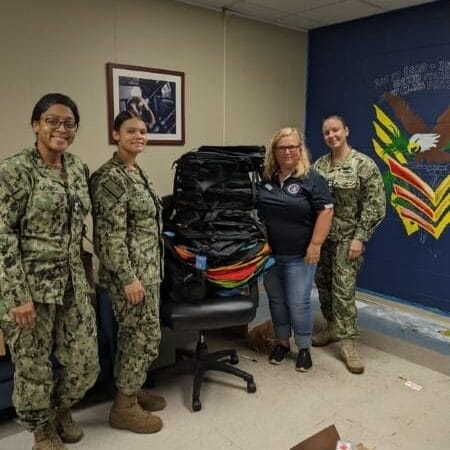
Stephanie helped pack and deliver 150 school supplied packed backpacks to Navy Reserve Center in Charlotte, NC.
Tell us about your volunteer roles.
I wear many different hats with Operation Homefront. I’m a volunteer administrator, team captain and Dollar Tree volunteer. As a team captain, I host events for military families, including a Back-to-School Brigade in August and Holiday Meals for Military in November. Event planning is a big part of that role!
Volunteer administrator is a lot of administrative work, including creating events in the system, helping register a lot of volunteers for our partnership with Dollar Tree and more. I have over 1,000 volunteers I work with. And I myself am also a Dollar Tree volunteer. I collect the items that patrons donate and distribute those to military installations.
Why is this issue so important to you?
Back in 1991, I was a freshman in high school and Iraq invaded Kuwait, and our English teacher had us writing letters to our servicemembers. I had Master Sergeant Stephen McGee. I’ll never forget him – I have every letter we ever exchanged. He was in the Marine Corps, and he wrote me so many times. One letter that comes to mind was one where he was in a foxhole writing me, and he said he knew that he was going to lose men, but also knew that the U.S. was going to come out on top.
That stuck with me for my whole life. Military members know when they sign up that their life is on the line. I went from donating packs of Kool Aid to giving 1,000 a year in volunteer work to military members and their families.
What inspired you to get started with these initiatives?
There were brief moments where I had the desire to volunteer but didn’t know how or where. As time went on and we went into the Afghan War and Iraqi War, there were so many organizations created. I started donating monetarily to some organizations to help military. Then in 2015, I started volunteering with the USO at the airport in Charlotte. I did that for about six years. I met a friend there who also volunteered with Operation Homefront, and I jumped right in with that organization.
What’s been the most rewarding part of your work?
The hugs. The tears. The thank you’s. Just knowing that you’ve truly impacted an individual’s life is so rewarding. At the Holiday Meals for Military events, the service members and their families come to those events and they’re so grateful. We give them a gift card for food, and we provide non-perishables. We’ve had attendees who have shared that they would not have a Thanksgiving or Christmas without those events. One comment last year stuck with me. She said, “Thank you for the nourishment for my family.”
What have you learned through your experiences as a volunteer?
I think the biggest thing I’ve learned is that it could be the smallest monetary donation, the most minimal volunteer time, and it all makes a difference. It could be $1.25 for a composition book from Dollar Tree. That’s one less thing a family has to worry about for school. When you purchase $1.25 toy, for some of these kids, that’s the only toy they get.
Why is it important for others to get involved with causes they care about?
It makes a difference. You change someone’s life.
Any advice for people who want to start volunteering?
Any amount of time matters, any amount of time. You learn so much as a volunteer. You learn how to speak to people, how people want to be treated. You learn so much! It’s not just about what you can do for others – it’s about what you get out of it as well.
What do you want people to learn from your story?
The biggest thing is that you make a difference. You make a difference, no matter how little or much you do. For me, it’s the service members. They’re away from their families. They’re traveling or moving every two years. They don’t have a stable life. Divorce is at its highest among military. It is a tough life to lead, and they need our support.
Retired Schoolteacher Helms Legacy Community Garden
Meet Daily Point of Light Award honoree Melvina Jones. Read her story, and nominate an outstanding volunteer or family as a Daily Point of Light.
Potwin, Kansas is a town of 421 as of the last census. It’s a place where your former teacher might one day be the mayor, and you’re likely to know everyone at the city council meetings. Ken Whittington, a Gard’N Wise dealer and gardening expert, was a face familiar to many in the community as the man who got the Plant-a-Row for the Hungry Garden started in 2000.
“Ken was one of the most delightful people with a great sense of humor. He’d been a schoolteacher before getting into the gardening business,” recalls Rick McNary, former minister at one of the two churches in town and writer of The Potwin Ledger newsletter. “[He] galvanized the people. He got the city to donate some land under the shadows of our water tower that was built in 1917 that we’re quite proud of. And he learned a long time ago that if he cast a vision, the people and the resources would come.”
With the enthusiastic blessing of the mayor, the project was initiated as part of the Potwin PRIDE program (now known as Kansas Community Empowerment at the state level). It would be used as a way to teach kids how to garden and create an opportunity for adults and kids to do something positive together. And yes, it would feed people who were food insecure.
When the city lost its friendly garden enthusiast in 2006, a new volunteer and longtime resident stepped up. Melvina Jones is a retired P.E. and special education teacher who has lived in Potwin for the last 50 years.
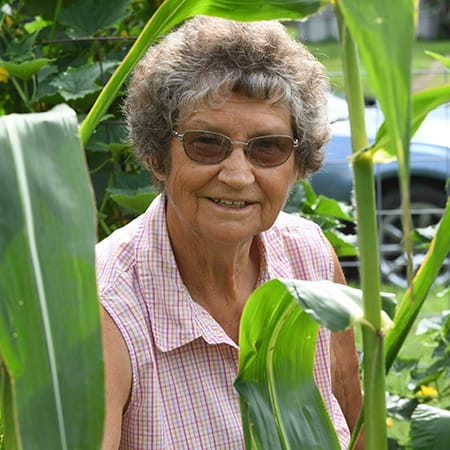
Melvina Jones, coordinator of the Ken Whittingham Memorial Community Garden, works amongst the cucumber trellises.
“Growing up, my family had a garden, and I was in 4H. Gardening was one of my projects. When my son was in 4H, that was his project, too. I was a horticulture project leader with our 4H club at the time and was even the superintendent over at the fair for a few years,” she says of her gardening experience.
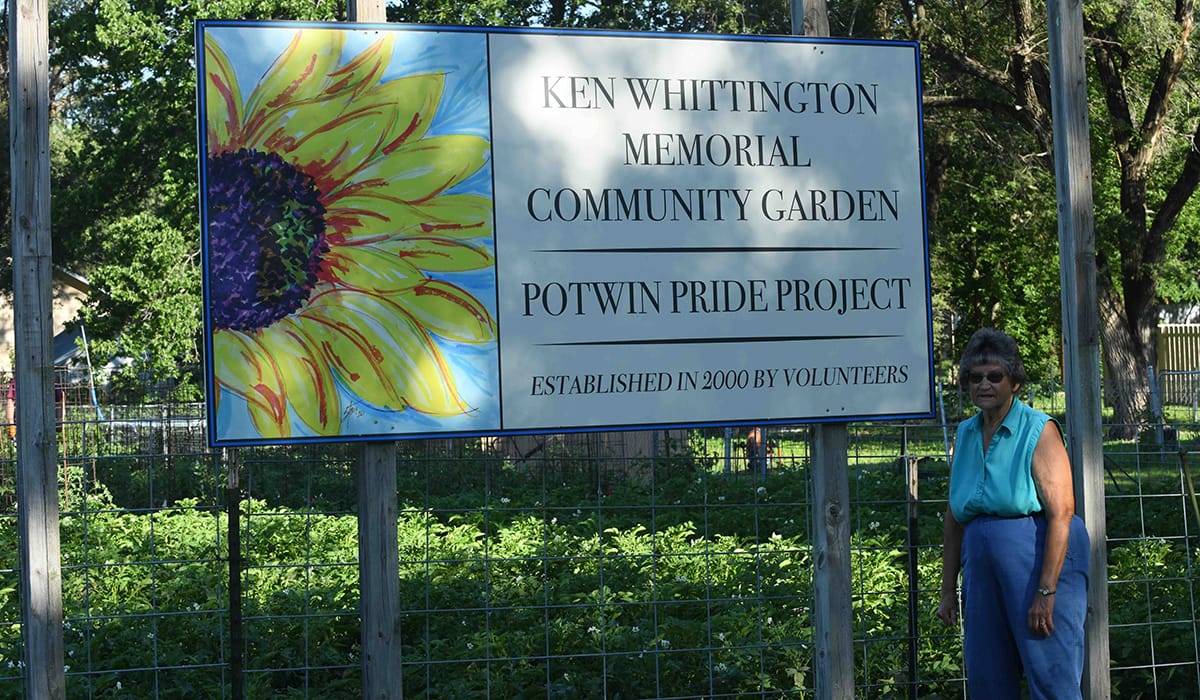
In addition to her own garden which she funnels into her healthy cooking hobby, she coordinates volunteers for the ongoing maintenance of the community garden, now called the Ken Whittington Memorial Garden.
“I’m basically the one who keeps it going,” Melvina states. “We’ll have a work day, and I’ll call people, and they’ll come and help. We had one a couple weeks ago when we put the cages on the tomatoes.”
Melvina started helping with the PRIDE Program when her son was young and she was working part-time as a substitute teacher. She saw an opportunity to help the community in her extra time and took it. Today, she leads the whole thing.
“She is indefatigable. What she’s done for this community is just astonishing,” Rick stresses. “Had she not taken over after [Ken] passed, [the garden] simply would not exist.”
Besides the garden, the Potwin PRIDE program puts on events like the recent city-wide garage sale that boasted 14 sales in one weekend.
“That promotes people to come into our town,” Melvina explains. “And we do a National Night Out in October for a block party type of thing. We try to do some cleanup during the year. And we help with the watermelon festival.”
The most work is required by the community garden, described by Melvina as being as large as “half of a block one way and 50-some feet the other way.” Last year, 16 adults and 15 youth harvested 3,844 lbs of vegetables. It has produced over 100,000 lbs since its inception.
After the produce is picked, it is offered to the community via a church garage one day a week for a donation of their choice. The rest is sent to a local food pantry and a nearby Salvation Army or, sometimes, a food pantry in the neighboring town.
“It’s 15 miles to a local grocery store, so we’re a classified food desert. There’s just no access, and yet, with this garden, there’s an abundance of access,” Rick, who is also a garden volunteer, says. “I’ve spent the last 20 years working with food insecurity and know that of all the types of food that food banks desire the most and have the hardest access to, it’s fresh fruits and vegetables.”
Melvina takes pride in the garden she and her volunteers maintain. Last year, 31 volunteers picked 3,844 lbs of produce.
Melvina is also a volunteer youth leader for her church and serves on the board of Wheat State Manor nursing home in Whitewater where she visits with residents, plays bingo and throws birthday parties, though her biggest commitment remains to the garden.
For those hoping to start their own, Melvina suggests seeking the support of the local city council and focusing on low-maintenance vegetables with high yields.
“That first year we did it, I think we had cabbage and beans and some other things, but they are more work intensive,” she expounds. “Bugs get on the cabbage and beans you have to pick. We try to keep the ones that require fewer work days at the garden. And ones that create more produce, like potatoes and sweet potatoes.”
Both Melvina and Rick highlight the town-wide pride in the garden and the work being done there. Last year, residents donated $614 dollars to help with expenses, and the city donates water for irrigation. It’s truly a community-wide effort led by a woman who has dedicated her life to helping others.
“If every community had a dozen of her, they could conquer the world,” says Rick.
Texas Therapist Transforms Mental Health and Well-Being for Thousands in Cameroon
Meet Daily Point of Light Award honoree Therese Shalo-Fuh. Read her story and nominate an outstanding volunteer or family as a Daily Point of Light.
As a young girl, Therese Shalo-Fuh accompanied her mother to hospitals and villages in Cameroon, assisting those in impoverished conditions. Now a clinical therapist in Round Rock, Texas, Therese’s desire to give back to her community led her to found Be The Exception Counseling Foundation (BTECF), officially registered as an NGO in 2021.
Under Therese’s leadership, BTECF offers comprehensive counseling services, including addiction, anger management, mental health, and PTSD support at its treatment center in Limbe, Cameroon. With the help of her 10 staff members, Therese develops treatment plans and counsels individuals and families.
Therese’s commitment extends beyond therapy. She connects clients with essential resources, such as job training, and provides clothing, hygiene and medical supplies, toys, glasses, books, and more to orphanages and internally displaced persons (IDPs) affected by conflict, violence, persecution, or disasters.
Through BTECF, Therese has transformed not just the mental health of thousands, but the trajectory of their lives by providing the resources they need for a brighter future.
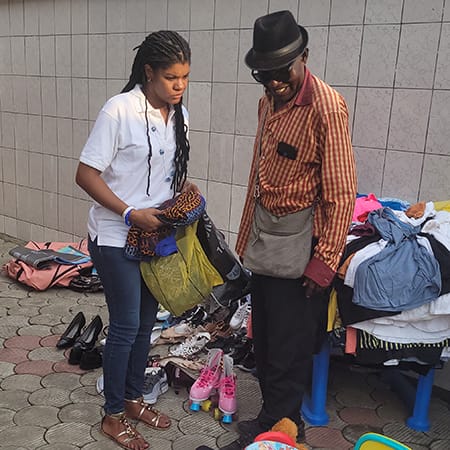
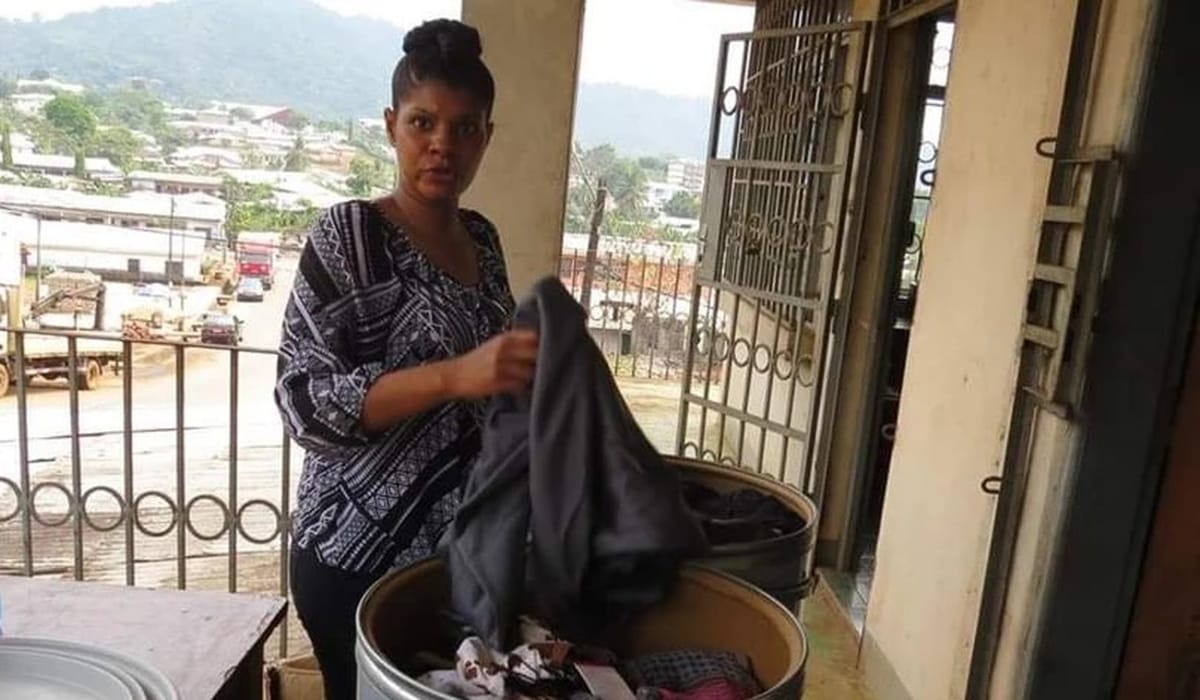
Therese provides clothing, toys, medical supplies food and educational materials for internally displaced people in Limbe, Cameroon./ Courtesy Therese Shalo-Fuh
What inspired you to start Be the Exception Counseling Foundation?
What inspired me to start it was my mother. She used to take me with her to help serve the less privileged and go to hospitals in Cameroon to take care of the poor. So, when I became a counselor in the United States, I decided I had to give back to my community. Since 2016, I provided clothes, shoes, medications, glasses, educational material, hygiene products to orphanages. And then I registered the foundation as an NGO in both the United States and Cameroon in 2021.
What is the mission of Be the Exception Counseling Foundation?
What we do is take care of internally displaced people in Cameroon. We provide clothing for them, educational products, medical supplies and free medical care. For example, we had a lady last year who was already six or seven months pregnant when we found her. She wasn’t going to the hospital for prenatal care. So, we provided her with prenatal care, and we also paid for her delivery. Now we are providing her with educational training so that she can work in a hotel and working with a donor in the United States that has been sponsoring her to take care of her housing as she transitions. We’ve also had some clients who were HIV positive or had AIDS. They stayed at our treatment center for a few months until they got well.
We also provide counseling for substance use disorder and mental health such as depression, grief and anger management. Inpatient and outpatient care depending on the criteria they meet. We feed them breakfast, lunch and dinner, give them medications, provide group counseling and individual counseling. We also do family counseling sessions.
How have people shown their gratitude to you?
The only way I tell them to show gratitude to me is by being able to fish for themselves. So when I go to Cameroon, I always visit them or they call me and we talk and many of them are doing very well for themselves. They have little businesses or some of them have gone back to school. So that for me, it’s my blessing. I don’t need any money. I don’t need anything from them. I just want them to succeed and take care of their families.
What’s been the most rewarding part of your work?
Seeing the smiles on the faces of people who finally find hope and believe they can overcome substance abuse, mental health crises, trauma or resolve anger issues in their marriage.
Therese sorts through donations shipped from the US to Cameroon./ Courtesy Therese Shalo-Fuh
What’s one thing you’d like people to know about mental health?
Mental health affects everyone at some point, whether mild, moderate, or severe. It’s important to understand where someone is coming from, sit with them, and listen without judgment or preaching. This approach is far more valuable than stereotyping and spreading false rumors.
Tell us about future partnerships, programs or events that you are excited about.
We have a free health fair coming up in September. It’s going to be huge. Free medical, mental health and substance use health fair. We’ll be doing direct treatment and immediate counseling. Partnership wise, we have someone in America that we’re working with who just opened a physiology lab in Cameroon so we may be able to have some of our clients get CTs and MRIs for free.
Why is it important for others to get involved with causes they care about?
We’re here to love and be loved. Human beings are not islands. Giving, especially without expecting anything in return, brings a sense of abundance, meaning, identity, and purpose. It allows you to impart change and make an impact, helping you become a better person for yourself and the community at large.
Meet Daily Point of Light Award honoree Samantha Martinez. Read her story, and nominate an outstanding volunteer or family as a Daily Point of Light.
Most people are aware of what service dogs can do, but few see the training behind each furry face and the team of dedicated volunteers whose hard work makes it happen. Samantha Martinez, or “Sam”, is one such volunteer. Sam was Head of Programs for a national nonprofit for 15 years before landing with a research and design company that builds products for kids in the hospital and to impact patient experience across the country. Put simply, she and her colleagues promote a calming environment during stressful medical experiences.
Service dogs are a part of nearly every aspect of Sam’s life from working with hospitals to the four-legged family member matched to her wife for her own work. Sam decided to get involved with the organization that brought Dexter into their lives, and today, she is the president and a puppy raiser with her local chapter of Canine Companions, a group that trains and provides service dogs to people with disabilities or professionals in need of a facility dog at no cost.
When she’s not working, Sam maintains a full house of three cats and two dogs—Dexter and a ten-year-old rescue with strong personal space boundaries—along with the puppy they’re raising and the occasional friends-in-training who need a babysitter.
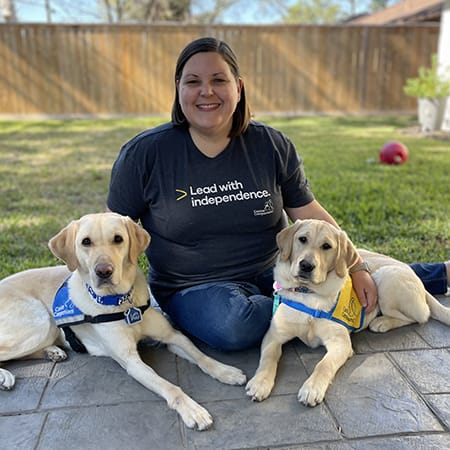
Samantha Martinez, president of the Gulf Coast Volunteer Chapter for Canine Companions, poses with a photo with her first Future Service Dog, Jada, and Facility Dog Dexter, a permanent household resident. She leads groups of puppy raisers, graduate teams and volunteers in preparing dogs for future service.
What inspired you to get started with this initiative?
My wife Christy, a child life specialist, built the facility dog program at the Children’s Memorial Hermann hospital here in Houston. She was matched with Dexter in 2019. She uses him for physical and occupational therapy. It’s more fun to get up after surgery when Dexter’s at your door wanting to go on a walk. Occupational therapy patients can brush him and play fetch, which is great for motor skills.
After we got Dexter, we learned about his puppy raisers and the organization as a whole, and wanted to give back. I started volunteering with the chapter and became the president shortly after.
Tell us about your volunteer role with Canine Companions.
As the president of the chapter, one of my main tasks is supporting our various communities. Houston is a large area, and our graduate team families and people with dogs in training used to not know one another. When I came in as a president, I wanted to build those relationships so it didn’t feel like they were on an island. Grads are grateful for these puppy raisers who have put so much into these dogs who are changing their lives. And puppy raisers are doing this because they’re amazing, and they don’t get to see their hard work come to life.
I also do a lot of recruiting, awareness building, fundraising and community events. It’s always busy, but my favorite things to do are playdates. We invite both puppies and graduate teams over, and the dogs take their vests off and run around with one another while the humans connect. Their playful sides come out when they spend time with their friends.
We became involved in the puppy raising program in 2021. Our experience is unique in the sense that we co-raise with a federal women’s correctional facility in Bryan. We’re called starters and finishers. Puppies are with us from eight to 12 weeks old, raised by an inmate until they are 10 to 12 months old, then stay with us until they matriculate at about 18 months.
Tell us more the program with people who are incarcerated.
We drop dogs off after they learn the basics—like potty and kennel training–with their inmate handler. As the dogs’ primary handler, they have kennels in their space, and there are rooms for training and grooming. They’ve got a yard for the dogs to run and play. They do classes and work together to teach the dogs the 40+ commands that they will need to graduate.
Inmates apply and are selected to be part of the program. They go through rigorous training with our puppy program manager and have check-ins. One of our volunteers does training classes twice a month. I do that at the Beaumont Men’s prison. Part of my work as the chapter president is helping these inmates be successful and guiding them along the way.
For inmates, it’s an honor and a privilege incentivizing good behavior, and it helps build life skills that they may not have learned, like taking care of someone. Meanwhile, pups show them unconditional love. The recidivism rate for inmates in prison programs is practically zero. It’s helping keep inmates out of prison, and it’s helping puppies graduate as service dogs. Graduation rate for their dogs is around 85%. Most everywhere else, it’s only about 50%.
As finishers, we bring them back out for socialization that becomes more challenging inside the prison. They blossom as they discover all the things the outside world has to offer.
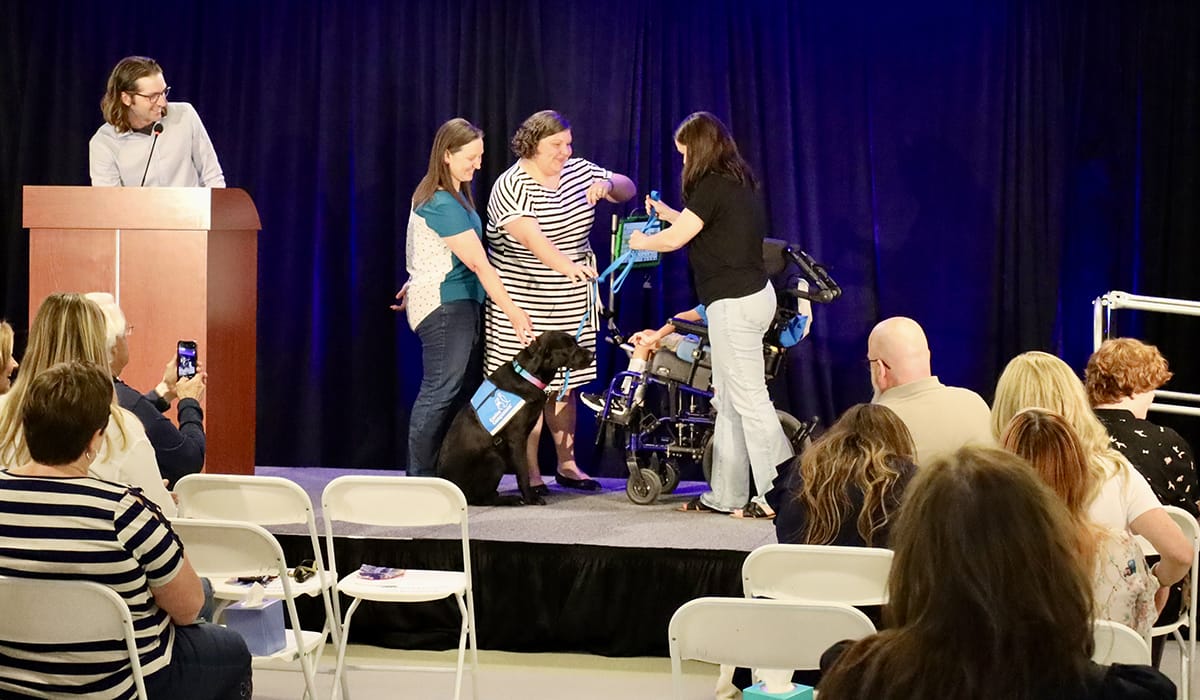
At graduation, (Middle two, left to right) Christy and Samantha pass Service Dog Kinsley’s leash to her graduate family.
Are there any upcoming events that you’re excited about?
We’re about to have our first Dogfest on October 5. We’ve been fundraising, recruiting and getting that off the ground. I hope to grow it each year as a staple event for volunteers to get involved with and for people to learn about us.
What’s been the most rewarding part of your work?
It’s seeing that eight-week-old puppy who didn’t sleep through the night and didn’t know where to go to the bathroom turn into this confident 18-month-old dog that I’m walking across the stage as commencement music plays. They know all their skills, and they’ve come so far. When your dog graduates as a service dog, you get to hand the leash to the new family. It’s a beautiful day and bittersweet to say goodbye, but I know that they’re built for bigger and better things.
Why is it important for others to get involved with causes they care about?
I look at it as a privilege. We, as people, are what will make change in this world. Find whatever you’re passionate about and get involved, because it will fill your cup and give you drive in ways you didn’t know existed. I had no idea puppy raising would bring so much joy to my life. I’ve made incredible lifelong friends from it, and all of these dogs have a piece of my heart. It’s made me a better human.
Washington State Teen Brings Art to Memory Care Residents
Meet Daily Point of Light Award honoree Roselyn Halvorson Read her story, and nominate an outstanding volunteer or family as a Daily Point of Light.
Roselyn Halvorson has turned a passion for art into a valuable enrichment service for residents of memory care centers who are living with Alzheimer’s, dementia and depression. Roselyn will be a high school freshman this coming September. While volunteering has been a huge part of her life since she was 6 years old, she also enjoys ice skating and piano, plays in the middle school band and loves animals.
Roselyn’s work with memory care center residents helps them not only express themselves creatively and enjoy some quality time with a much younger generation of middle and high school students. For residents who don’t often have family visitors and experience loneliness and depression, painting classes are a way to brighten their days and give them a creative outlet. For Roselyn, on a personal level, it’s a way to honor her grandfather’s memory.
What inspires you to volunteer?
My grandfather passed away from Alzheimer’s when I was 6 years old. I know he’s looking down and watching out for me. My parents also inspire me to do good in the community. I started creating paintings when I was stuck at home during the pandemic. I ended up making over 1,400 paintings that I gave to senior home residents. This was very rewarding, but I wanted to do something more meaningful, something more engaging for the residents. Doing the classes face-to-face has a much bigger impact than simply giving them a painting. There’s a much deeper connection.
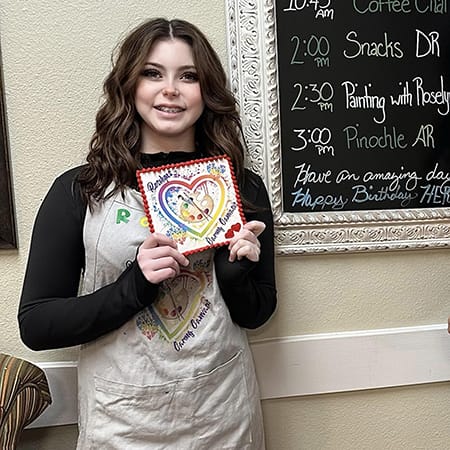
Roselyn Halvorson shows off one of her paintings and her project logo. / courtesy Josh Lusk Photography
Tell us about your volunteer roles with Roselyn’s Caring Canvases and the Alzheimer’s Association.
I teach art classes to residents of memory care and assisted living centers in Washington state. The painting classes really affect the residents in a positive way. They show amazing creativity and even those who say they’re not artistic will create beautiful works of art. I invite my friends to help me, which makes it even more fun. The residents get to interact with younger people and we get to see them as individuals, and hear their stories. We have a rotation of art classes at various nursing homes in Washington state including Brookdale Courtyard, Brookdale South, Hearthside Manor, Bonaventure, Patriot’s Landing (retired military), as well as a few others.
I bring all of the supplies they will need, and I make sketches as a prompt that they fill in with color. They take it from there. Some people will meticulously paint in the lines, while others’ art is more abstract. Everyone’s creativity really blossoms! I’ve seen some amazingly talented people.
I teach five or six classes every month during the school year and more often during the summer. The classes run for an hour or two. Sometimes, a resident will say they don’t want to participate because they’re not an artist but almost always, they really get into it once they start. It’s something fun to do even for those who don’t consider themselves artists.
If the residents choose to, and most do, they can donate their painting back to me and I sell them at arts and crafts shows. All of the proceeds are then donated to Harvest House, which creates weekend food bags for food insecure students who may not have regular meals outside of school. The paintings the residents create are sold and do good for others so the whole endeavor has multiple levels of benefit for the residents, the people who purchase the paintings, the students who receive food bags and of course the volunteers.
The residents like knowing their art is helping students who need food. Some residents really like how their paintings come out and they choose to keep them. Most donate their art. One of the nursing homes made copies of the paintings so we can sell originals and keep the copies, or sell copies and keep the originals. Two of our painters have since passed away, so it’s nice to have their paintings as a remembrance of him. One passed right after the class, which is sad but at least his last day was filled with joy and creativity. After the art class, I play the piano for the residents.
I am also very active as a volunteer with the Washington state chapter of the Alzheimer’s Association. I have been raising money and awareness about Alzheimer’s since I was 6 years old when I donated proceeds from my lemonade stand.
I have been hosting a benefit pageant for girls every year since 2017, called Miss Forget Me Not. This pageant raises money and gets more people involved with the Alzheimer’s Association. Our seventh annual pageant is coming up this year. I also do a lot of advocacy for the Alzheimer’s Association. We talk to legislators to help pass bills that support families and caregivers and find a cure for Alzheimer’s.
What’s been the most rewarding part of your work?
I love seeing how creative our residents are. They are so inspiring when they share their stories! And they’re so talented. One lady painted such a beautiful rose that people were shocked at how talented she was. The residents are so happy when we come. They don’t feel forgotten. For a while, they feel remembered and valued.
What have you learned through your experiences as a volunteer?
I’ve become more empathetic and I have learned to communicate with people who are far outside of my age group, especially older generations. It helps make me a well-rounded person. This school year I’ve done 200+ hours as a volunteer which makes people older than me realize that my generation, “Gen Z,” can do good in the world.
Don’t let age stop you if you’re very young or very old. If you have excuses not to do something, you won’t do it. But if you want to do it, you will find a way.
No matter how bad things are going for me, I know others are suffering so much more, especially from depression. I see this a lot in nursing homes. Caring for others may not be convenient but love is not about convenience; it’s about honoring someone and making them feel valued.
Tell us about future events that you are excited about.
Every fall, or “walk season,” I participate in the Alzheimer’s Association’s Walk to End Alzheimer’s all over Washington state. I’ve been doing this since I was 6. The recent Alzheimer’s walk even had a dog pageant that I helped create. I would love to continue doing these walks. We’re also thinking of doing an art fair that’s at the same place as a car show, so I can spend some time with my dad and make it a family thing.
Why is it important for others to get involved with causes they care about?
Volunteering can really change people and how they view the world. Seeing the impact you can make on people also benefits you. Volunteering helps keep your community together. Being part of a community is an amazing feeling.
Any advice for people who want to start volunteering?
Google ways to volunteer. Animal shelters, nursing homes and food banks are great places to start. I believe there should be more knowledge available as to how to help. My mom signed me up as a volunteer but with the internet, you can find organizations that need help, in just about any area of interest.
What do you want people to learn from your story?
Seniors have stories too. They are people who have lived vibrant lives. They are so creative, they are filled with stories, they love to share their lives and they deserve to be remembered.