Using Undebatable Skills to Empower Youth in Public Speaking
Meet Daily Point of Light Award honoree Emily Zhang. Read her story and nominate an outstanding volunteer or family as a Daily Point of Light.
Emily Zhang, now 17, was a quiet middle schooler whose voice was becoming lost amongst the outgoing when she discovered the power of debate after watching one of her older brothers at a camp. She was awestruck at the ability to capture attention and the power of persuasion. She tried it out, and eventually became the president of her high school Speech and Debate team, competing on both regional and international levels. Last year, she was named International Champion of Impromptu Speaking at a tournament in Vancouver and took 8th overall as part of the US National Team at the World Individual Debating and Public Speaking Championships in Australia.
With newly built eloquence and confidence, she decided to help others find similar skills by creating Youth Debate Academy (YDA), an organization offering free online and in-person programs for other first-generation middle school students, programs that have now reached over 700 people. She has personally offered over 400 hours of free instruction. Virtual programs have attracted students from all over the world, and the group launched the first in-person Summer Institute in Boston last August, to much success. Emily’s efforts have also secured the support of the community, including over $100,000 in donations and corporate grants in the past year to continue this life-changing work.
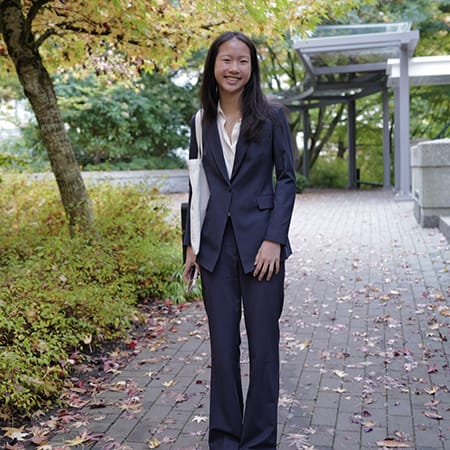
Emily Zhang, founder of Youth Debate Academy, offers free speech and debate programs to recently immigrated middle school students.
What inspires you to volunteer?
I’ve always been motivated by this idea of creating a world that I want to live in and am proud to be a part of. What inspired YDA was how much I’ve personally gained from participating in speech and debate. It’s made me a person who’s able to better express herself. A recent study showed that students who debate are 1.8 times more likely to graduate high school. Our goal isn’t necessarily creating the next world champion in debate, but inspiring a generation of students who are able to confidently express their thoughts and advocate for the people around them.
What got you interested in debate?
Growing up, I was a shy kid. I found it difficult to express myself. I was often spoken over by my classmates, and little by little, I just started talking less. In fourth or fifth grade, my older brother was at a debate camp, and on the last day, they let family members watch a showcase round. I was awestruck watching them voice their opinions and engaging with each other’s arguments in a meaningful way.
When I first joined Speech and Debate in the summer after sixth grade, people listened to me because they had to, but as I practiced, people started listening to me because they wanted to. The skills that I learned from speech and debate—critical thinking, efficient researching and effective communication—will follow me for a lifetime.
Tell us about your volunteer role with Youth Debate Academy.
I’m the founder and president. I organize our free online and in-person speech and debate programs for recently immigrated middle school students. We’re committed to providing every student with personalized instruction from our team of student instructors.
I also collaborate with executives from the Boston Debate League, Jack and Jill of America and local public schools to expand our reach and negotiate donations and grants. Lastly, I manage our team of student instructors who do the critical work of teaching 700+ students, managing our social media, communicating with families and much more.
What inspired you to get started with this initiative?
I started YDA in March of 2021, when I was in eighth grade. I was sitting at lunch with my mom and said, “Wouldn’t it be cool if…?” My mom agreed, and that weekend, I locked myself in my room and put together a schedule.
What are your long-term plans or goals for the organization?
The long-term vision for YDA is creating a generation of students who are inspiring the people around them to become more effective speakers and communicators themselves. Oftentimes, when a students graduate from our program, they’ll come back and become instructors. We’ve also had graduates interested in opening more branches of the in-person program, and that’s something that we’re really looking to expand in the future.
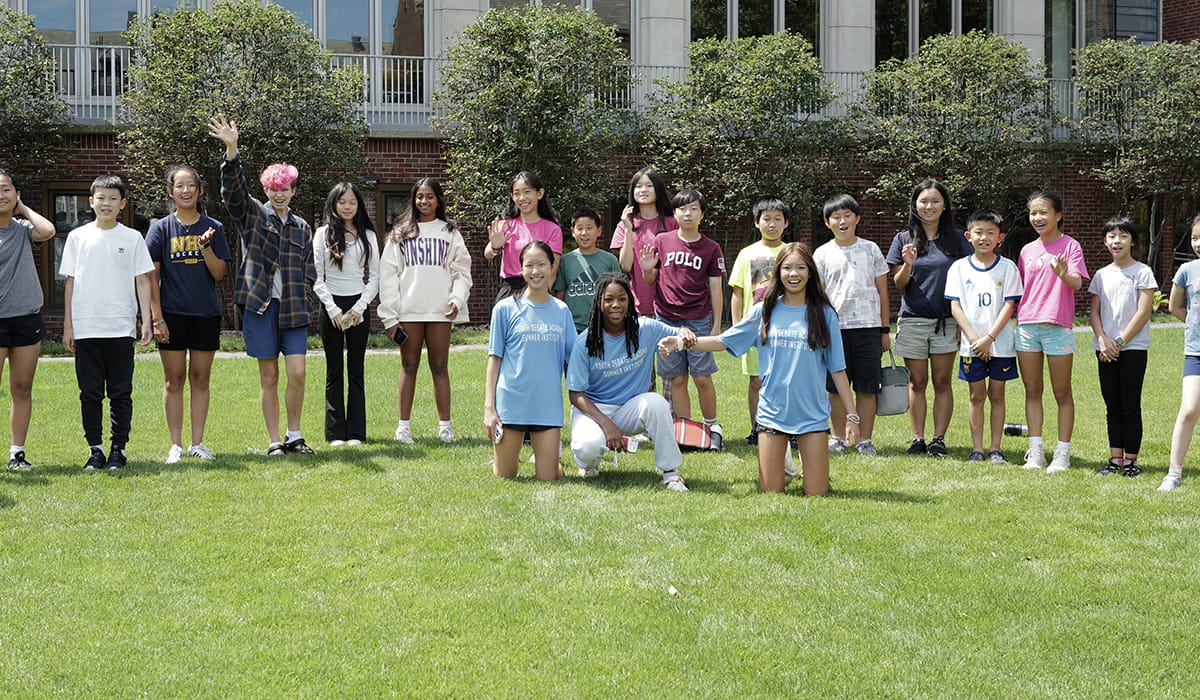
(Front left to right) Emily, Zora and Marissa join students at the Youth Debate Academy 2023 Summer Institute.
What’s been the most rewarding part of your work?
What’s really motivating is not seeing students become better at debate, but seeing them more willing and excited to use their voices. At our first summer program on Zoom, there was a girl who was shy, and her parents had voiced concerns about her reluctance to participate in classes and social settings. Now, she’s an active member of her school’s debate team. She’s joined the YDA team as a counselor and instructor, and we still stay in touch.
Growing up seeing ads on TV and watching celebrities be praised for their charitable work and donations, it seemed that volunteering was really one-sided. There was always a giver and receiver. But that’s not the case. Working with students with unique perspectives and experiences, I’ve learned so much and considered various topics in ways that I never have previously. We’re all learning and working hard to get better.
Tell us about upcoming partnerships, programs or events you’re excited about.
This fall, Youth Debate Academy is collaborating with the Pan American Ethics Olympiad to offer students free training for the Ethics Olympiad, a regional and international tournament founded on philosophical debates regarding real world ethical dilemmas. It’ll be an amazing opportunity for students to apply their public speaking and debating skills in a different setting, and to learn more about philosophical concepts.
Do you have any tips for new debaters?
Just do it. The very first time I gave an impromptu speech, I got up in front of a roomful of judges and competitors, and I said absolutely nothing. It can seem like speaking or debating is something that you’re inherently good or bad at, but just like anything else, it’s a skill to be developed. There has to be at least some part of that process that you might not be particularly good at. You practice and you get better.
What do you want people to learn from your story?
Go out in the world, identify something that you care about and do whatever you can to get it. I didn’t have everything figured out when I first started the organization, and there have been many lessons I’ve learned along the way. There are so many possibilities if you just go out and find—or create—them.
One Woman’s Lifelong Dedication to Nurturing Young Minds
Meet Daily Point of Light Award honoree Bernice Voelker. Read her story, and nominate an outstanding volunteer or family as a Daily Point of Light.
At over 90 years old, Bernice Voelker, affectionately known as Grandma Bernice, continues to make a profound impact on the lives of students at Charles City Lincoln Elementary School through the AmeriCorps Seniors Foster Grandparent Program. Her unwavering commitment for the past 22 years has not only helped shape the educational journey of over 500 students but has also earned her the esteemed title of 2022 Foster Grandparent of the Year.
Bernice herself has 14 grandchildren, 17 great grandchildren and two great-great grandchildren. “I just like helping children,” Bernice said. “I retired from work and didn’t have much to do. I had friends in the program and they got me into it.”
Every weekday from 8 AM to 12 PM, Grandma Bernice demonstrates the utmost kindness and guidance in the classroom. Her role extends beyond just assisting with academic tasks; she provides emotional support, encouragement and the nurturing care that only a grandmother can offer. Her daily activities include helping students enhance their reading and writing skills, catching up on other homework and preparing snacks, ensuring that each child receives the attention and support they need to succeed.
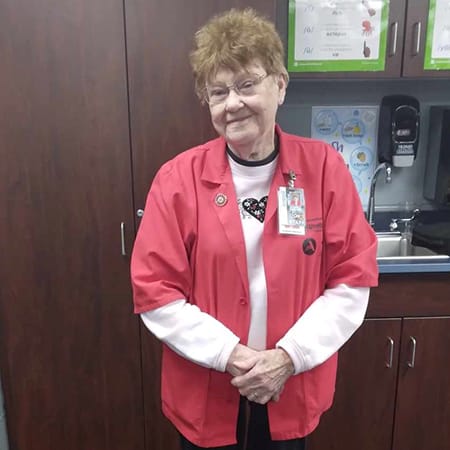
Grandma Bernice makes a profound impact on the lives of students through the AmeriCorps Seniors Foster Grandparent Program.
“The most rewarding parts are seeing how the kids learn and make progress,” Bernice shared. “I love working with the third graders especially. They’re easy to work with. I read with them. I help them with math and spelling.”
Over the years, Grandma Bernice has dedicated more than 9,000 hours to mentoring and supporting the students of Charles City. Her approach is gentle yet impactful, making her an integral part of the educational environment. Her presence in the classroom has not only boosted students’ academic abilities but has also given them the confidence to face both the good and bad days, knowing they have a steadfast supporter in their corner.
“I think it’s important for people to volunteer with kids – teaching them and also showing them how to get involved through volunteering,” Bernice reflected. “I think some of these kids don’t necessarily have support at home. They come and tell me things about their life and I can help support them.”
Bernice’s contributions extend beyond the classroom. She actively participates in parades and fundraising events to promote the Foster Grandparent Program and expand its reach across four counties. Her efforts ensure that the program continues to grow and impact more children in the community.
The recognition as Foster Grandparent of the Year in 2022 was a testament to her exceptional dedication and the deep impression she has left on the program and its participants. Teachers, students and community members alike treasure her, as she has changed the lives of hundreds of students, guiding them with a grandmother’s love and wisdom.
Bernice’s story is not just one of volunteerism; it’s a story of heart, commitment and the powerful impact of providing a nurturing figure for children during their formative years. As she continues to serve with no intention of slowing down, her legacy grows, woven into the lives of the countless children who have had the privilege of calling her Grandma.
“Just coming in in the morning and seeing the smiling faces giving me hugs, saying I’m glad you’re here,” Bernice said. “It’s very rewarding work.”
In Charles City and beyond, Bernice Voelker is more than just a volunteer; she is a pillar of the community, a cherished grandmother to all her students and an inspiring example of how compassion and dedication can truly make a difference. Her life’s work at Lincoln Elementary is a profound reminder of the impact one person can have on the lives of many.
Bernice encourages anyone, regardless of their age, to get involved in their communities. “You’re never too old to help people,” Bernice said. “I was in my 60’s when I started volunteering at the school.”
Eighty-Seven-Year Old Retiree Provides Assistance to New Yorkers in Need as a Public Benefits Counselor
Meet Daily Point of Light Award honoree Barbara Daye. Read her story, and nominate an outstanding volunteer or family as a Daily Point of Light.
After spending 12 years as a volunteer teaching GED and College preparation classes, 87-year-old retiree Barbara Daye’s love of learning led her to Legal Hand Jamaica, a community resource center where trained non-lawyer community volunteers provide assistance, legal information, resources and referrals to people who need them. In January 2024, Daye began volunteering as a public benefits counselor after taking a 42-hour RSVP Advocacy, Counseling and Entitlement Services (ACES) Project training. She learned about the 14 highly complex public benefit programs in New York and strengthened her computer skills needed to assist low-income New Yorkers with online applications.
Prior to Daye’s volunteering at Legal Hand, she was a tutor at 1199 Adult Learning Center in Brooklyn for more than 11 years and even tutored via Zoom during the COVID-19 pandemic. Her passion to help others has made a genuine impact in her Jamaica, New York, community and beyond. Now she’s on a mission to get others to see the goodness that volunteering can bring to their lives, too.
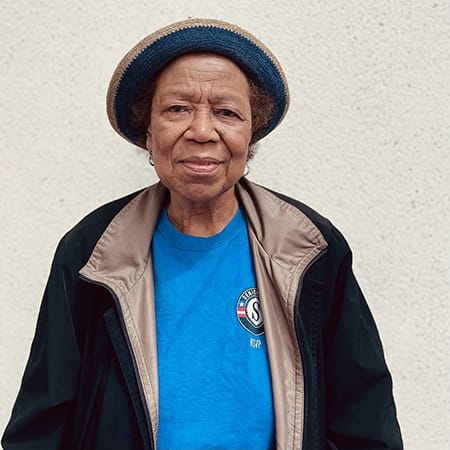
After being trained in the 14 complex public benefit programs in New York, Barbara Daye assists low-income New Yorkers with online applications and more with Legal Hand Jamaica.
What inspires you to volunteer?
Volunteering is something I’ve always been interested in and involved in. I’ve been retired now for more than 20 years, but I volunteered when I was working too. To me, it allowed me to help somebody else and it gave me a sense of accomplishment other than substance related to a paid job. It really has been a way of life for me.
Tell us about your volunteer role with Legal Hand Jamaica.
Originally I was doing tutoring for adults and helping them get their GED, go through college or advance in whatever work they were doing. After that agency closed the site, it was time for me to move on and that’s when I found the RSVP Advocacy, Counseling and Entitlement Services (ACES) Project training. I found that it was a program where I could be trained in public benefits, then I’d be placed as a site. That’s how I got connected to Legal Hand Jamaica this year.
Even though I was trained in public benefits, it’s not the only thing I do at Legal Hand Jamaica because we get a lot of other issues too. We help people get public benefits like cash assistance, SNAP, legal referrals and more. Like completing applications, dealing with immigration issues, housing eviction or people who are trying to find affordable housing. It’s a mix and we try to help people with all of it at no cost. I spend six hours volunteering on Tuesdays and Wednesdays.
What’s been the most rewarding part of your work?
The most rewarding part is that feeling of helping somebody. That comes from some of the people that I help because they will say that, you know, I appreciate what you did for me. I appreciate you writing that letter for me. Another thing is it can kind of inspire somebody else. I tried to recruit other people to volunteer, especially at church.
What have you learned through your experiences as a volunteer?
I’ve learned a couple of things, like you don’t have to have specialized skills, I think you can just have a heart for people and a willingness to learn; to take the steps you need in order to help someone else. And I’ve also learned that when you work with someone, they like to know that you are interested in their issue. Youv’ve got to show compassion. There’s a large number of people who are not familiar with the technology to fill out applications online, so we have to be patient and actually do things for people who cannot do things for themselves.
Do you have any advice for people who want to start volunteering?
Some advice I have is that I know some people think that they don’t know how to volunteer. They have to have certain skills or an education, a certain nationality or be able to speak certain languages. You don’t have to have that at most of the places where you volunteer, and we’ll train you. You can ask questions and learn what you have to do. Maybe you can only do two or three hours a week, and that’s still great. Use that time to help somebody else. It’s just so fulfilling to know that you’ve helped somebody fill out an application that they needed help on. It’s those little rewarding things that make you feel good, to make somebody else feel good.
Do you have a favorite memory from volunteering with Legal Hand Jamaica?
One gentleman came in and his request was that he was moving to Egypt. He wanted to be able to get his Social Security benefits. This issue was brand new to me, and I did some research. I found out what I had to do. After that, I told him everything was okay; we’ve completed it, and he will be getting an email on what to do. He was so happy he had gotten those benefits. He asked me how much he owed me, and I told him that it was actually free. Then, he went next door and got me a chicken dinner. It was amazing; he just wanted to share his appreciation.
Tell us about future partnerships, programs or events that you are excited about.
We just had a meeting where our manager told us that the legal assistant organization that we refer people to will have a van at our location and will be able to help people immediately with any assistance they need, like housing, eviction, family issues or whatever someone would need. They’re going to offer 45 minutes of free consultation.
Multifaceted Volunteer Championing Family, Healing and Opportunity
Meet Daily Point of Light Award honoree Bob Daum. Read his story, and nominate an outstanding volunteer or family as a Daily Point of Light.
With a heart geared toward community service, Bob Daum stands out as a truly dedicated volunteer at HALO, an organization committed to providing the essential foundations of a family for children who need it most. Since March 2020, an especially trying period for unhoused and at-risk youth, Bob has immersed himself fully in various aspects of the organization, embodying the comprehensive care and commitment that family often represents.
Bob’s involvement with HALO extends far beyond a single focus, touching nearly every aspect of the organization. From direct interaction with youth across a broad age spectrum to logistical support and fundraising efforts, his contributions are vast. He seamlessly transitions from one role to another, whether he is bringing joy to children with a weekly pizza night or empowering teenagers through professional development programs. His dedication illustrates a deep understanding of the multidimensional support required to truly impact lives.
Bob’s volunteerism also stretches into various educational and community settings, reinforcing his commitment to nurturing potential wherever he goes. He engages with students at Fairfax High School in an art class designed to teach life skills, helps 2nd and 3rd graders at Genesis Charter School improve their reading abilities and tutors 4th and 5th graders at Pitcher Elementary in reading and math. Each setting benefits from his tailored approach to meet the educational needs of students at different stages of their academic journey.
Read more about Bob’s volunteer work, how he got started and why he is passionate about these causes.
Bob Daum knew that he needed to volunteer to stay healthy and active in retirement. That’s when he found HALO.
Tell us about your volunteer role.
I started with HALO prior to COVID, when I was still working with FedEx as director of sales. I was going to retire in about a year, and I wanted to start volunteering somewhere to dip my toe in the waters before retirement. I wanted to get comfortable with the organization and the people and the mission. That’s how I started, and once I retired, I went fully into multiple programs with HALO. We go to different opportunities, like an alternative high school where we teach art on Monday afternoons. There’s an emergency shelter, and the kids come over on Wednesday nights. We give them a place to hang out, provide them with food and articles of clothing, or if they need any type of toiletries.
The other thing I do with HALO is called Cornerstones of Care. These kids live on campus; they’re between foster homes. Some could be there for a year or two, and we work with them on a weekly basis, teaching them life skills. Every month we have a different skill we emphasize, like responsibility, accountability or work ethic, and the whole month is focused around that skill.
Another initiative I work with is called Lead to Read, and we read with 2nd and 3rd graders at Genesis Charter School. This school is in an area where there’s not a lot of access to libraries. I’ve seen kids go from not being able to read at all when they start to bringing in a book and reading it out loud! Because of the commute time for the volunteers, I suggested we do two blocks of reading – one with second graders and one with third graders – to maximize the good we could do. The team leader said yes, so we’ve been doing that since.
Why are these issues so important to you?
One of the things I was reading before I retired was about finding out what you like about your job and trying to duplicate that in retirement. I had quite a few people working for me at FedEx and the thing I got the most value out of was getting my people promoted – coaching them, mentoring them, seeing them grow in their careers. I can do that with HALO, with these kids, from 10 to 17 or 18 years old. There are very few older male volunteers at the organization – everybody pretty much is female. So they gravitate toward me somewhat, as they don’t necessarily have a male role model figure. I try and help them, basically trying to do the same thing I do with my employees with these kids – motivate them, teach them life skills and know they can go on to do other things.
What’s been the most rewarding part of your work?
One specific situation: during COVID, there were some students who didn’t have reliable Wi-Fi access. I’d go to the center where we had good Wi-Fi, and we’d bring in the same kids every day to do their schoolwork. One of the kids was 30 days behind, and I took it on as a challenge to try to get him caught up. He was in the 8th grade. We were doing a bunch of quizzes, he was doing well on them. We were knocking them out. One time, out of nowhere, he turned his head halfway toward me and told me he needed a break. That was his way of telling me to back off. But at the end of the year, he made the Honor Roll!
What have you learned through your experiences as a volunteer?
I think with the kids, and with employees too, the biggest thing is trust. You don’t know what their background is or what they’re going through. Often, they’re kicked out of their homes, or they’re in foster homes or whatever the situation. At the end of the day, they’re in an emergency shelter. I’ve learned to give them some leeway and meet them where they are.
Also, I’ve learned to be less judgmental. A lot of what you see are LGBTQ kids who have been kicked out of their homes when they’ve come out. It’s gut-wrenching, a 14-year-old kid on the street because they told their father they were gay. It takes them a while to warm up, but once they know you’re there to help them, they give you an opportunity to help them.
Tell us about future partnerships, programs or events that you are excited about.
I’m really excited about the HALO organization in Kansas City is building a new home, with space for 20 students – 10 boys and 10 girls – with a specific area for teen moms. We’re going to have the same kids for 18 months to two years, who we’ll be able to mentor, coach and teach life skills. The house is almost finished, and we’ll start that up in June or July. We’ll be teaching them how to interview, how to dress for a job, how to speak to potential employers, how to live on their own, how to get a car and more.
Why is it important for others to get involved with causes they care about?
I think you get more out of it than the people you’re helping do! If people would just try it, I think they’d feel that. It’s like going to the gym and working out. The hardest thing is just starting it, but once you’re done, you feel so much better. Find what you’re going to get satisfaction out of. It shouldn’t be a chore to go; you should want to go. If you’ve got the time and the resources, why not? We’re not here that long. If you can make a difference in one person’s life, it’s worth it.
Any advice for people who want to start volunteering?
When I was still working, we had a person come in from Human Resources and talk to us about going from 100 miles per hour to 0. She said 50% of people who retire, if they have nothing to do, within six months, they won’t be here anymore. That hit home with me. I tried a few things before I found HALO. Sometimes you need to hunt and peck your way to something that hits home with you – whether that’s domestic violence, art with high school kids or something else.
A Teenager’s Remarkable Contribution to Care and Community Service
Meet Daily Point of Light Award honoree Kali Burma. Read her story, and nominate an outstanding volunteer or family as a Daily Point of Light.
At just 17 years old, Kali Burma’s commitment to community service is remarkable. Over the past year, Kali has dedicated countless hours to a variety of volunteer activities, profoundly impacting her community and the lives of many individuals in need. Kali’s volunteering spans a broad spectrum of activities, each contributing significantly to her community.
Her work at The Banquet is particularly notable, where she serves meals to over 100 unhoused individuals, ensuring those less fortunate receive warm, nutritious meals. Beyond serving meals, Kali has taken initiative to volunteer in critical health-related services. She has been instrumental in recruiting volunteers for blood drives, a vital community service, while also donating blood herself, impacting countless lives.
Additionally, Kali’s regular involvement with Feeding South Dakota highlights her commitment to combating hunger. By packing boxes of food, she helps ensure that hundreds, if not thousands, of families receive essential sustenance. Her volunteerism extends further into her community through the creation of tie blankets for hospice patients and assembling goody bags for dialysis patients, providing comfort and care to those facing significant health challenges.
One of Kali’s most significant volunteer roles is within the educational sector. She spends considerable time in a preschool classroom at her elementary school, where she supports young children in their early education. Her duties are comprehensive, from assisting with lessons and managing the classroom to ensuring the safety and well-being of the students as they navigate their school day.
Kali’s volunteerism doesn’t stop at direct service. She also engages in fundraising and awareness activities, such as organizing a clothing drive that successfully raised over $2,000 for a local food pantry. Her efforts during the holiday season, where she organizes gifts for seniors to boost their mental health, show her dedication to making a difference in every possible way.
Read on to find out more about Kali’s journey and hopes for the future.
Kali Burma is dedicated to service in her community through a variety of causes.
Tell us about your volunteer role.
For some things, I go to the classroom in preschool – I go there four times a day – and help them with reading, teaching them lessons, helping with lunch and helping the students one-on-one.
What inspired you to get started with this initiative?
I knew I wanted to go into something with children since I always liked kids. What happened was my principal asked if I wanted to go in and help in the preschool. I said, “Sure!” There are 13 kids in this preschool, with two sets of twins, so they needed help.
What inspires you to volunteer?
Knowing I can help people who need help is inspiring.
What are your long-term plans or goals?
I think I want to open a daycare in Iroquois. There’s a very high need here, because there aren’t many childcare centers.
What’s been the most rewarding part of your work?
The kids talking to me, and being so excited to see me and give me hugs. And just the happiness – both from the kids and myself – that comes with volunteering.
What have you learned through your experiences as a volunteer?
I’ve learned that there are many different kinds of kids. Some are really happy. Some get sad. There are lots of emotions! When they’re sad, I talk to them and ask if there’s anything I can do to help them feel better. When they’re happy, I adjust my mood to match their happiness.
Why is it important for others to get involved with causes they care about?
Because then they can make a true difference. If they care about something deeply, they can help toward that cause.
Any advice for people who want to start volunteering?
Just start small. You can get bigger as time goes on. See if you like what you’re doing and go from there.
Ohio Writer Reaches Out a Hand to Those Navigating Tragedy
Meet Daily Point of Light Award honoree Brandi Larsen. Read her story, and nominate an outstanding volunteer or family as a Daily Point of Light.
For better or worse, children imitate their parents, and Brandi Larsen, 45, had shining examples of service and compassion to model. Eileen, an educator who worked with special needs children, would give someone the shirt off her back if they needed it. Eric owned his own appliance repair service and went out of his way to help his customers, even if it was outside his job description. Both were dedicated volunteers.
Tragically, both passed within a year and a half of each other. In 2016, to honor her mom, Brandi and Eric created the Eileen Kleiner Memorial Scholarship for those who are doing good in their community. A few months later, after a battle with cholangiocarcinoma, Eric succumbed to the illness. Today, Brandi walks with others as they navigate the disease with their loved ones as a caregiver mentor with the Cholangiocarcinoma Foundation.
She honors her parents’ legacies as well as building one of her own. As a writer, speaker and coach, Brandi is on a mission to create a more inclusive publishing landscape. To do so, she volunteers with Literary Cleveland, developing writers, amplifying diverse voices and transforming her community through storytelling.
Brandi Larsen mentors caregivers of patients with cholangiocarcinoma with the Cholangiocarcinoma Foundation and works to develop writers and amplify diverse voices with Literary Cleveland. Photo credit: McKinley Wiler
What inspires you to volunteer?
I believe in repairing the world and leaving the collective campfire better than we found it, so service has always been a big part of my life. I was the kid in high school organizing blood drives. For my 40th birthday, I asked people to bring birthday gifts for foster kids to my party, because where I live, foster kids are given the basics and never presents for their birthday.
I have always been motivated to service by following my parents. It’s my hope that I can give back to the world and that my children will see that and be givers as well. Our kitchen table was where all the kids came to share their problems with my mother, who held everything together.
I once met a woman on a train, it turned out my father had come to her house to do some work 40 years prior. He saw this single mother caring for her dad as well and said, “Why don’t you go get a cup of coffee?” He sat down at her kitchen table and hung out with her dad in a moment that kept her from breaking. She remembered him all those years later.
What is the Eileen Kleinert Memorial Scholarship?
When my mom died in October of 2015, my dad and I wanted to create some way to honor her that could continue to help people. We went to my alma mater and founded the scholarship. I raise money for it and help recipients on their journey through college and beyond.
My mother told me that love is the strongest force in the universe, stronger even than death, and I believe that. Now, there’s a group of people who are touched by her, even after she has passed.
What do you do with the Cholangiocarcinoma Foundation?
My dad passed away in March of 2017 from cholangiocarcinoma. We didn’t really know what our bile ducts were let alone that you could get cancer in them. It’s really fast-moving. He told me about it the day after Mother’s Day in 2016, and he didn’t see another Mother’s Day. He turned his care over to me, and I was frantic trying to make sure he was getting the best care. He was already in deep grief from my mother’s death. They were each other’s home just as they created my home within them.
I called doctors from all over the country who were generous and wonderful with their time. I found message boards, and I stumbled upon the Cholangiocarcinoma Foundation and a current cancer patient who spent an hour and a half on the phone answering every question I had.
I remember that lifeline. Later on, after my dad had passed, I decided to get involved and applied to become a volunteer caregiver mentor. Now, I provide one-to-one support to caregivers with loved ones who are diagnosed with cholangiocarcinoma. I have the privilege and honor to walk beside families in their hardest moments. I help them grapple with decision-making from diagnosis onward and whatever else they need.
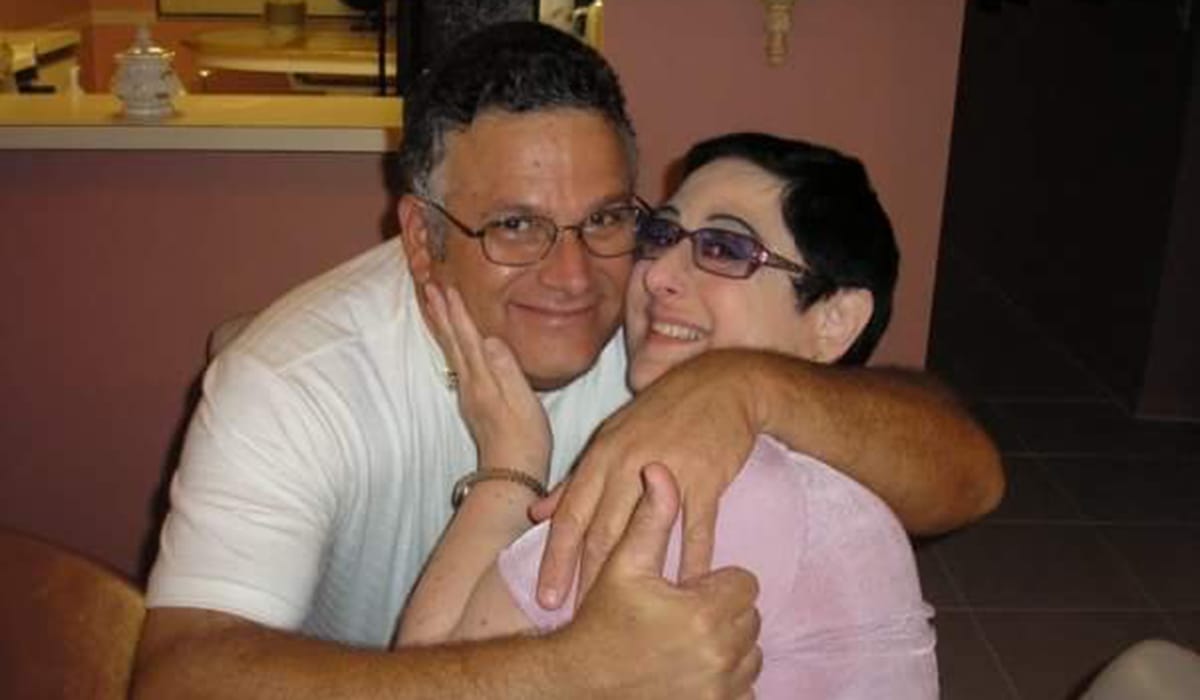
Eric Kleinert (left) embraces his wife and Brandi’s mom, Eileen, namesake of the Eileen Kleinert Memorial Scholarship. Brandi cites them both as inspirations for her volunteer service.
What is your role with Literary Cleveland?
I’ve been involved since 2019. In my tenure, I’ve been vice president, president and the governance chair. I’ve been on programming, and I currently serve as the president emeritus. I’ve had the honor of working with an incredibly talented team to guide us through the pandemic, doing everything from writing policy and designing organizational goals through strategic planning. I’ve had a hand in building Inkubator, one of the country’s largest free literary conferences. One of the things I’m most proud of is my advocacy within the organization to create a scholarship fund for writers to attend classes. To date, 138 scholarships have been awarded.
What makes volunteering and early-stage nonprofit unique?
I use the analogy of building the plane as you’re flying it, which is both amazing and terrifying. There isn’t policy in place. You don’t know what you don’t know. When I first started volunteering, board members were taking out the trash and writing grants. We’ve now been able to apply for and run multiple National Endowment for the Arts grants.
What’s been the most rewarding part of your work?
Helping people. That’s a simple answer, but I love being a helper. It’s getting to do good.
What have you learned through your experiences as a volunteer?
The quiet moments are just as–if not more–fulfilling than the loud ones. When we allow ourselves to be open and connect with each other as humans, there are a lot of incredible moments that can change. And I’ve learned that the grief I felt can be expressed as joy.
Meet Daily Point of Light Award honoree Adeline Smith. Read her story, and nominate an outstanding volunteer or family as a Daily Point of Light.
In 2017, when Adeline Smith was in fourth grade, she had a realization: not everyone “gets” math, even the fundamentals. Idaho, Adeline’s home state, is among the states that funnel the least amount of funding into education, but that wasn’t what Adeline was focused on at the time.
“Because I had done math competitions early on, I was advanced. A lot of my peers struggled with math and science concepts that were grade level. I saw that issue, and then one-on-one, I began helping my friends learn concepts and do better on their tests,” she recalls.
It was clear that the longer her fellow students continued down the path they were on, the more they would struggle to catch up. And if they couldn’t perform in high school, it could limit their future job opportunities. So, Adeline and her co-founder came up with a solution: Growing the STEM.
Growing the STEM is a collection of nearly 40 math- and science-based afterschool programs implemented in elementary and middle schools of the Coeur d’Alene public school district. The first year, Adeline offered the Mathletes and Math is Cool programs. The former prepares students for district math competitions, and the latter engages older elementary students to tutor their younger counterparts in the subject.
“The kids really enjoy it,” says Charlene Babb, Adeline’s former Advanced Learning Program teacher and Growing the STEM education co-chair.
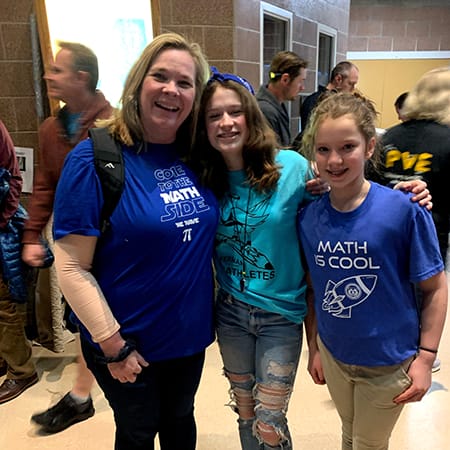
(Left to right) Board advisor Charlene Babb supervises as Growing the STEM co-founders Lilian Smith and Adeline Smith, in 6th grade at the time, as they coach a 4th-5th grade regional Math is Cool competition at Bryan Elementary.
Charlene works at Sorenson Magnet School of the Arts and Humanities, Growing the STEM’s initial site. She personally implements a Math is Cool program and has seen how promoting an interest in STEM subjects at a young age can affect the direction a kid takes down the line.
“It’s something that starts while they are in elementary school. That drives interest, and then it could peak and you become an engineer later in life,” she acknowledges. “I have several students that are currently in college engineering programs.”
As the organization grew, so did the number and types of programs. Adeline, in partnership with educators, created STEAM Club and STEM Book Club. The idea for STEAM Club came about the summer before she entered high school via an enjoyable, technically-taught art class. STEAM addresses artistic fields that overlap with STEM, for example graphic design uses coding and electronics to create visual renderings and measurements or architecture, a field that requires high-level math along with an intuition for aesthetics. The art club shows how science can be seen in art. STEM Book Club connects with STEM topics through literature.
“We’re going to have a program addressing concepts in the medical field coming up next year, as well as Architect Club. And multiple student coaches have added to the engineering curriculum,” Adeline said.
Each program is run by a supervising teacher and multiple high school student coaches who bring curriculum to life that prepares students for future in-classroom learning. Everyone in the room walks away with a better understanding of the concepts and how to explain it to others.
“You get a sense of confidence,” Adeline says, noting the difference between presenting to fellow high schoolers versus teaching a room full of third graders. “When you coach Growing the STEM programs—myself included—you get better at speaking at the front of a classroom.”
As the vice president of the board of directors, Adeline also helps with fundraisers like the annual trivia night, participates in strategic planning sessions and identifies future leaders who will ensure the programs continue after her graduation. During teaching training, she draws on her personal experience to offer ideas on energizing students and building good partnerships with coaches. And she helps train student coaches as well.
“She’s engaging. She’s kind. She’s approachable. She just really enjoys working with kids and sharing her talents,” Charlene adds.
Today, Growing the STEM serves over 900 students each year in 43 afterschool programs in 14 schools with over 100 youth leaders. It’s a success, she is quick to mention, that is due to a lot of people’s efforts.
“You have to start small and find something that works, and then you can grow from there,” she emphasizes. “It’s important to get a group of people that are, like you, passionate about the cause.”
After years of teaching at schools funded at different levels, Adeline has seen firsthand the discrepancy in math levels. To help close the gap, she strategizes on putting programs where they’re most needed.
“Growing the STEM specifically focuses on underrepresented groups in the fields, so a lot of our programs are at the schools that have the lowest funding,” she explains.
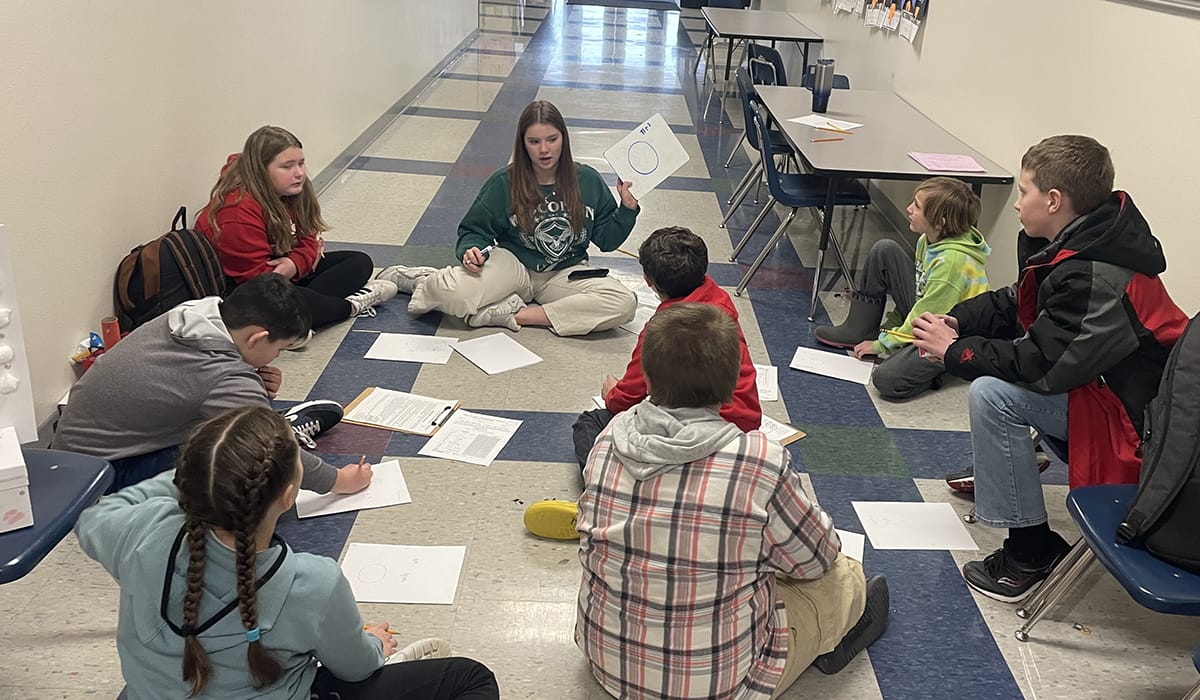
A group of students gather in the hallway to listen to Adeline’s (middle, facing camera) lesson about circles for the Math is Cool program at Skyway Elementary.
One part of tackling the issue is the lack of representation. Students who see someone they can relate to doing hard things are more likely to see it as a possibility for themselves.
“Representation in STEM really matters. A lot of the girls that go into our programs have a preconceived notion that they are worse than the boys in the various subjects,” Adeline says.
To combat this, shows off her math skills to impress upon girls in the program that they, too, can be good at her favorite subject. With a passion for teaching and bringing others along on an educational journey, she notes that it never feels like work. She encourages others to find a cause that motivates them and not to be shy about it.
“My biggest advice would be to talk to people. Find anyone you can that is passionate about the issue you like and ask for their guidance or help,” she adds.
Adeline has always enjoyed participating in STEM activities. These days, she also practices her skills on the debate team doing public forum-style debate, recently competing at state-level. She has been on the varsity tennis team and served on Student Council and the Student
Advisory Group for multiple years as well. She wants to study physics and philosophy with the goal of working in a STEM field, perhaps an engineer of some sort. She has, no doubt, inspired many others to do the same.
Louisiana Teen Keeps Her Community Clean, Green and Litter Free
Meet Daily Point of Light Award honoree Yuri Cobb. Read her story, and nominate an outstanding volunteer or family as a Daily Point of Light.
When Yuri Cobb was only 10 years old, she started volunteering with Ouachita Green in West Monroe, Louisiana, with her father. Six years later, Cobb realized what a true passion serving her community had become. From beautification projects, litter abatement, recycling efforts and educational sessions for young elementary and middle school students, she’s become a true inspiration to the residents of Ouachita Parish.
Through her work and internship with Ouachita Green, Cobb was also recognized in Keep Louisiana Beautiful’s Everyday Hero Awards as the recipient of the Rocksey’s Young Leadership Award, which recognizes those that go the extra mile to keep their communities litter-free and beautiful.
What inspires you to volunteer?
It started around when I was in seventh grade. One afternoon my dad told me that I should start getting involved in our community, and then my volunteerism just took off from there. It was my dad who got me started with Ouachita Green; he really inspired me to start getting involved and we bonded together while volunteering.
Sixteen-year-old Yuri Cobb leads beautification projects, litter abatement, recycling efforts and educational sessions for young elementary and middle school students with Ouachita Green.
Tell us about your volunteer role with Ouachita Green?
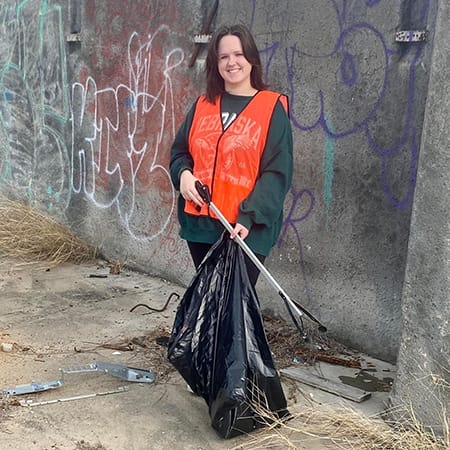
At Ouachita Green I really just try to keep West Monroe beautiful by making it cleaner and greener. Every weekend, or bi-weekly, we have a cleanup where we’ll go to a certain area of the community and we’ll just start picking up the trash. Last June, we got a new director and she’s really big on education. Recently we’ve been going around to local schools and we help educate students on different topics, like what recycling is, how recycling helps the environment and more. I did one about a month ago and I got to talk about the effects of litter on wildlife and what happens when birds get trapped in little coke plastic rings. It’s a cool hands-on activity. There are different education locations every week around our county.
I also interned with Ouachita Green, and participated in major events like our Household Hazardous Waste Collection event. We collect hazardous waste like batteries, bulbs, old furniture, clothing and recyclables. We have one in the spring and one in the fall. People get to drive through and drop off their items so harmful things don’t go back into the environment.
I also was one of the artists involved in the Ouachita Green Keep West Monroe Beautiful “Frame the Drain Project,” and painted a storm drain to remind passing traffic and pedestrians that “A clean Louisiana starts with us!”
What’s been the most rewarding part of your work?
The most rewarding part is being able to drive around the community and know that I had an impact in keeping it beautiful. Trash gets caught up pretty quickly, but there’s always a difference you can see. I’ve developed this passion for helping my community and I just feel so fulfilled. I hope I can inspire other people to have this passion that I have because I don’t want others to miss out on this.
What have you learned through your experiences as a volunteer?
I’ve learned about the true meaning of being a citizen in a community and what it means to demonstrate service showmanship. It might sound corny, but I am who I am because of my community service and the impact that it’s had on my life. I can’t wait to see where this will take me in life.
Do you have any advice for people who want to start volunteering?
I’d like to say just don’t be afraid, and that people that you work with are always working for the same overall mission. It’s inspiring to see what the difference is that you can make in your community.
Do you have a favorite memory from volunteering with Ouachita Green?
One of my favorite memories is just getting up and being able to spend time with my father. I feel like we bonded once we started getting up early and doing things for the community while spending one-on-one time with each other.
Tell us about future partnerships, programs or events that you are excited about.
I’m really excited to do more educational presentations for the younger children at schools because it really is my passion to impact other people, and these education sessions also help me with my elementary education degree plan. Those kids are usually ages five to ten.
Prudential Executive Lends Business and Financial Acumen to Steer Nonprofits to Success
Meet Daily Point of Light Award honoree Mary Ann Jackson. Read her story, and nominate an outstanding volunteer or family as a Daily Point of Light.
Mary Ann Jackson is an avid traveler. She hasn’t celebrated her birthday in the U.S. since she was 36. Now 51, she’s mastered the art of avoiding jet lag. Perhaps in some sense of balance, Mary Ann has lived in her childhood home for the last 40+ years. Family is high priority for her, and she loves being an auntie—and now great-auntie. She’s also helping her mom in her fight against breast cancer. Put simply, Mary Ann cares.
She cares about her job, a tenure at Prudential that has spanned 27 years and has led to her role as vice president of process. She cares about the young women who find their passion for STEM through Girls’ Action Network and the underrepresented talent for STEM field she cultivates through New Jersey BDPA. She cares about disrupting the cycle of poverty with United Way of Greater Newark. She wants all of the participants in Apex Solutions Group’s at-risk youth and parolees who participate in their program to overcome their circumstances and find work.
Her expansive capacity to care has resulted in serving in board of director positions with all of these organizations where she assists in steering them to success. With years of business, financial experience and—perhaps most importantly—innate curiosity, Mary Ann has been an important part of each of their paths.
What inspires you to volunteer?
When I was in high school, I participated in Inroads, an organization whose mission is to develop talented minorities in business and industry and prepare them for corporate and community leadership. Inroad scholarships are why I didn’t have student loans. Community service was very important. We worked in the community and then did internships with different companies. That’s when I first knew this work is important. Because I was the recipient of it.
Mary Ann Jackson, vice president of process for Prudential, has served on multiple boards throughout her career and helped steer strategy with positive results./Courtesy Mary Ann Jackson
Tell us about your various volunteer roles.
I sat on the board of the Girls Action Network as the CFO for 20 years. It was about helping young women understand where their natural aptitude lay then giving them mentors and educational sessions so they could learn about the careers within those spaces.
I joined the board for United Way of Essex about four years ago and am now the chair. I sit down with the CEO to go through the whole strategic plan: who are we going to have, if we’re going to do a merger, etc. I also help with key donor and prospects presentations.
I was on the board for BDPA for four years as Vice President of Strategy and Planning, originally getting involved because the president worked with me at Prudential. He needed me to help figure out how to ensure that companies continued to give and that they were having a return on the investment.
I found APEX Solutions Group through my significant other, one of the founding partners, and have served on the advisory board for two years. They do workforce development with at-risk youth and parolees through a 12-week program with construction companies, the Department of Labor and others. Participants come out of it with a job. The first two classes were all men, so my focus was getting women in. Now they have a mixed group all women.
A lot of what I do is figure out how to make sure these organizations are financially solvent. It’s the strategy on how to make sure we have the right people in the right seat doing the right stuff to make an impact.
What inspired you to get started with these initiatives?
Once I got to corporate America, I realized I needed to do community service to align the why we do stuff with who we do it for. You can sit behind a desk all day, but if you don’t know who you do it for, your work really doesn’t have the meaning that it should. In our line of business, we give people peace of mind when loved ones die or get sick. We do annuities when you’re ready to retire, so you have something to continue to enjoy life on. Sometimes we forget that.
I still live in Newark partly because I think people get ahead and then leave. How do you keep the neighborhood building? How do kids see successes? Success can’t be Hey, I’m making money, now I’m leaving.
What’s been the most rewarding part of your work?
It’s not just not the community that you serve; it’s who you serve with. At United Way, there’s a young guy on the board who is really coming out his shell. Watching him inspire young leaders to go into philanthropy is amazing. If I can inspire two people and each of them inspires two people, it’s the multiplier effect.
Do you have any advice for people who have never been on a board before and are considering getting involved in that way?
Read the bylaws so you know what you what you’re getting into. Understand the mission and the vision of the organization, and go in for the first three months and listen. Don’t be afraid to ask questions. A lot of times we jump into stuff and want to direct. Also, understand that you have to be objective and lead with good intent. I met a woman who told me that she teaches her kids to be slow to offend but even slower to be offended.
What do you want people to learn from your story?
If each of us does a little bit, it’ll go a long way. Sometimes life is hard, and people deserve help because they’re human. I gave a talk in November and said, I don’t need you to pay me back. I need you to pay it forward. Do it with the expectation that no one’s going to give back to you, because your blessings will come from a different place. Give because it’s in your heart to give. Don’t do it so people can say you’re a good person.
Fostering Growth and Guidance Through Volunteer Leadership
Meet Daily Point of Light Award honoree Karenna Bol. Read her story, and nominate an outstanding volunteer or family as a Daily Point of Light.
Karenna Bol’s years-long tenure as the leader of the Community team at Minds Matter Bay Area (MMBay) has been marked by significant contributions to the mentorship and educational landscape. Her innovative leadership and dedicated service have significantly enhanced the experience and opportunities available to both mentees and volunteers within the community.
Recognizing the pivotal role that skilled volunteers play in the success of mentees, Karenna spearheaded a comprehensive training series aimed at enhancing the mentoring and teaching capabilities of volunteers. This program, meticulously crafted to incorporate volunteer feedback, has evolved to effectively meet the changing needs of the community it serves. Participants in the series have consistently reported that the training has been instrumental in improving their skills and perspectives, enabling them to offer more substantial support to students.
Karenna’s vision extended beyond current program participants to include the alumni of MMBay. She introduced a “mini-mentorship” program tailored to support college-going and early-career professionals. This initiative allows alumni to seek advice on a variety of critical topics – from academic choices to career development strategies.
In addition to these initiatives, Karenna has played a crucial role on the Mentee Recruiting and Alumni teams. Her efforts in recruiting have broadened the reach of MMBay’s programs, attracting a diverse range of students from across San Francisco. Through various outreach activities, including presentations at local high schools and nonprofit organizations, Karenna has spread awareness and drawn new participants into the program.
Read on to find out more about Karenna’s role and what drives her to keep advocating for this cause.
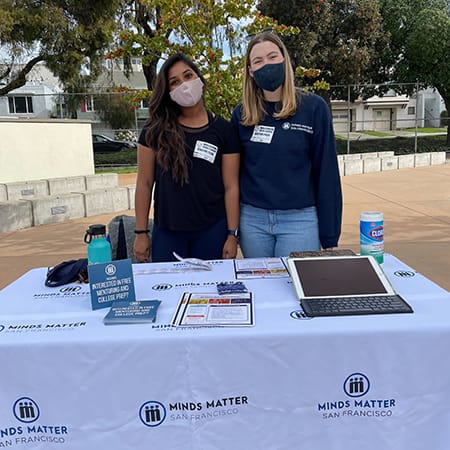
Karenna (right) and her team are passionate about access to higher education, as well as preparedness for students entering college.
Tell us about your volunteer role.
I’ve been working with Minds Matter Bay Area for over six years now. I started wanting to get more involved in my community, being passionate about education. I started out as a tutor for SAT and ACT math. I just gradually got more involved with the program and the organization as a whole. I moved on to training our volunteers during the pandemic. Then I started as our co-chief community officer, recruiting for our volunteers and mentees. I also worked on engagement, attendance and training, which involved planning social events, as well as community engagement and recognition events.
This year I stepped back from this role, but have continued recruiting our mentees – a bit more of a “boots on the ground” team member now. Sometimes we go to schools and get the word out to students about our program. Sometimes it’s reaching out to nonprofit partners. I’m currently setting up an application workshop for students who want to apply but may be confused or intimidated. That has been really awesome.
And then I work in a couple of other capacities – one of which is with our alumni. We want to continue to provide support for them and allow them to continue to be part of our community while they’re still in college. We offer resources to them – right now we’re running a financial literacy series. We’ve done mini-mentoring with our extended network – perhaps people who aren’t full volunteers but still want to get involved. We connect them with our alumni to give them more access. With our original work with MMBay, we were looking to prepare them for and get them into college, and now we want to continue to support them while they’re in school.
Why is education so important to you?
For me, education has always been really important and so has this idea of being prepared for college; understanding not just the element of getting in – having the right grades and the right test scores – but real preparedness. I was very fortunate to not have had any question of whether I was going to go to college. But what was lacking was a mentorship element, in my own experience of college – what it really felt like to be prepared to go to one of these selective universities, how to be competitive and set yourself up well for that experience, and also to have someone to relate to.
So even more than the education part of it, and everything our organization does to help students from low-income backgrounds to bridge that generational gap and set themselves up for success, it’s really that mentorship aspect I value. For kids to have multiple people in their life, outside of their family, that they can go to and trust, who really care about them.
One of the unique parts of our program is how consistent it is. We emphasize this with volunteers as we recruit them: you’re committing to seeing the student every week. There’s not a drop-in, drop-out situation. High schoolers are not always the most enthusiastic. But it’s about putting that commitment in and showing that you’re there for them, even if you don’t get that instant gratification from them. You’re still a consistent presence in their life. When you show up week after week for them, they really start to believe in that consistency.
What’s been the most rewarding part of your work?
It’s been really rewarding to build a community within my community in San Francisco. To go really in depth with them, work with them for years and build really deep friendships. Also, feeling that sense of being part of the community with the kids as well – seeing them grow and improve. One of my first students I taught in my first year is graduating from my alma mater this coming year!
We actually have a lot of our alumni come back as mentors or volunteers later. One of the students took a tour with us a number of years ago, and I met her as a volunteer last week. That we had made enough of an impact to return as a volunteer later was so rewarding.
MMBay works not just with students preparing for college, but also by providing resources to program alumni who are currently enrolled in school.
Why is it important for others to get involved with causes they care about?
I think the value of community cannot be understated. We often think about volunteer opportunities as feeling really good personally, to do something for others. But to really be involved in something that’s having an impact in your community, something you’re working on consistently, that’s so important in putting down roots in the community. Especially in big cities where there are lots of transplants, it pays dividends to invest in the community. The cumulative benefits over time, when you’re working consistently – it’s so gratifying.
Any advice for people who want to start volunteering?
A lot of our messaging to people who want to volunteer are that consistency and commitment are the keys. You can get gratification from doing something one time, but the amount of gratification you get from a consistent commitment is really meaningful, and that’s where you can make the most impact. Whenever you’re thinking of starting a volunteer opportunity, it’s a way to get long-term involved, not just doing something when it’s convenient for them. It doesn’t always pay off immediately. You see the benefits, or the dividends, over time.