How One Woman Promotes Cambodian Culture and Community
Meet Daily Point of Light Award Honoree Mariko Kahn. Read her story, and nominate an outstanding volunteer or family as a Daily Point of Light.
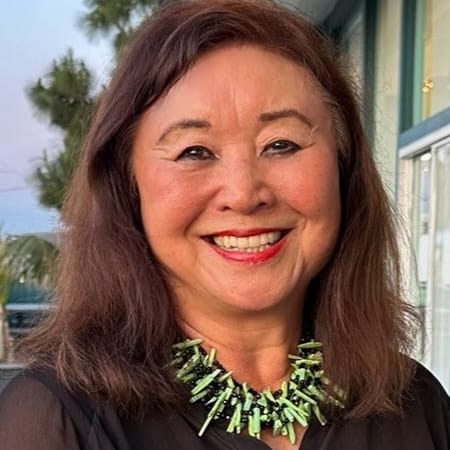
Mariko Kahn was born in Osaka, Japan. Her mother was a Japanese war bride who married a Chinese-American soldier. At the time, this type of marriage was not recognized by the U.S., but eventually this changed and Mariko and her mother were allowed to accompany her father to his next Army posting in Texas. It was a different time and even though she was the child of a U.S. citizen, she had to apply for citizenship. Today, Mariko lives in Marina del Rey, California. She has lived abroad, studied acting and enjoys tennis and social dancing.
Mariko believes that being part of a community is a priority so wherever she goes, she seeks to become a member of one. It is a powerful and rewarding experience that integrates her into a different culture while offering a new circle of friends. Mariko has become an integral part of the Cambodia Town community where she works tirelessly to support this vibrant cultural element of Long Beach, California.
What inspires you to volunteer?
Many years ago, I didn’t understand volunteering. While getting my Master’s Degree in psychology, during an internship, I became involved with the wellness community where I developed an understanding for helping people and having a sense of community. Whenever I move, get a new job or start a new hobby, I try to find a new community. I become very involved with these communities. The connection drives me. When you have a sense of community, you can’t help but care about its people.
2024 Mariko Kahn, Cambodia Town volunteer /Courtesy Mariko Kahn
Tell us about your volunteer role with Cambodia Town.
Securing funding was an important part of what I did as an executive director for nonprofits for several decades. Grant writing is probably the most significant volunteer activity I do for Cambodia Town (CT). I research suitable grants, write the grant and handle all of the administrative and financial set-up if a grant is awarded including hiring the staff, coordinating the program and writing the final report. Over the past 16 years, I have gotten millions of dollars in grants and contracts while working for Pacific Asian Counseling Services (PACS). This organization provides mental health services to those with mental health challenges, with expertise in culturally and linguistically appropriate programs for many Asian Pacific Islander communities.
I am the secretary for Cambodia Town. I take all the board meeting minutes, set up the meetings and agenda, and as part of the executive committee, handle issues as they occur. We have a board meeting every month and often have special board meetings in between. We also have at least two social events every year that need planning, including a fundraising dinner in July. I attend many meetings to represent CT and often testify on issues at the Long Beach City Council, community focus groups and town halls. The board made me an authorizing official for the agency with the authority to represent, negotiate and sign contracts for CT.
This year, I was the co-chair of the Cambodia Town Parade and Culture Festival (CTPCF) which happened on April 7, 2024. This is a major community event and due to its size, it involves a lot of logistics and planning. There’s fundraising, recruiting performers for the festival program, overseeing vendors, recruiting volunteers, outreach and much more. Thankfully I’m good at logistics!
The CTPCF is a very important community event. This year, we have 55 entries for the parade. The parade ends at a park, where we will have eight food booths, about 55 information booths for local nonprofits and commercial vendors. There’s a band, dance groups and at any given time, 2,000 to 3,000 people milling around. There’s lots of entertainment, including multicultural dance and music groups so the festival isn’t really just about Cambodian culture; it includes the multi-ethnic diversity of the neighborhood. The neighborhood was originally Black. Then the demographics shifted to Latino and today, it includes a large number of Cambodians. The CTPCF is the largest parade in Long Beach and draws almost 5,000 attendees. This year we are featuring 90 Buddhist monks who will be marching in the parade. Cambodians are very spiritual, and this is part of the cultural aspect of Cambodia that we want to showcase in the event.
I am also a key member representing CT in the development of the Cambodian American Studies Model Curriculum for the State of California. Some years back, legislation was passed to include more history about Asian-Americans into the state’s school curriculum from kindergarten through high school by including courses on the Cambodians, Vietnamese and Hmong. There was community protest because it was titled the Cambodian Genocide curriculum and many people did not want the Cambodian experience to be limited to the Khmer Rouge genocide period. This caused an uproar and the program was almost axed. I was asked to be a member of the CT Work Group. We held focus groups, info meetings and advised on artwork, history and terminology. Several Cambodian community-based organizations were involved in the process, but our work group was especially impactful because of our members’ knowledge and expertise on the Cambodian and Cambodian American experience. The agency that developed the curriculum appreciated our input. We are known for getting things done! Now, the title has been changed and the first draft of the model curriculum is being tested in schools through 2025.
CT also helps Cambodian community members and businesses. During COVID, three CT board members who work for PACS distributed masks and test kits. Through their efforts, our board notified the community about vaccines and answered questions. We helped Cambodian businesses apply for COVID relief funding. Several businesses received thousands of dollars that helped to keep their doors open, pay staff and improve their facilities.
CT was a key mover in the passage of a Property and Business Improvement District or PBid in the Cambodia Town district which collects funding to improve the safety and appearance of the area. In 2021, CT took a lead role in helping to distribute relief funding to 23 businesses in the CT District that were damaged due to anti-Asian vandalism.
What are your long-term plans or goals for Cambodia Town?
I would love to see the CTPCF become a better-known event that attracts people from all over Los Angeles County area and even beyond. One way would be to have more food vendors as that is a big draw for non-Cambodians.
Second, I would like to see the board grow in number. A significant number of current board members are going to retire and there needs to be a succession plan.
Third, I would like to see CT have full-time staff.
Fourth, CT needs more diverse fundraising by the board. It may need to rethink its mission to include direct program services to bring in revenue.
What’s been the most rewarding part of your work?
The most rewarding part has been making friends. I love meeting interesting people and developing a sense of community. I like learning new things. The world is still wide open!
What have you learned through your experiences as a volunteer?
I’ve learned that I can ask people for money or help for a cause even though I could never ask for myself. For me, it’s important to be identified with a just cause. Without that sense of identity, I wouldn’t have the passion or dedication to put in the long hours and do whatever needs to be done. Also the caring and passion of the people I’m involved with is so important to keep me going. And it goes back to community because that creates a sense of belonging which is essential for me.
I think I am a good grant writer, but I learned that getting a grant is also about having a connection with the foundation and its staff or the department giving out the contract. Once they trust you and they see the quality of your work, they are more likely to fund your proposal, and not just once but continually. Government grants are much more difficult to get than private grants just because of the tedious nature of the application but once you get one, such as the Department of Mental Health grant that we received, it gets renewed year after year. I did not have any grant writing skills when I first became an executive director with a cancer support group but I took a lot of classes and went to a lot of meetings to meet people. I was committed to learning how to do this.
Originally, CT paid to boost social media and Cambodian cable TV to spread the word about the CTPCF. We are finding that the event is viewed by as many as 5 million people in the U.S. and abroad because of the personal videos taken by attendees and shared on their social media. That’s how it spreads. And that’s why our event has to be so amazing, so compelling, that people will make it go viral.
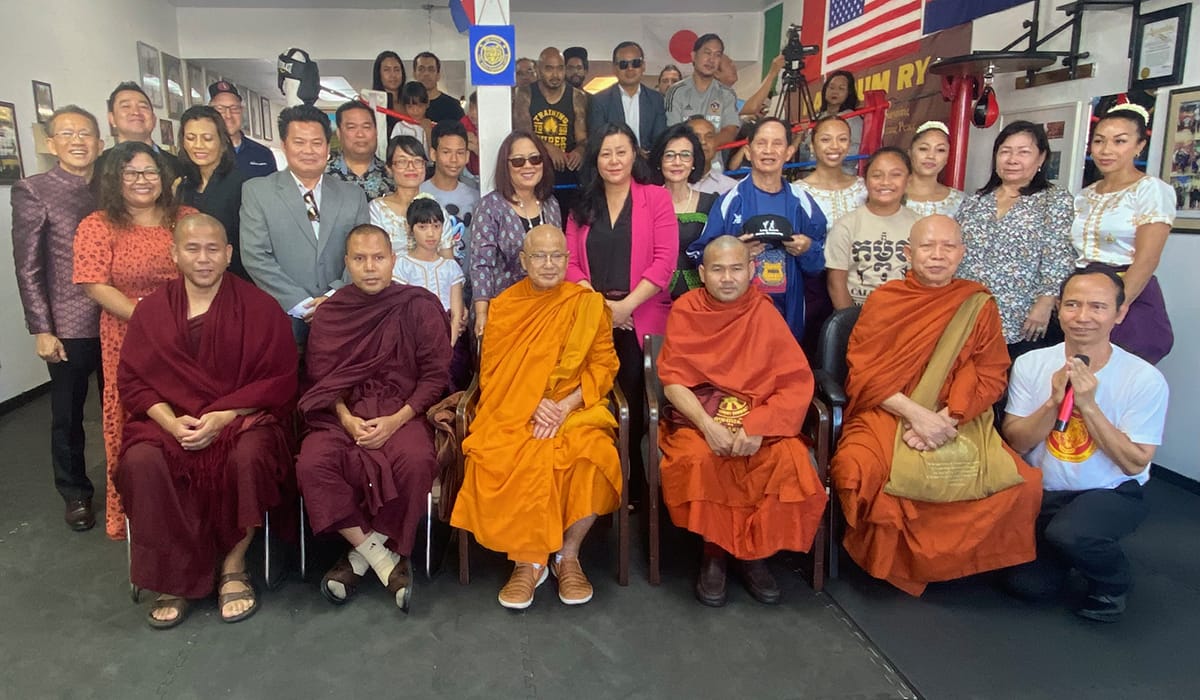
023 Cambodia Town Fundraiser for the Long Beach Kickboxing Center. Kickboxing is a Cambodian martial art. /Courtesy Mariko Kahn
Tell us about future partnerships, programs or events that you are excited about.
Cambodia Town will participate in an educators’ conference on the Cambodian American Studies Curriculum in October 2024, where 200-plus educators from all over California will come to Long Beach to learn about the curriculum and how to teach it. CT will be tasked with helping them get exposure to authentic Cambodian food, traditions and customs, and learn about the history of Cambodia Town.
The Olympics are coming to Los Angeles in 2028. CT is working with the Long Beach City Council to build a spectacular Chinatown-style gateway into Cambodia Town. I’m involved as a volunteer. I’m not historically or artistically knowledgeable with regard to the design, but I know how to maneuver through the process. The City Council has already allocated $1 million for this project.
Any advice for people who want to start volunteering?
It’s easy to find ways to help. Do a Google search, or ask your friends or neighbors. What can take more effort is finding an organization that aligns with your skill sets. You may need to explore several different opportunities until you find one that works with your interests and skills. When you find “your people,” you just know it. Everything clicks. I do what I do because I believe that CT is an organization that gets things done: I advise anyone just starting out to find an organization that you can be enthusiastic about and has an impact.
What do you want people to learn from your story?
It was through my volunteering and working in the nonprofit world that I learned who I am. Working in different communities taught me that knowing about your culture is important. The pressure in our American culture is to be Americanized if you’re an immigrant or belong to a non-white group. However, there’s such richness in understanding and studying your culture and its traditions. It makes you more complete and can build your self-confidence. It’s important not to be ashamed of your origins. Own it.
I believe strongly in the benefits of having a sense of community in the broadest sense. Community helps you to dream big.
Ohio Teen Welcomes Immigrants and Refugees to the Heartland
Meet Daily Point of Light Award honoree Anna Kunkel. Read her story, and nominate an outstanding volunteer or family as a Daily Point of Light.
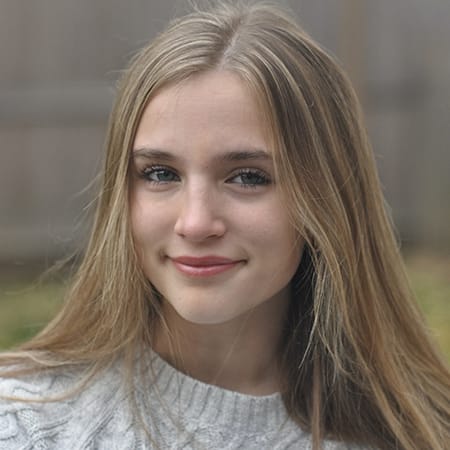
Anna Kunkel is a high school junior from a family of four – or five, if you count her well-loved Siberian Husky, Odin (which she does). Most of her interests and extracurriculars revolve around migration, a topic she hopes to study and build a career on. Understanding a bit more of the immigration process through her mom, originally from England, Anna has worked tirelessly to create a welcoming environment with resources and opportunities for anyone who has left their home country by choice or necessity.
With Heartfelt Tidbits, an organization that helps immigrants build skills and community while transitioning into life in their new home, Anna has tutored elementary school kids and taught them English. Becoming more acquainted with the immigrant and refugee experience led her to create Student Alliance for Immigrants and Refugees . Her all-student team works in partnership with local nonprofits to support and enhance the services they provide as well as creating programs of their own. Anna even used her passion for documentary filmmaking to tell the story of an Afghan woman’s journey to Cincinnati. She spends at least 30 hours a month working within the immigration support community.
Anna, founder of Student Alliance for Immigrants, creates educational programs and support networks for new arrivals while amplifying their stories in the community.
What inspires you to volunteer with immigration-related initiatives?
My mom immigrated when she was 10 and her father got a job transfer. She was on a green card before eventually getting her citizenship at 39, while was pregnant with me.
I also met a refugee in sixth grade when I was doing a project on the Serbia-Kosovo conflict of the late 1990s. As part of that project, we reached out to a journalist at The Economist who referred us to Kosovan ambassador to the United States, Vlora Çitaku.
Vlora was also refugee and had signed Kosovo’s Declaration of Independence in 2008. She had a profound impact on me. Hearing firsthand accounts of what people go through and forming a connection with them, makes it personal. That inspired me to look for work in my own community, and I found Heartfelt Tidbits came to my school for a community service presentation my sophomore year.
Tell us about your volunteer role with Heartfelt Tidbits and Student Alliance for Immigrants and Refugees.
I started with Heartfelt Tidbit’s Virtual Buddies program zooming with kids at a school with a majority second-generation immigrant student population. Second semester, I worked in-person at the Academy of World Languages (AWL) four days a week after school playing with kids, helping and reading. Reading is a big gap you need to fill with kids who aren’t proficient in English.
Then, I started teaching ESL with Heartfelt Tidbits. I taught myself Spanish, because most of the demographic here who needs English support are Spanish-speaking. It was my first time working with adults, so it was intimidating.
Over the summer, I interned at the Immigrant and Refugee Law Center. I got to learn a lot more about the legal process. I concurrently took an online course on immigration law, so I learned more about the legal process coming into the United States. And I got to attend a citizenship ceremony.
I started SAIR, because I saw refugee support groups struggling to get kids excited about volunteering. There are 110,000 immigrants and 25,000 refugees in Cincinnati. Not all of those people need assistance, but a lot of them do. We focus on creating educational opportunities, welcoming and supporting people as they build new lives here and amplifying their stories. We launched something I call the Cincy Stories Project, which allows you to share immigration stories. Our first-place winner did a wonderful job writing about her parents immigrating from Mexico and how they long for their native country but love their home in Cincinnati.
Our Welcome Project encourages kids to write letters to people coming in, and we got a $600 micro grant from Karma for Cara to create welcome baskets.
What are your long-term plans or goals for SAIR?
We’ve got our inaugural walkathon coming up. We’re partnering with Heartfelt Tidbits to raise money for two scholarships for first-generation, immigrant students. Our fundraising goal is $40,000. Long-term, we’re hoping to keep this scholarship program going.
I plan to take it with me to college, as well. My goal is to make is to start with SAIR Cincy and then build SAIR Ohio and SAIR US. Right now, we’re in six schools in Cincinnati. Dolly Parton runs a literacy program called the Imagination Library which sends free books to young kids. We were going into churches with big immigrant populations and signing kids up for that with SAIR. Through that, we attracted volunteers and were able to start new chapters.
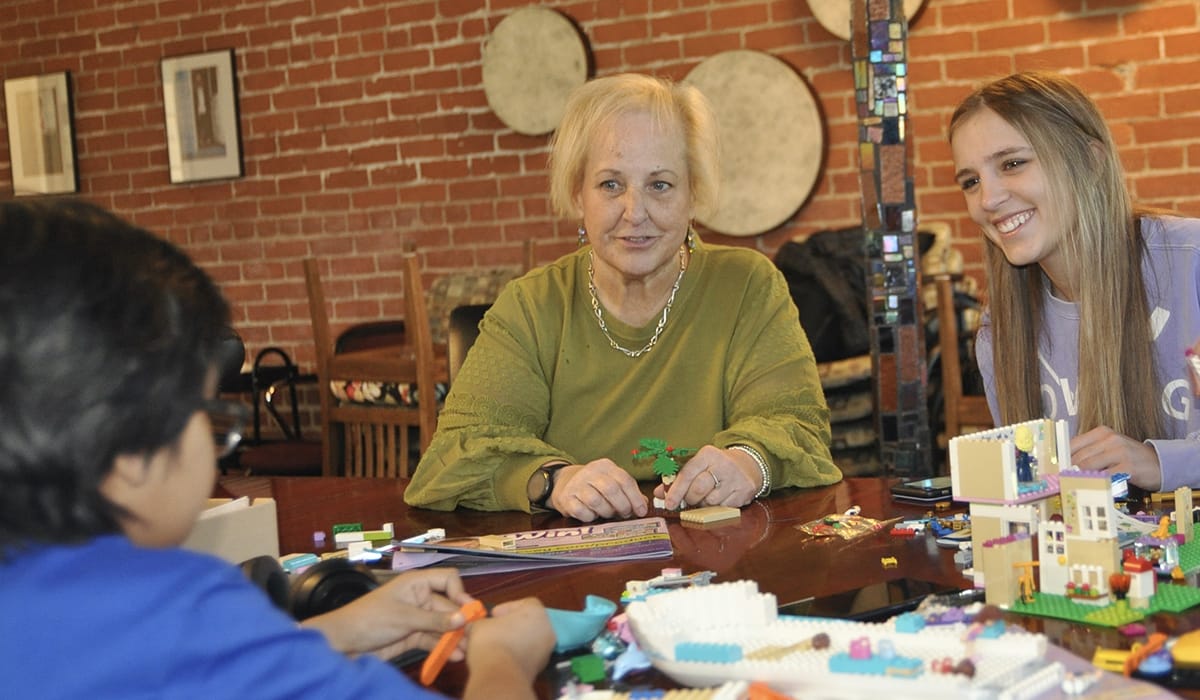
(Left to right) Heartfelt Tidbits executive director Sheryl Rajbhandari and Anna talk video games with a boy from one of the families the organization works with.
What’s been the most rewarding part of your work?
There have been many rewarding things with SAIR: seeing it expand, seeing student volunteer interest grow and seeing students feel comfortable sharing their immigrant stories. The best thing is the group of kids we work with. They’re like family.
What have you learned through your experiences as a volunteer?
It’s made me feel so much closer to the community of Cincinnati. Before volunteering, I didn’t realize how little I knew about it and its residents. I’ve really gotten a sense of what it means to work across cultures. And I’ve always been a pretty empathetic person, but I’ve become even more so.
What do you want people to learn from your story?
Immigrants and refugees are everywhere. Migration is not a class or race issue. It’s a human issue. We’ve got people migrating from all over the world who need help. People don’t want to leave their countries and their homes. For the most part, people are coming because they need to. It’s really important to step beyond whatever fears and ideas you have, because we have so much to learn from people who have undergone so much. Our country is built upon immigrant values and immigrant stories, and it’s important that we’re aware of those and how people coming in make our communities better.
Nurturing Hope and Saving Lives in the NICU Through Dedication to Mothers’ Milk Bank
Meet Daily Point of Light Award honoree JC Morlu. Read her story, and nominate an outstanding volunteer or family as a Daily Point of Light.
In WakeMed Mothers’ Milk Bank in North Carolina, JC Morlu’s journey of volunteerism paints a picture of deep compassion and dedication. Originally starting as a milk donor, JC has seamlessly transitioned into a vital volunteer in the day-to-day operations of this crucial nonprofit, which supplies a critical need: pasteurized donor milk to neonatal intensive care units (NICUs) across the east coast.
JC’s initial involvement with WakeMed began during her breastfeeding period for her second daughter, during which she donated 100 gallons of breast milk. This substantial contribution not only supported countless newborns in need but also marked the beginning of her profound connection with the milk bank. Moving from Charlotte to Raleigh simplified her donation process, creating stronger ties with the staff and deepening her commitment to the bank’s mission.
After completing her donations, JC didn’t step back; instead, she stepped further into the heart of the operation. During her weekly three-hour shifts, JC takes on a variety of crucial tasks in the milk lab. From cleaning sanitary hoods and washing dishes to handling pasteurized milk, her work ensures the smooth functioning of the lab. Each task, while seemingly small, plays a vital part in maintaining the sterile environment necessary for milk pasteurization and preparation.
Recognizing her passion and the importance of the milk bank’s mission, JC expanded her role by joining the Volunteer Board. As a secretary, she now dedicates additional hours each month to the executive committee and monthly meetings. Her focus is on enhancing volunteer experiences, increasing volunteer engagement, and contributing to the hospital community.
Read on to find out why JC continues to contribute to this life-saving cause.
Why is this issue so important to you?
Everyone says it takes a village in regard to raising kids. Not everyone has a village capable of supplying fragile babies with life-saving nutrients, so they need to expand the village to find help. When babies come into this world, they are 100% reliant on someone else for life. When mothers are unable to provide milk or the baby is unable to nurse, the Mothers’ Milk Bank saves the day with lovingly cared for donors’ milk. They are the village mothers and babies need and didn’t even realize they had!
What inspired you to get started with this initiative?
With both of my babies, I was blessed with an abundance of supply. I leveraged that blessing with our first child by relying on stored milk to get us through one year of breast milk. Before our second, I did research on other options because I felt I was missing an opportunity to do more. I discovered the WakeMed Mothers’ Milk Bank, reached out to them and got the process started to become a donor.
After donating over 100 gallons, I wasn’t ready to step away, so I worked with WakeMed to become a volunteer within the milk bank. Late last year I also became secretary of the WakeMed Cary Volunteer Board and am grateful not only to still be connected to the milk bank, but also to continue to do my part to get involved with this amazing hospital, its staff and fellow volunteers.
What are your long-term plans or goals with the organization?
Awareness. While I am truly honored when I receive recognition for my volunteer efforts, I am more focused on how I can shine that lightly more brightly on the Mothers’ Milk Bank. The work they do is life-saving and without awareness of their work and increased milk donors, they cannot continue to provide milk for NICU babies in North Carolina and along the East Coast.
What’s been the most rewarding part of your work?
Many of the volunteers at WakeMed interact with patients on a daily basis and have the most rewarding and touching stories to share about those experiences. I, however, work in the lab and never see patients. I do see the women who work in the milk bank, though, and those relationships mean so much to me.
Each time I volunteer, I get to catch up with an old friend. We’ve been through highs and lows together and I’ve never seen people work so hard. I’ve worked with nonprofit organizations since high school so I know their staff are typically made up of a special kind of person who puts the mission of saving others first and these ladies are no exception. From the interns, to my fellow volunteers, to the technicians and the manager, they all work tirelessly to properly prepare the valuable milk for the babies.
Why is it important for others to get involved with causes they care about?
Nonprofit organizations do exceptional work, but they cannot do it alone. They need volunteers to step in to support the cause, not just for extra hands making light work, but to bring awareness to the cause and organization. We are all blessed with skills in this life and sharing that talent with others is our way of leaving a legacy. Showing up for the cause helps the organization, it allows you to make an impact, and it also feels really good to connect with others. In this world today, feeling good goes a long way.
Any advice for people who want to start volunteering?
Quite simply, just do it. You may not find your forever organization the first time, and the causes you care about may change, and that is okay. The important thing is to keep trying and find what works for you. Volunteering takes time and it is time away from your family or job, so it has to mean something to you, not just the organization you support.
Inspiring and Empowering Young Women Through Sports, Leadership and Equality
Meet Daily Point of Light Award honoree Maegha Ramanathan.Read her story, and nominate an outstanding volunteer or family as a Daily Point of Light.
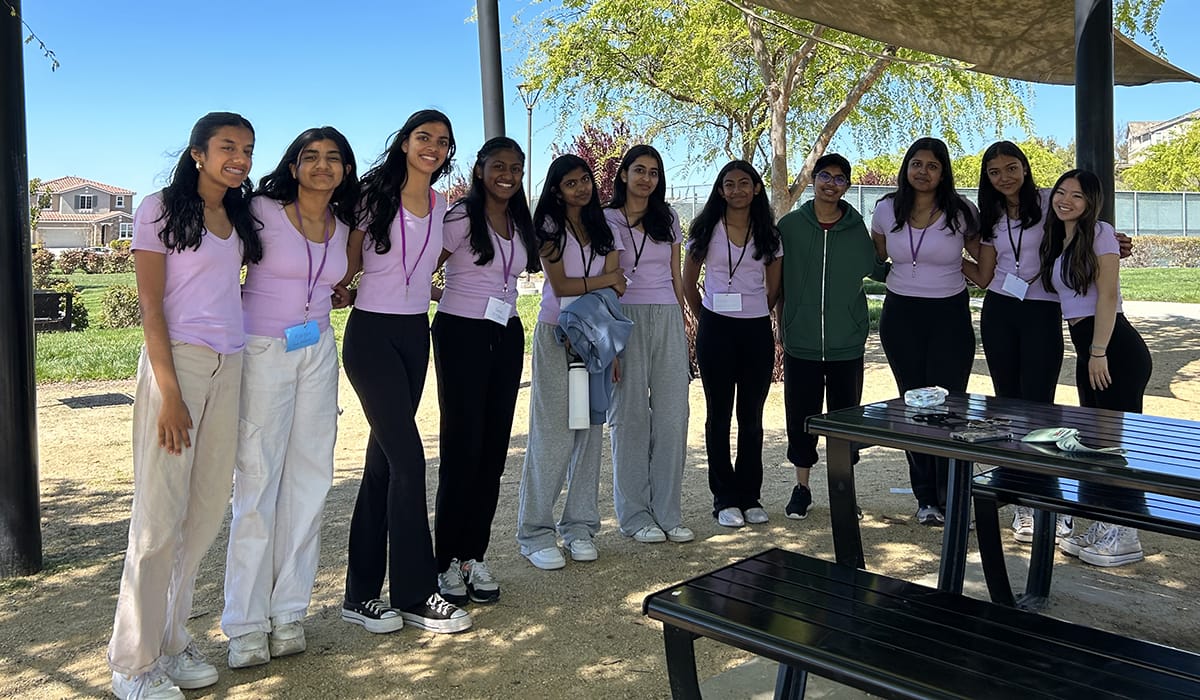
Maegha Ramanathan, the visionary founder and president of Girls4Sports in Dublin, California, is recognized as the 7800th Daily Point of Light Awardee for her remarkable contributions to empowering female athletes globally. Under her leadership, Girls4Sports has flourished, managing over 330 volunteers across 19 international branches and significantly impacting the lives of thousands of young women.
“As an avid athlete, I grew up loving sports,” Maegha said. “I played six sports including basketball, swimming, badminton, tennis, soccer and volleyball. Swimming became the sport I dedicated the most amount of time to as I fell in love with the competitive yet teamwork mindset. After joining a year-long competition team, I began practicing for two hours five days a week, striving to improve my best time by even milliseconds.”
But Maegha saw some troubling disparities along the way. “I began receiving degrading comments from male swimmers on my team once I began striving for my state competition’s cut times. I was told that I needed to build more muscle, change my ‘weaker’ mindset and be faster in order to be as ‘good’ as a male swimmer. I began doubting myself and my abilities. These comments made a lasting impact on me. I constantly battled feeling inferior throughout the rest of the swim season. I soon realized that this was a shared experience amongst all girls on the swim team. I noticed these same disparities in other fields of my life as well.”
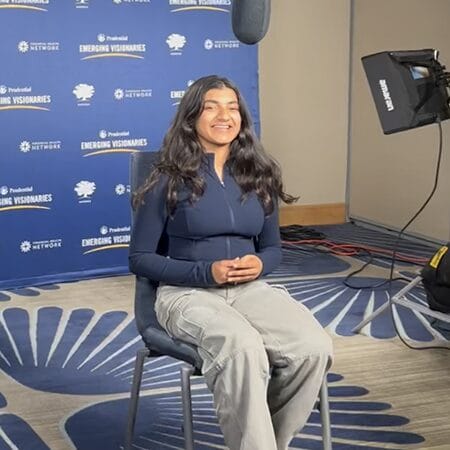
Maegha’s innovative approach and relentless drive have earned her numerous accolades, including being named one of 25 Prudential Emerging Visionaries.
Maegha sees this experience as her catalyst to start Girls4Sports, in order to empower other girls to pursue what she was discouraged to. Girls4Sports is all about creating a nurturing environment for female athletes to share their experiences and challenges in sports. By coordinating with underserved schools, sports teams and children’s hospitals, she has fostered a supportive community that extends well beyond local boundaries. To date, the organization has donated over 2,500 pieces of sports equipment to local teams – a truly profound commitment to accessibility in sports.
“When I first launched my idea of Girls4Sports, by word of mouth to my friends, I received positive feedback through texts and social media,” Maegha reflected. “Girls came to me emphasizing that this organization was a much-needed service because they struggled with the feeling of inferiority and inequity in sports teams. Even though our events are free, upon launching, people immediately wanted to support the cause. We received $200 in donations within our first event. This clear support helped me realize how important Girls4Sports was for society, cementing my belief in this cause.”
Her leadership has also pioneered impactful partnerships with figures such as Chris Evert, a former world number one tennis player, and key executives from the Dublin Unified School District. These collaborations have not only enhanced the visibility of Girls4Sports but have also amplified its influence, allowing it to reach broader audiences and secure essential resources.
Maegha’s dedication extends to organizing advocacy conferences and sports camps that aim to open up more opportunities for young women in sports. These events serve as platforms for discussion, learning and inspiration, connecting participants with international athletes and advocates for gender equity in sports. Notably, the world’s first youth-led global women’s sports conference hosted by Girls4Sports connected more than twenty international female athletes, positioning the organization at the forefront of global advocacy for women’s sports.
Maegha’s innovative approach and relentless drive have earned her numerous accolades, including being named one of 25 Prudential Emerging Visionaries. This recognition came with a $5,000 award, which she generously dedicated to building a sports facility in Devakottai, India – further underscoring her commitment to creating lasting impacts through Girls4Sports.
Under Maegha’s (second from left) leadership, Girls4Sports has flourished, managing over 330 volunteers across 19 international branches.
Through her tireless efforts, Maegha has managed to transform the lives of more than 500 girls by providing them with the opportunity to engage in sports like soccer, badminton and volleyball. Her monthly commitment of 60 to 65 hours working with Girls4Sports exemplifies her dedication and passion for her cause.
She encourages others with sage advice: “Change can be anything. It doesn’t have to be starting a nonprofit. Even something as simple as making a card for a suffering individual, can make a life-changing difference. Do what you are passionate about, and you will find a lifelong community of genuine people and create genuine impact.”
Maegha is not just a leader but a catalyst for change, making significant strides towards gender equity in sports. Her work with Girls4Sports continues to inspire and empower young women worldwide, proving that with passion and perseverance, positive change is possible. As the 7800th Daily Point of Light Awardee, her achievements provide inspiration and an empowering example of leadership for aspiring female athletes everywhere.
Boston Retiree Warms Hearts & Bellies Volunteering Weekly at Supper Program
Meet Daily Point of Light Award honoree Bill Duncan. Read his story and nominate an outstanding volunteer or family as a Daily Point of Light.
For the past 15 years, Bill Duncan has been a steadfast presence at Boston Cares’ Friday Night Supper Program (FNSP). Each Friday, alongside his fellow volunteers, Bill ensures that around 100 guests, mostly from unhoused or low-income backgrounds, receive a hot and nutritious meal. He has logged well over 1,600 volunteer hours, translating to approximately 75,000 meals served.
Bill’s duties at FNSP are varied yet essential. From washing dishes to helping prep the kitchen and setting up dinner, he is a linchpin in the smooth operation of the program. Since 2013, Bill’s impact has magnified as he took on the role of volunteer leader. On top of taking attendance of volunteers and explaining tasks, he actively recruits and engages new volunteers, imparting his passion for service and community connection. Through his efforts, volunteers not only serve meals, but also become part of a larger mission to combat food insecurity and uplift those in need.
Beyond his volunteer hours, Bill has made in-kind donations to the program, provided maintenance for kitchen equipment and acted as a bridge between staff and volunteers.
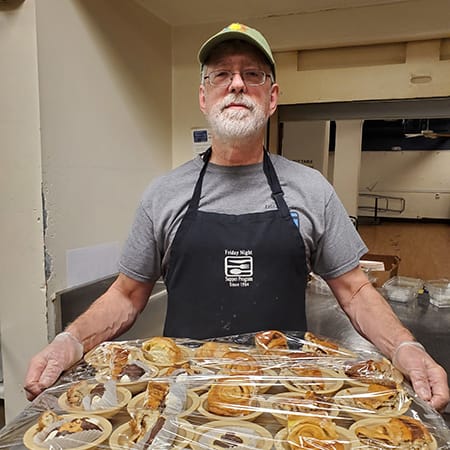
Bill holds up a tray of desserts ready to be served during Boston Cares’ Friday Night Supper Program, which he has volunteered weekly for over 15 years. /Courtesy Bill Duncan
Tell us about your volunteer role with Boston Cares.
In 2009, I was looking for volunteer events and I noticed that the Friday Night Supper Program was always filling up. So, in April 2009, I signed up and volunteered for three Fridays that were open. And I’ve been going most Fridays since then.
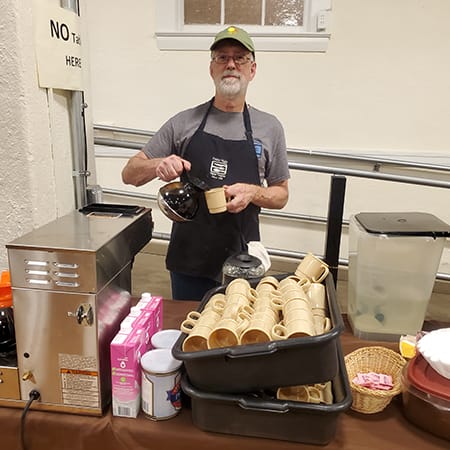
At first, I was doing other jobs, but in 2011, the dishwasher left so I took on the dishes. It’s a job that not many other people really like to do, but I like the rhythm of it. I consider it kind of meditative. So, I’ve been primarily doing dishes. But I also do kitchen prep, helping with the set up and I’ve also started coffee service more recently.
What inspired you to get started with this initiative?
I wanted to get more out into the world, and I saw volunteering as a possible way of doing that. And so, I really started in Spring 2009 with Boston Cares, and I really liked it.
What is it about the mission behind FNSP that you believe in so much?
It’s feeding people. I consider that the floor of everything. Some of the clients we have are unhoused and some aren’t. Some are in a situation where they’re food insecure. And then there are people who I think come for the social aspect of the program. They’re talking together, and you see the same people sitting together every week. So, it’s not just the food. We’re providing different levels of things depending on what people need. We don’t do any sort of income check or check any person’s status or anything. Anybody is welcome to show up.
What are some other volunteer activities you’ve participated in?
During COVID, I had to drop out of FNSP for a while for safety reasons. When everything shut down in March 2020, I found a different opportunity through Boston Cares handing out school meals in the Boston School District. I’ve also been a Red Cross volunteer since 2013. The most recent disaster I helped at was a house fire. What we do for disaster services is Red Cross will assign the family a caseworker for about a month to help connect them with services so they can get reestablished. We collect their information to get the cases open and connect the clients with mental health services and stuff like that if they need it. We also provide them with some initial cash so they can address any immediate needs.
Bill pours a cup of coffee to be served to one of the guests during Boston Cares’ Friday Night Supper Program, which provides a nutritious meal to 100 guests weekly. /Courtesy Bill Duncan
What’s been the most rewarding part of your work?
For me personally, it’s just the social aspect. I’ve made a lot of friends in the program. We’ve done a lot of things outside of the program together, like camping. It’s kind of like a grounding point in my life. I just feel good about it.
What have you learned through your experiences as a volunteer?
I learned just how much need there is out there and also how easy it is to fill a bit of it. It’s not like I’m giving a lot each week, but now that I’ve been doing this for a long time now, those hours have accumulated and seeing that is amazing.
Why is it important for others to get involved with causes they care about?
I just think it’s a good thing to give. When you give, you can see how much you actually have. And I don’t just mean materially. I didn’t think there was that much inside me to give out, but now I know there is.
Any advice for people who want to start volunteering?
Just do it. Also, a lot of people will volunteer for the social component of it and the one thing they fail to do is to keep going back.
What do you want people to learn from your story?
That volunteering can be fun. It can really be a part of your life. It doesn’t have to consume your life, but it can be a really nice addition to it.
Do you want to make a difference in your community like Bill? Find local volunteer opportunities.
Connecticut Teen Honors Veterans and Supports Underserved Students
Meet Daily Point of Light Award honoree Noel Villepigue. Read his story, and nominate an outstanding volunteer or family as a Daily Point of Light.
Weston High school senior Noel Villepigue is co-captain of the school’s mock trial team and loves to hang out with his friends, playing soccer or going to the beach. Noel is looking forward to attending Villanova University in the fall where he will major in political science and eventually study law. Noel’s interest in history and geography, his background as an Eagle Scout with Troop 788 and his grandfather’s stories of his time serving in Vietnam have shaped Noel into a young man whose passion is to serve his community: today, through volunteering and tomorrow, through becoming a lawyer and fighting for justice.
Noel says he has a “profound sense of honor and respect for our veterans.” A dedicated history enthusiast, Noel enjoys reading about history. Talking to the veterans brings history to life. His passion for geography has taught him how the land shaped people and how people shaped the land. Hearing the veterans talk about their experiences brings a fresh understanding of the past — the real past, not just what’s written in history books — to today’s youth.
Some veterans struggle to reintegrate into society. Many carry physical and emotional scars, and don’t feel heard or appreciated by the public. Noel has made it his mission to make these servicemen and servicewomen forge a connection with high school students as a way to experience the gratitude we feel for their sacrifices.
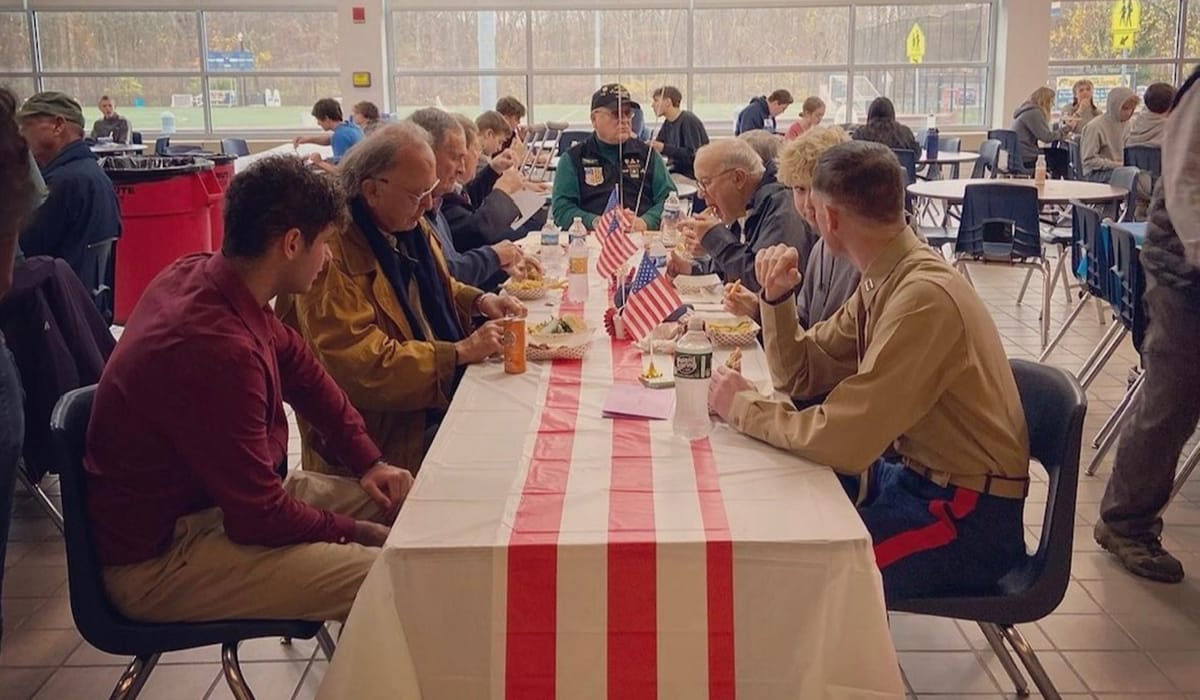
American Heroes Club president Noel Villepigue, in the maroon top on the left side, sitting in the WHS cafeteria talking with veterans. /Courtesy Noel Villepigue
Tell us about your volunteer roles.
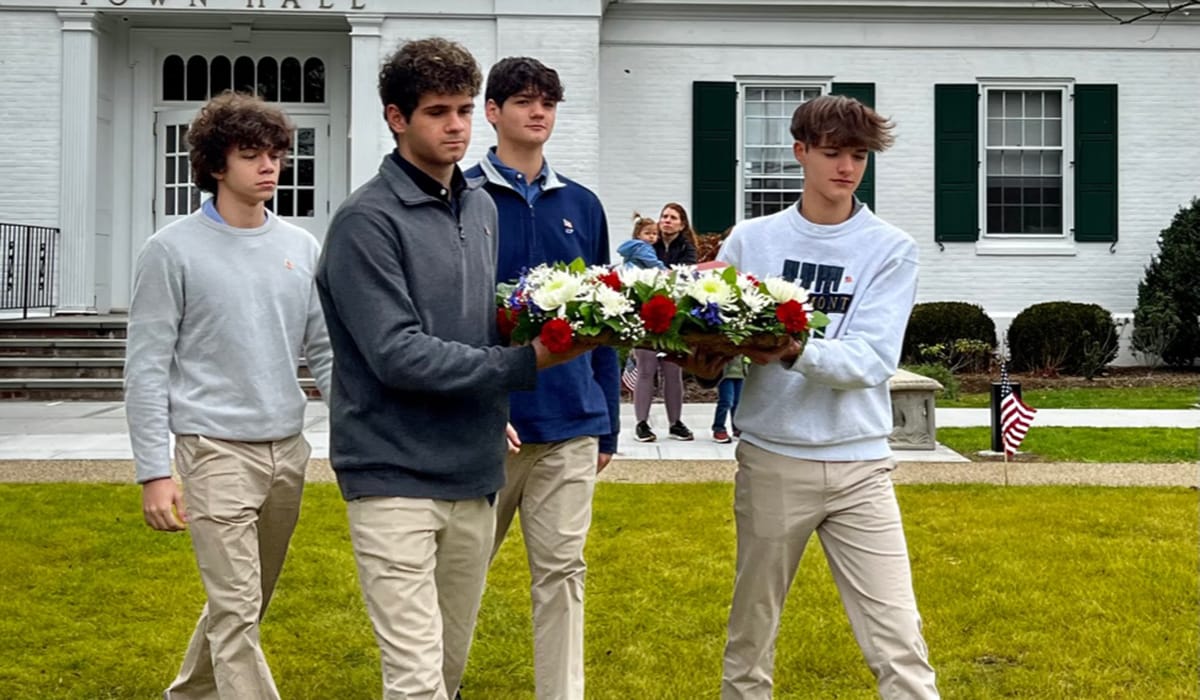
As president of Weston High School’s American Heroes Club, I lead the annual Veterans Luncheon on Veterans Day. Our day begins with a ceremony at the town hall where we present the veterans with a wreath and offer speeches of gratitude. After the ceremony, our veterans take a bus to Weston High School where they enjoy lunch alongside the students. Typically, about 20 to 30 veterans participate. We have three waves of lunch at the school, so nearly 1,000 students get to spend time with the veterans and hear their stories. This is a student’s opportunity to truly get to know our local veterans and the veterans appreciate being heard. The luncheon is followed by a Q&A session in our school library. Our goal for the Veterans Day event is to help to bridge the generational gap, allowing veterans to engage with a younger audience and build relationships with them. After all, the veterans were around high school age or slightly older when they enlisted or were drafted.
One year, over the holiday season, the American Heroes Club created personalized gift baskets which included hand-written letters, Sudoku and other game books, and treats. A few of the members and I personally delivered the baskets to our local veterans and their appreciation of our small gesture was evident. Funding for this initiative came from a grant I secured through the Hershey’s Heartwarming Action Grant Program.
We also hold Memorial Day events where we present memorial wreaths, perform flag ceremonies and give speeches to express the community’s gratitude for their sacrifices.
Valentines for Vets is another event we organize where students hand-write letters to veterans in our community as well as create thank you cards to active duty service members through a partnership with A Million Thanks Program. I built a relationship with this program by writing over 900 thank you cards in my pursuit of the Congressional Gold Medal Award. Then I introduced this idea to the American Heroes Club and the club members joined my endeavor and collectively we composed an additional 150 letters.
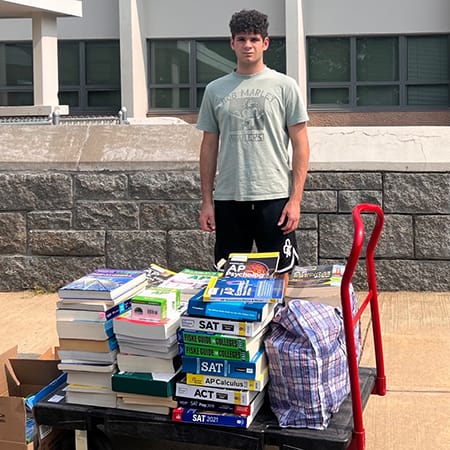
American Heroes Club president Noel Villepigue delivers over 100 prep guides to Central High School in Bridgeport, Connecticut. /Courtesy Noel Villepigue
I am an active member on the Joshua’s Heart National and local Board. Locally, we hold book, school supply and food drives. Our collections aim to assist underserved inner-city students. As we speak, we’ve donated over 10,000 books and I am always working to expand the club’s impact within our community. One of the most rewarding experiences I’ve ever had through volunteering was a book drive for Central High School in Bridgeport, Connecticut. I spoke with a guidance counselor at the school and learned that the school was sorely lacking college prep resources. This meant that these students were at a disadvantage when it came to SAT, ACT and AP exams. Colleges are placing more emphasis on standardized testing as part of the application process so I decided to find a way to help. I set up six donation sites around Fairfield County and collected over 100 college entrance exam prep guides along with AP exam prep guides, garnishing tremendous support from the community. I also applied for a WE Volunteer grant and used the funds to purchase books on scholarships and financial aid for the school. WE Volunteer is an organization that gives grants to help students serve their community.
On the Joshua’s Heart National Board, I am a Social Awareness analyst and work with a team to create Instagram posts, videos and PowerPoint presentations that we share with our partner organizations to show what the Joshua’s Heart Foundation is currently working on, including natural disaster recovery, climate change and much more. The organization is based in Miami and its focus is on alleviating food insecurity and overall fighting poverty.
I’m also on the Teen Advisory Board of my local Public Library. I have been working with the library for a long time, starting when I was in Cub Scouts. Over the past few years, I have assisted with planning and setting up for youth events, game nights and adult speaker series. One of my favorite events was a few years ago when my brother and I led a team that created thank you baskets for local emergency responders.
What inspired you to get started with this initiative?
My dedication to community service began when I was Cub Scout and participated in our troop volunteer activities such as setting up flags at town hall for veteran memorial events. As time went on, my involvement evolved into leadership roles as I started organizing my own initiatives. Upon entering high school, I actively pursued opportunities to further support veterans and became involved with the Joshua’s Heart Foundation, leading initiatives such as book and food drives. Being a part of the Joshua’s Heart Foundation has opened my eyes to the immense national impact we can achieve.
What’s been the most rewarding part of your work?
The most rewarding aspect is undoubtedly receiving feedback that validates our impact. Sure, it feels good to give back by dropping off much-needed supplies, but when we also hear how much our work is appreciated, it’s a whole other level of satisfaction. When veterans share their gratitude for being able to connect with students and feel heard, it reminds us why we’re doing what we do.
Witnessing the gratitude on the veterans’ and students’ faces makes every moment spent on grant applications, shopping, writing, organizing and leading events worthwhile.
Recently, I was recognized as one of the Samsung American Legion Scholar. The American Legion is a veteran’s advocacy group and to receive this award, I traveled to Washington, D.C., with eight other scholars. I was fortunate to have the incredible chance to speak with veterans, accompany them on a visit to Arlington National Cemetery, the Vietnam Memorial and overall, gain a deeper understanding of our nation’s history.
American Heroes Club president Noel Villepigue, wearing a black quarter zip top, presenting the memorial wreath on Veterans Day at Weston Town Hall. /Courtesy Noel Villepigue
What have you learned through your experiences as a volunteer?
Small gestures can yield large impacts. Even when I’m not organizing large-scale book drives, something as simple as crafting gift baskets for veterans holds profound meaning. In my community, there’s a strong culture of volunteerism, and I firmly believe in the ripple effect of goodness. Just one day of volunteering can stretch a long way. If more people grasped the magnitude of the difference they can make, I’m convinced we’d see a surge in volunteerism.
Why is it important for others to get involved with causes they care about?
Watching the news, you might think, “It doesn’t apply to me.” It’s easy to feel distant and detached from the events in the news. However, in every community, there are people who need help and actions we can take to improve lives. We don’t have to be stuck in the negativity of the media. Helping gives people perspective in the world. I believe that each of us possesses the power to reshape the prevailing narrative of our country.
Any advice for people who want to start volunteering?
Contact a local organization either online or in person. For example, see if there’s a food pantry near you, or any other volunteer organization. You can just walk in and ask, “How can I help?” They will be thrilled you’re there! They will tell you what they need and what you can do. There are many different groups focusing on alleviating suffering on so many levels. There’s definitely no shortage of organizations to research and join. As you keep showing up, you become more vested in the organization to the point you can’t wait to show up again. Helping is addictive! It’s not always easy to know where to start but once you start, you won’t want to stop. Helping is a good addiction to have!
What do you want people to learn from your story?
There’s always time to pursue what you are passionate about. I am involved in a lot of things, yet helping in my community is constantly in the forefront of my mind. Also, don’t underestimate the kindness of the people around you. If you’re committed to making a positive impact, you’ll find people who are eager to assist you along the way.
US Navy Officer Volunteers to Mentor Next Generation of Leaders
Meet Daily Point of Light Award honoree Bill Noddin. Read his story and nominate an outstanding volunteer or family as a Daily Point of Light.
Every month, the eager cadets of the US Naval Sea Cadet Corps (USNSCC) convene at naval bases and other military installations across the US for an action-packed weekend of drills. Amidst the disciplined spectacle of neatly pressed uniforms, polished shoes and determined expressions, it’s not seasoned adults who stand ready, but rather 10- to 18-year-olds training to become the next wave of leaders.
These young cadets immerse themselves in a diverse array of activities during these monthly drill weekends and summer trainings. From Aviation and Seabee training to SEAL Team exercises, music and culinary classes, each course is crafted to cultivate leadership qualities that will equip these cadets for future roles in the military or any other professional field.
However, none of this would be possible without the dedicated adult volunteers of the USNSCC, including Bill Noddin. In addition to actively serving as a chief petty officer with the US Navy, Bill has volunteered with the USNSCC for over six years, primarily as the executive officer of the Top Hatters Squadron in Virginia and Orion Squadron in Washington.
As executive officer, Bill guides the senior leadership cadets in running the unit.
“Sea Cadets is very big about the cadets running their own drills. But we don’t expect 17, 18-year-olds to do that without help. So, I would help guide them, answer their questions and ensure that they were doing things as best as they were able to,” Bill explained.
Despite juggling a demanding job while raising his own three kids, Bill finds mentoring the cadets rewarding, witnessing firsthand the tremendous change within them.
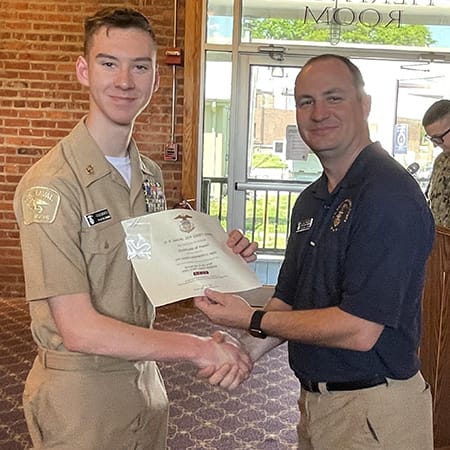
Bill Noddin (right) presents a USNSCC Chief Petty Officer with an award for graduating the program. /Courtesy Bill Noddin
“I had a cadet who messed up, so we had to remove him from the program. He took that very hard at the time. But he called me two years later and said, ‘I just wanted to say thank you for what you guys did. I’ve joined the Navy, I’ve been promoted twice now and I don’t think it would have ever happened had I not been a part of the cadets. You guys showed me what right looks like,’” Bill recalled.
Another cadet, initially very quiet and reserved, transformed into an outgoing, smiling and confident individual – so much so that she was even named Cadet of the Year.
“We have 10-year-olds who walk into this program, and they’re scared to death,” said JoAnn Taft, commanding officer of the Top Hatters Squadron. “They’ve never spent the night away from home and here they are, showing up to our program, spending the night with 30 other kids and they don’t know what to do. But Bill puts them at ease. He knows when to comfort. Or he knows when to say, ‘Hey, you’re 16 years old. You can handle more. You need to take on more responsibility.’”
“He cares about every part of a cadet’s life. If things are going wrong at home, he can see it and he can adjust how he mentors and how he communicates with a cadet by understanding them personally. Bill has changed our unit for the better,” JoAnn added.
Recently, Bill shifted his role within the USNSCC to become the training group director for Virginia. In this capacity, he plays a crucial role in developing and overseeing both summer and winter training programs. Additionally, he volunteers as the Mid-Atlantic regional shooting advisor, guiding the marksmanship program and ensuring safe and effective firearm training for cadets across the Carolinas, Virginia, Delaware and Maryland regions.
Even if the US Navy deploys or stations him in another state or country, Bill hopes to continue volunteering with the Sea Cadets for as long as possible.
“My advice for people who want to start volunteering is find something you’re passionate about and just do it,” Bill said. “The initial steps of starting might be scary. But once you get past that, it’s one of the most rewarding things you can do as part of your life.”
Bilingual Volunteer Helps Translate and Comfort Spanish-Speaking Food Pantry Clients
Meet Daily Point of Light Award honoree Blanca Marroquin Choate. Read her story, and nominate an outstanding volunteer or family as a Daily Point of Light.
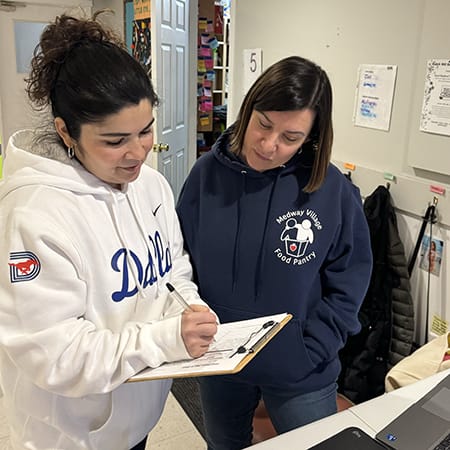
Blanca Marroquin Choate was initially hesitant to start volunteering on the weekends in her Medway, Massachusetts, town. I should protect my down time, she thought. But after showing up to one volunteer session at the Medway Village Food Pantry, her life was changed. She fell in love with the organization’s mission of ending hunger and connecting with its clients, and since March of 2022, Blanca has gladly given up her Saturdays to be a bilingual volunteer to help translate and comfort Spanish-speaking clients.
Blanca has helped move over 750 pounds of fresh produce and 2,700 pounds of shelf-stable foods to the pantry last year on behalf of her church. She hopes that using her native language will inspire others to get involved with the food pantry, to believe that small acts create bigger acts of kindness and that you don’t have to contribute largely to make an impact.
What inspires you to volunteer?
I started in March of 2022. I actually started because my friend Michelle had mentioned that the pantry needed bilingual volunteers. My native language is Spanish, although throughout the years it’s sort of become my second language. I am in Massachusetts now, but I’m actually from Texas where I was born and raised. My family is from Mexico — they’re mostly immigrants from Mexico – so Massachusetts was very far away from home, far away from my culture and my language. It was sort of a way to get back to those roots, be able to use my language again and help others in the process of coming from different emigrant areas and not having the ability to communicate as easily. I could understand how scary and difficult that must be to be away from families and be in a foreign country where you don’t speak the language or understand the people around you.
Volunteering became the bridge between that. The funny thing is that when she first approached, I was hesitant only because I was in my own lifestyle and I had a plan of doing certain things on my Saturday mornings. I thought, maybe I can’t give that up yet. But I decided to volunteer for like an hour here and there and after my first day, I completely fell in love. I didn’t want to leave and I didn’t want it to end. I was so happy to even stay for cleanup I loved it so much. It was such a different experience. I thought it would be laborious at all times but it actually brought enrichment to my house and to our family.
Since then, I have been a volunteer every Saturday unless there’s a family obligation. For the most part, I’m out there every Saturday. I look forward to my Saturday mornings with the food pantry. It was just bigger than I thought it would be; bigger than me and it just took a complete hold on me. I really love it and I love seeing the clients and connecting with them.
Blanca Marroquin Choate gladly gives up her Saturdays to be a bilingual volunteer at the Medway Village Food Pantry to translate and comfort Spanish-speaking clients.
Tell us about your volunteer role with the Medway Village Food Pantry.
It’s a two-part role. In the summer of 2022, our parish started a garden of producing fresh vegetables and fruits that we can harvest and donate. The point was for us to donate 50% of our proceeds to someone in need in our community. I help harvest some of that. Again, I didn’t know anything about growing vegetables or fruit, but I had to learn through this process. I started organizing with another woman who actually is the coordinator of our garden to help harvest, clean and bring that produce to the pantry. On Friday afternoons, we wash and clean all that produce and I come and drop it off at the food pantries. Then we prepare for Saturday.
Our pantry is shared with a church and a preschool in a basement, so we have to wait until the preschool is done before we have access to the pantry. Various volunteers come in and I come in to drop off the cleaned, washed and organized produce for them to sort and put out for Saturday morning volunteers and clients. I do that weekly during summertime. We also started non-perishable donations at our church. After the season has ended with our garden, then we bring in non-perishables that we just kept the whole year. I bring that as well with me on Friday shifts. I stay and help them sort through anything that could be expired or needs to be thrown away.
On Saturdays, I come in and I’m either a greeter to help greet clients or just fill whatever the needs are of the day at the pantry. Now my role has been registering new clients and helping them with the language barrier and understanding our process, our policies and making them feel welcome and understood.
They start with stations, usually with the non-perishables, then clients can choose what they like and they basically point because we don’t always have bilingual volunteers at every station — it’s just me and another woman who help at the front to greet and register in Spanish. But if they absolutely cannot get through the communication barrier, then I stand next to them and I help them through each station and help them choose what they need. The most difficult part for them is the non-perishable section because it’s a closet of items and they can’t always see clearly and the labels are in English. We’ve tried to label some of those in Spanish for them to understand, but my job is to reassure them and make them feel welcome and take them through the process from start to finish. Once they’ve gone through the initial process, they become more comfortable every week to come in and they know what to do. It doesn’t take very long to catch on.
What’s been the most rewarding part of your work?
I think connecting with a client on a personal level. That hesitancy, awkwardness or feeling of being less than initially surfaces — you’re going through financial hardships, and that’s very difficult for someone to endure — but it does go away. I think the most rewarding part for me has been being able to connect and remove those hesitations from them and they come into our pantry and feel welcome. It’s been rewarding and impactful for me too because I’m able to reconnect with my language. Sometimes it seems kind of distant now that I’m living in a different state, but I can be of help at the pantry and it’s rewarding.
What have you learned through your experiences as a volunteer?
The high needs in our community. We live our very busy lives and can be distracted. We forget that there’s other people that are in a disadvantaged position, whether financially, physically or emotionally. It has helped me be aware and more cognizant of those things and the blessings that I have in my own home with my own family.
Do you have any advice for people who want to start volunteering?
I’d say not to be afraid of those unknowns of what’s to come. I know there’s fear around what you’re going to see and what you’re going to hear. Am I going to be uncomfortable with someone else’s situation? Will seeing faces that I normally do not see of other cultures or lifestyles be hard? I think it’s just that we all have a will and desire to be of help to others. We just think we don’t know how to do it. But it’s just about taking the time to find out what is needed in your community; what is needed in your town and connecting with them as a start. Being involved really can change your own life.
Do you have a favorite memory from volunteering with the Medway Village Food Pantry?
Every year, they choose one of our families in need for Christmas gifts. We provide Christmas gifts for our clients through donations from the community, but then we choose a special family who can request specific gifts as opposed to just coming into the pantry and choosing what’s available to them. A donor will come in and say that they’d like to host a family. This past Christmas, a family that was chosen was one of our recurring clients — a young mother and husband who I’ve never met, but they have two small children. I was chosen to help deliver this message to her in her language and also retrieve any specific items that her family might need. There was hesitancy from her, even though we were able to communicate, but I was able to communicate with her in her language and culture because we come from the same backgrounds. She was just so blown away by the help that she already received from our pantry that she didn’t feel like she needed anything, this was enough.
The purity of her heart and her feeling already blessed with what she has, and still being at a disadvantage financially, she said she had more than enough. After a few conversations with her, she finally came around and gave us some specifics of what she needed. We were able to get specific sizes and colors and all things that are her favorite. The time came to deliver, and one of the items was a crib for her baby and she came in and she was just floored by the fact that she got more than what she askedfor. She was just so happy, and it was very rewarding for us and for me to see her and help her collect her things. I was able to connect with her physically and hug her, and she was just so thankful and grateful. That was one of my highlights at the pantry so far.
Tell us about future partnerships, programs or events that you are excited about.
All of our big events have already passed, but I’m just excited to be there every Saturday. We’ve had such an increase at our pantry this last year and a half that I’m excited to be there and help relieve some of that growth. I like being of help and of use, so I look forward to that. I also look forward to having others be inspired by the work that’s been done there, not just by me but everyone that is here. We all come from different backgrounds, lifestyles, cultures, mindsets and languages, so we all get to come together and unite to give a hand to those in need in our community.
After Retirement, New Yorker Spends Five Days a Week Serving the City’s Great Institutions
Meet Daily Point of Light Award honoree Mark Mandel. Read his story, and nominate an outstanding volunteer or family as a Daily Point of Light.
For 13 years and counting, Mark Mandel has volunteered with the Central Park Conservancy in a multitude of ways, doing jobs from greeting visitors to assisting groundskeepers. Since 2010, Mandel has given more than 4,600 volunteer hours to the conservancy, but his service doesn’t stop there.
The 73-year-old also volunteers at the American Museum of Natural History, Metropolitan Museum of Art and helps prepare and serve food weekly at a local soup kitchen. His retirement and volunteerism have become his “new life,” one that’s helping him reach his goal of making a true difference in the world.
What inspires you to volunteer?
I volunteer five days a week: three days a week at Central Park Conservancy, one day at the American Museum of Natural History and one day at the Metropolitan Museum of Art. I also prepare food and serve at a soup kitchen on one of those days. So I have a pretty involved volunteer life and kind of devoted myself to that after I retired. My motivation in life right now is that I want to make a positive difference in the world and I have a lot to give. I’m such a proud New Yorker that I have decided to devote myself to some of the greatest institutions — iconic institutions — of the world as a volunteer, which gives me great satisfaction and enables me to make a difference and help other people at the same time.
I worked in television as a sports television executive in New York for most of my career, which was a fun job and I liked it. But I never got anything back in terms of a tangible feeling that I made a difference in the world. I’m able to do that now in my new life as a volunteer. Now I’ve got the time and I devote, like I said, five days a week to it.
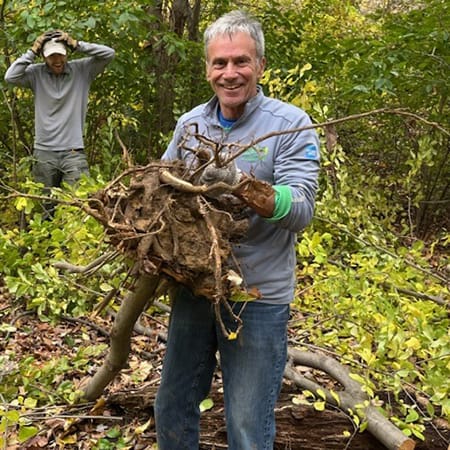
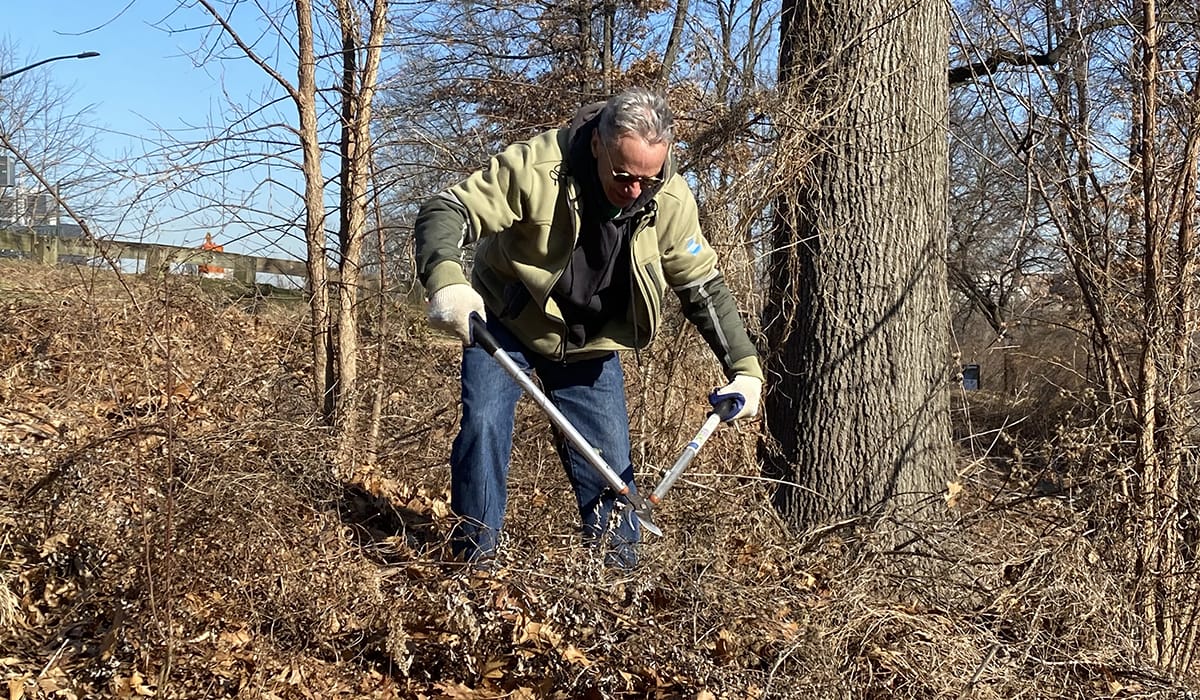
As a volunteer with the Central Park Conservancy, Mark Mandel removes invasive trees and plants, loads and spreads mulch, chops ice and shovels snow in the winter, and much more.
Tell us about your volunteer role with Central Park Conservancy, the American Museum of Natural History and the Metropolitan Museum of Art?
I’ve been a volunteer at the Central Park Conservancy for 13 years and I’ve done a number of different volunteer jobs. Now I’m a gardener’s assistant, which is a very physically demanding job. I always seek out the most physically demanding job because oftentimes I want to do jobs that are the most impactful to the park and I enjoy that. I also love a challenge, a physical challenge, so I do things like remove invasive trees and plants, load and spread mulch, chop ice and shoveling snow in the winter, improve trails and I also help with weeding. Afterwards, I feel great that I could see what I’ve done. I could feel it with my body; I’m achy, dirty and I’m tired. It’s a great feeling. I also work with other volunteers, which is a big part of what I love to do. We collaborate, make friends and we work together.
The other role I have in the park is called a greeter. Every Sunday, I go into an information booth in the park where I welcome people from all over the world about the park, giving them directions, ideas and what to see. I also take that opportunity because a lot of people from out of town have questions about New York and I’m a very proud New Yorker and very happy to help them enjoy not only the park, but the whole city.
The third thing that I did in the park was being a tour guide. For four years, the conservancy had all volunteer tour guides and then the pandemic hit. Now they have a professional staff that does that, but for four years I did that. It was a labor of love to learn about the park because the park is so special. The park is the first public park in America. It was conceived as a place where all people can enjoy the park and get away. The park, to this day, serves not only New Yorkers, but everybody in the same way it was intended to when it was first conceived. That makes me feel special that I could be part of that; that I could help people in a way that the park designers intended.
At the Natural History Museum, I’m an explainer, which means I go into six different halls and if people have questions, then I can help answer those questions. I also help out at the information desk. At the Metropolitan Museum of Art, I’m the visitor experience information person sitting at a desk. At the soup kitchen, which we do every Wednesday morning, I make sandwiches and then serve coffee, soup and food.
Every time I’m in the park and every time I’m at the museums, I pinch myself and say how lucky I am. It makes me want to give back even more to those who are visiting those places. It’s a very rewarding relationship between me and these institutions. I would recommend it to everybody who has the time.
What’s been the most rewarding part of your work?
To make a positive impact. I believe all of us have an opportunity to make big differences in the world. I think many of us may have an opportunity to do small things that, when you add them up, make a big difference. That’s sort of where I am in life. I do small things and I do a lot of it; I put in close to 5,000 hours of volunteer work in the park itself. It’s a cumulative thing that I think over time makes a difference and I get really good feedback from the folks at the park and the museums because they really appreciate me. It’s a great symbiotic relationship.
What have you learned through your experiences as a volunteer?
I’ve learned that we can all make a difference. I’ve also learned about gardening in ways I never knew were possible. It’s an educational experience for me. I’ve learned a lot more about art too. I learn more about the natural world when I go to the Natural History Museum. I also have made some great friendships with other people who have similar views on life; we have a shared vision about life. We have shared interests and volunteering is very rewarding that way, when you find people who you can do it with.
73-year-old Mark Mandel assists the groundskeeper at the Central Park Conservancy to keep the land clean, trimmed and ready for visitors.
Any advice for people who want to start volunteering?
I talk to a lot of people who are astonished that I do it five days a week. They’re kind of set in their routines, and can’t figure out how to make the first step to volunteer. I say just take the first step. Most of these organizations have positions that would be suitable for everybody. Everybody doesn’t have to be like me doing the most difficult physical jobs. We have a lot of people in the park who do things at their own level, at their own speed, shaped to their own interest and there are opportunities out there — all you have to do is make yourself available. I would tell them how rewarding it is. It’ll be worth their while once they do it. Until you do it, you don’t really realize how great it is to feel that you’re helping other people.
What do you want people to learn from your story?
In order for the world to be a better place, we all have a role in making that happen. There’s a lot of strife, there’s a lot of misery and a lot of people have difficulties in life. If we could do something good, we ought to do it. I don’t criticize people who don’t, but I think that those who do are going to make a difference and that’s ultimately what we all want.
Tell us about future partnerships, programs or events that you are excited about.
The Conservancy recently planted a tree in Central Park in my honor — an American Sycamore — which I’m very humbled by and very honored by. I’d like to be cremated and have my ashes serve as fertilizer for my own tree one day. It’s 30 feet tall right now, and it’ll grow to about 100 feet. It’s a legacy that I can say I’ve made and I can say I’ve made a difference. The satisfaction level is off the charts.
Bay Area Consultant Mentors Underserved High-Achieving Students
Meet Daily Point of Light Award honoree Joy Sim. Read her story, and nominate an outstanding volunteer or family as a Daily Point of Light.
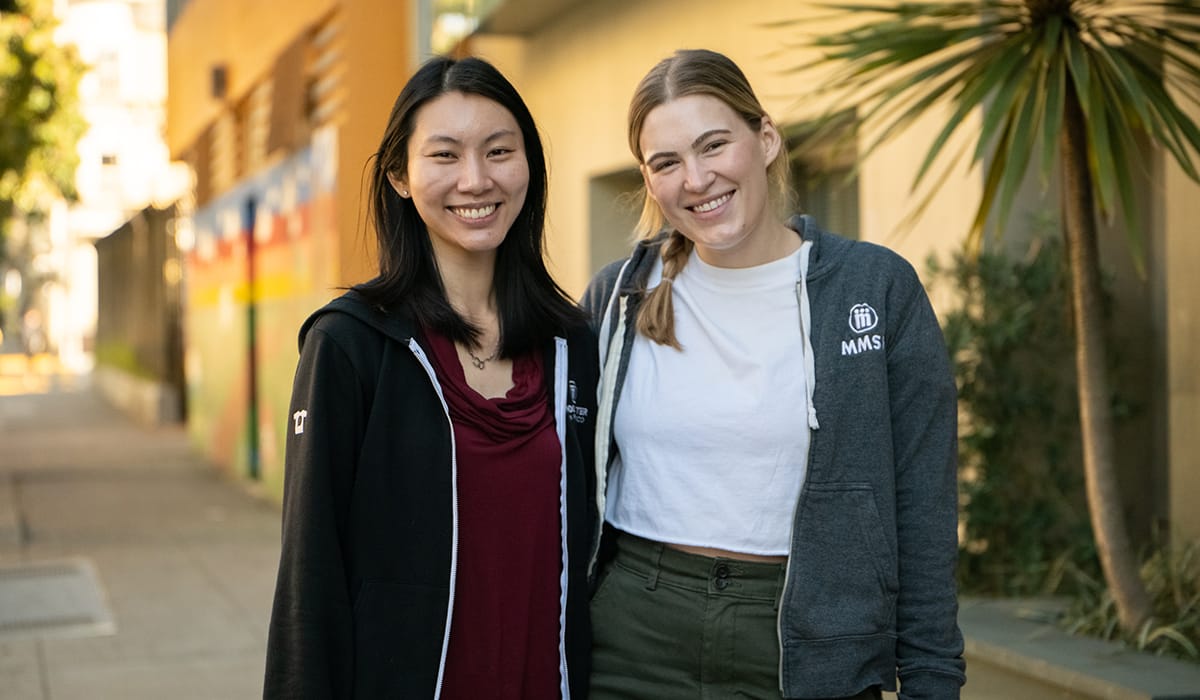
Born in Singapore, Joy Sim came to the United States to attend college at University of California Berkeley and, later, Stanford University. After a brief stint on the east coast, Joy, who works as a management consultant, returned to the San Francisco Bay Area and has lived there ever since. Aside from reading, listening to music and playing tennis, Joy has been volunteering for the past seven years with Minds Matter Bay Area (MMBay) as a mentor, mentoring lead and now co-chief community officer.
During her many years as a volunteer, Joy discovered that mentoring and tutoring is her passion, especially for high school students. Today, her mission is to empower underserved but high-achieving high school students in the Bay Area to succeed through her work with MMBay.
MMBay is one chapter of a nationwide organization. The Bay Area chapter has over 200 volunteers and 300 current students and alumni. Minds Matter Bay Area focuses on helping high school students who excel academically but don’t have the financial resources or family support to go through the often-confusing college application process. The organization seeks to help these outstanding students get into the college of their choice — the nation’s most selective colleges — and to look beyond what they believe they can achieve.
In a three-year program that works with high school students through their sophomore, junior and senior years, the main emphasis is what happens on Saturdays: two hours of instruction plus two hours of mentoring. The instruction focuses on preparation for college entrance exams (SAT/ACT). The organization also funds students to attend summer programs at colleges they’re interested in to give them a taste of college life.
Joy Sim, left, wearing red shirt, with her MMBay mentee, center, and co-mentor, right, celebrating their mentee’s graduation from the MMBay program. /Courtesy Joy Sim
What inspires you to volunteer?
I have been volunteering since I was a teenager in Singapore, so I’ve been volunteering for a little over 20 years now. I have volunteered with many nonprofits working with children and youth, the elderly and the unhoused, and found that I enjoy mentoring teenagers the most.
Tell us about your volunteer role with Minds Matter Bay Area.
I started as a mentor with MMBay for five years, took on a leadership role as mentoring lead and now lead all Community teams as co-chief community officer (CCO). I help recruit MMBay volunteers and students, support our student alumni after they graduate, engage with parents and guardians, run volunteer trainings and organize socials and events. In this way, I help keep the community engaged and connected, and continue to support Saturday in-person session shifts and attend leadership meetings. Overall I volunteer approximately 40 to 60 hours each month.
Three years ago, MMBay had challenges with data management, which meant that simple questions about our community took much longer to answer. As a consultant, I took this opportunity to bring my company’s professional resources to MMBay, and helped build a MMBay data platform as a pro-bono project. This platform would allow volunteers and students to find information about each other easily, thereby sparking deeper connections across the entire MMBay community. Throughout the project, I served as an essential bridge between my company’s team and MMBay’s team, providing context, perspective and training.
Spring is our peak application season for both volunteers and students, so that is our main focus for the coming months.
What inspired you to get started with this initiative?
I was volunteering with a different organization about two years prior to applying with MMBay. Pre-pandemic, I was flying back and forth to Denver as part of my management consulting job. I learned that my client was on the board of the Minds Matter Colorado chapter. He told me what the organization does, but because I was already involved with a mentoring/tutoring program, I didn’t think much of it. Two years later at a college alumni event in San Francisco, I caught up with a friend who told me about MMBay and his experience as a mentor there. What sparked my interest this time was that the mentoring sessions took place on Saturdays, and hearing about this from someone I knew cemented my desire to apply.
A lot of other mentoring organizations met during the week, which made it impossible for me to volunteer due to my job travel. I like the fact that it’s a three-year program, so there is consistency in building a long-term bond with the students. The students know that you’re going to show up for them every week, build a connection over time and that we are there for them as trusted adults outside of their family. I was also relatively new to San Francisco, so joining MMBay was another way to meet new people. We’re a close-knit group! Having been at MMBay for seven years, I’ve found that MMBay is the most structured and well-run nonprofit I’ve ever been involved with.
What’s been the most rewarding part of your work?
When I was a mentor, the most rewarding part was hearing about my mentees getting into the colleges they wanted. I loved seeing how they’ve grown and matured throughout the three years of the program. As a volunteer leader, I enjoy seeing the smiles on the students’ and volunteers’ faces at events I’ve helped organize, seeing the community come together.
I’ve found the impact on MMBay’s students and families the most rewarding — when the students’ parents thank us for the work we did, because they had no idea how to navigate through the college applications process. Without this program, these students wouldn’t have the opportunities to attend top colleges. They also become role models for their younger siblings, and end up returning as volunteers later on as they want to give back to MMBay.
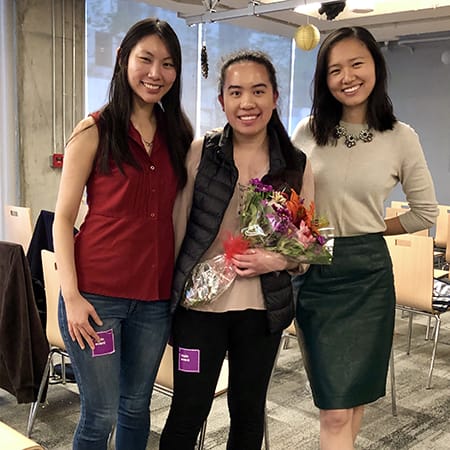
Joy Sim, left, with her previous co-Chief Community Officer at Community Day 2023 /Courtesy Minds Matter Bay Area
What have you learned through your experiences as a volunteer?
I have learned how to be a better mentor. My previous volunteering experiences focused on tutoring, but mentoring is different. Being a mentor isn’t about telling your mentees what to do, it’s about asking the right questions and helping them figure out their own ways to solve a problem. I’ve had to learn to step back and let them come up with a solution, and practice listening with empathy and kindness. I love that MMBay is a safe environment to learn and practice this skill.
I also learned how to cater to different learning styles, and to present information in an informative yet engaging way. This was particularly challenging during the pandemic when our sessions were over Zoom. I learned how to make sessions interactive, such as using icebreakers and breakout rooms to keep teenage students engaged.
Now I’m focusing on leadership skills and managing the various moving parts of the organization. I collaborate with different teams and support the operational aspects of a nonprofit. I get to see behind the scenes how MMBay is run so efficiently — and become part of it. As it turns out, there are many volunteers in the background keeping the engine running!
Any advice for people who want to start volunteering?
Start searching for volunteer opportunities near you. See if there are any one-off volunteer opportunities to get your feet wet without making a big commitment. You need to understand what you’re passionate about helping – such as education, poverty, environment or social justice. Once you’ve tried out volunteering in different areas, you will learn what you enjoy and where you fit in, and find an opportunity that fits with your schedule. If you cannot give time, that’s okay. You can also donate and serve your community in that way.
What do you want people to learn from your story?
At the end of the day, we serve underserved, high-achieving students. We elevate them out of their comfort zones, empower them to get into the best colleges they can, and change their life trajectory for the better.
Do you want to make a difference in your community like Joy? Find local volunteer opportunities.