Phoenix Volunteer Develops Women’s Economic Self Sufficiency and Personal Empowerment
Meet Daily Point of Light Award honoree Shawnda Dawson. Read her story, and nominate an outstanding volunteer or family as a Daily Point of Light.
In both her professional career and volunteerism, Shawnda Dawson makes it a priority to uplift women to reach independence and self-sufficiency. Outside of working a demanding leadership job for JP Morgan and owning her own business, Dawson dedicates her time and expertise to the Fresh Start Women’s Foundation. There, she supports women and girls along their journey of transforming their lives for the better through training, career readiness workshops, certification programs and more.
Dawson truly believes in the power that community holds to make a difference in not only the lives of individuals in need, but the world. For the past six years at Fresh Start, she’s helped make that belief contagious and has helped impact the lives of more than 4,200 women.
What inspires you to volunteer?
In my role, I have the privilege and opportunity to work directly with women who are receiving benefits and services from Fresh Start. They tell me the impact that Fresh Start has on their lives. I can see their confidence growing and I can see their courage growing as they set goals for themselves that they never thought were possible. I see them taking ownership and holding themselves accountable, which is not always easy as it seems. So, the Fresh Start model to empower women with the tools and resources necessary for them to obtain economic independence is really what drives me. I’m only a small part in their journey. What I love and appreciate about seeing them is that they’re willing to do the work. So, for me, watching them go through their journey is really the greatest inspiration for me.
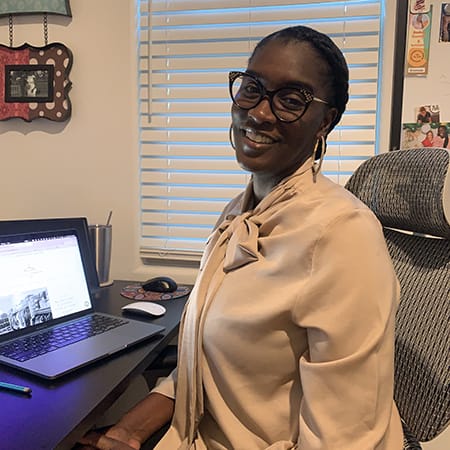
Learning and development professional Shawnda Dawson provides education and resources to support women across her Phoenix, Arizona community with the Fresh Start Women’s Foundation.
Tell us about your volunteer role with Fresh Start (FS) Women’s Foundation?
I joined Fresh Start eight years ago, and it has been a pillar in the Phoenix community for over 30 years. Its mission is to provide education and resources in support for women. Everything that the organization does is centered around five pillars: family stability, health and wellbeing, financial management, education and training, and, finally, careers. The incredible staff and leadership at Fresh Start have a primary focus on creating programs to help develop women’s economic self-sufficiency for their personal empowerment. As a community volunteer, I play a small role in all of the inspiring work that they’re doing for our community.
As a learning and development professional, I contribute to Fresh Start’s mission by sharing my expertise in training, education, human resources and project management. I’ve designed and developed training programs and workshops for Fresh Start that I facilitate along with some other volunteers. I also act as a keynote speaker for their special programs and events, like our project management certifications. Other responsibilities that I hold include holding mock interview events, resume writing workshops and then I also offer career coaching.
I was recently selected by Fresh Start staff to create and present what’s called the Personal Empower Series Program, which focuses on values, setting healthy boundaries, goal setting and creating healthy habits. That’s one of the reasons why I love Fresh Start, because when it comes to their volunteers, they want to make sure that they understand our areas of expertise and what we’re passionate about. Then they kind of align us to support their cause and their mission in that way. I’m really lucky that what I get to do professionally, I can also share with this amazing organization.
What’s been the most rewarding part of your work?
The most rewarding part of my work has been what I’ve learned as a volunteer with Fresh Start, just giving back over the last eight years. I really have learned that most people, they really want to learn, they really want to work hard. They want to be contributing members of our society and they really do want to be self- sufficient. So I’ve learned just not to assume that people are in tough, unfavorable unhealthy circumstances because they want to be. Oftentimes, people just don’t know how to get started or they don’t have the support, or maybe they have never been told that they can do or expect more for themselves. So sometimes people just need to be heard and seen. That’s all the motivation that they need. This is what makes Fresh Start and the work that I do for them so special. They have every resource and service available to help empower, educate and support women. I really do understand where these women come from. I relate to them in their story on so many levels. I’m really just there to offer my guidance and expertise without any judgment.
What have you learned through your experiences as a volunteer?
From a very young age, I’ve always known that my purpose was to help inspire, uplift and empower girls and women. Every day, I just try to live that purpose in some way and empower girls and women. So really, I just try to live that purpose in some shape or form, whether it’s big or small, because people really do just appreciate you just giving back and caring. I will continue my work with Fresh Start as long as they will have me and our values align. I also believe that the better I am as a human, the more I grow — this includes me having more knowledge, more experiences — the more I can really help other people. I’m always challenging myself and looking for ways to improve and develop. I might go back to school, I may learn more about nonprofit work and I may just start my own nonprofit one day. But really, I think my point is that I really am still learning and I’m still growing. I just really want to just live my purpose and be a member of my community that people can be proud of. And that’s the lesson that I’m learning.
Any advice for people who want to start volunteering?
Volunteering and getting involved are really the key to our country and our world being a better place. I know that sounds super cliche, but I absolutely believe that from my heart. Whatever you can do to help someone, why not do it? I understand that we’re all busy. I understand that we all have other responsibilities. But I also know probably for a fact that either someone has helped you, or you just wish that someone had helped you. I’m sure the answer to one of those questions is yes. There are so many negative, sad things happening around us that we cannot control, so my whole thought is like, let’s just balance things out a little bit. We should be the light, we should be kind and we should be helpful. We can lend a hand and we should spread positivity — it’s something that we can control. However you do that, big or small, just help make the world a better place. I really do believe in that.
What do you want people to learn from your story?
I want people to really understand that they are in control of their lives, their spaces, their goals and their journey and to own it. Stop making excuses because I guarantee, I see it with these women — these amazing women — that there are people out there that have it light and don’t expect anyone to do the work for you. However, there are so many people, organizations, professional services, maybe even family and friends that are willing to help you if you just ask.
Do you have a favorite memory from volunteering with Fresh Start Women’s Foundation?
There’s really too many to count; I get way more from them than what they get from me honestly. Every time I work directly with them, I walk away with a new memory, but at the end of a workshop that I facilitated last month, one of my participants actually asked me to come to her graduation. We only spent two hours together, but my heart exploded. At the same time, I couldn’t believe that she really wanted me there, but she was serious. She went on to share that she really loved the work we shared and appreciated my compassion, my relatability and my transparency. It meant a lot to her that someone cared so much. And she just wanted me to see her complete a milestone. I just can’t put into words how it made me feel. I promised her that if she sent her graduation information to the program, the program coordinator would pass it along to me and then I would absolutely attend and celebrate with her.
Tell us about future partnerships, programs or events that you are excited about.
On March 27, Fresh Start is having a women in power education event. It’s a part of their leadership series. During your lunch hour, you’re invited to hear from amazing speakers and the topic is women and the power of education. It starts at 12 p.m. I’m looking forward to that public event in our community.
30 Years As a Pillar of Protection and Leadership in His Community
Meet Daily Point of Light Award honoree Chad LeMarr. Read his story, and nominate an outstanding volunteer or family as a Daily Point of Light.
Chad LeMarr of Brighton, Illinois, is a true testament to unwavering dedication and service to those in his community. For nearly three decades, LeMarr has served as a volunteer firefighter with the Brighton Betsey Ann Fire Protection District, embodying the spirit of volunteerism and commitment to public safety.
Chad’s journey as a volunteer firefighter has been nothing short of remarkable. Coming from a small town of about 600 people, Chad’s grandfather was the fire chief, followed by his uncle and then, finally, he took on the role. Chad described himself as someone who has always wanted to help others, regardless of the situation.
With an annual contribution of roughly 2,000 volunteer hours, Chad has dedicated a significant portion of his life to ensuring the safety and well-being of approximately 10,000 residents across 67 square miles. “We do not have a full-time staff, we are strictly all volunteer,” Chad explained, highlighting the critical role volunteers play in safeguarding the community.
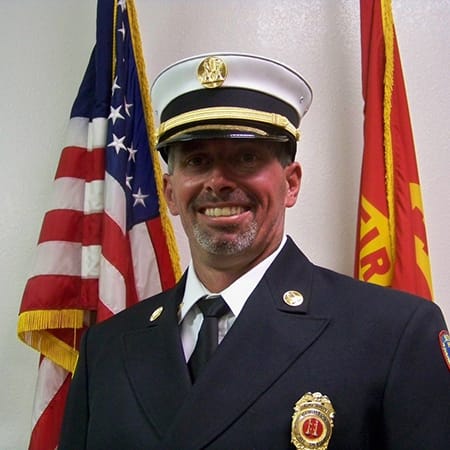
Chad LeMarr is a dedicated volunteer firefighter and assistant chief with nearly 30 years of service.
In his current role as assistant chief of the fire department, Chad goes beyond the call of duty, overseeing day-to-day operations and guiding the next generation of firefighters. “My role is helping with day-to-day operations and training and helping new recruits their roles and expectations,” Chad stated, highlighting his commitment to mentorship and leadership. “I’m currently trying to get the younger generation trained up to do the job safely.” His extensive experience and knowledge make him an invaluable asset not only in fighting fires but in fostering a cohesive and efficient team.
As a chief officer, Chad often takes on the role of incident commander on scenes, a position that demands both strategic thinking and decisive action. “We are a team and do everything we can to get the best outcome for the situation at hand and to keep everyone safe,” he says, emphasizing the collaborative effort required in emergency response. Chad’s leadership ensures that each operation is conducted with precision and care, prioritizing the safety of both his team and the community they serve.
“It takes all kinds of people,” said Chad about volunteer firefighting. “We have different people with different skills – some have computer skills, while others run scenes. Some have both. You need people who are good at different types of things.”
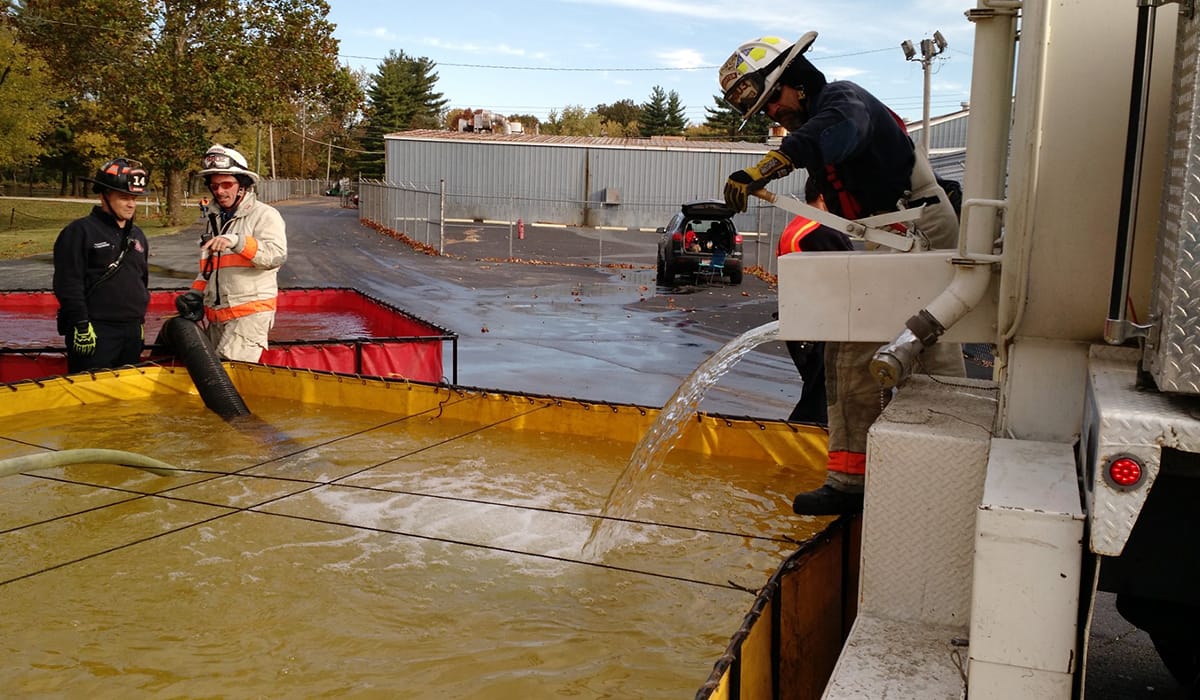
Chad offers an annual contribution of around 2,000 volunteer hours through the Brighton Betsey Ann Fire Protection District.
Chad’s nearly 30 years of volunteer service with the Brighton Betsey Ann Fire Protection District is a powerful reminder of the impact one individual can have on their community. Through his dedication, leadership and willingness to mentor others, Chad has not only contributed to the safety of his community but has also set a standard for volunteerism and public service. “Being able to help people when they’re in their lowest states,” Chad reflected, “that’s the most rewarding part of my work.”
Teen CEO Empowers Global Youth With Financial Literacy
Meet Daily Point of Light Award honoree Ashwin Joshi. Read his story and nominate an outstanding volunteer or family as a Daily Point of Light.
At just 18 years old, Ashwin Joshi is making waves as the founder and CEO of Ashwin Teen Financial Academy (ATFA). ATFA’s mission is clear: to provide a crucial skill often overlooked in traditional schooling – financial literacy – to every young person.
Recognizing the widespread deficiency in financial education among his fellow high schoolers, Ashwin took matters into his own hands. The academy employs a multifaceted approach to reach teens globally, including the creation of Financial Chapter Clubs in high schools across the U.S., distribution of media modules for broader accessibility and the development of an online academy covering topics ranging from basic budgeting to complex financial instruments like stocks, credit management and 401(k) plans.
Since its inception in 2020, AFTA has made a global impact, reaching nearly 100,000 students across 190 countries through its online classes.
Ashwin’s passion for financial literacy extends beyond ATFA’s programs. He was among a handful of high schoolers who testified in favor of House Bill 1915 at the Washington State Capitol on January 15. The bill sought to make financial education a graduation prerequisite and a required component of public education. While the bill failed to pass, Ashwin remains dedicated to advocating for financial education reform, driven by his belief that every student deserves the tools to thrive in an increasingly complex financial landscape.
What inspired you to start ATFA?
I’m the first generation raised in America from both sides of my family’s lineage. My parents immigrated from India; my mom had some financial experience, and my dad came to become a physician here. When we came to the Tri-Cities, moving from our apartment in Connecticut, my dad got straight to work. As time went on, my parents continued to invest in businesses and that became a key part of our success in this country, and so naturally, I got put into that world at a young age, too. Growing up, my playground was my family’s first gas station, and I took on more responsibilities over time. We wouldn’t talk about tennis matches at the dinner table; instead, we discussed the day’s dealings.
When I started to register for high school classes, I saw that there were requirements for English, science and math, but I didn’t see a requirement for financial literacy. That made me upset because this is such a crucial skill. This must be a fundamental right of all students. It cannot be a privilege for a few. As the pandemic ensued in 2020, I saw it as a chance for me to go fully into my passion. I read as many books as possible and then I also started writing my own “Money for Teens” book. The book got lots of attention from kids in my school and they were commenting that it was so insightful and helpful. So, then I started building a “Finance for Teenagers” curriculum and that would be the beginning of the in-person program I established at my own high school in 2022.
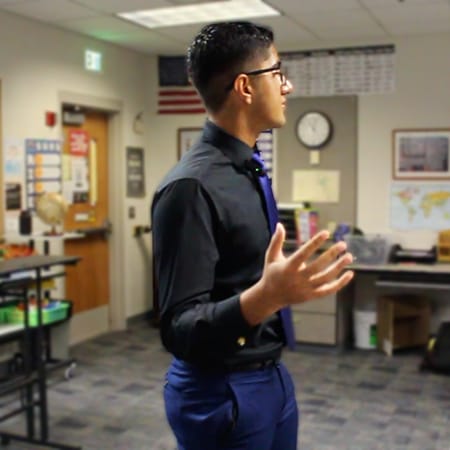
Ashwin leads a financial literacy course to high schoolers through the ATFA Academy he founded. /Courtesy Ashwin Joshi
How has ATFA grown since you founded it in 2020?
In 2022, we established ATFA as a 501(c)(3), with the mission of enabling every single teenager, regardless of circumstance, income, privilege, race gender or disability, to learn these critical life skills such as budgeting, stocks and credit, so that they can reach their maximum potential.
Our turnkey package curriculum that we give to schools is completely free and we have over 90 high school chapter recipients.
We also established the online academy in 2022 after we received grants from Microsoft and Azure for our web hosting and everything. I had a great co-founder who came along in 2022, chief technician officer Sahir Tandon, and we started building a team of 20 high schoolers across the nation.
As of our biannual Impact Assessment report last year, we reached 50,000 students in 190 countries including the U.S., UK, Canada, India and Indonesia. But I expect that our online academy should have reached over 100,000 students by now with the partnerships we’re building. For example, we partnered with a nonprofit in Massachusetts called StockSense, which gamified stock investing into a Duolingo-like mobile app.
They’re integrating our courses into their app and helping to bring new traffic to both of our platforms.
What has the feedback been from the students and also their parents?
It’s just been amazing. We get so many emails from parents and students just thanking us for doing this for them. And it’s really what keeps the entire team going. I’ll never forget how there was this one student, teary-eyed, who said to me, “Ashwin, the programs you offer here at ATFA are what makes me convinced that I can settle my mom and me.” Students like him are why we do what we do. If we can help kids understand the way money works, we can change so many of our society’s biggest issues, and that’s a future I will always fight for.
What are your long-term plans or goals for the organization?
This is one of the hardest decisions I’ve made, but I am making it because I realize what makes ATFA special is that it’s about a teenager wanting to help other teenagers, a high schooler wanting to help other high schoolers. So what I’ve done now for over a year is that I’ve been working with a student of mine, Parker Collette, who’s now the executive assistant of the organization and also a freshman in high school. When I graduate, I’ll remain as the chairman of the Board of Directors, but I will step down as the CEO. I’m still going to be involved, but I’m not going to be as involved as I was before because I want there to be new ideas, new innovation and new worldwide impact.
What’s been the most rewarding part of your work?
The first would be creating content that simplifies financial education so that any teenager can understand it and seeing how kids get excited learning about this. Secondly, being able to help enact legislation that changes policy for the entire state. For example, since last August, I’ve been working on House Bill 1915 as legislation in Washington state. With the bill passing, it not only changes the lives of hundreds of thousands of students that are going into our upcoming education system but also the kids after that and after that. And then it goes on to impact millions. And that’s really what gets me fired up, seeing how this is going to change countless kids’ lives. (Note: House Bill 1915, which unanimously passed in the Washington State House, ultimately failed to progress due to disagreements on making financial education a high school graduation requirement.)
What have you learned through your experiences as a volunteer?
I have learned that if you’re going to volunteer for something, volunteer for something that you can give your heart to. I have not made a single penny from volunteering, and I’ve devoted thousands of hours to this organization. But I’ve gained so much in terms of management, leadership experience and goodwill from the community and that’s so invaluable. There’s no amount of money that I would take in exchange for all these experiences I’ve gained. Volunteering is really a test of how committed you are to one thing.
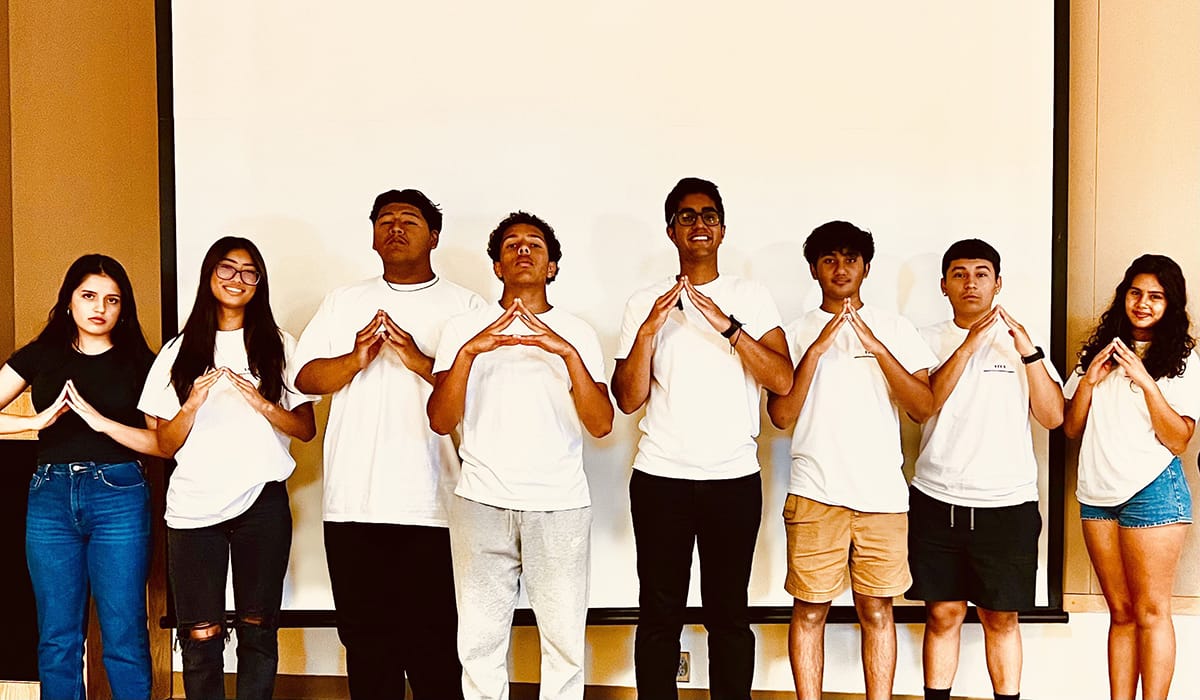
Ashwin (fourth from right) and his fellow ATFA team members pose for the camera during the academy’s Youth Entrepreneurs program. /Courtesy Ashwin Joshi
Tell us about future partnerships, programs or events that you are excited about.
We’re currently working with Junior Achievement of Washington to form a collaboration. Then there’s also the Center for Inspired Learning. And we’re also looking into mobile app development as well for a standalone ATFA app. Those are all things I’m incredibly excited about because when we put together talented people and organizations, then we can create an even bigger movement.
What’s one piece of financial advice that you want all teens to know?
Save more than you spend.
Any advice for people who want to start volunteering?
Do something you’re passionate about. Organizations are always looking for volunteers, looking for people who are vicious and driven. We always want to find new people, new teenagers who are willing to volunteer with passion and promise. And even if it’s not for our organization, there are countless organizations. Whatever you want to volunteer for, you can find it.
What do you want people to learn from your story?
I want people to learn that if you truly believe in something, don’t let anyone else try to discourage you. Make sure to fight for it. If you remember why you started in the first place and you continue to keep that why as you go on, the results will show.
New York Retiree Volunteers to Ensure Affordable Housing for All
Meet Daily Point of Light Award honoree Peter Ho. Read his story and nominate an outstanding volunteer or family as a Daily Point of Light.
Meet Peter Ho, a dedicated volunteer at the Chinese Consolidated Benevolent Association (CCBA) in New York. Trained as a public benefits counselor through the Advocacy, Counseling and Entitlement Services (ACES) Project, Peter has been specializing in aiding individuals apply for the different benefit programs they’re entitled to such as Medicare, Medicaid, SNAP and affordable housing. Since he started volunteering in December 2013, Peter has become a cornerstone of support for his primarily Chinese-speaking clients, many of whom are lower-income older adults facing language and technological barriers. Through his guidance, Peter has facilitated the submission of more than 1,000 applications and recertifications for affordable housing programs, helping his clients navigate a predominantly online and English-based process that would have been daunting without his assistance.
In the face of challenges such as the COVID-19 pandemic, Peter’s commitment to his community didn’t waver. Recognizing the urgent need for support during the lockdowns, he volunteered his time whenever CCBA was open, ensuring that his clients continued to receive the help they needed more than ever. Even now, Peter remains steadfast in his dedication, offering in-person assistance once a week for five hours. His words of wisdom echo through the halls of CCBA: patience and perseverance are key to securing affordable housing This message has empowered countless individuals to navigate the complicated journey towards finding a place to call home.
Tell us about your volunteer role with the Chinese Consolidated Benevolent Association (CCBA).
At CCBA, I work as a benefit counselor, just helping seniors understand the different benefit programs including health care and housing. I help them with the applications and also the recertifications of the housing application because even after they have found housing, they need to apply for recertification every one to two years.
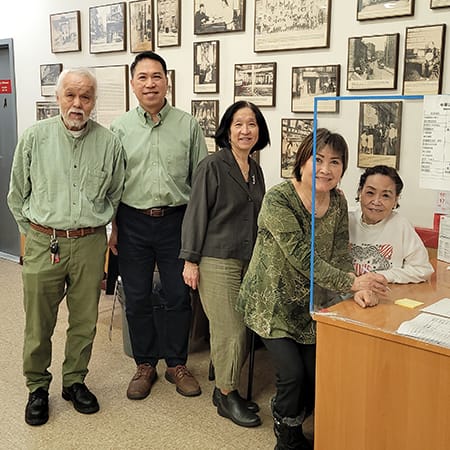
Peter (second from left) stands with his fellow volunteers at the Chinese Consolidated Benevolent Association in New York. /Courtesy Peter Ho
What inspires you to volunteer?
I came to this country in 1992 because of my family. After working 20 years at the bank, I decided to take an early retirement. I wanted to use my skill and experience to give back to the country and community. Through volunteering, you’re helping other people, but it also helps you to continue improving yourself.
What inspired you to get started with this initiative?
CCBA is in Chinatown in New York City, so most of my clients are Chinese immigrants who do not speak English. Because they’re new immigrants who lack the language skill and they don’t know much about how to use computers or technology, I help them understand the benefit programs and submit applications. So, I wanted to use my language and technology skills to help them.
What are your long-term plans or goals for the organization?
I plan to continue volunteering for as long as I can and I hope that I can use my knowledge to train others so they can continue to help the community.
What’s been the most rewarding part of your work?
The housing application is a long process. Some people have to wait up to four or five years. But when they finally get to move into their apartments, that moment is pretty rewarding. I also help some clients who already have housing but because of the high property tax, they can’t afford to pay their property tax, so I help them apply for the senior citizen tax exemption. For example, I recently had a client who moved from a single-family house to a condominium and their property tax jumped from $8,000 to $17,000. That $17,000 is more than their income. So I helped them apply for the senior tax exemption, which reduced their property tax by half. It’s moments like these that are rewarding.
How did the Covid pandemic affect these housing applications?
After the lockdowns during the COVID-19 pandemic, I went back to CCBA as it was one of the few centers in the city to have in-person service at that time. When I went back, I noticed that many of the public housing applications were terminated by the system because the system requires you to recertify every two years. Because of the lockdown, many of our clients were unable to come to CCBA to recertify their applications and their applications were getting terminated. I talked to the public housing department and reported the issue, but they said they couldn’t do anything. So eventually, I escalated the issue to ACES, and they coordinated with another agency to change the system so that applications would be automatically renewed. Due to this change, thousands of applications were not terminated during that period.
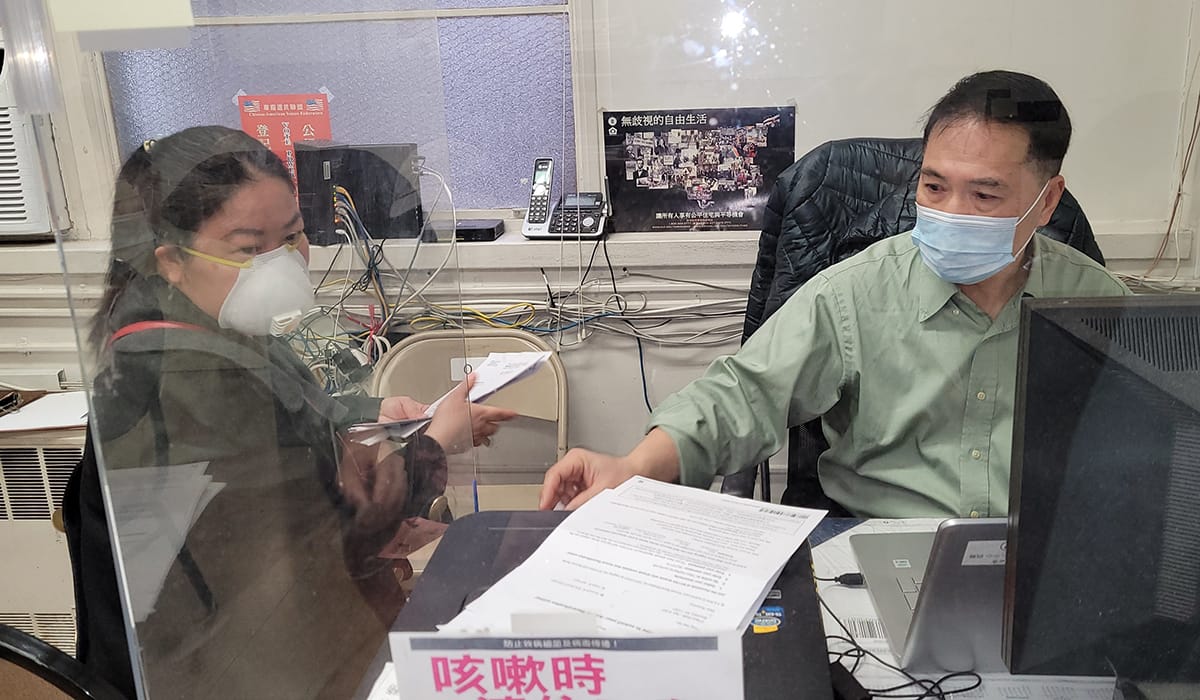
Peter (right) assists a client in applying for public benefits in New York. /Courtesy Peter Ho
Why is it important for others to get involved with causes they care about?
I think it’s important, particularly for seniors like me who have retired, because it helps them stay connected to society. Also, I think it can improve people’s social skills and other skills, in general. It not only benefits society, the people you’re helping, but it also benefits yourself.
Any advice for people who want to start volunteering?
Whatever volunteer work you do, you have to enjoy it. But specifically for benefit counseling, you have to have a background in technology because most of the time you have to use the computer to do research and also do the enrollment or recertification. You have to be patient, also, with your clients. Because some of the clients sometimes are not easy. You have to really spend the time to explain how the system and process works.
What do you want people to learn from your story?
That volunteering requires ongoing support and training to stay updated on the programs. I’m really lucky that I have help from the people at the ACES Project to understand all the different benefit programs and to support me.
Dedicated Military Supporter Helps Out Soldiers, Veterans and Their Families
Meet Daily Point of Light Award honoree Cathy Howell. Read her story, and nominate an outstanding volunteer or family as a Daily Point of Light.
Cathy Howell has been dedicated to helping the military and military families for decades as a volunteer, a military spouse and a Department of the Army civilian. She currently serves as the physical security branch chief at Fort Carson. Her husband, an Apache helicopter pilot for the Army, retired in 2019 but continues to work on base with his wife. Cathy started sending care packages when her husband was deployed and continued to do long after his return. It brings the comforts of home to soldiers who leave the “normalcy” of daily life to fight for a greater cause. On the home front, she has cared for their families as part of the Soldier and Family Readiness Group, allowing soldiers to focus on the mission at hand.
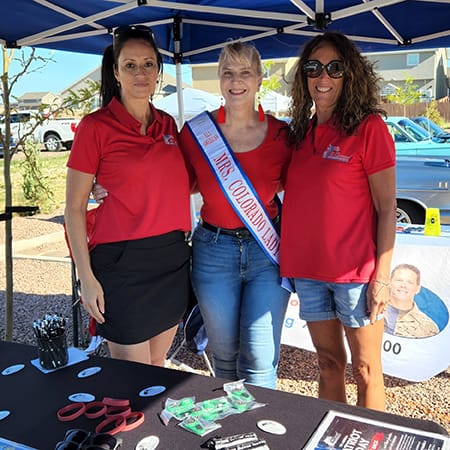
Cathy’s skills and status as a government civilian also allowed her to volunteer to serve in Afghanistan for a year working beside deployed soldiers to provide force protection. It was a move she made to show her support but also to add firsthand knowledge when she spoke of the sacrifices that troops were making upon her return. In an effort to spread awareness of what they do and to drum up support, Cathy participates in pageants and speaking engagements with her platform, “Operation Leave No Military Behind”. At the end of the day, her own security team—her three dogs, aptly named General, Captain and Army—follow her example of unending dedication, loyalty and moral support.
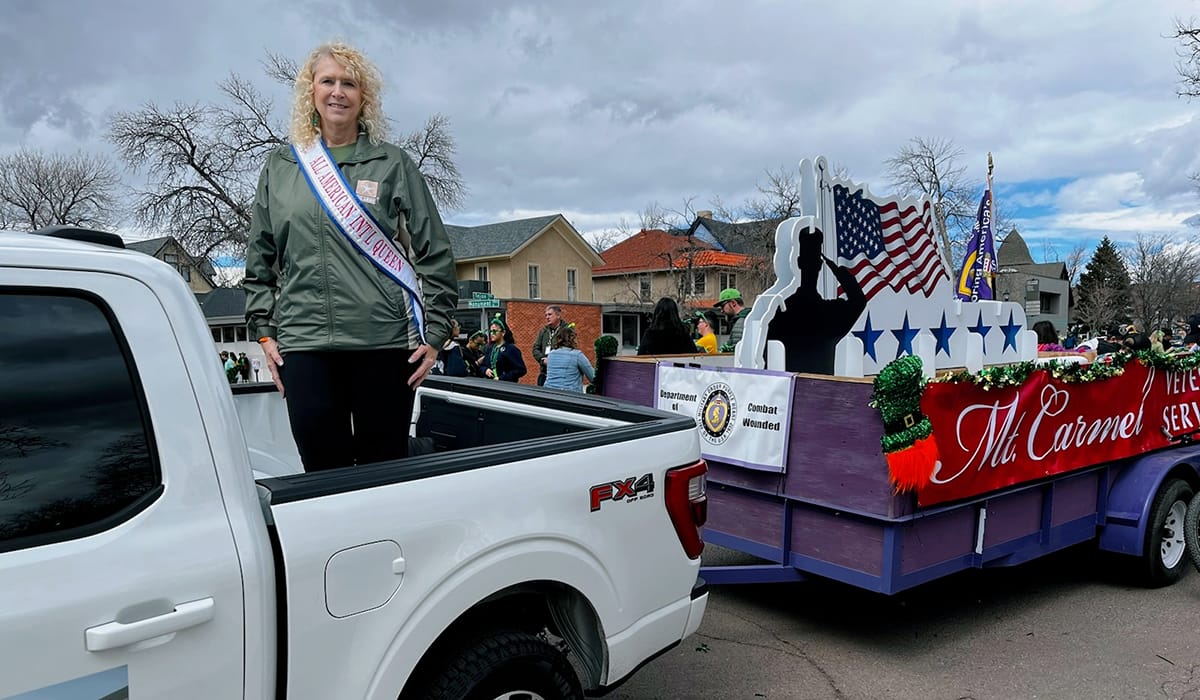
Cathy volunteers with Mt. Carmel Veteran’s Center, an organization that provides veterans with support as they transition to civilian life, get a job, address their mental health and wellbeing and more.
What inspires you to volunteer?
I’ve always enjoyed helping others, and being able to help those sacrifice so much for us in an honor. My Dad served in WWII in Japan. My husband served in the Army for 28 years, and I’ve worked as a Department of the Army civilian for 33. Being in the military is a tough but rewarding job. It’s hard being away from your family and friends for long periods of time. Our military and their families make personal sacrifices everyday so we can enjoy the freedoms that we have. Some have made the ultimate sacrifice and need to be remembered every day.
Tell us about your volunteer role as a Soldier and Family Readiness Group leader.
As a Soldier and Family Readiness Group leader, I was the point of contact for other military spouses who may need assistance. I shared information and resources, taking care of the spouses while the military member was in training or deployed. I also sent care packages to our troops.
I work with other agencies like Mt. Carmel Veterans Center and Healing Warriors to provide support and resources to our military and their families. I use the pageants to get my platform out to a larger audience in different states. A lot of organizations unaffiliated with the military aren’t even aware that we still have troops deployed.
What are some things people might not know or understand about soldiers who are deployed and what they—or their families—might need?
Being deployed, you can sometimes be gone from family and friends for over nine months. You can be in locations where you can’t get simple things like toothpaste and shampoo. We take it for granted living here in the United States, where we can walk into a store and pick them up. Sending care packages and thank you cards means the world to them. I buy birthday cards and Christmas cards, for them to send back to their families. Sometimes troops don’t have access to those or the time to go get them from the local USO while they’re gone.
For families left behind, it can be hard as well. Spouses are on their own. They must deal with whatever happens the best way they can. For example, if the washer and dryer break down, what do they do? They may not have the money to replace it. If you have a washer and dryer that is in good condition, think about donating it to a military family. If you see a military family in a restaurant, think about saying thank you by paying for their meal.
You can Google how to help local military families in your area. You can also contact the USO, American Legion, Disabled American Vets, Veterans of Foreign Wars and a military base that may be close to you. At Christmas time, consider donating toys on base. There are lots of ways to help.
What’s been the most rewarding part of your work?
The most rewarding part is the people I get to meet. Once, when I was competing in the Mrs. Colorado Pageant, we had the opportunity to visit the VA Clinic in Denver. I met a Vietnam veteran there who had served in the Navy, losing both legs and some fingers on one hand. We started talking and he said, “Thank you for not letting them forget about us.” That’s why I do what I do.
Cathy, a long-time volunteer, rides on the Mt. Carmel Veteran’s Center St. Patrick’s Day float.
What have you learned through your experiences as a volunteer?
I’ve had the honor to meet some very important individuals who have played a critical role in our nation’s defense. I’ve also had the opportunity to help military families that are trying their best to make it, one day at a time, while their loved one is deployed. Being able to help someone in need is important, and seeing the smiles on their faces because they know that they’re not alone is a wonderful feeling.
Tell us about future partnerships, programs or events that you are excited about.
I’m always ready whenever someone needs my assistance. I’m going to be working with Honor Flight—an organization that flies veterans to D.C. to see the memorials put up in their honor—this year, and I’ll continue to work with Mt. Carmel Veterans Center and other local agencies to help prevent soldier suicide.
What do you want people to learn from your story?
I think God sends our military to be our guardian angels. Our military and their families make daily sacrifices for us, and it’s important to thank them every day, not just on certain holidays.
Do you want to make a difference in your community like Cathy? Find local volunteer opportunities.
A Half-Century of Leadership and Innovation with the Girl Scouts
Meet Daily Point of Light Award honoree Carol Obler. Read her story, and nominate an outstanding volunteer or family as a Daily Point of Light.
Carol Obler’s dedication to the Girl Scouts spans over six decades, showcases an unwavering commitment to mentorship, education and community building. Her journey as a Girl Scout leader, volunteer trainer and advocate for STEM education stands as a testament to her passion for empowering young girls and women through a diverse array of programs and initiatives.
Personally leading a group of girls from third through 7th grade, she fosters an environment of learning and growth, leveraging technology to maintain connections and facilitate activities. As a camp trainer, Carol extends her influence beyond her troop, preparing other Girl Scout adult leaders to lead their own camping adventures. Carol’s expertise ensures that Girl Scout leaders are well-equipped to provide meaningful camping experiences for their troops.
Chairing the heritage committee, Carol plays a crucial role in preserving the rich traditions of the Girl Scouts. Carol’s leadership also extends to coordinating meetings and activities as a Service Unit manager for two Staten Island Service Units. Her initiative to set up a yearly recognition event for volunteers and staff members is her way of helping build a supportive and appreciative community within the Girl Scouts.
Find out more about Carol’s roles, responsibilities and most rewarding moments with the Girl Scouts.
Tell us about your volunteer role.
I do Girl Scouts. I’ve been doing it for 65 years. I’m a trainer too, training Girl Scout leaders to take their girls to camp. I train in outdoor skills. I’m chairman of three committees and I participate in a few others. Most of the committees are with adults, but we plan the events that the girls go to. We try to plan events for different age levels, which in Girl Scouts we call Daisies, Brownies, Juniors, Cadets, Seniors and Ambassadors.
The global committee does an event to teach about the globalness of Girl Scouts, as we’re a global organization. We’re also part of the World Association of Girl Guides and Girl Scouts. If we’re doing an event like that, it’s open to all age levels to teach them about properties we have across the globe.
Sometimes I do activities with other councils, not just my area. I’m in charge of one quarter of Staten Island’s troops, keeping them informed of what’s going on in the world of girl scouting. I’m also a cookie cupboard, so I accept 300 cases of cookies a year that troops come and pick up from my home, and I lead a troop as well. The troop I have right now is a virtual troop. We meet on Zoom and have girls from all five boroughs.
Why is Girl Scouts so important to you?
Girl Scouts is a place for girls to grow. We say we want them to be girls of courage, character and confidence, who make the world a better place. Each week, we encourage the girls to do service, to meet with other troops. There are people who have made lifelong friends that they met when they were 10 years old.
The big skills we teach are financial literacy and entrepreneurship – of course everyone knows the cookie sale. There are outdoor living skills. We teach STEM. In New York City, we have a winning robotics team. And everything depends on the girls’ age level. If they’re young, maybe they’re learning table manners. If they’re older, maybe they’re interviewing their government officials. Then there are the extreme sports, like skiing and rock climbing.
I think Girl Scouts is something everyone should do. Other extracurriculars are great, but they’re focused on one skill. If you’re in Girl Scouts, you can do lots of things and decide what’s going to be the most important skill set for you. Plus, we’re a global community.
What’s your favorite Girl Scout cookie?
That’s a tough question to answer. Every time I open a box, that’s my favorite one.
What’s been the most rewarding part of your work?
The most rewarding parts are seeing girls you had as Brownies or Daisies who are grown up and taking on troops of their own or taking on the role of motherhood. Saying, “she was in my troop and now she has a daughter!”
What have you learned through your experiences as a volunteer?
One of the lessons I’ve learned that I’ve learned that I impart to all adults is “don’t teach a craft until you’ve done it yourself.” It’s like Pinterest. It looks easy, but if you haven’t done it yourself, try it out first. And if you’re going to teach a skill, make sure you understand the skill enough to teach it to the girls.
I’m a retired teacher, and I’m really into teaching people and teaching them how to teach children. Before I even got my master’s degree, I’d already learned a lot of the concepts in Girl Scouts. For instance, the idea of working together in a group, which is called cooperative learning – that’s the patrol system. When I learned that, I said, I’ve been teaching that for 20 years!
Why is it important for others to get involved with causes they care about?
Those causes need to grow, and the only way they can grow is with people. The more people you have, the more brains you have, the more hands you have… and that’s how you get things done.
Any advice for people who want to start volunteering?
I would say, if you volunteer, the people you’re working with will train you. If you like it, you’ll make time to keep doing it. Not every organization is for everyone. But if you volunteer with one you think you’re going to like, you might find it’s a great fit. You won’t know if you don’t go out and try it.
Gender-Based Violence Survivor Finds Voice as an Advocate
Meet Daily Point of Light Award honoree Aicha Abdoulaye. Read her story, and nominate an outstanding volunteer or family as a Daily Point of Light.
Content Warning: Points of Light is proud to share the following uplifting and inspiring story. However, we acknowledge that a small portion mentions gender-based violence and may be difficult for some readers. We encourage you to please care for your own wellbeing above all.
Aicha Abdoulaye had just started high school when she was pulled out of her education and forced into marrying an older man who already had three other wives. In her home country of Niger, a French-speaking country in West Africa, this type of tradition prevailed. At 16, she fled to the United States.
Aicha speaks nine languages including some dialects, but none were English. Unbeknownst to Aicha’s aunt in Togo, the woman who sold everything to give her niece a chance at a better life, the person who offered to help set Aicha up in her adopted country, was involved in trafficking and other illegal businesses. Once again, Aicha found herself trapped in a forced marriage, this time in Texas. All she wanted to do was return to school and lead the life she’d imagined.
“I was fleeing forced marriage already. I was so disgusted and really suffered there for six months,” she recollects.
She was trapped until the passing of her sister offered a reason to return to Africa. This time, she went to her aunt’s home in Togo. When her then-husband found and attempted to reclaim her by citing that he had paid her bride price, Aicha once again fled to America with hopes of getting back to school.
“I didn’t know that you couldn’t just come to United States and go to school, because you’re an alien. You don’t have social security card,” she acknowledges.
Even after escaping the hands of her abusers and those who mistreated her, Aicha ran into roadblocks due to her immigration status and limited English skills. She eventually made her way to Maryland where she got by staying on couches and, at one point, in shelters. Despite everything, she was determined to follow through with her educational goals.
“I was able to find colleges that gave English classes in the evening. So, I would go to that evening class and learn,” she explains. “Or there would be a group of people in social services giving training for English. I would go to that place.”
Then, after many challenging years in the U.S., Aicha was put in contact with the Tahirih Justice Center. The Tahirih Justice center is a national nonprofit based in five cities across the country that provides free interdisciplinary legal and social services—housing assistance, physical and mental health services, access to food, and more to immigrant survivors of gender-based violence, enabling them to live safely and with dignity.
“Our goal is to assist them on their path, whatever that might look like, in order to get to the life that they envision for themselves,” says Archi Pyati, CEO and longtime immigration attorney and international human rights advocate. “Most public benefits and other kinds of safety nets that are available to survivors in the United States are not available to immigrant survivors, especially not undocumented immigrant survivors. What we do is assist those individuals in navigating the system to understand what they actually have a right to under the law and helping them to apply for those things.”
In 2023, they directly served about 3,000 individuals and their families, but their nation-wide training, technical assistance and outreach efforts touch tens of thousands each year. And their pro bono network of attorneys and medical professionals reach thousands more.
When Aicha walked through their doors for the first time, she was working 16-hour days as a nanny and took three trains and busses to get there on her only day off. After being the one serving others for so long, she was immediately impressed by their kindness when a woman offered her tea and cake.
“When I looked around the office, it was only women working. It was seven years after I had left Niger, where I was supposed to be married and have kids and serve a man. I wasn’t supposed to sit in an office and be a boss lady or work for myself. So, when I saw that, I felt like I belonged there,” she says of her moment of inspiration.
Staff members connected her with a therapist who worked with her to give words to the sexual abuse and trauma she experienced. And after a long and difficult road, Aicha was eventually granted asylum.
“They did so much for me. And they gave me that ability to believe in myself again, because the day I walked into the Tahirih Justice Center, I knew I was worthy of love and attention. For so long, I forgot that,” she states.
Along the way, Aicha found her voice, and she’s chosen to use it to help others who have been through similar experiences. She has been a passionate volunteer and advocate for Tahirih since 2008.
“I want to set every young girl free that ever experienced gender-based violence or even forced marriage or sexual abuse. I want to set them free, because I know there are many in hiding, afraid to talk about it. That’s what I want to do with my life,” she states.
Archi credits Aicha as a key member of the board of directors who has not only changed how they function but how Archi and others see Tahirih as a whole.
“When it feels like it’s unclear what to do next, Aicha will share wisdom that makes everyone’s light bulb turn on,” Archi says. “She guides the organization with clarity, concision, passion and with an expertise that none of us have, because we haven’t been through the things that she’s been through.”
As part of her work with the development committee and membership department, Aicha speaks about her experiences at events with potential supporters, a testament to the work the center does, as well as to survivors as an example of how trauma can be overcome. One night in 2018, she told her story onstage after being honored with the Courageous Voice Award. The organization raised $1M that night after the audience was moved by her journey.
“People were coming to me to say that because of what I said, they were going to leave their abusive marriage,” Aicha recalls, thrilled at the thought of all the people who would be helped with the funds.
It’s not often that a former client becomes a public advocate once they’ve reached a point of stability in their lives.
“Fear of retaliation from an abuser is very strong. People are very nervous to be public, because they or their family in the home country or even family here could be threatened or targeted,” Archi explains. “I think there’s also a feeling of wanting to move on, because talking about what one has experienced can be very retraumatizing and triggering. And sometimes people just, frankly, want to get on with their life.”
Aicha has essentially rebuilt her life and feels like she’s moved beyond the repercussions of her harrowing past. But she finds fulfillment in her work and helping others. Looking towards the future, she hopes to build a public speaking career, encouraging others to tap into their inner strength, build resiliency and create a fulfilling life. She would also like to write a book.
And yes, one day, she still hopes to return to school and perhaps even join the Tahirih staff. In the meantime, Aicha fights for the vulnerable and cares for her son who is nearing his tenth birthday.
“You’re not determined by your trauma. You’re not determined by the things that happen to you,” she emphasizes. “You’re determined by who you choose to be. And that’s how I live my life. That’s what I want people to remember.”
Inspiring Underserved Youth Through Creativity and Community
Meet Daily Point of Light Award honoree Kanika Cousine. Read her story, and nominate an outstanding volunteer or family as a Daily Point of Light.
Originally from Harlem, Kanika Cousine is a student at Metropolitan College of New York where she is working toward her Master’s Degree in Special Education. She has always liked to help people and since 2019, she has dedicated herself to unpaid service, establishing a youth organization in New York and Washington, D.C., to expose underserved youth ages 14-24 to the art of filmmaking and community development.
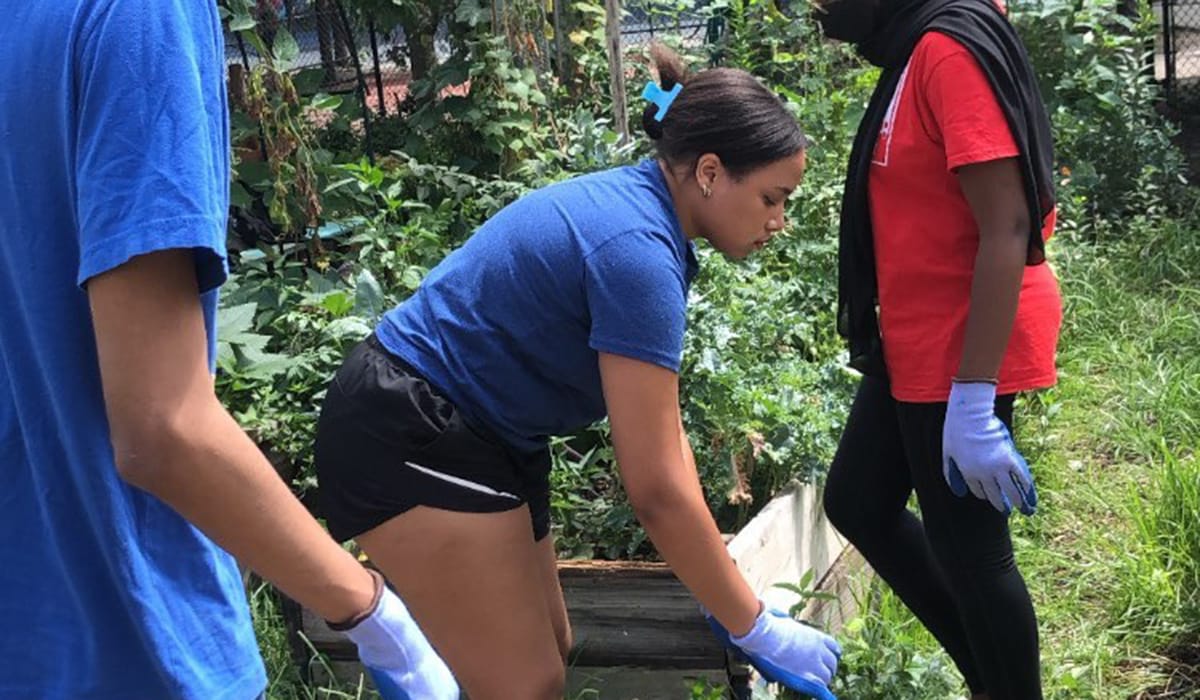
Students are selected for transformative internships either during the school year (September to May) or during a six-week summer program, where they learn everything there is to know about filmmaking. The internships also focus on community service, including feeding the unhoused and working at community gardens. Kanika says that her mission goes beyond education in the art of filmmaking. It provides an alternative path that steers youth toward the future they want, by empowering them and teaching them valuable skills.
Kanika also donates her time and energy to working with and advocating for young adults in the New York City foster care system. Kanika was once part of the foster care system, so she has an intimate understanding of the unique challenges these children and young adults face.
Kanika Cousine, founder of Journey of a Dreamer and volunteer with Casa NYC. /Courtesy Kanika Cousine
What inspires you to volunteer?
I’ve always liked to help people. Young people are into videos, TikTok and YouTube. I thought I could help them develop skills in filmmaking as a way to empower them and broaden their horizons. It’s more than just filmmaking, though. They learn leadership, cooperation, communication and the value of community.
Tell us about your volunteer role with Journey of a Dreamer and Casa NYC.
I’m everything when it comes to Journey of a Dreamer. I’m a one-woman band. I’m the founder, supervisor, program creator, advocate and fundraiser. I meet with my students three times a week for both filmmaking and community service — not on the same days. Right now I have seven students in filmmaking and four in community development. In this session, it’s split pretty evenly between girls and boys. So far, the majority of my interns have been young men.
Youth organizations and colleges screen students to determine their interest in the arts and filmmaking. They provide me with interns. I purchase all of the filmmaking equipment and teach them the ins and outs of filmmaking, including everything from lighting to scene setup and editing. They develop skills that equip these amazing young individuals with practical skills. They learn how to conduct interviews. This is a brand-new program that’s only in its first year but it has such incredible potential.
I teach much more than filmmaking. The internship empowers them through creative expression. Youth feel safe, supported and empowered to share their stories. They develop the skills to find career opportunities in the film industry and in community development. We set one student who was truly passionate about filmmaking with an organization that would help him obtain a filmmaking scholarship. These opportunities are normally not available to underserved youth. These internships are a way out from a stereotypical path that many underserved kids are expected to take.
Community development is a big part of our internships. It encourages youth to engage with the community in a positive way. They contribute and so they feel a sense of belonging. When you belong, you care and when you care, you help.
Outside of Journey of a Dreamer, I am also a dedicated volunteer with Casa NYC. This is an organization that works with New York City courts to support foster care youth. Kids in foster care have been through a lot. It’s hard to navigate life when faced with such adversity. Many have mental health issues and for the kids who are never placed in homes but spend their childhood in facilities, they have no sense of home or family.
As an advocate, I stand up for the rights and well-being of youth in foster care. Right now, I’m working with a 21-year-old young woman. My job is to help her secure housing and advocate for her where she can’t advocate for herself. Many kids in the system are afraid to speak up, and they don’t know the questions to ask or to advocate for themselves. If they’re willing, we teach them life skills. I say “if they’re willing” because many have such deep trust issues that they won’t accept help. They’ve been let down so much that they often don’t believe we’re there to help. At first it was even hard to make a connection with this young person I’m helping now. I had to step back and give her space and just let her know I’m here for her whenever she needs me.
In the past, kids would age out of the foster care system at 21, but it’s been recognized that at 21 most of them immediately become unhoused because they just aren’t ready for the big world. Now, the age at which they leave the system is 24. We help them become independent by securing housing and assisting with job searches.
What inspired you to get started with this initiative?
I was in foster care, so I understand what these young people are going through. I gained my first internship at 15. My mentor was just amazing. She inspired me to create my own programs for underserved youth. It didn’t happen right away, however. I ran into obstacles, mainly fear. I was so afraid of failing. In 2019 I gathered up my courage and decided to go for it.
What are your long-term plans or goals for Journey of a Dreamer?
I want to be able to offer much more than the internships that I offer. I want to expose the kids to more opportunities and form more partnerships with other organizations that serve our youth so I can expand the potential career opportunities for underserved youth in New York and Washington.
What’s been the most rewarding part of your work?
I feel rewarded when I see them happy. When they come to me, when they’re new interns, many of them have this heavy sadness about them. They have gone through a lot. Seeing them in a positive space makes me feel good. I know that my internships are a success because some of the kids return to volunteer and help me out with the current batch of interns.
At first, many of the interns come because they want to get paid, or they’re bored. They don’t necessarily want to learn anything about filmmaking. Sometimes, it’s hard to connect at first but I don’t quit on them. I form a connection with them before we start making films and once they start, they’re all in. They become very engaged. This program allows them to be creative and explore options they didn’t even know existed.
My Washington students are currently working on a documentary on youth mental health. They learn how to work cameras, conduct interviews and become leaders. Sometimes, I give them a topic but a lot of times we brainstorm ideas together and agree on a topic. Filming takes place in a studio and on the street. Their finished films are shown outside the group too. We’re working on submitting their films to film festivals; then, their films can be seen by the general public.
Summer youth employment interns contribute to the community by assisting in the East Side Garden in Manhattan. /Courtesy Kanika Cousine
What have you learned through your experiences as a volunteer?
I had to overcome the fear of falling when I started this organization. Once I took that step I’ve become much bolder in taking chances. Now I take chances and motivate young people to take a chance on themselves. For kids in the foster system or from underserved communities, this is huge. Many of them don’t have a support system that encourages them. If anything, they’re told what they can’t do or be. They are not encouraged to pursue their dreams.
These are paid internships, which I believe helps give these youth a sense of pride in what they do. Many come into the program just because it’s a way to get paid, but they are transformed by the experience.
I partner with the Children’s Aid Society, the Madison Square Boys and Girls Club and Casa NY in New York City and in Washington, I work with local high schools. These organizations are the sources of my interns. Funding for these internships comes out of my pocket and some comes from the organizations I work with. The organization pays the internship, and I host the students. If I find an intern outside of these organizations, I pay them from my own pocket. It’s worth every penny.
Why is it important for others to get involved with causes they care about?
Getting involved helps youth grow as people. It allows them to help others and themselves as well. They experience a lot of personal growth. For example, two of my interns had always said they’re not artists. This belief came from lack of support from their environment. During the internship they found their creative expression and blossomed as artists. When they started the internship they didn’t believe in themselves; now they have confidence.
Any advice for people who want to start volunteering?
There are plenty of volunteer opportunities available in any community. You know what you’re interested in so start there. Volunteer organizations are always looking for help.
What do you want people to learn from your story?
Believe in yourself. Overcoming fear is the biggest obstacle in any endeavor. Don’t allow your obstacles to end your journey. We can all rewrite our stories. The internship program becomes a catalyst for change. From tending community gardens to feeding unhoused communities and creating evocative works of cinematic art, our collective efforts make a lasting impact on the youth. Where once they didn’t have a support network, now they do.
Fostering Literacy and Building Community Through Little Free Libraries
Meet Daily Point of Light Award honoree Mason Furman. Read his story, and nominate an outstanding volunteer or family as a Daily Point of Light.
In the neighborhoods across Hallandale Beach, Florida, a movement is growing, aimed at tackling the literacy crisis head-on. Mason Furman, the passionate cofounder of The Furman Literacy Project LLC, is at the forefront of this endeavor. Recognizing the profound impact that reading and access to books can have on a child’s development, Mason has dedicated himself to bridging the learning gap among the youth in South Florida.
With more than 60% of K-12 students in the United States struggling to read proficiently at their grade level, the need for innovative solutions to the literacy crisis has never been more urgent. Mason’s approach focuses on the simple yet powerful concept of increasing access to books, especially for children.
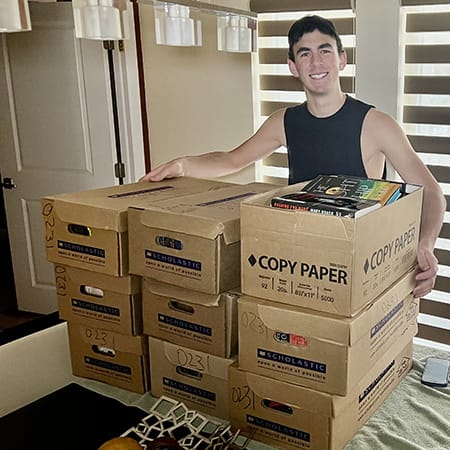
Through grants and partnerships, Mason has successfully created, built and deployed several free-standing structures known as Little Free Library book-sharing boxes. These libraries provide free books for all ages and create an environment where reading is celebrated. Since its inception, The Furman Literacy Project has made significant strides in promoting literacy in Hallandale Beach. With three Little Libraries already installed in local parks and a fourth on the way, Mason’s efforts have transformed these green spaces into hubs of learning and discovery.
With more than 2,000 books collected and approximately 1,000 park visitors reached each month, the impact of The Furman Literacy Project is evident. Mason’s dedication to fostering literacy, building community unity and expanding access to books has certainly established him as a young changemaker in South Florida.
Learn more about how and why Mason is passionate about creating a legacy of literacy and hope for future generations.
Tell us about your volunteer role.
In 8th grade, I embarked on a journey with a local organization focused on enhancing literacy among elementary students in underserved schools. Witnessing the stark reality of low literacy levels among these children ignited a passion within me to make a tangible difference. This led to the inception of the Furman Literacy Project, aimed at instilling hope and empowerment through literacy improvement initiatives. As a co-founder, my responsibilities include managing four Little Libraries which I have installed in Hallandale Beach, Florida parks. Weekly, I replenish these libraries with donated books that I receive from local libraries and the community.
Why is this issue so important to you?
The Furman Literacy Project addresses a critical societal issue: the literacy gap among young learners. Shocking statistics reveal that lack of proficiency in reading by fourth grade significantly increases the likelihood of negative life outcomes, such as being on welfare or imprisoned. Early intervention through literacy programs is imperative to shape a brighter future for our youth and society as a whole.
The Furman Literacy Project has seen more than 2,000 books collected in the libraries so far.
What inspired you to get started with this initiative?
When I was young, I never saw the value in reading. I saw reading as a waste of time, sitting around inside all day, when I could be outside with friends. Why spend hours reading a book when I could watch a movie and be done much faster? My parents had to constantly nag me about reading: “Mason, sit down and read your book” or “Mason, you can’t leave until you finish this chapter.”
It wasn’t until I did my first book report that I saw the value of reading. I saw how my classmates were listening to my every word. They were transfixed on my voice and the pictures on the page. I learned that books could inspire thought, educate people about a subject, open up new worlds waiting to be explored and be a respite from everyday life. I learned to love reading and wanted to share that passion with my community. That was how the Furman Literacy Project, LLC was created.
What are your long-term plans or goals for the organization?
The impact of my project may not be immediately visible, but the long-term effects will be substantial. Providing children with access to reading materials will give them the basic tools they need to succeed in school, most importantly inspiring the love of reading and education. The Furman Literacy Project is a continuous effort to improve literacy in our community. My long-term goal is to get other local businesses to donate funds to purchase additional Little Libraries that will be installed throughout the entire city of Hallandale Beach, Florida, with the hopes of expanding to other cities.
What’s been the most rewarding part of your work?
The most rewarding aspect of my work with the Furman Literacy Project lies in witnessing the sheer joy and excitement on the faces of the children we serve as they explore our Little Libraries and select their next adventure in the form of a book. Seeing them engrossed in reading, whether under the shade of a tree or on a park bench, transports me and fills me with pride knowing that we are fostering a love for learning and personal development.
These moments underscore the profound impact of literacy on young minds and serve as a reminder of the transformative power of access to books. Each book borrowed represents a step towards a brighter future, not just for the individual child but for our community as a whole, reinforcing the significance of our mission and the importance of our collective efforts.
What have you learned through your experiences as a volunteer?
Through my experiences as a volunteer, I have gained valuable insights and learned essential life lessons. Volunteering provides me with opportunities to learn and enhance various skills. Whether it’s communication, teamwork or problem-solving, volunteering helps me grow. I continue to learn about my strengths, weaknesses and values. Volunteering reinforces the idea that collective efforts lead to meaningful change. Overall, getting involved with causes that I care about empowers me to make a difference, build stronger communities and create positive change in the world.
Why is it important for others to get involved with causes they care about?
Engaging with causes we care about enriches our lives and strengthens our communities. Whether through volunteering, advocacy or philanthropy, contributing to meaningful causes fosters a sense of purpose and fulfillment. It empowers individuals to play an active role in shaping a better world.
Any advice for people who want to start volunteering?
For those considering volunteering, start by identifying your passions, strengths and areas of interest. Begin gradually and avoid overcommitting yourself. Explore existing opportunities within your community, but don’t hesitate to create your own initiatives if none align with your interests. Remember, volunteering is a fulfilling journey of growth and contribution to collective well-being.
Texas Teen Spreads Love, Uplifts and Encourages Through Letters
Meet Daily Point of Light Award honoree Iris Lai. Read her story, and nominate an outstanding volunteer or family as a Daily Point of Light.
Iris Lai was born in Singapore but grew up in Dallas and Plano, Texas. Today, Iris is a first-year student at Case Western Reserve University with a major in biomedical engineering and a minor in business. Her hobbies include dance and playing the piano for the last 10 years. But a bigger passion is uplifting people through the connection of an encouraging letter.
Iris has always loved the way she felt when she received a letter from a loved one. She relates how cards and letters always make her feel better. They’re physical reminders that someone cares enough to send a personal note, whether it’s a note of encouragement, an expression of love or the simple sharing of what’s going on in someone’s life. During the pandemic, many were suddenly isolated from friends and family. Some, like first responders and healthcare workers, had to put themselves at right by caring for people who could potentially be carrying the virus. People’s mental health worsened, in some cases, significantly.
As Iris was chatting with her close friend about ways to relieve lockdown boredom and make a difference in people’s lives, she remembered the joy she felt every time she received correspondence from a friend or family member. And so, an idea was born to let strangers uplift each other. That’s how Letters of Gold was born.
Letters of Gold opens the door for people to volunteer in a most unexpected way. It provides a simple way for anyone to get involved; and these letters can be healing to the writer, too. If you’re bored, write someone an inspiring note on the Letters of Gold website. If you’re feeling sad, uplift someone with a note that expresses kindness and caring. If you’re overwhelmed, write someone a note of encouragement. In helping others, we can help ourselves.
Iris, co-founder/executive director of Letters of Gold.
What inspires you to volunteer?
I feel it’s my duty to make a positive impact while I’m here. I am inspired by seeing people smile after I do something positive for them, lift them up and improve their mood.
I am the co-founder and executive director of Letters of Gold. Our mission is to spread encouragement through letters that uplift, inspire, bring smiles to faces and help them see the light at the end of the tunnel.
Our letters are crowdsourced through our website. Every couple of months we focus on a group in need; people see these needs and write letters to people who are struggling. We gather these letters and deliver them to the relevant organizations. We post our current area of focus on our social media site or share our initiatives by word-of-mouth and people volunteer to write letters. We typically receive 100-200 letters for each campaign.
The letters are not specific to a person. They are general positive letters intended to uplift them and help them see that this will pass, and they’ll come out more resilient on the other side. I read the letters to make sure they don’t say anything personal or off-topic and send them to the relevant organizations who distribute them. When we started some of our letters were physical letters but now they are mostly digital.
So far, Letters of Gold has reached over 3,000 people worldwide. We’ve delivered encouraging letters to organizations that support domestic violence survivors, hospital patients in Rwanda, first responders and healthcare workers, teachers, cancer patients, seniors and more. One of our recent initiatives is to support girls who code and girls in STEM, who often face an uphill battle and gender biases in these fields.
We have developed partnerships and club chapters in the United States, Kenya, Germany and India, mostly in high schools.
I have also led book drives such as the one that delivered over 900 books to Pakistani children and underfunded Dallas/Fort Worth libraries, a Christmas toy drive in Plano, and I’m in the process of planning a local school supply drive in Plano.
What inspired you to get started with this initiative?
I love getting letters. I collect every letter and card I’ve ever received. They’re one of the most accessible ways to help uplift others.
In April 2020, at the peak of the pandemic, I spent much of my time lying in bed all day not doing anything. As you can imagine, this got old. I felt like I needed to do something for my community because so many people were struggling with mental health during the lockdowns. In the middle of the night, around 1:00 a.m., I texted a friend and by 2:00 a.m. that same night, we had founded Letters of Gold. I was 15 at the time. We came up with the concept of collecting letters through an accessible website. It started small but it has blossomed into something huge.
What are your long-term plans or goals for Letters of Gold?
We want to expand the organization. We are able to collect letters in such an accessible way. People visit our website, they see the area of need we’re focusing on that month, and they can write letters of encouragement. It’s an easy thing to do, and we want even more people to be involved. We also want to focus more on fundraising and drives. We’ve spread internationally and I’d love to expand into developing countries.
What’s been the most rewarding part of your work?
I love seeing people smile, knowing I’ve encouraged them. It’s rewarding to hear them tell me that they’re grateful for the letters we sent to them. When people receive letters, we never expect a thank you. For us it’s not about recognition or any type of extrinsic reward. I was recognized by the U.S. House of Representatives for my work. I’ve been featured on multiple news stations. But that’s not why I do it. I do it because it feels good to lift someone up.
What have you learned through your experiences as a volunteer?
I’ve learned a lot about leadership, how to inspire others and how a small project can impact so many lives. Our Board of Directors, which is now seven other high school students, helps us organize with social media, organizing, outreach to partner organizations, brainstorming ideas, and coming up with new areas where we could help.
Iris, right, delivers encouraging letters to a children’s clinic with co-founder Vedha Vaddaraju. /Courtesy Iris Lai
Tell us about future partnerships, programs or events that you are excited about.
We will be holding a school supply drive soon in Plano. A lot of things are in the works; we have a lot of topic-related Public Service Announcements coming. For example, this month we support and encourage girls and women in STEM. We also hope to collaborate with a different organization that supports refugees. We will be doing a fundraiser event for them. We will also have a table at the Family Kindness Festival organized by Senders Pediatrics in Cleveland.
Why is it important for others to get involved with causes they care about?
It’s important to have or develop the drive to do something positive. People don’t realize how many people they can affect through volunteering and what a difference even small actions can make.
Any advice for people who want to start volunteering?
If you think you want to help in any area, just know that every bit of help actually has a big impact on the community. If you feel inspired, start local. Look into local volunteer organizations, do community service with people you know and help your neighbors and friends whenever you can. You can also hop on our website and write letters to people who need encouragement. Who knows where this could lead you?
What do you want people to learn from your story?
I want people to know that even a small action can have a big reach. You can inspire people. You can live by the saying that actions speak louder than words, but of course in our case, there’s also immense power in words. I also want to say that if you put your mind to it, you can do it.