New Yorker Raises and Trains Puppies to be Future Service Dogs
Meet Daily Point of Light Award honoree Jacquelyn Penn. Read her story, and nominate an outstanding volunteer or family as a Daily Point of Light.
When Jacquelyn Penn was a student at the University of Maryland, she started seeing puppies and dogs around campus in yellow vests and instantly wanted to be a part of whatever club it was. Little did she know that the sister organizations in charge of the dogs — The Guide Dog Foundation and America’s VetDogs — would turn into years of joy-filled volunteerism.
Penn became a puppy raiser for the organizations in 2020 and helps teach service dogs to become dogs that help with guiding people in need, scent detection, PTSD and more. She’s successfully raised four dogs since becoming a volunteer and grew to be an area coordinator in New York City and a PTSD skills mentor.
“Not only do I get to enrich my own life with the presence of an amazing dog, but I know that the work I do with these pups will go on to be life changing for the future handler,” said Penn.
What inspires you to volunteer?
I found out about the Guide Dog Foundation when I was a freshman in college. There are actually regional chapters throughout the country, and because of the chapter that was at my college I started seeing a lot of dogs in little yellow vests walking around campus. I was like, “Oh my gosh, I have to do that, it seems amazing and I love dogs.” This felt like a volunteerism loophole; to have a dog in college. With a service dog, I don’t have to feel guilty about leaving it at home all day and instead it can come with me. I don’t have to pay its vet bills— it is like the perfect loophole for me.
I didn’t think I could commit to taking a dog full time, maybe I’ll just be a sitter for the organization and babysit the dogs. So, I started off on that path and I quickly realized that it wasn’t enough for me, I felt like I needed to make a connection with the dog; I needed to have my own dog and bring it into my home, not someone else’s dog for a few hours. So, after about three or four months of being a sitter, I quickly shifted and then after a little bit of extra training and requirements, I got on the list to receive a dog in January of 2020 with the Guide Dog Foundation. I got my first dog, Rudy, at the end of January, and I raised him for about a month and a half before the COVID-19 pandemic started. Even though we had COVID-19 restrictions, my co-guide and I were able to find a way to split the time with Rudy. So, I had him back in the summer and then at the end of the summer, he actually ended up leaving and went to do formal training with a Texas agency. So, I from there, I jumped right back in, and I raised another dog in the PTSD curriculum, which is a bit more involved. I just fell in love with teaching curriculum.
This past year, I raised my fourth dog. So, it’s that kind of thing where once you get started and realize how much you love it, you can’t stop.
Tell us about your volunteer role with the Guide Dog Foundation and America’s VetDogs?
One of the best parts about having these dogs is that they’re service dogs and they can go places with you. It almost motivates you to go out and explore the city that you’re in more because you’re looking at everything through them. So, through this volunteerism, I would go to museums, exhibits and did more experiences, because I was thinking about how my dog would respond in a specific situation or how to socialize them. You have to take things slow and be really patient because—especially in New York City—it can be a very overwhelming place for a dog.
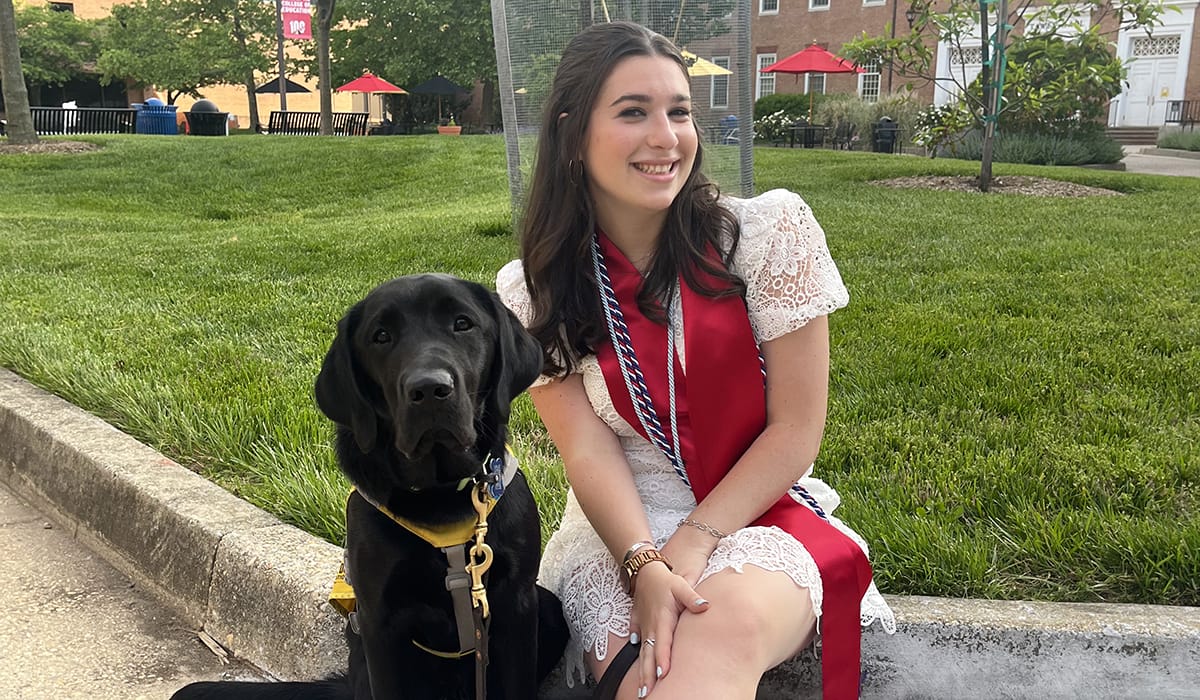
23-year-old Jacquelyn raises service dogs for the Guide Dog Foundation and America’s VetDogs, teaching them to become dogs that help with guiding people in need, scent detection, PTSD and more.
What’s been the most rewarding part of your work?
When the dogs get to meet their forever person. My second dog was placed as a PTSD service dog, and I had the honor of meeting his first responder that he was partnered with. That just felt like such a full circle moment. You’re raising these dogs for a greater purpose, but it still sucks when they leave, and it hurts. That’s a piece of your heart and you’re sending it away and you don’t know when you’re going to see them again or if you’re going to see them again. But I love getting to meet the person that he was trained for and see how good of a match they were. It was just like a closure for me.
What have you learned through your experiences as a volunteer?
Well, aside from the obvious dog training, I think I really learned that it’s okay to give up a big part of your heart for a greater purpose. I’ve never experienced something like that where, like a baby, you get the dog at eight weeks old, and they live with you and you see them through every up and down. While they’re growing up, you get to see every bit of their personality and schedule, like what makes their tail wag.
And sometimes you give them away, and that was really hard for me the first time. It only gets harder. I also tend to get a little closed off in my emotions, and being part of this guide dog community, you learn that it’s okay and that you’re allowed to feel all of these emotions of joy and sadness and that you can live to be proud that you’re doing this for a purpose.
Any advice for people who want to start volunteering?
Sometimes it can feel intimidating to get involved in a cause, especially one that makes you be a little bit more selfless and maybe give up a big part of yourself. With the Guide Dog Foundation, I devoted so much time, like a year of training a dog and giving it away. It can be intimidating to enter that realm, but it’s worth it. And if it’s a cause that you care about and you have the passion for it and your hearts in the right place, then it will be worth it.
What do you want people to learn from your story?
I definitely would love for them to learn more about the Guide Dog Foundation, I think that the mission is amazing. And if you’re a dog lover like myself, the bottom line is it’s more than a volunteerism loophole—it’s going to end up being so much more than that.
Tell us about future partnerships, programs or events that you are excited about.
My most recent trainee, Nadia, is currently in formal training, and I’m hoping for a graduation soon. So, in the next few months or so I could be hearing about her timeline for graduation finding her forever person. It’s a massive thing on the horizon for her, and I’m so excited.
Massachusetts Woman Welcomes and Supports Afghan Refugees
Meet Daily Point of Light Award honoree Terry Symula. Read her story, and nominate an outstanding volunteer or family as a Daily Point of Light.
When a small town welcomes refugees with open arms, Terry Symula is one of the first to step up to support them. She works as a self-described case manager, networking to clear hurdles and gather whatever these families need. She uses her creative problem-solving skills to troubleshoot when issues arise. She’s a steadfast presence in the lives of the people she works with as they rebuild their lives, so much so that some even call her “grandmother.”
Terry shares her journey into volunteering and the inspiring work she’s done to build a better community, starting in her own backyard.
Tell us about your volunteer role with Ascentria Care Alliance and WelcomeNST.
Ascentria, in partnership with WelcomeNST is the resettlement agency that helped these and other Afghan refugees for three months. We call our local chapter Team Harvard. I basically work as a case manager for each of the Afghan refugee families our community has taken in. In the beginning, it was essentially full time. Today, our families are making huge progress towards independence. I still spend about 20 hours a week supporting them in various ways. I make connections. I network. I help people shop. I make sure that everything is running well. The families are always on my mind, but it’s no longer a 24/7 endeavor because our families have established lives here. My goal is to welcome them, make sure they’re safe, give them resources, and have them become independent of us.
I do whatever is needed. This can include helping the men find jobs, organizing clothing and household goods donations from the community, driving kids and their moms to doctor appointments, helping find housing, finding health insurance, getting food assistance, and finding tutors for the children and English classes for the parents. I also advocate for the families. For example, one of our families was at risk of losing their housing because the property owner wanted to sell the property so it could be developed for commercial use. I and others advocated for the family. We convinced the property owners not to sell the property.
I’ve never been alone in this. So many people in the community have come together to help. We have huge community support. Team Harvard alone has about 40 dedicated volunteers.
What inspired you to get started with this initiative?
In September of 2021, my husband and I attended a fundraising dinner to support a refugee Afghan family in another town. I was surprised that a third of the attendees were from our town of Harvard. The speaker, Elizabeth Davis Edwards of WelcomeNST.org, really inspired me. She talked about what it’s like for the refugees who come to the United States. Let me tell you, it’s hard. They don’t know where they’re going, and they get resettled by agencies, which only pay to support them for three months. These families have no jobs, no permanent homes, no social circle and no understanding of cultural differences. Many of them don’t speak any English, either. We knew that our town had what it took to welcome a refugee family too. There’s a lot of uncertainty and we want to make them feel welcome.
I agreed to take the lead and we created Team Harvard and with community support. We raised funds, got some logistics in place and agreed to host a young Afghan couple that was expecting a baby.
In 2022, our church stepped in to help house two large Afghan refugee families while we pursued housing options. I helped organize the renovation of a municipal building into a home, and it kind of took on a life of its own after that. We collaborated with other churches in our town. This is their concern, too. By January we had welcomed 35 Afghan refugees including the two large families. I petitioned the town to set aside an empty town building, the Bromfield House, as a home for these refugees. The community rallied and we were able to renovate the Bromfield House by August.
Throughout 2022 our team helped five families and during this time, two beautiful baby girls were born, both named Khadijah, which means the prophet’s wife.
What are your long-term plans or goals for staying involved?
I will stay involved as long as I can. I’m always looking to help. I hope to help improve things from a logistics perspective. Whenever I have an opportunity to share what I’ve learned, I share it. For example, I’ve learned how to find government benefits for the refugees. Help and resources are available but not always easy to get. There’s a tremendous amount of paperwork that needs to be organized. I would love to re-engineer the process to make it more efficient, not just for refugees but any organizations that help people. I would love to be part of that discussion.
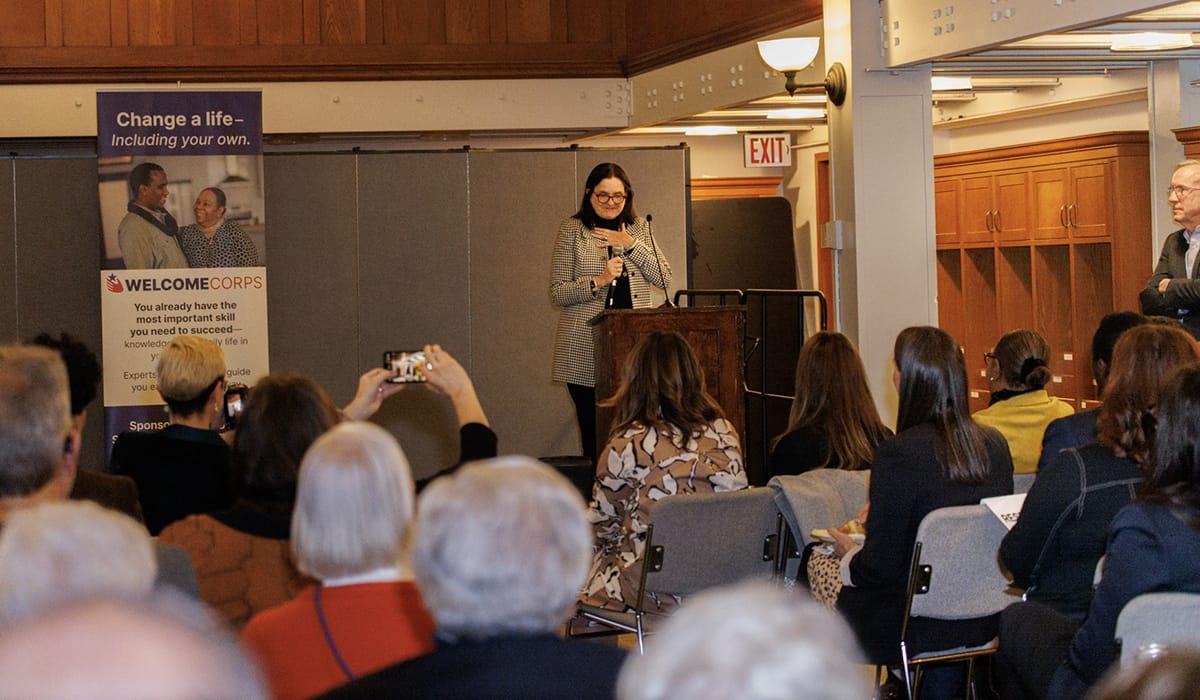
Terry, Team Harvard volunteer, speaks in Boston at the first anniversary of the Welcome Corps. /Courtesy Terry Symula
What’s been the most rewarding part of your work?
I love seeing the kids blossom. I love seeing how many people have come out to help. I’ve found that people are waiting to be asked. They’re waiting for something to do, and this is an opportunity to help. I’m so proud of my community. My church took the lead on this, but it’s every church, it’s non-church, it’s elected officials, it’s the school system, it’s everyday people that make it happen. Everyone has put out the welcome mat.
Getting past the cultural differences has been a challenge at times, but now the families call me “grandmother.” We have become close friends.
When the families first arrived, the children and the mothers did not speak a single word of English. Now, the kids are nearly fluent, and the mothers are making amazing strides too. The fathers all have full time jobs, driver’s licenses and cars. Even the eldest girls have jobs and driver’s permits. What’s most rewarding is the mothers, who had no education, are learning to read for the first time alongside their preschoolers. They can navigate the grocery store and use their phones. A whole world has opened up to them.
What have you learned through your experiences as a volunteer?
I can do more than I thought I could do. Little things make a big difference. You meet the nicest people when you volunteer. I’m glad I have the time. It’s a great way to spend time when you do have it.
Tell us about future partnerships, programs or events that you are excited about.
I have had a number of speaking opportunities where I share what we do, and whenever there’s a speaking opportunity, I’ll take it. One of the refugee teens who is graduating this year is putting together a photo exhibition profiling the many people who have helped welcome her and her family into the community. I’m very excited to see it.
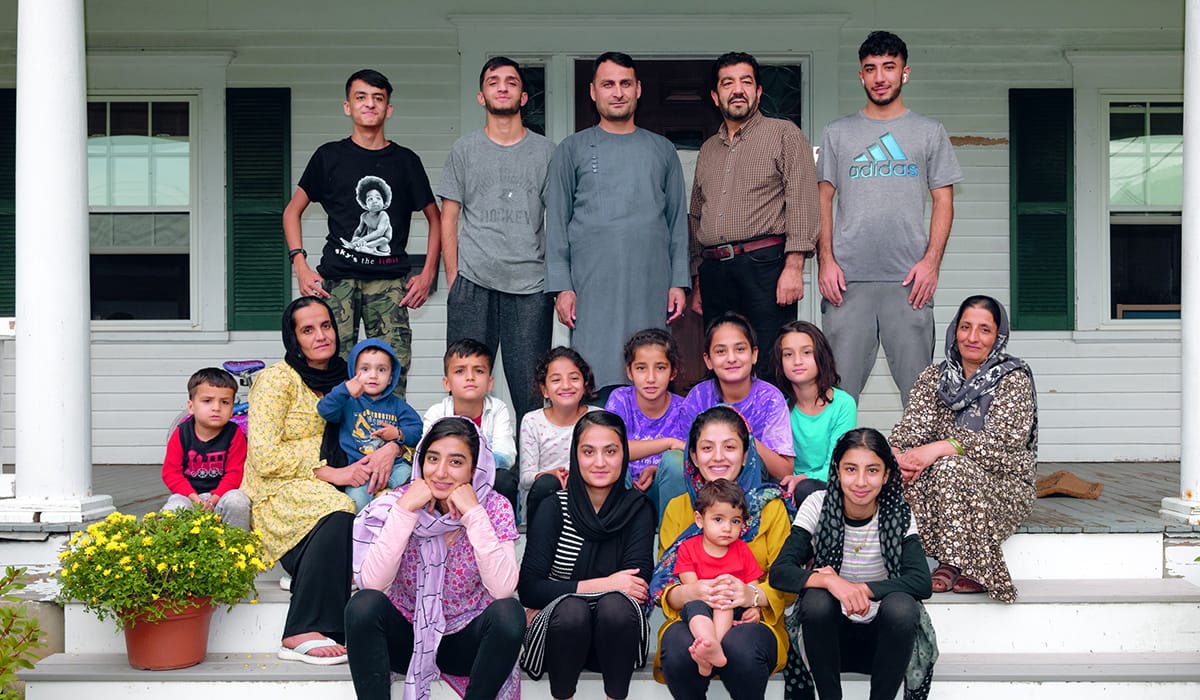
The Shams and Niazy families on the steps of their new home.
Why is it important for others to get involved with causes they care about?
If you care about something, you need to get involved. It’s the only way anything happens. If you see something you can do, just do it.
Any advice for people who want to start volunteering?
The opportunities depend on your community. If your community has a food pantry, that’s a great place to start. In my town, various organizations are always looking for volunteers. Once you’re “in,” you can network and find other opportunities. Volunteer organizations usually run pretty lean. There’s always a need for people and always something to do.
What do you want people to learn from your story?
If you lead, people will follow. People are afraid to lead, but ultimately, you don’t lead alone; people always show up to help you lead. I love the quote by Mother Teresa: “Not all of us can do great things. But we can do small things with great love” Time, treasure and talent—that’s what’s needed.
I’ve also learned that we all have something in common if we talk long enough.
Illuminating a Beloved Park Through Volunteerism and Heritage
Meet Daily Point of Light Award honoree Beth Bushke. Read her story, and nominate an outstanding volunteer or family as a Daily Point of Light.
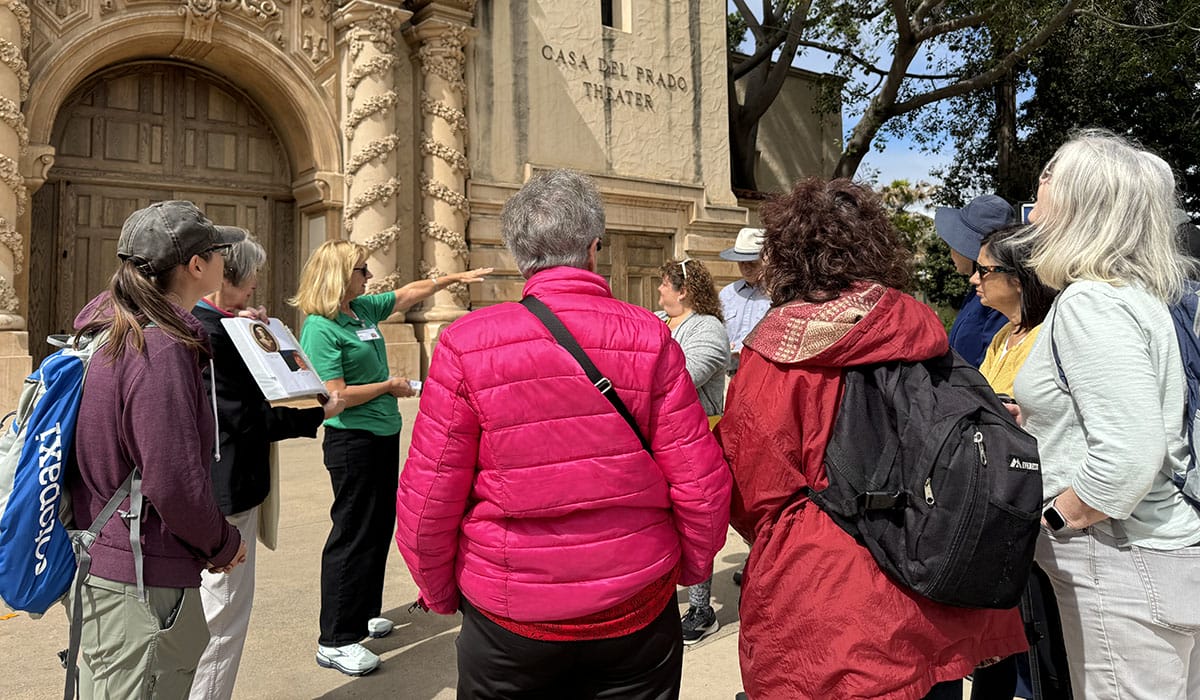
In the heart of San Diego, Beth Bushke dedicates herself to community service and environmental appreciation in the vibrant life of Balboa Park. With her multifaceted volunteer efforts, Beth has become an indispensable part of the park’s visitor services, enriching the experience for guests from around the globe and enhancing the park’s educational offerings through her innovative projects. As a Balboa Park Visitor Services volunteer, Beth’s primary role involves guiding visitors through the park’s rich history, many museums and engaging activities.
One of Beth’s notable contributions is the co-creation of a walking tour that highlights women who have made significant contributions to Balboa Park. This initiative, developed in partnership with three park organizations, showcases Beth’s passion for history and her commitment to celebrating the achievements of women. Her research into the lives of these 20 featured women, coupled with her efforts in creating a script, route and training for volunteer guides, exemplifies her dedication to bringing this important aspect of the park’s history to light.
In addition to her visitor services and educational contributions, Beth plays a vital role in organizing Forever Balboa Park’s sPARK awards, an event that celebrates innovation within the park. As a member of the sPARK Awards Ad Hoc Committee, she has been instrumental in researching funders and sponsors, assisting with logistical planning and providing strategic insights for the event.
Beth devotes 35 to 45 hours per month to her volunteer activities at Balboa Park. Find out what inspires her volunteerism.
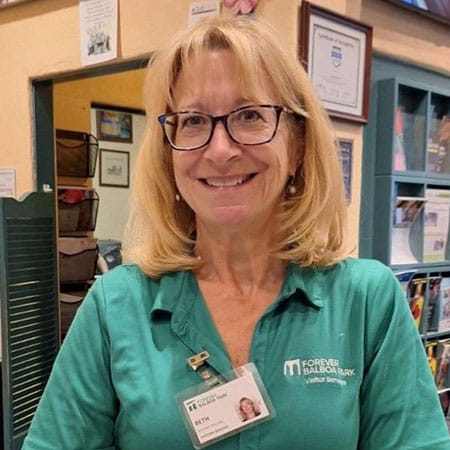
Beth Bushke dedicates her time by volunteering regularly at Balboa Park in San Diego.
Tell us about your volunteer role.
My primary duty is to assist visitors to San Diego’s Balboa Park by explaining park history: providing information about the 17 museums in the park, including type of museum, current exhibits and events, hours and cost; assisting with the purchase of park-wide passes; offering suggestions on the activities in the park; explaining park guide and map and guiding visitors to park attractions. I also create a monthly directory of exhibits and events at museums to be used by other park volunteers and visitors.
Over the past several months, I worked with one other volunteer to create and roll out a walking tour within the park of women who made significant contributions to the park. The tour is a partnership between three organizations within the park. My role included researching the 20 featured women, creating a script and a route for the tour, providing training and guidance to volunteer tour guides and serving as a tour guide. I also initiated the collaboration between the three organizations and led the planning and communications to roll out the tour to celebrate Women’s History Month. The tour will be an ongoing offering to park visitors.
I am also serving on the committee to celebrate innovation in the park via the annual sPARK awards. As a committee member, I provide direction on the event, solicit sponsorships from local organizations and network to communicate the event and awards to the community.
Why is this issue so important to you?
I love supporting Balboa Park for many reasons. Parks are available for the entire community – people of all ages, backgrounds and beliefs are welcome in the park and can find a source of learning, recreation and relaxation. Parks literally serve as common ground where local residents and tourists visiting from around the globe can share and explore what is familiar while simultaneously gaining exposure to new experiences.
Balboa Park is an especially wonderful park that is home for many of San Diego’s cultural institutions. In addition to the zoo, the park hosts 17 amazing museums, abundant gardens with diverse plant life, unique recreation and entertainment areas and facilities, miles of trails and plenty of open space for visitors to enjoy.
Balboa Park also has a rich history. I am thrilled that we were able to partner with three organizations within the park to bring together the walking tour highlighting women who have been influential in making the park the treasure that it is today. Each of the women have their own stories that serve to illustrate how they were able to persevere to make contributions, sometimes in the face of opposition and resistance, and inspire us to continue to ensure the park is inclusive for women and all visitors. The women we talk about span the early days of the park to current times and highlight women who are in leadership positions now, continuing the journey.
What’s been the most rewarding part of your work?
I love helping people discover the treasures of the park. People are always so excited and enthusiastic when they realize everything that is in the park, and I love helping them create a plan to optimize their experience.
It was especially rewarding to create the Balboa Park Women’s Tour. I loved learning of the stories of the women, the times in which they lived and the approach each of them took to ensure that their perspectives and talents were used to benefit themselves, other women and the broader community. While their involvement was not always welcomed, it ultimately improved events in the park as well as the park itself and made the entire community stronger. l feel a friendly, personal connection to the women. I’m grateful for their work and am kind of “protective” of them. I want their stories to be known so that others can be inspired by them.
It was also very gratifying to see how warmly the tour was embraced. When we asked for volunteers to help as tour guides, we were met with much enthusiasm – so many were excited to learn about and share women’s stories. The tour was also very well-received by the community – our first four tours booked up very quickly which confirmed our belief that there was an audience who was very interested in learning more about these women and the impact they had.
What have you learned through your experiences as a volunteer?
Volunteering has really reinforced for me how interconnected the world is. People share common desires for themselves, their families and their communities. There is so much wonder and diversity in the world. Preserving and celebrating a beautiful setting where people can enjoy and be nurtured by nature is very healthy and nourishing.
One of Beth’s contributions is the co-creation of a walking tour that highlights women who have made significant contributions to Balboa Park.
Tell us about future partnerships, programs or events that you are excited about.
It’s always fun to watch the ways Balboa Park is evolving. Two current projects that I’m excited about are the reopening of the 1915 Botanical Building and the new gardens and interpretive trails that are being installed outside the San Diego Natural History Museum. I am also excited to see our women’s tour continue to grow. Initial response has been strong, so I’m looking forward to sharing the stories with more people in the community as well as visitors to San Diego and Balboa Park. As we tell the women’s stories, we learn about even more women who have been contributors.
Why is it important for others to get involved with causes they care about?
Every little bit of kindness and good-will creates a ripple effect. The person offering the kindness is rewarded and the person receiving the kindness is rewarded. Getting involved in causes you care about not only serves the community, but broadens our perspective and understanding of each other and the world that we live in.
Any advice for people who want to start volunteering?
Find something that is interesting to you and get involved. You don’t need to be an expert. The most important thing is curiosity and a desire to share and help others. I can guarantee that you will be rewarded for your efforts.
Bay Area Teen Spreads Joy and Community Through Art Classes for Seniors
Meet Daily Point of Light Award honoree Elise Fowler. Read her story, and nominate an outstanding volunteer or family as a Daily Point of Light.
As a competitive alpine ski racer, 16-year-old Elise Fowler, drives to Tahoe from the Bay Area every weekend. During the week, she plays varsity hockey, volunteers, participates in various extracurriculars, cares for her dog and giant bunny–Mochi and Jojo–and focuses on schoolwork as she approaches her junior year of high school. There’s not a lot of downtime among her commitments, but when there is, Elise destresses by creating art. Her childhood was filled with classes to inspire such creativity, but she stopped going when she got to high school due to schedule overload. These days, she paints and sketches independently in order to clear her head and relax.
After recognizing how much fun she and her grandparents have making art together, Elise started Branching Hearts to spread that joy. She recruits teens in the area to teach art classes at local senior centers where everyone involved can reap the benefits of intergenerational friendships and creative artistic endeavors. Along with running the organization and training new volunteers, she teaches classes in both English and Chinese, a skill nearly her entire team shares. In a world where everyone is busy and stressed, Elise and her organization are the antidote.
What inspired you to get started with this initiative?
Service learning has always been a big part of my life; I’d done volunteering, but I wanted to make an impact in my own way and take a leading role. I love art, so I figured why not start there? I have experience teaching kids’ classes but decided I wanted to try with the elderly. I’d painted with my grandparents before, and it was a lot of fun. They always enjoy talking with me and my brothers.
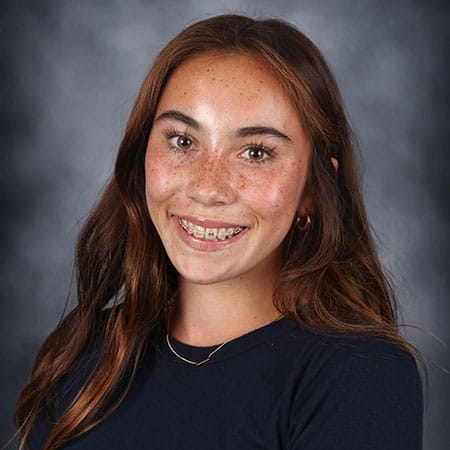
Elise Fowler, founder of Branching Hearts, an organization that engages high schoolers in teaching art classes to seniors.
Tell us about your volunteer role with Branching Hearts.
In August 2022, I founded the organization. I started by researching local senior centers, cold calling and sending emails. It was scary at first, because I’d never done something like that before. I ended up getting back a lot of positive responses, which was amazing. Then, I started coordinating with centers on my own. I emailed them about dates and was volunteering twice a month at each of three centers.
Eventually, it was getting to be a lot on top of sports, schoolwork and other extracurriculars, so I recruited some friends. We ended up forming the core team of around six that now does behind-the-scenes stuff like updating social media, tracking finances, scheduling classes, organizing supplies, maintaining the website, doing outreach, etc. Today, we have over 30 other volunteers not including our core team.
We’re all trying to recruit at our schools to continue to grow this, and we’re working with over 10 centers. Each center has different sections; we work with those with dementia as well as fully functioning seniors who are independent and able to do a lot more. For some centers, we bring supplies. Some of them offer their own or they buy supplies for us. We have a GoFundMe going, and we’ve raised around $850. We’re hoping to plan a fundraising event to buy more art supplies sometime soon, too.
You develop curriculum tailored for different students. Can you tell us about that process?
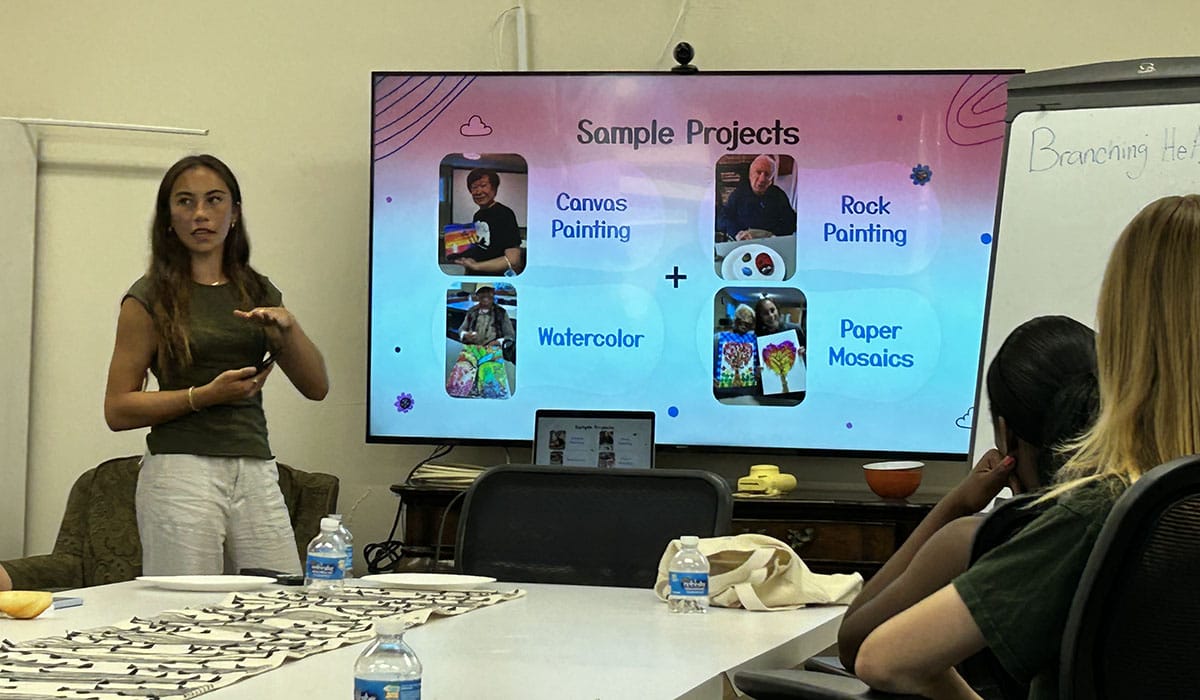
Every month we design projects for different centers, often based around a holiday. In February, for example, we did a lot of Valentine’s Day-themed activities. Sometimes we do the same activity for different centers, but we vary the projects depending on the seniors. For memory care units, we usually simplify our projects; we do more abstract stuff. For more independent-living centers, we do more complicated activities. We might have them following step-by-step landscape paintings, for example. And we vary the medium that we use each month. Sometimes we do painting. Sometimes we sketch or use pens. Sometimes we do crafts.
What are your long-term plans or goals for the organization?
I’m hoping to recruit more volunteers from different high schools in other parts of California or even across the nation. We just started our Start Your Own Chapter program where kids can start a chapter at their own school. They’ll lead their own teams and recruit volunteers.
What’s been the most rewarding part of your work?
The most rewarding part has been getting to hang out and talk to the seniors. People might think that a large age gap would prevent people from becoming friends, but I really enjoy sharing stories. It’s cool to trade life experiences. They have so much wisdom.
Elise hosts an orientation detailing what being a volunteer for Branching Hearts entails and how to lead classes. The Pathfinder Club, a local church group, regularly dedicates time to helping out at the senior centers.
What have you learned through your experiences as a volunteer?
I’ve learned a lot about applying to college and about life. Many of the seniors love talking about their college experiences, and many went to places I’m interested in. I love hearing about their time there and what they enjoyed.
Why is it important for others to get involved with causes they care about?
It’s amazing to give back to your community. A lot of us are so fortunate that we don’t take time to think about other people. High school has been really stressful lately. Sometimes, I get wrapped up in my own problems. I feel so much more relaxed after I teach my sessions, because I get to talk and make art and laugh. It’s an amazing experience to help other people and see the joy that you’re bringing them.
What do you want people to learn from your story?
If you have an idea, just go for it. I was really apprehensive at first about cold calling centers. I was afraid of rejection, that they wouldn’t want my services or wouldn’t respond. But I learned that fear of rejection isn’t something that should hold me back. I just went for it, and it helped build up my courage. If you want something, go for it.
Competitive Junior Player Increases Access to Tennis With Donated Equipment and Free Clinics
Meet Daily Point of Light Award honoree Ayanna Shah. Read her story, and nominate an outstanding volunteer or family as a Daily Point of Light.
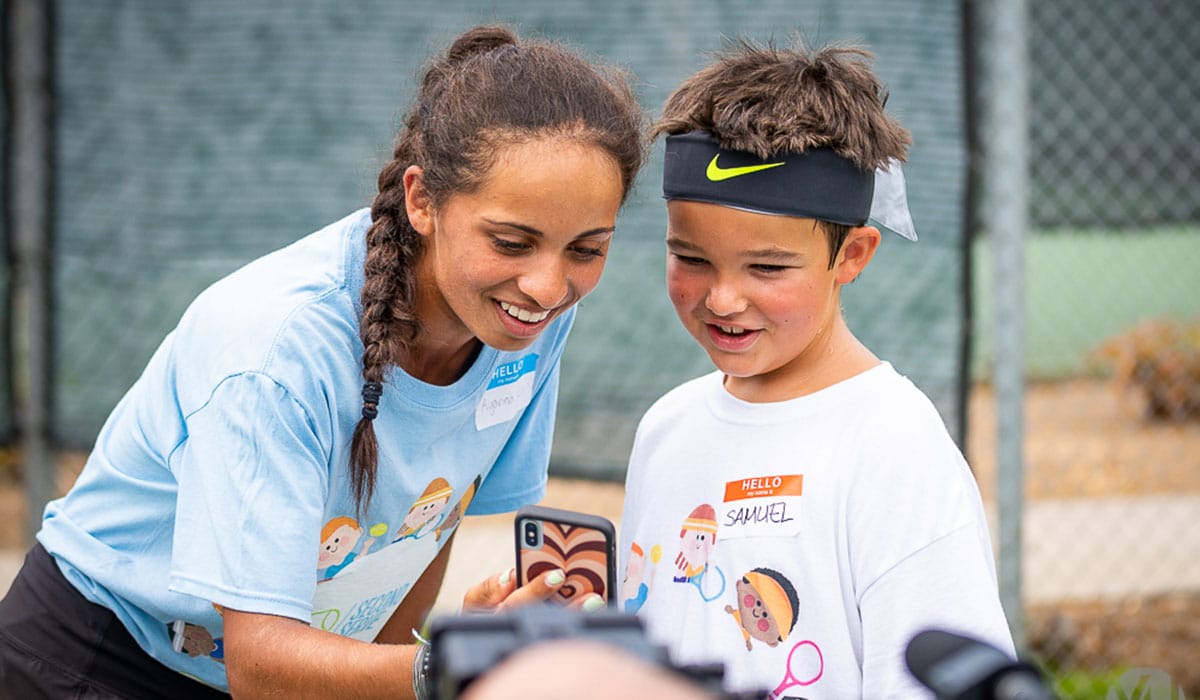
Ayanna Shah, 17, is a self-described beach rat who loves bringing along Tucker, her dog. The golden retriever resulted from a deal with her dad during the pandemic that involved lots of reading and winning a USTA Level 2 tennis tournament. She and her older sister, Amani, started playing seriously when they moved to the endless sunshine of San Diego about eight years ago. In 2019, the two of them started Second Serve after realizing that the high barriers to entry of the sport they love prevented many from the same opportunities to have fun, make friends and compete. The organization addresses challenges of access and inclusion by collecting and donating new and gently used equipment and offering free clinics.
While Amani is now away at college, Ayanna has stepped back from high-level competition to spend more time running the organization but continues to play for fun. Second Serve now has grown exponentially. More than 200 youth have collected and distributed more than 27,000 pieces of equipment in 38 states and 15 countries. Last year, they outfitted more than 40 low-income high schools in the U.S. alone. And Ayanna has just returned from Washington, D.C., where she accepted a micro-grant from the Aspen Institute for Second Serve’s commitment to make tennis more accessible.
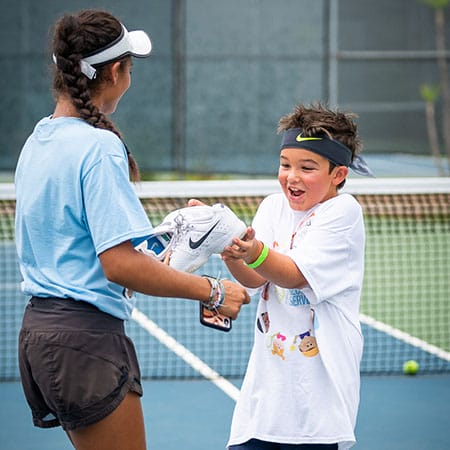
Ayanna gives away a brand-new pair of shoes.
What inspires you to get started with this initiative?
We had a private tennis coach who had moved to a lower-income part of San Diego called Escondido. He was giving us lessons at Kit Carson, a park with soccer, softball, baseball and even disc golf. We would come for our lessons, and there would be kids playing everything but tennis.
Around the same time, our very first coach, Eduardo Sanchez, reached out to us. He had started a tennis program that gave free clinics to kids just across the border in Tecate, Mexico. One thing that they were lacking when they came to his program was equipment. Tennis rackets and other gear can be expensive; it’s a pretty high barrier to entry into the sport. We were wondering why kids weren’t on the tennis courts at Kit Carson, and then we heard from Eduardo and it clicked.
As competitive national players, we had a ton of equipment sitting in our garage collecting dust, so we donated it to Eduardo. We thought others were likely to have the same surplus. That’s how Second Serve started.
We created a team of young leaders and have had over 230 people join. We’ve built around 157 partnerships. Some are under-resourced Title 1 high schools, and others are organizations that serve under-resourced youth–NJTLs, organizations the USTA Foundation started to run low-cost tennis clinics; Boys and Girls Clubs; Big Brothers Big Sisters, etc.
The attitude that my sister and I started with, gratitude for what we had, has spread to our entire team. They’ve been fortunate enough to be part of this tennis community, and they’re giving other kids the opportunity to play.
Tell us about your volunteer role with Second Serve.
I oversee the processes going on internally. Recently, our team was getting so big, it was sometimes taking three or four hours out of my day to work on logistics. We worked with a Stanford computer science student to develop an internal website and platform to help streamline the processes of completing what we call a “donation cycle,” which includes collecting equipment, connecting with a partner, donating equipment and highlighting that site. That has taken a lot of the logistical strain off of me and freed up time for finding new avenues of growth.
For example, we’ve started expanding into the college space. We want to ensure that the organization creates change for decades to come, and it will keep the organization youth-led, but it will create more accountability.
We organize yearly events like our annual Community Day and fundraisers. I oversee a leadership team of 11 and communicate with our board of directors. I run our marketing, lead team meetings, and write grants. There’s a lot of stuff to do, but I really enjoy the work. When I feel like I’m doing something for myself, I’m not as motivated to do it. With Second Serve, it’s for other kids, and the more time I put in, the more those kids will get out of it. That’s how I motivate myself.
What’s been the most rewarding part of your work?
It’s seeing the smiles of these kids and hearing the stories of the people we’ve impacted. To give you an example, there’s a girl in Nigeria, about 11, who uses tennis as her outlet. For me and my sister, tennis was super competitive. We were making friends, but it was all about the tournaments and traveling. To see that it was not like that around the world, that it was a safe space and a chance for a college scholarship to improve your opportunities, really opened my eyes.
Ayanna shows Sam a picture of Taylor Fritz, a headband donor and #1 American tennis pro in the world, wearing the same headband as him.
What have you learned through your experiences as a volunteer?
My leadership skills have grown with the organization. When my sister left for college, it was difficult to choose between playing at that super competitive level of tennis or trying to lead the organization. I’m glad I chose the organization, because I think it’s shown me that the world is so much bigger than me. It’s had the same impact on the rest of our team. I found myself in service, and it’s something that I’ll do for the rest of my life.
Tell us about future partnerships, programs or events that you are excited about.
Over the summer, we run an annual Community Day. In the morning, we run a free tennis clinic. Last year, we had about 80 kids come, so this year we hope to have 125 to 150. We have music playing and drills spread across six courts at Kit Carson Park, where this whole endeavor started. In the afternoon, we hold a fundraising event to help service those kids specifically.
What do you want people to learn from your story?
When you know you want to do something good, just do it. Take action. The more that you think about it and deliberate, you’re never going to get to it. And the other thing I’ve learned from my experience is that when you do things for the right reasons, things just kind of fall into place.
Empowering, Educating and Creating Community Through the Culinary Arts
Meet Daily Point of Light Award honoree Clelia Poujade. Read her story, and nominate an outstanding volunteer or family as a Daily Point of Light.
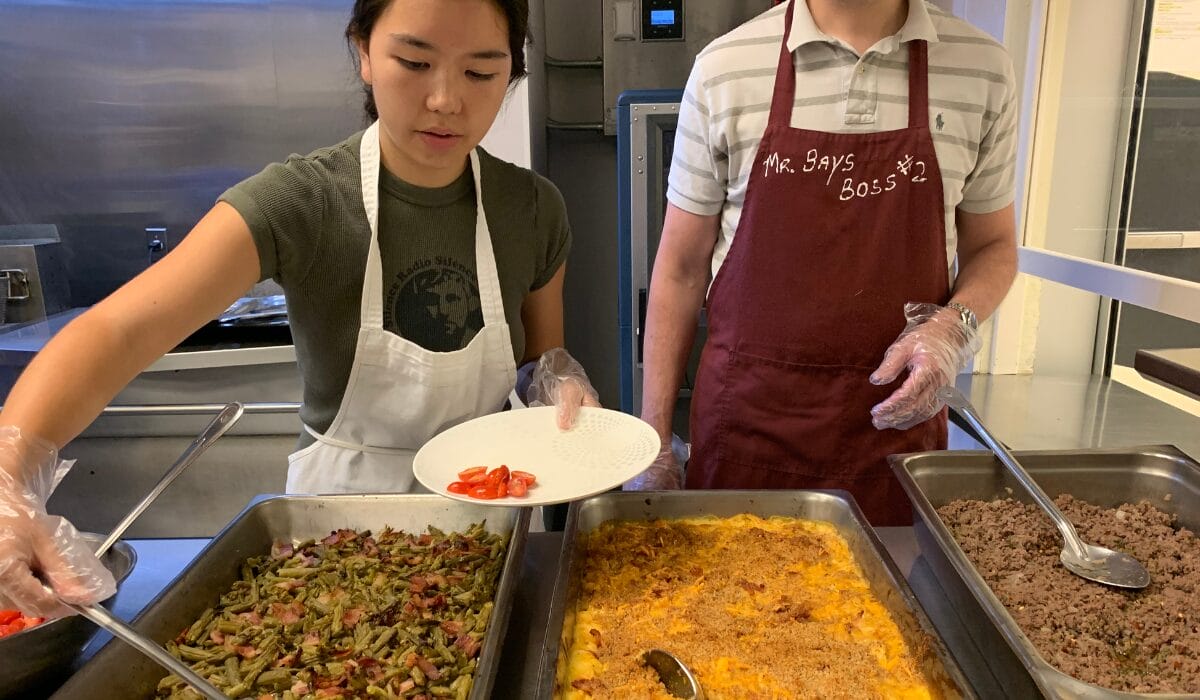
At just 17 years old, Clelia Poujade has already left a significant mark on her community by blending her passion for cooking with a mission to combat food insecurity. Through her initiative, Hands Together To Feed Chicago, Clelia has turned her culinary skills into a vehicle for change, serving more than 7,500 meals and raising substantial funds to support families who are unhoused and underserved.
Clelia shares, “I founded Hands Together to Feed Chicago my sophomore year of high school. My goals were to combat the food insecurity I’d witnessed in Chicago and create community through food.” Her initiative reflects a profound understanding of the power of food beyond nourishment. She sees food as a catalyst for community, connection and care.
Her approach to volunteerism is deeply personal and rooted in her cultural identity. “You might not have expected this, but I’m actually French. Growing up French, cooking and food was how I connected to my family and friends,” Clelia reveals. This connection propelled her to use her culinary talents to make a difference in her new home in Chicago, where she observed a glaring need for accessible, nutritious meals.
Clelia Poujade is the founder of Hands Together To Feed Chicago, an organization committed to combatting food insecurity in Chicago./Courtesy Clelia Poujade
Clelia’s involvement with local organizations, her role in leading volunteers and her creative fundraising efforts are testament to her leadership and dedication. She elaborates on her hands-on role, “As founder of Hands Together to Feed Chicago, I’ve reached out to organizations, recruited and trained volunteers and developed recipes.”
One of Clelia’s standout initiatives is the Valentine’s Day Bake-a-Thon, a testament to her ability to mobilize her community around a cause.
“Recently, I organized and coordinated a Valentine’s Day Bake-a-Thon where I partnered with 10 shelters, coordinated donations with five local bakeries, recruited and led more than 10 volunteers, and baked over 500 cookies myself to distribute over 1,400 Valentine’s Day treats to Chicago shelters.”
But Clelia’s vision extends beyond one-time events. She is committed to sustainable impact, aiming to equip others with the skills to nourish themselves.
“Eventually, I’d love to start hosting free cooking classes for community members,” she states, underlining her belief in empowerment through education.
Clelia’s “Everybody is Loved Here” project is all about inclusion, with Clelia stating, “I create art on diversity and inclusion so every kid can feel loved, valued and accepted for who they are, regardless of any differences.” This project, much like her culinary efforts, is an extension of her belief in the universal language of care and acceptance, manifesting in the warmth of a shared meal or the comfort of a familiar recipe.
Looking to the future, Clelia’s ambitions for Hands Together To Feed Chicago embody her forward-thinking and compassionate spirit. With plans to expand the initiative beyond Illinois and dreams of teaching cooking classes to empower individuals with self-sustaining skills, Clelia’s journey is far from over.
Clelia has hosted a variety of events, including birthday parties in shelters for people experiencing homelessness./Courtesy Clelia Poujade
“My dream is to make this nationwide, so that we can all come together through food and a shared love for all,” she shares, highlighting her vision of a world united by the simple yet profound act of sharing a meal.
Reflecting on the rewards of her volunteer work, Clelia shares a poignant memory: “The first time I hosted a birthday party at a shelter, I was hugged by a guest the second I walked into the door… Getting to meet people, who are so kind and grateful, and bringing them joy any way I can has made me so happy.”
The depth of Clelia’s impact is felt not only in the meals served and dollars raised but in the lasting relationships formed.
“Through food and joint gatherings, we’ve fostered friendship at community meals, birthday parties and more, and I’ve met incredible people,” Clelia reflects.
The friendships and bonds developed through these gatherings underscore the essence of community—that it’s not just about sharing resources but about sharing lives, stories and moments of joy. Clelia’s work with Hands Together To Feed Chicago transcends the act of feeding; it nurtures a sense of belonging and community among those who partake in the initiative’s offerings.
Clelia’s story is a powerful reminder of how individual passions can transform into public service. Her advice to others looking to volunteer is simple yet impactful: “Just get out there. Start by signing up with an organization near you that you’re interested in and go from there.”
Through her actions, Clelia Poujade exemplifies the essence of volunteerism—using one’s gifts to foster connection, uplift spirits and build a stronger, more compassionate community. As Clelia continues to lead and inspire, her story serves as a powerful testament to the impact of youth leadership in addressing complex social issues through empathy, innovation and the universal language of food.
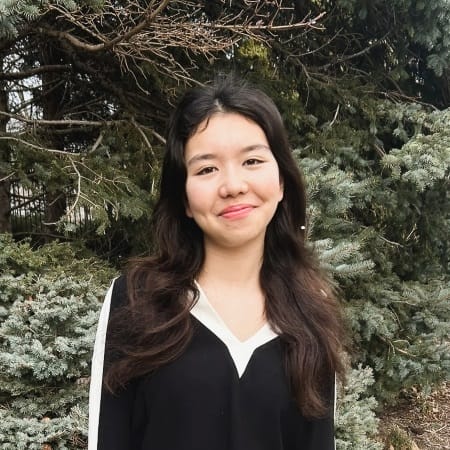
Meet Daily Point of Light Award honoree Audrey Staker. Read her story, and nominate an outstanding volunteer or family as a Daily Point of Light.
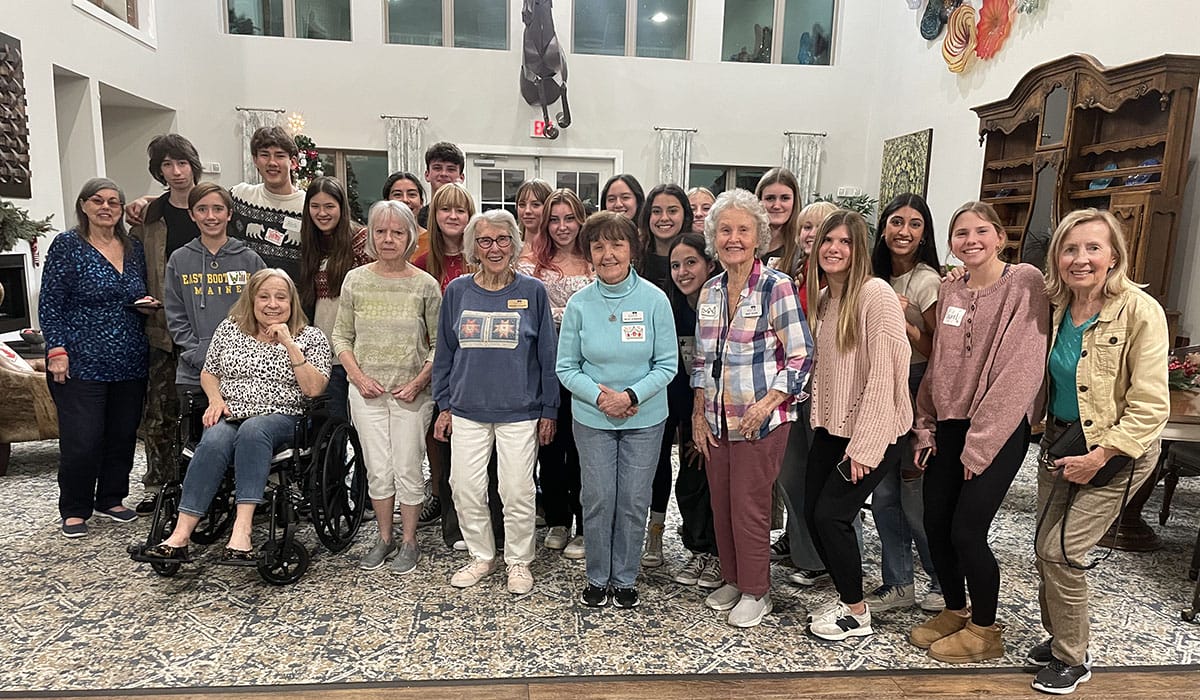
Audrey Staker is the middle child of five. Her favorite place she has lived so far is Hawaii, and she has a pet ferret with albinism named Houston. She loves running, surfing, playing the piano and guitar and is youth group president of her church. Most of all, Audrey likes to brighten the days of senior citizens who live in senior care facilities.
What inspires you to volunteer?
I believe that everyone needs to support their communities. We’re only given a certain amount of time in life and it’s our job to make a big impact while we’re here. With so much darkness in the media the world can seem like an awful place. The more joy we spread, the happier people will be.
I started this club at my high school to make it easy for teens to volunteer at senior centers. Now, my role is to help it expand. You might not know this, but a lot of teens want to connect with the older generations, but they don’t always know how to start. I decided to make it easy for high school students to volunteer at senior centers. In my high school, they join the Golden Years Club. I support other high school students from other schools to start their own club so they can reach out to local senior centers and plan events and parties. I help them start their club and advise them.
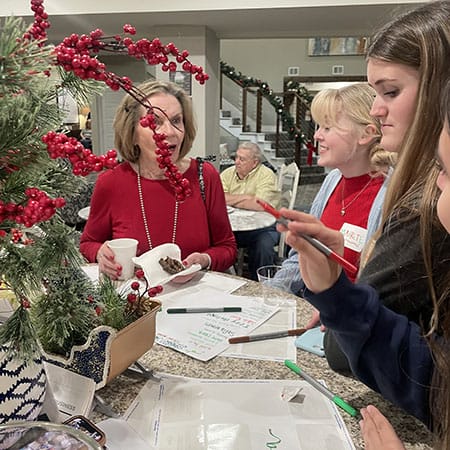
Audrey Staker, right, creates name tags for residents and volunteers /Courtesy Audrey Staker
Within the club, we organize parties at senior living facilities for each major holiday. We have been getting involved with elementary schools and local choirs who come to sing and perform skits for the seniors. We encourage other community clubs to participate.
The Golden Years Club is very flexible. Depending on their schedules, there are students going to the senior homes every single day. The senior citizens are feeling the light that these teenagers selflessly spread. Some of the daily activities that the students particularly love are bingo calling, helping with dining, card night, board games, listening to stories, and movie night planning.
Right now, we’re brainstorming our Easter party. The elementary kids may do a little Easter skit, but for now we are planning on an Easter egg hunt in the senior home.
We have over 200 club members in our school. Out of a school of 2,000 kids, our club is the second or third largest club, right after the National Honor Society (NHS). We have served 1,000 senior citizens.
What inspired you to get started with this initiative?
I play piano and guitar every week at the local senior home. I shared this experience with some friends, and they wanted to be involved.
I’ve always loved hanging out with my grandparents. They have the coolest stories. They love telling stories, and I love hearing them. This sparked my love for the elderly.
What are your long-term plans or goals for the organization
I would love to see the Golden Years Club expand throughout Texas and eventually throughout the country. There are so many seniors who feel forgotten and there are so many high school students who would love to spend time with them.
What’s been the most rewarding part of your work?
The connections I’ve made with individual senior citizens are priceless. I’ve heard so many stories about their past and their life experiences. I love seeing the joy when they get to share their past with a young person. It’s a big impact on both the seniors and the students.
What have you learned through your experiences as a volunteer?
Young people want to volunteer. They’re just looking for the right opportunity. People will sometimes say, “Young people don’t contribute to their communities, they’re slackers.” That just isn’t true. The amount of effort I’ve seen put into volunteering by teens is just incredible. In fact, teens and younger kids can be the most effective. It’s surprising for adults to see teens stepping up, so they support our initiatives no matter the area of volunteer work.
Tell us about future partnerships, programs or events that you are excited about.
In two weeks, we’ll be hosting our Easter party at a senior center in Dripping Springs. This year, we’re bringing in elementary school students for an easter egg hunt at the senior center. Then, there will be a St. Patrick’s Day event at a senior center in Plano.
I am continually reaching out to organizations for fundraising. We have a 5K fundraiser walk planned in the fall, which will be a lot of fun.
The Golden Years Club stands with residents of local senior center during a holiday party /Courtesy Audrey Staker
Why is it important for others to get involved with causes they care about?
Everyone has a passion. Everyone is capable of helping. I started small in my school and now multiple high schools in Texas have their own Golden Years Clubs. We spread love to senior citizens, and the positive impact it has made on high school volunteers is incredible.
Any advice for people who want to start volunteering?
The main thing is to look at areas you’re interested in. Look online for volunteer opportunities in the area you’re passionate about. It’s hard to spend so much of your free time on something that you personally don’t care about. There are so many opportunities. We currently have 500 student members in Texas at various schools. Other clubs are always looking for volunteers, too.
What do you want people to learn from your story?
Young people can absolutely make a difference. We want to connect with senior citizens. I’ve seen hundreds of young people just in my area who want to connect with their elders and grandparents. Most of our volunteers don’t have grandparents living close by, so they miss out on that connection. They miss out on the wisdom that our elders can give us. Our elders have put in so much time nurturing us, giving the best years of their lives raising kids and ensuring their kids succeed, and many of them are spending their golden years alone. This is a perfect opportunity for both generations to get what they need. The seniors get the companionship and attention they crave. The students get the connection they need to the older generation.
When we visit the seniors, they see that they are appreciated for all they’ve done for us. I have made some very special connections. When I play piano or guitar at the center, this lovely old lady with dementia named Gabby always asks me, without fail, to play, “Ain’t Nothin’ But a Hound Dog.” Sometimes I’ll play it several times for her.
Activist Empowers Community Youth and Families Through Art and Volunteerism
Meet Daily Point of Light Award honoree Sindhu Surapaneni. Read her story, and nominate an outstanding volunteer or family as a Daily Point of Light.
At just 15 years old, Sindhu Surapaneni is a remarkable testament to the power of youth activism and volunteerism. With more than 1,100 hours of service to her community in Spokane, Washington, over the last three years, she has demonstrated an extraordinary commitment to making a tangible difference. Sindhu’s multifaceted volunteer efforts, from teaching art to raising funds, showcase her as both a young cultural enthusiast and impactful philanthropist.
Sindhu’s journey of service is marked by her use of diverse talents to foster change and uplift others. As a 2x TEDx Speaker, international storyteller, art and Bollywood dance instructor, and henna artist, she has contributed significantly to her community. Her involvement in various capacities, ranging from executing Bollywood dance demonstrations to providing visual art lessons, illustrates her dedication to spreading joy, culture and understanding.
At the age of 11, Sindhu founded Imaginations 2 Creation, with a mission to produce art that embodies positivity and hope. Through her leadership, the organization has reached out to numerous schools, businesses and multicultural organizations, teaching more than 400 free art lessons. Her Everybody is Loved Here art project, symbolizing inclusion and diversity, has been embraced by 22 different institutions across Washington, Idaho and New York, further amplifying her message of love and acceptance.
Find out how Sindhu focuses her volunteer efforts on helping her community through fundraising and the arts.
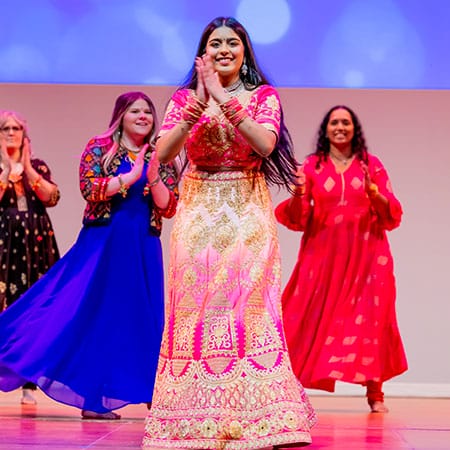
Sindhu leads an energetic Bollywood dance workshop, spreading joy and cultural awareness through every step and smile.
Tell us about your volunteer role.
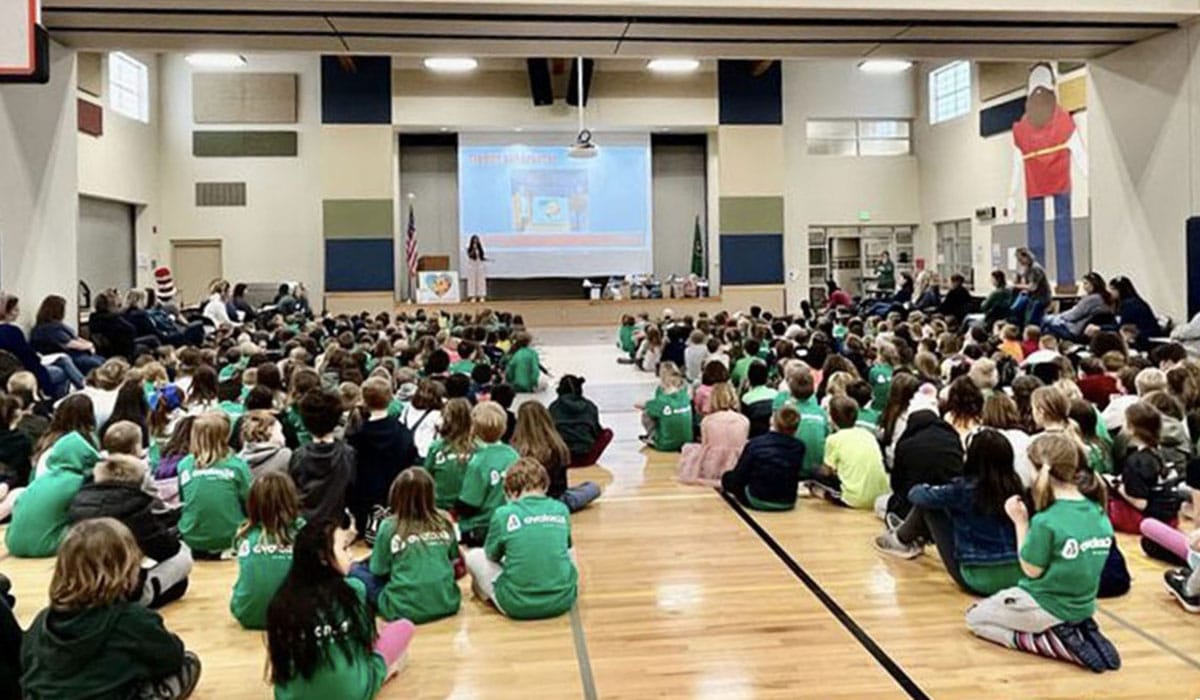
At the age of 11, I became an art instructor, teaching more than 400 free creative sessions on Zoom and Facebook Live as an outlet for kids during the pandemic. I began offering workshops and selling my artwork, donating over $22,000 to local charities that support low-income families and unhoused individuals. My online classes helped me grow and gave me the courage and confidence to deal with difficult situations. I also find strength in the importance of my projects and messages. While teaching art at elementary schools at the age of 13, I also worked with elementary school kids to create more than 1,080 cards to be sent over to Ukrainian refugees with positive messages.
Additionally, I offer students free dance lessons in the style of Bollywood – a common name for the film industry in India. I also lend my time to local area grade schools, having taught over 50 art lessons at schools that don’t have art programs. These days, I have been busy helping many more organizations that help low-income families and foster kids while still in school, volunteering, tutoring math and performing and teaching free Bollywood dance as the president of Indian Youth Club of Spokane.
By teaching Bollywood dance, I promote cultural diversity and inclusion, inspiring them to accept themselves for who they are and accept others for who they are. Our dancers include neurodivergent, LGBTQ, seniors and kids who are supported through the Indian Youth Club by schools, cultural groups and organizations to promote self-care, empowerment and personal growth.
I recently started doing henna art in the community and at private events to promote my culture, inclusion and diversity while donating all proceeds to local charities. Money made through math-tutoring and henna art has gone to donating bedding to Sleep in Heavenly Peace Spokane, pajama sets to Embrace Washington and warm clothing and shoes to Jewels Helping Hands. I also donated my time and money to Toys for Tots and Family Promise of Spokane.
Why is this issue so important to you?
I personally feel everybody deserves to have their minimum needs met. I’m a compassionate person and have empathy towards others. Whatever their needs may be, I try to help them in any way possible.
What inspired you to get started with this initiative?
I want to use my gifts to create change, taking action to make a difference in others’ lives and putting people first by serving others.
What are your long-term plans or goals for the organization?
My ultimate goal is to further empower the youth. We do this through keynote speeches emphasizing the importance of volunteering, which helps the youth learn the skills to get their first job or start a business with the experience gained through volunteering. I also want to continue offering free Bollywood dance lessons that emphasize that “everyone is welcome,” making sure everyone feels they belong and is accepted. This initiative further involves establishing a business entrepreneur club and fostering collaboration with local businesses to provide mentorship to like-minded youth.
What’s been the most rewarding part of your work?
Volunteering has provided me with purpose and community, while also improving my social skills, self-esteem and communication skills. The volunteer experience enhanced my communication skills, enabling me to deliver two TED talks and receive three Gold Presidential Volunteer Service awards (in 2022, 2023 and 2024) for volunteering over 1,100 hours across 3 years.
What have you learned through your experiences as a volunteer?
I’ve learned patience, how to deal with kids of different ages, solving problems, organization skills, time management and leadership skills.
Why is it important for people, especially youth, to get involved with the causes they care about?
You gain a lot of new skills and gain professional
experience. Volunteering brings people together and you can make a lot of new friends. It also helps you with mental and physical health and well-being. Volunteering makes you healthier with optimism, joy and control over one’s fate. It strengthens the immune system. It strengthens your community, and you get the satisfaction of getting involved in the community. Finally, it helps improve your confidence and promotes personal growth and self-esteem.
Any advice for people who want to start volunteering?
Choose a cause, identify your skills, determine your volunteering frequency, research community opportunities and then tap into your potential through passionate activities to find a suitable opportunity.
Championing Mental Health and Racial Equity Through Global Outreach
Meet Daily Point of Light Award honoree Sarah Shelke. Read her story, and nominate an outstanding volunteer or family as a Daily Point of Light.
Sarah Shelke stands at the forefront of a remarkable movement to transform mental health support for youth, particularly those from marginalized communities. As a co-founder of, Sarah has catalyzed a global initiative that leverages the power of social media, international partnerships and grassroots activism to address the critical mental health needs of young people. Her leadership has propelled Mind4Youth into a significant force for change, impacting more than half a million youths worldwide.
Under Sarah’s leadership, Mind4Youth has achieved impressive milestones, amassing a following of over 20,000 on social media and rallying a volunteer force of more than 5,100 members across more than 40 countries. These numbers reflect the organization’s widespread influence as well as its ability to mobilize a global community around the pressing issue of youth mental health. The funds raised, totaling $28,732, and the distribution of 1,782 mental health-related items underscore the tangible impacts of their campaigns and initiatives.
Mind4Youth’s commitment to racial equity is evident in its collaborations with renowned organizations like Kendra Scott, Costco and the United Nations. These partnerships have been instrumental in advancing the conversation and action around racial equity in mental health care. The recent initiative with Better Help, providing $162,000 worth of therapy sessions to marginalized and minority youth, marks a significant stride towards making mental health support more accessible to those who need it most.
Read on to find out more about Sarah’s inspiring journey with Mind4Youth and how her passion, innovation and collaboration has impacted the lives of countless individuals.
Tell us about your volunteer role.
My role is co-founder of my nonprofit, Mind4Youth, and our goal is to help spread mental health awareness and foster mental wellbeing among youth through proactive awareness campaigns, educational programs and also making mental health resources available to underserved or marginalized youth. We hope to support them but also make it easier to access these services due to financial constraints or limited accessibility.
Why is this issue so important to you?
Mental health has always been very important to me. Growing up in an area where education is competitive, I started seeing my own mental health start to deteriorate in the face of this stress. I knew that it was becoming an issue and I wanted to help other youth going through the same thing. I also realized that other youth didn’t have the same access to resources as I did, such as access to a counselor or therapist. My goal was to create the opportunity for other youth to get help if they need it.
What are your long-term plans or goals for the organization?
Our long-term goals are to provide more resources in person. Right now, a lot of our work is online – such as worksheets, programs and activities that we provide to schools – and now we’re working on providing physical resources, such as coloring books to help promote wellbeing. We’re offering board games and other things to foster collaboration and improve wellbeing.
What’s been the most rewarding part of your work?
Hearing back from the people I’ve been able to help. That’s definitely been a big motivation for me throughout my work. Realizing that I was able to help people is so rewarding because I know I’ve been able to make a difference in their lives.
What have you learned through your experiences as a nonprofit co-founder?
There’s a lot of challenges, especially as a youth nonprofit founder. It’s hard to find new opportunities or ways you can help, especially since you are a bit more limited as a youth on what you can do. But trying to overcome those challenges, trying to be more resourceful, trying to find new opportunities or creating those opportunities if they don’t exist, has been really big for me.
Why is it important for people, especially youth, to get involved with the causes they care about?
I think it’s really important because that’s how change is made. If youth don’t take action and get involved now, it’s going to be harder for future generations. I think it’s so important for youth to find something they’re passionate about and work towards it. It also teaches lessons about work ethic, which can help them a lot in their future as well.
Any advice for people who want to start volunteering?
I would say, definitely don’t give up. As a nonprofit founder, I’ve had a lot of challenges, obstacles and barriers. The only thing that kept me going was just not giving up, and staying motivated even in tough times.