Meet Daily Point of Light Award honoree Brian Smith. Read his story, and nominate an outstanding volunteer or family as a Daily Point of Light.
Brian Smith was born in Montgomery, Alabama, and has lived there his entire life. Growing up in a single-parent household, Brian understood early on that his mother was going above and beyond in helping members of the community even as she took care of the family and worked two jobs. With so many kids growing up in single-parent households and starting on the road to a lifetime of trouble, Brian saw a way to change the narrative. Now, he seeks to give them a positive direction and a head start to success. Brian started his own nonprofit while working as an employment specialist at the Windcreek Casino in Montgomery.
The inspiration for the Blueheart Foundation 334 name comes from the heart: “Blue” because of Brian’s nickname that came about as a result of being born with the umbilical cord wrapped around his neck and his tiny body completely blue. Brian’s mother refused to give up on him, and he was eventually resuscitated. This continues to inspire Brian not to give up on the kids he serves. “Heart” comes from Brian’s grandmother, who said, “If you give, give from the heart.” 334 is the Montgomery area code. It pays homage to the city of Montgomery, where the foundation was started. Montgomery presents the foundation with opportunities to serve and a team of amazing people who come together to make it happen. “However big we get,” says Brian, “it all started right here in Montgomery.”
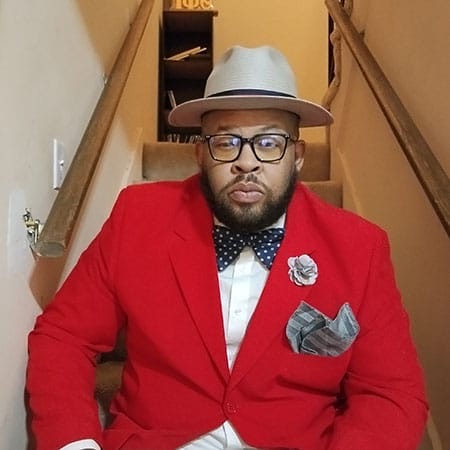
Brian Smith, founder of Blueheart Foundation 334. /Courtesy Brian Smith
What inspires you to volunteer?
I got the idea of volunteering from my mom. Even though she worked two jobs, she still found time to help people, including creating care packages for female prisoners. She has also volunteered at church and a local nursing home. When I was young, I asked questions, like why she was giving time and items to other people. She said, “it’s an inspiration to give because what you give, you get back tenfold.” I didn’t understand it at the time. Once I got older, I realized what she meant, and that’s when I started focusing on helping my community.
Tell us about your volunteer role with The Blueheart Foundation 334.
I founded The Blueheart Foundation 334 as a way to support underserved youth and families in the Montgomery area. I try to serve through a variety of unique activities.
We mentor high school band kids and prepare them for collegiate band. We donate funds for new uniforms and instruments. I played the tuba for the Carver High School Mighty Marching Wolverine Band and later in the university band, the Alabama State University Mighty Marching Hornet Band. I’ve been mentoring the kids at Carver High School for 18 years now. I talk to them about band, music and life. We also hold a high school drum line competition. Kids who participate in this competition have the opportunity to apply for scholarships during the competition, because college recruiters attend. The first place trophy is six feet tall. Everybody wants to win it.
We hold a free school supply giveaway every year for kids in the Montgomery County Public School System.
Once a month, I surprise one lucky customer at a grocery store with $100. I wait until they’ve filled their cart and placed their items on the belt. Then, I tell them that I’m paying for their groceries. This is a huge hit in Montgomery.
One of the most rewarding parts of what I do is the Bow Tie Club, a monthly club for underserved young men. We mentor them and empower them through teaching them social etiquette. I teach them how to tie a tie and a bowtie. I teach interview skills and how to write a resume. I teach social skills like eye contact, the importance of a handshake, how to write thank you notes, how to conduct a conversation and table etiquette. I teach them how to combine colors when wearing a suit and tie and what to wear or not to wear during interviews. I hold mock interviews every month so they’re ready for the real world when they apply for jobs. I teach them that first impressions are lasting impressions.
What inspired you to get started with this initiative?
I was a stillborn infant. I’ve experienced homelessness. I’ve experienced the pull of street life and dangerous choices. I’ve seen the violence. I want to help these kids break free from the stereotypes, to realize that they don’t have to be star athletes or rappers to succeed. I had a dream to be an astronaut. Today, you only hear kids saying they want to be the next LeBron or the next Drake. There are so many other ways to have a great life. I put the dreaming back into the minds of the kids.
I founded The Blueheart Foundation in 2014 to help underserved individuals and families directly. I got to where I am today through hard work, perseverance, fresh ideas and great partnerships with other organizations. It has not been a smooth road; I had to overcome a lack of funding and lack of cooperation from the community. I kept coming with these different ideas that eventually won people over and now I have the opportunity to serve 15-20 young men at every event.
What are your long-term plans or goals for the organization?
My number one goal is to continue serving others. I was unhoused at one point in time. I had nothing. I didn’t know where my next meal was coming from, but there was an organization to help me and guide me in getting back on my feet. I want to help others get on their feet too. I will not turn anyone away.
My second goal is to continue to inspire others to be great. In fact, that’s my slogan. I want them to get an education. I tell them, if I can do it with my background, you can do it too. I especially want young Black men to be great. I need our men to be better fathers, role models and citizens. I need our sons have better role models. I made a choice to further my life rather than end up on the streets. I let them know that the ball is in their court. They can decide right now which way their life is going to go. I keep the kids engaged and moving forward. I let them know they don’t have to beat themselves up because you don’t have everything. I tell them “Work for it, and you’ll get it.”
Third, I want to expand across the United States. Maybe my approach can help other groups and nonprofits follow the blueprint I’ve created.
What’s been the most rewarding part of your work?
I love seeing projects and initiatives work. I love helping these young men who say, “Mom’s always at work.” I was in their shoes. I know what it takes to get out of that hopeless situation where you think that being a rapper or football player is the only way to improve your life.
I’ve had a lot of parents say they don’t recognize their kids after they’ve gone through the Bow Tie Club. Kids I’ve mentored come back to help. After every event they always ask me about the next event and how they can help. They also ask me about helping them set up their own nonprofit and pick my brain about how I made my nonprofit popular. I tell them that when I first started, I didn’t expect it to be big. Now it’s well known. It’s grown so much. I kept going, and people started donating money.
What have you learned through your experiences as a volunteer?
Many community nonprofits don’t actually work together. This surprised me. Some said they wanted to collaborate, but when the actual project came up, I didn’t hear from them. I have found some great collaborators with the Shriners and Masons.
It’s hard to do things for people when they don’t appreciate it. I don’t turn anybody away and I don’t charge when people need me. If I’m here to help them, I won’t charge them. The BowTie club, the grocery giveaway and the mentoring are all free. Some nonprofit organizations charge for services like self-improvement courses. Everything I do is always free. If you need it, I will give it to you. Offering free courses and resources means I can impact more people.
A goal is pretty easy to accomplish when you have great teammates and friends to help you. The kids I help always come back to help with the foundation. Usually once the kids graduate from high school marching band, they come back to pass the torch as mentors. My wife helps so much. A lot of the inspiration and ideas on how to serve come from my wife. She is amazing at spotting needs and coming up with projects that help meet those needs and she does it in a unique way.
Tell us about future partnerships, programs or events that you are excited about.
I’m looking forward to preparing several free school supply giveaways. I do three of these in different cities every year before the school year. Each giveaway is dedicated to a child who passed away due to a childhood disease, to keep their memories alive. The AvaLynn James School Supply Giveaway takes place in Enterprise, Alabama. AvaLynn passed away at just four years old. The Crystal Johnson School Supply Giveaway takes place in Montgomery, Alabama and honors my friend Crystal, who passed away at 32, just after her wedding. The Peyton Embryo School Supply Giveaway takes place in Sylacauga, Alabama. Peyton passed away at three years old.
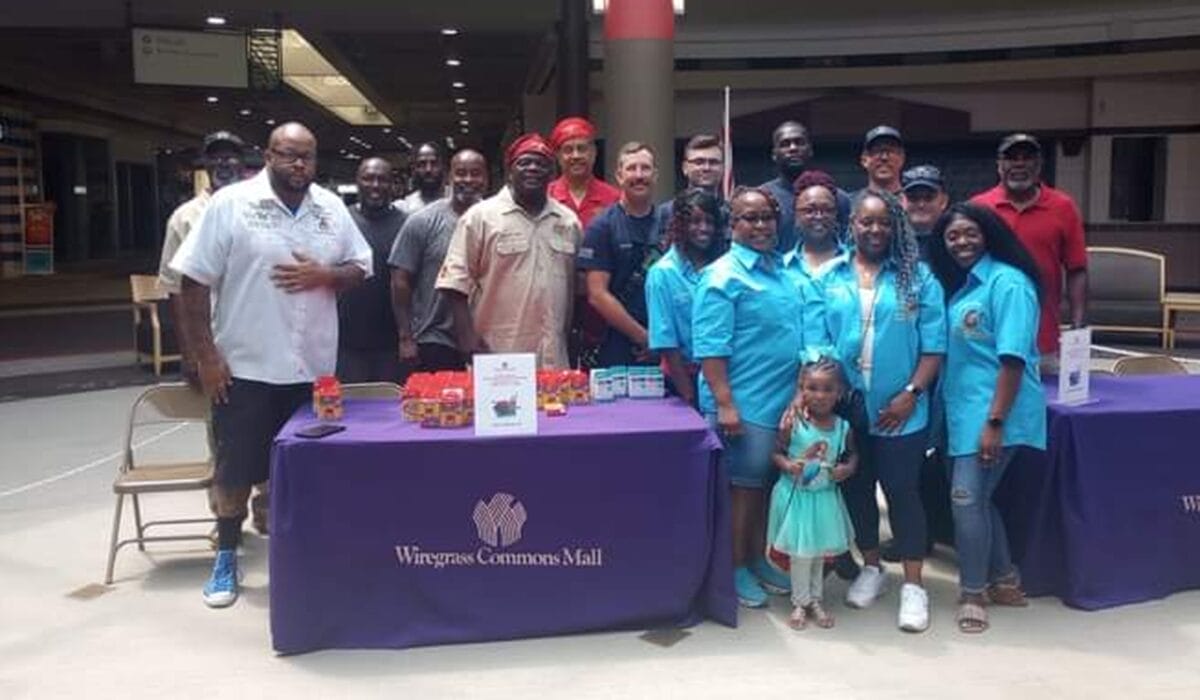
The Daughters from Taseti Court No. 234 Oasis of Dothan, Desert of Alabama, Dothan Fire Department, Taseti Temple No. 253 Oasis of Dothan, Desert of Alabama and Shaaban Temple No.103 Oasis of Montgomery Desert of Alabama at the 3rd Annual AvaLynn James FREE School Supply Giveaway in Dothan, Alabama/Courtesy Brian Smith
Why is it important for others to get involved with causes they care about?
It’s always important to get involved because there is always a need for help. Everywhere you look, everywhere you go, there’s always a need.
Any advice for people who want to start volunteering?
The smallest thing can be considered volunteering. Give away sandwiches. Make emergency kits with toiletry items. Give your time. Give items. If you give to someone in need, it’s volunteering. It doesn’t have to be grand, just a small gesture can go a long way.
I built a nonprofit from the ground up with no money, no experience, no design, and here we are. I kept coming up with projects and initiatives that people hadn’t seen before. I do things differently, and that gets attention.
What do you want people to learn from your story?
I’ve had a lot of challenges with my mental and physical health. My message is to never give up on anything. If you have goals, dreams or ambitions, do it and continue to do it. My mom tells me that when the doctors told her I was stillborn, she didn’t give up on me. I have that same ambition and goal for our young kids. I’m not giving up on our kids. Everybody goes through something, no matter how big or small the issue is, and it takes a strong person to go through it, learn from it and continue moving forward. It’s up to the individual to share the experience and help others. I’ve been unhoused, and I’m here to tell you it’s okay to accept a “hand up” when you need one.
Marching band saved my life. If I wasn’t going to practice and being too tired after, I probably would have gotten into trouble. I want the kids I mentor to be busy too, to stay away from street violence. If you’re busy, you can’t be in trouble. I tell them that full scholarships are easy to get when you play an instrument.
Always inspire others to be great. I want people to be greater than what they are and greater than me. We need to take care of our kids now; otherwise how will our future look? Celebrate your accomplishments no matter their size.
Daughter of Legendary Baseball Player Continues Legacy of Caring for Those Often Overlooked
Meet Daily Point of Light Award honoree Jasmine Ellis. Read her story, and nominate an outstanding volunteer or family as a Daily Point of Light.
Content Warning: Points of Light is proud to share the following uplifting and inspiring story. However, we acknowledge that a small portion may be difficult for some readers. We encourage you to please care for your own wellbeing above all.
As the daughter of Dock Ellis, a professional baseball player known for pitching a no-hitter on LSD, Jasmine Ellis understands the journey through addiction and recovery. Dock eventually left baseball and got sober, dedicating his life to helping others.
“As a kid, I’d wake up in the morning, and sometimes we’d have inmates and their wives sitting at the dinner table. My dad would say, ‘Oh, he just got out last week and I told him your mom’s going to cook real good meal.’ We just grew up that way,” Jasmine recalls.
At college, she studied to be a counselor, following in her parents’ footsteps and worked in the victim services sector for more than 15 years, eventually becoming the director of a domestic violence shelter.
“I created a hotline here in Las Vegas to assist with handling the number of survivors who were needing to be placed in shelters,” Jasmine says.
Through that work, she identified a gap in services. When loved ones of missing persons would check with safehouses and shelters for someone, she was unable to confirm or deny their presence due to confidentiality rules. There was no one to serve families looking for someone or helping after they were found.
Jasmine created the Dock Ellis Foundation to honor her father’s legacy of caring for others and to increase the odds of missing persons being found alive and brought to safety. She focuses on cases involving minorities and people from underserved communities. These groups are often unaware of resources available and distrust the police.
“Our main goal was to build the relationship with law enforcement in these communities,” the CEO explains. “Oftentimes you realize that it’s all about communication.”
Acting as the go-between for officers and families, she explains what’s happening and why to the latter, who might feel that things aren’t progressing. Alternatively, she explains to officers how their words may be interpreted and that she’s available to assist.
With just two volunteers and active board members, one of whom has been searching for her sister for more than 21 years, there are eight people on her team. Just eight people, who also work full-time elsewhere, successfully brought home more than 300 missing people from across the country last year. They answered 3,450 hotline calls providing emergency support, safety plans and essential resources.
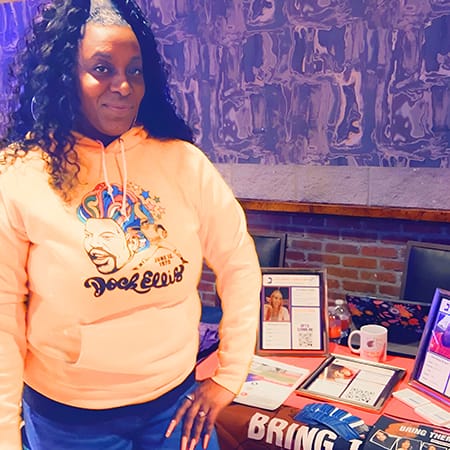
Jasmine hosts a resource table at an Indy concert in Las Vegas to bring awareness to missing persons.
Once Jasmine connects with the family of a missing person, she starts building a relationship and connecting them with resources. She partners with search and rescue teams to advocate for the missing person and oversees media support, like a 2023 billboard awareness campaign in Ohio and Colorado. Sometimes, a case may involve determining if a missing person case involves addiction or showing police that someone who may initially be classified as a runaway actually qualifies for an Amber or Ebony Alert, an alert for missing Black females implemented in California. Other times, she coordinates fundraising efforts and navigates grant applications.
“When you see that somebody’s missing, take it seriously. You could be on social media, and you see a missing person flyer, or maybe you’re watching the news and you see a popup. Keep that person in the back of your mind. Shares are free. Tell a friend. Print out the flyer,” Jasmine suggests. “We need more people to start caring about the number of individuals who are missing.”
When everything goes right and a person is safely returned, there can be any number of different aftercare resources needed—clothing, medical care, housing, addiction services, basic check-ins and beyond. If a child has run away from home, mediation may be in order before returning. The foundation also offers two mentorship programs: one for young ladies and one for young men who might need help getting back on track. Jasmine uses personal funds for supplies to supplement external funding.
“No matter what street we start on—addiction, domestic violence, sex trafficking, gun violence—we all end up at the same intersection, because they all intertwine,” Jasmine states.
What many people don’t realize is that Jasmine herself is a survivor of both human trafficking and multiple accounts of domestic violence. It took her years of being in the field to understand that she was being groomed as a teenager.
“I was one of those kids that was labeled a runaway who was in a not-so-safe situation,” she recalls.
Jasmine laments the lack of widespread knowledge about resources and signs of abuse and trafficking. People can access services when they pick up a phone and make an escape plan, but they have to first recognize the danger they’re in. Last year, with National Missing and Exploited, the Dock Ellis Foundation provided training on sextortion and human trafficking to more than 50 youth in minority communities.
“Oftentimes, we don’t think that we’re victims, because we fight back or we yell back,” she says. “When I was trying to get help, I didn’t know anything about a shelter, or safe house or a crisis hotline, and I was an adult.”
Years later, when trying to escape her second abuser, Jasmine left her home in California for Las Vegas but was followed and attacked again. After an encounter with the police, her abuser went back to California. A year later, she got a call telling her he had been shot by another of his victims. Her first abuser had fallen to the same fate.
“I keep it in the back of my mind because I know how bad it can be,” Jasmine says. “Knowing that allows me to give everything I’ve got to help somebody get out of it.”
Jasmine continues to show strength both as a survivor and as a pillar for others to lean on. Andrea Williams, a North Carolina-based US Army veteran recently partnered with the foundation as a personal security consultant. Talking to Jasmine sealed the deal.
“It really made me want to be a part of what they’re doing,” she states. “She really tries to ensure that her team is being their best selves. She is an encourager. And she is someone who is very well-versed and very intentional.”
Andrea leads virtual trainings that cover self and situational awareness, safety measures, plans, etc. for anyone who wants to feel empowered. It’s one of many resources the Dock Ellis Foundation provides.
Today, Jasmine has stepped away from her job at the shelter to work from home and dedicate all of her attention to the organization. She finds joy with her fiancé, a person she met when they were just 13 years old, and a rescue dog she’s had for over a decade
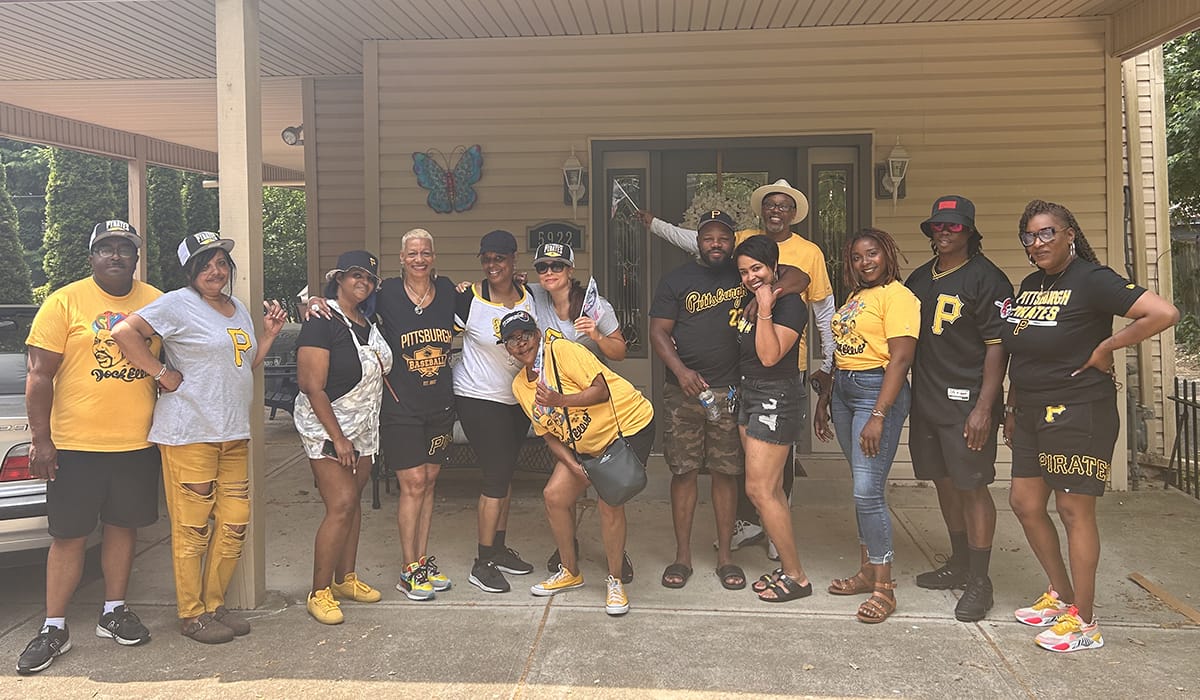
Eighteen family members missing loved ones visit Pittsburgh courtesy of Jasmine (far right) The Dock Ellis Foundation to remember Dock, attend a Pirates game, visit the Roberto Clement Museum and have a reprieve.
“You have to really practice self-care. You have to turn it off, because you’re carrying a lot of weight from people that you don’t know,” she admits.
In the future, Jasmine hopes to open safe houses in multiple states in a type of Underground Railroad in which she could immediately place fleeing victims and begin services. Educating kids is also key to her strategy.
“We’ve got to start addressing the words, like adultification and toxic love, trends on TikTok. You have to peel back that layer. What do you think toxic love means?” she says.
In the meantime, getting a call from a parent who has been informed that their child has been found is its own reward. Using her life experiences, Jasmine helps in her community and beyond because she is uniquely positioned to empathize and advocate for people who aren’t able to do so for themselves.
“When you’re in the business that she’s in, it’s a sacrifice,” Andrea says. “It is very hard work.“
For families and loved ones of missing persons, that work is everything. And for those on the outside, it’s a sacrifice that strengthens the mind knowing that someone will have their back if they ever need it. That is Jasmine’s legacy.
If you or someone you know has experienced the trauma of human trafficking, contact the National Human Trafficking Hotline through chat or by phone at (888) 373.7888. This service is free, confidential and available 24/7.
Leading With Compassion and Expertise to Support Guide Dogs and Their Companions
Meet Daily Point of Light Award honoree Lily Zhang. Read her story, and nominate an outstanding volunteer or family as a Daily Point of Light.
Lily Zhang’s volunteer journey embodies the spirit of dedication and expertise, showcasing how one individual’s passion can significantly impact an organization devoted to enhancing the lives of others. Starting her volunteer work in the kennels of the Guide Dog Foundation six years ago, Lily’s initial role involved direct interaction with dogs, providing them with care and companionship.
Her commitment, however, did not stop at the kennels. Drawing from more than two decades of experience in event planning, Lily transitioned to a role where she could make an even greater impact – working closely with the Special Events department to orchestrate the foundation’s annual fundraiser.
Leveraging her extensive background in events, Lily has become an integral part of the planning committee for the Guide Dog Foundation’s annual fundraiser. Meeting monthly, the committee focuses on critical aspects of the event, such as donation and fundraising updates, logistic planning and addressing any pending tasks.
At the heart of the annual fundraiser’s success is the incredible teamwork between the foundation’s staff and volunteers. Lily emphasizes that while strategic planning and execution are crucial, the collective effort and dedication of everyone involved are what truly bring the event to life. This collaborative spirit not only ensures the event’s success but also reinforces the community’s commitment to supporting the Guide Dog Foundation’s mission.
Read more about how Lily uses her skill set to support the invaluable work of the Guide Dog Foundation.
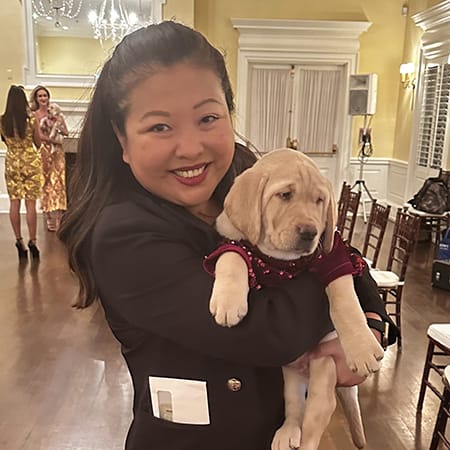
Lily Zhang works with the Guide Dog Foundation to help organize events and raise funds for guide dogs to be trained and given to companions.
Tell us about your volunteer role.
I discovered the Guide Dog Foundation back in 2017, and I love working with animals – dogs specifically – but I also wanted to link it with a higher purpose that would impact people in a meaningful way. I did some research and found Guide Dog Foundation, and I reached out to them. I actually started as a kennel volunteer where I would spend time socializing with some of the service dogs that they had in their kennels. I realized that the commute to get there was a little bit far, and the amount of time on a weekly or monthly basis was a little too much.
As for taking care of the dogs, I travel for work about 30% of the year, and I can barely walk or water myself. So, I thought, what better way to help than with the fundraising process? We do an annual event called “Dogs on the Catwalk,” and I help with the fundraising efforts for that event. I’m also on the planning committee to make it a more successful and more efficient event. There are different touchpoints – people can donate, whether it’s for their raffles or 50/50 boxes or auction, so that’s really where my expertise has helped the foundation.
Why is this issue so important to you?
The Guide Dog Foundation was featured a few times on The Today Show, and I saw the impact that it made on some of the recipients. After my first event, I had complete chills and goosebumps. When you’re a volunteer, you don’t necessarily get to see the end result of your time and effort; you don’t necessarily get to see the output of your input. But once you hear these stories and get to witness how much someone’s life has changed, that they’ve been given this freedom to move around on a day-to-day basis with the help of this guide dog, doing things they may not have been able to do before… it’s really just heartwarming.
A lot of the companions attend these fundraising events, and they are just the most humble and grateful human beings I’ve ever come across. The first thing they want to do is shake your hand or hug you and let you know how much it means to them that you’re there to volunteer. One of the most incredible things is that the cost to receive a seeing eye dog is completely free to the recipient, which is why this foundation is so important. Bringing the companions to the campus in Smithtown, NY, to receive the final pieces of training – it’s free for them to come and stay for two weeks to receive their service dogs. There’s also a 24/7 support system available. Breeding, raising and training a service dog is upwards of $50,000. So, every dollar counts for Guide Dog Foundation, in terms of providing this service free of charge to recipients.
What’s your favorite dog breed?
We work the most with labradors. They range from these sweet, calm animals to hyper with lots of energy. I really do love the labrador breed, and they are one of the most popular breeds in the U.S, but I also love a golden retriever. For anyone who has allergies, we also train poodles.
Tell us about future partnerships, programs or events that you are excited about.
We have a sister organization, America’s VetDogs. We’re working on some exciting projects, partnering with a lot of sports teams throughout the U.S. to bring awareness about how crucial it is to the recipients of these animals to have such an organization. Really, spreading awareness is critical.
What’s been the most rewarding part of your work?
I think it’s the camaraderie that you get with the other volunteers that you get when you’re on these monthly planning calls to finalize every single detail of the event that happens every October. This recognition is not just for me, but for all the volunteers across the board for Guide Dog Foundation. It’s such an incredible journey that we’re on together. After so much planning and so many details, seeing that final product that really takes my breath away.
Why is it important for people to get involved with the causes they care about?
I think it brings a level of serotonin – some people associated with babies or animals – there’s happiness and fulfillment when you do volunteer with something that you’re passionate about. Whether it’s helping fundraise for Guide Dog Foundation or working with humanitarian efforts or social justice, it’s so important to get out there and give some of your free time to these causes. You can split your time between your own hobbies and doing something meaningful and impactful. It makes you feel so much better as a human being.
Any advice for people who want to start volunteering?
I think it’s really important to speak with the organization’s volunteer manager and chat with them. Share with them, “This is what I’m really good at” or “This is what I do for my professional career.” Suggest ways you might be able to help or ask if your skills can help them. Then let them know how much time you can dedicate. It doesn’t necessarily have to be 100 hours a month. You can volunteer five or six hours a month and still make a huge impact. Any time given is meaningful.
Teen Finance Wiz Brings Educational Opportunities to Peers and Uses Skills to Benefit the Community
Meet Daily Point of Light Award honoree Gavin Villepigue. Read his story, and nominate an outstanding volunteer or family as a Daily Point of Light.
Gavin Villepigue is looking forward to two things right now: his 16th birthday and the personal finance class he’ll be teaching at the local library. The latter may be a bit surprising, but Gavin has been on the library’s Teen Advisory Board for the past three years and has a deep-seated interest in the topic, so it’s a natural sharing opportunity. He has also established and led a DECA (Distributive Education Clubs of America) chapter at his school where students can learn more about finance in a practical context and compete on state and national levels with their knowledge. Perhaps his biggest role is as a financial analyst for Joshua’s Heart Foundation.
As the middle of three brothers, Gavin often works with family to help fill in the financial gaps in his community through independently-organized events. They recently collected thousands of vital items for a nearby under-resourced school. Through various organizations, he’s been able to donate more than 5,000 books to teachers along with school supplies and food to those who may need them.
Along with his finance activities, this high school sophomore is an Eagle Scout who serves as his troop’s den chief and a chaplain’s aide mentoring younger scouts. He participates in mock trial, as well as school and club soccer as a goalkeeper. And he brings more educational opportunities to his peers through the Cultural Linguistics Preservation Society (CLPS), with whom he sets up events with Native American tribes in the area. Gavin’s passion for numbers and his neighbors make him a pillar of his community, and his actions will benefit others for years to come.
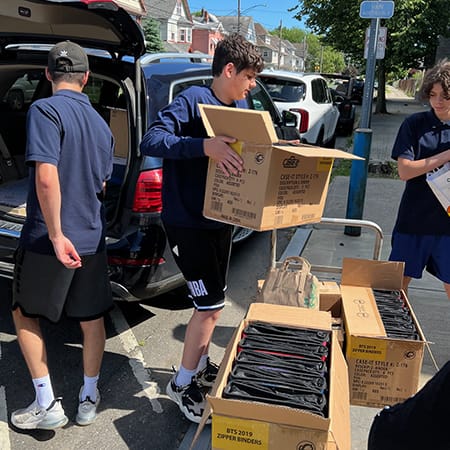
School supplies are in high demand at the Dunbar School, and Gavin (middle) and his team bring donations to
What inspires you to volunteer?
Knowing that I’m helping others brings me a lot of joy. I really like seeing the impact of my work. We donate a lot of school supplies to a school in Bridgeport, Connecticut. It’s fun, because I’ll get to help the teachers bring them in and, sometimes, hand them out.
Tell us about your volunteer roles.
For the Joshua’s Heart Foundation, I apply for a lot of grants. An example of that was a $50,000 grant from TD Bank I did most of the work myself to apply for two months ago. I’m hoping to hear back from them soon. And at the end of the year, we help them file their taxes.
At the library, I have organized things like the “Thank You” Basket event to support emergency responders. I do a lot of stuff, not just with the youth board. I also do a lot of drives there. I know the people at the library well, and right now I’m doing a drive for snacks and other non-perishable food with DECA. We’re also getting a grant from the Kroger board that will help me buy some of the snacks myself.
For CLPS, we facilitate learning about Native Americans. It’s important to our identity as Americans. I mostly get into contact with leaders of tribes in the area to set up meeting times. We’ll do a school event, whether it be over Zoom or, if we’re lucky enough, in-person. They bring in artifacts and teach us about the history of their tribe, the effects of the westward expansion and what they’re doing today. They also did some tribal dances last year.
What’s been the most rewarding part of your work?
It’s the joy that I get from seeing other people have joy and knowing that the work I do is helping young people–and even older people–learn about finance and be more financially secure.
What have you learned through your experiences as a volunteer?
Even though people might not be outwardly struggling, a lot of people do need help, and it’s very rewarding for me to help them. I’ve also learned how even the smallest of gestures has a big impact on people’s lives and the wellbeing of entire communities.
Tell us about future partnerships, programs or events that you are excited about.
In the coming weeks, I’m going to be starting my personal finance class at the library. It’s going to be about personal finance stuff that’s important for people of all ages like saving money, your checking account, information on credit cards versus debit cards, etc. It’ll also have some basics like budgeting.
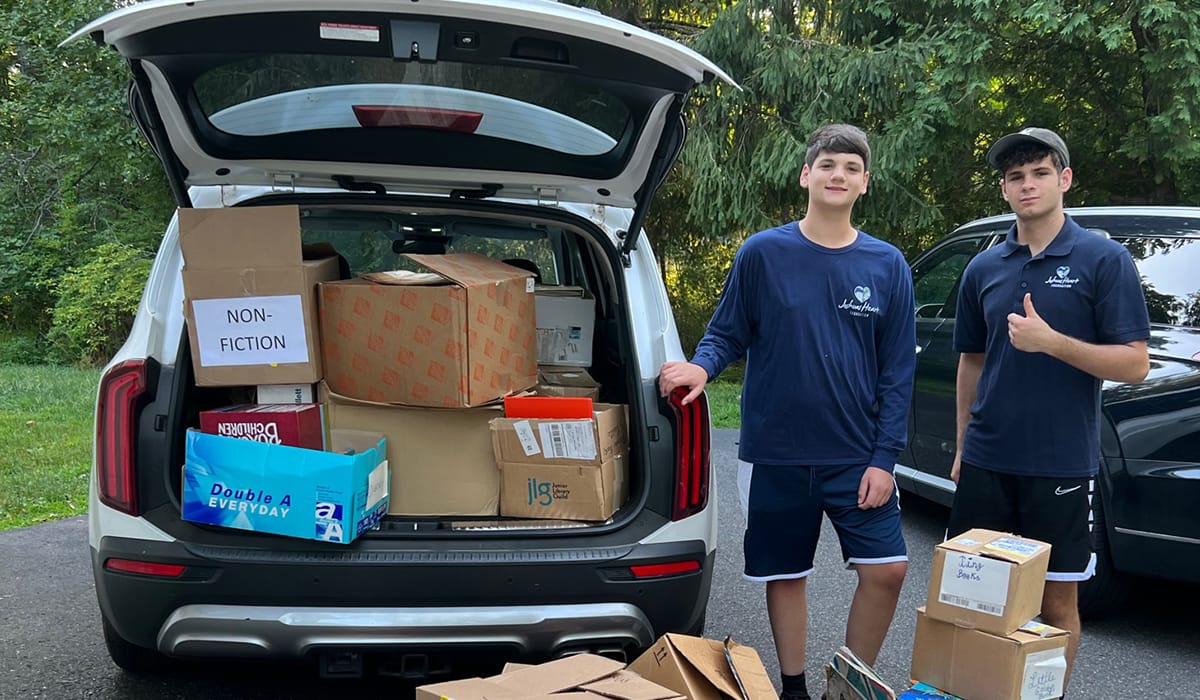
Gavin (left) and fellow volunteer load donated books for the Darien Book Aid in Darien, CT.
Why is it important for others to get involved with causes they care about?
Whether you yourself are struggling or prospering, it’s important to put yourself in someone else’s shoes and see the world from a different perspective. Even if you spend an hour doing something, you can have a very fast impact on a bunch of different people, and it’ll bring you joy. If everyone does that, it’ll have a big impact on the world.
Any advice for people who want to start volunteering?
A great resource that I often use is my local library. You can definitely facilitate drives there. Also, just look in your community and see what you need more of. Reach out to people who work at different organizations and charities that operate in your area.
What do you want people to learn from your story?
You can have an impact on anyone, no matter who you are or where you are. You can help people, and helping people brings you as much joy as it does to them. Once again, no matter how small your act is, it can have a very big impact on other people. That’s the main thing that I want people to learn.
Mom of Two Helps Young Adult Cancer Warriors Experience a Wish
Meet Daily Point of Light Award honoree Lydia Bainter. Read her story, and nominate an outstanding volunteer or family as a Daily Point of Light.
Lydia Bainter has been working in finance for many years. Prior to volunteering at Nik’s Wish, she hadn’t done a lot of volunteer work. But as a mother whose sons are now the same age as the “wishers” (wish recipients) of Nik’s Wish, she is a passionate volunteer for an organization that serves young adult cancer warriors.
Young adults, ages 18 to 24, have wishes, just like their younger counterparts. When cancer impacts kids’ and young adults’ lives, they often express wishes. Some wishes are “last wishes” when the cancer is terminal. Others are celebratory wishes, while still others offer a much-needed break from the harsh reality of cancer treatment. But for young adults battling cancer, there was no organization such as Make-A-Wish, which serves younger cancer warriors.
Nik’s Wish was started by the mother of a 17-year-old cancer patient, Nik Ritschel. Nik was granted a wish from the Make-A-Wish Foundation, which gave him hope and joy in his time of struggle. Nik discovered that kids over 18 were not eligible for Make-A-Wish. His friend Nate, who was 18 but still being treated at a children’s hospital (which is difficult enough for young adults) did not qualify for Make-A-Wish. The night before he passed away, Nik told his mother that he wanted young adults to have a wish. The Nikolas Ritschel Foundation (aka Nik’s Wish) was born.
I was there with my friend Kelli during her journey of watching her son Nik battle cancer. When Nik passed and Kelli founded Nik’s Wish, she immediately reached out and asked me to be part of it. I’ve been volunteering with Nik’s Wish for over 10 years now.
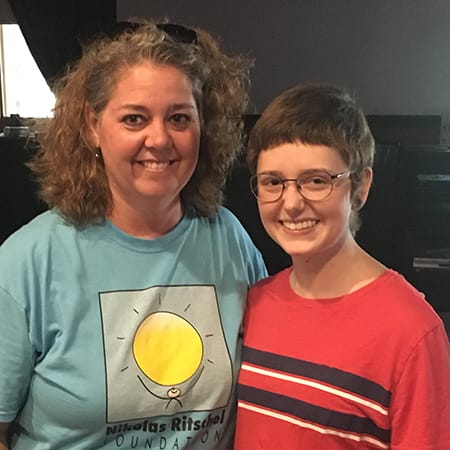
Lydia, left, delivers a wish to young adult in Illinois battling leukemia./Courtesy Lydia Bainter
Tell us about your volunteer role with Nik’s Wish.
I am the CFO of Nik’s Wish. I am responsible for handling the proceeds of fundraising events, bookkeeping, paying bills, financial audits, filing taxes and compiling annual reports.
I am also on the board as the treasurer, where I help make sure the foundation runs smoothly toward its goals by making important decisions around the future of the foundation. I volunteer for all of the fundraising events including event planning and event registration, managing our silent auction website and managing the auction checkout at live events.
I am also a Wish Maker for four or five families each year which allows them to escape cancer for a while. Being a Wish Maker involves all of the logistics of making sure our “wishers” experience their dream. I find out the details of the wish that the young person wants to experience and make all the arrangements. I coordinate everything from booking flights, lodging and activities and excursions, to managing crises and making sure everything about the trip is extra special. And things do happen. One Wisher’s trip ended up being canceled due to weather. This is the last thing we want, since you just never know if these kids might be able to have their wish rescheduled. There’s not always a “next year.”
I volunteer approximately 100 hours a month for Nik’s Wish, outside of my regular job.
What are your long-term plans or goals for Nik’s Wish?
Currently, Nik’s Wish serves 40-50 Wishers and their loved ones per year. We would like to be able to grant as many wishes as there are young adults with cancer. Nik’s Wish grants are often between $7,500 to $10,000, which limits our ability to help every young adult in need.
Our long-term plans are to take Nik’s Wish nationwide and never have to refuse a wish because we don’t have enough funding. We work with “wishers” in over 35 states already, but need to obtain more funding outside of our local area.
What’s been the most rewarding part of your work?
I love talking to the moms, “mom to mom,” while their kids are on their trips or experiencing their wish. They are so grateful that their kids have the opportunity to have fun. I’m always amazed at the people who are resilient and positive as they watch their kids battle cancer. So much of a person’s experience is their outlook. If we can help brighten their day, they have a better experience. Since my own sons are now the same age as the “wishers,” I am blessed to be making so many meaningful connections with the moms of young adult cancer warriors.
I am so grateful for the friends I’ve made from becoming part of Nik’s Wish. I’ve increased my circle of friends to include other volunteers and everyone who is involved.
What have you learned through your experiences as a volunteer?
Gratitude. Gratitude above all else. Be grateful for what you have. Live life every day to the fullest because you just never know. There’s always a blessing if you’re looking for it. Also, helping others makes you a happier person.
Tell us about future partnerships, programs or events that you are excited about.
We have our largest event, Nik’s Home Run, coming up in October. This is a 7K run to commemorate Nik’s seven rounds of chemotherapy. We also have two golf events coming up this year: one in the Chicago suburbs in May and one in Orlando, Florida, in September.
I also want to mention, I’m proud of our founder, Kelli, who was nominated for a CNN Hero Award in October. She was a top 20 finalist. You can read about it on CNN Heroes and also on our website, Nik’s Wish.
Why is it important for others to get involved with causes they care about?
Volunteering is so gratifying on many levels. It allows you to bring joy and hope to others who are in a dark time in their lives and lets them know they’re not alone. It gives you the opportunity to meet new people, whether it is wish families or volunteers who can become lifelong friends. It also makes you much more grateful throughout your life.
Any advice for people who want to start volunteering?
Don’t wait. Just jump in and start. All organizations need volunteers in different capacities. Find something you’re passionate about and use your skills to help.
What do you want people to learn from your story?
When I’m a Wish Maker, I feel so deeply for the families I’m working with. This fuels my desire to continue helping them by bringing joy into their lives during an incredibly difficult time. Our founder says, “Occasionally I remind myself that things can be hard, but fighting cancer is much harder.” Health and happiness are what really matters. This experience has helped me realize what’s important and a constant reminder to count my blessings. Be grateful every day.
Former Teen Mom Helps Moms Get Back on Track With Housing and Supplies
Meet Daily Point of Light Award honoree Darlene Kearney. Read her story, and nominate an outstanding volunteer or family as a Daily Point of Light.
When Darlene Kearney was 18, she found out she was pregnant with her first child. Without the support she desperately needed, she faced steep challenges leading up to and after her daughter’s birth. With persistence and inner strength, she not only made it work but has since thrived as a full-time community health worker, a doula and a licensed Chemical Dependency Counselor.
Motivated by life experience, Darlene has been helping others get back on their feet for many years and recently opened a maternity home for women who are unhoused. She guides others through situations similar to hers with God’s Lovely Butterflies Maternity Home in hopes they will experience fewer obstacles with her support. Four mother-baby pairs or pregnant women experiencing being unhoused can stay for up to a year free of charge, and Darlene’s resource center helps any mom in need secure necessary supplies year-round.
Separate from the organization, this super mom helps out parents in other ways as well. She ensures kids start class prepared by hosting a yearly back-to-school event and supply drive, a task she has completed for nearly 16 years. Darlene now has three kids—ages 25, 20 and 15—and recently took custody of a 9-month-old from one of the mothers at the maternity home. For many in her community, the care she exhibits is a lifeline that helps them survive their most difficult days.
What inspired you to get started with this initiative?
I was a teenage mother and dropped out of school. I was staying with people just to get by. Two years later, I went back and got my high school diploma while I was working on my medical assistant certification to make sure I was able to take care of my child.
In 2010, God gave me a vision of butterflies and babies. I went to a women’s conference later that night where they talked about the butterfly’s transformation from the cocoon, and I understood. That’s when I came up with the idea.
I know what I went through as a single mother, and now I’m in a better position to take care of other mothers. I know how it is when you don’t have the support you need, and you have to decide whether to go buy diapers or go to school. I didn’t have a God’s Lovely Butterflies when I was pregnant. It’s the only maternity home in the area.
Darlene holds a 9-month-old baby from the maternity home.
Tell us about your volunteer role with God’s Lovely Butterflies.
When the ladies come in, I do assessments: what their goals are, what they need, etc. If they need a high school diploma or GED, I refer them to a school so they can get it. Or if they want to take trades… Every Sunday, I give them a calendar of events for the week. We offer classes and speakers. We have nurses and case managers who come in. And we teach self-esteem, job readiness skills and other things like that. I help with whatever they need to feel better and be independent, so when they leave the program, they have what they need to maintain the transition.
I work on resources and getting the assistance they need. A year comes fast, so I make sure that they’re able to get, for example, housing assistance. Sometimes the waiting list is more than a year. I make a lot of phone calls and research grants. And I look for ways to improve myself. I’m taking business classes and classes to help with grant writing. If I can be better, I can be better for them.
I also have a resource center where I give away diapers, wipes and other baby items free of charge. I work with a lot of nonprofits and other businesses. They call and say, “Hey, we had a mother that didn’t know she was pregnant and needs aid,’ so I get emergency items together and take them to the hospital.
What are your long-term plans or goals for the organization?
My ultimate goal is to have an apartment complex with 20 to 25 units for ladies who leave the maternity home or who are not a part of the maternity home. We have a waiting list, and I’m not able to serve everyone who needs help. We could use an apartment complex or a renovated old motel for transitional living.
What’s been the most rewarding part of your work?
My reward is seeing the women leave in a better frame of mind than when they came, because sometimes they’re broken or discouraged. Sometimes they have trust issues. Being able to break that barrier is rewarding.
Tell us about future partnerships, programs or events that you are excited about.
I’m partnering with March of Dimes for a community event and maternity health fair on March 9 where we’ll be giving away diapers and wipes. I’m excited to see more mothers and let them know that we’re here for them.
Why is it important for others to get involved with causes they care about?
We go through things in life, and sometimes we don’t know why. It’s important for us to use our gifts and talents to help others, even if it’s just talking to someone, encouraging them. It’s always good to get involved, and it makes you feel good.
What do you want people to learn from your story?
You can overcome, no matter you know what you’ve been through in life. I began to understand that going through the things that I went through was the Lord setting me for my purpose. I turned my story into being a blessing to others.
You go forward. You push on. If somebody says you can’t, you can. I’m not saying trials won’t come, but you learn how to be the triumph of the trials. Your best support in life is being a cheerleader for yourself. I can’t give up, because I have people looking to me for encouragement. That gives me hope.
Fostering a Culture of Service and Empathy through Volunteerism
Meet Daily Point of Light Award honoree Pam Lasley. Read her story, and nominate an outstanding volunteer or family as a Daily Point of Light.
For the past 10 years, Pam Lasley has exemplified the true spirit of volunteerism through her unwavering commitment to Chicago Cares. Beginning her journey in 2014, Pam quickly transitioned from a participant to a leader, making an indelible impact in various community service programs ranging from job coaching to senior lunch clubs. Her dedication as an ambassador, advocate and friend highlights the profound effect one person can have on their community.
“I’ve always just had this tug on my heart to get involved,” Pam shared. “I feel like it’s very much aligned with my purpose. I grew up in church and was always called to serve. It’s definitely something that’s resonated in my life pretty strongly. I’m very privileged, as many of us are, and there are so many people who don’t have much. So, it’s easy to see that there’s need we have to address. I’m eager to jump into the challenge.”
Pam’s transition to volunteer leader in 2018 marked a new chapter in her service journey. She embraced this role with enthusiasm and dedication, becoming a pivotal figure in the Chicago Cares community. Her ability to step up and lead, especially in times of need, showcases her reliability and passion for service.
Pam Lasley’s role as a volunteer leader extends beyond the immediate tasks at hand. She plays a crucial role in training and empowering new volunteers, imparting the skills and values necessary for effective community service. Her approach to leadership is inclusive and educational, fostering a nurturing environment where volunteers can grow and thrive.
“So often, I see women who look like me and have little,” Pam said. “They might not have an opportunity to engage with other women who are able to give. And so I hope that I leave an impression, especially on Black and Brown women like myself. I’m really thankful for that opportunity. And being able to make sure people leave with a full belly, with the groceries they need, to know that somebody has a meal in the next few days – to know that the senior who hasn’t had a chance to talk with anybody gets the chance to have a conversation and feel less lonely. Those are the things that keep me motivated.”
By sharing her experiences and insights, Pam has become a mentor to many, inspiring a culture of empathy and understanding within the volunteer community. Her ability to encourage others to find their “why” for service has not only bolstered the number of volunteers but has also deepened their commitment to the cause.
Pam’s work, particularly at the Street Hope food pantry, has bridged the gap between different community segments. By addressing the needs of diverse groups, including those who are undocumented or seeking asylum, she has created a space where all are welcome and supported. Her efforts go beyond providing food; they extend into providing dignity and hope to those who often feel marginalized. This inclusive approach reflects her deep understanding of the various challenges faced within the community and her commitment to addressing them with compassion and respect.
Pam’s commitment to service is not limited to her work with Chicago Cares and New Hope Church. Her involvement with Habitat for Humanity and the Coalition for the Homeless in Nassau County, Florida, showcases her dedication to tackling a broad range of community issues. By providing meals and support to unhoused individuals, she addresses another critical aspect of community need. Her multifaceted approach to volunteerism highlights her understanding that community service must address various aspects of human need to be truly effective.
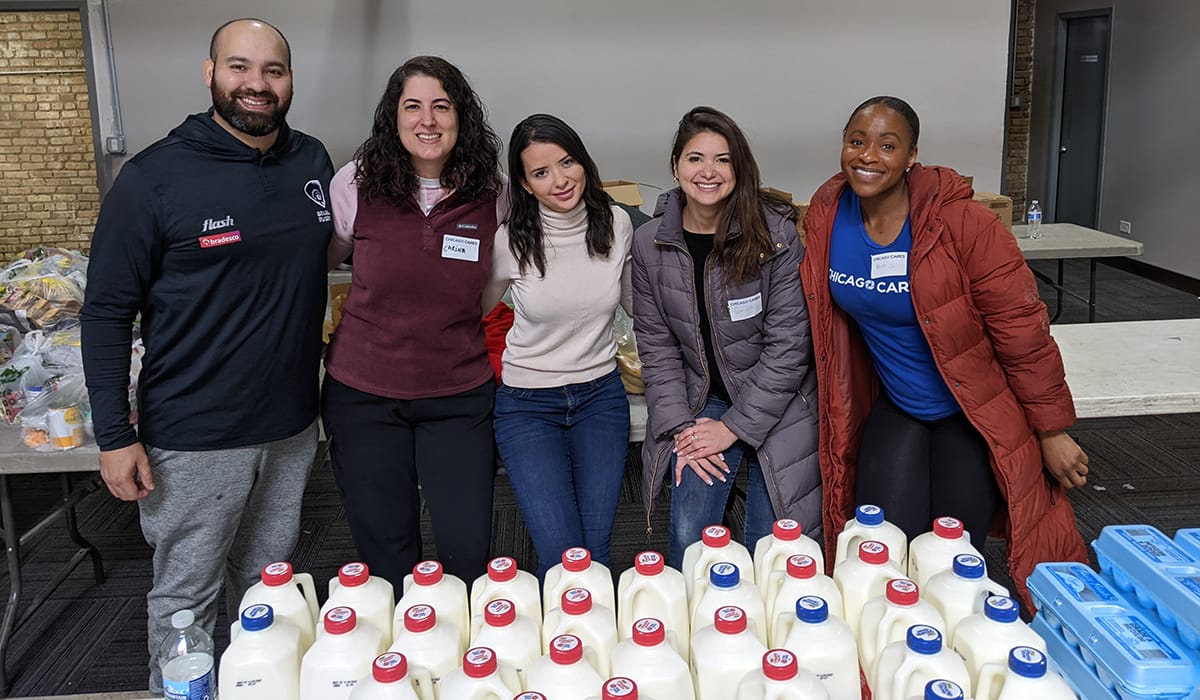
Pam Lasley (right) works tirelessly with Chicago Cares and other nonprofits to address food insecurity and other community needs.
Alongside her hands-on volunteer work, Pam is also an advocate and voice for raising awareness about the issues impacting her community. Whether it’s discussing the challenges of food insecurity, the importance of providing support to the underserved, or the need for more inclusive community programs, Pam uses her platform and experience to shed light on critical social issues. Her advocacy work is an essential part of her volunteerism, as it helps to bring attention to causes she is passionate about and garners additional support and resources.
“Volunteering does a couple things,” Pam reflected. “One, it puts your life in perspective to get involved. We so often get jaded with the minutia of life, whether it’s going to the office or trying to get to the gym. Engaging with family and friends. When we put ourselves in an uncomfortable place where we’re forced to see people who are massively in need, it helps put our own things in perspective. Service can be very difficult, but I encourage people to get out of their comfort zones. We all see need, we watch the news, we scroll every day. But many of us don’t make a lot of effort to lean in significantly, because that puts us in a place of discomfort. But getting into that discomfort is honestly one of the most strengthening things. It makes you a better version of yourself.”
At the heart of Pam’s volunteer work is her engagement with the New Hope Church’s Street Hope food pantry program. Here, she has not only distributed food but also forged deep connections with the Hermosa community. Recognizing the importance of effective communication in her role, Pam is even learning Spanish to better serve and connect with community members. This initiative speaks volumes about her commitment to inclusivity and cultural sensitivity.
“Specifically in the Chicago community, there is no shortage of need,” Pam shared. “It’s very obvious. When you make the effort to engage in your community, you can feel so much more rooted in that community. You can live in Chicago for 10 years and not really know Chicago. You may never ever get exposure to these other communities, not far from you, that look drastically different. Getting involved in service work can really help make people feel genuinely rooted.”
In her leadership role at the food pantry, Pam has meticulously organized the operations, ensuring a smooth and respectful experience for visitors. Her guidance in setting up processes for pantry visitor intake, registration and shopper flow has greatly enhanced the efficiency and impact of the pantry. By assisting with various tasks, from greeting and wayfinding to bagging groceries, Pam and her team of volunteers provide invaluable support to the New Hope Church, allowing the pastors to focus on other critical tasks.
Pam’s work particularly focuses on assisting those in desperate need – including people who are unhoused or undocumented, asylum seekers and families facing food insecurity. Her efforts ensure that these community members have access to essential resources like food, demonstrating a deep understanding of the multifaceted challenges faced by various segments of the community.
Beyond the food pantry, Pam has been involved in various other initiatives with Chicago Cares, including senior outreach, kids reading programs, park beautification projects and the Find Your Cause program. The latter, a month-long event connecting nonprofits with potential volunteers, allowed Pam to guide participants in exploring their motivations for service, thereby inspiring a new generation of volunteers.
“There are countless community groups that can accommodate your schedule and availability. Find something that you feel reasonably passionate about and just dabble. There’s nothing wrong with trying something out. Continue to stay curious about service. In that eagerness to learn, you’ll find the right path, the right program that will algin with your life goals and objectives,” Pam encourages.
Pam Lasley’s decade-long service with Chicago Cares is a testament to the power and impact of sustained volunteerism. Her evolution from a program participant to a respected leader, her commitment to community engagement, and her efforts to bridge cultural gaps exemplify the essence of meaningful community service. Pam’s story is an inspiration, highlighting how dedication, empathy and leadership can collectively foster a more supportive and connected community.
High School Teen Supports Victims of Domestic Abuse in Texas and Beyond
Meet Daily Point of Light Award honoree Diya Brijesh. Read her story, and nominate an outstanding volunteer or family as a Daily Point of Light.
After 18-year-old Diya Brijesh interned at a local clinic near her Frisco, Texas, hometown during her sophomore year of high school, she realized the difficulty in not only reporting domestic violence, but helping victims find sustainable care. Brijesh and her friends wanted to do something that made a difference for the children and families suffering from this issue, so they quickly put their heads together and decided to co-found Care4Kiddos.
Brijesh has helped the nonprofit host more than 50 events, partner with more than 30 organizations and reach 1.8 million individuals across a multitude of chapters around the world. They’ve also raised over $10,000 in funds for domestic abuse support groups.
What inspires you to volunteer?
Originally, my friend and I were interning at this local nonprofit clinic in Plano, Texas. And while we were interning there, we noticed that a lot of patients that came in were really low income. The issues that they were facing were drastically different from the issues that any other clinic would have to handle. One issue in particular was domestic abuse. All the doctors could do was either treat the physical effects of domestic abuse and offer them hotlines to emergency services or domestic abuse services, but they couldn’t really proactively work to stop this abuse from happening.
So, that got us wondering: what could we do? Yes, we were high schoolers, and people may not take us seriously, but we really wanted to make an impact in our local community. So, to start off, we started researching domestic abuse, brought more friends on board and together we co-founded Care4Kiddos. Our first event that we hosted was a summer bash here in our local community park and we were expecting like maybe around 50 kids to show up. We had around 300 total from neighboring counties because it turned out that people really do care about the cause. We knew we could really make an impact and show other people and high school students that if they just start small in their local community then they too can make a big impact.
Tell us about your volunteer role with Care4Kiddos?
Since Care4Kiddos was originally co-founded until around 2023, I was running a lot of the organization, like social media, awareness and all of the events we were organizing and hosting. We’d go out and look for sponsorships with local companies and had to email a bunch of new networks. We also did some legislative work, like talking to congress people and representatives. I’m pretty sure we helped pass a couple of state bills related to domestic abuse. So, all of that was cumulative days of hard work put together for a few years. We’d also go and volunteer at other organizations that directly serve domestic violence victims and interact with them to show volunteers that this issue isn’t just statistics on the internet, it’s real people.
In the summer of 2023, we started this program called the Global Chapter Program. People reached out to us and filled out a form that we made for those interested in starting their own Care4Kiddos local chapter. We have around 75 chapters globally. There’s a couple out of the country too. We’re hoping to be in every state in the U.S. in the near future. Each chapter follows the plan that we did, like trying to pass bills, hosting local events, volunteering in-person and things like that. We also have webinars with our out of state chapters so that they’re able to stay up to date with all of the information and news with us here in Frisco. So now our role has grown to manage all of these new chapters, our social media, podcasts and everything like that.
Care4Kiddos is my biggest journey with volunteering. But I’ve had experiences with tutoring and volunteering as a STEM guide, at a summer camp and I also worked on menstrual equity by gathering products for women. Anything that you can do in your local community is a really easy way to help out another person with the free time that you have in your own life.
Diya helps organize in-person events with Care4Kiddos to bring together members of her community to support domestic abuse survivors.
What’s been the most rewarding part of your work?
Actually being able to deliver all of that stuff that we’ve put together, like care packages and donations. And seeing that we can educate the community about how important this issue is and raise awareness. I’m also doing research with a professor that stemmed from Care4Kiddos and we’re creating this algorithm that looks at domestic violence records and domestic violence hot spots and tries to predict where it’ll happen next so people can get the resources beforehand.
I love seeing how Care4Kiddos has grown, not just in terms of domestic violence research but just throughout the world; it’s truly a community and network now. I think it’s inspiring to other students who want to take that leap and find an issue they’re passionate about and do something.
What have you learned through your experiences as a volunteer?
The biggest thing would be persevering, even when you have obstacles in front of you. For our very first event that we hosted, the summer bash, we didn’t really have any statistics or like any accomplishments to back us up as an organization because that was our first event. So, when you’re reaching out to all of these companies or organizations and asking for responses or partnerships, they’re not going to be as keen on helping you. But we tried to really show that we were passionate about this problem and how we were able to get through so many organizations like Kendra Scott, which came over and set up a booth and donated part of their proceeds to us.
Any advice for people who want to start volunteering?
Volunteering is not just something like a requirement in school. You have to put that mindset aside, truly, because when you’re really immersed in volunteering, you realize how happy it truly does make not just you but the people around you too. So, it doesn’t just have to be for an organization like Care4Kiddos. Volunteering can be as simple as tutoring your neighbors or working at a local food center or summer camp. All of these small things really do make a bigger change in the community, whether you see it directly or whether it happens indirectly. So much can be changed just by the volunteering that you do on a day-to-day basis.
What do you want people to learn from your story?
I feel like most importantly for my story with Care4Kiddos, I feel like it really targets the younger audience because it shows that if you truly have something that you’re very passionate about, then taking that first step might seem really difficult, but I’d suggest getting some support from your friend or your family. Making that very first step and taking the initiative to make a change in the world might seem difficult at first, but I highly encourage doing it because it is so rewarding to see that you’re helping.
Tell us about future partnerships, programs or events that you are excited about.
We’re actually applying for this grant right now which would go towards hosting more events in the future. So right now, we’re focusing on each of our chapters and hosting events. We’ve opened around three new chapters in the past couple of weeks. So, we’re hoping to expand that and the most important thing on our agenda right now is that we have this program called the purple dot program, which is something that we originally came up with. It’s just a confidential way to disclose abuse, like in a clinic. So, whenever a patient goes into the clinic, they’re able to take a purple sticker from the bathroom and stick it on the bottom of their urine or semen collection cup to let the doctor know that they are having this problem of domestic abuse. They’re able to be notified confidentially rather than in front of anyone that you’re possibly staying with. So, we are hoping to implement that program in all of our chapters so that it’s not just here in Frisco.
How One Woman Works to Make Clean Water Accessible to All
Meet Daily Point of Light Award honoree Melissa Ellis. Read her story, and nominate an outstanding volunteer or family as a Daily Point of Light.
A native of Michigan, Melissa Ellis became a registered nurse in 1998. Shortly after she began her nursing career, Melissa fell ill with lupus. It took years to recover from this autoimmune disorder. After moving to Georgia, Melissa attended a church event where a missionary came to speak about water, agriculture, poverty and corporate greed. The missionary had been to 149 countries. Her stories captivated Melissa, who became overwhelmed with a desire to help.
Melissa founded Life Beyond Water in 2017 as a way to promote clean water practices to ensure clean water for everyone on the planet. The organization’s mission is to provide relief, aid, support and education to areas without clean water and to develop the next generation of leaders who will work for global water sustainability.
What inspires you to volunteer?
I have always had a passion for caring for people, for helping. It’s in my nature.
Tell us about your volunteer role with Life without Water.
I wear all the hats. I facilitate programs, make connections and network. I go on service trips and distribute water. I prefer to be “boots on the ground.” I want to be where the people are.
During the pandemic, I was called to shift gears from focusing on clean water. I began feeding people. We cooked food in my kitchen and distributed it to extended stay motels to serve at-risk people housebound because of the pandemic. We served over 122,000 people in six counties in Georgia. We received a USDA contract to prepare food and became an official food distribution center. We also provided over a million bottles of drinking water during the Jackson, Mississippi, water crisis.
After the pandemic, we partnered with a well building project in Ghana. I couldn’t personally attend this initiative for financial reasons, but I have since been to South Africa. Last year, we installed two more wells in Uganda as well as a 40,000 liter underground collection system. We have placed three fresh water wells in Ghana which serve over 1,500 people.
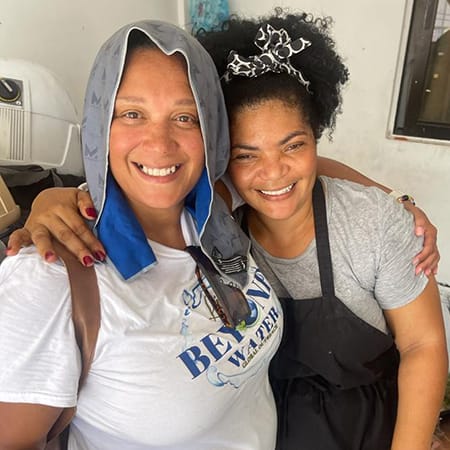
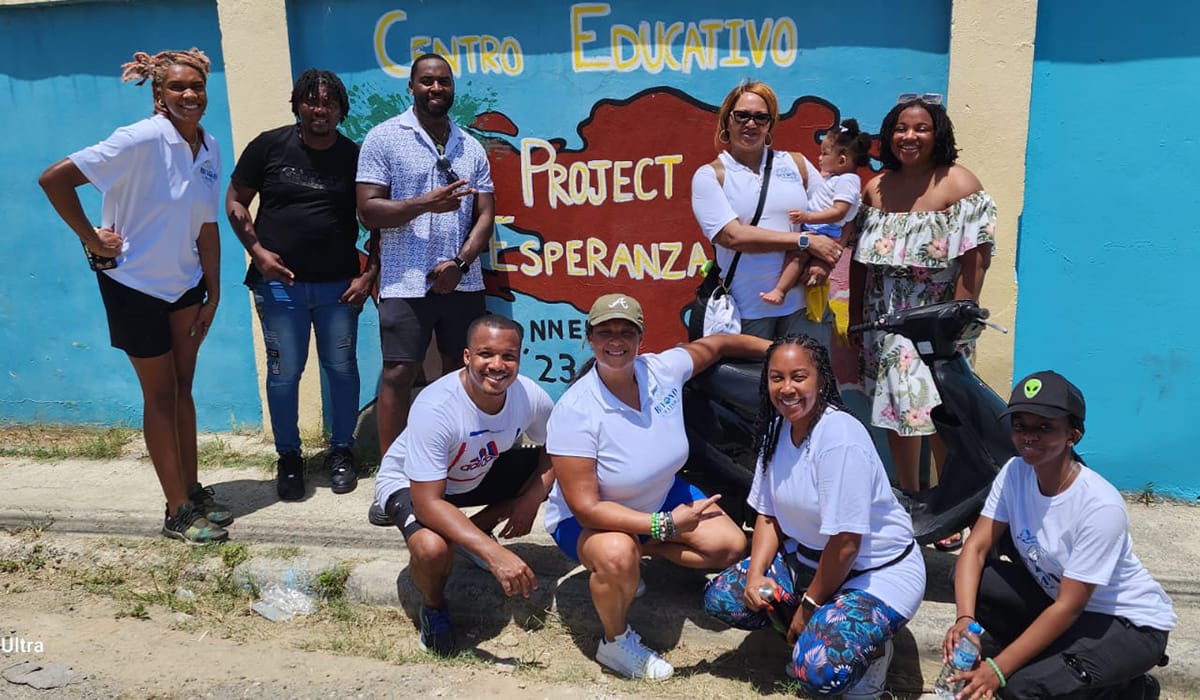
Melissa (left) with a teacher from Project Esperanza. /Courtesy Melissa Ellis
Today, we continue educating, advocating and helping ensure clean water not just locally but overseas. We are a very small organization. We do what we can.
We continue to do disaster relief wherever it’s needed. We raised money to deliver a million bottles of water to Jackson, Mississippi. This was an emergency situation, not a long-term solution. We have delivered 15 tractor-trailer loads of supplies related to not having clean water. We also celebrate the United Nations Water Day in communities that don’t have access to clean drinking water, including Flint, Michigan, where we distributed food, water and supplies.
I am most excited about our new initiative which is launching an after-school club for kids in 3rd, 4th, and 5th grades. They say prisons are built based on the reading levels of 4th graders, so we decided to help change the narrative by giving kids from underserved communities the skills to create a better future. My aim is that these kids will be the change this world desperately needs. We need to develop a generation who will care and steward the water and other natural resources.
What inspired you to get started with this initiative?
The stories the missionary told about living conditions in some parts of the world left me with an aching heart. I made the difficult decision to leave my family behind for six months and travel to Haiti on a medical mission. It was there that I saw first-hand the dire living conditions people had to endure. The only source of water was filthy, and it was used for everything including cooking, drinking, bathing, cleaning and even in baby bottles. I was shocked to the core. I came home and founded Life Beyond Water in 2017. In 2019, we participated in our first disaster relief efforts in the wake of Hurricane Dorian in the Bahamas. We distributed supplies, bottled drinking water and water filtration systems.
What are your long-term plans or goals for the organization?
My goal is to take the after-school program nationwide. We teach STEM, agriculture, water issues, solar, coding, entrepreneurship, finance, urban planning and so much more. There are already some great after school programs for middle and high schoolers, but this one is special because we are introducing kids to global issues at a young age.
What’s been the most rewarding part of your work?
I love seeing the faces of the people we help. They are in desperate need of help and so grateful to receive it. We have completed a water project in the Ntonso-Kumasi M/A School in Ghana.
We go in, whether it’s domestic or abroad, and we see the desperation and the gratitude that pours out of them when they get the help they need. These people are desperate for things many of us take for granted, like clean water. They need help but they also need comfort. Seeing their faces light up, seeing the gratitude in their eyes, is just unbelievable. I am so honored to do what I do. I am truly living the dream. I am so blessed to be sharing this with my sons and daughter. My 23-year-old son went with us to Ghana last summer. He was named in a naming ceremony and experienced firsthand the love and gratitude of the people we serve.
What have you learned through your experiences as a volunteer?
I’ve had to learn to run Life Beyond Water as a business. I currently don’t take a salary, but I still run it as a business. I’m learning that whatever we do has to be people first. People and our programs are at the heart of what we do. I’ve also learned that, as small as we are, our reach is finite. It’s all about building relationships and expanding our reach.
Tell us about future partnerships, programs or events that you are excited about.
These after school programs are possible and will continue to grow because of collaboration with several nationwide organizations that are primarily focused on child wellbeing. Our aim is to partner with these organizations and get this program into schools nationwide. I would love to start chapters in places we’ve served, such as Flint or Jackson, so we are packaging our after-school program so that anyone can use it. I hope this will encourage a lot of community activism. If you’ve had a water crisis, your community needs to be part of the solution because you know exactly what the real issues are.
Group team photo at Project Esperanza School in Puerto Plata, Dominican Republic, September 2023. /Courtesy Melissa Ellis
Why is it important for others to get involved with causes they care about?
If not you, then who?
Any advice for people who want to start volunteering?
No matter what you’re trying to do, just start. Nothing is ever great at first. It’s not how you start, it’s how you finish. Do what you’re led to do. Follow the breadcrumb trail. Greatness is about service. Life will help you develop your talents and gifts. Live in the now, every moment is a gift, go after it and do what pulls at your heart.
People often have great ideas and want to help but get caught in the swirl of building a nonprofit, they get caught up in how to get it funded and so forth. I invite you to consider what the impact is that you’re making Focus on that and you will succeed.
What do you want people to learn from your story?
You have to be a lifelong learner and a lifelong lover. You also have to take care of yourself. If you fill your own cup and your cup runneth over into a saucer, you can help people from that saucer.
Clean water is globally the most underrated issue we have. People aren’t educated enough about the water crisis to take a stand. We educate, and we empower. It’s our mission to provide clean water to the whole world. I believe that we have to prepare ourselves in the United States for more and more water emergencies. I also believe that any future wars will be about water, not oil.
Clean water is a basic human right that should not be controlled by a handful of corporations. Approximately 650 million people worldwide do not have access to clean, safe drinking water which affects not only their health but the entire economy of the area.
Meet Daily Point of Light Award honoree Kelly Bouchard. Read her story, and nominate an outstanding volunteer or family as a Daily Point of Light.
Kelly Bouchard, 29, moved to New York City from upstate after getting her degree in engineering and now works in business development. Despite living in the city, Kelly considers herself outdoorsy and has recruited her friends to work towards hiking all of the 46 Adirondack High Peaks—ranging from 3,800 to 5,300ft in elevation—summiting eight in just this past year. Her friendly demeanor and positive energy are undoubtedly motivating factors.
Kelly also loves to read. In fact, she and her friends host a book club that she looks forward to each month and comes away from with the satisfaction of learning something new. It’s this second hobby that led Kelly to Start Lighthouse where she inspires kids to fall in love with books.
Start Lighthouse, an organization that addresses literacy through the lens of social justice, was founded in 2020 when the pandemic left many families in quarantine without resources they might otherwise have accessed at school. Today, it offers immersive literary experiences at local schools led by BIPOC authors and illustrators and gives away books that reflect the diversity of the people and experiences within the community they support. Kelly is on the Young Professionals Council. She connects with potential partners, works towards fundraising goals and volunteers at the group’s literacy hubs for elementary school children. Her dedication sparks the same lifelong passion for reading in kids and sets them up for future success.
What inspires you to volunteer with this initiative?
My parents instilled the importance of giving back in me and my siblings from a young age, which encouraged me to go out and find an opportunity to volunteer. Start Lighthouse linked my passion for reading and hit the nail on the head for me. I love New York City, and getting to do something I’m passionate about in the community really lit me up.
Tell us about your volunteer role with Start Lighthouse.
I serve on Start Lighthouse’s Young Professional Council. Specifically, I’m on the fundraising team, so I help advance fundraising goals and plan events. I also love volunteering at our literacy hubs, located in two schools in the Bronx where amazing teams put together engaging lessons for students. Helping out with the lessons is a fun way to get into a classroom setting, help students and hopefully inspire them to love reading.
What’s been the most rewarding part of your work?
It’s been amazing to go in and see the appreciation that the students have for this space that Rina, our founder, and Start Lighthouse have created. It has become important within the community it serves. Students come into the literacy hub for their lessons, and it’s just smiles, ear to ear. They’re always engaged. Lessons are tailored to each age group. You can see the excitement in the room.
They also have book fairs where the kids can take home free, brand-new books for their own library. Being a part of that process and getting to help kids pick out books is great. It’s fun to recommend books I loved as a kid. Building these home libraries breaks down a huge barrier to literacy – access to books. And providing options in which students see themselves represented is an important part of our mission.
What have you learned through your experiences as a volunteer?
I can’t overemphasize the importance being present and engaged. The kids always appreciate the little things that adults take for granted. I’ve found that helping them pronounce a word they don’t know or explaining the meaning of a new one goes a long way.
I’ve also gotten to experience firsthand how strong leadership creates more impact. It’s remarkable how Rina has grown Start Lighthouse, and none of that would be possible without a clear vision and mission. And, of course, I have to mention the incredible extended team that supports it.
Tell us about future partnerships, programs or events that you are excited about.
We’re having our annual event honoring the organization’s growth and all the folks that have been a part of that later this fall. I helped with planning last year. It was such a success and a really nice way to honor everything the organization has done for the community and everyone who has been a part of the story.
Why is it important for others to get involved with causes they care about?
It’s important to understand what’s going on in your community and the challenges that arise, like literacy in the Bronx. It’s a great way to be informed and to give back.
What can people do to encourage literacy?
Read out loud to kids. Share your passion for reading and show them the value in it. Show them that it’s fun. That fosters a love for reading. Additionally, it’s important to volunteer or donate to organizations like Start Lighthouse which has provided over 20,000 books to children and created spaces to support literacy development.
Any advice for people who want to start volunteering?
Try out a few different volunteer opportunities–I did–to home in on what feels right. The more passionate you are about something, the more you’re going to show up for it. You’ll naturally bring energy to the cause. I found Start Lighthouse through New York Cares and then reached out and eventually found the Young Professionals Council. I’ve met other incredible volunteers who are also driven to further the organization’s mission and amplify the work that has been so impactful on the community.
What do you want people to learn from your story?
Find something that aligns with your values and find ways to get involved, even if they seem small at first. Then, be present. Speaking from experience, kids notice.