New York Couple Provides a Home Base for Future Service Dogs
Meet Daily Point of Light Award honoree Peg Wong and Ed Chan. Read their story, and nominate an outstanding volunteer or family as a Daily Point of Light.
When Ed Chan and Peggy Wong arrived for a wine dinner hosted by Ed’s company in 2012, neither of them could have expected that it would change their lives. They’d been living in New York for over a decade, and Ed’s career had spanned restaurants and hospitality, food and wine.
“The fella that sat next to me turned out to be an official for the Guide Dog Foundation, so that’s really how my knowledge the awareness came about,” Ed recalls of his introduction to the volunteer opportunity that eventually filled his and Peg’s home with canines.
The Guide Dog Foundation (GDF) was formed after World War II to train and provide dogs to veterans returning home from conflicts. Today, they are focused on helping people who are blind, have low vision or live with other disabilities free of charge. Its sister organization, America’s VetDogs, fulfills the original mission of providing dogs to veterans—and now active-duty service members and first responders—with disabilities to enhance their mobility and renew their independence.
By the end of the evening, Ed was sold on the program, and he and Peg decided to volunteer. While the former had never had pets before the couple’s two cats, Peg’s family had been in the pet business. Both loved dogs. Their first foray into the world of service dogs, resulted in Babe, a baby black lab.
“We started off as what they call puppy raisers, which is an 18-month commitment where you’re going to be a parent to a young pup, take them to class, and teach them basic disciplinary things.”
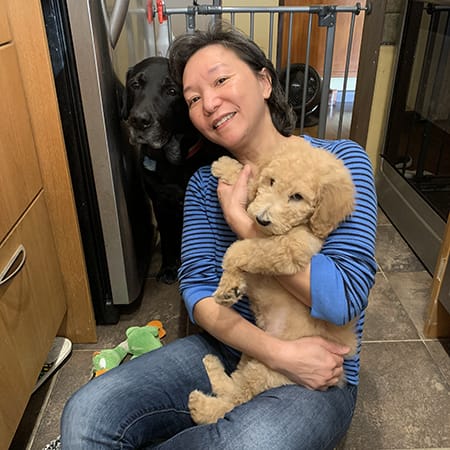
Babe and Peg welcome Mario the poodle to their home.
At the end of the period, they turned him back over to the foundation for more formal training. Unfortunately, between rigorous testing and required behavioral traits, Babe didn’t clear the bar to move forward. Lucky for Ed and Peg, they had first option to adopt. Now, Babe is a permanent resident of their home and part of the welcome committee when other trainees come to stay.
In the beginning, they mainly hosted 6- to 8-week-olds for home socialization but, post-pandemic, they find themselves as more of a temporary placement home for older pups needing a place to crash while their raisers are out of town or to work on behavioral issues. The goal is to expose them to different smells and services, teach them to calm down after encountering distractions and guide them into an early routine.
Ed and Peg have learned to be patient. With one, two or sometimes even three dogs in their care at once, they acknowledge that each learns differently and must be catered to.
“It’s a lot of time and effort. Yes, sometimes with a little pup, it’s a lot of cleaning up after them, too. But how can you turn down those faces? It’s perpetual puppy love,” Ed effuses.
Geremie Callahan and her husband met Peg and Ed decades ago through the men’s work in the wine industry. Geremie has seen firsthand the enthusiasm their friends bring to the role.
“They don’t mind that it’s a puppy who has to go out six times a day. And they live in an apartment, so it’s the elevator and this and that. They just love it so much,” she says.
The Callaghans are also dog-lovers and, while they don’t work with GDF, were inspired by their friends’ passion. Not only did they end up adopting the first canine they fostered, but they continue to host pups a couple of times a year. While Geremie empathizes with the feelings associated with a dog simply passing through on the way to their forever home, she notes how Ed and Peg have learned to enjoy the process and keep the mission in mind.
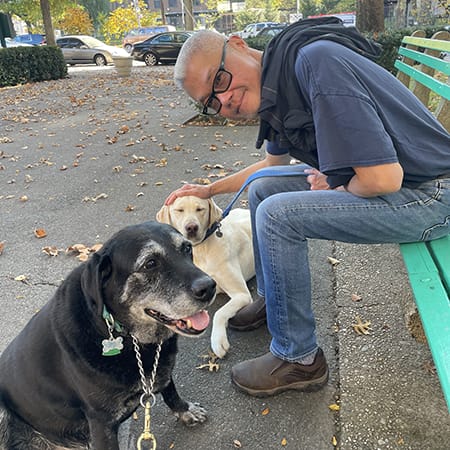
Ed enjoys his morning coffee with Babe (left) and Pandora (middle).
“When you understand what it takes to get a dog through the program, you’re so happy to have played a part. And that’s what I see in Ed and Peg. They’re so happy to have participated in the dog’s life but also in what the dog does for their career [as a service animal],” she says.
GDF sees a wide variety of trainees—Labrador Retrievers, Golden Retrievers, lab-golden crosses and sometimes hypoallergenic poodles—all of which have passed through Ed and Peg’s apartment.
“People who have allergies can be paired with a poodle and won’t have any problems,” Ed explains. “For that matter, of all the breeds that we’ve handled, the poodles—I call them noodles—are the smartest bunch around, hands down.”
One standout was Mario, a cream-colored poodle who arrived at the house as a 6-week-old. He remains the only puppy to escape the gated kitchen, their designated bedtime space.
“One night he sneaked out, did his business in the living room, then sneaked back into the kitchen to go back to bed with Babe as if nothing happened. We were baffled for days until we caught him in the act,” Ed laughs.
Peg enjoyed practicing her professional grooming skills on the Mario and his fellow noodle. Today, Mario is 4 years old and working as a service dog.
“To paraphrase Forrest Gump, guide dogs are like a box of chocolates, you never know what you’re going to get. But one thing is for sure: the love you receive is pure and unconditional,” Peg adds. “Since COVID, I’ve been able to work from home, and the pups have been a welcome break from the monotony and stress. The extra doggie walks also forced me to exercise more.”
The pandemic took a toll on the service industry as well, leaving Ed out of a job. Spending his days with the dogs was a point of joy, even after he returned to work. With seasonal gigs with the New York Mets, Ed has even taken the initiative to engage sports teams to sponsor dogs. The Mets already support two: Seaver, after Tom Seaver, and Shea, after Shea Stadium.
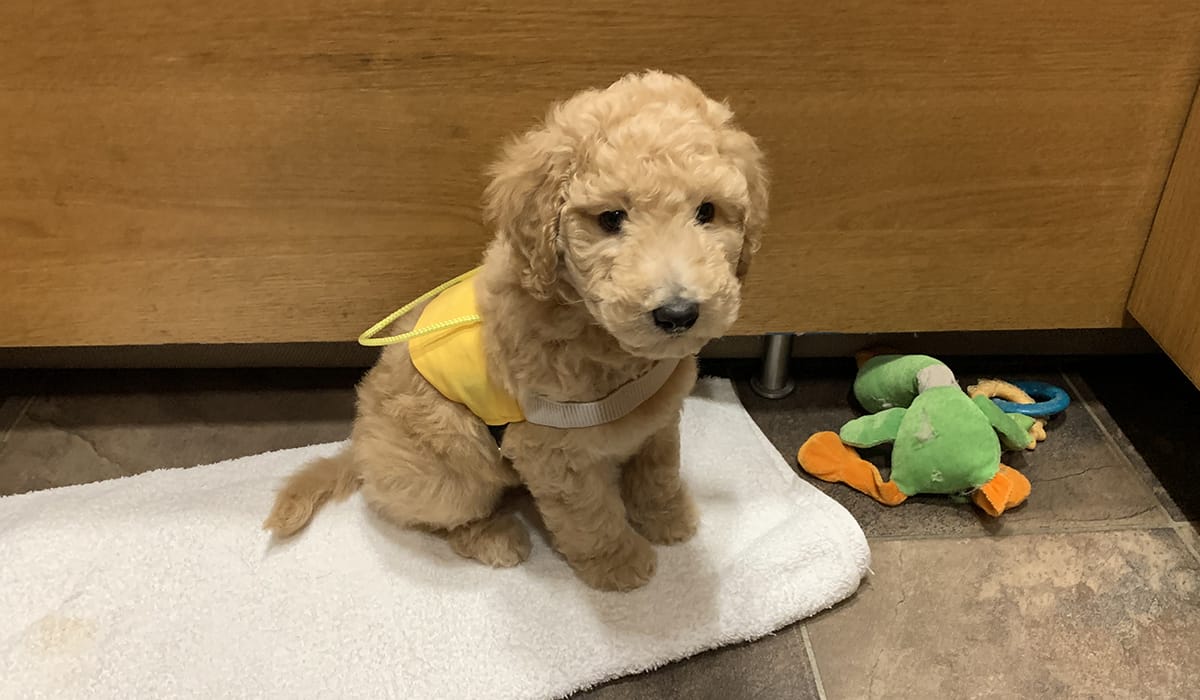
Baby Mario wears a puppy harness for practice.
“Seeing the pups always puts a smile on your face, even when you walk back home because you felt crappy from work. You come back into the house and look at those eyes. It’s very heartwarming,” Ed says about finding meaning in the work. “I think our stress levels over the years have been tempered because we’ve got these animals to distract us. They have been helpful to our health and wellbeing.”
Having hosted 96 dogs and counting, Ed and Peg have no intention of slowing down. After the passing of their two original “four-leggeds”—a term Ed has coined for the two Persians and many dogs in their care—Babe is currently the only one in the house, but the couple is already thinking of more ways they can care for their furry friends when they retire.
“We’ve had some talks that perhaps, down the road, we could run a property out in the country somewhere with a big old backyard and welcome retired dogs as a haven,” Ed muses. “That’s something in our dreams, but regardless what the future looks like, I’m sure our house is going to be packed with animals.”
Bhavna Agnihotri’s exemplary volunteer work paints the picture of a dedicated individual deeply committed to empowering immigrant communities and providing essential legal aid to those in need. Her involvement in various programs, including SPEAKHIRE, Lawyers for Good Government and a cancer clinic, showcases her multifaceted approach to volunteerism. By sharing her expertise and passion, Bhavna mentors young immigrant girls and significantly contributes to the betterment of society through her legal work.
Through her work with SPEAKHIRE, Bhavna dedicates her time to developing and updating lesson plans as well as encouraging students to pursue higher education and explore diverse career opportunities. Her efforts have touched the lives of 21 high school students, offering them invaluable insights into career pathways and instilling confidence in their pursuit of success.
Beyond mentoring, Bhavna’s role as a pro bono liaison extends her impact into the realm of legal aid. Her work with Lawyers for Good Government involves coordinating research on reproductive health legislation and other critical legal issues. Additionally, her involvement in organizing a legal services clinic for cancer patients and survivors through a cancer clinic in October of 2023 further exemplifies her commitment to providing access to justice for vulnerable populations.
Throughout her career, Bhavna has also been a strong advocate for diversity and inclusion, creating programming and mentoring junior colleagues to promote an inclusive workplace. This is Bhavna’s story in her own words.
Bhavna Agnihotri is a powerful example of taking her lived experience as an immigrant and paying it forward to future generations.
Tell us about your volunteer role.
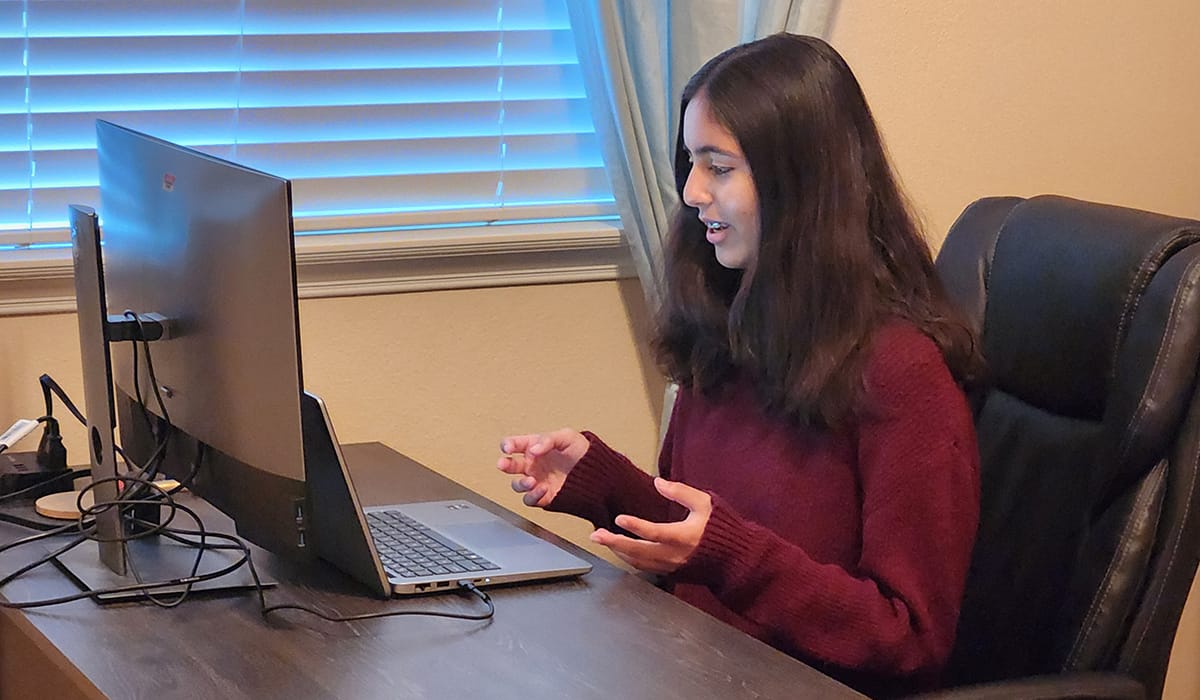
As a SPEAK mentor, I mentor groups of two to three immigrant high school girls once a week per nine-session round. In total, I have participated in eight rounds and have mentored 20 immigrant girls. In these sessions, we first connect on an individual level to build a relationship – ranging from the immigrant experience to a love of dance. Through our sessions, we focus on areas identified by the mentees, SPEAK and myself in a psychologically safe environment. These include exploring career paths, the college application process, building public speaking skills, improving research and interview skills and connecting them with resources and members of my network.
In addition to SPEAK, I also have a significant continued commitment to DEI in the organizations I work in. This includes establishing the Swiss Re Pro Bono program, sitting on an Americas-wide Diversity Board, co-leading and advising various Employee Resource Groups (including co-leading and moderating strategic initiatives and programming) and developing, leading and participating in pro bono projects including a cancer clinic, the National Veterans Legal Assistance Project, establishing nonprofits such as Voices from Within and projects with Lawyers for Good Government.
Why is this issue so important to you?
As an immigrant, I have navigated high school with parents who were unfamiliar with the U.S. higher education and career paths. I was fortunate to have access to books, counselors and teachers to guide and advise me during this time. Helping these girls is my effort to pay it forward, many of them do not have relationships with professionals who can serve as role models or mentors as they navigate this crucial period of their lives. Serving as their mentor increases their exposure and increases the accessibility of numerous career paths for them.
<h4
President Obama published a list of organizations that one can volunteer with for the MLK Day of Service. Around the same time, I attended a DEI event where the speaker encouraged us to “be the change you want to see in the world,” which has stayed with me ever since. My connection with the mission of SPEAK and ability to volunteer via zoom made this opportunity stand out for me.
What are your long-term plans or goals for the organization?
Over the long term, I plan to keep volunteering with SPEAK and inspire others to become mentors. I also look forward to helping SPEAK by participating in and getting other members of my network involved in their Speaker Series. Hetal Jani has brought this organization a long way and is only just getting started. I look forward to seeing her expansion of SPEAK. The sheer number of lives she has improved is remarkable.
What’s been the most rewarding part of your work?
The most rewarding part of my work is seeing the impact it makes on these girls’ lives – whether it be successful presentations, obtaining an internship or even just opening up new possibilities for their lives. I remember helping one student prepare her application and prep for an interview for a summer internship program. She was ecstatic when she received an offer and is now in college. Just instilling in them the confidence that they have the ability and right to reach for the stars is often a tipping point for these students.
What have you learned through your experiences as a volunteer?
Each time I partake in a volunteer, charitable or pro bono activity, I always come away feeling that I have gained more than I have given. As a result of being a SPEAK mentor, I have gained a deeper understanding of different cultures, lived experiences, teenagers in today’s time (which helps me be a better parent) and myself. It also puts any problems I have in perspective, as the daily obstacles these young women face make any problems I have pale in comparison.
Why is it important for people to get involved with the causes they care about?
There are so many reasons. The impact created, the friends made and the sense of purpose provided are just a few. Some of my closest friends are people I have volunteered with. Creating a difference in even just one person’s life can be so meaningful. Volunteering has also been shown to reduce stress and combat depression, as it shifts your mental focus away from your own problems to a person or activity where you are making a positive difference.
Any advice for people who want to start volunteering?
Just do it. Try one or more projects related to causes you care about. If you are a leader, consider incorporating volunteering into your next team building exercise. Chances are you’ll meet new people and feel good about your contribution. If not, you will have learned about your preferences and can try another project. Volunteering, like life, is an iterative process.
Inner City Mom Gives Kids Wings and Empowers Them to Thrive
Meet Daily Point of Light Award honoree Cynthia Manuel. Read her story, and nominate an outstanding volunteer or family as a Daily Point of Light.
Cynthia Manuel was born and grew up in poverty on the West side of Chicago, in an underresourced community where her own brother brutally lost his life in the streets. With her mother working two jobs, Cynthia had to learn to fend for herself, but she never stopped dreaming. Cynthia always dreamed of owning a horse and experiencing a life outside of the violence that plagued her community.
Today, Cynthia is the founder and CEO of Heavenly Cynt Youth, an organization that supports 6th-12th graders from underresourced neighborhoods. Her nonprofit pairs athletics with life skills training to equip young people with the tools they need to reach their full potential.
What inspires you to volunteer?
Growing up where I did, it was clear that if I didn’t look outside of this environment, I would never thrive. I took part in a Junior-Senior Scholars program when I was in school. This program introduced me to a completely different life that included horses, track, golf, swimming and other activities kids just don’t see in the inner city.
Other than dreaming of becoming a music, football or basketball star, inner city kids who are products of an impoverished and violent upbringing often can’t even imagine other ways to achieve success. I aspire to give them a different perspective on what life can offer.
Tell us about your volunteer role with Heavenly Cynt Youth.
We provide programs for inner city kids that get them out of their environment and provide them with a safe, nurturing space where they can experience life outside of what they know. Their eyes are opened to possibilities. They learn, they get inspired, and they try all kinds of things they would normally never be exposed to in their community. This opens up their capacity to dream, and not just about becoming a famous singer or a football or basketball star.
I tell people, “It’s hard for kids to dream what they can’t see.”
One of the ways we help kids is by partnering with various organizations including faith-based organizations, community police and hand-in-hand with Love Teaching Youth, an organization which was started by a former police officer. Love Teaching Youth’s mascot is a policewoman we named “Officer Friendly.” We use the mascot to reach the younger kids. We visit schools, teaching stranger danger and police awareness. The police are seen in an extremely negative light by inner city kids but as these two groups interact, police officers are humanized and from the officers’ perspective, so are the kids. The kids start to see the police as advocates, not adversaries.
What is unique about Heavenly Cynt Youth is we aren’t a one-sided after school program that only focuses on a single topic such as academic success. Our mission is to teach them necessary life skills and give them a solid foundation with the skills and tools they need to succeed in life.
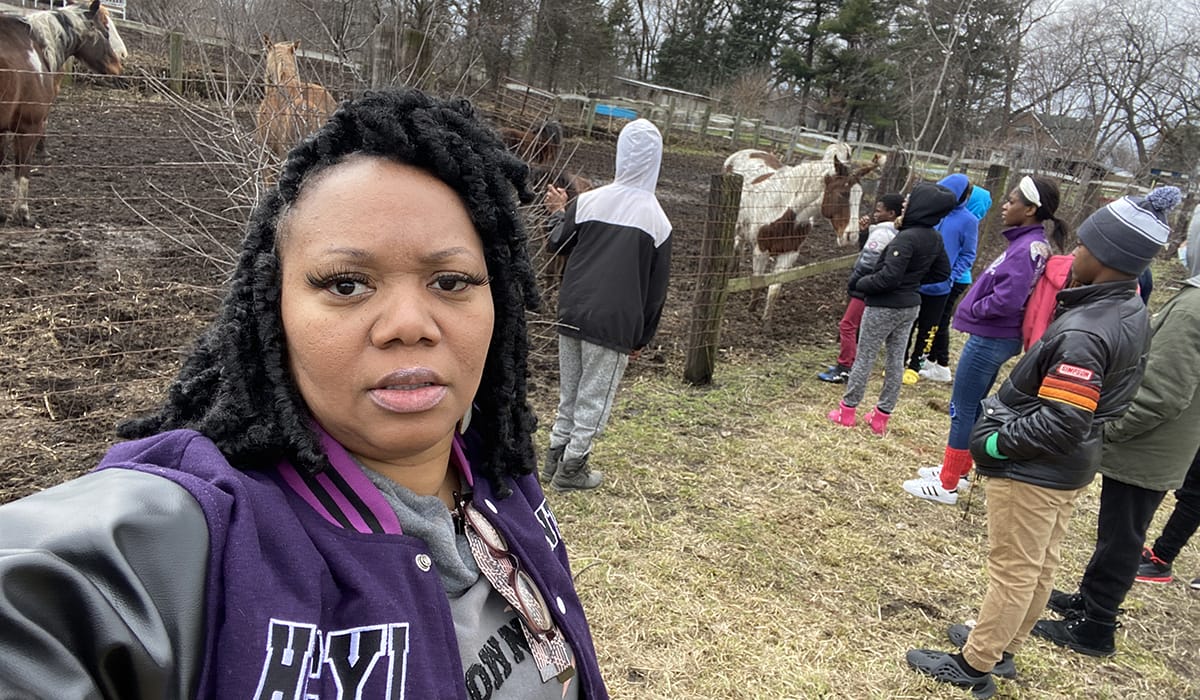
Cynthia at the barn teaching youth about equine upkeep. /Courtesy Cynthia Manuel
We serve thousands of low-income youth and families every week. As part of my responsibilities, I facilitate after-school activities, help with homework, teach nutrition, social and emotional development, and violence prevention. In partnership with other people and organizations, we educate kids on gardening, growing crops, rodeos, owning a business, cooking, conflict resolution, STEM, CPR, table etiquette, financial literacy, healthy eating, fitness, and even the little things like how to tie a tie or big things like saying thank you.
We have a lot of fun too, when we take the kids to experience sports and activities that aren’t normally part of their lives. We introduce them to swimming, golf, horses, and much more. All of this empowers the kids. It helps them change their narrative. It helps them dream and gives them the confidence that if they can dream it, they can achieve it.
We only have these kids for a short amount of time. If these kids aren’t taught basic life skills even saying thank you, how can they ever expect to build a better life for themselves? Our kids become more confident and motivated in school. While they’re with us they are less likely to get involved in violence and once they leave the program, they are set up for greater success.
What inspired you to get started with this initiative?
As a single mom raising a son who is now 16, I know what I didn’t want my son to become. I know what I didn’t want him to be surrounded by. If I continue to plant and nurture empowering seeds in the kids I serve, these seeds will grow. I see kids blossoming before my eyes. Now my son’s friends want to be part of what we offer. All we ask for in return is respect. What they get in return is life-changing excursion through resources and opportunities.
What are your long-term plans or goals for the organization?
I would love to see this organization go global. We are unique in that we tap into everything as opposed to typical afterschool programs. We are well rounded and offer something to every kid. Every Sunday we hold a Zoom meeting where we empower kids through workshops such as conflict and resolution, mental health, and the social wellbeing of each individual. We meet the kids where they are, find something they like, and then once they’re in, we plug them into other programs to help broaden their horizons.
What’s been the most rewarding part of your work?
I feel most rewarded when I do something for the kids in my community. Making connections with the kids is incredible. They often come to us with a huge chip on their shoulder, but I immediately break the ice with a pickup basketball game with the boys or a TikTok dance contest with the girls. Once we connect, I often see an amazing transformation in their attitudes.
Kids who graduated from Heavenly Cynt Youth often become youth mentors, coming back to inspire and chaperone the current students. Three young men who graduated from Heavenly Cynt are now in law enforcement and various blue collar jobs in the trades. Where previously they had multiple run-ins with police and despised the police, now they are helping keep the community safe. It’s good to see that they turned their lives around.
What have you learned through your experiences as a volunteer?
Through my experiences with Heavenly Cynt, I’ve encountered people who have faced incredible challenges yet remain resilient and positive. I have learned to value the little things and cherish the opportunities I’ve been given. It has helped me see life in a different light. It has taught me that you don’t have to be a product of where you came from. You don’t have to be a victim.
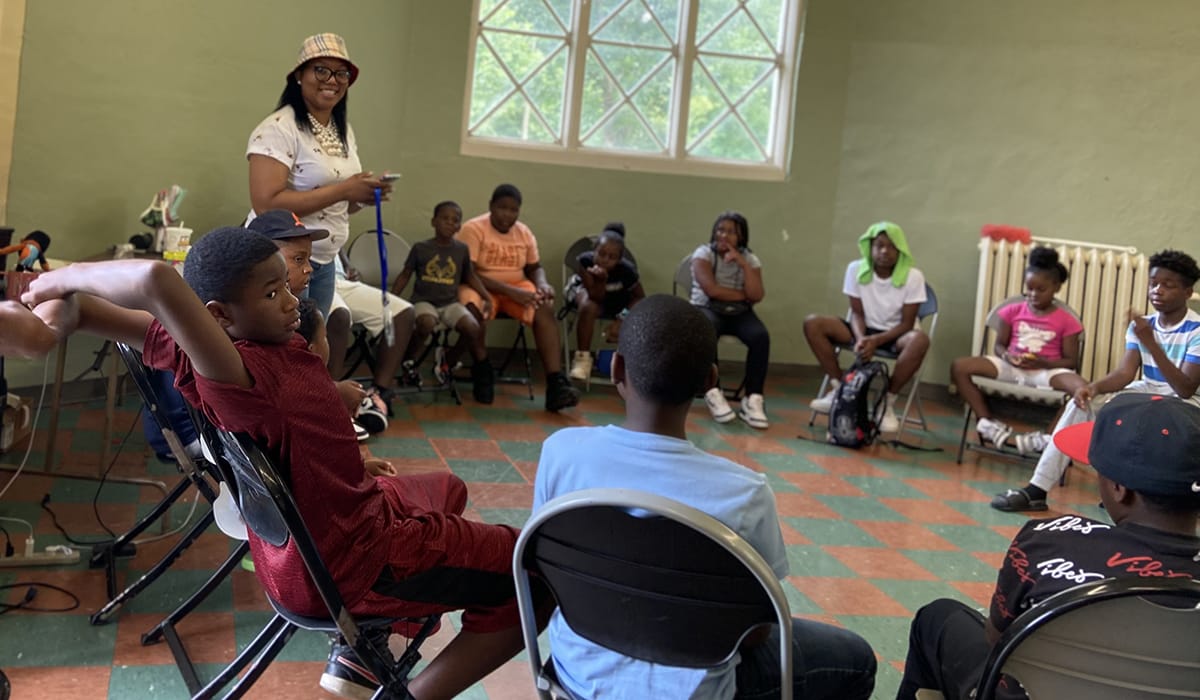
Cynthia Manuel, CEO of Heavenly Cynt Youth, in a classroom setting teaching social/emotional/conflict resolution and the importance of positive communication. /Courtesy Cynthia Manuel
Why is it important for others to get involved with causes they care about?
Supporting the community demonstrates empathy and concern for the wellbeing of others. It also acknowledges the interconnections that bind us. Through volunteering, we create a more compassionate and caring society.
Any advice for people who want to start volunteering?
Find something you’re passionate about and go volunteer. When you’re passionate about something, it becomes more mentally, spiritually and emotionally rewarding. Where your heart is, your treasures lie.
What do you want people to learn from your story?
I want to emphasize again that it’s hard for kids to dream what they can’t see. I also want people to learn the importance of embracing our vulnerabilities and by sharing them, creating an environment where others feel the same. I’m a product of what many people would consider a one-way ticket to the state penitentiary — if I even got out alive. But I chose to help instead. I chose to open the windows of possibility and the doors of opportunity to the community’s kids.
Spreading Joy and Inclusion, One Birthday at a Time
Meet Daily Point of Light Award honoree Dana Ridgeway. Read her story, and nominate an outstanding volunteer or family as a Daily Point of Light.
In the heart of Birmingham, Alabama, Dana Ridgeway brings joy and compassion to her volunteer work with The Birthday Giving Program. As the chapter president for the area, Dana’s mission goes beyond mere celebration; it’s about affirming the self-worth of people across all walks of life who are affected by poverty, addiction, abuse and more. By providing birthday bags and coordinating celebrations, Dana and her team ensure that everyone, from children to veterans, feels valued and honored on their special day.
Dana’s role involves not just the assembly of birthday bags but also the creation of moments that remind recipients of their dignity and humanity. This program treats each birthday as an opportunity to honor the inherent worth of individuals who are too often overlooked or forgotten by society. Dana dedicates 5-10 hours each month to meticulously preparing birthday bags for residents at Oak Knoll Rehabilitation Center, ensuring each one is filled with joy and tailored to various seasons and themes.
Beyond the local impact, Dana’s role as a community outreach manager extends her influence nationwide. She works tirelessly to connect volunteers with nonprofit agencies, expanding the reach of The Birthday Giving Program and fostering a nationwide community of compassion and celebration.
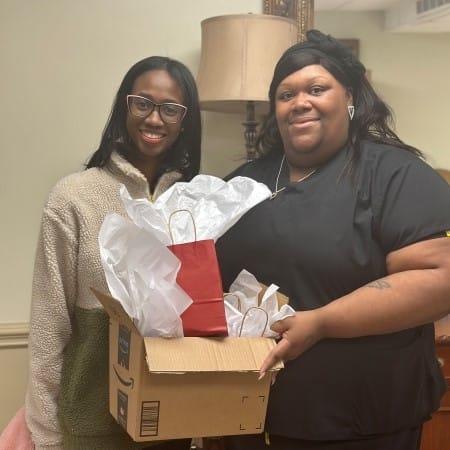
Dana believes in the power of celebrating birthdays and making people feel seen and special./Courtesy Dana Ridgeway
Read more about Dana’s volunteerism and how she helps inspire a culture of empathy and celebration.
Tell us about your volunteer role.
I am a chapter president in the Birmingham, Alabama, area. I partner with Oak Knoll Health and Rehabilitation Center to distribute birthday bags to the residents. I also am a community outreach manager, so I help people across the country partner with organizations to deliver birthday bags.
Why is this issue so important to you?
Birthdays are the only day out of the year that celebrates your entire existence. That is a big deal to me. It’s important because sometimes people that we partner with aren’t in situations that allow them to celebrate their birthdays in a traditional way. Receiving the bags is a nice reminder that they are special and someone cares about them.
What inspired you to get started with this initiative?
Ever since I was a child, I have always loved celebrating people’s birthdays. I love seeing people happy and I love giving gifts, so The Birthday Giving Program was a great fit for me. It also is flexible, which is important since I work full time, and I’m a mother and wife.
What are your long-term plans or goals for the organization?
I want to partner with the activities coordinator at Oak Knoll to start having in person birthday parties for the residents. This is an initiative she is working on, and I’m excited to see how it pans out in the future. I also want to continue helping people in other states find partnerships. It would be cool to help someone in all 50 states.
What’s been the most rewarding part of your work?
The most rewarding part of my work is knowing that I made someone’s birthday a bit brighter. This makes me happy, as I know some of the people we take the bags to are in some unfortunate situations.
What have you learned through your experiences as a volunteer?
I have learned that life is truly a gift that should be celebrated. No birthday should be taken for granted.
Why is it important for others to get involved with causes they care about?
It’s important for people to get involved with causes they care about because it allows them to contribute their time to things that are actually meaningful to them. This creates a sense of fulfillment and connection that otherwise wouldn’t exist. It makes the task actually rewarding.
Any advice for people who want to start volunteering?
I had a boss who would always say, “The best time to plant a tree was 20 years ago. The next best time is now.” I think this quote aligns with volunteering. Find something you truly enjoy doing and simply just start doing it.
Cultivating Growth and Nourishment in Long Beach Community Gardens
Meet Daily Point of Light Award honoree John Walker. Read his story, and nominate an outstanding volunteer or family as a Daily Point of Light.
Dr. John Walker M.D., a board member and volunteer at Long Beach Organic (LBO), has distinguished himself as an exemplary figure in the community, especially during the challenging times brought on by the pandemic. His dedication to transforming and expanding the Giving Gardens to combat food insecurity, alongside his innovative craftsmanship in woodworking, underscores a profound commitment to serving and enriching his community.
During a period when many programs were halted due to the pandemic, John played a pivotal role in shifting focus towards fighting food insecurity in partnership with the California State University at Long Beach’s Food Pantry. Under his guidance, the Giving Gardens flourished, providing over eight tons of greens, hearty vegetables and fruits, aiding over 300 students weekly.
John’s leadership extends beyond gardening to include the design and construction of garden structures and tools. His creation of ADA (Americans with Disabilities Act) accessible paths and gardening beds ensures that all community members can participate in and benefit from the gardens.
Read on to find out how John exemplifies the power of community volunteerism to make a tangible difference in the lives of many.
As a physician, John understands the importance of a nutrient-rich diet.
Tell us about your volunteer role.
I have been volunteering at the Long Beach Organic community garden for the last 12-plus years continually. Two years ago, I was nominated as an official board member, and it has been a rewarding experience volunteering in a group of people interested in the gardens.
Board member duties involve fundraising for the garden and ensuring a stable fiscal future to sustain our gardens, grow them and increase access to as many people as possible. ADA-compliant, all-access paths are being installed in our gardens. I personally spent 24 hours on this part of the project, which meant eight hours a day for Friday, Saturday and Sunday, building a 300-yard concrete paver pathway over a muddy garden area to ensure safe wheelchair access to our raised ADA garden beds.
The ADA pathway will be the sixth structure built to successful completion in Zaferia Garden alone, located at 10th and Grand in Long Beach. Other structures include several dozen redwood benches for the gardens, two 8×10 toolsheds, outside tables, plant storage areas, three arbors, two local clay pizza ovens anda memorial bench dedicated to our past treasurer who passed away and the giving garden at Zaferia where we grow the bulk of the 15,000 pounds of fresh, organic vegetables we donated over the last three years to the Cal State Long Beach food pantry for food insecure students.
As a physician, I am acutely aware of the need for micronutrients in diets, as well as whole foods and fiber. I am able to not only educate, but also help feed these students essential micronutrients to help them better remember their lessons. I think we do some pretty cool things in the garden, besides also providing a safe, encouraging, nurturing environment for many patrons who suffer from mental health illnesses like depression, anxiety, dementia and autism.
This is a real benefit to the community, providing “pressure relief” sites. Health benefits are expounded, shared, educated to all garden patrons, and if someone’s plot gets too weedy and unattended, we are concerned for those people. We reach out and try to support them.
It’s really all about the people, not really the gardens, but the organic vegetables and fruit sure are delicious and nutritious!
Why is this issue so important to you?
When nothing else brought me joy, the garden delivered. I would say it cleared my head and saved my life. I get so much satisfaction in being in the garden. Helping build it is where I meet God. It is an interaction that is so special, between making soil, composting and drawing down the carbon into the soil, taking it out of the CO2 cycle, enlivening the once dead dirt with fungi, bacteria and insects, as well as the multiple environmental benefits of a garden.
As Long Beach continues to strive for sustainability and resilience in the face of environmental challenges, it is crucial to recognize the significant role that community gardens can play in mitigating the impacts of urbanization. Specifically, in light of the recent extreme weather atmospheric river event, these green spaces offer a permeable solution to water runoff, promoting groundwater recharge and reducing the strain on our stormwater infrastructure.
Community gardens serve as more than just spaces for growing fruits and vegetables; they act as vital components of a city’s ecological infrastructure. By replacing impermeable surfaces with vegetation, such as native plants and food crops, these gardens facilitate the infiltration of rainwater into the soil, rather than allowing it to run off into storm drains and ultimately into our waterways.
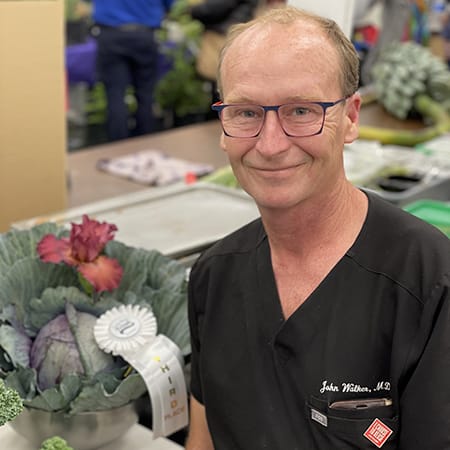
Dr. John Walker combats food insecurity and fosters community wellness through his volunteer work with Long Beach Organic.
One of the primary environmental benefits of community gardens is their ability to mitigate the effects of urban heat islands. By absorbing and evaporating water through transpiration, plants help cool the surrounding area, reducing temperatures and energy consumption. This natural cooling effect not only enhances the comfort of residents but also alleviates the strain on air conditioning systems, thereby lowering greenhouse gas emissions.
Furthermore, the presence of community gardens can improve air quality by capturing pollutants and releasing oxygen through photosynthesis. This is especially important in urban environments like Long Beach, where air pollution from vehicles and industrial activities can have detrimental effects on public health. By creating more green spaces throughout the city, we can contribute to cleaner air and a healthier population.
In addition to their environmental benefits, community gardens foster social cohesion and community resilience. They provide opportunities for residents to connect with nature, learn about sustainable gardening practices and build relationships with their neighbors. These shared spaces promote a sense of ownership and stewardship, empowering communities to take an active role in preserving their local environment.
What’s been the most rewarding part of your work?
Working with volunteer groups brings an enormous sense of group cohesiveness, and achievement so is probably one of the most rewarding. Working with younger children and youth and showing them what is possible in the garden is very rewarding too. Many kids I worked with to build structures had never used tools before, so getting them to use drills and building is very rewarding. Building and strengthening our community through outreach programs is very rewarding too. Helping to build strength and resilience into the organization and working towards ensuring its future for all is very important to me now.
Why is it important for people to get involved with the causes they care about?
People who want to see any change must get involved in the change we want to see. I think President Barack Obama drove that home, or at least it was a strong message during his presidency that filtered through strongly.
Any advice for people who want to start volunteering?
Just start. Get involved. Volunteer to make you feel better.
Embodying Public Service, Then Passing it on to Future Generations
Meet Daily Point of Light Award honoree Andrew Rich.Read his story, and nominate an outstanding volunteer or family as a Daily Point of Light.
Dr. Andrew Rich, the 1991 Delaware Truman Scholar, epitomizes the essence of selfless public service and leadership. Andrew’s contributions, particularly as board chair for Friends of the Truman Foundation and his role in shaping the Colin Powell School for Civic and Global Leadership, reflect a life dedicated to advancing the public good.
As board chair of Friends of the Truman Foundation since 2019, Andrew has volunteered his time and expertise as an ardent advocate for public service and public servants. This role involves crucial activities such as organizing events, alumni development, fundraising and enhancing visibility for the Truman Foundation. His efforts have significantly contributed to building a robust community of Truman Scholars and others committed to public service across the nation.
“I grew up in a family where there was always a spirit of service and a belief that it mattered to be part of our community. So, I guess I grew up never thinking I had a choice to be active in the community, a volunteer in whatever way could help make things better,” said Andrew. “Broadly speaking, this is a particularly challenging moment for public service and for our democracy. What we’re doing through Friends of the Truman Foundation is elevating the standing of public service as a profession – as a set of commitments for the next generation of leaders – inspiring them to bring their own ideas and energies, visions and values. Success for the Truman Foundation means elevating their leadership and bringing new people, particularly those whose backgrounds have been historically underrepresented in public service leadership, to these spaces.”
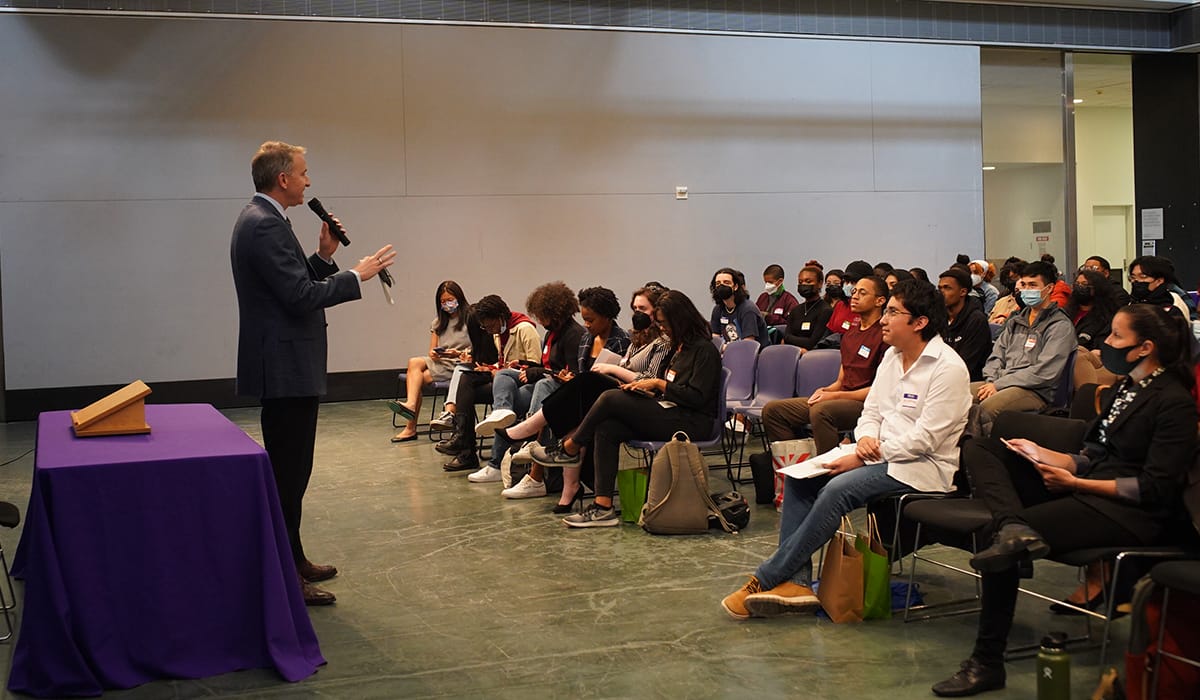
Andrew empowers young leaders to pursue professional career paths in public service.
One of Andrew’s most significant contributions has been the formation of the Truman Council. This group, comprising a network of senior leaders in public service, serves as a testament to his vision of fostering a culture of leadership and service across the United States. The council’s work under Andrew’s guidance has been crucial in advancing the ideals of the Truman Foundation, ensuring that the legacy of public service is not only preserved but also invigorated with new energy and direction. The council’s influence extends beyond mere advocacy, actively participating in shaping policies and initiatives that resonate with the foundation’s mission.
Andrew’s involvement in alumni development and fundraising has been pivotal in strengthening the Truman Foundation’s community. By engaging former Truman Scholars and involving them in the foundation’s activities, he has created a robust network that continually contributes to the foundation’s goals. This network not only supports current scholars but also serves as a rich resource for mentorship, collaboration and professional development. His fundraising efforts ensure the foundation’s ability to sustain and expand its programs, thereby impacting a broader spectrum of aspiring public servants.
“Pretty much everything I’m doing is geared toward developing the next generation of diverse leaders to take power and make a difference in our world,” Andrew shared. “A lot of my volunteer work is in mentoring and supporting young people in their journeys toward professional success.”
At the Colin Powell School for Civic and Global Leadership at the City College of New York, Andrew has been instrumental in creating an educational environment that nurtures global and civic leadership. The school’s programs, under his stewardship, are designed to equip students with critical thinking skills, a deep understanding of global issues and a commitment to civic engagement. The curriculum and initiatives at the school reflect his belief in the power of education to create leaders who are not only knowledgeable but also empathetic and committed to making a positive difference in the world.
“Our democracy depends on the engagement of those who live under it and in it,” Andrew said. “Part of why I spend so much of my energy in supporting young people as they develop themselves into leaders is my belief that we can do better than we’re doing right now. The younger generation has a set of ideas and expectations for the world they want to live in. So, it’s as worthwhile an effort as I can imagine, to support them in that work.”
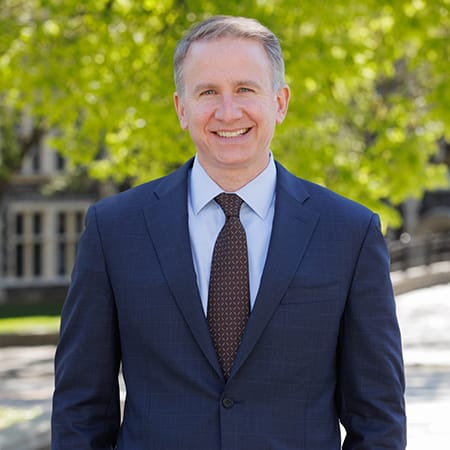
Andrew Rich is board chair of Friends of the Truman Foundation and an educator at the Colin Powell School for Civic and Global Leadership.
The Colin Powell School, under Andrew’s leadership, emphasizes practical skills and real-world experiences. By incorporating opportunities for students to engage in community service, internships and policy work, the school ensures that students graduate with a well-rounded understanding of their role in society. Andrew’s focus on instilling values of service, leadership and responsibility has made the school a beacon for students aspiring to make significant contributions to public service and global leadership.
To those in public service or aspiring to be public servants, Andrew imparts three pieces of advice: “One, it’s important to stay true and hold on to your values. Reacquaint yourself with what you care most about on an ongoing basis. Two, it is essential to stay in community with others who share your values. Don’t just sit in a room by yourself thinking about those values – talk to others who share them. Find your people, people who inspire you in the same places you want to make a difference. Three, pace yourself. Attend to self-care. It truly is a marathon, not a sprint. Give yourself the time you need to devote to yourself, so that you can make a difference over the long term.”
Dr. Andrew Rich’s journey of service, marked by his leadership in the Truman Foundation and the Colin Powell School, is a shining example of how dedication to public service can effect widespread change. His efforts in nurturing future leaders, building communities of service-oriented individuals, and enhancing educational excellence are not just commendable but inspirational. Through his work, Andrew continues to embody the spirit of leadership and civic engagement, touching countless lives and shaping a brighter future for public service.
Realtor Supports Families Going Through a Housing Crisis
Meet Daily Point of Light Award honoree Susan (“Suzy”) Troemel Read her story, and nominate an outstanding volunteer or family as a Daily Point of Light.
Susan “Suzy” Troemel was born and raised in Philadelphia. The former elementary school teacher switched to real estate in the aftermath of the COVID-19 pandemic when funding was cut for her research-based literacy work. Today, as a Realtor, Suzy finds ways to get involved in the community with Family Promise Montco (FPMontco), located in Montgomery County, Pennsylvania —. and she’s putting her real estate experience to work.
As a realtor, Suzy is passionate about fair housing and supporting folks as they move towards their next step in life. Many people today are struggling to afford housing and if they are stuck in a vicious cycle of poverty, Suzy works to help them find subsidized housing and directs them to resources such as low-cost lenders and steady employment.
Family Promise Montco serves families with children under 18. Whenever there’s a family in need, the organization is contacted by the Community Connections of Montgomery County (previously Pennsylvania’s “Your Way Home”) organization, which helps families that are in imminent danger of losing their home or have suddenly lost their homes due to natural disasters, foreclosure, house fires and other challenges.
Suzy Troemel, a former elementary school teacher turned Realtor, actively supports families facing housing insecurity in Montgomery County, PA, by leveraging her real estate expertise and community engagement with Family Promise Montco/Courtesy Kyla Turbett FPMontco
What inspires you to volunteer?
Volunteering was always expected in my family. Growing up, I volunteered for the Philadelphia Aids Walk and as a teacher, I worked at the book depository at a Philadelphia high school. Today, my volunteer journey continues with a focus on families who are struggling with homelessness in the aftermath of emergencies.
Tell us about your volunteer role with Family Promise Montco.
We provide families with emergency shelter for one month through associated faith-based organizations such as churches and synagogues. The families also have access to Family Promise Day rooms with computers, offering a comfortable space where the families can spend their days. Family Promise Montco also runs a food pantry that serves otherwise underserved families in the community.
I started as an office support volunteer. I answer phones, direct people to resources and help with special events. I also do data entry and review security footage and complete security reports. I’m a fill-in volunteer who helps with the transportation needs for families who are in the temporary emergency shelters, such as giving them rides to work or going with them to pick up their kids from school.
Since I’m a licensed realtor in Pennsylvania, I provide information regarding finding new housing. I’ve toured apartments with families who are looking for affordable housing. Wherever I can, I help families find suitable rentals. Once, an individual in the community wanted to donate her home to Family Promise Montco. The executive director called me as someone with real estate expertise to do a valuation on the house. Helping people find affordable housing is one of my big passions!
What inspired you to get started with this initiative?
Family Promise Montco operates a food pantry. Our family had been donating food, and I asked about volunteer opportunities at the food pantry. The pantry volunteer staff was already large and that’s when I learned about the other needs that FPMontco had.
What are your long-term plans or goals for the organization?
I feel like I’ve found another home with FPMontco. There are so many needs and so many ways to help. For example, I don’t know what day programs or after-school programs are available to the kids at the emergency shelter. I would like to explore that and maybe start or be part of an after-school program.
What’s been the most rewarding part of your work?
I love seeing the plethora of volunteers who are always willing to step up and help. People from diverse backgrounds come together with a common goal.
What have you learned through your experiences as a volunteer?
I can’t assume anything about the volunteers based on their background and I can’t assume anything about the families we serve. We have no idea what other people are going through so it’s important to be kind to everyone. We get so much out of what we’re doing!
Tell us about future partnerships, programs or events that you are excited about.
I hope to participate as a volunteer in our biggest fundraiser of the year, a golf tournament. It’s a huge event; people of all golf abilities come for a day of fun. Some people have never picked up a golf club and others are experts. The spirit of helping brings us all together.
Why is it important for others to get involved with causes they care about?
Those of us who have been given privileges are obligated to help those who aren’t. We need to ask ourselves, “how can we even the playing field?”
Suzy Troemel, Family Promise Montco volunteer, organizes the supply closet. /Courtesy Kyla Turbett FPMontco
Any advice for people who want to start volunteering?
Google whatever you think you want to do based on your interests and skills and then take the leap. People who bring volunteers into an organization will be amazingly helpful and skilled at matching people to their gifts. If you talk to someone, they will guide you.
I’ve always been involved with volunteering through churches; that’s one good place to start.
Also, depending on the type of volunteer work you’re interested in, especially when it comes to working with children, many organizations require a background check. As a real estate agent I tell people to get pre-approval before they start looking for homes to buy. It’s similar to certain volunteer opportunities. Get clearance beforehand so you don’t have to wait to get started. The people at volunteer organizations you’re interested in can help you get a background check done.
What do you want people to learn from your story?
There is no typical way to be a volunteer. We don’t all end up at food pantries or soup kitchens. Start with who you are. Know your strengths and passions and find a way to help. You may want to do something similar to what you’ve been doing, or switch gears and do something completely different. And finally, be friendly to everyone. Being friendly opens doors!
High School Senior Pays It Forward With Food Insecurity and Tutoring Programs Formed During the Pandemic
Meet Daily Point of Light Award honoree Anna Neblo. Read her story, and nominate an outstanding volunteer or family as a Daily Point of Light.
Anna Neblo is the daughter of a political science professor and an English teacher; she and her younger sister grew up with lively academic discussions around the dinner table. They’re a close bunch that includes 30 cousins and a black lab. As an academic at heart, Anna loves school but also finds joy in photography, graphic design, water polo and swimming, the last of which she offers lessons for pay and as a volunteer.
Anna’s expansive vocabulary, courtesy of her parents, extends beyond the English language as a participant in her school’s Spanish dual-language program. It’s one of the skills she brings with her to Service and Learning Together, or “SaLT,” as both an intern and a volunteer. Along with handling administrative tasks, grant writing and event coordination for the organization of 400-plus volunteers, she participates in their two impactful programs, Shop N’ Drop and Love2Learn. The former is a bi-weekly grocery delivery service that has helped 530 low-income families facing food insecurity get 30,000 bags of goods. The latter is a tutoring program for kids ages 6-12, many from the same families. Anna’s service drives her interest in studying public policy next year. In the meantime, she looks forward to celebrating her high school graduation and the four-year anniversary of Shop N’ Drop in the coming days.
What inspires you to volunteer?
I got started really young. My seventh-grade science teacher started a service-learning club at my middle school. I was one of the first people to join. In high school, I continued with service outside of school and through our Rotary Interact Club at Highland Park.
Ultimately, it comes down to the way I was raised. My parents are very generous people. They both have passions associated with giving back. They both love to teach and work with young people, but they also both grew up without very much money. They benefited from the kind of program that Shop N’ Drop is, so it was really important to me that I get involved with that. I understand the impact that it has even a generation later.
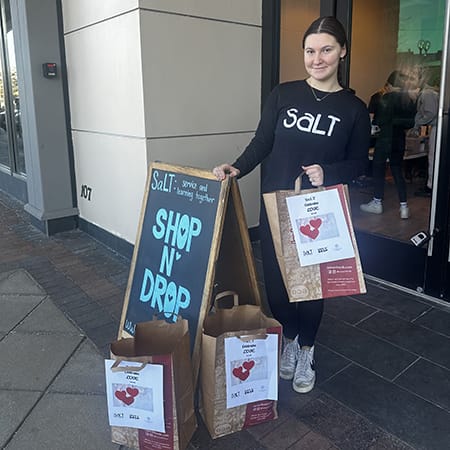
Outside of the Shop ‘n’ Drop site, Anna stands with her hand painted sign and themed bags that engage participating families while providing them useful paper products
What led you to volunteer with this initiative?
COVID hit during my eighth-grade year and I wasn’t able to continue the service-learning work that I’d been enjoying. So, my teacher offered me the opportunity to participate in Project Shop N’ Drop, which is how I began volunteering with SaLT.
The town I live in has a huge population of recent immigrants, and a lot of them work in the service industry, which was terribly affected by COVID. During lockdown, when their children weren’t getting free lunches at school and many of them had lost their jobs or weren’t able to work, there was a crisis. It was really hard to see my neighbors and classmates experiencing that. That’s where Shop N’ Drop began.
Project Love2Learn also started during COVID when kids were lacking in-person learning. We met to help them with homework and to give them a good time with other kids their age, but it’s expanded. Now, we have curriculum and books, and we do games, art and science projects.
Tell us about your role as an intern with SaLT.
There’s a team of high school student interns and they’re some of my best friends. They like to say SaLT is a student-run, adult-supported organization. Being an intern goes beyond the hands-on stuff with Shop N’ Drop and Love2Learn. For example, today, I went to pick up some bakery items that are being donated for tomorrow morning’s event. Deliveries and pickups are pretty consistent. We also help plan fundraiser events.
What have you learned through your experiences as a volunteer?
We learn how to write grants, plan fundraisers and do outreach to local organizations and businesses. None of it would be possible without the generosity of the community around us. We call it SaLT University because we learn skills that we’re going to need in adulthood.
Other than those concrete things, I’ve learned the importance of being able to communicate in a respectful and meaningful way. We didn’t want people to be standing outside in a line asking for food at Shop N’ Drop. That’s completely impersonal and sad. We always try to have respect for the people that we’re working with before we provide service. That means creating personal bonds. I’ve been to baby showers, birthday parties, and unfortunately, even funerals of people who have benefited from the Shop N’ Drop program. Those relationships are what makes SaLT stand out.
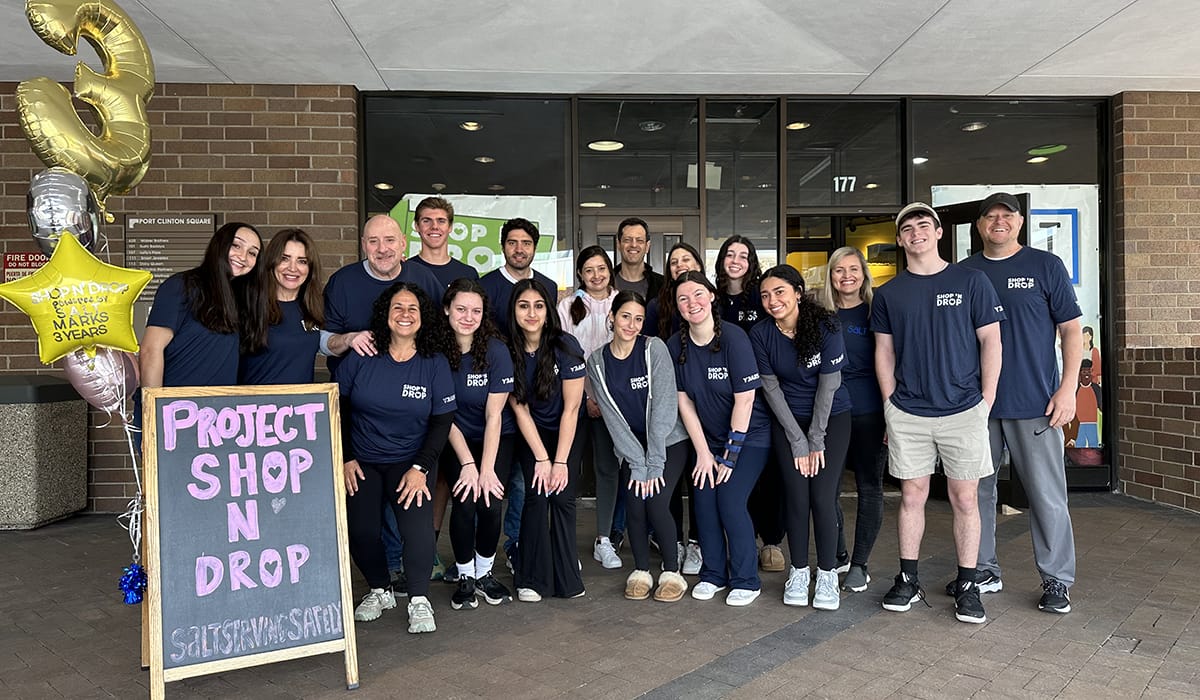
(Front, third from left) To celebrate three years in action, Anna joins the team at Shop ‘n’ Drop, one of her favorite SaLT programs
What’s been the most rewarding part of this work?
It’s getting to see people and getting to know them. You can directly see the impact on the community. I don’t always know who they are, privacy is really important to us, but to know that my neighbors and classmates are really benefiting from the things that we get to do is important. Also, the people we serve with have become some of my favorite people in the world. Getting to form those connections with people who are like-minded in service is the best part.
Why is it important for others to get involved with causes they care about?
Looking at the news can be really sad and dark, but people who volunteer understand that there is always action to be taken. It always makes me feel better. I’ve had a lot of people say that just witnessing the experiences I’ve had, and the impact of SaLT has made them feel better about humanity. Getting in there and getting hands-on makes you remember what amazing people and causes there are, and that despite the darkness that sometimes surrounds us, there’s always hope and progress.
What do you want people to learn from your story?
You’re not too young to get started. Alternatively, it’s never too late. I’ve found a lot of hope, passion and satisfaction in the work that I do, and I hope people will hear my story and know that there’s a place out there with that hope, passion and love for them as well.
Nonprofit Founder Helps Illuminate Paths in STEM Education Around the Globe
Meet Daily Point of Light Award honoree Saanvi Dogra. Read her story, and nominate an outstanding volunteer or family as a Daily Point of Light.
In a world rapidly advancing in science and technology, the importance of equitable science education cannot be overstated. Saanvi Dogra, a pioneering spirit and one of the founding members of Science Nexus, stands at the forefront of this educational revolution. Her vision of leveraging an experiential learning model to democratize science education for underserved children globally is not just innovative but transformative.
Saanvi’s dedication to empowering youth from all walks of life—particularly first-generation students, individuals with disabilities and other marginalized groups—reflects a deep commitment to fostering curiosity, innovation and self-sustainability. Science Nexus, under Saanvi’s leadership, is helping to narrow the global science education gap. The organization’s mission is to provide inclusive and experiential science education to underserved children, thereby sparking an interest in STEM fields that could change their futures.
Saanvi’s approach goes beyond traditional classroom learning; it’s about engaging children in hands-on activities that make science alive, relatable and fascinating. This experiential model encourages students to explore, ask questions and discover the world of science in a way that textbooks alone cannot achieve.
With Saanvi at the helm, Science Nexus has seen remarkable growth, establishing 12 chapters across nine different countries. This expansion has not only spread the joy of science education but also impacted more than 12,000 children worldwide. Each chapter serves as a local hub where volunteers, led by Saanvi’s guidance, bring customized science workshops to children, addressing their unique educational needs and cultural contexts. The success of these chapters stands as a testament to the scalability and adaptability of Science Nexus’s educational model.
Read more about Saanvi’s belief in the transformative power of STEM education – a legacy that will undoubtedly inspire countless others to follow in her footsteps.
Saanvi helps mobilize a network of more than 70 volunteers and fosters collaborations with various organizations and under resourced schools.
Tell us about your volunteer role.
Science Nexus is a nonprofit organization dedicated to furthering inclusive science education for underserved children around the globe through our experiential learning model, compassionate service and global network to foster curiosity and create an interest in STEM. As a leader and co-founder, I help establish chapters and student ambassadors, create customized science workshops for unique needs, overlook logistics, plan outreach activities, connect with other organizations for partnership opportunities and manage our website and social media platforms.
Why is this issue so important to you?
Despite frequent advances in modern science, many communities still face a large gap in science education that prevents them from keeping up with these innovations. For example, some countries, such as India or Pakistan, demonstrate a stark gender disparity in STEM education. In Ghana, a large portion of adolescents are out of school. In Honduras, the frequent natural disasters constantly disrupt students’ education.
Science Nexus is working towards providing these students with an equal access to science learning resources and opportunities that can transform their lives, inspire future generations of scientists and innovators, and create lasting positive changes for their communities. Through our global network of dedicated volunteers, we aim to empower youth from all walks of life, including first generation students, individuals with disabilities and those from underserved areas or other marginalized groups, helping them thrive in a rapidly evolving scientific landscape.
What inspires you to volunteer?
When I was younger, I always enjoyed hands-on experiments. I played around with different variables, testing how one change could alter the entire project. I wanted to enable other students to experience that same joy and child-like excitement. I’m inspired to volunteer by seeing students’ faces light up whenever they understand a new scientific principle or successfully complete an experiment they’ve been attempting for an hour. Through Science Nexus, I am able to develop critical thinking skills and spark curiosity for the sciences in communities around the globe.
What inspired you to get started with this initiative?
My passion in science led me to participate in the local San Diego science fair annually since middle school. Being part of the leadership board now, I had the opportunity to mentor students from underserved schools who wanted to participate but lacked resources to pursue their ideas. As I guided my mentee through the fair, she used to confidently tell me she wanted to be a scientist. Working with her, I realized small help could go a long way; she was able to win first place for her project. Recognizing my ability to make a difference in her journey, inspired me to create Science Nexus with the goal of helping other children with similar dreams.
Earlier this year, I had the opportunity to present my research at the International Science and Engineering Fair, with students from 80 other countries all on one single platform. Regardless of country, culture or background, everyone at the fair bonded through our common passion for scientific research. Talking to some of the participants, I realized that lack of access to education is a real issue around the world, motivating me to expand Science Nexus efforts globally.
What are your long-term plans or goals for the organization?
So far, we have been able to successfully establish 12 chapters across nine different countries. Working with a total of 70 volunteers and 15 organizations, we have created an impact for more than 12,000 children around the globe. In the next few months, we plan to recruit more volunteers in our existing chapters and hold more fundraising activities to provide educational resources such as robotics kits, science equipment and books.
What’s been the most rewarding part of your work?
The most rewarding part of my work is being able to create an interest in STEM in students who haven’t been exposed to these experiments before. For example, in the Eastern Pangasinan Agricultural College in the Philippines, Science Nexus has been mentoring students over the course of several months to develop their own research idea, make a poster and present it at a local science fair. We received feedback from the school principal that the students had never had the opportunity to do a hands-on project like this before, and that after this experience, they showed a growing interest in science-related courses at their school.
Saanvi Dogra is the founder of Science Nexus, a nonprofit dedicated to furthering inclusive science education for underserved children.
What have you learned through your experiences as a volunteer?
As a volunteer, I’ve learned that collaboration is crucial to expanding your cause. One person cannot organize every workshop or contact schools in every country, so relying on multiple people with diverse skill sets or partnering with pre-established organizations helps you build a better network with a greater impact around the world.
I have also learned the importance of compassion and adaptability through Science Nexus. Every single community has a different need that must be met to bridge the gap in science education, and tailoring workshops to those needs is crucial in lifting underserved communities.
Tell us about future partnerships, programs or events that you are excited about.
In April, Science Nexus is planning a Family Science Night in San Diego. The event will consist of several booths with different interactive experiments on robotics, biology, chemistry and more for whoever is interested in attending or learning more about science. We have also recently partnered with Computers without Borders. Together, we plan on refurbishing several personal computers and sending them to locations in Belize, Guatemala and Nicaragua to establish better technological education.
Why is it important for others to get involved with causes they care about?
When people advocate for a cause they care about, their actions can help other communities and raise awareness about otherwise hidden issues. People will have more empathy as they learn more about other parts of the world, creating a more harmonious society. Volunteering also helps build crucial leadership skills that motivate and inspire others to take action.
Any advice for people who want to start volunteering?
For anyone who wants to start volunteering, I think everyone should pursue something they are passionate about and will work to solve. Not only does volunteering give you a purpose, but also gives you the chance to grow as a person with your understanding of other people. You should never hesitate to start and try something new.
Mother-Daughter Duo Supports the Underserved of Their New York City Community
Meet Daily Point of Light Award honoree La’Dreamer & Daisy Lark. Read her story, and nominate an outstanding volunteer or family as a Daily Point of Light.
After a surprising diagnosis with multiple sclerosis and suffering a minor stroke, La’Dreamer Lark found herself struggling to keep up with the costs and demands of everyday life while she was unable to work. Without her friends, family and community, she wouldn’t have been able to continue moving forward, especially while caring for her daughter, Daisy. La’Dreamer wanted to do something for others who faced similar circumstances and didn’t have the support system she did, so in 2018, The La’Dreamer & Daisy Helping Hands Foundation was created.
La’Dreamer founded the organization with her daughter, and together they lead volunteers in making a positive impact on their community by providing resources, assistance and donations to people in need. They offer various volunteer opportunities, like food drives and clothing donations to tutoring and mentorship programs. Not only does the Lark family provide immediate relief to those facing hardships, but they also strive to address the underlying causes of societal issues. So far, they’ve helped more than 500 children annually for the past five years.
What inspires you to volunteer?
The La’Dreamer & Daisy Helping Hands Foundation was founded in 2018, and we became an actual nonprofit in 2020. In 2018 we hosted our first annual back-to-school event, where we gave away maybe 50 to 75 backpacks to the community. The purpose and the reason behind me starting the organization is because, in 2017, I was diagnosed with multiple sclerosis — which is a nerve disease — and in 2018, I had a mini stroke. Of course, I was out of work for some time. I worked for Northwell Health, which still employs me as a project manager. But then I was out of work and unable to care for my daughter, and my family and friends helped out with assisting in purchasing her needs and different things of that sort. I was kind of like in a funk and didn’t know what to do. Then I thought to myself, people might not be suffering from M.S., but could be with something worse and they might not be able to care for a kid. That’s why I started The La’Dreamer & Daisy Helping Hands Foundation.
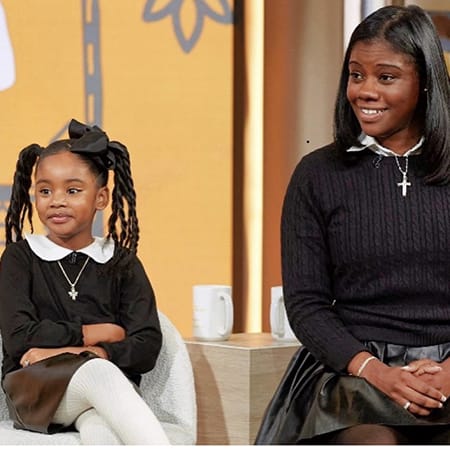
Thirty-three-year-old La’Dreamer Lark aids her community alongside her daughter, Daisy, through donations and events led by The La’Dreamer & Daisy Helping Hands Foundation.
Tell us about your volunteer roles with La’Dreamer & Daisy Helping Hands Foundation Inc.
For the most part, we serve underserved communities, like people living in poverty, those unable to provide for their day-to-day essentials. Our biggest event each and every year is our back-to-school event. Last year we gave away 200 backpacks and were able to increase the number of backpacks given to the kids in the community than previous years.
We had a basketball tournament, and it was extremely nice. The majority of our events take place on holidays. So, for Christmas, we did Christmas stuff in Harlem where we had brunch with Santa Claus. Throughout everything, we still give away things needed for the community whether it’s providing them with food or clothing, especially for the migrants who always need donated clothes.
What’s been the most rewarding part of your work?
The organization has been able to help the community and everyone has been so appreciative. The other day when I went to donate some clothes to the migrants in my community, they were literally fighting over the clothes. Anything that you have to offer makes people so appreciative and thankful. So, that’s like the heart of it: being to help the community.
What have you learned through your experiences as a volunteer?
Honestly, it is to be thankful for what you have. Because there’s always someone out there that is less fortunate than you are, so there are always teachable moments for both my daughter and me. Just be appreciative for what you have, whether it’s big or small, and be thankful for the people that surround you and are willing to help as well.
Any advice for people who want to start volunteering?
Like I tell people all the time, if it’s something that’s within your heart, just do it. If it’s in your heart, you will need to get going. You’re going to have ups and downs, it comes with the territory you know, but just keep moving forward. And just try your best. Something is better than nothing.
What do you want people to learn from your story?
For the most part, I don’t mind that people know about my M.S. We opened up our organization in 2018. I didn’t let it discourage me one bit or let it stop me. I kept going. So that could be a takeaway for them.
Tell us about future partnerships, programs or events that you are excited about.
So actually, we just had a mental health event. It was very successful. It took place January 19 at the National Action Network. But other than that, we have our annual easter egg hunt for Easter, and I’m super duper excited about that. We usually have maybe 200 to 250 kids in the community come out. Beyond games, we have a DJ with music and entertainment. This year, I want to spice it up with fake money that’ll be a part of a carnival style themed event. So, that’s something that I’m looking forward to again this year