Retired Air Force Veteran Lends a Hand to VA Initiatives
Meet Daily Point of Light Award honoree Mark Huffman. Read his story, and nominate an outstanding volunteer or family as a Daily Point of Light.
Mark Huffman enlisted in the United States Air Force not long out of high school, uninterested in college and disillusioned after six months of work in a factory. In a stroke of luck, he met his wife soon after, at his first post in the Netherlands. She, herself, joined the U.S. Air Force upon their return to the States and later had a long stint in the Indiana Army National Guard.
After nearly two decades in the Air Force, Mark left for a second, multi-decade career as a manager and director of the engineering, biomed and security departments of a hospital. His final retirement began three years ago when he walked away from his paid role and into a voluntary one.
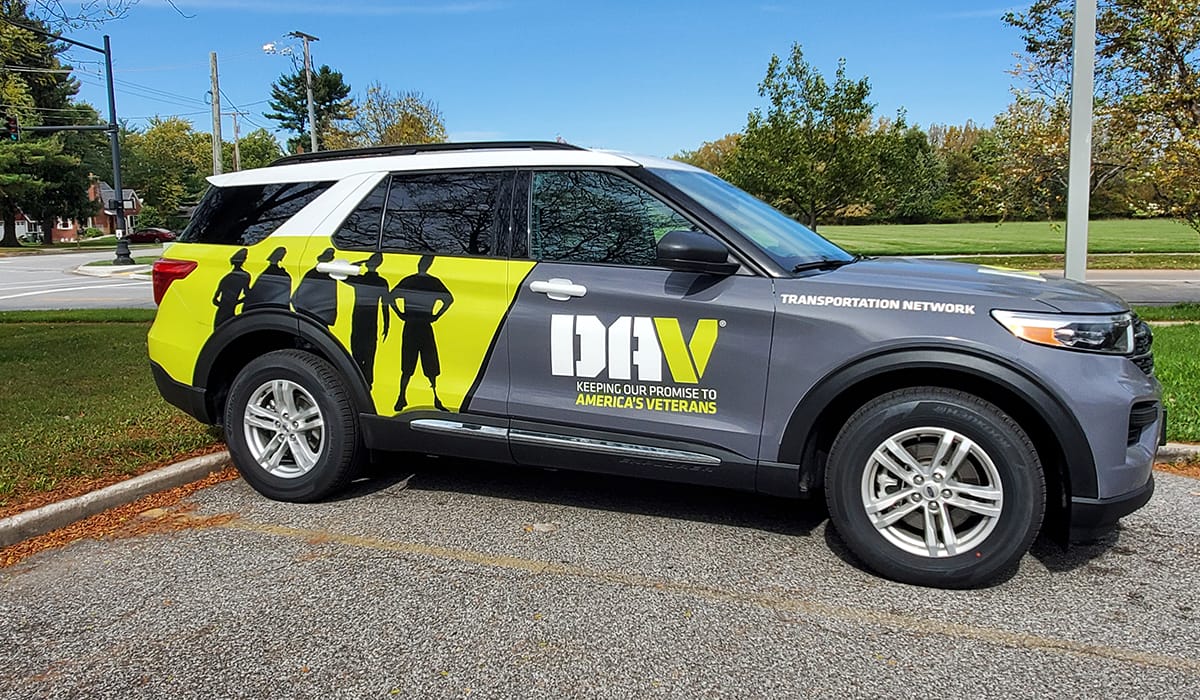
Mark has recently received his pin for 7,500 miles of driving veterans to and from doctor appointments for the Department of Veteran Affairs (VA) and Disabled American Veterans (DAV), going above and beyond for patients who have appointments like chemotherapy that end outside the typical driving period. He serves coffee and chats with patients as they wait for appointments and even registers people for vaccines at the annual Drive-Thru Flu Shot Clinic. Now 65, he enjoys supporting those who shared the experiences of the military and babysitting his grandson while plotting out future travel with his wife.
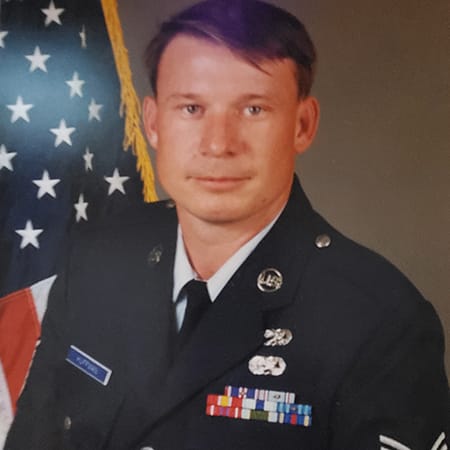
Mark makes his way through leadership school in the US Air Force./Courtesy Mark Huffman
What inspires you to volunteer?
We did a lot of volunteer work in the service. We’d do car washes and other fundraisers for different organizations. When I retired from my hospital job, I found it hard to fill my time. I went into the VA one day to get a flu shot, and the director of the volunteers who was registering folks knew my wife from veterans’ organizations. She asked me if I’d be interested in volunteering, and 30 days later, I was vetted, badged and driving veterans.
Tell us about your volunteer role with the VA and DAV.
I normally drive one day a week on a Wednesday from around 5:30 am to 1:30 pm. We pick up our riders from all over Porter County, some who live 30-40 minutes apart. Then, we bring them to and from either the Adam Benjamin VA in Crown Point or to meet the shuttle for the Jesse Brown VA in Chicago. I also volunteer if they need additional drivers for other areas, even if I’m not scheduled to drive.
For about four hours on Monday mornings, I volunteer at the VA to serve free coffee and cookies to veterans and their families waiting for appointments. It’s a chance for us to talk and trade old war stories. That’s how we keep the memories alive, and it makes the wait time less stressful.
I also volunteer for the annual Drive-Thru Flu Shot Clinic registering veterans as they line up in their cars for vaccines. We provide traffic control into the VA Clinic and parking lot, too. We had a record of over 700 shots over the course of the three-day event.
What was the PACT Act Claims Event?
This is the first year I’ve volunteered to escort and provide refreshments. The PACT Act expands healthcare benefits for veterans and their survivors who were exposed to toxic substances during their service. This event helps people file first-time claims. 147 individuals came–men, women, families, dependents of vets who have passed–to see what benefits are available to them through the VA. Organizations from Indianapolis and Chicago helped them fill out paperwork and get started.
What’s been the most rewarding part of your work?
You see a lot of folks from all walks of life, and it’s interesting to hear their stories. You look at us now, at 60 and 65, and it’s hard to believe that we were the young hard chargers when we were 18 and 19 years old.
For many veterans, I’m sometimes the only person they see in a week. Most don’t have cars or can’t drive anymore, so they don’t get out much. It’s nice just to see how they’re doing and if there’s anything we can do to help them out. It’s rewarding just to let them know that there are still people out there who care for them.
What have you learned through your experiences as a volunteer?
I’ve learned a lot about the workings of the VA and the benefits available to vets and their dependents. I encourage anyone that’s a veteran or who has some kind of disability from the service to see a Veteran Service Officer or a DAV representative to find out if they–or their family–are eligible for anything. There are a lot of programs out there. You just have to know where to look.
Once my wife retired from the Army National Guard, she became a Veteran Service officer, and her full-time job now is enrolling veterans in their benefit programs. Earlier on, the military wasn’t letting veterans know what was going on. But now they tell them what’s available to them when they get out. They can have Transition Assistance Programs help them transition to being a civilian and show them different organizations like the DAV and the VA.
At 2023’s annual Drive-Thru Flu Clinic, Mark helps register veterans for their vaccinations./Courtesy Mark Huffman
Why is it important for others to get involved with causes they care about?
Budgets are tight, and volunteers do a lot of work. It helps the VA offer these programs and create new ones without having to find more money to do these things.
Where would you recommend people start if they’re interested in helping veterans?
Contact a DAV representative, a Veteran Service officer or the VA itself. One of my bosses is a Volunteer Service Specialist for the Center for Development and Civic Engagement. They’re also great to speak with to get you started on the road to volunteering.
What do you want people to learn from your story?
Go out there and volunteer. Do something. Every little bit helps. You never know what your interaction could do to help a person make it through their day.
Beyond the Courtroom: Dan Beale’s Legacy of Service
Meet Daily Point of Light Award honoree Dan Beale. Read his story, and nominate an outstanding volunteer or family as a Daily Point of Light.
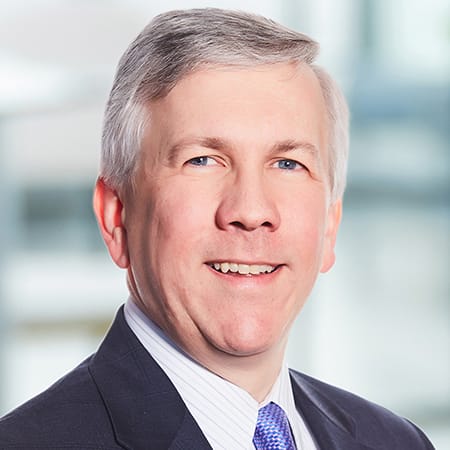
Dan Beale, a prominent figure in Atlanta’s legal community, is more than just a lawyer at Dentons – he’s a true champion for those in need. While his legal acumen has earned him respect in the courtroom, it’s his ongoing commitment to pro bono work that truly sets him apart.
Dan has dedicated countless hours to serving those who lack access to legal representation, quietly making a profound impact on individuals and organizations across Atlanta and beyond. His devoted effort in the pro bono world has not gone unnoticed – earning him accolades, the admiration of his colleagues and a reputation as a compassionate advocate for justice. As Dentons U.S. CEO Sonia Martin eloquently puts it, “Dan Beale’s unwavering dedication to pro bono service is a testament to the profound impact one individual can have on their community.”
For years, Dan has been a pivotal figure at Dentons, serving as the pro bono coordinator for the Atlanta office and guiding the firm’s U.S. Pro Bono Committee. He’s the go-to expert on complex employment issues, lending his expertise to nonprofits both locally and internationally. Organizations like CARE USA, The Bronx Community Foundation and Witness have all benefited from his counsel.
Dan Beale has seen success as a lawyer at Dentons, but is also a force for good in his Atlanta community.
“Put simply, Dan is a pro bono superstar at Dentons,” says Ben Weinberg, Dentons Pro Bono partner. “He leads by example and always is willing to lend a hand.”
But Dan’s impact goes beyond advising organizations. He enthusiastically rolls up his sleeves and works directly with individuals in need through volunteer clinics at the Georgia Justice Project and the Atlanta Volunteer Lawyers Foundation. His commitment to the Georgia Justice Project is particularly deep-rooted. A longtime board member, he served as chair of the Board in 2019 and 2020.
Dan’s dedication to justice and serving vulnerable populations aligns perfectly with the values championed by former President Jimmy Carter. In a letter from 2005, Carter commended the Atlanta Volunteer Lawyers Foundation – where Dan dedicates much of his pro bono efforts – for its “tireless and creative efforts” in providing legal services to low-income citizens. He emphasized the importance of such work, stating that “a society should be judged by how it treats those who are weakest.”
Dan’s involvement with the AVLF and his broader pro bono work clearly embody this sentiment, showcasing his commitment to ensuring equal access to justice for all, a principle that lies at the heart of both President Carter’s message and Dan’s own efforts.
Dan’s passion for service also extends beyond the courtroom. He currently leads the board of Wellroot Family Services, an organization dedicated to supporting foster families and keeping families together in northern Georgia. He’s also an active member of Peachtree Road United Methodist Church and lends his time to the Elizabeth B. Stephens International Organ Competition. “While Dan is a fantastic lawyer, he is an even better person,” adds Weinberg. “He is committed to the community within and without our firm.”
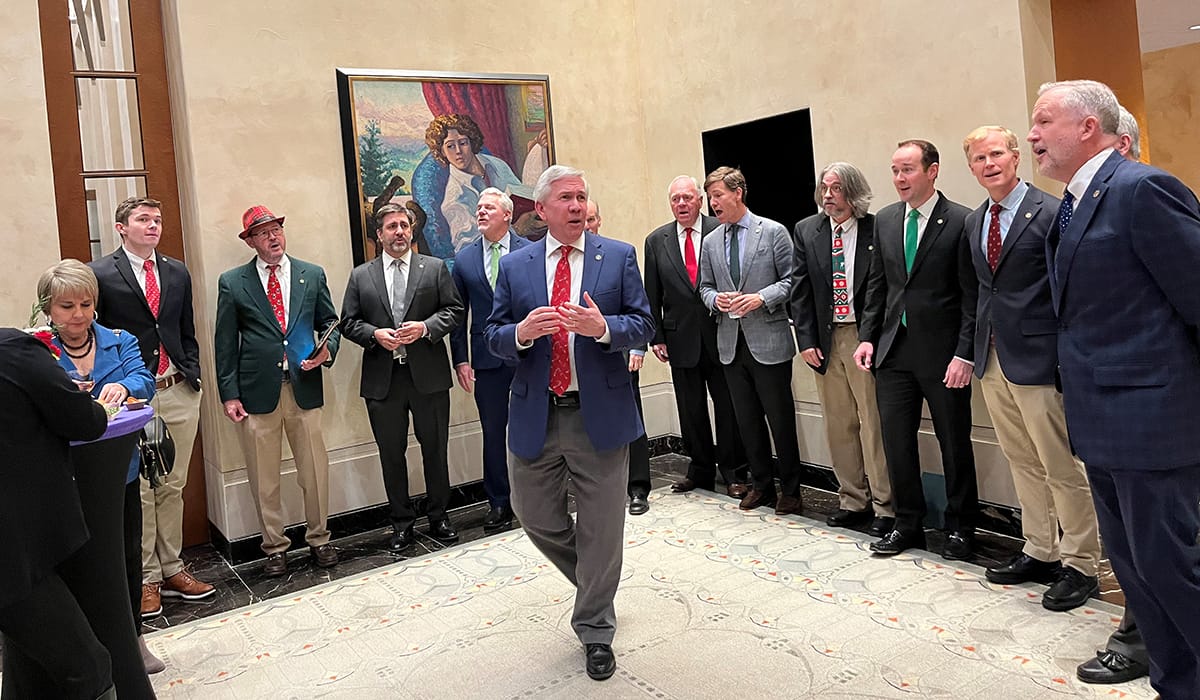
Dan (center) performs with his a cappella group at a holiday party.
This breadth of service is what makes Dan truly stand out. “Dan Beale’s years of service in pro bono work are truly inspiring,” shares Eric Tanenblatt, a Dentons colleague and Points of Light board member. “His commitment to those he assists is remarkable and exemplifies the very best of the legal profession. Dan is a shining example for all of us at Dentons, especially here in the Atlanta office. We are proud to stand beside him as he continues to make a difference in our community.”
Dan Beale’s story is a powerful reminder that “true leadership is measured not by accolades, but by the lives we uplift along the way,” as Martin aptly observes. “Through his tireless efforts, Dan has touched countless lives, offering not only his expertise but also his compassion and commitment to making a difference. His recognition with the Daily Point of Light Award is well-deserved, as he exemplifies the very best of what it means to serve others.”
Dan’s work is a testament of how one person can use both their compassion and their skill set to make a tangible and wide-reaching difference in the world. Dan demonstrates that a commitment to pro bono work can enrich not only the lives of those served but also the life of the giver, and his journey reminds us all that finding a balance between professional success and philanthropic endeavors can lead to a truly fulfilling and impactful life.
Former Soldier Supports Fellow Veterans Through Company Resource Group
Meet Daily Point of Light Award honoree Brian Reed. Read his story, and nominate an outstanding volunteer or family as a Daily Point of Light.
Brian Reed decided to enlist in the military directly out of high school. After 20 years of service, he returned to civilian life and began work as an instructor and writer primarily for the Patriot system at Raytheon Technologies, now RTX. Today, he’s a married father of four and grandfather of five and serves the country in a different way.
Since 2016, when Brian first got involved with RTX VETS Employee Resource Group (ERG), he has enthusiastically spent 10-20 hours a week connecting veterans with the care, support and recognition they have earned. Serving as the group’s co-chair in an office made up of 90% veterans themselves, he rallies volunteers for things like an arts and crafts program at the local veterans’ center, an annual barbecue and fulfilling Angel Tree wishlists each holiday season.
Brian has donated many hours of his time supporting Wreaths Across America, laying wreaths on graves at the Fort Sill National Cemetery, and organized participation in 20+ internment services for “Unclaimed Veterans”. He facilitates mentoring and veteran support programs like career development workshops and advocates for veteran-related causes. He is also involved with Abled and Disabled Persons Partnering Together, another resource group committed to community outreach.
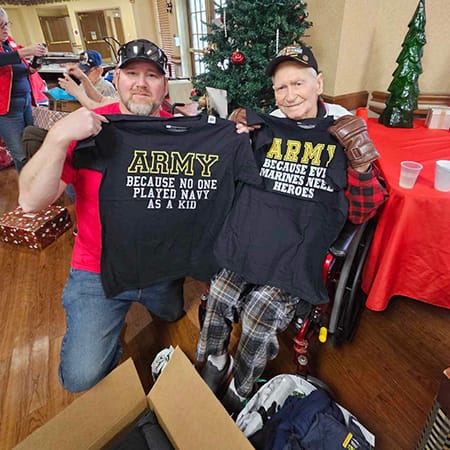
Brian Reed (left), co-chair of RTXVETS, and fellow volunteers help veterans at the Lawton/Fort Sill Veterans’ Center open Christmas gifts and pose for photos.//Courtesy Brian Reed
What inspires you to volunteer?
When I joined Raytheon in Lawton, they were already doing an annual barbecue that attracts 100-200 people at the local Veterans’ Center. Being a vet myself, being able to talk to them and understand what they’ve been through, was something that I immediately took to.
Tell us about your volunteer role with RTX VETS ERG.
That first year, my oldest daughter coordinated with her high school Future Farmers of America group and received donations for the vets’ home at Christmas. We kept it up during COVID; we could donate items but couldn’t go talk to the vets or anything. As soon as restrictions were lifted, my co-chair and I talked to the recreation coordinator for the veterans’ home and got back into doing the barbecue.
She said that some of the vets had expressed interest in an arts and crafts thing, too. They had supplies, but didn’t have the personnel to accommodate it, so we volunteered. With our work schedule we’re off every other Friday, so we used that Friday to do a project with them, whether it was painting an ornament or making key chains.
Eventually, one of the volunteer’s spouses started attending and took over, making it a weekly event and increasing participation from four to 15 veterans. We still have people who volunteer with her. One day, the person who was going to read to the veterans for their book club of 20-30 people was unable to make it, so one of our guys offered, and we’ve been doing that ever since.
My co-chair and I discuss everything with our management, because anything we want to do has to be approved. Then, we reach out to the City. That’s how we got into doing the Armed Forces Day Parade. We coordinate donations to food banks. We do around 20 Thanksgiving and Christmas dinner baskets for the YMCA with a turkey or ham and all the fixings.
What are your long-term plans or goals for the group?
Our directives come from higher, because the RTX VETS is global, over all of Raytheon Technologies. So, our goals are more from the top down, but locally, our goal is to be able to continue to interact and support the community, especially those who are vets or active duty who need help.
I’ve been in their shoes where I didn’t have enough to, for example, make a holiday meal. Even while I was active duty. After I became higher in rank, my wife and I always invited those who couldn’t travel home for the holiday to come over for a meal, so they had somebody to talk to and didn’t feel left out.
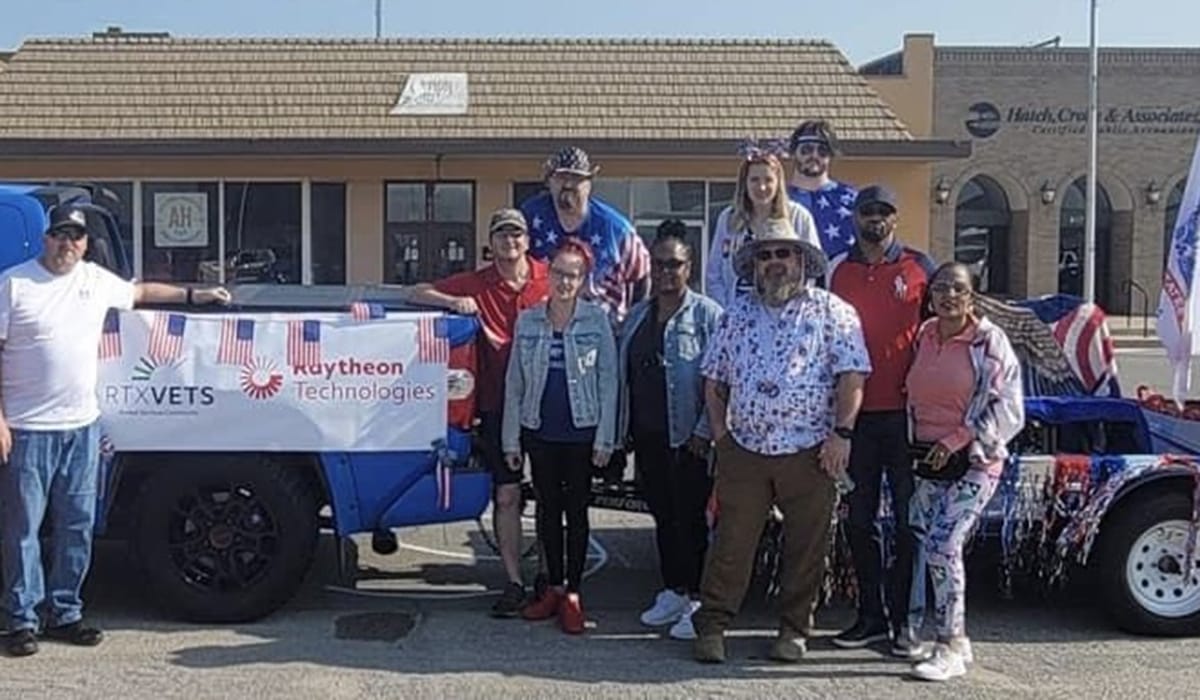
On Armed Services Day, Brian and fellow volunteers get ready to join the City of Lawton and Fort Sill’s parade in the Raytheon Technologies RTXVETS float./Courtesy Brian Reed
What’s been the most rewarding part of your work?
The smiles, especially from the veterans in the veterans’ home. They love it, especially when younger generations come in. My three daughters were in Oklahoma with us when I retired, so all three of them have helped out. I have one in particular who goes with me anytime I say, “Hey, I’m going to the veterans’ home,” if she’s not working herself. She loves to listen to their stories. They love having somebody to talk to, because not all of them have families left. That’s why they’re in the home.
What have you learned through your experiences as a volunteer?
I think learning how people see things, how they have been treated in the past, makes me a better person.
Tell us about future partnerships, programs or events that you are excited about.
Our next event is the Midwest City Veterans’ Day Parade. Our office partnered with the Pratt and Whitney RTX VETS group, and we have a float, motorcycle riders and some local personnel who are going to be part of that.
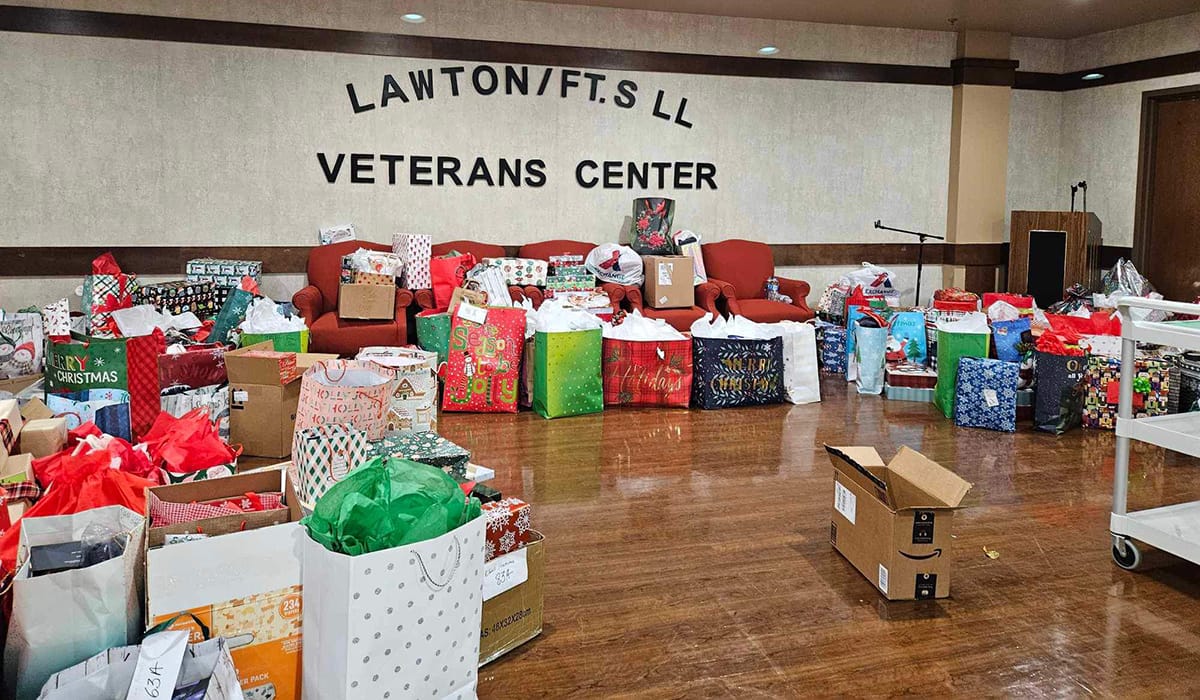
Donors line up Angel Tree gifts, each for a specific veteran at the Veterans’ Center. Donors chose an envelope from the tree that includes a list for a random veteran to buy and wrap for in anticipation of the annual holiday party.
Why is it important for others to get involved with causes they care about?
If you don’t get involved in something that you care about, you can’t guarantee that someone else will.
Any advice for people who want to start volunteering to help veterans?
There’s always a Veterans Administration (VA) hospital or office in most of the larger cities. People can start by contacting them, veterans’ centers or veterans’ homes.
What do you want people to learn from your story?
Reach out. There are always people who need someone to talk to, veteran or not. Reach out to your community, and somebody somewhere will be looking for help.
A Passion For Helping Others Fuels One Veteran’s Mission
Meet Daily Point of Light Award honoree Reginald Dumas. Read his story, and nominate an outstanding volunteer or family as a Daily Point of Light.
When patients come through the doors of the West Roxbury VA Medical Center in Boston, Reginald Dumas is eagerly waiting.
A decorated military veteran, Reginald serves as a Red Coat Ambassador at the facility, one of the busiest VA medical centers in New England. For veterans seeking medical care, many of whom are dealing with serious health issues, the experience of visiting the complex can be an overwhelming one. But for Reggie, it’s an opportunity to put a smile on their faces.
While Reggie’s gregarious demeanor is one of his most appreciated assets, his responsibilities at the VA Medical Center go far beyond serving as a friendly face. Whether he’s guiding patients with mobility issues through the massive facility to their appointments or working to improve patient-centered care, Reggie’s focus is always on the people who need it most.
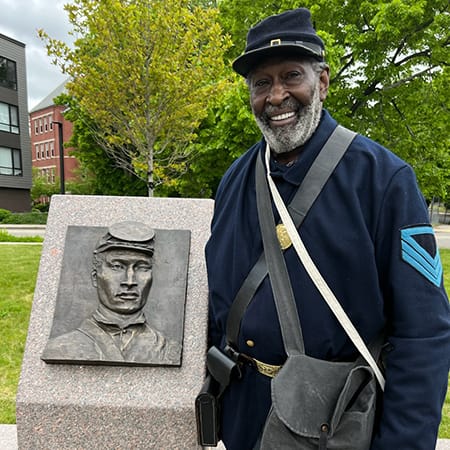
Reginald appears in a reenactment of the 54th Massachusetts Infantry Regiment, a Union Army unit that fought in the United States Civil War. /Courtesy Reginald Dumas]
“I’m a soldier’s soldier,” says Reggie, who has volunteered at the VA Medical Center for over a decade. “That’s what I’m there for. One day I might be in their place. I don’t care what race or nationality you are. I love to help. That’s the way I am. I believe in helping.”
In addition to being a shining light for the patients that come through the medical center’s doors, Reggie is a favorite among the staff and volunteers. At well over six feet tall, his towering presence is hard to miss. However, it’s his ability to connect with the veterans and their families that patients truly identify with.
“He greets, but he also does so much more than that,” says Peter Tribuna, voluntary service specialist at the VA Boston. “Our ambassadors are full of information. As you can suppose, there are quite a few older veterans that don’t really know the system or where they are. Ambassadors direct people to appointments and help them around if they need a push. But they not only assist the veteran, but often the veterans’ loved ones. They guide, comfort and inform.”
Because of his background traveling the world as a member of the United States Army, Reggie has the unique ability to understand how to help his fellow veterans and their families navigate the complex system.
“Reggie is specifically beneficial because he is a veteran and he knows the VA system, which is kind of hard to get around,” says Tribuna. “It’s just an entity that has a lot of different peculiarities.”
If you ask Reggie what the most rewarding part of his volunteer work is, he’ll tell you it’s “being blessed to help others.”
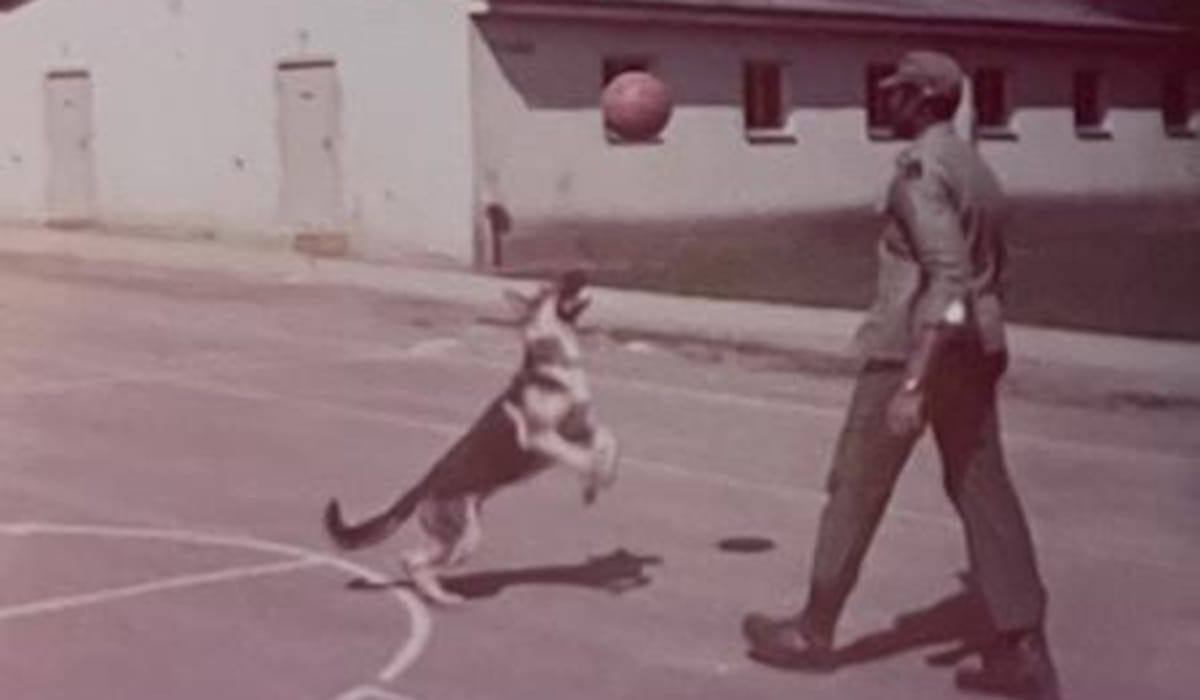
Reginald trains a military police dog during his time in the United States Army. /Courtesy Reginald Dumas]
“At home and during COVID, some veterans didn’t have anybody to talk to. So, when they come into the VA Center and I see them sitting down waiting for their appointment, I go out and make sure they’re okay,” Reggie shares. “When you have a good heart, you will be blessed.”
At 70 years old, Reggie is showing no sign of slowing down in his volunteer role. In fact, he says he’ll never stop being of service. His tireless devotion to bettering the lives of his fellow veterans is a strong example of the altruistic power of volunteerism.
Serving Kindness: Oakland Volunteer Provides Meals to Unhoused Neighbors
Meet Daily Point of Light Award honoree Teajay Tapia. Read his story, and nominate an outstanding volunteer or family as a Daily Point of Light.
Teajay Tapia is an Oakland, California, resident and committed volunteer at Rogers and Rosewater, an organization that bring hot homemade meals to those facing homelessness and hunger in the streets of Oakland.
Rogers and Rosewater started in 2018 as one person making food in her kitchen and distributing it to community members in her neighborhood. This eventually inspired Teajay to join, and the organization has since grown to provide 400 meals weekly.
Each week, Teajay prepares meals and harm-reduction kits and then distributes them to people throughout San Francisco. Teajay is also a lead volunteer in packing bag lunches, hygiene kits and pet food bags to distribute to unhoused community members. Inspired by the work of Rogers and Rosewater, over the last four years, Teajay has started to offer his community free stores both monthly and biweekly.
Read on to learn what inspires Teajay to volunteer and his goals for the future.
What inspires you to volunteer?
The people in my life have always inspired me to volunteer. I’ve always wanted to do things and try new activities, this allowed me to work outside my comfort zone. I initially did not know what to do or how to go about things, but now that I’ve met quite a few people, my journey has become more accessible.
Tell us about your volunteer role with Rogers & Rosewater.
I volunteer with Rogers and Rosewater. I pack lunches with them every day. Now, on Monday and Tuesday, I pick up 15 cases of water and distribute it to unhoused folks. On Wednesday, we feed the unhoused and bring smiles to many faces.
What inspired you to get started with this initiative?
This initiative started the development of role models in my community. I’m fortunate enough to be surrounded by amazing community members.
What are your long-term plans or goals for the organization?
Eventually, I want to see Rogers and Rosewater grow and gain better traction. I would also like to run my free store in a bigger space. Right now, I am working out of my storage space and it’s not ideal, so eventually, I would like to grow and make it much more significant.
What’s been the most rewarding part of your work?
The most rewarding part has been the ability to build a new community, especially with people who share the same values. Also, getting to know other volunteers and more people in my neighborhood has been essential. Then feeling a sense of community is very important. Growing up, I didn’t have that, so it’s incredible to feel a part of a family, which I also don’t have.
What have you learned through your experiences as a volunteer?
I’ve learned that people just want to be talked to and heard. No one wants to be ignored or feel less than. I also learned that consistency is critical.
Tell us about future partnerships, programs, or events that you are excited about.
Rogers and Rosewater will host a concert in December at one of our local parks. I will run a free store where local friends and community members can shop and enjoy themselves. This also allows people to get to know the community and have fun with one another.
Why do others need to get involved with causes they care about?
Being part of something makes me feel good and being part of a good cause is fantastic. This allows me and others to learn more and know more. It’s never too late, give it a go and never hesitate. Although I wish I had known about these things 14 years ago, it’s still important that I am aware and active today.
Any advice for people who want to start volunteering?
Don’t ask permission.
What do you want people to learn from your story?
Caring about your community is essential. Starting from anywhere at any time will make a world of difference.
Seeing What’s Possible: Building a Better Future Abroad
Meet Daily Point of Light Award honoree Smita Abbi. Read her story, and nominate an outstanding volunteer or family as a Daily Point of Light.
Growing up in India, Smita Abbi saw a lot of poverty. But despite witnessing the struggle all around her, Smita never became desensitized to other people’s suffering. A career in science brought Smita to the United States, where she earned her PhD in oncology at Cornell University.
But despite her achievements, Smita still wanted to make a bigger impact when it came to helping others.
She soon discovered Kutumb, an organization in Varanasi, India, that works with children who were abandoned at the railway station, and provides them a safe haven, education, nutrition and non-formal education. In a mission to enable Kutumb and other organizations help even more children, Smita took over as president of Vision Builders in 2014. She registered the organization as a 501(c)(3), and solidified their mission to help children and women in the most impoverished communities of the world.
Since then, the Vision Builders organization has expanded their support to the communities in the surrounding areas. They provide education and vocational classes, free medicine and medical checkups to the villagers with a special focus on women. In just the last year, the work of Vision Builders has helped Kutumb enroll 71 children in a preschool program and provided 150 children with the financial support to go to school.
Vision Builders also supports NIPUN, a Delhi-based organization that has enrolled hundreds of children in daily nutrition and education programs. Smita’s work with Visions Builders here in the United States enables organizations like Kutumb and NIPUN to create a better future for youth and women across the globe. Their mission is far from complete, however. Smita is passionate about expanding Vision Builders’ grasp, and is eager to expand the organization’s reach into Africa. But wherever she goes, Smita’s dedication to helping others shines through.
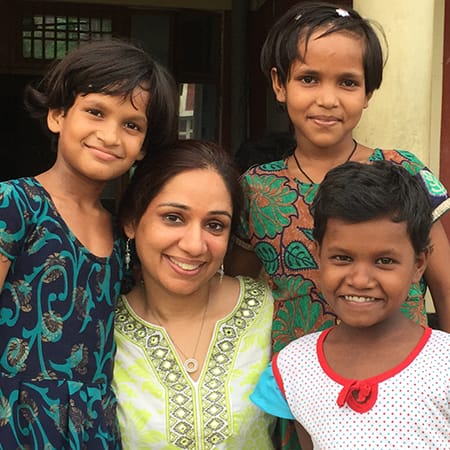
Smita Abbi (center) smiles alongside young girls who have completed an art project at Kutumb. /courtesy Smita Abbi]
What inspires you to volunteer?
What drives me is I always want to help people who are suffering. When I was young in India, there were two ways to do it. Either I could do it through science and help people with diseases or I could do social work. I came here to get my PhD in oncology at Cornell and now I’m in pharmaceuticals. But somewhere in the middle, I realized I wasn’t making as much of an impact as I could. Every time I went back to India, the same thing bothered me. I felt like I wasn’t making as much of an impact as I could if I directly worked with people living in poverty.
Tell us about your volunteer role with Vision Builders.
The people on the ground in India are really doing the work. I keep in touch with them and talk to them every other weekend. I’m basically the sounding board and support system, not just financially, but also morally. They sometimes get disillusioned, so I’m there to basically brainstorm with them about how to solve issues. Sometimes I’m just listening to them and providing encouragement. When it comes time to fundraise, I put in much more time each week. We’ve done some big fundraisers, which were pretty much like a part-time job to pull off.
What inspired you to get started with this initiative?
In 2012 I heard about a couple in Varanasi, India who were working with children who were abandoned at the railway station and giving them a home. I had never been to the city, but I decided to just fly there to meet this couple. I’d been scouting around to see which nonprofit in India I could support and this came from a trusted source. So I flew to Varanasi and I met this couple. Just meeting them completely blew my mind. Dr. Ashish was a doctor and married to a social worker, Puja. They were basically trying to get the kids out of the cycle of drugs and fentanyl at the train station. When I visited them, this couple had taken 15 kids into their home. That’s where I realized I wanted to help these people. Their hearts were in the right place.
What are your long-term plans or goals for the organization?
My ultimate goal is to help the most impoverished people in the world. I would love to go beyond India to Africa. One of our models is that we personally go and visit these places, and we personally get involved and get to know the people. I do want to find a place in Africa, and maybe I’ll have to commit the time to go visit, but it’s not that easy. We want that personal connection.
What’s been the most rewarding part of your work?
I think the most rewarding part is when I think about what would happen to these kids if they didn’t have Kutumb. It’s literally saving lives and giving kids a brighter future. Personally, I find it most rewarding just to see these kids– we got them off the road. They’re no longer living in the train station. They’re actually getting educated. I want these kids to have everything that I give to my kids. I have always insisted that they should have music classes, dance classes and sports, and all of these kids get that.
What have you learned through your experiences as a volunteer?
Not to get deterred or discouraged by the enormity of the issue. Even if you can help one person and save one life, it matters. The need is huge. And sometimes when I go to start, I think, “Why even start?” But even if it’s a drop in the ocean, it’s a precious drop and it’s an indispensable one.
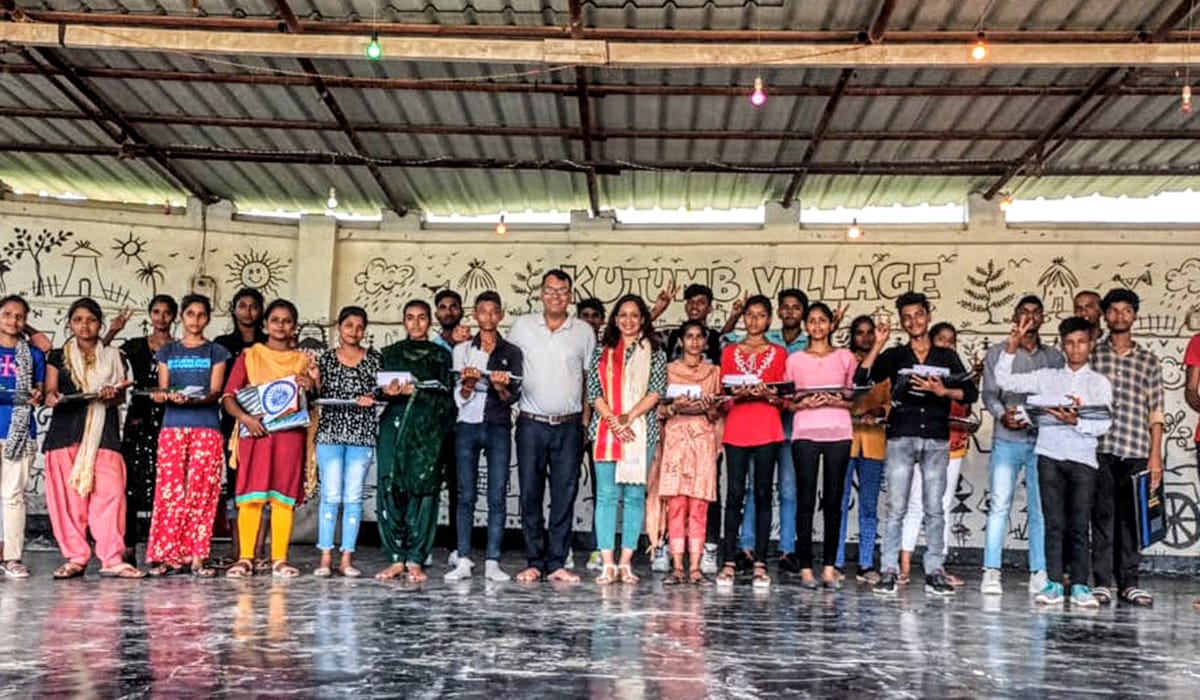
Vision Builders president Smita Abbi (center) stands alongside students graduating from 10th and 12th grade. She is joined by Kutumb founder Dr. Ashish. /courtesy Smita Abbi]
Why is it important for others to get involved with causes they care about?
I think they should because they have the ability to impact somebody’s life in a positive way. You know, we don’t realize how much more fortunate we are compared with some of these other people in the world. We can make this world a little bit more fair and equitable. I think all of us have to give and contribute. Each one of us can make an impact in a positive way, and we should because we can.
What do you want people to learn from your story?
Seeing what’s possible and making it happen. Thinking of the Kutumb story, which is just that these two people could have such a huge impact on the lives of hundreds or thousands of youth and women. Just one person can have a huge impact in the world. Like I said, do not get deterred by the enormity of the problem. Because even if you can help one person, it really matters.
Connecting Residents to Their Culture on the Pine Ridge Reservation
Meet Daily Point of Light Award honoree Shaun Little Horn. Read his story, and nominate an outstanding volunteer or family as a Daily Point of Light.
Life isn’t easy on the Pine Ridge Indian Reservation. But with the help of residents like Shaun Little Horn, things are improving.
The Pine Ridge Indian Reservation, which is an Oglala Lakota Indian reservation, is tucked in South Dakota. Residents there face a variety of struggles, ranging from water containing uranium levels that are 10 times the legal limit to brutal winters with no heat in their older mobile homes. With an average household income for tribal members on the reservation sitting at less than $8,000 a year, times are significantly tough.
“If you take out the ranchers who are not tribal citizens, it’s the poorest county in the United States by good measure,” notes Shaun, who volunteers as the executive director of the Indigenous Peoples Movement, which works to safeguard and uplift indigenous rights and traditions.
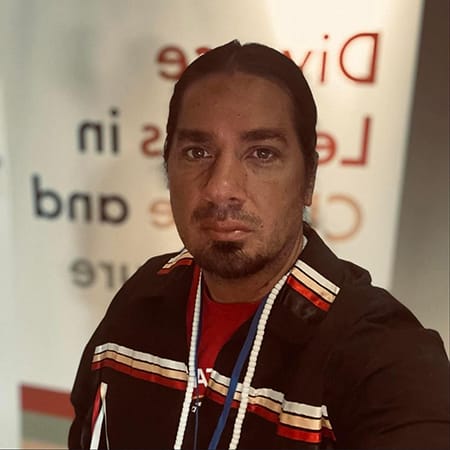
Shaun aims to inspire others to get involved in their own communities./Courtesy Shaun Little Horn
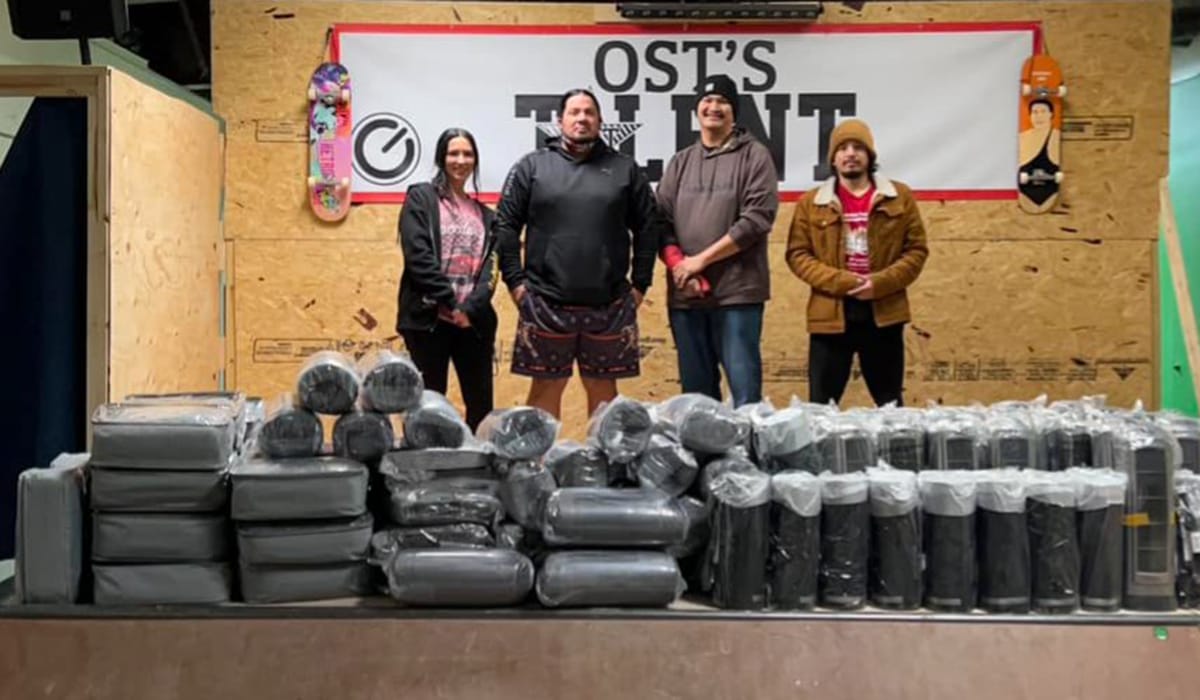
Motivated by the belief that wealth is defined by how much you give away, not how much you store up, Shaun is committed to helping residents connect with their culture while living happy lives. Over the last year, he helped raise the funds to purchase and distribute $120,000 worth of blankets and heaters to help residents survive the brutal South Dakota winter. He commits a minimum of 40 hours per month to the organization on top of his full-time job, as well as his role coaching a tribal college basketball team.
“I never look at it like ‘look at all that I’m doing for my people,’” Shaun explains, noting that he sees his work as what the Lakota refer to as “Wopila,” which means “thank you” or “gratitude.” It’s all done with a mission to connect people to their culture and values, which ultimately will change their perspective on what they’re going through in life.
“It makes you look at it differently,” continues Shaun, who notes that some of the most rewarding moments include being able to give someone a blanket and a heater to get through the winter, or when he sees someone reconnect with the culture’s values and our way of life. “The opportunity to give is true wealth.”
Shaun’s ability to reach different people within the nine districts of the Pine Ridge Reservation is particularly admirable considering the physical makeup of the area.
“Pine Ridge Reservation is a huge land mass,” says DeCora Hawk, a former colleague of Shaun’s. “We have a lot of acreage, but it’s very spread out, and transportation can be an issue. Shaun actually taking the time to gain access to resources and set up in these different communities is very impactful. There’s a lot of ground to cover.”
Over the last year, Shaun helped raise funds to purchase and distribute $120,000 worth of blankets and heaters to residents of the Pine Ridge Indian Reservation./Courtesy Shaun Little Horn
Moving forward, Shaun has a variety of goals in place for the organization. He hopes to implement clean energy initiatives that can help areas of the reservation that are normally unable to access things like solar power. Not only does this help some of the most impoverished areas economically, but it repairs the community’s relationship with Unci Maka, the Lakota term for Grandmother Earth.
While raising funds and gaining access to resources is important, Shaun demonstrates that dedicating one’s time to volunteering is the ultimate gift. He hopes to inspire others to get involved in their communities in any capacity.
“Our time is even more valuable than our money. As you know, it’s the one thing you can’t buy back,” Shaun explains. “You have a chance to be a part of the solution.”
The World Is Her Canvas: A Teen Spreads Inspiration Through Art
Meet Daily Point of Light Award honoree Mahika Bansal. Read her story, and nominate an outstanding volunteer or family as a Daily Point of Light.
Mahika Bansal may only be 14 years old, but her journey to using her artistic skills to support her community started several years ago.
During the COVID-19 pandemic, Mahika wasn’t too confident in her artistic abilities. While she always loved painting and cooking, Mahika wasn’t sure if the public would be interested in her work. But all it took was a nudge from her mother to give Mahika a little inspiration and a surge of confidence.
Stuck at home with not a lot to do during the pandemic, Mahika decided to create and sell paintings to raise funds for Seattle Children’s Hospital. The fundraiser ultimately brought in over $1,000, and bolstered Mahika’s confidence to take her volunteer mission to the next level. She created Create2Help, a youth-led nonprofit organization that uses art and cooking to support the community. Whether she’s using the money she wins from a local art competition to send art supplies to children in India or working with local women’s shelters to host painting classes, Mahika’s goal is to give those going through a difficult time a moment of peace and creativity. When they step into one of Mahika’s classes, participants can leave their stress behind and focus on being creative. Her dedication to giving people a space to let go of their worries is an inspiration for us all.
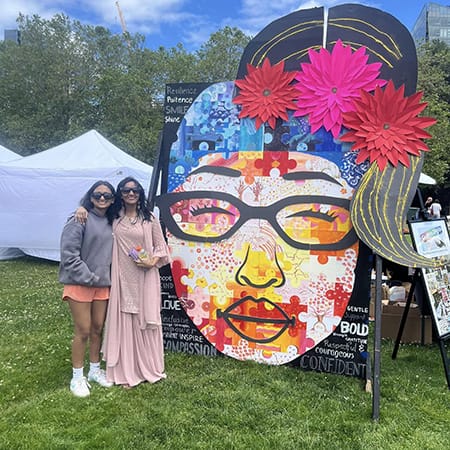
Mahika Bansal (LEFT) appears alongside a mural she created at a local fair. (courtesy Mahika Bansal)
What inspires you to volunteer?
I’m a very empathetic person, so I always see different opportunities to help the community around me. I see different people struggling, and I always want to make a difference in their lives by utilizing some of my talents and spreading those talents to others.
Tell us about your volunteer role with Create2Help.
I’m the founder of the organization. We intend to help the community by providing free painting classes for seniors in memory care units and women who have experienced physical abuse or homelessness. We also host different events, like art supply and food drives. The goal is helping the community and helping to give people the space to be creative without any other worries. My role really depends on what kind of event I’m intending to do next. So for example, in the past I’ve done a greeting card drive. So depending on what stage of the process I’m in, I might either create a form and advertise it to get people to donate greeting cards or I would talk to different organizations to potentially donate greeting cards to.
What inspired you to get started with this initiative?
Ever since I was young, I’ve always loved painting and cooking. Then during COVID, I had a lot of time on my hands and was creating a lot of paintings in my free time. I had a bunch of them just laying around in my house. I decided to create a fundraiser to sell my paintings, and I donated the money that I raised to Seattle Children’s Hospital. I thought that that was such a rewarding experience that I decided that I wanted to do more of that. I thought that it was such an amazing thing that I could use my painting talents to make a large impact in the community, so I decided to create Create2Help.
What have you learned through your experiences as a volunteer?
I’ve learned a lot of things throughout my journey, like organizing my time, talking to other people and learning to be very empathetic with others. Since I started when I was very young, learning that other people have a lot of struggles helped me shape my outlook on life.
Tell us about future partnerships, programs or events that you are excited about.
Something that I’m working on right now is continuing to work with The Sophia Way, an organization that helps women who have experienced homelessness and provides them with meals and shelter. I’ve been doing a lot of work with them. In the future, I’m planning on working on doing more impactful and larger events with them and I’m really excited about that.
Why is it important for others to get involved with causes they care about?
It’s always a good idea for people to use things that they are good at to help others. If you enjoy doing something, then why not use that talent to help others and spread that joy that you feel? Help because you want to help, not because you feel obligated to. I think that people should always try to find ways to be excited about helping others.
Any advice for people who want to start volunteering?
If someone wants to start volunteering, figure out in what way. There are so many different ways that someone can take a step forward and help their community. I think the first step is really figuring out how you want to help, what you’re passionate about, and what things you can bring forward to the community to help.
What do you want people to learn from your story?
I just really want people, especially younger women, to know that they are capable of helping others with their talents. I don’t want people to feel scared about using what they’re passionate about as an outlet to help people in their community. People who don’t think that they’re able to help the community should always find the confidence in themselves and understand that they have the ability to help others.
Youth Leader Champions a Greener Future for His Community and Beyond
Meet Daily Point of Light Award honoree Matthew Fischer. Read his story, and nominate an outstanding volunteer or family as a Daily Point of Light.
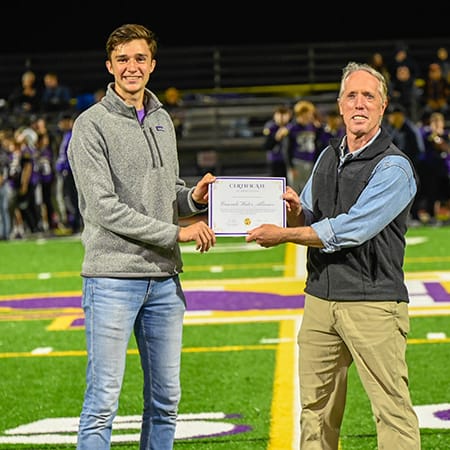
As a dedicated sustainability ambassador for both the City of Issaquah and the Issaquah School District, Matthew Fischer has contributed over 30 hours monthly since 2023, leading impactful environmental initiatives that inspire lasting change. One of his successful campaigns, “I Bike to School,” encouraged eco-friendly commuting, while “My School’s New Bottle Filler” promoted reusable alternatives through a partnership with the Cascade Water Alliance, securing $3,000 to install a bottle filler and distribute over 500 refillable bottles to students.
Matthew’s reach extends beyond his own school. Collaborating with the Issaquah School District Board, he has helped develop a district-wide sustainability policy backed by support from five city councils. His work with the district’s Facilities team on optimizing HVAC systems in 30 school buildings has cut each building’s energy use intensity by 20%, reducing the district’s overall energy footprint. He also contributed as a data analyst on a $1 million federal grant proposal, which aims to replace diesel school buses with electric alternatives, furthering carbon reduction efforts.
Serving as Student Body president at Issaquah High, Matthew initiated the ASB Student Government Sustainability Strategy, now implemented across 18 schools in Washington. This strategy targets key areas, including electrification, water conservation, zero-carbon commuting and waste reduction. These projects have collectively helped cities meet ambitious sustainability targets and increased environmental awareness among students. Read on to hear more about Matthew’s vision for a cleaner, more sustainable Washington State.
Matthew Fischer receiving certificate of assurance from Cascade Water Alliance for a $3,000 grant to install a new retrofitted bottle filler at Issaquah High School.
Tell us about your volunteer role.
As Student Body president at Issaquah High School and a volunteer sustainability ambassador, I’ve led several campaigns, such as Turn-Off-the-Lights Day (TOLD), My School’s New Bottle Filler and Zero Carbon Commute. For the new bottle filler project, I partnered with the Cascade Water Alliance to secure $3,000 in grants for a retrofitted bottle filler. In anticipation of this new station, I partnered with the nonprofit We Need Water to distribute over 500 refillable bottles. For TOLD, I have spread this campaign to eight other schools in Washington State, with the campaign happening for the second straight year.
Beyond the school level, I’ve worked closely with five city governments to gain support for the passage of a school district-based sustainability policy. Ultimately, I rallied a team that presented to the Issaquah School District school board and passed Operation Expectation 17: Sustainable Operations. Building off of the passage of this policy, I was a student draftee on a $650 million district bond including $300 million allocated for building modernization throughout the district. I have also worked with the district facilities team to optimize the HVAC systems at 30 school buildings, reducing energy use intensity (EUI) by 20%.
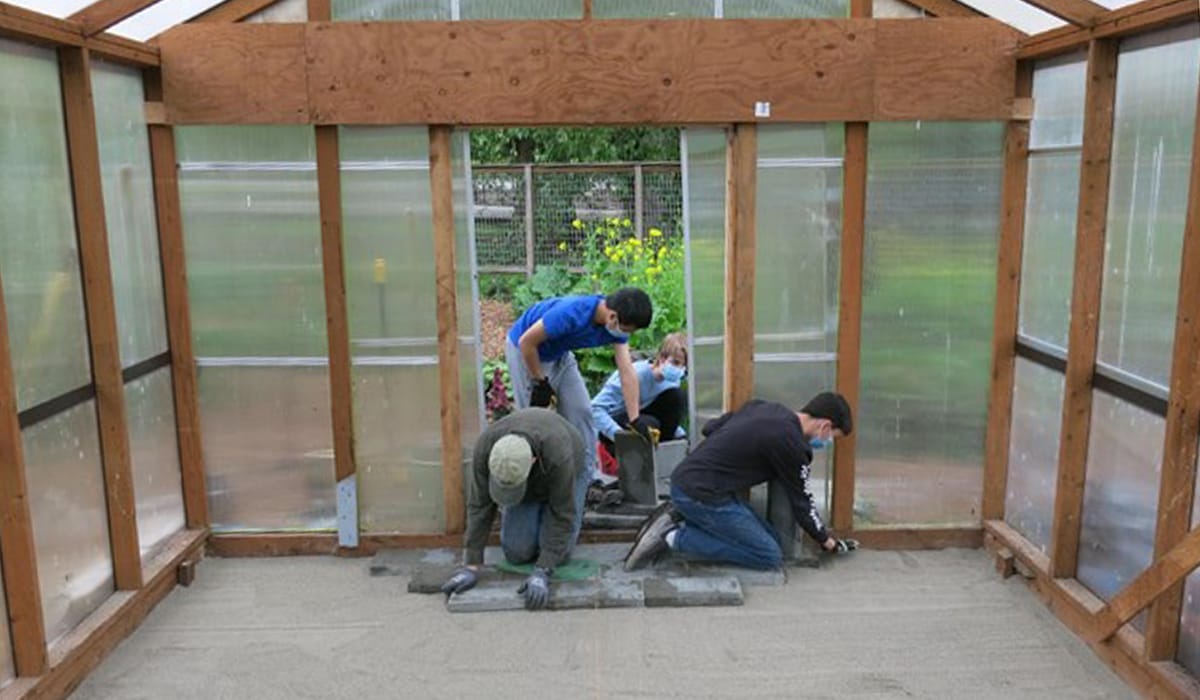
Additionally, for my Eagle Scout Project, I completely renovated a greenhouse at the Bellevue Urban Garden. Gathering a team of 20 scouts, we transformed the greenhouse from a rotting wood floor and rat-infested shelves to a mesh wiring protection under the floor with pavers on top and shelving built from reclaimed wooden pallets. This renovation doubled their capacity to grow food for local food banks.
What inspired you to get started with this initiative?
What inspired me to get involved was an unwavering belief that while one person can catalyze change, it takes a whole community to make a meaningful impact. Growing up, I was constantly exposed to the environmental challenges of my generation. I realized that ensuring a sustainable future started then, and it’s a continual process extending far beyond today. I saw that small steps could create lasting habits, and real solutions start at a local level building upward.
What are your long-term plans or goals for the organization?
I look forward to continuing as a volunteer sustainability ambassador in college initiatives wherever I attend college. I also plan on working closely with local city governments to further their sustainability goals like Climate Action Plans. Whether it be in Boy Scouts or ASB student government, I hope to continue my work leading physical service projects as well as behind-the-scenes advocacy
For ASB in particular, I hope to develop a comprehensive ASB sustainability strategy for schools across Washington State. Campaigns that I have instigated, like Turn-Off-the-Lights Day and Zero Carbon Commute, are fairly easy to replicate at each school, so I plan to work in close conjunction with other student leaders to implement this strategy as a new statewide basis for student government.
Matthew leading his Eagle Scout project to renovate a greenhouse at the Bellevue Urban Garden, doubling their capacity to support local food banks.
What’s been the most rewarding part of your work?
The most rewarding aspect of my work has been seeing the intersection of sustainability and service. In leading my Eagle Scout Project, I was able to reuse wooden pallets and other materials from Home Depot while drawing on my volunteer experience at a local garden to ultimately enhance their ability to support local food banks.
Seeing my work raising funds for the bottle filler at Issaquah High School result in students using it daily to have clean water and reduce their plastic water bottle usage was incredibly fulfilling. Advocating for a district sustainability policy and seeing the school board pass Operational Expectation 17 also felt meaningful. The district has to provide yearly monitoring reports on this governance expectation, so helping them develop sustainable practices while having legal accountability is truly encouraging.
Tell us about future partnerships, programs or events that you are excited about.
I’m particularly excited about a current ongoing effort in the Issaquah School District to secure grants for electric school buses. I am currently analyzing data for average bus route length and estimated carbon emission savings from transitioning diesel buses to electric buses. We are actively seeking around $1 million in grants from the Washington State Department of Ecology to subsidize the purchase of three full-size buses. Also, we are working with the U.S. Environmental Protection Agency to purchase an additional three full-size buses and three medium-size buses. Ultimately, I hope this project significantly reduces our carbon footprint while setting a model for other districts across the state.
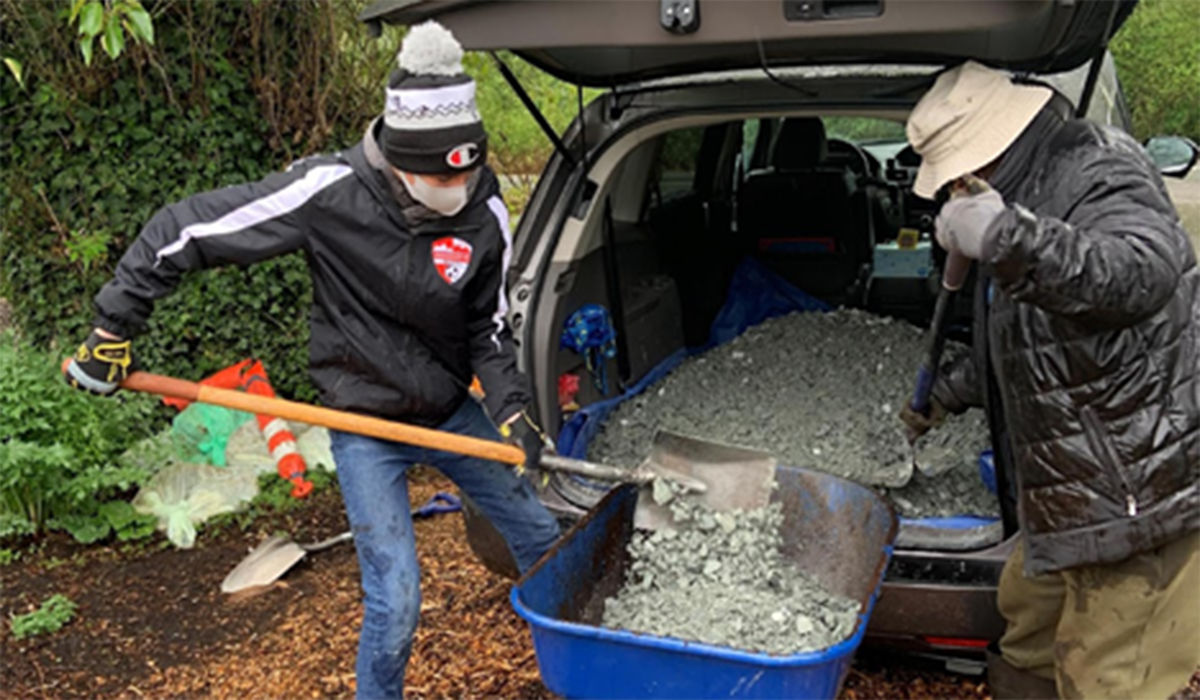
Matthew shoveling gravel with the Bellevue Urban Garden caretaker Maybin.
Why is it important for others to get involved with causes they care about?
I used to be the new kid that would be lost at events and unsure of what was going on, but I always maintained a heart of service. When I started to step into leadership roles, I began to explore service initiatives that align with my personal convictions. No matter what the cause is, when you are passionate about it, it creates a ripple effect of positive change. You never know who you could inspire to lead the next service initiative.
Any advice for people who want to start volunteering?
The hardest step is to start. I would encourage them to begin anywhere! No matter how small, whether it’s a new volunteer event or an existing initiative, just join in and see what happens. Your interests might change over time, but continually finding ways to involve yourself is the best way to make the biggest impact.
Lighting the Way Through Dedication to Minnesota’s State Parks
Meet Daily Point of Light Award honoree Bruce Gravelle. Read his story, and nominate an outstanding volunteer or family as a Daily Point of Light.
For nearly two decades, Bruce Gravelle has brought light and warmth to Minnesota’s state parks through his volunteer work with the state’s Department of Natural Resources. A big part of his service is helping with candlelight events held on winter trails, where he crafts hundreds of ice luminaries and recycles candles to create new ones each year. These luminous trails, enjoyed by children to grandparents and everyone in between, foster a unique winter experience, bringing joy—as well as an essential mental health boost during the colder months.
Each year, Bruce’s candle-making expertise results in 1,200 to 1,600 candles that he donates back to the parks, adding a cozy glow to these beloved events. Visitors often ask about his techniques, and he takes pride in sharing his knowledge, making these events even more memorable for attendees. His efforts have brightened thousands of winter nights for park visitors, enhancing the enjoyment and beauty of Minnesota’s state trails.
In addition to his work with candlelight events, Bruce’s skills as a certified National Archery in the Schools Program (NASP) instructor bring a different kind of excitement to Minnesota’s state parks. Throughout the summer and fall, he guides beginners and experienced archers alike in archery programs, building skills in both confidence and precision. Year-round, Bruce partners with park naturalists to support educational programs, and in winter, he helps facilitate ice fishing and snowshoeing. Averaging 15–20 volunteer hours a month, Bruce’s dedication enriches visitor experiences across all seasons.
Read on to hear how and why Bruce contributes his time and effort to light the way—quite literally—for countless parkgoers.
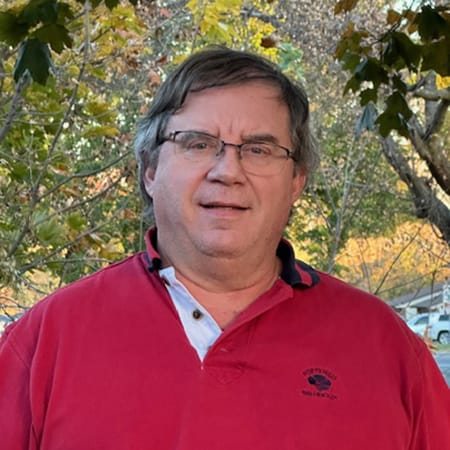
Bruce Gravelle has been volunteering with Minnesota’s state parks for almost two decades.
Tell us about your volunteer role.
I started volunteering after my mother-in-law saw an article about a program called Minnesota Master Naturalist about 19 years ago, and she thought I’d like it so I checked it out. As part of that program, you’re supposed to volunteer 40 hours a year for some organization. I selected the Minnesota Department of Natural Resources, and started at a state park because I knew the naturalists there from going to a lot of programs.
That’s how it started, and then it just built from there. I helped wherever I could. Later on, I got into being an archery instructor with the NASP, and it’s been really fun to see people from all backgrounds trying archery for the first time.
Another big project I do in the winter is the candlelight walks. I recycle and make all new candles that I donate back to the DNR, as well as ice luminaries to put them in, for the parks and their different events. That started as a Girl Scout project with my daughter, and I just continued on with it from there.
Why are you inspired toward this type of work in particular?
It brings people out to the parks. I can talk to them and show them different opportunities related to being outside. It also encouraged them to go to different parks that they normally wouldn’t, or have never been to. Some of these people have never experienced being away from city lights, so doing a night hike and seeing the stars—some people have never seen anything like that before. Or showing them how to ice fish… some people have never walked on frozen water. On the candlelight walks, they often don’t realize that the ice luminaries are real. I get to educate them on how to make them. It’s fun to see people getting so much enjoyment from being outside.
Why is it so important in today’s world for people to get outside?
People need to get away from being inside. When they get outside, they can see what nature offers. Seeing different types of things, being with people from all backgrounds, all having a good time. Not really caring who you are and where you’re from—seeing people with their dogs walking around, everyone is just enjoying themselves. It’s great to see. I enjoy being outside, so my volunteerism lends to my showing that enjoyment to others.
How long does it take you to make the luminaries?
Because it needs to get below freezing, it takes some time. Usually it takes about 24 hours, assuming the temperature is in the 20’s. If it gets too cold, they become big ice cubes!
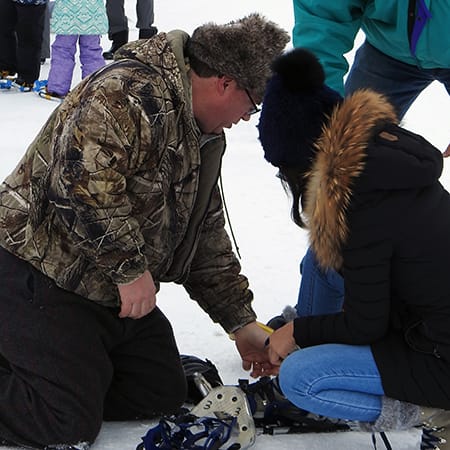
Bruce helping people put their snowshoes on before a walk.
What’s been the most rewarding part of your work?
The most rewarding part is seeing the thankfulness that comes from people, their gratitude for me as a volunteer. Showing them how to snowshoe, or being involved in a candlelight walk where there might be 800 to 3,000 people. The appreciation that I’m there to help put on that type of event, that’s a warm fuzzy appreciation feeling. And seeing people go from, “oh there’s an archery or a candlelight event at this state park this weekend,” and then I’ll give them a recommendation for another, and seeing them there too when I’m volunteering. It’s wonderful to see people at different places enjoying the outdoors.
I’ve met a lot of nice people from all over the state and country, doing volunteer activities. That’s been enjoyable, learning something from them or seeing something through their eyes. And I’ve had a great group of people I’ve volunteered with, who support my volunteering and don’t put a lot of pressure or demands on it, so that makes it enjoyable too. I like being part of the group.
Why is it important for others to get involved with causes they care about?
I think it becomes a release, offering a different type of activity you don’t get to do on a daily basis. It’s something different that you can enjoy and get satisfaction out of. It helps others in some way, and that’s important.
Any advice for people who want to start volunteering?
If you have a passion, or even a thought that you might like something, go talk to those people. You can make it as simple a commitment as you want or get as involved as you want. Have fun with it! Don’t make it a chore. Otherwise, find something else you do enjoy.