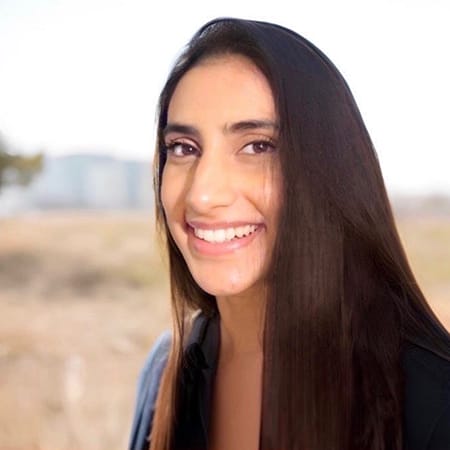
Meet Daily Point of Light Award honoree Emily Tauhert. Read her story, and nominate an outstanding volunteer or family as a Daily Point of Light.
Three years ago, amidst the covid pandemic, 17-year-old Emily Tauhert formed the Dallas chapter of The Food Lounge to address the housing and hunger crises by serving hot meals to as many people as possible. The organization, founded by Ethan Poon, came about as a way to support struggling restaurants while feeding people hit hardest when the virus kept everyone at home.
Emily spends around 24 hours a month planning events and serving food every Saturday. When she’s not organizing volunteers, Emily spends much of her time playing flute in concert band and serving as drum major of the marching band. She is also a passionate artist who takes classes both at school and outside of it. Inspired in part by her sister, she hopes to study business or economics after high school and is getting an introduction to running an organization serving as president of The Food Lounge.
What inspires you to volunteer?
When The Food Lounge was first created, their mission really spoke to me. I was one of the first members, and through COVID, I saw many people worrying about where their next meal would come from. I’ve never had to worry about that, and I want to help them as much as I can.
My dad also works for a nonprofit, so I’ve seen how impactful they can be. He works with a company based in LA that focuses on various humanitarian issues and hosts competitions where participants try to solve some of the world’s biggest problems. That first inspired me to get into volunteering, but now it’s seeing the amount of homelessness and food insecurity in Dallas that keeps me going.
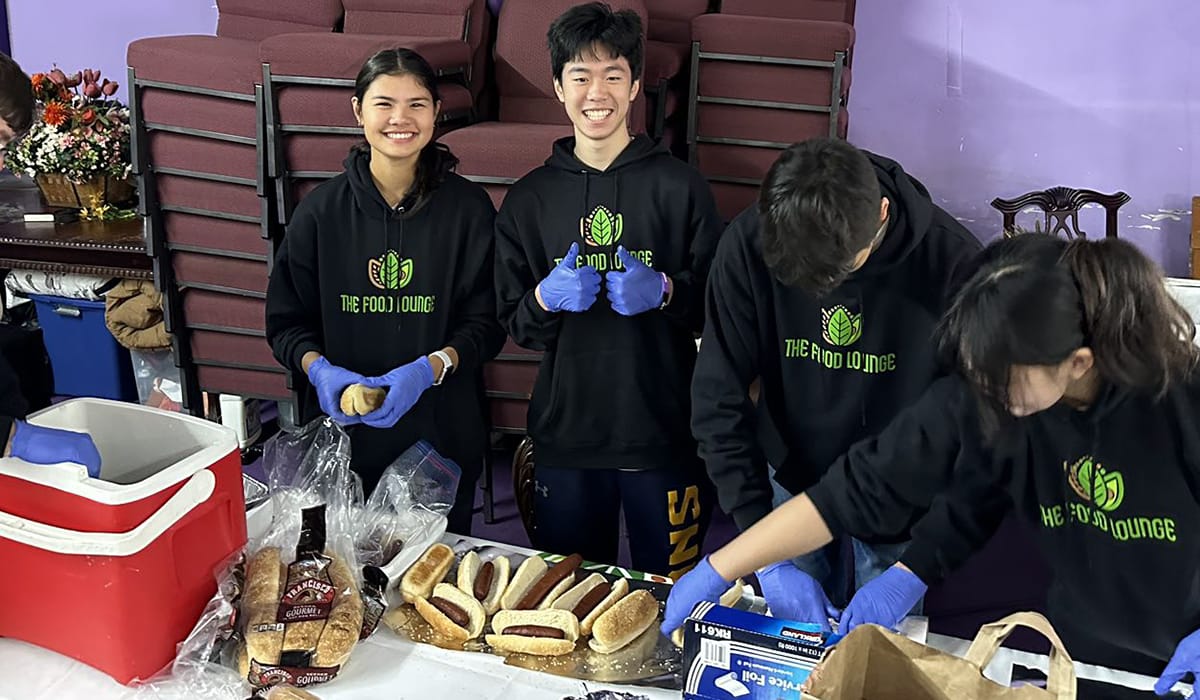
Emily (second from left) and her friends prepare hotdogs to give out./Courtesy Emily Tauhert
Tell us about your volunteer role with The Food Lounge.
Our goal is to serve as many people as possible with a hot, nutritious meal, which means a big portion of my time is spent strategizing how to do so. I’m in charge of running the 20-person Dallas leadership team. I manage our social media account and make sure everything’s working as well as reach out to potential partner organizations. I come up with new events and make sure the ones we implement run smoothly by ensuring we have all the materials needed, checking in with volunteers and addressing concerns that come up.
Our chapter has over 500 members from across the city who have collectively served around 400,000 meals since we started. We have people who, like me, go every week. But as we expand, we have new volunteers all the time. Some are as young as middle school and elementary school, which is a great way to instill our mission in leaders of the future.
You’ve raised $60,000. What kinds of things do you do to fundraise?
We get creative. Our chapter released a cookbook where volunteers wrote out the recipes for their favorite dishes and took pictures of the finished products. Then, the leadership team put it together. We’ve also made mosquito repellent to sell. One of our biggest events is in downtown Dallas where it’s hot and we’re on a big lot with a lot of bugs. We have a bunch of fundraisers where students will get together and create things that can be sold.
What’s been the most rewarding part of your work?
Seeing the smiles of people we are serving and how grateful they are to be given a nutritious meal. It reminds me of the impact our work has.
What have you learned through your experiences as a volunteer?
It’s important to be organized. As President, I also have to pick the leadership team. Finding good people that I can work with and trust to have The Food Lounge’s best interest in mind is vital. And I’ve learned all the little steps it takes to run an organization.
Have you discovered anything that you think the general population might overlook about people who are food insecure?
People assume certain things about the people that we’re serving. Just because they don’t have a meal in front of them doesn’t mean that they’re unhoused. It could just mean that they’re struggling to make ends meet, and I think it’s important to realize that. We’re serving everyone, no matter where they come from, and not judging someone for needing a meal.
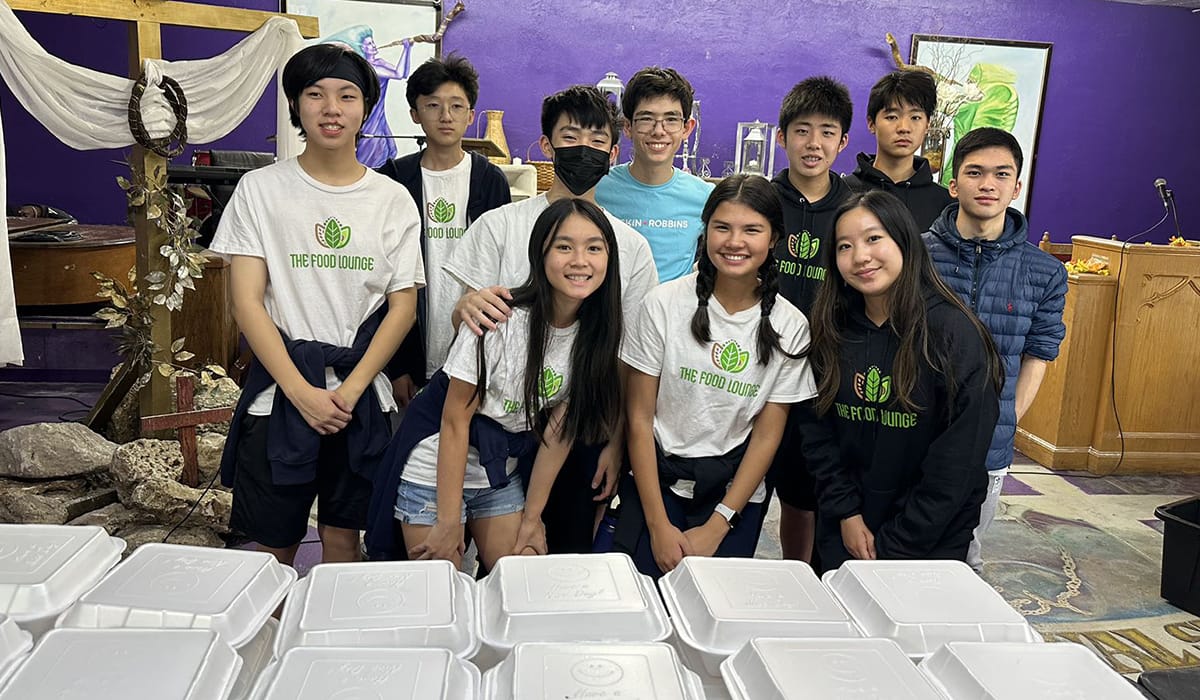
Emily (front, middle) and other members of The Food Lounge prepare to distribute packed hot meals to the Dallas community./Courtesy Emily Tauhert
Tell us about future partnerships, programs or events that you are excited about.
We do a yearly Christmas event where we partner with local restaurants we’ve supported from the beginning of The Food Lounge. They know our mission and donate hot food that we then pack into boxes to give to a local hospital. And we have a toy drive for all of the kids there.
We’ll also have a big event for Thanksgiving, serving food and distributing donated clothes. We started off dealing with food insecurity, but we’ve expanded. We host various donation drives and even hand out quarters so people can do laundry. Just because you have clothes doesn’t mean they’re getting washed.
As it gets colder, it’s even more important that people find a warm place to eat a meal and pick out some clothes and a jacket for the upcoming winter season. More people definitely come around this time of year.
How can people reading this take steps to address this issue where they live?
It all starts with a small idea. It could be reaching out to local restaurants or supermarkets who have leftover food. These items can be used and distributed in your community to help deal with food insecurity. A meal is a meal, and they’re a necessity.
What do you want people to learn from your story?
It’s important to do something you enjoy. The Food Lounge has brought me a lot of joy, and I continue to volunteer every week because I see my impact and the impact that the organization has had. Doing something that you have passion for means you’ll be willing to put in the work.
Turning Personal Crisis into Advocacy for Young Women’s Mental Health
Meet Daily Point of Light Award honoree Bob Clapp. Read his story, and nominate an outstanding volunteer or family as a Daily Point of Light.
When a family faces a mental health crisis, the world can feel like it’s falling apart. Bob Clapp understands this firsthand. After his daughter experienced such a crisis, he and his wife discovered The Charlton School, a therapeutic learning community for young women in Saratoga County, NY. This encounter sparked a deep commitment to ensuring other families have access to the same critical support.
“My daughter attended the school,” Bob shares. “She’s now 19, but back at 14, she had a pretty severe mental health crisis that led to multiple hospitalizations. Each place that was short-term would keep her safe, which was good, but the first time we were able to get adequate treatment was at The Charlton School. It’s incredibly scary to send your child two and a half hours away to be cared for by other people. But they do such a good job integrating families into their program that we immediately felt comfortable. Once she came back home from Charlton, she graduated high school and is now in college. I was so impressed with Charlton’s approach that I wanted to help out.”
Charlton provides 24-hour, wrap-around care for young women across New York state, utilizing a variety of therapeutic approaches. Recognizing the profound impact the school had on his family, Bob didn’t just say “thank you” – he took action.
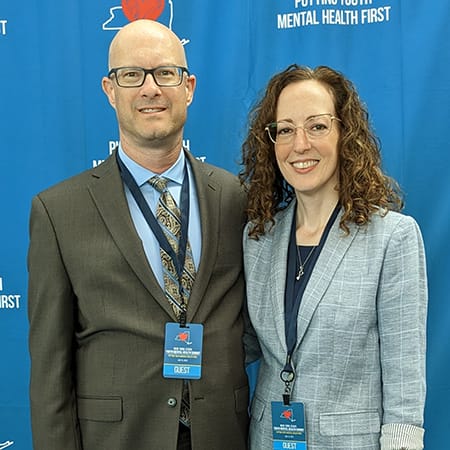
Bob representing Charlton at the NY State Youth Mental Health Summit.
“As part of their philanthropic outreach, my company, Regeneron, put on a program about how to serve on boards for nonprofits,” Bob says.
“That gave me a lot of answers to questions I had. After that, I took the plunge and called Charlton’s executive director. He was thinking of inviting me to join the board anyway, so it worked out beautifully.”
Today, Bob serves as a dedicated member of Charlton’s Board of Trustees and is the founding chair of their Advancement Committee. This committee plays a vital role in fundraising, advocacy and media relations, ensuring the school has the resources to continue its life-changing work.
“Not only did the school provide us with good service in a time of immense crisis for our family, but their executive director is very committed to improving the services they provide,” Bob explains. “A lot of people ask for constructive feedback but really want praise. If I raise issues with Charlton’s leadership team, they don’t make excuses or get defensive. They listen and they try to come up with ways to improve. I felt that if I was going to dedicate my time to coming up with suggestions or solutions, I wanted that to be received and acted on.”
Bob’s leadership has been instrumental in strengthening Charlton’s financial foundation. His efforts contributed to a remarkable 35% increase in annual fund contributions last year. He has personally sponsored matching campaigns that have generated over $100,000 in the past two years alone. This work has been crucial for the school, which is in the midst of expanding its outreach, building new dormitories and increasing funding so that as many young women as possible can get the care they need.
“When you’re in crisis mode, navigating the mental health system is difficult,” Bob reflects. “My daughter wouldn’t be alive without this type of care. Her mental health state was beyond my and my wife’s capability to keep her safe. We needed professional help. And the structure of Charlton, with that 24-hour wrap-around care, plus multiple therapeutic modalities, that’s what some kids need. I want to make sure other families in need have access to this level of support.”
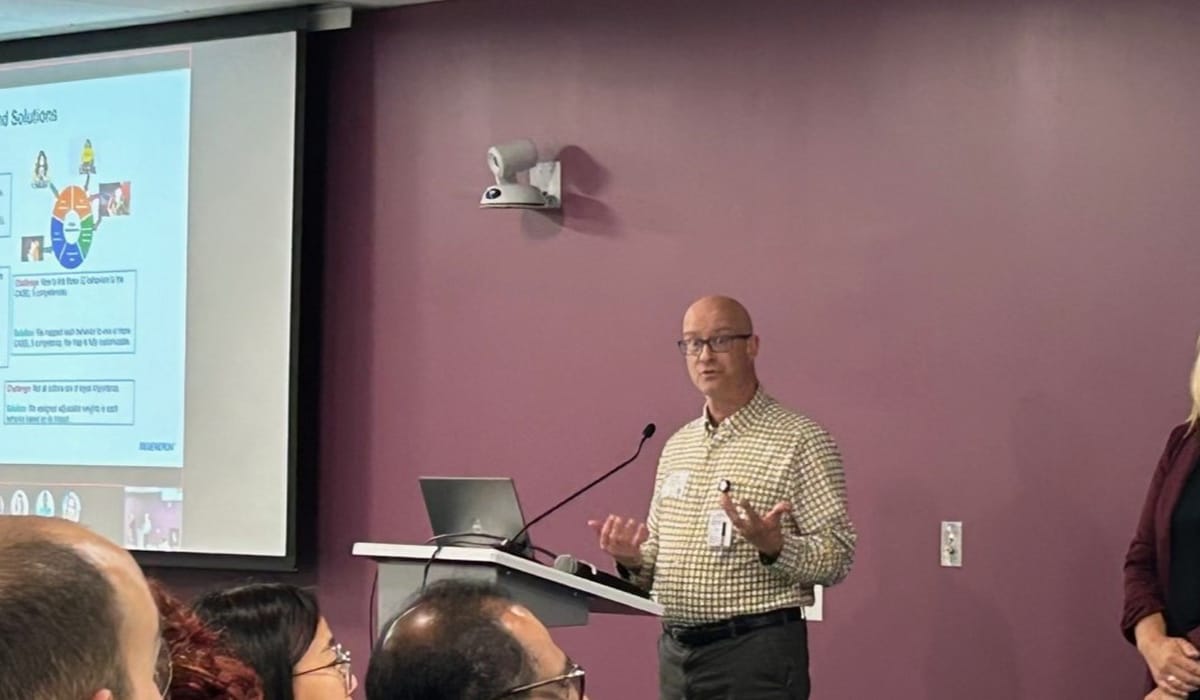
Bob presenting about a project for The Charlton School at Regeneron Pharmaceutical’s Using Data for Good closing ceremony.
Beyond his fundraising achievements, Bob actively participates in the Executive, Clinical & Educational, and Personnel Committees, demonstrating his commitment to every facet of the organization. He even served on ad-hoc committees focused on expanding digital payment processing and refining the volunteer recruitment process. Bob dedicates approximately 20 hours each month to The Charlton School, bolstered by his belief in their mission. His perspective has humanized the work of the agency, keeping them connected to the real people they serve, rather than getting lost in the numbers.
“I’m the first board member whose kid went to the school,” Bob says. “In some ways, I see the others helping out of the goodness of their own hearts, whereas I have some self-interest! But what I’ve found is that when I’ve had struggles firsthand in my life, I become more empathetic. And I think I’ve been able to offer perspective that the board needed, with my family having lived through the crisis firsthand.”
Bob’s story is an inspiring example of turning personal experience into positive action. He believes strongly in destigmatizing mental health struggles so that more youth can get help, and more lives can be saved.
“In a 2023 report, the CDC said that 53% of young women experience persistent feelings of sadness or hopelessness,” Bob says. “My kid’s not unusual; my kid’s the majority. Why do we have to pretend that’s not a thing?”
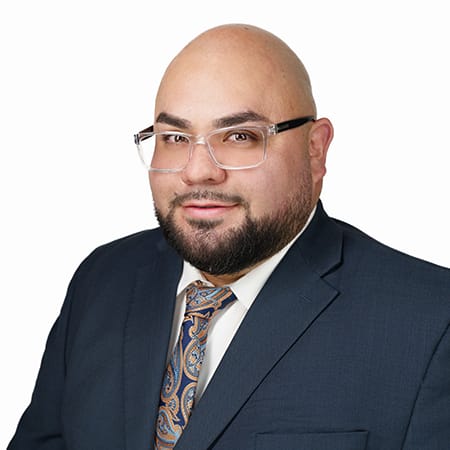
Meet Daily Point of Light Award honoree Luis Valdez. Read his story, and nominate an outstanding volunteer or family as a Daily Point of Light.
Luis Valdez is a resident and volunteer in the El Paso community in Texas. He has supported many community organizations, including several nonprofit organizations such as El Pasoans Fighting Hunger, the El Paso Center of Diabetes, the Underserved Communities Foundation and the Child Crisis Center of El Paso.
He considers himself newer to helping his community, but his impact has been monumental in such a short time. Overall, the El Paso community focuses on overall wellness for its residents, such as childhood cancer, vision screening, environmental health, diabetes, hunger and much more.
When Luis is not working his 9 to 5 job, he enjoys stepping out into his community and helping. His efforts have made a significant difference in the lives of many individuals in need.
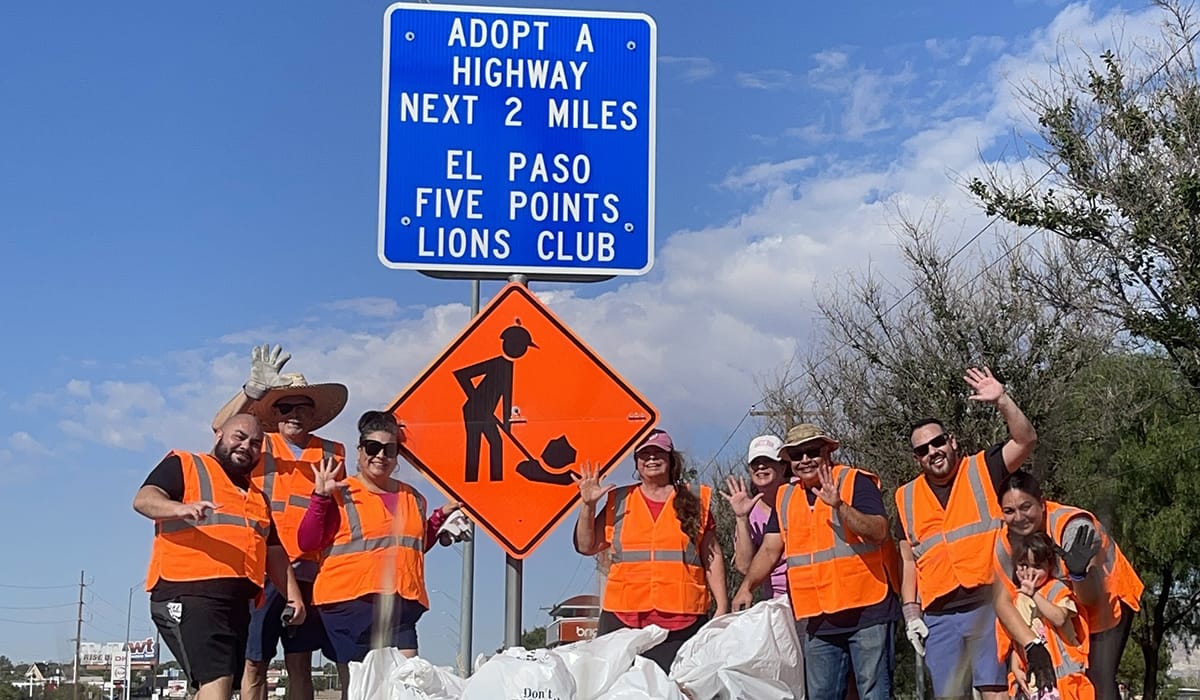
Luis volunteers 30 to 60 hours a month. In addition to working on several service projects, he serves as the treasurer for the El Paso Five Points Lions Club. He has also played an essential part in helping to raise $25,000 at El Paso’s Dinner in the Dark event. During this signature event, Luis demonstrated his commitment to making a positive impact by raising funds for his community. He has also successfully raised funds and helped receive donations of 100 new shoes for children.
Luis’ contribution to his community remains steady, and he hopes to continue doing more for many years.
Luis Valdez supports the El Paso community through various organizations. /Courtesy Luis Valdez
What inspires you to volunteer?
Being able to make a difference and impact somebody else’s life inspires me to volunteer. It can be the smallest act of active service, but its impact on someone’s life inspires me the most. There are many times when we can serve others for each other, and they may never know who helped or provided anything for them. But I will always remember that someone was there to do it.
Tell us about your volunteer role with the El Paso Five Points Lions Club and other community organizations.
Not only am I involved with the El Paso Lions Club, but I’m also involved in various nonprofit community organizations. One of them is the Cancer Center for Diabetes, which is very important to me because I have family members who were impacted by that disease.
I also saw the difference these organizations may make in the community. El Paso has a close-knit sense of community, and I was confident much could be done. I am a serial volunteer throughout the community.
What inspired you to get started with this initiative?
It’s important to me to volunteer. I’m a sustaining member and a volunteer with the Underserved Communities Foundation. The foundation is geared toward individuals exiting the foster system or who are unhoused. It helps equip them to be sustainable solutions through small portions of help. We do an apartment kit, which includes jackets for kids and much more. This allows us to fundraise and assist the communities with their fundraising events.
What are your long-term plans or goals for the organization?
I would like to grow with the organizations I volunteer with. I recently went back to school to finish my degree, so I sort of stepped back a little bit, but now that I have completed my degree, I feel I can make a more significant impact. I would love to be in a critical position or a key role. I don’t know exactly what that looks like, but I want to make a more significant difference in the community.
What’s been the most rewarding part of your work?
I enjoy being of service to others. I was in the funeral industry for 14 years. Recently, I was in economic development for the city for about a month and a half, and I had just started a new career in emergency management. So, my passion for serving others has always aligned with my career goals. And I know I helped a little bit to ease their burden and pain. Although I will probably never see them again, it’s very satisfying. They may not remember me, but it just makes me feel good inside that I was able to help them. It’s incredible to see how you can make an impact.
What have you learned through your experiences as a volunteer?
I’ve learned how much my community needs support. We never know what someone is experiencing. You can see someone and assume they are happy. You would never think that they’re struggling. Once you step into somebody else’s shoes and see the reality, it’s not always what they show on the outside. So, I learned to appreciate what I have and that I’m blessed to be able to help others.
Tell us about future partnerships, programs or events that you are excited about.
Coming up this weekend, we have a trunk event for kids with disabilities who may not be able to trick or treat. We have organized an event with locals, and we will pass out candy to these kids who may not have the opportunity to go somewhere. We’re providing it in a safe space where parents can come along.
We’re organizing a drive for children to raise funds and awareness for people with visual impairments and disabilities.
Luis Valdez (far left) and some El Paso community volunteers pose in front of their Five Points Lions Club sign. / Courtesy Luis Valdez
Why do others need to get involved with causes they care about?
If you have a community willing to help and step up when needed, it brings everyone closer. You never know what someone is going through, and you also never know the connections you can make. I think it’s essential because everyone will eventually age and lose their capability. We must raise a generation committed to volunteering.
Any advice for people who want to start volunteering?
I advise you to do it and get involved with what you can. And it doesn’t have to be a giant project or an organization. It can be small acts of service. You may never be recognized for it, and that’s okay, but knowing that you made a difference in somebody else’s life or within the community is the most rewarding thing to come out of community service.
What do you want people to learn from your story?
I would say that it’s never too late to get involved. I started volunteering through many organizations when I was in high school. I then saw the importance of lending my hand, which led me to get involved in the community. I saw the need in my community, which opened my eyes to realize that I should volunteer if I can.
Painting a Better Future: Artist Donates Profits and Skills to Others
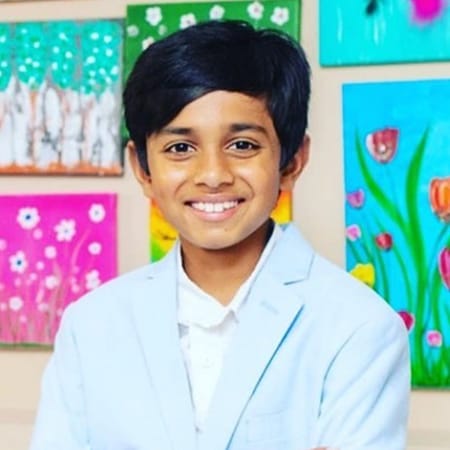
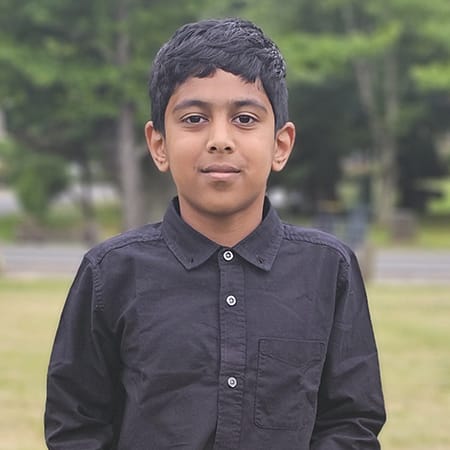
Meet Daily Point of Light Award honoree Arsh Pal. Read his story, and nominate an outstanding volunteer or family as a Daily Point of Light.
Being a kid is a time for discovering activities you enjoy. Arsh Pal, now a high school freshman, tried instruments and sports before painting caught his attention. When he was 8 years old, his parents bought him art supplies, and art has captivated him ever since. Inspired by his mother’s work at a nursing home, he also decided to use his newfound passion to help others. Arsh has raised and donated more than $22,000 to nonprofits like St. Jude Children’s Research Hospital through Art with Arsh, the organization through which he sells his paintings.
His work has caught the attention of the national press and earned him multiple honors which have only increased his visibility. Aside from accepting offers to do live paintings for auction, Arsh volunteers to teach lessons to seniors in nursing homes and offers them at a low cost to kids, particularly those with emotional and psychological challenges.
While mainly working with acrylics, he studies different techniques and hopes to explore other mediums. As might be expected in this high-tech era, his own knowledge comes not from school but from home with the help of his mom and YouTube. They enjoy learning together. He also attends lessons with a teacher who runs a private art studio and serves as a board member for the Loukoumi Foundation.
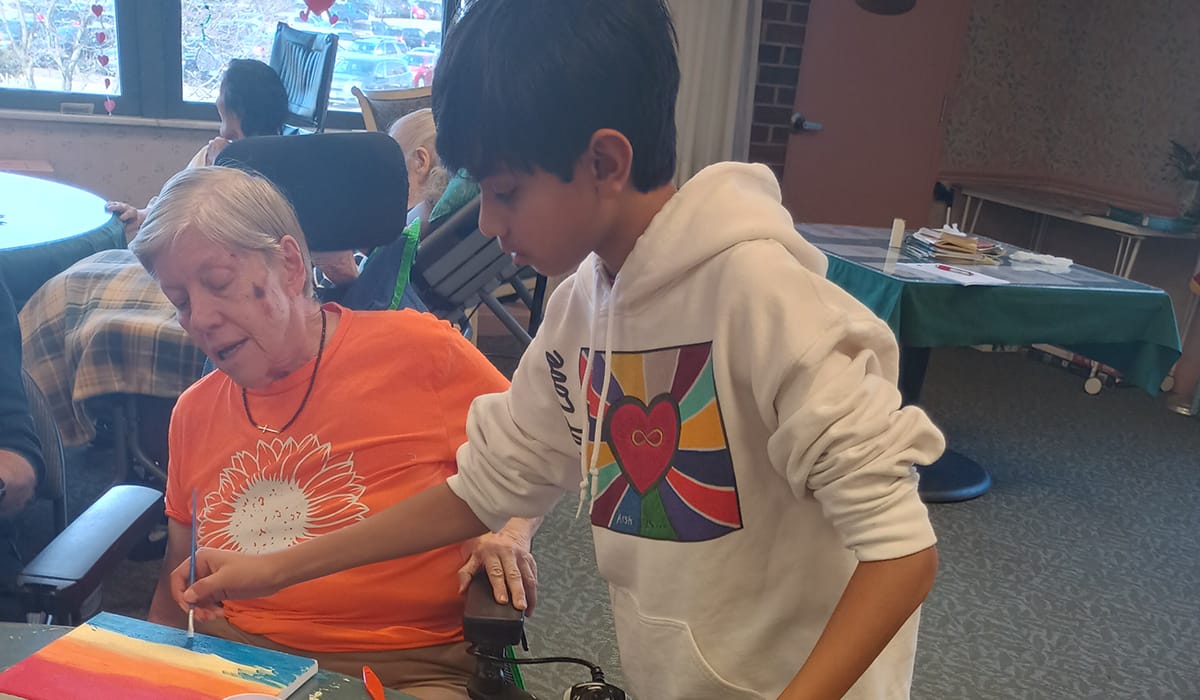
Painter and founder of Art by Arsh, Arsh Pal, raises money for nonprofits by selling his art and teaches painting lessons to nursing home residents and children living with emotional and psychological issues.
What inspires you to volunteer?
I used to go with my mom to her work on days off school. She works at a nursing home as an occupational therapist. I used to talk to residents and see how they were in pain. They were lonely, because not many people would come to see them.
Sharing stories with them made me smile. It made me want to help people. I decided to sell my artwork. The first piece I sold was to my piano teacher for around $15. From there, I had an opportunity to sell my artwork at my school.
St. Jude was my first charity. My family and I were looking at different places I could donate to, and their story inspired me. They run on 100% donations. They’re helping fight cancer, and there are a lot of kids who are diagnosed with that. Because I was a kid at the time, I wanted to help them. So, I donated my first $1,000 to St Jude.
Tell us about your volunteer role with Art by Arsh.
A lot of events and companies holding fundraisers reach out to me to do a live painting, because that’s kind of what I’m kind of good at. I do mostly live paintings or, sometimes, I make a painting and auction it off. That’s the role that I play at events I’m involved in.
When I was 8, I went to work with my mom. The nursing home residents there don’t have many activities to do, so we decided to set up my first painting class. A lot of residents came, because I was such a young kid and they were surprised by that. But they really enjoyed the class and kept coming back. We got to know each other, and it was really fun. I continue to offer classes, and today, my brother helps me out a lot, too.
He likes to come with me and talk to the residents.
How do you see art being therapeutic or helpful to the populations you serve?
I’ve heard a lot that art is healing, so I can help people out mentally. People can be creative. You can do pretty much whatever you want with art. You can’t go wrong. There’s nobody telling you that it’s bad.
What are your long-term plans or goals for the organization?
One of my goals is to make art lessons more affordable for kids. I’m mainly focused on kids living with mental or emotional challenges.
What do you do as a board member for the Loukoumi Foundation?
The Loukoumi Foundation teaches young people how to help the community. We all each have our individual projects throughout the year, ending on the international Loukoumi Good Deed Day. We come together to see how much money we raised and how much we helped in the community. I’ve been doing it for the last two or three years.
What’s been the most rewarding part of your work?
I’m able to create art and help someone with it. That’s the most rewarding thing and the thing that motivates me the most. Also, as a Loukoumi Foundation board member, I’ve been able to reach out to more people about my story and how they can help, because I have worldwide connections. I’ve met a lot of new people and inspired others to start helping out.
What have you learned through your experiences as a volunteer?
You can use your time and your skills to help somebody. It doesn’t have to be something huge, like donating a million dollars. It can be any act of kindness, as simple as holding a door for someone or helping them with homework. It could be anything. Making someone’s day or making someone smile is what’s important.
Arsh works on a live painting for a fundraising event.
Tell us about future partnerships, programs or events that you are excited about.
I recently moved to Illinois from a small town in Iowa. Next week, I have a fundraiser for the YMCA in Iowa. I went last year as well and did a live painting that sold for $150. I’m doing the same thing this year. It’s a really fun experience; I get to meet a lot of new people.
Why is it important for others to get involved with causes they care about?
It’s important to help out the community, so we can inspire the whole world to be kind.
Any advice for people who want to start volunteering?
Invest your time in things that you like to do and start from there. You can use your time and skills to help in the community.
Empowering Young Adults with Autism to Enter the Workforce
Meet Daily Point of Light Award honoree Anushka Chauhan. Read her story, and nominate an outstanding volunteer or family as a Daily Point of Light.
Anushka Chauhan locked down her passion and interest in education at a young age. When her parents moved the family from India to the United States in 2002, it was in pursuit of better educational opportunities. In the present day, Anushka wants to return the favor– making sure everyone has the same chance to get an education that leads to fulfilling career goals.
Unfortunately, the path to professional success is harder for some people. An advocate for marginalized communities, Anushka started her volunteer journey in 2021 as a career coach at the UCLA PEERS Clinic, where she works with young adults with autism spectrum disorder (ASD) or those who are neurodiverse. There, she has worked with over 45 young adults to deliver social skills training to support their chances of obtaining and maintaining employment.
In addition to her face-to-face role with clients, Anushka works as a data analyst to analyze more than 180 clients’ career outcomes from the program. From every perspective, Anushka hopes to make the path to steady employment easier for under-valued communities to navigate.
A discussion with Anushka will reveal that she doesn’t feel as if she’s doing anything particularly unusual by assisting these young adults in finding their professional calling. In fact, she says her volunteer work ultimately feels entirely “natural.” Anushka’s devotion to working with the young adults at PEERS is a testament to how helping others achieve their goals ultimately helps us all.
Anushka Chauhan works with young adults with autism spectrum disorder at the UCLA PEERS Clinic, helping them develop skills to retain employment. /Coutesy: Anushka Chauhan
What inspires you to volunteer?
From a young age, I’ve always been really passionate about expanding educational opportunities to individuals from under-served communities. My parents moved my family to a town south of where I’d grown up and our school started to experience more budget cuts. When I joined my new school, I definitely noticed how much larger the literacy gap between the two towns was. So I’d say that expanding educational opportunities is something that I grew up really caring about.
Tell us about your volunteer role with the UCLA PEERS Clinic.
We have a few different cohorts, but I’ve been particularly drawn to the careers cohort since I’ve always been passionate about the intersection between education and serving under-resourced communities. I provide support with resume writing, cover letters, mock interviews and the job application process to help them develop skills to retain employment.
I’ve also served as a senior research assistant at the clinic, where I analyze the effectiveness of our intervention to better determine the outcomes for research purposes. For example, if there is a certain process or social skills training that we provide, and I notice that we need to make some modifications to it, then I’ll go ahead and pass that along to the team to better support the community.
What inspired you to get started with this initiative?
During COVID, less interaction made it difficult for so many folks educationally, particularly the ASD community. The disruption of routine leads to less personalized support from teachers, fewer social interactions and more sensory overload from technology. There also isn’t a lot of educational support tailored to young adults with ASD. PEERS is one of the few evidence-based clinics to open up the gates for accessibility, so I jumped at the opportunity to join when it became safer to volunteer. It’s honestly been one of the best decisions I’ve made.
What’s been the most rewarding part of your work?
I’d say the most rewarding part is seeing our young adults lock down internships and new jobs. For example, it was really amazing to see the confidence develop in one young adult that I was doing a mock interview with. I’m just really grateful to be a part of the process and help them achieve their career aspirations and goals. It brings me a lot of joy and fulfillment. And I’m just really grateful to be a part of a team, as well.
What have you learned through your experiences as a volunteer?
I’ve found that volunteering where I can specifically focus on supporting others and their career goals is the most fulfilling. I’ve honestly just been blessed to witness the growth of our young adults professionally, and it’s followed outside of the clinic, as well. I’ve had a lot of satisfaction in being able to be part of this role. I think what I’ve come to realize is how much of a difference a small but positive exchange can completely alter someone’s trajectory.
Why is it important for others to get involved with causes they care about?
It’s important to volunteer because it really strengthens our communities. Being able to connect on a human-to-human level builds trust, empathy and kindness. It brings all walks of life together and really helps to establish a common ground. It also builds traction around various social movements.
Any advice for people who want to start volunteering?
You kind of have to go into it headfirst. Find something that you’re interested in. You can just sign up for a few shifts at your local food bank or tutoring service. Start off with that and see if you enjoy it and if it brings you fulfillment. When you see the effect, that’s what makes the difference. Whether or not it’s in a field that you had prior interest in, seeing the fulfillment and seeing the change that you’re bringing is what keeps people volunteering.
What do you want people to learn from your story?
I want people to know that expanding opportunities to other communities doesn’t take away resources from another. At the end of the day, we’re all one. The most powerful tool we have is empowering each other and if we can continuously lift each other up and support one another in an academic or professional environment, it’s going to build a healthier learning environment and make us stronger together.
I’m really lucky to have attended UCLA, where the culture was incredibly inclusive. I hope that other universities follow in creating these safe spaces for underserved communities and inspire individuals to start conversations around creating inclusive workplace practices that ensure neurodiverse folks have the tools to succeed professionally.
Meet Daily Point of Light Award honoree Aniketh Aldandi. Read his story, and nominate an outstanding volunteer or family as a Daily Point of Light.
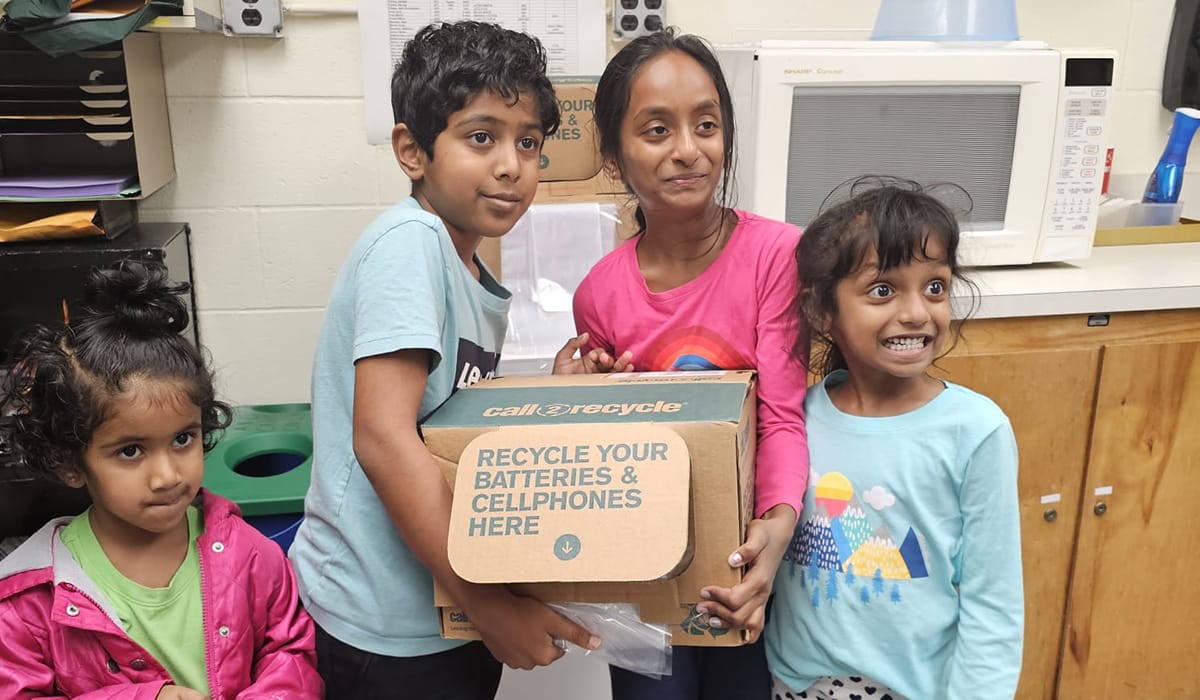
Aniketh Reddy Aldandi, a passionate 10-year-old, has been volunteering for over two years to help protect the environment. His efforts in raising awareness about battery recycling have inspired many in his community. Aniketh has recycled more than 10,000 batteries, spreading the message about environmental conservation in libraries, schools and public spaces. His dedication earned him the Guinness World Record for the longest line of batteries and the prestigious President’s Volunteer Service Award (Gold). Through community drives and awareness campaigns, Aniketh continues to inspire others to join his mission.
In addition to his environmental work, Aniketh also volunteers with other organizations, contributing to food and clothing donations and sponsoring education for underserved students. His leadership has motivated both kids and adults alike to get involved and take action in making the world a greener place. His efforts have been recognized by local leaders, including mayors and senators in New Jersey, who have applauded his commitment to the environment.
Aniketh is passionate about recycling batteries to help protect the environment and combat pollution.
As a member of the Recycle My Battery (RMB) organization, Aniketh continues to lead battery recycling initiatives by placing collection bins in schools, libraries and community centers. His work has not only made a significant environmental impact but has also fostered a culture of responsibility and sustainability within his community.
Tell us about your volunteer role.
Every year, I volunteer for about 80 hours. I place battery bins in schools, libraries and community centers. I also conduct battery drives in communities. We communicate with local leaders, like mayors, to raise awareness about recycling and help the earth.
What happens when batteries are not recycled?
Unrecycled batteries can cause wildfires. Also, the chemicals can leech into the water, and small fish can eat those, and then big fish eat those small fish, and then we eat those fish, and this becomes a chain.
What inspired you to get started with this initiative?
I got involved with the nonprofit about two years ago. My mom introduced me to this organization.
What’s been the most rewarding part of your work?
We broke the Guiness Book World Record, for making the longest line of used batteries, which was about 31,204 batteries. We were at Woodbridge Elementary School in their gym. This was a very rewarding moment.
Aniketh placing a battery bin in his sister’s Montessori school.
What have you learned through your experiences as a volunteer?
I learned that while adults are still part of the organization, the organization itself is run by kids. I feel that if they could do it, we can do it!
Why is it important for others to get involved with causes they care about?
I think volunteering will help save more batteries from going into the garbage and leaking into the sea. When I first joined this, I felt it was a big organization, but I slowly learned about other organizations that kids had started, which was very inspiring. I’m looking forward to publishing a book in the future!
Any advice for people who want to start volunteering?
Just do it – don’t think about anything else. Just think about what you can do to help.
It’s About More Than Money: Financial Guidance After Foster Care
Meet Daily Point of Light Award honoree Todd Devin. Read his story, and nominate an outstanding volunteer or family as a Daily Point of Light.
Young adults with foster care experience often miss out on the guidance that other people receive as they grow up. But with Todd Devin just a phone or Zoom call away, several have found the support they need.
Todd is a volunteer with the Selfless Love Foundation, which leverages resources, expertise and proven solutions to improve the child welfare system. One aspect of their work is to assist foster youth as they transition into adulthood. Whether they’re applying for a job or setting up a savings account, Todd uses his experience as a private wealth advisor to provide guidance when it comes to various topics relating to financial literacy.
While the principles of personal finance are the foundation of Todd’s guidance, they’re often a launch pad for so much more. In time, many of Todd’s mentees learn valuable skills related to starting a career and building life-long goals. His monthly calls with his mentees delve into managing issues that range from how to buy their first car to navigating complex relationships in the workplace.
By simply picking up his mentees’ phone calls for a few hours a month, Todd provides a sense of stability in lives that have likely faced issues ranging from homelessness and abuse to parental loss and constant upheaval. His dedication to the cause positively impacts young adults on a daily basis.
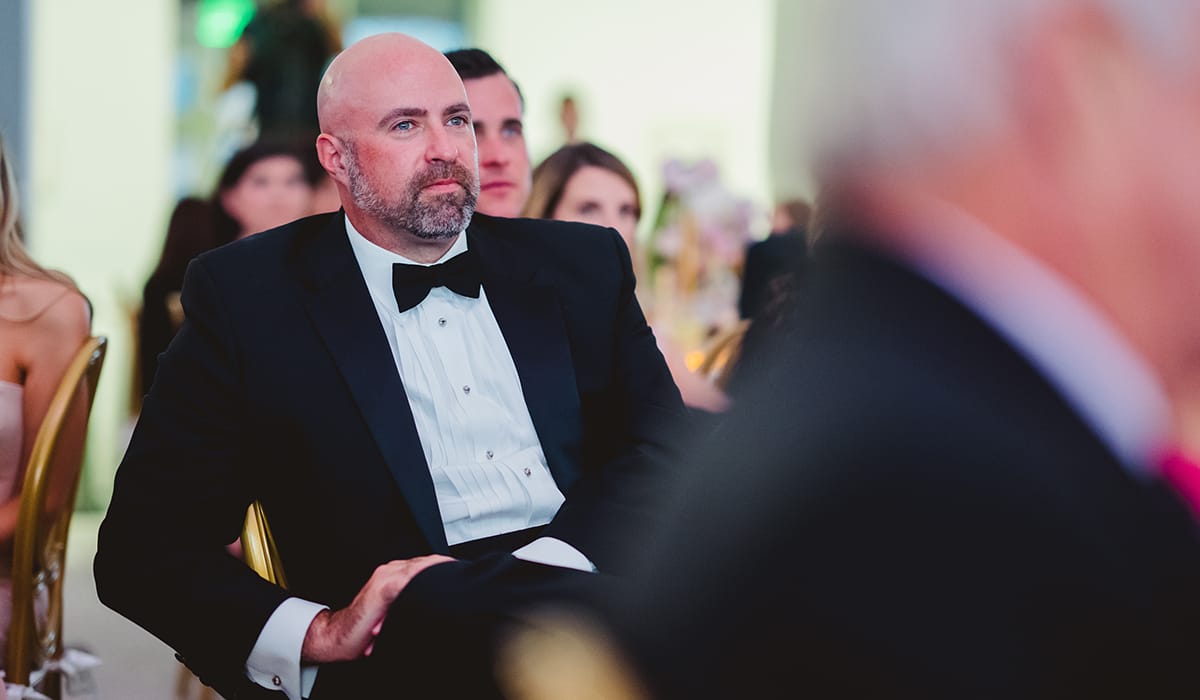
Todd Devin, a volunteer with the Selfless Love Foundation, looks on while celebrating the organization at their gala. (Courtesy Todd Devin)
What inspires you to volunteer?
The young adults I work with are just such remarkable people, and the honor and privilege to interact with a very small percentage of youth that have gone through what they’ve gone through and come out the other side and just want better lives for themselves and those around them is just so inspiring.
Tell us about your volunteer role with the Selfless Love Organization.
I’ve worked with four young people in a variety of different capacities since 2017. Many times, it begins with just the financial aspect. That’s one of the things they’re more interested in, and then it expands into things that ultimately relate to their relationship to money, like jobs, housing and cars. I’m not their therapist. I’m not anything else. I am simply there to give them some thoughts and education around what they’re doing when it comes to money. It’s really just building a belief system in them that they can build to the point where they can be financially independent.
What inspired you to get started with this initiative?
I think it’s important to note that this was not a population or a cause or a mission that I was personally tied to my life. I just attended an event and knew some people that were throwing the event. But I listened and I learned, and it just struck something in me. Because of my background in personal finance and wealth management, I was initially asked to help one of the young adults deal with a financial issue. That developed into my first mentorship, which still is ongoing now, three years later.
What’s been the most rewarding part of your work?
When something significant happens in their life that’s good. Maybe they get a job or they get accepted into a school program that they weren’t sure they should even apply for, but I encouraged them to have faith in themselves. Maybe they bought their first car. It’s just awesome. It really is such a fantastic feeling. They did it. It’s their work. But to know that I played some small part is probably the most rewarding aspect.
What have you learned through your experiences as a volunteer?
Understanding the challenges that this group of people has to deal with was something that I just never could have fathomed. I don’t get into a lot of the really heavy stuff with them, but it’s there. I know it’s there. Many people who have gone through the foster care system have experienced abuse. And for most of them, it’s every type of abuse a human can have. That is absolutely something that I was unaware of. The flip side of that is to watch them come out of this and see the triumph the human spirit can have, despite all of these challenges.
Todd Devin (second from right) smiles with friends and colleagues. (Courtesy Todd Devin)
Why is it important for others to get involved with causes they care about?
I think we need to be part of the solution. Whatever that solution looks like, we need to be a part of it. And the best way to be part of it is to just give. Give our time, and become part of that solution, not just advocate for it, but to be part of that solution. And the only way we can really do that is action. And that action is called volunteerism.
Any advice for people who want to start volunteering?
My suggestion would be to just reach out to an organization. Trust me, they’ll find a use for you. Don’t go in with any preconceived notions of what you’re going to be doing. What they’re going to be looking for is to use skills you already have. It’s not like you’re going to have to learn a ton of new skills to be useful. They’re going to find a way. If you’re a carpenter, they’re going to find a way to use you to build. If you’re an accountant, they’re going to find a way to use those skills to be able to help the accounting side.
What do you want people to learn from your story?
There might be hesitation because we’re all so busy. But for me, it’s a couple of hours a month. If there’s any more than that, it’s because I want it to be. The time commitment can be as little or as much as you want. Don’t be scared of how much time it’s going to take or that you’re not ready. Just jump in. An hour a couple times a month could mean the world to an organization or the people whose lives you touch.
Meet Daily Point of Light Award honoree Doris Miller. Read her story, and nominate an outstanding volunteer or family as a Daily Point of Light.
It’s not often that one is in a position to see the ripple effects of the important decisions they make in their life. For Doris Miller, 71, and her late husband, adopting her two daughters after the loss of their biological son was simply a way to build their family. For their younger daughter, Ashley, it was a decision that changed everything.
In 2015, Ashley and her husband started the Selfless Love Foundation (SLF) dedicated to improving the child welfare system through advocacy, the creation of more adoption opportunities and transitional housing and training for older kids nearing independence.
“She knows where all these children are coming from, how they feel, and she feels so blessed to have been adopted,” Doris says proudly.
“Then you have these children that are never adopted. She’s trying to change a lot of that stuff, especially for the older children.”
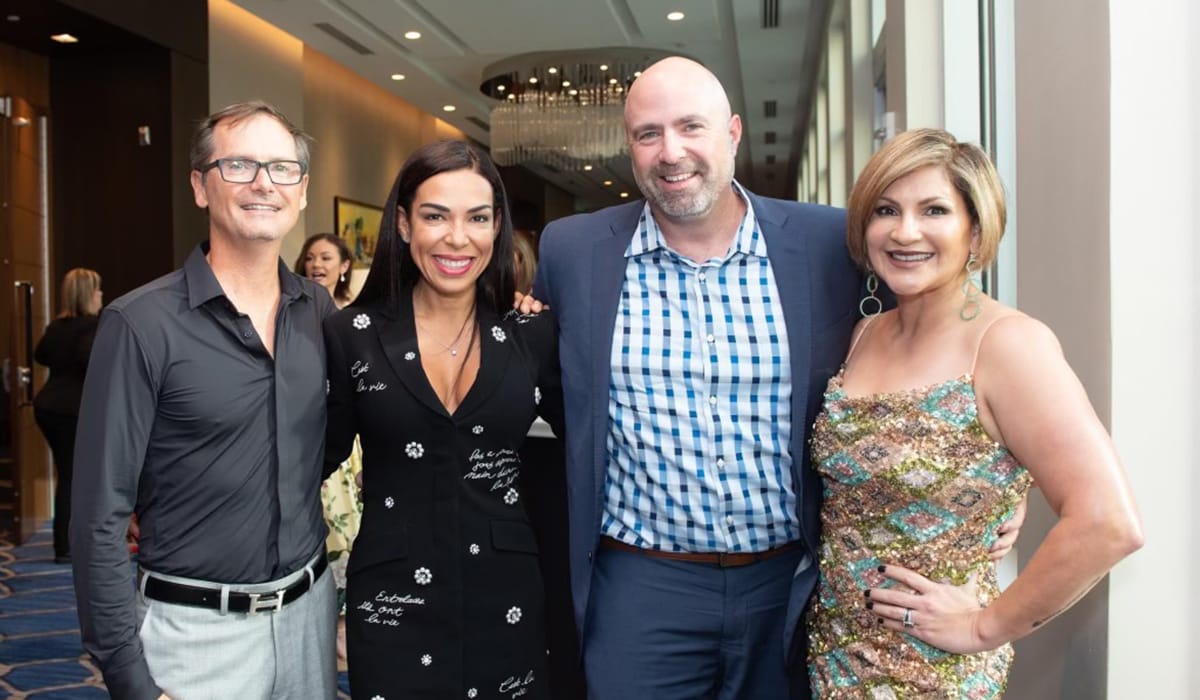
Doris, naturally, is Ashley’s number one volunteer. Her legendary cakes are top-selling items at the yearly fundraising gala, where the organization raised a record-breaking $3.8 million last year. Even the first year raked in over $2 million.
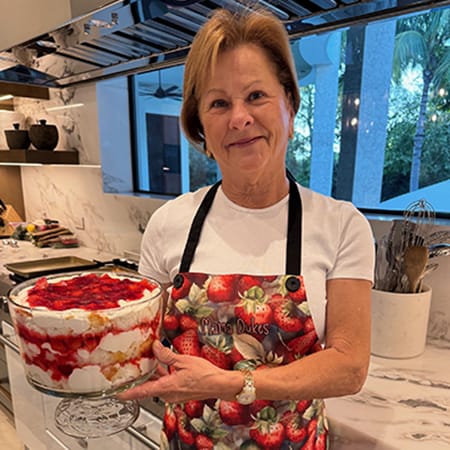
Doris makes one of her famous homemade cakes for Selfless Love’s Gala.
“When my girls were growing up, they were in 4H and everybody would always want me to bake cakes or casseroles. Everyone loved my dessert, so we just started baking some cakes for the foundation,” she says, emphasizing the joy it brings her to both make them and see people enjoying them.
Funds are used to keep things running and to support adoptions. An entire team of people, including psychologists, works to match prospective parents with two or three children who would be a good fit before allowing them to meet. And the service is completely free.
“It takes year-round efforts to make it possible. Doris has done everything from helping pack swag bags to hitting the road to pick up and deliver auction items, whether it’s picking up from a donor or delivering it to the winner. She also makes her own asks and gets some auction items donated,” says Stephanie Absmeier, senior development director and the foundation’s first employee.
For kids 18 to 23 years old who have aged out of the system but aren’t ready to live on their own, SLF takes applications for Brown’s Harbor’s 20 apartments. Doris put her career in interior decorating to work to make transitional living feel like home.
“She’s done everything from decorating the apartments to being there for their holiday events. We have a boutique with household items and business and daily clothing that residents can shop for free. It’s this beautiful space where they can get essentials. And Doris has helped in that space,” Stephanie explains.
The property also invites speakers to present and has on-site foster parents who check in on residents and organize holiday celebrations.
“Once they are adopted or they come into Browns Harbor, their whole life changes. They teach those children how to interview, dress and prep for everything in their future. There are usually five of them that compete every year for funds to open up their own business,” Doris highlights, citing different SLF programs. “A lot of times children who don’t find a place like this are unhoused within a couple of years.”
Just recently, Doris was wrapping some of the over 500 annually-released Christmas ornaments for one of several fundraisers scheduled throughout the year. Other tasks in her purview range from packing and distributing holiday gifts for former foster youth to assisting at photo shoots that reunite sibling groups separated in the system. Next on her schedule is meeting the team in the new office in Austin, Texas.
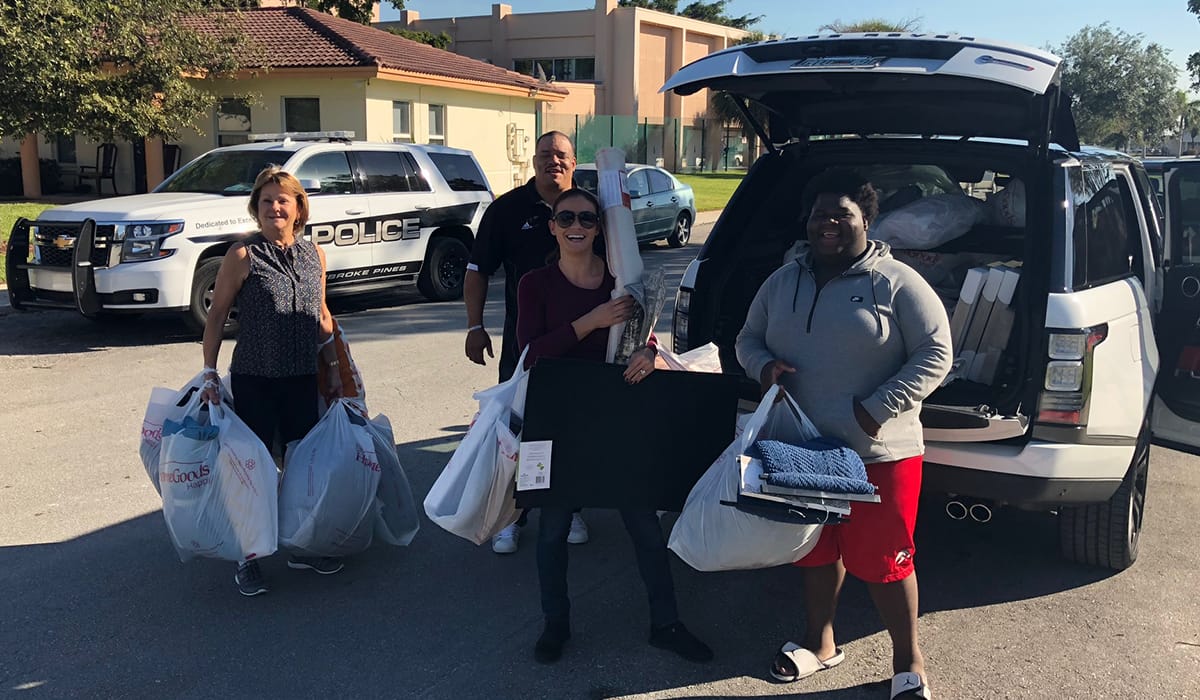
(Left to right) Doris, a Brown’s Harbor team member, Ashley and a resident unpack items to decorate the Brown’s Harbor apartments.
Next month is National Adoption Month, and Doris is reminded of the importance of her work. SLF has assisted with more than 400 adoptions by streamlining the process.
“It’s just so heartwarming to see how you can make all these children happy by finding them homes,” she says. “You can go to the courts and sit in and watch them be adopted. If you’ve never done it, just go one time. It’s an amazing feeling.”
She reflects on how her decision to adopt has changed the course of many lives. The ripples continue, for example, when former Brown’s Harbor residents come back to help their younger brethren. It’s their joyful smiles and deep gratitude that stick with Doris the most.
“Without that act of love from Ashley’s parents, one of them being Doris, I don’t know if Selfless Love would be here,” Stephanie muses. “Doris has just really supported the organization and Ashley in whatever has been needed.”
Sadly, not all cases are smooth sailing. Sometimes siblings are split up. Sometimes there are foster parents who treat kids poorly or use the designated funds inappropriately. And cases of abuse are prevalent. But with the work of SLF and people like Doris, siblings can reunite or perhaps stay together from the beginning. Safe, secure environments can heal. And with a little hard work and luck, lives can be forever altered when families are chosen.
Doris’ dedication stems from more than just her family’s own story. The way she looks at the world motivates her to support the people around her.
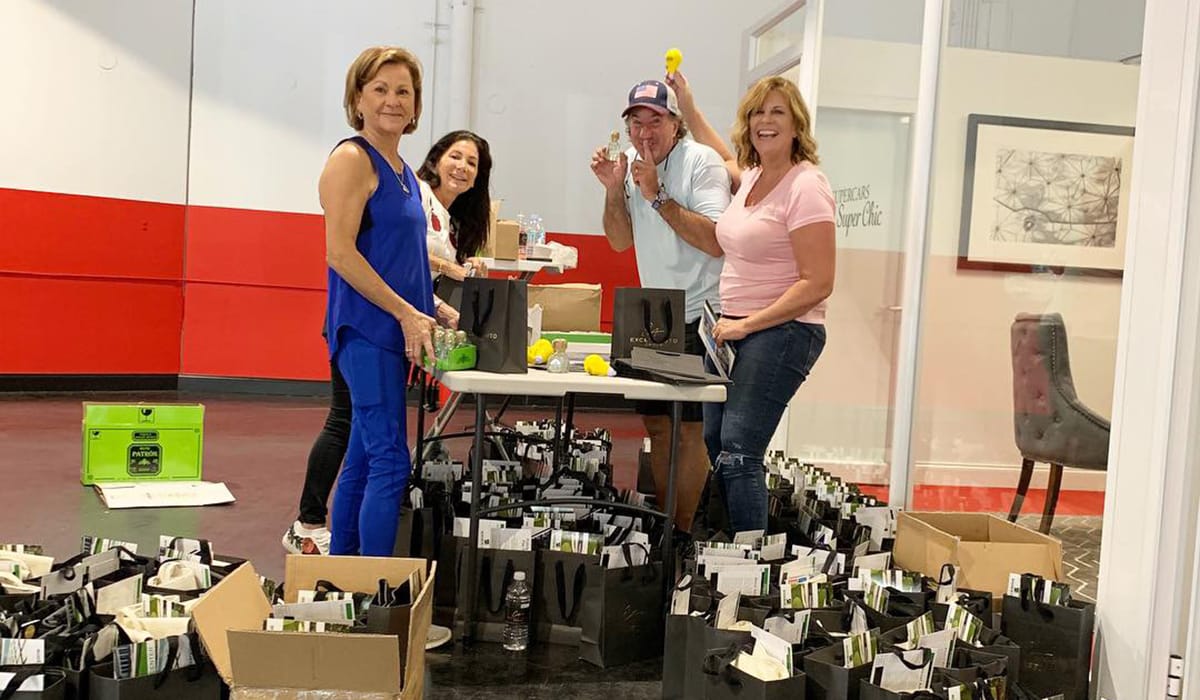
Doris (left) joins Selfless Love staff and volunteers to pack swag bags with for an event.
“What would happen to people if we didn’t have these organizations? A big example of that is the hurricane victims right now in the Carolinas and Georgia. If they didn’t have people with good hearts going up there, where would they be?” she contemplates.
Today, a decade into retirement, Doris and her new husband live in the middle of a 159-acre ranch in Florida, with more land 2.5 times that size a few miles away.
When she’s not volunteering at Selfless Love, she enjoys spending time in her garden and helping out her community in other ways.
“I think Selfless Love is extra special given that it’s a part of her family and the legacy of her own daughter. But beyond that, I think she is equally as passionate about the importance of community and supporting one another,” Stephanie concludes. “That in itself, whenever you see somebody who has nothing to gain from doing that, is inspiring.”
Mental Health Advocate Pushes for Reform and Education
Meet Daily Point of Light Award honoree Vandana Ramanathan. Read her story, and nominate an outstanding volunteer or family as a Daily Point of Light.
Seventeen-year-old Vandana Ramanthan is only a senior in high school, but has already recognized the power the government and advocacy have to affect change. Her dedication to civics moved her to start the Youth Civic Network where she works alongside 10 peers across the U.S. to create a database that empowers young people to engage with local politics. She also serves as the Minnesota director and associate director of training for Spring Group, a youth-led think tank that focuses on research and policy reform.
As a member of both her school’s speech and debate teams, her ability to present an argument and move people to action has led her to competitions across the country. She credits her participation for the discovery of her passion for policy advocacy and the resulting nonprofit, the Youth Equity Project.
A year and a half ago, along with co-founder Aadya Pandey, Vandana created the organization to build more mental health resources within schools and fighting for bills and policies that expand access to treatment. With 50+ executive members across the US, the organization has raised $10,000 to conduct research and host workshops, and they have reached 80,000 people on social media. Vandana’s work has earned her the Gold Presidential Volunteer Service Award and helped influence 18+ policy initiatives Youth Equity Project has introduced or supported, from the local to the national level.
What inspires you to volunteer?
I’ve experienced my own mental health struggles, but I didn’t realize how common it was amongst youth until I got more involved with advocacy. I also saw the inequality surrounding things like people getting treatment and the large demographic disparity.
I come from a South Asian culture in which mental health isn’t prioritized. It’s considered more of a weakness, and that really influenced the way that I viewed myself as I wrestled with it. In high school, I noticed people struggling to get the treatment they needed because of the stigma surrounding it. That led me to found my nonprofit, to turn that initial anger about this into tangible change.
Tell us about your volunteer role with the Youth Equity Project.
I focus on outreach, and my co-founder focuses on the internal aspects of the organization. My day-to-day involves recruiting people and working with policymakers. I also handle administrative tasks, like seeking partnerships.
A large part of my time is spent in the capital giving speeches and testifying for specific pieces of legislation. We also conduct state- and nationwide surveys and research to gather data and to gage the importance of an issue. I consolidate all of that and find ways to boost our visibility, so we can make sure mental health issues are prioritized both politically and socially. We often work with other organizations to host workshops for students to educate them on things like how mental health works and how to seek resources.
You’ve fought for several historic bills. Could tell me about some that are important to you?
One of the biggest bills last year provided broader mental health services in schools and implemented co-located service options where a mental health provider has an office in a school where students can seek treatment.
One of my favorites we’re introducing this year is an initiative for a peer struggle identification unit. It would add a unit to standardized health curriculums nationwide that would teach students to identify things like suicidal ideation and mental health issues.
Another one we’re working on is to enforce mental health standards in the health curriculum. It’s similar to the previous one, except this creates a mandate on what needs to be taught. Right now, in Minnesota, there are zero requirements. I hope we can pass a bill that makes it mandatory to teach about specific mental health issues. A change as simple as talking about it in educational environments could help youth take that step to pursue treatment.
What are your long-term plans or goals for the organization?
Right now, our biggest goal is to increase our social media presence. We also want to create an app to connect individuals seeking mental health treatment with pro bono therapy options and peer support groups. One of the biggest problems I’ve seen from our surveys and speaking with people is that there are resources out there, but nobody really knows about them. And if they do, they don’t know or feel uncomfortable with how they work. We want to educate them about what they are.
Another goal is to coordinate more mental health education workshops for youth. And finally, we’re creating a program that will put mental health care packages in schools across Minnesota and the country to boost resource awareness. These boxes include resource pamphlets and items for mental health like stress balls and journals.
What’s been the most rewarding part of your work?
This is a long-standing issue that has really only been talked about for a few decades now. There have been amazing reforms, but there’s still a lot of work to be done. I’m just glad that I can even be a small part of that change. Seeing my peers being more open about mental health is the best part of all of this, because destigmatizing it is really hard. It means a lot when my peers tell me my words or actions have made a positive impact on their life.
What have you learned through your experiences as a volunteer?
I used to think you didn’t really directly impact the lives of other people as a volunteer, but that is simply not true. It makes me excited to help my community, knowing that even if it’s a small difference, it’s a difference. And that difference eventually adds up. The same is true of voting.
What do you want people to learn from your story?
Making change, especially when it comes to mental health, isn’t easy. It can be very difficult to challenge norms. Something as small as giving somebody a smile or inviting them to sit down at lunch makes a difference. I encourage others to be more vulnerable with the topic. It’s a step that could potentially impact others’ lives as much as your own.
Meet Daily Point of Light Award honoree Lynn Lyons. Read her story, and nominate an outstanding volunteer or family as a Daily Point of Light.
Lynn Lyons volunteers at Toledo Zoo and Aquarium. After 26 years and 12,941 hours of service, Lynn continues to find her time spent educating guests rewarding. She enjoys teaching guests about animals and sharing her love for animals throughout the zoo.
Lynn has been a day captain for years and enjoys training new volunteers. She serves as a representative for the Association of Zoo and Aquarium Docents and Volunteers. In the past, she has planned and helped host the National Conference in 2022, which attracted 125 attendees from around the country.
She finds joy in finding new ways to get people involved with animals and helping Toledo Zoo and Aquarium.
What inspires you to volunteer?
My inspiration comes from my love for animals and my desire to educate people about them, particularly their status or plight in the wild and how we can help to save them.
Tell us about your volunteer role with Toledo Zoo & Aquarium.
We are called Zoo Ed. We’re adult education volunteers. So, my role is to talk to people and showcase exhibits about the animals. I’m not a trained educator, so I don’t teach classes or anything like that. But I can help out in other areas. In the past, I had also helped out with the elephant and gorilla keepers. I also did data for the registrar of the zoo. That was several years ago now. And I always tell people it’s the best thing I ever did for myself.
What are your long-term plans or goals for the organization?
Eventually, if I retire, I will spend more time there. Currently, I’m just there on Saturdays and Sundays.
What’s been the most rewarding part of your work?
I’ve had some great experiences over the years. I saw our first baby elephant 21 years ago. I sat briefly with him when the keepers were busy with his mother. I had a less-than-ten-day-old baby elephant taking a nap with his head in my lap. I’ve also gotten to hand-raise a baby gorilla and one baby orangutan.
What have you learned through your experiences as a volunteer?
I’ve learned a lot about animals. I realized I loved them more than I knew when I entered the industry 26 years ago. But I have also learned that people do have a passion for animals. I like to hear stories about the animals, their names, their ages and a little personalization.
Tell us about future partnerships, programs or events that you are excited about.
On the 26th, we have our annual pumpkin stomp and chomp, where all the elephants and animals get pumpkins in different forms. It’s interesting to see how the animals react to different parties and the pumpkins that they get. Some will step on them and break them open. Some will just put the whole thing in their mouths.
We also have our annual trick-or-treating with the kids, so we hand out candy to the kids, and it’s a safe environment for them.
Why should others get involved with causes they care about?
It’s very rewarding.
We have many conservation programs, and one of them is a sturgeon release, which is coming up on Saturday. You pay to have the sturgeon microchipped, and then if it’s ever caught out in Lake Erie or the Miami River, that data will come back to you as an owner and let you know that your sturgeon is still alive. That’s a very rewarding conservation program.
Any advice for people who want to start volunteering?
Do it! Whatever your passion is, whatever is important to you, volunteering is very rewarding.
What do you want people to learn from your story?
I cannot express how rewarding it has been for me. It has opened up a whole new world to me. I have developed some of the strongest friendships in my life. We travel and share our passions, which is a lot of fun. It’s perfect.