Sports and Sweets Help a California Teen Foster Inclusivity
Meet Daily Point of Light Award honoree Aditya Nagapudi Read his story, and nominate an outstanding volunteer or family as a Daily Point of Light.
Aditya Nagapudi doesn’t have much of a sweet tooth, but the 17-year-old high school student knows the rest of us do. As a volunteer for over three years with the Special Olympics Northern California, Aditya sees the power of promoting inclusivity on and off the field. A huge basketball and football fan, he wanted to combine his love of athletics with his desire to volunteer.
So Aditya took on the role of coach and unified partner with the Special Olympics athletes, drawing up plays and showing the athletes how to run the routes on the basketball court and football field. His work as a unified partner means Aditya can also participate in the games, helping the athletes get a better understanding of the plays he teaches them as a coach.
But Aditya’s creativity doesn’t stop at writing plays for the athletes to enjoy on the field. Inspired to help the Special Olympics Northern California raise funds to continue their work to promote inclusion and empower children and adults with intellectual disabilities, Aditya had a great idea sparked by his parents’ love of sweets. A dedicated athlete focused more on spending time in the gym than eating treats, Aditya wanted to make delicious snacks that are both satisfying in flavor, but have some healthy ingredients to boost their nutritional value. He created AdChoc, a company that combines decadent chocolate from Belgium with vitamin-packed mix-ins like almonds and quinoa. Whether he’s melting down the chocolate himself or packaging a shipment to send to a hungry customer, Aditya’s business smarts created a new and exciting way to raise funds for the Special Olympics.
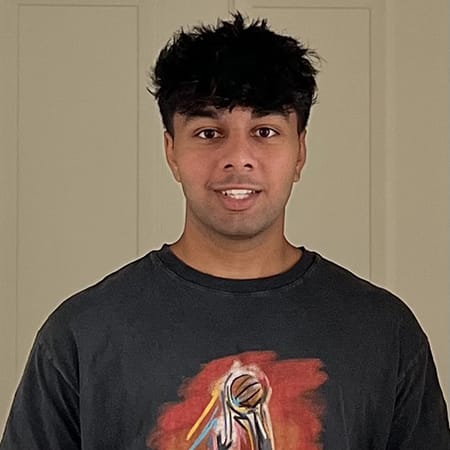
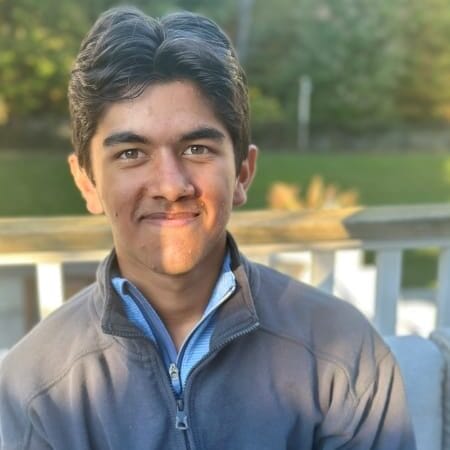
Aditya Nagapudi is a volunteer with Special Olympics Northern California and the creator of AdChoc, a chocolate company that raises funds for the organization. (Courtesy Aditya Nagapudi)
Tell us about your volunteer role with the Special Olympics Northern California.
I’m a coach and unified partner. As the coach, I draw plays for them and show them how to run the plays and routes in basketball and football. I help them with the plays and do certain drills to cater to their needs. A unified partner means that I can also play with them on the field. For example, I could be the quarterback for the football team and throw to the players.
Over my time with the Special Olympics organization, I learned that they were in need of funds. I started an organization called Ad Choc, which is pretty much just me adding healthy mix-ins to chocolate and selling them to people, with all the proceeds going to the Special Olympics. This is me melting the chocolate that’s imported from Belgium and adding healthy mix-ins and packaging them in order to raise funds for the organization.
How did you come up with the idea to sell sweets for the Special Olympics? Do you have a huge sweet tooth?
My parents have a pretty big sweet tooth, and I realized that there’s probably a lot of demand for chocolate because a lot of other people do too. I’m big into working out and going to the gym, so I wanted to try to add some healthy mix-ins to it in order to make it as nutritious as possible. So I put in stuff like quinoa and corn flakes, which would make it somewhat healthy while also making the taste appealing to people.
What are your long-term plans or goals for the organization??
I want to continue this business to keep raising funds for the organization. I think in the long run, I’m going to try new recipes that will cater to the needs of the people around the world. I think one mistake I’m making right now is that I’m delivering it within my city in California. I want to try to make it more on a global level. That way, it will have more reach and in turn lead to me being able to make more money for the Special Olympics.
What’s been the most rewarding part of your work?
I’ve worked with this organization for over three years, and I’ve gotten to know all the people there very well. I’ve had a special connection with each person there. The most important part of my work is that I’m able to help them, and that will lead to the organization being able to flourish a little bit more.
What have you learned through your experiences as a volunteer?
One thing I’ve noticed there is each and every single person there is always happy to be there. They all come to practice ready to go. They all like to just have fun. That really changed me a lot. Just going there when I’m having a bad day, and seeing everyone’s face made my day to be there too. I really did learn how to be more optimistic and live life to the fullest.
Why is it important for others to get involved with causes they care about?
I think the main reason to get involved with a cause that you care about is because you want to make a change. I think if you really care about it deeply, you’ll be more inclined to want to make that change. In turn, making the change will not only benefit you, but it’ll benefit the community as a whole.
Any advice for people who want to start volunteering?
Starting anywhere helps. I think the first thing is honing in on who you truly want to help. From there it’ll be a lot easier, because if you have a community you really care about, you will want to do more research to find ways to actually help them. So I think first is just figuring out the community you want to help, and from there, taking the necessary steps to help them.
What do you want people to learn from your story?
I want others to realize that it’s important to help others, instead of just focusing on your own desires. I think it’s very important to foster inclusivity and promote the well-being of others, and that’s why I also like working with the Special Olympics organization. Everyone there is coming to practice. They all want to have fun, and being a part of that truly changed me.
Youth Leader Raising Youth Leaders for Big Community Impact
Meet Daily Point of Light Award honoree Rylee Kamahele. Read her story, and nominate an outstanding volunteer or family as a Daily Point of Light.
Rylee Brooke Kamahele is a 16-year-old trailblazer from the island of Oahu. From the time she was young, Rylee has always displayed a gift for leading others – especially youth – into action. This is exactly why she founded The Catalyst’s Club: to unite youth in driving meaningful social change.
Under Rylee’s leadership, this organization now manages eight separate, youth-led organizations, each designed to empower young people to become agents of change in their communities. Through diverse initiatives, The Catalyst’s Club has mobilized countless volunteers, proving that youth can harness their energy and passion and indeed be a powerful force for good.
“The Catalyst’s Club is an umbrella nonprofit organization with the mission to create and provide youth with opportunities to be catalysts for change that creates positive impact on the world,” Rylee says. “With eight other organizations running under it, separately and individually, we have a total of 37 programs altogether.”
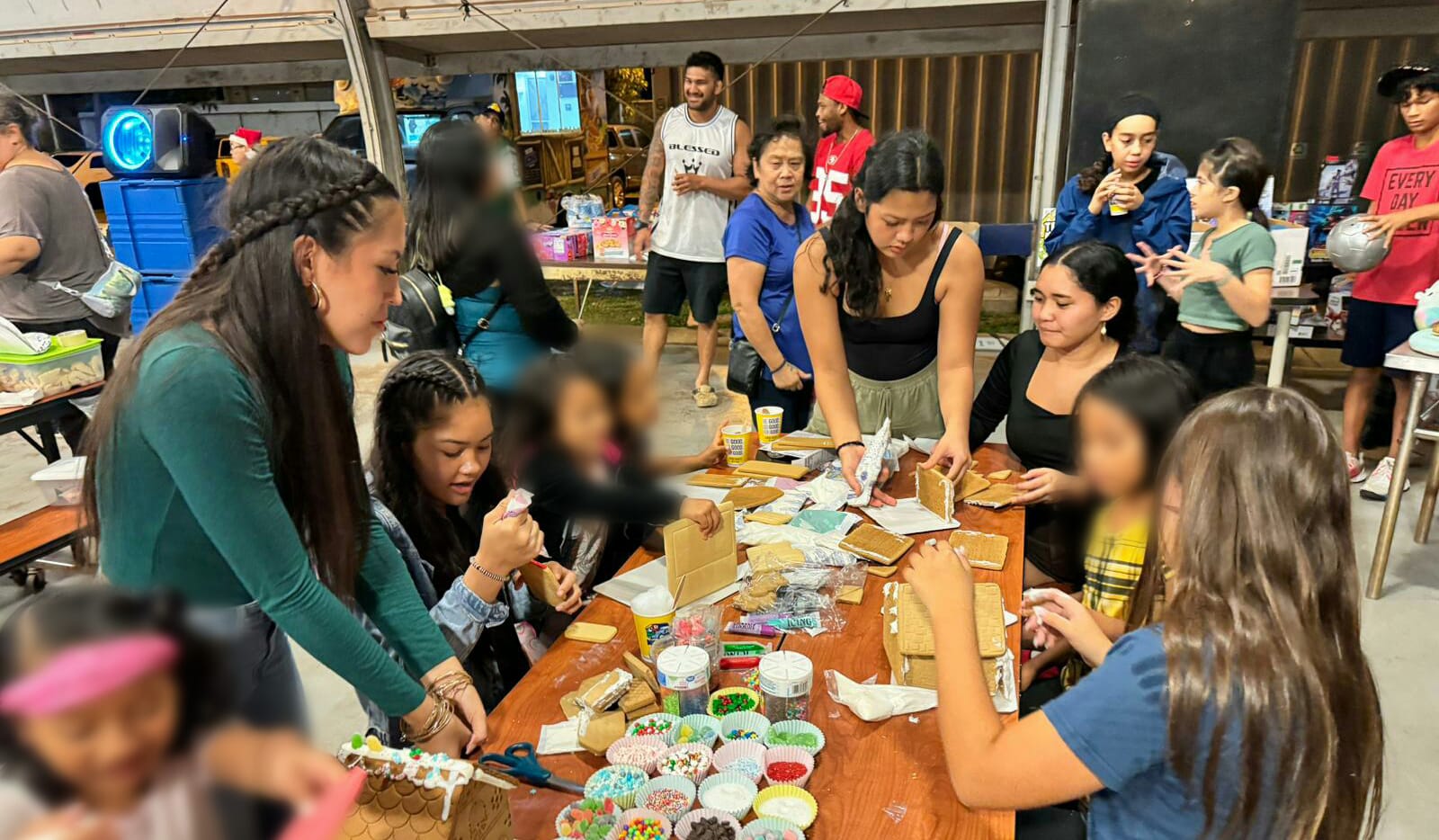
One of Rylee’s signature programs, The Secret Santa Project Hawaii, brings joy to 400-600 underserved children and their families every holiday season. Since 2016, the initiative has delivered thousands of gifts, which have been deeply moving to individuals and families undergoing tougher times. Volunteers come together each year to spread cheer through this program, and Rylee’s efforts have made the holidays brighter for many families in Hawaii.
Rylee creating Christmas memories with children at a shelter in Hawaii during The Secret Santa Project./Courtesy Rylee Brooke Kamahele
“The Secret Santa Project Hawaii has been running since 2016 when my dad got into a really bad car accident – he was hit by a drunk driver,” Rylee shares. “My brother and I were recipients of Angel Tree. Before that, we were spoiled brats… but the next year, we chose to give Christmas to other kids. That includes kids in foster shelters, long-term care facilities and hospitals, families going through financial hardships and more.”
Rylee also champions environmental conservation through her Promise to Our Keiki program. By organizing beach clean-ups and sustainability education events, she has involved hundreds of kids in efforts to protect Hawaii’s precious environment. Through hands-on activities, children learn the value of preserving nature, ensuring that the next generation understands the importance of conservation.
Beyond environmental causes, Rylee’s Love is a Verb Foundation engages volunteers in acts of kindness, such as community clean-ups and food drives. By focusing on “actionable compassion,” this initiative has made a tangible impact on communities across Hawaii.
“Love is a Verb Foundation has two parts to it,” Rylee explains. “One is community partnerships, where we build up youth and ensure they’re prepared to volunteer, and then we connect them with organizations that need volunteers. The other part is twelve completely youth-run programs that do all sorts of things, from animal rescue and rehabilitation to plastic pollution and beach clean-ups. This is to help youth learn the leadership side of nonprofit organizations. One of our other organizations – Mogul in the Making – then helps those leaders, after passing through much training, to create their own nonprofits in the future.”
But Rylee’s work doesn’t stop there – she also assists with disaster relief, as seen in her response to the Lahaina wildfires in 2023. She moderated social media pages, connecting victims with vital resources, and personally delivered donations to affected areas via boat. Her ability to respond quickly and effectively in times of crisis has been astounding to many adult leaders watching Rylee’s engagements in the community.
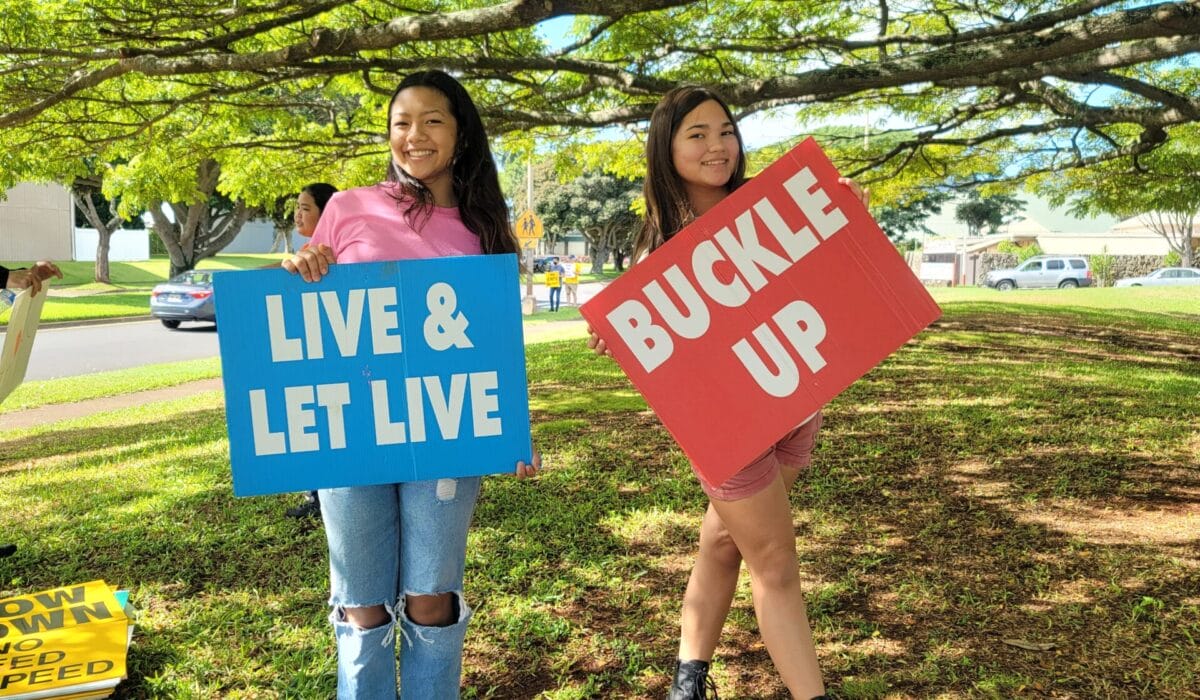
Rylee engaging in community service with the Mililani Lions Club where they labeled storm drains and held signs./Courtesy Rylee Brooke Kamahele
“I’ve been involved with service since I was born,” Rylee reflects. After working in youth ministry alongside the children her parents were actively mentoring, she realized she wanted to be in the world of volunteerism. When she was 4, she started doing pageants, which required community service hours. But when she gave her title away, she realized that the initiatives that she had started during her reign were programs she wanted to continue on her own.
Through The Catalyst’s Club and her partnerships with other organizations, Rylee continues to inspire young people and make a lasting impact across Hawaii. Her personal commitment to service as well as her desire to help raise other leaders in service are powerful examples of youth movements driving positive change in society – with big impacts.
“Volunteering isn’t a set type of role,” Rylee encourages. “I’m an extrovert and can network with people and talk to government officials. My brother likes to be in the background of things, rather than front and center. Volunteering is a wide variety of different things. I want people to learn not to underestimate youth and that youth can make an impact. Your passion is your purpose and what you’re supposed to do.”
Meet Daily Point of Light Award honoree Camille Coppola. Read her story, and nominate an outstanding volunteer or family as a Daily Point of Light.
Camille Coppola, a U.S. veteran originally from New York, spends her days volunteering at Our Daily Bread Dining Room in Middletown, Delaware. Camille has a life’s worth of accolades, from receiving her bachelor’s and master’s degrees from Hunter College and Queen College in New York to ranking as captain in the Adjutant General Corps to completing her MBA at Northwest University… and the list goes on. After finishing her career as an investigator for the Department of Labor, she retired in 2016, and not long after she began volunteering at Our Daily Bread Dining Room.
Our Daily Bread is an organization that strives to end hunger in the United States. It works with low-income families, individuals and children who need food in the Middletown, Odessa and Townsend communities of Delaware. Its goal is to provide the members of their community with nutritional and healthy meals to fill their bellies.
Each month, Our Daily Bread serves food to over 1,200 people by providing 3,600 meals and distributing over 5,000 pounds of food to their local communities. With the diligent help of their 300 volunteers, comparable to the work of Camille, they continue to provide food to their neighbors.
Camille uses her background and fondest memories with her mother to ensure that everyone who comes to Our Daily Bread leaves with full bellies and smiles on their faces. This reminds her of her Italian family and the importance of always looking out for others.
Camille Coppola oversees the work of Our Daily Bread volunteers. Courtesy / Camille Coppola
What inspires you to volunteer?
When I moved to Delaware, I found myself having a significant amount of time on my hands. And I started to wonder what I should do during Thanksgiving, since I had no family and I didn’t really have any friends. We saw an advertisement in the library for one of the local churches that sponsored a Thanksgiving dinner. We started going over to this place called St. Ann’s, and we volunteered and peeled potatoes and helped prep an entire Thanksgiving meal for people. After that, I saw an advertisement for Our Daily Bread. My friend and I signed up, and we took the training and volunteered to do whatever needed to be done. I started as a server and did dishes, and as the organization evolved, the role I took on changed as well.
In my opinion, food equals happiness, and happiness is what we need a little more of in this world. I think Mother Teresa said it best, you know, what are we here for? It’s not your cooking. It’s not your wealth. You have to take care of people. Get outside yourself. So that’s what brought me to Our Daily Bread.
Tell us about your volunteer role with Our Daily Bread Dining Room.
At Our Daily Bread, I am a Serve Safe manager, kitchen manager and member of the board of directors. I oversee food safety preparation to ensure the food is prepared and served correctly according to restaurant guidelines. I also create weekly and monthly menus for the 200 meals we serve each day. My role includes recruiting and training cooks and many other day-to-day tasks.
But I am just a little cog in the wheel. I may be allowed to be a cog, but Our Daily Bread is a team effort that accomplishes a lot with the help of 300 or more volunteers. With the work of so many incredible people who give themselves every day, it’s essential to recognize them as well.
What are your long-term plans or goals for the organization?
Our Daily Bread hopes to expand and offer more meals on Saturdays and Sundays. It would be great to expand our services to seven days a week. The challenge we face with executing this is our high turnover rate. Currently, volunteers consist of seniors and students who only volunteer when school is in session. We should get more volunteers to help fill the gap and who can cater to supporting those in need. I can see myself doing this for another few years, but beyond that 80, I still need to find out.
What’s been the most rewarding part of your work?
The most rewarding part of our work at Our Daily Bread is the smiles on the faces of the people we serve and getting “thank you” from strangers. There was a family of seven we helped serve during COVID-19. The mother and father lost their jobs, and they would come in a great big van and pick up food for the family. One of their little boys, maybe around 4 years old, comes outside the truck, turns to his mother, and goes, “Mommy, you know, broccoli. Can we have broccoli?” And we all looked at each other and just smiled. Our joy is the difference we make in people’s lives. If it’s just recognition or having them say, “I haven’t had that in so long. That’s wonderful. Thank you so much.” It’s not for us. It’s for them.
What have you learned through your experiences as a volunteer?
I’ve learned to be humble, appreciate the little things in life, not take anything for granted and smile and say thank you.
Tell us about future partnerships, programs or events that you are excited about.
About two weeks ago, we had our annual fundraiser, and we plan to have two more in November and December. During these fundraisers, we provide food baskets to guests. We give them a complete meal, and they have to go home and cook it, but we give them the turkey and all the trimmings for Thanksgiving and Christmas. We are really looking forward to our end-of-year food donations; it just makes everybody feel good.
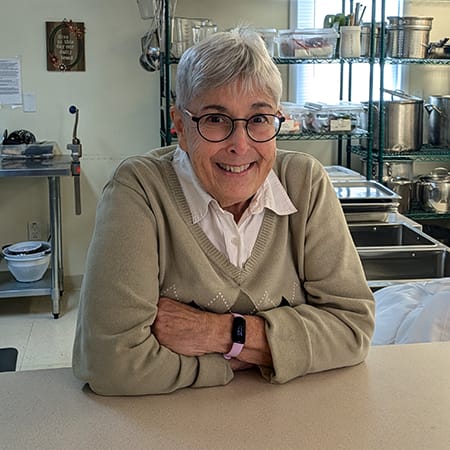
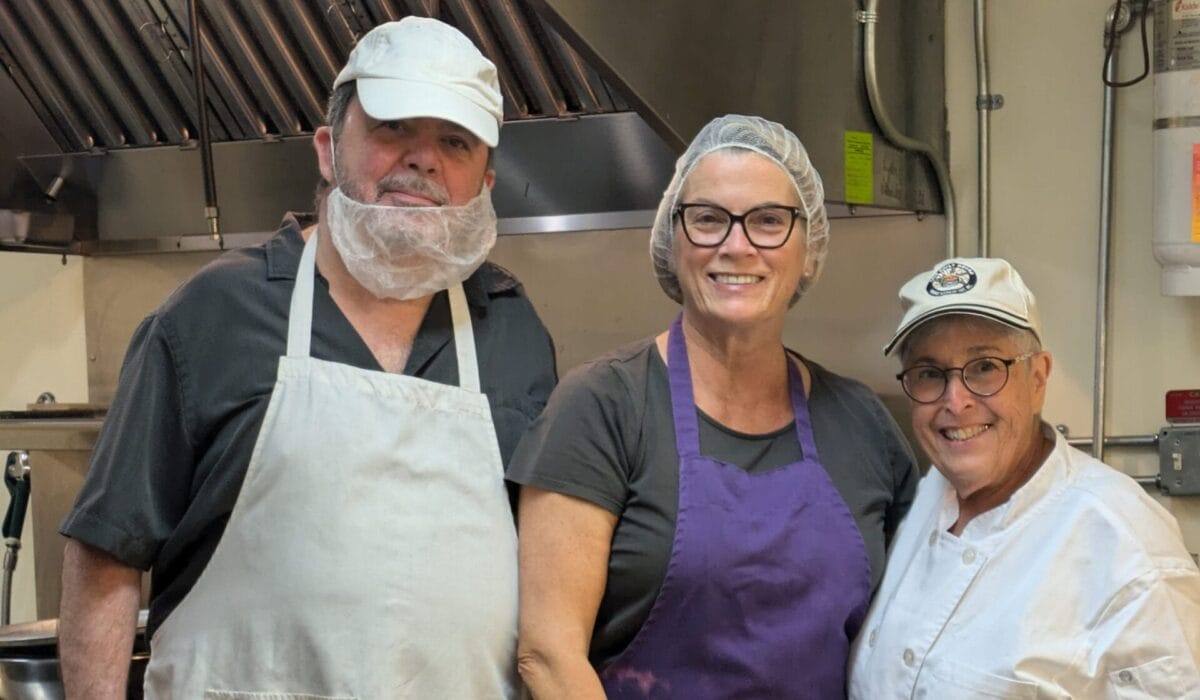
Our Daily Bread volunteers and Camille Coppola (right) pose together in their kitchen. Courtesy / Camille Coppola
Why should others get involved with causes they care about?
That’s a hard one. We hear so much about what’s wrong with the world and the United States, but what are we doing about it? Volunteering and lending a hand are the right things to do, and we should all be involved in what’s right.
Any advice for people who want to start volunteering?
Just do it! Check out our website, sign up, drive by, come in and bring your kids. It’s a learning experience for children of all ages. They get to see how the other half lives, and it makes them a little less focused on their tablets and themselves when talking to different people. We serve many groups of people, and with Veterans Day coming up, the more, the merrier. But in all, do something!
What do you want people to learn from your story?
Well, if I can do it, anybody can. If you have a talent, whatever it is, whether it’s construction, cooking, sewing or knitting, just do it. Somebody can use your talents. There’s no need to keep your talent under a bushel. There is a tremendous need in America, and we should make it a better place for ourselves or for someone else. And the best part of your reward is watching them.
Every Book Deserves a Reader: Getting Involved Through Literacy
Meet Daily Point of Light Award honoree Aarush Kalia. Read his story, and nominate an outstanding volunteer or family as a Daily Point of Light.
Aarush Kalia is a senior in high school who enjoys playing soccer and spending time with his puppy. He’s always been fascinated with math and hopes to study it in college. Aarush is passionate about integrating STEM to allow change. When Aarush is not focusing on school and extracurricular activities, he enjoys lending time to his nonprofit, 2ndChance, an organization that collects and donates books to Juvenile Detention Centers.
Aarush started 2ndChance while he was a freshman in High School. During his brother’s senior year, his family visited Yale University as a prospective school. While touring the campus, they walked by the Yale Law School library, and he noticed a flier about a “book collection.” It immediately got him thinking and inspired him to create something similar for Juvenile Detention Centers.
Today, 2ndChance is a nonprofit that collects and distributes books and educational resources to Juvenile inmates. The program has also expanded beyond juvenile detention centers and public libraries.
What inspires you to volunteer?
The ability to get involved in the community inspires me every day. My parents have always emphasized the importance of education in our household, but I noticed that volunteering is another important skill and life trait. I enjoy learning and giving to my community, helping other kids succeed and providing people with opportunities to learn. Getting involved is fulfilling. I love volunteering.
Aarush Kalia, a senior high school student and the founder of 2ndChance. Courtesy / Aarush Kalia
Tell us about your volunteer role with 2Chance.
I am the founder of 2ndChance. It started as an initiative and has grown into a nonprofit organization. It began with me sourcing books and delivering them to juvenile detention centers. As time passed, I started to get help, and today, we have biweekly meetings with students in multiple states. Before, I did a lot of the work, and now, I still do plenty of work, but from a management perspective.
What are your long-term plans or goals for the organization?
With the support I’ve been getting, I can only hope that 2ndChance continues to expand and grow soon. I want to build on what we’ve done so far and continue outreach at more centers. I hope this can evolve into a mentorship program where volunteers connect with the kids. It would be nice if teachers, retired teachers or adults could be present to allow fruitful conversations and offer support to the kids in need.
What’s been the most rewarding part of your work?
The most rewarding part is the amount of change 2ndChance has made in my life. I now have the opportunity to create equal opportunities in education and listen to people who usually aren’t given a chance. 2ndChance has shown me that I will always face issues, and things can become overwhelming, but we can make a difference with patience, teamwork and communication. That’s why this project is dear to my heart.
What have you learned through your experiences as a volunteer?
While working with 2ndChance, I encountered many challenges. Some were easier than others, but it wouldn’t have allowed me patience without these challenges. I’ve had requests to have the books new, to have books in Spanish and paperback books. Each request comes with a different set of hurdles, but each time, I grew from it. Overall, I learned perseverance. Patience is a great trait I’ve learned, but the ability to constantly improve as I face these challenges has helped me grow in life and as a person.
Tell us about future partnerships, programs or events that you are excited about.
I look forward to sharing 2ndChance with banks and receiving funding to collect the books these centers and libraries need. Part of the reason I registered 2ndChance as a nonprofit is that we need funding from banks and local businesses. With the help we need, we hope it can allow more donations soon.
Why should others get involved with causes they care about?
Others need to get involved with causes they care about because there is nothing like getting involved in the community. Right now, a tiny percentage of the population volunteers, and it is essential to do something, no matter how small. Any impact made will significantly impact people, whether that’s in education, literacy or whatever. Just try as hard as you can.
Any advice for people who want to start volunteering?
My advice is to believe in your project and idea. If you have an idea, the next step is to explore it and follow through. Even if the idea doesn’t come to fruition, try again. Eventually, one of the ideas will work and become more successful from there.
What do you want people to learn from your story?
It’s important never to give up. I faced several challenges throughout my journey of building 2ndChance, and look at the work we are doing today. Ask for help from your parents, teachers, faculty, neighbors and friends, that would motivate you to move forward. Never be afraid to ask for help, and continue to persevere.
Meet Daily Point of Light Award honoree Bella Brown. Read her story, and nominate an outstanding volunteer or family as a Daily Point of Light.
There are more than 150 million people worldwide who don’t have homes to live in. Seventeen-year-old competitive dancer Bella Brown, was confronted with that reality early in life growing up in an urban area. In 2020, she and her younger sister began handing out “care bags” full of snacks and useful items to people struggling, but a year later, the issue became personal when their mom revealed that she had a brother, and he was unhoused.
After meeting her uncle, Bella’s dedication to those without a home increased. As did her care bag production. She and her sister founded Living Outside to offer material support and encourage direct engagement and education as a way to reduce associated prejudice. In four years, Living Outside has embraced more than 150 volunteers who, together, have distributed 2500+ care bags. Bella’s compassion and drive to chase evidence-based strategies has inspired 18 new chapters around the world.
What inspires you to volunteer?
There are so many things that you have to wait until you’re older to do, but the ability to be a nice person or to solve a problem is available at any age. I’ve tried my best to use the resources and opportunities I have to solve problems I’m passionate about.
Where did the inspiration to create Living Outside come from?
Growing up in Chicago and seeing a lot of homelessness always had a deep impact on me. Before I was able to understand all of the factors that lead to it, I was confused why society had allowed it to happen. Things shifted into something bigger when I learned about my uncle. When we flew out to where he was living in Beverly Hills to spend a weekend with him, he’d been unhoused for about eight years, but he had a vibrant and welcoming community that he’d curated.
It allowed me envision a society where, instead of walking past someone who’s living on the street or avoiding eye contact, we acknowledge one another. That was the impetus behind the organization. Jay considered himself someone who lived outside. He passed away a couple months after our visit, and a lot of what we do now is in his honor.
Tell us about your volunteer role with Living Outside.
I’m the co-founder and president. What we do is twofold. We distribute supplies–food, water, hats, gloves, hygiene kits,
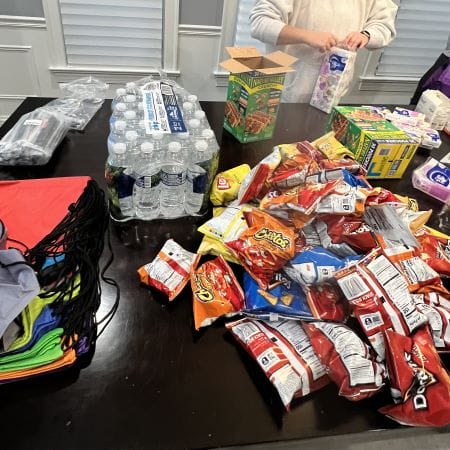
Care bags containing snacks, water, hygiene items, socks, notes and more are sent home with volunteers to distribute.
handwritten notes, etc.–directly to those who are living outside. Volunteers who assemble care bags at distribution events also hand them out. And we recognize that unhoused people are humans and have social relationships, so we include stamped postcards with a pen. That allows the care bag recipient to reach out to someone they’re hoping to reconnect with.
We often include multiples of items or give someone multiple bags so they can give one to a friend. You receive a serotonin boost when you’re able to positively impact someone else, and we want to give that to people living outside. It’s empowering when you’ve been in a position of receiving aid for so long to get an opportunity to be generous.
Our second mission is to destigmatize homelessness through advocacy and education. We’re in the midst of partnering with different organizations to increase awareness. We also hand out informational resources, run webinars and write a blog. As an AP research student last year, I found that care bag distribution reduces levels of individual stigmatization as well.
What is something that you find people often overlook homelessness or get wrong?
In my family, it was always natural for us to ask someone if we could buy them a meal or to introduce ourselves. Arden and I kept care bags in our car and, whenever we were out, would distribute them. Other people thought it was a great idea until they realized that we didn’t take them to shelters but handed them directly to people in need.
There’s a disconnect. People have good intentions, but they also have fear that is preventing them from engaging with the community they hope to impact. When we visited Jay, the number of people he had in his circle who were open to allowing him to be a part of their lives was touching. Jay, despite his circumstances, was happy. He attracted people regardless of housing status, and his community improved his quality of life. Living Outside isn’t just giving someone supplies; we’re telling them they have a community that cares about them.
What are your long-term plans or goals for the organization?
We also want to shift the narrative and decriminalize the experience of being unhoused. There are a lot of policies that serve to criminalize actions that unhoused people do just to survive–sleeping in a public space, begging, loitering—without solving the issue.
And we want to help people who are ready find a home. My uncle had tried other environments, and to him, finding that community in Beverly Hills was the right move. He wasn’t ready to find a home. It’s okay to support, acknowledge and love those people from afar until they make the decision. Living outside is incredibly nuanced, and we have to approach it as such.
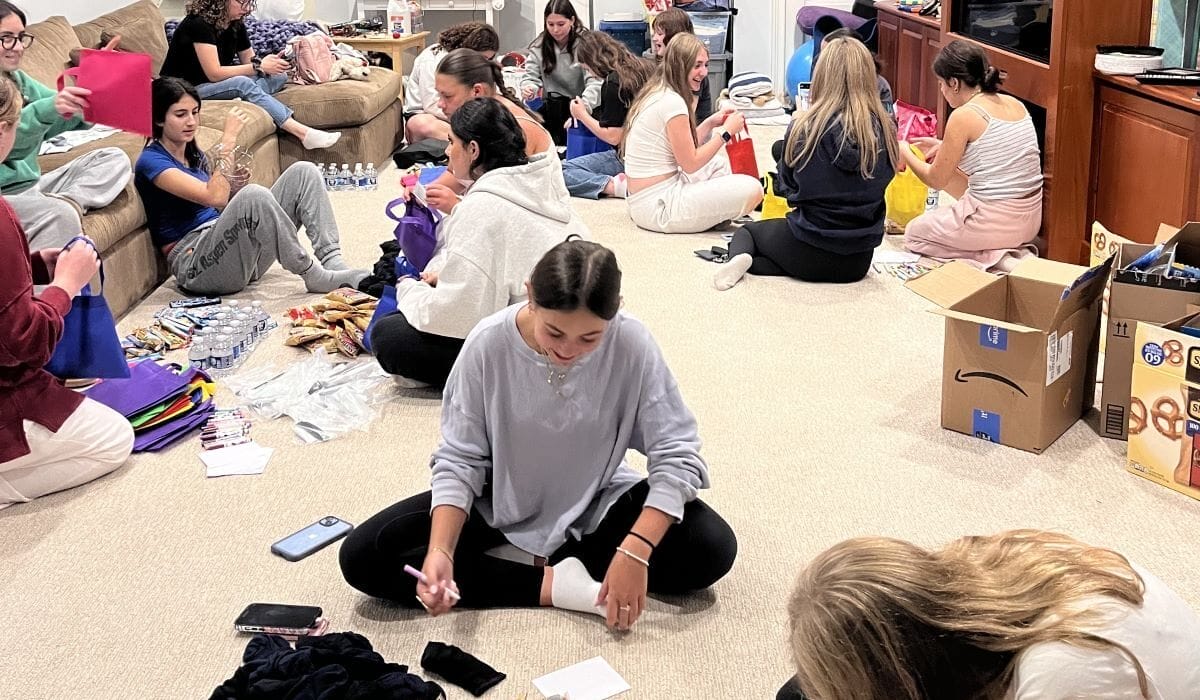
Bella and fellow volunteers assemble care bags to hand out to those living outside.
What are some ways you recommend starting a conversation?
Action can be as simple as a smile. Oftentimes, when someone is asking for food or money and you have nothing to offer, say, “I’m so sorry. I don’t have anything, but I hope you have a great day,” or introduce yourself and ask for their name. Tell them you’d love to hear their story. Those are worldview-changing.
What’s been the most rewarding part of your work?
So many people, in tears, have told me something that they wanted to get off their chest and never felt like they had the opportunity to, because no one stopped and asked. Listening is powerful, and we don’t do it enough. It can transcend barriers and bring communities closer.
What do you want people to learn from your story?
Anyone, regardless of age or background, can work towards acknowledgement. I encourage people to rethink their internal reaction next time they encounter someone living outside and shift it towards one that is helpful. I hope they will one day get to a point where they, too, are able to sit down with someone and listen.
Do you want to make a difference in your community like Bella? Find local volunteer opportunities.
Inspiring Hope: Teen Teaches Peers About Prevalence Of Birth Defects
Meet Daily Point of Light Award honoree Jasmine Liu. Read her story, and nominate an outstanding volunteer or family as a Daily Point of Light.
Jasmine Liu’s journey began with a two-week summer camp.
The summer before her junior year of high school, Jasmine earned a coveted spot at Kode with Klossy, the exclusive coding camp for teenage girls. There, she and her team focused their project on exploring birth defects. They learned about the prevalence of neural tube defects, which affect the brain, spine or spinal cord. However, they also learned about the unfortunate disparity in treating these defects.
It was from that experience that Jasmine’s idea to start NeuraHope sprouted. As the founder and CEO of the organization, which specifically works to educate youth about neural tube defects, Jasmine has plenty on her plate. Whether she’s running a clothing drive for a local maternity care organization or leading a summer workshop to educate her peers on the topic, Jasmine’s devotion to spreading awareness of birth defects always reigns supreme.
Now a senior in high school, Jasmine is busy filling out her college applications. Still, she works daily to keep NeuraHope running, and hopes to maintain her role leading the organization when she continues her education next year.
What inspires you to volunteer?
One thing that really inspires me is seeing everybody around me doing their best to contribute to their community. This past summer, I was at a program in Washington, D.C. where I met so many inspirational changemakers who were also around my age. Seeing them do this amazing work and really make an impact in their community has truly motivated me to push forward with my organization.
Tell us about your volunteer role with NeuraHope.
I lead a team of around 45 members from 15 different countries. We have several different departments that I generally oversee, including our events, marketing, funding and grants and podcasting. So, my role includes making sure that all of the departments are working together, and that every member is contributing to the team and doing their tasks.
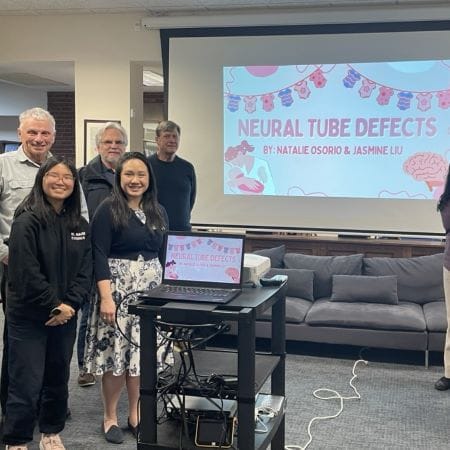
JASMINE (LEFT) PRESENTS A SLIDESHOW ON NEURAL TUBE DEFECTS AT HER LOCAL LIBRARY. (COURTESY JASMINE LIU)
That’s a lot of work on top of a normal high school workload. How do you find time to get it all done?
It’s been pretty difficult, honestly. I’m currently a high school senior, so I also have to do college applications. Google Calendar is my best friend when it comes to managing my schedule. Over the summer, I’ve been able to do a lot more work in terms of advancing our organization and doing outreach. The good thing is, because I have a big team, I’m able to get a lot done. I would say on a daily basis, I do around two hours of work for my organization, but over the weekend is when I have most of my meetings with the departments and the directors to keep everyone on track.
What inspired you to get started with this initiative?
We noticed there weren’t really any organizations that focused on the educational aspect of birth defects, particularly for the younger audience. Because we did so much extensive research beforehand, we thought that shouldn’t just be contained to this project. Even though there’s sexual health education in schools right now, birth defect education isn’t covered in schools, even though we believe it really should be since it’s a prevalent issue that applies to everyone.
What have you learned through your experiences as a volunteer?
I never expected this initiative to expand as much as it has. In the beginning, I was sort of ill-prepared for the amount of work it required. It takes an immense amount of work and planning to be able to run an initiative like this. So one thing I’ve learned is that I need to become more accustomed to asking for help when it’s needed and to make sure I have a good, supportive network around me.
Tell us about future partnerships, programs or events that you are excited about.
We’re working with the Department of Education to potentially add birth defect education in sexual health education in schools. We’re working on doing that in Massachusetts and some other states, so we’re hoping to get that implemented in maybe two or three other states. Additionally, we currently have 17 chapters this year, but we really want to expand. So we’re hoping to potentially get to around thirty chapters to expand our reach and do a lot more fundraising and supporting hospitals. Our fundraising campaign is aiming to raise $12,000 to support people in low-to-middle income countries to access the health care they need.
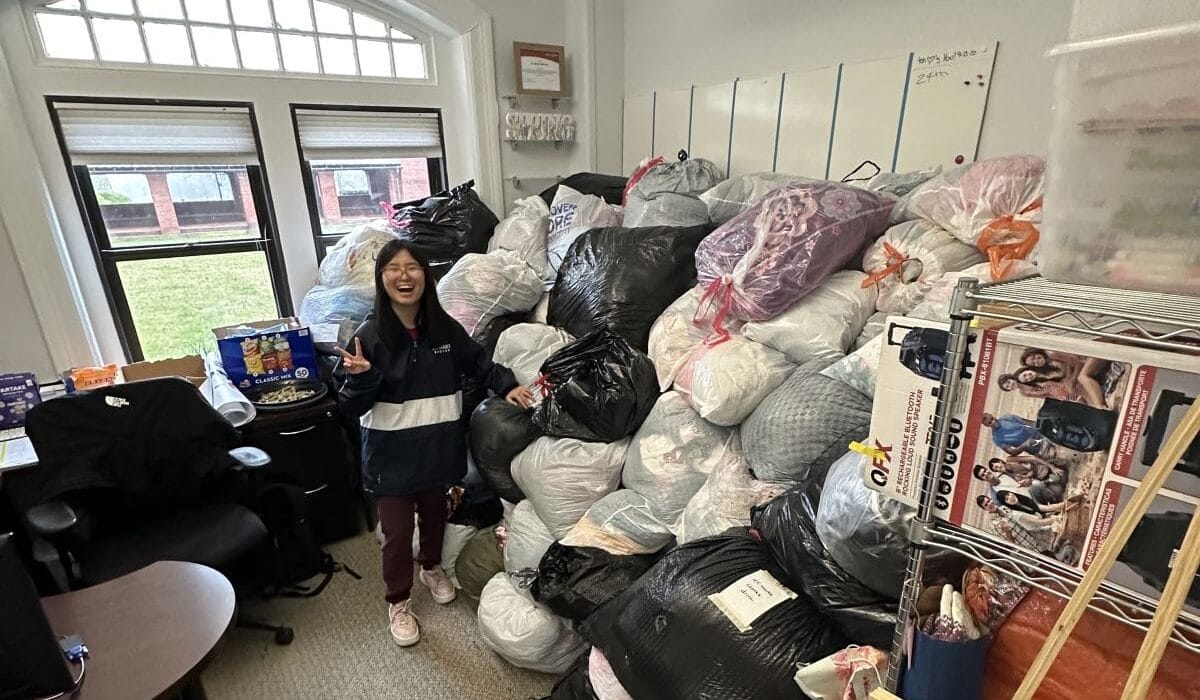
JASMINE SMILES AFTER COLLECTING 2000 POUNDS OF CLOTHING DURING A NEURAHOPE CLOTHING DRIVE FOR LOCAL MATERNITY CARE. (COURTESY JASMINE LIU)
Why is it important for others to get involved with causes they care about?
Many of us may not recognize how much privilege we have. Other families around the world may not have the same opportunities, and I think it’s extremely important to really engage in your community and try to help as many people as possible. It’s really important to have a sense of community so that we’re able to bring each other together through hardships or difficulties. We’re at our best when we have each other around.
Any advice for people who want to start volunteering?
Just go for it! Go to your local community organizations and just go for it. Honestly, the hardest part about going out to volunteer is reaching out. You are going to end up experiencing so many new things and meeting so many amazing people. Just get out there and try to interact with your community. You really learn a lot while helping those around you.
Do you want to make a difference in your community like Jasmine? Find local volunteer opportunities.
Volunteer Dedicates Decades to Ensuring Vision- and Physically-Impaired Can Read
Meet Daily Point of Light Award honoree Gerry Garvelink. Read his story, and nominate an outstanding volunteer or family as a Daily Point of Light.
The Talking Book and Braille Centercelebrated 50 years of bringing free audio and Braille materials to the Kent District Librarylast year. Patrons who struggle or are incapable of reading traditional books because of a visual or physical impairment can participate in a cherished pastime and learning experience thanks to funding from the Library of Congress’ Library Service. Their support extends to a network of libraries across the country.
“The program has been in existence since the ‘30s. It was originally designed for veterans who were coming back from the war with loss of eyesight, and it’s just expanded,” cites Susan Greene, an equipment technician who runs the Lansing hub department that sends out equipment to patrons across Michigan. “It’s such a wonderful program where it can take a person who would otherwise feel isolated and allow them to function in book clubs or Bible studies or with their grandchildren who are reading books in school. They can read the same books. They can have meaningful discussions with their family and they can use these books to keep abreast of the things that are going on in the world.”
People who have permanent limitations or temporary issues (like those recovering from an eye surgery or a hand injury that makes it hard to hold a book) can sign up for the service. The center also lends to schools, nursing homes and rehab centers.
Equipment allows a patron to listen to a book or magazine and navigate the hierarchy of an article, easily referencing different parts of, for example, a religious text while adding bookmarks or notations. Machines with refreshable Braille displays are also available. Ninety-year-old Gerry Garvelink, a man who repairs, maintains and mechanically restructures the center’s devices, has been a dedicated volunteer for 21 of those 50 years.
Gerry grew up on a small dairy farm with dreams of being a farmer himself. With eighth grade coming to a close, he
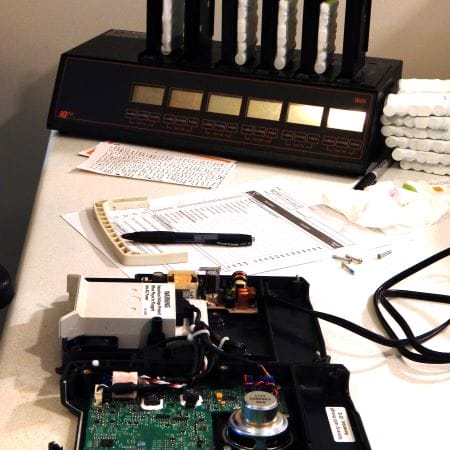
Gerry’s workbench holds multiple devices, a checklist, notes and any tools or parts needed to keep things running smoothly.
thought his school days were over, but the state then officially required kids to continue to the age of 16. By then, his feelings about learning had changed.
“As years went by, I started to like it more and more. So, I did end up going to college,” he says, recalling his journey to completing his Master’s degree in engineering with encouragement from teachers along the way.
He married and moved back to Grand Rapids for a career in computer programming at Lear, the company that became Smith’s Industries by the time he retired in 1997. Through a Boeing contract, he even did some work on their 737’s navigation system. By 2003, he had done some volunteer work with his church, but when he saw in the center’s ad in the newspaper calling for helpers to recondition talking book players, he knew it would be a good fit.
“I always liked to take things apart and try to fix them, so that sounded good to me,” he points out, reminiscing about putting an alarm clock and the family car back together at various points in childhood only to find both still malfunctioning.
For the first several years, Gerry and fellow volunteers would meet every Monday and spend the day working on cassette-compatible machines.
“They were very challenging. There was always something considerably wrong with them. I enjoyed that,” he laughs.
But when the tech advanced, so did Gerry’s skills. After 12 years of Mondays, thanks to Susan and her colleague Bob, a blind staff member knowledgeable about the devices, Gerry learned the ins and outs of maintaining today’s digital machines.
“Every time [machines] come back, they are cleaned and put through a series of tests. And then, anything that is wrong with them is fixed, and they are given a brand-new charged battery,” Susan explains. “All the old information is completely wiped clean, so [patrons are] essentially getting a brand-new machine.”
A few years later, COVID hit. While the local branch shut down, Lansing’s was deemed essential though staff was reduced from 20 to five. Gerry continued with his routine of being helpful and convinced them to box up devices for him to pick up at his local branch to recondition at home, a change that has remained in place. Sixteen devices and necessary supplies arrive for him each week and take him 10 to 12 hours to look over.
“It works out very well,” he admits of managing his own time. “And it feels good, too, because I think I’m doing blind people and disabled individuals some service.”
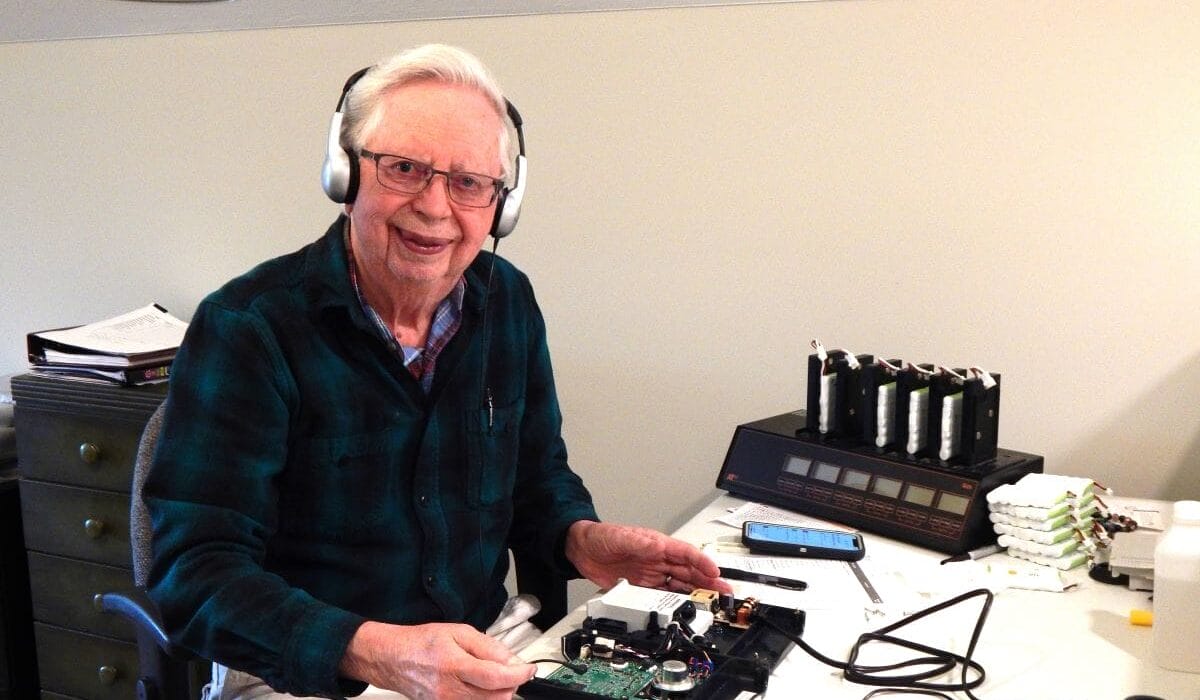
Gerry Garvelink, a 21-year volunteer with the Talking Book and Braille Center, checks the performance of a few of the thousands of machines he maintains.
While Gerry and Susan have only met in-person during that training almost a decade ago, they touch base at least once a week and, during the pandemic, kept a humorous text chain going with Bob to help each other stay positive. Susan is always there for questions or when Gerry needs a part.
“What Gerry does is just miraculous for us. It’s allowed us to provide service in such a timely fashion to our patrons,” Susan affirms. “There’s just no way that we could keep up with the repairing and all the things that he has done over the years when he’s volunteered his time.”
Since mid-2020, Gerry has maintained over 4,000 devices with his 526th box shipping out just days ago. With over two decades of experience, he has really gotten to know the people he volunteers with and appreciates the stability of repetition. Though he’s never personally met anyone who benefits from the center, he’s happy knowing he is making life a little easier for people facing those challenges.
“This activity has been really good for me in a lot of ways–emotionally, physically, mentally. I think it’s just so good for a person to be doing something worthwhile for others. I think that’s so important for a very contented lifestyle,” he says. “It just seems to me that that it’s the right thing to do.”
Do you want to make a difference in your community like Gerry? Find local volunteer opportunities.
Banding Together to Fight Childhood Cancer
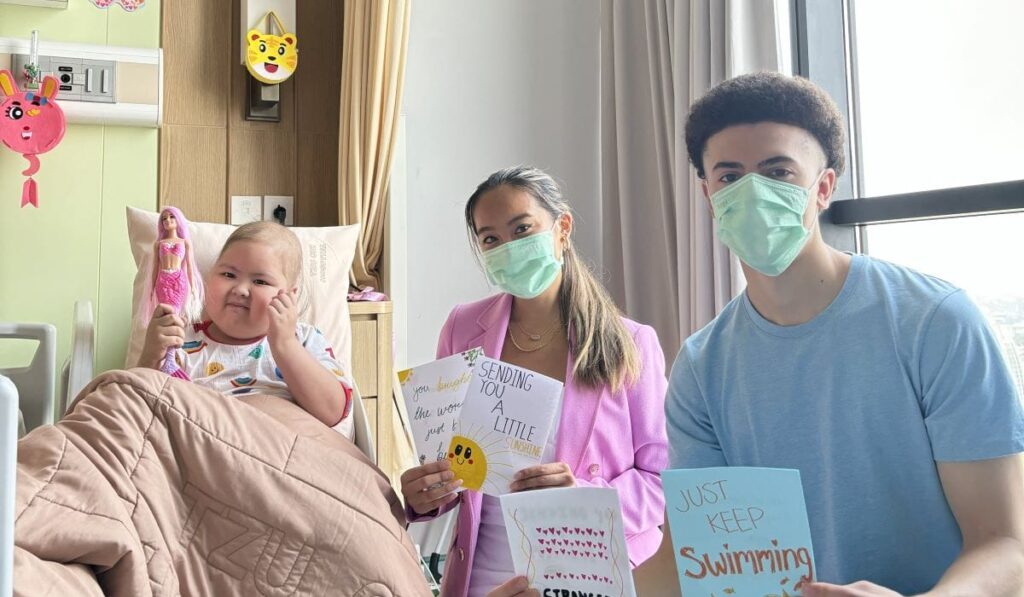
(middle) Olivia visits a hospital in Indonesia to deliver gifts and cards to kids fighting cancer.
Meet Daily Point of Light Award honoree Olivia Zhang. Read her story, and nominate an outstanding volunteer or family as a Daily Point of Light.
You might not expect that Olivia Zhang, a 19-year-old college sophomore studying economics and global health, is the founder and CEO of the world’s largest youth-led cancer organization. But when she speaks, her knowledge and compassion show her to be a highly capable leader.
With a parent whose career was centered on supporting the unhoused, Olivia and her sister learned about nonprofits at a young age, with Olivia’s sister even running social media for some by middle school. In 2019, after multiple loved ones were taken by the disease, Olivia founded Cancer Kids First (CKF). Her goal is to normalize the hospital environment and provide community and support for kids in treatment.
Many of Olivia’s activities both in and outside of school revolve around community service, including her TikTok account where her nonprofit tips and advice have been viewed more than 30 million times and inspire many to get involved. It’s this presence that has helped spur CKF’s growth from a leadership team of three to 30 with 40,000 volunteers across 80 countries. She works with 72 hospitals and 39 businesses. Olivia’s success has also earned her seats on two health boards — WEGO Health and World Child Cancer — where she advises on project development, marketing campaigns and patient leadership opportunities.
What inspires you to volunteer?
My mom is the CFO of a nonprofit. She works with unhoused people. Growing up, she was adamant about making sure my sister and I were giving back to our communities and appreciative of everything that we have. I witnessed how to learn about other people’s stories and best utilize my platform and resources to help others.
I used to sell artwork on Instagram and to my classmates to raise money, because it was a hobby of mine. When I lost two loved ones to cancer, rather than fundraising a few thousand dollars for research hospitals, I wanted to create more of an impact. So, I started Cancer Kids First to honor their legacies of helping children.
On a trip to Indonesia, Olivia (second from left) recruits volunteers to design cards for approximately 100 patients in Tzu Chi Hospital./Courtesy Olivia Zhang
Tell us about your volunteer role with Cancer Kids First.
I generally have three to five meetings a week either with our leadership directors to follow up about events and fundraisers we’re planning or with our partners. Then, I run through all our departments. We have many- – service programs, volunteers, events and fundraisers and social media.
I make sure that every month we’re planning a certainnumber of events and fundraisers, and all our service programs are efficiently helping patients. Sometimes, I’ll create social media posts or plan a calendar for our social media heads to follow.
I also answer emails from partners and coordinate our bigger fundraisers. For instance, this month is Childhood Cancer Awareness Month, and we do an annual fundraiser with Kendra Scott, so I’m the point of contact. In general, if we’re hosting an in-person event, I’m the one organizing the location, coordinating volunteers and leading it.
How do you normalize the hospital environment and build a supportive community for these kids?
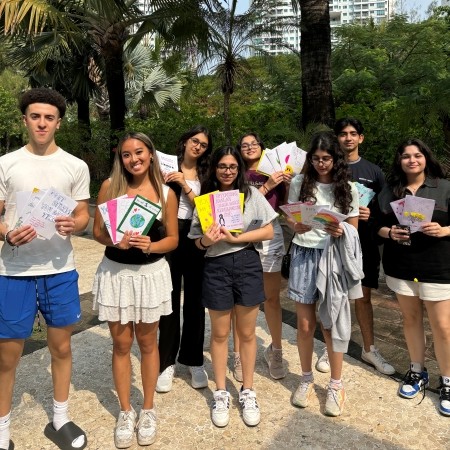
We have five service programs. For the Arts program, we create personalized cards and crafts for kids with cancer, including inspiring messages to show support. We deliver entertainment—and medical resources—to the Child Life director at partner hospitals with our Toys and Books program. Items provide normalcy and give patients something to do while getting treatment.
Our Care Packages program provides patients celebrating a milestone like a birthday or finishing chemotherapy with a dream gift shipped directly to them. And our Treatment Services program focuses on increasing access to treatment for international patients by either delivering medical resources or covering transportation costs.
Lastly, our Patient Interaction program aims to decrease isolation by pairing patients with volunteers with similar interests for monthly video calls to talk and play games. The goal of all these programs is to spark some joy and give patients a community of people they can count on.
How did the pandemic affect the organization so soon after you started it?
I was still pretty shy, and securing partnerships and belief in our organization was challenging. The pandemic allowed me to reflect and take online courses on things like how to pitch. I also started focusing on online marketing.
As our membership grew, we got amazing leadership team directors who helped guide us, and I learned the importance of reaching out to your target community to see what they needed most. The pandemic created a lot of new challenges for hospitals that we were able to address, so it opened up a lot of opportunities for us.
What’s been the most rewarding part of your work?
Number one is being able to help patients as young as three years old through something like brain tumors and getting to hear about how we’ve been able to help their families with costs and stress levels. Empowering other young people to be more engaged in community service is also amazing.
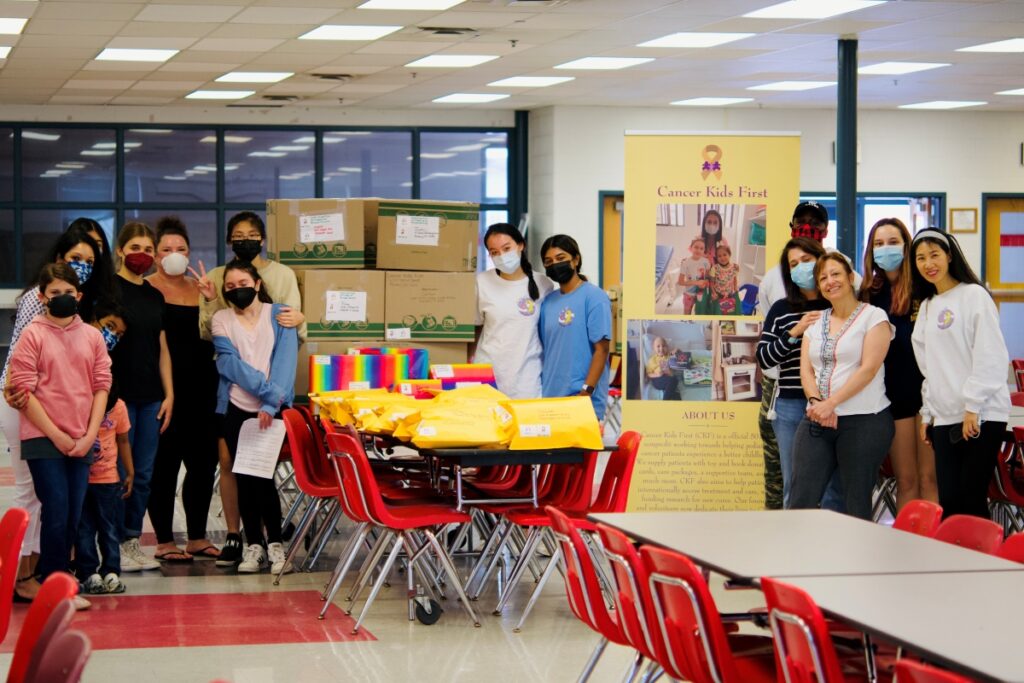
Cancer Kids First founder Olivia Zhang (middle left) joins fellow volunteers at an event in Virginia to deliver 100 care packages to kids in treatment./Courtesy Olivia Zhang
What is 51 Forward?
Because of CKF’s growth and my work on social media, I got thousands of messages from young people wanting to build their own nonprofits. I used to post videos or answer DMs directly, but in 2020, I started directly mentoring high school and college students. Through 51 Forward, I’ll meet one-on-one every month with nonprofits to advise on things like marketing strategies and increasing their volunteer base. So far, I’ve worked with 187 leaders in 100 youth-led nonprofits.
Why is it important for others to get involved with causes they care about?
There are so many problems in the world that can be addressed if people are willing to put in the time and energy. And, in general, it’s important to be a global citizen. We’re all on the same earth, so taking care of it is important. Taking care of people facing unjust treatment in our communities is very important. If you have the ability to help someone, why wouldn’t you? If you don’t, who will?
What do you want people to learn from your story?
Don’t be afraid to be authentically yourself and pursue your dreams. Start an organization if you want to. Believe in yourself and take steps to find mentors or learn through books. Hopefully, people are inspired by that say-yes mentality.
Do you want to make a difference in your community like Olivia? Find local volunteer opportunities.
Making Connections, One Meal at a Time
Meet Daily Point of Light Award honoree Ed Isbell. Read his story, and nominate an outstanding volunteer or family as a Daily Point of Light.
Some people find hobbies in retirement. Ed Isbell, 70, found volunteering. Six years ago, after a demanding career working for railroads and a transportation-logistics company, he retired. Wanting to stay active with his new unclaimed time, he started evaluating how he could help the people around him.
Ed coached with Special Olympics for many years, including regional basketball team Wilmington Wizards for the last five. Before Covid-19 concerns shut the program down, Ed also drove people to medical appointments with Friends in Service Helping (FISH). He continues to deliver pet food with the Society for the Prevention of Cruelty to Animals (SPCA) twice a month to people who have trouble getting out to buy their own.
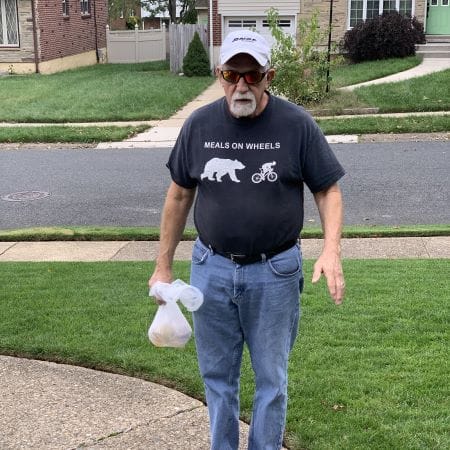
The role that he spends the most time in is delivering food for Meals on Wheels. Ed delivers five days a week and goes above and beyond to be a light in his clients’ day whether it’s bringing in their mail, putting a trash can away or simply making sure they’re ok. Ed is a people person who values the connections he makes with the communities he serves.
What inspires you to volunteer?
When I was working, I was traveling some. Then, when I started working remotely in 2004, I was more or less dedicated to doing just that, because when you work out of your house, you tend to work a lot more. My wife said, “You can retire as long as you have something to do.” There’s only so much golf you can play, so it was after retirement that I began volunteering.
Tell us about your volunteer role with Meal of Wheels.
I show up around 10:30am and go to a couple of the local senior centers. They have a caterer that brings in the hot meals every day. One day a week, it’s a cold meal, something like tuna with bread to make a sandwich. We deliver between 10am and lunch. If I have a double route, I might be done at 12:30pm.
Ed approaches a client’s home with a hot meal at a stop on one of his delivery routes.
The route I did today was probably the longest with 18 meals and 14 stops. Some husband-and-wife deliveries get multiple meals, and one household gets three. Shorter routes are 10 or 12, some fewer. If somebody cancels, I usually pick up their route, too. I do double routes with anywhere from 22 to 30 deliveries two or three times a week. I want to do as much as I can to help out.
What inspired you to get started with this initiative?
Meals on Wheels always intrigued me, because I used to see pictures on TV, and I’ve known some people involved with Special Olympics who also did Meals on Wheels deliveries. They raved about it. I like that I can somewhat set my own schedule.
What’s been the most rewarding part of your work?
Some of the clients don’t have access to a lot of family. A lot of them are older with physical limitations. I’ve created really nice friendships with some of them as well as with younger people with physical disabilities who also depend on these meals.
I may be the only person they see all day, and I get a kick out of showing up at their door and presenting them with a meal every day. It’s hard for them to do anything physical, so I like to make sure that they’re getting everything that they need.
What have you learned through your experiences as a volunteer?
When I first started this, I was new to Wilmington. I knew that if I was out there delivering every day, I would learn the area pretty well, and I have. I’ve learned pretty much every route and don’t even need GPS anymore unless it’s a new client. I just enjoy the friendships and making sure they have good food. People truly appreciate it.
Tell us about future partnerships, programs or events that you are excited about.
Every year, we provide Thanksgiving meals for the people who can’t make one for themselves. I’ve helped for six years now. It’s only about five or six clients on each of these routes, but that’s the only Thanksgiving meal they’re going to get.
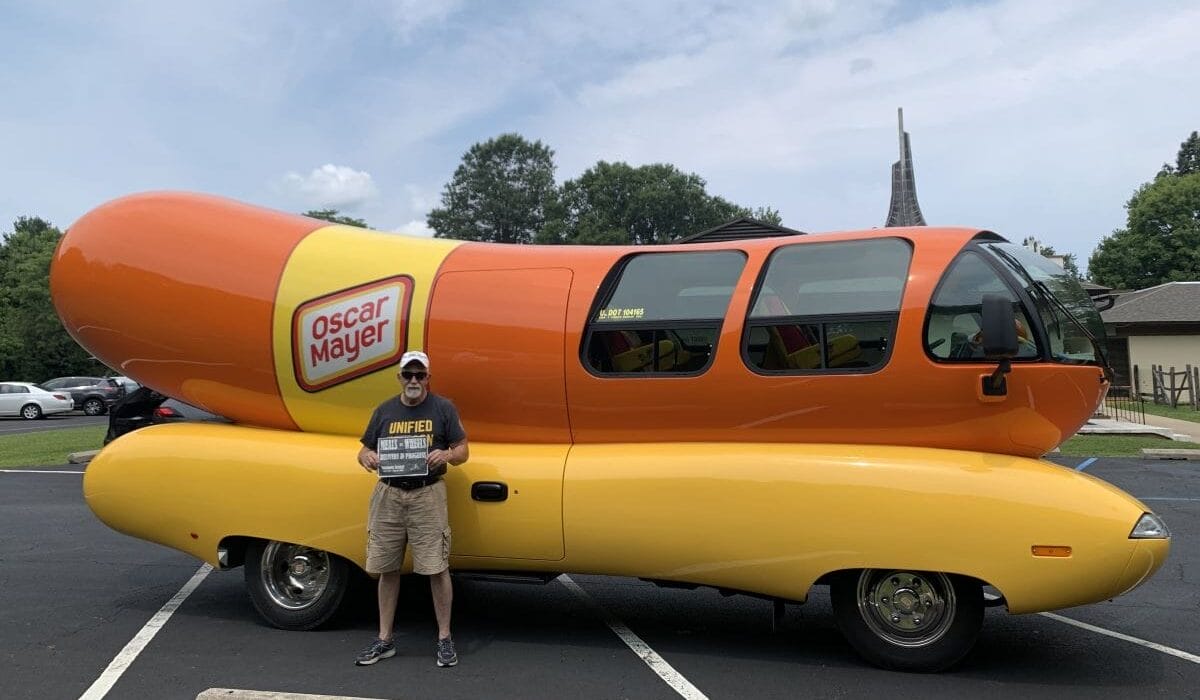
The Oscar-Meyer Wienermobile stops in Wilmington on a cross-country trip to help Ed Isbell deliver food on one of his Meals on Wheels routes.
Why is it important for others to get involved with causes they care about?
I think it makes you a better person. You recognize that we should feel fortunate that we’ve had the life that we’ve had, and it’s of utmost importance to provide to those who are less fortunate. In everything that I’ve done — Special Olympics, Meals on Wheels, SPCA — the people I’ve interacted with don’t have a lot of what we have. We worked for 40 plus years and have a nice retirement, and now it’s time to give back.
Any advice for people who want to start volunteering?
You can use any search engine to look for volunteer opportunities in whatever city you live near, and just pick what’s good for you. Some people want to get involved with politics. My oldest daughter, goes to the polls and helps out on election days. That’s her way of giving back.
Find something that you think you would enjoy and give it a try. If you don’t like it, there are all kinds of other volunteer organizations that have different things you can do for them. Something that you really enjoy you’ll want to stick with for years. I plan on doing this until I’m at least 80. I’m going to just keep doing what I’m doing as long as I can drive.
What do you want people to learn from your story?
If you’re going to retire, and you want to do something with your life, volunteering is excellent. It doesn’t matter what it is as long as you’re contributing and making somebody’s life better. If I can bring an 80-year-old woman cat food who can’t get her own, and I see the happiness on her face, it makes me feel good that I’m helping.
Do you want to make a difference in your community like Ed? Find local volunteer opportunities.
North Dakota Retiree Says Thanks by Serving Up Smiles to Veterans
Meet Daily Point of Light Award honoree Harlan Johnson. Read his story, and nominate an outstanding volunteer or family as a Daily Point of Light.
When his wife was transported to a hospital via helicopter during her battle with cancer, Harlan Johnson learned how much support he had within his community. Now, the North Dakota retiree is spending his days helping others in return.
It’s a 60-mile drive from his home in Mayville to Fargo, but Harlan takes his role as a volunteer seriously. As a member of the Red Coat Ambassador Program at the Fargo VA Medical Center, Harlan dons a bright red coat to provide a friendly face to every veteran that walks through the facility’s doors. That journey can be particularly challenging during North Dakota’s howling winters, but Harlan does have company on the one-hour drive: He is joined by his wife Marlene, who volunteers by his side at the front door of the hospital. Together, they make the visit to the facility a little less intimidating for those who have selflessly served their country.
In addition to his work at the Fargo VA, which has totaled over 600 hours over the last five years, Harlan volunteers with Meals on Wheels, and is an active member of the American Legion. Inspired by his father, who once commented that it would be great to have flags lining the road on the way to the cemetery in honor of veterans, Harlan co-created the Avenue of Flags. The annual program features over 200 American flags dotting the roadway on holidays like the Fourth of July and Veterans Day. But no matter what organization Harlan is dedicating his time to, he’s doing it with gratitude for the tremendous support his community showed him during his time of struggle.
What inspires you to volunteer?
My wife got leukemia and was life-flighted to Rochester. The whole world was spinning out of control for me, and we had a community here that wrapped themselves around us. So, when everything got better with my wife, we decided that we needed to help our community and other people after all they’ve done for us. That’s how I got started in volunteering, and I thought one of the better ways of doing it is with veterans.
Tell us about your volunteer role with the Fargo VA Healthcare System.
My wife and I are at the front door of the VA Center. When people walk in there, they’re looking for their place of appointment. We’re there to meet them or assist them in getting to their place. It’s quite a complex and confusing building, and a lot of these veterans come in there, and they just don’t know where to go. We greet them, give them a good morning and assist in getting them to their place.
The volunteer work you do takes you on the road a lot. With North Dakota winters, is that intimidating?
It’s about 60 miles to the Fargo VA Medical Center, and in the winters here in North Dakota, we get a lot of snow because it’s so open down here. When the wind decides to start howling, everything is going to move, and the road can be very, very challenging. We do the best we can to get there and get home again.
What’s been the most rewarding part of your work?
Most people are so gracious to have somebody help them out, especially when they’re in that position where they need a little bit of help. I can’t exactly put into words how it is or what I’m looking to get out of it, because I’m not looking for anything myself. I’m just trying to help other people out. I think what we need to do is be there to help other people out.
What have you learned through your experiences as a volunteer?
When my wife got cancer, the community here wrapped themselves around us, because that’s what small communities do. If somebody’s having a difficult time, people all band together and help them out. I remember asking my minister how we’re going to pay these people back. He told me we’ll never be able to. He said what we need to do is pay it forward and be there for the other people.
Why is it important for others to get involved with causes they care about?
You need to be part of your community. We’re all here on this earth to try and make things better for everybody. There’s a lot of negative stuff going around, tearing people down and berating people, and I don’t believe that’s why we’re here on this earth. We’re supposed to help one another. It’s very important that we help our fellow man. We hear so much of the negativity, but there’s an awful lot of positivity here too.
Any advice for people who want to start volunteering?
It can start in the littlest places, you know? I have friends of mine getting close to retirement, and they say they don’t know what they’re going to do when they retire. They say, I don’t have any hobbies or anything. And I said, when you retire, you can be as active in your community as you want to be. If you really want to do volunteer work, you just have to ask, find something that you’re interested in and then pursue it.
What do you want people to learn from your story?
I just want to set an example that maybe one day they will look at it, and say you know, I want to do some of that too. I want to feel good about something. You’ve got to help out the world and your community.
Do you want to make a difference in your community like Harlan? Find local volunteer opportunities.