Building Community and Confidence Through Pickleball
Meet Daily Point of Light Award honoree Reid Jarjosa. Read his story, and nominate an outstanding volunteer or family as a Daily Point of Light.
Reid Jarjosa’s volunteerism through City Pickle has brought incredible impact to Detroit’s youth. Founded in 2022, City Pickle is a nonprofit organization that uses pickleball to engage kids in active, social recreation while building their confidence and teamwork skills. Reid is not only the founder but also a dedicated volunteer, helping run programs for children aged 5 to 17 in partnership with Detroit Parks and Recreation and the Boys & Girls Club of Southeastern Michigan.
To date, City Pickle has trained over 1,500 kids across 10 locations, offering fun and structured pickleball activities during both summer and after-school programs. By providing access to free sports opportunities, City Pickle fosters community spirit and encourages healthy lifestyles in underserved neighborhoods. Reid’s passion for this work and his efforts to expand these programs to more locations are helping Detroit’s youth grow in ways that extend far beyond the pickleball court.
City Pickle’s programs focus not just on athletic skills but also on personal growth, teaching participants the values of teamwork, perseverance and healthy competition. By organizing events like round-robin tournaments, Reid fosters a sense of community while offering kids an outlet to develop both physically and socially.
Read on to learn more about Reid’s commitment to ensuring that children of all backgrounds have access to these opportunities.
Tell us about your volunteer role.
I started City Pickle, which is an organization that develops kids socially and athletically through pickleball. I started this organization when I was down in Detroit and I noticed there were a lot of unused tennis courts, overgrown with weeds. This sparked an idea, as I was going into my ninth grade year, about how I could make a meaningful impact by converting these courts into pickleball courts, getting kids to play on them and teach that sport, which I had been learning and my family and friends had been playing.
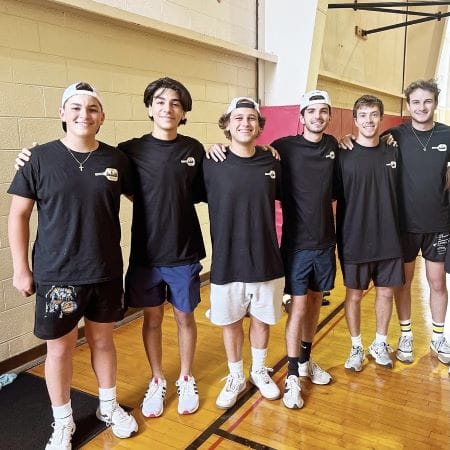
A group of City Pickle volunteers and Reid take a photo inside a gym during a session at one of our locations.
I’m a junior now, and pickleball has exploded. It’s currently the fastest-growing sport in America. These kids in Detroit deserved to be exposed to this sport, which is being played everywhere. I didn’t want them to be left behind. To be able to get outside and get active throughout the whole year is really great. We’re partnering with the Boys and Girls Club and we instruct their kids a couple times a week. We’re also with Detroit Parks and Rec, instructing their kids as well.
Some of these courts are in pretty bad condition and might be unusable, and in those cases, we go into the gym for pickleball. We focus on teaching and instructing kids about the sport and getting them more active. We have summer camps in the summer and those kids are coming there daily or every other day. Some of them are in foster care and we might see them once a month, here and there or not very often. The consistency is a very difficult situation for them as they don’t always know where they’re going to be living or who will be taking care of them. That can make it difficult, because I want to build a relationship with each of the kids, learning their names, how they play, what they’re interested in. But we do have kids who are pretty consistently there too.
Why is this issue so important to you?
Obesity is a very big problem in this country, especially in lower-income communities. Getting kids active helps with that issue. Socially it’s crucial as well. Since the pandemic, it’s been difficult for kids to socialize, and they missed out on a couple of years of social growth. So now, they’re able to grow and communicate with each other through pickleball and through the structured engagement City Pickle offers.
What are your long-term plans or goals for the organization?
Within the next couple of years, we’d like to expand to more locations. The Boys and Girls Club has over 10 locations. Right now, we’re with them two times a week in the winters and three or four times a week in the summers. But I think being there daily as a part of structured programming, and getting to know the kids better and more consistently would be great. For that, we will require more volunteers as we grow.
Even longer-term goals would be bringing this to other cities, like Chicago – which isn’t too far from Detroit – and getting even more kids involved in the sport.
What’s been the most rewarding part of your work?
Last Christmas, we wrapped little presents in holiday paper and went down to Detroit a couple of days before Christmas to give them out. We had fidget spinners, slinkies, boxes of slime, fun items like that. Everyone opened their gifts, but this one little girl just wouldn’t open hers. When another volunteer and I asked her why, she said it was because it was the only thing she was getting that year, so she wanted to save it for Christmas Day. After that, I went to Target and bought her a couple more gifts. It was a moment I realized, “this is why I do this.”
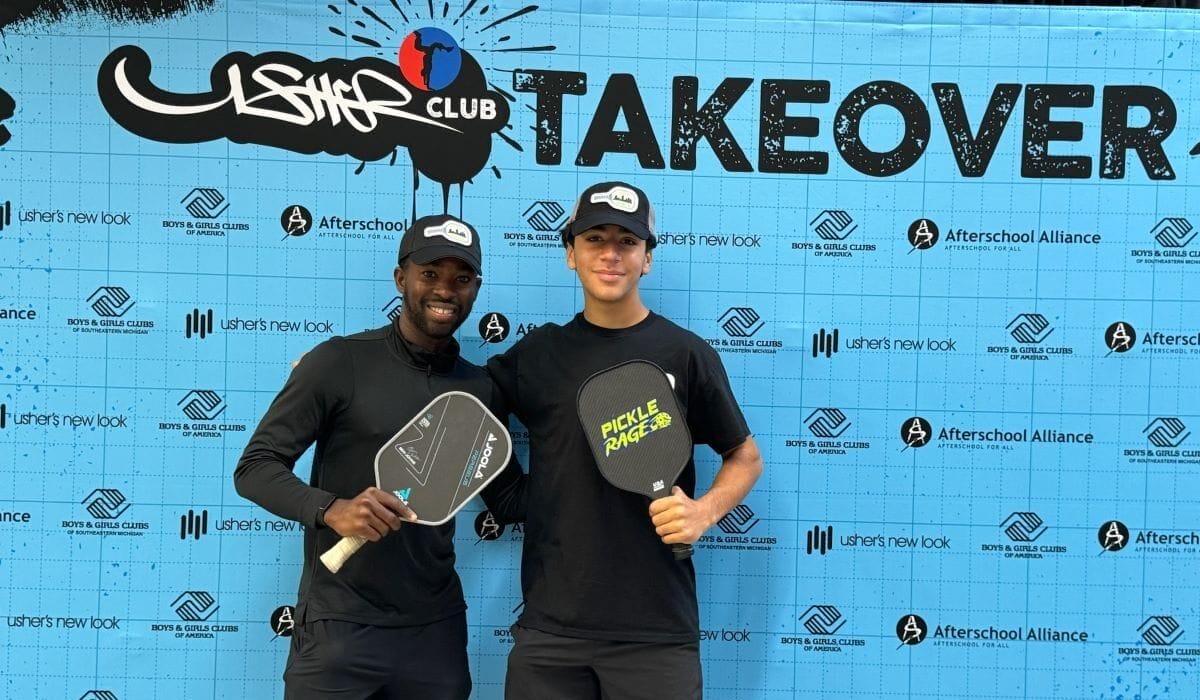
A City Pickle volunteer and Reid pose for a photo at a Comcast-sponsored Olympics Day event at the Boys and Girls Club of Southeastern Michigan.
What have you learned through your experiences as a volunteer?
I’ve learned about the impact you can make on a person’s life just giving two or three hours a day. Getting involved in the community has been really meaningful for me, as well as everyone else who volunteers. The smiles on these kids’ faces when they get donated paddles and nets – the enjoyment and surprise on their faces is always amazing. When I’m driving back from our events, it just makes my whole week better.
Why is it important for others to get involved with causes they care about?
It’s important for people – kids and adults – to be part of something bigger than themselves, as well as being part of a community. Some of these people are just casual players, who might have some experience working with kids. That combination works really well. They’re able to give a couple of hours to show kids a sport that they spend a lot of time playing and really enjoy. Sharing that experience with the kids makes a really profound impact.
Any advice for people who want to start volunteering?
For high schoolers, there are lots of opportunities. I originally went to my church, which had a bunch of sign-up service opportunities. They come pick you up and then tell you what kind of service work you’re going to do that day – whether it’s taking out trash for some communities or cleaning up a yard. You can get a couple of community service hours. That’s a big way of getting involved. For adults, there are also a lot of opportunities. Looking into community center sign-ups or online for opportunities are great places to start.
Do you want to make a difference in your community like Reid? Find local volunteer opportunities.
Facilitating Connections in Health Locally and Globally
Meet Daily Point of Light Award honoree Aditya Tyagi. Read his story, and nominate an outstanding volunteer or family as a Daily Point of Light.
In June 2022, at age 14, Aditya Tyagi founded Connect2Health. His goal was to address health disparities in underserved communities in Arizona. Through Connect2Health, Adi and his team cater to underserved communities, including the unhoused, uninsured and others in need.
Connect2Health mainly ensures access to healthcare services through mobilizing resources, impactful partnerships and engaging volunteers to tackle critical issues people face. Their goal is to eliminate food insecurity and provide healthcare access. Through the work Adi has done as the founder of Connect2Health, he has successfully distributed over 1,269 senior food boxes, 1,550 naloxone kits, 100 hygiene kits and 91,150 meals to malnourished children. He has helped organize crucial health screenings and raised awareness for organ donation, improving thousands of lives.
Connect2Health currently partners with 11 organizations, and its volunteers have volunteered over 330 hours, serving 8,300 community members across five counties. As Adi and the Connect2Health volunteers continue to offer their time to their communities, they are tirelessly working to expand their impact.
What inspires you to volunteer?
I live in a household where my brother has autism and my dad has psoriatic arthritis. Thankfully, they got the necessary care, but not everyone is as fortunate. Since their diagnosis, it became apparent to me that a lot of people have limited access to healthcare, and it shouldn’t be this way. No one should face this inequality, and this inspired me to start Connect2Health, a nonprofit where people can connect to the resources they might need. Connect2Health not only caters to medical needs, but it also appeals to food, clothing and education.
Tell us about your volunteer role with Connect2Health.
I am the founder of Connect2Health.I contribute approximately 30-35 hours monthly to leading and managing various initiatives. My duties include coordinating partnerships with nonprofit organizations, organizing and distributing essential items such as health kits, food boxes and wellness kits, and overseeing health screening events. I provide resources to people facing health disparities and
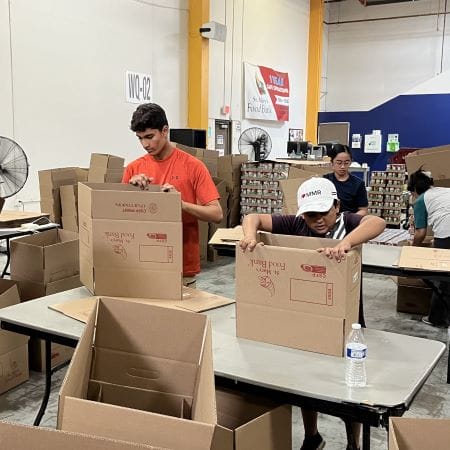
Adi Tyagi works with Connect2Health volunteers to sort and box medical equipment for small hospitals. /Courtesy Aditya Tyagi
inequality in human resources. I knew this was a significant problem and understood I could not do it alone, so eventually, with the help of my family and friends, I started a club at school and continued our work outside of school.
What inspired you to get started with this initiative?
Watching my brother and father attend many doctor visits, I realized its impact on my mom and myself. It became my responsibility to take care of both with my mom, and even with my mom being the primary caretaker, I found myself struggling to keep up with school. Thankfully, they are doing much better today, but eventually, I realized that my situation seemed quite fortunate compared to many others.
I don’t believe anyone should be afraid to visit the hospital because of how much it may cost them. But it seems very few people know about free clinics or free food banks, and that is where I came in to fill the gap.
What are your long-term plans or goals for the organization?
I would like to make Connect2Health available in more communities across Arizona. Aside from focusing on Arizona, we would like to expand to other states, such as California or Texas.With expansion comes the need for more volunteers. We hope more people will join us and contribute to the cause.
Lastly, we plan to partner with more organizations and become more widespread. Our objective is to get our name out there!
What’s been the most rewarding part of your work?
The most rewarding part of my work has been the reactions of people who are in need. The kindness the unhoused population has shown me has been overwhelming. They are always grateful to be acknowledged and cared about, which gives me joy at the end of the day.
Not long ago, I gave this man a kind kit. Before he received it, I briefly talked with him, revealing I planned to become a doctor one day. Upon receiving his kit, he told me, “You’re going to make a great doctor.” His kind words touched my heart; I was grateful he was happy and reminded me that I was on the right path to success.
What have you learned through your experiences as a volunteer?
Volunteering taught me the importance of patience, compassion and perseverance. Not everyone will be willing to accept the help they need; persistence is essential. My greatest gift is the knowledge I’ve acquired to positively impact underserved communities, whether that may be helping someone whose English is not their first language or who might just need guidance.
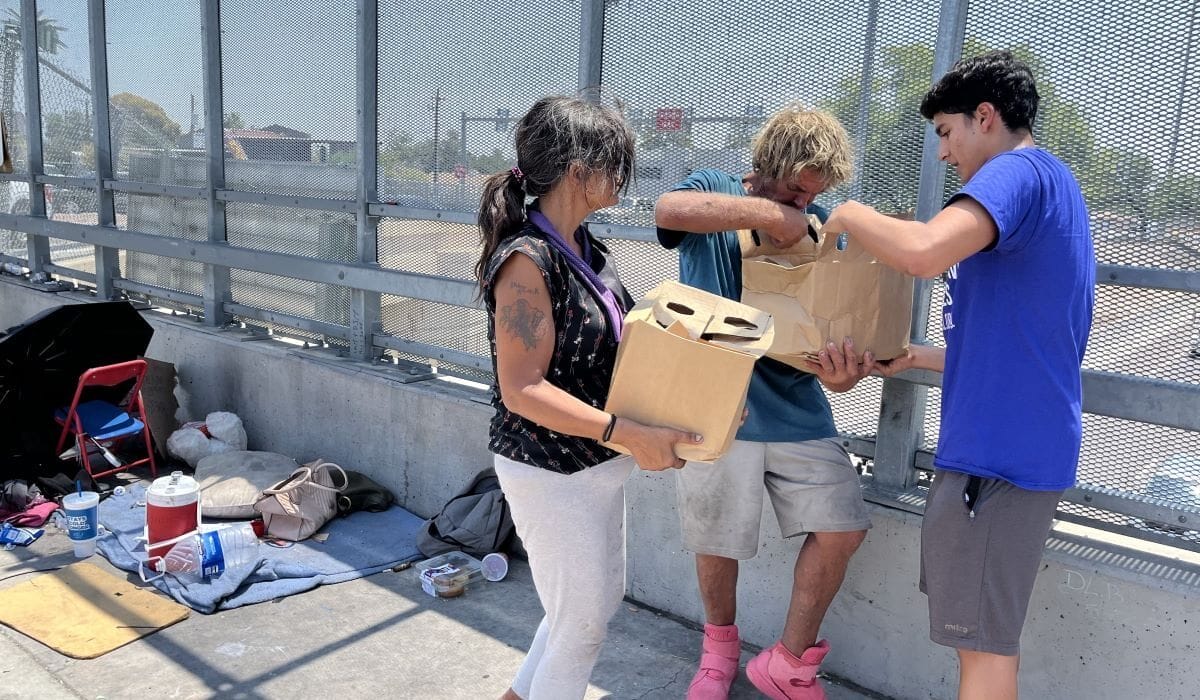
Adi Tyagi gives individuals unhoused emergency food boxes and water bottles in Arizona. /Courtesy Aditya Tyagi
Tell us about future partnerships, programs, or events that you are excited about.
In school, about every three weeks, we host an event where anyone can sign up to volunteer with Feed My Starving Children or Desert Mission Foodbanks. During this time, we gather to pack food and distribute it to underserved communities or families in need across Arizona. Our goal is to eventually partner with more nonprofit organizations whose values align with ours to expand our outreach as much as possible.
Why do others need to get involved with causes they care about?
People need to get involved with any cause because it is noble. Not only does community service benefit the community you are helping, but it also always increases your self-esteem. It is a mutually beneficial effort for both those receiving the help and those who are giving the help. The benefits are endless, mentally, emotionally and even physically.
My grades have improved significantly; I am more confident and energetic and am a better person overall. The ability to make a difference in someone’s life is genuinely monumental and self-motivating.
Any advice for people who want to start volunteering?
You don’t need to be part of an organization or become an “official volunteer.” You can begin volunteering in any way possible, whether helping an unhoused person or saying a few kind words to your community. It all makes a difference in the end.
What do you want people to learn from your story?
Despite the many daily obstacles, the end goal is a vast reward. Helping people is worth any extra time; there are never enough excuses not to give back. I find it challenging to balance my schoolwork and extracurriculars right now, but once you begin helping people out, it all becomes worth it. If you haven’t started volunteering, I highly recommend doing so.
Do you want to make a difference in your community like Aditya? Find local volunteer opportunities.
Breaking Ground: California Teen Teaches Sustainable Gardening
Meet Daily Point of Light Award honoree Vishruth Dinesh. Read his story, and nominate an outstanding volunteer or family as a Daily Point of Light.
Vishruth Dinesh, 16, loves sports. Whether it’s watching the Golden State Warriors or playing competitive table tennis. For the latter, he’s competed in tournaments all the way up to nationals but equally enjoys a pickup game with friends. However, his main hobby is gardening. It started with backyard experimentation in the early days of the pandemic and led him to get involved with his school’s Garden Club.
It’s this passion for growing things and his dedication to environmentalism that led him to create The Green Therapy (TGT) in late 2022. His mission is to inspire and empower youth to become self-sustainable through gardening while simultaneously combating climate change. Partnering with schools, TGT establishes curricula and gardening-based educational programs that engage kids in outdoor learning.
So far, his 10-person team has worked with 2,500 students through workshops across 14 schools and has reached around 12,500 through educational material and campaigns. Together, program participants have planted 7,250 California-native seeds and donated 350 pounds of fresh produce to people facing food insecurity.
What inspires you to volunteer?
In the beginning of the pandemic, I started experimenting with plants and completely populated my backyard with whatever I could grow. I’d create schedules of exactly which location each plant was in, the name, how much water it needed, etc. That catapulted me into getting involved in my school’s Garden Club. My sophomore year, I became president, but I was anxious to share what I was learning beyond my school.
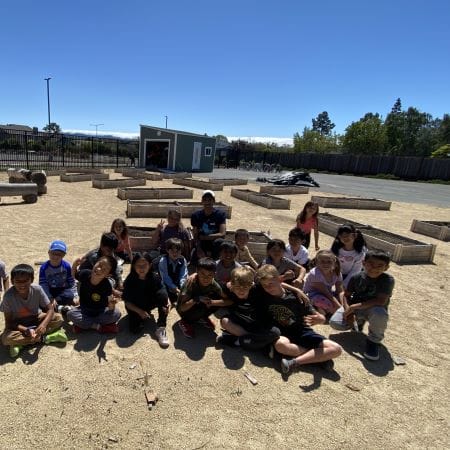
Vishruth (back row, white cap) and Beach Park Elementary students rest after sowing bean seeds in the school’s newly-constructed garden beds.
I’ve always been passionate about climate activism. I struggle to understand why, from the thousands of species we’re driving into extinction to mass deforestation, humans are ripping apart our own planet. But when I looked for ways to initiate change, I always found solutions I wasn’t in a position to carry out, like switching to an EV or voting for candidates promoting green policy. Sustainable gardening is something that everyone can get involved in. It’s not just beneficial from a climate action lens, but it’s something I’m genuinely passionate about. That’s why I started TGT.
Tell us about your volunteer role with The Green Therapy.
As the founder and executive director, I take on various leadership roles: overseeing finances, directing community relations and managing volunteers. I also draft and submit grant applications and expend funds for events.
Typically, we reach out to schools and identify a staff member who will serve as the garden coordinator for the year. Then, we adjust our gardening program and educational material to align with each school’s unique learning standards and expectations. We visit twice a year to host workshops that include both an educational and hands-on component. Essentially, we teach students about how to start self-sustainable gardens, the relationship between food and climate, how gardening is related to environmental concerns, and most importantly, what young people can do to fight back.
The ultimate goal of the hands-on component is to ensure that students have the knowledge to garden beyond the school environment. We guide them through the growing process, working with things like sunlight levels, irrigation strategies and pest control. Our main focus is fruit and vegetables, but we encourage schools to grow native plants to increase biodiversity. California milkweed is one of the most popular, because it attracts monarch butterflies, which are increasingly endangered.
Tell us about starting out to now working with 14 schools.
It was difficult in the beginning, because we hadn’t developed our educational program or environmental curriculum. It was hard to show people what we could bring to the table. Our first partnership with Oliveira Elementary was pivotal, because we utilized that to test out strategies and material and to learn to optimize student engagement. Once we had the basic framework set up, it was just a matter of reaching out to different schools and seeing who was interested in prioritizing environmentalism.
What’s been the most rewarding part of your work?
It’s motivating to see kids excited about nature and willing to contribute to this cause.
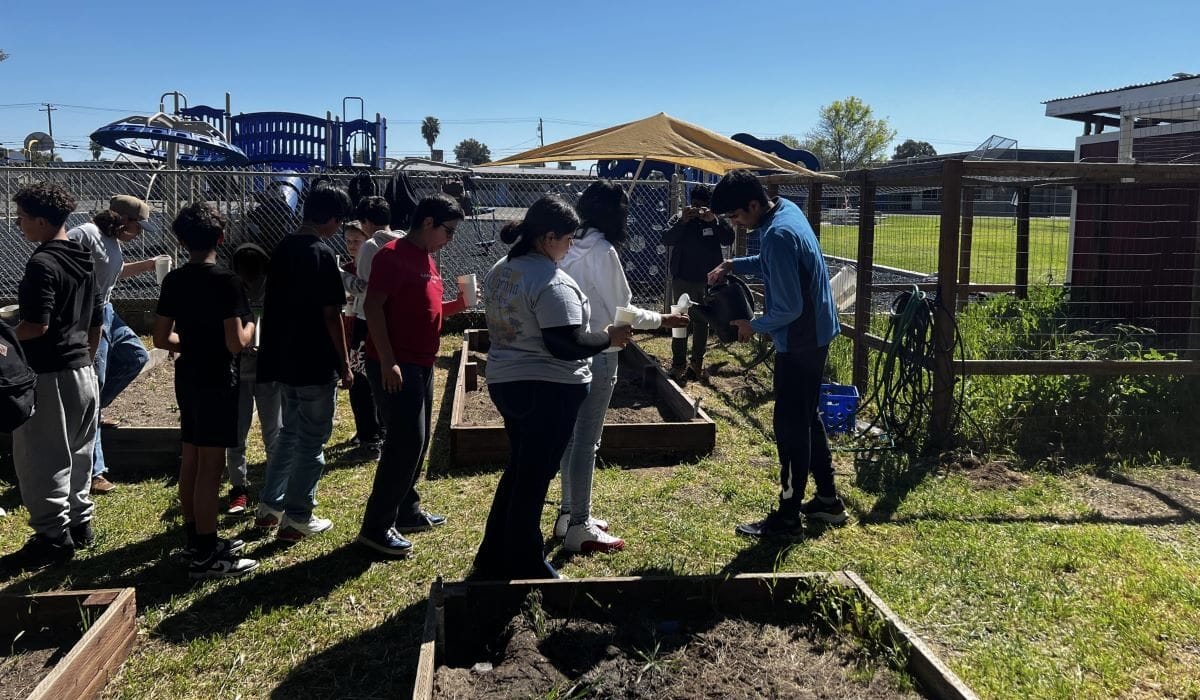
Students at Lammersville Elementary students line up for water from Vishruth (far right) as they plant out a garden with spring crops.
What have you learned through your experiences as a volunteer?
I’ve made a lot of mistakes throughout the past two years and have accepted that I’m not always going to be perfect. One time, I brought too few seeds for an event, and a fourth of the class went home that day without seeds to plant in their cup.
From forgetting to bring shovels to showing up to an event too early, I stumbled time and time again. But each time, I learned to better deal with adversity and to learn from mistakes.
I also realized how diverse we are as a community, how we have different beliefs, values and understandings of the world around us. Not everyone has to be interested in what we’re doing or passionate about environmentalism. I’ve learned to accept that and modify our material to reflect the interests of the population we’re working with.
Do you have any advice for new gardeners?
I started out growing a single tomato plant, and white and brown bulges started showing up that were symptoms of a disease. I used a pruner to shave them off, but in doing so, I made the plant more prone to disease. I’ve come a long way.
Anyone can learn about gardening if they’re passionate and spend the time. It can start in your backyard and turn into something that leads you to get involved in your school or community.
What are your long-term plans or goals for the organization?
My goal is to continue building and strengthening our school garden network. It’s also to inspire students who may want to create other initiatives to not keep their ambitions and desires bottled up. When I started this organization, I would often find myself paralyzed by uncertainty. I want to encourage people to chase their dreams and focus on things that matter to them.
Do you want to make a difference in your community like Vishruth? Find local volunteer opportunities.
Growing Community: 20 Years of Helping Farm Families Thrive
Meet Daily Point of Light Award honoree Bill Gross. Read his story, and nominate an outstanding volunteer or family as a Daily Point of Light.
Bill Gross is familiar with the rigors of farm life. That’s why it’s no surprise that the North Dakota native founded Farm Rescue, an organization that helps farm and ranch families navigate periods of crisis.
Growing up on an agricultural and cattle farm, Bill was taught the dedication that’s required to work in the fields and care for animals. However, he also learned about the hardships. During the farm crisis of the 1980s, Bill’s family property faced an uncertain financial future. Told by his parents that they didn’t have the resources to pass the farm down to him, Bill pursued a career as a commercial airline pilot. But wherever he flew in the world, Bill felt connected to life back on the farm.
“My heart never left the farming community or rural America, and I had a passion to return and do that,” he shares.
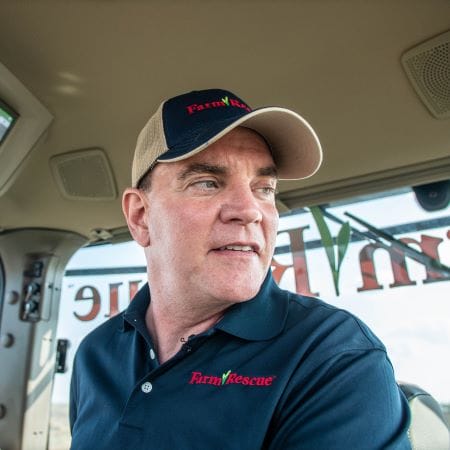
Farm Rescue founder Bill Gross operates machinery to serve a family farm in crisis during the planting season. (Courtesy Bill Gross)
After traveling overseas on various mission trips throughout the years, Bill started to think about the people who needed help in his own backyard. Encouraged by friends to get started sooner rather than wait for his retirement, Bill decided to take action. But first, he needed to find other people who were dedicated to the cause. Bill gathered volunteers and found a company willing to sponsor some farming equipment.
In their first year of existence, Farm Rescue planted crops for 10 farm families that had experienced major illness, injury or natural disaster. During his days off from his job flying planes, Bill would travel between states, visiting the farms and volunteers while stopping at local businesses to raise the funds to keep the organization afloat. Every year since, the organization has grown, both in terms of the number of families they’ve provided assistance to and the locations they’ve reached.
Over 1,000 family farms in nine states have received assistance from Farm Rescue, which mobilizes equipment and volunteers to get the tasks taken care of on each farm during the period of hardship. Whether it’s planting, haying, harvesting crops or feeding livestock, volunteers from Farm Rescue arrive at each farm to provide a hand in their time of need.
“When a farm or ranch family has had an injury or illness, or their farm was burned up or flooded and they can’t get the work done, we come in and do the work for them so they can maintain their livelihood,” explains Bill.
Bill refers to that assistance Farm Rescue provides as the “tangible” aspect of the organization’s work. However, he says it’s the “intangible” aspect that he’s perhaps even prouder of.
“It affects small-town America drastically if you lose these family farms,” he explains. “This helps the communities and the children. Maybe that farm isn’t saddled with debt, or maybe their children can go on to higher education because of our assistance to that farm family, just like myself. We’re providing relief to those families, which hopefully is paying dividends forward in many different ways in society.”
Kyle Nelson directly experienced the impact of Farm Rescue’s work after his father-in-law suffered a stroke. When a neighbor reached out to Farm Rescue to say that the family’s farm may require assistance, Kyle was blown away by how the organization mobilized to help. A decade later, Kyle serves as Vice President of the organization.
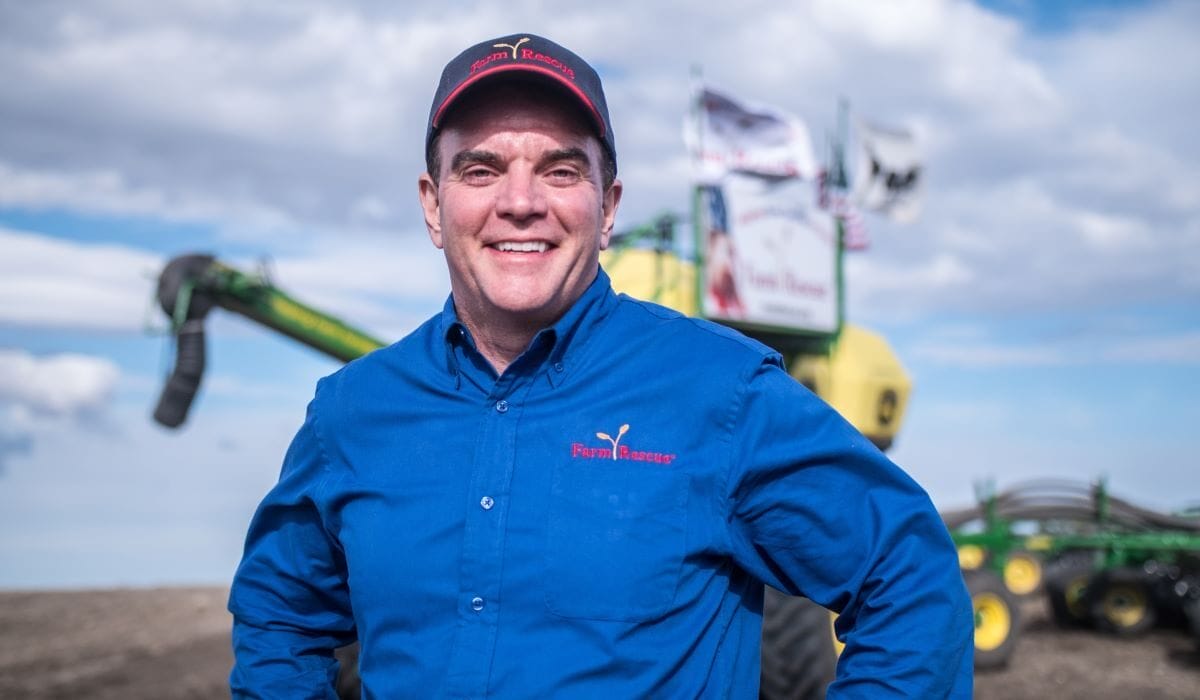
Farm Rescue founder Bill Gross stands in front of air seeding equipment that the organization uses to help farm families in crisis. (Courtesy Bill Gross)
“The amazing work that Farm Rescue has done and how it’s grown is just very, very impressive,” says Kyle. “The majority of that can be attributed to Bill’s leadership.”
In 2025, Farm Rescue will celebrate its 20th anniversary. In those two decades of existence, over 1,000 volunteers have stepped up to assist the organization, coming from every state in the nation. But despite its massive success, Bill says Farm Rescue’s work is far from complete.
“We receive more applications than what we can assist, so our number one goal is growing the capacity of the organization because there are more families in need,” says Bill, who notes that Farm Rescue has already grown “way larger” than he ever envisioned. Still, it all comes back to the lessons that were instilled upon him as a child on the farm in North Dakota. “I was taught to help other people.”
Do you want to make a difference in your community like Bill? Find local volunteer opportunities.
Leaving A Legacy of Service and Memorial at the National WWI Museum
Meet Daily Point of Light Award honoree Kelton Smith. Read his story, and nominate an outstanding volunteer or family as a Daily Point of Light.
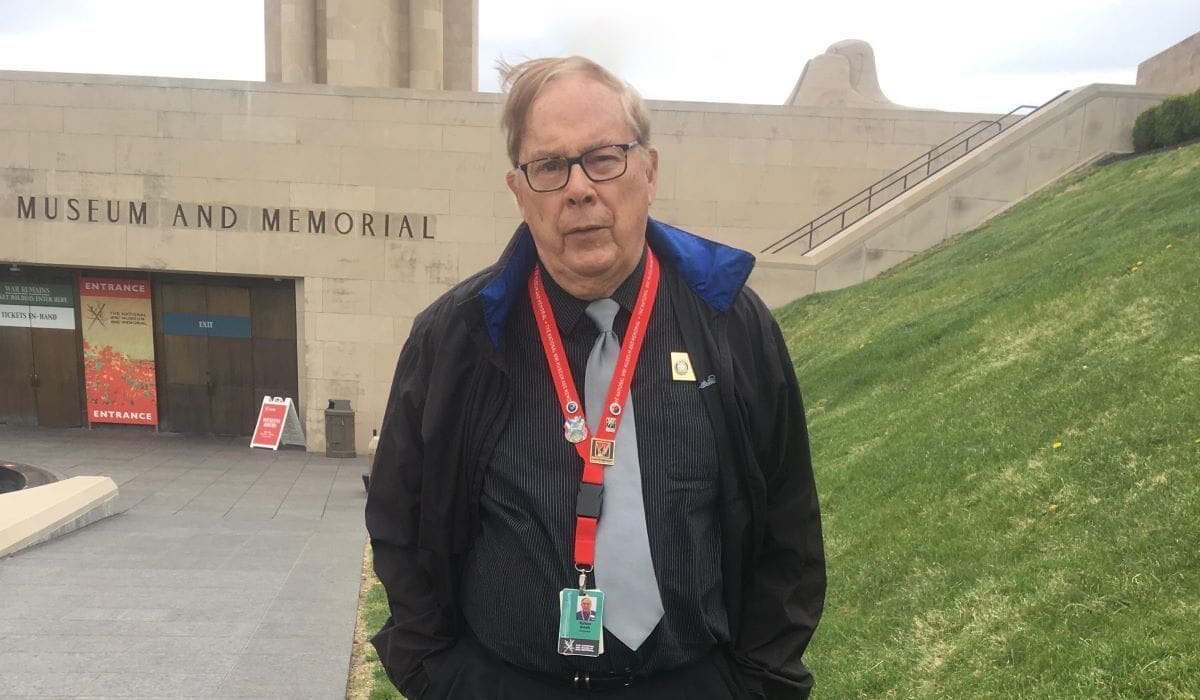
For over two decades, Kelton Smith has donated his time and talent – as well as his dedication, passion and leadership – via volunteer work at the National WWI Museum and Memorial. Since March 2000, Kelton has generously devoted more than 10,000 hours to a variety of roles, from supporting daily operations to leading outreach presentations. The magnitude of this commitment is itself inspiring, but even more impressive is that Kelton is still actively volunteering in this capacity, even at the age of 85.
The National WWI Museum and Memorial, located in Kansas City, Missouri, is a leading institution dedicated to remembering and educating the public about World War I. Through exhibitions, research and educational programming, it explores the global impact of the war and its enduring legacy. The museum holds the most comprehensive WWI collection in the world, offering visitors an immersive experience through artifacts, interactive displays, and personal stories. Its mission is to educate, engage and inspire the public by showcasing the profound effects of WWI on history and modern society.
Kelton’s background as a former teacher has played a key role in shaping his approach to his volunteer service. He brings an educator’s passion and precision to every interaction, engaging visitors with a deep knowledge of World War I history. His ability to concisely and hospitably explain the enduring significance of WWI has left a lasting impression on countless guests. As one of the first volunteers when the museum’s Main Gallery opened in 2006, Kelton helped lay the foundation for what has become a key historical and educational institution in the country.
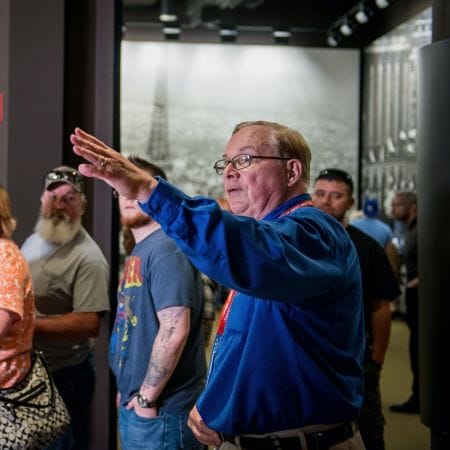
Kelton Smith leading a tour at the National WWI Museum and Memorial.
Beyond his work with visitors, Kelton has also played a crucial role in the museum’s volunteer program. As a leader of the program – which now boasts over 300 members – he has fostered a strong sense of community and purpose among volunteers. His dedication extends to fundraising efforts and community engagement, strengthening the museum’s connection with the city and its residents.
Nearly 25 years since he first began volunteering, Kelton’s presence continues to be an inspiration to all. His commitment to preserving history, educating future generations and nurturing a community of volunteers makes him an invaluable part of the National WWI Museum and Memorial. Read on to hear some of Kelton’s own words about what keeps him volunteering to help preserve our past for future generations.
Tell us about your volunteer role.
I have volunteered as a tour guide and docent from 2000 to 2024 – just over 10,000 hours – and have a few more good years to serve the public through the National WWI Museum and Memorial.
What inspired you to get started with this initiative?
My alma mater’s mission statement at Centennial time in 1958 was “that we may serve the future as we have been served by the past.” The city of Kansas City has a special place in my family and heart. Missouri is “home and hearth” and as one of our previous governors often said “keep the home fire burning” and return to the Heart of America.
The museum runs on the time and talent that its volunteers dedicate.
What’s been the most rewarding part of your work?
I am all History and Social Studies, plus a dash of Science and Fine and Commercial Art. I enjoy meeting the public and especially talking with the students. I meet people from all over the United States, as well as throughout the world. My specialties are Military History and Military Collecting —so you could say I am an “object” person too.
What do you want people to learn from your story?
Our many volunteers are a precious treasure trove of information, knowledge and experiences. Without my fellow volunteers our special one-of-a-kind museum would not exist. Never overlook the obvious — great leadership and staff.
Any advice for people who want to start volunteering?
To be a volunteer, be a people person and accept and interact with all people. Be a Midwesterner and be yourself.
Do you want to make a difference in your community like Kelton? Find local volunteer opportunities.
Youth Activist Leading Global Efforts to End Period Poverty and Stigma
Meet Daily Point of Light Award honoree Shruti Govindarajan. Read her story, and nominate an outstanding volunteer or family as a Daily Point of Light.
Shruti Govindarajan is the founder of Every28Days, a 501(c)(3) nonprofit dedicated to making a lasting impact on menstrual health for underserved communities. Shruti’s vision is ambitious: to donate 500 million sanitary pads while promoting menstrual health education and working to de-stigmatize menstruation. Through her leadership, Every28Days has grown to include chapters across the U.S. and is expanding internationally, with efforts underway in various countries.
Since the organization’s inception, Shruti has spearheaded numerous local fundraisers and international partnerships. Her ability to galvanize her team and connect with organizations globally has led to the donation of over 35,000 sanitary pads to individuals in need. Additionally, the organization has raised more than $15,000 to further its mission, gaining attention from local and national media outlets such as Buffalo Grove News and Information, where her efforts were highlighted for their positive community impact.
Shruti’s passion for menstrual health advocacy goes beyond just donations. She is actively involved in educating communities about menstrual health, organizing sensitization campaigns to challenge taboos and normalizing conversations around menstruation. These efforts have helped break down barriers to access and change societal attitudes toward menstruation, making a real difference for the individuals and communities Every28Days serves.
Read on to hear more about how this young woman is helping to create a world where menstruation is no longer a barrier to education, opportunity, or equality.
Tell us about your volunteer role.
I founded Every 28 Days approximately because I was heavily involved in community service prior, and I was getting involved in the communities in my area. While volunteering and providing services for people in one of the food pantries and I witnessed a lot of abandoned women in a very rural community. And a lot of them had come from prison. While I was dropping off all the goods, I conversed with them and they told me about their time in prison, including about their lack of access to menstrual products. Even though they were in a shelter where they had more resources, menstrual product access remained an issue – specifically the access to the quantity of products as they needed.
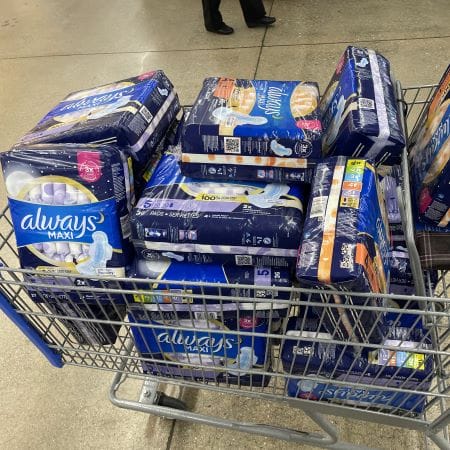
Pads to be donated await their recipients.
Hearing this as a woman and hearing this from many other women inspired the founding of my organization. It started out as, “how can I give these products to women?” And then that turned into a bigger project. I put a team together and founded Every 28 Days.
Why is this issue so important to you?
The elephant in the room – I’m a woman and I have my period every month. Not having access to those resources, I wouldn’t even know what that feels like. There are so many people who don’t have access to these resources.
This is about way more than just delivery of a product. It’s about giving a woman dignity, empowering them. It’s much more than just a pad. It’s giving them a voice, allowing them to feel heard, giving them a sense of security and safety within themselves.
Growing up, I visited my great-grandmother a lot before she passed away, and I would hear a lot of these stories from her as I was getting older. She would tell me about her time suffering through menstrual inequality. She would have to keep leaves, hay and other clothing as materials for menstrual pads because she didn’t have access to those resources and didn’t have the funds to purchase those products. This helped me appreciate the value of uplifting women. I’m lucky enough to afford and have access to these products, but so many people don’t, and I want to bring both access and attention to the issue via my work.
What exactly does Every 28 Days do to get these products to women?
We started by having fundraising events in stores. We had flyers to advertise our mission and vision and we would stand outside and ask for donations. Our first fundraiser ever raised about $500. That was a big amount for us as a starting point – we didn’t expect to raise that much but we did. We put that into the nonprofit’s bank account, and ever since then, we’ve had more and more events.
Then we started partnering with other organizations – such as Pinkishe, The Pride Project, Covenant House – with the same mission of providing access to menstrual products and eradicating period poverty, as well as supporting communities like the LGBTQ community which is discriminated against and often don’t have access to those products. We partnered with organizations across the U.S. as well as around the world, including India, Africa and Peru. Then we distribute the donations we collect to rural communities in and around Illinois and internationally as well.
Over the past several years, we’ve gained a lot of visibility and have a lot of partnerships, campaign events, fundraising events and on top of that have grown our single chapter into 5 different chapters across the U.S.
What’s been the most rewarding part of your work?
A specific interaction with NYAKA Global was particularly rewarding. We sent over pads, and they made a huge thank you post to Every 28 Days. They thanked us for the access to resources we’d helped provide. They sent us a video and every single girl was holding up their bag of pads. Being able to see that we had a tangible impact, literally being able to see the gratitude on their smiling faces – it was a beautiful moment for our team to see whose hands these products are going into.
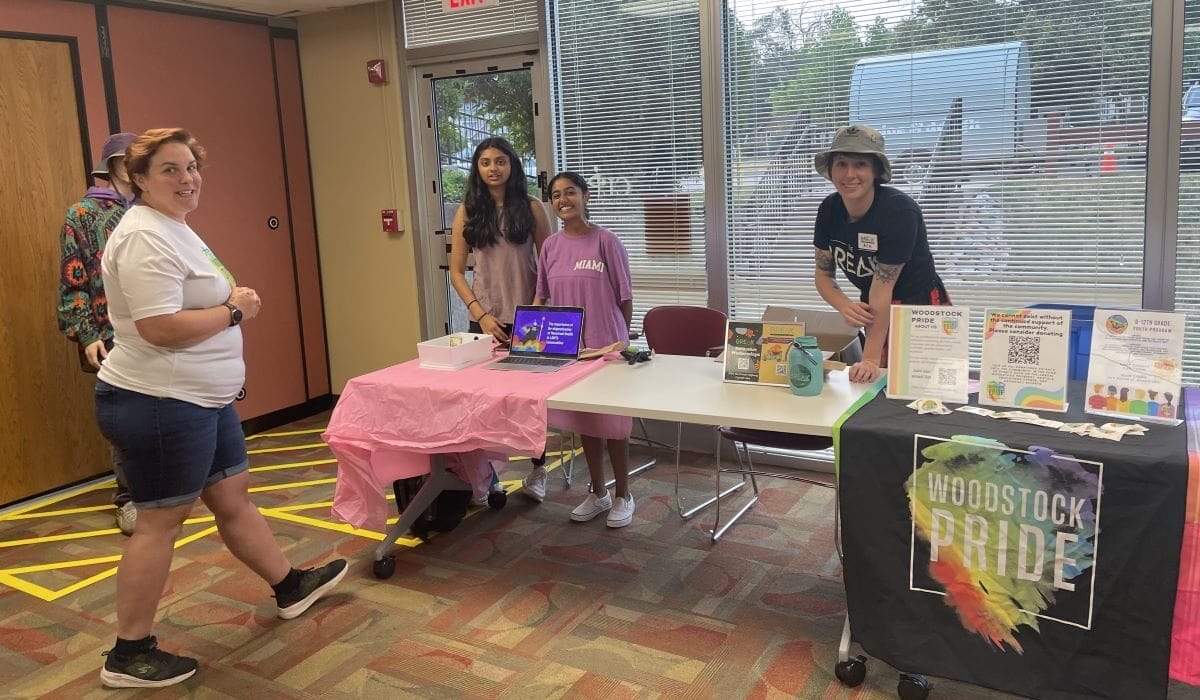
Shruti and the team host an Every28Days Pride Month Fundraiser at the local library.
What are your long-term plans or goals for the organization?
Our mission is to reach our primary goal of being able to donate 500 million menstrual products, which is obviously years down the road, but hopefully we can achieve that one day, especially as we’re able to provide pads more efficiently, faster and to more organizations. We’ve currently distributed around 35,000 to 40,000 menstrual products.
Our second goal is developing a reusable pad that is near free-of-cost or highly affordable to rural communities.
Why is it important for others to get involved with causes they care about?
Coming from a youth activist: I think the youth have a lot of changemaking potential in their hands. They’re able to learn from previous generations, then expand on and elaborate on that in their own unique ways. I think they hold the keys to success and reform.
Any advice for people who want to start volunteering?
Advocate and be persistent in what you believe in. Follow something you’re passionate about.There are volunteering and service opportunities all around you. Whether that’s tutoring a kid who goes to your school, local food pantries, donation drives… wherever you’re located, you can get involved.
Do you want to make a difference in your community like Shruti? Find local volunteer opportunities.
A Florida Teen’s Love of Books Inspires the World to Read
Meet Daily Point of Light Award honoree Natasha Agarwal. Read her story, and nominate an outstanding volunteer or family as a Daily Point of Light.
While Natasha Agarwal always loved to read, it was the realization that some kids lack access to books that motivated her to make a difference. As an eighth grade student during the COVID-19 pandemic, Natasha started seeing news stories on TV about kids across the country who lacked access to books. This was a “disconnect” for Natasha, who always had access to bookstores and libraries.
“That really made an impact on me, and got me upset – the fact that people didn’t even have one thing at home to read when I had maybe dozens of books in my library at home,” says Natasha, who started delving into statistics about literacy. She was shocked to discover the disparities, like how 61% percent of low-income families have no books at all in their homes for their children. But it was also what inspired her to make a difference.
“It really got me thinking that early childhood literacy is the foundation for educational and future success,” explains Natasha, now 17. “That inspired me to think about ways that I could take gently used books that I’ve finished reading and are sitting on my shelf and distribute them to kids who don’t have books.”
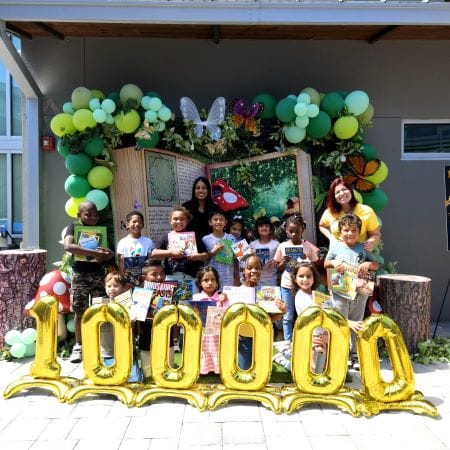
BelieveNBooks celebrates the distribution of its 100,000th book at Grace Place for Children and Families in Naples, FL. Natasha (center) poses with the children. (Courtesy Natasha Agarwal)
Natasha decided to host her first book drive at school and was shocked to discover that she and her friends managed to bring in 3,000 books. They were then donated to a local organization called the Guadalupe Center, which works to break the cycle of poverty through education. But the book drive’s success also sparked an idea in Natasha to think bigger and start her own nonprofit organization.
“Before that point, I really had no idea that that was even an option,” says Natasha. “But it was after that that I decided to turn it into a 501(c)(3) nonprofit organization.”
Four years later, Natasha’s organization BelieveNBooks has distributed 120,000 books through 25 community organizations. One of her favorite components of running the organization is seeing the joy on children’s faces when they’re handed a book to call their own. While they may only be 3 or 4 years old, their excitement is palpable.
“They get super excited when they’re told that they’re able to take home the books because this is the start of their home library,” says Natasha.
The Boys & Girls Club of Collier County is one of the organizations that has benefitted from Natasha’s work. Chief Development Officer Jennifer Nelson recalls that it was a recent donation from BelieveNBooks that provided the organization, which serves children from ages 6 to 18, with the opportunity to participate in summer reading groups and book clubs.
“Normally we don’t get a ton of book donations, and the books Natasha provides are incredible,” says Nelson, who noted that the most recent donation from BelieveNBooks provided multiple copies of the same book, so fourth and fifth graders could actively discuss each book with each other.
The previous summer, BelieveNBooks provided reading material for younger children at the Boys & Girls Club, along with information that allowed them to log into a website and read along with a video independently.
“It’s great if you have a parent or a teacher who does that, but that doesn’t always happen in the summer,” Nelson continued. “Natasha took it upon herself to do the narration and get all those pieces figured out, too. That was pretty big.”
There are now 10 chapters of BelieveNBooks, including one in Ghana. Natasha’s interest in Africa led her to write her own children’s book, Tales of African Women Trailblazers, which highlights the journeys of 21 African-born women who have overcome different forms of adversity. Natasha wrote the book in 2023 after she began researching the educational gap on different continents and discovered that women were disproportionately affected in Africa.
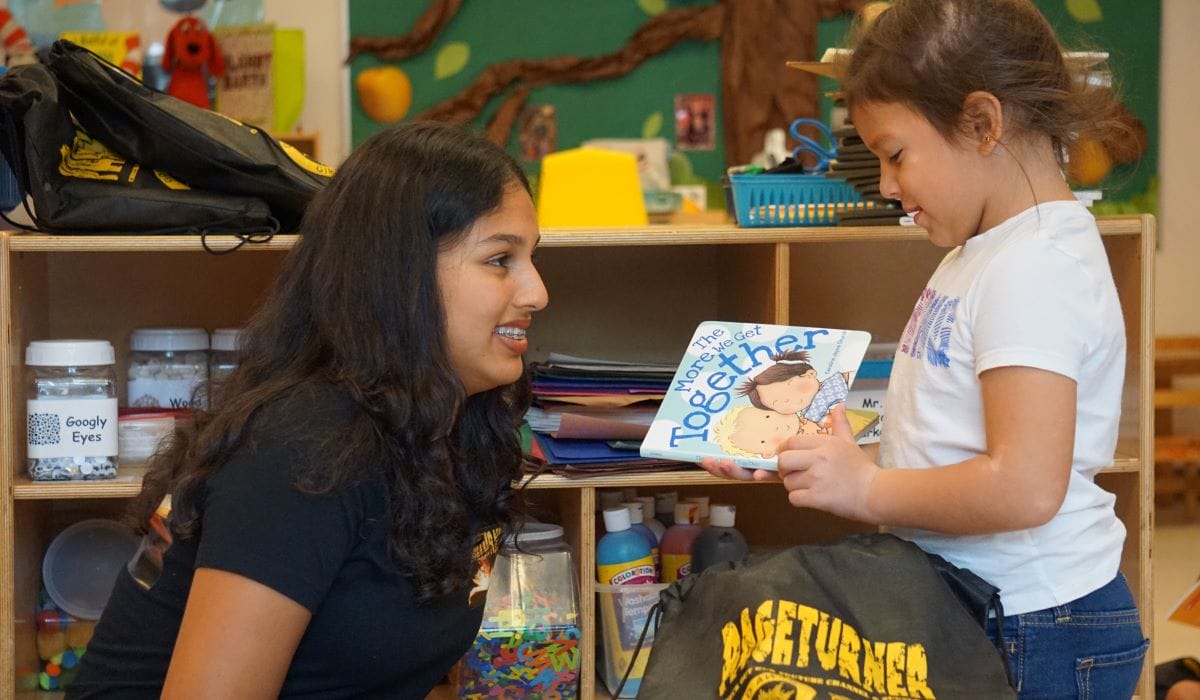
Natasha Agarwal (left) smiles at a little girl (right) who just received a book from BelieveNBooks. (Courtesy Natasha Agarwal)
“I really wanted to show them the world of possibility out there. I think a lot of times exposure is so limited, and that’s part of the reason that they’re not able to even envision a better future for themselves,” Natasha explains. “So that’s really the inspiration of the book.”
Now a high school senior, Natasha hopes to continue to develop new chapters of the organization. But she’s also hopeful that someday she can visit Ghana to see her organization’s work in action as they distribute the book she penned herself as it’s distributed to young girls.
“It’d be really cool, I think, to meet those girls and to be able to see how the book affects them,” says Natasha, who notes that all the proceeds of the book, which is available on Amazon and Barnes & Noble, go toward the distribution effort.
Despite the current international success of BelieveNBooks, Natasha says one of the hardest parts was simply getting started. But she hopes that people take her story as an inspiration to make a difference, no matter how small.
“It’s okay to be uncertain about how much you want to do or where your service is going to go, but I say just pick a cause you’re passionate about,” says Natasha. “Obviously for me, that was books.”
Do you want to make a difference in your community like Natasha? Find local volunteer opportunities.
Growing Piggybanks: Promoting Youth in Finance
Meet Daily Point of Light Award honoree Jay Sundar. Read his story, and nominate an outstanding volunteer or family as a Daily Point of Light.
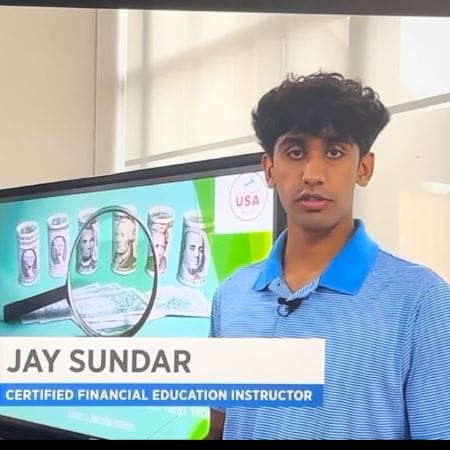
Jay Sundar founded Youth Finance USA, a nonprofit based in Charlotte, North Carolina, teaching financial literacy to students from kindergarten to 8th grade. Jay’s nonprofit has partnered with two primary school districts: Charlotte-Mecklenburg Schools and New York City Public Schools. Youth Finance USA is also present in six states and plans to expand to more states throughout the United States.
His partnership with Charlotte-Mecklenburg Schools has provided financial literacy resources to almost 40,000 elementary students in 118 schools. His nonprofit provides workshops and financial literacy resources to every Charlotte-Mecklenburg Schools Title I family, providing 50,000 students and families access to economic resources. Youth Finance USA has also partnered with the local Boys and Girls Clubs reaching 1,000 students. Jay has managed to raise $125,000 annually through Google Ad Grants and donations.
Jay is a high school student passionate about finance who looks forward to pursuing Economics upon graduation. Aside from all things finance, he enjoys playing varsity tennis and debating on his school team. When he finds the time, he enjoys keeping up with the stock market and most importantly, helping others.
What inspires you to volunteer?
The idea of getting involved in any community or a specific community or group of people inspires me to volunteer. When you get involved, you learn more about yourself. Everyone has self-achieving goals, but at the end of the day, getting involved is one of the most important parts of human nature. I’ve always been inspired to use my knowledge and resources to get involved in the community.
Tell us about your volunteer role with Youth Finance USA.
I founded Youth Finance USA two years ago during my freshman year in High School. I am the president and founder of this nonprofit. I run almost every operation, which I never expected, but find eventful. Teaching others about financial literacy is something I am passionate about. Of course, there are good and bad times, but this is manageable.
Initially, I did not know all that goes into starting a nonprofit, but I grew with the organization as time passed. My role includes attending boarding meetings, creating curriculums, managing the financials, doing administrative work and, most importantly, overseeing my team of volunteers.
Jay Sundar /Courtesy Jay Sundar
What inspired you to get started with this initiative?
I live in Charlotte, North Carolina and we have the lowest social mobility in any city in the United States. As a result, the government passed a bill requiring all high school students to take a finance class before graduating high school. However, from my perspective, financial literacy can be taught much earlier in life, particularly from age 7.
So, I started teaching kids financial literacy at a local school, which eventually developed into a nonprofit organization. Today, we partner with Charlotte-Mecklenburg Schools and New York City Public Schools to teach their elementary school students lessons on financial responsibility. Youth Finance USA creates its curriculum, worksheets and presentations, which are then delivered to tens of thousands of students. We also run our summer camps and online programs focused on financial competence.
What are your long-term plans or goals for the organization?
I enjoy our work in Charlotte-Mecklenburg and New York City Public Schools systems, but there’s always room for more. I would like to strengthen our partnerships and expand into new ones nationwide.
We already facilitate our programs during the school year and summer, but now we want to expand to more states and partner with more organizations. We must continue developing more institutional partnerships with school districts to deliver our curriculum to more schools in various states.
What’s been the most rewarding part of your work?
The most rewarding part is when students feel they are not learning much because they enjoy what I teach them. Learning can be fun, and I always try to make it an excellent experience for them. I love interacting with students, and the ability to educate them on life’s essentials is genuinely heartwarming. I enjoy seeing the smiles on their faces. I think from the perspective of a high schooler, I have a remarkable ability to connect with students and this allows me to learn more about them; it makes a significant impact at the end of the day.
What have you learned through your experiences as a volunteer?
I’ve learned a lot about the nonprofit sector, what it is and how to run it. It taught me about the importance of leadership and the ability to recruit other volunteers. Also, I thought I knew everything I needed about financial literacy, but this allowed me to gain the necessary tools to teach and connect students to succeed.
I’ve mastered almost everything, from tax filing to interpersonal skills such as networking. Now that I know, I teach others how to present themselves to city officials or partners, people who one day want to run big organizations. Now, I can attend meetings with those I’ve trained, where we pitch Youth Finance USA to other organizations and build connections. Altogether, this has been an ongoing process of learning.
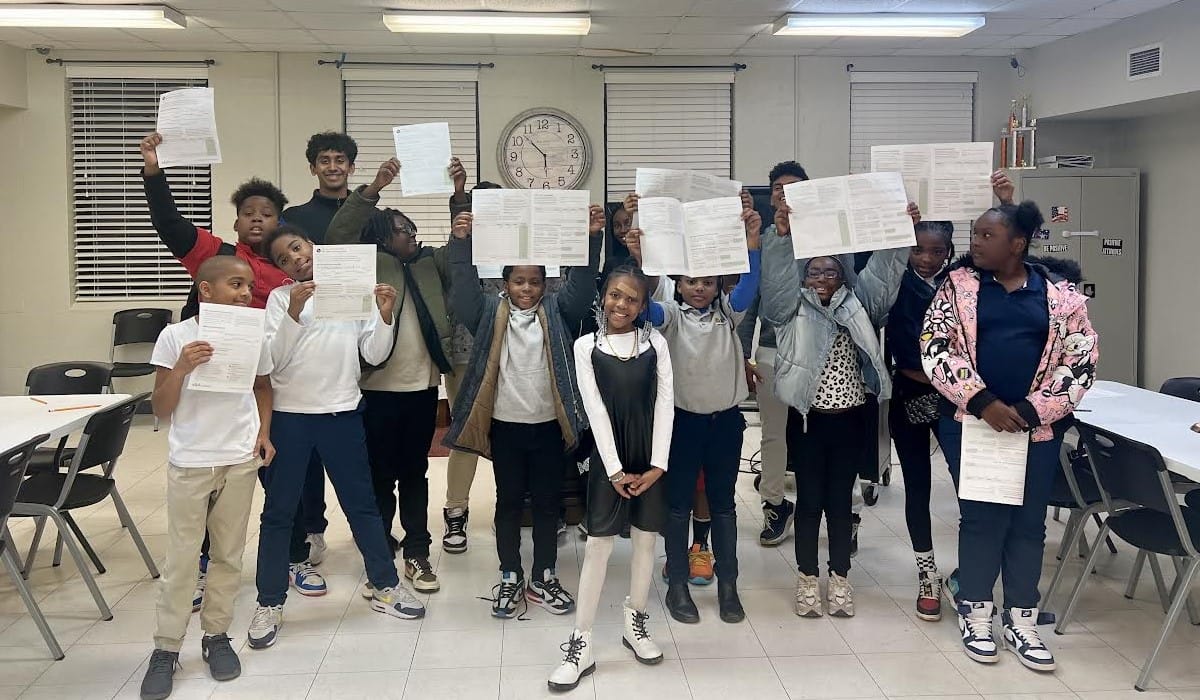
Jay Sundar and his students celebrate the completion of their financial literacy worksheet. /Courtesy Jay Sundar
Tell us about future partnerships, programs or events that you are excited about.
Right now, I am excited about our upcoming event with Charlotte-Mecklenburg Schools. We plan to provide more resources to Title I families and students on the importance of financial literacy. Our curriculum is distributed to 18 elementary schools in the Charlotte-Mecklenburg district through training videos for thousands of teachers, and I hope it continues to expand.
I’ve already been on numerous entrepreneurship panels within New York City Public Schools and plan to be a part of many more, discussing how to be a social entrepreneur. And lastly, we plan to continue a few more afterschool programs this year, including expanding through Manhattan and Brooklyn Public Schools.
We also plan to grow our program and partner with a nonprofit in India to teach financial literacy to a few Indian students.
Why is it important for others to get involved with causes they care about?
A big part of getting involved is finding who you are and learning how you can get involved. Once you understand who you are, you’ll find plenty of causes that excite you. Everyone should take steps to get involved. If you care about them, it is important to do so because there is no better reward than seeing the work you’ve done making a substantial impact on your community or worldwide.
Any advice for people who want to start volunteering?
Start by looking up volunteering opportunities near you. Put your foot in the water and volunteer just once, it will make a difference. To start a nonprofit, you must know it will take substantial planning. But if you find a cause dear to you, you can start small and then continue to build from there. The important goal is to build your impact.
What do you want people to learn from your story?
No matter your age or skill set, you can make a difference if you care. A lot of people are scared, feel they don’t have the time or don’t think they will make some sort of impact. None of this is true. I was 15 years old when I started. I started small and look what it has grown into now. Age shouldn’t be a barrier. If you work really hard and care about something, you can make it change happen.
Do you want to make a difference in your community like Jay? Find local volunteer opportunities.
The Name of the Game Is Volunteerism for One Chicago Teen
Meet Daily Point of Light Award honoree Michael Brooks. Read his story, and nominate an outstanding volunteer or family as a Daily Point of Light.
Michael Brooks may play a lot of games, but the Chicago teenager takes his role as a volunteer quite seriously. At just 15 years old, the high school sophomore has already spent three years as a volunteer with The Honeycomb Project, a Chicago-based nonprofit organization that provides volunteer opportunities for the whole family, including children.
Several years ago, Michael’s mother Kimberly was looking for ways her son could get involved in his community. However, she struggled to find many opportunities without age restrictions. When she came across The Honeycomb Project, which hosts a variety of monthly events in the community that allow all family members to participate, she knew it was a fit.
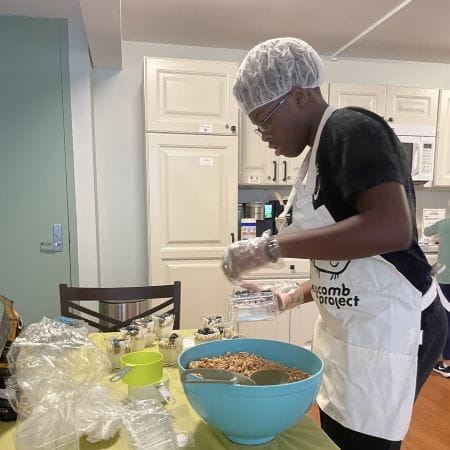
These days, Michael has blossomed as a volunteer, helping out everywhere from beach cleanups at Chicago’s 63rd Street Beach to the Chicago Furniture Bank, which allows clients to handpick furnishings for free. But his most cherished role is as a project leader for the Brunch and Board Games Project, a program that serves breakfast to patients and their families who have traveled to Chicago for medical care. Always a fan of playing board games with his family, Michael injects an extra dose of fun into his mornings, playing chess and Monopoly with the diners as he serves them a hearty meal.
Whether he’s heading to the grocery store to pick up juice and fruit for the guests or putting a smile on their face as he helps them assemble a puzzle, Michael has risen through the ranks of The Honeycomb Project to become a true leader. For over a year, Michael has served as a member of the Honeycomb Leadership Corps (HLC), which is designed for teens and parents who are looking to boost their leadership skills. Deeply committed and always the first to lend a helping hand, Michael is an inspiration to people of all ages who aspire to help others.
What inspires you to volunteer?
The little things that we work on start to create bigger solutions. Seeing the little kids come in, go to work and help us do something great for the community really inspires me to keep going. When I was younger, there weren’t a lot of programs that offered me the opportunity to participate in community service projects because of my age. But I really wanted to help around my community, because I see that there are problems all over the city.
Michael Brooks prepares cereal and fruit to serve at the Guest House to people who have come to Chicago for medical treatment. He is the current project leader for the Brunch and Board Games Project. (Courtesy Kimberly Butler-Brooks)
Tell us about your volunteer role with The Honeycomb Project.
I am the current project leader for the Brunch and Board Games Project, a program where we help make breakfast for residents of the Guest House, who have come from all over the country with their family members and friends to receive treatment in the hospital. I wake up early with my mother, and we make breakfast for them. It’s truly a great experience. They get to eat breakfast with us, and they get to play board games, so it’s also an opportunity for entertainment.
I am also part of the Honeycomb Leadership Corps (HLC), which is filled with teens from across the city. I’m able to set an example for the younger kids and participate in panel discussions. We talk to people who have donated money to the program and can advocate for the program, sharing why it’s important to us.
What inspired you to get started with this initiative?
It started a couple years ago with my mother, who signed me up for it. I really became engaged, and I really just loved the sense of community, friendship and family that we had there. So I just kept attending, and eventually I was able to have more leadership opportunities. I met a lot of new people, and it was a really awesome networking opportunity for me and for my future.
What are your long-term plans or goals for the organization?
I want to help The Honeycomb Project work towards being recognized by the city. I want us to be truly known by everyone in the city as a very strong and powerful organization. I want us to be able to work on bigger projects and be able to collaborate with bigger organizations all over the city. Also, I want to continue to be a project leader for the Brunch and Board Games Project in the future, because I’m really enjoying it this year. I hope I can continue doing that and bring more opportunities to the table.
What’s been the most rewarding part of your work?
Making guests smile and seeing how happy they are. I’m trying to get their minds off their health situations and bring some positivity into their lives. I feel like that’s very rewarding, and it also inspires me to keep doing what I’m doing.
What have you learned through your experiences as a volunteer?
It is very important that we increase awareness in the community. We all need to all stand together and participate in community service projects. One thing I’ve noticed about my generation is that there are a decent amount of kids that do participate in community service. But if we had more people participating in opportunities like The Honeycomb Project, we could be a much stronger community.
Any advice for people who want to start volunteering?
I would say be open to all opportunities, and take chances to get involved in the community whenever you can. It’s also the world that you live in, so you want to set an example. You want to create something better for where you live and for the people around you. Also, always try new things. You could find your passion, or maybe find your future career.
What do you want people to learn from your story?
The youth of this generation cares about their community. They do see the issues of the world and do want some things to change. A lot of us want to work and take our community seriously.
Do you want to make a difference in your community like Michael? Find local volunteer opportunities.
A Musical Mission to Uplift Communities through the Therapy of Sound
Meet Daily Point of Light Award honoree Tiffany Zhang. Read her story, and nominate an outstanding volunteer or family as a Daily Point of Light.
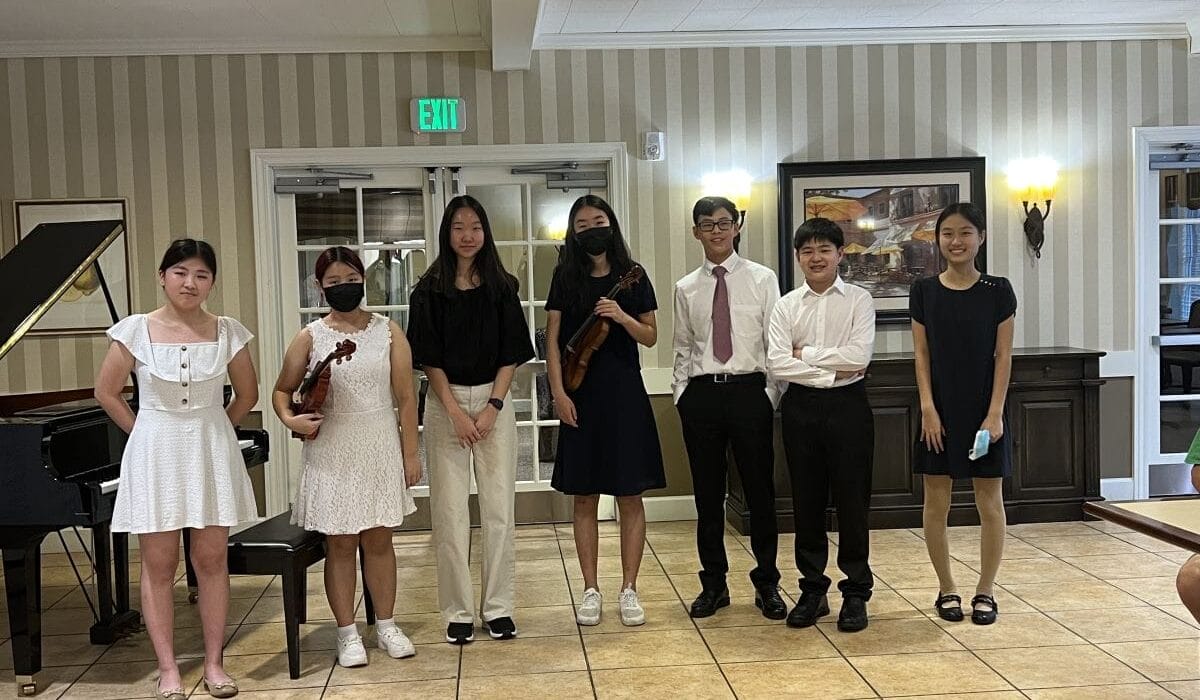
Tiffany Zhang, a talented young pianist from Katy, TX, has channeled her passion for music into a powerful force for good, dedicated to spreading joy and addressing inequality. Since the age of 10, Tiffany has performed at senior centers, touching the lives of countless residents. Then, in 2017, she co-founded Spark of Live Music (SOLM), a nonprofit organization that provides live music performances and music therapy to schools, nursing homes, hospitals and rehabilitation centers. Over the past seven years, SOLM has hosted more than 150 performances, bringing comfort and happiness to nearly 4,000 seniors.
Even during the height of the pandemic, Tiffany ensured that the seniors in quarantine, including Alzheimer’s patients, could continue to experience the joy of live music. She organized monthly Zoom concerts, allowing isolated residents to find peace and joy through the healing power of music. Tiffany’s dedication has not only been about delivering performances but also addressing disparities in healthcare access. When she noticed inequality in the resources available to senior care facilities in minority and low-income areas, Tiffany partnered with musical therapists to bring much-needed therapeutic services to these underserved communities.
The work of SOLM has reached far beyond senior care facilities. The organization has hosted three charity concerts, raising over $8,000 for Texas Children’s Hospital and other nonprofits. These charity efforts underscore Tiffany’s mission to use music as a means to both raise awareness and directly impact those in need.
In addition to her musical outreach, Tiffany developed a unique curriculum that incorporates psychology and music, teaching over 50 students how to manage stress and sadness using music as a coping mechanism. The program proved highly effective, with 75% of students reporting an increased understanding of the importance of mental health and over 70% learning new strategies to handle stress.
Tiffany’s passion for mental health advocacy also extends to her podcast, Empathy Gaps, where she interviews professors, music therapists and mental health specialists to raise awareness and destigmatize mental health issues. Read on to learn more about Tiffany’s work and mission.
Tell us about your volunteer role.
I’m the president and co-founder of Spark of Live Music, a nonprofit organization that aims to combat healthcare inequalities through three main ways, all related to music therapy. First of all, we play music at low-income senior housing in the local community, which helps the seniors in these communities receive help with their mental health. Music has a profound effect on senior mental health. Second, we give free music therapy resources to low-income seniors in collaboration with board certified music therapists. We typically bring these music therapists to the community, and they lead the seniors through a session. Then, staff can help them access the resources we have on our website as a follow-up.
Third, we teach students of all socioeconomic classes how to use music therapy to relieve stress and sadness, especially during the rise of the mental health crisis where there are so many unprecedented rates of depression and anxiety. We teach a mental health and music curriculum we developed in collaboration with professional music therapists.
What inspired you to get started with this initiative?
I’ve been playing piano for a really long time. I started when I was 5 and I’ve always had a passion for music. I’ve noticed how music can be used to benefit both musicians and listeners. When I was in third grade, I started performing under another volunteer organization. I started going around the local community and performing for the residents in senior homes. But throughout my time performing under that organization, I noticed there were many differences in the senior facilities. Some had many resources for the residents while others were far more lacking in more resources.
From that volunteer experience, I decided to start SOLM to combat that inequality in senior housing, and also help the mental health of the seniors in low-income facilities. I always notice how much the seniors light up, not just at the music being played but also that someone is sacrificing their time to come volunteer.
Tiffany Zhang, on the right, and Spark Of Live Music members after a performance.
What’s been the most rewarding part of your work?
There have been many parts – just doing service work is so impactful and has inspired me to do even more for the community. But I’d say that the best moment I’ve had – and this may sound counterintuitive – was during the COVID pandemic, where everything was shut down during quarantine. During this dark period, a group of musicians and I decided to host a virtual concert for people in the community, to simply listen to some music.
I was in middle school and we didn’t have much experience with marketing, advertising or even hosting events. Our expectations were low, but on that day, about 100 people attended from all over the world, including Asia and Europe! That concert affirmed to us the power of music and how music can really bring us out of dark times and unite us all.
What are your favorite types of music to play?
I play pop music and classical music, but my favorite is when I get to do a duet with my friend of a 70’s or 80’s song that the seniors like listening to. It’s wonderful to see the positive reaction we get from them when we play songs they cherished earlier in their lives.
What are your long-term plans or goals for the organization?
Obviously, healthcare inequality and access to mental health care is a pretty universal issue. SOLM’s goal include expanding past our current community – we’re mainly impacting the Houston area – so we want to grow past that and provide music therapy services elsewhere. We see ourselves as being part of the fight to provide equal healthcare access, because obviously this isn’t something one organization can do alone.
Why is it important for others to get involved with causes they care about?
It’s important for people to volunteer with issues that they’re passionate about, because it’s important to have a more socially equal world where people have the same access to opportunities. In order to create a better world, I believe we all need to participate in advocating for and providing more resources for anyone who is disadvantaged in some way.
Any advice for people who want to start volunteering?
From my own experience, I’d say don’t give up! And don’t think that an issue is too big – or too niche – for you to help solve. I had to reach out to many, many music therapists, and found that many were not necessarily available. It was frustrating at the beginning when I couldn’t bridge the music therapy gap. But then I was finally able to find a music therapist to help us with our mission, and it grew from there. So my advice is to put yourself out there! Your hard work will pay off.
Do you want to make a difference in your community like Tiffany? Find local volunteer opportunities.