Occupational Therapist Builds Opportunity Through Accessibility
Meet Daily Point of Light Award honoree Melanie Thompson. Read her story, and nominate an outstanding volunteer or family as a Daily Point of Light.
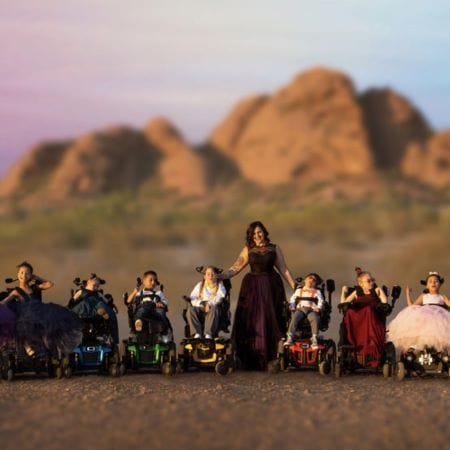
Some people simply see the world differently, like 47-year-old occupational therapist Melanie Thompson. The world she sees is one of inclusiveness and capability. It’s one in which everyone has access to the tools they need to live their best life, specifically physically disabled children, her main clients and the population she has created two nonprofits to serve.
She co-founded the first, Believe Beyond Ability, 10 years ago, inspired by a client. The mission is to make the world more accessible by rewiring toys to make them functional for kids with complicated physical issues.
Gye Di (pronounced zee-dee), which means “believe” in Twi, a language spoken in parts of West Africa, is more than a mantra for Melanie after a volunteer trip to the region. It’s the name of the organization she started in 2021 as her vision expanded to include creating accessible, inclusive environments for kids of all abilities to play and learn together. Melanie has also volunteered over 630 hours over the last three years selling concessions at a local resort-casino and raising over $100,000 as part of a profit-sharing agreement.
What inspired you to get started with these initiatives?
I work with physically disabled kids, and oftentimes the bar is pretty low for them. People assume that because they’re physically disabled they have cognitive challenges, which is not true. My kids have done art, science and other amazing things, but they have to do it a little differently. They can’t just join the Girl and Boy Scouts or go to the park to play like everybody else, so they often get left on the sidelines. My mission is to create opportunities for them to learn, grow and experience life like any other kid. If we adapt the world so that my kids can do it, then every other kid can do it, too.
Melanie helps kids with complicated bodies get qualified for power wheelchairs. They are often overlooked, because it’s assumed they aren’t capable of operating them independently.
Tell us about your volunteer roles with Gye Di and Believe Beyond Ability.
Both serve kids with special physical needs. We rewire 100+ toys every November to make them switch-accessible for Believe Beyond Ability. If a kiddo can barely move, they can’t squeeze Elmo’s hands to make him sing and dance. We will rewire it so they can hit that switch with their toe or head or whatever they can move.
There aren’t many toys that Mom and Dad can pick up at typically retailers that a child with a physical disability can actually play with. We give away switch-adapted toys at our Believe Festival in December, because buying a $25 Elmo and electrically rewiring it to use a $65 switch takes money and knowledge. That’s not feasible for a lot of families.
Gye Di is big picture. I make activities accessible for kids of all abilities. Last week, we launched our Farmyard Friends program with a unit on chickens and ducks. We had live birds for kids to pet, and we did science experiments with feathers and eggs.
In addition, I’ve created educational content for social media so others can learn to adapt play. And I’ve developed relationships with community partners like local club baseball and softball teams to ensure we continue to have inclusive events with great peer mentors. I’ve also assembled a team of six passionate therapists without whom I couldn’t do this.
What is something able-bodied people get wrong when interacting with someone who has disabilities?
The most important thing is to talk to them. Even if the person can’t talk back, talk to them and give them a chance to respond. A lot of my kiddos can respond if you give them enough time, but too often, we don’t ask. We don’t wait, and we miss the opportunity.
What are your long-term plans or goals for the organizations?
We just opened our first facility on 1.5 acres I bought. I’ve already planned out free monthly community events with adapted activities. Part of the dream is having a farm. We’ve got chickens and are going to pick up a baby cow soon. We’re going to do things like teaching kids how to garden.
My big dream for Gye Di is to build a multi-million-dollar indoor recreation facility, like the trampoline parks and indoor play places you take your other kids to but 100% handicap-accessible. Because, again, if you build to be handicap accessible, every kid can play there. Typical kids have very few interactions with special needs kids. I want to create this place where they can all play together. We can teach typical kids how to include and respect our special needs friends.
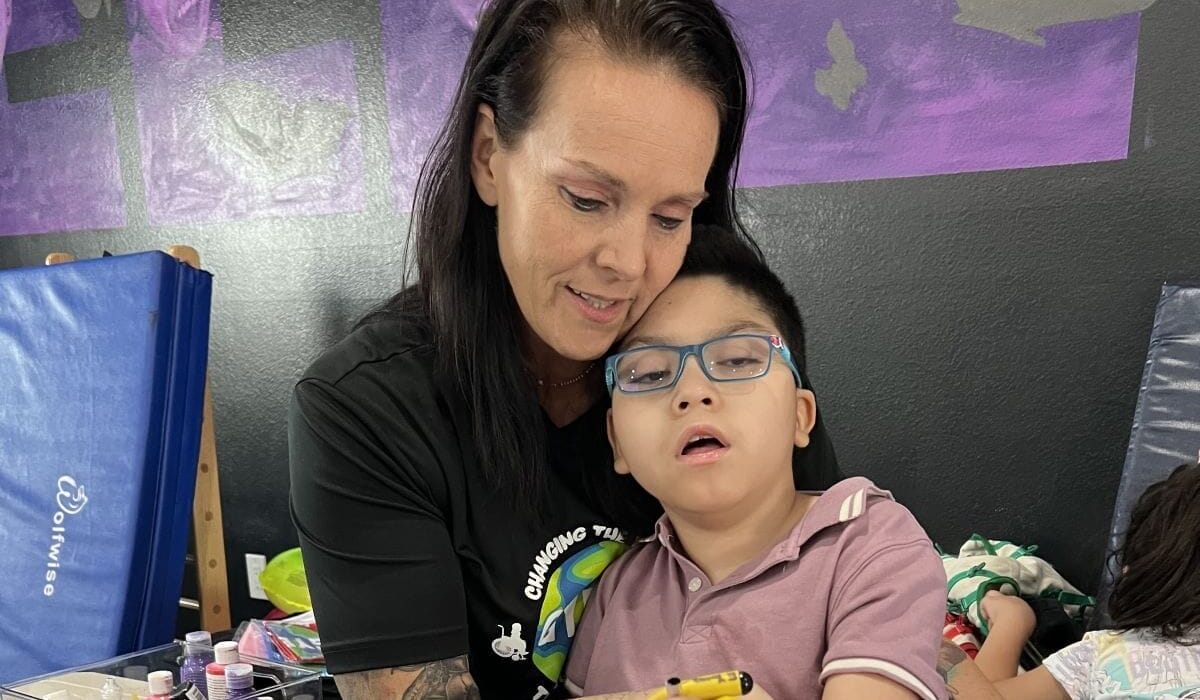
With Melanie’s help, Benjamin uses technology to play and paint a rock for Gye Di’s rock garden.
What’s been the most rewarding part of your work?
I see miracles every day. I have kids who can hardly move run their own lemonade stands and tell stories by using assistive technology. They’ve been able to do things I never would have dreamed possible, because we looked through the lens a little differently.
What have you learned through your experiences as a volunteer?
Dream big. Believe Beyond Ability and Gye Di have both been founded because I don’t like being told no. When you have kids with special needs, it’s very isolating. You can’t get out and about, and you don’t know how to navigate the medical system. Therapy makes a kid stronger. It doesn’t help them get assistive technology or opportunities to play that insurance doesn’t pay for, because it isn’t “medically necessary”. But kids learn through play, making it vital, so we found another way.
Tell us about future partnerships, programs or events that you are excited about.
At the end of the month, we’re having the grand opening for our new facility with a fully-accessible carnival. If siblings or friends don’t need to use the switch for the Nerf gun, they can just use the Nerf gun. Families can enjoy it together.
In December, we’re going to host our first Farmers Market, where my kids are going to sell the goods they’ve created and show our community what they can do in adaptive ways. Our kids deserve the best that we have, and I want to create the opportunities they deserve.
Do you want to make a difference in your community like Melanie? Find local volunteer opportunities.
Volunteer Advocates for Warriors in Wellness Programs
Meet Daily Point of Light Award honoree Hank Molinengo. Read his story, and nominate an outstanding volunteer or family as a Daily Point of Light.
In 2021, Hank joined Cox Health Wellness for Warriors as a volunteer, where he currently serves as the chairperson of the Executive Committee. Wellness for Warriors is a program that addresses the physical, mental, emotional and spiritual wellness of first responders and military men and women. It also provides resources like crisis support, counseling and wellness classes.
Hank is involved in three suicide prevention groups and volunteers at Disney Elementary School in Springfield, Missouri, where most of his grandchildren attend. He also conducts blood drives through the American Red Cross and volunteers at his church through food banks multiple times yearly, including during the Thanksgiving and Christmas holidays.
What inspires you to volunteer?
Several events inspired me to begin volunteering during my time in the Navy. In 1984, I had a drinking problem, and I did not know how to get help without it affecting my career. Thankfully, with the help of my family and friends, I eventually recovered. After this happened, I knew I wanted to get involved with mental and emotional wellness.
On 9/11, I was a Navy Captain and the executive assistant to the judge advocate general in the Pentagon. My office was very close to the crash, and we could smell the burning jet fuel and asbestos throughout the Pentagon walls. We had lots of fears as we exited the Pentagon, but instead, we were comforted by firefighters, first responders and medical personnel. This also inspired me to get involved with Wellness for Warriors. As I became more involved with volunteering, I realized I wanted to do more.
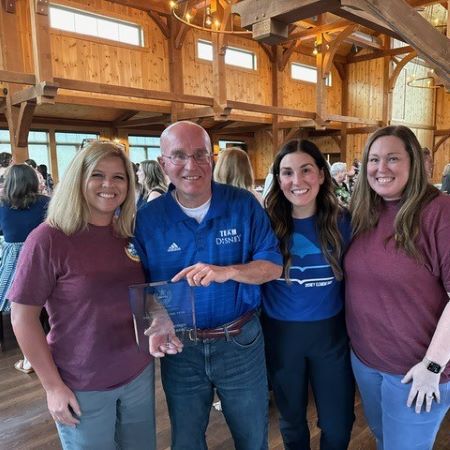
Hank Molinengo receives a “Volunteer of the Year”’ award for his work in Springfield Public Schools. Courtesy / Hank Molinengo
Tell us about your volunteer role with Wellness for Warriors by Cox Health Foundation.
At Wellness for Warriors, I facilitate and moderate our weekly Facebook Live presentation. Every Friday, I lead a Facebook Live presentation focusing on the physical, emotional, mental and spiritual wellness of active and retired first responders, military personnel, veterans and their families. During this presentation, we also discuss suicide prevention, spiritual and physical wellness, and financial literacy.
What inspired you to get started with this initiative?
After surviving and witnessing all these crucial events, I was allowed to share what most people cannot. My dad was a bricklayer. He never had more than $900 in his account, and fortunately, he taught me great fundamentals of life. I always had people in my corner and the necessary resources to succeed. Today, I never say no to an opportunity to help, whether through leadership, mentorship or just lending a hand.
What are your long-term plans or goals for the organization?
For Wellness for Warriors, I hope to continue spreading awareness for mental and emotional wellness, especially suicide prevention stimulated by armed weapons. Two of three suicides are firearm-related, and I feel it is essential to find other methods to protect ourselves from our guns.
I aspire to have nurses visit and discuss the stress they go under as essential workers and survivors of suicide. I’m sure a perspective of what it means to be a suicide survivor and how she handles these types of situations will be monumental.
Lastly, I hope we continue our wellness scholarships at our Cox Gyms. We have two gyms and give out scholarships to encourage people to be more intentional about their physical health. We provide trainers and the necessary tools for members to have a great experience.
What’s been the most rewarding part of your work?
The most rewarding experience is seeing people’s relief and happiness. It is extraordinary that I can support deployed military personnel and depressed “warriors” by providing them with the necessary resources.
Volunteering in the public school system is quintessential. I’m grateful to help teachers and the faculty at Springfield Public Schools. I can take the load off them—I do it!
I enjoy donating blood through the Red Cross and helping with food banks through my church. Helping someone for even just one day is an indescribable feeling of fulfillment.
What have you learned through your experiences as a volunteer?
It is essential to do it for yourself and others. There is always someone to help, and by helping others, you are helping yourself. By doing so, you continue to grow as a person, and you will continuously keep life in perspective.
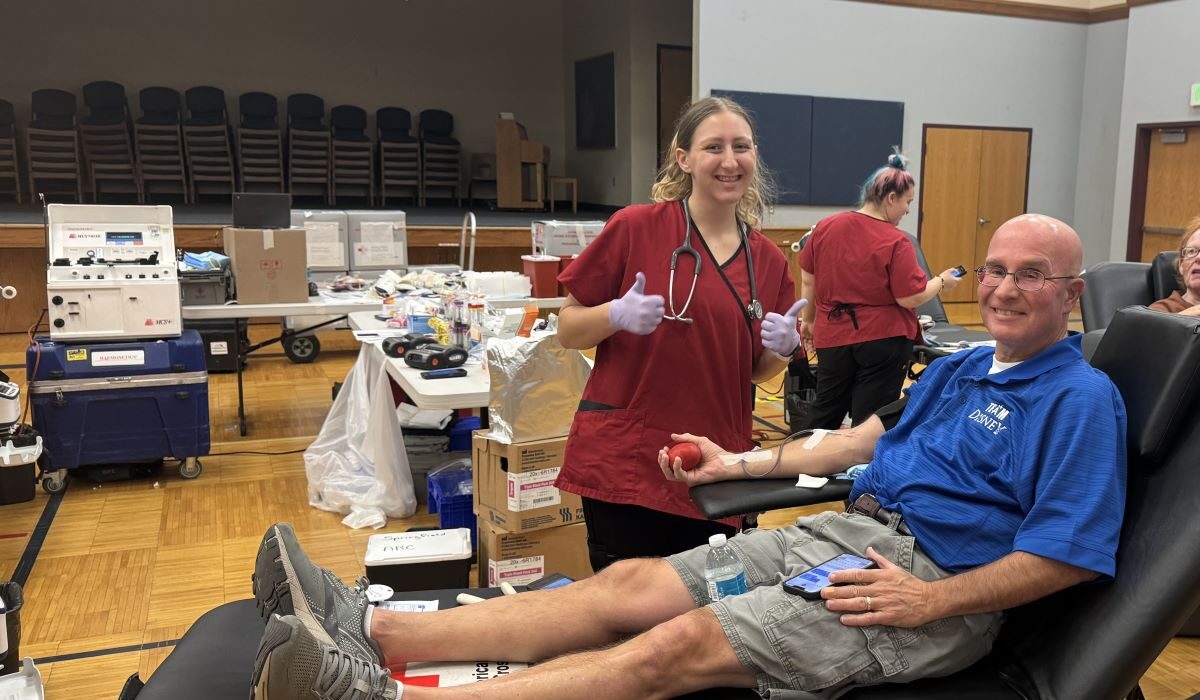
Hank Molinengo donates blood at an American Red Cross blood drive in Springfield, Missouri. Courtesy / Hank Molinengo
Tell us about future partnerships, programs or events that you are excited about.
With Wellness for Warriors, I hope our weekly Friday presentations become a staple through various suicide prevention networks.
At Disney Elementary, I am excited for the big fall festival coming up, where kids will enjoy themselves on moon bounces and eat lots of food.
I always look forward to food banks through my church. Due to the increased cost of food, the demand for food banks has risen by 38% within the last year. We want to expand to other cities; the more we develop, the better.
Why is it important for others to get involved with causes they care about?
One person cannot do it all. We must all work together and make a difference for things to change. We all have shared experiences, sacrifices and desires to improve our world. It is our job to build better communities regardless of political values or socio-economic status.
Any advice for people who want to start volunteering?
You must jump in the water and begin swimming. There is much information online about any organization of interest; you just need to start somewhere. I’ll never forget how scared I was when I walked into my first case, but I did it, and look at where I am today. We all must start somewhere; you can start as small as you want.
What do you want people to learn from your story?
You can make a difference; that is one more person no longer in need. We will be a stronger nation and build even more vital communities. It’s just one case at a time. I hope I inspire people to get involved and help others.
Do you want to make a difference in your community like Hank? Find local volunteer opportunities.
Finding His Voice: A Volunteer Combats Shyness By Helping Others
Meet Daily Point of Light Award honoree Allen Carter. Read his story, and nominate an outstanding volunteer or family as a Daily Point of Light.
Allen Carter knew his shyness was holding him back. Extremely introverted, Allen was struggling to come out of his shell as he worked on his college applications. When family members recommended that he try volunteering to get more comfortable in his own skin, Allen was initially hesitant. But after over a decade as a beloved volunteer at the Women’s Intercultural Center, Allen knows he’s exactly where he needs to be.
When Allen first visited the center, which provides classes, training and workshops to help women attain the the tools they need to succeed personally and professionally, the executive director tasked him with the job of serving as the receptionist. Struggling with his shyness and public speaking abilities, Allen knew it was going to be a challenge. But soon, Allen found the ability to provide every visitor that comes through the doors with a smile as he greeted them and registered them for classes. Since then, Allen’s role at the center has expanded significantly. Today, he’s an essential component of running the thrift store, which provides the center with the funds they need to run smoothly. Whether he’s sorting donations, setting up appointments or scheduling pickups, Allen accumulates about 140 volunteer hours per month. With over 10,000 total volunteer hours at the Center under his belt, Allen has found a way to use volunteering to become the person he always wanted to be, while helping others in the meantime.
Read on to find out more about how Allen overcame his personal struggles to find his voice as a volunteer.
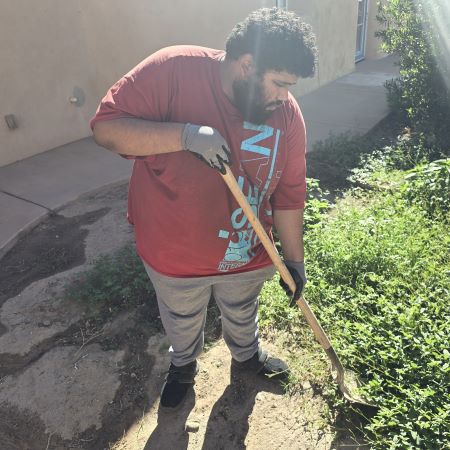
Allen works with a shovel outdoors at the Women’s Intercultural Center. He hopes to create a community garden for the organization in the next year or two. (Courtesy Allen Carter)
Tell us about your volunteer role with the Women’s Intercultural Center.
I’m kind of a jack of all trades. Originally, they would call me a receptionist, but I do a lot more than just reception. Most of the time I’m running the thrift store now. I set up the appointments for people who are in need of clothing to come in, and I show them where everything is located. I also help process the donations, as well.
What inspired you to get started with this initiative?
My family and friends told me that volunteering was the best place to help improve yourself. I decided to try it out. I grew to actually really love working for the center and seeing people being helped to actually thrive. I actually fell in love with the place.
What are your long-term plans or goals for the organization?
We’ve been getting out there more in terms of social media to help people to know more about us. But the other long-term plan for me is to help us expand just a bit more. We have increased the number of people coming to our classes throughout our community from Mexico, El Paso and other parts of New Mexico. We also have increased the number of people from the western side of Texas.
What’s been the most rewarding part of your work?
What I really like about the center is helping people. There was a man whose wife’s wheelchair was stolen on a road trip. But they came to us and found that a wheelchair had been donated. I told them we had a wheelchair in the back, and it worked well for her. I saw their faces, and they were crying because they really weren’t expecting that. I think things like that are one of the reasons why I stay.
What have you learned through your experiences as a volunteer?
How to talk and communicate better, and how to face my timidness. Sometimes I do have issues, but I do find ways to fight it. I found my voice while volunteering at the center, and everyone that comes here has become family to me. Also, I learned a lot about citizenship and about certain issues that we can help solve.
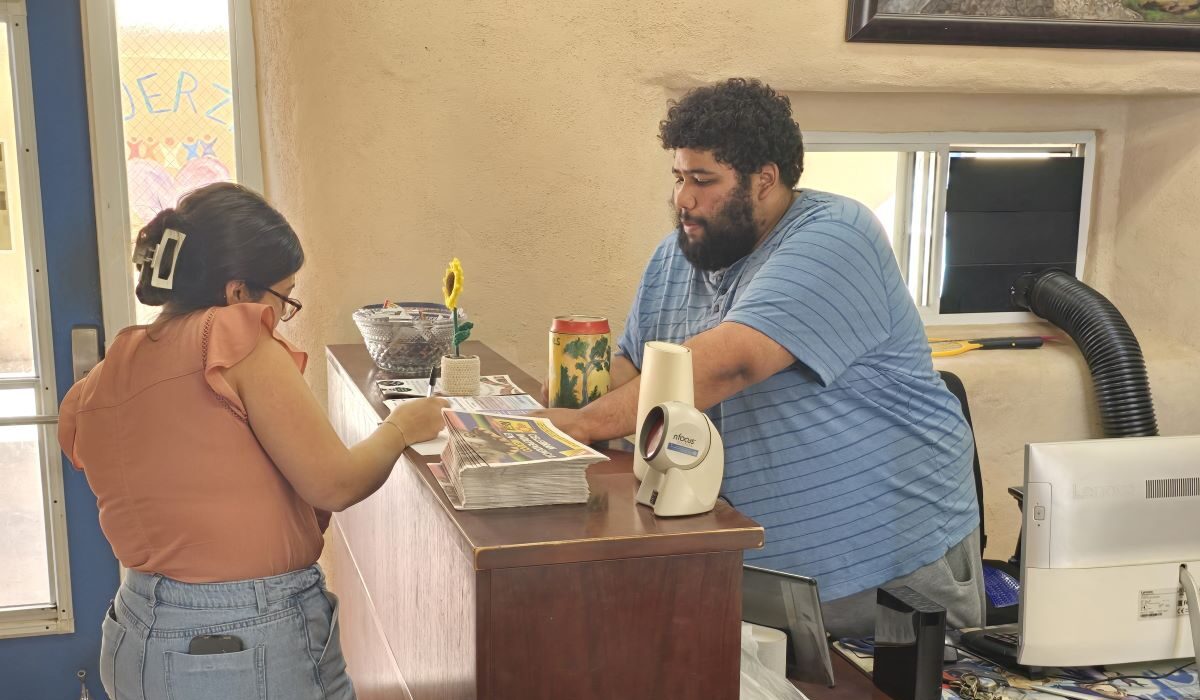
Allen (right) helps a visitor at the reception desk of the Women’s Intercultural Center, where he serves as a friendly face and the first point of contact for guests. (Courtesy Allen Carter)
Tell us about future partnerships, programs or events that you are excited about.
We usually do toy distributions in December, but we’re also going to have a financial literacy course in October. That will help people out with learning how to build their savings, and how to work on their credit, which a lot of people actually have no knowledge of. We also will help people apply for scholarships. I would also like to help create a community garden within the next year or the year after.
Any advice for people who want to start volunteering?
I hear a lot of people say they don’t like something, but they don’t do anything about it. But if you just let it pass, no one’s going to do it. You can start off small. Maybe you want to donate clothes or food for a food pantry.
What do you want people to learn from your story?
Go ahead and confront your discomfort. You have to fight your complacency and go through certain things that are uncomfortable to learn more about yourself and to help other people. That’s one of the main things I have learned working at the center.
Do you want to make a difference in your community like Allen Carter? Find local volunteer opportunities.
Mama Cheng’s Kitchen: A Heartfelt Mission to Feed and Uplift Unsheltered Communities
Meet Daily Point of Light Award honoree Li-Mei Cheng.Read her story, and nominate an outstanding volunteer or family as a Daily Point of Light.
On her 74th birthday, Li-Mei Cheng, Daily Point of Light honoree #7900, sat down to tell us about her journey of providing food – week in and week out – to unhoused individuals in her area. Affectionately known as “Mama Cheng” in the communities she purchases, prepares, cooks and distributes food to, Li-Mei has become an essential force in the fight to nourish and support the unsheltered population in the Dallas-Fort Worth area.
“My daughter, Christina, had been doing this for years,” Li-Mei said. “Then one of my grandsons turned 10, and when I asked what he wanted for his birthday, he said, ‘Can you make chicken fried rice? I want to bring it to the people downtown under the bridge.’ I started making chicken fried rice that day. Many people there had never tried it. They asked for seconds. And I haven’t stopped since!”
A dedicated volunteer with Under My Umbrella’s Neighbor Outreach Program, Li-Mei has served tirelessly for the past two years, providing meals to 100 unsheltered individuals every week. But Mama Cheng’s volunteer work goes far beyond simply handing out food. Each week, she spends nearly 20 hours shopping, preparing, packaging and serving the nutritionally dense, protein-rich meals to those in her community who most benefit from them.
Whether in extreme heat, snow or rain, she consistently shows up, ensuring that each person she serves receives not just sustenance but also a sense of care and dignity. Her meals, lovingly prepared, thoughtfully balanced and always including a pop of color, have touched thousands of lives. The lines that form when she serves are legendary, with people often calling out, “Mama’s here!” — a testament to the trust and love she has built with the community.
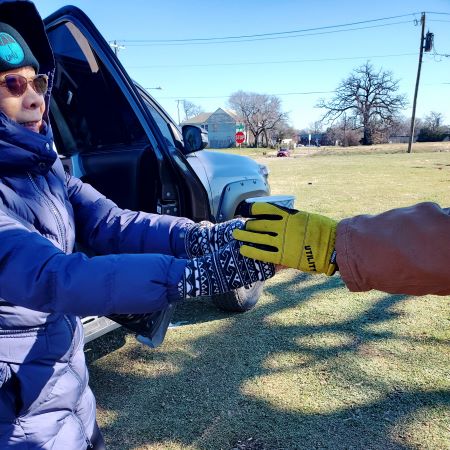
Li-Mei serving hot cocoa during the winter months to unsheltered friends.
After volunteering with UMU for some time, Li-Mei went on to get her Food Handler Certification, an endeavor that took her 18 hours to get through due to English being her second language. But she persevered because consistently feeding the community had become such a primary passion for her.
“I remember one time I drove with Christina and we got to a one-way street, and she saw someone in a hard-to-reach corner who looked like they could use some food,” Li-Mei recalled. “We drove in circles and circles to figure out how to get to the corner, and when we finally reached it, she brought food with both hands to this man. I saw the smile on his face, and the smile on Christina’s face, and I was almost in tears. If you bring people food, you can bring them hope. It’s bringing a warm meal to a warm heart. It’s about bringing them hope, bringing them dignity.”
An immigrant from Taiwan, Li-Mei brings her experience as a successful restaurateur in Richardson, Texas, to her volunteer efforts. It was while attempting to run her restaurant with her husband that Li-Mei herself got a helping hand – one that has stuck with her for life.
“In 1982, when we started our restaurant, we had no experience,” said Li-Mei. “And we had to pay the rent before the 3rd of the month. My husband and I looked at each other, knowing we didn’t have the money. Then, someone called me and told me we had until the 15th to pay. Later, I found out our landlord had orchestrated this. She said, ‘I know you both work very hard. I’d like to help you.’ And she helped us for three or four months while we got the business off the ground. She gave us a hand, and now I want to give a hand to other people. I am always grateful for that experience. If not for her, I probably wouldn’t have a house or a comfortable life. Now, I can pay it forward.”
Alongside her husband Shao, two grown children and two grandchildren, Li-Mei also cares for a rescue dog named Bao-tze, continuing to nurture both her family and her extended community. One of the most treasured aspects of her volunteer work is the relationship she gets to build with her daughter.
“I really appreciate the time I spend with my daughter every Tuesday,” Li-Mei shared. “We spend six to eight hours in the car. The gap between us almost disappears, and she can tell me anything. That is priceless.”
As Li-Mei Cheng continues her incredible work, she sets an example of what it means to serve with heart, dedication and love. Adamant that volunteering with unhoused populations includes an open-hearted, non-judgmental attitude, her selfless contributions to the DFW community remind us all that true change comes from the kindness and generosity of individuals willing to show up and make a difference. No matter how people got into their current situations, Li-Mei is only interested in providing a warm smile and a hot meal to help them through.
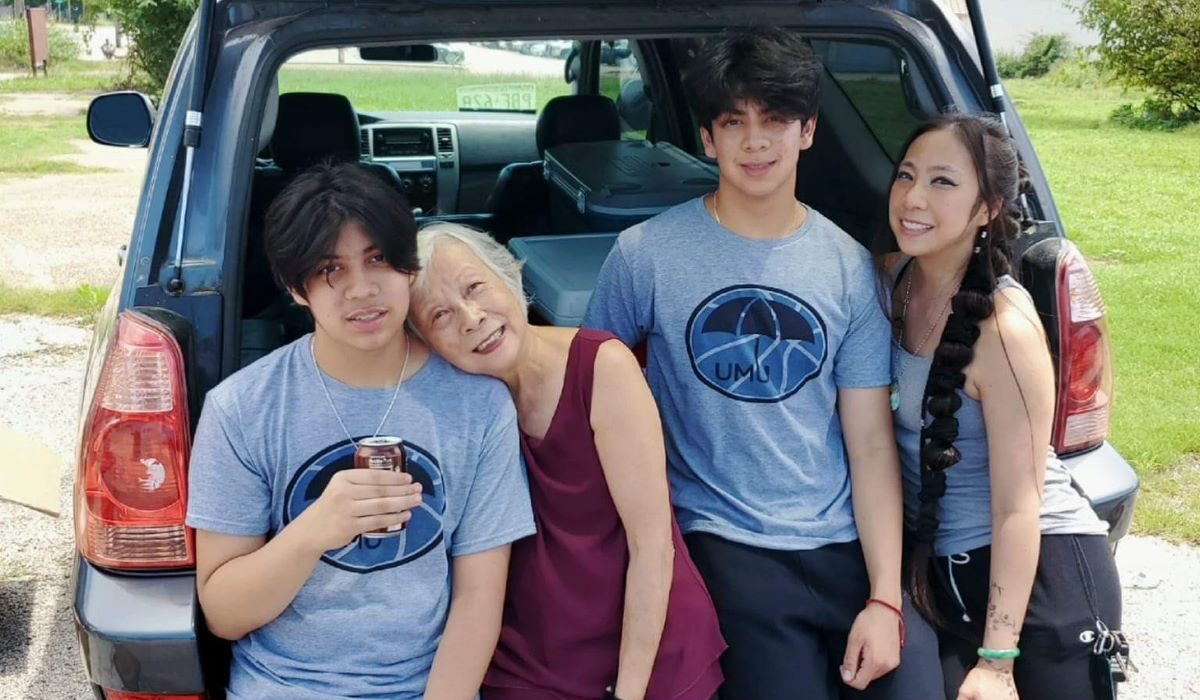
Li-Mei, her daughter Christina, and two grandsons, Ishaan and Avi, who all volunteer regularly.
To anyone hesitant about volunteering with communities they may not be familiar with, Li-Mei says, “Come stand by me. I’m 74. I think if you show your love, even if you have no experience, there’s no reason to be afraid. Stand by someone who has been doing it for a while. If you have a heart for something, you can overcome any obstacle.”
And how did Li-Mei celebrate her birthday after her Daily Point of Light interview? As seems to be tradition in her family, she spent the day preparing meals for her weekly outreach. Li-Mei’s culinary skills are second to none, but it is her compassion and heart that truly make an impact. For the unsheltered individuals she serves, “Mama Cheng” is much more than a volunteer — she is a comforting and consistent presence, someone who brings warm and affirming recognition of humanity to those often overlooked by society.
Do you want to make a difference in your community like Li-Mei? Find local volunteer opportunities.
Teen Pushes Body Positivity Movement Forward in Dance Industry
Meet Daily Point of Light Award honoree Anya Kleinman. Read her story, and nominate an outstanding volunteer or family as a Daily Point of Light.
If asked to picture a dancer, most people would have a similar image in mind — a body type often reinforced by instructors pointing to examples of success. As Anya Kleinman, 16, has experienced firsthand, it creates pressure that young dancers like herself internalize. And sadly, it’s something that often leads to eating disorders.
Anya is a self-described political nerd who, despite being too young to vote, enthusiastically volunteers for campaigns. She has two brothers, three cats and a not-so-austere dog named Margaret Thatcher. She’s a few practice hours short of getting her driver’s license and is, in many ways, a typical high schooler.
But Anya’s biggest passion lies with dance, an art she has been competitive in from ages 9 to 15 and now does pre-professionally with a focus on ballet. After discovering the prevalence of peers who had similarly struggled with body image issues, she and a friend created Dancers Beyond Labelsto help dancers stay healthy while doing what they love and to change the way the industry talks about bodies.
What inspires you to volunteer?
When I was 13, I developed an eating disorder, which changed my relationship to dance and was a hindrance to my mental health, performance and interactions with fellow dancers. When I started recovery, I began talking to friends on my dance team and realized that they had gone through similar issues. We went through it individually and thought we were isolated in that experience, but it turns out we could all resonate. I started Dancers Beyond Labels to work with instructors and dancers to figure out how we can address the eating disorder crisis and to build community.
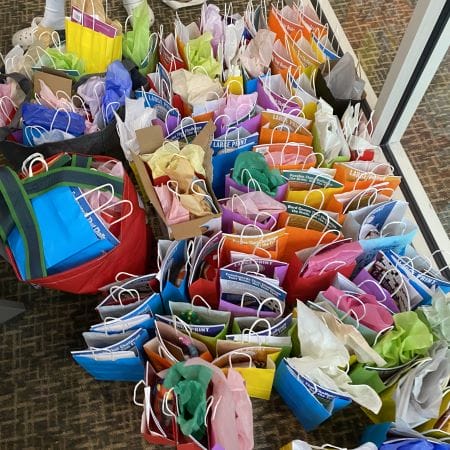
Goodie bags Anya made at a Dancers Beyond Labels care package drive wait to be delivered to eating disorder treatment centers in Maryland.
Tell us about your volunteer role with Dancers Beyond Labels.
As president, I work with our executive team of about 20 high school students across the US—and recently, Brazil—on a daily basis to come up with ideas for monthly events and fundraisers with different goals. Sometimes, we host a webinar with a nutritionist to strengthen community, education and awareness. Sometimes, we’ll do fundraisers. We’ve raised over $5,000 for eating disorder awareness programs. A couple of months ago, we did a walk-a-thon to raise funds for care packages to give dancers in eating disorder treatment. We’ve delivered more than 200 care packages and 5,000 letters to dancers in recovery.
We’re currently creating a Studio Snack Program. We want to work with nutritionists within our area to create holistic, nutritional snack packages for dancers that will be kept in studios. We’ve also made concerted efforts to create a nutrition curriculum by partnering with a collective of therapists and dietitians. Simultaneously, we’re working with a professor at the University of Albany to survey instructors about what areas of nutritional knowledge are lacking. For example, do you know how to approach a dancer if they’re struggling with an eating disorder? And, do you know the warning signs of bulimia? Based on that information, we’ll adjust our curriculum.
We want to pilot that program in a group of studios. If that goes well, we want our experts to present it to dance instructors at conventions.
Do you focus on a specific age range?
We focus on ages 12 to 18. Empirically, that’s when these issues start to emerge. They also tend to be the dancers most active competitively, which is our area of focus right now.
You grew your executive team to 20 people and have over 300 volunteers across the world. Tell us about that growth process.
I initially developed the idea with one of my close dance friends, Kendall, who also experienced this issue. Almost immediately after releasing information about volunteer opportunities and projects we wanted to implement, tons of dancers that we knew applied for our executive team or to volunteer for events. Then, we started posting on TikTok. I’ve had dancers reach out to me from New York and Seattle to say, “I am recovering from an eating disorder, and I want to start a chapter.” Social media marketing and virtual events made us accessible to a broader group of people and has grown our studio network.
We’ve partnered with more than 20 studios across the country, and now internationally, to implement a body image code of conduct. We send them a poster with a QR code that links to the code we developed in partnership with nutritionists that encompasses things like in-class language usage and healthy eating habits. Instructors commit to talking about body image in a healthy and progressive way.
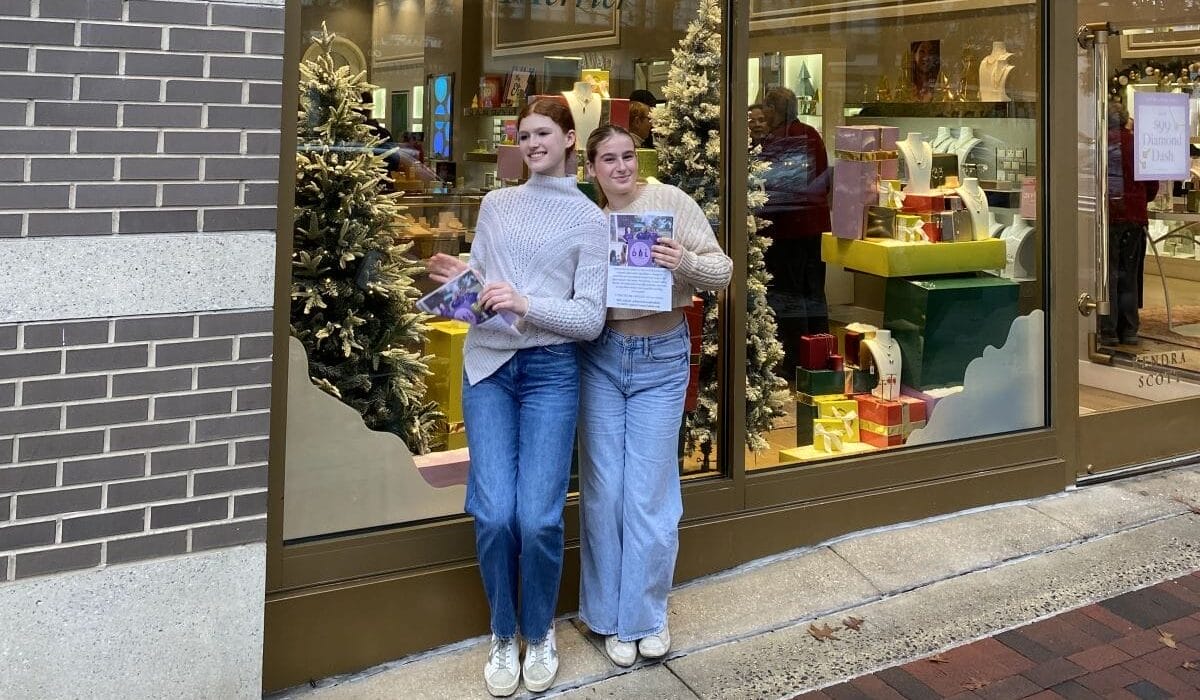
(Left) Anya and co-founder Kendyll Morandi attend a Dancers Beyond Labels Kendra Scott fundraising event designed to raise money to support dancers undergoing treatment for eating disorders.
What are your other long-term plans or goals for the organization?
The dream would be to pilot our nutrition curriculum at a convention in D.C. or in the Maryland/Virginia area. Dance instructors have a lot of responsibility. They’re figures of authority that play a key role in a dancer’s upbringing and education as an artist. We also want to create an advisory board with some professional dancers, because I think their guidance could be really valuable.
What else have you learned through your experiences as a volunteer?
We can move forward as an industry. We’ve already started to see it. Slowly but surely, there has been a broad message of acceptance and positivity start to infiltrate the industry.
What do you want people to learn from your story?
Dance has been painted as an art form for which you have to look a certain way to be a successful performer. That’s not true at all. Not all bodies are the same, and they shouldn’t have to all fit into society’s mold for what a dancer “should” look like.
You can make real change, even if you’re doing it on a small level. You can do things that are sometimes thought to be reserved for adults. I never thought I’d be working with a collective of therapists and dieticians as a high school student. And recovery is possible for eating disorders at large, even if you’re not a dancer. Recovery is absolutely possible.
Do you want to make a difference in your community like Anya? Find local volunteer opportunities.
Crossing Paths through Charity
Meet Daily Point of Light Award honoree Chandra Dontaraju. Read his story, and nominate an outstanding volunteer or family as a Daily Point of Light.
Chandra works at JP Morgan Chase as a senior software engineer. Since 2004, he has been living in Delaware with his wife and son. When he is not working or spending time with his family, he enjoys volunteering at Charity Crossing.
Charity Crossing is a nonprofit organization focused on helping communities through community initiatives, including blood, school supply and hygiene supply drives. It started in 2015 with a few friends and today it now has over 500 volunteers serving their local communities, impacting over 50,000 individuals annually.
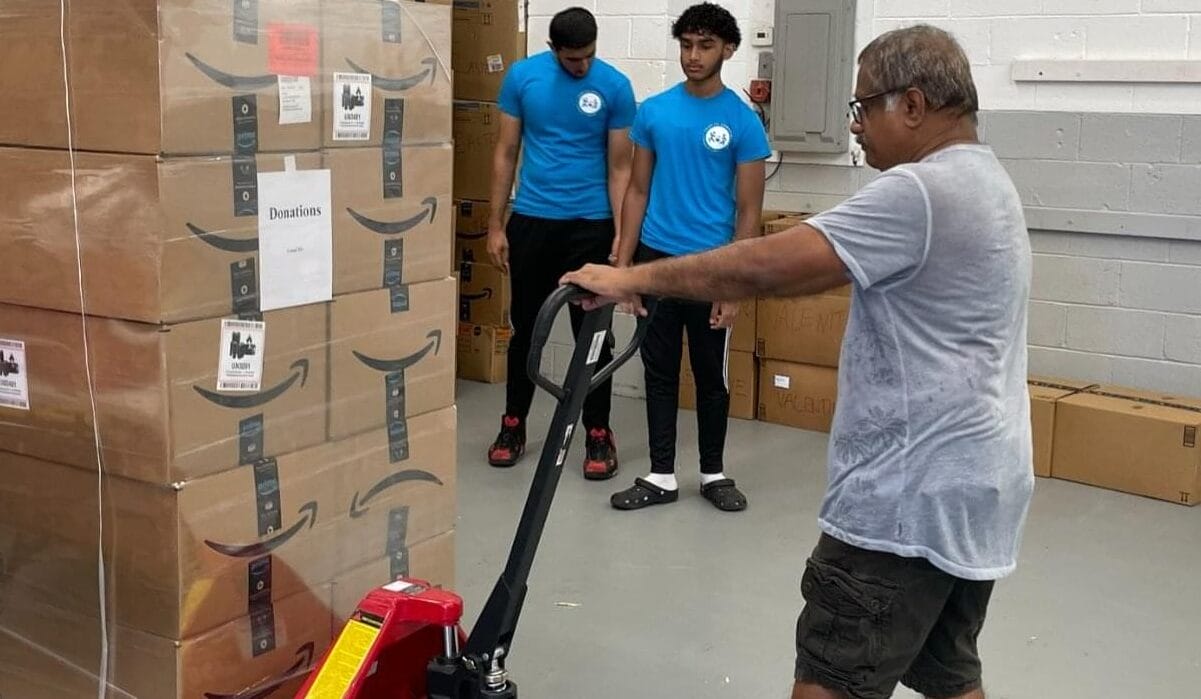
At Charity Crossing, Chandra spends his time managing and facilitating events. He also oversees the process of receiving packages from companies like Amazon and Walmart, from unloading their donations off of trucks into Charity Crossing’s warehouse, to sorting through and organizing the donations, to reloading them onto Charity Crossing vans before distributing them to different communities.
Chandra thoroughly enjoys this collaborative effort to give back to his community and finds it rewarding.
What inspires you to volunteer?
I started volunteering together with my friends in 2021 through Charity Crossing in Delaware. I was inspired by the impact of the pandemic and how it began to severely affect the lives of people within my community and throughout my state. During this period, I noticed a significant amount of people were struggling for various reasons at once, and this inspired me to participate in community-wide events and throughout different locations in Delaware.
Tell us about your volunteer role with Charity Crossing.
At Charity Crossing I work as a warehouse manager. To further elaborate, I am the administrator who manages the warehouse volunteers and their hours. I also facilitate events hosted by Charity Crossing every week. This is something I thoroughly enjoy doing. The most rewarding part about is my role is interacting and managing all the volunteers. Before becoming the warehouse manager, I volunteered in the field. I would visit different communities where I would pack, load and distribute items for people. Experiencing these different positions at Charity Crossing has been fundamental to my growth and commitment.
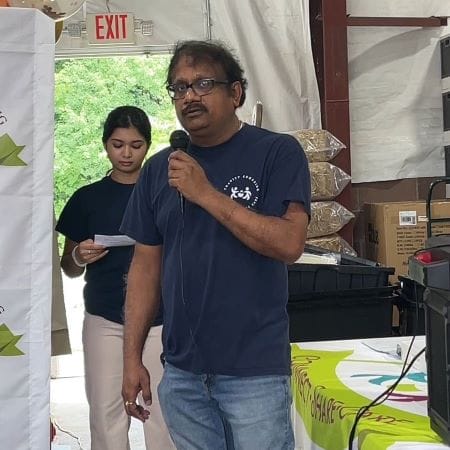
Chandra Dontaraju speaks to the volunteers he manages and oversees. /Courtesy Chandra Dontaraju
What inspired you to get started with this initiative?
Before starting this initiative, my childhood friends pushed me to get involved and it became a huge inspiration. I saw firsthand the positive impact Charity Crossing had on their lives, and I felt it would be perfect for me. Also, I find joy in helping my community and other communities. I enjoy coordinating and attending community events, as this is something dear to my heart.
What are your long-term plans or goals for the organization?
At the age of 54, I hope that I remain youthful, but also get other youth involved. We must continue doing the work we do at Charity Crossing and I hope to not only further develop our presence in Delaware, but that it grows in other states throughout the nation as well. As for now, we have locations in Delaware, Pennsylvania and New Jersey but I am hoping we soon expand.
What’s been the most rewarding part of your work?
The most rewarding part about working with Charity Crossing is my work being recognized. Originally, I joined this charity to lend a hand to my community and now I am being recognized for my contributions, which is a nice feeling to be celebrated for doing good things within my community. Also, in 2022, Charity Crossing awarded me with an Employee Appreciation Award for my contributions to the organization.
What have you learned through your experiences as a volunteer?
During my time with Charity Crossing, I have learned a lot about myself, and it has benefited me professionally as well. Charity Crossing has reminded me of my drive to complete any task in front of me regardless of “tough times.” During the winter season, even in inclement weather, we work. This reminds me of the importance of contributing and making a difference in your community regardless of minor obstacles in the way.
Charity Crossing taught me how to operate a warehouse, manage the warranties, manage community events and be a reliable leader for other volunteers. In return, it professionally and personally reminds me how to manage my position, build my skills, work with my team and teach my son the importance of giving.
Tell us about future partnerships, programs, or events that you are excited about.
When I joined in 2021, we had 50 to 70 volunteers. Today we have grown to an even bigger organization of volunteers who volunteer on at least a weekly basis at Charity Crossing. I hope that we continue to grow and make a difference.
But when I am not volunteering at Charity Crossing, I work at JP Morgan Chase (JPMC) as a software engineer. While at JPMC, I have volunteered at several work-sponsored events and I am looking forward to contributing to more soon.
Chandra moves a stack of Amazon packages to the side in Charity Crossing’s warehouse. /Courtesy Chandra Dontaraju
Why is it important for others to get involved with causes they care about?
Volunteering is not only important for personal growth but for community growth as well. It is nice to get awards, but it is important to help your community however possible. For me, I work many hours weekly totaling about 10 to 12 hours a week. Other volunteers work at least once a week and that is fine but it’s important to maximize your time and contributions, which makes a significant difference.
Any advice for people who want to start volunteering?
Just get involved and volunteer your time. I always encourage my friends and their kids to get involved. This will benefit my personal and professional self-development while gaining immense experience. Not only that, but it will allow them to connect with their community and have fun doing so at the same time.
What do you want people to learn from your story?
I’ve mentioned this several times, but I think the biggest thing people can learn from my story is the power of volunteering and the impact it can have on your life personally and professionally. These are major keys to success and fulfillment.
Do you want to make a difference in your community like Chandra? Find local volunteer opportunities.
Restoring Dignity, Supporting Families and Fighting Hunger in Madison
Meet Daily Point of Light Award honoree Jenny Czerkas. Read her story, and nominate an outstanding volunteer or family as a Daily Point of Light.
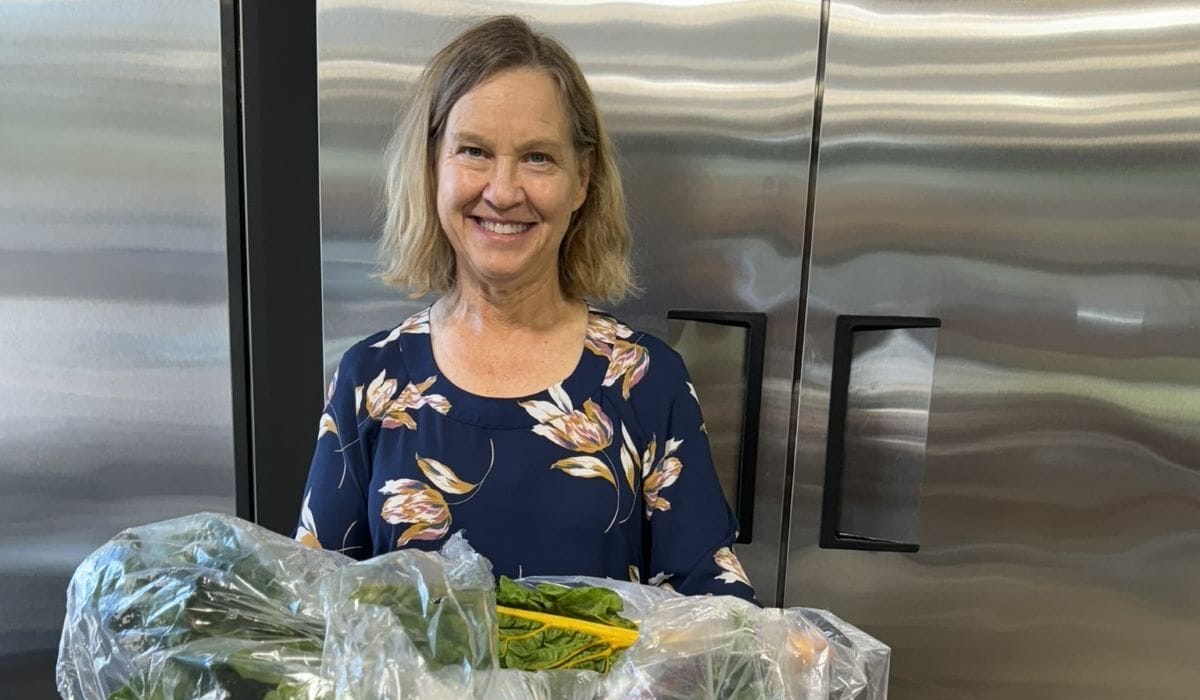
Jenny Czerkas has dedicated her life to uplifting some of Madison’s most vulnerable communities. As the co-founder and operations director of Extended Hands Pantry, Jenny helped fill bellies and increase hope for countless low-income households, particularly for immigrants and refugees, who rely on the pantry for critical support.
Jenny started a 100% mobile food pantry during the pandemic to address the increasing food shortages faced by families. What began as an emergency response soon blossomed into an essential service. The success and overwhelming need for the mobile pantry led Jenny to expand the program into a permanent, indoor market. This innovative, faith-based pantry allows families to self-select their groceries for the week, ensuring they have access to foods that suit their cultural and dietary needs—all at no cost. Today, this program provides food to over 2,100 people every month.
Cultural inclusivity is at the heart of Jenny’s work. She makes sure that all signage and labels in the food pantry are available in both Spanish and English, recognizing the needs of the various populations the pantry serves. By making the food pantry accessible and culturally relevant, Jenny has helped create a safe and welcoming space for families who might otherwise struggle to access nutritious foods that align with their heritage.
In addition to the food pantry, Jenny has also been instrumental in launching an annual backpack program that provides new school supplies to children from low-income families. Serving over 300 children each year, this program ensures that every student is equipped with the tools they need to succeed academically, reducing the financial strain on parents who may not be able to afford back-to-school expenses.
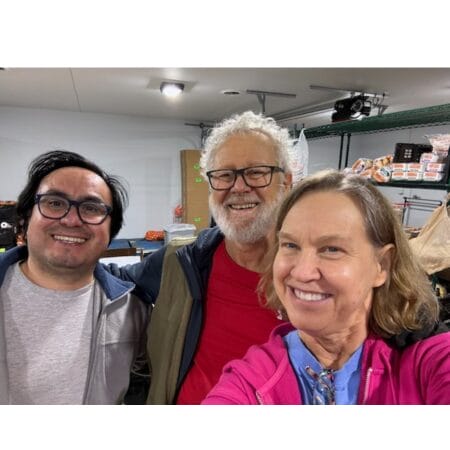
Beyond this, Jenny coordinates food deliveries for an afterschool program, serving 60-80 children each week. Since the implementation of these food deliveries, the number of children attending the community center for help with reading and math has increased by 65%. Volunteering more than 40 hours a week, Jenny’s dedication is remarkable. She has not only built a lifeline for her community but also created a model of what it means to truly serve from the heart.
Read on to learn more about Jenny’s journey and why food security in Madison is so vital to her.
Jenny taking a selfie with a couple of other volunteers at the pantry.
Tell us about your volunteer role.
My husband and I have been involved in serving low-income communities for over 25 years. During that time, a couple of things became more and more important to us. And one is understanding the importance of nonprofits partnering together. This is a big deal because nonprofits can sometimes feel like they’re competing for the same scare dollars. There’s some truth to that, but we actually came to realize the importance of those partnerships.
At the same time, working with low income communities, we starting seeing the importance of kids being fed. There are hundreds of kids who go to bed without dinner at night and go to school without having had breakfast in the morning. A child’s ability to learn, while food insecurity is an issue for them every day, is greatly reduced. So our desire was to come together to assist in an educational environment along with providing nutritional foods.
We serve primarily immigrants and refugees. Yesterday, we served about 230 families at the pantry. Out of that, we had less than 10 white families. I’ve learned how to say hello in about 10 languages. The food pantry is located in a bilingual community, in a low-income school that has a 90% free and reduced lunch rate. This is an ideal place for a food pantry.
Food is a big deal for me, coming from a dairy farm. And we are committed to doing our best to provide people the foods they’re accustomed to eating every single day. We have halal meat for the Muslim families that come through. I have three kinds of flour. I have five kinds of dried beans. A guy from Chile just recently told me that there’s another kind of bean he’d like me to bring in from where he’s from, one that he’s used to making and eating. You might not think this is a big deal, but it is. These people are in a new country with a new language. Everything is new, everything is strange, everything is unusual. For them to be able to get the kinds of foods they’re accustomed to eating every single day, we strive to provide that.
We’re what’s called a walk-in food pantry. Anyone can come in during the open hours, and it’s self-declared need pantry. We have enough space for right now, including refrigerator and freezer space, and it’s been a long time since we ran out of food. But a couple of years ago, we were all mobile and we would run out of food from time to time. Then, we were able to build an addition in the school where we operate, and since then, we haven’t run out.
What inspired you to get started with this initiative?
It was through the relationships we were building in these communities. Through those relationships, we discovered that food was really a big deal. I listened to mom after mom after mom talk to me about their struggles with providing adequate nutrition for their kids. How they would water down their milk, for example. You’re talking to a farm kid! As a farm family, when I was a kid, we were cash poor, but we ate really well. We grew our own food, we ate our own meat. So when I heard that these moms just did not have enough money to feed their kids, every day of the week, and to me this seemed like a solvable problem.
I didn’t have any experience in this but I visited about eight to ten food pantries in the area, I got a lot of information about how they were run and how they sourced their food, and my husband and I sat down and said, “This is something we can do.” So we started a faith-based food pantry. We didn’t have a manual… we wrote our own how-to manual along the way!
Second Harvest is where the bulk – over 70% – of our food is coming from. Of that, some is purchased, some is free. We also get food from TEFAP, the governmental emergency food assistance program, which makes up about 10% of the food we distribute. Then the rest is purchased wholesale.
Why is this issue so important to you?
It’s more than just handing out some milk and eggs and frozen chicken.It’s also about the way they’re treated on site. I learn their names, the names of their kids.We try to give all the small children a small toy. It makes a big difference, that people feel safe and welcome, and most importantly, that they don’t feel ashamed. I like to say to the women when they walk in, “Hello beautiful, how are you doing today?” You know, if you’re struggling, those words can make a difference. We work so hard at restoring dignity to people at the pantry.
Jenny preparing fresh produce for distribution at the food pantry.
What are your long-term plans or goals for the organization?
I’m a full-time volunteer, and my background was in IT. So I have statistics that would bore most people to death. But it helps us predict what we can anticipate as a nonprofit. The food pantry is growing – and I think this is happening nationwide – but we actually have 154% growth from a year ago. I looked at July and August last year, as compared to this year, and that was the growth rate. I had to do that math about four times, because I had a hard time wrapping my head around that.
So right now, our goal is just to keep up with the demand. It would be great if we could open another day, but right now we’re open three days a week serving about 550 families a week. But in a month, even that number will be outdated. It’s just a moving target that we keep trying to keep up with.
What’s been the most rewarding part of your work?
Seeing how happy women are when they go out with their carts of food. Or a guy who came in recently and was so anxious. When he got through the whole process, he walked out with the biggest smile on his face. The next week, he came back with his wife. He’s able to source some of the food that he enjoys eating, that he can share with his family. Those are the most rewarding parts.
Why is it important for others to get involved with causes they care about?
I think it’s very important for people to get involved with their communities, for a variety of reasons. It helps your attitude and your mindset. You become more grateful for what you have. Your petty problems don’t seem so important anymore. When you see a woman walk in with an 8-day-old baby, two toddlers and a stroller, and she can only take enough food for her family as she can fit into the stroller.
Here, there’s a beltline that’s awful to drive. Traffic is terrible. But if you think driving on the beltline is a problem, serve people in a food pantry for a couple of hours and you won’t think traffic on the beltline is a problem at all. Volunteering helps get life in perspective and sort through what’s important and what’s not.
Any advice for people who want to start volunteering?
There are volunteer opportunities for anybody, something that’s going to just fit. Get out there and try something. If it doesn’t fit, get out there and try something else, until you find the right fit. We could take a whole slew of volunteers with different strengths and skills that we could be able to put to use in some form or another. There’s always an opportunity for a specific skill set.
Do you want to make a difference in your community like Jenny? Find local volunteer opportunities.
Utah Teen Gives Juvenile Defenders a Second Chance
Meet Daily Point of Light Award honoree Kaitlyn Mitchell. Read her story, and nominate an outstanding volunteer or family as a Daily Point of Light.
Kids make mistakes, and some of those mistakes can follow them for the rest of their lives. Kaitlyn Mitchell, 18, innately understands that and wants to take jailtime off the table by giving youth a chance to correct course without carrying the weight of a record. She does this through Layton Youth Court, part of a nationwide diversion program with an emphasis on restorative justice. Kaitlyn joined the organization when she was just 13 years old.
Youth Court is an alternative to the juvenile court system for those in high school and below who admit to minor offences classified as B or C misdemeanors. They are judged by a court of their peers and then handed a disposition ranging from community service to an apology letter.
Even as she starts college, where her passion for art and working with kids has motivated her to study art education, Kaitlyn returns to Youth Court to lend a hand, dedicating over 580 hours of volunteer service.
What inspires you to volunteer?
We moved to Layton (Utah) around 2019. My mom saw a post in the junior high school’s newspaper for Youth Court, and I tried it out. I was shy at the time and thought it would help me get more involved in the community and make friends. I love volunteering there, and working with people my age helped me understand them better.
I have Tourette’s Syndrome and Functional Neurological Disorder (FND). I have tics that make it really hard for me to do things, but they disappear when I’m at Youth Court.
Tell us about your volunteer role with the Layton Youth Court.
We get referrals from police, schools and sometimes parents for kids who have been arrested for anything from marijuana use to assault to arson. They come to Youth Court, and we give them dispositions to help them give back to the community instead of harming it. We want them to be connected, so they don’t feel the urge to act out.
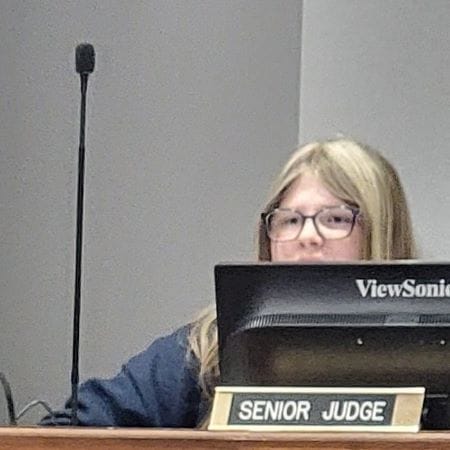
Kaitlyn serves as a judge on a panel of youth during a mock trial hearing.
We try not to be punitive with our judgement. We like to give them things that will help them reflect on what they’ve done and how to fix it. It’s a second chance, and after they pass Youth Court—complete the tasks in their disposition—the arrest doesn’t go on their record. For the past two years, we’ve had a 100% completion rate.
I’ve had many different roles, because we switch every week. I’m mostly a senior judge now, but I used to be a judge or bailiff. As a judge, you sit on the panel and ask questions. You get to know the offender and come up with a suitable disposition. As a bailiff, you escort people and serve as traffic control.
We look at the police report. Then, we ask the offender to come in and tell their side of the story, because maybe they were peer pressured into it, or maybe something else happened that day that made them want to do whatever they did.
We also have forms for parents and respondents to fill out in order to get an idea of what they enjoy doing and if there was any punishment beforehand. We don’t want to give them extra. For example, if they’ve already done community service, we don’t want to give them more.
I’ve also been a CHOICES Expert. I taught a class to offenders we felt needed to make better choices and learn about emotion management—anger, fear or peer pressure. We educate them on drug use and other things, too. And I’ve trained kids on panels to teach that class.
You come back as an adult advisor. How does that role differ from the ones you’ve had in the past?
I get to do what Karlene has done for the last 26 years. She runs all of the Youth Court, and I get to help. I bounce from panel to panel. Right now, we’re running three at a time, because we’re so full. Usually, we only run one or two. The minimum is three on a panel: a senior judge, a clerk and a bailiff. The clerk does paperwork. The senior judge is the head honcho, and the bailiff brings them in and out of the room and gives the confidentiality oath.
I help wherever I can. Sometimes, I act as a youth. If we don’t have enough people, I fill in as a senior judge. And if anyone has questions on things like how to fill out paperwork or certain rules, I can help. I can also teach CHOICES trainings.
What’s been the most rewarding part of your work?
We’ve had kids go through Youth Court as offenders who come back and join our panel on the other side. It’s so rewarding to see how they made a simple mistake, and we help them fix it. They recognize it and never do it again.
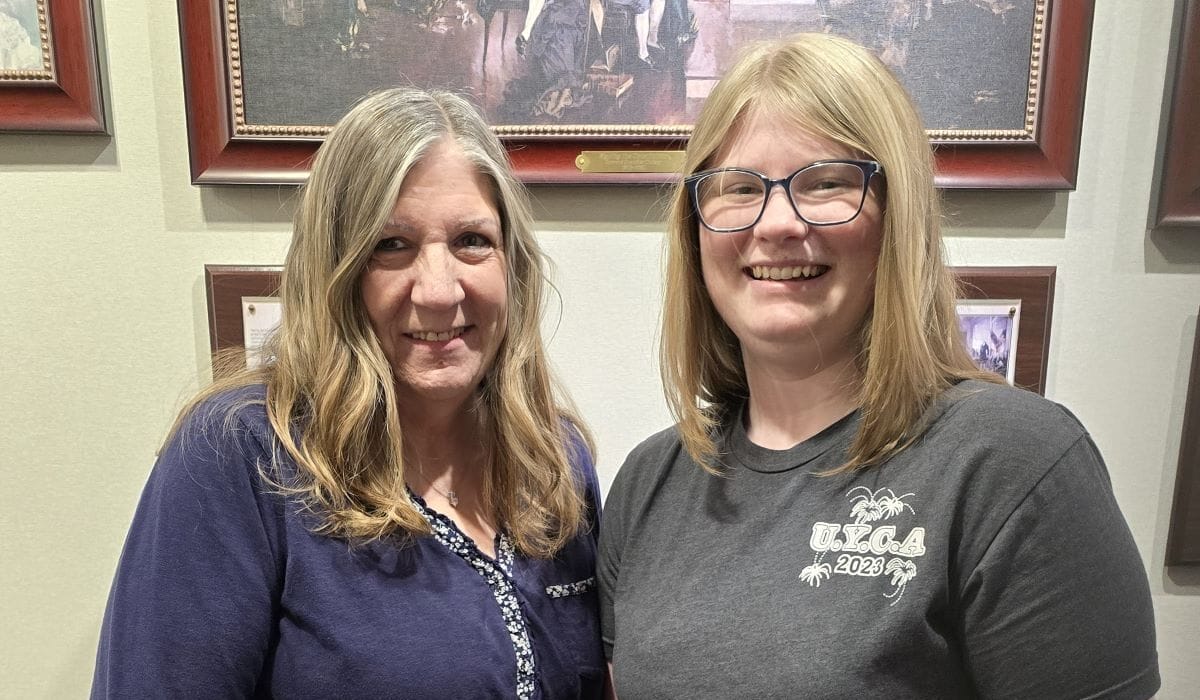
(Left) Karlene Kidman, Layton Youth Court director, gets help from Kaitlyn in running the program she’s headed for nearly 27 years.
What have you learned through your experiences as a volunteer?
I’ve learned a lot about myself and to be more outgoing. I’ve also learned a lot about the legal system through a yearly Youth Court conference.
Why is it important for others to get involved with causes they care about?
Most of the kids who come into Youth Court don’t really care about their community. That’s why they act out. They don’t think people care about them or what they do. By connecting to their community, they realize there’s something to care about, and there are more people to connect with.
What do you want people to learn from your story?
Through my disability, I’ve learned to advocate for myself. And by doing that, I’ve learned that I can pretty much do anything any “normal” person can do. You might think you can’t do it, but you can.
Do you want to make a difference in your community like Kaitlyn? Find local volunteer opportunities.
California Teen Shares Her Love of Learning with Younger Kids
Meet Daily Point of Light Award honoree Veda Mungara. Read her story, and nominate an outstanding volunteer or family as a Daily Point of Light.
Veda Mungara may have only recently turned 15, but that isn’t stopping the high school sophomore from helping others. After seeing a flyer at school for Edutine, an organization that provides free online tutoring to elementary and middle school students, Veda decided to jump in as a volunteer tutor and mentor. Following the group’s belief that “education is the key to opportunity,” Veda uses her own intense passion for learning, particularly in subjects like math and computer science, as a mentor and role model to younger children.
Veda’s role within the organization has expanded, as well. After starting out in July 2022 as a “mini tutor,” Veda now hosts one-on-one classes on Zoom. She researches and coordinates the lesson plans herself, creating slides to use as presentations for the students. Known for her ability to connect with each student on a personal level, Veda actively adapts each of her meticulously-planned lessons to meet the individual needs of each student.
Her role within the organization has also expanded, and she now serves as the secretary and director of advertisement of Edutine. Working closely with the group’s leadership, Veda plays an important role in determining how the group will expand. But she’s steadfast in her belief that someone doesn’t need to take on a major leadership role in order to help others. Read on to discover why Veda believes that one small thing really can make a big difference.
Tell us about your volunteer role with Edutine.
I hold one-on-one classes where I teach subjects like math, French and sometimes computer science. I make presentations using slides, but I also give homework and quizzes and tests and stuff like that. I really want to make sure that all their questions are answered and they understand the material. I was also recently appointed as an officer. I’m a secretary, so I focus on advertising Edutine in the community and on social media.
What inspired you to get started with this initiative?
I felt like overall, I just had so much passion for learning. I wanted to learn French, and I just wanted to improve my skills, because I’ve always wanted to travel to Europe one day. But I had never been able to dive into it deeply, and I’ve always wanted to do so. And I just really wanted to learn from the amazing program.
Veda is a volunteer tutor and mentor for Edutine, an organization that provides free online tutoring to elementary and middle school students.
What are your long-term plans or goals for the organization?
Our main goal is to expand. We really want to expand globally. Right now we have a chapter in India and one here in the United States, but we want to expand further so that we can really capture the essence of our organization and spread this mission throughout the world.
What’s been the most rewarding part of your work?
I just really love working with children and helping them grow. Seeing them learn and become a different person brings me so much joy every day. For instance, the other day my student was struggling with learning this concept in math. It took us a lot of different ways for her to understand, and when I was able to teach it to her, it brought me so much joy because I was able to help overcome one of her struggles. Just seeing her understand and be happy and be proud of something also makes me happy.
What have you learned through your experiences as a volunteer?
I’ve learned you should always do something not for your own benefit, but for helping your community. When you help someone, it’s so much more rewarding than anything else, especially when you’re doing something that you love. When you’re doing something to help people, that is the most rewarding thing.
Tell us about future partnerships, programs or events that you are excited about.
As I mentioned before, I really like computer science. So we’re planning on having a hack-a-thon as a live event in the Bay Area with another club. What we wanted to do is go to another place without many resources, and teach them how to code, like a little boot camp.
Any advice for people who want to start volunteering?
I know it’s hard, but reach out to people. I found that cold emailing people at different organizations really helps. People want to help make a difference in our world. If you show the drive to do so, people will be willing to help you. I think that reaching out to people, though it may seem hard and you might be skeptical about it in the beginning, really goes a long way.
What do you want people to learn from your story?
The feeling of getting involved in your community is so rewarding that it’s indescribable. If you really love something, but you’re scared to do it, just do it. You never get the opportunity to have these experiences again. And though it may seem scary, there’s always people you can reach out to. If you do this, imagine how many smiles you’ll put on people’s faces.
Do you want to make a difference in your community like Veda? Find local volunteer opportunities.
Young Leaders Making a Difference Through Cancer Research, Education and More
Meet Daily Point of Light Award honoree Ishaan Ghosh. Read his story, and nominate an outstanding volunteer or family as a Daily Point of Light.
At a young age, Ishaan Ghosh has become a driving force in the fight against cancer, not only in his local community but across the nation. As the founder and president of the 501(c)(3) nonprofit organization hope2heal, Ishaan has led an inspiring effort to raise cancer awareness among the youth and support those affected by this devastating disease. Alongside his co-founders—Colin Lopes, Vivaan Shah and Shaunak Bhangale—he has built an organization that operates in over eight states and 70 cities, reaching thousands of young people and cancer patients.
hope2heal is unique in its approach, focusing on educating students in over 50 schools about the biology of cancer and empowering them to take action. The organization’s educational outreach programs mentor students and help them understand what cancer is, how it affects the body and what they can do to contribute to the fight against it. This grassroots effort to inform and engage young people is helping to create a generation that is more aware and compassionate toward those battling cancer.
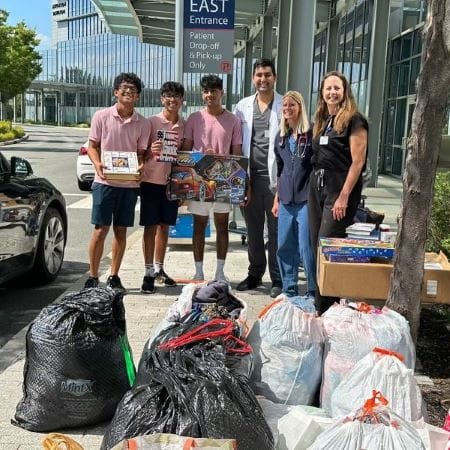
One of the standout initiatives of hope2heal is its annual summer donation drives. Each summer, the organization collects items that people no longer want—such as books, toys, clothes and antiques—and donates them to cancer patients or sells them at thrift stores, with the proceeds going to youth cancer research and direct donations to cancer patients and survivors. These drives have raised over $100,000 to date, providing significant support to those in need and contributing to cancer research efforts.
But Ishaan’s vision for hope2heal doesn’t stop there. He is currently working on developing an assistive technology model that will be used in hospitals to send encouraging messages to cancer patients. This AI resource aims to comfort, reassure and inform patients about what they can expect in their treatment journey, providing a much-needed source of support during a difficult time.
Read on to find out what drives Ishaan to dedicate his time and talents to this cause.
Tell us about your volunteer role.
I’m the cofounder and president of a nonprofit called hope2heal. We are currently based in South Brunswick, New Jersey, but we’ve expanded to eight states across the United States. Specifically, I’m heavily involved with our summer donation drives. We look for things people don’t want – the things that people just collect – that stays sitting at their house.
What we try to do is collect everyone’s “junk” and try to distribute it to cancer patients. We sort items into things that can be used again and things that are unusable for patients. Through the United Breast Cancer Foundation, we donate the latter items to thrift stores. That money turns into breast cancer and youth cancer research – an often overlooked field. For items we can use, we donate them to Penn Medicine and Rutgers Cancer Institute, with which we have partnerships. Those are resourced out to cancer patients and survivors.
Some of the other things our organization does is go to elementary and middle schools to educate young people. We all know there are millions of people struggling with cancer. But many people don’t know how they can help, or feel like they need some medical background to help with the cause. But we want to show these young people that anything – from writing a card to donating time – helps out with the cause. My main role as founder is to spread this awareness, as well as helping to build empathy in these young people.
Ishaan donating $20,000 worth of donations to Penn Medicine.
What inspired you to get started with this initiative?
The way it started was honestly a little random. A group of friends and I wanted to do some service work that was unique from what others in our community were doing. My parents’ parents live in India, and I see them travel back to India frequently to help them. Cancer runs in my family and several of my family members have the disease. I know my parents want me to pursue my education here, but with them leaving so often to help my grandparents and my aunts and uncles, I felt pretty useless just sitting here. When this group of peers and I wanted to do community service work, it spun into a cancer charity, based on my personal experiences.
What are your long-term plans or goals for the organization?
We started pretty local, and currently, each branch works locally. The New Jersey branch works at New Jersey schools, and so on. So we’re pursuing a national effort by establishing these chapters, but we’re not as united as I’d like to be as an organization. I know we could extend our reach even more with collaboration and a shared national initiative.
I think that instead of doing something quantifiable – like donation drives and working in schools – if we work with people across the country, we can engage a wider crowd. Since most of us are high school seniors and quite busy with school, we’re waiting on the resources and people power to do that. I’ve been gathering a new generation of hope2heal by contacting some of the rising sophomores and juniors who are interested in working with us.
What’s been the most rewarding part of your work?
We wanted to do something with AI, since it’s so big in our world, so we made this assistive technology that’s kind of a chatbot or a virtual friend. If you have a question or want to hear a story – which can be common for cancer patients who might feel lonely – we have that technology integrated now.
Even more than that, every time we conclude our summer donation drives and drop off thousands of donations at a hospital, visit patients and talk to them, it’s rewarding to see them happy and knowing there are people out there, aside from their close family, who are trying to help them. A lot of people donate toward cancer research but don’t necessarily know where that money is going. And when they see us bringing in clothes, toys and books, they get excited. It’s a way for them to appreciate the work and for us to connect with them.
What have you learned through your experiences as a volunteer?
Everyone has an unspoken desire of wanting other people to recognize their needs. We see people on social media posting about cancer awareness. But often, you don’t see the cancer patients themselves. They often deal with their own struggles on their own. So it struck me that everyone deals with these inner struggles, and our job as humans to really empathize what they’re going through and help them feel seen. As someone who’s never dealt with the illness personally, I can imagine it must be painful and a struggle for them and their families, but the best way for me to empathize is to directly work with these patients.
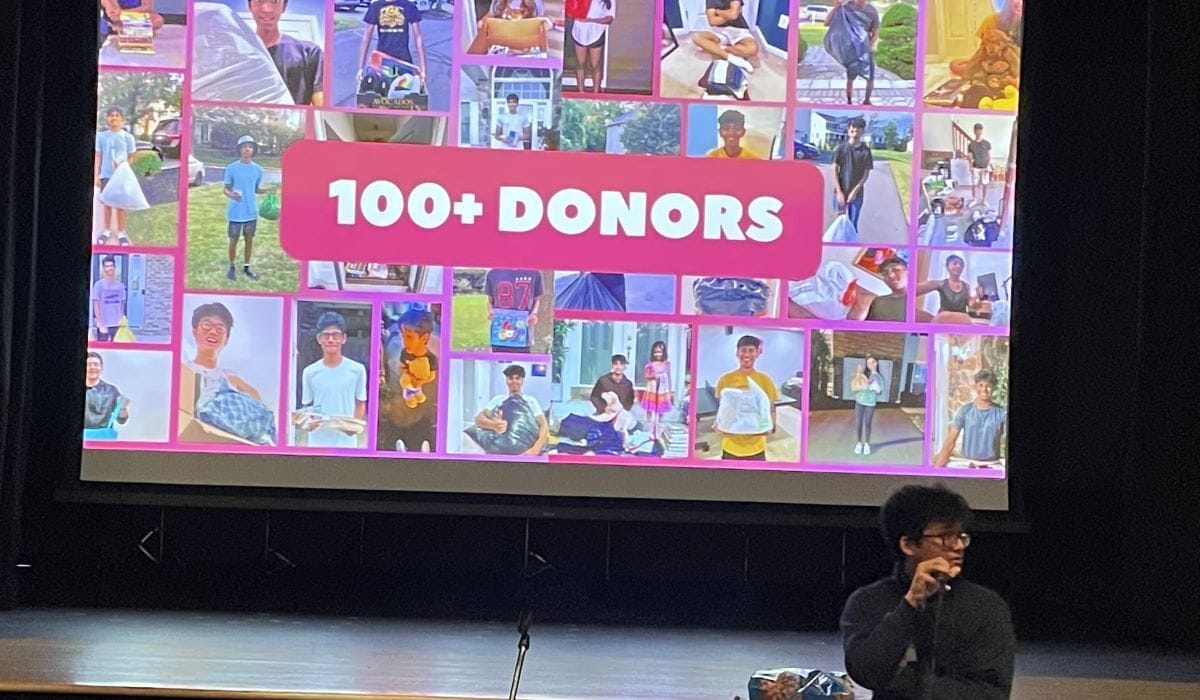
Ishaan talking to a crowd about they can get involved with hope2heal and cancer charities in general.
Why is it important for others to get involved with causes they care about?
Doing community service in general feels good. When we started this organization, we didn’t have cars. We wanted to get a lot of donations and spread our reach across our area, so we would bike across town with trash bags on our handlebars and backpacks on our backs. While I was exhausted afterward, it felt so rewarding to help the community. Those bike rides might have been a struggle for us, but there are people who are struggling way more. Any type of service work is rewarding when you can help people. A lot of kids my age may start a nonprofit or do volunteer work for college applications, but our team has really found it rewarding and fun.
Any advice for people who want to start volunteering?
Honestly, it all comes down to planning. hope2heal wasn’t the first initiative I worked with. We tried something else first, a math tutoring initiative. We just jumped into it, trying to start this nonprofit with little notice and not much traction. But when we worked toward hope2heal, we expanded our reach quickly. We have a team of eight people. We prioritized outreach, since we found that most people don’t really go out and volunteer on their own – they’re usually told about a cause or initiative.
I’d say, once one person has an idea, don’t be afraid to share it. You never know who else will want to be a part of the movement. Make volunteering into something fun and rewarding. If you’re founding a nonprofit, plan well and delegate tasks accordingly. You may have just accidentally discovered a new passion.
Do you want to make a difference in your community like Ishaan? Find local volunteer opportunities.