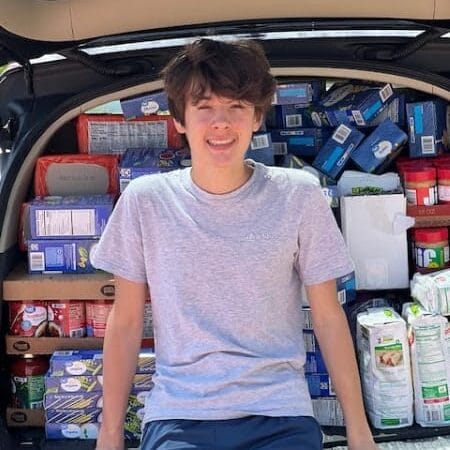
Extending a Hand: Florida Teen Supports Displaced People and Creates Cross-Cultural Opportunities
Meet Daily Point of Light Award honoree Carter Magnano. Read his story, and nominate an outstanding volunteer or family as a Daily Point of Light.
Carter Magnano is on a mission. Most 17-year-olds are focused on finishing up high school and applying to colleges. While he’s managing that, too, Carter has other things on his mind. He plays varsity lacrosse–and formerly ran cross-country—but he also sets up speaking events to highlight refugee stories and build empathy in his conservative community. He enjoys going to the beach, but he also loves tutoring and supporting kids who have fled war-torn homelands and are facing barriers in their new home.
As the co-president and a founding member of JaxTHRIVE(Teens Helping Refugees Integrate Via Engagement), he oversees between 500 and 600 volunteers from chapters across the country who have dedicated over 13,000 hours helping refugees. And he has raised over $200,000 to keep things running. Carter’s work goes beyond a friendly welcome and sets people up for future success.
What inspired you to get started with this initiative?
Growing up, my siblings and I volunteered at World Relief, a refugee resettlement organization. We’d help them with backpack drives, tutoring and all of that. Then, in early 2017, funding was cut, so the program was going under.
We partnered with Kim’s Open Door, a nonprofit that supports a lot of refugee families, then founded JaxTHRIVE with Super Saturday events. From nine to one ever other Saturday, around 30 volunteers teach science, art, math and STEM to a similar number of refugee students ages 4 to 17. And then they play soccer.
Once we build connections with them, we offer individual tutoring via Zoom. We often stay connected with them through college and their career paths to see whatever they need help with. We reach kids all over the nation on Zoom now.
Tell us about your volunteer role with JaxTHRIVE.
I’m the co-president of the JaxTHRIVE Leadership Council, which unites JaxTHRIVE clubs from different schools and helps run community events. It’s basically oversight of the whole program. Also, within Ponte Vedra high school, I serve as the president of our school club, which runs things like holiday basket drives and initiatives getting people from our school directly involved.
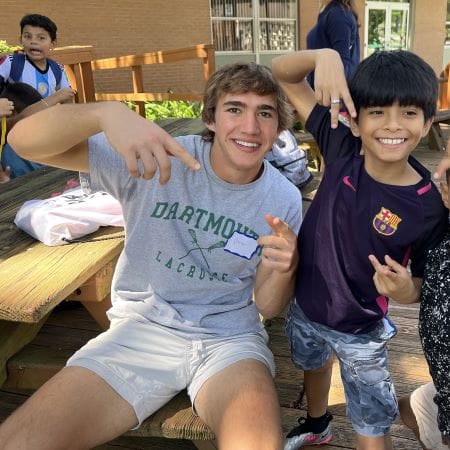
(Left) Carter Magnano, co-president and founding member of JaxTHRIVE, practices unstructured conversations with students after lunch at Super Saturday, an event offering tutoring services for refugee students twice a month.
Recently, the Leadership Council had a training with 60 to 70 people at the University of North Florida. We gave them an overview of JaxTHRIVE and got them involved. And my co-president, Sarah Park, and I published a children’s book we co-authored called New Beginnings: Refugee Children’s Tales of Hope and Resilience. It’s a children’s book, so kids can understand what the term “refugee” means and empathize with these individuals from an early age.
What is JaxTHRIVE Journeys?
JaxTHRIVE Journeys is an in-person lecture series where refugees speak to people about their country, their culture and their journey here. They highlight volatile political situations and other crises that lead to forced migration, often as they unfold. In the past, we’ve heard from a vascular surgeon and clerical advocates from Syria, a Lost Boy from Sudan, a panel of former Afghan fighter pilots and visiting Ukrainian physicians. It’s typically more adults who will come to these events, but there are also a lot of students.
Where I live, people aren’t very educated about the plight of refugees, but JaxTHRIVE Journeys helps eliminate the stigma and teaches people about what refugees really are and what they’ve been through. A lot of communities associate refugees with undocumented immigrants and feel that they’re here illegally. They’re not. And they’re not coming here for a better financial life or to try something new. They’ve been forcibly displaced from their homes. This program changes the way people interact with others and how they empathize with refugees.
You’ve gone global. How did that start?
Every summer, we have people from Iraq who come in an exchange program.It started on Zoom during COVID. Now, we can see them face-to-face before they visit other places around the US.
We get to know them on a personal level and stay in contact through social media. Recently, we also had four or five Israeli students come and talk to community members through Spread Cream Cheese Not Hate, a local nonprofit. The Iraqi students and the Israeli students were here at the same time and wanted to meet each other but, due to their schedules, couldn’t. So, we set up a Zoom. People often think nations with conflicting paths are filled with people who wouldn’t like people of the other nation, but in reality, there are hundreds of examples, many at JaxTHRIVE, where that just isn’t true.
What are your long-term plans or goals for the organization?
I hope, wherever I go to college, I can start a JaxTHRIVE club there and expand the organization. It’s going to be harder to be as involved with what’s going on here, but there are a lot of very involved younger people to pass the torch to.
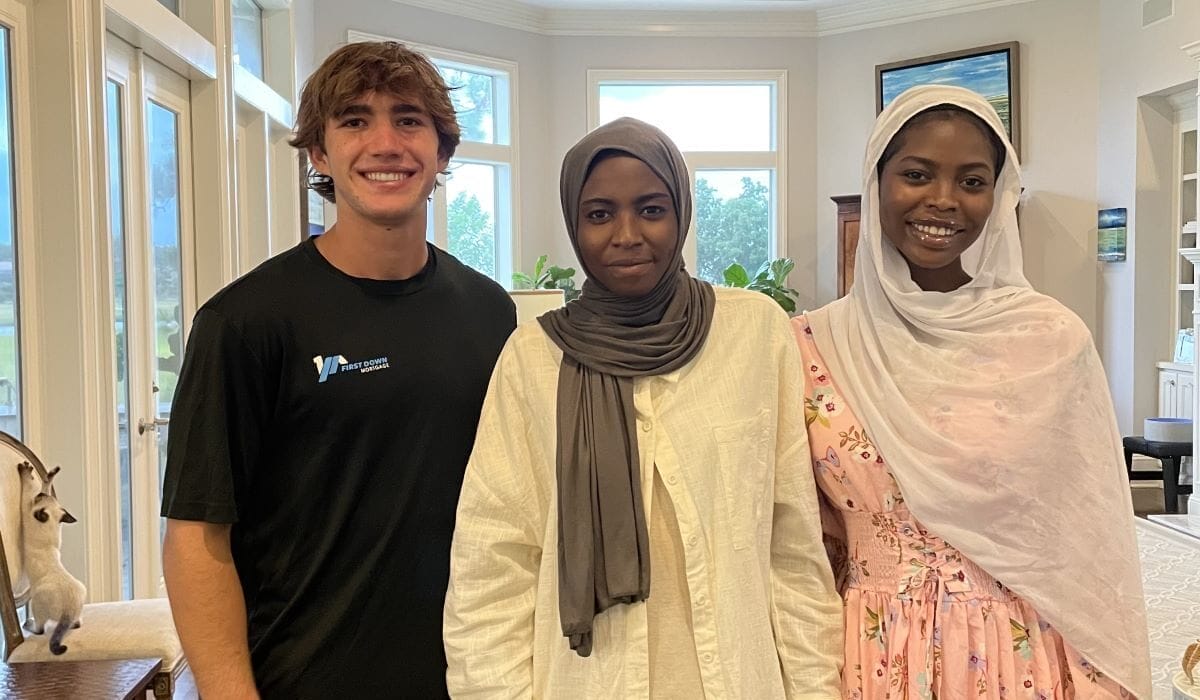
(Left) Former students, now JaxTHRIVE tutors and leaders, visit with Carter after leading the organization’s most recent JaxTHRIVE Journeys presentation to visiting Iraqi high school students.
What’s been the most rewarding part of your work?
The thing that has impacted my life and changed the way I think has been getting to know people from all over the world and seeing how a lot of the stuff I take for granted, they would give up their lives for. I feel like I’ve won the lottery being born where I am, because a lot of these students had lives very similar to mine before they were forcibly displaced. I’m very grateful for what I have, and I feel like it’s my duty to help others in need.
Tell us about future partnerships, programs or events that you are excited about.
In the beginning of September, we’ll restart Super Saturdays and ramp up student tutoring. This summer, we’ve focused on SAT and ACT tutoring. Our next big program is a financial literacy class for young refugees in partnership with Vystar on September 18.
Why is it important for others to get involved with causes they care about?
Everybody needs to find what they’re passionate about. A lot of times, people have undiscovered interests because they haven’t been exposed to them. Getting out of your comfort zone and doing something new is incredibly rewarding, and it can change the way you think about yourself. When you get involved in something that you truly care about, it changes your life.
Do you want to make a difference in your community like Carter? Find local volunteer opportunities.
Pageant Queen Gets Hands-On Helping Veterans
Meet Daily Point of Light Award honoree Tiffany Wells. Read her story, and nominate an outstanding volunteer or family as a Daily Point of Light.
Tiffany Wells comes from a long line of veterans in every branch of the military. Unable to serve herself due to asthma, she became an advocate for veterans and, like her mom, a dedicated volunteer. Tiffany serves as vice president of Rebuilding Together Auroraand a board member of Support Over Stigma.
The formerorganizes more than 300 volunteers in doing critical home repairs—safety modifications, energy efficiency upgrades, home preservation and more—at no cost to low-income owners. They have provided over $350,000 in 2024 alone. Tiffany has raised over $1 million in grant funding for veterans, disabled individuals and seniors across Illinois to provide them with safe and healthy homes. Her work with Support Over Stigma helps veterans and first responders overcome mental health and service-related challenges.
Tiffany does all of this on top of working full time as an auditor at Wells Fargo, a company she’s been with for over 16 years, and a part-time service desk associate at Home Depot, a role she’s held for five and a half. She leads both companies’ volunteer impact teams, connecting employees with volunteer projects to create an even bigger impact in her community and a legacy of service.
What inspires you to volunteer?
I lost my parents to illness when I was young. Family has always been very important, and being close with mine has been such a blessing. When we lost my parents, it was important to me to carry on the traditions instilled by them as well as making sure we are always connected.
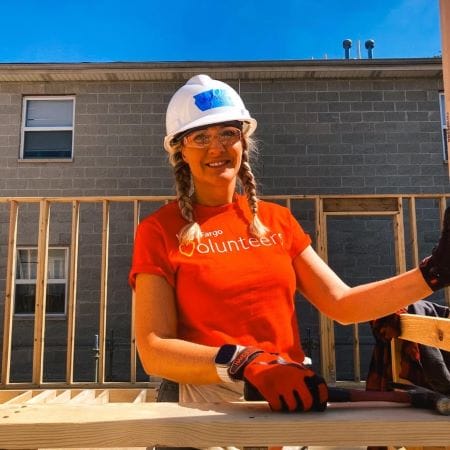
Tiffany Wells, vice president of Rebuilding Together Aurora and volunteer leader of the Wells Fargo Illinois Employee Impact Team, helps with critical home repairs for veterans, disabled and low-income individuals and families on a build in Chicago.
Working with Wells Fargo and Home Depot and having access to people who want to help the community has allowed me to help others feel connected and supported. Not everyone can afford to get repairs done on their home. Some people live paycheck to paycheck, and it’s difficult. I started volunteering with Rebuild Together over 10 years ago through a Wells Fargo volunteer event. Wells Fargo has a great volunteer impact team that puts a lot of emphasis on housing needs. They have a partnership with Rebuilding Together, so they work side-by-side with different affiliates and help with grant funding.
I’ve been competing in pageants for 20 years. Being a former Mrs. Illinois has also helped me open doors to a lot of nonprofits, including Support Over Stigma. I know what it’s like when military family members come home from overseas, the toll their experiences can take, not only on that service number, but on their family.
Tell us about your volunteer role with Rebuilding Together Aurora and Support Over Stigma.
I’m a board member for both groups, so I work closely on community outreach, fundraising, networking and in various volunteering capacities. There’s a lot of coordinating events like our big Fall Flannel event coming up for Rebuilding Together. And we do our two-day Community Block Build at the end of April or May each year with anywhere from 20 to 50 homes. Those are always big projects. I bring awareness to the organizations and find funding.
At Support Over Stigma, we assist with a wide range of things. I have resources, not just within the two organizations I work with, but with VFW Post. I have friends who have served who can help facilitate. My companies have some really great programs that we can tap into for grant funding, too. I worked from home when the pandemic hit, and I wanted to do something where I could interact with people. I’m a social person, and Home Depot gave me that outlet both through work and as volunteer co-captain for Team Depot, our volunteer force.
I’m also the volunteer leader for Wells Fargo’s Illinois Employee Impact team. I help run volunteer events, and I get people involved within our organization. We have over 200,000 employees, and I can get 50 to 60 volunteers to come to an event.
What’s been the most rewarding part of your work?
I’ve seen Support Over Stigma save hundreds of lives this year from suicide. It’s estimated that 22 veterans are committing suicide every day. I’ve had veterans come up to and say, “This organization has saved me,” and that just pulls on my heartstrings.
Making someone feel like they have someone who cares about them and ensuring that they have a working sink or a bathtub… Ensuring people are living in a clean environment, with a shower they can actually use—we help with ADA guidelines—is the best. I love seeing the transformation and how happy it makes the homeowner.
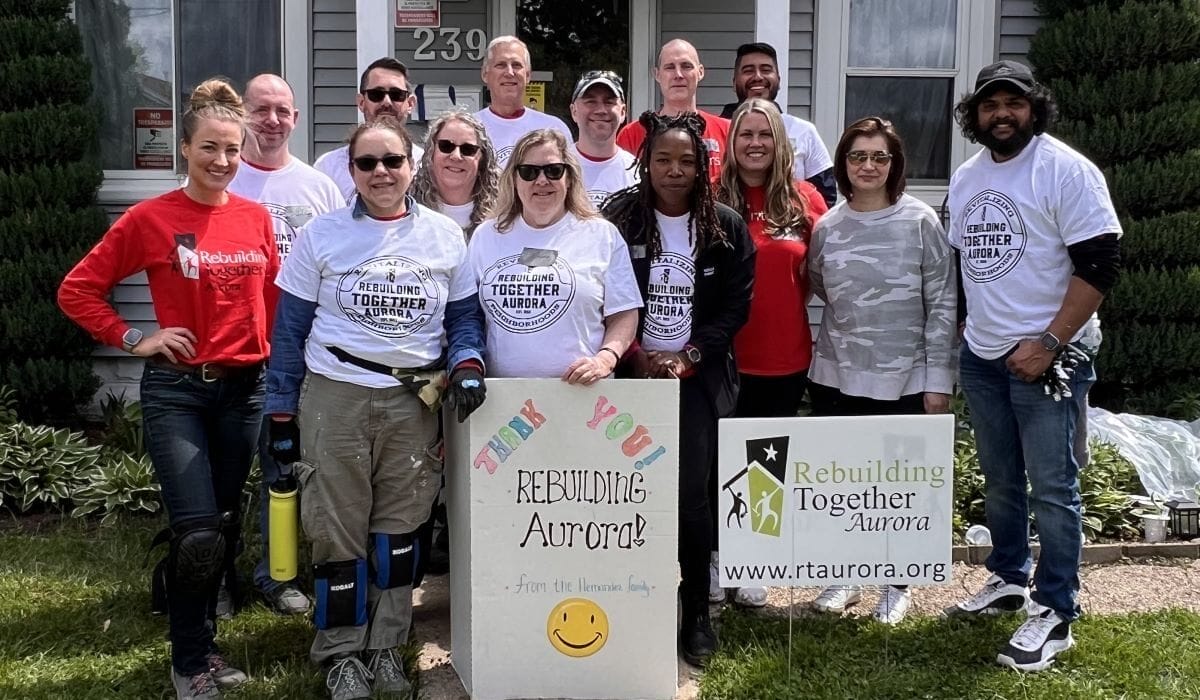
Rebuilding Together Aurora Block Build volunteer team works hard to repair, paint and clean up for a special homeowner.
What have you learned through your experiences as a volunteer?
Besides the skills to use a drill, a hammer and a saw, it’s taught me to not be biased. You look at a certain situation, and you think, Well, they could avoid that. I’m an empath, and talking to these individuals helps me understand what really is going on instead of judging it. Now, my interpretation is based on fact and understanding an individual’s circumstance which has opened my heart, my mind and my patience. I’ve learned to be gentle at solving problems, and it’s honed my abilities to communicate.
What do you want people to learn from your story?
You make time for what you love to do. There’s 24 hours in a day. If you want to do it, you’re going to do it. There are a lot of different ways you can show support. But if your love language is serving, then get involved. Start small. That’s how I started. I joined my work volunteer group. They were having a volunteer event, and I decided to go for an hour to see if I liked it. You don’t know until you try.
Do you want to make a difference in your community like Tiffany? Find local volunteer opportunities.
Twins Honor Their Indian Heritage While Helping New Mothers
Meet Daily Point of Light Award honorees Vidha and Vibha Ganji. Read their story, and nominate an outstanding volunteer or family as a Daily Point of Light.
Vibha and Vidha Ganji have doubled down on helping others. The 16-year-old San Diego twins weren’t exactly sure where to start when it came to making a difference. As high school students, the duo was originally looking to fulfill their volunteer hours for school. But with each volunteer role they took on, Vibha and Vidha developed a love of helping others and building bonds with those they met throughout their various adventures.
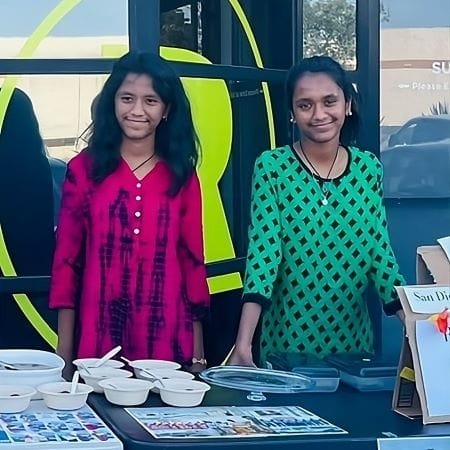
Ultimately, Vidha and Vibha realized they could utilize their own strengths, as well as that of the community around them, to create their own nonprofit organization. After several trips to India, they noticed how dire the need was for medical infrastructure in certain areas of the country. Starting off with just one additional member besides themselves, they founded their local chapter of Future Youth Leaders for Humanity with the goal of promoting their Indian cultural heritage by organizing fun activities like events, workshops and summer camps.
Through FYLH’s San Diego chapter, they provide financial support to Sanjivani Hospital, a multi-specialty facility that provides free care to pregnant individuals in Andhra Pradesh, India. The funds they’ve raised with their diverse events that draw hundreds of attendees have covered the cost of more than 100 surgeries. Whether they’re brainstorming event ideas, holding team meetings or managing the organization’s finances, the duo spends up to 25 hours per week dedicated to their cause.
What inspires you to volunteer?
Vidha: We started volunteering at HandsOn San Diegobecause we wanted volunteer hours for school. But after spending time at several local nonprofits, we realized the fact that we could be doing an actual useful thing for our community while being there is something that appealed to us. We just saw how powerful nonprofits could be. And we were like, “Oh, what if we start our own?”
Vibha and Vidha Ganji host an FYLH booth at a local cultural event. (courtesy Vidha Ganji)
Vibha: For our chapter, I’m currently the president, and Vidha is the vice president, but we both founded it. We have around 20 people in the organization. Our activities nowadays are about finding new venues to hold our events at, or logistics-related items. We do workshops tied to the specific festivals we have in India throughout the year, like Ganesh Chaturthi or Diwali. It’s specifically events that focus on Indian culture-related activities.
What inspired you to get started with this initiative?
Vibha: We noticed there was a disconnect. There weren’t as many opportunities for us to connect back to our culture, considering that we moved here at such a young age, other than going directly back to India. And we wondered if there were other people going through a similar situation.
What are your long-term plans or goals for the organization?
Vidha: We were thinking about expanding individual chapters to local schools. We’re clustered across a lot of communities within San Diego, so having more direct outreach would be nice. Hopefully we can have ambassadors at individual schools in our area and more California regions.
What’s been the most rewarding part of your work?
Vidha: Monthly we have phone and video calls with the hospital back in India with the patients there after their deliveries. That really helps to see the tangible output our organization’s working on.
Vibha: We also get weekly pictures of all the women whose babies were delivered at the hospital. We get to post them out our group chat, which is really nice to see.
Why is it important for others to get involved with causes they care about?
Vidha: In the beginning, it was like, “Oh, there’s probably someone out there who focuses on what we want to focus on.” We just kind of delayed starting a nonprofit, because we assumed there was somebody out there helping out. But when you take up the initiative and you do it yourself, even if there’s someone else doing it out there, you will have a tangible impact on the people around you.
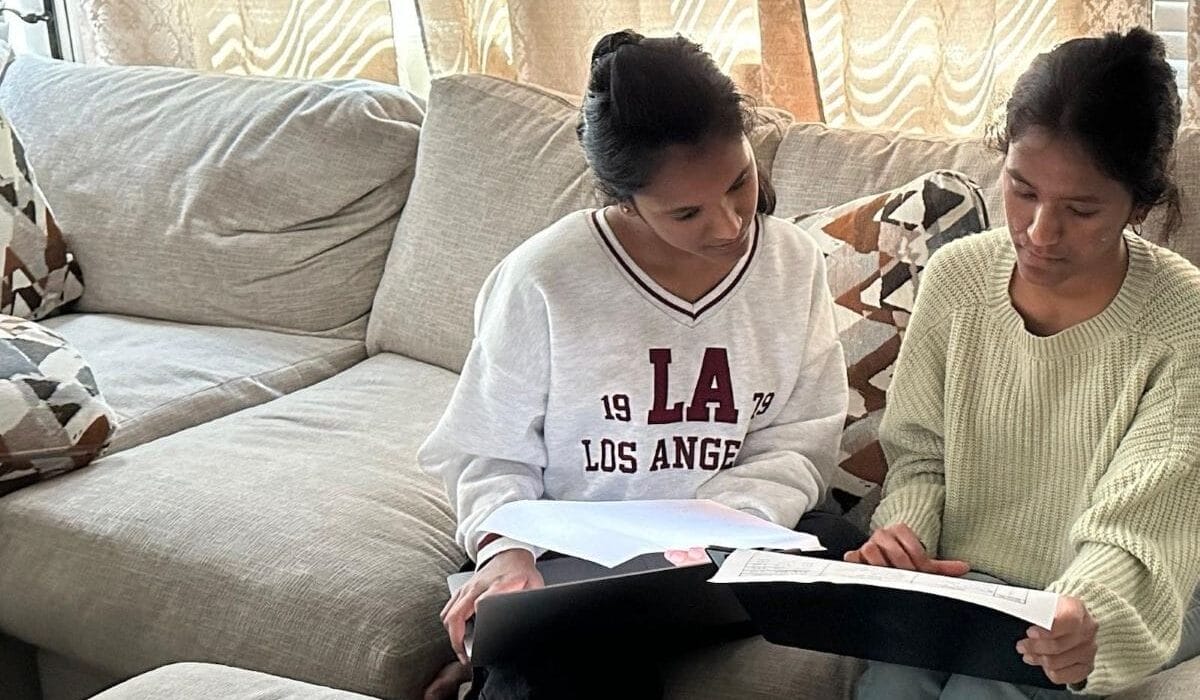
Vibha and Vidha Ganji work on logistics for an upcoming fundraising event. (courtesy Vidha Ganji)
Any advice for people who want to start volunteering?
Vibha: Start at the local level, seeing what opportunities are directly available around you. Maybe at your school or going online and seeing what your community offers.
Vidha: Also I’d say, focus on causes that you care about. Don’t volunteer just because you see a certain organization and they want your hours. In the end, you’ll grow attached to the specific cause you’re working for, while still getting the other benefits you want. I think focusing on what you really want to help with is the most important aspect.
What do you want people to learn from your story?
Vidha: FYLH-SD is just about 20 people. You can really do a lot just with a small group of people as long as you’re all dedicated and willing to put in the time. It’s worth it in the end.
Do you want to make a difference in your community like Vidha and Vibha? Find local volunteer opportunities.
Advancing Sustainability: Composting, Reuse and Climate Advocacy
Meet Daily Point of Light Award honoree Caitlin Riordan. Read her story, and nominate an outstanding volunteer or family as a Daily Point of Light.
Caitlin Riordan is 17 years old. She is passionate about coding, engineering and data science. She sees today’s climate crisis as an urgent global challenge.
Recently, she’s been involved with “Green Champions,” which allows educators to collaborate alongside the technical education department and city sustainability directors to create paid work-study opportunities for students. These positions are designed for students in Caitlin’s high school’s special education program, which focuses on facilitating sustainable systems. She remains excited to develop training and resources that teach valuable life and career skills, including managing compost systems and overseeing waste management to her peers.
While volunteering with “Green Champions” Caitlin has implemented compost systems, recycling programs, reusable lunch ware and allocated faculty for “Green Champions” roles across 13 schools over the past four years. In addition, Caitlin has collaborated with over 20 restaurants. It has allowed her to introduce more than 60 new vegan meal options. Her diligent work as a climate advocate has given her the opportunity to contribute to a Climate Justice Education bill and organize a state-wide rally in support of climate justice legislation.
What inspires you to volunteer?
Since childhood, I’ve had a deep love for gardening and a strong connection to nature. When I started high school, I was surprised and disappointed to discover that my school did not have a composting system. I immediately saw the opportunity to make a difference, so I assembled a small team and spearheaded a waste audit. We sorted through hundreds of pounds of food waste, recyclables and trash, and our efforts revealed that approximately 655 pounds of the waste disposed of each week in the cafeteria could have been composted.
This discovery was eye-opening. The volume of food waste and single-use lunch containers being discarded was shocking. Immediately it became clear to me that implementing more sustainable systems at the school could have a significant and positive impact on both the environment and the student community.
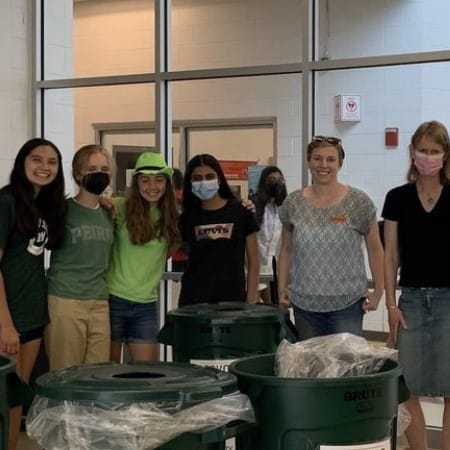
Caitlin and a small team conduct a waste audit at her school. /COURTESY CAITLIN RIORDAN
Tell us about your volunteer role with Green Champions.
I’m part of a team at my high school that collaborates with other schools in our district to advance environmental initiatives. This journey began with a small group of friends. We formed the Newton Climate Coalition, a network of student groups across high schools in our district. We started with a vision to connect and empower students within our community, and our coalition quickly grew to include seven student groups.
Additionally, I’ve been involved in climate justice legislation through Our Climate. I currently serve as the outreach coordinator for the National Youth Council at Project Green Schools. In this role, I have the privilege of mentoring and supporting young students nationwide who are eager to lead similar initiatives in their own communities, which has been incredibly fulfilling and inspiring.
What inspired you to get started with this initiative?
One thing that continually inspires me is working with children. I’ve met many kids at farmers’ markets, and their enthusiasm is contagious. It’s incredibly rewarding to see kids so enthusiastic about sustainability. It’s also exciting to think that by developing these habits early on, they can have a lifelong impact.
What are your long-term plans or goals for the organization?
I hope to reach more communities and inspire even more youth to join the cause. I’m excited to continue my work with Take Action Global, Our Climate and Project Green Schools. I’m also looking forward to strengthening partnerships with universities and advancing research in this field.
What’s been the most rewarding part of your work?
The support from teachers and faculty in my community has been meaningful. Recently, there was a 16-month period where teachers lacked contracts, where they struggled to balance other commitments and union guidelines. This limited their ability to engage in projects outside of school and it eventually led to a two-week strike. Their support, even under such constraints, was inspiring.
What have you learned through your experiences as a volunteer?
There is power in determination and consistency when making a big impact through small actions. When I launched the compost system, we began with a small-scale pilot. Every Friday, we would visit 11 teachers’ departments lunchrooms, collect their compost and bring it to the loading dock. This small-scale effort gained support from the entire community, encouraged many students to get involved and paved the way for larger initiatives.
Tell us about future partnerships, programs or events that you are excited about.
Next year, in May, we will be celebrating sustainable initiatives where local and statewide organizations will have the opportunity to present their work. In the meantime, I am working with a youth-led nonprofit organization Restoring Rainbows, where I am designing a centrifuge. I will restore markers and develop an app that will showcase art created with the restored supplies.
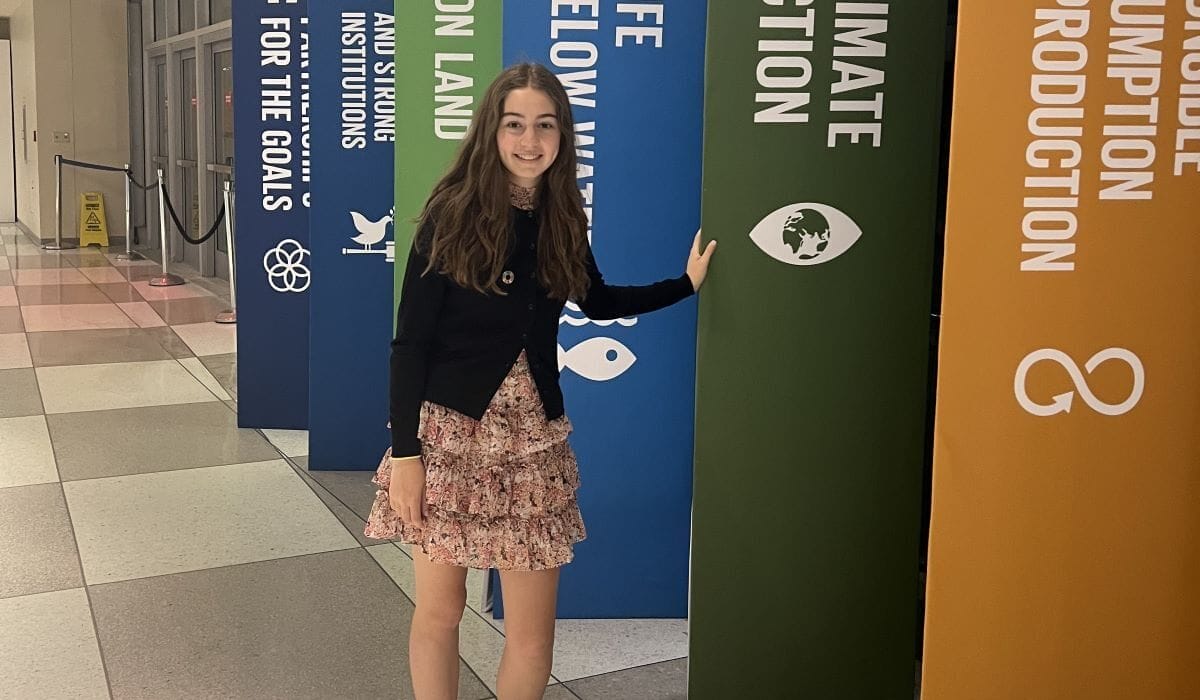
Caitlin discusses climate solutions with educators at a UNESCO meeting. /COURTESY CAITLIN RIORDAN
Why is it important for others to get involved with causes they care about?
It is important to get involved in causes that matter to you. For me, I enjoy being a part of something that makes a difference. It helps to deepen my understanding of the world, introducing you to new perspectives.
Any advice for people who want to start volunteering?
Find a community with shared interests. It will expose you to diverse perspectives and provide you with a support network. It’s refreshing to know that you don’t have to tackle big issues alone when you have like-minded people by your side.
What do you want people to learn from your story?
The key to making a difference in the climate crisis is to carefully consider your options. It is important to learn from and with others and take consistent steps toward progress. Even small, individual actions can contribute to large-scale change over time.
Do you want to make a difference in your community like Caitlin? Find local volunteer opportunities.
Teen Uses Art to Build Empathy Around Disabilities
Meet Daily Point of Light Award honoree Shreya Poladia. Read her story, and nominate an outstanding volunteer or family as a Daily Point of Light.
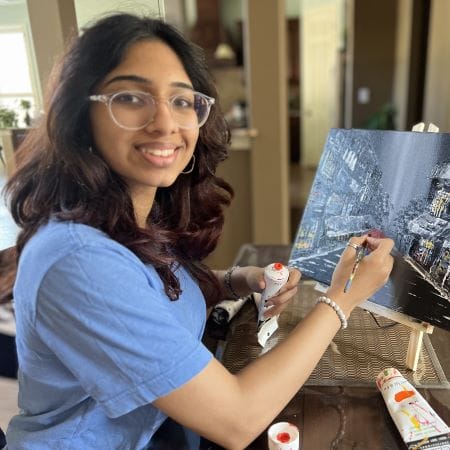
Shreya is a junior at Vandegrift High School. She is passionate about computer programming, robotics, cybersecurity and engaging in STEM activities. When she is not immersed in technology, you’ll often find her expressing herself through painting.
Shreya started her own nonprofit, Art for a Cause, where she organizes annual art shows to raise awareness and dispel myths about disabilities. Having a brother with a disability, this cause is very close to Shreya’s heart!
Shreya is passionate about using art as a way to drive social change. She is always open to discussing how creativity and technology can come together for a greater purpose.
What inspires you to volunteer?
I am inspired to volunteer by my brother, who is diagnosed with both Autism and Down Syndrome. Witnessing his struggles and the ignorance or indifference of others has driven me to advocate for greater awareness and acceptance of disabilities.
I am motivated by a desire to transform negative perceptions and stereotypical attitudes into understanding and empathy. The experience of starting Art for a Cause and the positive responses from the community has strengthened my commitment to making a difference through art.
Tell us about your volunteer role with Art for a Cause.
I am the founder of Art for a Cause, a nonprofit organization that I started in 2020 as a 7th grader. As founder and CEO, my role involves organizing and hosting art shows and events to raise awareness and funds for various causes related to disabilities.
I manage everything from curating the artwork to setting up virtual and in-person shows and coordinating with donors and supporters. I also handle the creation and maintenance of our websites, budgeting and marketing, where I showcase our artwork and provide information about the causes we support.
I’ve organized events that have raised significant funds for organizations like the Down Syndrome Association of Central Texas, Safe in Austin, Austin Pets Alive and Oak Creek Academy. I am dedicated to ensuring the financial sustainability of Art for a Cause by actively seeking grants, diversifying funding sources and forming strategic partnerships to support our ongoing efforts to promote social inclusion and artistic expression.
I work hard to ensure that each event not only raises money but also educates the community about disabilities and promotes greater understanding and acceptance. I am passionate about using art as a vehicle to foster empathy and create positive change in our community.
Our model works on three main pillars for sustainability. The first pillar is creative expression. Art transcends mere aesthetics. Each meticulously crafted piece serves as a powerful catalyst for conversation and awareness. It ignites dialogue which sparks change and sheds light on important societal issues. We want to encourage other young people and artists to start their own initiatives or get involved in similar causes to create a larger movement of change driven by passion and creativity.
The second pillar is technological Innovation. We harness the power of technology to amplify our message, extend our outreach and enhance educational efforts. We leverage technology including digital initiatives, educational outreach and strategic partnerships to advocate for our cause and support aligned organizations.
The third pillar is sustainable business practices. We’ve built a robust value chain that empowers the underserved and financially disadvantaged. Our sustainable business models uplift communities and foster economic resilience and inclusivity on a global scale.
Shreya Poladia, founder of Art for a Cause, creating art pieces for the show. /Courtesy Deepali Poladia
Art for a Cause is not just a business venture. It is a commitment to using creativity and technology as a force for positive impact in creating a more inclusive and understanding world for individuals with disabilities.
I am hopeful that my paintings can act as a positive catalyst to educate people, combat bullying, debunk myths and erase derogatory language towards people with disabilities by fostering awareness, understanding and acceptance not just in our homes but in our communities, schools and neighborhoods.
What inspired you to get started with this initiative?
During the COVID-19 pandemic in 2020, it was crucial for my family to stay home and maintain social distance since my brother, Raj, was at high risk. I watched Raj transition from being excited about all of us staying home to struggling with social distancing. It was hard to see him suffer like that. That’s when I decided to engage Raj by teaching him to paint. My art and paintings make me happy and help me de-stress but in the bigger picture, I want to use art to help the community and raise awareness about causes that are important to me. I hope that every piece, when it makes it to someone’s home, will generate more discussion on the history behind it and how the artwork has supported the cause
What are your long-term plans or goals for Art for a Cause?
My long-term goals for Art for a Cause include expanding its reach and impact within the community and beyond. I aim to continue using art as a powerful tool for raising awareness about disabilities to foster empathy, promote acceptance and continue to harness art and technology’s transformative power to drive social change and economic empowerment. We plan to diversify the causes we support to include a wider range of disabilities and related issues, ensuring that our efforts benefit as many people as possible.
What’s been the most rewarding part of your work?
The most rewarding part of my work with “Art for a Cause” has been witnessing the positive impact on both individuals and the community. I was overwhelmed by the response I got from the community. Experiencing the genuine care and curiosity people showed towards disabilities was a heartwarming experience for me. So many people approached me with questions about the cause I was supporting. The positive feedback I’ve received from our community fills me with hope and strengthens my resolve to continue making a difference. It’s rewarding to know that our efforts are not only raising funds but also educating people and fostering greater empathy and understanding.
I am so grateful to all the people who continue to support me and the causes I champion every year. My supporters are my true inspiration! With every painting they purchase, we collectively spread awareness and foster acceptance for various disabilities.
On a personal level, there is the satisfaction of seeing my brother’s face light up with joy as he sees the stories and experiences represented through art. This is a powerful reminder of why I started this initiative. The connection and change we create through art make all the hard work and challenges worthwhile.
What have you learned through your experiences as a founder of a nonprofit?
As the founder of Art for a Cause, I have gathered a wealth of insights that have profoundly shaped my perspective.
One of the most significant lessons I’ve learned is the power of perseverance. Building an initiative from the ground up demands unwavering dedication and resilience in the face of many challenges and setbacks.
Community engagement, innovation, effective communication and having a business model are all crucial for raising awareness and building enthusiasm around a cause. I can’t emphasize enough the significance of feedback. Listening to input from the community, supporters and beneficiaries helps refine our approach.
Empathy has played a central role in my approach. Understanding and respecting the perspectives of individuals affected by disabilities has deepened my resolve to advocate for them and highlights the importance of empathy in fostering positive change.
I have also gained a lot of leadership skills and strengthened my belief in the transformative power of art. Art has an amazing power to bring people together regardless of age, race, color, need or ability. It is the universal language!
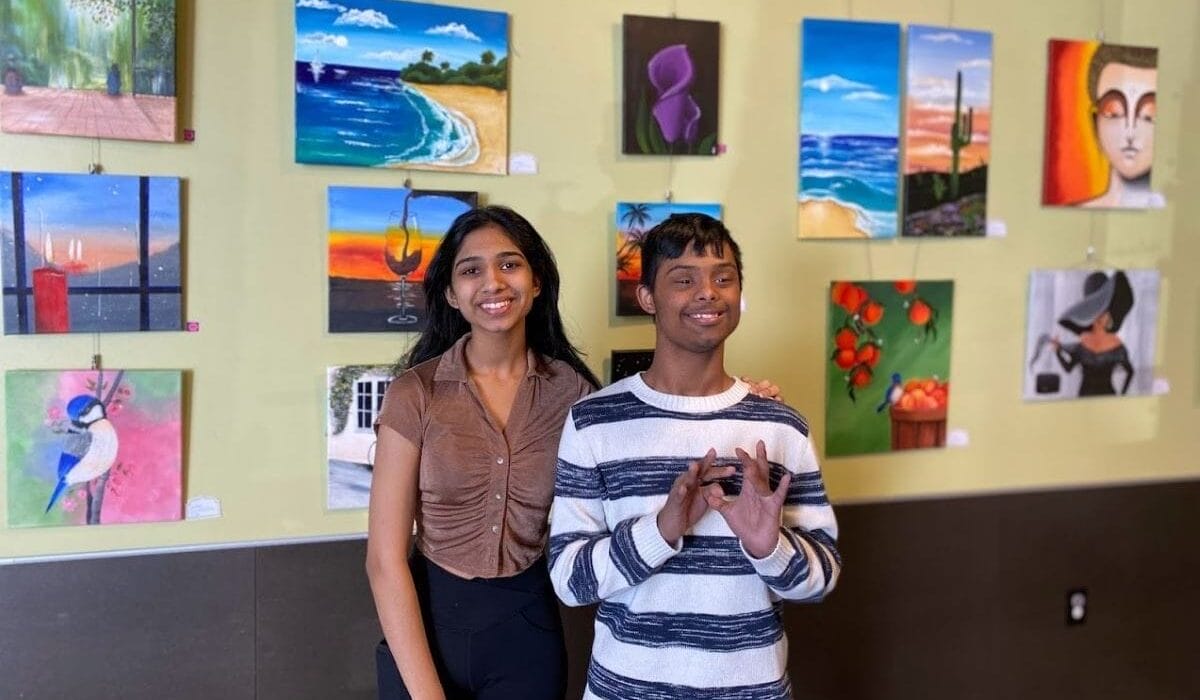
Shreya Poladia, in brown with brother Raj at the Artshow 2023. /Courtesy Atul Poladia
Tell us about future partnerships, programs or events that you are excited about.
I am really excited to see how much we have grown in the last few years. A small project that started at home to engage my brother has grown into a force for change.
We now offer employment opportunities by establishing a production pipeline in underprivileged communities. This initiative provides them with essential skills while offering a reliable source of income. Through this, we have an opportunity to uplift and empower these communities and support economic stability and personal growth.
Our goal is to expand our global reach and community engagement. Our marketing strategy utilizes both digital and traditional channels to connect with a diverse global audience to raise awareness and increase community involvement.
Why is it important for others to get involved with causes they care about?
Getting involved provides personal fulfillment and a sense of purpose. It’s so rewarding to know that your efforts contribute to meaningful change. Anyone can make a positive impact by addressing critical issues and supporting underserved communities while creating a sense of community and connection among individuals with shared interests.
Involvement helps raise awareness, educate others and challenge misconceptions. It promotes understanding and acceptance. It empowers individuals to use their skills and resources to effect change, leading to personal growth and a broader impact.
Active participation can also inspire others to join in, which ultimately contributes to a better future for everyone.
Any advice for people who want to start volunteering?
If you’re thinking about starting to volunteer, I’d suggest beginning by reflecting on what genuinely excites you. Find causes that resonate with your values. This will make your volunteering experience more rewarding and engaging.
Start by researching local organizations that align with your interests and explore various roles to see what fits best with your skills and schedule. It’s a good idea to start with a small commitment to get a feel for the work and the organization. Be open to trying different tasks and learning new things because flexibility will enrich your experience.
Building connections with other volunteers and staff can be incredibly valuable, so don’t hesitate to reach out and engage with them. Set some realistic personal goals for what you want to achieve through volunteering and try to stick with them. Regular involvement will help you make a bigger impact. Don’t forget to ask for feedback. Feedback is a great way to grow and improve. Take time to reflect on what you’re learning and how it’s affecting you.
Sharing your experiences with friends and family can also inspire others to get involved. Volunteering is a wonderful way to contribute to your community and make a difference, and approaching it with passion and dedication will make the journey more fulfilling.
What do you want people to learn from your story?
I hope to demonstrate the profound impact that personal experiences and passions can have on driving meaningful change. My journey illustrates how deeply a personal challenge such as supporting a sibling with disabilities can inspire innovative solutions like Art for a Cause.
I want others to see that even small personal initiatives can grow into powerful movements. My story emphasizes the importance of perseverance, the value of community engagement and the transformative power of combining creativity with a purpose. I hope I encourage others to find their own ways to make a difference and remind them that their unique experiences and passions can lead to impactful and positive change in the world.
Do you want to make a difference in your community like Shreya? Find local volunteer opportunities.
Dedicated Volunteer Brings Healing and Community to Veterans and Service Dogs
Meet Daily Point of Light Award honoree Robin Martin. Read her story, and nominate an outstanding volunteer or family as a Daily Point of Light.
For many years, Robin Martin has been a dedicated volunteer with Warrior Canine Connection (WCC), first in Maryland and now in Asheville, North Carolina. Her commitment to the organization and the veterans it serves is evident in the 1,362 hours she volunteered last year alone. Robin’s role as a puppy raiser is central to her volunteer work, where she invests time, love and effort into training and raising service dogs that play a crucial role in the recovery of veterans.
But Robin’s dedication goes far beyond just raising a puppy. Living in South Carolina, she travels over an hour each way to Asheville two to three times a week, bringing the service dog in training to participate in Mission Based Trauma Recovery sessions. These therapeutic training sessions are designed to help veterans alleviate symptoms of PTSD, and Robin’s presence is a comforting and encouraging constant for both the veterans and the dogs.
Known affectionately as the “mom” of the Asheville site, Robin creates a sense of community among the staff, volunteers and, most importantly, the veterans. She brings more than just her dog-training expertise; she has a nurturing spirit that touches everyone around her. Robin is known for baking cookies and bringing snacks to feed everyone at the center, ensuring that the atmosphere is warm and welcoming. Her efforts help to build a supportive environment where veterans can feel comfortable and cared for as they work through their challenges.
Robin also plays a crucial role in mentoring new puppy raisers. She is always available to answer their questions, provide guidance, and share her knowledge and experience. Whether it’s making new collars, helping create doggy business cards or assisting in building their training skills, Robin is there every step of the way. Read on to learn more about Robin’s dedication to this cause and what keeps her motivated.
Tell us about your volunteer role.
I’m a volunteer puppy raiser with WCC. I get puppies and take them home – they live in my home – and I take them out and socialize them. We got to restaurants, the grocery store, shopping centers, the mall. I’m also a volunteer trainer, so I help with training sessions is one of the other two trainers is not available or need additional hands. I do volunteer fundraising. I do events, setting them up and attending them. I recruit other puppy raisers as well.
I don’t always have the dogs from beginning to end, but I’m what they call a troubleshooter. So if they have a dog who lacks confidence, they’ll send the dog to me. I’ll spend a couple of months working wit the dog, and then it will go back for advanced training or to another puppy parent.
The puppy raising process starts immediately, from the moment they’re whelped to the moment they’re placed in puppy raisers’ hands. The actual training is anywhere from 18 to 24 months, and within that timeframe, they go in for advanced training. That’s where they trainers at headquarters in Maryland will fine-tune the dog to whatever needs the veteran in line might have.
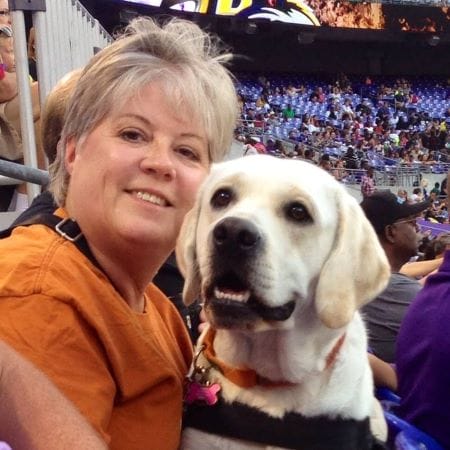
Robin at a Ravens Game with a service dog in training.
What inspired you to get started with this initiative?
I used to work for Home Depot as a district services manager for the installation department, and one of my store managers received a letter from someone who had been following the puppies on camera, and this nonprofit organization needed assistance. They asked if people could jump in and do that. Long story short, that was in 2011 and we did a buildout for them at no charge. The dog program director took me into her home where at the time, they were raising and whelping puppies. She put a little puppy into my hands. It was about 10:30 at night and she said, “This should be the best way to end your day.” And it was! Three months later, I got my first dog and haven’t looked back since.
What’s your favorite dog breed?
I’ll say Labradors are my favorite. I’m on my 35th dog now. I was able to adopt one of the career change dogs, Mike, a black lab who just loves people. He wasn’t suited for service because he thinks everyone’s his new best friend! I’ve also had two Goldens.
Why is this issue so important to you?
There is simply not enough help out there for veterans. I’ve been able to see firsthand what our dogs to for the veteran community. Seeing veterans come out of their shells, recognizing their issues and concerns. For example, the dogs let them know they’re holding their breath, and they can stop holding their breath. The dogs allow them to go out in public because they can concentrate on the dog and not worry about all the people around them.
What’s been the most rewarding part of your work?
I’ll go back to the veterans and give an example. A female veteran who had not been able to go out in public – a grocery store, Target, the mall – was able to go out at Christmastime to a store with her dog, and do Christmas shopping for the first time in many years.
What have you learned through your experiences as a volunteer?
I’m a very outgoing person, and I’ve learned to take a step back, be calm and be patient both with the dogs and with the veteran population. I’ve learned how to let it all just unfold. Sometimes, I’m the voice of reason. Sometimes I’m giving a pat on the back and saying, “you’ve done a great job” and handing someone a brownie I baked. Being in the moment and letting it all unfold is the hardest part, as a type A person, but I’ve learned to take a deep breath, sit still and observe.
Why is it important for others to get involved with causes they care about?
If it’s a nonprofit, there aren’t enough dollars out there to take care of everyone and everything. Having spent most of my life traveling as an Army brat, I’ve observed the best and the worst in people. Opportunities with nonprofits allow for things that the government and the general public don’t necessarily know a lot about.
Any advice for people who want to start volunteering?
Jump in with both feet. Don’t hesitate. I haven’t looked back! I even retired and moved to South Caroline. I stayed in Maryland until the program opened up in Asheville, North Carolina, and now I drive an hour and a half each way to take my dog in for the sessions. I’d say, don’t be afraid. I’ve met so many wonderful people through this organization who have become lifelong friends.
What do you want people to learn from your story?
We just need more puppy parents, more puppy raisers. There aren’t enough of them out there. We can keep breeding dogs but we need more raisers and the word needs to get out there.
Do you want to make a difference in your community like Robin? Find local volunteer opportunities.
One Founder’s Journey of Championing Second Chances and Building a Future of Hope
Meet Daily Point of Light Award honoree Sebastian Tan.Read his story, and nominate an outstanding volunteer or family as a Daily Point of Light.
As the founder of OutsideConnection, a groundbreaking online job platform built on the central tenets of hope, second chances and transformative impact, Sebastian Tan has dedicated his life to providing welcoming employment opportunities for individuals returning from prison. Sebastian’s own journey began in the humble setting of his family’s bakery, but his vision has since expanded far beyond those walls, touching the lives of thousands across the country.
Sebastian’s early exposure to a diverse workforce at his aunt’s bakery in Pittsburgh laid the foundation for his lifelong commitment to social justice. “When I first stepped foot into our family bakery at the age of 7, I immediately became accustomed to a culture filled with a diverse range of people,” Sebastian recalls. Working alongside reentrants—individuals who have been previously incarcerated—he quickly learned that they were more than just employees; they were part of the family. This early experience shaped his understanding of the challenges reentrants face in finding stable employment, a problem that would later become the driving force behind OutsideConnection.
The idea for OutsideConnection was born out of necessity. During and after the COVID-19 pandemic, businesses across the country struggled to find new employees. At the same time, the stigma surrounding hiring reentrants began to soften. “Taking advantage of this, I started OutsideConnection, a free second-chance job platform that has helped our business and local businesses alike employ reentrants while also supporting our local communities,” Sebastian explains.
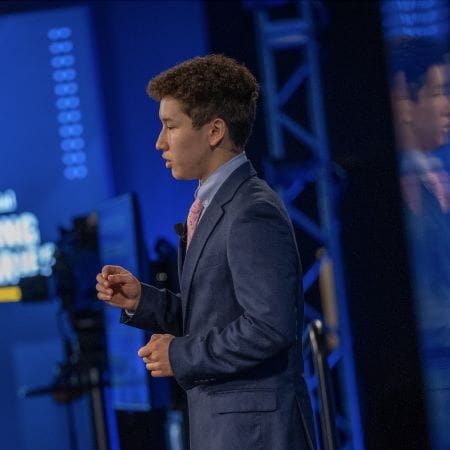
Sebastian pitching OutsideConnection to the CEO of Prudential Financial.
What began as a local initiative quickly gained national traction. Today, OutsideConnection has helped over 10,000 reentrants gain access to employment opportunities in 34 cities and 17 states. The platform boasts over 1,900 job positions from 40+ second-chance employers, and its impact has not gone unnoticed. Last year, the U.S. Department of Justice adopted the program, further amplifying its reach and potential. Despite the significant strides OutsideConnection has made, Sebastian’s work is far from finished. With over 19 million Americans holding criminal records, he is determined to expand the platform’s reach.
“Looking forward, I imagine transformative expansion for our project,” he says. His goals include expanding operations to the remaining 33 U.S. states, hiring more staff to support the platform’s growth and increasing the number of job listings to meet the demands of reentrants across the country. He also envisions more state Departments of Corrections adopting OutsideConnection, ensuring it becomes an integral part of governmental resource programs.
Sebastian’s journey with OutsideConnection has also been deeply personal. “As we’ve grown, so has my passion for social justice, labor economics and entrepreneurship in the reentry field,” he shares. The impact of his work is felt not just in numbers but in the lives he’s touched. “From glimpsing smiles, embracing hugs and hearing thank-you’s, I’ve become motivated by the personal impact I’ve made on each and every individual,” Sebastian says. Through these experiences, he has gained invaluable insights into the systemic barriers reentrants face and the importance of providing stable employment as a means of restoring dignity and fostering hope.
“Volunteering in something you believe in is important because it enables you to effect positive change in the lives of people as well as give you first-hand experience on the causes that are dear to your heart,” Sebastian says. His advice to those looking to make a difference is simple: find something you’re passionate about and start, no matter how small. “Something you have, the skills and knowledge stored inside you, can make a big difference—so use it.”
Sebastian’s journey has been one of perseverance, driven by a deep-seated belief in second chances. His work with OutsideConnection is not just a professional endeavor but a personal mission that continues to shape his worldview. “My work with OutsideConnection has taught me invaluable lessons about justice, dignity and the power of second chances,” he reflects. These lessons have been integral in guiding his approach to creating long-term solutions that address the systemic barriers faced by reentrants.
Sebastian also believes in the importance of nurturing the next generation of leaders and changemakers. OutsideConnection currently employs over 60 youth workers, a number he hopes to grow as the platform expands. His message to young people and aspiring volunteers is clear: “When it comes to volunteering, it is important to look for an organization or campaign that you are passionate about.”
Sebastian himself is not only building a stronger community but also inspiring future leaders to continue the work he has started. His commitment to empowering others ensures that the impact of OutsideConnection will be felt for generations to come, as the platform uplifts and equips one reentrant at a time.
Do you want to make a difference in your community like Sebastian? Find local volunteer opportunities.
Renewing the Library: Creating an Engaging and Inclusive Space for All
Meet Daily Point of Light Award honoree Ejay Tan. Read his story, and nominate an outstanding volunteer or family as a Daily Point of Light.
Ejay Tan is 16 years old and a rising 11th grader. He is also an Eagle Scout and project manager on the Robotics Team.
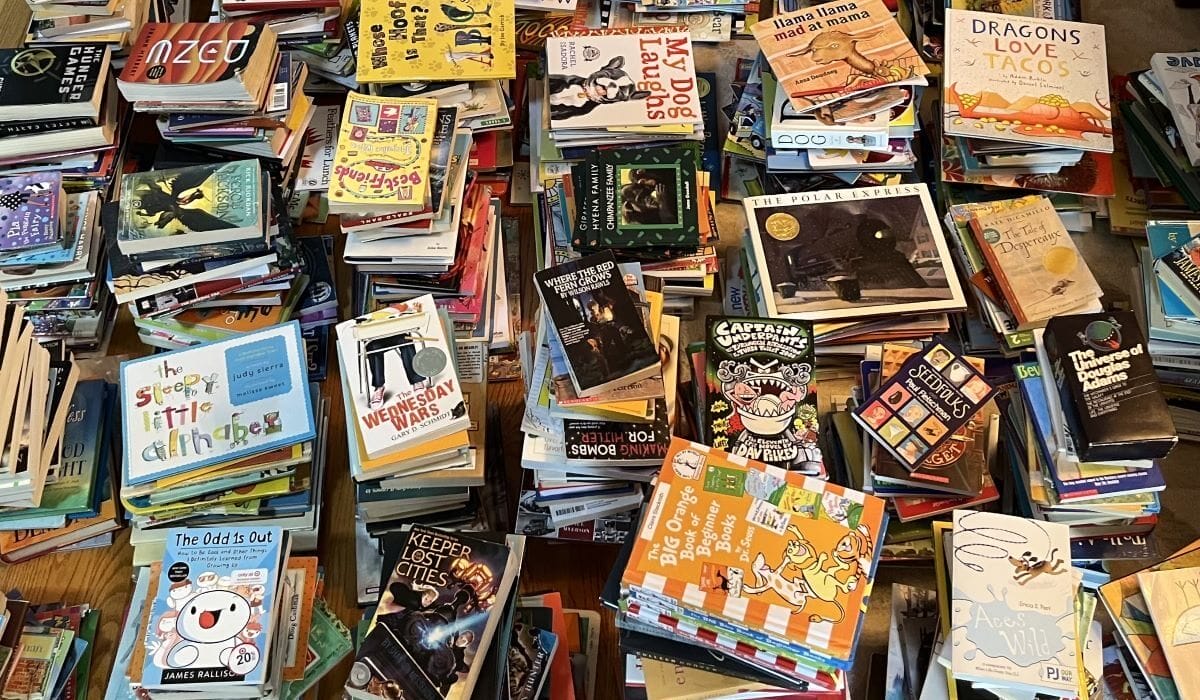
Ejay Tan has made a significant impact in advancing children’s literacy through his dedicated volunteer work. Since Fall 2022, he has contributed 157 hours volunteering weekly at the teen section of the Charlotte Mecklenburg Library. Aside from volunteering at the library, he organized a successful book drive in three neighborhoods to gather, clean and repair 250 books, with the help of 35 volunteers who collectively contributed 93 additional hours over four months.
Their collective efforts far surpassed the original target, resulting in the collection, cleaning and delivery of 1,750 board books, chapter books and young adult novels to Promising Pages, a local nonprofit. This initiative allowed 350 children to choose up to five books to keep.
Read on to hear more about why Ejay continues his commitment by volunteering weekly at his local public library.
What inspires you to volunteer?
Volunteering has always come naturally to me. Since I was 4, I have been volunteering with my parents. We would clean greenways and pick up trash during our family walks. Also, during the COVID pandemic, we made sandwiches for the unhoused. For the past two years, I have been volunteering at Charlotte Mecklenburg Library. Many people assume that libraries are only for reading books and studying, but they offer so much more than that.
Tell us about your volunteer role with Charlotte Mecklenburg Library.
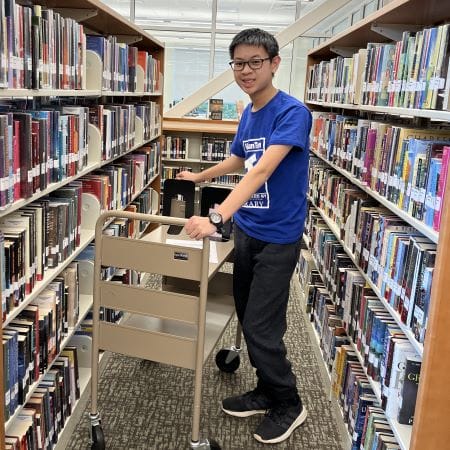
At my local library, I am a teen volunteer. I help people find books, organize and shelve them. Aside from books, we have a dedicated area for games, which includes a Nintendo Switch, an Oculus, an Xbox and more. This provides a great balance for teens who want to enjoy the library in ways beyond reading. When I’m not assisting with these tasks, I enjoy hosting events for other teens, such as creating kits and organizing chess matches.
Ejay shelves books at his public library, Charlotte Mecklenburg Library, in Charlotte, North Carolina. . /COURTESY EJAY TAN
What inspired you to get started with this initiative?
Before I started volunteering, I visited the library approximately once a week. I immediately wanted to share my love for the library with my community since volunteering had been a fun and rewarding experience. I wasn’t aware of all the video games they offered until my interview. Since I’ve started at the library, I’ve noticed an increase in the number of people coming in. It’s been very nice to see people not only come in to read but also enjoy the events we host.
What are your long-term plans or goals for the organization?
My goal is to continue volunteering with my local library and make a meaningful difference in its everyday outreach. I also plan to organize another book drive next summer. Recently, I organized a drive where I collected 1,750 books for children across Charlotte, North Carolina. I hope to do this again, and on an even bigger scale.
What’s been the most rewarding part of your work?
My experience as a volunteer has provided me with countless opportunities and it has been a profound learning experience. Through this, I’ve discovered more about my strengths and abilities. Recently, I organized an open house for my school’s Robotics team, where over 100 people RSVP’d, and 30 teens signed up to join. Thanks to my volunteer work, especially at the library, it helped to ignite my interest in leadership.
What have you learned through your experiences as a volunteer?
Volunteering is about much more than just performing acts of service. It’s deeply fulfilling and keeps me connected to my community. If I did not volunteer, my neighborhood might be a bit untidy—but jokes aside, I wouldn’t have the same appreciation for what I have. Through service, I’ve seen the different realities that others face. If I didn’t engage in community outreach, I wouldn’t have known these challenges.
Tell us about future partnerships, programs or events that you are excited about.
Next summer, I plan to organize another book drive, and my hope is for it to be as successful as my first. This time around, I will visit even more neighborhoods, extending my reach further than before, in hopes of collecting more books for donation.
Ejay (not pictured) observes several books that may need to be inspected, cleaned and/or repaired. /COURTESY EJAY TAN
Why is it important for others to get involved with causes they care about?
If something matters to you, find ways to get involved and spread awareness. For me, volunteering at the library and keeping my neighborhood clean are activities that bring me joy. In all, if you care about a cause, immerse yourself in it and make it enjoyable for both you and others.
Any advice for people who want to start volunteering?
It’s simple: get involved! Just be active and engage with your community. For parents, it’s important to encourage kids to start volunteering from a young age rather than waiting until they’re older. As I mentioned before, if you’re passionate about something, find a way to get involved and contribute to your community.
What do you want people to learn from your story?
Anyone can make a difference, regardless of age, race, ethnicity, gender or socio-economic status. Don’t let anything hold you back from pursuing what you want to do—get out and be active.
Libraries are often seen primarily as places for books and quiet study. However, I discovered that they offer much more than tranquility. Our goal is to not only be a valuable resource but also a vibrant community hub where people can connect and have fun.
Do you want to make a difference in your community like Ejay? Find local volunteer opportunities.
California Teen Fights Food Insecurity by Reducing Food Waste in Schools
Meet Daily Point of Light Award honoree Colin Chu. Read his story, and nominate an outstanding volunteer or family as a Daily Point of Light.
Sixteen-year-old Colin Chu loves his community. He plays water polo with a local club and French horn with a youth orchestra, and he spends his free time with friends and family. He loves his community while recognizing that not everyone has a similar level of support.
The pandemic caused a lot of struggles, but upon returning to the classroom, Colin saw two problems that could solve each other. By eliminating food waste from his school, he could fill stomachs at the nearby shelters. With some initiative and follow through, his vision came to life as Homeless Heroes.
Colin and his volunteers have donated more than 135,000 meals and impacted the lives of 1,000+ unhoused people. Aside from the obvious benefits, Homeless Heroes has empowered hundreds of young people to engage in service, and putting uneaten food to use has removed the equivalent of 1,000 trees-worth of carbon dioxide from the atmosphere each year.
Read on to learn more about Colin’s story.
What inspires you to volunteer?
I’ve been passionate about making a positive impact in my community from a young age, and more recently, I’ve seen environmental and social justice issues that really affect it. I’m inspired by the people and diversity here and want to find ways to support those who have less fortunate circumstances than me.
Coming back to school after the pandemic, I noticed how many meals were being thrown out in my school’s cafeteria. Just a few miles away from my school, there were people who didn’t have food to put on the table. That’s what inspired me to found my nonprofit.
Tell us more about founding Homeless Heroes. Did you have any challenges that you had to overcome, or anything that surprised you?
In my research, I was shocked to learn that about one-third of the food produced globally is wasted. I attend school in San Mateo, but three of the top 10 cities with the highest rate of housing insecurity in the country are in the Bay Area: San Jose, Oakland and San Francisco.
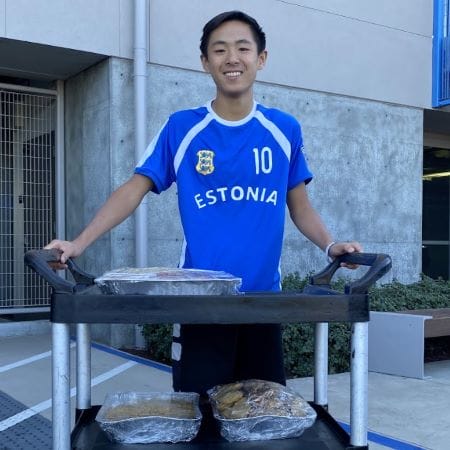
Colin delivers uneaten food from local schools to shelters through Homeless Heroes.
I reached out to the staff at my school’s cafeteria to see if we could redistribute the unused, unexpired food. It was a pretty lengthy process. This is something that they have seen as an issue for a while but have never really found a solution for. We did things like creating a liability waiver so that the school wasn’t legally responsible for the food after it left for the shelters, and we continue to coordinate between schools and shelters while ensuring we understand their specific needs. Going into this project, I wanted to focus on areas where environmental justice issues impact marginalized people even more.
What does your day-to-day look like?
I still get to do a lot of deliveries. I also manage some of our other projects, like an interview series where students like myself interview unhoused clients. One of my favorite parts of this work is being able to meet the people who receive our food. They share their stories, including how they became unhoused, how they found shelter, what they wish people knew about being lacking permanent shelter and more. It’s been really moving for me. We’re really trying to bridge that gap between students and the older generations we serve and between those facing housing insecurity and those who aren’t.
What are your long-term plans or goals for the organization?
We have the potential to expand across the state and further. We’ve reached out to and are currently working with about 10 to 12 other schools in the Bay Area to create more chapters. I’m also excited to see how we can expand beyond delivering food and build other systems to address sustainability and malnutrition.
What have you learned through your experiences as a volunteer?
The outreach component, being able to work with community stakeholders and find ways to communicate with them. Getting a good grasp on scheduling and following up was really helpful, because I needed to reach out to other schools and shelters.
Also, there are a lot of misconceptions about people who are unhoused and the challenges they face. Many of them have talked about how it’s a struggle to even find a place to sleep or somewhere that’s warm and quiet. During one of our deliveries, someone came up to me and shared how they hadn’t received dairy for an entire month. They were happy for the delivery of our extra milk cartons. These small conversations with them have shed a lot of light on how meaningful their stories are and how using those stories can generate change by building empathy.
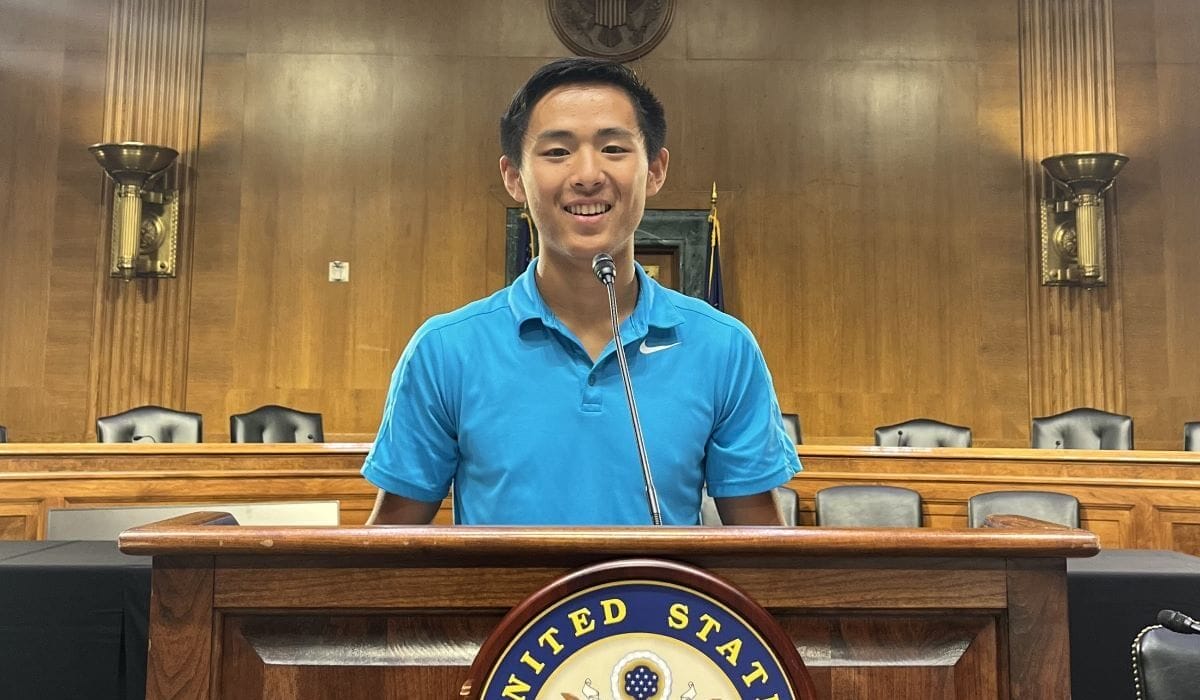
Colin tours the US Senate Building in Washington, D.C.
Why is it important for others to get involved with causes they care about?
Sometimes we don’t see the full picture. We don’t see what other people are experiencing. We don’t even see other parts of our own city or neighborhood. By volunteering and getting engaged, we gain new perspectives. We also get to meet a lot of incredible community members. I’ve been able to build meaningful connections with students, members of the housing insecure community and our clients.
How can people address these issues in their own communities?
I encourage everyone to visit the website and contact us if they’re interested in starting a chapter at their school. We provide a lot of support for the best ways to reach out to your cafeteria. If they require a liability waiver, we already have one drafted. We have the processes and steps in place to help them get that started.
What do you want people to learn from your story?
If you’d asked me before COVID if I thought I would have done any of this, I probably would have said no. But I wanted to follow something that I was passionate about and wanted to see change. That’s what started this. Never underestimate yourself and focus on something that you believe needs to change. Regardless of who you are or your background, you have the power to make a difference. It’s just about coming together and finding a community to do that.
Do you want to make a difference in your community like Colin? Find local volunteer opportunities.
Florida Teen Tackles Food Insecurity
Meet Daily Point of Light Award honoree Matthew Wanless. Read his story, and nominate an outstanding volunteer or family as a Daily Point of Light.
Florida native Matthew Wanless has been volunteering since the tender age of 5, for Joshua’s Heart Foundation. This Miami Beach-based organization was founded by Joshua Williams when he was just 4 years old. This proves that there are no age limits when it comes to doing good in the world!
The mission of Joshua’s Heart Foundation (JHF) is to end hunger and reduce the cycle of poverty that plagues many global citizens. This youth-run organization empowers underserved people to improve their quality of life. Volunteers collect and deliver basic necessities like groceries and personal items, and educate youth on the topics of world hunger and poverty. Both youth and adults volunteer for JHF, whether they work directly with people or behind the scenes in administrative roles.
Matthew has played competitive sports nearly his whole life, but still makes time for his studies and for volunteering.
What inspires you to volunteer?
When I was in preschool, the school hosted a coin harvest for Joshua’s Heart Foundation. I was just 5 at the time but I started helping out, along with my brother who joined the JHF Junior Advisory Board. I’ve been volunteering with Joshua’s Heart Foundation ever since.
Matthew Wanless with food collected from the Pine Crest Middle School to donate and sort for the Caring Place, which meets the needs of South Broward County’s unhoused population in Hollywood, Florida. /Courtesy Matthew Wanless
Tell us about your volunteer role with Joshua’s Heart Foundation.
From 2021 to 2023, I ran my own Joshua’s Heart Junior Advisory Board chapter in Boca Raton. We had more than 10 youths on the board. I held bi-weekly meetings where we planned events and distributions that happen throughout the year. We also planned food drives and fundraisers. We helped each other out as much as possible.
As some of this time was during the pandemic, we organized distributions of food and other necessities in the local community. These were curbside distributions rather than being held at outside distribution locations.
Today, I am part of the Pantry Operations Team, or “Pantry Ops.” Our mission is to lead efforts around mobile off site, pantry on site and alternative distribution processes. We are able to help feed Americans facing food insecurity and to support them in the short term. To date, I’ve distributed food and other items to over 7.200 families.
I’m very hands-on during distributions. We walk with people through the distribution of groceries and personal items and help them shop. I also deliver their goods to their vehicle. It’s good to meet and talk to them! One of our big partners is Fresh Point, which is North America’s largest foodservice produce distributor. Fresh Point donates many pounds of fruits and vegetables for Joshua’s Heart distributions. To date, I have distributed over 173,000 meals, 800 pounds of food, 2,344 books, 1,065 flower bouquets, $14,593 worth of toys, 5,077 pounds of clothes and 8,700 personal items to families in need.
I have also been involved in several fundraising events. I have partnered with Putt’n Around (mini golf) and the Silverball Museum (pinball). During these fundraising events, a percentage of people’s entry fees were donated to Joshua’s Heart Foundation. To date, I have raised over $10,000 through these partnerships, SodexoStop Hunger Foundation Youth grants and outside donations.
I also meet with elected officials during the food distributions so they can see firsthand the impact we are making on the community. The elected officials often help out with distributions too, which is appreciated!
I conduct food drives at my school where I collect non-perishable items from the middle school to bring food and toiletries to a shelter in Hollywood, Florida. In case you’re wondering, many people donate toys but these are distributed at the Milagro Center and other distribution sites throughout the year. I also host GYSD, which stands for Global Youth Service Day. My brother hosted GYSD in Broward and Palm Beach Counties for five or six years. I have since taken over and have hosted GYSD for the last 3 years. I lead a group of volunteers in a food, toy, clothing and personal item distribution each spring. Last year’s event was in the Devonhut and Lauderhill Point communities in coordination with the Lauderhill Health and Prosperity Partnership (City of Lauderhill). One hundred fifty families were provided food, feminine products, toys, lotions, sanitizers and makeup that day.
What are your long-term plans or goals for the organization?
I hope to continue volunteering by organizing food drives. I am considering joining Joshua’s Heart National Advisory Board so I can be even more involved.
What’s been the most rewarding part of your work?
The way it makes me feel is so rewarding. I always have a smile on my face when I help. Having the ability to support my community is such a great feeling.
What have you learned through your experiences as a volunteer?
Even when you have it hard, others have it worse. Be thankful for what you have and don’t take anything for granted. However you can, support your community. We can change the world with small actions!
Tell us about future partnerships, programs or events that you are excited about.
I will be attending some Pantry Ops distributions throughout 2024. We will also be holding a Thanksgiving food distribution where we provide turkeys and other holiday food so people can have a memorable holiday dinner.
Any advice for people who want to start volunteering?
Join any organization nearby. You can find volunteer clubs in almost every community or school. If you don’t know what to focus on, just let it unfold. Start somewhere and you’ll make connections that can direct you to where you can best serve.
What do you want people to learn from your story?
I feel that everyone should serve their community. It’s our duty as human beings. You’re never too young to make a difference. I started when I was 5 and this is something I’ll be doing for the rest of my life.